The available excerpts suggest its potential utility in regenerative agriculture. One key insight comes from a study investigating drought tolerance, where *Vitis riparia* (Riparia Gloire) was evaluated alongside other grapevines. This highlights its potential for resilience in water-scarce environments, a valuable trait for regenerative systems. Although not explicitly detailed as a primary use in these excerpts, the mention of Riverbank Grape producing heavily in a context of conservation trees implies its role in diversified plantings. Its potential as a component in polyculture systems or agroforestry is hinted at by its inclusion alongside other woody species. Further research would be beneficial to understand its specific contributions to soil building, carbon sequestration, or pollinator support within regenerative frameworks. Farmer experiences and practical integration details are not sufficiently covered in the provided snippets to draw firm conclusions. While coverage in our knowledge base is limited, the above represents documented uses in regenerative systems.

Regenerative Quick Profile

All recommendations assume integrated, regenerative practices—not conventional inputs.

Climate & Soil Fit

Climate: Tropical Rainforest, Tropical Monsoon, Tropical Savanna, Hot Semi-Arid (Steppe), Cold Semi-Arid (Steppe), Hot Desert, Cold Desert, Humid Subtropical, Oceanic (Maritime Temperate), Hot-Summer Mediterranean, Warm-Summer Mediterranean, Monsoon-Influenced Humid Subtropical, Subtropical Highland, Hot-Summer Continental, Warm-Summer Continental, Subarctic, Monsoon-Influenced Hot-Summer Continental, Tundra

Zones: USDA 4-9, Australian Zones 3-8

Optimal Soil: Loam Soil

System Role & Functions

Primary: Cash Crop With Services

Secondary: Riparian, Pollinator Support

Key Benefits: Climate adaptable, Wide zone range, Low maintenance

Management Level

Experience: Beginner-Friendly

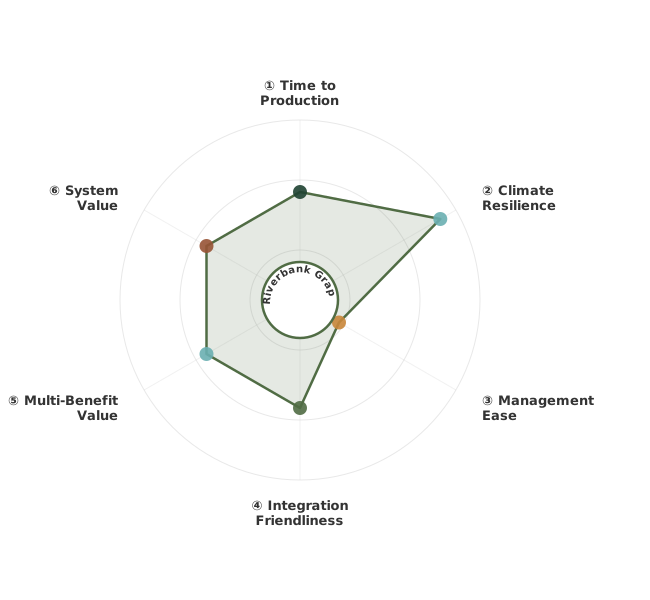
Maintenance: Very low maintenance - With inherent disease resistance and adaptability, this vine requires minimal intervention beyond pruning for optimal fruit production, demonstrating excellent system integration.

Time to Production: Moderate (2-5 years) - With a moderate establishment period, this perennial begins yielding fruit in 3-5 years, aligning with natural cycles for sustainable returns.

Value Streams

  • Fruit/nut harvest
  • Pollinator habitat and support

Know the Debate

  • Observe soil health benefits in 1-3 years, with full carbon potential longer
  • Plant via cuttings, seeds, or nursery stock; ensure adequate moisture
  • Integrate with livestock or crops after establishment for synergistic benefits
1

Climate Suitability Assessment

Will this plant thrive in your climate?

IDEALLY SUITED

Köppen Zone: Cfa (Humid Subtropical), Dfa (Hot-Summer Continental), Dfb (Warm-Summer Continental)
USDA Zone: 6a, 7a, 8a, 9a
Australian Zone: temperate

Riverbank grape thrives in regions with long, warm growing seasons and moderate winter temperatures, which are met by Köppen Cfa, USDA zones 7a-8b, and Australian temperate climates. These zones typically offer 180-240 frost-free days with average summer temperatures between 70-85°F (21-29°C), ideal for vigorous vine growth and full fruit maturation. Precipitation is generally adequate (30-50 inches/75-125 cm annually), supporting healthy development without excessive irrigation needs, though supplemental watering may be beneficial during prolonged dry spells. Winter lows in these zones (-15 to 35°F / -26 to 2°C) are well within the tolerance range, ensuring excellent perennial survival and minimal winter damage. Establishment success is high (>85%), and with proper site selection and basic vineyard management (pruning, pest/disease monitoring), reliable, high-quality yields can be expected year after year. These conditions minimize the need for intensive management or protective measures, making riverbank grape a highly productive and economically viable cash crop with services.

ADEQUATE

Köppen Zone: BSk (Cold Semi-Arid (Steppe)), Cfb (Oceanic (Maritime Temperate)), Csa (Hot-Summer Mediterranean), Csb (Warm-Summer Mediterranean), Cwa (Monsoon-Influenced Humid Subtropical), Cwb (Subtropical Highland)
USDA Zone: 5a, 5b, 10a
Australian Zone: subtropical
EU Climate Region: atlantic

Riverbank grape can be successfully cultivated in regions with adequate growing seasons and manageable temperature extremes, including Köppen Cfb, Csa, Csb, USDA zones 5b-6b and 9a-10b, and Australian subtropical climates. These zones typically provide 120-180 frost-free days, with summer temperatures ranging from 65-80°F (18-27°C). While generally suitable, these climates may present challenges such as cooler summers (Cfb, some temperate Australian) that can slightly delay ripening, or hot, dry summers (Csa, Csb, USDA 9a-10b) requiring supplemental irrigation (15-30 inches/38-75 cm annually) to prevent heat stress and ensure fruit quality. Winter temperatures in USDA 5b-6b (-10 to 15°F / -23 to -9°C) offer good survival, while USDA 9a-10b's mild winters pose no threat. Establishment success is good (70-85%) with proper timing and care. Yields may be 10-20% lower than in ideal zones, and disease pressure (especially fungal in humid areas) can be moderate, requiring standard management practices. Economic viability is good with normal inputs and careful water management.

NOT RECOMMENDED

Köppen Zone: Af (Tropical Rainforest), Am (Tropical Monsoon), Aw (Tropical Savanna), ET (Tundra), BSh (Hot Semi-Arid (Steppe)), BWh (Hot Desert), BWk (Cold Desert), Dfc (Subarctic), Dwa (Monsoon-Influenced Hot-Summer Continental)
USDA Zone: 2a, 3a, 3b, 4a, 11a, 12a
EU Climate Region: continental

Riverbank grape is not recommended for cultivation in regions experiencing extreme winter cold or very short, cool growing seasons, encompassing Köppen Dfa, Dfb, Dfc, Dwd, Dsd, Dwa, Dwb, USDA zones 1a-5a, and EU continental climates. These zones are characterized by winter lows that are lethal to the vine (below -15°F / -26°C) and/or growing seasons too short (less than 120 frost-free days) for reliable fruit maturation. For example, in USDA zones 1a-3b, winter temperatures can drop below -30°F (-34°C), causing consistent winter kill. In Köppen Dfa/Dfb and EU continental zones, while summers may be warm, the severe winters and potential for late frosts make establishment and perennial survival highly improbable, with yields being negligible or non-existent. Establishment success rates are low (<70%) due to the harsh conditions. Intensive management, such as annual replanting or extensive winter protection, would be required, making it economically unviable. Alternative cold-hardy species are better suited for these challenging environments.

Better alternatives for these "not recommended" zones: Valiant (very cold-hardy table grape variety, adapted to short growing seasons), Marquette (cold-hardy red grape with good disease resistance, suitable for cooler climates), Frontenac (cold-hardy hybrid grape with good disease resistance, adaptable to marginal conditions), American Elderberry (native shrub tolerant of cold and adaptable to various conditions)

Note: Zones listed above represent climates where this plant can produce reliably with reasonable management. Climate zones not mentioned would require intensive climate modification (greenhouses, extensive infrastructure) and are not economically viable for regenerative agriculture purposes.

2

Soil Suitability Assessment

Which soil types work best for this plant?

IDEALLY SUITED

Loam Soil

This plant thrives in these soil types without requiring amendments or remediation. Natural soil conditions support optimal growth and productivity.

ADEQUATE

Clay Soil, Rich Soil, Rocky Soil, Sandy Soil

This plant performs acceptably in these soil types with moderate, manageable remediation such as pH adjustment, compost addition, or drainage improvement. The required amendments are practical and cost-effective for regenerative agriculture.

NOT RECOMMENDED

Acidic Soil, Alkaline Soil, Desert Soil, Saline Soil, Wet Soil

Growing this plant in these soil types would require impractical remediation such as complete soil replacement, extensive amendments, or cost-prohibitive infrastructure. These conditions are not economically viable for regenerative agriculture.

Note: Soil suitability assessments focus on remediation requirements. "Ideally Suited" means the plant generally thrives without the need for substantial amendments, "Adequate" means manageable remediation (lime, compost, mulch), and "Not Recommended" means impractical soil changes would be required. Climate factors like rainfall and temperature also influence success.

3

Seasonal Considerations

Planting timing, growth duration, and harvest windows

Establishing Vitis riparia offers a rewarding, long-term investment. For nursery stock, the ideal planting window is during the dormant season, either in early spring before bud break or in late fall after leaf drop. Bare-root plants are best planted when fully dormant, while containerized trees can be planted throughout the active growing season, though early spring or fall establishment minimizes transplant shock.

Expect a few years for your vines to truly establish; typically, you'll see the first modest harvest within three to five years, with full production ramping up over the following few years. These resilient vines can remain productive for decades, often exceeding 30 years with proper care.

Seasonal management focuses on supporting this long-term growth. Pruning is a critical dormant season activity, best performed in late winter or early spring before sap flow intensifies. This shapes the vine and encourages vigorous fruiting wood. Summer growth will be rapid, requiring training and perhaps some canopy management to ensure light penetration and airflow. Observe bloom timing in late spring to early summer, a precursor to fruit set. As fall arrives, anticipate the harvest season, which varies by location but generally occurs in late summer to early autumn. The vines will then enter winter dormancy, preparing for the cycle to begin anew.

4

System Role & Multi-Benefit Value

Functional roles, integration strategies, and stacked benefits

Functional Role

Total System Value

Riverbank grape offers a stacked-value proposition in regenerative agriculture. Its direct harvest value as a cash crop is significant, as noted by its heavy production in some years. Beyond this, it enhances the farm system by providing habitat for wildlife and supporting pollinators, contributing to overall biodiversity. Ecosystem services include potential erosion control on sloped areas where it can root and spread. While not a primary shade or nitrogen-fixing species, its dense growth can offer some ground cover benefits. Risk diversification is achieved through its perennial nature and its dual role as a food source and ecological contributor. By integrating Vitis riparia, farms can diversify their income streams and enhance ecological functions, contributing to a more resilient and productive agricultural landscape.

Integration Characteristics

Multi-Benefit Value: Adequate - Its dense growth effectively controls erosion, provides vital food for wildlife with its berries, and supports pollinators, enhancing ecosystem services.

Integration Friendliness: Adequate - A hardy native vine, it serves as a valuable rootstock and wild harvest resource, offering ecological benefits and integrating well into naturalistic plantings.

5

Management & Care Requirements

Integration guidance, maintenance needs, and care practices

How to Integrate This Plant

Riverbank grape (Vitis riparia) can be integrated into regenerative systems as a productive cash crop that also provides ecosystem services. Its primary function as a cash crop with services means it can be harvested for direct sale while contributing to farm resilience. Compatible practices include food forests, hedgerows, and potentially silvopasture if managed carefully to prevent overgrazing. The plant contributes to erosion control on slopes and can act as a ground cover, suppressing weeds. While not a nitrogen fixer or a significant shade provider in its early years, it offers habitat for wildlife and can support pollinators. Year 1-2 will see establishment and initial growth. By Year 3-5, fruit production should begin, providing harvest value. Long-term integration (Year 10+) will see a more established vine contributing to a more complex ecosystem structure. Its value extends beyond harvest through its role in habitat creation and potential for soil stabilization.

Integration Practices & Management

The provided knowledge base offers limited direct insights into the specific regenerative agriculture integration methods for *Vitis riparia*, commonly known as Riverbank grape. While one source mentions Riverbank grape producing heavily in a conservation context, it does not detail establishment or management practices. Another study investigates drought tolerance in *Vitis riparia* alongside other grapevine genotypes, highlighting its physiological responses but not its agricultural application in regenerative systems. The remaining sources discuss unrelated plant species or genetic engineering techniques. Consequently, the knowledge base does not provide practical farmer experiences or specific details regarding establishment, integration with grazing or cash crops, termination strategies, or management considerations such as fertility needs or competition management for *Vitis riparia* within a regenerative agriculture framework. Further research or a more extensive knowledge base would be necessary to address these aspects.

Management Profile

Maintenance Intensity: Ideally Suited - With inherent disease resistance and adaptability, this vine requires minimal intervention beyond pruning for optimal fruit production, demonstrating excellent system integration.

Pest Disease Pressure: Ideally Suited - Its natural hardiness and resistance to common grape ailments make it an ideal choice for low-input systems, promoting ecological balance.

Time To Production: Adequate - With a moderate establishment period, this perennial begins yielding fruit in 3-5 years, aligning with natural cycles for sustainable returns.

6

Economics & Value Streams

Direct harvest, system benefits, ecosystem services, and risk diversification

Comprehensive economic analysis including direct harvest value, system enhancement contributions, ecosystem services, value timeline, and risk diversification strategies.

Per-Tree Production Economics

Metric Value
Establishment Cost $5-10
Years to First Harvest 2-3 years
Annual Maintenance $3-6
Yield 10-20 lbs/year 4-9 kg/year
Market Price $0-1/lb $1-3/kg
Productive Lifespan 15-25 years
Net Annual Return* $-6 to $16/year

Values shown per mature tree, not per acre. In regenerative systems, trees are integrated at low densities across diverse landscapes. Establishment costs spread over the lifespan of the tree. Early years have costs but no revenue.

* Net Annual Return = (Yield × Market Price) − (Amortized Establishment Cost + Annual Maintenance). This return is realized only at/after first harvest; early years have costs but no revenue. Range shows worst case to best case scenarios.

System Enhancement Value

Beyond harvest: ecosystem services from regenerative cash crop practices

Ecological Service Contributions

Riverbank grape (Vitis riparia) offers significant ecological and functional benefits beyond direct harvest. Its vigorous growth, as highlighted in the knowledge base, can be leveraged for ground cover and stabilization in riparian zones, helping to filter water runoff and prevent soil erosion. The plant's wild nature and its association with riverbanks suggest a role in maintaining riparian health. Furthermore, as a grape variety, it can also support pollinator populations. While not explicitly detailed in the provided excerpts regarding specific pollinator species, grapevines generally produce flowers that can attract bees and other beneficial insects. Its presence can also contribute to wildlife habitat, providing food sources and cover, especially in more naturalized or wilder farm settings.

Erosion Control (if applicable)

Variable, dependent on planting density and integration with other species. Potential for 5-15% crop yield improvement in protected areas, and effective erosion control on banks.

Riverbank grape (Vitis riparia) can contribute to windbreak and erosion control, particularly when established along riparian areas or as part of a multi-layered planting. Its aggressive growth habit, as noted in the knowledge base, allows it to quickly establish cover. When grown in conjunction with trees, it can help stabilize soil on slopes and riverbanks, mitigating erosion. While not a primary windbreak species on its own, its dense foliage and tendril structure can add to the overall buffering effect of a windbreak system, reducing wind velocity and protecting adjacent areas. This is especially relevant in preventing soil loss in vulnerable zones such as riverbanks, where its presence is naturally indicated.

Ecosystem Service Contributions

Environmental contributions: carbon, pollinators, wildlife, and water

  • Carbon Sequestration: Vitis riparia, with its vigorous growth habit, has the potential for moderate to significant carbon sequestration through biomass accumulation in its vines and root systems, especially in established stands along riparian corridors.
  • Pollinator Support: Medium. Grapevines produce flowers that can attract pollinators, contributing to local biodiversity and supporting beneficial insect populations, though specific efficacy depends on bloom density and local pollinator communities.
  • Wildlife Habitat: Vitis riparia can provide habitat and food sources for various wildlife, including birds and small mammals, through its foliage, tendrils, and potential fruit production, especially in its natural riparian environment.
  • Water Quality: High. As a riparian species, Vitis riparia plays a crucial role in filtering nutrient and sediment runoff from agricultural lands into water bodies, contributing to improved water quality.

Value Timeline: Production & Services

When you'll see results: varies by crop (annual harvest vs. perennial establishment)

Years 1-2

Initial establishment of ground cover, beginning erosion control along riparian areas, and potential for early pollinator attraction.

Years 3-5

Increased vigor and biomass contributing to more effective erosion control and riparian stabilization. Potential for initial small-scale fruit harvest and more significant pollinator support.

Years 10-20

Mature vine growth providing substantial riparian buffer, significant contribution to water filtration, and robust habitat for wildlife. Established cash crop potential with more consistent yields.

20+ Years

Long-term ecological stability of riparian zones, continued provision of ecosystem services (water filtration, habitat), and sustained, potentially high-value, cash crop production.

Farm Risk Reduction

How this reduces farm risk: backup income, weather protection, market hedges

  • Multiple Revenue Streams: Cash crop (grapes), ecosystem services (water filtration, erosion control, potential carbon sequestration), habitat provision for beneficial insects and wildlife.
  • Temporal Income Spread: Ongoing ecosystem services and habitat provision throughout the plant's lifespan, with a distinct annual harvest cycle for cash crop revenue from grapes.
  • Market Risk Hedge: Drought tolerance and cold hardiness offer resilience against climate variability. Diversifies farm income beyond a single commodity and provides essential ecological services that can reduce input costs (e.g., reduced erosion, improved water quality).
7

Regenerative Suitability Details

Comprehensive trait ratings for system integration assessment

Comparative ratings for this plant across key regenerative agriculture traits.

Trait Suitability Explanation
Drought Tolerance Adequate Riverbank Grape establishes a robust root system that supports moisture retention during dry periods, minimizing the need for water management interventions.
Establishment Ease Adequate This resilient vine reliably establishes from cuttings or seed, demonstrating strong early growth and competitiveness across varied soil conditions, contributing to soil health.
Time To Production Adequate With a moderate establishment period, this perennial begins yielding fruit in 3-5 years, aligning with natural cycles for sustainable returns.
Multi Benefit Value Adequate Its dense growth effectively controls erosion, provides vital food for wildlife with its berries, and supports pollinators, enhancing ecosystem services.
Climate Adaptability Ideally Suited Extremely cold-hardy and adaptable to diverse soils and moisture levels, this wild grape thrives in challenging climates, showcasing its natural resilience.
Hardiness Zone Range Ideally Suited Highly cold-hardy and adaptable to varied climates, its strong root system allows it to thrive across a vast range of North American conditions.
Maintenance Intensity Ideally Suited With inherent disease resistance and adaptability, this vine requires minimal intervention beyond pruning for optimal fruit production, demonstrating excellent system integration.
Pest Disease Pressure Ideally Suited Its natural hardiness and resistance to common grape ailments make it an ideal choice for low-input systems, promoting ecological balance.
Integration Friendliness Adequate A hardy native vine, it serves as a valuable rootstock and wild harvest resource, offering ecological benefits and integrating well into naturalistic plantings.

Comparative System: Ratings compare plants within their economic category (e.g., cover crop nitrogen fixation compared to other cover crops, not to all plants). Individual farm conditions and management practices significantly influence actual performance.

8

Know the Debate

Vitis riparia, or wild grape, offers significant regenerative benefits and can be integrated across various temperate farm settings. Its success an...

Vitis riparia, or wild grape, offers significant regenerative benefits and can be integrated across various temperate farm settings. Its success and the timelines for observable results vary based on your climate and management. In humid regions with adequate growing seasons, farmers see tangible soil health improvements and pollinator support within 1-3 years from planting cuttings or seeds. However, achieving full carbon sequestration potential and deep soil restructuring typically requires 5-7 years, accelerating with established root systems. While planting methods like cuttings or direct seeding are adaptable, success hinges on ensuring consistent moisture during establishment, especially in the first two years.

How long until Vitis riparia provides significant benefits?

Visible soil/pollinator benefits (1-3 years)

Field farmers report noticing positive changes like improved soil structure, reduced erosion, and increased pollinator activity within 1-3 years of planting *Vitis riparia*. These early benefits are often linked to rapid root establishment and abundant flowering during its bloom period.

Sources behind this view

Sources behind this view

Videos & Podcasts
  • Black currants are a cold-hardy, shade-tolerant perennial superfood suitable for Midwest agroforestry. They offer pollinator habitat, grow in various soils, and resist deer. Disease-resistant cultivars are now available, with varieties like Whistler, Tacos, Blackam, and Cheekomas showing promise.

    Thumbnail for How to Grow Black Currants in the Midwest
  • Black currants need 800-1600 chilling hours, bloom in April, and are harvested late June-July. Pollination by native bees is key; add a hive per acre if needed. Irrigation, especially drip irrigation, is recommended for optimal yield and berry size.
    Thumbnail for Black Currant Production in the Midwest: Eric Wolske
  • Covers asparagus (weeding, beetle control), sweet corn (feeding, raccoon deterrence), strawberries (rotation, mulching), currants (low maintenance), raspberries (trellising, pruning, pest control), spring garlic (compost, mulch), potatoes (hilling with leaves, variety selection), rhubarb (pulling stalks), lettuce (watering, heat avoidance), grapes (trellising, uses), and mint (containment).
    Thumbnail for 1/8 Acre Abundance: FULL TOUR + BEST TIPS for Growing
Full soil health and carbon potential (5-20 years)

Academic research suggests that achieving full ecological benefits, such as significant carbon sequestration and deep soil recalibration, takes considerably longer, potentially 5-20 years. These timelines reflect the gradual accumulation of biomass, root development, and stabilization of soil organic matter.

Sources behind this view

Sources behind this view

Research
  • Opportunities and Challenges for Cover Cropping in Sustainable Agriculture Systems in Southern Australia (opens in new window)

    This study found: This review looks at how cover crops can be used in farming in Southern Australia, which has a climate with dry summers and mild, wet winters. This climate makes it tricky to choose cover crops that can help keep soil covered, hold onto moisture, prevent soil erosion, add nitrogen from the air, and control weeds between main crops. The success of cover crops depends heavily on the weather and soil conditions like pH and saltiness. Farmers are looking for cover crop varieties that work well in their specific areas to improve the environment and their soil. Studies show that in vineyards and pastures where there's less water stress, cover crops help the next crop grow better. Long-term trials in some parts of Southern Australia found that cover crops improved soil cover and water absorption, and sometimes boosted crop yields, showing that soil type and local weather are very important. More research is needed to test different cover crops and how to end them under various conditions to fully understand their long-term benefits.

  • Assessing temperature-based adaptation limits to climate change of temperate perennial fruit crops. (opens in new window)

    This study found: A global study looked at how changing temperatures due to climate change will affect where five key fruit crops – apples, cherries, almonds, olives, and grapes – can be grown. These perennial trees need specific winter cold periods to produce fruit. The research used climate models to predict future growing areas. By the end of the century, under a high-emission scenario, growing areas in the Southern Hemisphere could shrink by over 40%, while areas in the Northern Hemisphere might expand significantly. A lower-emission scenario shows smaller but still notable shifts. Essentially, suitable growing regions are moving towards the poles. For the Southern Hemisphere, there's less room to move to higher latitudes. Farmers and breeders can adapt by selecting or developing varieties that need less winter chill, choosing appropriate cultivars, and using techniques like shade netting, sprinklers for cooling, and precise irrigation to manage heat stress.

Making Sense of the Differences

The perceived timeline for *Vitis riparia*'s benefits varies based on what is being measured. Farmers often observe rapid improvements in soil surface biology, erosion control, and pollinator attraction within 1-3 years. Academic assessments, focusing on deeper soil carbon sequestration and long-term ecological integration, project benefits over 5-20 years. This difference likely stems from field practitioners observing immediate, visible outcomes, while research quantifies slower, cumulative processes. Managing expectations for early vs. long-term gains is key.

What are the optimal planting methods for Vitis riparia?

Diverse methods with focus on moisture (Cuttings, Seeds, Nursery Stock)

Field practitioners successfully use cuttings, direct seeding (1-2 lbs/acre), and young nursery plants, emphasizing adequate soil moisture for establishment. These varied methods offer flexibility based on scale and available resources, showing success across different conditions.

Sources behind this view

Sources behind this view

Videos & Podcasts
  • Black currants are a cold-hardy, shade-tolerant perennial superfood suitable for Midwest agroforestry. They offer pollinator habitat, grow in various soils, and resist deer. Disease-resistant cultivars are now available, with varieties like Whistler, Tacos, Blackam, and Cheekomas showing promise.

    Thumbnail for How to Grow Black Currants in the Midwest
  • Recommends resilient fruits: Honeyberries (easy, early, bird netting needed), Blackcurrants (shade tolerant, high antioxidants), Blackberries/Raspberries (handle humidity/rain), Persimmons (niche market), Passion Fruit (exotic, frost-proof), Mulberries (prolific, perishable), and Jujubes (pest/disease resistant, ethnic markets).
    Thumbnail for SIX Resilient Fruits for Small Farms
  • Introduces four promising Midwest agroforestry crops: Elderberry (adaptable, dual harvest, 2-3 years to production), Black Currant (disease-resistant varieties, shade tolerant, 3-5 years to production), Hazelnut (drought-tolerant hybrid, 3-8 years to production), and Chinese Chestnut (climate-adapted, specific soil needs, 12-15 years to full production).

    Thumbnail for The Agroforestry Series: Right Crop, Right Market
Standard horticultural methods (Dormant Cuttings, Seed Stratification)

Academic literature suggests standard horticultural practices such as planting dormant cuttings in early spring (6-8 inch depth) or using stratified seeds planted shallow (0.5-1 inch) are effective for woody vines, based on established propagation principles.

Sources behind this view

Sources behind this view

Research
  • Assessing temperature-based adaptation limits to climate change of temperate perennial fruit crops. (opens in new window)

    This study found: A global study looked at how changing temperatures due to climate change will affect where five key fruit crops – apples, cherries, almonds, olives, and grapes – can be grown. These perennial trees need specific winter cold periods to produce fruit. The research used climate models to predict future growing areas. By the end of the century, under a high-emission scenario, growing areas in the Southern Hemisphere could shrink by over 40%, while areas in the Northern Hemisphere might expand significantly. A lower-emission scenario shows smaller but still notable shifts. Essentially, suitable growing regions are moving towards the poles. For the Southern Hemisphere, there's less room to move to higher latitudes. Farmers and breeders can adapt by selecting or developing varieties that need less winter chill, choosing appropriate cultivars, and using techniques like shade netting, sprinklers for cooling, and precise irrigation to manage heat stress.

Making Sense of the Differences

Both field practitioners and academic research support multiple planting methods for *Vitis riparia*, with consistent emphasis on ensuring adequate moisture and soil contact. Field experience highlights the practicality of direct seeding and nursery stock for various scales, while academic horticulture provides precise guidance on cuttings and seed stratification. The choice of method may depend on local soil moisture availability, scale of planting, and desired establishment speed, but all aim for robust root development.

9

Learn More

Why farmers use this plant and additional resources

Why Regenerative Farmers Use This Plant

Vitis riparia, commonly known as the frost grape, wild grape, or riverbank grape, is a vigorous, deciduous, perennial woody vine that offers substantial regenerative benefits within agricultural systems. Its primary value lies in its exceptional hardiness and adaptability, allowing it to thrive in challenging conditions where other species might struggle. As a long-lived perennial, it contributes to long-term soil health and carbon sequestration.

Environmental Services & Soil Health: Mature stands of Vitis riparia can sequester an estimated 2-5 tons of CO2e per acre annually through biomass accumulation and root development, contributing to climate change mitigation. Its extensive root system, which can reach depths of 10-20 feet (3-6 meters) or more, is crucial for soil stabilization, preventing erosion on slopes and improving water infiltration. The deep roots also scavenge nutrients from deeper soil profiles and break up compacted soils, improving drainage and nutrient cycling. Its dense growth habit can effectively suppress weeds, reducing the need for mechanical or chemical interventions. Over its lifespan, the accumulation of leaf litter and woody debris enhances soil organic matter, fostering a more robust soil food web and improving soil water-holding capacity.

Biodiversity & Habitat: As a native species in many regions, Vitis riparia provides critical habitat and food sources for a wide array of wildlife, including birds, small mammals, and beneficial insects. Its abundant flowering in late spring and summer provides a vital nectar and pollen source for a wide array of native pollinators, including bees, butterflies, and other beneficial insects, supporting ecosystem health and natural pest control. Studies indicate hundreds of pollinator visits per square meter during its bloom period. The dense vine structure offers habitat and nesting sites for various bird species, further contributing to ecological balance.

Microclimate Regulation & Windbreaks: The dense canopy provides valuable shade regulation, creating cooler microclimates beneficial for understory crops or livestock during hot periods. It also acts as an effective windbreak, protecting more sensitive plants and reducing soil wind erosion. This shade and windbreak characteristic can create more favorable conditions for livestock or complementary crops in alley cropping or silvopasture designs.

Economic & Systemic Benefits: Beyond its direct environmental services, Vitis riparia can be integrated into multi-story farming systems to enhance biodiversity and create synergistic relationships. In silvopasture systems, it can be trained on trellises or over structures, providing browse for livestock while its root system works to improve soil structure and nutrient cycling beneath the pasture. Its ability to thrive with minimal input makes it an excellent choice for low-input or transition-phase regenerative farms.

The economic returns from Vitis riparia are primarily derived from its use as a rootstock for cultivated grape varieties, imparting disease resistance and cold hardiness. However, its wild fruit can also be harvested for artisanal products like jellies, jams, juices, and wines, offering niche market opportunities. Mature vines can produce 10-30 lbs (4.5-13.6 kg) of fruit per vine. Over decades, established Vitis riparia vines represent a growing asset, increasing in biomass and carbon storage value. The long-term stability and resilience it brings to the farm landscape contribute to a more diversified and secure agricultural enterprise, capable of weathering climatic and market fluctuations.

Regional Adaptations and Success: Vitis riparia has demonstrated success across various temperate agricultural landscapes globally.

  • Northeastern United States: A key component in hedgerows and riparian buffer zones, providing erosion control and wildlife habitat. Farmers utilize it as a hardy rootstock for vinifera grapes, planting grafted vines in early spring.
  • Canada: Farmers utilize its cold hardiness to improve the resilience of vineyards by grafting susceptible Vitis vinifera varieties onto Vitis riparia rootstock. Its cold tolerance makes it a candidate for cold-climate agroforestry and windbreak systems, and a valuable native species for conservation and ecological restoration projects.
  • Europe: Particularly in regions with harsh winters, its genetic contribution is vital for breeding cold-hardy grape cultivars. In European agroforestry systems, its use as a hedgerow species or integrated into silvopasture provides wind protection and habitat.
  • Australia: Its resilience makes it suitable for temperate regions, where it can be planted in conservation strips, mixed-species plantings, or revegetation projects along waterways to improve soil health, biodiversity, and ecological stability.
  • Pacific Northwest, USA: Its use in vineyards as a rootstock is common, capitalizing on its resilience to phylloxera and diverse soil types.
  • Canadian Prairies: Its cold tolerance makes it a candidate for cold-climate agroforestry and windbreak systems.
10

How to Integrate This Plant

Practical guidance for regenerative systems

Establishing Vitis riparia can be achieved through several methods, including planting dormant cuttings, young nursery-grown plants, or direct seeding.

Propagation & Planting:

  • Cuttings: A seeding rate equivalent of 500-1000 cuttings per acre (1200-2500 per hectare) is typical. Cuttings are usually taken from dormant wood in late winter and can be rooted in moist, well-draining media. Plant cuttings at a depth of 6-8 inches (15-20 cm).
  • Young Plants/Rooted Cuttings: Space young plants 15-25 feet (4.5-7.5 meters) apart, depending on the desired density and system. Planting depth should ensure the root collar is at or slightly above soil level.
  • Seed Propagation: For direct seeding, rates of 1-2 lbs per acre (1.1-2.2 kg/ha) can be used, planting seeds at a depth of 0.5-1 inch (1.3-2.5 cm) in well-draining soil. Seeds often require stratification.
  • Optimal Planting Time: Early spring, from March to May in the Northern Hemisphere, or September to November in the Southern Hemisphere. In colder regions, early spring (March-April in the Northern Hemisphere) is preferred, as soon as the ground can be worked, to allow roots to establish before extreme temperatures.

Establishment & Management:

  • Watering: Ensure adequate moisture during establishment, providing approximately 1 inch (2.5 cm) of water per week, especially during dry spells. Consistent watering is crucial during the first 1-2 years.
  • Fertility: Fertility should be managed biologically, relying on compost application, cover crop residue incorporation, and rotational grazing if integrated into silvopasture. While Vitis riparia does not fix nitrogen, it benefits from companion nitrogen-fixing plants.
  • Pruning: Pruning is essential to manage its vigorous growth, improve air circulation, and direct growth. This typically involves annual pruning in late winter to remove deadwood, weak shoots, and to shape the vine, ensuring adequate light penetration for any understory plantings.
  • Support Structures: Train the vine onto support structures like trellises, fences, or pergolas. Sturdy trellising systems are recommended for long-term infrastructure.
  • Protection: Protective measures against deer and other browse animals may be necessary during the early establishment years.

System Integration Timelines:

  • Establishment: Vines typically reach establishment and begin to show significant growth within 1-3 years.
  • Fruit Production: First fruit production often occurs between years 3-7, with full production potential realized by year 7-15.
  • Carbon Sequestration: Measurable soil carbon increases can be observed by year 5-7 as the root system expands and biomass accumulates.
  • Alley Cropping/Silvopasture: Rows can be spaced 20-30 feet (6-9 meters) apart to accommodate equipment and intercropping or grazing. Understory planting of nitrogen-fixing ground cover, such as clover or vetch, can begin in year 2-3.
  • Canopy Management: Aim for 50-70% light penetration to the ground, depending on the understory species. Pruning schedules are adjusted to optimize light penetration for understory crops.
View Full Document (Printable single-page version)