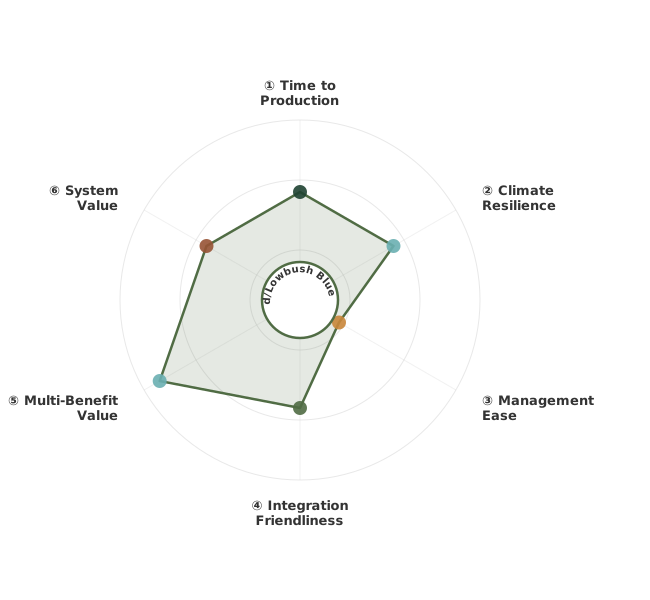
Regenerative Quick Profile

All recommendations assume integrated, regenerative practices—not conventional inputs.

Climate & Soil Fit

Climate: Tropical Rainforest, Tropical Monsoon, Tropical Savanna, Hot Semi-Arid (Steppe), Cold Semi-Arid (Steppe), Hot Desert, Cold Desert, Humid Subtropical, Oceanic (Maritime Temperate), Hot-Summer Mediterranean, Warm-Summer Mediterranean, Monsoon-Influenced Humid Subtropical, Subtropical Highland, Hot-Summer Continental, Warm-Summer Continental, Subarctic, Monsoon-Influenced Hot-Summer Continental, Tundra

Zones: USDA 4-7, Australian Zones 3-5, EU Atlantic, Continental, Boreal

Optimal Soil: Acidic Soil

System Role & Functions

Primary: Pollinator Support

Secondary: Cash Crop With Services, Forage Integration

Key Benefits: Multi-benefit value, Low maintenance, Yield Reliability

Management Level

Experience: Advanced

Maintenance: Very low maintenance - As a native shrub, lowbush blueberries integrate seamlessly into healthy soil ecosystems, requiring minimal intervention beyond maintaining optimal soil conditions.

Value Streams

  • Vegetable/specialty crop harvest
  • Livestock forage value
1

Climate Suitability Assessment

Will this plant thrive in your climate?

IDEALLY SUITED

Köppen Zone: Cfb (Oceanic (Maritime Temperate)), Dfa (Hot-Summer Continental), Dfb (Warm-Summer Continental)
USDA Zone: 5a, 5b, 6a
Australian Zone: temperate
EU Climate Region: atlantic

Wild/Lowbush Blueberry thrives in climates with cool, moist winters that provide sufficient chilling hours (typically 800-1200 hours below 45°F/7°C) and mild summers with temperatures generally below 80°F (27°C). These conditions are met in Köppen Cfb zones and EU Atlantic regions, as well as USDA zones 5a through 6b, and Australian temperate zones. Such climates offer a growing season of 120-180 frost-free days, allowing for proper dormancy induction and subsequent vigorous spring growth. Adequate natural precipitation (30-50 inches/75-125 cm annually) is beneficial, though well-drained, acidic soils are paramount. Establishment success is high (>85%) with minimal need for intensive management beyond weed control and soil amendment. Perennial productivity is reliable for 10-20 years, with yields averaging 500-2000 lbs/acre (560-2240 kg/ha) depending on management and specific site conditions. These zones require minimal protection, making them economically optimal for cultivation.

ADEQUATE

Köppen Zone: BSk (Cold Semi-Arid (Steppe)), Cfa (Humid Subtropical), Csb (Warm-Summer Mediterranean), Cwb (Subtropical Highland), Dfc (Subarctic)
USDA Zone: 4a, 7a

Wild/Lowbush Blueberry can be adequately grown in climates with more pronounced temperature fluctuations, such as Köppen Dfb and Dfc zones, and USDA zones 4a, 4b, and 7a/7b. These zones typically have growing seasons of 100-160 frost-free days, but may experience colder winters requiring adequate snow cover for insulation or hotter summers that necessitate careful site selection and supplemental irrigation. For instance, Dfc zones have short, cool summers, while USDA 7a/7b may face summer heat stress. Establishment success is good (70-85%) with proper timing and site preparation. Management may involve more attention to winter protection (ensuring snow cover) or mitigating summer heat (mulching, irrigation). Yields can be slightly lower (300-1500 lbs/acre or 336-1680 kg/ha) and stand persistence might be reduced to 5-15 years compared to ideal zones. Economic viability is maintained with standard agricultural inputs and practices.

NOT RECOMMENDED

Köppen Zone: Af (Tropical Rainforest), Am (Tropical Monsoon), Aw (Tropical Savanna), ET (Tundra), BSh (Hot Semi-Arid (Steppe)), BWh (Hot Desert), BWk (Cold Desert), Csa (Hot-Summer Mediterranean), Cwa (Monsoon-Influenced Humid Subtropical), Dwa (Monsoon-Influenced Hot-Summer Continental)
USDA Zone: 2a, 3a, 3b, 8a, 9a, 10a, 11a, 12a

Wild/Lowbush Blueberry is not recommended for climates that fall outside its specific temperature and chilling requirements, primarily those with extremely cold winters or excessively hot summers, and insufficient chilling hours. This includes Köppen BSh, USDA zones 1a through 3b, and 8a through 9b, as well as EU Boreal and Mediterranean regions if they lack sufficient winter chill. In USDA zones 1a-3b, extreme winter temperatures (-40°F/-40°C and below) cause high mortality, and the short growing season prevents fruit maturation, leading to establishment success below 50%. In USDA zones 8a-9b, the lack of adequate winter chilling (below 400 hours) and severe summer heat (consistently above 85°F/29°C) lead to heat stress, poor fruit development, and plant death, with establishment success also below 50%. Economically, these zones require intensive, often unfeasible, management inputs like extreme winter protection or extensive irrigation and shade structures, making cultivation impractical and unprofitable. Alternative plants better suited to these challenging conditions are recommended.

Better alternatives for these "not recommended" zones: Lingonberry (Vaccinium vitis-idaea) (more cold-hardy relative for very cold zones), Crowberry (Empetrum nigrum) (extremely cold-hardy native for harsh northern climates), Highbush Blueberry (Vaccinium corymbosum) (cultivars bred for warmer climates or specific chilling requirements), Rabbiteye Blueberry (Vaccinium virgatum) (naturally adapted to warmer southeastern US climates)

Note: Zones listed above represent climates where this plant can produce reliably with reasonable management. Climate zones not mentioned would require intensive climate modification (greenhouses, extensive infrastructure) and are not economically viable for regenerative agriculture purposes.

2

Soil Suitability Assessment

Which soil types work best for this plant?

IDEALLY SUITED

Acidic Soil

This plant thrives in these soil types without requiring amendments or remediation. Natural soil conditions support optimal growth and productivity.

ADEQUATE

Clay Soil, Loam Soil, Rich Soil, Rocky Soil, Sandy Soil

This plant performs acceptably in these soil types with moderate, manageable remediation such as pH adjustment, compost addition, or drainage improvement. The required amendments are practical and cost-effective for regenerative agriculture.

NOT RECOMMENDED

Alkaline Soil, Desert Soil, Saline Soil, Wet Soil

Growing this plant in these soil types would require impractical remediation such as complete soil replacement, extensive amendments, or cost-prohibitive infrastructure. These conditions are not economically viable for regenerative agriculture.

Note: Soil suitability assessments focus on remediation requirements. "Ideally Suited" means the plant generally thrives without the need for substantial amendments, "Adequate" means manageable remediation (lime, compost, mulch), and "Not Recommended" means impractical soil changes would be required. Climate factors like rainfall and temperature also influence success.

3

Seasonal Considerations

Planting timing, growth duration, and harvest windows

For lowbush blueberries, establishment is key. While not a typical annual, treating it as such for timing purposes, consider starting seeds indoors approximately 8-10 weeks before your last expected frost. Transplant these seedlings out into the field once the danger of frost has passed and soil temperatures consistently reach at least 50°F (10°C). Direct seeding is less common for this crop but can occur in early spring as soon as the soil is workable.

Lowbush blueberries require a longer establishment period, often taking 2-3 years to reach full production and a substantial harvest window, typically spanning mid-summer. Once established, the harvest can continue for several weeks. Succession planting isn't applicable for this perennial-rooted shrub. Their natural resilience means they tolerate cool summers well and are quite cold-hardy, readily entering dormancy for winter. While not ideal for fall planting due to limited establishment time before frost, protecting young plants through their first winter is crucial for long-term success. Season extension techniques are generally not employed for this crop, allowing its natural growth cycle to dictate the harvest.

4

System Role & Multi-Benefit Value

Functional roles, integration strategies, and stacked benefits

Functional Role

Integration Characteristics

Multi-Benefit Value: Ideally Suited - These plants offer vital wildlife sustenance and habitat, while their groundcover function and tolerance for acidic soils enhance biodiversity and soil stability.

5

Economics & Value Streams

Direct harvest, system benefits, ecosystem services, and risk diversification

Comprehensive economic analysis including direct harvest value, system enhancement contributions, ecosystem services, value timeline, and risk diversification strategies.

Per-Tree Production Economics

Metric Value
Establishment Cost
Years to First Harvest
Annual Maintenance
Yield
Market Price
Productive Lifespan
Net Annual Return* $-3600 to $5700/acre/year

Values shown per mature tree, not per acre. In regenerative systems, trees are integrated at low densities across diverse landscapes. Establishment costs spread over the lifespan of the tree. Early years have costs but no revenue.

* Net Annual Return = (Yield × Market Price) − (Amortized Establishment Cost + Annual Maintenance). This return is realized only at/after first harvest; early years have costs but no revenue. Range shows worst case to best case scenarios.

System Enhancement Value

Beyond harvest: pollination services for your crops and ecosystem

Pollination Service Provision

Lowbush blueberry (Vaccinium angustifolium) significantly enhances farm systems through its primary function as a pollinator support species. Studies in Maine demonstrate that blueberry croplands harbor a species-rich bee community, including solitary bees and bumble bees. Seven solitary bee species were documented as new for Maine in these regions, indicating the importance of agricultural landscapes for biodiversity. Bumble bee species richness was positively correlated with certified organic fields, suggesting that integrated, less intensive farming practices foster greater pollinator abundance and diversity. Furthermore, the plant itself can serve as a cash crop, offering an additional income stream. It also integrates with forage systems, as indicated by the identification of alternative forage sources for bees within blueberry growing regions. The low pH (4.0-5.0) typical of blueberry agroecosystems also dictates the types of associated flora and fauna, creating specialized niches. This dual role as a valuable crop and a vital ecological hub underscores its contribution to farm resilience and ecosystem health.

Ecosystem Service Contributions

Environmental contributions: carbon, pollinators, wildlife, and water

  • Carbon Sequestration: Lowbush blueberry is a perennial, low-growing shrub that forms dense ground cover. While not as significant as trees, it contributes to soil organic matter over time through root and leaf litter decomposition, thus sequestering carbon in the soil. Its perennial nature ensures continuous soil cover, reducing erosion and promoting soil health.
  • Pollinator Support: High: Knowledge base excerpts explicitly highlight lowbush blueberry's role in supporting a species-rich bee community, including solitary bees and bumble bees. It provides essential forage and habitat, with bumble bee richness positively correlated with organic fields.
  • Wildlife Habitat: Provides habitat and forage for various native bee species, as documented in studies. Its low-growing habit can offer ground cover for small wildlife. While not a primary mast producer, the plant and its associated flora can support insectivorous birds and small mammals.
  • Water Quality: Not applicable

Value Timeline: Bloom & Establishment

When you'll see results: annuals bloom year 1, perennials mature 2-3 years

Years 1-2

Initial establishment of ground cover, providing some soil stabilization and early forage for pollinators. Beginnings of support for native bee populations.

Years 3-5

Establishment of productive blueberry plants, offering consistent forage for pollinators. Potential for initial cash crop revenue. Continued development of associated floral diversity and insect habitat.

Years 10-20

Mature blueberry production, providing reliable cash crop income and significant, consistent pollinator support. Established ecosystem services related to biodiversity and soil health.

20+ Years

Long-term, sustained production of blueberries and ongoing provision of critical ecosystem services, including robust pollinator support and soil carbon sequestration. Potential for continued habitat provision for specialized flora and fauna.

Farm Risk Reduction

How pollinator support reduces crop failure risk

  • Multiple Revenue Streams: Cash crop revenue from lowbush blueberries, ecosystem services value (pollinator support, biodiversity enhancement), potential for integrated forage production.
  • Temporal Income Spread: Provides ongoing ecological services year-round, with a specific, seasonal cash crop harvest. Value is distributed through continuous ecological support and periodic economic returns.
  • Market Risk Hedge: Reduces reliance on single crops by offering a valuable niche product. The strong pollinator support function can improve yields of other entomophilous crops on the farm. Organic certification, as noted for increased bee richness, can also open up premium markets and reduce reliance on synthetic inputs.
6

Regenerative Suitability Details

Comprehensive trait ratings for system integration assessment

Comparative ratings for this plant across key regenerative agriculture traits.

Trait Suitability Explanation
Season Extension Adequate Lowbush blueberries exhibit exceptional cold resilience, enabling a summer harvest while their inherent hardiness safeguards them through harsh winters.
Space Efficiency Not Recommended As a slow-spreading groundcover, lowbush blueberries contribute to soil health in acidic environments, offering modest yields that build soil structure over time.
Storage Longevity Adequate Lowbush blueberries maintain quality for several weeks when moisture is managed, with freezing or preservation being ideal for extended availability.
Yield Reliability Ideally Suited Lowbush blueberries consistently produce fruit, demonstrating remarkable resilience to challenging conditions and variable weather, thereby supporting stable ecosystem yields.
Establishment Ease Not Recommended Successful lowbush blueberry establishment relies on replicating their preferred acidic, moist conditions, necessitating careful site preparation and ongoing soil health management.
Multi Benefit Value Ideally Suited These plants offer vital wildlife sustenance and habitat, while their groundcover function and tolerance for acidic soils enhance biodiversity and soil stability.
Climate Adaptability Adequate Thriving in cooler climates, lowbush blueberries benefit from mindful site selection to manage heat and ensure consistent soil moisture within their preferred acidic range.
Maintenance Intensity Ideally Suited As a native shrub, lowbush blueberries integrate seamlessly into healthy soil ecosystems, requiring minimal intervention beyond maintaining optimal soil conditions.
Disease Pest Resistance Ideally Suited Lowbush blueberries' innate hardiness and adaptation to acidic soils contribute to their robust resistance against common pests and diseases, fostering a balanced system.

Comparative System: Ratings compare plants within their economic category (e.g., cover crop nitrogen fixation compared to other cover crops, not to all plants). Individual farm conditions and management practices significantly influence actual performance.

7

Learn More

Why farmers use this plant and additional resources

Why Regenerative Farmers Use This Plant

Managed wild blueberry fields represent a unique agroecological system where the berry is the product of a naturally occurring ecosystem intentionally managed for production. These stands are not planted in the conventional sense but are wild stands managed through practices like prescribed burning and mowing. This approach recognizes the inherent value of the existing ecosystem, fostering biodiversity and soil health while yielding a valuable crop.

Regenerative Value and Ecological Function: As a native perennial, managed wild blueberry systems provide habitat and sustenance for a wide array of native pollinators and beneficial insects, supporting biodiversity within the agricultural landscape. Their extensive, shallow root systems help to stabilize soil, prevent erosion, and improve water infiltration, particularly on the sandy, well-drained, or peatland soils they prefer. Unlike annual crops, they do not require annual soil disturbance, thereby preserving soil structure and organic matter. The low-growing canopy provides essential ground cover, regulates soil temperature, and contributes to microclimate stability. Management practices, such as prescribed burning and mowing, when implemented thoughtfully, can mimic natural ecological processes, promoting the health and vigor of the blueberry plants and associated flora and fauna. The dense ground cover helps to suppress weeds and reduce reliance on herbicides.

Ecosystem Services: Managed wild blueberry systems offer significant ecosystem services. The flowering period attracts a multitude of pollinators, crucial for the reproduction of the blueberry itself and for supporting surrounding plant communities. The perennial nature of the crop minimizes soil disturbance, leading to improved soil health, increased water-holding capacity, and enhanced microbial activity over time. These systems are integral to the ecological functioning of the regions in which they are found, acting as vital components of the landscape mosaic. Their dense growth and spongy soil habitat can act as natural sponges, absorbing excess water and releasing it slowly, mitigating flood and drought impacts. They can also act as natural windbreaks, protecting adjacent landscapes.

Carbon Sequestration: Mature managed ecosystems are estimated to sequester 2-5 tons CO2e/acre/year, with contributions to soil organic matter accumulation over time. The complex canopy structure and ground cover provide habitat for numerous species, contributing to a robust food web.

Economic Returns and Asset Value: The economic returns from managed wild blueberry fields are long-term and sustainable, often spanning multiple decades. While direct planting is not the method, the management of these wild stands can yield significant harvests. The perennial nature of the blueberry bushes ensures decades of production, reducing the need for annual replanting and saving on labor and inputs. The ecosystem services provided, such as soil stabilization and water retention, also contribute to long-term economic viability by reducing risks associated with erosion and drought. The asset value of a well-managed wild blueberry ecosystem is derived from its sustained productivity and its contribution to overall landscape resilience.

Regional Adaptations: Managed wild blueberry systems are a prime example of regional agricultural adaptation, intrinsically tied to the specific environmental conditions of their native range. In Maine and Atlantic Canada, management techniques have been refined over generations to suit the specific climate and soil conditions. This includes understanding the optimal timing for prescribed burns, which is often in the early spring before new growth emerges, or late fall after the growing season. In the cooler, wetter climates of Atlantic Canada, burns might be conducted in spring or fall, carefully timed to avoid periods of high fire risk. In the warmer, drier summers of Maine, fall burns are more common. These regions demonstrate how long-term, low-input management of natural stands can be economically viable and ecologically beneficial.

8

How to Integrate This Plant

Practical guidance for regenerative systems

Integrating managed wild blueberry systems involves understanding that these are not planted from seed or nursery stock in the traditional sense. Instead, the process focuses on managing existing wild stands or encouraging their establishment through ecological succession and targeted interventions.

Establishment and Management: In areas where wild blueberries are native, management often begins with identifying suitable sites characterized by acidic, well-drained soils (peatlands or sandy soils) and adequate sunlight. The "planting" method is essentially ecological management, which can involve carefully timed prescribed burns or mowing to remove competing vegetation and stimulate new growth from the rhizomatous root systems.

  • Rejuvenation: Controlled burns, typically performed every 3-5 years, are timed to remove accumulated duff, stimulate new sprout growth from rhizomes, and control competing vegetation. Mowing is also employed, often for harvesting but also to manage plant height and encourage vigorous new growth. These interventions are usually performed during the dormant season (late fall or early spring) to minimize disruption to wildlife and plant cycles.
  • Water Management: Water needs are generally met by the natural precipitation patterns of their native habitats, which are often moist environments. Supplemental irrigation is rarely required once established, though it may be considered for enhancing yield in drier climates or during prolonged dry spells, aiming for about 1-2 inches (2.5-5 cm) of water per week during the growing season.
  • Fertility: Fertility is primarily derived from the decomposition of organic matter within their native soil types and natural nutrient cycling within the ecosystem. Controlled burns also recycle nutrients. Minimal to no synthetic fertilizer is typically applied, as the plants are adapted to low-nutrient conditions, and excessive fertility can favor competing weeds.
  • Plant Characteristics: The plants are low-growing, typically reaching heights of 6-18 inches (15-45 cm) at maturity. They establish from their rhizomatous root systems, with new shoots emerging annually.

Timeline to Production: The "establishment" period for a managed wild stand can be considered 1-3 years of intensive management to favor blueberry growth. Years to establishment of vigorous fruiting growth after a rejuvenation event (like burning or mowing) are typically 1-3 years, with full production potential developing over 3-15 years, and abundant fruiting achieved by year 3-5 after rejuvenation.

Advanced Integration and Infrastructure:

  • Multi-story Systems: While light penetration for understory crops is limited by the dense, low-growing nature of the blueberry plants, the managed ecosystem can support specific understory flora adapted to acidic, moist conditions. Planting nitrogen-fixing ground cover, such as certain native clovers or low-growing legumes, beneath the blueberry canopy can be beneficial, provided light penetration is adequate and competition is managed.
  • Spacing: For larger-scale managed areas, spacing considerations are less about row width and more about maintaining contiguous blocks of suitable habitat. If establishing from scratch (less common), initial spacing of seedlings or cuttings would be 1-2 feet (0.3-0.6 m) between plants and 3-4 feet (0.9-1.2 m) between rows.
  • Carbon Sequestration: Carbon sequestration becomes measurable as the ecosystem matures, with increased soil organic matter and biomass accumulation by year 5-7.
  • Long-term Infrastructure: Might include access roads for management equipment, maintaining appropriate drainage, managing competing woody species, ensuring access for management activities like controlled burns or mowing, and in some cases, deer or browse protection if populations are high and threaten young growth.

Regional adaptations are deeply tied to their native ranges, with management practices finely tuned to local climate and soil types. These managed landscapes are not only economically vital but also represent a significant portion of the natural heritage and biodiversity of their native territories, demonstrating a long-term, symbiotic relationship between human management and ecological health.

View Full Document (Printable single-page version)