
Advanced Chop Drop
Advanced Chop Drop is a specific method of using cover crops and crop residues where the plant material is chopped or mowed and then left on the soil surface as a mulch. This protects the soil, conserves moisture, suppresses weeds, and gradually breaks down to build soil organic matter. It can be "advanced" by using diverse cover crop cocktails, precise timing, or specific machinery to optimize its regenerative benefits.
Read More: Complete Description
Advanced Chop Drop refers to the practice of cutting and leaving aboveground biomass from cover crops or crop residues on the soil surface, where it decomposes and contributes to soil health. This process is "advanced" when it involves strategic planning, the use of diverse cover crop mixes, specialized equipment for optimal chopping and distribution, and precise timing to maximize its benefits for soil health, water management, and nutrient cycling. It's a technique that directly supports several core regenerative agriculture principles.
The practice strongly supports Principle 3: Keep Soil Covered. By leaving the chopped biomass on the surface, the soil is protected year-round from the erosive forces of wind and rain, as well as from extreme temperature fluctuations. This living mulch acts as a protective blanket, reducing soil splash, minimizing surface sealing, and maintaining a more stable environment for soil organisms. It also significantly reduces evaporation, conserving soil moisture which is crucial in both arid and semi-arid regions, and in areas prone to drought.
Principle 1: Minimize Soil Disturbance is also supported, as Chop Drop typically occurs in conjunction with reduced or no-till systems. Instead of incorporating residue through tillage, it remains on the surface, preserving soil structure, fungal networks, and earthworm channels. This avoids the disruption of soil aggregates, the exposure of soil organic matter to rapid oxidation, and the compaction associated with heavy machinery.
Furthermore, Chop Drop contributes to Principle 4: Maintain Living Roots and Principle 2: Maximize Crop Diversity. When used after a diverse cover crop cocktail (e.g., a mix of grasses, legumes, brassicas), the chopped residue represents a rich and varied source of organic matter. The living roots of the cover crop had already been feeding soil biology and building structure, and their fibrous residues continue to provide carbon for microbes. The diversity of plant material in the chop-and-drop adds a wider range of nutrients and complex organic compounds to the soil ecosystem.
Principle 5: Integrate Livestock can be indirectly supported. While Chop Drop usually refers to plant residue management, the resulting improved forage quality and quantity can support livestock, or the residue itself might be grazed after chopping/drying down. However, the primary focus of Chop Drop is on enhancing the soil's capacity to support plant life.
In a regenerative context, "advanced" Chop Drop moves beyond simply leaving residue. It involves selecting cover crop species not just for biomass production but also for their nutrient-scavenging abilities (e.g., deep-rooted brassicas breaking up compaction), nitrogen-fixing capacity (legumes), and the quality of their residue for decomposition. For instance, mixes that include legumes and grasses provide a balanced carbon-to-nitrogen ratio, ensuring slower, more consistent nutrient release as they decompose, rather than rapid nutrient tie-up.
The technique is particularly valuable in regions with high rainfall and intense storms, such as humid subtropical climates (e.g., Southeast Asia, eastern South America, southeastern USA), where soil erosion is a major concern. It's also highly effective in Mediterranean climates where dry summers necessitate water conservation, or in regions with short growing seasons where maximizing the benefit from cover crops is key.
Common misconceptions about Chop Drop include believing it ties up nitrogen indefinitely or that it's only useful in no-till systems. While any fresh organic matter can temporarily immobilize nitrogen as microbes decompose it, advanced Chop Drop strategies using balanced mixes (e.g., legumes to provide nitrogen) minimize this effect. Nutrient release becomes more synchronized with subsequent crop needs. While it's most common in no-till, chopping residue can also be beneficial in reduced-tillage systems to manage difficult-to-incorporate materials.
The practice is scalable, from small vegetable gardens in Europe where it builds soil for intensive production, to large-scale grain farms in Australia where it manages stubble and improves water efficiency, to mixed farming systems in Africa where it builds resilience against unpredictable rainfall. The key to "advanced" Chop Drop is understanding your specific soil type, climate, crop rotation, and the role cover crops play in your overall farm ecosystem to select the right species and manage them for optimal residue benefit.
Sources behind this view
Sources behind this view
 Videos & Podcasts
-
Explains the 'chop and drop' permaculture technique: pruning plants and dropping biomass as mulch to build soil fertility, protect soil, and mimic natural processes. Highlights nitrogen-fixing shrubs
-
Explores the 'chop and drop' cover cropping method, questioning its soil-building efficacy. Argues that nutrient volatilization and desiccation are common, with microbiology being the main driver of o
-
Recommends plantain for chop-and-drop mulching and daikon radish as a cover crop planted after July 1st. Emphasizes timing chop-and-drop when precipitation > evaporation, using nitrogen-fixing cover c
-
The 'chop and drop' technique provides food for the soil ecosystem, creates habitat, reduces water runoff and evaporation, and saves time.
Key Points
What It Is
- Chop cover crops or residue on surface
- Leaves residue as mulch for soil protection
- Builds soil organic matter over time
- Improves soil moisture conservation
Why Do It
- Protects soil from erosion and drought
- Suppresses weeds and moderates soil temperature
- Increases soil organic matter content
- Supports foundational regenerative principles
Know the Debate
- Residue decomposition varies by mix and climate.
- Mechanical termination preferred for soil health and organic systems.
- Chop drop vs. compost: different tools for different goals.
- Residue management impacts nutrient availability and crop performance.
Benefits - Financial
- Reduces synthetic fertilizer annual costs by $41.68–$72.94 per acre ($103–$180 per hectare)
- Saves $20.84–$41.68 per acre ($51–$103 per hectare) annually via improved water-use efficiency
- Increases overall yield stability by 10–15% under variable climate conditions
- Secondary revenue from carbon credits adds $10.42–$26.05 per acre ($26–$64 per hectare)
Benefits - System
- Keeps soil covered Year-Round (Principle 3)
- Maximizes crop diversity through cover crop mixes (Principle 2)
- Supports living roots and soil biology (Principle 4)
- Minimizes soil disturbance from tillage (Principle 1)
Risks - Financial
- Initial capital investment for specialized equipment ranges from $4,168–$208,400+
- Yield reduction of 10–15% possible due to nitrogen tie-up annually
Risks - System
- Biomass management challenges in wet conditions
- Some nutrient immobilization if C:N ratio is high
- Potential for residue-borne disease cycles
- Requires 1-3 years for significant OM increase
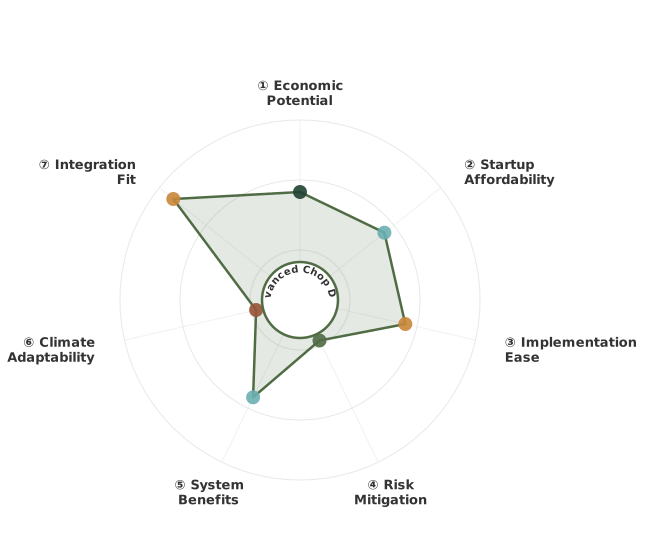
How These Traits Are Calculated
Trait dimensions are ordered clockwise starting from the top of the chart (12 o'clock position):
1. Economic Potential
Financial returns, annual value, and break-even timeline
WHAT: Evaluates financial viability by combining net annual value ($/ha from savings, income, and amortized harvests) with break-even timeline showing when practices pay for themselves.
WHY: Farmers need clear ROI understanding before committing resources. Fast payback (≤3 years) with strong returns (≥$300/ha) enables confident adoption, while long timelines (>10 years) restrict adoption to well-funded operations willing to wait for returns.
HOW: Calculated from net annual value in $/ha and break-even years. Exceptional (≥2.6): fast ROI ≤3 years + high value ≥$300/ha. Typical (1.8-2.5): moderate returns or longer timelines. Limited (<1.8): marginal economics or very long payback >10 years.
2. Startup Affordability
Initial investment costs and financial barrier to entry
WHAT: Measures financial barrier to entry through startup costs for equipment, infrastructure, consulting, and materials. Inverted scoring: lower costs = higher scores = more accessible adoption.
WHY: Affordability determines who can adopt. Low-cost practices (<$250/ha) enable widespread adoption across diverse scales, while high costs (>$2,500/ha) limit adoption to well-capitalized operations, creating barriers that slow regenerative transition.
HOW: Calculated from initial investment parsed from practice content. Inverted scoring: Exceptional (≥2.6): minimal investment <$250/ha. Typical (1.8-2.5): moderate costs $250-2,500/ha. Limited (<1.8): high barrier >$2,500/ha.
3. Implementation Ease
Learning curve and specialized knowledge required
WHAT: Measures how much learning, planning, and specialized knowledge a practice requires. Simpler practices with fewer steps score higher, while complex practices requiring extensive training or specialized resources score lower.
WHY: Complex practices create adoption barriers even when economically viable. Straightforward practices enable faster adoption and broader participation, while those requiring extensive training, timing precision, or specialized equipment limit who can succeed.
HOW: Evaluated by measuring documentation length and identifying complexity markers like location-specific requirements, seasonal timing windows, specialized skills, and dedicated equipment needs. Exceptional (≥2.6): straightforward practices with minimal prerequisites. Typical (1.8-2.5): moderate learning curve with some specialized needs. Limited (<1.8): steep learning curve requiring significant training or resources.
4. Risk Mitigation
Identified financial and ecological risk assessment
WHAT: Evaluates documented risks across financial (investment loss, market volatility) and ecological (crop failure, pest outbreaks) domains. Inverted scoring: fewer risks = higher scores.
WHY: Understanding risk exposure helps farmers make informed decisions. Low-risk practices allow confident implementation, while high-risk practices require careful planning and contingency resources. Risk transparency prevents costly failures.
HOW: Calculated from identified risks in practice content. Inverted scoring: Exceptional (≥2.6): ≤2 risks with manageable severity. Typical (1.8-2.5): 3-5 moderate risks. Limited (<1.8): 6+ risks or severe exposure.
5. System Benefits
How many ways the practice improves your land simultaneously
WHAT: Measures how many aspects of land health improve at once—carbon storage, soil quality, erosion control, water absorption, and biodiversity. Practices that improve multiple areas simultaneously create compounding benefits where each improvement reinforces the others.
WHY: The best practices solve multiple problems at once. For example, addressing erosion simultaneously builds carbon and improves water infiltration, creating a resilient system with positive feedback loops. Single-benefit approaches miss these compound transformation opportunities.
HOW: Evaluated across five key outcomes: carbon sequestration, soil organic matter increase, erosion reduction, water infiltration improvement, and biodiversity enhancement. Exceptional (≥2.6): high carbon storage (>8 t/ha/yr), improvements across 4-5 areas, transformative outcomes. Typical (1.8-2.5): moderate carbon (3-8 t/ha/yr), improvements across 2-3 areas. Limited (<1.8): modest impact (<3 t/ha/yr), single-area focus only.
6. Climate Adaptability
Geographic applicability across Köppen climate zones
WHAT: Evaluates geographic applicability by assessing how many Köppen climate zones successfully support a practice and what adaptation requirements are needed. Measures breadth of climates where farmers can implement with minimal to moderate modifications.
WHY: Universal practices working across diverse climates enable more farmers to adopt regenerative approaches. Practices limited to single climate types (only Mediterranean, only tropical) restrict adoption and slow global transition. Adaptability determines whether a practice serves niche regions or offers broad transformation.
HOW: LLM evaluation of regional success stories, Köppen zone coverage, and adaptation needs. Exceptional (≥2.6): 5+ zones or 4+ climate types, 3+ continents, minimal adaptation. Typical (1.8-2.5): 3-4 zones or 2-3 types, 2 continents, moderate adaptation. Limited (<1.8): 1-2 zones, single region, significant adaptation or highly specialized.
7. Integration Fit
How well this practice combines with others you're doing
WHAT: Measures how well a practice combines with other regenerative practices you might be doing. Some practices work as building blocks that make many other practices easier or more effective, while others work best on their own.
WHY: Practices that combine well with many others create more value on your farm. For example, cover cropping enables no-till, improves grazing, supports crop diversity, and helps water management—making all of them work better together. This helps you build a coherent system rather than juggling disconnected practices.
HOW: Evaluated by identifying which practices combine well and how strong those combinations are. 'Ideally Suited' means strong combinations where practices reinforce each other (practice A makes B easier, while B makes A more effective). 'Adequate' means complementary benefits that work well together. Exceptional (≥2.6): combines well with 6+ practices, serves as a building block. Typical (1.8-2.5): combines with 3-5 practices. Limited (<1.8): 1-2 practices or works best alone.
Going Deeper
1
WHY - The Benefits
Advanced Chop Drop is a powerful regenerative practice that provides a cascade of benefits, fundamentally transforming soil health, water management, and nutrient cycling over time. By strategically managing plant biomass, farmers and ranchers can create resilient,...
Advanced Chop Drop is a powerful regenerative practice that provides a cascade of benefits, fundamentally transforming soil health, water management, and nutrient cycling over time. By strategically managing plant biomass, farmers and ranchers can create resilient, productive landscapes that require fewer external inputs.
WHY - The Benefits
Advanced Chop Drop is a powerful regenerative practice that provides a cascade of benefits, fundamentally transforming soil health, water management, and nutrient cycling over time. By strategically managing plant biomass, farmers and ranchers can create resilient,...
Advanced Chop Drop is a powerful regenerative practice that provides a cascade of benefits, fundamentally transforming soil health, water management, and nutrient cycling over time. By strategically managing plant biomass, farmers and ranchers can create resilient, productive landscapes that require fewer external inputs.
Soil Health Benefits
The primary benefit of Chop Drop is the direct and continuous build-up of soil organic matter (SOM). Leaving diverse cover crop residue and crop stubble on the surface provides a consistent food source for soil microorganisms, earthworms, and other beneficial soil fauna. Over time, this increases SOM content by 0.2-1.0% per year. This enhances soil structure, leading to better aggregation, aeration, and water infiltration. A 1% increase in SOM can hold 20-30 tonnes of water per hectare (8-12 tons per acre) more, significantly improving drought resilience.
Improved soil structure from increased SOM means better root penetration and aeration. Soil becomes less prone to compaction, allowing plant roots to access deeper soil moisture and nutrients. The mulch layer also buffers soil temperature extremes, keeping soils cooler in summer and warmer in winter, which is crucial for microbial activity and root development across various climate zones. For example, in hot, arid regions like parts of Australia or the US Southwest (Köppen BWh/BSh), this temperature moderation is critical for both soil biology and crop establishment.
Chop Drop actively suppresses weeds by creating a physical barrier and shading out weed seeds, reducing competition for resources with cash crops or cover crops. This makes the practice especially valuable in humid subtropical regions (Köppen Cfa/Cwa) where weed pressure is high. The decomposition of residue also releases nutrients gradually, a process known as nutrient mineralization. This synchronized nutrient release matches crop uptake needs more closely than synthetic fertilizers, reducing nutrient losses through leaching or volatilization.
Economic Benefits
The economic advantages of Chop Drop are realized through reduced input costs and increased farm resilience. By providing nutrients through residue decomposition and suppressing weeds with mulch, the need for synthetic nitrogen fertilizers and herbicides can be significantly reduced, often by 15-30% per year after a few seasons. This directly lowers operational expenses.
Water use efficiency improves by 10-25% due to the mulch layer reducing evaporative losses, which is particularly critical in regions with high irrigation costs or unreliable rainfall. This can translate into significant savings on water bills or reduced reliance on irrigation infrastructure. The improved soil health and drought resilience also lead to more stable yields, reducing the risk of catastrophic crop failures during dry spells or extreme weather events.
The suppression of weeds can cut herbicide application costs by $50-150 per hectare (approx. $20-60 per acre) annually, depending on the weed seedbank and management intensity. Furthermore, the long-term investment in soil health through Chop Drop increases the land's productive capacity and resilience, contributing to higher asset value and long-term farm profitability.
Water Cycle Benefits
Chop Drop has a profound positive impact on the region's water cycle. The physical mulch layer intercepts rainfall, reducing the impact of raindrops on the soil surface and preventing particle detachment, thereby reducing both runoff and erosion. This leads to higher infiltration rates, allowing more rainwater to replenish soil moisture and groundwater reserves. In areas with intense rainfall like parts of India or Southeast Asia (Köppen types with high precipitation), this reduction in runoff can help mitigate flash flooding and soil loss from fields.
By improving infiltration and increasing the soil's water-holding capacity through higher SOM, the land becomes more resilient to drought. During dry periods, the mulch layer significantly reduces soil moisture evaporation. This means that the soil retains moisture longer, supporting plant growth even when rainfall is scarce. The integrated plant systems, often employing diverse cover crops, maintain living roots longer into the dry season, further contributing to soil structure and water infiltration.
The improved water quality is another significant benefit. Reduced runoff means less sediment, nutrients (like phosphorus and nitrogen), and pesticides entering waterways. This protects aquatic ecosystems and reduces the cost of water treatment downstream. This is particularly relevant in agricultural landscapes that drain into sensitive aquatic environments.
Carbon Sequestration
Chop Drop is a powerful tool for sequestering atmospheric carbon dioxide into the soil. This process occurs through photosynthesis by plants (cover crops and cash crops), which converts CO2 into organic carbon, and the subsequent decomposition and incorporation of this organic matter into the soil. The undisturbed soil structure preserves this carbon, preventing its rapid release back into the atmosphere.
The continuous addition of biomass provides a steady supply of carbon to soil microbes, enhancing SOM and soil carbon stocks. Studies have shown that regenerative practices like Chop Drop can sequester 5-15 tonnes of CO2 per hectare per year, depending on soil type, climate, and biomass production. Over decades, this can significantly contribute to mitigating climate change and building soil fertility.
Biodiversity Enhancement
By creating a more stable, moist, and biologically active soil environment, Chop Drop fosters increased biodiversity both above and below ground. The mulch layer provides habitat and food for a wide array of beneficial organisms, including earthworms, predatory insects, spiders, and soil microbes. This increased biological activity leads to a more resilient and self-regulating agricultural ecosystem.
The diversity of plant residues, especially when derived from diverse cover crop mixes, supports a wider range of soil microbial communities. Improved soil structure and water availability also benefit plant diversity, supporting richer food webs for above-ground insects and wildlife. This holistic approach to land management creates healthier ecosystems that can withstand environmental stresses more effectively.
Regenerative Systems Fit
Advanced Chop Drop is a foundational practice that directly underpins several regenerative principles and makes other regenerative practices more effective.
Principle 1 (Minimize Soil Disturbance): Chop Drop inherently works with reduced or no-till systems, preserving soil structure and biology disturbed by tillage.
Principle 2 (Maximize Crop Diversity): The practice is most effective when applied to residues from diverse cover crops, adding layers of complexity to the plant-soil ecosystem.
Principle 3 (Keep Soil Covered): This is the most direct principle supported, as the chopped biomass creates a continuous protective mulch.
Principle 4 (Maintain Living Roots): Chop Drop is often the culmination of practices that maintain living roots, as cover crops that are chopped have been actively growing and feeding soil biology.
Principle 5 (Integrate Livestock): While not directly involving livestock, the improved forage production resulting from better soil health can support livestock integration.
Chop Drop acts as a catalyst, creating the soil conditions necessary for other regenerative practices to thrive. It is particularly synergistic with cover cropping, no-till, and crop rotation in building long-term soil health and farm resilience.
Sources behind this view
Videos & Podcasts
-
Provides actionable steps for regenerative agronomy: balanced N:C inputs (molasses, humates), microbial teas, yeast metabolites, calcium, and effective seed treatments. Emphasizes scalability, systems
-
Regenerative agriculture provides solutions for climate change, human health, and soil degradation, contrasting with industrial agriculture's harmful impacts, including glyphosate use. Practices like
-
Cover crops attract beneficial insects and pollinators, suppress pests, and improve soil biology. Mimicking nature's integration of animals and plants, alongside practices like no-till and diversity,

-
Regenerative farming, using no-till, cover crops, and diverse rotations, rapidly rebuilds soil organic matter and soil life. Examples from Ohio and Ghana show these practices increase profitability by

 Community
-
Enhance soil health through plant diversity, continuous soil cover (living plants/residues), and livestock integration. Manage carbon-to-nitrogen ratios of residues and adopt no-till practices to impr
Read more (opens in new window) permies.com -
Explains regenerative agriculture principles: no-till gardening to support soil microbiome and sequester carbon; using compost to reduce erosion and compaction; and planting diverse cover crops (grass
Read more (opens in new window) ucanr.edu
 Research
-
Soil Microbial Dynamics in Regenerative Agriculture Systems: A Data-Driven Synthesis for Soil Health, Pest Suppression, and Yield Sustainability in the Western Canadian Prairies (opens in new window)
This study found: Regenerative farming in Western Canada boosts soil microbes (up to 86%), fungi (up to 60%), and carbon, improving soil health and water retention. This leads to more stable yields and reduced syntheti
-
Building Soil Health and Fertility through Organic Amendments and Practices: A Review (opens in new window)
This study found: Review of organic amendments (manures, compost, cover crops) and regenerative practices (no-till, crop diversity, agroecology) shows they restore soil health by increasing organic matter and beneficia
-
Regenerative Agriculture: Restoring Ecosystems¢ Resilience and Productivity: A Review (opens in new window)
This study found: Regenerative agriculture builds soil health and ecosystem services through practices like no-till, cover crops, and diverse rotations. It increases soil organic matter, improves water infiltration, bo
-
Regenerative Almond Production Systems Improve Soil Health, Biodiversity, and Profit (opens in new window)
This study found: Regenerative almond farms in California doubled profits and improved soil health and biodiversity by combining practices like cover crops, compost, and reduced synthetic inputs, with no yield loss.
2
HOW - Implementation Process
Successfully implementing Advanced Chop Drop requires thoughtful planning, appropriate species selection, timely execution, and understanding of its place within your overall farming system.
Successfully implementing Advanced Chop Drop requires thoughtful planning, appropriate species selection, timely execution, and understanding of its place within your overall farming system.
HOW - Implementation Process
Successfully implementing Advanced Chop Drop requires thoughtful planning, appropriate species selection, timely execution, and understanding of its place within your overall farming system.
Successfully implementing Advanced Chop Drop requires thoughtful planning, appropriate species selection, timely execution, and understanding of its place within your overall farming system.
Prerequisites
- Soil Assessment: Understand your soil type, existing organic matter levels, fertility, and compaction issues. This helps in selecting appropriate cover crops and estimating residue decomposition rates.
- Climate and Growing Season: Assess your region's rainfall patterns, temperature extremes, and length of growing seasons (e.g., Humid Temperate, Mediterranean, Arid/Semi-Arid climates). This guides cover crop selection and timing.
- Farm Goals: Define what you aim to achieve with Chop Drop: erosion control, moisture conservation, nutrient scavenging, weed suppression, or building SOM.
- Equipment Availability: Ensure you have access to a flail mower, roller-crimper, or specialized residue management equipment.
Phase 1: Cover Crop Selection and Planting
This is the most critical phase for Advanced Chop Drop. The quality and quantity of biomass produced by cover crops directly determine the benefits.
-
Species Mix: Design a diverse cover crop cocktail tailored to your goals and region. Aim for a mix of 3-5+ species, including:
- Grasses: Annual ryegrass, oats, cereal rye, sorghum-sudangrass, millet (for biomass, carbon, fibrous roots).
- Legumes: Hairy vetch, crimson clover, field peas, cowpeas (for nitrogen fixation, diverse organic matter).
- Brassicas: Daikon radish, tillage radish, mustard, rapeseed (for deep root penetration, nutrient scavenging, disease suppression).
- Forbs: Buckwheat, sunflower, phacelia (for pollinator support, diverse organic matter, deeper nutrient access).
-
Planting Strategy: Plant cover crops at optimal times for your region to maximize growth before termination. Seed at recommended rates, ensuring good seed-soil contact, especially when following cash crops. Consider drilled seeding for better seed placement and establishment certainty. International seed sourcing and availability should be investigated locally.
- Nutrient Management: If cover crops are struggling, consider organic fertility sources (compost, well-aged manure) or targeted bio-stimulants rather than synthetic fertilizers to ensure good biomass production while staying regenerative.
Phase 2: Cover Crop Management and Termination
The timing and method of cover crop termination are crucial for effective Chop Drop.
- Timing: Terminate cover crops at their peak biomass, typically just before or at the flowering stage for legumes and when grasses are reaching heading stage. Terminating too early reduces biomass; terminating too late can lead to a high C:N ratio (more carbon, less nitrogen) in the residue, potentially causing temporary nitrogen immobilization for the next crop.
- Termination Methods:
- Roller-Crimper: This is a preferred regenerative method. It bends and crushes stems, creating a dense, uniform mulch layer without pesticides. It's most effective when cover crops are slightly past peak growth (e.g., flowering stage for legumes) and synchronized with cash crop planting. This method works well in humid temperate and subtropical regions.
- Flail Mowing: Cuts biomass into finer pieces, which decompose faster and form a more uniform layer. This is effective in many climates, including arid regions where faster decomposition is desired. Ensure mower settings are appropriate to avoid removing too much residue.
- Shredding/Chopping: Machinery like a stalk chopper can be used, but ensure it doesn't bury the residue excessively.
- Broadcast and Drill: If using a roller-crimper, specialized no-till drills can plant cash crops directly into the residue mat. If using other methods, plan for subsequent planting.
Phase 3: Planting and Residue Management
After cover crop termination, the chopped residue becomes the "mulch" for the subsequent cash crop.
- Cash Crop Establishment: In no-till systems, plant cash crops directly into the residue mat using a no-till drill or planter. Ensure equipment can handle the residue load and achieve proper seed-to-soil contact. In reduced tillage systems, minimal disturbance tillage may be used to incorporate the residue while still retaining a significant portion on the surface.
- Residue Layer Management: The thickness of the chopped residue ("chop layer") is important. Too thin, and it may not provide adequate weed suppression or moisture conservation. Too thick, and it can impede seedling emergence, create anaerobic conditions, or host disease pathogens. A 10-20 cm (4-8 inch) layer of fluffy residue is often ideal, leading to a denser mat as it settles.
- Nutrient Management: Monitor nutrient availability for the cash crop. The residue decomposition will release nutrients, but initial deficiencies of nitrogen (due to a high C:N ratio) might occur. Adjustments with organic fertilizers (e.g., compost, well-aged manure, or slow-release organic N sources) can be made.
- Disease and Pest Management: Monitor for residue-borne diseases. Choosing cover crop mixes with disease-suppressive properties and managing for overall soil health can mitigate these risks. Ensure good airflow around cash crop seedlings.
Phase 4: Ongoing Monitoring and Adaptation
Continuously monitor soil conditions and crop performance.
- Soil Health Indicators: Regularly assess soil organic matter levels, aggregate stability, earthworm populations, and water infiltration rates to track progress.
- Crop Performance: Observe cash crop establishment, growth, and yield. Adjust cover crop mixes, termination timing, and residue management based on these observations.
- Weed and Pest Pressure: Note changes in weed populations and pest prevalence. Adapt cover crop mixes to target specific challenges.
- Residue Decomposition: Observe how quickly the residue breaks down. Colder climates or dry conditions will slow decomposition, while warmer, moist conditions with high-legume content will speed it up. Adjust cover crop mixes for future cycles to achieve desired decomposition rates.
Transition Timeline & Phase-Out Strategy
Chop Drop is a regenerative practice that doesn't typically need "phasing out." Instead, its effectiveness can be enhanced over time.
- Initial Transition (Years 1-3): Focus on establishing consistent cover cropping and effective chopping/residue management. Expect gradual improvements in soil moisture, weed suppression, and minor yield stability. Nutrient management may require minor adjustments.
- Maturation Phase (Years 3-7): Soil organic matter begins to visibly increase, and the mulching effect becomes more pronounced. Weed pressure from the seed bank diminishes. Nutrient release becomes more predictable. Reliance on synthetic fertilizers and herbicides starts to decrease significantly.
- Optimized System (Year 7+): Soil conditions are significantly improved with higher SOM, better structure, and water infiltration. Nutrient cycling is robust, with cover crop residue providing most required nutrients. Weed suppression is highly effective, and reliance on external inputs is minimal. The system requires ongoing adaptation of cover crop mixes to address evolving needs.
The "phase-out" is not of Chop Drop itself, but of the conventional practices it replaces (tillage, synthetic fertilizers, herbicides, bare fallows). The goal is to become so proficient at cover cropping and residue management that reliance on external inputs diminishes naturally as soil health improves.
3
Know the Debate
Advanced Chop Drop enhances soil health, water conservation, and nutrient cycling, but its effectiveness and economic viability depend on your cont...
Know the Debate
Advanced Chop Drop enhances soil health, water conservation, and nutrient cycling, but its effectiveness and economic viability depend on your cont...
Advanced Chop Drop enhances soil health, water conservation, and nutrient cycling, but its effectiveness and economic viability depend on your context. In humid regions with reliable rainfall, diverse cover crops and mechanical termination can yield rapid soil improvements and cost savings within three years. However, in semi-arid climates or when using high-carbon residues, decomposition is slower, requiring patience, careful timing, and potentially modified nutrient management. The upfront investment in chopping equipment ranges from $3,000 to $150,000+ depending on scale, while annual operating costs are typically $15-100/acre.
How fast will cover crop residue decompose and release nutrients?
Fast nutrient release (2-4 weeks)
Diverse cover crop mixes including legumes provide balanced nutrient profiles that decompose quickly, releasing available nitrogen and other nutrients within weeks. This makes their fertility predictable for subsequent cash crops.
Sources behind this view
Sources behind this view
Videos & Podcasts
-
Explores the 'chop and drop' cover cropping method, questioning its soil-building efficacy. Argues that nutrient volatilization and desiccation are common, with microbiology being the main driver of organic matter increase, contrasting it with external composting.
Research
-
Enhancing Sustainable Farming and Climate Resilience: The Role of Cover Crops (opens in new window)
This study found: Planting cover crops is a vital farming practice that improves soil health, prevents erosion, holds more water, and supports beneficial insects and wildlife. By using a mix of cover crops, especially those that fix nitrogen (like legumes), farmers can naturally add fertilizer to the soil, reducing the need for synthetic products. Cover crops also help control weeds, attract natural pest predators, and pull carbon out of the atmosphere to store in the soil, which helps fight climate change. These practices make farms more profitable by cutting costs and more resilient to unpredictable weather. While challenges like initial costs exist, research, policy, and education can help more farmers adopt this beneficial practice.
 From the Web
-
Details methods for using green manures and cover crops, including incorporation techniques, optimal timing (mid-bloom, specific C:N ratios), and system types like winter cover crops, smother crops, interseeding, and summer cover crops for weed control and nutrient cycling.
Slow release and potential tie-up (1-2 crop seasons)
Residues from monocultures, especially high-carbon grasses like cereal rye, decompose slowly and can immobilize available nitrogen for 1-2 crop seasons. This is more common in cooler or drier climates or when plants are harvested late.
Sources behind this view
Sources behind this view
Videos & Podcasts
-
Critiques 'chop and drop' for small gardens, arguing it's too slow and inefficient for soil building compared to composting due to biomass loss and thin surface layers. Composting offers more concentrated soil amendment benefits.
-
Avoid bare soil by using mulches or cover crops (vetch, rye, wheat, oats, peas). Combat soil compaction from tillage with a broadfork or subsoiler, and enhance aeration and microbial activity by applying compost extracts.
Research
-
Effects of soil cover practices on soil health and agroecological functions (opens in new window)
This study found: This review looks at research on how using cover crops (plants grown to protect and improve soil) and mulching (covering the soil surface with organic material) helps soil health and farm ecosystems. The studies show that using these practices over time reliably increases soil organic matter. Farmers can expect better soil structure, less compaction, and improved water absorption. Organic matter acts as the key driver, improving soil's physical condition, water handling, and the life within it. These practices also boost the activity and variety of beneficial soil microbes and organisms. Combining cover crops with practices like reduced tillage or adding livestock can further enhance soil life and nutrient recycling.
Making Sense of the Differences
Decomposition and nutrient release rates vary greatly depending on cover crop species, climate, and soil moisture. While legume-rich mixes offer faster nutrient cycling, high-carbon residues in cooler or drier climates can temporarily immobilize nitrogen. Farmers should choose mixes and termination timing suited to their cash crop's needs and local conditions, potentially adjusting early-season fertility.
Is mechanical termination preferable to herbicides for cover crops?
Mechanical termination is superior for soil health
Mechanical methods like roller-crimping and mowing preserve soil biology and structure, avoiding synthetic inputs and preserving residue. This alignswith organic principles and long-term soil health goals.
Sources behind this view
Sources behind this view
Videos & Podcasts
-
Recommends killing cover crops at full bloom using rolling or chain methods for low-till/no-till systems, as taught by Dr. Ron Morris (Virginia Tech). This maximizes organic matter, conserves soil moisture, cools soil, and reduces soil-borne diseases.

Research
-
A survey of cover crop practices and perceptions of sustainable farmers in North Carolina and the surrounding region (opens in new window)
This study found: A survey of over 200 farmers in North Carolina and nearby areas, many running small, diverse farms, found that a large majority (79%) are already using cover crops. They reported using more than 25 different types of cover crops. Farmers strongly agreed that cover crops improve soil by increasing organic matter, reducing erosion, holding more moisture, adding nitrogen for future crops, controlling weeds, and helping to break up compacted soil. While cost wasn't seen as a major barrier, the biggest challenges were incorporating cover crop residue into the soil and a lack of suitable equipment, especially for no-till farming. The study also noted that farmers sometimes missed opportunities to get the most out of their cover crops.
From the Web
-
Details reduced tillage options for organic farming: mulch tillage, ridge/strip tillage, and killed-mulch systems. Explains mechanical methods like mowing, undercutting, and rolling/crimping for cover crop termination, emphasizing cover crop selection and challenges.
Herbicides offer practical reliability and flexibility
Herbicides provide reliable, cost-effective termination regardless of growth stage, allowing flexible planting. This approach is often preferred in commercial no-till for its labor efficiency and speed.
Sources behind this view
Sources behind this view
Videos & Podcasts
-
Effective cover crop termination in vegetable systems involves either incorporation (tillage-intensive) or surface residue management. Surface residue offers soil stability, moisture conservation, and temperature moderation but requires significant biomass and careful termination using equipment like roller crimpers or modified planters, with studies showing comparable yields to plastic mulch.

Research
-
A survey of cover crop practices and perceptions of sustainable farmers in North Carolina and the surrounding region (opens in new window)
This study found: A survey of over 200 farmers in North Carolina and nearby areas, many running small, diverse farms, found that a large majority (79%) are already using cover crops. They reported using more than 25 different types of cover crops. Farmers strongly agreed that cover crops improve soil by increasing organic matter, reducing erosion, holding more moisture, adding nitrogen for future crops, controlling weeds, and helping to break up compacted soil. While cost wasn't seen as a major barrier, the biggest challenges were incorporating cover crop residue into the soil and a lack of suitable equipment, especially for no-till farming. The study also noted that farmers sometimes missed opportunities to get the most out of their cover crops.
From the Web
-
Organic farmers use diverse cover crop mixtures for soil fertility and pest management without synthetics. Roller crimpers are used for non-herbicide termination, creating mulch for weed suppression. Resources include study circles and the Penn State Organic Crop Production Guide.
Making Sense of the Differences
The choice between mechanical and herbicide termination for Chop Drop depends heavily on farm system goals, organic certification requirements, and equipment accessibility. While mechanical methods align better with organic and soil health principles by preserving residue and avoiding chemicals, herbicides offer easier timing flexibility and lower labor costs for conventional no-till. Farmers must weigh input costs, labor availability, and environmental impact against system requirements and risk tolerance.
Is Chop and Drop as effective as composting for soil building?
Chop and drop builds soil effectively over time
Chop and drop continuously builds soil organic matter and supports soil biology without the labor and potential nutrient loss of composting. It creates protective mulch and enhances microbial populations.
Sources behind this view
Sources behind this view
Videos & Podcasts
-
The 'chop and drop' technique provides food for the soil ecosystem, creates habitat, reduces water runoff and evaporation, and saves time.
Research
-
Mulching Practices for Sustainable Agriculture: Enhancing Yield, Soil Moisture, and Environmental Benefits in Field and Fruit Crops (opens in new window)
This study found: This review summarizes how covering the soil with mulch helps make farming more sustainable. Mulching acts like a protective blanket for the soil, helping to control temperature, keep weeds down, and prevent water from evaporating. This leads to better plant growth and higher yields. Organic mulches, like straw or compost, break down over time, adding nutrients and improving soil health for the long run. Other types of mulch, including biodegradable ones, can immediately help retain soil moisture and stop weeds. Mulching also helps prevent soil erosion and improves soil structure, which is vital for keeping land productive. Using new types of biodegradable mulches can also help reduce plastic waste. To get the best results, farmers need to choose the right mulch for their specific crops, soil, and climate, with support from good policies and advice.
From the Web
-
Cover crops and crop residues significantly enhance soil health by feeding soil organisms, building aggregates, increasing organic matter, and reducing erosion. Residues used as mulch offer benefits like improved water availability and weed control, though plastic mulches raise environmental concerns.
Composting offers superior concentrated soil amendment
Composting provides a more concentrated soil amendment with faster nutrient availability and more stable organic matter, making it more efficient for immediate soil restoration than the slower process of Chop Drop.
Sources behind this view
Sources behind this view
Videos & Podcasts
-
Critiques 'chop and drop' for small gardens, arguing it's too slow and inefficient for soil building compared to composting due to biomass loss and thin surface layers. Composting offers more concentrated soil amendment benefits.
Research
-
Mulching: An Efficient Technology for Sustainable Agriculture Production (opens in new window)
This study found: This review looks at how using mulch on fields can help farmers produce crops more sustainably. Mulching, which is covering the soil with materials like plastic, straw, or compost, has many benefits. It helps keep moisture in the soil by reducing evaporation, which means plants can use water more efficiently. It also helps control weeds, keeps soil temperature more stable, and can positively affect the tiny organisms living in the soil. While plastic mulches can significantly boost crop yields, organic mulches are cheaper and better for the environment. The best mulch choice depends on the specific crop, how it's managed, and the local climate. The review suggests more research is needed on affordable, natural mulches that break down over time, focusing on how they affect the soil's climate, life, fertility, and crop growth.
From the Web
-
Mulching protects soil, retains moisture, prevents weeds, and improves fertility. Recommended materials include crop residues, grasses, and biodegradable films. Application before the rainy season is advised.
Making Sense of the Differences
Chop Drop and composting serve different, though sometimes overlapping, functions. Composting provides a concentrated nutrient amendment and rapidly adds stable organic matter, ideal for immediate fertility needs or restoring depleted soils. Chop Drop, on the other hand, focuses on continuous surface protection, moisture retention, and gradual soil enrichment through ongoing organic matter input and microbial support. The choice depends on specific farm goals, available resources, and desired time horizon for soil improvement.
3
HOW MUCH - Costs & Investment
Note: All costs are based on recent US economic data (2023-2025) and may vary substantially in other regions based on local labor rates, material costs, regulatory requirements, and currency exchange rates. USD equivalent is provided where feasible. Seek local estimates...
Note: All costs are based on recent US economic data (2023-2025) and may vary substantially in other regions based on local labor rates, material costs, regulatory requirements, and currency exchange rates. USD equivalent is provided where feasible. Seek local estimates for accurate budgeting.
HOW MUCH - Costs & Investment
Note: All costs are based on recent US economic data (2023-2025) and may vary substantially in other regions based on local labor rates, material costs, regulatory requirements, and currency exchange rates. USD equivalent is provided where feasible. Seek local estimates...
Note: All costs are based on recent US economic data (2023-2025) and may vary substantially in other regions based on local labor rates, material costs, regulatory requirements, and currency exchange rates. USD equivalent is provided where feasible. Seek local estimates for accurate budgeting.
Note: All costs are based on recent US economic data (2024–2026) and may vary substantially by region based on local labor rates, material costs, and regulatory requirements.
Seeding and Establishment Costs
Biological inputs form the foundation of an advanced chop-drop system, typically involving multi-species cover crop cocktails. For small-scale operations (under 50 acres (20 ha)), producers often source retail-priced seed mixes, resulting in costs ranging from $26.05 to $67.73 per acre ($64–$167/ha). Mid-size operations (50–500 acres (20–202 ha)) balance costs by leveraging regional wholesale volumes, bringing expenses to $20.84 to $46.89 per acre ($51–$116/ha). Large-scale operations (500+ acres) maximize bulk procurement and custom blending, often realizing costs of $12.50 to $36.47 per acre ($31–$90/ha). If specific field conditions necessitate aerial seeding or specialized inter-seeding to guarantee establishment prior to cash crop harvest, growers must budget an additional $15.63 to $26.05 per acre ($39–$64/ha) across all farm scales to cover service fees and auxiliary equipment rental.
Equipment and Machinery Investment
The chop-drop system requires specialized termination hardware like roller-crimpers or heavy-duty flail mowers. Small-scale producers typically enter this market with an equipment investment of $4,168 to $12,504, maintaining this machinery for $5.21 to $15.63 per acre ($13–$39/ha) annually. Mid-size producers generally scale to more robust tractor-mounted equipment, requiring an initial capital expenditure of $15,630 to $57,310; their annual depreciation and maintenance costs average $8.34 to $20.84 per acre ($21–$51/ha). Large-scale operations utilize precision front-mounted, multi-section hydraulic crimpers that can cost $62,520 to $208,400+. Despite this high initial outlay, the operational efficiency of larger gear reduces annual maintenance and operating costs, averaging $4.17 to $12.50 per acre ($10–$31/ha).
Labor and Operational Inputs
Timing is the most critical variable in chop-drop economics. Small-scale farms labor under manual oversight, with fuel and hourly labor costs for termination-focused passes totaling $15.63 to $36.47 per acre ($39–$90/ha). Mid-size farms utilize higher-horsepower tractors to increase per-pass acreage capacity, lowering costs to $10.42 to $26.05 per acre ($26–$64/ha). For large-scale operations, investment in auto-steer, RTK guidance, and wide-implement machinery drives labor and fuel overhead down to $5.21 to $15.63 per acre ($13–$39/ha). These figures assume consistent tractor ownership and do not account for external custom-hire rates.
Most Spend: Most agricultural operations in this practice fall within the $25–$55 per acre ($62–$136/ha) range for annual biological inputs and mechanical field operations combined, reflecting a balance between high-diversity cover crop mixes and efficient, single-pass termination strategies.
Why the Range?: Cost variation is driven primarily by the number of species in the cocktail and the precision of the equipment used. Farms that mix their own bulk seed or use high-capacity, wide-width termination equipment consistently land at the lower end of the cost spectrum, whereas those relying on proprietary pre-mixed seeds and smaller, slower field implements incur higher per-acre costs.
Sources behind this view
Videos & Podcasts
-
Adopting soil health practices like reduced tillage and cover crops can be economically neutral or beneficial by offsetting costs of fuel, machinery, and erosion-related nutrient loss, with potential

-
Compares costs of no-till ($40/acre), no-till with cover crops ($50/acre), and diverse rotations, emphasizing that termination costs are often integrated into regular herbicide use.
Community
-
Cover crop management includes termination methods (roller-crimper, flail-mower) for organic and conventional systems, with costs detailed in SARE and UC Davis studies, potentially being minor compare
Read more (opens in new window) ucanr.edu
Research
-
Farmers employ diverse cover crop management strategies to meet soil health goals (opens in new window)
This study found: Farmers use diverse cover crop methods, with costs around $99/ha. 'Planting green' increased. Varied practices and uncertain profitability make adoption challenging.
-
Farmers employ diverse cover crop management strategies to meet soil health goals (opens in new window)
This study found: Farmers use diverse cover crop strategies, with costs averaging $99/hectare. Experimentation and varied practices make predicting profitability challenging.
5
REWARDS AND RISKS - Economics & Risk Factors
Economic Scenarios
Economic Scenarios
REWARDS AND RISKS - Economics & Risk Factors
Economic Scenarios
Economic Scenarios
The economic profile of an advanced chop-drop system is defined by a 3–5 year transition towards regenerative equilibrium. In the best-case scenario, producers effectively manage high-biomass cocktails of 10+ species, realizing nitrogen-input savings of $41.68 to $72.94 per acre ($103–$180/ha) and irrigation water-retention savings of $20.84 to $41.68 per acre ($51–$103/ha). With 10–15% yield improvements, these farms see total annual net benefits of $104.20 to $187.56 per acre ($257–$463/ha). The typical scenario, involving 4–5 species and moderate management precision, results in a $26.05 to $46.89 saving on synthetic inputs and a $57.31 to $93.78 per acre ($142–$232/ha) net financial gain, with equipment payoff occurring over 10–14 years. Conversely, failure to time termination correctly—often due to late-season moisture competition or premature weed suppression—leads to a worst-case yield drag of $62.52 to $125.04 per acre ($154–$309/ha). If abandonment occurs, producers face a total loss of the initial $5,210 to $26,050 investment in specialized equipment.
Market volatility heavily influences profitability; while high commodity prices amplify the revenue gains of increased yields, periods of inflated synthetic fertilizer pricing make the input-reduction benefits of chop-drop systems a vital hedge against rising costs. Additionally, carbon credit markets are currently providing $10.42 to $26.05 per acre ($26–$64/ha) in secondary payments for verified soil health improvements, effectively offsetting terminal equipment financing costs.
Transition Period Risks: The "nitrogen gap" is the most substantial risk during the first 3 years of adoption. Because soil microbes immobilize nitrogen while breaking down carbon-rich residues, producers may face a 10–15% dip in cash crop yields if they do not manage nutrient availability. To mitigate this, farmers should plan for a starter nitrogen application of 20–40 lbs (9.1–18 kg) per acre during the crop-planting phase. This mitigation strategy adds $15.63 to $31.26 per acre ($39–$77/ha) in immediate costs but acts as an essential insurance policy against cumulative yield losses, ensuring the system reaches biological stabilization by the end of the third growing season.
Sources behind this view
Videos & Podcasts
-
Transitioning to regenerative farming costs $75k-$140k over two years but saves money compared to conventional nitrogen expenses ($195k/year). Start small (50-100 acres) with cover crops (hairy vetch,
-
Transitioning to regenerative agriculture involves a 3-year nitrogen management plan, reducing upfront N, timing applications for peak crop needs, and incorporating biological seed treatments. This st

-
Transitioning to regenerative agriculture can avoid the 'J curve' by first optimizing agrochemical use and reducing tillage intensity to generate savings. These freed-up funds are then reinvested grad
-
Adopting no-till and cover crops reduces production costs by an estimated $31/acre over 3-5 years through lower fuel use, reduced tillage equipment needs, and decreased reliance on inputs, while impro

Community
-
Seven strategies accelerate cover crop ROI: managing weeds, grazing, addressing compaction, transitioning to no-till, improving soil moisture, managing nutrients (using legumes like Hairy Vetch/Austri
Read more (opens in new window) sustainableagriculture.net
Research
-
Optimizing cover crop practices as a sustainable solution for global agroecosystem services. (opens in new window)
This study found: Optimized cover crop strategies (long-term, no-till, legume/non-legume mix, residue mulch) significantly boost farm ecosystem services, including crop yields, carbon capture, and erosion control, whil
-
Comparative profitability and relative risk of adopting climate-smart soil practices among farmers. A cost-benefit analysis of six agricultural practices (opens in new window)
This study found: Agroforestry and intercropping are the most profitable and least risky climate-smart soil practices in Western Kenya, outperforming hybrid seeds. Policy support is recommended.
-
Trade‐Off Analysis Between Environmental Effects and Profitability in Agriculture: A Finnish Case‐Study (opens in new window)
This study found: New method uses models and fuzzy logic to balance farm profit and environmental impact. Finnish study showed conventional livestock systems with residue retention performed best, while conventional gr
-
Effects of input management and crop diversity on economic returns and riskiness of cropping systems in the semi-arid Canadian Prairie (opens in new window)
This study found: Organic farming in the Canadian Prairies was more profitable and less risky than conventional methods over 12 years, especially with a less diverse rotation, but relied on organic price premiums.
6
COMPATIBLE PRACTICES - Integration Opportunities
Advanced Chop Drop forms the bedrock for many other regenerative practices, enhancing their effectiveness and accelerating soil health improvements.
Advanced Chop Drop forms the bedrock for many other regenerative practices, enhancing their effectiveness and accelerating soil health improvements.
COMPATIBLE PRACTICES - Integration Opportunities
Advanced Chop Drop forms the bedrock for many other regenerative practices, enhancing their effectiveness and accelerating soil health improvements.
Advanced Chop Drop forms the bedrock for many other regenerative practices, enhancing their effectiveness and accelerating soil health improvements.
Cover Cropping
- Integration Details: Chop Drop is the management of cover crop residue. The greater the diversity and biomass of cover crops, the more effective Chop Drop becomes.
- Regenerative System Benefit: Maximizes soil coverage, living roots, nutrient cycling, and diverse organic matter input.
No-Till Farming
- Integration Details: Chop Drop, particularly when using a roller-crimper, is a key component of successful no-till systems. It manages residue that would otherwise interfere with planting equipment.
- Regenerative System Benefit: Minimizes soil disturbance, preserves soil structure, conserves moisture, and builds SOM.
Reduced Tillage Systems
- Integration Details: Even in systems that use minimal secondary tillage (e.g., shallow disking or harrowing), chopping residue can help manage stubborn stalks or heavy biomass that might otherwise cause issues.
- Regenerative System Benefit: Reduces overall soil disturbance compared to conventional tillage and helps maintain surface cover.
Crop Rotation
- Integration Details: Different crops leave different residue types and amounts, and have varying nutritional needs. Chop Drop can be applied to any stubble, but is especially beneficial after high-residue cover crops.
- Regenerative System Benefit: Adds strategic diversity of plant inputs to the soil ecosystem, facilitating better nutrient cycling and suppressing specific pests/diseases.
Organic Fertilization
- Integration Details: While Chop Drop aims to reduce synthetic fertilizer needs, early-stage systems or specific crop needs might benefit from organic amendments like compost or well-aged manure, applied judiciously.
- Regenerative System Benefit: Provides balanced nutrients and organic matter, complementing residue decomposition and accelerating SOM build-up.
Integrated Pest Management (IPM)
- Integration Details: The enhanced biodiversity from Chop Drop (habitat for beneficials) and improved soil health contribute to natural pest regulation.
- Regenerative System Benefit: Reduces reliance on pesticides by fostering a balanced ecosystem that can manage pest populations naturally.
Water Management Techniques (e.g., Keyline Design, Contour Farming)
- Integration Details: The improved infiltration from Chop Drop enhances the effectiveness of water retention and distribution strategies.
- Regenerative System Benefit: Maximizes water use efficiency, reduces runoff and erosion, and builds drought resilience.
Adding Livestock (Indirectly)
- Integration Details: While Chop Drop itself is plant-focused, the improved pasture and forage quality resulting from Chop Drop and cover cropping cycles can support more productive livestock integrated into the farm system.
- Regenerative System Benefit: Completes nutrient cycles and diversifies farm enterprises, contributing to overall farm resilience.
Chop Drop is a versatile practice that enhances the performance of nearly all other regenerative agriculture techniques by building a healthier, more resilient soil foundation.
Sources behind this view
Videos & Podcasts
-
Regenerative agriculture provides solutions for climate change, human health, and soil degradation, contrasting with industrial agriculture's harmful impacts, including glyphosate use. Practices like
-
Utilize multi-species cover crops based on specific 'resource concerns' to improve soil health, nitrogen fixation, and water retention. Integrate livestock for grazing, calving, and overwintering, enh

-
Case studies of farmers like Duane Beck, Kofi Boa, David Brandt, and Gabe Brown demonstrate that regenerative agriculture (no-till, cover crops, diverse rotations) significantly increases soil health,
-
Cover crops attract beneficial insects and pollinators, suppress pests, and improve soil biology. Mimicking nature's integration of animals and plants, alongside practices like no-till and diversity,
Community
-
Strategic use of one-time tillage on dense cover crops can accelerate soil regeneration to achieve 12 inches of rich soil in two years or less, enhancing microbial activity and organic matter, and can
Read more (opens in new window) permies.com -
Integrates cover crops and biodiversity for soil health and farm income, focusing on wind erosion control, wildlife habitat, and sustainable practices for cumulative benefits.
Read more (p. 1) (opens PDF, p. 1) efotg.sc.egov.usda.gov
Research
-
Regenerative Agriculture: Restoring Ecosystems¢ Resilience and Productivity: A Review (opens in new window)
This study found: Regenerative agriculture builds soil health and ecosystem services through practices like no-till, cover crops, and diverse rotations. It increases soil organic matter, improves water infiltration, bo
-
The Indigenous Roots of Regenerative Agriculture (opens in new window)
This study found: Modern regenerative agriculture practices are rooted in millennia of Indigenous land stewardship, offering profound knowledge and a crucial value system of respect and reciprocity for true transformat
-
Building Soil Health and Fertility through Organic Amendments and Practices: A Review (opens in new window)
This study found: Review of organic amendments (manures, compost, cover crops) and regenerative practices (no-till, crop diversity, agroecology) shows they restore soil health by increasing organic matter and beneficia
-
Regenerative Almond Production Systems Improve Soil Health, Biodiversity, and Profit (opens in new window)
This study found: Regenerative almond farms in California doubled profits and improved soil health and biodiversity by combining practices like cover crops, compost, and reduced synthetic inputs, with no yield loss.
From the Web
-
Key regenerative agriculture methods include no-till farming, cover cropping, agroforestry, perennial crops, planned rotational grazing (Holistic Management), and compost application, all aimed at imp