
Aquaculture
Aquaculture is the farming of aquatic organisms like fish, shellfish, and plants in controlled aquatic environments. Regenerative aquaculture applies ecological principles to these systems, aiming to enhance water quality, build biodiversity, and create nutrient cycles that mimic natural aquatic ecosystems, moving beyond mere production to ecosystem restoration and resilience.
Read More: Complete Description
Aquaculture, the cultivation of aquatic organisms such as fish, mollusks, crustaceans, and aquatic plants, has historically been focused on maximizing yield. However, when viewed through the lens of regenerative agriculture, it transforms into a powerful tool for ecological enhancement. Regenerative aquaculture seeks to not just produce food sustainably, but to actively improve its aquatic environment, mirroring the natural cycles found in healthy ecosystems. This approach moves beyond the extractive models that can deplete water resources, generate pollution, and reduce biodiversity, towards systems that are inherently restorative.
The core of regenerative aquaculture lies in designing systems that integrate with, rather than dominate, their surrounding environment. This involves understanding and leveraging the principles of natural aquatic ecosystems. Instead of relying heavily on external inputs like synthetic feeds and chemical treatments, regenerative systems aim to create closed-loop nutrient cycles. For instance, waste products from one farmed species can serve as food for another or be utilized by beneficial microorganisms and plants, effectively filtering water and creating valuable biomass instead of waste. This mirrors natural food webs where detritus and waste are essential components of nutrient cycling.
Regenerative aquaculture directly supports several key regenerative agriculture principles. Maximizing Crop Diversity (Principle 2) is paramount. Instead of monocultures of single fish species, regenerative systems often incorporate polycultures, farming multiple species together. This could include fish species with different feeding habits (e.g., bottom feeders, mid-water feeders, surface feeders), bivalves (like oysters or mussels) that are excellent filter feeders, and aquatic plants (like duckweed or algae) that can absorb excess nutrients. This biological diversity enhances system resilience, reduces disease outbreaks by mimicking natural predator-prey dynamics, and increases the overall complexity and functionality of the aquatic ecosystem.
Keeping Soil Covered (Principle 3) and Maintaining Living Roots (Principle 4) translate to maintaining living organisms and functional ecological processes within the aquatic environment year-round. In a pond system, this means ensuring a healthy, diverse population of phytoplankton and zooplankton, along with beneficial bacteria and algae, are present. In constructed wetlands or integrated systems, this translates to maintaining abundant aquatic vegetation that provides habitat, filters water, and contributes to nutrient cycling. These living systems ensure continuous biological activity, preventing the degradation of pond bottoms or water column when inputs are missing.
Minimizing Soil Disturbance (Principle 1) in aquaculture usually refers to minimizing disruption of the pond bottom substrate and surrounding aquatic habitats. Practices that avoid excessive dredging, unnaturally alter water flow, or lead to significant sedimentation are preferred. Instead, focus is placed on promoting healthy benthic communities (life at the bottom of the water body) that can naturally process organic matter. Integrating Livestock (Principle 5) is often achieved when aquaculture systems are integrated with terrestrial farm animals, where animal manure can be channeled into aquaculture ponds or wetlands, or when specific mollusk or bivalve species are incorporated to clean up terrestrial runoff before it enters sensitive aquatic ecosystems.
The classification of aquaculture within regenerative agriculture is primarily Context-Dependent. While aquaculture can be highly regenerative, it can also be extremely extractive and damaging if managed improperly. For example, large-scale industrial shrimp farms that clear mangrove forests, overuse antibiotics, and discharge polluted effluent are antithetical to regenerative principles. Conversely, small-scale, integrated systems that mimic estuaries, utilize polyculture, and actively improve water quality can be highly regenerative. The transition pathway from conventional to regenerative aquaculture involves a fundamental shift in goals—from maximizing output to maximizing ecosystem health and resilience, with production as a natural outcome of a thriving system.
A common misconception is that all aquaculture is inherently harmful to aquatic environments. While industrial practices have historically caused significant damage, regenerative aquaculture offers a viable alternative that views the farm not as a production factory, but as a managed ecosystem. This involves carefully selecting species that complement each other, managing water flow and quality holistically, and minimizing reliance on external inputs. The focus shifts from controlling nature to working with it, fostering natural processes to achieve both production and ecological restoration goals.
Internationally, regenerative aquaculture practices are emerging across diverse climates and cultures. In Southeast Asia, smallholder rice-fish systems have long integrated aquatic life into agricultural landscapes, providing a model for nutrient cycling. In Europe and North America, efforts are underway to develop integrated multi-trophic aquaculture (IMTA) systems, combining finfish, shellfish, and seaweed production to create nutrient sinks and valuable co-products. In Africa, projects are exploring the use of native species in ponds and simple integrated systems to enhance food security and local economies. The adaptability of regenerative aquaculture allows it to be applied in various settings, from extensive coastal systems to intensive inland ponds, provided the core principles are adhered to.
The transition to regenerative aquaculture requires a long-term perspective. It may involve initially higher setup costs for diverse species or infrastructure that supports natural filtration. However, the long-term benefits of reduced input costs, increased resilience to disease and environmental changes, and the generation of multiple income streams from co-products often outweigh initial investments. Success is measured not only in kilograms of fish produced but also in improvements in water clarity, increased biodiversity within and around the farm, and enhanced soil/sediment health within the ecosystem.
Sources behind this view
Sources behind this view
 Videos & Podcasts
-
Regenerative agriculture principles, including low disturbance, biodiversity, and living roots, apply to both terrestrial and marine environments like kelp and shellfish farming, promoting ecological

-
Regenerative aquaculture, especially bivalve and seaweed farming, excels at habitat provisioning and pollutant removal (nitrogen, phosphorus). These systems inherently support biodiversity and clean w

-
Adopts regenerative agriculture principles: minimize disturbance, keep living roots, use soil armor, integrate animals (livestock grazing, multi-species), and increase biodiversity. These practices bu

-
Regenerative agriculture benefits ecosystems by improving soil health, biodiversity, water quality, and wildlife habitats, while also enhancing farm worker conditions and community well-being.

 Research
-
The Indigenous Roots of Regenerative Agriculture (opens in new window)
This study found: Modern regenerative agriculture practices are rooted in millennia of Indigenous land stewardship, offering profound knowledge and a crucial value system of respect and reciprocity for true transformat
-
Regenerative Agriculture: Restoring Ecosystems¢ Resilience and Productivity: A Review (opens in new window)
This study found: Regenerative agriculture builds soil health and ecosystem services through practices like no-till, cover crops, and diverse rotations. It increases soil organic matter, improves water infiltration, bo
-
Systematic review of regenerative farming: Addressing agricultural sustainability challenges (opens in new window)
This study found: Systematic review of 31 studies shows regenerative farming improves soil health, biodiversity, and carbon capture, aiding sustainability. Technology is key for adoption, but policy, farmer understandi
-
Restoration Through Regeneration: a Scientific and Political Lens into Regenerative Agriculture in the United States (opens in new window)
This study found: Regenerative agriculture builds soil health and resilience using practices like no-till and cover crops, contrasting with industrial farming. Current U.S. policies hinder its adoption, requiring refor
 From the Web
-
Explores regenerative aquaculture's potential for food security and environmental health, detailing risks like soy reliance and antibiotic use, and highlighting investor opportunities in seaweed, fish
Key Points
What It Is
- Cultivation of aquatic life in controlled environments
- Focus on ecosystem health and biodiversity enhancement
- Mimics natural nutrient cycles and food webs
- Often involves multi-species polycultures
Why Do It
- Improves water quality and reduces pollution
- Enhances biodiversity within aquatic ecosystems
- Builds resilience to climate and disease
- Diversifies income streams from co-products
Know the Debate
- Water quality benefits vary by system design and native context.
- Starting regenerative aquaculture requires adapting to scale and expertise.
Benefits - Financial
- Input cost savings (feeds/chemicals) of 30–75% in mature systems.
- Premium market access generates 15–30% higher revenue per lb sold.
- Resilience gains reduce annual mortality losses by 15–30% versus monocultures.
Benefits - System
- Water clarity improvement: 40-80% in integrated systems (Principle 3)
- Biodiversity increase: 2-4x native species in surrounding areas
- Nutrient cycling efficiency: 60-85% reduction in effluent waste
- Enhanced ecosystem resilience: Stabilizes food webs and habitats (Principle 2)
Risks - Financial
- Transition phase yield may drop 15–25% during the first 3 years.
- High infrastructure setup costs reach $6,000–$24,000+ per acre.
- Market development for co-products requires $50,000–$500,000 in cooperative marketing capital.
Risks - System
- Disease outbreaks in poorly managed polycultures
- Reliance on specific environmental conditions (temperature, salinity)
- Potential for invasive species if not controlled
- Regulatory hurdles for novel integrated systems
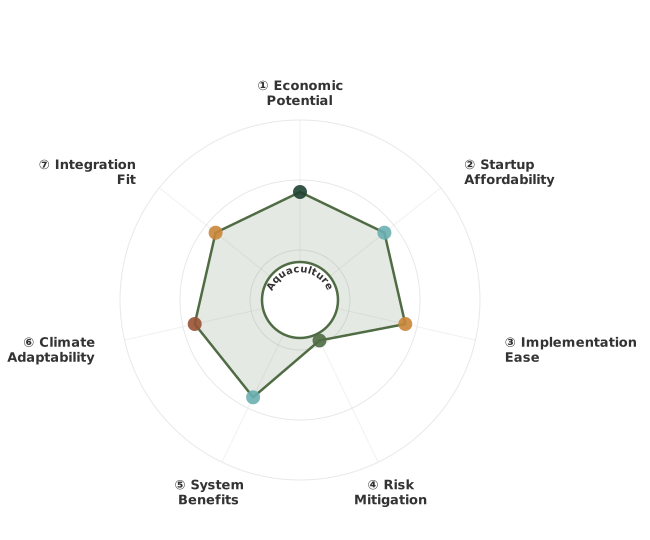
How These Traits Are Calculated
Trait dimensions are ordered clockwise starting from the top of the chart (12 o'clock position):
1. Economic Potential
Financial returns, annual value, and break-even timeline
WHAT: Evaluates financial viability by combining net annual value ($/ha from savings, income, and amortized harvests) with break-even timeline showing when practices pay for themselves.
WHY: Farmers need clear ROI understanding before committing resources. Fast payback (≤3 years) with strong returns (≥$300/ha) enables confident adoption, while long timelines (>10 years) restrict adoption to well-funded operations willing to wait for returns.
HOW: Calculated from net annual value in $/ha and break-even years. Exceptional (≥2.6): fast ROI ≤3 years + high value ≥$300/ha. Typical (1.8-2.5): moderate returns or longer timelines. Limited (<1.8): marginal economics or very long payback >10 years.
2. Startup Affordability
Initial investment costs and financial barrier to entry
WHAT: Measures financial barrier to entry through startup costs for equipment, infrastructure, consulting, and materials. Inverted scoring: lower costs = higher scores = more accessible adoption.
WHY: Affordability determines who can adopt. Low-cost practices (<$250/ha) enable widespread adoption across diverse scales, while high costs (>$2,500/ha) limit adoption to well-capitalized operations, creating barriers that slow regenerative transition.
HOW: Calculated from initial investment parsed from practice content. Inverted scoring: Exceptional (≥2.6): minimal investment <$250/ha. Typical (1.8-2.5): moderate costs $250-2,500/ha. Limited (<1.8): high barrier >$2,500/ha.
3. Implementation Ease
Learning curve and specialized knowledge required
WHAT: Measures how much learning, planning, and specialized knowledge a practice requires. Simpler practices with fewer steps score higher, while complex practices requiring extensive training or specialized resources score lower.
WHY: Complex practices create adoption barriers even when economically viable. Straightforward practices enable faster adoption and broader participation, while those requiring extensive training, timing precision, or specialized equipment limit who can succeed.
HOW: Evaluated by measuring documentation length and identifying complexity markers like location-specific requirements, seasonal timing windows, specialized skills, and dedicated equipment needs. Exceptional (≥2.6): straightforward practices with minimal prerequisites. Typical (1.8-2.5): moderate learning curve with some specialized needs. Limited (<1.8): steep learning curve requiring significant training or resources.
4. Risk Mitigation
Identified financial and ecological risk assessment
WHAT: Evaluates documented risks across financial (investment loss, market volatility) and ecological (crop failure, pest outbreaks) domains. Inverted scoring: fewer risks = higher scores.
WHY: Understanding risk exposure helps farmers make informed decisions. Low-risk practices allow confident implementation, while high-risk practices require careful planning and contingency resources. Risk transparency prevents costly failures.
HOW: Calculated from identified risks in practice content. Inverted scoring: Exceptional (≥2.6): ≤2 risks with manageable severity. Typical (1.8-2.5): 3-5 moderate risks. Limited (<1.8): 6+ risks or severe exposure.
5. System Benefits
How many ways the practice improves your land simultaneously
WHAT: Measures how many aspects of land health improve at once—carbon storage, soil quality, erosion control, water absorption, and biodiversity. Practices that improve multiple areas simultaneously create compounding benefits where each improvement reinforces the others.
WHY: The best practices solve multiple problems at once. For example, addressing erosion simultaneously builds carbon and improves water infiltration, creating a resilient system with positive feedback loops. Single-benefit approaches miss these compound transformation opportunities.
HOW: Evaluated across five key outcomes: carbon sequestration, soil organic matter increase, erosion reduction, water infiltration improvement, and biodiversity enhancement. Exceptional (≥2.6): high carbon storage (>8 t/ha/yr), improvements across 4-5 areas, transformative outcomes. Typical (1.8-2.5): moderate carbon (3-8 t/ha/yr), improvements across 2-3 areas. Limited (<1.8): modest impact (<3 t/ha/yr), single-area focus only.
6. Climate Adaptability
Geographic applicability across Köppen climate zones
WHAT: Evaluates geographic applicability by assessing how many Köppen climate zones successfully support a practice and what adaptation requirements are needed. Measures breadth of climates where farmers can implement with minimal to moderate modifications.
WHY: Universal practices working across diverse climates enable more farmers to adopt regenerative approaches. Practices limited to single climate types (only Mediterranean, only tropical) restrict adoption and slow global transition. Adaptability determines whether a practice serves niche regions or offers broad transformation.
HOW: LLM evaluation of regional success stories, Köppen zone coverage, and adaptation needs. Exceptional (≥2.6): 5+ zones or 4+ climate types, 3+ continents, minimal adaptation. Typical (1.8-2.5): 3-4 zones or 2-3 types, 2 continents, moderate adaptation. Limited (<1.8): 1-2 zones, single region, significant adaptation or highly specialized.
7. Integration Fit
How well this practice combines with others you're doing
WHAT: Measures how well a practice combines with other regenerative practices you might be doing. Some practices work as building blocks that make many other practices easier or more effective, while others work best on their own.
WHY: Practices that combine well with many others create more value on your farm. For example, cover cropping enables no-till, improves grazing, supports crop diversity, and helps water management—making all of them work better together. This helps you build a coherent system rather than juggling disconnected practices.
HOW: Evaluated by identifying which practices combine well and how strong those combinations are. 'Ideally Suited' means strong combinations where practices reinforce each other (practice A makes B easier, while B makes A more effective). 'Adequate' means complementary benefits that work well together. Exceptional (≥2.6): combines well with 6+ practices, serves as a building block. Typical (1.8-2.5): combines with 3-5 practices. Limited (<1.8): 1-2 practices or works best alone.
Going Deeper
1
WHY - The Benefits
Regenerative aquaculture leverages ecological principles to create systems that are not only productive but also actively restore and enhance their environment. The benefits extend from improved water quality and biodiversity to increased financial resilience and...
Regenerative aquaculture leverages ecological principles to create systems that are not only productive but also actively restore and enhance their environment. The benefits extend from improved water quality and biodiversity to increased financial resilience and diversified income.
WHY - The Benefits
Regenerative aquaculture leverages ecological principles to create systems that are not only productive but also actively restore and enhance their environment. The benefits extend from improved water quality and biodiversity to increased financial resilience and...
Regenerative aquaculture leverages ecological principles to create systems that are not only productive but also actively restore and enhance their environment. The benefits extend from improved water quality and biodiversity to increased financial resilience and diversified income.
Water Quality Benefits
One of the primary aims of regenerative aquaculture is to improve water quality, a stark contrast to conventional systems that can degrade it. By integrating filter feeders like mussels, oysters, clams, and scallops, organic suspended solids in the water column are reduced. These bivalves filter water, consuming phytoplankton and suspended organic matter, leading to increased water clarity. Studies in IMTA systems have shown improvements in water clarity by 40-80% compared to unmanaged or conventionally managed aquaculture sites.
Aquatic plants, such as various types of macroalgae and submerged macrophytes, play a crucial role in nutrient removal. Excess nitrogen and phosphorus from fish waste, uneaten feed, or terrestrial runoff can lead to eutrophication and harmful algal blooms. Macroalgae, in particular, are highly efficient at absorbing dissolved inorganic nutrients (nitrates and phosphates) directly from the water column. This nutrient uptake prevents the over-enrichment of water bodies, thereby reducing the risk of anoxic events and supporting a healthier aquatic ecosystem. Integrated systems can achieve nutrient removal rates of 60-85% for nitrogen and phosphorus from influent water.
In pond-based systems, careful management of sediment layers and the promotion of benthic communities (organisms living at the pond bottom) are key. Instead of allowing organic waste to accumulate and decompose anaerobically, regenerative approaches encourage aerobic decomposition by the benthic fauna like certain worms, crustaceans, and bacteria. This prevents the release of harmful gases like hydrogen sulfide and methane, which are characteristic of anaerobic decay.
Economic Benefits
Regenerative aquaculture offers a pathway to diversified and more resilient income streams. By moving beyond monoculture, farmers can cultivate multiple species that mature at different times or have different market values, providing more consistent cash flow throughout the year. For example, a fish farm might also produce shellfish for direct consumption or for environmental enhancement contracts, and algae for food supplements, biofuels, or fertilizer.
The reduced reliance on external inputs—such as formulated feeds, antibiotics, and water treatments—significantly cuts operational costs. Healthy, diverse ecosystems with functioning nutrient cycles mean less money spent on costly manufactured feeds (which can account for 50-70% of operating costs in conventional fish farming). Similarly, the need for disease treatments and water quality amendments diminishes as the system's natural resilience increases. These savings can amount to 25-75% of operating expenses in mature regenerative systems compared to conventional ones.
Furthermore, regenerative aquaculture products are increasingly commanding premium prices in markets that value sustainability, traceability, and ecological stewardship. Consumers are willing to pay more for products that are certified as regeneratively produced, offering a potential market advantage for early adopters. Innovative co-products, such as high-value biostimulants derived from algae or nutrient-rich shells, can also create new revenue streams, making the overall economic model more robust and less susceptible to fluctuations in single commodity prices.
Regenerative Systems Fit
Regenerative aquaculture fundamentally aligns with and supports the five core principles of regenerative agriculture, transforming how aquatic food production is perceived and practiced.
Principle 1: Minimize Soil Disturbance— In aquatic systems, this translates to minimizing disruption of the substrate (pond bottoms, seafloor, riverbeds) and aquatic habitats. Regenerative aquaculture focuses on maintaining healthy benthic communities that naturally process organic matter, avoiding excessive dredging, unnatural water flow alterations, or practices that lead to sedimentation. The goal is to work with existing, healthy aquatic environments or to restore degraded ones through careful management, rather than imposing highly disruptive structures.
Principle 2: Maximize Crop Diversity— This is a cornerstone of regenerative aquaculture. Polycultures are preferred over monocultures, integrating fish, shellfish, and aquatic plants. For example, farming salmon (mid-water), mussels (filter feeders), and kelp (nutrient-absorbing macroalgae) together leverages different ecological niches and nutrient flows. This diversity enhances system resilience, reduces disease transmission probability, and ensures more complete nutrient utilization within the system, creating a complex, robust food web.
Principle 3: Keep Soil Covered— In aquaculture, this means maintaining a living, functioning aquatic ecosystem year-round. This includes ensuring healthy populations of phytoplankton and zooplankton in the water column, abundant aquatic vegetation in suitable areas, and thriving communities of filter feeders and benthic organisms. These living components prevent habitat degradation, ensure continuous biological processes, and intercept and process nutrients, analogous to how living plants and mulch cover soil.
Principle 4: Maintain Living Roots— Similar to keeping soil covered, this principle emphasizes continuous biological activity. In aquaculture, this is achieved through polycultures and integrated systems that ensure diverse organisms are actively engaged in life processes year-round. Phytoplankton, zooplankton, aquatic plants, and diverse animal life contribute to a continuously living aquatic environment, supporting nutrient cycling and habitat functions. For example, algae provide the base of many food webs and are key nutrient sinks.
Principle 5: Integrate Livestock— This is often achieved through symbiotic relationships between aquaculture and terrestrial systems. Animal manures from livestock on nearby farms can be channeled into aquaculture ponds or constructed wetlands, providing nutrients for algae and aquatic plants, thereby closing nutrient loops. Conversely, aquaculture effluent, once treated by aquatic plants and filter feeders, can be used to irrigate terrestrial crops, creating a circular flow of resources. Specific bivalve species can also be integrated into terrestrial runoff management systems to pre-filter water before it enters natural aquatic bodies.
By adhering to these principles, regenerative aquaculture creates systems that are self-sustaining, improve environmental quality, and generate reliable economic returns. It represents an evolution from extractive aquaculture to one that is truly ecological and restorative.
Sources behind this view
Videos & Podcasts
-
Regenerative agriculture provides solutions for climate change, human health, and soil degradation, contrasting with industrial agriculture's harmful impacts, including glyphosate use. Practices like
-
Adopts regenerative agriculture principles: minimize disturbance, keep living roots, use soil armor, integrate animals (livestock grazing, multi-species), and increase biodiversity. These practices bu
-
Regenerative agriculture principles, including low disturbance, biodiversity, and living roots, apply to both terrestrial and marine environments like kelp and shellfish farming, promoting ecological
 Community
-
Regenerative ocean farming regenerates coastal waters by extracting nutrients and carbon, providing habitat, and acting as storm surge protection, contrasting with industrial models and offering susta
Read more (opens in new window) smallfarms.cornell.edu
Research
-
The Indigenous Roots of Regenerative Agriculture (opens in new window)
This study found: Modern regenerative agriculture practices are rooted in millennia of Indigenous land stewardship, offering profound knowledge and a crucial value system of respect and reciprocity for true transformat
-
Systematic review of regenerative farming: Addressing agricultural sustainability challenges (opens in new window)
This study found: Systematic review of 31 studies shows regenerative farming improves soil health, biodiversity, and carbon capture, aiding sustainability. Technology is key for adoption, but policy, farmer understandi
-
Regenerative Agriculture: Restoring Ecosystems¢ Resilience and Productivity: A Review (opens in new window)
This study found: Regenerative agriculture builds soil health and ecosystem services through practices like no-till, cover crops, and diverse rotations. It increases soil organic matter, improves water infiltration, bo
-
Regenerative Almond Production Systems Improve Soil Health, Biodiversity, and Profit (opens in new window)
This study found: Regenerative almond farms in California doubled profits and improved soil health and biodiversity by combining practices like cover crops, compost, and reduced synthetic inputs, with no yield loss.
From the Web
-
Explores regenerative aquaculture's potential for food security and environmental health, detailing risks like soy reliance and antibiotic use, and highlighting investor opportunities in seaweed, fish
2
WHERE - Regional Considerations
Regenerative aquaculture's success is highly dependent on local environmental conditions, native species, and existing water bodies. Adapting practices to specific regions is crucial for both ecological soundness and economic viability.
Regenerative aquaculture's success is highly dependent on local environmental conditions, native species, and existing water bodies. Adapting practices to specific regions is crucial for both ecological soundness and economic viability.
WHERE - Regional Considerations
Regenerative aquaculture's success is highly dependent on local environmental conditions, native species, and existing water bodies. Adapting practices to specific regions is crucial for both ecological soundness and economic viability.
Regenerative aquaculture's success is highly dependent on local environmental conditions, native species, and existing water bodies. Adapting practices to specific regions is crucial for both ecological soundness and economic viability.
Click Here to Look up your Region if you don't already know it
Tropical and Subtropical Regions
Representative Locations: Southeast Asia (Vietnam, Philippines, Thailand), Central America (Mexico, Belize), Northern Australia (Queensland), Eastern South America (Brazil, Ecuador), East Africa (Kenya, Tanzania).
Climate Context: High temperatures year-round (20-30°C / 68-86°F), abundant rainfall often with distinct wet and dry seasons or consistent high precipitation (100-300 cm / 40-120 inches annually). Köppen Af, Am, Aw.
Regenerative Applications: These regions are ideal for extensive marine and brackish water systems like mangrove reforestation integrated with shellfish or shrimp farming. Polycultures of native fish species, mollusks (oysters, clams), and macroalgae (seaweed) thrive. Rice-fish systems are traditional and highly effective. The warm water supports rapid growth and high biodiversity. Challenges include managing intense rainfall and potential for tropical storms, which necessitates robust infrastructure and site selection away from high-risk areas. Native species aquaculture is key to prevent invasive introductions.
Mediterranean Regions
Representative Locations: Mediterranean Basin (Spain, Italy, Greece), California (USA), Central Chile, Southwestern Australia.
Climate Context: Hot, dry summers and mild, wet winters. Precipitation typically 40-90 cm (15-35 inches) annually, highly seasonal. Köppen Csa, Csb.
Regenerative Applications: Coastal areas are well-suited for integrated seaweed and bivalve farming (e.g., mussels, oysters) due to nutrient availability from upwelling or land-based nutrient contributions. Inland, recirculating aquaculture systems (RAS) with integrated constructed wetlands for water treatment are viable for finfish and aquatic plants, managing freshwater scarcity challenges. Open ocean systems may face challenges with limited nutrient inputs and temperature extremes, requiring careful species selection (e.g., species tolerant of warm, saline waters).
Temperate Regions (Humid)
Representative Locations: Northern Europe (UK, Scandinavia, Netherlands), Eastern USA (Northeast, Mid-Atlantic), Eastern China, Japan.
Climate Context: Warm to hot summers and cool to cold winters with moderate to high annual precipitation (75-150 cm / 30-60 inches) distributed relatively evenly. USDA Zones 6-8, Köppen Cfb, Cfa.
Regenerative Applications: Pond-based aquaculture for freshwater species like carp, trout, and catfish can be highly regenerative, especially when integrated with terrestrial farming. Using construct ed wetlands to treat runoff before it enters ponds, and using pond effluent to irrigate fields with algae or aquatic plants, are effective strategies. IMTA in coastal or estuarine areas using species like mussels, oysters, and kelp is very productive in temperate waters, leveraging seasonal nutrient availability. Winter challenges require species selection for cold tolerance or overwintering strategies.
Arid and Semi-Arid Regions
Representative Locations: Western USA, North Africa, Central Asia, Interior Australia.
Climate Context: Low annual precipitation (<40 cm / 15 inches), high temperatures, short and often unpredictable growing season. USDA Zones 7-9, Köppen BSh, BSk.
Regenerative Applications: Regenerative aquaculture in these regions heavily relies on water conservation and efficiency. Recirculating Aquaculture Systems (RAS) are paramount, minimizing water loss through evaporation and highly treating effluent. Integrated systems combining RAS with terrestrial greenhouses or hydroponics can maximize water use efficiency. Species selection must focus on drought-tolerant, low-water-demand organisms. Opportunities exist in utilizing brackish or saline groundwater unsuitable for agriculture for halophyte aquaculture (salt-tolerant plants) or specific brackish-water species.
Cold Continental Regions
Representative Locations: Northern USA and Canada, Northern Europe, Northern Asia.
Climate Context: Very short growing seasons, extreme summer heat, severe winter cold. USDA Zones 3-5, Köppen Dfa, Dfb.
Regenerative Applications: Year-round production requires intensive indoor systems like RAS, where temperature and water quality can be meticulously controlled. Cold-tolerant species (e.g., certain salmonids, Arctic char) can be farmed in these systems. Outdoor ponds are limited to short growing seasons and require species that grow rapidly during warmer months or overwintering strategies. Integrating with terrestrial systems can be challenging due to short agricultural seasons but feasible with greenhouses or season extension techniques.
3
HOW - Implementation Process
Implementing regenerative aquaculture involves a shift from conventional production methods to ecological system design. The core idea is to create a symbiotic environment where all components contribute to the health and productivity of the whole.
Implementing regenerative aquaculture involves a shift from conventional production methods to ecological system design. The core idea is to create a symbiotic environment where all components contribute to the health and productivity of the whole.
HOW - Implementation Process
Implementing regenerative aquaculture involves a shift from conventional production methods to ecological system design. The core idea is to create a symbiotic environment where all components contribute to the health and productivity of the whole.
Implementing regenerative aquaculture involves a shift from conventional production methods to ecological system design. The core idea is to create a symbiotic environment where all components contribute to the health and productivity of the whole.
Prerequisites
- Water Source Assessment: Evaluate water quality (pH, salinity, dissolved oxygen, nutrient levels, potential contaminants), flow rates, and seasonal availability. Understanding the "natural" state of the water body is crucial.
- Site Selection: Choose locations that minimize ecological impact, especially sensitive habitats like mangroves or coral reefs. Prioritize areas with appropriate substrate, water flow, and proximity to necessary services. For pond systems, soil type should be suitable for holding water.
- Species Suitability: Research native or non-invasive exotic species that thrive in the local climate and water conditions. Consider species with complementary ecological roles (e.g., filter feeders, nutrient absorbers, waste consumers).
- Market Research: Identify potential markets for main products and co-products, understanding demand for sustainably produced aquatic foods.
- Regulatory Understanding: Familiarize yourself with local, regional, and national regulations regarding aquaculture, water use, effluent discharge, and protected species.
Phase 1: System Design and Planning
- Define Goals: Clearly state objectives: maximum yield, water quality improvement, biodiversity enhancement, nutrient recycling, specific co-product targets.
- Choose System Type:
- Integrated Multi-Trophic Aquaculture (IMTA): For coastal/estuarine environments. Combines finfish (e.g., seabream, sea bass), bivalves (oysters, mussels), and macroalgae (kelp, sea lettuce) in a flow-through system. Finfish waste provides nutrients for algae and bivalves.
- Pond Polyculture: For freshwater or brackish water environments. Integrate multiple species of fish with different feeding habits (e.g., herbivorous carp, omnivorous tilapia, detritivorous catfish) and potentially snails or aquatic plants.
- Recirculating Aquaculture Systems (RAS) with Integrated Wetlands: For inland or water-scarce regions. Fish are raised in tanks, and their effluent is treated through constructed wetlands or biofilters containing aquatic plants and beneficial microbes before being recirculated.
- Rice-Fish Systems: Traditional, highly regenerative system common in Asia. Fish are raised in flooded rice paddies during the off-season or between rice crops, feeding on insects and weeds.
- Species Selection: Based on prerequisites and system type:
- Finfish: Native species preferred. Examples: Tilapia, carp, catfish, trout, salmon, yellowtail. Choose species based on growth rates, temperature tolerance, and market demand.
- Bivalves: Filter feeders for water purification. Examples: Oysters, mussels, scallops, clams. Excellent for removing suspended solids and excess nutrients.
- Crustaceans: Shrimp, prawns, crayfish. Managed carefully to avoid exacerbating water quality issues. Native species are preferable.
- Macroalgae/Aquatic Plants: Nutrient absorbers and habitat providers. Examples: Kelp, sea lettuce, Gracilaria, duckweed, water hyacinth.
- Infrastructure Design: Plan for flow rates, tank sizes, raceway dimensions, pond construction, seaweed/plant cultivation areas, and harvesting logistics. Ensure minimal habitat disruption. For RAS, design biofiltration and aeration systems.
Phase 2: System Establishment and Stocking
- Infrastructure Construction: Build ponds, tanks, grow-out lines, and support facilities. Use sustainable materials where possible. For IMTA, consider the placement of different species' cultivation areas to optimize nutrient flow.
- Acquire Healthy Stock: Source certified disease-free juveniles from reputable hatcheries or wild-caught broodstock under sustainable quotas. Quarantine new stock to prevent disease introduction.
- Introduce Species Strategically: Gradually introduce species based on their roles and environmental needs. For instance, in IMTA, algae and bivalves might be established first to begin filtering water before finfish are stocked.
- Establish Beneficial Microbes/Flora: In RAS and ponds, allow biofilters or pond bottoms to establish healthy microbial communities before stocking animals. Introduce beneficial aquatic plants for nutrient uptake and habitat.
Phase 3: Operation and Management
- Feeding Strategy: Use high-quality, sustainable feeds if needed. For many regenerative systems, natural feed sources (algae, plankton, detritus) are maximized, reducing reliance on external feeds. For finfish, consider feed palatability and digestibility to minimize waste.
- Water Quality Monitoring: Regularly monitor key parameters (DO, temperature, pH, salinity, ammonia, nitrite, nitrate, phosphate, turbidity). AI-driven monitoring and automated adjustments are increasingly used.
- Grazing/Harvest Management: Plan stocking densities and harvest schedules to maintain ecological balance. For filter feeders and algae, regular harvesting is needed to remove accumulated biomass and nutrients. For finfish, ensure stocking levels do not overwhelm the system's natural carrying capacity.
- Waste Management: Promote aerobic decomposition. Harvest excess biomass (algae, bivalves) and utilize it for co-products. For RAS, manage sludge by composting or using as fertilizer.
- Disease Prevention: Focus on prevention through diverse diets, optimal water quality, low stress environments, and healthy stock. Avoid prophylactic antibiotic use.
- Ecosystem Health Monitoring: Observe overall system health, including biodiversity of surrounding areas, presence of beneficial organisms, and sediment quality.
Transition Timeline & Phase-Out Strategy
The "transition" in regenerative aquaculture is less about phasing out inputs and more about phasing in ecological functions. For a farm moving from conventional to regenerative:
- Years 1-2: Planning & Trialing: Research species, design integrated systems on a pilot scale, identify local regulations, and establish market connections. Begin reducing reliance on synthetic inputs where possible. Source broodstock from sustainable or regenerative suppliers if available.
- Years 3-5: Phased Integration: Gradually increase the scale of integrated components. Introduce more filter feeders and nutrient-absorbing plants to treat effluent from existing finfish operations. Experiment with polyculture in new ponds or tanks. Begin harvesting and marketing co-products like seaweed or mussels. Seek certifications.
- Years 5-7+: Mature Regenerative System: Fully implemented integrated systems where biological processes drive production. Conventional inputs are minimal or eliminated. Economic returns diversify significantly. Focus shifts to ecological monitoring and continuous improvement of system resilience.
Phase-out of non-regenerative inputs:
- Synthetic Feeds: Gradually replace with natural feeds (plankton cultivation, algae, insect larvae) or feeds with higher sustainability certifications. Aim for a 50% reduction by year 3, 100% by year 5-7.
- Antibiotics/Chemicals: Reduce use as system health improves. By year 5, eliminate all prophylactic and routine chemical treatments.
- Water Exchange: Minimize reliance on large water exchanges that can deplete surrounding water bodies. Focus on systems that treat and recirculate water or utilize natural filtration to minimize waste discharge. Aim for 80-90% water recirculation in RAS or efficient nutrient capture in flow-through IMTA by year 7.
Indicators of graduation to fully regenerative approach:
- Consistent water quality improvement indicators (e.g., reduced BOD, increased DO, reduced nutrient loading)
- Measurable increase in biodiversity in and around the farm
- Stable or improved yields with significantly reduced external input costs
- Successful market acceptance and pricing for regeneratively produced products
Sources behind this view
Videos & Podcasts
-
Adopting regenerative practices should start small and incrementally, focusing on soil health over short-term yields. Collaboration, strategic nutrient sourcing, and leveraging resources like Continuu
-
Regenerative farming requires eliminating synthetics, intensive management, and strategic marketing to triple gross margins. A diversified planting strategy (perennials like alfalfa, teff grass, hairy

-
Recommends establishing dedicated 'regen paddocks' with multi-species mixes, biologicals, and organic fertilizers. Emphasizes detailed observation, documentation, collaboration, and understanding that
-
Regenerative agriculture benefits ecosystems by improving soil health, biodiversity, water quality, and wildlife habitats, while also enhancing farm worker conditions and community well-being.
Research
-
Regenerative Agriculture: Restoring Ecosystems¢ Resilience and Productivity: A Review (opens in new window)
This study found: Regenerative agriculture builds soil health and ecosystem services through practices like no-till, cover crops, and diverse rotations. It increases soil organic matter, improves water infiltration, bo
-
Giving regenerative agriculture an agronomic perspective: a proposed framework from the food and beverage industry (opens in new window)
This study found: A new framework from the food industry offers a standardized, outcome-based approach to regenerative agriculture, focusing on soil, biodiversity, water, and climate, with a four-step process for imple
-
Systematic review of regenerative farming: Addressing agricultural sustainability challenges (opens in new window)
This study found: Systematic review of 31 studies shows regenerative farming improves soil health, biodiversity, and carbon capture, aiding sustainability. Technology is key for adoption, but policy, farmer understandi
-
Regenerative Agriculture in the 21st Century: A Systematic Review of Environmental, Agronomic, and Socio-Economic Outcomes (opens in new window)
This study found: Systematic review finds Regenerative Agriculture boosts environment but faces yield gaps (16-21%) and socio-economic barriers. Advocates for resilience over maximum yields, needing financial support a
4
Know the Debate
Regenerative aquaculture's effectiveness is deeply contextual, with outcomes shifting based on geography and scale. In tropical regions, extensive ...
Know the Debate
Regenerative aquaculture's effectiveness is deeply contextual, with outcomes shifting based on geography and scale. In tropical regions, extensive ...
Regenerative aquaculture's effectiveness is deeply contextual, with outcomes shifting based on geography and scale. In tropical regions, extensive systems and native species thrive, while drier climates necessitate water-wise RAS. Small-scale operations can start with minimal capital and local knowledge, focusing on traditional polycultures. Conversely, large-scale IMTA or intensive RAS demand considerable upfront investment in infrastructure and specialized expertise, requiring rigorous design and regulatory compliance.
How much do regenerative aquaculture systems improve water quality?
Significant improvement with filter feeders & plants
Integrated systems using bivalves and macroalgae significantly enhance water clarity and remove excess nutrients. Studies report improvements in water clarity by 40-80% and nutrient removal rates of 60-85% for nitrogen and phosphorus.
Sources behind this view
Sources behind this view
Videos & Podcasts
-
Regenerative aquaculture, especially bivalve and seaweed farming, excels at habitat provisioning and pollutant removal (nitrogen, phosphorus). These systems inherently support biodiversity and clean waterways, offering scientifically proven ecosystem services.
Research
-
Aquaponics a modern approach for integrated farming and wise utilization of components for sustainability of food security: A review (opens in new window)
This study found: Aquaponics offers a sustainable way to grow both fish and vegetables together in a single system, helping to tackle food shortages. This method is important because traditional farming often uses chemicals that harm the environment and reduces the amount of land available for growing food. Aquaponics is a soilless system that can be set up in places with poor soil, like deserts or salty islands, and it's more productive and economically efficient. It's a way to ensure food security and provide income for people with limited resources.
From the Web
-
Restorative aquaculture, particularly for bivalves and seaweed, offers a way to produce food while actively restoring ocean health and supporting coastal economies, with potential to increase global ocean food production significantly by 2050.
Variable results based on system design & native context
Regenerative benefits depend on whether the system mimics natural ecosystems and uses native species. Effectiveness varies based on scale, species mix, and integration with surrounding environments.
Sources behind this view
Sources behind this view
Videos & Podcasts
-
Regenerative ocean farming includes shellfish aquaculture (oysters, clams, mussels) for water quality, seaweed farming (kelp, nori, dulse) for CO2 absorption, IMTA combining species, and restorative mariculture for ecosystem restoration and habitat creation.
-
Regenerative ocean farming is proposed as a solution to climate-driven agricultural crises and overfishing. It contrasts with conventional aquaculture by focusing on species the ocean can naturally support, avoiding harmful practices and rebuilding ecosystems.
From the Web
-
Promotes environmentally friendly aquaculture by advocating for sustainable, low-input systems, native species, polyculture, integrated systems, proper site selection, and avoiding harmful chemicals and practices.
Making Sense of the Differences
Regenerative aquaculture systems demonstrate marked improvements in water quality, with reported reductions in suspended solids and nutrient loading varying widely. These outcomes are directly tied to specific system designs—such as the inclusion of filter feeders and nutrient-absorbing plants—and the degree to which they mimic natural, healthy aquatic ecosystems. The exact percentages of improvement are further influenced by the scale of integration and the existing health of the surrounding environment, making generalization challenging.
What are the requirements to start regenerative aquaculture?
Low barrier for traditional/basic systems
Simple polyculture ponds or integrated rice-fish systems can be established with minimal capital and leverage local knowledge. Focusing on native species and manual labor offers a low-risk entry point.
Sources behind this view
Sources behind this view
Videos & Podcasts
-
Regenerative ocean farming includes shellfish aquaculture (oysters, clams, mussels) for water quality, seaweed farming (kelp, nori, dulse) for CO2 absorption, IMTA combining species, and restorative mariculture for ecosystem restoration and habitat creation.
-
Aquaponics and hydroponics are discussed, with aquaponics highlighted for its symbiotic, microbial-driven system that recycles water and nutrients from fish waste. Shipping container farms are presented as a viable CEA method.

Research
-
Aquaponics a modern approach for integrated farming and wise utilization of components for sustainability of food security: A review (opens in new window)
This study found: Aquaponics offers a sustainable way to grow both fish and vegetables together in a single system, helping to tackle food shortages. This method is important because traditional farming often uses chemicals that harm the environment and reduces the amount of land available for growing food. Aquaponics is a soilless system that can be set up in places with poor soil, like deserts or salty islands, and it's more productive and economically efficient. It's a way to ensure food security and provide income for people with limited resources.
Significant investment for intensive/advanced systems
RAS and large-scale IMTA require substantial capital for infrastructure, advanced technology, and specialized expertise. These systems demand rigorous design and continuous monitoring.
Sources behind this view
Sources behind this view
Videos & Podcasts
-
Aquaculture is evolving to reduce environmental impact: onshore RAS, contained floating systems, submerged cages, and offshore operations aim to control nutrient load and disease like sea lice, contrasting with traditional net pens and ponds.
Research
-
Achieving sustainable aquaculture: Historical and current perspectives and future needs and challenges (opens in new window)
This study found: This article reviews how fish farming (aquaculture) is becoming more sustainable. It looks at past, present, and future methods to make aquaculture more environmentally friendly and profitable. Key improvements include farming more efficiently, which lowers the industry's impact on climate change by reducing greenhouse gases. Farmers are also using less water and land for each unit of fish produced, improving how they manage fish feed, and gaining a better understanding of what fish need to eat. Developing new farming techniques and raising more ocean-dwelling species are also important. These advancements are crucial for meeting the growing global demand for protein and ensuring food security.
From the Web
-
Regenerative aquaculture uses sustainable methods like IMTA and RAS to improve ecosystems, reduce costs, lower carbon footprints, and enhance fish health and production efficiency.
Making Sense of the Differences
Starting regenerative aquaculture requires adapting to local conditions and desired scale. Small-scale, traditional systems can be initiated with minimal capital and leverage local expertise, focusing on native species and simple polycultures. However, advanced systems like Recirculating Aquaculture Systems (RAS) or large-scale Integrated Multi-Trophic Aquaculture (IMTA) demand significant upfront investment in specialized infrastructure, technology, and skilled labor, alongside rigorous regulatory navigation.
5
HOW MUCH - Costs & Investment
Note: All costs are estimates in USD equivalent and can vary dramatically based on location, scale, species, system complexity, labor costs, and available subsidies.
Note: All costs are estimates in USD equivalent and can vary dramatically based on location, scale, species, system complexity, labor costs, and available subsidies.
HOW MUCH - Costs & Investment
Note: All costs are estimates in USD equivalent and can vary dramatically based on location, scale, species, system complexity, labor costs, and available subsidies.
Note: All costs are estimates in USD equivalent and can vary dramatically based on location, scale, species, system complexity, labor costs, and available subsidies.
Note: All costs are based on recent US economic data (2024–2026) and may vary substantially by region based on local labor rates, material costs, and regulatory requirements.
System Design and Permitting
The initial phase involves site assessment and securing water rights, which vary significantly by scale. For small operations (under 50 acres (20 ha)), design and permitting costs typically range from $400 to $2,000 per acre ($988–$4,942/ha), as these sites often leverage existing water infrastructure and smaller-scale environmental impact disclosures. Medium-scale operations (50–500 acres (20–202 ha)) face higher regulatory scrutiny and more complex site management planning, costing $100 to $400 per acre ($247–$988/ha). Large-scale installations (500+ acres) benefit from significant economies of scale, reducing design costs to $40 to $200 per acre ($99–$494/ha) through streamlined, consolidated environmental impact assessments and centralized regulatory compliance protocols.
Infrastructure and Construction
Capital investment for physical structures, which include tanks, pens, lines, and mooring rafts, represents the largest single expenditure. Small systems (fewer than 50 acres (20 ha)) require an initial layout investment of $2,000–$8,000 per acre ($4,942–$19,768/ha). Mid-sized operations, which often shift toward mechanical automation to manage higher stocking densities, require $4,000–$12,000 per acre ($9,884–$29,653/ha). Large-scale systems require $6,000–$24,000+ per acre, driven by the need for advanced industrial biofiltration modules, specialized automated harvest platforms, and robust deep-water or intensive land-based processing infrastructure to maintain long-term production.
Water Quality Management and Monitoring
Effective regenerative aquaculture relies on sophisticated nutrient cycling and water monitoring instruments. For small operations, setting up integrated wetland filtration or simple polyculture bio-buffers costs $2,000–$20,000 in total setup. Medium-scale farms implementing Integrated Multi-Trophic Aquaculture (IMTA) require $20,000–$200,000 for advanced recirculating components, which adjusts to roughly $400–$4,000 per acre ($988–$9,884/ha). Large-scale facilities often combine intensive recirculating aquaculture systems (RAS) with large-scale natural wetland restoration, totaling $200,000–$2,000,000 in infrastructure, or $400–$4,000 per acre ($988–$9,884/ha). Real-time monitoring equipment—essential for preventing catastrophic nitrogen spikes—ranges from $200–$800 per acre ($494–$1,977/ha) for professional electronic sensor arrays linked to telemetry software.
Operational Inputs: Stocking, Feed, and Energy
Annual stocking of juveniles and broodstock is a recurring variable cost. Small operations typically spend $400–$2,000 per acre ($988–$4,942/ha) on locally sourced, hardy species. Mid-scale operations face costs of $2,000–$12,000 per acre ($4,942–$29,653/ha), while large operations leverage long-term hatchery contracts to scale down costs to $1,200–$8,000 per acre ($2,965–$19,768/ha). Feed remains the primary annual operational driver. Despite regenerative polyculture reducing external input reliance by 30–75%, supplemental feeding averages $800–$3,200 per acre ($1,977–$7,907/ha) for small systems, $4,000–$20,000 per year for mid-size systems, and $20,000–$120,000 for large-scale production. Energy expenses for aeration units, pumps, and facility climate control cost $200–$800 per acre ($494–$1,977/ha) on smaller sites and escalate as internal system intensity increases.
Most Spend: Based on cumulative infrastructure and input data, most operations (the middle 60%) fall within the $6,200–$18,400 per acre ($15,321–$45,467/ha) range for total implementation and first-year operational overhead, depending heavily on the intensity of the recirculating system and local energy prices.
Why the Range?: Cost variation is driven primarily by the transition from semi-natural extensive systems to high-intensity recirculating systems (RAS). Operations utilizing passive natural filtration or integrated seaweed bio-filters sit at the lower end of the cost spectrum, whereas facilities incorporating advanced AI-driven water management, closed-containment structures, and intensive industrial processing equipment fall at the high end.
Sources behind this view
Videos & Podcasts
-
An investment strategy for regenerative aquaculture prioritizes innovative feeds (15%), advanced farms (40%), retail brands (15%), processing, packaging, and distribution. Education, traceability, and

Research
-
System design and production practices of aquaponic stakeholders (opens in new window)
This study found: Survey of aquaponics stakeholders shows trend towards integrated systems, raft-style plant growing, and leafy greens/trout production. Diversification and established producers are key to success.
6
REWARDS AND RISKS - Economics & Risk Factors
Regenerative aquaculture offers significant economic rewards but also carries inherent risks, particularly during the transition phase from conventional practices. A clear understanding of both is crucial for successful implementation.
Regenerative aquaculture offers significant economic rewards but also carries inherent risks, particularly during the transition phase from conventional practices. A clear understanding of both is crucial for successful implementation.
REWARDS AND RISKS - Economics & Risk Factors
Regenerative aquaculture offers significant economic rewards but also carries inherent risks, particularly during the transition phase from conventional practices. A clear understanding of both is crucial for successful implementation.
Regenerative aquaculture offers significant economic rewards but also carries inherent risks, particularly during the transition phase from conventional practices. A clear understanding of both is crucial for successful implementation.
Economic outcomes in regenerative aquaculture reflect the shift from volume-driven monoculture to high-value, ecological production. In the Best Case scenario, high-value yield paired with premium, certified co-products (such as seaweed, bivalves, or organic fish) generates net profit margins of 25–40%, with annual gross revenues reaching $10,000–$25,000 per acre ($24,710–$61,776/ha). The Typical Case involves a balanced regenerative system focused on core species with lower-input co-products, yielding profit margins between 10–20% and gross revenues of $4,000–$10,000 per acre ($9,884–$24,710/ha) after factoring in operational maintenance and feed. In the Worst Case, environmental stressors like harmful algal blooms (HABs) or disease outbreaks, coupled with market dips for co-products, can result in operational losses of $2,000–$5,000 per acre ($4,942–$12,355/ha), as high fixed costs for water management and lease payments continue despite a loss of biomass value.
Market profitability is deeply tied to sustainability certifications. Products labeled as "regenerative" or "ocean-kind" command 15–30% price premiums over conventional sources. Developing market channels for co-products remains a primary risk; cooperative processing centers, which require a $50,000–$500,000 shared investment, are the primary mitigation strategy for pooling logistics and drying costs. Additionally, specialized aquaculture insurance is vital, costing 2–6% of total biomass value to protect against catastrophic events like mass mortality or failure of aeration systems.
Transition Period Risks: The shift from conventional monoculture to regenerative polyculture creates a specific 3–5 year risk window. Years 1 and 2 often see yield reductions of 15–25% as the farm decouples from synthetic fertilizers and builds natural microbial populations. Profitability reaches equilibrium by year 4, once internal nutrient cycling is stable and input costs for feed have reached their lowest sustainable levels. To mitigate revenue volatility, producers should initiate a phased transition, starting with only 25% of their acreage, which limits total farm yield drops to 5–10% while management skills and ecological balances are established. Producers should also budget for a 10–15% increase in management labor costs during the first 36 months to properly monitor the increased biological complexity.
Sources behind this view
Videos & Podcasts
-
This cluster addresses challenges in regenerative aquaculture investment, including biological risk, funding gaps, and the critical issue of antibiotic overuse. It explores solutions like sea urchin r

-
An investment strategy for regenerative aquaculture prioritizes innovative feeds (15%), advanced farms (40%), retail brands (15%), processing, packaging, and distribution. Education, traceability, and
-
Halophyte integration into feed faces challenges with trial data and industry adoption, while carbon markets offer financing. Ideal regenerative aquaculture integrates coastal ecosystems into ponds, r

-
Discusses allocating investment and philanthropic capital towards regenerative agriculture, emphasizing nutrient density, supply chain development, and the link between healthy food and human health.

Research
-
Regenerative Livestock Farming as a Socioeconomic Model for Sustainable Agribusiness in Latin America (opens in new window)
This study found: Regenerative livestock farming in Latin America improved soil carbon, biodiversity, and water quality, while boosting farmer income and quality of life. Government support is key for wider adoption.
-
Regenerative Agriculture in the 21st Century: A Systematic Review of Environmental, Agronomic, and Socio-Economic Outcomes (opens in new window)
This study found: Systematic review finds Regenerative Agriculture boosts environment but faces yield gaps (16-21%) and socio-economic barriers. Advocates for resilience over maximum yields, needing financial support a
-
Regenerative Agriculture: Restoring Ecosystems¢ Resilience and Productivity: A Review (opens in new window)
This study found: Regenerative agriculture builds soil health and ecosystem services through practices like no-till, cover crops, and diverse rotations. It increases soil organic matter, improves water infiltration, bo
-
Regenerative Agriculture: Insights and Challenges in Farmer Adoption (opens in new window)
This study found: Review of 7 regenerative agriculture practices (no-till, crop rotation, cover crops, etc.) highlights benefits and key adoption challenges like cost, farm size, and institutional barriers for scalable
From the Web
-
Explores regenerative aquaculture's potential for food security and environmental health, detailing risks like soy reliance and antibiotic use, and highlighting investor opportunities in seaweed, fish
7
WHO - Labor & Expertise
Regenerative aquaculture requires a blend of traditional aquatic knowledge and ecological understanding, differing from conventional, input-heavy approaches. Labor and expertise needs vary significantly by system complexity and scale.
Regenerative aquaculture requires a blend of traditional aquatic knowledge and ecological understanding, differing from conventional, input-heavy approaches. Labor and expertise needs vary significantly by system complexity and scale.
WHO - Labor & Expertise
Regenerative aquaculture requires a blend of traditional aquatic knowledge and ecological understanding, differing from conventional, input-heavy approaches. Labor and expertise needs vary significantly by system complexity and scale.
Regenerative aquaculture requires a blend of traditional aquatic knowledge and ecological understanding, differing from conventional, input-heavy approaches. Labor and expertise needs vary significantly by system complexity and scale.
Skill Requirements
- Ecological Understanding: A strong grasp of aquatic ecosystems, nutrient cycling, food webs, and species interactions is paramount. This includes understanding how different species (fish, shellfish, plants, microbes) influence each other within an integrated system.
- Species-Specific Knowledge: Expertise in the life cycles, feeding habits, environmental tolerances, and market characteristics of all farmed species. This is especially critical in polycultures where interactions are complex.
- Water Quality Management: Proficiency in monitoring and interpreting water parameters (dissolved oxygen, pH, salinity, ammonia, nitrates, phosphates, turbidity). Understanding how to manage these parameters naturally through system design and biological processes is key.
- Aquatic Animal Husbandry: Basic skills in handling, stocking, feeding, and health monitoring of aquatic organisms. This aspect is less about disease treatment and more about prevention through optimal conditions.
- System Maintenance: Ability to maintain infrastructure, including ponds, tanks, pumps, aeration systems, and monitoring equipment. For IMTA, this includes maintaining seaweed lines, shellfish rafts, and fish cages.
- Harvesting and Processing: Knowledge of efficient and low-stress harvesting techniques, plus basic processing and preservation methods for different species and co-products.
- Market Development: Skills in finding buyers for primary products and developing markets for novel co-products. Understanding market trends for sustainable and regeneratively produced seafood.
- Record Keeping and Monitoring: Diligent data collection on stocking, feeding, growth, water quality, environmental parameters, and economic performance is essential for adaptive management.
Labor and Expertise by System Type
-
Extensive/Semi-intensive Pond Polycultures:
- Labor: Moderate. Primarily involves daily monitoring, some feeding, occasional stocking/harvesting, and general farm maintenance. Requires 1-2 trained individuals per 4-10 hectares (10-25 acres) depending on complexity and automation.
- Expertise: Needs strong knowledge of local species and ecological interactions. Less reliance on advanced technology.
-
Integrated Multi-Trophic Aquaculture (IMTA) (Coastal/Estuarine):
- Labor: Moderate to High. Requires regular maintenance of lines, rafts, cages, and harvesting of multiple species. Coordination of different harvest cycles.
- Expertise: High. Requires a deep understanding of marine ecosystems, oceanographic conditions, tidal influences, and species interactions in a flow-through environment.
-
Recirculating Aquaculture Systems (RAS) with Integrated Wetlands:
- Labor: High. Requires constant monitoring of system parameters, precise feeding, and intensive maintenance of biological filters and pumps. Automation can reduce labor but requires skilled technicians.
- Expertise: Very High. Demands advanced knowledge of water chemistry, microbiology, engineering (for system design and maintenance), and specific species' requirements in a closed environment.
International Context for Labor Costs
Labor costs vary significantly across continents. While skilled labor might be expensive in North America and Europe, making automation more attractive, in many parts of Asia, Africa, and Latin America, labor can be more affordable. This can make labor-intensive, but ecologically sound, systems (like traditional rice-fish farming or extensive IMTA) more economically viable for smallerholder farmers in these regions, even without high levels of automation. However, finding highly skilled personnel with ecological aquaculture expertise can remain a challenge globally.
Training and Knowledge Transfer
- Formal Education: Universities and technical colleges globally offer degrees and certifications in aquaculture, marine biology, and environmental science.
- Workshops and Extension Services: Many government agricultural extension services, NGOs, and research institutes offer practical training on sustainable and regenerative aquaculture techniques.
- Farmer Networks: Connecting with existing regenerative aquaculturists through cooperatives, online forums, or farm visits is invaluable for practical, hands-on knowledge transfer.
- On-the-Job Training: Apprenticeship models where experienced practitioners train new farmers are effective for skill development.
8
EQUIPMENT - Tools & Infrastructure
The equipment and infrastructure for regenerative aquaculture are designed to work with natural processes rather than impose control, emphasizing efficiency, low environmental impact, and long-term durability.
The equipment and infrastructure for regenerative aquaculture are designed to work with natural processes rather than impose control, emphasizing efficiency, low environmental impact, and long-term durability.
EQUIPMENT - Tools & Infrastructure
The equipment and infrastructure for regenerative aquaculture are designed to work with natural processes rather than impose control, emphasizing efficiency, low environmental impact, and long-term durability.
The equipment and infrastructure for regenerative aquaculture are designed to work with natural processes rather than impose control, emphasizing efficiency, low environmental impact, and long-term durability.
System-Specific Infrastructure
-
Pond-Based Systems:
- Earth Ponds: Excavated or naturally occurring ponds.require proper bank stabilization, inlet/outlet structures, and potentially aeration systems.
- Lined Ponds: Use impermeable liners (e.g., HDPE, PVC) to prevent water loss and maintain water quality.
- Water Management: Water can be sourced from rivers, lakes, wells, or runoff. Channels, pipes, and pumps for water intake and effluent management. Control structures for water level and flow. Aeration systems (paddle wheels, diffusers) are often needed for intensive systems.
-
Recirculating Aquaculture Systems (RAS):
- Tanks/Raceways: For housing fish. Various shapes and materials (fiberglass, concrete, polyethylene).
- Pumps: For water circulation. Must be reliable and energy-efficient.
- Filtration Systems:
- Mechanical Filters: Drum filters or settlement tanks to remove solid waste.
- Biofilters: Employ beneficial bacteria to convert ammonia to less toxic nitrates (e.g., trickling filters, moving bed biofilters, submerged static media).
- Oxygenation/Aeration: Systems to maintain optimal dissolved oxygen levels (e.g., pure oxygen cones, diffusers).
- UV Sterilizers/Ozonation: To control pathogens without chemicals.
- Heat Exchangers/Chillers: To maintain optimal temperature.
- Monitoring & Control Systems: Sensors for water quality, automated feeding systems.
-
Integrated Multi-Trophic Aquaculture (IMTA):
- Finfish Cages/Pens: For open water or estuarine environments. Materials must be durable and resistant to corrosion.
- Bivalve Culture Systems: Ropes, rafts, longlines, or trays for growing mussels, oysters, scallops.
- Macroalgae Cultivation: Longlines, nets, or anchors for growing seaweed.
- Integrated Flow Management: Structures to channel water from finfish to bivalve/algae cultivation areas.
-
Constructed Wetlands:
- Gravel/sand beds and carefully selected aquatic plants (e.g., reeds, cattails, water hyacinth) to naturally filter and treat effluent.
- Flow control structures to manage water movement through the wetland.
Supporting Equipment
- Feeders: Automatic feeders or manual systems for delivering feed to tanks or ponds. Regenerative systems aim to minimize feed input.
- Harvesting Equipment: Nets, seines, pumps, or traps for safely collecting aquatic organisms.
- Water Quality Testing Kits/Probes: Essential for monitoring DO, pH, temperature, salinity, ammonia, nitrite, nitrate, etc. Digital probes and multi-parameter meters are common.
- Transportation: Tanks, trucks, or specialized vessels for moving stock and harvested products.
- Processing Equipment: If on-site processing is done, includes washing stations, sorting tables, packing materials, and potentially chilling or freezing equipment.
- Maintenance Tools: General tools for repairs, welding equipment, and potentially small excavators or boats for pond/site maintenance.
Equipment Selection Principles for Regenerative Aquaculture
- Durability and Longevity: Use materials resistant to corrosion and weathering to minimize replacement needs and waste.
- Energy Efficiency: Select pumps, aerators, and heating/cooling systems that minimize energy consumption. Solar power integration is an option.
- Low Environmental Footprint: Choose materials and designs that minimize disruption to aquatic habitats and avoid leaching of harmful substances.
- Adaptability: Equipment should ideally support diverse species and system configurations.
- Ease of Maintenance: Simple, robust designs that are easy to clean and repair reduce downtime and operational costs. For RAS, ease of biofilter cleaning and maintenance is critical.
- Native/Local Sourcing: Prioritize sourcing materials and equipment locally where possible to reduce transportation impacts and support local economies.
Sources behind this view
Videos & Podcasts
-
This cluster addresses challenges in regenerative aquaculture investment, including biological risk, funding gaps, and the critical issue of antibiotic overuse. It explores solutions like sea urchin r
-
An investment strategy for regenerative aquaculture prioritizes innovative feeds (15%), advanced farms (40%), retail brands (15%), processing, packaging, and distribution. Education, traceability, and
-
Aquaculture is evolving to reduce environmental impact: onshore RAS, contained floating systems, submerged cages, and offshore operations aim to control nutrient load and disease like sea lice, contra
-
Regenerative agriculture principles, including low disturbance, biodiversity, and living roots, apply to both terrestrial and marine environments like kelp and shellfish farming, promoting ecological
9
COMPATIBLE PRACTICES - Integration Opportunities
Regenerative aquaculture thrives when integrated with other regenerative practices, creating synergistic benefits that enhance both aquatic and terrestrial systems.
Regenerative aquaculture thrives when integrated with other regenerative practices, creating synergistic benefits that enhance both aquatic and terrestrial systems.
COMPATIBLE PRACTICES - Integration Opportunities
Regenerative aquaculture thrives when integrated with other regenerative practices, creating synergistic benefits that enhance both aquatic and terrestrial systems.
Regenerative aquaculture thrives when integrated with other regenerative practices, creating synergistic benefits that enhance both aquatic and terrestrial systems.
Restoration of Wetlands and Mangroves
- Integration: IMTA systems are often built into or adjacent to restored natural habitats. Bivalve and seaweed cultivation can further enhance water filtration and provide habitat for native species.
- Regenerative Benefit: Actively restores degraded ecosystems, increases biodiversity, sequesters carbon, improves water quality, and provides natural buffers against storms.
Native Species Aquaculture and Habitat Restoration
- Integration: Focuses on farming indigenous species that are well-adapted to local conditions and support native biodiversity. Can involve cultivating species for reintroduction into wild habitats.
- Regenerative Benefit: Protects and enhances local biodiversity, prevents introduction of invasive species, maintains genetic integrity, and supports ecosystem health.
Cover Cropping and Green Manures
- Integration: In pond systems, specific aquatic plants act as cover crops, preventing pond bottom desiccation and fixing nitrogen. On land, terrestrial cover crops can help mitigate nutrient runoff into aquatic systems.
- Regenerative Benefit: Maintains living cover, enhances soil structure (pond bottoms), fixes nitrogen, and reduces erosion/sedimentation into waterways.
Water Harvesting and Conservation (e.g., Keyline Design, Swales)
- Integration: Designing farm landscapes to capture and hold rainwater can ensure a stable water supply for aquaculture ponds or RAS, especially in water-scarce regions.
- Regenerative Benefit: Improves water resilience, reduces reliance on external water sources, and slows runoff, mitigating erosion.
Composting and Nutrient Management
- Integration: Sludge from RAS or organic waste from ponds can be composted and used as fertilizer for terrestrial farming or for cultivating terrestrial plants that feed aquaculture species (e.g., insect larvae).
- Regenerative Benefit: Turns waste into valuable soil amendment, reducing reliance on synthetic fertilizers and further closing nutrient loops.
By integrating aquaculture with these practices, farms can create complex, resilient, and restorative agroecosystems where each component amplifies the benefits of the others. This holistic approach maximizes resource efficiency, minimizes waste, and fosters a thriving environment.
Sources behind this view
Videos & Podcasts
-
Halophyte integration into feed faces challenges with trial data and industry adoption, while carbon markets offer financing. Ideal regenerative aquaculture integrates coastal ecosystems into ponds, r
-
Regenerative aquaculture, especially bivalve and seaweed farming, excels at habitat provisioning and pollutant removal (nitrogen, phosphorus). These systems inherently support biodiversity and clean w
-
This cluster addresses challenges in regenerative aquaculture investment, including biological risk, funding gaps, and the critical issue of antibiotic overuse. It explores solutions like sea urchin r
-
An investment strategy for regenerative aquaculture prioritizes innovative feeds (15%), advanced farms (40%), retail brands (15%), processing, packaging, and distribution. Education, traceability, and
Community
-
Proposes ocean farming using permaculture methods like artificial reefs and habitat creation to boost marine food production, focusing on nutrient-rich sea vegetables and algae for sustainability.
Read more (opens in new window) permies.com -
Advocates for holistic farm ecosystem design integrating aquaponics, animal integration, and food forests to maximize efficiency and minimize waste through interconnected systems, moving beyond isolat
Read more (opens in new window) permies.com
Research
-
Blue Farming Potentials: Sustainable Ocean Farming Strategies in the Light of Climate Change Adaptation and Mitigation (opens in new window)
This study found: Regenerative ocean farming ('blue farming') offers strategies for climate adaptation and mitigation, including IMTA, aquaponics, and seaweed cultivation for 'blue carbon' capture, enhancing food secur
-
Systematic review of regenerative farming: Addressing agricultural sustainability challenges (opens in new window)
This study found: Systematic review of 31 studies shows regenerative farming improves soil health, biodiversity, and carbon capture, aiding sustainability. Technology is key for adoption, but policy, farmer understandi
-
Regenerative Agriculture: Restoring Ecosystems¢ Resilience and Productivity: A Review (opens in new window)
This study found: Regenerative agriculture builds soil health and ecosystem services through practices like no-till, cover crops, and diverse rotations. It increases soil organic matter, improves water infiltration, bo
-
The impacts of suspended mariculture on coastal zones in China and the scope for Integrated Multi-Trophic Aquaculture (opens in new window)
This study found: Offshore fish farming in China causes 18 problems; IMTA (farming multiple species) is a promising solution for pollution cleanup and increased output, improving sustainability.
From the Web
-
Explores regenerative aquaculture's potential for food security and environmental health, detailing risks like soy reliance and antibiotic use, and highlighting investor opportunities in seaweed, fish