
Bokashi Composting
Bokashi composting is an anaerobic fermentation process that pickles organic materials, including meat and dairy, using a special inoculated bran. This method uses a sealed system with inoculated b
Read More: Complete Description
Bokashi composting is a unique anaerobic fermentation process that utilizes a specialized blend of bran inoculated with effective microorganisms (EM). Unlike traditional composting which relies on aerobic decomposition driven by beneficial bacteria and fungi, Bokashi uses lactic acid bacteria and yeasts to "pickle" organic waste in an oxygen-deprived environment. This fermentation process breaks down a wider range of materials than many other composting methods, including cooked foods, meat, dairy, and even diseased plant material, making it a valuable tool for waste diversion and resource cycling. The outcome is a fermented material, not yet fully composted soil amendment, which then requires burial in soil for a secondary decomposition phase. The sealed nature of the Bokashi system significantly reduces odors and pests compared to open composting.
The Bokashi process begins by layering organic waste with the inoculated bran inside an airtight container. The EM on the bran actively ferment the waste, producing lactic acid and other beneficial compounds. This acidic environment inhibits the growth of putrefying microbes, preventing the foul odors associated with anaerobic decomposition in uncontrolled conditions. The fermentation typically takes 2-4 weeks, after which the material is still acidic and requires further breakdown. This fermented material, often referred to as "pre-compost," is then incorporated into garden beds, compost piles, or worm bins. In soil, the Bokashi material undergoes a secondary, aerobic decomposition where the beneficial microbes from the fermentation inoculate the surrounding soil, and the pickled organic matter is further broken down by native soil organisms. This process can take an additional 2-4 weeks, depending on soil temperature and moisture, before the material is fully integrated into the soil.
From a regenerative agriculture perspective, Bokashi composting can be classified as a context-dependent practice, meaning its regenerative value hinges entirely on its application and integration within a broader system. When used to divert food waste from landfills, process difficult-to-compost materials, and inoculate soil with beneficial microbes, it supports regenerative goals. It can help reduce reliance on synthetic fertilizers by recycling nutrient-rich organic matter, and by enhancing soil biology, it contributes indirectly to other regenerative principles. However, if Bokashi is used in a system that continues to rely heavily on synthetic inputs or creates a closed loop without integration into functioning field soils, its regenerative impact is diminished. It does not directly support the principle of minimizing soil disturbance as it involves handling organic matter, but it can contribute to keeping soil covered by providing a source of compost that can be applied to bare soil. It also indirectly supports maintaining living roots by improving soil health, which in turn supports robust root systems.
The key advantage of Bokashi is its ability to handle materials that are problematic for traditional composting, such as fats, oils, and dairy products, which can cause putrefaction and attract pests in open systems. The sealed fermentation also means less nutrient loss through volatilization of nitrogen compared to some aerobic methods. The resulting fermented material is rich in organic acids, beneficial enzymes, and a diverse consortium of microbes that, upon burial, can kickstart decomposition and enrich the soil food web. This makes it particularly useful for farmers and gardeners dealing with significant waste streams from kitchens, or for those looking to quickly inoculate specific plots of soil with beneficial microbes before planting.
However, it's crucial to understand that Bokashi is a fermentation, not a sanitization process. While it inhibits putrefaction, it does not kill all pathogens or weed seeds. Therefore, the fermented material should ideally be buried in soil where it can decompose further, rather than being applied directly as a finished compost. The acidic nature of the pre-compost can also potentially harm sensitive plants if applied directly in large quantities without sufficient time for secondary decomposition in the soil. Its effectiveness can also be influenced by ambient temperature, with optimal microbial activity occurring in warmer conditions. For very cold climates, the fermentation process may slow down significantly.
Internationally, Bokashi has gained traction as a decentralized waste management solution, particularly in urban settings where space for traditional composting is limited. It offers a pathway for households and small farms to divert organic waste from landfills and create a valuable soil amendment. The materials used—bran, EM cultures, and airtight bins—are generally accessible or can be produced locally in many regions. Its anaerobic nature makes it suitable for environments where aerobic composting might be challenging due to excessive rain or pest pressure.
For regenerative systems, Bokashi can serve as a stepping stone. It provides a simple entry point for managing kitchen scraps or specific farm waste streams, contributing to nutrient cycling. However, the ultimate goal remains building healthy, living soil through practices like cover cropping, no-till, and diverse crop rotations. The byproducts of Bokashi composting, once fully decomposed in soil, contribute to soil organic matter and microbial diversity, effectively supporting the foundational principles of regenerative agriculture. As a practice, it's best understood not as a replacement for robust soil-building strategies, but as a complementary tool for nutrient and waste management within larger regenerative frameworks.
Sources behind this view
Sources behind this view
 Videos & Podcasts
-
Bokashi fermentation, using effective microorganisms, pickles food scraps (including dairy, egg, and meat), controls odors, activates soil life, and rapidly transforms waste into soil food.

-
Bokashi is an anaerobic fermentation process using specific microbes (lactobacillus, yeast, fungi) and bran to ferment food waste in a sealed container over 2-3 weeks, distinct from aerobic composting
-
Bokashi composting uses fermentation with inoculated bran to break down organic matter, including meat and dairy, in about two weeks. Small bins fit under counters, and fermented material is then buri
-
Details a large-scale, anaerobic bokashi heap method using goat bedding, buckwheat, and Effective Microorganisms (EM) tea, sealed in plastic for nutrient retention and faster fertilizer production, co

 Community
-
Bokashi is a low-pH (2-3) anaerobic fermentation process that kills pathogens and pre-digests nutrients. It transitions to aerobic decomposition when added to soil or compost, making nutrients bio-ava
Read more (opens in new window) permies.com -
Bokashi fermentation processes all food waste using effective microorganisms, producing leachate that significantly stimulates plant growth when added to wicking bed reservoirs, outperforming traditio
Read more (opens in new window) permies.com -
Discusses Bokashi fermentation, emphasizing the importance of drainage due to high food waste moisture and the role of airlocks in managing pressure. Explains Bokashi's anaerobic nature, beneficial mi
Read more (opens in new window) permies.com -
Clarifies Bokashi's use of inoculants to promote lactic acid bacteria, distinguishing beneficial fermentation (picklish/vinegary smells) from toxic anaerobic decomposition (foul smells, H2S). Lactic a
Read more (opens in new window) permies.com
 Research
-
Producing Bokashi Compost from Vegetable and Fruit Wastes and Characteristics of Compost (opens in new window)
This study found: Bokashi compost made from fruit/veg waste fermented anaerobically for 28 days showed viable soil characteristics, proving it's a fast way to recycle food scraps.
-
Bokashi as an Amendment and Source of Nitrogen in Sustainable Agricultural Systems: a Review. (opens in new window)
This study found: Review of bokashi shows it can improve soil and provide nitrogen. Higher nitrogen bokashi needs high-N ingredients and more digestible carbon. Microbial interactions need further study for consistent
-
Low-Cost and Labour-Efficient Innovations in Household Recycling of Organic Wastes for Soil Improvement (opens in new window)
This study found: Review of low-cost innovations for household organic waste recycling to improve soil health in low-income countries, focusing on composting, anaerobic digestion, and pyrolysis for stabilized organic m
-
Bokashi Application for Organic Farming in Manuk Mulia Village, Karo District (opens in new window)
This study found: Farmers in Indonesia learned to make Bokashi compost from cow manure using EM4 technology, boosting their skills by 84%, reducing pollution, and lowering fertilizer costs for better crop yields.
 From the Web
-
This section details Bokashi composting (anaerobic fermentation of organic waste using microbes, ready in 2-4 weeks) and Biochar production (charcoal from biomass via pyrolysis, improves soil structur
Key Points
What It Is
- Anaerobic fermentation of organic waste
- Uses inoculated bran and sealed systems
- Handles diverse materials: meat, dairy, fats
- Produces fermented "pre-compost"
Why Do It
- Diverts food waste from landfills
- Creates nutrient-rich soil amendment
- Enhances soil microbial diversity
- Supports nutrient cycling in regenerative systems
Know the Debate
- Bokashi: anaerobic fermentation for waste, not a finished compost.
- Effectiveness varies by soil context and climate conditions.
- EM bran may not be a strict prerequisite for all users.
- Not a replacement for core soil-building practices.
Benefits - Financial
- Reduces annual landfill tipping fees by $60–$120 per ton processed.
- Offsets organic fertilizer expenses by 15–25% within 3 years.
- Increases long-term crop yields by 5–10% through soil fertility improvements.
Benefits - System
- Reduces landfill methane emissions
- Enhances soil biology with beneficial microbes
- Faster decomposition of challenging materials
- Indirectly supports soil cover and living roots
Risks - Financial
- Inoculant costs include retail purchases of $5–$15/lb.
- Failed fermentation causes $500–$1,200 annual net loss if not addressed.
- Improper burial necessitates $20–$40 per acre ($49–$99 per hectare) recovery and remediation costs.
Risks - System
- Requires burial for full decomposition
- Pre-compost can be acidic if not buried
- Not a complete sanitization process (weed seeds, pathogens)
- Ineffective in uncontrolled anaerobic conditions (smell, etc.)
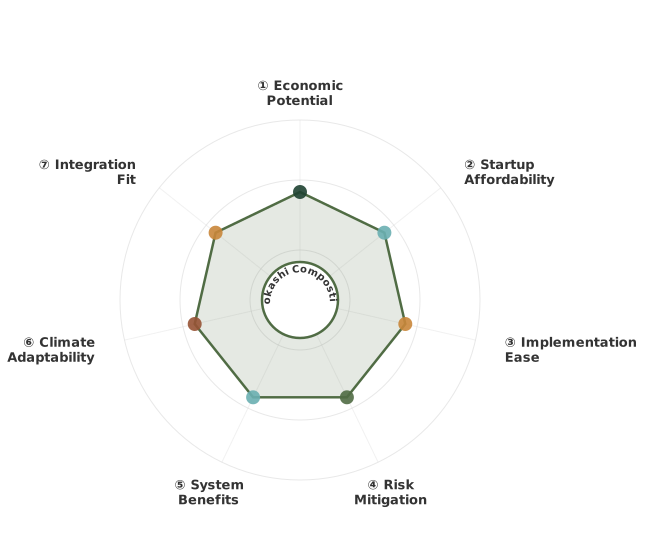
How These Traits Are Calculated
Trait dimensions are ordered clockwise starting from the top of the chart (12 o'clock position):
1. Economic Potential
Financial returns, annual value, and break-even timeline
WHAT: Evaluates financial viability by combining net annual value ($/ha from savings, income, and amortized harvests) with break-even timeline showing when practices pay for themselves.
WHY: Farmers need clear ROI understanding before committing resources. Fast payback (≤3 years) with strong returns (≥$300/ha) enables confident adoption, while long timelines (>10 years) restrict adoption to well-funded operations willing to wait for returns.
HOW: Calculated from net annual value in $/ha and break-even years. Exceptional (≥2.6): fast ROI ≤3 years + high value ≥$300/ha. Typical (1.8-2.5): moderate returns or longer timelines. Limited (<1.8): marginal economics or very long payback >10 years.
2. Startup Affordability
Initial investment costs and financial barrier to entry
WHAT: Measures financial barrier to entry through startup costs for equipment, infrastructure, consulting, and materials. Inverted scoring: lower costs = higher scores = more accessible adoption.
WHY: Affordability determines who can adopt. Low-cost practices (<$250/ha) enable widespread adoption across diverse scales, while high costs (>$2,500/ha) limit adoption to well-capitalized operations, creating barriers that slow regenerative transition.
HOW: Calculated from initial investment parsed from practice content. Inverted scoring: Exceptional (≥2.6): minimal investment <$250/ha. Typical (1.8-2.5): moderate costs $250-2,500/ha. Limited (<1.8): high barrier >$2,500/ha.
3. Implementation Ease
Learning curve and specialized knowledge required
WHAT: Measures how much learning, planning, and specialized knowledge a practice requires. Simpler practices with fewer steps score higher, while complex practices requiring extensive training or specialized resources score lower.
WHY: Complex practices create adoption barriers even when economically viable. Straightforward practices enable faster adoption and broader participation, while those requiring extensive training, timing precision, or specialized equipment limit who can succeed.
HOW: Evaluated by measuring documentation length and identifying complexity markers like location-specific requirements, seasonal timing windows, specialized skills, and dedicated equipment needs. Exceptional (≥2.6): straightforward practices with minimal prerequisites. Typical (1.8-2.5): moderate learning curve with some specialized needs. Limited (<1.8): steep learning curve requiring significant training or resources.
4. Risk Mitigation
Identified financial and ecological risk assessment
WHAT: Evaluates documented risks across financial (investment loss, market volatility) and ecological (crop failure, pest outbreaks) domains. Inverted scoring: fewer risks = higher scores.
WHY: Understanding risk exposure helps farmers make informed decisions. Low-risk practices allow confident implementation, while high-risk practices require careful planning and contingency resources. Risk transparency prevents costly failures.
HOW: Calculated from identified risks in practice content. Inverted scoring: Exceptional (≥2.6): ≤2 risks with manageable severity. Typical (1.8-2.5): 3-5 moderate risks. Limited (<1.8): 6+ risks or severe exposure.
5. System Benefits
How many ways the practice improves your land simultaneously
WHAT: Measures how many aspects of land health improve at once—carbon storage, soil quality, erosion control, water absorption, and biodiversity. Practices that improve multiple areas simultaneously create compounding benefits where each improvement reinforces the others.
WHY: The best practices solve multiple problems at once. For example, addressing erosion simultaneously builds carbon and improves water infiltration, creating a resilient system with positive feedback loops. Single-benefit approaches miss these compound transformation opportunities.
HOW: Evaluated across five key outcomes: carbon sequestration, soil organic matter increase, erosion reduction, water infiltration improvement, and biodiversity enhancement. Exceptional (≥2.6): high carbon storage (>8 t/ha/yr), improvements across 4-5 areas, transformative outcomes. Typical (1.8-2.5): moderate carbon (3-8 t/ha/yr), improvements across 2-3 areas. Limited (<1.8): modest impact (<3 t/ha/yr), single-area focus only.
6. Climate Adaptability
Geographic applicability across Köppen climate zones
WHAT: Evaluates geographic applicability by assessing how many Köppen climate zones successfully support a practice and what adaptation requirements are needed. Measures breadth of climates where farmers can implement with minimal to moderate modifications.
WHY: Universal practices working across diverse climates enable more farmers to adopt regenerative approaches. Practices limited to single climate types (only Mediterranean, only tropical) restrict adoption and slow global transition. Adaptability determines whether a practice serves niche regions or offers broad transformation.
HOW: LLM evaluation of regional success stories, Köppen zone coverage, and adaptation needs. Exceptional (≥2.6): 5+ zones or 4+ climate types, 3+ continents, minimal adaptation. Typical (1.8-2.5): 3-4 zones or 2-3 types, 2 continents, moderate adaptation. Limited (<1.8): 1-2 zones, single region, significant adaptation or highly specialized.
7. Integration Fit
How well this practice combines with others you're doing
WHAT: Measures how well a practice combines with other regenerative practices you might be doing. Some practices work as building blocks that make many other practices easier or more effective, while others work best on their own.
WHY: Practices that combine well with many others create more value on your farm. For example, cover cropping enables no-till, improves grazing, supports crop diversity, and helps water management—making all of them work better together. This helps you build a coherent system rather than juggling disconnected practices.
HOW: Evaluated by identifying which practices combine well and how strong those combinations are. 'Ideally Suited' means strong combinations where practices reinforce each other (practice A makes B easier, while B makes A more effective). 'Adequate' means complementary benefits that work well together. Exceptional (≥2.6): combines well with 6+ practices, serves as a building block. Typical (1.8-2.5): combines with 3-5 practices. Limited (<1.8): 1-2 practices or works best alone.
Going Deeper
1
WHY - The Benefits
Bokashi composting offers a unique approach to managing organic waste and enhancing soil health. Its anaerobic fermentation process, driven by beneficial microorganisms, allows for the treatment of a broader range of organic materials compared to traditional aerobic...
Bokashi composting offers a unique approach to managing organic waste and enhancing soil health. Its anaerobic fermentation process, driven by beneficial microorganisms, allows for the treatment of a broader range of organic materials compared to traditional aerobic...
WHY - The Benefits
Bokashi composting offers a unique approach to managing organic waste and enhancing soil health. Its anaerobic fermentation process, driven by beneficial microorganisms, allows for the treatment of a broader range of organic materials compared to traditional aerobic...
Bokashi composting offers a unique approach to managing organic waste and enhancing soil health. Its anaerobic fermentation process, driven by beneficial microorganisms, allows for the treatment of a broader range of organic materials compared to traditional aerobic...
Soil Health Benefits
The primary soil health benefit of Bokashi comes from the introduction of a diverse community of beneficial microbes. The effective microorganisms (EM) used in the Bokashi bran include lactic acid bacteria, yeasts, and phototrophic bacteria, which, upon burial in the soil, act as inoculants. These microbes can outcompete pathogenic organisms, improve nutrient availability through breakdown of organic matter, and contribute to the formation of soil aggregates.
When the fermented Bokashi material is incorporated into the soil, it undergoes a secondary decomposition. This process releases organic acids and beneficial compounds that can temporarily lower soil pH, which can be advantageous in certain soil types or for specific plant needs. More importantly, the introduced microbes contribute to the soil food web, accelerating the decomposition of organic matter and making nutrients more readily available to plants. Studies have shown that EM-treated soils can exhibit increased microbial biomass and activity.
Over time, the consistent application of fully decomposed Bokashi material can contribute to improved soil structure and water-holding capacity due to increased soil organic matter. The biological activity fostered by the EM can enhance the natural processes that lead to soil aggregation, improving aeration and drainage. While Bokashi itself is not a direct source of a wide spectrum of macro and micronutrients like a mature compost made from diverse inputs, the enhanced decomposition it initiates leads to more efficient nutrient cycling within the soil ecosystem.
The fermentation process itself is designed to be relatively odorless when the system is properly sealed. This is a significant advantage over traditional aerobic composting systems, which can sometimes produce unpleasant smells if not managed correctly or if certain materials are added. The lack of strong odors makes Bokashi a more acceptable waste management solution in residential areas or small-scale farming operations where odor can be a concern.
The materials treated by Bokashi—including meats, dairy, and oils—are often challenging for conventional backyard composting. These materials can create anaerobic conditions and attract pests in aerobic systems. By fermenting them first, Bokashi effectively pre-treats these materials, making them more amenable to breakdown in soil without the same risks of putrefaction or pest attraction. This allows for a more complete diversion of on-farm or household organic waste streams.
Economic Benefits
Economically, Bokashi offers benefits primarily through waste diversion and the creation of a valuable soil amendment with minimal upfront cost for DIY systems. Diverting organic waste from landfills can save on disposal fees for farms and households, which can range from USD 20 to over USD 100 per ton depending on location and waste stream. Effectively, Bokashi turns "waste" into a resource.
The cost of Bokashi bran typically ranges from USD 5 to USD 15 per kilogram (or approximately USD 2-7 per pound), depending on the formulation and supplier. A kilogram of bran can typically ferment 5-10 kilograms (11-22 pounds) of organic waste. For a household producing 5-10 kg (11-22 lbs) of food waste per week, this equates to a weekly cost of approximately USD 1-5 for the bran. This cost is often significantly less than landfill disposal fees, especially at larger scales.
The initial investment for airtight Bokashi bins can range from USD 50 to USD 200 for a single unit, with larger systems for farm use costing more. However, many DIY systems can be constructed for under USD 20 using readily available buckets and airtight lids, reducing the capital outlay.
The "product" of Bokashi—the fermented material—is not directly sold as compost but is incorporated into soil. The value lies in its ability to enrich soil, potentially reducing the need for synthetic fertilizers. If a farm were to purchase equivalent microbial inoculants and organic matter boosters, the cost savings could be significant over time, though quantifying this precise saving is complex and depends heavily on current input practices.
The economic viability is strongest for entities with significant organic waste streams and a need for soil amendment, such as market gardens, small diversified farms, or community composting projects. For large-scale agricultural operations, the volume of Bokashi that would need to be produced and buried might not be economically competitive with established large-scale composting methods, unless specific materials (like spoiled feed or processing byproducts) are uniquely suited for Bokashi treatment.
Regenerative Systems Fit
Bokashi composting's fit within regenerative agriculture is context-dependent, acting as a valuable complement rather than a foundational practice. Its regenerative value is amplified when integrated into systems focused on nutrient cycling and soil biology enhancement.
Principle 1 (Minimize Soil Disturbance): Bokashi does not directly minimize soil disturbance, as it involves the handling and burial of organic matter. However, by diverting waste that might otherwise be composted in a way that leads to soil disturbance (e.g., using heavy machinery), or by creating a resource that can be applied to no-till systems, it indirectly supports minimizing disturbance. The use of EM can indirectly support healthy soil structure, which resists compaction, but this is a secondary effect.
Principle 2 (Maximize Crop Diversity): Bokashi does not directly increase crop diversity. However, by improving soil biology and health, it creates a better environment for a wider range of plants to thrive, indirectly supporting the conditions for diverse cultivation. The microbes introduced can also contribute to breaking down organic matter into forms that support a more diverse soil microbial community, which in turn can benefit plant diversity.
Principle 3 (Keep Soil Covered): Bokashi contributes to keeping soil covered by producing a material that can be incorporated into the soil surface. Once the fermented Bokashi has undergone secondary decomposition, it becomes a rich soil amendment. Applying this material to bare soil surfaces, especially during a fallow period, helps build soil organic matter and provides a protective mulch layer, preventing erosion and conserving moisture.
Principle 4 (Maintain Living Roots): Bokashi indirectly supports maintaining living roots by enhancing soil health. A more biologically active soil, inoculated with beneficial microbes, provides a better environment for root growth, nutrient uptake, and overall plant vitality. This can lead to more consistent and robust root systems throughout the year, especially when combined with other regenerative practices like cover cropping.
Principle 5 (Integrate Livestock): Bokashi doesn't directly integrate livestock. However, it can handle waste streams that might originate from livestock operations (e.g., spoiled feed) and process them into a usable soil amendment. This supports nutrient cycling within the farm ecosystem, a key aspect of livestock integration. The byproducts of Bokashi, once decomposed, provide nutrients for forages and crops, which then feed livestock.
Transition Pathway: Bokashi is an excellent "entry-level" practice for farmers and gardeners transitioning toward regenerative principles. It provides an immediate solution for managing organic waste and creates a tangible, soil-enriching product. It can be particularly useful for farmers transitioning from conventional systems who are looking for ways to improve soil biology and fertility without immediately overhauling complex field operations. The process is simple to learn and implement at small scales. Farms can begin using Bokashi for kitchen scraps or specific on-farm waste streams, gradually building confidence and understanding of soil biology before adopting more complex regenerative practices. The key is to view Bokashi as a tool within a larger regenerative system, not as the system itself. Its effectiveness for regenerative goals increases when the fermented material is applied to soils managed with practices like no-till, cover cropping, and diverse rotations.
Sources behind this view
Videos & Podcasts
-
Composting is intrinsically linked to soil and planetary health, involving microorganisms like facultative anaerobes. Practices like Bokashi offer small-scale solutions. Healthy compost fosters benefi
-
Explains the Bokashi composting method using Effective Microbes (EM1) to ferment food scraps anaerobically. Details how to expand EM1, inoculate bran, layer with food waste in a bucket, and drain acid
-
Details compost creation using Elaine Ingham's thermophilic method (6:3:1 brown:green:nitrogen ratio, turning three times) and the Johnson-Su method for aeration. Mentions diluted milk for loosening c

-
Bokashi fermentation, using effective microorganisms, pickles food scraps (including dairy, egg, and meat), controls odors, activates soil life, and rapidly transforms waste into soil food.
Community
-
Bokashi is a low-pH (2-3) anaerobic fermentation process that kills pathogens and pre-digests nutrients. It transitions to aerobic decomposition when added to soil or compost, making nutrients bio-ava
Read more (opens in new window) permies.com -
Bokashi fermentation processes all food waste using effective microorganisms, producing leachate that significantly stimulates plant growth when added to wicking bed reservoirs, outperforming traditio
Read more (opens in new window) permies.com -
Discusses Bokashi fermentation, emphasizing the importance of drainage due to high food waste moisture and the role of airlocks in managing pressure. Explains Bokashi's anaerobic nature, beneficial mi
Read more (opens in new window) permies.com -
Clarifies Bokashi's use of inoculants to promote lactic acid bacteria, distinguishing beneficial fermentation (picklish/vinegary smells) from toxic anaerobic decomposition (foul smells, H2S). Lactic a
Read more (opens in new window) permies.com
Research
-
Producing Bokashi Compost from Vegetable and Fruit Wastes and Characteristics of Compost (opens in new window)
This study found: Bokashi compost made from fruit/veg waste fermented anaerobically for 28 days showed viable soil characteristics, proving it's a fast way to recycle food scraps.
-
Bokashi Application for Organic Farming in Manuk Mulia Village, Karo District (opens in new window)
This study found: Farmers in Indonesia learned to make Bokashi compost from cow manure using EM4 technology, boosting their skills by 84%, reducing pollution, and lowering fertilizer costs for better crop yields.
-
Low-Cost and Labour-Efficient Innovations in Household Recycling of Organic Wastes for Soil Improvement (opens in new window)
This study found: Review of low-cost innovations for household organic waste recycling to improve soil health in low-income countries, focusing on composting, anaerobic digestion, and pyrolysis for stabilized organic m
-
Bokashi as an Amendment and Source of Nitrogen in Sustainable Agricultural Systems: a Review. (opens in new window)
This study found: Review of bokashi shows it can improve soil and provide nitrogen. Higher nitrogen bokashi needs high-N ingredients and more digestible carbon. Microbial interactions need further study for consistent
From the Web
-
This section details Bokashi composting (anaerobic fermentation of organic waste using microbes, ready in 2-4 weeks) and Biochar production (charcoal from biomass via pyrolysis, improves soil structur
2
WHERE - Regional Considerations
Bokashi composting's effectiveness is influenced by regional climate, particularly temperature, which dictates the rate of microbial activity. It can be adapted to a wide range of conditions, but optimal results are typically achieved in temperate to tropical climates...
Bokashi composting's effectiveness is influenced by regional climate, particularly temperature, which dictates the rate of microbial activity. It can be adapted to a wide range of conditions, but optimal results are typically achieved in temperate to tropical climates...
WHERE - Regional Considerations
Bokashi composting's effectiveness is influenced by regional climate, particularly temperature, which dictates the rate of microbial activity. It can be adapted to a wide range of conditions, but optimal results are typically achieved in temperate to tropical climates...
Bokashi composting's effectiveness is influenced by regional climate, particularly temperature, which dictates the rate of microbial activity. It can be adapted to a wide range of conditions, but optimal results are typically achieved in temperate to tropical climates...
Click Here to Look up your Region if you don't already know it
Tropical and Subtropical Regions
Representative Locations: Southeast Asia (Malaysia, Thailand, Indonesia), Central America (Costa Rica, Mexico), Sub-Saharan Africa (Kenya, Nigeria), Northern Australia, Southern Brazil
Climate Context: Hot and humid year-round, with distinct wet and dry seasons or consistent high rainfall. Temperatures generally range from 20-35°C (68-95°F). Köppen Af/Am/Aw/Cfa.
Considerations: These regions are ideal for Bokashi due to consistently warm temperatures, which accelerate the fermentation process. The significant organic waste generated from agriculture and households can be effectively managed. High rainfall can sometimes pose challenges if the Bokashi bins are not adequately protected from excess moisture, which can lead to uncontrolled anaerobic decomposition rather than proper fermentation. Ensure bins are placed in well-drained areas and that the airtight seal is maintained. The rapid breakdown of organic matter makes Bokashi a valuable tool for quickly returning nutrients to soils that may be depleted due to high temperatures and leaching.
Mediterranean Regions
Representative Locations: California (USA), Mediterranean basin (Spain, Italy, Greece), central Chile, southwestern Australia
Climate Context: Hot, dry summers and mild, wet winters. Annual precipitation is seasonal. Temperatures can range from 10-30°C (50-86°F) during warmer months. Köppen Csa/Csb.
Considerations: Bokashi performs well during the mild wet winters and cooler parts of the summer. However, during peak summer heat (over 30°C / 86°F), the fermentation can become very rapid, potentially leading to over-fermentation or a breakdown in the controlled anaerobic process if the bins are not shaded. Conversely, during cooler winter periods (below 15°C / 59°F), the fermentation rate will slow down, extending the 2-4 week fermentation period. It is advisable to place bins in shaded locations during summer and consider a warmer spot (e.g., near a building) during winter for faster results. Buried Bokashi will decompose faster in warmer soil.
Humid Temperate Regions
Representative Locations: Northern Europe (UK, Germany, Poland), Northeastern USA, Eastern China, Japan, New Zealand
Climate Context: Warm to hot summers and cool to cold winters with moderate to high annual precipitation. Temperatures can range from 15-25°C (60-77°F) in summer and 0-10°C (32-50°F) in winter. USDA Zones 4-8, Köppen Cfb/Cfa.
Considerations: These regions offer good conditions for Bokashi during spring, summer, and early autumn. The ideal fermentation temperature of 20-30°C (68-86°F) is readily achievable during these seasons. During winter months (below 10°C / 50°F), fermentation will significantly slow down, potentially extending the process to 6-8 weeks or longer. For year-round Bokashi use, bins may need to be insulated or placed in a heated environment, such as a greenhouse or basement. The secondary decomposition in soil will also be much slower in cold winter soils.
Arid and Semi-Arid Regions
Representative Locations: Western USA, North Africa, Central Asia, Interior Australia
Climate Context: Low annual precipitation, high temperatures, and significant diurnal temperature variations. Temperatures can exceed 35°C (95°F) in summer. Köppen BSh/BSk.
Considerations: High ambient temperatures in summer can accelerate fermentation but also risk over-fermentation if not managed carefully. Protection from direct sun is crucial. The dry nature of these regions requires careful management of moisture within the Bokashi system; while anaerobic, the material needs some moisture for microbial activity. Add enough moist kitchen scraps or a little water if the mix is too dry. The secondary decomposition in soil may be slower during prolonged dry spells in summer but can be accelerated by irrigation. Burials should ideally be in areas where soil moisture is maintained, or during cooler shoulder seasons.
Cold Continental Regions
Representative Locations: Northern USA and Canada, Northern Europe, Northern Asia
Climate Context: Very short growing seasons, extreme summer heat, and severe winter cold. Temperatures can drop well below 0°C (32°F) for extended periods. USDA Zones 3-5, Köppen Dfa/Dfb.
Considerations: Bokashi fermentation will be extremely slow or negligible during winter months if bins are left outdoors or unheated. For practical use, bins must be kept in a consistently warm environment (ideally 20-30°C / 68-86°F), such as a heated basement, greenhouse, or an insulated shed with a heating element. During the short, potentially warm summers, fermentation can occur reasonably well. The primary challenge is maintaining adequate temperature for microbial activity year-round. Burial in soil will also be slow in cold climates, but decomposition will continue at a slower pace as soil temperatures rise.
3
HOW - Implementation Process
Bokashi requires a methodical approach to ensure successful fermentation and subsequent soil integration. The process involves four main stages: preparation and layering, fermentation, burial, and final decomposition.
Bokashi requires a methodical approach to ensure successful fermentation and subsequent soil integration. The process involves four main stages: preparation and layering, fermentation, burial, and final decomposition.
HOW - Implementation Process
Bokashi requires a methodical approach to ensure successful fermentation and subsequent soil integration. The process involves four main stages: preparation and layering, fermentation, burial, and final decomposition.
Bokashi requires a methodical approach to ensure successful fermentation and subsequent soil integration. The process involves four main stages: preparation and layering, fermentation, burial, and final decomposition.
Prerequisites
Before starting Bokashi composting, ensure you have:
- Airtight Bokashi bin(s): These are typically plastic buckets with a tight-fitting lid and a spigot at the bottom to drain "Bokashi tea" (leachate). Alternatively, DIY systems can be made from buckets with airtight seals.
- Bokashi inoculated bran: This is the crucial ingredient containing the effective microorganisms (EM). It can be purchased from specialized suppliers or made at home if you have access to EM concentrates and bran.
- Organic waste: Collect all suitable kitchen scraps (vegetable peels, fruit scraps, coffee grounds, tea bags, meat, dairy, cooked leftovers) and some farm waste (diseased plant material, manure if appropriate). Avoid large woody materials or excessive oily waste.
- Access to soil: You need a location to bury the fermented Bokashi material, such as a garden bed, compost pile, or field.
- Spigot wrench or a clean container: To drain the excess liquid (Bokashi tea) that accumulates.
Phase 1: Preparation and Layering
- Prepare your bin: Ensure the bin is clean. If using a DIY system, ensure the lid creates an airtight seal.
- Chop waste: Chop large organic waste items into smaller pieces (1-3 cm or 0.5-1 inch). This increases the surface area for microbial action, accelerating fermentation. Avoid processing excessively large items.
- Initial layer of bran: Sprinkle a thin layer (about 1-2 cm or 0.5-1 inch) of Bokashi bran at the bottom of the bin. This helps kickstart the fermentation and absorb initial moisture.
- Add waste: Add a layer of chopped organic waste. Fill the bin loosely, but leave some air space. Avoid over-packing, which can hinder fermentation.
- Add more bran: Sprinkle a layer of Bokashi bran over the waste. The general ratio is 1 part bran to 20-30 parts waste by volume (e.g., 1-2 tablespoons of bran per 1-2 cups of waste). Ensure the bran is distributed evenly.
- Press down: Gently press down the waste layer with your hand or a clean object to remove as much air as possible. This is crucial for maintaining anaerobic conditions.
- Repeat layers: Continue layering waste and bran, pressing down each layer until the bin is nearly full.
- Final layer: Finish with a generous sprinkle of Bokashi bran on top, ensuring the top layer of waste is fully covered.
- Seal tightly: Close the lid of the Bokashi bin securely to create an airtight seal.
International Context: In regions with high humidity, ensure bins are kept dry to prevent mold growth on the bran. In very dry regions, ensure kitchen scraps are moist enough to provide adequate moisture for fermentation; if not, a light spritzing of water may be needed.
Phase 2: Fermentation (2-4 Weeks)
- Store the bin: Place the sealed Bokashi bin in a location with a stable temperature, ideally between 20-30°C (68-86°F). Avoid direct sunlight or freezing temperatures.
- Drain Bokashi tea: Check the bin every 1-2 days. A liquid called "Bokashi tea" will accumulate at the bottom. Drain this liquid using the spigot. This liquid is highly acidic and can be diluted (1:100 with water) and used as a potent liquid fertilizer or soil inoculant. If not drained regularly, it can create uncontrolled anaerobic conditions, leading to putrefaction, or even burst the bin.
- Observe signs of fermentation: After a few days, you might notice a mild, sweet, or tangy fermented smell, similar to pickles or sour dough. The contents may shrink slightly. Avoid foul, rotten smells, which indicate the system is not properly sealed or the wrong materials were used in excess.
- Continue fermentation: Allow the waste to ferment undisturbed for 2-4 weeks. The duration depends on ambient temperature and the amount of material. Warmer temperatures lead to faster fermentation.
Phase 3: Burial (Secondary Decomposition)
- Prepare burial site: Dig a hole in your garden bed, compost pile, or field. The hole should be at least 30-45 cm (12-18 inches) deep to allow for sufficient secondary decomposition and to prevent surface pests from accessing the material.
- Incorporate Bokashi: Empty the contents of the Bokashi bin into the prepared hole. Spread the fermented material evenly.
- Cover thoroughly: Cover the Bokashi material with at least 15-20 cm (6-8 inches) of soil. This is critical to prevent odors, pests, and to ensure the material breaks down aerobically. If burying in a compost pile, mix it well with existing compost material.
- Water if necessary: If the soil is very dry, water the burial site. Moisture is needed for the secondary decomposition to occur.
Phase 4: Final Decomposition and Integration
- Allow decomposition: Leave the Bokashi material buried for 2-4 weeks (or longer in cooler climates). During this time, the beneficial microbes from the Bokashi will continue to work, breaking down the pickled organic matter and inoculating the surrounding soil.
- Check for decomposition: After 2-4 weeks, the material should be significantly broken down, often looking like dark, rich soil. It should no longer resemble the original waste products. If it still looks like identifiable scraps, it needs more time to decompose.
- Planting: Once the material is fully decomposed, the soil is ready for planting. You can plant directly into the enriched area.
Transition Timeline & Phase-Out Strategy
Bokashi is not typically a practice that requires phasing out in the same way as synthetic inputs. It is a method of waste processing and soil conditioning. However, its transition into a larger regenerative system involves understanding its role and when to graduate to other practices:
- Initial Use (Months 1-6): Begin by using Bokashi for kitchen scraps and small volumes of farm waste. Get comfortable with the process, bin management, and draining tea. Integrate buried Bokashi into garden beds or specific plots.
- Scaling Up (Months 6-12): If successful, increase the volume of waste processed. Invest in larger bins, or multiple bins to maintain a continuous cycle of fermentation and burial. Start quantifying the amount of Bokashi tea produced and its use as a liquid fertilizer.
- Integration into Field Operations (Year 1-2+): For farms, strategically bury Bokashi in areas designated for future cover cropping or cash cropping. Use the Bokashi tea as a foliar spray or soil drench applications where beneficial, but always diluted. Consider producing your own Bokashi bran if raw materials (bran, EM) are locally available and cost-effective.
- Graduation to More Complex Systems: As soil health improves through direct application of Bokashi (after full decomposition), and as other regenerative practices like cover cropping, composting diverse materials, and no-till become established, the proportion of waste processed solely by Bokashi may decrease relative to the total farm's organic matter management. However, Bokashi remains a valuable tool for specific waste streams (e.g., meat scraps, diseased plant material) that are difficult to manage otherwise. The goal is not to eliminate Bokashi, but to integrate it harmoniously with other, more broadly soil-building practices. Bokashi inoculates soil with beneficial microbes, supporting the broader biological functions that are central to regenerative agriculture. Its effectiveness peaks when the resulting material is incorporated into a living soil system actively managed with regenerative principles.
Sources behind this view
Videos & Podcasts
-
Explains the Bokashi composting method using Effective Microbes (EM1) to ferment food scraps anaerobically. Details how to expand EM1, inoculate bran, layer with food waste in a bucket, and drain acid
-
Composting is intrinsically linked to soil and planetary health, involving microorganisms like facultative anaerobes. Practices like Bokashi offer small-scale solutions. Healthy compost fosters benefi
-
Bokashi fermentation, using effective microorganisms, pickles food scraps (including dairy, egg, and meat), controls odors, activates soil life, and rapidly transforms waste into soil food.
-
Details a large-scale, anaerobic bokashi heap method using goat bedding, buckwheat, and Effective Microorganisms (EM) tea, sealed in plastic for nutrient retention and faster fertilizer production, co
Community
-
Bokashi is a low-pH (2-3) anaerobic fermentation process that kills pathogens and pre-digests nutrients. It transitions to aerobic decomposition when added to soil or compost, making nutrients bio-ava
Read more (opens in new window) permies.com -
Bokashi fermentation processes all food waste using effective microorganisms, producing leachate that significantly stimulates plant growth when added to wicking bed reservoirs, outperforming traditio
Read more (opens in new window) permies.com -
Discusses Bokashi fermentation, emphasizing the importance of drainage due to high food waste moisture and the role of airlocks in managing pressure. Explains Bokashi's anaerobic nature, beneficial mi
Read more (opens in new window) permies.com -
Clarifies Bokashi's use of inoculants to promote lactic acid bacteria, distinguishing beneficial fermentation (picklish/vinegary smells) from toxic anaerobic decomposition (foul smells, H2S). Lactic a
Read more (opens in new window) permies.com
Research
-
Producing Bokashi Compost from Vegetable and Fruit Wastes and Characteristics of Compost (opens in new window)
This study found: Bokashi compost made from fruit/veg waste fermented anaerobically for 28 days showed viable soil characteristics, proving it's a fast way to recycle food scraps.
-
Bokashi as an Amendment and Source of Nitrogen in Sustainable Agricultural Systems: a Review. (opens in new window)
This study found: Review of bokashi shows it can improve soil and provide nitrogen. Higher nitrogen bokashi needs high-N ingredients and more digestible carbon. Microbial interactions need further study for consistent
-
Bokashi Application for Organic Farming in Manuk Mulia Village, Karo District (opens in new window)
This study found: Farmers in Indonesia learned to make Bokashi compost from cow manure using EM4 technology, boosting their skills by 84%, reducing pollution, and lowering fertilizer costs for better crop yields.
-
Low-Cost and Labour-Efficient Innovations in Household Recycling of Organic Wastes for Soil Improvement (opens in new window)
This study found: Review of low-cost innovations for household organic waste recycling to improve soil health in low-income countries, focusing on composting, anaerobic digestion, and pyrolysis for stabilized organic m
From the Web
-
This section details Bokashi composting (anaerobic fermentation of organic waste using microbes, ready in 2-4 weeks) and Biochar production (charcoal from biomass via pyrolysis, improves soil structur
4
Know the Debate
Bokashi composting is an anaerobic fermentation method that pickles organic waste using inoculated bran, offering a way to manage diverse materials...
Know the Debate
Bokashi composting is an anaerobic fermentation method that pickles organic waste using inoculated bran, offering a way to manage diverse materials...
Bokashi composting is an anaerobic fermentation method that pickles organic waste using inoculated bran, offering a way to manage diverse materials including meat and dairy. While widely promoted for its potential to recycle nutrients and enhance soil biology, its ultimate regenerative value is context-dependent, relying on proper implementation and integration with other soil-building practices. Its effectiveness can vary significantly based on regional climate and specific soil conditions, and the necessity of specialized microbial inoculants remains a point of discussion among practitioners.
Is Bokashi an inoculant or slow-release nutrient source?
Primarily a microbial inoculant
Bokashi's main benefit is inoculating soil with a diverse microbial community, accelerating decomposition and nutrient cycling. Its pickled material acts as a fast-acting pre-compost, rapidly activating soil life.
Sources behind this view
Sources behind this view
Videos & Podcasts
-
Bokashi fermentation, using effective microorganisms, pickles food scraps (including dairy, egg, and meat), controls odors, activates soil life, and rapidly transforms waste into soil food.
-
Composting is intrinsically linked to soil and planetary health, involving microorganisms like facultative anaerobes. Practices like Bokashi offer small-scale solutions. Healthy compost fosters beneficial organisms that outcompete pathogens, underscoring the need to reconnect with our innate ability to compost for environmental and human well-being.
Research
-
Bokashi as an Amendment and Source of Nitrogen in Sustainable Agricultural Systems: a Review. (opens in new window)
This study found: This review looks at bokashi, a type of fermented organic matter, as a tool for improving soil health and providing nitrogen in sustainable farming. To make bokashi with more nitrogen, it's important to use ingredients that are already high in nitrogen and add more easily digestible carbon sources for the microbes. The review notes that research on how the microbial starter cultures in bokashi speed up the breakdown of organic matter has produced mixed results, suggesting we need to better understand how these microbes work with the soil's natural microbes. More research is also needed to connect how much nitrogen bokashi provides to actual crop yields and how it works best when used alongside other farming methods.
-
Effect of Bokashi Fertilizer on Increasing Soil Nutrients and Growth of Medicinal Plants (opens in new window)
This study found: This study looked at how bokashi fertilizer made from cow manure affects soil nutrients and the growth of medicinal plants like ginger and turmeric. Using a controlled experiment, researchers found that applying this fermented cow dung significantly improved soil quality, increasing water content, organic matter, phosphorus, potassium, and the soil's ability to hold nutrients (CEC). The bokashi fertilizer also led to taller plants, more leaves, and heavier bulbs in the medicinal plants. The results show that bokashi made from cow dung is effective for boosting both soil fertility and the yield of these important herbs.
Primarily a slow-release nutrient source
Bokashi's fermented output breaks down slowly in the soil, acting as a gradual nutrient source over time. Its long-term contribution to soil fertility is more significant than any immediate microbial boost.
Sources behind this view
Sources behind this view
Videos & Podcasts
-
Bokashi, fermented organic matter using EM, is effective for food waste recycling, accelerating decomposition in soil, compost, or worm bins. It's also used in 'chop and drop' gardening, enhancing soil health and nutrient cycling.

-
Bokashi is a composting method using specific microbes like yeast and lactic acid bacteria. It's an easy, potent permaculture tool that can be done at home, promoting endo-symbiosis for gardens and fruits.
![Thumbnail for Permaculture for Beginners with Matt Powers [FULL WEBINAR]](/static/thumbnails/Dy1S9J95eWo.jpg)
Research
-
Development and Application of an Efficient Bacterial Liquid Inoculum for Composting of Organic Kitchen Waste (opens in new window)
This study found: Researchers developed a special liquid mix of beneficial bacteria to speed up the composting of kitchen scraps like food waste. This 'microbial starter' helps break down organic materials more effectively, leading to faster compost production that is richer in nutrients. The study showed this starter improved key compost qualities such as moisture, temperature, pH, and nutrient levels (carbon, nitrogen, phosphorus, potassium). Using this method at home or in small facilities can turn food waste into valuable compost, reducing the burden on landfills and supporting a circular economy. It's a budget-friendly way to manage waste at its source.
-
Waste Management through Composting: Challenges and Potentials (opens in new window)
This study found: Composting is a valuable way to manage farm waste by breaking down organic materials into nutrient-rich soil amendments. However, composting can face challenges like taking too long, producing unpleasant smells, or not having enough nutrients initially. These issues have sometimes led farmers to rely on chemical fertilizers. While chemical fertilizers quickly provide nutrients, they can harm the environment by contributing to pollution, harming soil life, and depleting the ozone layer. Because of these downsides, many farmers are returning to compost to rebuild soil health. This review looks at the reasons why composting can take a long time, what factors influence it, and how to improve the process. Suggestions include developing quick tests for contaminants, using odor-trapping methods, and adding natural activators to boost nutrient content. Using compost that releases nutrients slowly could be beneficial for long-term crops, and adding natural plant-based treatments could further enhance compost quality and speed up the process.
Making Sense of the Differences
The debate centers on Bokashi's delivery mechanism: an immediate microbial inoculant or a slow-release nutrient provider. While academic research supports both immediate microbial benefits and the eventual nutrient release from decomposed material, field practitioners often emphasize its role in gradual soil enrichment. Farmers can expect Bokashi to boost immediate soil microbial activity and contribute to gradual soil fertility improvements, particularly when integrated into systems with ongoing soil-building practices.
Does Bokashi effectiveness vary by soil type and climate?
Universally effective across contexts
Bokashi is presented as a broadly applicable method that improves soil and crop yields across diverse regions and soil types, offering a versatile waste management solution.
Sources behind this view
Sources behind this view
Research
-
Análisis bibliométrico de la literatura científica sobre el abono orgánico Bokashi: alternativa en la agricultura sostenible (opens in new window)
This study found: A review of scientific literature shows a significant increase in research on Bokashi, a Japanese-style fermented organic compost, over the past two decades. This method uses beneficial microbes to speed up composting, making it a quicker way to produce organic fertilizer. Studies indicate Bokashi is valuable for improving soil health and providing nutrients for plants. The research is most active in Brazil, Indonesia, and Mexico, with a strong international focus. This growing body of work suggests Bokashi is a promising sustainable option for farmers.
-
Effect of Bokashi Fertilizer on Increasing Soil Nutrients and Growth of Medicinal Plants (opens in new window)
This study found: This study looked at how bokashi fertilizer made from cow manure affects soil nutrients and the growth of medicinal plants like ginger and turmeric. Using a controlled experiment, researchers found that applying this fermented cow dung significantly improved soil quality, increasing water content, organic matter, phosphorus, potassium, and the soil's ability to hold nutrients (CEC). The bokashi fertilizer also led to taller plants, more leaves, and heavier bulbs in the medicinal plants. The results show that bokashi made from cow dung is effective for boosting both soil fertility and the yield of these important herbs.
-
VALORIZING DEGRADED LANDS USING INNOVATIVE BIOFERTILISERSFOR TOMATO CROPPING: RESPONSE TO BOKASHI, EFFICIENT MICROORGANISMS AND COMPOST IN THE SUDANESE ZONE OF BURKINA FASO (BOBO-DIOULASSO) (opens in new window)
This study found: A two-year study in Burkina Faso investigated how different organic soil amendments, called biofertilizers, affect tomato crops and soil health. Researchers compared compost, a fermented organic material called Bokashi, and beneficial microbes (Effective Microorganisms or EM), alongside conventional synthetic fertilizers. The study found that compost and Bokashi were better at improving soil nutrients like phosphorus and maintaining soil pH and nitrogen levels compared to synthetic fertilizers. Planting tomatoes with Bokashi alone resulted in a 23-58% yield increase compared to using only synthetic fertilizer. Combining Bokashi with EM and a small amount of synthetic fertilizer showed promise for boosting crop yields while helping to restore degraded land.
From the Web
-
This section details Bokashi composting (anaerobic fermentation of organic waste using microbes, ready in 2-4 weeks) and Biochar production (charcoal from biomass via pyrolysis, improves soil structure, water retention, and carbon storage). Both are presented as advanced organic amendments for soil health, with application methods and benefits for various crops.
Effectiveness is context-dependent
Bokashi's benefits vary significantly based on soil type, existing biology, and climate, with success being more pronounced in specific conditions like adequate moisture and temperature.
Sources behind this view
Sources behind this view
Videos & Podcasts
-
Bokashi fermentation, using effective microorganisms, pickles food scraps (including dairy, egg, and meat), controls odors, activates soil life, and rapidly transforms waste into soil food.
-
Bokashi composting uses fermentation with inoculated bran to break down organic matter, including meat and dairy, in about two weeks. Small bins fit under counters, and fermented material is then buried in the garden.
Research
-
Producing Bokashi Compost from Vegetable and Fruit Wastes and Characteristics of Compost (opens in new window)
This study found: Researchers explored how to make a quick compost called Bokashi using vegetable and fruit scraps from local stores. They mixed the food waste with a fermented liquid (lacto serum) and bran, then sealed it in buckets to ferment without air for 28 days. After fermentation, they tested the compost for key soil health indicators like pH, salt levels, carbon and nitrogen content, and essential plant nutrients. The study concluded that Bokashi compost is a practical and fast way to recycle food waste into a usable soil amendment.
-
Utilization of Bokashi Composting and Animal Feed Silage for Sustainable Agricultural Waste Management and Environmental Impact Analysis (opens in new window)
This study found: This research explores how farmers, especially in developing countries, can better manage farm waste like crop residues and animal manure. It focuses on two methods: bokashi composting (a type of fermented compost) and making silage (fermented animal feed). The study used analysis tools to assess the environmental effects of these practices and how they can improve soil health and the quality of crops. The authors suggest that bokashi and silage are promising ways to recycle farm waste, reduce pollution, and enhance farm productivity, and they call for more research to make these methods even more effective and widely used.
Making Sense of the Differences
While widely promoted as a universally effective amendment, Bokashi's impact on soil and crops can depend on the recipient environment. Academic and field reports suggest that factors like soil type, existing microbial activity, climate (temperature and moisture), and waste composition influence its performance. Farmers should be aware that variability exists, and testing Bokashi in their specific context is advisable to gauge its true benefits.
EM bran is crucial for effective fermentation
Research studies and commercial applications typically rely on specific Effective Microorganism (EM) blends to ensure consistent anaerobic fermentation and optimal outcomes.
Sources behind this view
Sources behind this view
Videos & Podcasts
-
Bokashi is fermented organic matter, typically bran, using EM as an inoculant. Terraganix uses EM1 for their EM bokashi. It's important to distinguish true bokashi from products using other cultures.
Research
-
Optimization of Bokashi-Composting Process Using Effective Microorganisms-1 in Smart Composting Bin (opens in new window)
This study found: This study explored how to make the best quality compost from household food scraps, like banana peels, using a special fermentation method called bokashi composting. They used a 'smart' composting bin that automatically tracked temperature, humidity, and moisture. The key ingredient was a microbial starter called EM-1, and they tested different amounts (12, 22, and 32 mL). After 14 days, the compost was tested for its nutrient content (NPK) and carbon-to-nitrogen ratio. The results showed that using 12 mL of EM-1 was the most effective, leading to faster breakdown and a good balance of nutrients, which is ideal for healthy soil. This method offers a way to reduce food waste and create valuable compost without harming the environment.
-
Bokashi Application for Organic Farming in Manuk Mulia Village, Karo District (opens in new window)
This study found: In Manuk Mulia Village, Indonesia, a farmer group was struggling with pollution from cow manure and the high cost of chemical fertilizers. This project introduced them to making Bokashi, a special type of compost, using cow manure and a microbial starter called EM4. Through workshops and hands-on training, farmers learned how to create this organic fertilizer. The program significantly boosted their understanding and skills in making Bokashi, helping them reduce environmental pollution from manure. By switching to Bokashi, farmers also cut down on buying expensive chemical fertilizers, which in turn helped their vegetable and fruit crops grow better and produce more.
-
Development and Application of an Efficient Bacterial Liquid Inoculum for Composting of Organic Kitchen Waste (opens in new window)
This study found: Researchers developed a special liquid mix of beneficial bacteria to speed up the composting of kitchen scraps like food waste. This 'microbial starter' helps break down organic materials more effectively, leading to faster compost production that is richer in nutrients. The study showed this starter improved key compost qualities such as moisture, temperature, pH, and nutrient levels (carbon, nitrogen, phosphorus, potassium). Using this method at home or in small facilities can turn food waste into valuable compost, reducing the burden on landfills and supporting a circular economy. It's a budget-friendly way to manage waste at its source.
-
VALORIZING DEGRADED LANDS USING INNOVATIVE BIOFERTILISERSFOR TOMATO CROPPING: RESPONSE TO BOKASHI, EFFICIENT MICROORGANISMS AND COMPOST IN THE SUDANESE ZONE OF BURKINA FASO (BOBO-DIOULASSO) (opens in new window)
This study found: A two-year study in Burkina Faso investigated how different organic soil amendments, called biofertilizers, affect tomato crops and soil health. Researchers compared compost, a fermented organic material called Bokashi, and beneficial microbes (Effective Microorganisms or EM), alongside conventional synthetic fertilizers. The study found that compost and Bokashi were better at improving soil nutrients like phosphorus and maintaining soil pH and nitrogen levels compared to synthetic fertilizers. Planting tomatoes with Bokashi alone resulted in a 23-58% yield increase compared to using only synthetic fertilizer. Combining Bokashi with EM and a small amount of synthetic fertilizer showed promise for boosting crop yields while helping to restore degraded land.
From the Web
-
This section details Bokashi composting (anaerobic fermentation of organic waste using microbes, ready in 2-4 weeks) and Biochar production (charcoal from biomass via pyrolysis, improves soil structure, water retention, and carbon storage). Both are presented as advanced organic amendments for soil health, with application methods and benefits for various crops.
Alternative methods can be effective
Some practitioners achieve success with homemade inoculants or spontaneous fermentation, suggesting that while EM aids the process, it may not be the only viable pathway to fermentation.
Sources behind this view
Sources behind this view
Videos & Podcasts
-
Bokashi fermentation, using effective microorganisms, pickles food scraps (including dairy, egg, and meat), controls odors, activates soil life, and rapidly transforms waste into soil food.
-
Bokashi is an anaerobic fermentation process using specific microbes (lactobacillus, yeast, fungi) and bran to ferment food waste in a sealed container over 2-3 weeks, distinct from aerobic composting.
-
Bokashi is a composting method using specific microbes like yeast and lactic acid bacteria. It's an easy, potent permaculture tool that can be done at home, promoting endo-symbiosis for gardens and fruits.
Making Sense of the Differences
The necessity of specialized EM-inoculated bran for Bokashi success is debated. While many studies and commercial products rely on specific EM blends for consistent results, some field practitioners report success using simplified or even homemade microbial inoculants. This suggests that while EM is beneficial, its specific formulation may not be the sole determinant of fermentation effectiveness. Farmers may experiment with alternative microbial sources, but should be aware that commercial EM offers a more standardized and often more reliable starting point.
5
HOW MUCH - Costs & Investment
Note: Costs shown in USD; multiply by local labor and material cost indices for your region. Labor costs vary significantly internationally.
Note: Costs shown in USD; multiply by local labor and material cost indices for your region. Labor costs vary significantly internationally.
HOW MUCH - Costs & Investment
Note: Costs shown in USD; multiply by local labor and material cost indices for your region. Labor costs vary significantly internationally.
Note: Costs shown in USD; multiply by local labor and material cost indices for your region. Labor costs vary significantly internationally.
Note: All costs are based on recent US economic data (2024–2026) and may vary substantially by region based on local labor rates, material costs, and regulatory requirements.
Containment and Fermentation Infrastructure
The foundation of a successful Bokashi system is the maintenance of anaerobic conditions. For a Small Operation (under 50 acres (20 ha)), such as a intensive market garden or urban farm, the entry point is low. Operators typically purchase food-grade, airtight 5-gallon (19 L) or 10-gallon (38 L) buckets equipped with spigots for liquid leachate drainage. A starter system consisting of 4–8 of these units requires an investment of $50–$200. This setup is modular, allowing producers to increase capacity as needed without significant capital outlay.
Mid-size Operations (50–500 acres (20–202 ha)), which often incorporate food scraps from farm-to-table programs or process waste from on-farm animal processing, require higher-capacity containment. The shift to heavy-duty, commercial-grade barrels (30–55 gallons (114–208 L)) or custom-welded high-density polyethylene (HDPE) containers is necessary to manage higher volumes reliably. Equipping a site with these robust containers ranges from $300–$1,500. This investment covers the bins and the plumbing for leachate collection systems, which prevent odorous runoff and protect local water quality.
Large-Scale Operations (500+ acres)—such as commercial composting centers or those partnering with municipal waste programs—transition to industrial-grade infrastructure. This involves specialized stainless steel fermentation vaults or large-scale, high-density plastic structures. Essential to these systems is automated leachate collection and integrated gas-venting technology to maintain a consistent internal environment. Hardware setup for these extensive facilities requires an initial capital expenditure of $2,000–$6,500+.
Consumable Inputs: Inoculated Bran and Activating Agents
Bokashi bran, the wheat or rice substrate inoculated with effective microorganisms, represents the primary recurring cost. Small-scale operators typically rely on retail-packaged bran, purchasing in smaller quantities at prices between $8–$15 per lb. At this scale, annual consumption cycles often result in a total expenditure of $100–$400.
Mid-size farms, by consuming higher volumes, often utilize direct-to-manufacturer bulk purchasing agreements. These agreements reduce per-lb costs to $5–$9. Based on standard waste volume throughput, these farms should budget $500–$2,000 annually for bran.
Large-scale operations significantly alter their cost profile by producing bran on-site. The initial investment for a dedicated microbial laboratory and fermentation staging area costs $3,000–$8,000. While this is an upfront capital burden, it reduces ongoing consumable input costs by 60–80% over a 3-year period compared to retail purchasing. This model is only recommended once the farm reaches a waste throughput consistency that justifies the labor and space required for in-house manufacturing.
Operational Labor and Logistics
Bokashi is inherently more labor-intensive than traditional aerobic windrow composting because it requires individual container management. Small operations generally manage this through internal labor. The operator should account for 2–5 hours per month per 50 lbs (23 kg) of waste, with time valued at $15–$25 per hour.
Mid-size operations must integrate waste transport logistics into their budget. This includes fuel, tractor hours, and personnel time required to ferry waste to the fermentation site and subsequently move the fermented "pre-compost" to the application fields. Depending on farm size and the distance between waste sources and burial sites, annual labor and logistics costs range from $600–$1,800 per year.
Large operations require dedicated, consistent staffing to oversee the fermentation cycle, leachate management, and precise soil incorporation. Total annual labor and maintenance costs for these systems typically reach $5,000–$15,000+. These costs are highly sensitive to the proximity of the waste source to the final soil amendment fields; increased distance often correlates with fuel and time expenditures at the higher end of the range.
Most Spend: Most small-to-mid-scale operations spend between $350–$900 in their first year of operation. This figure encompasses the essential capital cost of initial containers and seals, combined with the primary annual supply of inoculated bran required to begin consistent waste diversion.
Why the Range?: Cost variation is driven by the internal versus external sourcing of microbial bran and the scale of waste throughput. Farmers who possess existing storage capacity or who manufacture their own bran significantly lower their operational expenditures, while farms at the upper end of each scale often face higher costs due to regulatory compliance for runoff and specialized labor needs.
Sources behind this view
Videos & Podcasts
-
Explains the Bokashi composting method using Effective Microbes (EM1) to ferment food scraps anaerobically. Details how to expand EM1, inoculate bran, layer with food waste in a bucket, and drain acid
-
Details a large-scale, anaerobic bokashi heap method using goat bedding, buckwheat, and Effective Microorganisms (EM) tea, sealed in plastic for nutrient retention and faster fertilizer production, co
-
Bokashi fermentation, using effective microorganisms, pickles food scraps (including dairy, egg, and meat), controls odors, activates soil life, and rapidly transforms waste into soil food.
-
Bokashi uses sealed containers, layering food waste with bran, to ferment via acidic conditions created by lactobacillus, then soil microbes finish decomposition, enriching the soil.
Community
-
Bokashi fermentation processes all food waste using effective microorganisms, producing leachate that significantly stimulates plant growth when added to wicking bed reservoirs, outperforming traditio
Read more (opens in new window) permies.com -
Bokashi is a low-pH (2-3) anaerobic fermentation process that kills pathogens and pre-digests nutrients. It transitions to aerobic decomposition when added to soil or compost, making nutrients bio-ava
Read more (opens in new window) permies.com -
Discusses Bokashi fermentation, emphasizing the importance of drainage due to high food waste moisture and the role of airlocks in managing pressure. Explains Bokashi's anaerobic nature, beneficial mi
Read more (opens in new window) permies.com -
Bokashi composting involves fermenting organic waste, with variations in odor based on inputs like citrus or beets. For faster breakdown, especially with frozen ground, mix fermented Bokashi with tops
Read more (opens in new window) permies.com
Research
-
Producing Bokashi Compost from Vegetable and Fruit Wastes and Characteristics of Compost (opens in new window)
This study found: Bokashi compost made from fruit/veg waste fermented anaerobically for 28 days showed viable soil characteristics, proving it's a fast way to recycle food scraps.
-
Optimization of Bokashi-Composting Process Using Effective Microorganisms-1 in Smart Composting Bin (opens in new window)
This study found: Bokashi composting with 12 mL of EM-1 starter effectively broke down banana peels in a smart bin over 14 days, yielding nutrient-rich compost with an optimal C/N ratio, reducing food waste.
-
Bokashi as an Amendment and Source of Nitrogen in Sustainable Agricultural Systems: a Review. (opens in new window)
This study found: Review of bokashi shows it can improve soil and provide nitrogen. Higher nitrogen bokashi needs high-N ingredients and more digestible carbon. Microbial interactions need further study for consistent
6
REWARDS AND RISKS - Economics & Risk Factors
Bokashi composting, while a straightforward process, carries specific economic and systemic risks that farmers and land managers should consider. Understanding these can help maximize its benefits while mitigating potential downsides.
Bokashi composting, while a straightforward process, carries specific economic and systemic risks that farmers and land managers should consider. Understanding these can help maximize its benefits while mitigating potential downsides.
REWARDS AND RISKS - Economics & Risk Factors
Bokashi composting, while a straightforward process, carries specific economic and systemic risks that farmers and land managers should consider. Understanding these can help maximize its benefits while mitigating potential downsides.
Bokashi composting, while a straightforward process, carries specific economic and systemic risks that farmers and land managers should consider. Understanding these can help maximize its benefits while mitigating potential downsides.
Economic Scenarios In a Best Case Scenario, the operation effectively converts 100% of organic waste into high-quality amendment, avoiding landfill tipping fees—which range from $60–$120 per ton—and replacing synthetic nitrogen inputs. For a 50-acre (20 ha) farm, this generates a net annual benefit of $800–$2,500. When combined with a 5–10% increase in high-value crop yields, gross annual revenue may increase by an additional $1,000–$3,000.
In a Typical Case Scenario, the practice functions as a supplemental waste diversion strategy. Costs and savings typically neutralize within an 18–24 month window. During this phase, annual savings on fertilizer and waste disposal hover between $300–$900. Soil health benefits are incremental, with measurable organic matter increases of 0.5–1% achieved over a 3-year period.
In a Worst Case Scenario, inadequate sealing leads to failed fermentation. This results in the loss of all raw materials, additional cleanup labor, and, potentially, pest infestation. If this failure happens persistently, the operation incurs a net loss of $500–$1,200 per year, accounting for wasted inoculant, bin depreciation, and labor cost without producing any usable soil amendment.
Market Factors and Risk Mitigation Profitability is tightly linked to regional tipping fees; facilities in areas with high landfill charges ($100+/ton) see faster ROI. Volatility in synthetic fertilizer markets also fluctuates the relative value of the Bokashi amendment. To mitigate risk, operators should: 1. Conduct regular microbial testing of bran—$50–$150 per lab visit—to ensure potency. 2. Invest in industrial-grade bin seals—$20–$50 per bin—to prevent oxygen infiltration. 3. Scale operations in phases, starting with 10% of total waste volume, allowing for labor and process troubleshooting before committing to large-scale infrastructure.
Transition Period Risks Bokashi implementation requires careful soil management to avoid nitrogen immobilization. If acidic Bokashi material is buried too shallowly or exceeds application rates of 5 tons per acre (11 tonnes/ha), soil microbial activity may bind available nitrogen, causing a 3–6 week "yellowing" or yield dip in sensitive crops. Recovery typically requires an application of lime or wood ash, costing $20–$40 per acre ($49–$99/ha). To mitigate, farmers should observe a 4-week "buffer period" between burial and planting to ensure the fermentation cycle is complete and pH levels have stabilized.
Sources behind this view
Videos & Podcasts
-
Explains the Bokashi composting method using Effective Microbes (EM1) to ferment food scraps anaerobically. Details how to expand EM1, inoculate bran, layer with food waste in a bucket, and drain acid
-
Composting is intrinsically linked to soil and planetary health, involving microorganisms like facultative anaerobes. Practices like Bokashi offer small-scale solutions. Healthy compost fosters benefi
-
Details compost creation using Elaine Ingham's thermophilic method (6:3:1 brown:green:nitrogen ratio, turning three times) and the Johnson-Su method for aeration. Mentions diluted milk for loosening c
-
Details a large-scale, anaerobic bokashi heap method using goat bedding, buckwheat, and Effective Microorganisms (EM) tea, sealed in plastic for nutrient retention and faster fertilizer production, co
Community
-
Bokashi is a low-pH (2-3) anaerobic fermentation process that kills pathogens and pre-digests nutrients. It transitions to aerobic decomposition when added to soil or compost, making nutrients bio-ava
Read more (opens in new window) permies.com -
Bokashi fermentation processes all food waste using effective microorganisms, producing leachate that significantly stimulates plant growth when added to wicking bed reservoirs, outperforming traditio
Read more (opens in new window) permies.com -
Discusses Bokashi fermentation, emphasizing the importance of drainage due to high food waste moisture and the role of airlocks in managing pressure. Explains Bokashi's anaerobic nature, beneficial mi
Read more (opens in new window) permies.com -
Clarifies Bokashi's use of inoculants to promote lactic acid bacteria, distinguishing beneficial fermentation (picklish/vinegary smells) from toxic anaerobic decomposition (foul smells, H2S). Lactic a
Read more (opens in new window) permies.com
Research
-
Producing Bokashi Compost from Vegetable and Fruit Wastes and Characteristics of Compost (opens in new window)
This study found: Bokashi compost made from fruit/veg waste fermented anaerobically for 28 days showed viable soil characteristics, proving it's a fast way to recycle food scraps.
-
Low-Cost and Labour-Efficient Innovations in Household Recycling of Organic Wastes for Soil Improvement (opens in new window)
This study found: Review of low-cost innovations for household organic waste recycling to improve soil health in low-income countries, focusing on composting, anaerobic digestion, and pyrolysis for stabilized organic m
-
Bokashi as an Amendment and Source of Nitrogen in Sustainable Agricultural Systems: a Review. (opens in new window)
This study found: Review of bokashi shows it can improve soil and provide nitrogen. Higher nitrogen bokashi needs high-N ingredients and more digestible carbon. Microbial interactions need further study for consistent
-
Recycling Agricultural Waste to Enhance Sustainable Greenhouse Agriculture: Analyzing the Cost-Effectiveness and Agronomic Benefits of Bokashi and Biochar Byproducts as Soil Amendments in Citrus Nursery Production (opens in new window)
This study found: Bokashi and biochar as soil amendments in citrus nurseries improved growth, water retention, and nutrient availability. Biochar offered significant cost savings and carbon sequestration benefits, enha
From the Web
-
This section details Bokashi composting (anaerobic fermentation of organic waste using microbes, ready in 2-4 weeks) and Biochar production (charcoal from biomass via pyrolysis, improves soil structur
7
WHO - Labor & Expertise
Bokashi composting is a relatively low-skill practice, making it accessible to a wide range of individuals and farm operations. However, consistent application and proper management are keys to success.
Bokashi composting is a relatively low-skill practice, making it accessible to a wide range of individuals and farm operations. However, consistent application and proper management are keys to success.
WHO - Labor & Expertise
Bokashi composting is a relatively low-skill practice, making it accessible to a wide range of individuals and farm operations. However, consistent application and proper management are keys to success.
Bokashi composting is a relatively low-skill practice, making it accessible to a wide range of individuals and farm operations. However, consistent application and proper management are keys to success.
Skill Requirements
- Basic Understanding: Users need to understand the principle of anaerobic fermentation, the importance of airtight sealing, and the need for inoculated bran.
- Layering and Sealing Technique: The ability to layer waste and bran correctly, press down to remove air, and ensure an airtight lid.
- Drainage Discipline: Regular draining of Bokashi tea is crucial and requires consistent attention. This is a simple mechanical task but must be done routinely.
- Burial Process: Understanding when the material is ready for burial and how to properly incorporate it into soil or a compost pile is essential. This includes digging adequate depth and covering sufficiently.
- Problem Recognition: Identifying signs of successful fermentation (tangy, sweet smell) versus signs of failure (foul, rotten smell, excessive mold not related to yeast bloom).
Labor Investment
- Daily/Bi-Daily: 5-10 minutes per bin for adding waste, pressing down, and draining Bokashi tea. This is a consistent daily task if processing waste continuously.
- Weekly/Bi-Weekly: Light cleaning of spigot, checking bin seal.
- Every 2-4 Weeks: Emptying a full bin for burial, preparing a new bin for use. This involves about 30-60 minutes of active processing and transport per bin.
- Burial: Digging a hole and burying the material requires about 1-2 hours of labor per bin, highly dependent on soil type, depth required, and availability of suitable burial sites.
Expertise Needed for Optimization & Problem-Solving
- Microbial Ecology Basics: Understanding the role of anaerobic fermentation and effective microorganisms can help troubleshoot issues and optimize the process.
- Soil Biology Awareness: Knowing how the fermented material interacts with soil organisms after burial is key to maximizing its regenerative benefits.
- Waste Stream Analysis: For farm-scale operations, understanding the composition and volume of organic waste generated is important for scaling Bokashi appropriately.
- Climate Adaptation: Recognizing how ambient temperature affects fermentation speed and adjusting practices (e.g., bin placement, insulation) accordingly.
International Labor Cost Considerations
- Labor-Intensive vs. Capital-Intensive: In regions with lower labor costs, the daily/bi-daily tasks associated with Bokashi are very economical. The cost of bran becomes the primary ongoing expense.
- DIY vs. Purchased Systems: In regions where manufactured Bokashi bins are expensive or unavailable, investing time in building DIY systems becomes more cost-effective.
- DIY Bran Production: If local access to EM cultures and bran is limited or costly, an operation with sufficient expertise might consider producing their own inoculated bran, requiring specialized knowledge of EM activation and handling. However, for most users, purchasing pre-made bran is more practical.
- Burial Labor: The cost of labor for burying the fermented material is a significant factor. In areas with high labor costs, this may be a bottleneck. However, if farm labor is already available for other tasks, this can be integrated efficiently.
Overall, Bokashi composting is highly accessible due to its low skill requirement and manageable labor input, making it a practical option for individuals and operations worldwide, with cost-effectiveness varying based on local economic conditions and resource availability.
Sources behind this view
Videos & Podcasts
-
Explains the Bokashi composting method using Effective Microbes (EM1) to ferment food scraps anaerobically. Details how to expand EM1, inoculate bran, layer with food waste in a bucket, and drain acid
-
Details a large-scale, anaerobic bokashi heap method using goat bedding, buckwheat, and Effective Microorganisms (EM) tea, sealed in plastic for nutrient retention and faster fertilizer production, co
-
Bokashi fermentation, using effective microorganisms, pickles food scraps (including dairy, egg, and meat), controls odors, activates soil life, and rapidly transforms waste into soil food.
-
Households can make their own bokashi bran by inoculating bran with effective microbes and molasses, though commercial bran is recommended for consistent microbial balance. DIY is accessible.
Community
-
Bokashi is a low-pH (2-3) anaerobic fermentation process that kills pathogens and pre-digests nutrients. It transitions to aerobic decomposition when added to soil or compost, making nutrients bio-ava
Read more (opens in new window) permies.com -
Discusses Bokashi fermentation, emphasizing the importance of drainage due to high food waste moisture and the role of airlocks in managing pressure. Explains Bokashi's anaerobic nature, beneficial mi
Read more (opens in new window) permies.com -
Bokashi composting involves fermenting organic waste, with variations in odor based on inputs like citrus or beets. For faster breakdown, especially with frozen ground, mix fermented Bokashi with tops
Read more (opens in new window) permies.com
Research
-
Producing Bokashi Compost from Vegetable and Fruit Wastes and Characteristics of Compost (opens in new window)
This study found: Bokashi compost made from fruit/veg waste fermented anaerobically for 28 days showed viable soil characteristics, proving it's a fast way to recycle food scraps.
-
Bokashi as an Amendment and Source of Nitrogen in Sustainable Agricultural Systems: a Review. (opens in new window)
This study found: Review of bokashi shows it can improve soil and provide nitrogen. Higher nitrogen bokashi needs high-N ingredients and more digestible carbon. Microbial interactions need further study for consistent
8
EQUIPMENT - Tools & Infrastructure
Bokashi composting requires specialized equipment, but it is generally simple and can be implemented at various scales, from household kitchens to small farms.
Bokashi composting requires specialized equipment, but it is generally simple and can be implemented at various scales, from household kitchens to small farms.
EQUIPMENT - Tools & Infrastructure
Bokashi composting requires specialized equipment, but it is generally simple and can be implemented at various scales, from household kitchens to small farms.
Bokashi composting requires specialized equipment, but it is generally simple and can be implemented at various scales, from household kitchens to small farms.
Key Equipment
-
Bokashi Bins:
- Material: Typically made of food-grade plastic. Stainless steel is also used but is more expensive.
- Design: Must be airtight. Usually consists of an inner bucket with holes to allow liquid drainage, an outer bucket to collect leachate, and a tight-fitting lid with an airtight seal. A spigot near the bottom of the outer bucket is essential for draining the Bokashi tea.
- Sizes:
- Household/Small Scale: 15-30 liter (4-8 gallon) capacity bins are common. Often sold in pairs so one can be fermenting while the other is being filled.
- Medium/Farm Scale: 50-100 liter (13-26 gallon) bins or custom-built larger systems.
- DIY Options: Two food-grade buckets of the same size, one with a lid and spigot installed, and a second bucket to receive the leachate from the first. Air-tightness is key.
- Cost: Pre-made bins: USD 50-200 per bin, depending on size and quality. DIY materials: USD 10-40 per bin.
-
Bokashi Inoculated Bran:
- Description: This is the "activator" for the Bokashi process, containing a potent blend of effective microorganisms (EM), primarily lactic acid bacteria, yeasts, beneficial fungi, and sometimes phototropic bacteria, cultured on an absorbent base like rice bran, wheat bran, or sawdust.
- Purchase vs. DIY: Can be purchased from specialized suppliers or made at home if EM concentrates and suitable bran are available. Home production requires careful culturing and handling.
- Cost: USD 5-15 per kilogram (USD 2-7 per pound). Usage is typically 10-30 grams (0.35-1 oz) per liter (quart) of waste.
-
Tools for Waste Preparation:
- Chopping Utensils: Knife, food processor, or small blender to reduce waste into smaller pieces (1-3 cm or 0.5-1 inch). This increases surface area for fermentation.
- Cost: Varies widely; essentially standard kitchen or farm tools.
-
Leachate Collection:
- Clean Container/Gallon Jug: To store and dilute the Bokashi tea collected from the spigot.
- Cost: Nominal if using recycled containers.
-
Tools for Burial:
- Shovel, Spade, or Post Hole Digger: For digging burial pits in garden beds, fields, or compost piles.
- Wheelbarrow or Cart: For transporting fermented material from bins to burial site.
- Cost: Standard gardening/farm tools, cost varies.
Infrastructure Considerations
- Storage Location: A designated area is needed to store the sealed Bokashi bins. This location should have stable temperatures (ideally 20-30°C / 68-86°F), be out of direct sunlight, protected from rain, and reasonably accessible for daily tea draining. Basements are often ideal in cooler climates. In very hot climates, shaded outdoor areas or insulated enclosures may be necessary.
- Burial Site(s): Dedicated garden beds, compost pile areas, or specific field locations for burying the fermented material. If burial occurs at the end of a growing season, fields can be utilized. For year-round processing, compost piles or dedicated garden beds are more practical.
- Water Source: Access to water for diluting Bokashi tea, or if supplemental moisture is needed for burial sites in arid regions.
Sourcing & Cost Variations
- Bins: Commercial Bokashi bins are available online and from garden supply stores globally. Look for models designed for airtightness. DIY options use standard food-grade buckets found at hardware stores or food suppliers.
- Bokashi Bran: This is the most specialized ingredient. Suppliers exist in most developed countries and increasingly in developing nations, often found through specialized agricultural suppliers, organic gardening stores, or online. Regional EM culture producers may also offer bran. When sourcing, consider the EM strains used and the base material. Local production of bran can be more economical.
- DIY Bran Production: Requires sourcing EM concentrate (e.g., EM-1 or commercially available proprietary EM blends) and a suitable absorbent bran. This can be significantly cheaper but requires expertise in maintaining microbial cultures. Instructions are widely available through EM research organizations.
- Tools: Standard tools are available globally. For farms, consider purchasing a larger, durable wheelbarrow or cart for transporting fermented material efficiently.
The initial cost for starting Bokashi composting is relatively low, especially with DIY bins and bulk bran purchases. Ongoing costs are primarily for the bran, which directly correlates with the volume of organic waste processed. Infrastructure needs are minimal, often utilizing existing garden or farm spaces.
Sources behind this view
Videos & Podcasts
-
Explains the Bokashi composting method using Effective Microbes (EM1) to ferment food scraps anaerobically. Details how to expand EM1, inoculate bran, layer with food waste in a bucket, and drain acid
-
Bokashi fermentation, using effective microorganisms, pickles food scraps (including dairy, egg, and meat), controls odors, activates soil life, and rapidly transforms waste into soil food.
-
Details a large-scale, anaerobic bokashi heap method using goat bedding, buckwheat, and Effective Microorganisms (EM) tea, sealed in plastic for nutrient retention and faster fertilizer production, co
-
Bokashi, fermented organic matter using EM, is effective for food waste recycling, accelerating decomposition in soil, compost, or worm bins. It's also used in 'chop and drop' gardening, enhancing soi
Community
-
Bokashi is a low-pH (2-3) anaerobic fermentation process that kills pathogens and pre-digests nutrients. It transitions to aerobic decomposition when added to soil or compost, making nutrients bio-ava
Read more (opens in new window) permies.com -
Bokashi fermentation processes all food waste using effective microorganisms, producing leachate that significantly stimulates plant growth when added to wicking bed reservoirs, outperforming traditio
Read more (opens in new window) permies.com -
Discusses Bokashi fermentation, emphasizing the importance of drainage due to high food waste moisture and the role of airlocks in managing pressure. Explains Bokashi's anaerobic nature, beneficial mi
Read more (opens in new window) permies.com -
Bokashi composting involves fermenting organic waste, with variations in odor based on inputs like citrus or beets. For faster breakdown, especially with frozen ground, mix fermented Bokashi with tops
Read more (opens in new window) permies.com
Research
-
Producing Bokashi Compost from Vegetable and Fruit Wastes and Characteristics of Compost (opens in new window)
This study found: Bokashi compost made from fruit/veg waste fermented anaerobically for 28 days showed viable soil characteristics, proving it's a fast way to recycle food scraps.
-
Bokashi as an Amendment and Source of Nitrogen in Sustainable Agricultural Systems: a Review. (opens in new window)
This study found: Review of bokashi shows it can improve soil and provide nitrogen. Higher nitrogen bokashi needs high-N ingredients and more digestible carbon. Microbial interactions need further study for consistent
9
COMPATIBLE PRACTICES - Integration Opportunities
Bokashi composting, while a valuable practice in its own right, significantly enhances its regenerative potential when integrated with other agricultural practices. Its strength lies in its ability to process challenging organic waste and inoculate soil with beneficial...
Bokashi composting, while a valuable practice in its own right, significantly enhances its regenerative potential when integrated with other agricultural practices. Its strength lies in its ability to process challenging organic waste and inoculate soil with beneficial...
COMPATIBLE PRACTICES - Integration Opportunities
Bokashi composting, while a valuable practice in its own right, significantly enhances its regenerative potential when integrated with other agricultural practices. Its strength lies in its ability to process challenging organic waste and inoculate soil with beneficial...
Bokashi composting, while a valuable practice in its own right, significantly enhances its regenerative potential when integrated with other agricultural practices. Its strength lies in its ability to process challenging organic waste and inoculate soil with beneficial...
Composting (Traditional Aerobic)
- Integration: Bokashi can pre-treat materials (like meat scraps or diseased plant matter) that are difficult or unwise to add to a traditional aerobic compost pile. After Bokashi fermentation and secondary decomposition in soil, the material becomes fully composted and can be added to larger compost windrows or piles.
- Regenerative Benefit: Enables composting of a wider range of farm waste streams, increasing the volume and diversity of compost produced. Enhances the "nutrient cycling" aspect of waste management.
Cover Cropping
- Integration: The material resulting from decomposed Bokashi can be incorporated into garden beds or fields that will subsequently be planted with cover crops. The enhanced soil biology and nutrients from Bokashi promote vigorous cover crop establishment. Bokashi tea, diluted, can also be used as a soil drench to boost cover crop growth.
- Regenerative Benefit: Bokashi supports the "maintain living roots" and "keep soil covered" principles by creating a healthier soil environment that promotes better cover crop growth and persistence. It fuels the biological activity that drives soil structure improvement.
No-Till Farming
- Integration: Bokashi-derived soil amendments can be applied to no-till systems. The beneficial microbes and improved soil structure contribute to the living soil ecosystem that no-till aims to protect and build. Burying Bokashi in designated spots before planting can create nutrient-rich zones for cash crops.
- Regenerative Benefit: Bokashi contributes to soil organic matter and biological activity, which are fundamental for successful long-term no-till systems. It helps create a soil environment more resilient to compaction and disturbance.
Livestock Integration
- Integration: Bokashi can process kitchen and animal waste streams (e.g., spoiled feed, manure not suitable for direct composting) into a usable soil amendment. This closes nutrient loops on the farm by preventing waste and returning fertility to pastures or crop fields.
- Regenerative Benefit: Supports the "integrate livestock" principle by creating a more closed-loop nutrient cycle, reducing the reliance on external inputs and managing farm waste more sustainably.
Liquid Fertilizers/Soil Amendments
- Integration: Bokashi tea is a potent liquid fertilizer. When diluted (1:100 for general use, 1:50 for more concentrated needs), it can be applied as a soil drench or foliar spray to supplement nutrient availability and microbial inoculation.
- Regenerative Benefit: Replaces or supplements synthetic liquid fertilizers, promoting biological activity rather than chemical stimulation. Its microbial content directly supports soil health and plant vitality.
Biochar Application
- Integration: Bokashi material, after full decomposition, can be incorporated into biochar applications to further enhance soil fertility and microbial colonization of the biochar pores. Biochar can also help improve the nutrient retention and beneficial microbial viability of Bokashi amendments.
- Regenerative Benefit: Combines two methods of soil enhancement. Biochar sequesters carbon and improves soil structure, while the decomposed Bokashi adds nutrients and microbial diversity, leading to synergistic improvements in soil function and carbon sequestration.
By integrating Bokashi with these practices, farmers and land managers can maximize its regenerative potential. It becomes a tool not just for waste management, but for actively building soil health and closing nutrient loops within a resilient agricultural system. Its value increases significantly when its output is fed into other regenerative processes that build soil structure, biology, and fertility.
Sources behind this view
Videos & Podcasts
-
Details regenerative tobacco farming practices: lower-cost compost use, improved fertilization and pest management leading to fewer pests (7 vs 11 incidents) and reduced costs. Highlights ecosystem de
-
Tafenov Farm in Scotland is using goat bedding, buckwheat, and Effective Microorganisms to create large-scale bokashi, an anaerobic fermented fertilizer, aiming for a faster, nutrient-rich alternative
-
Details a large-scale, anaerobic bokashi heap method using goat bedding, buckwheat, and Effective Microorganisms (EM) tea, sealed in plastic for nutrient retention and faster fertilizer production, co
-
Explains the Bokashi composting method using Effective Microbes (EM1) to ferment food scraps anaerobically. Details how to expand EM1, inoculate bran, layer with food waste in a bucket, and drain acid
Community
-
Bokashi is a low-pH (2-3) anaerobic fermentation process that kills pathogens and pre-digests nutrients. It transitions to aerobic decomposition when added to soil or compost, making nutrients bio-ava
Read more (opens in new window) permies.com -
Bokashi fermentation processes all food waste using effective microorganisms, producing leachate that significantly stimulates plant growth when added to wicking bed reservoirs, outperforming traditio
Read more (opens in new window) permies.com -
Discusses Bokashi fermentation, emphasizing the importance of drainage due to high food waste moisture and the role of airlocks in managing pressure. Explains Bokashi's anaerobic nature, beneficial mi
Read more (opens in new window) permies.com -
Bokashi, a fermented organic fertilizer, can enhance soil microbial diversity despite its acidity and phenolic content. Studies suggest limiting Bokashi to 30% of soil volume for optimal plant growth,
Read more (opens in new window) permies.com
Research
-
Bokashi as an Amendment and Source of Nitrogen in Sustainable Agricultural Systems: a Review. (opens in new window)
This study found: Review of bokashi shows it can improve soil and provide nitrogen. Higher nitrogen bokashi needs high-N ingredients and more digestible carbon. Microbial interactions need further study for consistent
-
Low-Cost and Labour-Efficient Innovations in Household Recycling of Organic Wastes for Soil Improvement (opens in new window)
This study found: Review of low-cost innovations for household organic waste recycling to improve soil health in low-income countries, focusing on composting, anaerobic digestion, and pyrolysis for stabilized organic m
-
Recycling Agricultural Waste to Enhance Sustainable Greenhouse Agriculture: Analyzing the Cost-Effectiveness and Agronomic Benefits of Bokashi and Biochar Byproducts as Soil Amendments in Citrus Nursery Production (opens in new window)
This study found: Bokashi and biochar as soil amendments in citrus nurseries improved growth, water retention, and nutrient availability. Biochar offered significant cost savings and carbon sequestration benefits, enha
-
Feedstock and transformation processes drive the valorization of agro-livestock waste for a circular agriculture. (opens in new window)
This study found: Farm and animal waste can be turned into beneficial soil conditioners like compost and biochar. Careful selection of materials and processing methods is key to improving soil health and crop growth wh