
Chinampas
Chinampas are highly productive artificial agricultural islands built in shallow lake beds or marshy areas, traditionally constructed by layering mud, aquatic vegetation, and organic matter. These ancient systems create nutrient-rich, water-retentive soils that allow for intensive, multi-layered cultivation, often resulting in multiple harvests per year and significant biodiversity enhancement.
Read More: Complete Description
Chinampas, a sophisticated agricultural innovation with roots stretching back over a thousand years, are essentially artificial islands constructed on shallow bodies of water, primarily wetlands and lake beds. Originating in the Valley of Mexico and adapted in various forms across Mesoamerica and beyond, this practice involves building raised, narrow beds of fertile soil by layering mud dredged from canals with abundant aquatic vegetation, animal manure, and other organic materials. These cultivated strips, known as chinampas, are bordered by a network of canals that serve multiple vital functions: they are the source of the dredging material, provide water for irrigation, facilitate transportation via canoes, and serve as a critical habitat for a diverse array of aquatic life.
The continuous addition of fertile dredged material, nutrient-rich canal water, and decomposing organic matter creates a soil profile that is exceptionally high in organic content, moisture retention, and available nutrients, often exceeding the fertility of natural upland soils. This inherent richness, combined with the consistent water supply and moderated microclimate provided by the surrounding water, allows for intensive cultivation. Chinampa systems are renowned for their ability to support multiple cropping cycles per year, yielding a significant volume of produce from a relatively small land area. Farmers typically grow a range of crops in succession or intercropping systems, including staple grains like maize (corn), beans, and squash, as well as a wide variety of vegetables, fruits, and ornamental flowers.
From a regenerative agriculture perspective, chinampas are a prime example of a system that integrates multiple principles to achieve high productivity and ecological health. They inherently support minimizing soil disturbance (Principle 1) by creating a stable, raised structure that is not tilled in the conventional sense; the fertile soil is built and maintained through organic additions rather than mechanical disruption. Chinampas excel at maximizing crop diversity (Principle 2) by facilitating intensive multi-cropping and intercropping, leading to a rich above-ground and below-ground botanical diversity. The constant presence of living plants, supported by the waterlogged environment, ensures that soil is kept covered (Principle 3) and living roots are maintained year-round (Principle 4), driving continuous photosynthesis and nutrient cycling. While traditional chinampas did not explicitly integrate livestock as a primary component in the way of modern regenerative grazing systems, the canals themselves supported a rich aquatic ecosystem, and integration with poultry or pigs on the edges or on floating platforms was common, hinting at the potential for integrating animals (Principle 5) to further enhance nutrient cycling—a principle modern adaptations actively explore.
The longevity and sustained productivity of chinampa systems over centuries are a testament to their ecological soundness. They effectively utilize aquatic resources, transform marginal wetland environments into highly productive agricultural land, and create resilient food systems. Unlike many conventional agricultural systems that deplete soil fertility and rely heavily on external inputs, chinampas are largely self-fertilizing through the capture and recycling of organic matter and nutrients from the aquatic environment. This makes them a model of closed-loop, resource-efficient agriculture, offering invaluable lessons for contemporary efforts to create sustainable and climate-resilient food production systems, particularly in wetland or coastal flood-prone regions worldwide. Their adaptation and use in diverse international contexts are actively being explored and implemented today.
Sources behind this view
Sources behind this view
 Videos & Podcasts
-
Chinampas in Mexico City are an ancient agroecosystem demonstrating co-creation with nature, enhancing biodiversity and culture through methods like using canal mud and willow trees, and promoting aut

-
Chinampa construction uses 'chale' reeds and 'ahuejote' willow to stabilize islands built with mineral-rich mud. Traditional agroforestry and polyculture systems like milpa are declining due to market
-
Chinampa soil is a fertile, man-made mix of lake sediments and organic matter, acting like a sponge that retains moisture, reducing the need for watering when covered.
-
Artier revives ancient Aztec chinampas in Mexico City, demonstrating how indigenous farming practices enhanced biodiversity and food production. These wetland farms, now endangered by urban sprawl, ar

 Community
-
Explores chinampas as a model for marshland gardening, using water and silt for irrigation and nutrients, and discusses groundwater wicking and planting strategies to balance drought mitigation with f
Read more (opens in new window) permies.com -
Construct chinampas (floating gardens) for wetland food forests by layering brush, prunings, and marsh muck, stabilized with willow stakes that root and form a stabilizing matrix. Repeat layering annu
Read more (opens in new window) permies.com -
Leverage traditional systems like Chinampas and Lo'i for high water table, flat land, integrating aquaculture (taro, fish). Study Ahupua'a watershed management. Use pond fill and French drains for dry
Read more (opens in new window) permies.com
 Research
-
An essay on energetics: the construction of the Aztec chinampa system (opens in new window)
This study found: Aztec chinampas were raised fields built by digging canals, using trees for stability and shelter. This created a warmer microclimate, boosting crop yields. Construction took 25 million person-days ov
 From the Web
-
Xochimilco's chinampas, traditional Aztec floating gardens, are vital wetlands for Mexico City, providing environmental benefits including carbon sequestration. Combining traditional sustainable farmi
Key Points
What It Is
- Artificial agricultural islands on water
- Built with mud, vegetation, organic matter
- Intensive multi-crop and multi-harvest system
- Highly fertile, water-retentive soils
Why Do It
- Maximizes production on limited land
- Creates nutrient-rich, self-fertilizing soil
- Enhances biodiversity in aquatic environments
- Supports year-round living roots and soil cover
Know the Debate
- Construction costs vary $12K-585K+/ha by scale and labor
- Long-term success needs maintenance and community support
Benefits - Financial
- Net annual returns maximize at $26,050–$46,890 per acre ($64,371–$115,868 per hectare).
- Closed-loop systems reduce synthetic fertilizer expenses by 40–60% annually.
- Premium branding increases produce revenue by 20–30% compared to commodities.
Benefits - System
- Supports Principles 1, 2, 3, 4 strongly
- Maximizes use of aquatic resources
- Enhances biodiversity (aquatic & terrestrial)
- Creates resilient, closed-loop food systems
Risks - Financial
- Initial construction requires capital of $10,420–$57,310 per acre ($25,748–$141,616 per hectare).
- Yield drops of 20–40% occur during the 3-year establishment phase.
- Canal remediation and erosion repairs cost up to $10,420 per acre ($25,748 per hectare).
Risks - System
- Susceptible to flood or drought extreme fluctuations
- Canal maintenance crucial for system integrity
- Potential for nutrient imbalance if not managed
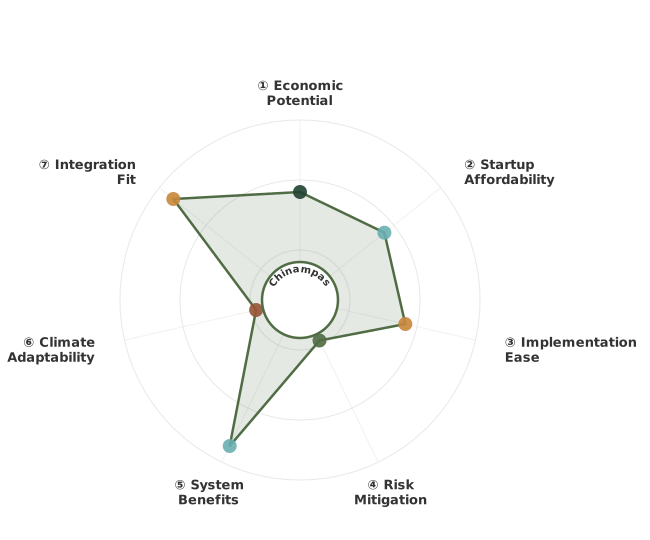
How These Traits Are Calculated
Trait dimensions are ordered clockwise starting from the top of the chart (12 o'clock position):
1. Economic Potential
Financial returns, annual value, and break-even timeline
WHAT: Evaluates financial viability by combining net annual value ($/ha from savings, income, and amortized harvests) with break-even timeline showing when practices pay for themselves.
WHY: Farmers need clear ROI understanding before committing resources. Fast payback (≤3 years) with strong returns (≥$300/ha) enables confident adoption, while long timelines (>10 years) restrict adoption to well-funded operations willing to wait for returns.
HOW: Calculated from net annual value in $/ha and break-even years. Exceptional (≥2.6): fast ROI ≤3 years + high value ≥$300/ha. Typical (1.8-2.5): moderate returns or longer timelines. Limited (<1.8): marginal economics or very long payback >10 years.
2. Startup Affordability
Initial investment costs and financial barrier to entry
WHAT: Measures financial barrier to entry through startup costs for equipment, infrastructure, consulting, and materials. Inverted scoring: lower costs = higher scores = more accessible adoption.
WHY: Affordability determines who can adopt. Low-cost practices (<$250/ha) enable widespread adoption across diverse scales, while high costs (>$2,500/ha) limit adoption to well-capitalized operations, creating barriers that slow regenerative transition.
HOW: Calculated from initial investment parsed from practice content. Inverted scoring: Exceptional (≥2.6): minimal investment <$250/ha. Typical (1.8-2.5): moderate costs $250-2,500/ha. Limited (<1.8): high barrier >$2,500/ha.
3. Implementation Ease
Learning curve and specialized knowledge required
WHAT: Measures how much learning, planning, and specialized knowledge a practice requires. Simpler practices with fewer steps score higher, while complex practices requiring extensive training or specialized resources score lower.
WHY: Complex practices create adoption barriers even when economically viable. Straightforward practices enable faster adoption and broader participation, while those requiring extensive training, timing precision, or specialized equipment limit who can succeed.
HOW: Evaluated by measuring documentation length and identifying complexity markers like location-specific requirements, seasonal timing windows, specialized skills, and dedicated equipment needs. Exceptional (≥2.6): straightforward practices with minimal prerequisites. Typical (1.8-2.5): moderate learning curve with some specialized needs. Limited (<1.8): steep learning curve requiring significant training or resources.
4. Risk Mitigation
Identified financial and ecological risk assessment
WHAT: Evaluates documented risks across financial (investment loss, market volatility) and ecological (crop failure, pest outbreaks) domains. Inverted scoring: fewer risks = higher scores.
WHY: Understanding risk exposure helps farmers make informed decisions. Low-risk practices allow confident implementation, while high-risk practices require careful planning and contingency resources. Risk transparency prevents costly failures.
HOW: Calculated from identified risks in practice content. Inverted scoring: Exceptional (≥2.6): ≤2 risks with manageable severity. Typical (1.8-2.5): 3-5 moderate risks. Limited (<1.8): 6+ risks or severe exposure.
5. System Benefits
How many ways the practice improves your land simultaneously
WHAT: Measures how many aspects of land health improve at once—carbon storage, soil quality, erosion control, water absorption, and biodiversity. Practices that improve multiple areas simultaneously create compounding benefits where each improvement reinforces the others.
WHY: The best practices solve multiple problems at once. For example, addressing erosion simultaneously builds carbon and improves water infiltration, creating a resilient system with positive feedback loops. Single-benefit approaches miss these compound transformation opportunities.
HOW: Evaluated across five key outcomes: carbon sequestration, soil organic matter increase, erosion reduction, water infiltration improvement, and biodiversity enhancement. Exceptional (≥2.6): high carbon storage (>8 t/ha/yr), improvements across 4-5 areas, transformative outcomes. Typical (1.8-2.5): moderate carbon (3-8 t/ha/yr), improvements across 2-3 areas. Limited (<1.8): modest impact (<3 t/ha/yr), single-area focus only.
6. Climate Adaptability
Geographic applicability across Köppen climate zones
WHAT: Evaluates geographic applicability by assessing how many Köppen climate zones successfully support a practice and what adaptation requirements are needed. Measures breadth of climates where farmers can implement with minimal to moderate modifications.
WHY: Universal practices working across diverse climates enable more farmers to adopt regenerative approaches. Practices limited to single climate types (only Mediterranean, only tropical) restrict adoption and slow global transition. Adaptability determines whether a practice serves niche regions or offers broad transformation.
HOW: LLM evaluation of regional success stories, Köppen zone coverage, and adaptation needs. Exceptional (≥2.6): 5+ zones or 4+ climate types, 3+ continents, minimal adaptation. Typical (1.8-2.5): 3-4 zones or 2-3 types, 2 continents, moderate adaptation. Limited (<1.8): 1-2 zones, single region, significant adaptation or highly specialized.
7. Integration Fit
How well this practice combines with others you're doing
WHAT: Measures how well a practice combines with other regenerative practices you might be doing. Some practices work as building blocks that make many other practices easier or more effective, while others work best on their own.
WHY: Practices that combine well with many others create more value on your farm. For example, cover cropping enables no-till, improves grazing, supports crop diversity, and helps water management—making all of them work better together. This helps you build a coherent system rather than juggling disconnected practices.
HOW: Evaluated by identifying which practices combine well and how strong those combinations are. 'Ideally Suited' means strong combinations where practices reinforce each other (practice A makes B easier, while B makes A more effective). 'Adequate' means complementary benefits that work well together. Exceptional (≥2.6): combines well with 6+ practices, serves as a building block. Typical (1.8-2.5): combines with 3-5 practices. Limited (<1.8): 1-2 practices or works best alone.
Going Deeper
1
WHY - The Benefits
Chinampas are a historical and contemporary marvel of sustainable agriculture, offering a potent combination of high productivity, ecological enhancement, and resilience. Their design inherently fosters soil health, maximizes biological diversity, and efficiently...
Chinampas are a historical and contemporary marvel of sustainable agriculture, offering a potent combination of high productivity, ecological enhancement, and resilience. Their design inherently fosters soil health, maximizes biological diversity, and efficiently...
WHY - The Benefits
Chinampas are a historical and contemporary marvel of sustainable agriculture, offering a potent combination of high productivity, ecological enhancement, and resilience. Their design inherently fosters soil health, maximizes biological diversity, and efficiently...
Chinampas are a historical and contemporary marvel of sustainable agriculture, offering a potent combination of high productivity, ecological enhancement, and resilience. Their design inherently fosters soil health, maximizes biological diversity, and efficiently...
Soil Health Benefits
The core of the chinampa system is its extraordinary soil. By continuously dredging nutrient-rich mud from canals and layering it with decomposing aquatic vegetation, animal manure (historically from poultry, pigs, or human waste), and other organic matter, farmers create a perpetually fertile soil. This process leads to soil organic matter levels often exceeding 10-20%, far surpassing typical agricultural soils. This high organic content dramatically improves soil structure, leading to excellent aeration and water-holding capacity, reducing the need for irrigation in many cases.
Studies of both historical and contemporary chinampa soils show exceptional biological activity. The constant moisture, high organic matter, and rich nutrient profile create an ideal habitat for a diverse microbial community, including bacteria, fungi, and numerous beneficial microorganisms. This robust soil biology plays a crucial role in nutrient cycling, disease suppression, and the breakdown of organic matter into plant-available forms, further enhancing fertility. The soil itself is often described as a flocculated, porous, and dark loam, with excellent tilth and ease of cultivation.
The physical structure of chinampa soil, built through gentle layering over time rather than disruptive tillage, minimizes soil disturbance. The raised beds, while distinct from traditional soil profiles, provide a stable medium where root systems can thrive. The constant presence of organic matter and microbial life contributes to soil aggregation, preventing compaction and ensuring good pore space for air and water movement, critical for healthy root development and the functioning of soil ecosystems.
Furthermore, the nutrient profile of chinampa soil is remarkably balanced. The continuous influx of organic matter and nutrients from the canals and surrounding ecosystem ensures a steady supply of macro and micronutrients. This balanced fertility supports healthy plant growth, leading to better yields and often more nutrient-dense crops, reducing reliance on external fertilizers. The system effectively mimics natural wetland processes of nutrient capture and cycling, creating a highly productive and regenerative soil environment.
Economic Benefits
Chinampas are exceptionally productive, allowing for multiple harvests of diverse crops annually, often yielding 3-4 times more food per hectare than conventional agriculture on similar land bases. This intensifies agricultural output, providing food security and economic opportunity, especially in densely populated regions where land is scarce. Historically, the Valley of Mexico sustained a large population through chinampa agriculture, underscoring its economic viability.
The economic advantage lies in the inherent fertility and consistent water availability. Reduced reliance on purchased fertilizers, pesticides, and irrigation dramatically lowers input costs. The rich soil and continuous growing season mean that farmers can cultivate high-value crops, including a wide array of vegetables, fruits, medicinal herbs, and ornamental flowers, which can command premium prices in local markets. This diversity also buffers against market fluctuations for any single commodity.
In contemporary applications, the adoption of chinampas can revitalize rural economies and create new markets. For example, urban farming initiatives incorporating chinampa principles in cities like Xochimilco, Mexico, or in wetland restoration projects in other countries, create employment opportunities and provide fresh, local produce to urban consumers, reducing transportation costs and carbon footprints. The practice's low input requirements make it an attractive option for smallholder farmers and communities seeking to improve their livelihoods while managing resources sustainably.
The long-term sustainability of the chinampa system also offers economic stability. Unlike annual cropping systems that can deplete soil resources over time, the fertility of chinampas is maintained and even enhanced through ongoing organic input. This foresight in resource management ensures that the land remains productive for generations, a critical factor for intergenerational economic well-being and long-term farm viability. The reduction in reliance on external synthetic inputs also insulates farmers from volatile global commodity prices for fertilizers and pesticides.
Regenerative Systems Fit
Chinampas embody several core regenerative agriculture principles, making them a powerful model for sustainable land use. While not a direct replication of every modern regenerative practice, their design and outcome align strongly with regenerative goals.
Principle 1 (Minimize Soil Disturbance): Chinampas are built rather than tilled. The fertile soil is created by layering organic materials and dredged mud. Once established, the raised beds are maintained, and while light cultivation for planting occurs, the intensive ploughing and tilling associated with conventional annual crops are largely absent. This gentle, additive process preserves soil structure and biological networks.
Principle 2 (Maximize Crop Diversity): The fertility and water availability of chinampas support intensive, diverse cropping systems. Farmers can grow multiple crops in succession, intercrop complementary species (e.g., maize with beans and squash), and cultivate a wide variety of vegetables, fruits, and flowers. This botanical diversity above ground translates to diverse root systems below ground, supporting a rich soil food web and enhancing ecosystem resilience.
Principle 3 (Keep Soil Covered): Due to the consistent watering and fertile soil, chinampa beds are rarely left bare. Living plants are maintained for multiple cropping cycles throughout the year. When one crop is harvested, another is often planted immediately, or crop residues are incorporated as mulch. This ensures continuous ground cover, preventing erosion, conserving moisture, and feeding soil life.
Principle 4 (Maintain Living Roots): The intensive, year-round cultivation supported by the chinampa system ensures that living roots are present in the soil for almost the entire year. This continuous photosynthetic activity fuels soil biology, drives nutrient cycling, and helps maintain soil structure through root exudates and the creation of pore spaces, unlike systems with long fallow periods.
Principle 5 (Integrate Livestock): While traditional chinampas were primarily focused on crop production, the aquatic environment inherently supports a rich ecosystem of fish, amphibians, and aquatic invertebrates. Integration with poultry or pigs on the edges of the chinampa plots or on floating platforms is a long-standing practice that further recycles nutrients from waste into the system. Modern adaptations can explore more integrated livestock grazing in adjacent areas or floating livestock structures in canals to enhance fertility cycles.
Chinampas represent a context-specific regenerative system that can be adapted globally. They demonstrate how to create fertile soil from marginal wetland environments and achieve high yields with minimal external inputs. Their integration with modern nutrient management techniques, disease control strategies based on biodiversity, and water conservation methods can amplify their regenerative impact. For regions with abundant shallow water or flood-prone land, chinampas offer a pathway to localized food security and ecological restoration, transforming potential liabilities into productive assets. They are a testament to human ingenuity in working with ecological processes to create sustainable abundance.
Sources behind this view
Videos & Podcasts
-
Chinampas in Mexico City are an ancient agroecosystem demonstrating co-creation with nature, enhancing biodiversity and culture through methods like using canal mud and willow trees, and promoting aut
-
Details the revitalization of Mexico City's Chinampas, an ancestral farming system threatened by urban sprawl. The initiative emphasizes revaluing farmers, demonstrating regenerative agriculture's via
-
Artier revives ancient Aztec chinampas in Mexico City, demonstrating how indigenous farming practices enhanced biodiversity and food production. These wetland farms, now endangered by urban sprawl, ar
-
Chinampa construction uses 'chale' reeds and 'ahuejote' willow to stabilize islands built with mineral-rich mud. Traditional agroforestry and polyculture systems like milpa are declining due to market
Community
-
Explores chinampas as a model for marshland gardening, using water and silt for irrigation and nutrients, and discusses groundwater wicking and planting strategies to balance drought mitigation with f
Read more (opens in new window) permies.com
Research
-
An essay on energetics: the construction of the Aztec chinampa system (opens in new window)
This study found: Aztec chinampas were raised fields built by digging canals, using trees for stability and shelter. This created a warmer microclimate, boosting crop yields. Construction took 25 million person-days ov
From the Web
-
Xochimilco's chinampas, traditional Aztec floating gardens, are vital wetlands for Mexico City, providing environmental benefits including carbon sequestration. Combining traditional sustainable farmi
-
The chinampas of Xochimilco, an ancient farming system, are being revitalized by Arca Tierra and Pablo Usobiaga, who aim to make chinampa agriculture profitable and respected to encourage new farmers
2
WHERE - Regional Considerations
Chinampas are intrinsically linked to water bodies, making them most suitable for regions with shallow lakes, slow-moving rivers, extensive wetlands, or coastal floodplains. While the original chinampas were developed in the high-altitude tropical climate of the Valley...
Chinampas are intrinsically linked to water bodies, making them most suitable for regions with shallow lakes, slow-moving rivers, extensive wetlands, or coastal floodplains. While the original chinampas were developed in the high-altitude tropical climate of the Valley...
WHERE - Regional Considerations
Chinampas are intrinsically linked to water bodies, making them most suitable for regions with shallow lakes, slow-moving rivers, extensive wetlands, or coastal floodplains. While the original chinampas were developed in the high-altitude tropical climate of the Valley...
Chinampas are intrinsically linked to water bodies, making them most suitable for regions with shallow lakes, slow-moving rivers, extensive wetlands, or coastal floodplains. While the original chinampas were developed in the high-altitude tropical climate of the Valley...
Click Here to Look up your Region if you don't already know it
Tropical Humid Regions
Representative Locations: Southeast Asia (especially river deltas like the Mekong and Chao Phraya), parts of Central Africa (e.g., around Lake Victoria), coastal areas of South America (e.g., Amazon basin), and islands in the Pacific.
Climate Context: High temperatures year-round with significant rainfall (often >200 cm or 80 inches annually), distributed seasonally or consistently. Köppen Af/Am/Aw.
Considerations: Water management is key; channels must be maintained to manage fluctuating water tables during wet and dry seasons. High humidity can increase disease pressure, necessitating diverse cropping and resistant varieties. Long growing seasons allow for multiple harvests and intercropping. Invasive aquatic species can be a challenge requiring robust maintenance.
Tropical Dry Regions
Representative Locations: Parts of India (e.g., floodplains of Ganges), parts of Africa bordering seasonal wetlands, some coastal areas of the Americas.
Climate Context: High temperatures with distinct wet and dry seasons. Total rainfall can vary significantly (50-150 cm or 20-60 inches), but concentrated in a few months. Köppen Aw/As.
Considerations: Irrigation from canals is critical during the dry season to maintain soil moisture and crop growth. Dredging material for bed construction must ideally occur during the dry season when water levels are lower. Careful water harvesting and conservation techniques are essential. Crop selection may focus on water-efficient species or those that can tolerate brief periods of drought stress.
Subtropical Regions
Representative Locations: Southern United States (Mississippi delta, Florida Everglades), parts of Mediterranean basin (coastal wetlands), Southern China, Eastern Australia.
Climate Context: Warm to hot summers and mild winters. Rainfall is generally ample but can be seasonal. Köppen Cfa/Cwa.
Considerations: Frost can limit year-round cultivation compared to tropical regions, but multiple short-cycle crops can still be grown. Managing winter water levels and ensuring adequate drainage can be important. Adapted crop varieties will be crucial for success. The practice can be integrated with aquaculture in canal systems.
Temperate Regions
Representative Locations: Northern Europe (e.g., Netherlands polders—though engineered, they share some principles), parts of North America (Great Lakes wetlands, river deltas), coastal areas of East Asia.
Climate Context: Moderate to cold winters and warm summers. Precipitation is generally distributed throughout the year, but can be highly variable. USDA Zones 4-7, Köppen Cfb/Cfa.
Considerations: The growing season is shorter, limiting the number of harvests per year. Winter freezing can impact aquatic ecosystems and canal integrity. Crop selection must focus on cold-hardy varieties and species that mature within the shorter season. Potential for significant water level fluctuations between seasons. Maintenance of canals and bed structures is crucial to prevent ice damage.
Arid & Semi-Arid Regions
Representative Locations: Limited natural suitability due to lack of water, but can be adapted in areas with significant groundwater access or engineered water-retention systems (e.g., drought-resilient versions in arid Mexico).
Climate Context: Very low rainfall (<40 cm or 15 inches), high temperatures, and short growing seasons. Köppen BSh/BSk.
Considerations: Highly challenging due to water scarcity. Success depends entirely on intensive water management, efficient irrigation from canals, and extremely drought-tolerant crop varieties. Evaporation rates are high, requiring constant replenishment of canal water. These are highly specialized adaptations rather than widespread applications.
3
HOW - Implementation Process
The construction and maintenance of chinampas are labor-intensive but highly rewarding, transforming marginal aquatic environments into fertile farmland. The process involves creating raised beds within shallow water bodies, managing water flow, and continuously...
The construction and maintenance of chinampas are labor-intensive but highly rewarding, transforming marginal aquatic environments into fertile farmland. The process involves creating raised beds within shallow water bodies, managing water flow, and continuously...
HOW - Implementation Process
The construction and maintenance of chinampas are labor-intensive but highly rewarding, transforming marginal aquatic environments into fertile farmland. The process involves creating raised beds within shallow water bodies, managing water flow, and continuously...
The construction and maintenance of chinampas are labor-intensive but highly rewarding, transforming marginal aquatic environments into fertile farmland. The process involves creating raised beds within shallow water bodies, managing water flow, and continuously...
Prerequisites
Before initiating chinampa construction, several conditions must be met:
- Suitable Location: Access to a shallow body of water (lake, lagoon, slow river section, or wetland) with stable water levels, or at least predictable seasonal fluctuations. Ideal depth is 1-2 meters (3-6 feet) for dredging.
- Access to Organic Materials: Proximity to sources of abundant organic matter like aquatic vegetation, animal manure, crop residues, or compost.
- Labor Availability: Construction and ongoing maintenance are labor-intensive activities. A committed community or accessible labor force is essential.
- Water Quality: Canal water should be of reasonable quality, free from excessive industrial pollution or salinity that could harm crops or soil microbes.
- Legal Access: Secure land or water rights for the chosen area.
Phase 1: Site Selection and Canal Design
- Assess Water Body: Identify areas with shallow, calm water, accessible from the shore. Avoid areas with strong currents, deep channels, or heavy boat traffic that could destabilize structures.
- Dredging Assessment: Determine the composition and depth of sediment at the bottom. Silty, organic-rich mud is ideal for building the beds. Test for contaminants if industrial or agricultural pollution is suspected.
- Layout and Canal Network: Plan the dimensions of the chinampa beds and the surrounding canal network. Beds are typically 5-10 meters (16-33 feet) wide, allowing for cultivation and access. Canals should be 2-5 meters (6-16 feet) wide and 1-2 meters (3-6 feet) deep, sufficient for dredging and canoe movement. The spacing between beds is determined by canal width and desired planting area. Outline the primary canals and secondary access channels.
Phase 2: Construction of Raised Beds
- Dredging and Mound Building: Using shovels, simple dredges, or even small excavators in larger projects, mud is excavated from the planned canal areas. This dredged mud is then transported and piled onto the designated chinampa bed locations. This layering process gradually builds up the height of the beds, typically 1-2 meters (3-6 feet) above the canal water level.
- Incorporating Organic Matter: As mud is piled, layers of aquatic vegetation (reeds, water hyacinth, algae), animal manure, compost, and crop residues are mixed in. This is crucial for fertility, soil structure, and weed suppression. The material needs to decompose and integrate to form a rich soil.
- Forming the Beds: The piled material is shaped into stable, elongated rectangular beds. The edges are often reinforced with woven plant materials or rocks initially to prevent erosion, especially in areas with fluctuating water levels. The sides of the beds should be sloped to prevent collapse.
- Establishing Initial Water Level: The canals are filled or maintained at a consistent level, ensuring the soil in the beds remains consistently moist but not submerged, saturating the lower layers of the raised bed.
Phase 3: Initial Planting and Soil Maturation
- First Crops: Once beds are built and have settled for a few weeks or months, initial planting can begin. Fast-growing, versatile crops like maize, squash, or beans are often used. The objective in the first cycle is to establish vigorous plant cover to help stabilize the new soil and begin the biological enrichment process.
- Canal Maintenance: Regularly dredge canals to replenish the chinampa beds with fresh nutrient-rich mud. Remove excessive aquatic vegetation that might block water flow or reduce light penetration if it grows too dense. Ensure canals remain navigable.
- Organic Matter Addition: Continue adding organic materials to the beds—compost, manure, crop residues. This is a continuous process to maintain soil fertility and structure.
Phase 4: Intensive Cultivation and Integrated Management
- Multi-Cropping and Intercropping: Implement crop rotation and intercropping strategies to maximize yield and diversity. For example, plant maize on the upper part of the bed, beans along the sides to fix nitrogen, and trailing squash along the edges.
- Succession Planting: As soon as one crop is harvested, prepare for the next. This might involve light cultivation of the top few inches of soil, but the base structure remains undisturbed.
- Aquatic Ecosystem Management: Manage canal plant growth to allow light penetration for submerged aquatic plants and maintain healthy fish populations. Integrate poultry or small livestock on elevated platforms or edges to contribute manure.
- Water Level Regulation: Monitor and adjust water levels in canals to meet crop needs, prevent waterlogging, or address drought conditions as strategically as possible.
Transition Timeline & Phase-Out Strategy (For Modern Adaptations)
For farmers transitioning to chinampa-style systems in suitable wetland areas (or creating new wetland environments for this purpose) from other forms of agriculture:
- Year 1-2: Initiate construction on a pilot scale (e.g., 0.4-0.8 ha or 1-2 acres) while maintaining conventional operation on other land. Focus on soil building, establishing canals, and learning basic water management.
- Year 3-5: Expand chinampa operations as yield and economic benefits become evident. Begin phasing out synthetic inputs on chinampa plots, relying on organic matter and dredged canal sediments. Explore integration of animal waste.
- Year 6+: Achieve full transition, with the majority of production occurring on chinampa-style beds, operating as a regenerative system with minimal external inputs.
Sources behind this view
Videos & Podcasts
-
Chinampas in Mexico City are an ancient agroecosystem demonstrating co-creation with nature, enhancing biodiversity and culture through methods like using canal mud and willow trees, and promoting aut
-
Chinampa construction uses 'chale' reeds and 'ahuejote' willow to stabilize islands built with mineral-rich mud. Traditional agroforestry and polyculture systems like milpa are declining due to market
-
Chinampas were built using willow stakes and reeds to create a frame, filled with organic matter and lake mud. This decomposed into stable soil, allowing for continuous crop planting.
-
Artier revives ancient Aztec chinampas in Mexico City, demonstrating how indigenous farming practices enhanced biodiversity and food production. These wetland farms, now endangered by urban sprawl, ar
Community
-
Explores chinampas as a model for marshland gardening, using water and silt for irrigation and nutrients, and discusses groundwater wicking and planting strategies to balance drought mitigation with f
Read more (opens in new window) permies.com -
Construct chinampas (floating gardens) for wetland food forests by layering brush, prunings, and marsh muck, stabilized with willow stakes that root and form a stabilizing matrix. Repeat layering annu
Read more (opens in new window) permies.com -
Initial ecovillage work in Houston focuses on road repair and constructing Chinampas beds (50'x150') using excavated materials to elevate them above flood levels, creating a sustainable water system f
Read more (opens in new window) permies.com
Research
-
An essay on energetics: the construction of the Aztec chinampa system (opens in new window)
This study found: Aztec chinampas were raised fields built by digging canals, using trees for stability and shelter. This created a warmer microclimate, boosting crop yields. Construction took 25 million person-days ov
4
Know the Debate
Chinampa systems showcase exceptional productivity due to their unique construction and fertile soil, but implementation complexity and cost vary s...
Know the Debate
Chinampa systems showcase exceptional productivity due to their unique construction and fertile soil, but implementation complexity and cost vary s...
Chinampa systems showcase exceptional productivity due to their unique construction and fertile soil, but implementation complexity and cost vary significantly. While the practice thrives in wetland environments with consistent water, the scale of investment, ongoing labor for maintenance, and the level of community or governance support profoundly influence its success and sustainability.
How much does constructing chinampas cost?
DIY, small-scale, low capital ($12K-25K/ha)
Small-scale projects can minimize costs through extensive DIY labor and use of locally sourced free materials, focusing on essential construction and basic reinforcements for personal or small community use.
Sources behind this view
Sources behind this view
From the Web
-
Details practical water retention techniques like beaver mimicry and terraces, citing a Mexico project that created an oasis in a dry climate. Emphasizes integrated silvopasture systems and designing for extreme precipitation seasonality.
Mid-scale, organized projects ($20K-35K/ha)
Mid-scale operations often spend $20,000-35,000/ha on initial construction through a mix of community labor and selective hired assistance, balancing efficiency with cost-effectiveness on 1-10 acres.
Sources behind this view
Sources behind this view
Videos & Podcasts
-
Chinampas in Mexico City are an ancient agroecosystem demonstrating co-creation with nature, enhancing biodiversity and culture through methods like using canal mud and willow trees, and promoting autonomous agriculture.
Large-scale, engineered systems ($117K-585K+/ha)
Large-scale, engineered systems demand professional labor, specialized equipment for dredging and transport, and high-quality structural materials, pushing costs well over $100,000/ha for extensive projects.
Sources behind this view
Sources behind this view
From the Web
-
Details practical water retention techniques like beaver mimicry and terraces, citing a Mexico project that created an oasis in a dry climate. Emphasizes integrated silvopasture systems and designing for extreme precipitation seasonality.
Making Sense of the Differences
The cost of building chinampas is highly variable due to scale and labor strategy. Small-scale operations can achieve lower costs through DIY efforts and local materials, while larger or more engineered projects require substantial capital investment. Planning for labor acquisition and efficient material sourcing is key to managing any scale of construction.
What is needed to maintain chinampas long-term?
Consistent dredging and reinforcement
Long-term chinampa success requires diligent and consistent dredging of canals to replenish beds with fertile mud and continuous reinforcement of bed edges to prevent erosion.
Sources behind this view
Sources behind this view
Videos & Podcasts
-
Chinampas farming challenges include high soil salt and pH, addressed by mulching and using microorganisms/vinegars. Other issues are a lack of farm labor, climate variability, and critically low canal water levels controlled by the government.
-
Chinampas function as agroforestry systems with willows that pump water into leaves, adding organic matter to soil for better water retention. The system uses primary, secondary, and tertiary canals for transport and irrigation.
Active management & community support
Sustained labor, community organization for knowledge transfer, and adaptive management are crucial for addressing challenges like water variability, pest pressure, and market access.
Sources behind this view
Sources behind this view
Videos & Podcasts
-
Chinampas in Mexico City are an ancient agroecosystem demonstrating co-creation with nature, enhancing biodiversity and culture through methods like using canal mud and willow trees, and promoting autonomous agriculture.
-
Details the revitalization of Mexico City's Chinampas, an ancestral farming system threatened by urban sprawl. The initiative emphasizes revaluing farmers, demonstrating regenerative agriculture's viability, and showcasing its potential through a zero-waste restaurant, Vio, which has earned a Green Michelin star.
From the Web
-
The chinampas of Xochimilco, an ancient farming system, are being revitalized by Arca Tierra and Pablo Usobiaga, who aim to make chinampa agriculture profitable and respected to encourage new farmers and preserve soil, water, culture, and identity.
Making Sense of the Differences
Sustaining chinampas through time demands both consistent physical upkeep, such as dredging and erosion control, and strong community engagement. Without ongoing labor and shared knowledge, the structural integrity and fertility of the beds, alongside their ability to adapt to challenges like water variability, are threatened.
5
HOW MUCH - Costs & Investment
Note: Costs shown in USD; multiply by local labor and material cost indices for your region. Labor costs vary significantly internationally. Chinampas are highly labor-intensive, especially during initial construction.
Note: Costs shown in USD; multiply by local labor and material cost indices for your region. Labor costs vary significantly internationally. Chinampas are highly labor-intensive, especially during initial construction.
HOW MUCH - Costs & Investment
Note: Costs shown in USD; multiply by local labor and material cost indices for your region. Labor costs vary significantly internationally. Chinampas are highly labor-intensive, especially during initial construction.
Note: Costs shown in USD; multiply by local labor and material cost indices for your region. Labor costs vary significantly internationally. Chinampas are highly labor-intensive, especially during initial construction.
Note: All costs are based on recent US economic data (2024–2026) and may vary substantially by region based on local labor rates, material costs, and regulatory requirements.
Initial Construction Costs
Building a chinampa system requires extensive site preparation, focusing on dredging and structural reinforcement to define the water-land boundary. For small-scale operations (under 50 acres (20 ha)), the initial construction investment ranges from $15,630 to $57,310 per acre ($38,623–$141,616/ha), reflecting heavy reliance on manual labor for dredging canals and installing reed-matting structures. Mid-size operations (50–500 acres (20–202 ha)) benefit from economies of scale during the sourcing of professional geotextiles and machine-based dredging, bringing costs to $12,504 to $46,890 per acre ($30,898–$115,868/ha). For large-scale projects (500+ acres), the investment shifts to $10,420 to $41,680 per acre ($25,748–$102,993/ha), leveraging heavy hydraulic equipment and bulk procurement of organic fill materials.
Labor and Material Management
Labor accounts for 60–75% of the total budget during the initial build phase, reflecting the specialized ecological knowledge required to manage aquatic sediment. Small-scale projects typically allocate $10,420 to $36,470 per acre ($25,748–$90,119/ha) for manual labor crews. Mid-size projects leverage established, professional installation teams, allocating $8,336 to $26,050 per acre ($20,599–$64,371/ha) toward labor and site surveying. Large-scale developments, which often require extensive environmental permitting and complex site management, allocate $7,294 to $20,840 per acre ($18,024–$51,497/ha) to integrated professional teams and equipment operators. Material costs, including locally sourced woody debris, aquatic vegetation, and stone for canal reinforcement, remain consistent across all scales, ranging from $2,084 to $12,504 per acre ($5,150–$30,898/ha) depending on the site’s proximity to natural resources.
Water Management and Infrastructure
Infrastructure development is a primary variable in total cost, focusing on water-level regulation and irrigation. Small-scale plots generally require minimal mechanical intervention, with initial setup ranging from $1,042 to $5,210 per acre ($2,575–$12,874/ha). Mid-scale operations, which necessitate more sophisticated water-retention basins and drainage channels, face costs of $3,126 to $12,504 per acre ($7,725–$30,898/ha). Large-scale commercial designs often require automated sluice gates and high-capacity filtration systems to maintain compliance, pushing water management infrastructure costs to $8,336 to $26,050 per acre ($20,599–$64,371/ha).
Most Spend: Most operations, regardless of specific scale, commit between $20,840 and $46,890 per acre ($51,497–$115,868/ha). This middle 60% range represents the necessary balance of professional engineering for water control, fair-market labor for physical construction, and the sourcing of high-quality organic matter to ensure long-term structural integrity.
Why the Range?: Costs fluctuate primarily due to the site’s hydrological starting point, such as whether the land is already partially saturated or requires extensive baseline engineering. Proximity to urban centers and the regulatory requirements of local water authorities further drive the variance in total project budgets.
6
REWARDS AND RISKS - Economics & Risk Factors
REWARDS AND RISKS - Economics & Risk Factors
Economic performance for chinampas is segmented by management intensity and market access. In a best-case scenario, a highly efficient 50-acre (20 ha) operation yielding 4 harvests annually nets $26,050–$46,890 per acre ($64,371–$115,868/ha). These operations typically fully amortize construction costs by year 7, while benefiting from closed-loop nutrient cycling that generates annual input savings of $3,126–$6,252 per acre ($7,725–$15,449/ha) compared to conventional vegetable operations. A typical 150-acre (61 ha) mid-scale project, managing 2–3 harvests, achieves annual net returns of $12,504–$26,050 per acre ($30,898–$64,371/ha), with initial investment recoupment occurring over 9–12 years. Conversely, in a worst-case scenario, poor site selection leads to contaminated water or structural failure of canal banks; annual returns fall below $4,168 per acre ($10,299/ha), and bank remediation costs can exceed $10,420 per acre ($25,748/ha), potentially causing project insolvency within 5 years.
Profitability depends heavily on "freshness premiums," as chinampas produce high-moisture vegetables that require rapid transit to urban consumer bases. To mitigate structural risks, operators should prioritize "bio-engineering," using willow or native aquatic reeds for bank reinforcement; this approach costs 40% less than concrete or synthetic barriers while providing superior long-term stabilization. Furthermore, securing dual organic and water-quality certifications allows farmers to command a 20–30% price premium over conventional commodity vegetable prices.
Transition Period Risks: The conversion to a chinampa system involves an "establishment dip" lasting 3 years. During this period, producers often experience yield reductions of 20–40% as the microbial ecosystem stabilizes. Total productivity typically normalizes between 36 and 48 months post-implementation. To mitigate cash flow risks during this window, farmers should stagger development by converting only 25% of acreage annually. Additionally, mandatory sediment testing for legacy contaminants prior to construction prevents catastrophic crop loss in the first two years; remedial treatment of tainted soil costs $2,084–$5,210 per acre ($5,150–$12,874/ha), a necessary expense to ensure ongoing viability.
7
COMPATIBLE PRACTICES - Integration Opportunities
Chinampas form the foundation for a highly integrated and regenerative agricultural system. Their inherent properties can be amplified and complemented by other practices, creating synergistic benefits.
Chinampas form the foundation for a highly integrated and regenerative agricultural system. Their inherent properties can be amplified and complemented by other practices, creating synergistic benefits.
COMPATIBLE PRACTICES - Integration Opportunities
Chinampas form the foundation for a highly integrated and regenerative agricultural system. Their inherent properties can be amplified and complemented by other practices, creating synergistic benefits.
Chinampas form the foundation for a highly integrated and regenerative agricultural system. Their inherent properties can be amplified and complemented by other practices, creating synergistic benefits.
Aquaculture / Aquaponics
- Integrating fish farming within the canal network.
- Nutrient-rich fish waste fertilizes chinampa beds; plants filter canal water, benefiting fish.
- Integration benefit: Creates a highly efficient closed-loop system, maximizing resource utilization and providing two primary food sources from the same infrastructure, while improving water quality for both.
Traditional Farming Knowledge & Community Organization
- Preserving and adapting traditional cultivation techniques passed down through generations.
- Organizing labor and resource sharing through communal farming practices.
- Integration benefit: Leverages centuries of site-specific knowledge for effective management, builds social resilience, and ensures the practice can be maintained and adapted by the community.
Intensive Cover Cropping/Green Manuring
- Planting specific cover crops on beds between cash crops or in fallow periods.
- Focus on nitrogen-fixing legumes and deep-rooted species to further enhance fertility, soil structure, and biomass.
- Integration benefit: Directly boosts soil organic matter, adds nitrogen, improves soil aeration and water infiltration, suppresses weeds, and supports microbial diversity, complementing the existing fertility base.
Animal Integration (Poultry, Pigs, Ducks)
- Raising animals on floating platforms in canals, on edges of the chinampas, or in adjacent areas.
- Animal manure is collected and incorporated into the beds as compost or directly added.
- Integration benefit: Recycles organic waste into valuable fertilizer, further enriching the soil and reducing reliance on external nutrient sources. Ducks or chickens can also help manage pests in canals.
Water Harvesting and Management Systems
- Implementing rainwater harvesting to supplement canal water during dry periods, or using controlled release from nearby rivers/reservoirs.
- Employing mulching techniques (crop residues) to reduce evaporation from bed surfaces.
- Integration benefit: Ensures consistent water availability, enhancing crop resilience against drought, and reducing reliance on potentially scarce or expensive external water sources.
Biodiversity Enhancement (Hedgerows, Insectary Plants)
- Planting native trees, shrubs, and flowering plants around the perimeter of chinampa systems or on canal banks.
- Integration benefit: Creates habitat for beneficial insects (pollinators, pest predators), birds, and other wildlife. This enhances natural pest control, supports pollination services, and increases overall ecosystem resilience.
Chinampas, by their very nature, encourage integration. They are not a single practice but a socio-ecological system. Incorporating these compatible practices further enhances their regenerative capacity, transforming them into highly resilient, productive, and environmentally beneficial agricultural landscapes.
Sources behind this view
Videos & Podcasts
-
Chinampas in Mexico City are an ancient agroecosystem demonstrating co-creation with nature, enhancing biodiversity and culture through methods like using canal mud and willow trees, and promoting aut
-
Artier revives ancient Aztec chinampas in Mexico City, demonstrating how indigenous farming practices enhanced biodiversity and food production. These wetland farms, now endangered by urban sprawl, ar
-
Chinampa construction uses 'chale' reeds and 'ahuejote' willow to stabilize islands built with mineral-rich mud. Traditional agroforestry and polyculture systems like milpa are declining due to market
-
Details the revitalization of Mexico City's Chinampas, an ancestral farming system threatened by urban sprawl. The initiative emphasizes revaluing farmers, demonstrating regenerative agriculture's via
Community
-
Explores chinampas as a model for marshland gardening, using water and silt for irrigation and nutrients, and discusses groundwater wicking and planting strategies to balance drought mitigation with f
Read more (opens in new window) permies.com
Research
-
An essay on energetics: the construction of the Aztec chinampa system (opens in new window)
This study found: Aztec chinampas were raised fields built by digging canals, using trees for stability and shelter. This created a warmer microclimate, boosting crop yields. Construction took 25 million person-days ov
From the Web
-
Xochimilco's chinampas, traditional Aztec floating gardens, are vital wetlands for Mexico City, providing environmental benefits including carbon sequestration. Combining traditional sustainable farmi