
Companion Planting
Companion planting is the practice of intentionally growing two or more plant species in close proximity. The goal is to leverage natural synergies between them, such as mutual pest deterrence, enhanced nutrient uptake, or improved soil health. This creates a more resilient and productive ecosystem within the plant community.
Read More: Complete Description
Companion planting is an age-old agricultural technique that involves strategically interspersing different plant species within the same growing area. This practice leverages the principle that diverse biological communities are more stable and productive than monocultures. By carefully selecting plant pairings, farmers and gardeners can harness natural symbiotic relationships to enhance crop performance and overall system health, aligning directly with regenerative agriculture's emphasis on diversity and ecological function.
From a regenerative agriculture standpoint, companion planting is considered a context-dependent practice. It can be highly regenerative when used to enhance biodiversity, reduce reliance on external inputs, and improve soil health. However, it can be neutral or even detract from regenerative goals if implemented without careful consideration of the unintended consequences or if it's used to merely offset poor management. The key is always to understand the underlying ecological interactions and how they serve the broader regenerative system.
This practice directly supports Principle 2: Maximize Crop Diversity. By interplanting different species, we increase the variety of plants above and below ground. This diversity creates varied root structures, root exudates, and habitat niches, fostering a more complex and functional soil food web. Different plants can also provide resources or protection for each other. For example, legumes fix atmospheric nitrogen, enriching the soil for neighboring plants, while pungent herbs can deter pests from vulnerable crops. This intricate web of interactions builds resilience within the farming system, making it less susceptible to disease outbreaks or pest infestations that can devastate monocultures.
Companion planting also contributes to Principle 3: Keep Soil Covered. When intercropped strategically, the canopy of one plant can provide shade and protection for another, helping to maintain soil moisture and reduce direct solar radiation on the soil surface, especially during establishment or in systems where successive crops don't perfectly align. This continuous living cover, comprised of multiple species, reduces soil erosion and supports soil biology by providing a stable, moist environment.
Furthermore, companion planting contributes to Principle 4: Maintain Living Roots. By interplanting perennial or annual species with staggered growth cycles, the goal is to keep living roots in the soil for as long as possible throughout the year. This continuous root activity fuels the soil food web with carbon compounds, maintains soil structure, and facilitates nutrient cycling, all essential components of a healthy, functioning soil ecosystem.
The integration of companion planting is particularly synergistic with Principle 5: Integrate Livestock. While not directly involving animals, companion planting can create more diverse and resilient forage systems for livestock. For instance, planting a mix of grasses, legumes, and forbs in pastures offers a wider range of nutrients and palatability for grazing animals, enhancing their health and performance. This diverse forage base also supports a richer soil ecosystem beneath the pasture.
However, it is crucial to be honest about the transition pathway. Companion planting is generally not a transition practice. It is a practice that, when applied thoughtfully, directly supports established regenerative systems. It does not typically violate core principles. Misapplication, such as planting non-native or invasive species that outcompete beneficial natives or create new pest pressures, would be an extractive approach. The regenerative application focuses on employing native or well-adapted, non-invasive species that genuinely benefit each other and the wider ecosystem.
Common misconceptions about companion planting include an overemphasis on "magic bullet" pairings or the idea that it completely eliminates the need for pest management. While effective pairings can significantly reduce pest and disease pressures and improve nutrient availability, they are part of a holistic system. They complement other regenerative practices like cover cropping, crop rotation, and healthy soil biology rather than replacing them. For example, companion planting might reduce aphid populations on brassicas, but a robust population of ladybugs and hoverflies (supported by diverse field margins and other habitats) would be the primary driver of this pest control.
The success of companion planting is highly context-dependent, varying with climate, soil type, specific crop varieties, and local pest pressures. What works in a Mediterranean climate (Köppen Csa/Csb) with a short growing season might not suit a humid subtropical climate (Köppen Cfa) with extended warm periods. For instance, basil grown with tomatoes is a classic pairing in continental climates, offering pest deterrence. In tropical regions (Köppen Af/Am/Aw), other plants like marigolds or certain aromatic herbs might be more effective for pest management around fruiting crops.
Farmers and ranchers looking to implement companion planting should start by researching local ecological zones and common beneficial plant interactions. Local extension services, university research, and experienced regenerative farmers in their region are invaluable resources for identifying suitable species and pairings. Global organizations like IFOAM (International Federation of Organic Agriculture Movements) and regional research bodies (e.g., CSIRO in Australia, Rothamsted in the UK) also offer insights into effective diverse planting strategies applicable worldwide.
Sources behind this view
Sources behind this view
 Videos & Podcasts
-
Guild and companion planting in greenhouses significantly improve pest management, flavor, and production. Examples include planting nitrogen-fixing beans with tomatoes and peppers, and basil with tom

-
Companion planting, a key part of syntropic farming, uses plant relationships to improve soil health, biodiversity, and pest control. Examples include the 'three sisters' (corn, beans, squash) in trop

-
Companion planting uses scientifically-backed pairings to control pests, suppress weeds, and boost growth. Examples include poached egg plants for aphids, borage for tomatoes, nasturtiums for caterpil

 Community
-
Companion planting leverages plant partnerships to enhance growth (soil improvement, nitrogen transfer, pollination) and protection (pest deterrence, weed suppression). Examples include peas/lettuce,
Read more (opens in new window) ucanr.edu -
Companion planting combines diverse plants for a balanced ecosystem, improving crop yields and space efficiency. Beneficial pairings include carrots/tomatoes, while legumes fix nitrogen. Plants like o
Read more (opens in new window) ucanr.edu -
Details specific intercropping tactics like lettuce with tomatoes, peas around beds for mulch, and the importance of understanding pairwise plant synergies and soil benefits, citing amaranth-eggplant
Read more (opens in new window) permies.com -
Achieve polyculture benefits by integrating herbs and flowers for companion planting, attracting beneficials, and pest management, alongside careful 'garden math' for crop ratios and incorporating per
Read more (opens in new window) permies.com
 Research
-
Global evidence that plant diversity suppresses pests and promotes plant performance and crop production. (opens in new window)
This study found: Global study of 609 research projects shows plant diversity boosts plant health and reduces pests across various ecosystems. Crop diversification, like intercropping and cover crops, increases farm pr
-
Benefits and Risks of Intercropping for Crop Resilience and Pest Management. (opens in new window)
This study found: Intercropping (growing multiple crops together) boosts resilience to climate change and improves pest control by enhancing resource use and beneficial insect habitat. While generally profitable, adopt
-
Influence of Companion Planting on Microbial Compositions and Their Symbiotic Network in Pepper Continuous Cropping Soil. (opens in new window)
This study found: Companion planting with crops like oats and garlic improved soil enzyme activity and microbial diversity in continuous pepper systems, helping to overcome continuous cropping obstacles by simplifying
-
Natural enemy-herbivore networks along local management and landscape gradients in urban agroecosystems. (opens in new window)
This study found: California urban gardens with more diverse plants and less surrounding farmland had more beneficial insects and better pest-enemy balance, suggesting increased plant diversity can enhance natural pest
 From the Web
-
Companion planting enhances agroecosystem biodiversity through interspecies proximity for pest control and yield benefits. Botanical pesticides offer a more intensive approach using plant phytochemica
-
Companion planting leverages the interconnectedness of plants, soil, bacteria, and fungi, recognizing that plants grow better with preferred companions based on observed mutual attractions and aversio
Key Points
What It Is
- Growing different species together intentionally
- Leverages natural plant synergies
- Enhances ecosystem resilience
- Increases biodiversity above and below ground
Why Do It
- Reduces pest and disease pressure
- Improves nutrient availability for crops
- Enhances soil biological activity
- Supports regenerative agriculture principles
Know the Debate
- Yields and pest control benefits vary significantly by implementation.
- Expert knowledge is crucial for optimal plant pairings.
- Scalability challenges exist for large commercial operations.
- Diverse systems offer higher resilience and lower input costs.
Benefits - Financial
- Reduced synthetic pesticide costs by 30-70% via natural insect suppression
- Increased primary crop yields by 10-25% through improved resource synergy
- Lower synthetic fertilizer requirements yielding $40-120 per acre ($99–$297 per hectare) savings
Benefits - System
- Maximizes crop diversity (Principle 2)
- Improves soil microbial communities
- Contributes to keeping soil covered (Principle 3)
- Promotes continuous living roots (Principle 4)
Risks - Financial
- Initial establishment failure losses ranging from $100-350 per acre ($247–$865 per hectare) annually
- Transition period yield dip of 10-20% for 2-3 years
- Potential 15-20% increase in monitoring labor hours during system setup
Risks - System
- Unsuitable species can become invasive
- Some pairings can hinder growth
- Can increase weed seed bank if poorly managed
- May require increased labor for monitoring
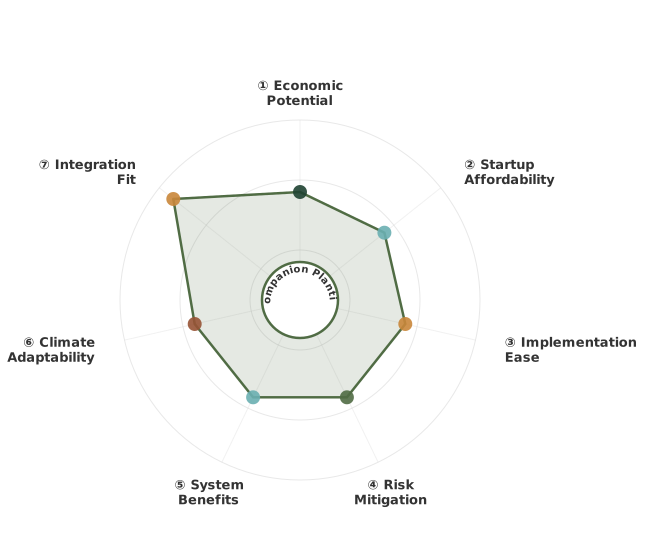
How These Traits Are Calculated
Trait dimensions are ordered clockwise starting from the top of the chart (12 o'clock position):
1. Economic Potential
Financial returns, annual value, and break-even timeline
WHAT: Evaluates financial viability by combining net annual value ($/ha from savings, income, and amortized harvests) with break-even timeline showing when practices pay for themselves.
WHY: Farmers need clear ROI understanding before committing resources. Fast payback (≤3 years) with strong returns (≥$300/ha) enables confident adoption, while long timelines (>10 years) restrict adoption to well-funded operations willing to wait for returns.
HOW: Calculated from net annual value in $/ha and break-even years. Exceptional (≥2.6): fast ROI ≤3 years + high value ≥$300/ha. Typical (1.8-2.5): moderate returns or longer timelines. Limited (<1.8): marginal economics or very long payback >10 years.
2. Startup Affordability
Initial investment costs and financial barrier to entry
WHAT: Measures financial barrier to entry through startup costs for equipment, infrastructure, consulting, and materials. Inverted scoring: lower costs = higher scores = more accessible adoption.
WHY: Affordability determines who can adopt. Low-cost practices (<$250/ha) enable widespread adoption across diverse scales, while high costs (>$2,500/ha) limit adoption to well-capitalized operations, creating barriers that slow regenerative transition.
HOW: Calculated from initial investment parsed from practice content. Inverted scoring: Exceptional (≥2.6): minimal investment <$250/ha. Typical (1.8-2.5): moderate costs $250-2,500/ha. Limited (<1.8): high barrier >$2,500/ha.
3. Implementation Ease
Learning curve and specialized knowledge required
WHAT: Measures how much learning, planning, and specialized knowledge a practice requires. Simpler practices with fewer steps score higher, while complex practices requiring extensive training or specialized resources score lower.
WHY: Complex practices create adoption barriers even when economically viable. Straightforward practices enable faster adoption and broader participation, while those requiring extensive training, timing precision, or specialized equipment limit who can succeed.
HOW: Evaluated by measuring documentation length and identifying complexity markers like location-specific requirements, seasonal timing windows, specialized skills, and dedicated equipment needs. Exceptional (≥2.6): straightforward practices with minimal prerequisites. Typical (1.8-2.5): moderate learning curve with some specialized needs. Limited (<1.8): steep learning curve requiring significant training or resources.
4. Risk Mitigation
Identified financial and ecological risk assessment
WHAT: Evaluates documented risks across financial (investment loss, market volatility) and ecological (crop failure, pest outbreaks) domains. Inverted scoring: fewer risks = higher scores.
WHY: Understanding risk exposure helps farmers make informed decisions. Low-risk practices allow confident implementation, while high-risk practices require careful planning and contingency resources. Risk transparency prevents costly failures.
HOW: Calculated from identified risks in practice content. Inverted scoring: Exceptional (≥2.6): ≤2 risks with manageable severity. Typical (1.8-2.5): 3-5 moderate risks. Limited (<1.8): 6+ risks or severe exposure.
5. System Benefits
How many ways the practice improves your land simultaneously
WHAT: Measures how many aspects of land health improve at once—carbon storage, soil quality, erosion control, water absorption, and biodiversity. Practices that improve multiple areas simultaneously create compounding benefits where each improvement reinforces the others.
WHY: The best practices solve multiple problems at once. For example, addressing erosion simultaneously builds carbon and improves water infiltration, creating a resilient system with positive feedback loops. Single-benefit approaches miss these compound transformation opportunities.
HOW: Evaluated across five key outcomes: carbon sequestration, soil organic matter increase, erosion reduction, water infiltration improvement, and biodiversity enhancement. Exceptional (≥2.6): high carbon storage (>8 t/ha/yr), improvements across 4-5 areas, transformative outcomes. Typical (1.8-2.5): moderate carbon (3-8 t/ha/yr), improvements across 2-3 areas. Limited (<1.8): modest impact (<3 t/ha/yr), single-area focus only.
6. Climate Adaptability
Geographic applicability across Köppen climate zones
WHAT: Evaluates geographic applicability by assessing how many Köppen climate zones successfully support a practice and what adaptation requirements are needed. Measures breadth of climates where farmers can implement with minimal to moderate modifications.
WHY: Universal practices working across diverse climates enable more farmers to adopt regenerative approaches. Practices limited to single climate types (only Mediterranean, only tropical) restrict adoption and slow global transition. Adaptability determines whether a practice serves niche regions or offers broad transformation.
HOW: LLM evaluation of regional success stories, Köppen zone coverage, and adaptation needs. Exceptional (≥2.6): 5+ zones or 4+ climate types, 3+ continents, minimal adaptation. Typical (1.8-2.5): 3-4 zones or 2-3 types, 2 continents, moderate adaptation. Limited (<1.8): 1-2 zones, single region, significant adaptation or highly specialized.
7. Integration Fit
How well this practice combines with others you're doing
WHAT: Measures how well a practice combines with other regenerative practices you might be doing. Some practices work as building blocks that make many other practices easier or more effective, while others work best on their own.
WHY: Practices that combine well with many others create more value on your farm. For example, cover cropping enables no-till, improves grazing, supports crop diversity, and helps water management—making all of them work better together. This helps you build a coherent system rather than juggling disconnected practices.
HOW: Evaluated by identifying which practices combine well and how strong those combinations are. 'Ideally Suited' means strong combinations where practices reinforce each other (practice A makes B easier, while B makes A more effective). 'Adequate' means complementary benefits that work well together. Exceptional (≥2.6): combines well with 6+ practices, serves as a building block. Typical (1.8-2.5): combines with 3-5 practices. Limited (<1.8): 1-2 practices or works best alone.
Going Deeper
1
WHY - The Benefits
Companion planting, at its heart, is about harnessing mutualism and beneficial interactions within the plant kingdom to create more robust and resilient agricultural systems. By thoughtfully combining species, farmers can achieve a range of outcomes that move beyond...
Companion planting, at its heart, is about harnessing mutualism and beneficial interactions within the plant kingdom to create more robust and resilient agricultural systems. By thoughtfully combining species, farmers can achieve a range of outcomes that move beyond...
WHY - The Benefits
Companion planting, at its heart, is about harnessing mutualism and beneficial interactions within the plant kingdom to create more robust and resilient agricultural systems. By thoughtfully combining species, farmers can achieve a range of outcomes that move beyond...
Companion planting, at its heart, is about harnessing mutualism and beneficial interactions within the plant kingdom to create more robust and resilient agricultural systems. By thoughtfully combining species, farmers can achieve a range of outcomes that move beyond...
Soil Health Benefits
Companion planting directly boosts soil health by increasing the diversity of root systems and the types of organic compounds they exude. Different plant species have varying root depths and exudate compositions, which feed a wider array of soil microorganisms, including beneficial fungi and bacteria. This enhanced microbial diversity leads to improved nutrient cycling, as different organisms are specialized in breaking down organic matter and making nutrients available to plants in various forms.
For example, legumes like clover or vetch, often used as companions, fix atmospheric nitrogen, directly enriching the soil for neighboring crops and reducing the need for synthetic nitrogen fertilizers. Non-leguminous companions might have deeper taproots that break up soil compaction, while fibrous-rooted plants create a dense network that improves soil aggregation and water infiltration. These varied root structures continuously aerate and bind soil particles, resisting erosion and building soil organic matter over time.
The increased below-ground diversity fosters a more complex and resilient soil food web. A richer microbial community can better decompose crop residues, resist pathogen invasion, and build stable soil aggregates. This leads to improved soil structure, increased water-holding capacity, and better aeration, creating a farmable soil that is less prone to erosion and compaction. Studies have shown that intercropping can lead to higher soil microbial biomass and activity compared to monocultures.
Economic Benefits
Companion planting offers significant economic advantages by reducing input costs and, in many cases, increasing overall yields. The most direct saving comes from reduced need for synthetic fertilizers, particularly nitrogen, when nitrogen-fixing legumes are used as companions. Furthermore, effective companion planting can deter pests and diseases, thereby decreasing or eliminating the need for expensive and often environmentally damaging pesticides and fungicides.
For instance, planting marigolds alongside vegetables like tomatoes or peppers is a well-documented practice that deters nematodes and certain insect pests. However, like all plant-based pest control, its effectiveness is highly context-dependent and requires careful management to prevent the companion from becoming a pest reservoir itself. This reduction in pest pressure translates directly to lower spending on pest control measures. Similarly, basil planted with tomatoes is said to improve tomato flavor and deter flies and tomato hornworms. These benefits are observable across various crops and regions, from rice paddies in Southeast Asia benefiting from nitrogen-fixing companions like Sesbania to wheat farms in Ukraine using vetch or clover in rotation.
While some research shows yield increases of 10-25% in intercropped systems compared to monocultures of the less competitive species, companion planting's economic value also lies in risk mitigation. A diverse planting system is inherently more resilient. If one crop experiences pest pressure or disease, the others may still thrive, ensuring a partial harvest and income, unlike a monoculture which could fail entirely. This diversification of risk is a crucial economic benefit in an era of increasing climate variability.
The total financial benefit is also compounded by improved resource use efficiency. Plants can utilize different soil depths and nutrient pools, and their interactions can enhance nutrient uptake. This improved efficiency means more value is extracted from the land and purchased inputs per unit of investment.
Water Cycle Benefits
Companion planting can positively influence the water cycle through several mechanisms, contributing to overall system resilience, especially in regions facing water scarcity or erratic rainfall.
When companion plants provide ground cover, they help retain soil moisture by reducing evaporation from the soil surface. The shade from taller companion plants can also lower soil temperatures, further decreasing water loss. This is particularly beneficial in hot, dry climates such as those found in parts of Australia, the Mediterranean basin (Köppen Csa/Csb), or arid regions of North America.
Furthermore, improved soil structure resulting from diverse root systems and increased microbial activity enhances water infiltration. This means that when rainfall does occur, more water soaks into the soil rather than running off, replenishing groundwater reserves and reducing surface erosion. This is crucial in regions prone to flash floods or drought cycles, such as those experienced in parts of East Africa or India.
Some companion pairings can also improve drought tolerance. For example, plants with deep taproots can access moisture from lower soil horizons, making them more resilient to dry spells. By strategically interplanting such species with shallower-rooted crops, the overall water use efficiency of the system is increased.
Carbon Sequestration
Companion planting contributes to carbon sequestration by promoting a larger and more diverse biomass of plants above and below ground. A greater diversity of plants means more photosynthetically active green leaf area is present for longer periods, which draws down atmospheric carbon dioxide. The increased root activity and organic matter addition to the soil through root exudates and residue decomposition also build soil carbon.
Diverse root systems penetrate deeper and spread wider, creating more stable soil aggregates that effectively "lock away" carbon in the soil profile. This is particularly relevant in supporting Principle 4: Maintain Living Roots, as continuous root activity throughout the year feeds microbes that store carbon in soil organic matter. Practices like intercropping with perennial species or cover cropping using diverse mixes can significantly enhance soil carbon stocks over time.
In tropical regions (Köppen Af/Am/Aw), where plant growth is rapid and year-round, diverse intercropping systems can lead to substantial increases in carbon sequestration rates compared to monocultures. Similarly, in humid temperate zones (Köppen Cfa/Cfb), integrating legumes into grain systems can boost soil carbon through enhanced nitrogen fixation and organic matter inputs.
Biodiversity Support
Companion planting inherently promotes biodiversity, both within the crop rows and indirectly in the surrounding ecosystem. By creating a more varied habitat, intercropping supports a wider array of beneficial insects, including pollinators and natural enemies of pests. For instance, planting flowering companions like buckwheat or dill can attract beneficial insects that prey on common crop pests.
This increased diversity of plant life provides varied food sources and habitats for a broader spectrum of wildlife, including birds, beneficial ground beetles, and other invertebrates. This creates a more balanced ecosystem where natural pest control mechanisms are potentiated, reducing the need for external interventions. This enhancement of biodiversity directly supports Principle 2: Maximize Crop Diversity, not just for the crops being grown, but for the entire ecological community inhabiting the farm.
This approach aligns with creating functional agroecosystems that mimic natural ecological processes. A farm that utilizes a wide variety of plant species in all its components, from cash crops to cover crops and field margins, becomes a robust habitat that supports a rich tapestry of life, contributing to the overall health and resilience of the agricultural landscape.
Regenerative Systems Fit
Companion planting is a practice that aligns exceptionally well with regenerative agriculture's core principles, particularly when implemented with an understanding of ecological interactions. It is not typically a transition practice, but rather a method that enhances and solidifies established regenerative systems.
Principle 1 (Minimize Soil Disturbance): While companion planting itself doesn't involve soil disturbance, it complements no-till or reduced-till systems. By ensuring plants are continuously covering the soil or intercropped, it reduces bare soil periods, which are a form of soil disturbance if left unprotected. A diverse cover crop mix, essentially a form of companion planting, ensures living roots are always present.
Principle 2 (Maximize Crop Diversity): This is the most direct alignment. Companion planting is inherently about increasing species diversity above and below ground. This enhanced diversity supports a more robust soil food web, improves nutrient cycling, and builds resilience against pests and diseases.
Principle 3 (Keep Soil Covered): By interplanting species with different growth habits and temporal cycles, companion planting helps ensure the soil is under a protective canopy of living plants or their residues for a greater duration of the year. This continuous cover reduces erosion and supports soil biology.
Principle 4 (Maintain Living Roots): Companion planting encourages the presence of living roots in the soil for extended periods. Different species have different root depths and lifecycles, ensuring a continuous supply of carbon exudates to the soil microbes and maintaining soil structure.
Principle 5 (Integrate Livestock): In pasture contexts, companion planting means diversifying forage species. This provides a more nutritious and palatable diet for livestock, improving animal health and performance. It also supports a more diverse and resilient pasture ecosystem, which in turn benefits soil health.
For farms transitioning to regenerative agriculture, companion planting can be introduced gradually as part of cover crop mixes or intercropping strategies within annual crop rotations. The benefits in terms of pest reduction, nutrient cycling, and soil health can help reduce reliance on synthetic inputs, preparing the farm for full transition to principles that prioritize ecological health.
Sources behind this view
Videos & Podcasts
-
For market gardeners, companion planting enhances diversity and microbial life. While crop rotation helps manage disease, a healthy soil food web reduces this need, allowing more planting flexibility.

-
Guild and companion planting in greenhouses significantly improve pest management, flavor, and production. Examples include planting nitrogen-fixing beans with tomatoes and peppers, and basil with tom
-
Companion planting, a key part of syntropic farming, uses plant relationships to improve soil health, biodiversity, and pest control. Examples include the 'three sisters' (corn, beans, squash) in trop
Community
-
Companion planting leverages plant partnerships to enhance growth (soil improvement, nitrogen transfer, pollination) and protection (pest deterrence, weed suppression). Examples include peas/lettuce,
Read more (opens in new window) ucanr.edu -
Companion planting combines diverse plants for a balanced ecosystem, improving crop yields and space efficiency. Beneficial pairings include carrots/tomatoes, while legumes fix nitrogen. Plants like o
Read more (opens in new window) ucanr.edu -
Achieve polyculture benefits by integrating herbs and flowers for companion planting, attracting beneficials, and pest management, alongside careful 'garden math' for crop ratios and incorporating per
Read more (opens in new window) permies.com -
Details specific intercropping tactics like lettuce with tomatoes, peas around beds for mulch, and the importance of understanding pairwise plant synergies and soil benefits, citing amaranth-eggplant
Read more (opens in new window) permies.com
Research
-
Global evidence that plant diversity suppresses pests and promotes plant performance and crop production. (opens in new window)
This study found: Global study of 609 research projects shows plant diversity boosts plant health and reduces pests across various ecosystems. Crop diversification, like intercropping and cover crops, increases farm pr
-
Benefits and Risks of Intercropping for Crop Resilience and Pest Management. (opens in new window)
This study found: Intercropping (growing multiple crops together) boosts resilience to climate change and improves pest control by enhancing resource use and beneficial insect habitat. While generally profitable, adopt
-
Influence of Companion Planting on Microbial Compositions and Their Symbiotic Network in Pepper Continuous Cropping Soil. (opens in new window)
This study found: Companion planting with crops like oats and garlic improved soil enzyme activity and microbial diversity in continuous pepper systems, helping to overcome continuous cropping obstacles by simplifying
-
Can multi-cropping affect soil microbial stoichiometry and functional diversity, decreasing potential soil-borne pathogens? A study on European organic vegetable cropping systems (opens in new window)
This study found: Multi-cropping in organic vegetable farms boosts soil microbes, improves nutrient cycling, and reduces soil pathogens by enhancing beneficial root fungi and specific bacteria, potentially increasing l
From the Web
-
Companion planting enhances agroecosystem biodiversity through interspecies proximity for pest control and yield benefits. Botanical pesticides offer a more intensive approach using plant phytochemica
-
Companion planting leverages the interconnectedness of plants, soil, bacteria, and fungi, recognizing that plants grow better with preferred companions based on observed mutual attractions and aversio
2
WHERE - Regional Considerations
Companion planting, while globally applicable, requires careful species selection based on local climate, soil types, and native ecosystems. What thrives and benefits in one region might be invasive, ineffective, or even detrimental in another.
Companion planting, while globally applicable, requires careful species selection based on local climate, soil types, and native ecosystems. What thrives and benefits in one region might be invasive, ineffective, or even detrimental in another.
WHERE - Regional Considerations
Companion planting, while globally applicable, requires careful species selection based on local climate, soil types, and native ecosystems. What thrives and benefits in one region might be invasive, ineffective, or even detrimental in another.
Companion planting, while globally applicable, requires careful species selection based on local climate, soil types, and native ecosystems. What thrives and benefits in one region might be invasive, ineffective, or even detrimental in another.
Click Here to Look up your Region if you don't already know it
Humid Temperate Regions
Representative Locations: Southeastern United States, Northern Europe (UK, Germany, Poland), Eastern China, Japan, New Zealand
Climate Context: Warm to hot summers and cool to cold winters with moderate to high annual precipitation (75-150 cm or 30-60 inches) distributed relatively evenly. USDA Zones 6-8, Köppen Cfb/Cfa.
In these regions, companion planting can be highly successful due to consistent moisture and long growing seasons. Classic pairings like basil with tomatoes, or beans with corn and squash (the "Three Sisters" system, common among Indigenous Americans), are well-suited. Legumes like peas and clover are excellent companions for grains like wheat, rye, or oats, providing nitrogen. Brassicas (cabbage family) benefit from the deterrent effects of herbs like rosemary, thyme, or sage. Challenges include managing fungal diseases due to high humidity, where good air circulation between varied plant heights is helpful. Many native wildflowers can also be excellent companions for attracting beneficial insects.
Mediterranean Regions
Representative Locations: California, Mediterranean basin (Spain, Italy, Greece), central Chile, southwestern Australia, Western Cape South Africa
Climate Context: Hot, dry summers and mild, wet winters. Annual precipitation 40-90 cm (15-35 inches), highly seasonal. USDA Zones 8-10, Köppen Csa/Csb.
The dry summers in Mediterranean climates necessitate drought-tolerant companions. Plants with deep taproots that can access lower soil moisture layers are ideal. For example, planting rosemary or lavender around drought-tolerant vegetables like tomatoes or peppers can help deter pests and benefit from the herb's soil-conditioning properties. Legumes are vital for nitrogen fixation in these often nutrient-poor, sandy soils. Native aromatic herbs (e.g., thyme, oregano) are excellent choices for their pest-repellent qualities and ability to thrive in dry conditions. Careful spacing is essential to avoid over-competition for limited water.
Arid/Semi-Arid Regions
Representative Locations: Western USA, North Africa, Central Asia, Interior Australia
Climate Context: Low annual precipitation (<40 cm or 15 inches), high temperatures, short and often unpredictable growing season. USDA Zones 7-9, Köppen BSh/BSk.
In arid and semi-arid regions, the primary goal of companion planting is water conservation and stress tolerance. Drought-tolerant desert natives and carefully selected drought-resistant cultivated species are key. Nitrogen-fixing plants are crucial for soil fertility. Mulching companions, such as certain low-growing legumes or hardy groundcovers, can help retain soil moisture and suppress weeds. Planting windbreaks with tough, deep-rooted species can also protect crops from desiccation. The "Three Sisters" system, adapted for arid conditions, is a classic example where corn provides a trellis for beans to climb, and squash covers the soil to retain moisture.
Cold Continental Regions
Representative Locations: Northern USA and Canada, Northern Europe, Northern Asia
Climate Context: Very short growing seasons, extreme summer heat, severe winter cold. USDA Zones 3-5, Köppen Dfa/Dfb.
The challenge in cold continental regions is maximizing growth within a limited window. Fast-growing, cold-tolerant companions are favored. For example, frost-tolerant greens like spinach or kale can be interplanted with slower-growing root crops like carrots or parsnips. Legumes like field peas or fava beans can be paired with grains to provide nitrogen. Herbs like dill or cilantro can attract beneficial insects and deter pests without requiring a long growing season. Succession planting, where one crop is harvested and immediately replaced by another fast-growing companion, is a vital strategy to keep the soil covered and productive.
Subtropical Regions
Representative Locations: Southeastern USA, Southern China, Southern Brazil, Eastern Australia
Climate Context: Hot, humid summers and mild winters with generally ample rainfall. USDA Zones 9-11, Köppen Cfa/Cwa.
Subtropical regions' high humidity and heat can promote fungal diseases and attract a wide range of pests. Companion planting here focuses on disease prevention and pest deterrence. Aromatic herbs like basil, mint (contained within pots to prevent invasiveness), and lemongrass are valuable companions for deterring insects and repelling fungal pathogens. Marigolds are widely used for their nematicidal properties in vegetable gardens. Nitrogen-fixing cover crops are beneficial year-round. Intercropping different vegetable types with varied growth habits can improve air circulation and reduce disease spread.
Tropical Regions
Representative Locations: Central America, Southeast Asia, East Africa, Northern Australia, Northern South America
Climate Context: High temperatures year-round, with distinct wet and dry seasons or consistent high rainfall. Köppen Af/Am/Aw.
In tropical regions, companion planting is crucial for managing intense pest pressure, soil fertility, and nutrient leaching. Nitrogen-fixing trees and shrubs (e.g., Leucaena, Gliricidia) are often integrated into agroforestry systems, serving as companions to crops. Dynamic accumulators, plants with deep roots that draw up trace minerals, are included to improve soil fertility when their leaves decompose. Examples include comfrey or yarrow. Shade-tolerant species can be planted under taller crops or trees to extend the growing area. Diverse cropping systems are essential to break pest cycles and build resilient soil in these high-growth environments.
3
HOW - Implementation Process
Implementing companion planting requires thoughtful planning to ensure the pairings are beneficial rather than detrimental. The process involves research, design, planting, and ongoing observation.
Implementing companion planting requires thoughtful planning to ensure the pairings are beneficial rather than detrimental. The process involves research, design, planting, and ongoing observation.
HOW - Implementation Process
Implementing companion planting requires thoughtful planning to ensure the pairings are beneficial rather than detrimental. The process involves research, design, planting, and ongoing observation.
Implementing companion planting requires thoughtful planning to ensure the pairings are beneficial rather than detrimental. The process involves research, design, planting, and ongoing observation.
Prerequisites
- Understanding Local Ecology: Research native plant communities and their beneficial relationships.
- Crop/Livestock Needs: Identify the specific needs of your primary crops or livestock (e.g., nitrogen fixation, pest deterrence, soil improvement).
- Pest and Disease Identification: Know the common pests and diseases in your region and their susceptible crops.
- Climate and Soil Suitability: Select companion species that thrive in your specific climate and soil conditions.
- Non-Invasive Species: Prioritize native or well-adapted, non-invasive species to avoid ecological disruption.
Phase 1: Research and Selection
Begin by identifying your primary crop or system focus (e.g., a cornfield, a vegetable garden, a pasture). Then, research established companion planting pairings that are known to work in your specific climate zone (refer to Regional Considerations). Look for synergistic relationships such as:
- Pest Deterrence: Plants that repel insects harmful to your main crop (e.g., marigolds for nematodes, basil for flies).
- Attracting Beneficials: Plants that attract pollinators or predatory insects that control pests (e.g., dill, yarrow, sunflowers).
- Nutrient Provision: Nitrogen fixers (legumes) that enrich the soil for nutrient-demanding crops.
- Soil Improvement: Plants that break up compaction (tap-rooted) or improve soil structure (fibrous-rooted).
- Space Optimization: Plants that utilize different soil depths or light conditions, reducing competition.
- Dynamic Accumulators: Plants that bring up trace minerals from deep soil layers, releasing them upon decomposition.
- Weed Suppression: Dense ground covers that outcompete weeds.
Phase 2: Design and Planning
Map out your planting areas. Consider spatial arrangements:
- Intercropping: Planting different species in alternating rows or mixed stands. Optimal spacing depends on the species' growth habits to avoid competition for light, water, and nutrients. For example, plant taller, sun-loving crops on one side of larger plots to avoid shading smaller companions.
- Alley Cropping: Planting rows of crops or cover crops between rows of trees or shrubs (a form of silvopasture or agroforestry).
- Border Planting: Using companion plants around the perimeter of a field or garden to create a protective "barrier."
- Cover Crop Mixes: Integrating multiple species in a cover crop to achieve multiple benefits simultaneously for soil health.
Consider the growth cycle of each species. A plant that provides benefits early might be harvested before the primary crop needs its support, or vice-versa. Ensure companions do not compete excessively. For example, avoid planting two very greedy crops side-by-side without good soil fertility management.
Phase 3: Implementation (Planting)
- Seed Sourcing: Obtain high-quality seeds for selected companion species. For best results, especially when aiming for ecological benefits, prioritize organic, open-pollinated, and ideally, regionally adapted or native varieties.
- Planting Methods:
- Direct Seeding: Sow seeds of companion plants simultaneously or sequentially with the main crop, depending on their germination requirements. For example, plant basil seeds along with tomato seedlings.
- Transplanting: Plant seedlings of one species and later interseed or interplant seedlings of the companion.
- Cover Crop Seeding: When using companion planting for soil health, sow diverse cover crop mixes at appropriate times based on regional seasons.
- Spacing: Adhere to recommended spacing to ensure companions benefit without causing detrimental competition. This might be a few inches apart for small garden herbs and vegetables, or several meters apart for trees in larger agroforestry systems.
- Soil Preparation: Minimal soil disturbance is ideal. If preparing beds for annuals, ensure good soil fertility is present. For perennial systems or no-till, plant into existing sod or residue using appropriate methods.
Phase 4: Management and Observation
- Ongoing Monitoring: Regularly observe your plantings. Look for signs of pest deterrence, improved growth in the primary crop, or general plant health. Note any negative interactions (e.g., competition, nutrient drain).
- Weeding: If companion plants are intended to suppress weeds, ensure they establish quickly. If they become weeds themselves, they require management.
- Harvesting: Plan harvesting to accommodate interplanted species. Some companions are harvested earlier than the main crop, while others mature alongside it.
- Adaptation: Companion planting is an iterative process. Record your observations and results. What worked well? What didn't? Use this data to refine your pairings and strategies in future seasons. For example, if a particular herb deters pests but also seems to stunt your main crop, consider an alternative or wider spacing.
- Soil Fertility Management: Ensure overall soil fertility is adequate to support the combined plant community. Companion planting enhances nutrient cycling but doesn't create nutrients from nothing.
Transition Timeline & Phase-Out Strategy
Companion planting is a foundational regenerative practice, not a transition one. It generally does not need a phase-out strategy, as its application is inherently beneficial. However, if one is transitioning away from a monoculture into companion planting, the "phase-out" is of the monoculture and its associated high-input management.
- Moving into Companion Planting: Gradually introduce companion species into existing cropping systems. Start with low-risk, high-benefit pairings (e.g., legumes in cover crops, common herbs in gardens). As you gain confidence and observe positive results, expand the diversity and complexity of your interplantings. This transition might take 1-3 years, focusing on learning local dynamics and building soil biology that supports diverse plant life.
- Success: The successful adoption of companion planting is measured by observable improvements: reduced pest/disease incidence, healthier primary crops, better soil structure, increased beneficial insect populations. Eventually, the farm system becomes more resilient, and reliance on external inputs decreases.
Sources behind this view
Videos & Podcasts
-
Companion planting, a key part of syntropic farming, uses plant relationships to improve soil health, biodiversity, and pest control. Examples include the 'three sisters' (corn, beans, squash) in trop
-
Guild and companion planting in greenhouses significantly improve pest management, flavor, and production. Examples include planting nitrogen-fixing beans with tomatoes and peppers, and basil with tom
-
Explains layering (tall, medium, low plants), succession planting (staggered harvests, e.g., lettuce), interplanting (mixing in rows), and trap cropping (sacrificial plants like nasturtiums for pests)

Community
-
Companion planting leverages plant partnerships to enhance growth (soil improvement, nitrogen transfer, pollination) and protection (pest deterrence, weed suppression). Examples include peas/lettuce,
Read more (opens in new window) ucanr.edu -
Companion planting combines diverse plants for a balanced ecosystem, improving crop yields and space efficiency. Beneficial pairings include carrots/tomatoes, while legumes fix nitrogen. Plants like o
Read more (opens in new window) ucanr.edu -
Achieve polyculture benefits by integrating herbs and flowers for companion planting, attracting beneficials, and pest management, alongside careful 'garden math' for crop ratios and incorporating per
Read more (opens in new window) permies.com -
Details specific intercropping tactics like lettuce with tomatoes, peas around beds for mulch, and the importance of understanding pairwise plant synergies and soil benefits, citing amaranth-eggplant
Read more (opens in new window) permies.com
Research
-
Influence of Companion Planting on Microbial Compositions and Their Symbiotic Network in Pepper Continuous Cropping Soil. (opens in new window)
This study found: Companion planting with crops like oats and garlic improved soil enzyme activity and microbial diversity in continuous pepper systems, helping to overcome continuous cropping obstacles by simplifying
From the Web
-
Companion planting enhances agroecosystem biodiversity through interspecies proximity for pest control and yield benefits. Botanical pesticides offer a more intensive approach using plant phytochemica
-
Companion planting leverages the interconnectedness of plants, soil, bacteria, and fungi, recognizing that plants grow better with preferred companions based on observed mutual attractions and aversio
4
Know the Debate
Companion planting's effectiveness and outcomes vary significantly based on region, farm scale, and management intensity. In humid temperate zones ...
Know the Debate
Companion planting's effectiveness and outcomes vary significantly based on region, farm scale, and management intensity. In humid temperate zones ...
Companion planting's effectiveness and outcomes vary significantly based on region, farm scale, and management intensity. In humid temperate zones with reliable rainfall, traditional pairings can readily boost yields and curb pest issues. However, semi-arid regions may see more modest gains, focusing on drought tolerance and nutrient management. Commercial farms, particularly those with large acreages, face complexities in labor and planning that can alter expected results compared to smaller market gardens. The timeline for visible benefits can range from immediate pest deterrence to several years for soil health improvements, highlighting the need to align expectations with local conditions and realistic management commitments.
How much do companion plants increase yields and reduce pest costs?
Significant gains are well-documented by research (10-25% yield, up to 70% pest cost reduction).
Academic research consistently shows substantial yield increases and significant reductions in pesticide costs, attributing these benefits to enhanced nutrient cycling and natural pest deterrence. These findings provide a strong foundation for the practice's effectiveness when implemented correctly.
Sources behind this view
Sources behind this view
Videos & Podcasts
-
Companion planting benefits gardens through natural pest control, soil improvement via nitrogen fixation by legumes, and enhanced pollination by attracting beneficial insects, leading to healthier plants and higher yields.

Research
-
Benefits and Risks of Intercropping for Crop Resilience and Pest Management. (opens in new window)
This study found: Growing multiple crops together (intercropping) can help farms become more resilient to climate change and better manage pests. A review of 24 studies found that intercropping often improves how efficiently crops use water and nutrients, increases the soil's ability to hold water, and creates better homes for helpful insects like pollinators and natural pest predators. While most studies show benefits for pest control, crop yields, and overall profits, farmers face challenges. These include concerns about lower yields, more complex management, a difficult learning curve, and sometimes increased pest problems. For intercropping to be widely adopted, farmers need more information on its economic benefits, including labor costs. Strong technical and financial support is also essential to help farmers successfully manage these more complex farming systems.
-
Associational resistance through intercropping reduces yield losses to soil-borne pests and diseases. (opens in new window)
This study found: Planting multiple crops together, known as intercropping, can significantly protect crops from damaging soil-borne pests and diseases, according to a large study analyzing many research papers. On average, intercropping reduced damage from root-damaging worms by 40% and the occurrence of diseases by 55%. This protection was strong enough to make up for any slight reduction in harvest from the companion crops, making intercropping a practical farming strategy. The study found that the success of intercropping depended on factors like how much fertilizer was used and the types of plants grown together. This research suggests that by understanding how plants interact in nature, farmers can improve their fields' health and sustainability without relying on pesticides.
From the Web
-
Traditional 'three sisters' (corn, beans, squash) exemplify companion planting, with beans fixing nitrogen for corn and squash providing shade. Other beneficial pairings include lettuce/carrots/peas/beets/radishes, and cabbage with beets/potatoes. Crop rotation also plays a role, with potatoes following sod and cabbage preferring post-cultivation soil.
Real-world benefits are highly variable, ranging from marginal to significant.
Field practitioners report that actual gains and cost savings are highly variable, depending heavily on plant pairings, management skill, and local environmental factors. Less-than-optimal implementation or scaling challenges can lead to minimal benefits.
Sources behind this view
Sources behind this view
Videos & Podcasts
-
Companion planting improves crop yield and health through natural pest control, enhanced nutrient uptake (e.g., nitrogen-fixing beans with corn/squash), and increased pollination. It involves observing conditions, understanding plant relationships, and using categories like support, trap, and repellent plants, with examples like the Three Sisters and carrots with onions/radishes.

-
Companion planting is not a magic pest shield; combine it with good soil health, crop rotation, and beneficial insects. Critically evaluate charts and keep a garden journal for personalized success.

-
For market gardeners, companion planting enhances diversity and microbial life. While crop rotation helps manage disease, a healthy soil food web reduces this need, allowing more planting flexibility. Prioritize increasing diversity based on regenerative principles.
-
Companion planting creates holistic, sustainable ecosystems, improving soil health and yields, and enhancing flavor (e.g., basil with tomatoes). Advanced methods include Guild planting and Food Forest layering.
Making Sense of the Differences
Observed yield and cost benefits of companion planting vary greatly with farmer expertise, species selection, and local conditions. Academic research often highlights potential or average gains, while field reports reflect the challenges of implementation and the critical role of context-specific knowledge. Success depends on detailed observation and adaptation to local pest pressures and climate.
Are specific expert pairings crucial for success?
General principles and common pairings provide benefits.
Academic and institute resources offer general guidelines and identify key mechanisms like trap cropping and nitrogen fixation, suggesting that applying these principles can lead to noticeable agroecosystem improvements.
Sources behind this view
Sources behind this view
Research
-
Benefits and Risks of Intercropping for Crop Resilience and Pest Management. (opens in new window)
This study found: Growing multiple crops together (intercropping) can help farms become more resilient to climate change and better manage pests. A review of 24 studies found that intercropping often improves how efficiently crops use water and nutrients, increases the soil's ability to hold water, and creates better homes for helpful insects like pollinators and natural pest predators. While most studies show benefits for pest control, crop yields, and overall profits, farmers face challenges. These include concerns about lower yields, more complex management, a difficult learning curve, and sometimes increased pest problems. For intercropping to be widely adopted, farmers need more information on its economic benefits, including labor costs. Strong technical and financial support is also essential to help farmers successfully manage these more complex farming systems.
-
Annual intercrops: an alternative pathway for sustainable agriculture. (opens in new window)
This study found: Growing two or more crops together in the same field at the same time, known as intercropping, is an old practice that can boost farm sustainability. By planting crops with different needs and growth habits side-by-side, farmers can make better use of sunlight, water, and nutrients, often leading to higher overall yields from the same land. Intercropping with legumes, like beans or clover, naturally adds nitrogen to the soil, reducing the need for synthetic fertilizers. It also provides better ground cover, which helps prevent soil erosion, and can help manage pests and diseases. This approach offers a safety net against bad weather or fluctuating prices, making it especially beneficial for smaller farms. While it requires careful planning for crop selection and management, intercropping can lead to lower input costs and reduced environmental impact, making it a valuable tool for sustainable agriculture.
From the Web
-
Traditional 'three sisters' (corn, beans, squash) exemplify companion planting, with beans fixing nitrogen for corn and squash providing shade. Other beneficial pairings include lettuce/carrots/peas/beets/radishes, and cabbage with beets/potatoes. Crop rotation also plays a role, with potatoes following sod and cabbage preferring post-cultivation soil.
-
Explains scientific mechanisms behind companion planting: trap cropping, biological control, nitrogen fixation by legumes like Desmodium, and weed suppression by cover crops. Discusses allelochemicals and their role in pest and weed management.
Deep, context-specific knowledge is essential for optimal results.
Field practitioners emphasize that maximizing benefits and avoiding negative interactions requires granular knowledge of plant relationships adapted to local conditions. General charts may be insufficient for complex or high-performance systems.
Sources behind this view
Sources behind this view
Videos & Podcasts
-
Companion planting improves crop yield and health through natural pest control, enhanced nutrient uptake (e.g., nitrogen-fixing beans with corn/squash), and increased pollination. It involves observing conditions, understanding plant relationships, and using categories like support, trap, and repellent plants, with examples like the Three Sisters and carrots with onions/radishes.
-
Companion planting, a key part of syntropic farming, uses plant relationships to improve soil health, biodiversity, and pest control. Examples include the 'three sisters' (corn, beans, squash) in tropical climates and tomatoes, basil, and onions in Mediterranean climates.
-
Companion planting is not a magic pest shield; combine it with good soil health, crop rotation, and beneficial insects. Critically evaluate charts and keep a garden journal for personalized success.
Making Sense of the Differences
The degree of expertise needed for companion planting varies. While general guidelines and well-known pairings offer benefits, maximizing advantages and avoiding negative interactions often requires localized, specific knowledge. Field practitioners' emphasis on deep understanding reflects the complexity that academic studies may generalize over, making regional expertise crucial for optimal success.
Can companion planting effectively scale to commercial farms?
Scalability is supported by research and principles for enhanced farm sustainability.
Academic research highlights intercropping's potential for improving resource use, pest control, and overall farm resilience, suggesting these principles can be applied at larger scales to enhance sustainability.
Sources behind this view
Sources behind this view
Research
-
Benefits and Risks of Intercropping for Crop Resilience and Pest Management. (opens in new window)
This study found: Growing multiple crops together (intercropping) can help farms become more resilient to climate change and better manage pests. A review of 24 studies found that intercropping often improves how efficiently crops use water and nutrients, increases the soil's ability to hold water, and creates better homes for helpful insects like pollinators and natural pest predators. While most studies show benefits for pest control, crop yields, and overall profits, farmers face challenges. These include concerns about lower yields, more complex management, a difficult learning curve, and sometimes increased pest problems. For intercropping to be widely adopted, farmers need more information on its economic benefits, including labor costs. Strong technical and financial support is also essential to help farmers successfully manage these more complex farming systems.
-
Enhancing Intercropping Research and Practices in Modern Agricultural Landscapes (opens in new window)
This study found: This article reviews how planting two or more crops together in the same field, known as intercropping or companion planting, can significantly benefit modern farming. It explains that when crops are grown together, they can use resources like water and nutrients more efficiently and fill different ecological roles, leading to higher yields and more sustainable practices. The review discusses the practical, economic, and environmental factors that affect whether farmers adopt these methods, highlighting intercropping's potential to improve food availability, help farms adapt to climate change, and promote overall farm health.
-
Legume-Maize Intercropping System: An Alternative Pathway for Sustainable Agriculture (opens in new window)
This study found: Growing different crops together on the same land, known as intercropping, can boost farm productivity and sustainability. A common example is planting corn (maize) alongside legumes (like beans or peas). This combination offers several benefits: it can lead to higher overall yields, make better use of water and nutrients, help control weeds naturally, and reduce pest and disease problems. The legumes also fix nitrogen from the air, enriching the soil and providing this vital nutrient to the corn, reducing the need for synthetic fertilizers. Intercropping can also act as a safety net against crop failure and help prevent soil erosion. While it might require more manual labor and make using large machinery harder, it's a very advantageous system for small farmers, especially in regions where labor is readily available.
Commercial scale benefits can be marginal due to complexity and labor.
Field practitioners often find companion planting highly effective at small scales but note challenges with complexity, labor intensity, and economic viability for large commercial operations compared to established monoculture efficiencies.
Sources behind this view
Sources behind this view
Videos & Podcasts
-
Explains layering (tall, medium, low plants), succession planting (staggered harvests, e.g., lettuce), interplanting (mixing in rows), and trap cropping (sacrificial plants like nasturtiums for pests).
-
For market gardeners, companion planting enhances diversity and microbial life. While crop rotation helps manage disease, a healthy soil food web reduces this need, allowing more planting flexibility. Prioritize increasing diversity based on regenerative principles.
-
Intercropping, initially used for sugarcane aphid management, is explored for reducing input costs and enhancing system resilience. Key challenges include balancing herbicide use with weed control and allowing intercrops to thrive, with a fall cover crop suggested to improve early weed suppression.

Making Sense of the Differences
The scalability of companion planting depends on the specific system and management capacity. While principles of nutrient cycling and pest deterrence apply universally, large-scale implementation may require different equipment and a focus on cost-effective species mixes rather than highly complex interplantings. The economic viability shifts from input reduction at small scales to yield enhancement and risk management at larger scales.
5
HOW MUCH - Costs & Investment
Note: All costs are based on recent US economic data (2023-2025) and may vary substantially in other regions based on local labor rates, material costs, and regulatory requirements. Research local pricing.
Note: All costs are based on recent US economic data (2023-2025) and may vary substantially in other regions based on local labor rates, material costs, and regulatory requirements. Research local pricing.
HOW MUCH - Costs & Investment
Note: All costs are based on recent US economic data (2023-2025) and may vary substantially in other regions based on local labor rates, material costs, and regulatory requirements. Research local pricing.
Note: All costs are based on recent US economic data (2023-2025) and may vary substantially in other regions based on local labor rates, material costs, and regulatory requirements. Research local pricing.
Note: All costs are based on recent US economic data (2024–2026) and may vary substantially by region based on local labor rates, material costs, and regulatory requirements.
Seed Procurement & Botanical Diversity
The cost of seeds for companion planting is dictated by seed density, species diversity, and the reliance on non-GMO or organic-certified stock. Small-scale operations under 50 acres (20 ha) typically operate with high-diversity, custom-shuffled packets to maximize specific beneficial insect attraction, incurring costs of $250 to $950 per acre ($618–$2,347/ha). Mid-size operations between 50 and 500 acres (20–202 ha) leverage economies of scale by purchasing bulk, functional species mixes, often focusing on nitrogen-fixing clovers or pest-suppressive aromatics, costing $50 to $180 per acre ($124–$445/ha). Large-scale operations exceeding 500 acres (202 ha) utilize standardized, high-volume cover crop-based companion species, dropping costs to $15 to $65 per acre ($37–$161/ha). These figures assume standard planting protocols; where growers implement custom-blended mixes to meet specific soil microbiology goals, these figures move toward the higher end of the ranges, typically increasing by 30% above base market prices.
Labor & Planning Requirements
Management labor serves as the primary driver of overhead in companion planting systems. In small-scale, high-touch models requiring manual inter-planting, pruning, and consistent scouting, producers spend $800 to $2,400 per acre ($1,977–$5,931/ha) on annual labor value. Mid-size farms utilize semi-automated systems and specialized precision planters, which moderates labor expenses to $100 to $450 per acre ($247–$1,112/ha) for tasks such as crop-cycle synchronization and technical soil moisture monitoring. For large-scale producers, companion planting is integrated directly into established mechanized workflow passes, which adds only $25 to $100 per acre ($62–$247/ha) in marginal labor costs. Failing to invest 5 to 10 hours per cycle in dedicated strategic planning for new practitioners often triggers a 20% increase in hidden costs related to late-stage manual crop intervention or yield-robbing resource competition.
Infrastructure & Specialized Mechanization
Capital expenditure is contingent upon the existing equipment fleet's compatibility with intercropping patterns. Small-scale farms frequently require specialized walk-behind equipment or precision hand-tools, representing an investment of $0 to $600 per acre ($0–$1,483/ha) depending on whether the farm is initiating a new system or upgrading existing manual infrastructure. Mid-size operations often face the challenge of retrofitting standard seed drills or split-planters to manage multiple species concurrently. Amortizing the cost of such retrofitting—which typically ranges from $5,000 to $25,000 in total project capital—results in a $50 to $250 per acre ($124–$618/ha) burden on the farm’s annual operating budget. Large-scale operations minimize these costs by timing companion seeding passes with existing fertilizer or herbicide application schedules, effectively maintaining infrastructure costs at the lower end of the spectrum.
Most Spend: For the majority of diversified specialty-crop producers ranging from 50 to 200 acres (20–81 ha), the most common expenditure falls between $350 and $850 per acre ($865–$2,100/ha). This mid-range segment captures the convergence of moderate seed diversity, partially mechanized labor inputs, and baseline equipment maintenance, representing roughly 60% of current farm-scale implementations.
Why the Range?: The primary drivers for cost variance include the level of ecological complexity desired and the degree to which existing equipment can be retrofitted. Systems requiring high-maintenance, specialized plant pairings to achieve specific beneficial insect outcomes reside at the high end of these ranges, while simplified two-species intercropping patterns optimized for mechanized tractors remain at the low end.
Sources behind this view
Videos & Podcasts
-
Companion cropping (grain + legume) and livestock integration (sheep grazing winter cereals/covers) reduce input costs, provide nitrogen, mitigate pests/diseases, and offer free manure, with separatio

-
Intercropping offers benefits in rotation, harvest management, weed control (linked to soil health), and varietal diversity (using blends). Livestock integration is beneficial for managing cover crops

-
Transitioning to regenerative farming costs $75k-$140k over two years but saves money compared to conventional nitrogen expenses ($195k/year). Start small (50-100 acres) with cover crops (hairy vetch,

-
Century is integrating soil disturbance reduction (saving £30-£100+/hectare), cover crops, and input reduction (improving nitrogen use efficiency to 92%) across its farms, utilizing grants and explori

Research
-
Farmers employ diverse cover crop management strategies to meet soil health goals (opens in new window)
This study found: Farmers use diverse cover crop methods, with costs around $99/ha. 'Planting green' increased. Varied practices and uncertain profitability make adoption challenging.
-
Effects of input management and crop diversity on economic returns and riskiness of cropping systems in the semi-arid Canadian Prairie (opens in new window)
This study found: Organic farming in the Canadian Prairies was more profitable and less risky than conventional methods over 12 years, especially with a less diverse rotation, but relied on organic price premiums.
-
Evaluating Cover Crops for Benefits, Costs and Performance within Cropping System Niches (opens in new window)
This study found: Review of cover crops highlights benefits (pest control, soil health, yield) and costs. Best species identified for different seasons/regions. Rye excels in winter, C4 grasses in summer. Legumes fix N
-
Farmers employ diverse cover crop management strategies to meet soil health goals (opens in new window)
This study found: Farmers use diverse cover crop strategies, with costs averaging $99/hectare. Experimentation and varied practices make predicting profitability challenging.
6
REWARDS AND RISKS - Economics & Risk Factors
REWARDS AND RISKS - Economics & Risk Factors
Economic outcomes for companion planting are categorized here by three distinct performance tiers. In a best-case scenario, where precise species selection results in robust pest suppression and synergistic nitrogen cycling, farmers can realize a net gain of $350 to $600 per acre ($865–$1,483/ha). A typical, well-managed system producing moderate yield improvements and measurable, consistent savings on synthetic nitrogen inputs yields a net benefit of $75 to $225 per acre ($185–$556/ha). Conversely, a worst-case scenario occurs when poor plant pairing leads to significant interspecific resource competition or mechanical conflicts during harvest, potentially causing a net loss of $100 to $350 per acre ($247–$865/ha).
Market factors play a vital role in protecting and enhancing these margins. Producers who leverage regenerative or organic certification programs through strategic companion planting can command price premiums that increase total gross revenue by 10% to 25%. However, achieving these premiums necessitates strict record-keeping, which adds $15 to $40 per acre ($37–$99/ha) in administrative overhead expenses. To ensure stability, farmers must dedicate $20 to $50 per acre ($49–$124/ha) toward annual soil analysis and professional field scouting. For complex systems, engaging an expert consultant during the design phase, at rates of $150 to $300 per hour, remains the most effective method to avoid pairing errors. Such design precautions are essential, as a basic configuration failure can lead to a 30% yield loss in the inaugural year.
Transition Period Risks The transition from mature monoculture systems to companion planting inherently presents an "establishment stress" phase. During the first 2 to 3 years of system conversion, it is common for growers to experience yield dips of 10% to 20% while the soil biology and nutrient cycling stabilize. To mitigate this volatility, producers should maintain a 15% cash reserve based on their total annual operating costs to cover unexpected deficiencies. We recommend initiating the practice on only 10% to 20% of the total acreage as a "trial block." Full microbial stabilization and system-wide synergy usually require 36 to 48 months to achieve; following this acclimation period, expenditures on synthetic herbicides and insecticides typically decrease by 30% to 50% relative to a baseline monoculture operation.
Sources behind this view
Videos & Podcasts
-
Companion cropping (grain + legume) and livestock integration (sheep grazing winter cereals/covers) reduce input costs, provide nitrogen, mitigate pests/diseases, and offer free manure, with separatio
-
Guild and companion planting in greenhouses significantly improve pest management, flavor, and production. Examples include planting nitrogen-fixing beans with tomatoes and peppers, and basil with tom
-
Companion planting uses scientifically-backed pairings to control pests, suppress weeds, and boost growth. Examples include poached egg plants for aphids, borage for tomatoes, nasturtiums for caterpil
Community
-
Companion planting leverages plant partnerships to enhance growth (soil improvement, nitrogen transfer, pollination) and protection (pest deterrence, weed suppression). Examples include peas/lettuce,
Read more (opens in new window) ucanr.edu -
Companion planting combines diverse plants for a balanced ecosystem, improving crop yields and space efficiency. Beneficial pairings include carrots/tomatoes, while legumes fix nitrogen. Plants like o
Read more (opens in new window) ucanr.edu -
Details specific intercropping tactics like lettuce with tomatoes, peas around beds for mulch, and the importance of understanding pairwise plant synergies and soil benefits, citing amaranth-eggplant
Read more (opens in new window) permies.com -
Achieve polyculture benefits by integrating herbs and flowers for companion planting, attracting beneficials, and pest management, alongside careful 'garden math' for crop ratios and incorporating per
Read more (opens in new window) permies.com
Research
-
Benefits and Risks of Intercropping for Crop Resilience and Pest Management. (opens in new window)
This study found: Intercropping (growing multiple crops together) boosts resilience to climate change and improves pest control by enhancing resource use and beneficial insect habitat. While generally profitable, adopt
-
Global evidence that plant diversity suppresses pests and promotes plant performance and crop production. (opens in new window)
This study found: Global study of 609 research projects shows plant diversity boosts plant health and reduces pests across various ecosystems. Crop diversification, like intercropping and cover crops, increases farm pr
-
Associational resistance through intercropping reduces yield losses to soil-borne pests and diseases. (opens in new window)
This study found: Intercropping reduced nematode damage by 40% and soil-borne diseases by 55%, making it a viable tool to protect crops and offset yield losses, according to a meta-analysis.
-
Intercropping of non-leguminous crops improves soil biochemistry and crop productivity: a meta-analysis. (opens in new window)
This study found: Mixing non-legume crops together (intercropping) boosts plant growth, yield, and soil health, including soil organic matter and beneficial microbes, especially in alkaline soils and over longer period
From the Web
-
Companion planting enhances agroecosystem biodiversity through interspecies proximity for pest control and yield benefits. Botanical pesticides offer a more intensive approach using plant phytochemica
7
WHO - Labor & Expertise
WHO - Labor & Expertise
- Basic Agronomic Knowledge: Understanding of crop growth cycles, soil types, and common regional pests and diseases.
- Ecological Observation Skills: Ability to observe plant interactions, insect activity, and soil health indicators.
- Research and Planning: Aptitude for researching plant synergies, local ecosystems, and designing effective planting schemes.
- Plant Identification: Ability to distinguish between desired species, weeds, and unwanted pests/diseases.
- Adaptability and Patience: Willingness to experiment, observe outcomes, and adapt strategies based on performance.
Labor Considerations
- Increased Planning and Design Time: More upfront time investment in researching and planning beneficial pairings and spatial arrangements.
- Planting Labor: Depending on the scale and system, planting can be more labor-intensive than monocultures, especially for diverse mixes or in small-scale settings. Large-scale operations may use specialized seed drills.
- Monitoring and Observation: Regular field walks are crucial to observe plant health, pest pressures, and interactions, informing timely management decisions.
- Harvesting: Managing multiple crops with different harvest times may require increased labor coordination.
- Weeding: While companion planting can suppress weeds, initial management might be needed, particularly in early stages or unfavorable conditions.
Expertise Levels and Development
- Beginner: Start with well-documented, simple pairings (e.g., basil with tomatoes, clover in pastures). Focus on understanding basic soil health benefits and pest deterrence. Utilize local extension services, gardening books, and reputable websites.
- Intermediate: Experiment with more complex mixes, diverse cover crops, and explore attractions for beneficial insects. Begin to understand nutrient cycling benefits. Attend workshops and network with other regenerative farmers.
- Advanced: Design intricate multi-species systems, integrate companion planting with agroforestry or silvopasture, and research native plant interactions. Employ advanced monitoring techniques and contribute to local knowledge sharing.
International Labor Cost Variability
Labor costs for planting, monitoring, and management can vary dramatically across continents.
- High Labor Cost Regions (e.g., Western Europe, North America, Australia): Manual planting and meticulous monitoring might present a higher relative cost. Investment in planting technology (e.g., multi-row seeders, precision planters) or focus on low-labor systems (e.g., hardy cover crop mixes, perennial intercropping) becomes more economically attractive. Labor-saving techniques and efficient planning are key.
- Lower Labor Cost Regions (e.g., parts of Asia, Africa, Latin America): Manual labor may be more accessible, allowing for higher diversity and more intensive management of companion planting systems. The economic return on increased labor may be higher due to reduced spending on external inputs like fertilizers and pesticides. However, training and quality control are essential to ensure effectiveness.
Seeking Local Expertise: Always prioritize guidance from local agricultural extension services, universities, or experienced regenerative farmers within your specific region. They can provide tailored advice on species that thrive, beneficial pairings, and pest management relevant to your unique environmental conditions.
8
EQUIPMENT - Tools & Infrastructure
While companion planting can be implemented with minimal specialized equipment, certain tools can enhance efficiency and success, especially at larger scales or for specific system designs.
While companion planting can be implemented with minimal specialized equipment, certain tools can enhance efficiency and success, especially at larger scales or for specific system designs.
EQUIPMENT - Tools & Infrastructure
While companion planting can be implemented with minimal specialized equipment, certain tools can enhance efficiency and success, especially at larger scales or for specific system designs.
While companion planting can be implemented with minimal specialized equipment, certain tools can enhance efficiency and success, especially at larger scales or for specific system designs.
Essential Tools (Small to Medium Scale)
- Hand Trowels and Shovels: For preparing small garden beds, transplanting seedlings, and hand-weeding.
- Hoes and Cultivators: For managing weeds in intercropped areas and maintaining soil surface structure.
- Watering Cans or Hoses: Crucial for ensuring adequate moisture, especially for young seedlings or during establishment.
- Measuring Tapes and Stakes: For accurate spacing and layout planning of different plant rows or blocks.
- Wheelbarrow: For transporting seeds, compost, seedlings, and harvested produce.
- Marking Tools: String, stakes, or marking wheels to delineate planting rows or zones.
Beneficial Tools (Mid to Large Scale)
- Seed Drills/Planters:
- Multi-row Seeders: Can plant different species simultaneously or in precise alternating rows, increasing efficiency for intercropping.
- No-till Seeders/Drills: Excellent for planting cover crops or intercropping into existing sod or residues, minimizing soil disturbance.
- Specialized Planters: For agroforestry or silvopasture, equipment designed for planting trees at specific depths and spacings.
- Cultipackers/Rollers: Used to firm soil after broadcasting seeds, improving seed-to-soil contact and germination rates, especially for cover crops.
- Mowers/Brush Cutters: For managing the height of one companion species relative to another, or for terminating cover crops.
- Flame Weeders: For precise weed control in early crop stages without damaging established companions, useful in organic systems.
- Field Sprayers: For targeted application of biological pest controls or, in some cases, as a one-time transition tool for herbicides if absolutely necessary, though this is contrary to regenerative goals.
- Electric Fencing: For managing livestock in silvopasture or pasture systems where companion forage species are integrated.
Infrastructure Considerations
- Irrigation Systems: In arid or semi-arid regions (Köppen BSh/BSk), efficient irrigation (drip irrigation, micro-sprinklers) may be necessary for certain companion species, particularly during establishment, to prevent competition for water from becoming detrimental.
- Protective Fencing: For young trees or susceptible crops established alongside livestock, temporary or permanent fencing is critical to prevent grazing damage.
- Composting Facilities: On-site composting provides a source of organic matter and nutrients to support the diverse plant community and enhance soil health.
- Seed Storage: Proper storage for diverse seed mixes is essential to maintain viability, especially in humid climates where fungal growth can be an issue.
Sourcing Equipment Internationally
- Local Dealers: For standard farm equipment like tractors, plows, and mowers, local agricultural dealerships are the primary source.
- Specialty Manufacturers: For advanced seed drills or no-till planters, research manufacturers specializing in regenerative or organic agriculture equipment. Many provide international shipping or have regional distributors.
- Used Equipment Market: Consider buying used equipment from other farms or auction sites to reduce initial costs. Regional agricultural networks can be valuable for finding such sources.
- DIY and Modifications: For some smaller-scale adaptations, farmers may modify existing equipment or build custom tools, particularly in regions where specialized equipment is scarce or prohibitively expensive.
The level of equipment investment depends heavily on scale of operation, the specific companion planting strategy employed (e.g., intercropping annuals vs. establishing agroforestry), and the farmer's financial resources. However, many effective companion planting strategies can be implemented successfully with basic farm tools and careful planning.
Sources behind this view
Community
-
To avoid plowing and build a healthy ecosystem, essential elements include trees (especially N-fixers), compost, ample mulch, irrigation, landforming tools for swales, cover crop seeds, food crops, gr
Read more (opens in new window) permies.com
9
COMPATIBLE PRACTICES - Integration Opportunities
Companion planting is a practice that amplifies the benefits of, and is amplified by, other regenerative agriculture practices. Integrating it creates synergistic effects that enhance the overall health and resilience of the farming system.
Companion planting is a practice that amplifies the benefits of, and is amplified by, other regenerative agriculture practices. Integrating it creates synergistic effects that enhance the overall health and resilience of the farming system.
COMPATIBLE PRACTICES - Integration Opportunities
Companion planting is a practice that amplifies the benefits of, and is amplified by, other regenerative agriculture practices. Integrating it creates synergistic effects that enhance the overall health and resilience of the farming system.
Companion planting is a practice that amplifies the benefits of, and is amplified by, other regenerative agriculture practices. Integrating it creates synergistic effects that enhance the overall health and resilience of the farming system.
Crop Rotation
- Integration: Companion planting can be incorporated into crop rotation schemes. For example, a legume companion in a grain crop rotation provides nitrogen, reducing fertilizer needs for subsequent cash crops. A different set of companions might be used in cover crop phases for soil building.
- Benefit: Diversifies soil biology, breaks pest and disease cycles, builds soil organic matter. Companion planting within these rotations enhances these benefits by increasing plant diversity during each phase.
Cover Cropping
- Integration: Companion planting is fundamental to creating effective cover crop mixes. Instead of planting a single species, diverse, multi-species cover crops function as a highly beneficial form of companion planting, offering various benefits from nitrogen fixation to soil structure improvement.
- Benefit: Keeps soil covered year-round, maintains living roots, adds organic matter, suppresses weeds, improves water infiltration, and feeds soil biology. Companion planting enriches the effectiveness of cover crops.
No-Till/Reduced Tillage
- Integration: Companion planting thrives in no-till systems. By keeping the soil covered with living plants or residue, it further protects the soil structure that no-till aims to preserve. Companion species can be interplanted into cash crops or used in continuous cover cropping to ensure there's always living root activity.
- Benefit: Minimizes soil disturbance, builds soil structure, retains moisture, sequesters carbon. Companion planting provides the continuous biological activity needed to maintain and improve soil health in a no-till environment.
Agroforestry and Silvopasture
- Integration: Companion planting is a core component of these systems. In silvopasture, forage species planted between trees (for livestock) are a form of companion planting, providing nutrition and ground cover that benefits both trees and animals. In alley cropping, crops planted between tree rows are companions to the trees, and vice-versa.
- Benefit: Creates diversified landscapes, maximizes land use, integrates livestock and trees, enhances biodiversity, sequesters carbon, and provides multiple income streams. Companion planting ensures the understory is highly functional.
Integrated Pest Management (IPM)
- Integration: Companion planting is a natural IPM strategy. By selecting plants that repel pests, attract beneficial insects, or enhance crop resilience, the need for chemical pest controls is reduced.
- Benefit: Reduces reliance on synthetic pesticides, supports beneficial insect populations, creates a more balanced ecosystem on the farm, lowers input costs.
Biodiversity Enhancement
- Integration: Companion planting directly increases plant diversity, which in turn supports a wide range of insects, pollinators, birds, and soil organisms. Establishing diverse field borders with flowering companion species can further enhance this.
- Benefit: Creates a more resilient and functional ecosystem, provides habitat for wildlife, supports natural pest control, and contributes to overall farm health.
Holistic Planned Grazing
- Integration: In pasture systems, companion planting refers to diversifying the forage species mix—including grasses, legumes, and forbs. This diverse pasture system is then managed with holistic planned grazing.
- Benefit: Provides a more nutritious and balanced diet for livestock, improves soil health through diverse root activity and manure distribution, and enhances pasture resilience to drought and other stresses.
Companion planting should be seen not as an isolated technique, but as a building block for a more complex, diverse, and resilient farm ecosystem. Its true power is realized when integrated into a holistic regenerative system, where each practice reinforces the others.
Sources behind this view
Videos & Podcasts
-
Guild and companion planting in greenhouses significantly improve pest management, flavor, and production. Examples include planting nitrogen-fixing beans with tomatoes and peppers, and basil with tom
-
Companion planting, a key part of syntropic farming, uses plant relationships to improve soil health, biodiversity, and pest control. Examples include the 'three sisters' (corn, beans, squash) in trop
-
For market gardeners, companion planting enhances diversity and microbial life. While crop rotation helps manage disease, a healthy soil food web reduces this need, allowing more planting flexibility.
Community
-
Companion planting leverages plant partnerships to enhance growth (soil improvement, nitrogen transfer, pollination) and protection (pest deterrence, weed suppression). Examples include peas/lettuce,
Read more (opens in new window) ucanr.edu -
Companion planting combines diverse plants for a balanced ecosystem, improving crop yields and space efficiency. Beneficial pairings include carrots/tomatoes, while legumes fix nitrogen. Plants like o
Read more (opens in new window) ucanr.edu -
Details specific intercropping tactics like lettuce with tomatoes, peas around beds for mulch, and the importance of understanding pairwise plant synergies and soil benefits, citing amaranth-eggplant
Read more (opens in new window) permies.com -
Achieve polyculture benefits by integrating herbs and flowers for companion planting, attracting beneficials, and pest management, alongside careful 'garden math' for crop ratios and incorporating per
Read more (opens in new window) permies.com
Research
-
Global evidence that plant diversity suppresses pests and promotes plant performance and crop production. (opens in new window)
This study found: Global study of 609 research projects shows plant diversity boosts plant health and reduces pests across various ecosystems. Crop diversification, like intercropping and cover crops, increases farm pr
-
Benefits and Risks of Intercropping for Crop Resilience and Pest Management. (opens in new window)
This study found: Intercropping (growing multiple crops together) boosts resilience to climate change and improves pest control by enhancing resource use and beneficial insect habitat. While generally profitable, adopt
-
Tritrophic defenses as a central pivot of low-emission, pest-suppressive farming systems (opens in new window)
This study found: Ecological 'tritrophic defenses' can replace pesticides for pest suppression. Strategies include habitat management, resistant varieties, and soil health to build natural resilience and create low-emi
-
Advancing Intercropping Research and Practices in Industrialized Agricultural Landscapes (opens in new window)
This study found: Intercropping (growing multiple crops together) boosts yields, stability, and soil health through better resource use. Standardized research is needed to advance this sustainable practice, especially
From the Web
-
Companion planting enhances agroecosystem biodiversity through interspecies proximity for pest control and yield benefits. Botanical pesticides offer a more intensive approach using plant phytochemica
-
Companion planting leverages the interconnectedness of plants, soil, bacteria, and fungi, recognizing that plants grow better with preferred companions based on observed mutual attractions and aversio