
Duck Systems
Duck systems integrate ducks into agricultural landscapes, most commonly in orchards, vineyards, or beside vegetable crops, leveraging their natural foraging behaviors for pest control, weed suppression, and fertilization. Ducks help manage insects and slugs, consume weed seeds, and their manure contributes nutrients to the soil, enhancing soil health and reducing the need for external inputs.
Read More: Complete Description
Duck systems involve strategically introducing ducks to farmland, typically in semi-confined areas adjacent to or within crop production systems. Ducks are naturally inclined to forage for insects, slugs, snails, and weed seeds. Their presence in orchards, vineyards, or fields of vegetables can effectively reduce populations of these pests and unwanted plants, acting as a biological control agent. As they forage, ducks also deposit manure, a rich source of nitrogen, phosphorus, and potassium, which fertilizes the soil and the surrounding plants. This nutrient cycling helps build soil fertility and organic matter, supporting the regenerative principle of integrating livestock to build soil and cycle nutrients.
The primary regenerative principle that duck systems align with is Integrate Livestock (Principle 5). Ducks, as a form of livestock, contribute to the farm ecosystem's nutrient cycle and can help manage biological populations. By minimizing the need for synthetic pesticides and herbicides, duck systems also indirectly support Minimize Soil Disturbance (Principle 1) and Maximize Crop Diversity (Principle 2) by creating a healthier soil environment less reliant on chemical inputs and able to support a wider range of beneficial organisms. Furthermore, their activity can contribute to keeping soil covered by foraging on weed seeds, preventing bare patches, and their manuring enhances the soil's capacity to support living roots.
Duck systems are best viewed as a Context-Dependent regenerative practice. Their effectiveness and sustainability hinge entirely on how they are implemented. A regenerative approach utilizes ducks to enhance ecosystem function—managing pests, cycling nutrients, and contributing to soil health. An extractive approach might involve simply housing a large number of ducks in a confined area without regard for their impact on the surrounding ecosystem, potentially leading to overgrazing, direct damage to crops, excessive nutrient runoff, or disease issues.
The successful integration of ducks requires careful planning. Ducks need access to clean water for drinking and preening, adequate shelter from extreme weather and predators, and a balanced diet. They are often moved between paddocks or adjacent to different crop rows throughout the growing season. This mobility is key to preventing over-concentration of their impact and distributing their benefits effectively. For example, ducks might spend a few weeks in an orchard after harvest to clean up fallen fruit and suppress overwintering pests, then be rotated to a vegetable field to manage slugs before planting.
Common concerns with duck systems include potential damage to young plants or crops, especially delicate seedlings, and the management of waste and water quality. These risks are mitigated through strategic timing, rotational grazing, appropriate fencing, and ensuring ducks have a balanced diet that doesn't necessitate them feeding excessively on desirable crops. Providing supplemental feed and ensuring water sources are managed to prevent excessive runoff are crucial for both duck welfare and environmental protection.
Internationally, ducks have been integrated into farming systems for centuries, particularly in rice paddies across Asia, where they help control weeds and pests while adding fertility. Modern applications expand this to various cropping systems, including agroforestry and organic farming operations globally. The practice scales from small hobby farms to larger commercial operations, offering a versatile way to leverage animal integration for improved farm ecosystem health.
The transition to incorporating ducks is relatively straightforward for many farmers, though it requires learning about duck behavior, nutrition, and management. It offers a tangible way to reduce reliance on synthetic inputs, improve soil biology, and diversify income streams, making it an attractive option for farmers seeking to enhance their farm's resilience and sustainability.
Sources behind this view
Sources behind this view
 Videos & Podcasts
-
Ducks are beneficial in permaculture systems, especially in the Pacific Northwest, for controlling slugs during the off-season, providing nitrogen-rich manure, and laying eggs suitable for baking. The
-
A duck food forest integrates ducks with fruit trees, using duck-manured water from a pond for irrigation and leveraging ducks for pest control (slugs, snails) in a Mediterranean setting.
-
Duckweed can be grown on farms using runoff or in industrial settings like dairies, treating wastewater and producing high-protein biomass. Future applications focus on protein extraction as a soy rep

-
The farm plans to achieve carbon-negative duck eggs by replacing soy feed with black soldier fly larvae raised on local food waste. They will integrate poultry with short-rotation coppice for biomass

 Community
-
Integrate ducks/chickens using weldmesh housing with deep leaf litter for odor/compost. Manage parasites with DE and deep litter. Share feed but free-feed chickens, not ducks, for pest control. Use po
Read more (opens in new window) permies.com -
Details practical methods for managing duck waste, emphasizing its high phosphorus content for fruiting plants. Discusses using wheeled stock tanks for rotational grazing and kiddie pools draining int
Read more (opens in new window) permies.com -
A SARE-funded project tested integrating ducks into shiitake mushroom agroforestry, finding heritage breeds best for meat, establishing a 'slug-free moat' for pest control, and shifting focus from cos
Read more (opens in new window) smallfarms.cornell.edu -
Steve Gabriel emphasizes adaptive learning in agroforestry, recommending starting simple, choosing preferred breeds like Cayuga ducks, and addressing water management challenges, while sharing his con
Read more (opens in new window) smallfarms.cornell.edu
 Research
-
Mechanism and capacities of reducing ecological cost through rice–duck cultivation (opens in new window)
This study found: Integrating ducks into rice paddies (rice-duck cultivation) reduces pests, weeds, and diseases, improves soil fertility, lowers greenhouse gas emissions, and provides economic benefits compared to con
-
Integrated Rice-Duck Farming Decreases Soil Seed Bank and Weed Density in a Paddy Field (opens in new window)
This study found: Integrated rice-duck farming in China significantly reduced soil weed seeds by over 40% and visible weeds, acting as an effective biological weed control method in rice paddies.
-
Outscaling of Rice-Based Farming System (Rice + Duck) in Claveria, Cagayan (opens in new window)
This study found: Integrating ducks into rice farming in Claveria, Cagayan, effectively controlled weeds and snails, improved soil, and created business opportunities, with comparable rice yields to monoculture systems
-
Life Cycle Assessment of Rice-Duck Co-culture Systems (opens in new window)
This study found: Integrating ducks into rice farming reduced methane emissions by 22%, increased profits over 100%, and lowered the overall greenhouse gas impact by 9% per acre, while also boosting rice yields.
Key Points
What It Is
- Ducks forage in crop fields for pests/weeds
- Manure provides natural fertility and nutrients
- Can be integrated into orchards, vineyards, veggies
- Rotational placement optimizes impact and welfare
Why Do It
- Biological pest and weed control
- Natural fertilization and nutrient cycling
- Reduced need for synthetic inputs
- Enhances soil biology and structure
Know the Debate
- Economic returns vary widely: savings, product sales, moderate to high profits.
- Infrastructure needs shift from simple to complex with scale and management.
- Pest control effective for slugs, snails; context-specific for other pests.
- Requires daily observation and rotational management for optimal benefits.
Benefits - Financial
- Pesticide savings of $63–$313 per acre ($156–$773 per hectare) annually
- Premium market egg sales generating $417–$834 per acre ($1,030–$2,061 per hectare)
- Increased nutrient efficiency boosting yields by 5–10% annually
Benefits - System
- Supports Livestock Integration (Principle 5)
- Decreases reliance on synthetic pesticides/herbicides
- Improves soil organic matter 0.2-0.8 pts.
- Enhances beneficial insect populations
Risks - Financial
- Initial capital infrastructure investment of $2,605–$83,360 based on scale
- Potential crop damage loss of $208–$417 per acre ($514–$1,030 per hectare) annually
- Feed price volatility impacting operating margins by 15–25% annually
Risks - System
- Ducks may damage young or vulnerable crops
- Improper water management can lead to runoff
- Disease introduction if ducks are not healthy
- Requires daily check-ins and management
How These Traits Are Calculated
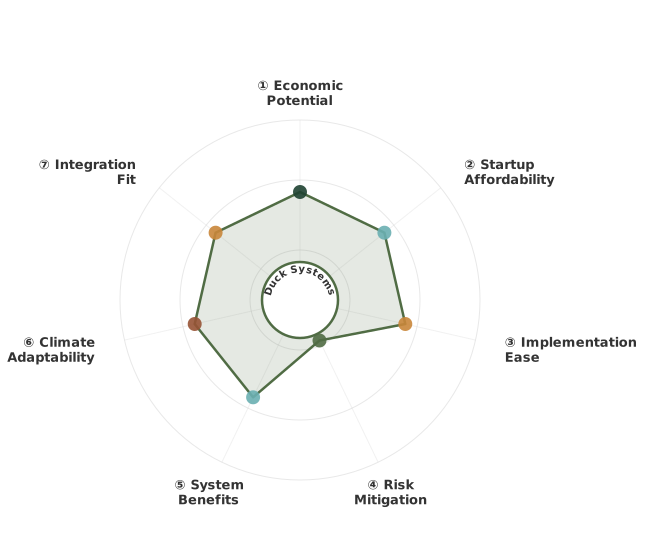
Trait dimensions are ordered clockwise starting from the top of the chart (12 o'clock position):
1. Economic Potential
Financial returns, annual value, and break-even timeline
WHAT: Evaluates financial viability by combining net annual value ($/ha from savings, income, and amortized harvests) with break-even timeline showing when practices pay for themselves.
WHY: Farmers need clear ROI understanding before committing resources. Fast payback (≤3 years) with strong returns (≥$300/ha) enables confident adoption, while long timelines (>10 years) restrict adoption to well-funded operations willing to wait for returns.
HOW: Calculated from net annual value in $/ha and break-even years. Exceptional (≥2.6): fast ROI ≤3 years + high value ≥$300/ha. Typical (1.8-2.5): moderate returns or longer timelines. Limited (<1.8): marginal economics or very long payback >10 years.
2. Startup Affordability
Initial investment costs and financial barrier to entry
WHAT: Measures financial barrier to entry through startup costs for equipment, infrastructure, consulting, and materials. Inverted scoring: lower costs = higher scores = more accessible adoption.
WHY: Affordability determines who can adopt. Low-cost practices (<$250/ha) enable widespread adoption across diverse scales, while high costs (>$2,500/ha) limit adoption to well-capitalized operations, creating barriers that slow regenerative transition.
HOW: Calculated from initial investment parsed from practice content. Inverted scoring: Exceptional (≥2.6): minimal investment <$250/ha. Typical (1.8-2.5): moderate costs $250-2,500/ha. Limited (<1.8): high barrier >$2,500/ha.
3. Implementation Ease
Learning curve and specialized knowledge required
WHAT: Measures how much learning, planning, and specialized knowledge a practice requires. Simpler practices with fewer steps score higher, while complex practices requiring extensive training or specialized resources score lower.
WHY: Complex practices create adoption barriers even when economically viable. Straightforward practices enable faster adoption and broader participation, while those requiring extensive training, timing precision, or specialized equipment limit who can succeed.
HOW: Evaluated by measuring documentation length and identifying complexity markers like location-specific requirements, seasonal timing windows, specialized skills, and dedicated equipment needs. Exceptional (≥2.6): straightforward practices with minimal prerequisites. Typical (1.8-2.5): moderate learning curve with some specialized needs. Limited (<1.8): steep learning curve requiring significant training or resources.
4. Risk Mitigation
Identified financial and ecological risk assessment
WHAT: Evaluates documented risks across financial (investment loss, market volatility) and ecological (crop failure, pest outbreaks) domains. Inverted scoring: fewer risks = higher scores.
WHY: Understanding risk exposure helps farmers make informed decisions. Low-risk practices allow confident implementation, while high-risk practices require careful planning and contingency resources. Risk transparency prevents costly failures.
HOW: Calculated from identified risks in practice content. Inverted scoring: Exceptional (≥2.6): ≤2 risks with manageable severity. Typical (1.8-2.5): 3-5 moderate risks. Limited (<1.8): 6+ risks or severe exposure.
5. System Benefits
How many ways the practice improves your land simultaneously
WHAT: Measures how many aspects of land health improve at once—carbon storage, soil quality, erosion control, water absorption, and biodiversity. Practices that improve multiple areas simultaneously create compounding benefits where each improvement reinforces the others.
WHY: The best practices solve multiple problems at once. For example, addressing erosion simultaneously builds carbon and improves water infiltration, creating a resilient system with positive feedback loops. Single-benefit approaches miss these compound transformation opportunities.
HOW: Evaluated across five key outcomes: carbon sequestration, soil organic matter increase, erosion reduction, water infiltration improvement, and biodiversity enhancement. Exceptional (≥2.6): high carbon storage (>8 t/ha/yr), improvements across 4-5 areas, transformative outcomes. Typical (1.8-2.5): moderate carbon (3-8 t/ha/yr), improvements across 2-3 areas. Limited (<1.8): modest impact (<3 t/ha/yr), single-area focus only.
6. Climate Adaptability
Geographic applicability across Köppen climate zones
WHAT: Evaluates geographic applicability by assessing how many Köppen climate zones successfully support a practice and what adaptation requirements are needed. Measures breadth of climates where farmers can implement with minimal to moderate modifications.
WHY: Universal practices working across diverse climates enable more farmers to adopt regenerative approaches. Practices limited to single climate types (only Mediterranean, only tropical) restrict adoption and slow global transition. Adaptability determines whether a practice serves niche regions or offers broad transformation.
HOW: LLM evaluation of regional success stories, Köppen zone coverage, and adaptation needs. Exceptional (≥2.6): 5+ zones or 4+ climate types, 3+ continents, minimal adaptation. Typical (1.8-2.5): 3-4 zones or 2-3 types, 2 continents, moderate adaptation. Limited (<1.8): 1-2 zones, single region, significant adaptation or highly specialized.
7. Integration Fit
How well this practice combines with others you're doing
WHAT: Measures how well a practice combines with other regenerative practices you might be doing. Some practices work as building blocks that make many other practices easier or more effective, while others work best on their own.
WHY: Practices that combine well with many others create more value on your farm. For example, cover cropping enables no-till, improves grazing, supports crop diversity, and helps water management—making all of them work better together. This helps you build a coherent system rather than juggling disconnected practices.
HOW: Evaluated by identifying which practices combine well and how strong those combinations are. 'Ideally Suited' means strong combinations where practices reinforce each other (practice A makes B easier, while B makes A more effective). 'Adequate' means complementary benefits that work well together. Exceptional (≥2.6): combines well with 6+ practices, serves as a building block. Typical (1.8-2.5): combines with 3-5 practices. Limited (<1.8): 1-2 practices or works best alone.
Going Deeper
1
WHY - The Benefits
Duck systems offer a multifaceted approach to enhancing farm ecosystems, primarily by leveraging the ducks' natural behaviors for ecological services. These benefits manifest in improved soil health, reduced reliance on external inputs, and direct contributions to farm...
Duck systems offer a multifaceted approach to enhancing farm ecosystems, primarily by leveraging the ducks' natural behaviors for ecological services. These benefits manifest in improved soil health, reduced reliance on external inputs, and direct contributions to farm profitability.
WHY - The Benefits
Duck systems offer a multifaceted approach to enhancing farm ecosystems, primarily by leveraging the ducks' natural behaviors for ecological services. These benefits manifest in improved soil health, reduced reliance on external inputs, and direct contributions to farm...
Duck systems offer a multifaceted approach to enhancing farm ecosystems, primarily by leveraging the ducks' natural behaviors for ecological services. These benefits manifest in improved soil health, reduced reliance on external inputs, and direct contributions to farm profitability.
Soil Health Benefits
The most significant soil health contribution from duck systems is through nutrient deposition. Ducks, especially when managed rotationally, excrete manure rich in nitrogen, phosphorus, and potassium. This organic fertility gradually enriches the soil, increasing its capacity to support plant growth. Over time, this can lead to a significant reduction in the need for synthetic fertilizers. Studies on integrated systems suggest that duck manure can contribute to a 0.2-0.8 percentage point increase in soil organic matter over several years, improving soil structure, water retention, and nutrient availability.
Their foraging behavior also plays a role. As ducks search for insects, slugs, snails, and weed seeds, they disturb the soil surface minimally, unlike heavy tillage. This disturbance, coupled with their manure, can improve the distribution of organic matter and microorganisms throughout the topsoil. The presence of ducks can also increase soil aeration due to their exploratory pecking and scratching, further benefiting microbial communities and root development.
The reduction in synthetic pesticides directly supports soil biology. By minimizing chemical applications, duck systems allow beneficial soil microorganisms and invertebrates, such as earthworms and predatory insects, to flourish. These organisms are vital for nutrient cycling, soil structure, and disease suppression, creating a more resilient and self-sustaining soil ecosystem.
Economic Benefits
Duck systems can generate economic returns through multiple avenues. Firstly, by providing effective pest and weed control, they reduce the expenditure on chemical herbicides, insecticides, and molluscicides. Depending on the scale and intensity of pest and weed pressure, these savings can range from USD 50 to 200 per hectare (USD 20-80 per acre) annually. The economic value from nutrient contribution through manure can offset fertilizer costs, potentially saving USD 100 to 300 per hectare (USD 40-120 per acre) per year, especially for nitrogen and phosphorus.
Secondly, many duck breeds are excellent layers, producing high-quality eggs, or can be raised for meat. This creates an additional, diversified income stream. For example, 100 laying ducks can produce around 50-70 eggs per day, offering consistent revenue. The market for free-range or pasture-raised duck products is often premium priced, further enhancing profitability.
Thirdly, improvements in soil health driven by duck integration can lead to increased crop yields and quality over the medium to long term. Healthier soils with better water retention and nutrient availability can support more vigorous plant growth, leading to higher returns from cash crops or increased productivity in orchards and vineyards.
Regenerative Systems Fit
Duck systems directly align with the Integrate Livestock (Principle 5) regenerative agriculture principle. They bring animals onto the land in a way that cycles nutrients, stimulates plant and soil life, and reduces reliance on external inputs.
Through their foraging for weeds and pests, ducks indirectly support Minimize Soil Disturbance (Principle 1) by reducing the need for mechanical cultivation or chemical herbicide applications that can disrupt soil structure and biology. Their manure adds organic matter, which helps bind soil particles and improve structure, making it more resilient to compaction.
When ducks focus on consuming weed seeds and insect larvae, they contribute to creating a healthier environment for both cash crops and beneficial organisms, thus supporting Maximize Crop Diversity (Principle 2) by fostering conditions where beneficial flora and fauna can thrive alongside crops.
By foraging and depositing manure, ducks help ensure that soil remains covered by living plants or their residues, contributing to Keep Soil Covered (Principle 3). Their activity can help manage vegetation, preventing bare patches from developing.
The continuous presence of living roots is enhanced as the soil health improves, supporting Maintain Living Roots (Principle 4). Healthier soil can better sustain diverse plant life, including cover crops and the roots of perennial crops, which are crucial for ongoing soil function.
For farms transitioning to regenerative systems, duck integration offers a relatively accessible gateway. Unlike larger livestock, ducks require less acreage and simpler infrastructure. They can be introduced to specific areas of a farm without overhauling the entire operation, providing tangible benefits that encourage further adoption of regenerative practices. Their contribution helps build soil fertility and reduce input costs, easing the financial burden of transition.
Sources behind this view
Videos & Podcasts
-
The farm plans to achieve carbon-negative duck eggs by replacing soy feed with black soldier fly larvae raised on local food waste. They will integrate poultry with short-rotation coppice for biomass
-
Ducks are beneficial in permaculture systems, especially in the Pacific Northwest, for controlling slugs during the off-season, providing nitrogen-rich manure, and laying eggs suitable for baking. The
-
A duck food forest integrates ducks with fruit trees, using duck-manured water from a pond for irrigation and leveraging ducks for pest control (slugs, snails) in a Mediterranean setting.
-
Duckweed can be grown on farms using runoff or in industrial settings like dairies, treating wastewater and producing high-protein biomass. Future applications focus on protein extraction as a soy rep
Community
-
Details practical methods for managing duck waste, emphasizing its high phosphorus content for fruiting plants. Discusses using wheeled stock tanks for rotational grazing and kiddie pools draining int
Read more (opens in new window) permies.com -
A SARE-funded project tested integrating ducks into shiitake mushroom agroforestry, finding heritage breeds best for meat, establishing a 'slug-free moat' for pest control, and shifting focus from cos
Read more (opens in new window) smallfarms.cornell.edu -
Discusses duckponics systems where duck waste filters through plants to provide clean water and nutrients for both ducks and crops, highlighting the benefits of nutrient cycling and the challenges of
Read more (opens in new window) permies.com -
Steve Gabriel emphasizes adaptive learning in agroforestry, recommending starting simple, choosing preferred breeds like Cayuga ducks, and addressing water management challenges, while sharing his con
Read more (opens in new window) smallfarms.cornell.edu
Research
-
Mechanism and capacities of reducing ecological cost through rice–duck cultivation (opens in new window)
This study found: Integrating ducks into rice paddies (rice-duck cultivation) reduces pests, weeds, and diseases, improves soil fertility, lowers greenhouse gas emissions, and provides economic benefits compared to con
-
Integrated Rice-Duck Farming Decreases Soil Seed Bank and Weed Density in a Paddy Field (opens in new window)
This study found: Integrated rice-duck farming in China significantly reduced soil weed seeds by over 40% and visible weeds, acting as an effective biological weed control method in rice paddies.
-
Outscaling of Rice-Based Farming System (Rice + Duck) in Claveria, Cagayan (opens in new window)
This study found: Integrating ducks into rice farming in Claveria, Cagayan, effectively controlled weeds and snails, improved soil, and created business opportunities, with comparable rice yields to monoculture systems
-
Life Cycle Assessment of Rice-Duck Co-culture Systems (opens in new window)
This study found: Integrating ducks into rice farming reduced methane emissions by 22%, increased profits over 100%, and lowered the overall greenhouse gas impact by 9% per acre, while also boosting rice yields.
2
WHERE - Regional Considerations
Duck systems can be adapted to a wide range of climates and agricultural settings, but regional factors significantly influence their design and success. The primary considerations are temperature extremes, water availability, predator pressure, and the types of pests...
Duck systems can be adapted to a wide range of climates and agricultural settings, but regional factors significantly influence their design and success. The primary considerations are temperature extremes, water availability, predator pressure, and the types of pests and weeds prevalent in a region.
WHERE - Regional Considerations
Duck systems can be adapted to a wide range of climates and agricultural settings, but regional factors significantly influence their design and success. The primary considerations are temperature extremes, water availability, predator pressure, and the types of pests...
Duck systems can be adapted to a wide range of climates and agricultural settings, but regional factors significantly influence their design and success. The primary considerations are temperature extremes, water availability, predator pressure, and the types of pests and weeds prevalent in a region.
Click Here to Look up your Region if you don't already know it
Humid Temperate Regions
Representative Locations: Southeastern United States, Northern Europe (UK, Germany, Poland), Eastern China, Japan, New Zealand.
Climate Context: Warm to hot summers and cool to cold winters with moderate to high annual precipitation (75-150 cm or 30-60 inches) distributed relatively evenly. USDA Zones 6-8, Köppen Cfb/Cfa.
Adaptations: In these regions, ducks are highly effective at controlling slugs and snails, which thrive in moist conditions. The plentiful rainfall supports lush growth of cover crops between cash crops, providing ample foraging for ducks. Overwintering ducks may require more robust housing designs to protect against cold and dampness. The longer growing seasons allow for multiple crop cycles and cover cropping periods, maximizing the time ducks can contribute to pest and weed management. Regions with heavy clay soils benefit from the nutrient addition by ducks, improving drainage and structure.
Mediterranean Regions
Representative Locations: California, Mediterranean basin (Spain, Italy, Greece), Central Chile, Southwestern Australia, Western Cape South Africa.
Climate Context: Hot, dry summers and mild, wet winters. Annual precipitation 40-90 cm (15-35 inches), highly seasonal. USDA Zones 8-10, Köppen Csa/Csb.
Adaptations: Summer heat in Mediterranean climates can be challenging for ducks. Providing ample shade and access to water sources (larger ponds or shaded troughs) is critical. Their value in weed seed control and slug management during the wet winter and spring can be significant. Ducks can be introduced into fields after the main harvest or before planting to "clean up" residuals and reduce early-season weed pressure from winter rainfall. Minimizing soil disturbance during their introduction is key, as dry soils can be prone to wind erosion if excessively worked.
Arid/Semi-Arid Regions
Representative Locations: Western USA, North Africa, Central Asia, Interior Australia.
Climate Context: Low annual precipitation (<40 cm or 15 inches), high temperatures, short and often unpredictable growing season. USDA Zones 7-9, Köppen BSh/BSk.
Adaptations: Water availability is the primary constraint. Systems must incorporate efficient water management, such as larger, recirculating water systems or managed access to ponds, to provide drinking and preening water without excessive loss. Ducks can be highly valuable for controlling invasive weeds and insects that can thrive even with limited moisture. Their feeding habits might be concentrated in specific areas during certain seasons, so rotational management is key to prevent overgrazing or soil degradation. Supplementing feed may be more critical in regions with limited natural forage.
Cold Continental Regions
Representative Locations: Northern USA and Canada, Northern Europe, Northern Asia.
Climate Context: Very short growing seasons, extreme summer heat, severe winter cold. USDA Zones 3-5, Köppen Dfa/Dfb.
Adaptations: Ducks are best suited for the warmer months in these regions. They can be highly effective in controlling insect pests that emerge rapidly during the short, intense growing season. Housing must be designed for extreme cold, with adequate insulation and heat if they are to be managed year-round. Many farmers in these regions might only utilize ducks for a specific season, such as after harvest to clean up fields or before planting in spring, rather than year-round.
Subtropical Regions
Representative Locations: Southeastern USA, Southern China, Southern Brazil, Eastern Australia.
Climate Context: Hot, humid summers and mild winters with generally ample rainfall. USDA Zones 9-11, Köppen Cfa/Cwa.
Adaptations: Similar to humid temperate regions, slug and insect control is a major benefit. Ducks' ability to forage effectively in warm, humid conditions makes them ideal for controlling pests that thrive in such environments. The mild winters may allow for year-round duck integration, provided adequate shelter and feed are available. Management of water sources is important to prevent mosquito breeding and ensure clean drinking water. The addition of nutrients via manure is highly beneficial for the often leached soils common in subtropical regions.
Tropical Regions
Representative Locations: Central America, Southeast Asia, East Africa, Northern Australia, Northern South America.
Climate Context: High temperatures year-round, with distinct wet and dry seasons or consistent high rainfall. Köppen Af/Am/Aw.
Adaptations: Tropical climates offer conditions where ducks can be highly beneficial for pest control, particularly against insects and snails that flourish in warmth and moisture. Managing their water needs and ensuring they have access to shade during intense heat is crucial. Their manure can be very effective in nutrient-poor tropical soils. However, disease management can be more challenging due to higher temperatures and humidity, requiring strict biosecurity and hygiene protocols. Integration into rice paddies is a traditional and highly effective system in this zone, providing simultaneous pest control, weed management, and fertilization.
3
HOW - Implementation Process
Implementing a duck system can be a progressive process, starting small and scaling up as experience and benefits are realized. The core of a successful duck system lies in understanding duck behavior and matching their needs with your farm's landscape and goals.
Implementing a duck system can be a progressive process, starting small and scaling up as experience and benefits are realized. The core of a successful duck system lies in understanding duck behavior and matching their needs with your farm's landscape and goals.
HOW - Implementation Process
Implementing a duck system can be a progressive process, starting small and scaling up as experience and benefits are realized. The core of a successful duck system lies in understanding duck behavior and matching their needs with your farm's landscape and goals.
Implementing a duck system can be a progressive process, starting small and scaling up as experience and benefits are realized. The core of a successful duck system lies in understanding duck behavior and matching their needs with your farm's landscape and goals.
Prerequisites
- Clear Objectives: Define what you want ducks to achieve. Are you primarily after pest control, fertilization, weed suppression, or a combination? This will influence breed selection, numbers, and management strategies.
- Predator Protection: Ducks, especially ducklings, are vulnerable to predators (foxes, birds of prey, domestic dogs, etc.). Secure housing and fencing are essential.
- Water Access: Ducks need clean water for drinking, preening, and cooling (especially in warmer climates). This can range from simple troughs to larger ponds.
- Shelter: Ducks need protection from extreme weather (heat, cold, heavy rain, wind) and predators. This can be a simple mobile coop or a more permanent structure.
- Balanced Nutrition: While ducks forage naturally, they may need supplemental feed, especially laying ducks or during periods of low natural food availability.
- Rotational Management Plan: Decide how you will move ducks between different areas of your farm to maximize benefits and prevent overuse of any single area.
Phase 1: Planning & Preparation
(1-4 weeks)
-
Breed Selection: Choose breeds suited to your climate and goals.
- For egg production: Indian Runner, Khaki Campbell.
- For pest control/broilers: Pekin, Aylesbury.
- Heavy dual-purpose breeds: Rouen, Cayuga.
- Consider disease resistance and hardiness for your climate.
-
Infrastructure Setup:
- Housing: Mobile coops or fixed shelters. Ensure adequate space (approx. 0.5-1 m² or 5-10 sq ft per duck). Install roosting bars if desired. Flooring can be straw, wood shavings, or sand.
- Water Source: Troughs, tubs, or small ponds. Ensure water is deep enough for preening (at least 10-15 cm or 4-6 inches). If using ponds, manage them to prevent excessive fouling. Filtration or overflow systems may be needed.
- Fencing: Electric netting is a versatile option for temporary paddocks and predator exclusion. More permanent fencing may be needed for fixed housing or large water sources.
-
Initial Duck Acquisition: Purchase healthy ducklings from reputable breeders or hatcheries. Start with a manageable number (e.g., 10-20) to gain experience.
- Dietary Planning: Research supplemental feed requirements. For layers, layer feed is essential. For foraging ducks, a good quality waterfowl starter/grower feed is important.
Phase 2: Acclimation & Initial Deployment
(Weeks 4-8 / Duckling to Juvenile Stage)
- Brooding: Ducklings require a warm, safe environment during their first 3-4 weeks. Provide a heat source, clean bedding, and chick/duckling starter feed.
- Transition to Coop/Water: Once feathered and temperatures permit (around 4-5 weeks old), transition young ducks to their outdoor housing and introduce them to their water source. Ensure they learn where food and water are.
- Predator Training: Introduce them to their secure enclosure and gradually increase their exposure to the outdoor environment.
- First Foraging Introduction: Begin introducing them to small, contained, pre-selected areas (e.g., a fallow field, a section of an orchard after harvest). Start with short durations (1-2 hours per day) and gradually increase exposure time.
- Monitor Crop Tolerance: Observe how ducks interact with and tolerate the plants in the target area. If they show signs of excessive damage to desired crops, adjust their access duration or location.
Phase 3: Integrated Management & Rotational Grazing
(Ongoing / Mature Ducks)
-
Rotational Deployment: Move ducks between different crops or fields based on their management needs and the ducks' contribution.
- Orchards/Vineyards: Introduce after harvest to clean up fallen fruit, slugs, snails, and weed seeds. Ensure trees are mature enough (years 3-5 for most) to withstand minor pecking without damage.
- Vegetable Fields: Deploy between planting and crop establishment, or in fields between crop cycles, to control weeds and pests like slugs and cutworms. Avoid direct introduction to young seedlings unless specifically managed for grazing weed species.
- Cover Cropped Fields: Excellent location for ducks, as they can forage on weeds and insect pests while contributing fertility to the soil, benefiting future cash crops.
-
Water Management: Maintain clean water constantly. Set up overflow systems or troughs that are easily cleaned to prevent excessive fouling and potential disease transmission or water pollution. If using ponds, consider their size and depth in relation to duck numbers.
- Feeding Strategy: Provide supplemental feed according to their needs. Laying ducks require layer feed. Foragers in high-pest areas may need less, but always ensure access to clean water and basic nutrition, especially during dry periods or when natural food is scarce.
- Monitoring & Observation: Regularly check ducks for health, well-being, and signs of distress. Observe their impact on crops and pests. Adjust stocking density (ducks per hectare/acre) and duration of stay based on observations. A common guideline for pest control is 20-40 ducks per hectare (8-16 per acre) for limited periods.
- Manure Management: Collect manure from housing areas for composting or direct application to fields. Rotational grazing naturally distributes manure.
Transition Timeline & Phase-Out Strategy (for Extractive Practices)
Duck systems are inherently aligned with regenerative principles; therefore, there isn't a "phase-out" of a non-regenerative practice. Instead, this section addresses how to transition to a regenerative duck system if currently managing ducks in a less optimal way, or if other farm inputs are being reduced.
-
From Conventional Pest/Weed Control: As duck systems prove effective, gradually reduce reliance on synthetic pesticides. Begin by targeting specific pests or weeds that ducks manage particularly well.
- Phase 1 (Year 1): Use ducks to manage 30-50% of pest/weed pressure in targeted areas. Reduce synthetic input use by 30-50% in those areas.
- Phase 2 (Year 2-3): Increase duck density or deployment duration. Use ducks to manage 60-80% of pest/weed issues. Reduce synthetic inputs by 60-80%. Begin observing improved soil biology indicators.
- Phase 3 (Year 4+): Aim for near-complete reliance on ducks for pest/weed management in integrated areas. Eliminate synthetic inputs in these zones. Focus on balancing duck nutrition with natural foraging and observing improvements in soil health metrics (organic matter, earthworm populations).
-
From Non-Rotational Duck Management: If ducks are currently kept in one static location, transition to rotational grazing.
- Phase 1: Divide larger confinement area into smaller paddocks using temporary fencing. Rotate ducks every 3-7 days.
- Phase 2: Begin moving ducks to different fields or crop areas for limited periods (e.g., 1-3 weeks) between main crop cycles.
- Phase 3: Develop a full farm-scale rotation schedule, integrating duck movements with crop stages and field needs.
-
When to Graduate: You've graduated to a fully regenerative duck system when:
- Ducks demonstrably contribute to reduced pest/weed pressure.
- Manure significantly contributes to soil fertility, reducing synthetic fertilizer needs.
- Ducks are managed rotationally for optimal benefit and welfare.
- Soil health indicators (organic matter, earthworm activity) show improvement in areas of duck integration.
- Ducks are healthy and well-cared for, requiring minimal veterinary intervention.
Sources behind this view
Videos & Podcasts
-
The farm plans to achieve carbon-negative duck eggs by replacing soy feed with black soldier fly larvae raised on local food waste. They will integrate poultry with short-rotation coppice for biomass
-
A duck food forest integrates ducks with fruit trees, using duck-manured water from a pond for irrigation and leveraging ducks for pest control (slugs, snails) in a Mediterranean setting.
-
Ducks are beneficial in permaculture systems, especially in the Pacific Northwest, for controlling slugs during the off-season, providing nitrogen-rich manure, and laying eggs suitable for baking. The
-
Wellspring Forest Farm's research integrating ducks for slug control in mushroom production highlighted food safety and ecosystem challenges, leading to a tailored system with fewer ducks and a 'duck
Community
-
A SARE-funded project tested integrating ducks into shiitake mushroom agroforestry, finding heritage breeds best for meat, establishing a 'slug-free moat' for pest control, and shifting focus from cos
Read more (opens in new window) smallfarms.cornell.edu -
Details practical methods for managing duck waste, emphasizing its high phosphorus content for fruiting plants. Discusses using wheeled stock tanks for rotational grazing and kiddie pools draining int
Read more (opens in new window) permies.com -
Discusses duckponics systems where duck waste filters through plants to provide clean water and nutrients for both ducks and crops, highlighting the benefits of nutrient cycling and the challenges of
Read more (opens in new window) permies.com -
Steve Gabriel integrates Cayuga ducks into his shiitake mushroom agroforestry system to control slugs, supplement feed with forest forages, and improve soil health, viewing ducks as a key component of
Read more (opens in new window) smallfarms.cornell.edu
Research
-
Mechanism and capacities of reducing ecological cost through rice–duck cultivation (opens in new window)
This study found: Integrating ducks into rice paddies (rice-duck cultivation) reduces pests, weeds, and diseases, improves soil fertility, lowers greenhouse gas emissions, and provides economic benefits compared to con
-
Integrated Rice-Duck Farming Decreases Soil Seed Bank and Weed Density in a Paddy Field (opens in new window)
This study found: Integrated rice-duck farming in China significantly reduced soil weed seeds by over 40% and visible weeds, acting as an effective biological weed control method in rice paddies.
-
Outscaling of Rice-Based Farming System (Rice + Duck) in Claveria, Cagayan (opens in new window)
This study found: Integrating ducks into rice farming in Claveria, Cagayan, effectively controlled weeds and snails, improved soil, and created business opportunities, with comparable rice yields to monoculture systems
-
Life Cycle Assessment of Rice-Duck Co-culture Systems (opens in new window)
This study found: Integrating ducks into rice farming reduced methane emissions by 22%, increased profits over 100%, and lowered the overall greenhouse gas impact by 9% per acre, while also boosting rice yields.
4
Know the Debate
Integrating ducks into farm systems offers diverse benefits, but outcomes vary significantly based on climate, scale, and management precision. In ...
Know the Debate
Integrating ducks into farm systems offers diverse benefits, but outcomes vary significantly based on climate, scale, and management precision. In ...
Integrating ducks into farm systems offers diverse benefits, but outcomes vary significantly based on climate, scale, and management precision. In humid regions with abundant resources, ducks effectively control pests and boost fertility, leading to substantial economic gains. Conversely, in drier or more challenging climates, or with less intensive management, benefits might be more moderate and require careful water management. Infrastructure costs range from minimal for small flocks to substantial investments for larger, rotational operations, while ongoing labor demands are consistently high for daily care and strategic movement.
Range of economic benefits and profitability from duck systems?
Significant profit potential with optimized management
Academic and Institute sources suggest substantial profitability through input savings and premium product sales, with some integrated systems showing over 100% profit increases. Field practitioners support this, reporting significant cost reductions and strong markets for duck products.
Sources behind this view
Sources behind this view
Videos & Podcasts
-
Ducks are beneficial in permaculture systems, especially in the Pacific Northwest, for controlling slugs during the off-season, providing nitrogen-rich manure, and laying eggs suitable for baking. They are gentler on perennials than chickens and contribute to a closed-loop system.
Research
-
Life Cycle Assessment of Rice-Duck Co-culture Systems (opens in new window)
This study found: A study combining multiple research findings (meta-analysis) and environmental impact assessments found that integrating ducks into rice farming significantly improves sustainability. Compared to growing rice alone, rice-duck systems reduced methane gas emissions by 22% and increased nitrous oxide emissions by 34%. Importantly, rice yields increased by nearly 3%, and farm profits more than doubled. The overall greenhouse gas impact of these integrated systems was 9% lower per acre. These systems also produce valuable protein from the ducks, which can replace meat from industrial farming. Expanding this practice in China could lead to significant greenhouse gas reductions and support more sustainable food production.
Variable returns; initial costs and labor may outweigh gains
Field reports reveal more varied financial outcomes, where some farms see modest returns due to high initial investment in infrastructure and labor for daily management. While cost savings are observed, the scale of economic gain depends heavily on local market demand and specific farm conditions.
Sources behind this view
Sources behind this view
Videos & Podcasts
-
Integrate ducks into gardens for pest control (snails, slugs) once plants are established seedlings. Time their use based on pest levels and food availability, removing them once pests are gone to prevent crop damage. Utilize them in late autumn for soil fertilization.
 From the Web
-
Comprehensive guide to raising chickens, turkeys, ducks, geese, and game birds on small farms, covering breed selection, pasture-based systems, housing, fencing, seasonal challenges, regulations, nutrition, and predator control.
Making Sense of the Differences
Economic outcomes with duck systems vary significantly based on scale, management intensity, local market demand for duck products, and the specific pest/weed pressures being addressed. Optimized systems in regions with high input costs or premium markets show high profitability. Smaller or less managed systems may see more modest returns, with initial setup costs taking longer to recoup.
Infrastructure and management complexity for effective duck systems?
Require robust infrastructure and intensive daily management
Field practitioners emphasize the need for predator-proof housing, reliable water systems, and daily management tasks like moves and checks for effective pest control and crop protection. This suggests a higher upfront and ongoing labor investment than basic descriptions.
Sources behind this view
Sources behind this view
Videos & Podcasts
-
Ducks are beneficial in permaculture systems, especially in the Pacific Northwest, for controlling slugs during the off-season, providing nitrogen-rich manure, and laying eggs suitable for baking. They are gentler on perennials than chickens and contribute to a closed-loop system.
-
A permaculture design uses a clawfoot bathtub as a duck pond, collecting rainwater from a shed roof. Duck waste fertilizes the water, which then flows via gravity through an orchard, watering and fertilizing fruit trees. This 'stacking functions' approach minimizes labor by integrating water collection, duck habitat, and fertilization.
-
Ducks require specific water access for nares rinsing and struggle in heat above 85°F, needing shade and immersion water. They tolerate cold/rain well, making them suitable for the Pacific Northwest. Drakes are quiet protectors. Rethinking coop design for accessibility is advised.
Manageable infrastructure with basic needs considered
Academic and Institute sources generally describe housing, water, and basic fencing as key requirements, indicating manageable infrastructure and daily checks are standard for integrating ducks.
Sources behind this view
Sources behind this view
Research
-
Mechanism and capacities of reducing ecological cost through rice–duck cultivation (opens in new window)
This study found: A traditional Chinese farming method called rice–duck cultivation integrates ducks into rice paddies to improve sustainability. Ducks help control common rice pests like planthoppers and leafhoppers (up to 98% effective) and reduce the need for pesticides. They also help manage weeds and diseases, while their droppings enrich the soil with organic matter and essential nutrients, potentially lowering fertilizer use. This integrated system also contributes to a slight reduction in greenhouse gas emissions and saves on duck feed costs, leading to both environmental and economic advantages over conventional rice farming.
From the Web
-
Attract ducks by improving pond water clarity (fencing, erosion control, fish management), reducing disturbance (moving activity, planting screens), and adding food sources (oaks, pecans, emergent plants, grains).
-
Comprehensive guide to raising chickens, turkeys, ducks, geese, and game birds on small farms, covering breed selection, pasture-based systems, housing, fencing, seasonal challenges, regulations, nutrition, and predator control.
Making Sense of the Differences
The complexity and cost of infrastructure for duck systems vary greatly with scale and management goals. Small flocks may need simple coops and troughs, while larger operations may require significant investment in mobile housing, extensive fencing, and robust water management systems. Effective management requires daily attention and rotational planning.
Effectiveness and specificity of duck pest control?
Effective for specific pests and in certain contexts
Field reports highlight ducks' success against slugs, snails, and weed seeds in orchards, vineyards, and rice paddies. However, potential crop damage to vulnerable plants and limited efficacy on other pest types are noted.
Sources behind this view
Sources behind this view
Videos & Podcasts
-
Ducks are beneficial in permaculture systems, especially in the Pacific Northwest, for controlling slugs during the off-season, providing nitrogen-rich manure, and laying eggs suitable for baking. They are gentler on perennials than chickens and contribute to a closed-loop system.
-
Integrate ducks into gardens for pest control (snails, slugs) once plants are established seedlings. Time their use based on pest levels and food availability, removing them once pests are gone to prevent crop damage. Utilize them in late autumn for soil fertilization.
-
Explores using ducks for slug control in market gardens, noting the challenge for vegan operations and the contrast between pest management strategies.
Documented reduction of weeds and pests in controlled studies
Academic studies confirm ducks effectively reduce weed seeds by over 40% and various pests like snails in rice paddies, and improve soil fertility, indicating broad benefits in integrated systems.
Sources behind this view
Sources behind this view
Research
-
Integrated Rice-Duck Farming Decreases Soil Seed Bank and Weed Density in a Paddy Field (opens in new window)
This study found: A three-year study in rice fields in China showed that raising ducks alongside rice crops (integrated rice-duck farming) is a highly effective way to control weeds. The ducks significantly reduced the number of weed seeds in the soil by over 40% and also decreased the amount of visible weeds growing in the fields. Even just mimicking the muddying effect of ducks helped reduce weed seeds. This system works because the ducks eat weed seeds and disturb the soil, preventing weeds from establishing. The study found a strong link between fewer weed seeds in the soil and fewer weeds growing later, suggesting this ecological approach offers a natural solution for weed management in rice paddies.
-
Mechanism and capacities of reducing ecological cost through rice–duck cultivation (opens in new window)
This study found: A traditional Chinese farming method called rice–duck cultivation integrates ducks into rice paddies to improve sustainability. Ducks help control common rice pests like planthoppers and leafhoppers (up to 98% effective) and reduce the need for pesticides. They also help manage weeds and diseases, while their droppings enrich the soil with organic matter and essential nutrients, potentially lowering fertilizer use. This integrated system also contributes to a slight reduction in greenhouse gas emissions and saves on duck feed costs, leading to both environmental and economic advantages over conventional rice farming.
Making Sense of the Differences
Ducks are most effective against specific pests like slugs, snails, and weed seeds, particularly in environments where these are significant problems (e.g., wet climates, rice paddies, orchards post-harvest). While farmers report significant pest reduction, quantitative academic data is less abundant for other pest types or diverse systems, and direct crop damage is a risk if management isn't tailored to plant vulnerability.
5
HOW MUCH - Costs & Investment
Note: Costs shown in USD; multiply by local labor and material cost indices for your region. Labor costs vary significantly internationally.
Note: Costs shown in USD; multiply by local labor and material cost indices for your region. Labor costs vary significantly internationally.
HOW MUCH - Costs & Investment
Note: Costs shown in USD; multiply by local labor and material cost indices for your region. Labor costs vary significantly internationally.
Note: Costs shown in USD; multiply by local labor and material cost indices for your region. Labor costs vary significantly internationally.
Note: All costs are based on recent US economic data (2024–2026) and may vary substantially by region based on local labor rates, material costs, and regulatory requirements. All figures are denoted in USD per acre.
Infrastructure & Housing
For small operations under 50 acres (20 ha), initial housing costs range from $521 to $2,605, focusing on portable A-frame coops built from reclaimed wood or repurposed structures. Mid-size operations managing 50 to 500 acres (20–202 ha) typically invest $3,126 to $12,504 in heavy-duty, trailer-mounted mobile coops engineered to withstand the rigors of frequent relocation across uneven terrain. Large-scale operations exceeding 500 acres (202 ha) allocate between $15,630 and $46,890 for modular, semi-automated mobile poultry houses, which include integrated solar-powered ventilation and automated door systems to sharply reduce the daily labor requirements necessitated by vast orchard blocks.
Water Systems
Water infrastructure serves as a foundational pillar for flock hygiene and productivity. Small operations should budget $208 to $1,042 for simple rain-barrel gravity-feed systems or durable, manually filled troughs. Mid-size farms typically require robust, pressurized water lines, with irrigation-style poly-pipe systems, portable agricultural pumps, and high-flow troughs costing between $1,563 and $5,210. Large-scale installations necessitate sophisticated, automated, manifolded water systems across expansive paddock networks, costing $7,815 to $20,840 to ensure adequate pressure and a consistent, clean water supply for several hundred birds in remote sectors.
Fencing & Predator Control
For small plots, high-quality, mobile electric poultry netting costs range from $313 to $1,563, providing adequate perimeter security for localized grazing. Mid-size operations managing complex, multi-paddock rotations spend $2,084 to $6,252 on durable exterior perimeter fencing coupled with high-density interior electric netting to compartmentalize specific orchard blocks. Large operations require professional-grade, high-tensile permanent electric fencing alongside robust structural perimeter barriers, costing $10,420 to $31,260 to effectively mitigate heavy predation pressure from coyotes, raptors, and stray domestic canines.
Annual Operating Expenditures
Annual expenditures consist primarily of grain-based supplemental feed, which accounts for approximately 60% to 70% of total variable costs. For small-scale systems, expect annual expenditures of $156 to $469 per acre ($385–$1,159/ha). Mid-size operations, benefiting from economies of scale and direct-to-warehouse feed purchasing, typically incur costs of $104 to $365 per acre ($257–$902/ha). Large-scale units range from $63 to $261 per acre ($156–$645/ha) due to superior foraging path utilization and wholesale feed pricing leverage. Veterinary costs are managed at $21 to $104 per acre ($52–$257/ha), focusing heavily on preventative biosecurity measures rather than curative treatments.
Most Spend: Most small operations spend $2,605–$5,731; mid-size farms spend $8,336–$26,050; and large-scale operations spend $36,470–$83,360 in combined initial setup and first-year operating costs.
Why the Range?: Cost variability is driven primarily by the level of automated hardware and existing site topography. Operations in high-predator environments must commit to the upper end of these ranges for heavy-duty, electrified, multi-strand permanent fencing to prevent catastrophic flock loss.
Sources behind this view
Videos & Podcasts
-
The farm plans to achieve carbon-negative duck eggs by replacing soy feed with black soldier fly larvae raised on local food waste. They will integrate poultry with short-rotation coppice for biomass
-
Ducks are beneficial in permaculture systems, especially in the Pacific Northwest, for controlling slugs during the off-season, providing nitrogen-rich manure, and laying eggs suitable for baking. The
-
Wellspring Forest Farm's research integrating ducks for slug control in mushroom production highlighted food safety and ecosystem challenges, leading to a tailored system with fewer ducks and a 'duck
-
Recommends Muscovy ducks for superior poultry taste and pest control, detailing cooking methods with duck fat. Also covers Vitamin D benefits, eggplant/colorful vegetable nutrition, and recaps small l

Community
-
A SARE-funded project tested integrating ducks into shiitake mushroom agroforestry, finding heritage breeds best for meat, establishing a 'slug-free moat' for pest control, and shifting focus from cos
Read more (opens in new window) smallfarms.cornell.edu -
Integrate ducks/chickens using weldmesh housing with deep leaf litter for odor/compost. Manage parasites with DE and deep litter. Share feed but free-feed chickens, not ducks, for pest control. Use po
Read more (opens in new window) permies.com -
Jack Spirko of Nine Mile Farm shares strategies for raising ducks for profit, focusing on duck eggs as a high-profit niche. Learn about flock building, customer acquisition, breed selection, and rotat
Read more (opens in new window) permies.com -
Common Wealth Farm in Unity, Maine, successfully established a pastured duck and chicken operation in its first year. They used portable chicken tractors for pasture rotation and built an on-site proc
Read more (opens in new window) smallfarms.cornell.edu
Research
-
Mechanism and capacities of reducing ecological cost through rice–duck cultivation (opens in new window)
This study found: Integrating ducks into rice paddies (rice-duck cultivation) reduces pests, weeds, and diseases, improves soil fertility, lowers greenhouse gas emissions, and provides economic benefits compared to con
-
Outscaling of Rice-Based Farming System (Rice + Duck) in Claveria, Cagayan (opens in new window)
This study found: Integrating ducks into rice farming in Claveria, Cagayan, effectively controlled weeds and snails, improved soil, and created business opportunities, with comparable rice yields to monoculture systems
-
Integration of Grape-Duck Production Pattern Boosts Duck Behavior, Meat Quality, Fecal Microbiota and Soil Microorganisms (opens in new window)
This study found: Integrating ducks with grapevines improved duck behavior and soil microbial diversity, with some changes in meat quality. Duck gut bacteria were unaffected.
-
Duck Farming in Coastal Area: Assessing Nutritional Status and Its Contribution to Egg Production (opens in new window)
This study found: Coastal duck farms with sufficient nutrition laid 72% more eggs than underfed flocks. Reducing rice bran and increasing fish in feed boosted egg production.
6
REWARDS AND RISKS - Economics & Risk Factors
Economic Scenarios
Economic Scenarios
REWARDS AND RISKS - Economics & Risk Factors
Economic Scenarios
Economic Scenarios
Economic Scenarios
In a Best Case scenario, ducks serve as primary agents for integrated pest management, effectively reducing external chemical pesticide expenditures by $163–$313 per acre ($403–$773/ha) annually. When integrated with high-quality egg sales that command premium pricing, total economic gain reaches $573–$1,146 per acre ($1,416–$2,832/ha) annually. In a Typical Case, integrated ducks provide moderate insect and slug control, saving $63–$156 per acre ($156–$385/ha) in chemical inputs, while conservative egg sales contribute $156–$365 per acre ($385–$902/ha) revenue, resulting in a net economic gain of $219–$521 per acre ($541–$1,287/ha) annually. In a Worst Case, poor rotational management or overstocking leads to excessive crop trampling and seedling damage, costing $208–$417 per acre ($514–$1,030/ha), while disease outbreaks requiring aggressive veterinary intervention can add expenses exceeding $313 per acre ($773/ha), leading to a negative cash flow during the first 24 months of operation.
Market Factors and Profitability
Profitability is hyper-linked to localized supply chain integration. Farmers who market "regenerative-pest-management" rated eggs command prices 40% to 60% higher than commodity supermarket poultry products, often successfully fetching $6.25–$9.38 per dozen. Market volatility in organic feed prices remains the most significant threat to operating margins; producers who source local cull grains or utilize sprouted fodder systems maintain significantly more stable profit margins than those relying solely on commercial feed delivery contracts.
Risk Mitigation Strategies
Investment in "predator-proof" night confinement represents the most effective mitigation strategy against total flock mortality, requiring an upfront investment of $1,042–$3,126 depending on the scale of the operation. Implementing stringent biosecurity quarantine protocols for new ducklings costs approximately $156–$260 annually in sanitization supplies and segregated brooding housing, but it prevents the potential for catastrophic, flock-wide production loss. To prevent nutrient runoff and soil compacting, managers must enforce strict stocking densities—ensuring no more than 100 birds per acre—which protects long-term soil integrity without requiring additional labor hours if integrated into standard chore routines.
Transition Period Risks
Duck systems trigger a transition phase of 12–24 months as the flock matures and soil microbial activity adapts to the introduction of high-nitrogen manure inputs. During the first year, yield dips of 5% to 10% may occur if ducks are introduced to highly sensitive vegetable or berry crops; this is mitigated by maintaining a minimum buffer zone of 30 feet (9.1 m) from maturing rows. True economic recovery, featuring "regenerative" yield gains that contribute $104–$313 per acre ($257–$773/ha) in improved nutrient uptake efficiency, typically stabilizes by the third season of consistent rotational grazing.
Sources behind this view
Videos & Podcasts
-
The farm plans to achieve carbon-negative duck eggs by replacing soy feed with black soldier fly larvae raised on local food waste. They will integrate poultry with short-rotation coppice for biomass
-
Duckweed can be grown on farms using runoff or in industrial settings like dairies, treating wastewater and producing high-protein biomass. Future applications focus on protein extraction as a soy rep
-
Wellspring Forest Farm's research integrating ducks for slug control in mushroom production highlighted food safety and ecosystem challenges, leading to a tailored system with fewer ducks and a 'duck
-
Ducks are beneficial in permaculture systems, especially in the Pacific Northwest, for controlling slugs during the off-season, providing nitrogen-rich manure, and laying eggs suitable for baking. The
Community
-
A SARE-funded project tested integrating ducks into shiitake mushroom agroforestry, finding heritage breeds best for meat, establishing a 'slug-free moat' for pest control, and shifting focus from cos
Read more (opens in new window) smallfarms.cornell.edu -
Integrate ducks/chickens using weldmesh housing with deep leaf litter for odor/compost. Manage parasites with DE and deep litter. Share feed but free-feed chickens, not ducks, for pest control. Use po
Read more (opens in new window) permies.com -
Details practical methods for managing duck waste, emphasizing its high phosphorus content for fruiting plants. Discusses using wheeled stock tanks for rotational grazing and kiddie pools draining int
Read more (opens in new window) permies.com -
Steve Gabriel emphasizes adaptive learning in agroforestry, recommending starting simple, choosing preferred breeds like Cayuga ducks, and addressing water management challenges, while sharing his con
Read more (opens in new window) smallfarms.cornell.edu
Research
-
Mechanism and capacities of reducing ecological cost through rice–duck cultivation (opens in new window)
This study found: Integrating ducks into rice paddies (rice-duck cultivation) reduces pests, weeds, and diseases, improves soil fertility, lowers greenhouse gas emissions, and provides economic benefits compared to con
-
Integrated Rice-Duck Farming Decreases Soil Seed Bank and Weed Density in a Paddy Field (opens in new window)
This study found: Integrated rice-duck farming in China significantly reduced soil weed seeds by over 40% and visible weeds, acting as an effective biological weed control method in rice paddies.
-
Outscaling of Rice-Based Farming System (Rice + Duck) in Claveria, Cagayan (opens in new window)
This study found: Integrating ducks into rice farming in Claveria, Cagayan, effectively controlled weeds and snails, improved soil, and created business opportunities, with comparable rice yields to monoculture systems
-
Life Cycle Assessment of Rice-Duck Co-culture Systems (opens in new window)
This study found: Integrating ducks into rice farming reduced methane emissions by 22%, increased profits over 100%, and lowered the overall greenhouse gas impact by 9% per acre, while also boosting rice yields.
7
WHO - Labor & Expertise
Skill Requirements
Skill Requirements
WHO - Labor & Expertise
Skill Requirements
Skill Requirements
- Basic Animal Husbandry: Understanding of basic needs for feed, water, shelter, and predator protection. Familiarity with observing animal behavior for signs of health or distress.
- Observation Skills: Ability to assess pest and weed pressure in crops, and to judge duck foraging effectiveness.
- Basic Infrastructure Management: Skills in setting up and moving temporary fencing, maintaining water systems, and cleaning housing.
- Rotational Planning: Understanding farm layout, crop cycles, and duck needs to develop effective rotation schedules.
- Record Keeping: Essential for tracking flock health, feed consumption, egg/meat production, input savings, and observing impacts on crops and soil.
Labor Intensity
- Daily Checks: 15-30 minutes per day for feeding, watering, and flock health check. More time needed for moving ducks and infrastructure setup.
- Weekly/Bi-Weekly Tasks: Cleaning housing, moving fencing, egg collection, manure management.
- Seasonal Planning: Planning rotations, infrastructure setup/take-down, sourcing feed and new ducklings.
- International Labor Cost Context: In regions where labor costs are low, hiring farmhands for daily duck management might be more feasible and economical, allowing the primary land manager to focus on strategic planning and integration. In regions with high labor costs, a more automated or low-labor infrastructure design (e.g., self-watering systems, mobile coops that are easy to move) becomes important.
Learning Curve & Expertise Development
- Beginner: Start with a small flock (10-20 ducks) and simple setup. Focus on daily care and one or two target areas (e.g., an orchard after harvest). Learn by observation and trial-and-error.
- Intermediate: Expand flock size and introduce rotational grazing between multiple fields. Begin tracking input savings and production yields. Experiment with different duck breeds or management strategies.
- Advanced: Integrate ducks into a whole-farm system, developing complex rotation schedules. Optimize housing and water systems for efficiency. Possibly engage in breeding or developing direct market channels for duck products.
Many resources are available, including experienced farmers, agricultural extension services, and online communities, which can accelerate the learning process.
Sources behind this view
Research
-
PRESENT STATUS OF FREE-RANGE DUCK FARMING SYSTEM OF TULSIPUR DANG, NEPAL (opens in new window)
This study found: Nepal study: Free-range ducks often raised with chickens, fed corn. Traditional methods lack proper housing, vaccines, and supplements, leading to 15% annual mortality.
8
EQUIPMENT - Tools & Infrastructure
Essential Infrastructure
Essential Infrastructure
EQUIPMENT - Tools & Infrastructure
Essential Infrastructure
Essential Infrastructure
-
Housing:
- Mobile Coops: Can be towed or moved easily to different field locations. Offer protection from predators and weather. Size varies based on flock size (e.g., 3x6m or 10x20ft for 30-50 ducks).
- Fixed Shelters: Can be simpler structures like A-frames or modified sheds, offering protection but less mobility.
- Bedding: Straw, wood shavings, or sand for comfort and absorption of moisture.
-
Watering Systems:
- Troughs/Tubs: Large plastic tubs or galvanized metal troughs. Need regular cleaning.
- Nipple Drinkers/Cups: Can be attached to lines, reducing water fouling and contamination.
- Ponds/Large Totes: For larger flocks or systems, a dedicated pond or large water storage tank/container can serve as a primary water source and allow for preening. Management to maintain water quality is crucial.
- Pumps/Hoses: For refilling troughs or piping water to remote locations.
-
Fencing & Containment:
- Electric Netting: Lightweight, portable, and effective for creating temporary paddocks and predator exclusion.
- Wire Fencing: More permanent, but less flexible for rotation.
- Hardware Cloth/Poultry Wire: For reinforcing coop perimeters and covering openings to exclude smaller predators and vermin.
Feeding Equipment
- Feeders: Designed to minimize waste and protect feed from weather and contamination. Hanging feeders, trough feeders, or rotating feeders are common.
- Supplemental Feed Storage: Airtight containers to protect feed from moisture and pests.
Flock Management Tools
- Egg Baskets/Trays: For collecting eggs.
- Ducks: Starter flock of healthy birds from reputable sources.
- Buckets/Wheelbarrows: For feed, bedding, manure, and water transport.
- Dipping Pools/Large Tubs: If a pond isn't available, larger containers can provide water for preening.
- Predator Deterrents: Lights, motion-activated sprinklers, or guard animals (dogs) for added protection.
International Sourcing & Considerations
- Sourcing: Infrastructure components (fencing, troughs, lumber) are often available locally in most agricultural regions. Mobile coops may be a specialized purchase, potentially requiring custom fabrication or sourcing from dedicated poultry equipment suppliers.
- Cost Variation: Costs for materials like lumber, metal, and plastic vary significantly due to import duties, local manufacturing capacity, and currency exchange rates. DIY approaches using locally available, recycled materials are highly recommended where feasible.
- Water System: The complexity and cost of water systems are heavily influenced by access to municipal water, wells, or surface water sources. Gravity-fed systems are simplest, while pumped systems require energy.
Sources behind this view
Community
-
Fowl housing design depends heavily on site factors (area, slope, water, predators) and purpose. Adequate run space is crucial, with mobile systems and rotational access to forage/guilds being optimal
Read more (opens in new window) permies.com
From the Web
-
Start-up costs for small-scale poultry include mobile/stationary coops, feeders, waterers, fencing, incubators, brooders, and transport crates. Sourcing chicks, ducklings, goslings, and turkey poults
9
COMPATIBLE PRACTICES - Integration Opportunities
Duck systems synergize effectively with a range of regenerative practices, enhancing the overall farm ecosystem and soil health.
Duck systems synergize effectively with a range of regenerative practices, enhancing the overall farm ecosystem and soil health.
COMPATIBLE PRACTICES - Integration Opportunities
Duck systems synergize effectively with a range of regenerative practices, enhancing the overall farm ecosystem and soil health.
Duck systems synergize effectively with a range of regenerative practices, enhancing the overall farm ecosystem and soil health.
Cover Cropping
- Integration: Ducks graze and forage on cover crops between cash crop cycles or in perennial systems.
- Benefit: Ducks control weed growth in cover crops, consume pest larvae overwintering in residue, and their manure adds significant fertility. This preparation benefits the subsequent cash crop.
- Note: Choose cover crops that offer good foraging and tolerate light grazing.
Rotational/Adaptive Grazing
- Integration: Ducks are managed in paddocks, moved frequently to prevent overgrazing and allow vegetation recovery.
- Benefit: Distributes manure evenly, prevents soil compaction from dense duck populations, encourages balanced plant growth.
- Note: This is the core management principle for sustainable duck integration.
Organic Vegetable Production
- Integration: Ducks deployed in fields before planting or between crop rows to manage slugs, snails, and weed seeds.
- Benefit: Reduces reliance on costly and potentially harmful molluscicides/herbicides. Adds fertility to vegetable beds.
- Note: Careful timing is required to avoid damage to young seedlings. Often best used in pre-planting or post-harvest phases.
Agroforestry Systems
- Integration: Ducks integrated into silvopastures or alley cropping systems, foraging in the understory or on weed growth.
- Benefit: Provides all benefits of pest control, fertilization, and weed suppression within a multi-layered system. Contributes to nutrient cycling between forest/tree layers and understory vegetation.
- Note: Ensure adequate space and water access for ducks within the system.
Integrated Pest Management (IPM)
- Integration: Duck presence as a key biological control component within a broader IPM strategy.
- Benefit: Reduces reliance on chemical controls by providing a sustainable, in-field solution for common pests.
- Note: Monitored alongside other IPM components for overall effectiveness. ```
Sources behind this view
Videos & Podcasts
-
A duck food forest integrates ducks with fruit trees, using duck-manured water from a pond for irrigation and leveraging ducks for pest control (slugs, snails) in a Mediterranean setting.
-
The farm plans to achieve carbon-negative duck eggs by replacing soy feed with black soldier fly larvae raised on local food waste. They will integrate poultry with short-rotation coppice for biomass
-
Ducks are beneficial in permaculture systems, especially in the Pacific Northwest, for controlling slugs during the off-season, providing nitrogen-rich manure, and laying eggs suitable for baking. The
-
A permaculture design uses a clawfoot bathtub as a duck pond, collecting rainwater from a shed roof. Duck waste fertilizes the water, which then flows via gravity through an orchard, watering and fert
Community
-
Integrate ducks/chickens using weldmesh housing with deep leaf litter for odor/compost. Manage parasites with DE and deep litter. Share feed but free-feed chickens, not ducks, for pest control. Use po
Read more (opens in new window) permies.com -
A SARE-funded project tested integrating ducks into shiitake mushroom agroforestry, finding heritage breeds best for meat, establishing a 'slug-free moat' for pest control, and shifting focus from cos
Read more (opens in new window) smallfarms.cornell.edu -
Details practical methods for managing duck waste, emphasizing its high phosphorus content for fruiting plants. Discusses using wheeled stock tanks for rotational grazing and kiddie pools draining int
Read more (opens in new window) permies.com -
Steve Gabriel emphasizes adaptive learning in agroforestry, recommending starting simple, choosing preferred breeds like Cayuga ducks, and addressing water management challenges, while sharing his con
Read more (opens in new window) smallfarms.cornell.edu
Research
-
Mechanism and capacities of reducing ecological cost through rice–duck cultivation (opens in new window)
This study found: Integrating ducks into rice paddies (rice-duck cultivation) reduces pests, weeds, and diseases, improves soil fertility, lowers greenhouse gas emissions, and provides economic benefits compared to con
-
Integrated Rice-Duck Farming Decreases Soil Seed Bank and Weed Density in a Paddy Field (opens in new window)
This study found: Integrated rice-duck farming in China significantly reduced soil weed seeds by over 40% and visible weeds, acting as an effective biological weed control method in rice paddies.
-
Outscaling of Rice-Based Farming System (Rice + Duck) in Claveria, Cagayan (opens in new window)
This study found: Integrating ducks into rice farming in Claveria, Cagayan, effectively controlled weeds and snails, improved soil, and created business opportunities, with comparable rice yields to monoculture systems
-
Life Cycle Assessment of Rice-Duck Co-culture Systems (opens in new window)
This study found: Integrating ducks into rice farming reduced methane emissions by 22%, increased profits over 100%, and lowered the overall greenhouse gas impact by 9% per acre, while also boosting rice yields.