
Dynamic Accumulators
Dynamic accumulators are specific plant species capable of drawing nutrients, particularly minerals, from deep soil layers and concentrating them in their biomass. When these plants are harvested and incorporated into the soil, they effectively "recycle" and redistribute these concentrated nutrients closer to the root zones of other plants. This practice enriches soil fertility, improves nutrient availability, and can reduce the need for external nutrient inputs when managed as part of a regenerative system.
Read More: Complete Description
Dynamic accumulators are a fascinating group of plants recognized for their unique ability to access and concentrate nutrients from deep within the soil profile or from otherwise inaccessible forms. Their extensive root systems—often deep taproots or finely branched networks—can penetrate compacted layers or reach mineral reserves far below the typical root zone of agricultural crops. As they grow, they draw up elements like phosphorus, potassium, calcium, magnesium, or trace minerals, and translocate them to their upper biomass (leaves, stems). When these plants senesce, are harvested, or are used as green manure, these concentrated nutrients are shed or incorporated into the topsoil. This process effectively acts as a natural fertilizer, making these concentrated elements available to subsequent crops or other plants in the ecosystem.
The concept of nutrient cycling is central to regenerative agriculture, and dynamic accumulators play a valuable role in enhancing this process. They can be seen as building bridges between different soil horizons and between soil reserves and the active biological cycle. By bringing up minerals that might otherwise remain locked in parent material or subsoil, they reduce the reliance on external fertilizer inputs, aligning with the regenerative principle of minimizing off-farm inputs and fostering ecosystem self-sufficiency. Their ability to improve soil fertility and nutrient availability contributes directly to better plant health, increased resilience, and enhanced overall ecosystem function.
In the context of regenerative agriculture principles, dynamic accumulators can support several key areas:
- Maximize Crop Diversity (Principle 2): While often considered singular plants, incorporating dynamic accumulators into diverse cover crop mixes or intercropping systems significantly increases botanical diversity above and below ground. This complex mix of species with varying root depths and nutrient acquisition strategies enhances the resilience of the agroecosystem.
- Keep Soil Covered (Principle 3): Many dynamic accumulators are used as cover crops or in perennial systems that ensure the soil surface is protected year-round. Their presence prevents bare soil, reducing erosion and maintaining habitat for soil organisms.
- Maintain Living Roots (Principle 4): As living plants, dynamic accumulators continuously photosynthesize and maintain active root systems, feeding soil biology. Their deep roots can also help maintain soil structure and aeration, even outside of the main cash crop season.
- Integrate Livestock (Principle 5): Harvested biomass from dynamic accumulators can be used as fodder or bedding for livestock. Conversely, livestock can graze on plants that have accumulated nutrients, redistributing them through their manure. Some dynamic accumulators can also be incorporated into pasture mixes.
It is important to distinguish dynamic accumulators from plants that are merely nutrient-demanding or scavengers. True dynamic accumulators possess specialized physiological mechanisms to access and concentrate nutrients unavailable to most plants. For instance, comfrey (Symphytum officinale) is renowned for its ability to draw phosphorus and potassium from deep soil layers, while certain legumes might accumulate nitrogen from the atmosphere through symbiotic bacterial action.
Their use is context-dependent, as their effectiveness relies on matching plant species to specific soil types, climate conditions, and existing nutrient deficiencies. For example, plants like borage may accumulate calcium, while nettles are known for accumulating nitrogen and potassium. In regions with acidic soils, plants that tolerate and concentrate specific micronutrients or macronutrients can be invaluable. For instance, in the sandy soils of parts of Australia where phosphorus deficiency can be severe, species that efficiently scavenge and concentrate this element could be highly beneficial. Similarly, on soils historically depleted of potassium, incorporating plants known for their high potassium accumulation could support crops that require it.
While beneficial, dynamic accumulators are not a silver bullet for all soil fertility issues. Their effectiveness depends on the species' ability to access specific nutrients and the quantity of biomass produced and incorporated. They are most powerful when used proactively in fertility-building strategies, in rotation with other regenerative practices. They should be considered one tool among many to foster a robust, self-sustaining agricultural ecosystem.
The practice is well-suited for international application, as many dynamic accumulator species are widely distributed or can be adapted to various environments. For instance, comfrey is found in temperate regions of Europe and Asia, as well as parts of North America. Borage is common in the Mediterranean and other temperate zones. Ryegrass, while often seen as a forage crop, can also act as a dynamic accumulator, bringing up trace minerals and improving soil structure. In tropical regions, plants like pigeon pea, while primarily a food crop, can fix atmospheric nitrogen and accumulate phosphorus, acting as a dynamic accumulator in mixed cropping systems.
Farmers and ranchers can integrate dynamic accumulators in several ways:
- As Cover Crops: Planting them in between cash crop cycles or in fallow periods.
- As Perennial Systems: Integrating them into pasture mixtures, hedgerows, or agroforestry systems.
- As Compost Activators: Adding harvested biomass to compost piles to enrich the final product.
- As Mineral Feeders for Livestock: Allowing animals to graze on these nutrient-rich plants.
The key to maximizing their benefit is understanding local soil conditions, identifying nutrient deficiencies, selecting appropriate species, and ensuring timely incorporation of biomass into the soil ecosystem to release nutrients for plant uptake.
Sources behind this view
Sources behind this view
 Videos & Podcasts
-
Debunks the 'dynamic accumulator' concept, explaining that all plants are nutrient accumulators, with diversity being key for broad nutrient cycling, rather than specific plants uniquely drawing from

-
Dynamic accumulators like comfrey mine deep soil nutrients (potassium, calcium, phosphorus) to act as living fertilizers, improving soil health and reducing synthetic inputs.

-
Dynamic accumulators like comfrey and yarrow have deep roots that bring minerals to the surface. They can be used as mulch or in compost tea, concentrating nutrients for other plants.

-
Dynamic accumulators are plants believed to mine deep soil nutrients and minerals, returning them to the surface via leaf mulch or root die-back. Comfrey is a key example, and while scientific evidenc

 Community
-
Concludes that dynamic accumulators are proven mineral accumulators, but their effectiveness depends heavily on soil health and bioaccumulation factors. Further research is needed, and they are a valu
Read more (opens in new window) smallfarms.cornell.edu -
Explains how dynamic accumulator plants improve soil health and nutrient cycling by bringing up deep soil nutrients, as detailed by Greta Zarro and Ben Tyler.
Read more (opens in new window) smallfarms.cornell.edu -
Dynamic accumulator plants bring nutrients from deep soil but don't create them. They can deplete deficient soils and result in a net nutrient loss when chopped and dropped, though they relocate nutri
Read more (opens in new window) permies.com -
Debates the value of dynamic accumulators, arguing they gather existing soil nutrients and could deplete target crops if soil is deficient. Emphasizes context dependency, root depth competition, and n
Read more (opens in new window) permies.com
Key Points
What It Is
- Plants concentrating deep soil nutrients
- Used as green manure or biomass
- Recycles minerals to upper soil layers
- Enhances soil fertility naturally
Why Do It
- Reduces reliance on synthetic fertilizers
- Improves soil nutrient availability
- Enhances crop health and resilience
- Supports soil biology with organic matter
Know the Debate
- Nutrient gains range from moderate to significant based on species
- Benefits accrue over 3-5 years of consistent use
- Reduced fertilizer costs possible with strategic implementation
- Soil health improvements broaden beyond nutrient levels
Benefits - Financial
- Net annual gain of $25–$110 per acre ($62–$272 per hectare) after establishment phase
- Synthetic fertilizer input costs reduced by 15–45% annually
- 5–18% increase in primary crop yields achieved by year 5
Benefits - System
- Nutrient recycling from subsoil (Principles 2, 4)
- Increased soil organic matter: 0.2-0.8% increase over 5 years
- Improved soil aggregation and water retention
- Enhanced biodiversity of soil microbes and plants
Risks - Financial
- Initial startup investment of $25–$85 per acre ($62–$210 per hectare) for annuals
- Yield reduction of 5–10% during years 1–3 transition
- Invasive remediation costs of $20–$50 per acre ($49–$124 per hectare) if mismanaged
Risks - System
- Selection of non-adapted species can fail
- Biomass quantity may be insufficient for severe deficiencies
- Requires understanding of plant nutrient needs and soil to match
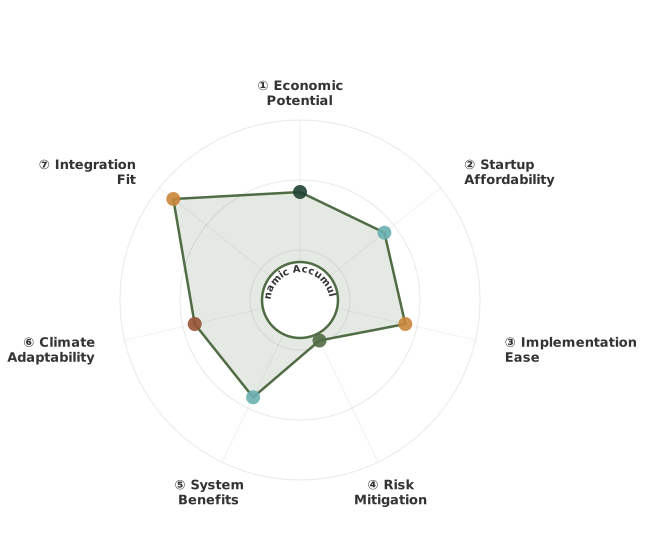
How These Traits Are Calculated
Trait dimensions are ordered clockwise starting from the top of the chart (12 o'clock position):
1. Economic Potential
Financial returns, annual value, and break-even timeline
WHAT: Evaluates financial viability by combining net annual value ($/ha from savings, income, and amortized harvests) with break-even timeline showing when practices pay for themselves.
WHY: Farmers need clear ROI understanding before committing resources. Fast payback (≤3 years) with strong returns (≥$300/ha) enables confident adoption, while long timelines (>10 years) restrict adoption to well-funded operations willing to wait for returns.
HOW: Calculated from net annual value in $/ha and break-even years. Exceptional (≥2.6): fast ROI ≤3 years + high value ≥$300/ha. Typical (1.8-2.5): moderate returns or longer timelines. Limited (<1.8): marginal economics or very long payback >10 years.
2. Startup Affordability
Initial investment costs and financial barrier to entry
WHAT: Measures financial barrier to entry through startup costs for equipment, infrastructure, consulting, and materials. Inverted scoring: lower costs = higher scores = more accessible adoption.
WHY: Affordability determines who can adopt. Low-cost practices (<$250/ha) enable widespread adoption across diverse scales, while high costs (>$2,500/ha) limit adoption to well-capitalized operations, creating barriers that slow regenerative transition.
HOW: Calculated from initial investment parsed from practice content. Inverted scoring: Exceptional (≥2.6): minimal investment <$250/ha. Typical (1.8-2.5): moderate costs $250-2,500/ha. Limited (<1.8): high barrier >$2,500/ha.
3. Implementation Ease
Learning curve and specialized knowledge required
WHAT: Measures how much learning, planning, and specialized knowledge a practice requires. Simpler practices with fewer steps score higher, while complex practices requiring extensive training or specialized resources score lower.
WHY: Complex practices create adoption barriers even when economically viable. Straightforward practices enable faster adoption and broader participation, while those requiring extensive training, timing precision, or specialized equipment limit who can succeed.
HOW: Evaluated by measuring documentation length and identifying complexity markers like location-specific requirements, seasonal timing windows, specialized skills, and dedicated equipment needs. Exceptional (≥2.6): straightforward practices with minimal prerequisites. Typical (1.8-2.5): moderate learning curve with some specialized needs. Limited (<1.8): steep learning curve requiring significant training or resources.
4. Risk Mitigation
Identified financial and ecological risk assessment
WHAT: Evaluates documented risks across financial (investment loss, market volatility) and ecological (crop failure, pest outbreaks) domains. Inverted scoring: fewer risks = higher scores.
WHY: Understanding risk exposure helps farmers make informed decisions. Low-risk practices allow confident implementation, while high-risk practices require careful planning and contingency resources. Risk transparency prevents costly failures.
HOW: Calculated from identified risks in practice content. Inverted scoring: Exceptional (≥2.6): ≤2 risks with manageable severity. Typical (1.8-2.5): 3-5 moderate risks. Limited (<1.8): 6+ risks or severe exposure.
5. System Benefits
How many ways the practice improves your land simultaneously
WHAT: Measures how many aspects of land health improve at once—carbon storage, soil quality, erosion control, water absorption, and biodiversity. Practices that improve multiple areas simultaneously create compounding benefits where each improvement reinforces the others.
WHY: The best practices solve multiple problems at once. For example, addressing erosion simultaneously builds carbon and improves water infiltration, creating a resilient system with positive feedback loops. Single-benefit approaches miss these compound transformation opportunities.
HOW: Evaluated across five key outcomes: carbon sequestration, soil organic matter increase, erosion reduction, water infiltration improvement, and biodiversity enhancement. Exceptional (≥2.6): high carbon storage (>8 t/ha/yr), improvements across 4-5 areas, transformative outcomes. Typical (1.8-2.5): moderate carbon (3-8 t/ha/yr), improvements across 2-3 areas. Limited (<1.8): modest impact (<3 t/ha/yr), single-area focus only.
6. Climate Adaptability
Geographic applicability across Köppen climate zones
WHAT: Evaluates geographic applicability by assessing how many Köppen climate zones successfully support a practice and what adaptation requirements are needed. Measures breadth of climates where farmers can implement with minimal to moderate modifications.
WHY: Universal practices working across diverse climates enable more farmers to adopt regenerative approaches. Practices limited to single climate types (only Mediterranean, only tropical) restrict adoption and slow global transition. Adaptability determines whether a practice serves niche regions or offers broad transformation.
HOW: LLM evaluation of regional success stories, Köppen zone coverage, and adaptation needs. Exceptional (≥2.6): 5+ zones or 4+ climate types, 3+ continents, minimal adaptation. Typical (1.8-2.5): 3-4 zones or 2-3 types, 2 continents, moderate adaptation. Limited (<1.8): 1-2 zones, single region, significant adaptation or highly specialized.
7. Integration Fit
How well this practice combines with others you're doing
WHAT: Measures how well a practice combines with other regenerative practices you might be doing. Some practices work as building blocks that make many other practices easier or more effective, while others work best on their own.
WHY: Practices that combine well with many others create more value on your farm. For example, cover cropping enables no-till, improves grazing, supports crop diversity, and helps water management—making all of them work better together. This helps you build a coherent system rather than juggling disconnected practices.
HOW: Evaluated by identifying which practices combine well and how strong those combinations are. 'Ideally Suited' means strong combinations where practices reinforce each other (practice A makes B easier, while B makes A more effective). 'Adequate' means complementary benefits that work well together. Exceptional (≥2.6): combines well with 6+ practices, serves as a building block. Typical (1.8-2.5): combines with 3-5 practices. Limited (<1.8): 1-2 practices or works best alone.
Going Deeper
1
WHY - The Benefits
Dynamic accumulators offer a suite of benefits that align directly with the regenerative agriculture philosophy of building soil health and fostering ecosystem self-sufficiency. By tapping into previously unavailable nutrient reserves, these plants serve as natural...
Dynamic accumulators offer a suite of benefits that align directly with the regenerative agriculture philosophy of building soil health and fostering ecosystem self-sufficiency. By tapping into previously unavailable nutrient reserves, these plants serve as natural...
WHY - The Benefits
Dynamic accumulators offer a suite of benefits that align directly with the regenerative agriculture philosophy of building soil health and fostering ecosystem self-sufficiency. By tapping into previously unavailable nutrient reserves, these plants serve as natural...
Dynamic accumulators offer a suite of benefits that align directly with the regenerative agriculture philosophy of building soil health and fostering ecosystem self-sufficiency. By tapping into previously unavailable nutrient reserves, these plants serve as natural...
Soil Health Benefits
The primary soil health benefit of dynamic accumulators is their ability to remobilize and redistribute nutrients. Plants like comfrey, borage, nettles, and certain perennial clovers possess taproots that can extend 2-5 meters (6-16 feet) or deeper, accessing mineral-rich subsoils. These minerals, often unavailable to shallow-rooted crops or pasture grasses, are brought to the surface biomass. When this biomass decomposes or is incorporated into the topsoil, it releases these concentrated nutrients—particularly phosphorus, potassium, calcium, and magnesium—making them accessible to a wider range of plants and soil microorganisms. This process can increase soil organic matter content over time, as the plant residues contribute carbon to the soil food web.
The extensive root systems of dynamic accumulators also contribute to improved soil structure. They create channels that enhance water infiltration and aeration, helping to alleviate compaction and improve drainage. These root channels facilitate the movement of water, oxygen, and nutrients through the soil profile, supporting a healthier root environment for both the accumulator plants and subsequent crops. The physical presence of roots and the subsequent decomposition of root mass add to the soil's aggregate stability, making it more resistant to erosion.
Dynamic accumulators can foster a more diverse and active soil microbial community. The variety of root exudates released by different accumulator species supports a broad spectrum of bacteria, fungi, and other soil organisms. As their nutrient-rich biomass decomposes, it provides a readily available food source for decomposers, stimulating microbial activity. This heightened biological activity is crucial for nutrient cycling, disease suppression, and the formation of stable soil aggregates.
Economic Benefits
The most direct economic benefit of using dynamic accumulators is a reduction in the need for synthetic fertilizers and soil amendments. By supplying essential nutrients naturally, farmers can decrease their expenditure on purchased inputs. For example, fields suffering from phosphorus deficiency might see a 5-15% reduction in phosphorus fertilizer needs after several years of using plants like borage or specific types of clover that concentrate this element. Similarly, potassium-accumulating plants can reduce the need for potassium supplements, which can be costly in some regions.
Improved soil health and nutrient availability generally translate into better crop and pasture performance. This can lead to increased yields or improved forage quality, boosting overall farm profitability. Healthier plants are often more resistant to pests and diseases, potentially reducing the need for crop protection chemicals. Over time, the improved soil structure and water-holding capacity can also lead to more consistent yields, even in less-than-ideal weather conditions, providing greater economic stability.
The long-term economic advantage lies in building a more resilient and self-sufficient farming system. By relying more on natural processes for nutrient supply, farms become less vulnerable to market price fluctuations for fertilizers and less dependent on external supply chains. This builds a more robust economic foundation for the farm.
Regenerative Systems Fit
Dynamic accumulators are highly compatible with regenerative agriculture principles, acting as valuable tools for enhancing ecosystem function:
Principle 1: Minimize Soil Disturbance Dynamic accumulators, when used in cover cropping, perennial pastures, or agroforestry systems, contribute to keeping the soil covered and undisturbed. Their root systems improve soil structure without tillage. If harvested and incorporated, this is a form of surface amendment rather than disruptive tillage.
Principle 2: Maximize Crop Diversity Incorporating dynamic accumulators into cover crop mixes, intercropping systems, or permanent pastures directly increases botanical diversity. This diversity extends below ground, with accumulator plants often having different root structures and depths than cash crops or standard pasture grasses, leading to more complex soil ecosystems.
Principle 3: Keep Soil Covered Many dynamic accumulator species are used to ensure continuous soil cover, either through their own growth during fallow periods or as components of perennial systems. This protects soil from erosion, regulates temperature, and maintains a favorable environment for soil biology.
Principle 4: Maintain Living Roots By definition, dynamic accumulators are living plants. Their persistent root systems, which often reach deep into the soil, maintain biological activity year-round or throughout the growing season. This continuous root exudate production feeds soil microbes and helps maintain soil structure.
Principle 5: Integrate Livestock The biomass of dynamic accumulators can be fed to livestock, transferring concentrated nutrients directly into the anima system, which can then be redistributed via manure. Alternatively, livestock can graze on pastures where dynamic accumulators are present, benefiting from the nutrient-rich forage and contributing to nutrient cycling through their excrement.
For farms transitioning to regenerative agriculture, dynamic accumulators offer a practical way to begin building soil fertility and reducing input costs. They are particularly useful in areas with known nutrient deficiencies or where subsoil mineralization is a limiting factor. Their integration can accelerate the process of soil restoration, laying the groundwork for more complex regenerative practices by enhancing the soil's inherent capacity to support plant life. By utilizing these plants, farmers can tap into a natural, renewable source of fertility, moving towards greater ecological and economic resilience.
Sources behind this view
Videos & Podcasts
-
Debunks the 'dynamic accumulator' concept, explaining that all plants are nutrient accumulators, with diversity being key for broad nutrient cycling, rather than specific plants uniquely drawing from
-
Dynamic accumulators like comfrey mine deep soil nutrients (potassium, calcium, phosphorus) to act as living fertilizers, improving soil health and reducing synthetic inputs.
-
Dynamic accumulators like comfrey and yarrow have deep roots that bring minerals to the surface. They can be used as mulch or in compost tea, concentrating nutrients for other plants.
-
Dynamic accumulators are plants believed to mine deep soil nutrients and minerals, returning them to the surface via leaf mulch or root die-back. Comfrey is a key example, and while scientific evidenc
Community
-
A 2-year trial in Central New York tested six dynamic accumulator species: lambsquarters, Russian comfrey, stinging nettle, redroot amaranth, dandelion, and red clover. Lambsquarters and Russian comfr
Read more (opens in new window) smallfarms.cornell.edu -
Unadilla Community Farm and Cornell University are empirically studying six dynamic accumulator species (comfrey, dandelion, lambsquarters, red clover, redroot amaranth, stinging nettle) in the Northe
Read more (opens in new window) smallfarms.cornell.edu -
Dynamic accumulator plants bring nutrients from deep soil but don't create them. They can deplete deficient soils and result in a net nutrient loss when chopped and dropped, though they relocate nutri
Read more (opens in new window) permies.com -
Debates the value of dynamic accumulators, arguing they gather existing soil nutrients and could deplete target crops if soil is deficient. Emphasizes context dependency, root depth competition, and n
Read more (opens in new window) permies.com
 Research
-
Regenerative Agriculture: Restoring Ecosystems¢ Resilience and Productivity: A Review (opens in new window)
This study found: Regenerative agriculture builds soil health and ecosystem services through practices like no-till, cover crops, and diverse rotations. It increases soil organic matter, improves water infiltration, bo
-
Building Soil Health and Fertility through Organic Amendments and Practices: A Review (opens in new window)
This study found: Review of organic amendments (manures, compost, cover crops) and regenerative practices (no-till, crop diversity, agroecology) shows they restore soil health by increasing organic matter and beneficia
2
WHERE - Regional Considerations
The efficacy of dynamic accumulators is heavily influenced by regional climate, soil type, and native plant communities. While many accumulator species are adaptable, their specific nutrient-accumulating capabilities and growth vigor are optimized within particular...
The efficacy of dynamic accumulators is heavily influenced by regional climate, soil type, and native plant communities. While many accumulator species are adaptable, their specific nutrient-accumulating capabilities and growth vigor are optimized within particular...
WHERE - Regional Considerations
The efficacy of dynamic accumulators is heavily influenced by regional climate, soil type, and native plant communities. While many accumulator species are adaptable, their specific nutrient-accumulating capabilities and growth vigor are optimized within particular...
The efficacy of dynamic accumulators is heavily influenced by regional climate, soil type, and native plant communities. While many accumulator species are adaptable, their specific nutrient-accumulating capabilities and growth vigor are optimized within particular...
Click Here to Look up your Region if you don't already know it
Temperate Regions (Humid and Dry)
Representative Locations: North America (Eastern US, Midwest, Pacific Northwest), Europe (Western, Central, Northern), East Asia (Northern China, Japan, Korea), Southern Australia, parts of Chile. Climate Context: USDA Zones 4-8. Köppen Cfa, Cfb, Csa, Csb. Ranges from warm summers and cold winters with ample precipitation to hot, dry summers and mild, wet winters.
In these regions, species like comfrey (Symphytum officinale), borage (Borago officinalis), nettles (Urtica dioica), and certain clovers (e.g., red clover, Trifolium pratense) thrive. Comfrey and nettles are particularly effective at accumulating potassium and nitrogen, and phosphorus. Borage excels at accumulating calcium and potassium. Their deep taproots can access subsoil minerals that may be depleted by intensive agriculture. In Mediterranean climates (e.g., California, Mediterranean basin), species adapted to dry summers might be preferred, focusing on lower-water-use accumulators or those that can survive dry periods while retaining root activity. Winter cover cropping with species like crimson clover or hairy vetch can also effectively accumulate nitrogen.
Arid and Semi-Arid Regions
Representative Locations: Western USA, North Africa, Central Asia, Interior Australia, parts of South America (e.g., Patagonia). Climate Context: USDA Zones 5-9 (variable). Köppen BSh, BSk. Characterized by low annual rainfall (<40 cm or 15 inches), high evaporation rates, and often extreme temperature fluctuations.
In these challenging environments, selecting drought-tolerant dynamic accumulators is crucial. Species that have native adaptations to dry conditions, like certain deep-rooted legumes or hardy perennial forbs, are most suitable. For example, some native Australian species might possess unique abilities to scavenge scarce phosphorus or zinc. Forage turnips or certain brassicas, while often grown in temperate regions, can be used in semi-arid areas as annual cover crops if timed with available moisture. Their deep taproots can help break through caliche layers or compacted soils, accessing moisture and nutrients much deeper. The focus here is on minimizing water use while still achieving nutrient concentration and improving soil structure.
Tropical and Subtropical Regions
Representative Locations: Southeast Asia, Central America, East Africa, Northern Australia, Southern Brazil. Climate Context: Köppen Af, Am, Aw, Cfa, Cwa. High temperatures year-round with distinct wet/dry seasons or consistent high rainfall. USDA Zones 9-11.
In tropical and subtropical climates, accumulator species need to tolerate heat and humidity, and often intense rainfall. Legumes such as pigeon pea (Cajanus cajan) are excellent nitrogen fixers and can also accumulate phosphorus. Sunn hemp (Crotalaria juncea) is a rapid-growing legume that fixes large amounts of nitrogen and biomass. Certain members of the Moringa genus, known for their fast growth and drought tolerance (in drier tropics), can accumulate calcium and other micronutrients. In regions with distinct wet seasons, using accumulators that thrive in high moisture conditions is key. The rapid decomposition rates in warm, humid climates mean nutrients are quickly released back to the soil, supporting continuous plant growth.
Cold Continental & Alpine Regions
Representative Locations: Northern North America, Northern Europe, Siberia, high-altitude regions. Climate Context: USDA Zones 3-5. Köppen Dfa, Dfb, Dfc, ET. Characterized by very short growing seasons, extreme winter cold, and potentially significant snowfall.
In these harsh environments, dynamic accumulators must be cold-hardy and capable of rapid growth during the short summer. Species like perennial ryegrass or specific cold-tolerant clovers can still contribute by bringing up trace minerals and improving soil structure. Fall rye (Secale cereale) is very cold-hardy and can grow late into the fall and early spring, accumulating nutrients and protecting soil over winter. Some nutrient-accumulating herbs like yarrow (Achillea millefolium) can tolerate alpine conditions and bring up minerals from deeper, rocky soils. The focus here is on resilience and maximizing growth during the limited favorable season.
3
HOW - Implementation Process
HOW - Implementation Process
Before implementing dynamic accumulators, assess your farm's context:
- Soil Testing: Identify specific nutrient deficiencies (e.g., low P, K, Ca, or trace minerals) through soil analysis. Understanding existing nutrient levels helps in selecting the most appropriate accumulator species.
- Deeper Soil Sampling (Optional but Recommended): If significant compaction or suspected nutrient lock-up in subsoil layers is an issue, consider sampling deeper to understand nutrient reserves.
- Climate and Soil Suitability: Research accumulator species known to thrive in your specific climate zone, soil type (e.g., sandy, clayey, acidic, alkaline), and moisture conditions. Ensure chosen species are not invasive in your region.
- Management Goals: Define what you hope to achieve—reducing fertilizer costs, improving specific nutrient levels, enhancing soil structure, or a combination.
Phase 1: Species Selection and Sourcing
- Research Species: Based on your soil tests and goals, identify dynamic accumulator plants suited to your region. Common examples include:
- Phosphorus & Potassium: Comfrey, Borage, various clovers, Fescue grasses, Alfalfa.
- Calcium: Borage, Comfrey, Yarrow, Spinach, Amaranth.
- Nitrogen: Legumes like clover, vetch, sunn hemp, pigeon pea (through symbiotic fixation).
- Trace Minerals: Nettles, Yarrow, Dandelion, Thistle.
- Regional Availability: Source seeds or plant starts from reputable local suppliers who can provide varieties adapted to your climate. Inquire about invasive potential based on your location.
- Consider Growth Habit: Choose species that fit your management system—deep taproots for subsoil access, bushy growth for biomass production, or forage types for pasture integration.
Phase 2: Establishment
- Cover Cropping:
- Timing: Sow during periods favorable for your chosen species' growth in your climate (e.g., spring in temperate zones, end of rainy season in tropics).
- Seeding Method: Use a drill for precise depth or broadcast and lightly incorporate with a cultipacker or light harrow for good seed-to-soil contact. High seeding rates are often beneficial for rapid ground cover.
- Mixtures: Integrate dynamic accumulators into diverse cover crop mixes for synergistic benefits. Combine them with fibrous-rooted grasses, legumes, and other beneficial species.
- Perennial Systems (Pasture, Agroforestry):
- Planting: Establish from seed, seedlings, or cuttings, depending on the species. Protect young plants from grazing animals with temporary fencing during their establishment phase.
- Spacing: For tree or shrub accumulators, space them appropriately for their mature size and to integrate with livestock management (e.g., 9-15 m or 30-50 ft for agroforestry).
Phase 3: Management and Incorporation
- Biomass Production: Allow plants to grow to a sufficient size to accumulate significant biomass. This may mean letting them mature fully before harvesting or managing grazing to encourage leafy growth.
- Harvesting and Incorporation:
- Green Manure: Cut plants and incorporate them into the top 5-15 cm (2-6 inches) of soil using a plow, chisel plow, or disc. Ideally, allow a 2-4 week "sweetening" period for decomposition before planting the next crop to avoid nitrogen immobilization.
- Mulching: Chop plants and leave the biomass on the soil surface to decompose as mulch. This retains moisture, suppresses weeds, and feeds soil biology over time.
- Composting: Add harvested biomass to compost piles to enhance nutrient content.
- Grazing Management: If integrated into pastures, manage grazing to allow plants to regrow after being grazed, preventing overgrazing. Rotate animals to allow accumulator plants to recover and accumulate nutrients.
- Seed Saving: If certain accumulator plants perform exceptionally well, consider saving seeds for future plantings to increase self-sufficiency.
Transition Timeline & Phase-Out Strategy
Dynamic accumulators are primarily a building practice, not one to be phased out in a mature regenerative system. They are introduced as part of the transition to reduce input dependence and build soil fertility. The "phase-out" is not of the practice itself, but of the need for external inputs it helps to replace.
- Year 1-2: Introduce dynamic accumulators as cover crops or within pasture mixes. Observe their growth, nutrient accumulation potential, and impact on soil. Begin documenting reductions in fertilizer inputs for crops following these accumulators.
- Year 3-5: Fine-tune species selection and management based on observations. Increase acreage or integration into more systems. Aim for measurable improvements in soil nutrient levels, organic matter, and crop performance. The goal is to establish a consistent and predictable nutrient contribution from these plants, reducing reliance on synthetic fertilizers by 10-30%.
- Year 5+: Dynamic accumulators become an integral part of the regenerative system. Their role in nutrient cycling and soil building is established. Focus shifts to optimizing their integration with other practices like strategic grazing, composting, and diversified cropping to maximize overall system resilience and minimize external inputs further. They are not "phased out" but rather perform their function as part of a fully regenerative landscape.
Sources behind this view
Videos & Podcasts
-
Debunks the 'dynamic accumulator' concept, explaining that all plants are nutrient accumulators, with diversity being key for broad nutrient cycling, rather than specific plants uniquely drawing from
-
Dynamic accumulators like comfrey mine deep soil nutrients (potassium, calcium, phosphorus) to act as living fertilizers, improving soil health and reducing synthetic inputs.
-
Dynamic accumulators like comfrey and yarrow have deep roots that bring minerals to the surface. They can be used as mulch or in compost tea, concentrating nutrients for other plants.
-
Dynamic accumulators are plants believed to mine deep soil nutrients and minerals, returning them to the surface via leaf mulch or root die-back. Comfrey is a key example, and while scientific evidenc
Community
-
Unadilla Community Farm and Cornell University are empirically studying six dynamic accumulator species (comfrey, dandelion, lambsquarters, red clover, redroot amaranth, stinging nettle) in the Northe
Read more (opens in new window) smallfarms.cornell.edu -
A 2-year trial in Central New York tested six dynamic accumulator species: lambsquarters, Russian comfrey, stinging nettle, redroot amaranth, dandelion, and red clover. Lambsquarters and Russian comfr
Read more (opens in new window) smallfarms.cornell.edu -
Dynamic accumulator plants bring nutrients from deep soil but don't create them. They can deplete deficient soils and result in a net nutrient loss when chopped and dropped, though they relocate nutri
Read more (opens in new window) permies.com -
Explains 'dynamic accumulators' like bindweed, plantain, and dandelion that draw minerals (e.g., calcium) from subsoil to improve soil health, suggesting they be eaten or chopped and left in the garde
Read more (opens in new window) permies.com
4
Know the Debate
The effectiveness of dynamic accumulators varies significantly by region, scale, and management intensity. In humid temperate climates, nutrient cy...
Know the Debate
The effectiveness of dynamic accumulators varies significantly by region, scale, and management intensity. In humid temperate climates, nutrient cy...
The effectiveness of dynamic accumulators varies significantly by region, scale, and management intensity. In humid temperate climates, nutrient cycling is rapid, showing noticeable benefits within two to three years. Arid and tropical regions require species adapted to extreme conditions, with longer timelines for establishment and result. Small garden plots benefit from diverse mixes providing immediate fertility, while large-scale operations see cost savings by reducing fertilizer inputs over five to seven years. Labor involves seed sourcing, planting, and incorporation, with costs ranging from $60-200/ha for cover crops and $150-350/acre for perennial establishment, excluding significant fencing.
How much fertility do dynamic accumulators provide?
Moderate gains (0.2-0.8% SOM increase)
Academic research indicates consistent, moderate improvements in soil organic matter (0.2-0.8%) and soil nutrient levels over 3-5 years when dynamic accumulators are used within diverse regenerative systems. Yield increases of 5-15% are typically observed.
Sources behind this view
Sources behind this view
Research
-
Regenerative Agriculture: Restoring Ecosystems¢ Resilience and Productivity: A Review (opens in new window)
This study found: Regenerative agriculture is a farming approach that views farms as living ecosystems, moving away from the 'take-make-dispose' model of conventional farming. Instead of relying heavily on outside inputs, it focuses on building up the farm's natural resources and services. Key practices include disturbing the soil as little as possible (like no-till or reduced tillage), planting cover crops, rotating different crops, integrating livestock in a managed way, using compost, reducing synthetic fertilizers and pesticides, and incorporating trees. The approach is tailored to each farm's specific conditions. Farmers monitor soil health indicators like organic matter, how well soil holds water, and the amount of life in the soil. Studies show that regenerative practices can significantly increase soil organic matter (by 0.5-2% in 3-5 years), improve water infiltration (2-10 times better), boost soil microbial life (30-50% more), and increase beneficial insects (60-80% more). Farms can also capture 0.5 to 3 tons of carbon per hectare annually. Economically, these farms often have 20-40% lower input costs and can be more profitable in the long run, becoming more productive and stable over time.
-
Building Soil Health and Fertility through Organic Amendments and Practices: A Review (opens in new window)
This study found: This review highlights how organic materials and regenerative farming methods can rebuild soil health and fertility, counteracting damage from intensive agriculture. It covers key organic inputs like animal manures, compost, cover crops (such as cereal rye and hairy vetch), crop leftovers, and living mulches. These additions provide essential nutrients over time, boost soil organic matter, and encourage beneficial soil microbes. The review also discusses supporting practices like reduced tillage (including no-till), planting diverse crops in rotation or together, and integrating trees and livestock into farming systems. While it takes time to see the full benefits of rebuilding soil, using these integrated approaches consistently improves how well soil ecosystems function, leading to more sustainable and resilient farms.
-
Reconciling plant and microbial ecological strategies to elucidate cover crop effects on soil carbon and nitrogen cycling (opens in new window)
This study found: This study looked at how different cover crops affect soil by examining both the plants' growth strategies and the strategies of the soil microbes living around their roots. Researchers found that cover crops with 'conservative' growth strategies, like annual ryegrass and durum wheat, encouraged soil microbes that are good at building up soil carbon. These microbes had more pathways for fixing carbon and building essential molecules, leading to more soil organic matter and a lower 'metabolic rate' for microbes (meaning they were more efficient). On the other hand, cover crops with 'acquisitive' growth strategies, such as hairy vetch, crimson clover, and alfalfa, encouraged soil microbes that are good at finding and using resources. These microbes boosted soil enzymes that break down organic matter and increased the release of nitrogen from the soil, making more nitrogen available for the next crop and potentially improving its yield. The findings show that a cover crop's growth strategy influences the types of soil microbes that thrive, which in turn controls how carbon and nitrogen cycle in the soil.
 From the Web
-
High-density cell grazing impacts soil minimally by allowing regrowth and recycling trampled material. Composting, enhanced by biodynamic preparations and specific C:N ratios, creates nutrient-rich humus, favoring beneficial soil microbes.
Significant gains (25-40% fertilizer reduction possible)
Field practitioners report substantial nutrient concentration, leading to potential fertilizer and amendment cost reductions of 25-40% within 5 years. This is achieved through strategic selection of species like comfrey for potassium and borage for calcium.
Sources behind this view
Sources behind this view
Videos & Podcasts
-
Dynamic accumulators are plants believed to mine deep soil nutrients and minerals, returning them to the surface via leaf mulch or root die-back. Comfrey is a key example, and while scientific evidence is debated, planting them is considered harmless and potentially beneficial.
-
Dynamic accumulators like comfrey mine deep soil nutrients (potassium, calcium, phosphorus) to act as living fertilizers, improving soil health and reducing synthetic inputs.
-
Dynamic accumulators like comfrey and yarrow have deep roots that bring minerals to the surface. They can be used as mulch or in compost tea, concentrating nutrients for other plants.
-
Plant tissue tests comparing weeds to crops reveal nutrient imbalances. Dynamic accumulator plants like ragwort and cape weed indicate deficiencies (e.g., calcium, boron) or excesses (e.g., nitrates). Applying missing nutrients can address these issues and improve soil health.

Making Sense of the Differences
Observed nutrient accumulation varies based on species choice, soil type, climate's influence on biomass production, and time. While academic studies show consistent, moderate benefits, field reports often highlight maximized returns due to selecting highly effective species for specific nutrient deficiencies and optimizing incorporation methods and timing. Farmers should expect a gradual increase in soil fertility, with significant impact seen within 3-5 years under optimal conditions.
5
HOW MUCH - Costs & Investment
Note: Costs shown in USD; multiply by local labor and material cost indices for your region. Labor costs vary significantly internationally. Prices are estimates and can fluctuate based on bulk purchasing, local availability, and specific species chosen.
Note: Costs shown in USD; multiply by local labor and material cost indices for your region. Labor costs vary significantly internationally. Prices are estimates and can fluctuate based on bulk purchasing, local availability, and specific species chosen.
HOW MUCH - Costs & Investment
Note: Costs shown in USD; multiply by local labor and material cost indices for your region. Labor costs vary significantly internationally. Prices are estimates and can fluctuate based on bulk purchasing, local availability, and specific species chosen.
Note: Costs shown in USD; multiply by local labor and material cost indices for your region. Labor costs vary significantly internationally. Prices are estimates and can fluctuate based on bulk purchasing, local availability, and specific species chosen.
Note: All costs are based on recent US economic data (2024–2026) and may vary substantially by region based on local labor rates, material costs, and regulatory requirements.
Annual Cover Crop Application
Establishing dynamic accumulators as an annual cover crop requires a strategic approach to seeding and incorporation. For properties smaller than 50 acres (20 ha), total implementation costs typically range from $40 to $85 per acre ($99–$210/ha). Of this, specialized accumulator seed mixes—often incorporating deep-rooted species like chicory or yarrow—account for $30 to $65 per acre ($74–$161/ha). Variable planting costs, such as broadcasting or standard drilling, add another $10 to $20 per acre ($25–$49/ha) for regional equipment rentals or labor.
Mid-size operations ranging from 50 to 500 acres (20–202 ha) benefit from bulk seed procurement, bringing total costs down to a range of $30 to $65 per acre ($74–$161/ha). At this scale, the cost of specialized seed mixes often drops to $20 to $45 per acre ($49–$111/ha), while operations optimize planting at $10 to $20 per acre ($25–$49/ha) by utilizing owned or high-efficiency rental no-till equipment. By spreading fixed labor costs across more acreage, producers in this bracket maintain a steady cost-per-acre profile that is significantly lower than small-scale hobbyist or intensive market garden configurations.
Large operations exceeding 500 acres (202 ha) leverage maximum economies of scale to drive total costs to $25 to $55 per acre ($62–$136/ha). Custom-formulated seed blends at this volume can be secured for $15 to $35 per acre ($37–$86/ha). Furthermore, high-capacity no-till equipment minimizes field pass-over time, keeping operational application costs between $8 and $15 per acre ($20–$37/ha). These producers often dedicate 5% to 10% of their total annual acreage to these accumulator plots, allowing for a structured rotation that balances biological inputs with large-scale cash crop requirements.
Perennial System & Pasture Integration
Integrating accumulators into permanent, long-term pasture or perennial systems involves higher capital expenditures due to the addition of fencing and land stabilization. For small systems under 50 acres (20 ha), the initial investment ranges from $300 to $1,050 per acre ($741–$2,595/ha). This includes seed expenditures of $40 to $120 per acre ($99–$297/ha), land preparation costs of $20 to $60 per acre ($49–$148/ha), and, crucially, small-scale intensive fencing infrastructure investment of $240 to $870 per acre ($593–$2,150/ha), contingent upon the frequency of paddock, or cell, subdivisions.
Mid-size operations (50–500 acres (20–202 ha)) see total initial investments ranging from $240 to $775 per acre ($593–$1,915/ha). By moving toward larger paddock configurations, the fencing infrastructure investment is more efficient, typically falling between $200 and $600 per acre ($494–$1,483/ha). Wholesale seed pricing for diverse perennial mixes in this bracket is generally found at $30 to $100 per acre ($74–$247/ha), reflecting a 15–20% reduction compared to small-scale retailers. This scale allows for more efficient application of lime or gypsum to adjust soil pH for optimal accumulator performance, costing roughly $25 to $50 per acre ($62–$124/ha).
Large-scale perennial integration (500+ acres) offers the lowest barrier per acre, with total initial setup ranging from $180 to $550 per acre ($445–$1,359/ha). Bulk purchasing of complex perennial seed mixes drives costs down to $25 to $80 per acre ($62–$198/ha), while professional-grade fencing infrastructure, when amortized across large landholdings, ranges from $150 to $400 per acre ($371–$988/ha). These systems are designed to operate for 5 to 10 years before requiring significant capital reinvestment in secondary overseeding or infrastructure maintenance.
Most Spend: Most operations (middle 60%) spend approximately $45–$65 per acre ($111–$161/ha) for annual cover crop establishment and $220–$350 per acre ($544–$865/ha) for perennial integrations, excluding the heavy capital depreciation of permanent internal fencing.
Why the Range?: Cost variability is primarily driven by seed diversity and the inclusion of specialized biological inoculants, which can add 20% to fixed seed costs. Regional labor fluctuations, equipment rental availability, and the density of paddock sub-divisions (fencing) also heavily influence the final cost per acre by varying the amount of capital spent during the installation phase.
Sources behind this view
Videos & Podcasts
-
Guidance on creating budget sheets for perennial crop establishment, focusing on accurate calculation of plants per acre, establishment costs, and the true cost of labor. It covers pre-production and

-
Cover crops are presented as the most cost-effective and scalable method for improving soil health and drought resistance compared to amendments like compost. Planting costs are estimated at $70-$75/a

-
Utilize cover crops ($30-$50/acre) as a cost-effective segue to regenerate stale perennial pastures, avoiding $500-$800/acre renovation costs. Employ high stock density grazing on covers to stimulate

Research
-
Farmers employ diverse cover crop management strategies to meet soil health goals (opens in new window)
This study found: Farmers use diverse cover crop methods, with costs around $99/ha. 'Planting green' increased. Varied practices and uncertain profitability make adoption challenging.
-
Farmers employ diverse cover crop management strategies to meet soil health goals (opens in new window)
This study found: Farmers use diverse cover crop strategies, with costs averaging $99/hectare. Experimentation and varied practices make predicting profitability challenging.
6
REWARDS AND RISKS - Economics & Risk Factors
REWARDS AND RISKS - Economics & Risk Factors
The economics of dynamic accumulators are built upon a deferred payout model, where early implementation costs are superseded by long-term biological efficiency. In the Best Case Scenario, within 3 to 5 years, farmers capture a net economic gain of $45 to $110 per acre ($111–$272/ha) annually. This level of return is driven by a 12% to 18% increase in primary cash crop yields as cation exchange capacity improves. Furthermore, a 30% to 45% reduction in synthetic phosphorus and potassium inputs provides a direct budgetary relief of $40 to $75 per acre ($99–$185/ha) in annual fertilizer savings.
In the Typical Case Scenario, producers observe a net benefit of $25 to $65 per acre ($62–$161/ha) annually over a 5 to 7-year horizon. During this period, cash crop yields typically increase by 6% to 12%, and reliance on synthetic fertilizers decreases by 15% to 30%. Because soil organic matter often increases by 0.3% to 0.7% over this duration, these farms build a biological "cushion" that stabilizes the net margin against volatile commodity and fertilizer pricing.
The Worst Case Scenario involves a net loss of $20 to $85 per acre ($49–$210/ha) after the first 5 years. This typically occurs when poor species selection or failure to adjust for soil pH and compaction results in suboptimal biomass production. If the biological cycle does not activate due to poor nutrient delivery to the root zone, the initial investment fails to provide a return-on-investment, and producers risk wasting capital on redundant synthetic fertilizers while failing to trigger the necessary soil-building processes.
Transition Period Risks are concentrated in the first 1 to 3 years. Producers should expect a "yield lag" of 5% to 10% during this phase, as soil microbiology transitions toward the fungal-dominant states required for effective nutrient cycling. Mitigation requires regular soil testing every 18 months, which costs roughly $25 to $50 per test. Proactive management plans are essential to ensure the farm does not abandon synthetic inputs until the biological system has fully matured.
Market and System Risks: While dynamic accumulators do not directly unlock a market premium, they function as a biological insurance policy against drought-related crop failure, which can represent a 20% to 40% loss of yield in some regions. A specific management risk is the invasive potential of certain accumulator species. Setting aside $20 to $50 per acre ($49–$124/ha) for remediation—whether mechanical or chemical—serves as a necessary safeguard against runaway colonization that could threaten primary crop health. By treating this risk as an insurance premium, operations can maintain the integrity of their cash crop rows while still harvesting the nutritional benefits of the accumulator species.
Sources behind this view
Videos & Podcasts
-
Challenges the 'dynamic accumulator' concept, stating plants primarily access nutrients in topsoil and can accumulate harmful elements like lead; all plants are nutrient accumulators.
Community
-
Concludes that dynamic accumulators are proven mineral accumulators, but their effectiveness depends heavily on soil health and bioaccumulation factors. Further research is needed, and they are a valu
Read more (opens in new window) smallfarms.cornell.edu -
Debates the value of dynamic accumulators, arguing they gather existing soil nutrients and could deplete target crops if soil is deficient. Emphasizes context dependency, root depth competition, and n
Read more (opens in new window) permies.com -
Explains how dynamic accumulator plants improve soil health and nutrient cycling by bringing up deep soil nutrients, as detailed by Greta Zarro and Ben Tyler.
Read more (opens in new window) smallfarms.cornell.edu -
Dynamic accumulator plants bring nutrients from deep soil but don't create them. They can deplete deficient soils and result in a net nutrient loss when chopped and dropped, though they relocate nutri
Read more (opens in new window) permies.com
7
COMPATIBLE PRACTICES - Integration Opportunities
Dynamic accumulators are most effective when integrated within a broader regenerative system, complementing other practices that enhance soil health, nutrient cycling, and overall farm resilience.
Dynamic accumulators are most effective when integrated within a broader regenerative system, complementing other practices that enhance soil health, nutrient cycling, and overall farm resilience.
COMPATIBLE PRACTICES - Integration Opportunities
Dynamic accumulators are most effective when integrated within a broader regenerative system, complementing other practices that enhance soil health, nutrient cycling, and overall farm resilience.
Dynamic accumulators are most effective when integrated within a broader regenerative system, complementing other practices that enhance soil health, nutrient cycling, and overall farm resilience.
Diverse Cover Cropping
- Integration: Dynamic accumulators are often core components of multi-species cover crop mixes. They contribute to increased botanical diversity, root mass, and nutrient scavenging.
- Synergy: Pairing nutrient accumulators with deep-rooted cover crops (e.g., daikon radish) that break compaction, nitrogen-fixing legumes, and fibrous-rooted grasses creates a comprehensive soil-building program that addresses multiple soil health limitations simultaneously.
Composting
- Integration: Harvested biomass from dynamic accumulators can be added to compost piles.
- Synergy: This enriches the compost with concentrated macro- and micronutrients, producing a more potent soil amendment. It's an efficient way to capture and redistribute the accumulated fertility.
Rotational Grazing
- Integration: Incorporating dynamic accumulators into pasture mixes or allowing livestock to graze on dedicated accumulator cover crops.
- Synergy: Livestock consume the nutrient-rich biomass, concentrating nutrients in their manure, which is then spread across pastures. Well-managed grazing prevents over-accumulation and promotes desirable plant communities, while allowing accumulator species to regenerate.
Agroforestry and Silvopasture
- Integration: Planting perennial accumulator species (e.g., comfrey, black locust known for nitrogen fixation) within tree rows or pasture edges.
- Synergy: The deep roots of accumulators can complement the root systems of trees and forage, improving overall soil health and nutrient cycling in a three-dimensional system. They can also provide nutrient benefits to surrounding trees.
No-Till Farming
- Integration: Using dynamic accumulators as cover crops prior to no-till cash crops.
- Synergy: The improved soil structure and nutrient availability from accumulator residues can support better no-till crop establishment and growth, reducing the reliance on fertilizers in the subsequent cropping cycle.
Bio-intensive Gardening
- Integration: Highly applicable in smaller-scale market gardens or home gardens.
- Synergy: Dynamic accumulators are ideal for green manuring between crop cycles, effectively fertilizing intensive beds and improving soil structure in a concentrated area.
By weaving dynamic accumulators into these existing or developing regenerative practices, farmers can amplify their benefits, moving towards a more closed-loop nutrient system, reduced input costs, and a more resilient and productive agricultural landscape.
Sources behind this view
Videos & Podcasts
-
Debunks the 'dynamic accumulator' concept, explaining that all plants are nutrient accumulators, with diversity being key for broad nutrient cycling, rather than specific plants uniquely drawing from
-
Dynamic accumulators like comfrey mine deep soil nutrients (potassium, calcium, phosphorus) to act as living fertilizers, improving soil health and reducing synthetic inputs.
-
Dynamic accumulators are plants believed to mine deep soil nutrients and minerals, returning them to the surface via leaf mulch or root die-back. Comfrey is a key example, and while scientific evidenc
Community
-
Concludes that dynamic accumulators are proven mineral accumulators, but their effectiveness depends heavily on soil health and bioaccumulation factors. Further research is needed, and they are a valu
Read more (opens in new window) smallfarms.cornell.edu -
Unadilla Community Farm and Cornell University are empirically studying six dynamic accumulator species (comfrey, dandelion, lambsquarters, red clover, redroot amaranth, stinging nettle) in the Northe
Read more (opens in new window) smallfarms.cornell.edu -
Dynamic accumulator plants bring nutrients from deep soil but don't create them. They can deplete deficient soils and result in a net nutrient loss when chopped and dropped, though they relocate nutri
Read more (opens in new window) permies.com -
Debates the value of dynamic accumulators, arguing they gather existing soil nutrients and could deplete target crops if soil is deficient. Emphasizes context dependency, root depth competition, and n
Read more (opens in new window) permies.com
Research
-
Building Soil Health and Fertility through Organic Amendments and Practices: A Review (opens in new window)
This study found: Review of organic amendments (manures, compost, cover crops) and regenerative practices (no-till, crop diversity, agroecology) shows they restore soil health by increasing organic matter and beneficia
-
Building Soil Health and Fertility through Organic Amendments and Practices: A Review (opens in new window)
This study found: Using organic amendments (manures, composts, cover crops) and regenerative practices (no-till, crop diversity) restores soil health by increasing organic matter and beneficial microbes, leading to mor