
Grazing Leasing
Grazing leasing is a contractual agreement where a landowner grants a grazer permission to use their land for livestock grazing for a specified period and price. Proper structuring of these agreements can support regenerative land management by providing a mechanism for livestock integration, soil health improvement, and economic diversification, even for farms and ranches that do not own land.
Read More: Complete Description
Grazing leasing is a foundational practice in regenerative agriculture, particularly for integrating livestock (Regenerative Principle 5) into diverse farming systems where land ownership might be a barrier. It involves a formal contract between a landowner (lessor) and a grazer (lessee) detailing the terms of use for a specific parcel of land for livestock to reside and graze. While the core concept is straightforward, its application within a regenerative framework requires careful consideration and contractual stipulations that incentivize ecological health rather than mere resource extraction.
The practice itself is context-dependent; it can be regenerative or extractive depending on how the lease is structured and managed. A regenerative grazing lease prioritizes long-term soil health, biodiversity, and ecosystem function. This typically involves contracting with a grazer who practices adaptive rotational grazing, aiming to improve soil organic matter, water infiltration, and perennial plant cover. The lease agreement would likely stipulate grazing intensity, duration, rest periods, and potentially the exclusion of synthetic inputs. Such leases actively support regenerative principles by ensuring:
- Minimize Soil Disturbance: Grazers committed to regenerative principles avoid overgrazing, which can lead to soil degradation and bare soil. They also refrain from unnecessary soil work or the use of heavy machinery that causes compaction.
- Maximize Crop Diversity: Rotational grazing, especially in diverse pastures or silvopasture systems, encourages a wider variety of forage species. Leases can specify the inclusion of diverse cover crops or mixed pastures to enhance this principle.
- Keep Soil Covered: By managing grazing pressure to prevent over-grazing and bare patches, and encouraging the growth of perennial forages, regenerative leases ensure significant ground cover throughout the year.
- Maintain Living Roots: Continuous, managed grazing incentivizes healthy perennial root systems, extending photosynthesis and nutrient cycling beyond typical cropping seasons.
- Integrate Livestock: This is the very nature of grazing leasing. When managed regeneratively, livestock become key tools for building soil fertility, stimulating plant growth, and cycling nutrients through their manure and urine.
From an international perspective, grazing leasing is a critical tool for accessing land for livestock, particularly in regions with high land costs or fragmented land ownership. Pastoral communities in East Africa, for example, have for centuries used communal and leased lands for grazing, often with traditional systems that inherently incorporate ecological principles. Modern leasing arrangements in places like Australia, Brazil, or North America might look different—involving formal contracts—but the underlying goal of leveraging livestock for land management remains. For instance, a wheat farmer in Ukraine might lease out their stubble fields for post-harvest grazing by sheep, enriching the soil and reducing the need for synthetic fertilizers before the next crop. Similarly, a cattle rancher in Brazil might lease out portions of their pasture to smaller operators during drier seasons to ensure adequate rest for their primary grazing areas.
The transition to regenerative grazing leasing often involves educating both landowners and grazers on the ecological and economic benefits. Traditional leases might be based solely on animal unit months (AUMs) or a fixed rental fee, with little regard for land health. A regenerative lease, however, might share risk and reward, linking rental rates to land health improvements. Some advanced models even include land stewardship payments, incentivizing grazers to invest in practices that build soil organic matter, improve water retention, or enhance biodiversity.
Conversely, a non-regenerative grazing lease can be detrimental. If a grazer prioritizes maximizing stocking rates without regard for land health, it can lead to overgrazing, soil erosion, loss of biodiversity, and nutrient depletion. This is often driven by short-term leases or rental agreements that offer no incentive for long-term stewardship. It's crucial for landowners seeking regenerative outcomes to be transparent about their expectations and for grazers to align their management with ecological goals.
Leasing can also be a stepping stone for landowners looking to transition their own land to regenerative agriculture. They might lease out land to a regenerative grazer while they focus on other aspects of their farm, like establishing cover crops or agroforestry systems. This allows for continuous land use and income generation while the transition occurs. The key to successful regenerative grazing leases lies in clear communication, mutually agreed-upon goals for land health, and a contractual framework that fosters stewardship and long-term ecological resilience.
Sources behind this view
Sources behind this view
 Videos & Podcasts
-
Greg Judy advocates for leasing land to start grazing operations, using equity for livestock instead of land debt. He advises targeting 'ugly leases,' improving them with fences/water, and committing

-
Strategies for leased land include understanding landowner goals and using intensive grazing to increase carrying capacity (40-400%). Timing of grazing (dormant vs. growing season) is crucial and depe
-
Greg Judy advises prioritizing land leasing over ownership for regenerative grazing, emphasizing the need for written, multi-year leases to protect investments and income. He learned this after losing
-
Leases are formal agreements between parties to manage land, livestock, and resources symbiotically. Written agreements are crucial for clarity and dispute resolution, defining animal types, duration,

 Community
-
Leasing managed grassland to cattle farmers for a monthly fee per head is presented as a low-risk income strategy, potentially introducing one to intensive grazing with minimal investment.
Read more (opens in new window) permies.com
 Research
-
Influence of grazing lease terms on economic optimal stocking rates (opens in new window)
This study found: Computer model shows longer grazing leases (8-12 years) lead to lower stocking rates, encouraging better pasture health compared to short leases, though other economic factors are more influential.
 From the Web
-
A guide for landowners and graziers on creating regenerative grazing leases to improve soil health, biodiversity, and water quality, covering lease negotiation, management plans, and communication.
Key Points
What It Is
- Contractual agreement for livestock grazing
- Landowner grants use of land to grazer
- Can be regenerative or extractive depending on management
- Involves a specified period and price
Why Do It
- Integrates livestock for soil building (Principle 5)
- Provides income for landowners, access for grazers
- Enables transition to regenerative systems on leased land
- Enhances land health through managed grazing
Know the Debate
- Long leases crucial for regenerative investment
- Short leases risk short-term thinking
- Fair lease terms align incentives for land health
- Contracts must define goals and manage risks
Benefits - Financial
- Increased soil organic matter adds $200–$500 per acre ($494–$1,236 per hectare) in property value
- Adaptive grazing boosts carrying capacity by 15–25% over 5 years
- Direct-to-consumer sales yield 20–40% higher margins than standard markets
Benefits - System
- Livestock integration builds soil fertility (Principle 5)
- Managed grazing supports diverse forage (Principle 2)
- Promotes soil cover through perennial plants (Principle 3)
- Can maintain living roots year-round (Principle 4)
Risks - Financial
- Failed management requires $300–$700 per acre ($741–$1,730 per hectare) for land restoration
- Transition input costs rise $150–$300/head due to supplemental feed needs
Risks - System
- Overgrazing, leading to soil erosion and bare patches
- Introduction of invasive species by livestock
- Damage to water infrastructure or sensitive areas
- If transition practice: Risk of gradual soil degradation
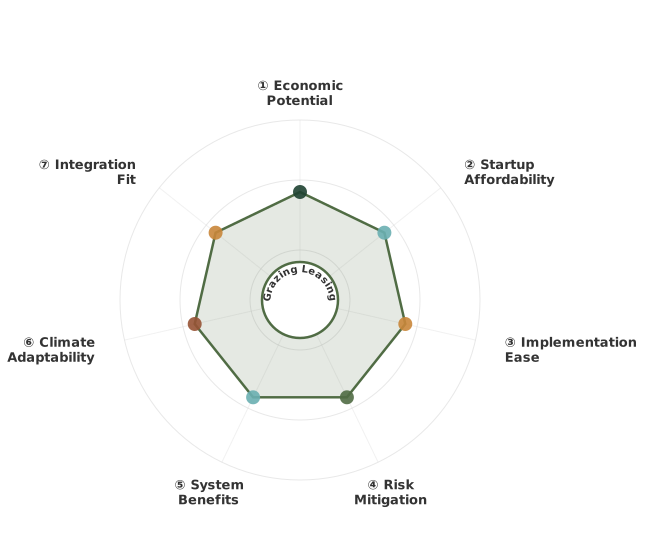
How These Traits Are Calculated
Trait dimensions are ordered clockwise starting from the top of the chart (12 o'clock position):
1. Economic Potential
Financial returns, annual value, and break-even timeline
WHAT: Evaluates financial viability by combining net annual value ($/ha from savings, income, and amortized harvests) with break-even timeline showing when practices pay for themselves.
WHY: Farmers need clear ROI understanding before committing resources. Fast payback (≤3 years) with strong returns (≥$300/ha) enables confident adoption, while long timelines (>10 years) restrict adoption to well-funded operations willing to wait for returns.
HOW: Calculated from net annual value in $/ha and break-even years. Exceptional (≥2.6): fast ROI ≤3 years + high value ≥$300/ha. Typical (1.8-2.5): moderate returns or longer timelines. Limited (<1.8): marginal economics or very long payback >10 years.
2. Startup Affordability
Initial investment costs and financial barrier to entry
WHAT: Measures financial barrier to entry through startup costs for equipment, infrastructure, consulting, and materials. Inverted scoring: lower costs = higher scores = more accessible adoption.
WHY: Affordability determines who can adopt. Low-cost practices (<$250/ha) enable widespread adoption across diverse scales, while high costs (>$2,500/ha) limit adoption to well-capitalized operations, creating barriers that slow regenerative transition.
HOW: Calculated from initial investment parsed from practice content. Inverted scoring: Exceptional (≥2.6): minimal investment <$250/ha. Typical (1.8-2.5): moderate costs $250-2,500/ha. Limited (<1.8): high barrier >$2,500/ha.
3. Implementation Ease
Learning curve and specialized knowledge required
WHAT: Measures how much learning, planning, and specialized knowledge a practice requires. Simpler practices with fewer steps score higher, while complex practices requiring extensive training or specialized resources score lower.
WHY: Complex practices create adoption barriers even when economically viable. Straightforward practices enable faster adoption and broader participation, while those requiring extensive training, timing precision, or specialized equipment limit who can succeed.
HOW: Evaluated by measuring documentation length and identifying complexity markers like location-specific requirements, seasonal timing windows, specialized skills, and dedicated equipment needs. Exceptional (≥2.6): straightforward practices with minimal prerequisites. Typical (1.8-2.5): moderate learning curve with some specialized needs. Limited (<1.8): steep learning curve requiring significant training or resources.
4. Risk Mitigation
Identified financial and ecological risk assessment
WHAT: Evaluates documented risks across financial (investment loss, market volatility) and ecological (crop failure, pest outbreaks) domains. Inverted scoring: fewer risks = higher scores.
WHY: Understanding risk exposure helps farmers make informed decisions. Low-risk practices allow confident implementation, while high-risk practices require careful planning and contingency resources. Risk transparency prevents costly failures.
HOW: Calculated from identified risks in practice content. Inverted scoring: Exceptional (≥2.6): ≤2 risks with manageable severity. Typical (1.8-2.5): 3-5 moderate risks. Limited (<1.8): 6+ risks or severe exposure.
5. System Benefits
How many ways the practice improves your land simultaneously
WHAT: Measures how many aspects of land health improve at once—carbon storage, soil quality, erosion control, water absorption, and biodiversity. Practices that improve multiple areas simultaneously create compounding benefits where each improvement reinforces the others.
WHY: The best practices solve multiple problems at once. For example, addressing erosion simultaneously builds carbon and improves water infiltration, creating a resilient system with positive feedback loops. Single-benefit approaches miss these compound transformation opportunities.
HOW: Evaluated across five key outcomes: carbon sequestration, soil organic matter increase, erosion reduction, water infiltration improvement, and biodiversity enhancement. Exceptional (≥2.6): high carbon storage (>8 t/ha/yr), improvements across 4-5 areas, transformative outcomes. Typical (1.8-2.5): moderate carbon (3-8 t/ha/yr), improvements across 2-3 areas. Limited (<1.8): modest impact (<3 t/ha/yr), single-area focus only.
6. Climate Adaptability
Geographic applicability across Köppen climate zones
WHAT: Evaluates geographic applicability by assessing how many Köppen climate zones successfully support a practice and what adaptation requirements are needed. Measures breadth of climates where farmers can implement with minimal to moderate modifications.
WHY: Universal practices working across diverse climates enable more farmers to adopt regenerative approaches. Practices limited to single climate types (only Mediterranean, only tropical) restrict adoption and slow global transition. Adaptability determines whether a practice serves niche regions or offers broad transformation.
HOW: LLM evaluation of regional success stories, Köppen zone coverage, and adaptation needs. Exceptional (≥2.6): 5+ zones or 4+ climate types, 3+ continents, minimal adaptation. Typical (1.8-2.5): 3-4 zones or 2-3 types, 2 continents, moderate adaptation. Limited (<1.8): 1-2 zones, single region, significant adaptation or highly specialized.
7. Integration Fit
How well this practice combines with others you're doing
WHAT: Measures how well a practice combines with other regenerative practices you might be doing. Some practices work as building blocks that make many other practices easier or more effective, while others work best on their own.
WHY: Practices that combine well with many others create more value on your farm. For example, cover cropping enables no-till, improves grazing, supports crop diversity, and helps water management—making all of them work better together. This helps you build a coherent system rather than juggling disconnected practices.
HOW: Evaluated by identifying which practices combine well and how strong those combinations are. 'Ideally Suited' means strong combinations where practices reinforce each other (practice A makes B easier, while B makes A more effective). 'Adequate' means complementary benefits that work well together. Exceptional (≥2.6): combines well with 6+ practices, serves as a building block. Typical (1.8-2.5): combines with 3-5 practices. Limited (<1.8): 1-2 practices or works best alone.
Going Deeper
1
WHY - The Benefits
Grazing leasing, when structured with a regenerative intent, offers a multifaceted approach to land management and economic viability, supporting ecological health while generating income for both parties. It serves as a crucial mechanism for integrating livestock into...
Grazing leasing, when structured with a regenerative intent, offers a multifaceted approach to land management and economic viability, supporting ecological health while generating income for both parties. It serves as a crucial mechanism for integrating livestock into landscapes where direct ownership might be prohibitive, and as a pathway for landowners to achieve regenerative outcomes on their land, even if they are not directly managing the livestock.
WHY - The Benefits
Grazing leasing, when structured with a regenerative intent, offers a multifaceted approach to land management and economic viability, supporting ecological health while generating income for both parties. It serves as a crucial mechanism for integrating livestock into...
Grazing leasing, when structured with a regenerative intent, offers a multifaceted approach to land management and economic viability, supporting ecological health while generating income for both parties. It serves as a crucial mechanism for integrating livestock into landscapes where direct ownership might be prohibitive, and as a pathway for landowners to achieve regenerative outcomes on their land, even if they are not directly managing the livestock.
Soil Health Benefits
Regenerative grazing leasing directly impacts soil health by ensuring livestock are managed in a way that benefits soil biology and structure. When managed with principles akin to Holistic or Adaptive Planned Grazing, livestock become tools for nutrient cycling and plant stimulation. Their manure and urine deposit organic matter and essential nutrients deep into the soil profile, acting as a natural fertilizer. This integration of livestock is fundamental to Regenerative Principle 5.
Furthermore, strategically managed grazing prevents the formation of bare soil patches which are detrimental to soil health, erosion control, and water infiltration. Well-managed pastures, a direct outcome of responsible leasing, maintain living roots year-round (Regenerative Principle 4), which feeds soil microbial communities and helps build soil organic matter. Diverse perennial forage species encouraged under regenerative leases also contribute to a more robust soil food web (Regenerative Principle 2). Research consistently shows that well-managed grazing can increase soil organic matter by 0.5-1.5% over several years compared to continuous overgrazing or bare fallow land. This increase in organic matter improves water-holding capacity by 15-25% per percentage point, leading to better drought resilience and reduced runoff.
Economic Benefits
For landowners, grazing leases provide a reliable source of income from land that might otherwise be underutilized or require significant investment in capital infrastructure. This income can be used to offset land ownership costs, fund the transition to other regenerative practices (like agroforestry or cover cropping), or provide supplemental income. Lease rates vary significantly based on region, forage quality, available infrastructure (water, fencing), and lease duration, but can range from USD $5 to $30 per hectare per year (approximately USD $2 to $12 per acre per year). This income stream allows landowners to continue regenerating their land without relying solely on potentially less profitable agricultural products.
For grazers, leasing land provides access to forage, expanding their operation without the significant capital expense of purchasing land. This is particularly vital for new farmers or those operating on tighter margins. Regenerative grazers may negotiate leases that reflect the ecological benefits they provide, potentially securing longer-term agreements or favorable rates. The economic benefit for grazers is enhanced by improved animal performance due to better forage quality and reduced heat stress from shade in silvopasture systems, as well as potential reductions in purchased feed costs.
In a shared-risk model, lease payments might be tied to forage production or animal performance, aligning financial incentives with land health outcomes. This encourages grazers to invest in soil improvement practices, knowing their long-term financial success is linked to the land's ecological vitality. This can be a powerful driver for widespread adoption of regenerative practices.
Regenerative Systems Fit
Grazing leasing is inherently an integration practice within the regenerative agriculture framework, primarily supporting Principle 5: Integrate Livestock. When managed regeneratively, the livestock perform services that build soil health: nutrient cycling, stimulating plant growth through grazing, and improving soil structure through their impact.
The effectiveness of grazing leasing in supporting other regenerative principles depends heavily on the lease management itself:
- Principle 1 (Minimize Soil Disturbance): Responsible leasing mandates practices that avoid soil compaction and erosion. Contractual clauses can prevent overstocking, ensure adequate rest periods for paddocks to recover, and prohibit heavy machinery use during sensitive periods.
- Principle 2 (Maximize Crop Diversity): Leases can specify requirements for diverse forage mixes, encourage planting of cover crops between grazing rotations, or stipulate compatible use within silvopasture or alley-cropping systems.
- Principle 3 (Keep Soil Covered): By managing grazing to maintain healthy, perennial forage cover, leases ensure the soil surface is protected from wind and water erosion. This is achieved by preventing overgrazing and allowing sufficient plant growth before livestock return.
- Principle 4 (Maintain Living Roots): Continuous and managed grazing encourages the growth of perennial forages that maintain living roots for extended periods, including through dormant seasons in many climates. This constant biological activity feeds soil microbes and supports soil structure.
As a transitional practice, leasing can be invaluable for farmers transitioning their own land. A farmer may lease out their land to a regenerative grazer while they focus on establishing diverse cover crops, planting trees (silvopasture), or converting to no-till cropping on other parts of their operation. The lease provides income and ensures the land is actively managed, preventing degradation during the conversion period. The lease itself can stipulate a pathway for the landowner to eventually reincorporate livestock into their own management once the land is biologically ready.
The success of grazing leasing as a regenerative tool hinges on a clear understanding and contractual agreement on management objectives. For example, a lease could specify that livestock numbers and grazing duration must be managed to maintain a minimum of 10-15 cm (4-6 inches) of residual forage height to ensure adequate cover and root health. It could also include clauses for periodic soil health assessments and adaptive management strategies based on these findings. This transforms a simple land use agreement into a stewardship contract for ecological improvement.
Sources behind this view
Videos & Podcasts
-
Judy L's 'Grazing Management Principles' course covers grassland ecosystems, plant-soil-animal interactions, and practical methods like monitoring and planned grazing. It emphasizes universal principl
-
Laura Payne details how managed grazing enhances soil health, water quality, and wildlife habitat, citing research on reduced erosion, improved stream health, and support for grassland birds. Key prin
-
Integrating livestock grazing into cropping systems enhances soil regeneration and provides both economic and ecological profit. Mutually beneficial arrangements with cattle owners deliver high-qualit
-
Holistic management with cattle is key to improving soil health, water cycles, and carbon sequestration. Maximize animal impact (hooves, dung, urine) for diversity and plant growth, while breeding cat
Community
-
Advocates for Soil Foodweb principles and Holistic Management, emphasizing land leasing and custom grazing/growing over labor-intensive methods. Focuses on soil restructuring for water availability an
Read more (opens in new window) permies.com -
Advocates for simpler regenerative methods based on Soil Foodweb and Holistic Management, emphasizing soil restructuring for water retention and reducing reliance on inputs like biochar. Promotes holi
Read more (opens in new window) permies.com -
Adopts a holistic grazing management approach emphasizing diverse perennial pastures, higher residuals (4"), and longer rest periods (avg. 45 days) to build soil health, increase organic matter (3.4%
Read more (opens in new window) smallfarms.cornell.edu -
Recommends using livestock grazing (leasing land or own animals) for pasture regeneration, alongside cover crops (clover, turnips) and strategic mowing for weed control, to build soil organic matter o
Read more (opens in new window) permies.com
Research
-
Managing Grazing to Restore Soil Health, Ecosystem Function, and Ecosystem Services (opens in new window)
This study found: Properly managed grazing animals can reverse environmental damage. Regenerative practices, like Adaptive Multi-Paddock (AMP) grazing, boost soil health, increase soil carbon, reduce erosion, and enhan
-
Regenerative Livestock Farming as a Socioeconomic Model for Sustainable Agribusiness in Latin America (opens in new window)
This study found: Regenerative livestock farming in Latin America improved soil carbon, biodiversity, and water quality, while boosting farmer income and quality of life. Government support is key for wider adoption.
-
FORAGES AND PASTURES SYMPOSIUM: COVER CROPS IN LIVESTOCK PRODUCTION: WHOLE-SYSTEM APPROACH: Managing grazing to restore soil health and farm livelihoods1 (opens in new window)
This study found: Regenerative grazing management is key to sustainable, climate-resilient farms. It restores soil health, enhances ecosystem services like carbon capture and water infiltration, and improves farm profi
-
316 Regenerative grazing: restoring ecosystem function to improve farm profits (opens in new window)
This study found: Regenerative grazing can improve soil health and farm profits by restoring ecosystem function. Healthy, carbon-rich soil supports biodiversity and better nutrition for livestock and humans.
From the Web
-
The future of regenerative ranching involves building healthy soils, promoting biodiversity, and providing ecosystem services like carbon sequestration and improved water quality, with developing mark
-
A guide for landowners and graziers on creating regenerative grazing leases to improve soil health, biodiversity, and water quality, covering lease negotiation, management plans, and communication.
2
WHERE - Regional Considerations
The viability and specific management of grazing leases are strongly influenced by geographic and climatic factors. While the contractual framework can be adapted globally, the ecological potential and preferred livestock species vary significantly across regions....
The viability and specific management of grazing leases are strongly influenced by geographic and climatic factors. While the contractual framework can be adapted globally, the ecological potential and preferred livestock species vary significantly across regions. Understanding these local conditions is paramount for successful regenerative grazing leasing.
WHERE - Regional Considerations
The viability and specific management of grazing leases are strongly influenced by geographic and climatic factors. While the contractual framework can be adapted globally, the ecological potential and preferred livestock species vary significantly across regions....
The viability and specific management of grazing leases are strongly influenced by geographic and climatic factors. While the contractual framework can be adapted globally, the ecological potential and preferred livestock species vary significantly across regions. Understanding these local conditions is paramount for successful regenerative grazing leasing.
Click Here to Look up your Region if you don't already know it
Humid Temperate Regions
Representative Locations: Southeastern United States, Northern Europe (UK, Germany, Poland), Eastern China, Japan, New Zealand. Climate Context: Warm to hot summers and cool to cold winters with moderate to high annual precipitation (75-150 cm or 30-60 inches) distributed relatively evenly. USDA Zones 6-8, Köppen Cfb/Cfa. Leasing Considerations: Abundant forage growth often supports higher stocking rates. Lease agreements may focus on managing lush growth, preventing overgrazing during peak seasons, and ensuring adequate rest for pasture recovery. Potential for year-round grazing in milder areas. Silvopasture development is highly feasible with a wide range of tree species. Risk of soil compaction is higher if grazing occurs on wet soils. Contracts might include terms for fencing robust enough to manage dense livestock populations and varied terrain.
Mediterranean Regions
Representative Locations: California, Mediterranean basin (Spain, Italy, Greece), Central Chile, Southwestern Australia, Western Cape South Africa. Climate Context: Hot, dry summers and mild, wet winters. Annual precipitation 40-90 cm (15-35 inches), highly seasonal. USDA Zones 8-10, Köppen Csa/Csb. Leasing Considerations: Summer drought is a major factor. Leases often incorporate strategies for managing dry summer forage, such as providing supplemental feed (ensuring it is compatible with regenerative goals), moving livestock to irrigated pastures or higher altitudes, or reserving it for periods of lowest vegetation growth. Protection of young trees in silvopasture systems from browsing during dry periods is critical. Lease terms might focus on managing wildfire risk, ensuring firebreaks are maintained, and potentially using grazing to reduce fuel loads. Water source availability is a key contractual element.
Arid/Semi-Arid Regions
Representative Locations: Western USA, North Africa, Central Asia, Interior Australia, parts of South America (e.g., Patagonia). Climate Context: Low annual precipitation (<40 cm or 15 inches), high temperatures, short and often unpredictable growing season. USDA Zones 7-9, Köppen BSh/BSk. Leasing Considerations: Forage availability is highly variable and dependent on rainfall. Lease agreements must be flexible, often with variable rates tied to forage production or ecological condition. Emphasis is placed on very low stocking densities and long rest periods to protect brittle ecosystems. Water availability is paramount and often dictates stocking rates and movement. Contracts may include strict avoidance of sensitive areas, protection of riparian zones, and collaborative monitoring of rangeland health. Silvopasture may be challenging, requiring drought-tolerant species and careful integration to avoid stressing young trees.
Cold Continental Regions
Representative Locations: Northern USA and Canada, Northern Europe, Northern Asia. Climate Context: Very short growing seasons, extreme summer heat, severe winter cold. USDA Zones 3-5, Köppen Dfa/Dfb. Leasing Considerations: Grazing season is limited by frost and snow cover. Leases often involve strong seasonality, with intensive grazing during short summers and need for winter feeding strategies (potentially on leased land or elsewhere). Livestock protection from extreme cold is a contractual consideration. Contracts might detail requirements for winter housing or supplemental feeding strategies that do not degrade soil. Diverse perennial pastures including cold-hardy species are crucial. Silvopasture with cold-hardy timber species is feasible, but establishment protection is critical during harsh winters.
Subtropical Regions
Representative Locations: Southeastern USA, Southern China, Southern Brazil, Eastern Australia. Climate Context: Hot, humid summers and mild winters with generally ample rainfall. USDA Zones 9-11, Köppen Cfa/Cwa. Leasing Considerations: Long growing season supports high stocking rates. Risk of soil compaction from grazing on wet soils is a significant concern. Lease agreements should include clauses for managing grazing during extremely wet periods, potentially requiring movement to drier areas or temporary feeding pads. Silvopasture is highly successful with many fast-growing tree species. Contracts may address management of heat stress and humidity for livestock and the potential for disease transmission in dense herds.
Tropical Regions
Representative Locations: Central America, Southeast Asia, East Africa, Northern Australia, Northern South America. Climate Context: High temperatures year-round, with distinct wet and dry seasons or consistent high rainfall. Köppen Af/Am/Aw. Leasing Considerations: Year-round suitable temperatures for livestock but highly variable rainfall patterns (monsoonal, consistent). Intensive wet seasons may necessitate moving livestock to higher ground or sacrificing areas to prevent soil degradation due to saturation. Dry seasons can lead to short forage and water scarcity. Lease agreements should focus on managing year-round grazing pressure, protecting soil during intense rainfall events, and integrating drought-tolerant forage species and trees where appropriate. Livestock may need protection from heat, humidity, and specific tropical diseases.
3
HOW - Implementation Process
Successful grazing leasing under a regenerative framework requires more than a simple handshake. It demands a well-defined process, from initial assessment to ongoing monitoring and adaptive management, ensuring ecological goals are met alongside economic ones.
Successful grazing leasing under a regenerative framework requires more than a simple handshake. It demands a well-defined process, from initial assessment to ongoing monitoring and adaptive management, ensuring ecological goals are met alongside economic ones.
HOW - Implementation Process
Successful grazing leasing under a regenerative framework requires more than a simple handshake. It demands a well-defined process, from initial assessment to ongoing monitoring and adaptive management, ensuring ecological goals are met alongside economic ones.
Successful grazing leasing under a regenerative framework requires more than a simple handshake. It demands a well-defined process, from initial assessment to ongoing monitoring and adaptive management, ensuring ecological goals are met alongside economic ones.
Prerequisites
- Land Assessment: Before any lease is signed, a thorough assessment of the land's ecological condition is crucial. This includes evaluating existing forage species composition, soil health indicators (organic matter, infiltration rate, evidence of compaction or erosion), water availability and quality, fencing and water infrastructure, and biodiversity. This baseline establishes the starting point and informs lease terms.
- Grazer Suitability: The landowner must identify a grazer who understands and is committed to regenerative principles. This involves understanding their grazing management philosophy, experience with adaptive grazing, willingness to invest in land health, and familiarity with the specific ecological context. References and a trial period can be beneficial.
- Clear Objectives: Both parties must agree on the goals for the land. Is the primary objective maximizing livestock production, building soil organic matter, enhancing biodiversity, restoring degraded areas, or a combination? These objectives will shape the lease terms.
- Legal Counsel: All grazing leases should be reviewed by legal counsel experienced in agricultural law to ensure clarity, enforceability, and protection for both parties.
Phase 1: Lease Agreement Development
This is where regenerative principles are formalized. Beyond standard lease clauses, consider including:
- Lease Duration: Longer-term leases (3-5 years or more) provide the grazer with the security needed to invest in land improvements and practice adaptive management, as significant ecological changes take time. Short-term leases often incentivize short-sighted management.
-
Grazing Management Plan: A collaboratively developed plan outlining:
- Stocking Rate: Based on carrying capacity derived from land assessment, not just a fixed number. Can be adaptive, adjusting based on forage availability.
- Grazing Rotation: Detailed plan for paddock use, including planned grazing periods (e.g., 1-3 days per paddock) and rest periods (e.g., 30-90 days, a typical range for temperate climates during the growing season).
- Animal impact management: How manure and urine distribution will be managed.
- Fencing and Watering Points: Location and maintenance responsibilities.
- Animal Welfare: Standards of care for livestock.
-
Land Stewardship Provisions:
- Rest Periods: Explicitly defined requirements for spelling land, especially during sensitive ecological periods (e.g., drought, wet season, plant seeding).
- Infrastructure Maintenance: Responsibility for maintaining water points, fences, and access roads.
- Invasive Species Management: Agreement on strategies for controlling invasive plants.
- Protection of Sensitive Areas: Clauses prohibiting grazing in riparian zones, near sensitive habitats, or during critical plant growth stages.
- Prohibition of Synthetic Inputs: Option to prohibit synthetic fertilizers, pesticides, and herbicides, or to phase them out over a specified period.
-
Monitoring and Adaptive Management:
- Regular Monitoring: Schedule for joint land assessments (e.g., quarterly or biannually) to monitor forage performance, soil health, and biodiversity.
- Adaptive Clause: Mechanism for adjusting the grazing plan based on monitoring results and changing environmental conditions (e.g., drought triggers reduced stocking).
-
Financial Terms:
- Base Rent: A fixed amount, or a variable rate tied to forage production or market prices.
- Incentive Payments: Potential bonus payments for achieving specific land health improvements (e.g., increase in soil organic matter, improved water infiltration).
- Cost-Sharing: Agreement on who pays for infrastructure upgrades or specific land stewardship activities.
-
Termination Clause: Conditions under which the lease can be terminated by either party, including failure to adhere to regenerative management practices.
Phase 2: Implementation and Grazing Management
Once the lease is signed, the grazer implements the grazing management plan. This involves moving livestock according to the rotation, ensuring adequate rest periods, and managing water and fencing. Key regenerative actions during this phase include:
- Precision Grazing: Moving livestock frequently to achieve planned grazing periods. This prevents overgrazing of desirable plants and ensures even distribution of manure.
- Paddock Spelling: Allowing sufficient rest for plants to regrow and for soil ecosystems to recover between grazing events. The length of rest is adaptive, longer during dry or cold periods, shorter during rapid growth.
- Infrastructure Management: Maintaining water points, ensuring they are accessible but also designed to prevent surrounding soil degradation (e.g., using sacrifice areas or mats).
- Livestock Health: Managing livestock health to minimize the need for chemical interventions.
Phase 3: Monitoring, Adaptation, and Renewal
This is an ongoing process throughout the lease term.
- Joint Monitoring: Landowner and grazer conduct planned site visits and assessments. This might involve visual observation, forage clipping for biomass estimation, soil testing, or photo points.
- Data Collection: Documenting observations, animal movements, weather patterns, and forage availability.
- Adaptive Adjustments: Based on monitoring, the grazing management plan is adjusted. For example, if forage growth is slower than expected due to drought, stocking rates may be reduced, or rest periods extended.
- Lease Renewal/Review: At the end of the lease term, a comprehensive review of land health improvements and financial performance allows for informed decisions about lease renewal, adjustments, or termination. A successful regenerative lease often leads to long-term stewardship relationships.
Transition Considerations for Leased Land (If Applicable)
If a landowner is transitioning leased land from conventional to regenerative grazing:
- Phased Input Reduction: Work with the grazer to gradually reduce or eliminate synthetic fertilizers and pesticides over 2-4 years, introducing cover crops or diverse forage mixes.
- Education and Support: Provide resources or support for the grazer to learn regenerative grazing techniques.
- Monitoring Focus: Emphasize monitoring soil health indicators that demonstrate the benefits of reduced inputs and improved management.
- Lease Adjustments: Consider adjusting lease terms to reflect the grazer's investment in land improvements or their role in facilitating the transition.
Sources behind this view
Videos & Podcasts
-
Laura Payne details how managed grazing enhances soil health, water quality, and wildlife habitat, citing research on reduced erosion, improved stream health, and support for grassland birds. Key prin
-
Strategies for leased land include understanding landowner goals and using intensive grazing to increase carrying capacity (40-400%). Timing of grazing (dormant vs. growing season) is crucial and depe
-
Livestock impact, cover crops, and extended grazing are key to soil health and profitability, reducing tillage and hay feeding. Metrics include soil organic matter, infiltration, Brix levels, and stoc
-
Greg Judy advocates for leasing land to start grazing operations, using equity for livestock instead of land debt. He advises targeting 'ugly leases,' improving them with fences/water, and committing
Community
-
Adopts a holistic grazing management approach emphasizing diverse perennial pastures, higher residuals (4"), and longer rest periods (avg. 45 days) to build soil health, increase organic matter (3.4%
Read more (opens in new window) smallfarms.cornell.edu
Research
-
Managing Grazing to Restore Soil Health, Ecosystem Function, and Ecosystem Services (opens in new window)
This study found: Properly managed grazing animals can reverse environmental damage. Regenerative practices, like Adaptive Multi-Paddock (AMP) grazing, boost soil health, increase soil carbon, reduce erosion, and enhan
-
FORAGES AND PASTURES SYMPOSIUM: COVER CROPS IN LIVESTOCK PRODUCTION: WHOLE-SYSTEM APPROACH: Managing grazing to restore soil health and farm livelihoods1 (opens in new window)
This study found: Regenerative grazing management is key to sustainable, climate-resilient farms. It restores soil health, enhances ecosystem services like carbon capture and water infiltration, and improves farm profi
-
Climate change mitigation as a co-benefit of regenerative ranching: insights from Australia and the United States (opens in new window)
This study found: Regenerative ranching appeals to ranchers for a mix of ecological, economic, and social benefits, with climate and soil carbon improvements often seen as co-benefits. Success requires understanding ec
-
FORAGES AND PASTURES SYMPOSIUM: COVER CROPS IN LIVESTOCK PRODUCTION: WHOLE-SYSTEM APPROACH: Managing grazing to restore soil health and farm livelihoods. (opens in new window)
This study found: Shifting to low-input, regenerative farming with smart grazing management can restore soil health, improve ecosystem services like carbon capture and water infiltration, and boost farm profitability f
From the Web
-
A 10-step plan for regenerative grazing emphasizes adaptive management, goal setting, mapping, infrastructure assessment, and proper stocking rates. It advises starting small to gain experience before
-
Landowners seeking regenerative tenants should prioritize shared land health goals, engage in relevant networks, use thorough application processes, establish land baselines with data, and negotiate m
-
A guide for landowners and graziers on creating regenerative grazing leases to improve soil health, biodiversity, and water quality, covering lease negotiation, management plans, and communication.
-
Provides guidance on transitioning to regenerative grazing, emphasizing Holistic Planned Grazing principles and planning. Covers stock density, herd management, and monitoring for improved soil health
4
Know the Debate
Grazing lease outcomes vary significantly by region and scale due to climate, forage availability, and infrastructure. In humid areas, leases suppo...
Know the Debate
Grazing lease outcomes vary significantly by region and scale due to climate, forage availability, and infrastructure. In humid areas, leases suppo...
Grazing lease outcomes vary significantly by region and scale due to climate, forage availability, and infrastructure. In humid areas, leases support intensive rotation with consistent growth, while semi-arid regions demand flexibility and long rest periods due to variable rainfall. Entry costs for grazers can range from $1,000-$7,000 for temporary setups to $20,000+ for permanent infrastructure on larger operations. Labor requirements are typically 1-2 hours daily for moves, regardless of scale. Establishing regenerative outcomes requires patience, with significant soil improvements appearing over 3-7 years, making long-term leases essential for both parties' success.
How do lease terms affect regenerative outcomes?
Long-term leases (3-5+ years) are essential
Longer leases are crucial for regenerative outcomes, providing grazers the security to invest in land improvements and implement adaptive management. This timeframe allows for the development of soil health and ecological systems, incentivizing stewardship over short-term extraction.
Sources behind this view
Sources behind this view
Videos & Podcasts
-
Greg Judy advises prioritizing land leasing over ownership for regenerative grazing, emphasizing the need for written, multi-year leases to protect investments and income. He learned this after losing a prime 750-acre lease due to poor landowner relations.
-
Engage landowners with regular updates (emails, photos) and secure long-term, written leases (min. 5 years). Prioritize idle, brushy land with minimal infrastructure for economical leasing, investing in improvements like water sources.
From the Web
-
Landowners seeking regenerative tenants should prioritize shared land health goals, engage in relevant networks, use thorough application processes, establish land baselines with data, and negotiate multi-year leases based on animal-unit capacity for long-term soil improvement.
-
Provides comprehensive guidance on leasing farmland, stressing the need for written agreements that detail land/building use, agricultural practices, payment terms, and responsibilities. It outlines methods for determining cash and share rent and suggests strategies for finding suitable properties.
Shorter leases (1-3 years) can initiate improvements
While not ideal, shorter leases can still support some regenerative goals if well-structured. Focusing on clear stewardship objectives, adaptive management, and potentially performance-based incentives can initiate ecological improvements, though deep soil changes are unlikely.
Sources behind this view
Sources behind this view
Videos & Podcasts
-
Offers guidance on leasing land for cattle grazing by advertising in sale barns, being conservative with stocking rates, and prioritizing forage utilization to generate income, enabling rapid scaling of operations.
From the Web
-
Address infrastructure needs for regenerative ranching in lease agreements, focusing on ownership and cost of items like water systems. Foster landlord investment through personal engagement and demonstrating progress.
-
Leasing land to farmers/ranchers provides benefits. Written leases are crucial, specifying minimum 5-year terms, responsibilities, and water allocation. California FarmLink assists with leases and finding partners.
Source: ucanr.edu (opens in new window)
Making Sense of the Differences
Lease duration directly impacts the feasibility and depth of regenerative outcomes. Long-term agreements (3-5+ years) are ideal for significant soil improvement and offer grazers the security to invest. While shorter leases may not reach full regenerative potential, they can still support stewardship if contractual goals are specific, monitoring is in place, and management is adaptive.
Are lease terms fair and equitable for regenerative outcomes?
Align financial incentives with land health
Leases can be designed with performance-based rates or shared-risk models that reward grazers for improving soil health, increasing property value, and achieving ecological goals, creating a win-win for landowner and grazer.
Sources behind this view
Sources behind this view
Videos & Podcasts
-
Grazing Lands is building a regenerative ranching model and infrastructure in South Texas to support a grass-finished ecosystem, aiming to scale regenerative practices and demonstrate their economic and ecological viability.
From the Web
-
Landowners seeking regenerative tenants should prioritize shared land health goals, engage in relevant networks, use thorough application processes, establish land baselines with data, and negotiate multi-year leases based on animal-unit capacity for long-term soil improvement.
-
Address infrastructure needs for regenerative ranching in lease agreements, focusing on ownership and cost of items like water systems. Foster landlord investment through personal engagement and demonstrating progress.
Standard rents often don't reward complex management
Traditional cash rents may not adequately compensate grazers for the effort and investment required for regenerative management, potentially leading them to prioritize short-term, high-intensity grazing for maximum immediate profit rather than long-term land health.
Sources behind this view
Sources behind this view
Videos & Podcasts
-
Utilizing grazing leases is a cost-effective way to access land for livestock operations. Producing value-added products like grass-finished beef allows farmers to control pricing and build consumer relationships, with cattle being a flexible choice for integrated farming systems.
-
Strategies for integrating livestock onto cropland through cover crop grazing and fair lease agreements are discussed. Panelists detail infrastructure investments, mutual benefit agreements, and examples from North Dakota and Mississippi.
From the Web
-
Contract grazing involves managing livestock for others, offering stable profits with lower capital investment. Success requires expertise in pasture and animal management, risk management, and marketing services to livestock owners.
Making Sense of the Differences
The equity of grazing lease costs lies in aligning financial incentives with regenerative outcomes. While traditional cash rents are common, they may not capture the value created by regenerative practices. Innovative lease structures like performance-based rates, shared risk/reward, or landowner investment in infrastructure can better compensate grazers for stewardship and ensure long-term land health improvements.
5
HOW MUCH - Costs & Investment
Note: All costs are USD equivalent and highly variable by region, currency, local labor rates, land quality, existing infrastructure, and specific management practices. Research local pricing for materials and labor.
Note: All costs are USD equivalent and highly variable by region, currency, local labor rates, land quality, existing infrastructure, and specific management practices. Research local pricing for materials and labor.
HOW MUCH - Costs & Investment
Note: All costs are USD equivalent and highly variable by region, currency, local labor rates, land quality, existing infrastructure, and specific management practices. Research local pricing for materials and labor.
Note: All costs are USD equivalent and highly variable by region, currency, local labor rates, land quality, existing infrastructure, and specific management practices. Research local pricing for materials and labor.
Note: All costs are based on recent US economic data (2024–2026) and may vary substantially by region based on local labor rates, material costs, and regulatory requirements.
Annual Grazing Lease Payments
The base lease cost represents the primary overhead for a grazing operation. Small parcels under 50 acres (20 ha) often command higher premiums due to their proximity to urban markets or utility for small-hobby, high-touch operations. Small units typically lease for $15–$60 per acre ($37–$148/ha) annually. Mid-sized tracts ranging from 50–500 acres (20–202 ha) experience significant economies of scale, leading to rates between $10–$40 per acre ($25–$99/ha). Large-scale operations exceeding 500 acres (202 ha) command the lowest per-acre rates, generally falling between $5–$25 per acre ($12–$62/ha), which often reflects the remote nature of expansive rangeland and limited existing water infrastructure.
Infrastructure Investment (Fencing & Water)
Regenerative leasing necessitates infrastructure capable of supporting adaptive multi-paddock grazing. Temporary electric poly-wire systems for internal paddock subdivision represent a flexible, lower-cost entry point, costing $50–$150 per acre ($124–$371/ha) to install. For landowners and tenants looking for permanence, high-tensile perimeter fencing is an essential long-term investment, costing $3,000–$8,000 per mile depending on terrain and livestock breed. Water infrastructure is the most critical utility for grazing intensity; establishing a reliable system involves a capital commitment of $100–$500 per acre ($247–$1,236/ha) to cover portable troughs, poly-pipe supply lines, and solar-powered pumping systems. Ongoing maintenance for these systems is mandatory to avoid catastrophic downtime, requiring an annual budget of $5–$15 per acre ($12–$37/ha) to ensure peak functionality.
Operational & Regenerative Inputs
Regenerative operations prioritize biological management over synthetic inputs, but startup and maintenance costs remain substantial. Grazer startup costs to procure foundation livestock range from $1,500–$3,500 per head, with variability driven by breed maturity and intended end-market. Once established, supplemental mineral and protein needs for herd health typically add $75–$300 per animal per year, fluctuating based on the inherent nutritional quality of the forage base throughout the changing seasons. For operations integrating cover crops to accelerate soil biology or repair depleted forage prior to grazing, seed costs range from $30–$75 per acre ($74–$185/ha). Additionally, professional, data-driven management requires land health monitoring tools such as soil penetrometers, Brix refractometers, and grazing chart software, which require a one-time investment of $150–$500 to baseline and track ecological progress.
Most Spend: Most grazing operations fall into the "Most Spend" bracket of $12–$35 per acre ($30–$86/ha) for annual rent, and $200–$600 per acre ($494–$1,483/ha) for initial infrastructure set-up. This middle 60% reflects standard, well-maintained pasture where the grazer provides basic perimeter maintenance while the landowner maintains access to consistent natural water sources.
Why the Range?: The primary drivers for cost variation include existing infra-utility—ready-to-graze land with developed water costs 30–50% less to prepare than raw land requiring new wells or fencing. Furthermore, lease duration directly influences costs; 5–10 year lease agreements allow the grazer to amortize infrastructure investments over a longer period, lowering effective annual costs compared to 1-year arrangements.
Sources behind this view
Videos & Podcasts
-
Details the financial benefits of investing in fencing and water infrastructure for grazing, estimating costs ($175/acre) and returns (66% increase in carrying capacity). Discusses specific paddock de
-
Improved grazing management boosts ranch economics through higher stocking rates, better cows-per-man ratios, extended grazing seasons, and reduced feeding costs. Strategic fencing and water developme
-
Intensive grazing economics depend on labor, equipment, and context. High stock density and bale grazing can manage brush, while soil microbial balance (fungal vs. bacterial) influences plant growth a
-
Establishing a 150-acre regenerative grass-fed beef farm in the Blue Ridge Mountains involves substantial upfront costs for land ($2,000/acre), clearing ($125k), fencing ($125k), and water systems ($3
Research
-
Increasing Intensity of Pasture Use with Dairy Cattle: An Economic Analysis (opens in new window)
This study found: Intensive grazing on Pennsylvania dairy farms was more profitable than hay/corn silage, returning $129/acre. High debt and poor cash flow motivated increased grazing intensity, which lowered feed cost
6
REWARDS AND RISKS - Economics & Risk Factors
Economic Scenarios
Economic Scenarios
REWARDS AND RISKS - Economics & Risk Factors
Economic Scenarios
Economic Scenarios
The Best Case Scenario involves a long-term (7+ year) lease where the grazer implements high-density adaptive stocking. Over five years, biological activity increases, effectively raising forage carrying capacity by 15–25%. This allow the grazer to increase stocking rates by 20% without purchasing additional feed, driving annual net profit up by $75–$150 per acre ($185–$371/ha). Simultaneously, the landowner benefits from a 10–15% appreciation in total property value due to enhanced soil organic matter and restored ecosystem services.
In the Typical Scenario, a 3-year lease structure achieves steady improvement. Soil organic matter rises by approximately 0.3% annually as root structure deepens. The grazer realizes a 5–10% increase in livestock weight gain efficiency through better forage quality. The landowner receives stable rental income of $20 per acre ($49/ha), and the lease is renewed with a minor 3% cost-of-living adjustment. Financial success in this scenario is measured by reliable internal cash flow and the avoidance of costs associated with degraded land repair.
The Worst Case Scenario occurs when poor management triggers severe overgrazing, leading to a 30–50% loss in desirable forage species. Recovery costs for reseeding and intensive soil remediation can hit $300–$700 per acre ($741–$1,730/ha) in severe cases. Furthermore, if the grazer is undercapitalized, a single drought year can lead to total operational failure, resulting in $5,000–$15,000 in unpaid lease fees and abandoned, non-functional infrastructure for the landowner.
Profitability is hyper-sensitive to livestock price volatility, which can fluctuate by up to 20% annually. To mitigate this, grazers must diversify revenue streams; direct-to-consumer beef sales can capture a 20–40% price premium over standard auction barn rates. Risk of land degradation is mitigated through "Outcome-Based Lease Clauses," where lease rates are discounted by 5–10% if the grazer hits verifiable soil health milestones, such as hitting specific infiltration rates or biomass production targets.
Transition Period Risks: When a landowner transitions land to regenerative status, the "Transition Yield Dip" is a common hurdle. During the first 18–24 months of moving from set-stocking to adaptive grazing, forage production may drop by 10–15% as plant communities shift composition. If a grazer maintains high stocking densities, they may face a 20% increase in supplemental feed costs, equivalent to $150–$300 per head. To manage this risk, landowners should offer a "Transition Rent Discount," charging 50% of the market rate in Year 1 and scaling up to 100% by Year 3 as the forage base stabilizes.
Sources behind this view
Videos & Podcasts
-
Key lessons for custom grazing: use a detailed grazing plan, rent equipment, invest in portable corrals and strong electric fence power. Cultivate relationships with customers, peers, family, and cons
-
Strategies for leased land include understanding landowner goals and using intensive grazing to increase carrying capacity (40-400%). Timing of grazing (dormant vs. growing season) is crucial and depe
-
Livestock impact, cover crops, and extended grazing are key to soil health and profitability, reducing tillage and hay feeding. Metrics include soil organic matter, infiltration, Brix levels, and stoc
-
Greg Judy advocates for leasing land to start grazing operations, using equity for livestock instead of land debt. He advises targeting 'ugly leases,' improving them with fences/water, and committing
Community
-
Adopts a holistic grazing management approach emphasizing diverse perennial pastures, higher residuals (4"), and longer rest periods (avg. 45 days) to build soil health, increase organic matter (3.4%
Read more (opens in new window) smallfarms.cornell.edu
Research
-
Influence of grazing lease terms on economic optimal stocking rates (opens in new window)
This study found: Computer model shows longer grazing leases (8-12 years) lead to lower stocking rates, encouraging better pasture health compared to short leases, though other economic factors are more influential.
7
COMPATIBLE PRACTICES - Integration Opportunities
Grazing leasing is highly compatible with numerous regenerative agriculture practices, forming the backbone of integrated land management systems. The synergy between leasing and these practices amplifies their effectiveness, creating resilient and productive landscapes.
Grazing leasing is highly compatible with numerous regenerative agriculture practices, forming the backbone of integrated land management systems. The synergy between leasing and these practices amplifies their effectiveness, creating resilient and productive landscapes.
COMPATIBLE PRACTICES - Integration Opportunities
Grazing leasing is highly compatible with numerous regenerative agriculture practices, forming the backbone of integrated land management systems. The synergy between leasing and these practices amplifies their effectiveness, creating resilient and productive landscapes.
Grazing leasing is highly compatible with numerous regenerative agriculture practices, forming the backbone of integrated land management systems. The synergy between leasing and these practices amplifies their effectiveness, creating resilient and productive landscapes.
Rotational/Adaptive Planned Grazing
- Grazing leases are most effective when the grazer employs planned grazing, moving livestock systematically through paddocks with adequate rest.
- Integration Benefit: Directly supports regenerative principles by managing plant growth, nutrient cycling, and soil cover. Prevents overgrazing and soil degradation, maximizing forage productivity and animal health. This is the core regenerative management strategy for leased land.
Cover Cropping
- Where leases permit, landowners might plant cover crops on fallow ground or between grazing rotations, and then lease the land for grazing.
- Integration Benefit: Cover crops add diversity to the diet, supply nutrients (legumes), improve soil structure (roots), and keep soil covered, directly supporting Principles 2, 3, and 4. Grazing can terminate cover crops and distribute nutrients.
Silvopasture
- Integrating trees into pastures creates a multi-layered ecosystem. Leased land can be developed into silvopasture systems, with livestock grazing under tree canopies.
- Integration Benefit: Combines livestock (Principle 5), diverse plant communities (Principle 2), continuous cover (Principle 3), and living roots (Principle 4). Trees enhance microclimates, reduce heat stress on livestock, and provide long-term timber/nut income. Leasing to a grazer can fund tree establishment and provide ongoing livestock management.
Native Land Restoration/Habitat Enhancement
- Leased lands, especially degraded ones, can be targeted for ecological restoration.
- Integration Benefit: Managed grazing can be used to control invasive species, stimulate native plant growth, or manage fuel loads to reduce wildfire risk, supporting Principles 2 and 3. Contracts can include specific goals for improving native habitat or biodiversity.
No-Till Farming
- In regions where crop production and grazing are integrated, leased land could be used for aftermath grazing of crop stubble or for grazing cover crops planted after harvest.
- Integration Benefit: Provides livestock with nutrient-rich forage, cycles nutrients from crop residues back into the soil, and allows for the maintenance of living roots and soil cover post-harvest. This builds soil organic matter and fertility for subsequent cash crops.
Water Harvesting and Soil Moisture Management (e.g., keyline design, contour swales)
- Landowners might invest in water harvesting earthworks, then lease the land for grazing.
- Integration Benefit: Regenerative grazing can help maintain these structures by preventing erosion and promoting plant growth in areas treated for water retention, supporting Principles 3 and 4. Improved water infiltration benefits forage production and drought resilience, making grazing more productive.
Livestock Breed Selection for Resilience
- Landowners or grazers can choose livestock breeds better suited to the local environment and regenerative goals (e.g., heritage breeds, dual-purpose animals).
- Integration Benefit: Species and breed diversity (Principle 2) can be enhanced. Resilient breeds may require fewer supplements, tolerate local forage better, and contribute unique genetic diversity. This aligns with Principle 5 by selecting animals that perform well in a regenerative system.
For lease arrangements focused on ecological improvement, a landowner might partner with a regenerative grazer, offering a longer-term lease with a base rate plus bonuses tied to improvements in soil organic matter, perennial plant cover, or water infiltration. This shared investment model aligns financial incentives with regenerative outcomes, turning a simple land rental into a collaborative stewardship initiative.
Sources behind this view
Videos & Podcasts
-
Integrating livestock grazing into cropping systems enhances soil regeneration and provides both economic and ecological profit. Mutually beneficial arrangements with cattle owners deliver high-qualit
-
Judy L's 'Grazing Management Principles' course covers grassland ecosystems, plant-soil-animal interactions, and practical methods like monitoring and planned grazing. It emphasizes universal principl
-
Holistic management with cattle is key to improving soil health, water cycles, and carbon sequestration. Maximize animal impact (hooves, dung, urine) for diversity and plant growth, while breeding cat
-
Laura Payne details how managed grazing enhances soil health, water quality, and wildlife habitat, citing research on reduced erosion, improved stream health, and support for grassland birds. Key prin
Community
-
Advocates for Soil Foodweb principles and Holistic Management, emphasizing land leasing and custom grazing/growing over labor-intensive methods. Focuses on soil restructuring for water availability an
Read more (opens in new window) permies.com -
Advocates for simpler regenerative methods based on Soil Foodweb and Holistic Management, emphasizing soil restructuring for water retention and reducing reliance on inputs like biochar. Promotes holi
Read more (opens in new window) permies.com -
Adopts a holistic grazing management approach emphasizing diverse perennial pastures, higher residuals (4"), and longer rest periods (avg. 45 days) to build soil health, increase organic matter (3.4%
Read more (opens in new window) smallfarms.cornell.edu -
Build healthy pasture soils by minimizing tillage, maintaining living roots and species diversity, and implementing proper grazing management. Livestock are essential for nutrient cycling and stimulat
Read more (opens in new window) smallfarms.cornell.edu
Research
-
Managing Grazing to Restore Soil Health, Ecosystem Function, and Ecosystem Services (opens in new window)
This study found: Properly managed grazing animals can reverse environmental damage. Regenerative practices, like Adaptive Multi-Paddock (AMP) grazing, boost soil health, increase soil carbon, reduce erosion, and enhan
-
Regenerative Livestock Farming as a Socioeconomic Model for Sustainable Agribusiness in Latin America (opens in new window)
This study found: Regenerative livestock farming in Latin America improved soil carbon, biodiversity, and water quality, while boosting farmer income and quality of life. Government support is key for wider adoption.
-
FORAGES AND PASTURES SYMPOSIUM: COVER CROPS IN LIVESTOCK PRODUCTION: WHOLE-SYSTEM APPROACH: Managing grazing to restore soil health and farm livelihoods1 (opens in new window)
This study found: Regenerative grazing management is key to sustainable, climate-resilient farms. It restores soil health, enhances ecosystem services like carbon capture and water infiltration, and improves farm profi
-
Regenerative Agriculture: Restoring Ecosystems¢ Resilience and Productivity: A Review (opens in new window)
This study found: Regenerative agriculture builds soil health and ecosystem services through practices like no-till, cover crops, and diverse rotations. It increases soil organic matter, improves water infiltration, bo
From the Web
-
The future of regenerative ranching involves building healthy soils, promoting biodiversity, and providing ecosystem services like carbon sequestration and improved water quality, with developing mark
-
A guide for landowners and graziers on creating regenerative grazing leases to improve soil health, biodiversity, and water quality, covering lease negotiation, management plans, and communication.
-
Provides practical guidance on regenerative soil management through minimizing tillage, maintaining living roots, diverse species, and strategic grazing. Emphasizes cover crops, perennial pastures, an
-
Integrate livestock for weed/pest control and soil fertility, employing regenerative grazing methods while strictly avoiding overgrazing and prohibited practices like synthetic inputs, GMOs, CAFOs, an