
Greywater Systems
Greywater systems collect and reuse water from household activities like showers, sinks, and laundry for landscape irrigation. This practice significantly reduces reliance on fresh, potable water sources, diverting nutrient-rich wastewater to benefit plants and soil. While not a core foundational practice, it acts as a valuable transition and context-dependent tool for water conservation and nutrient cycling in regenerative systems.
Read More: Complete Description
Greywater systems capture lightly used household wastewater—water from bathroom sinks, showers, bathtubs, and laundry machines—before it mixes with toilet water (blackwater). This captured water is then filtered, treated, and used for irrigation of landscapes, gardens, and agricultural crops. The water contains soaps, detergents, organic matter, and essential nutrients like nitrogen and phosphorus, which can be beneficial for plant growth when applied appropriately. In contrast, blackwater, originating from toilets and kitchen sinks (which often contain food waste and harsher chemicals), requires more rigorous treatment and is generally not suitable for direct landscape reuse.
The primary benefit of greywater systems is water conservation. In regions facing water scarcity or drought, diverting greywater significantly reduces the demand on municipal freshwater supplies or wells, extending the availability of precious potable water for drinking and household use. For farmers and ranchers, this translates to considerable savings on water bills or reduced costs associated with pumping groundwater. Beyond conservation, greywater irrigation can supplement crop nutrition. The dissolved organic matter and nutrients can act as a liquid fertilizer, reducing the need for synthetic inputs and contributing to soil fertility over time. This nutrient cycling aspect aligns well with regenerative principles, aiming to keep resources in a closed-loop system.
From a regenerative agriculture standpoint, greywater systems are considered context-dependent and a potential transition practice. They are context-dependent because their regenerative value hinges entirely on how they are implemented and managed. When used to irrigate cover crops, perennial pastures, or diverse food forests, they support regenerative principles. However, using greywater to irrigate monocultures of thirsty cash crops without careful management of nutrient loading could become extractive.
As a transition practice, greywater systems can be instrumental in reducing reliance on fresh water and potentially synthetic fertilizers during the farm's journey toward full regenerative maturity. Many farms cannot simply eliminate their water bills or chemical inputs overnight. By implementing greywater systems, farmers can begin to offset these inputs and practices. For example, water that would have been used for irrigation from a municipal source can now be supplemented with greywater, freeing up fresh water for more critical uses or reducing overall water demand. Similarly, if laundry detergents contain beneficial organic compounds and nutrients, their application via greywater can begin to feed soil biology, potentially reducing the need for certain synthetic fertilizers over time.
The regenerative principle of keeping soil covered (Principle 3) is supported by greywater irrigation, as it facilitates the growth of living plants that cover the soil. It also contributes to maintaining living roots (Principle 4) by providing consistent moisture, allowing plants to photosynthesize for longer periods and maintaining root networks in the soil. When greywater irrigates diverse plantings, it also supports maximizing crop diversity (Principle 2). However, it does not directly support minimizing soil disturbance (Principle 1) or integrating livestock (Principle 5), though it does contribute to nutrient cycling.
Transitioning to greywater requires careful planning and adherence to regulations, which vary significantly by country and region. These regulations often dictate the type of greywater that can be used, the treatment and filtration required, the types of plants it can irrigate, and the methods of application. For instance, direct irrigation of food crops that are eaten raw is often prohibited due to potential pathogen risks, while irrigation of non-edible landscapes or food crops that are cooked is often permitted if proper safety measures are in place.
Common misconceptions about greywater systems include believing that all greywater is safe for all irrigation uses and that it requires complex, expensive industrial treatment. In reality, for many applications, simple filtration and surge-tank systems are sufficient, and basic hygiene practices during use are key. It's crucial to use biodegradable soaps and detergents and avoid greywater from sources contaminated with hazardous chemicals (e.g., bleach, harsh disinfectants, diaper laundry). educating users about these distinctions is vital for the safe and effective implementation of greywater systems in a regenerative context.
Globally, greywater reuse is practiced in various forms. In arid regions like Australia, countries in the Middle East, and parts of Africa, domestic greywater reuse systems are common for landscape irrigation to conserve water. In Europe and North America, regulations are becoming more harmonized, with increasing interest in decentralized greywater systems for both environmental and economic benefits. Farms in Southeast Asia might integrate greywater from living quarters into their paddy irrigation systems' nutrient management plans, provided that detergents are low-impact and the risk of pathogen transmission is mitigated.
The complexity of greywater systems can range from simple bucket-and-mulch systems in developing regions, using directly applied greywater subsurface to trees, to sophisticated integrated home and farm systems with pumps, filters, UV treatment, and extensive distribution networks. The choice depends on local context, available resources, regulatory requirements, and the scale of water reuse desired. Regardless of complexity, proper design and management are paramount to ensure water quality, plant health, and human safety, maximizing its contribution to a regenerative land management strategy.
Sources behind this view
Sources behind this view
 Videos & Podcasts
-
Describes a home greywater system using a biofilter of gravel and mulch for landscape irrigation, emphasizing the use of biocompatible products and water conservation. Recommends Art Ludwig's book for

-
Recommends treating graywater with biologically active soil and plants, using Art Ludwig's branch drain system with wood chips and perennial plants, while moderating inputs and ensuring underground co

 Community
-
Details greywater basics, site assessment, and system design for landscape irrigation, covering plumbing, soil health, plant selection, and a comparison of simple to complex systems like branched drai
Read more (opens in new window) permies.com -
A case study details a low-maintenance branched greywater system using a raised bed for landscape irrigation, adapted for a hilly, wooded site and considering cold climate challenges and dual-purpose
Read more (opens in new window) permies.com -
Guidance on using graywater (from showers, sinks, laundry) for landscape irrigation in California to conserve water. Avoid dark graywater/black water, edible plants, turf, and sprinklers. Use boron/ch
Read more (opens in new window) ucanr.edu -
Guidance on using graywater for landscape irrigation in California, detailing safe handling, prohibited uses (dark graywater, black water, turf, potted plants), recommended detergents, plant tolerance
Read more (opens in new window) ucanr.edu
 Research
-
Water Reuse and Greywater Applications in Agriculture (opens in new window)
This study found: Greywater from homes can be reused in agriculture to save water, but requires treatment to remove detergents and soaps, protecting soil and health. Proper guidelines and education are key.
-
Safe on-Site Reuse of Greywater for Irrigation - A Critical Review of Current Guidelines (opens in new window)
This study found: Review of greywater irrigation rules shows focus on human health, neglecting environmental risks. Untreated greywater, especially in multi-household systems, is not recommended due to health and envir
-
Installation and evaluation of domestic greywater reuse systems (opens in new window)
This study found: Greywater reuse systems for irrigation and toilet flushing were evaluated in Melbourne, Australia. Success varied significantly with site conditions and household practices, impacting water savings, c
-
Effect of domestic greywater reuse for irrigation on soil physical and chemical characteristics and tomatoes growth. (opens in new window)
This study found: Using laundry greywater for tomatoes in Rwanda negatively impacted soil structure, reducing water flow and soil stability. Mixing greywater with tap water or alternating irrigation preserved soil heal
Key Points
What It Is
- Reuses water from showers, sinks, laundry
- Reduces fresh water demand
- Irrigate gardens, landscapes, cover crops
- Nutrients can benefit soil biology
Why Do It
- Conserves vital freshwater resources
- Supplements plant nutrition organically
- Reduces water bills and input costs
- Supports soil cover and plant life
Benefits - Financial
- Reduces municipal water expenditures by 15-40% annually post-installation.
- Achieves full capital cost recovery within 3-7 years typically.
- Increases property valuation by $5,210-15,630 through modernized water infrastructure.
Benefits - System
- Water infiltration improved by continuous plant cover
- Supports plant photosynthesis (Principles 3, 4)
- Nutrient cycling mimics natural processes (Principle 5)
- Reduces strain on municipal water infrastructure
Risks - Financial
- Emergency pipe or pump failure costs $834-3,650 per incident.
- Soil remediation costs $521-2,084 per impacted acre due to mismanagement.
Risks - System
- Pathogen risk if not managed correctly
- Plant damage from soaps/salts if over-applied
- Clogging of irrigation systems from lint/hair
- Regulatory restrictions on usage (e.g., food crops)
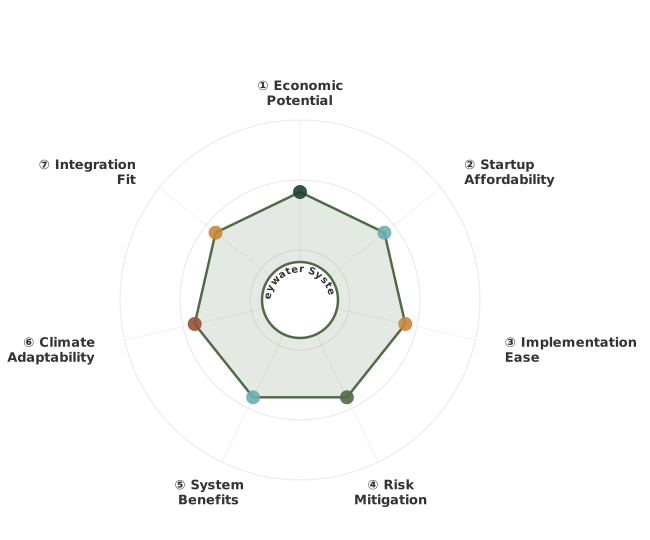
How These Traits Are Calculated
Trait dimensions are ordered clockwise starting from the top of the chart (12 o'clock position):
1. Economic Potential
Financial returns, annual value, and break-even timeline
WHAT: Evaluates financial viability by combining net annual value ($/ha from savings, income, and amortized harvests) with break-even timeline showing when practices pay for themselves.
WHY: Farmers need clear ROI understanding before committing resources. Fast payback (≤3 years) with strong returns (≥$300/ha) enables confident adoption, while long timelines (>10 years) restrict adoption to well-funded operations willing to wait for returns.
HOW: Calculated from net annual value in $/ha and break-even years. Exceptional (≥2.6): fast ROI ≤3 years + high value ≥$300/ha. Typical (1.8-2.5): moderate returns or longer timelines. Limited (<1.8): marginal economics or very long payback >10 years.
2. Startup Affordability
Initial investment costs and financial barrier to entry
WHAT: Measures financial barrier to entry through startup costs for equipment, infrastructure, consulting, and materials. Inverted scoring: lower costs = higher scores = more accessible adoption.
WHY: Affordability determines who can adopt. Low-cost practices (<$250/ha) enable widespread adoption across diverse scales, while high costs (>$2,500/ha) limit adoption to well-capitalized operations, creating barriers that slow regenerative transition.
HOW: Calculated from initial investment parsed from practice content. Inverted scoring: Exceptional (≥2.6): minimal investment <$250/ha. Typical (1.8-2.5): moderate costs $250-2,500/ha. Limited (<1.8): high barrier >$2,500/ha.
3. Implementation Ease
Learning curve and specialized knowledge required
WHAT: Measures how much learning, planning, and specialized knowledge a practice requires. Simpler practices with fewer steps score higher, while complex practices requiring extensive training or specialized resources score lower.
WHY: Complex practices create adoption barriers even when economically viable. Straightforward practices enable faster adoption and broader participation, while those requiring extensive training, timing precision, or specialized equipment limit who can succeed.
HOW: Evaluated by measuring documentation length and identifying complexity markers like location-specific requirements, seasonal timing windows, specialized skills, and dedicated equipment needs. Exceptional (≥2.6): straightforward practices with minimal prerequisites. Typical (1.8-2.5): moderate learning curve with some specialized needs. Limited (<1.8): steep learning curve requiring significant training or resources.
4. Risk Mitigation
Identified financial and ecological risk assessment
WHAT: Evaluates documented risks across financial (investment loss, market volatility) and ecological (crop failure, pest outbreaks) domains. Inverted scoring: fewer risks = higher scores.
WHY: Understanding risk exposure helps farmers make informed decisions. Low-risk practices allow confident implementation, while high-risk practices require careful planning and contingency resources. Risk transparency prevents costly failures.
HOW: Calculated from identified risks in practice content. Inverted scoring: Exceptional (≥2.6): ≤2 risks with manageable severity. Typical (1.8-2.5): 3-5 moderate risks. Limited (<1.8): 6+ risks or severe exposure.
5. System Benefits
How many ways the practice improves your land simultaneously
WHAT: Measures how many aspects of land health improve at once—carbon storage, soil quality, erosion control, water absorption, and biodiversity. Practices that improve multiple areas simultaneously create compounding benefits where each improvement reinforces the others.
WHY: The best practices solve multiple problems at once. For example, addressing erosion simultaneously builds carbon and improves water infiltration, creating a resilient system with positive feedback loops. Single-benefit approaches miss these compound transformation opportunities.
HOW: Evaluated across five key outcomes: carbon sequestration, soil organic matter increase, erosion reduction, water infiltration improvement, and biodiversity enhancement. Exceptional (≥2.6): high carbon storage (>8 t/ha/yr), improvements across 4-5 areas, transformative outcomes. Typical (1.8-2.5): moderate carbon (3-8 t/ha/yr), improvements across 2-3 areas. Limited (<1.8): modest impact (<3 t/ha/yr), single-area focus only.
6. Climate Adaptability
Geographic applicability across Köppen climate zones
WHAT: Evaluates geographic applicability by assessing how many Köppen climate zones successfully support a practice and what adaptation requirements are needed. Measures breadth of climates where farmers can implement with minimal to moderate modifications.
WHY: Universal practices working across diverse climates enable more farmers to adopt regenerative approaches. Practices limited to single climate types (only Mediterranean, only tropical) restrict adoption and slow global transition. Adaptability determines whether a practice serves niche regions or offers broad transformation.
HOW: LLM evaluation of regional success stories, Köppen zone coverage, and adaptation needs. Exceptional (≥2.6): 5+ zones or 4+ climate types, 3+ continents, minimal adaptation. Typical (1.8-2.5): 3-4 zones or 2-3 types, 2 continents, moderate adaptation. Limited (<1.8): 1-2 zones, single region, significant adaptation or highly specialized.
7. Integration Fit
How well this practice combines with others you're doing
WHAT: Measures how well a practice combines with other regenerative practices you might be doing. Some practices work as building blocks that make many other practices easier or more effective, while others work best on their own.
WHY: Practices that combine well with many others create more value on your farm. For example, cover cropping enables no-till, improves grazing, supports crop diversity, and helps water management—making all of them work better together. This helps you build a coherent system rather than juggling disconnected practices.
HOW: Evaluated by identifying which practices combine well and how strong those combinations are. 'Ideally Suited' means strong combinations where practices reinforce each other (practice A makes B easier, while B makes A more effective). 'Adequate' means complementary benefits that work well together. Exceptional (≥2.6): combines well with 6+ practices, serves as a building block. Typical (1.8-2.5): combines with 3-5 practices. Limited (<1.8): 1-2 practices or works best alone.
Going Deeper
1
WHY - The Benefits
Greywater systems are a powerful tool for resource conservation and nutrient management, aligning with regenerative goals when implemented thoughtfully. They offer tangible benefits for water saving, reducing reliance on fresh sources, and contributing to soil health by...
Greywater systems are a powerful tool for resource conservation and nutrient management, aligning with regenerative goals when implemented thoughtfully. They offer tangible benefits for water saving, reducing reliance on fresh sources, and contributing to soil health by...
WHY - The Benefits
Greywater systems are a powerful tool for resource conservation and nutrient management, aligning with regenerative goals when implemented thoughtfully. They offer tangible benefits for water saving, reducing reliance on fresh sources, and contributing to soil health by...
Greywater systems are a powerful tool for resource conservation and nutrient management, aligning with regenerative goals when implemented thoughtfully. They offer tangible benefits for water saving, reducing reliance on fresh sources, and contributing to soil health by...
Soil Health Benefits
Greywater, when properly managed, can contribute positively to soil health by introducing organic matter and essential nutrients that feed soil biology. While not as nutrient-dense as blackwater or animal manure, it contains dissolved organic compounds from soaps and shampoos, and essential macronutrients like nitrogen and phosphorus from detergents and human waste. These can act as a mild liquid fertilizer, promoting the growth of soil microorganisms and plant roots.
When greywater irrigates perennial pastures, cover crops, or established trees, it enriches the soil surface and shallow root zones. This consistent moisture also helps maintain soil aggregation and microbial activity, contributing to Principle 3 (Keep Soil Covered) and Principle 4 (Maintain Living Roots). The organic matter content, while low compared to other inputs, contributes to the soil's carbon pool over time. Studies have shown that greywater irrigation can increase soil microbial biomass and activity, particularly in systems where it is applied subsurface to avoid direct contact with sunlight and potential pathogen proliferation.
However, the benefits are context-dependent. Over-application of greywater, especially from laundry detergents high in sodium or boron, can negatively impact soil structure, leading to dispersion and crusting. Conversely, appropriately managed greywater can enhance soil structure indirectly by supporting the vigorous growth of plants whose roots create stable pore spaces and whose residues contribute to organic matter. The key is dilution and targeted application to avoid nutrient overloading and salt buildup.
Economic Benefits
The most immediate economic benefit of greywater systems is reduced reliance on municipal potable water supplies. In regions where water is metered and priced incrementally, this can lead to significant savings on monthly water bills. For a typical household using, for instance, 200-300 liters (50-80 gallons) of greywater per person per day for irrigation, annual savings can range from USD 100 to USD 500 or more, depending on local water rates. For farms, integrating greywater into irrigation plans can offset a portion of their total water demand, particularly for non-food-producing areas or landscape buffering.
Beyond direct water savings, greywater can reduce the need for supplemental fertilizers. The nitrogen (N) and phosphorus (P) content in greywater, though variable, can provide a slow-release source of these nutrients. While it's unlikely to replace all fertilizer needs, it can supplement them, potentially reducing annual fertilizer expenditure by 10-30% for landscape irrigation or specific crop types. This is particularly relevant for established perennials and trees that benefit from consistent, low-level nutrient supply.
The initial investment in a greywater system ranges from very low for simple DIY setups to moderate for more sophisticated treatment and distribution systems. Simple mulch basins or subsurface irrigation for trees might cost USD 50-200 for materials. more complex systems with pumps, filters, and leach fields can range from USD 500 to USD 5,000 per household or farm dwelling. Payback periods typically range from 3 to 7 years, based on water savings and potential fertilizer reduction, providing a good return on investment, especially in water-scarce or high-cost water regions.
Regenerative Systems Fit
Greywater systems are classified as context-dependent and a transition practice within regenerative agriculture. Their regenerative value is determined by how they are implemented and managed.
As a Context-Dependent Practice: Greywater's regenerative impact depends on what it irrigates and how it's treated.
- Regenerative Application: Irrigating cover crops, perennial pastures, food forests, orchards, or non-edible landscapes. This supports Principle 3 (Keep Soil Covered) and Principle 4 (Maintain Living Roots). The inherent nutrients and organic matter contribute to soil biology and nutrient cycling (Principle 5).
- Extractive Application: Irrigating monoculture cash crops without considering nutrient load caps, irrigating food crops eaten raw without proper treatment/filtration, or using greywater containing harsh chemicals that harm soil biology. This risks salt buildup, nutrient imbalance, and potential pathogen spread, undermining soil health.
As a Transition Practice: Greywater systems facilitate the transition away from conventional practices by:
- Reducing reliance on fresh water: Helps farms become less dependent on increasingly scarce or expensive municipal/groundwater sources, a key regenerative goal.
- Supplementing nutrient needs: Provides a gradual reduction in synthetic fertilizer use by supplying some N and P, allowing soil biology time to build fertility.
- Promoting living cover: Encourages continuous plant growth, which directly supports Principles 3 and 4.
Alignment with Regenerative Principles:
- Principle 1 (Minimize Soil Disturbance): Greywater systems themselves do not directly impact soil disturbance levels. However, the irrigation they enable helps maintain living cover, which prevents erosion and recompaction, indirectly supporting this principle by reducing the need for intervention on bare soil.
- Principle 2 (Maximize Crop Diversity): Greywater irrigation is most regenerative when applied to diverse plantings—mixed cover crops, species-rich pastures, or multi-layered food forests. This creates habitat for a wider range of soil organisms and improves overall ecosystem resilience.
- Principle 3 (Keep Soil Covered): By providing supplementary irrigation, greywater systems help maintain living plants and cover crops year-round, directly supporting soil protection against erosion and moisture loss.
- Principle 4 (Maintain Living Roots): Consistent moisture from greywater allows plants to maintain living roots for longer periods, enhancing biological activity in the soil profile and facilitating nutrient and water cycling.
- Principle 5 (Integrate Livestock): While greywater systems don't directly involve livestock, the nutrients they provide can enhance pasture growth for grazing animals. Careful management is needed to ensure greywater doesn't contaminate livestock watering sources.
Pathway to Full Regeneration: As soil health improves through other regenerative practices (cover cropping, no-till, compost), the need for greywater as a primary irrigation source or nutrient supplement may decrease. The system can then continue as a water-saving measure, or be maintained as part of an integrated water management plan, with the farm gradually phasing out synthetic inputs and becoming more self-sufficient.
Sources behind this view
Videos & Podcasts
-
Describes a home greywater system using a biofilter of gravel and mulch for landscape irrigation, emphasizing the use of biocompatible products and water conservation. Recommends Art Ludwig's book for
-
Recommends treating graywater with biologically active soil and plants, using Art Ludwig's branch drain system with wood chips and perennial plants, while moderating inputs and ensuring underground co
Community
-
Details greywater basics, site assessment, and system design for landscape irrigation, covering plumbing, soil health, plant selection, and a comparison of simple to complex systems like branched drai
Read more (opens in new window) permies.com -
A case study details a low-maintenance branched greywater system using a raised bed for landscape irrigation, adapted for a hilly, wooded site and considering cold climate challenges and dual-purpose
Read more (opens in new window) permies.com -
Guidance on using graywater (from showers, sinks, laundry) for landscape irrigation in California to conserve water. Avoid dark graywater/black water, edible plants, turf, and sprinklers. Use boron/ch
Read more (opens in new window) ucanr.edu -
Guidance on using graywater for landscape irrigation in California, detailing safe handling, prohibited uses (dark graywater, black water, turf, potted plants), recommended detergents, plant tolerance
Read more (opens in new window) ucanr.edu
Research
-
Water Reuse and Greywater Applications in Agriculture (opens in new window)
This study found: Greywater from homes can be reused in agriculture to save water, but requires treatment to remove detergents and soaps, protecting soil and health. Proper guidelines and education are key.
-
Installation and evaluation of domestic greywater reuse systems (opens in new window)
This study found: Greywater reuse systems for irrigation and toilet flushing were evaluated in Melbourne, Australia. Success varied significantly with site conditions and household practices, impacting water savings, c
-
Safe on-Site Reuse of Greywater for Irrigation - A Critical Review of Current Guidelines (opens in new window)
This study found: Review of greywater irrigation rules shows focus on human health, neglecting environmental risks. Untreated greywater, especially in multi-household systems, is not recommended due to health and envir
-
A review of nature-based solutions for greywater treatment: Applications, hydraulic design, and environmental benefits (opens in new window)
This study found: Review of natural systems (wetlands, green roofs/walls) for cleaning household wastewater (greywater). These nature-based solutions offer environmental benefits and effective water reuse, with design
2
WHERE - Regional Considerations
Greywater systems are highly adaptable and beneficial across diverse climates, though specific designs and regulations vary. The primary driver for implementation is water scarcity or the desire to conserve finite freshwater resources.
Greywater systems are highly adaptable and beneficial across diverse climates, though specific designs and regulations vary. The primary driver for implementation is water scarcity or the desire to conserve finite freshwater resources.
WHERE - Regional Considerations
Greywater systems are highly adaptable and beneficial across diverse climates, though specific designs and regulations vary. The primary driver for implementation is water scarcity or the desire to conserve finite freshwater resources.
Greywater systems are highly adaptable and beneficial across diverse climates, though specific designs and regulations vary. The primary driver for implementation is water scarcity or the desire to conserve finite freshwater resources.
Click Here to Look up your Region if you don't already know it
Arid and Semi-Arid Regions
Representative Locations: Southwestern USA (e.g., Arizona, California), Australia (e.g., South Australia, Western Australia), North Africa (e.g., Morocco, Egypt), Middle East (e.g., Jordan, Saudi Arabia), Central Asia (e.g., Uzbekistan, Kazakhstan).
Climate Context: Low annual precipitation (typically <40 cm or 15 inches), high temperatures, short and often unpredictable growing seasons. USDA Zones 7-9, Köppen BSh/BSk.
Suitability: High. These regions are prime candidates for greywater reuse due to extreme water scarcity. Greywater can significantly supplement irrigation needs for establishing drought-tolerant plants, trees, and cover crops that help stabilize soil and improve water retention. Regulations are often more lenient or encouraging for greywater use, but careful management is still required to prevent salt buildup in soils. Emphasis on subsurface irrigation for trees and drought-hardy cover crops is key.
Mediterranean Regions
Representative Locations: Mediterranean basin (e.g., Spain, Italy, Greece), California, central Chile, southwestern Australia, Western Cape South Africa.
Climate Context: Hot, dry summers and mild, wet winters. Annual precipitation 40-90 cm (15-35 inches), highly seasonal. USDA Zones 8-10, Köppen Csa/Csb.
Suitability: High. Water conservation is critical, especially during the dry summer months when irrigation demands are highest. Greywater can extend the growing season for landscape plants, vegetable gardens, and potentially drought-tolerant fruit trees. Systems can be designed to capture winter rainfall in addition to greywater, maximizing water availability. Careful selection of drought-tolerant and salt-tolerant plants is advisable, along with appropriate greywater treatment to manage potential salinity.
Humid Temperate Regions
Representative Locations: Southeastern United States, northern Europe (e.g., UK, Germany, Poland), eastern China, Japan, New Zealand.
Climate Context: Warm to hot summers and cool to cold winters with moderate to high annual precipitation (75-150 cm or 30-60 inches) distributed relatively evenly. USDA Zones 6-8, Köppen Cfb/Cfa.
Suitability: Moderate to High. While natural rainfall is often adequate, greywater systems still offer benefits by reducing demand on municipal sources and supplementing irrigation during dry spells or for specific high-value crops. The higher rainfall means less risk of salt buildup compared to arid regions, but proper drainage and avoiding waterlogging are crucial. Greywater can be beneficially used for established trees, ornamental landscapes, and potentially for non-food crops or areas where produce is cooked.
Subtropical Regions
Representative Locations: Southeastern USA, Southern China, Southern Brazil, Eastern Australia.
Climate Context: Hot, humid summers and mild winters with generally ample rainfall, though seasonal droughts can occur. USDA Zones 9-11, Köppen Cfa/Cwa.
Suitability: Moderate to High. Similar to humid temperate regions, greywater use conserves freshwater resources and provides supplemental irrigation during drier periods common in some subtropical climates. High humidity and rainfall can increase the risk of pathogen spread if greywater is not properly managed, so subsurface irrigation and avoiding contact with raw produce are important. The warm climate supports year-round plant growth, making greywater a consistent resource for landscapes and buffering against temporary water shortages.
Tropical Regions
Representative Locations: Central America, Southeast Asia, East Africa, Northern Australia, Northern South America.
Climate Context: High temperatures year-round, with distinct wet and dry seasons or consistent high rainfall. Köppen Af/Am/Aw.
Suitability: Moderate. While rainfall is often abundant, tropical regions can experience pronounced dry seasons where greywater irrigation is highly valuable for sustaining landscapes, food gardens, and perennial crops. The primary concern is pathogen management due to warm temperatures promoting rapid microbial growth and high humidity increasing disease transmission risks. Very careful treatment, subsurface application, and strict adherence to regulations regarding irrigation of food crops are paramount. Using greywater for established trees and non-edible buffer zones is often the safest and most beneficial application.
Cold Continental Regions
Representative Locations: Northern USA and Canada, Northern Europe, Northern Asia.
Climate Context: Very short growing seasons, extreme summer heat, severe winter cold with significant snowfall. USDA Zones 3-5, Köppen Dfa/Dfb.
Suitability: Low to Moderate. In regions with long, cold winters, greywater systems are primarily useful during the short growing season for supplementing irrigation. Freezing temperatures require winterization of pipes and components. The primary benefit is reducing freshwater demand during the frost-free months. Risk of pathogen spread is lower due to cooler temperatures and shorter periods of active plant growth. Applications are typically limited to ornamental landscapes, established trees, or cover crops that can utilize the water before winter.
3
HOW - Implementation Process
Implementing a greywater system involves several stages, from understanding local regulations to selecting and installing appropriate technology. The complexity can vary greatly, from simple direct-use systems to more advanced treated ones.
Implementing a greywater system involves several stages, from understanding local regulations to selecting and installing appropriate technology. The complexity can vary greatly, from simple direct-use systems to more advanced treated ones.
HOW - Implementation Process
Implementing a greywater system involves several stages, from understanding local regulations to selecting and installing appropriate technology. The complexity can vary greatly, from simple direct-use systems to more advanced treated ones.
Implementing a greywater system involves several stages, from understanding local regulations to selecting and installing appropriate technology. The complexity can vary greatly, from simple direct-use systems to more advanced treated ones.
Prerequisites
1. Regulatory Compliance:
- Research Local Laws: This is paramount. Greywater regulations differ drastically by country, state/province, and even municipality. Contact your local health department, building department, or environmental agency.
- Permitting: Many jurisdictions require permits for greywater systems, especially those involving more than simple bucket diversion or subsurface dispersal. Understand permit requirements, application processes, and any associated fees.
- Approved Materials: Ensure all components (pipes, filters, tanks, pumps) meet local plumbing and health codes. Some areas have specific lists of approved materials or system types.
2. Site Assessment:
- Water Source Identification: Determine which sources will provide greywater (showers, sinks, laundry). Avoid kitchen sink water if possible, as it often contains food scraps and harsher (e.g., degreasing) detergents that are harder to treat. Avoid toilet water entirely.
- Irrigation Needs: Estimate the volume of greywater your household produces daily and the irrigation needs of your landscape or crops. Match supply with demand to avoid over-application.
- Soil Type and Drainage: Assess your soil's infiltration rate. Sandy soils drain quickly, while clay soils drain slowly. This influences system design (e.g., leach field size, subsurface vs. surface application).
- Plant Selection: Choose plants suited to your climate and salt tolerance if using greywater frequently, as some detergents can leave salt residues. Native and drought-tolerant species are often best.
- Household Practices: Assess current detergent and soap usage. Prioritize biodegradable, low-sodium, and low-boron products. Avoid products with bleach, chlorine, or petrochemicals.
3. System Type Consideration:
- Simple (Direct Use): Bucket method, diverting water via simple plumbing to a mulch basin around trees. Very basic, often requires manual effort.
- Basic (Subsurface): Plumbing to a surge tank, then gravity or pump to mulch basins or a simple subsurface irrigation line.
- Treated Systems: Include filtration (e.g., sand, media filters) and possibly disinfection (e.g., UV, chlorination) before distribution. Required for more sensitive applications or stricter regulations.
Phase 1: System Design and Material Sourcing
Design Considerations:
- Collection: All greywater sources must be plumbed to a central collection point. Use appropriate PVC or PEX piping. Ensure proper slope for gravity flow where possible.
- Diversion/Surge: A surge tank or basin is crucial to buffer intermittent greywater flow and prevent overwhelming the irrigation system. It allows greywater to be applied more evenly.
- Filtration: Depending on regulations and application, filtration may range from simple screens for lint/hair to multi-stage media filters (sand, gravel, mulch) for suspended solids.
- Treatment (Optional but Recommended): For more sensitive applications, consider UV sterilization or biological treatment to reduce pathogen load.
- Distribution: Options include:
- Mulch Basins: Simple depressions filled with organic mulch around the base of trees or shrubs. Water infiltrates slowly and is absorbed by roots.
- Subsurface Irrigation: Buried perforated pipes or drip lines deliver water directly to the root zone. Minimizes surface evaporation and pathogen risk.
- Surface Drip/Sprinklers: Use with caution; generally less preferred for greywater due to evaporation and potential pathogen exposure.
- Overflow/Backup: All systems need an overflow to a sewer or leach field to handle excess greywater or system malfunctions.
Material Sourcing:
- Piping: Use compatible PVC or PEX pipes with proper solvent cement or fittings. Standard plumbing codes apply. Purple-coded pipes are often required for reclaimed water to distinguish from potable water.
- Tanks: Food-grade plastic or concrete tanks suitable for wastewater storage. Ensure tanks are sealed and vented appropriately.
- Filters: Purchase commercial media filters, or construct DIY filters using layers of gravel, sand, and charcoal.
- Pumps: Submersible sumps pumps or utility pumps are common for moving greywater. Ensure they are rated for wastewater.
- Irrigation Components: Drip emitters, perforated pipes, mulch, gravel.
- International Context: Availability of specific materials (e.g., medical-grade UV sterilizers, specialized filters) can vary. In regions with fewer established suppliers, sourcing from international online retailers or adapting local materials may be necessary. Prices for pumps and PVC piping are generally lower in North America and Europe than in many parts of Asia or Africa, but specialized filtration components can be costly globally.
Phase 2: Installation and Commissioning
1. Installation:
- Follow local plumbing codes and regulations meticulously. Hire a licensed plumber if required or if you lack plumbing experience.
- Dig trenches for pipes and basins to appropriate depths. Ensure proper slope for gravity systems.
- Install surge tanks, filters, and pumps according to manufacturer instructions.
- Connect greywater sources to the collection manifold.
- Lay out distribution lines (mulch basins, subsurface pipes).
- Install overflow system.
- Critical: Clearly label all non-potable water systems with purple-colored pipes and signage to prevent accidental cross-connection with potable water supplies.
2. Commissioning:
- Test Flow: Run water through the system, checking for leaks at all connections.
- Pump Test: If a pump is used, ensure it activates and deactivates correctly.
- Irrigation Distribution: Verify water is reaching all intended irrigation zones evenly.
- Filtration Check: Inspect any filters for proper function and flow.
- Initial Application: Begin with irrigating non-edible plants or areas with established native vegetation. Observe plant response and soil moisture.
Transition Timeline & Phase-Out Strategy
Greywater systems are often implemented as a transition practice, supporting movement toward greater water independence and reduced reliance on external inputs. Their ongoing use can also be part of a mature regenerative system.
Year 1 onwards (Implementation):
- Install System: Implement the greywater system, starting with the most restrictive applications (e.g., non-edible landscapes).
- Monitor Water Savings: Track fresh water usage to quantify savings.
- Observe Plant Response: Monitor plant health, soil moisture, and look for signs of salt buildup or nutrient deficiencies/excesses.
- Refine Management: Adjust irrigation frequency and duration based on plant needs and soil conditions.
Years 2-5 (Optimization & Expansion):
- Expand Application: If successful and regulations allow, cautiously expand greywater use to other areas, such as mature fruit trees or cover crops.
- Improve Treatment: Consider upgrading filtration or adding biological treatment if higher quality water is desired or regulations require it.
- Integrate with Other Water Management: Combine greywater with rainwater harvesting, swales, or other water conservation techniques.
- Phase Down Synthetics: If greywater is supplementing fertility, begin reducing synthetic fertilizer application, monitoring soil and plant response.
Years 5+ (Mature Regenerative Practice):
- Continuous Use: Greywater system remains a core component of water management, reducing freshwater demand and providing supplemental nutrients.
- Reduced Input Reliance: The farm is less dependent on municipal water and synthetic fertilizers.
- Soil Health Focus: Soil already benefits from living cover, organic matter from greywater application, and improved structure from complementary practices.
- Potential Phase-Out Drivers: If farm systems evolve to require significantly more water than greywater can supply, or if regulatory changes restrict use, the system might be repurposed or downscaled. However, for water conservation alone, it typically remains a valuable practice.
Key to Success: Gradual introduction of greywater, starting with the plants/areas least sensitive to potential issues (e.g., mature trees, non-edible ornamentals), and cautious expansion based on observation and results. This allows time for soil biology to adapt and for any potential negative impacts (like salt buildup) to be identified and mitigated. Complete reliance on greywater for all irrigation needs is rarely feasible or advisable; it's best considered a supplement to other water sources and practices.
Sources behind this view
Videos & Podcasts
-
Describes a home greywater system using a biofilter of gravel and mulch for landscape irrigation, emphasizing the use of biocompatible products and water conservation. Recommends Art Ludwig's book for
-
Recommends treating graywater with biologically active soil and plants, using Art Ludwig's branch drain system with wood chips and perennial plants, while moderating inputs and ensuring underground co
Community
-
Details greywater basics, site assessment, and system design for landscape irrigation, covering plumbing, soil health, plant selection, and a comparison of simple to complex systems like branched drai
Read more (opens in new window) permies.com -
A case study details a low-maintenance branched greywater system using a raised bed for landscape irrigation, adapted for a hilly, wooded site and considering cold climate challenges and dual-purpose
Read more (opens in new window) permies.com -
Guidance on using graywater (from showers, sinks, laundry) for landscape irrigation in California to conserve water. Avoid dark graywater/black water, edible plants, turf, and sprinklers. Use boron/ch
Read more (opens in new window) ucanr.edu -
Guidance on using graywater for landscape irrigation in California, detailing safe handling, prohibited uses (dark graywater, black water, turf, potted plants), recommended detergents, plant tolerance
Read more (opens in new window) ucanr.edu
Research
-
Water Reuse and Greywater Applications in Agriculture (opens in new window)
This study found: Greywater from homes can be reused in agriculture to save water, but requires treatment to remove detergents and soaps, protecting soil and health. Proper guidelines and education are key.
-
Installation and evaluation of domestic greywater reuse systems (opens in new window)
This study found: Greywater reuse systems for irrigation and toilet flushing were evaluated in Melbourne, Australia. Success varied significantly with site conditions and household practices, impacting water savings, c
-
Safe on-Site Reuse of Greywater for Irrigation - A Critical Review of Current Guidelines (opens in new window)
This study found: Review of greywater irrigation rules shows focus on human health, neglecting environmental risks. Untreated greywater, especially in multi-household systems, is not recommended due to health and envir
-
A review of nature-based solutions for greywater treatment: Applications, hydraulic design, and environmental benefits (opens in new window)
This study found: Review of natural systems (wetlands, green roofs/walls) for cleaning household wastewater (greywater). These nature-based solutions offer environmental benefits and effective water reuse, with design
4
HOW MUCH - Costs & Investment
Costs for greywater systems vary dramatically based on the level of sophistication, the number of connections, and whether it's a DIY or professionally installed system. These estimates are for household-scale systems; farm-scale reuse could involve larger infrastructure...
Costs for greywater systems vary dramatically based on the level of sophistication, the number of connections, and whether it's a DIY or professionally installed system. These estimates are for household-scale systems; farm-scale reuse could involve larger infrastructure...
HOW MUCH - Costs & Investment
Costs for greywater systems vary dramatically based on the level of sophistication, the number of connections, and whether it's a DIY or professionally installed system. These estimates are for household-scale systems; farm-scale reuse could involve larger infrastructure...
Costs for greywater systems vary dramatically based on the level of sophistication, the number of connections, and whether it's a DIY or professionally installed system. These estimates are for household-scale systems; farm-scale reuse could involve larger infrastructure...
Note: All costs are based on recent US economic data (2024–2026) and may vary substantially by region based on local labor rates, material costs, and regulatory requirements. Professional MEP contractor rates currently range from $94 to $188 per hour.
Infrastructure Hardware & System Components
For small-scale operations under 50 acres (20 ha), hardware investment for diverters and surge capacity ranges from $313 to $1,563. Mid-size operations managing 50 to 500 acres (20–202 ha), including greenhouse or employee housing facilities, require robust distribution manifolds and surge tanks, costing between $2,605 and $7,815. Large-scale operations exceeding 500 acres (202 ha) that utilize high-volume commercial grade recovery for orchard blocks or processing facilities necessitate an investment of $15,630 to $46,890 for automated, high-pressure filtration and distribution hardware.
Professional Labor & Regulatory Permitting
Permitting remains a volatile variable contingent on local municipal code. Small-scale, DIY-compliant systems range from $156 to $729 for standard engineering approvals. Mid-size agricultural operations incorporating industrial-code plumbing systems face design and certification fees totaling $2,084 to $6,252. Large-scale installations requiring comprehensive environmental impact assessments and mechanical engineer oversight entail permit and design expenditures of $10,420 to $31,260.
Filtration, Treatment, & Disinfection Systems
Basic sediment filtration for small-scale applications costs $104 to $521. Mid-size operations utilizing water for broad-acre irrigation require multi-stage bio-filtration and ultraviolet disinfection systems, costing $3,126 to $9,378. Large-scale facilities needing to comply with public health standards for agritourism or processing bays require advanced ozone or chlorine injection systems, with a capital investment of $12,504 to $52,100. Annual maintenance for these systems typically adds 7% to 12% of the initial installation cost.
Distribution Infrastructure
Small units using basic PVC piping and mulch basins for 0.25 acres (0.1 ha) cost $208 to $834. Mid-size operations requiring subsurface drip irrigation lines and pumps for 5 to 20 acres (2.0–8.1 ha) require an investment of $4,168 to $12,504. Large-scale operations spanning 50+ acres for dedicated greywater irrigation require extensive trenching and high-capacity pump stations, costing $20,840 to $83,360, depending on topography and required lateral pressure.
Most Spend: Most small-to-mid operations fall within the $3,650 to $9,380 range. This middle 60% covers the essential plumbing, basic filtration units, and a properly sized mid-tier surge tank for standard irrigation needs.
Why the Range?: Costs fluctuate primarily due to local permitting strictness, which can vary by 300% between municipalities. Additionally, the soil composition and topographical slope of the site dictate pump power requirements and depth of lateral pipe burial, significantly impacting total mechanical and labor expenditures.
Sources behind this view
Community
-
Utilize greywater from washing machines, tubs, showers, and bathroom sinks for irrigation in California, requiring subsurface distribution systems and careful consideration of local regulations, clima
Read more (opens in new window) ucanr.edu
Research
-
Installation and evaluation of domestic greywater reuse systems (opens in new window)
This study found: Greywater reuse systems for irrigation and toilet flushing were evaluated in Melbourne, Australia. Success varied significantly with site conditions and household practices, impacting water savings, c
-
The water saving potential and the socio‐economic feasibility of greywater reuse within the urban sector – Israel as a case study (opens in new window)
This study found: Israeli study: Greywater reuse is publicly accepted and economically feasible, potentially saving millions of cubic meters of water annually in urban areas.
-
Water Reuse and Greywater Applications in Agriculture (opens in new window)
This study found: Greywater from homes can be reused in agriculture to save water, but requires treatment to remove detergents and soaps, protecting soil and health. Proper guidelines and education are key.
-
Economic Feasibility of Rainwater Harvesting and Greywater Reuse in a Multifamily Building (opens in new window)
This study found: Rainwater harvesting and greywater reuse in a Brazilian apartment building showed economic feasibility, saving tap water and reducing stormwater runoff. Payback periods ranged from 5-13 years, with co
5
REWARDS AND RISKS - Economics & Risk Factors
Greywater systems offer significant rewards in terms of water conservation and potential nutrient savings, but also carry financial and system risks that must be managed.
Greywater systems offer significant rewards in terms of water conservation and potential nutrient savings, but also carry financial and system risks that must be managed.
REWARDS AND RISKS - Economics & Risk Factors
Greywater systems offer significant rewards in terms of water conservation and potential nutrient savings, but also carry financial and system risks that must be managed.
Greywater systems offer significant rewards in terms of water conservation and potential nutrient savings, but also carry financial and system risks that must be managed.
In a best-case scenario, a medium-sized operation saves $2,084 to $4,689 annually in municipal water fees by diverting 500,000 gallons (1,892,705 L), allowing for a system payback period of 2.5 to 4 years. The typical case for a small farm results in annual savings of $365 to $938, with a system payback period of 6 to 9 years. In a worst-case scenario—involving a severe pump failure, major line blockage requiring excavation, and a surprise municipal re-inspection—the operation may lose $2,084 to $5,210 in a single year, effectively delaying the return on investment by 3 to 5 additional years.
Profitability is dictated by the cost of local municipal water, which currently ranges from $4 to $12 per 1,000 gallons (3,785 L). With utility rates increasing by 4% to 6% annually, the internal rate of return on greywater systems improves year-over-year. In specific jurisdictions, upfront capital expenditure can be reduced by 20% to 50% through municipal water conservation rebates, which drastically compresses the payback timeline.
The most critical risk is pathogen contamination or salt buildup in the soil. Investing $1,563 to $4,168 in a high-quality bio-filtration system mitigates the risk of health code violations, which carry fines between $5,210 and $26,050. Proactive pump maintenance of $208 to $625 annually prevents catastrophic system failure, which would otherwise result in emergency repair costs exceeding $3,126. To prevent soil degradation, the use of salt-free detergents adds a nominal $52 to $104 in annual operating costs, preventing long-term soil remediation expenses that could otherwise climb to $417 to $1,042 per treated acre for gypsum applications.
When transitioning to greywater irrigation, plant growth may dip by 5% to 10% during the first 12 to 24 months as the soil microbiome adjusts. To avoid this, farmers should employ a "blending strategy," mixing greywater with 30% to 50% fresh water during the initial two seasons. Full recovery of the soil nutrient balance is typically achieved within 24 months, provided that $156 soil test kits are used annually to track salinity levels.
Sources behind this view
Videos & Podcasts
-
Describes a home greywater system using a biofilter of gravel and mulch for landscape irrigation, emphasizing the use of biocompatible products and water conservation. Recommends Art Ludwig's book for
Community
-
Details greywater basics, site assessment, and system design for landscape irrigation, covering plumbing, soil health, plant selection, and a comparison of simple to complex systems like branched drai
Read more (opens in new window) permies.com -
Utilize greywater from washing machines, tubs, showers, and bathroom sinks for irrigation in California, requiring subsurface distribution systems and careful consideration of local regulations, clima
Read more (opens in new window) ucanr.edu -
Conserve water by using graywater from sinks, showers, and washing machines for landscape irrigation, avoiding peak evaporation times and harmful product chemicals like sodium and boron. Consult UCANR
Read more (opens in new window) ucanr.edu -
Details dual plumbing systems for greywater and rainwater use in toilets and irrigation, emphasizing immediate use in soil/mulch basins. Discusses code compliance, septic systems, and natural filtrati
Read more (opens in new window) permies.com
Research
-
Installation and evaluation of domestic greywater reuse systems (opens in new window)
This study found: Greywater reuse systems for irrigation and toilet flushing were evaluated in Melbourne, Australia. Success varied significantly with site conditions and household practices, impacting water savings, c
-
Water Reuse and Greywater Applications in Agriculture (opens in new window)
This study found: Greywater from homes can be reused in agriculture to save water, but requires treatment to remove detergents and soaps, protecting soil and health. Proper guidelines and education are key.
-
Safe on-Site Reuse of Greywater for Irrigation - A Critical Review of Current Guidelines (opens in new window)
This study found: Review of greywater irrigation rules shows focus on human health, neglecting environmental risks. Untreated greywater, especially in multi-household systems, is not recommended due to health and envir
-
The water saving potential and the socio‐economic feasibility of greywater reuse within the urban sector – Israel as a case study (opens in new window)
This study found: Israeli study: Greywater reuse is publicly accepted and economically feasible, potentially saving millions of cubic meters of water annually in urban areas.
 From the Web
-
Greywater is a valuable irrigation resource in water-scarce refugee camps, offering nutrients but posing pathogen and chemical risks. Risk assessment and multiple barriers are crucial for safe reuse.
6
COMPATIBLE PRACTICES - Integration Opportunities
Greywater systems are highly compatible with various regenerative and water-conservation practices, forming part of a holistic approach to resource management.
Greywater systems are highly compatible with various regenerative and water-conservation practices, forming part of a holistic approach to resource management.
COMPATIBLE PRACTICES - Integration Opportunities
Greywater systems are highly compatible with various regenerative and water-conservation practices, forming part of a holistic approach to resource management.
Greywater systems are highly compatible with various regenerative and water-conservation practices, forming part of a holistic approach to resource management.
Rainwater Harvesting
- Integration: Combine greywater systems with rainwater harvesting tanks and systems.
- Benefit: Creates a robust on-site water supply for irrigation, further reducing reliance on municipal sources and wells. Greywater can supplement rainwater during dry spells, and treated rainwater can be used for sensitive applications where greywater is restricted. This integration provides maximum water security.
Low-Impact Detergent Use
- Integration: Transition to biodegradable, low-sodium, low-boron, and phosphate-free laundry detergents and soaps.
- Benefit: Minimizes the risk of soil salt buildup, plant toxicity, and nutrient overload from greywater, ensuring healthier soil and plant life. This is crucial for the long-term sustainability of greywater irrigation.
Permaculture Design Principles (e.g., Zone Planning, Mulching, Swales)
- Integration: Design greywater distribution systems to align with permaculture zones. Use mulch basins around trees (Zone 1-2) and subsurface irrigation in food forests or orchards. Incorporate greywater into swale systems for passive irrigation and water infiltration where regulations permit.
- Benefit: Maximizes water use efficiency through targeted delivery. Mulch basins enhance infiltration and filter greywater naturally. Swales capture and retain water, distributing it to plants while minimizing runoff.
Cover Cropping
- Integration: Irrigate cover crop mixes with greywater, especially deep-rooted species that can draw moisture and nutrients from deeper soil profiles.
- Benefit: Helps maintain living roots and soil cover year-round, builds soil organic matter, and improves soil structure, creating a more resilient soil ecosystem that can better utilize greywater without negative impacts. Deep-rooted cover crops also help mitigate salt buildup by drawing water from deeper zones.
Drip Irrigation / Subsurface Irrigation
- Integration: Use greywater to feed subsurface irrigation systems.
- Benefit: Delivers water directly to the root zone, minimizing evaporation, preventing surface runoff, and reducing the risk of pathogen exposure and foliar disease. This method also helps concentrate nutrients in the root zone.
Xeriscaping / Drought-Tolerant Landscaping
- Integration: Irrigate drought-tolerant plants and native species with greywater.
- Benefit: These plants are naturally adapted to limited water and can tolerate a wider range of soil conditions, making them ideal candidates for greywater irrigation. This conserves water overall and reduces plant stress, contributing to a more water-resilient landscape.
Blackwater Treatment Systems (If applicable and regulated)
- Integration: In some advanced integrated systems (and where regulations permit), treated blackwater can be co-managed. However, the risks of pathogen transmission are much higher with blackwater.
- Benefit: Maximizes water reuse from the entire household.
- Warning: Requires stringent, often complex and expensive, treatment beyond typical greywater filtration, and strict separation from potable water and edible crop irrigation. Usually not recommended for regenerative farms unless professionally designed by experts adhering to strict international health guidelines.
Greywater systems are not standalone solutions but rather components that amplify the benefits of other regenerative practices by improving water availability and nutrient cycling, especially within integrated water management strategies. ```
Sources behind this view
Videos & Podcasts
-
Describes a home greywater system using a biofilter of gravel and mulch for landscape irrigation, emphasizing the use of biocompatible products and water conservation. Recommends Art Ludwig's book for
-
Recommends treating graywater with biologically active soil and plants, using Art Ludwig's branch drain system with wood chips and perennial plants, while moderating inputs and ensuring underground co
Community
-
Details greywater basics, site assessment, and system design for landscape irrigation, covering plumbing, soil health, plant selection, and a comparison of simple to complex systems like branched drai
Read more (opens in new window) permies.com -
A case study details a low-maintenance branched greywater system using a raised bed for landscape irrigation, adapted for a hilly, wooded site and considering cold climate challenges and dual-purpose
Read more (opens in new window) permies.com -
Guidance on using graywater (from showers, sinks, laundry) for landscape irrigation in California to conserve water. Avoid dark graywater/black water, edible plants, turf, and sprinklers. Use boron/ch
Read more (opens in new window) ucanr.edu -
Guidance on using graywater for landscape irrigation in California, detailing safe handling, prohibited uses (dark graywater, black water, turf, potted plants), recommended detergents, plant tolerance
Read more (opens in new window) ucanr.edu
Research
-
Water Reuse and Greywater Applications in Agriculture (opens in new window)
This study found: Greywater from homes can be reused in agriculture to save water, but requires treatment to remove detergents and soaps, protecting soil and health. Proper guidelines and education are key.
-
Installation and evaluation of domestic greywater reuse systems (opens in new window)
This study found: Greywater reuse systems for irrigation and toilet flushing were evaluated in Melbourne, Australia. Success varied significantly with site conditions and household practices, impacting water savings, c
-
Safe on-Site Reuse of Greywater for Irrigation - A Critical Review of Current Guidelines (opens in new window)
This study found: Review of greywater irrigation rules shows focus on human health, neglecting environmental risks. Untreated greywater, especially in multi-household systems, is not recommended due to health and envir
-
A review of nature-based solutions for greywater treatment: Applications, hydraulic design, and environmental benefits (opens in new window)
This study found: Review of natural systems (wetlands, green roofs/walls) for cleaning household wastewater (greywater). These nature-based solutions offer environmental benefits and effective water reuse, with design
From the Web
-
Greywater handling systems using biofilters and membrane treatment can significantly improve water quality for reuse in irrigation, household activities, and groundwater recharge, potentially achievin