
Herb Spiral
A herb spiral is a compact, multi-tiered gardening structure, often shaped like a snail shell or a helix, built from materials like stones, bricks, or soil. It's designed to create a diversity of microclimates, from dry and sunny at the top to moist and shaded at the base, allowing a wide variety of herbs and other small plants to thrive in a small footprint. This practice is context-dependent, offering regenerative benefits when integrated thoughtfully into a diversified farm system.
Read More: Complete Description
A herb spiral is a vertically integrated gardening system that maximizes the growing potential of a small area by creating distinct microclimates. Typically constructed as a circular or semi-circular wall that spirals upwards, it uses natural materials like stone, brick, reclaimed wood, or compacted soil. The design is fundamental: the top of the spiral is exposed to full sun and excellent drainage, ideal for drought-tolerant herbs like rosemary, thyme, and lavender. As the spiral descends towards the base, conditions become shadier, cooler, and retain more moisture, suiting plants like mint, parsley, and chives.
This microclimate gradient is achieved through the structure itself and the materials used. The wall provides a thermal mass that can store heat, and the tiered planting beds create variations in sun exposure and water availability. The central core of the spiral is often filled with organic matter and compost, acting as a moisture reservoir that slowly releases water into the surrounding soil. This creates a self-watering effect, reducing the need for frequent manual irrigation.
From a regenerative agriculture perspective, the herb spiral is a Context-Dependent Practice. Its regenerative value hinges entirely on how it is implemented and integrated into the broader farm ecosystem.
When implemented strategically, a herb spiral strongly supports Principle 2 (Maximize Crop Diversity). By creating multiple distinct microclimates on a single structure, it allows for the cultivation of a wide array of plant species—culinary herbs, medicinal plants, pollinator attractants, and even some small vegetables—within a very small footprint (often just 2-4 square meters or 4-8 square feet). This diversity above ground fosters diversity below ground, as different root structures interact with soil biology in varied ways.
It can also contribute to Principle 4 (Maintain Living Roots) by providing a continuous planting of perennial herbs and other beneficial plants year-round, extending photosynthetic activity beyond the main growing season in many climates.
Furthermore, a well-designed herb spiral can contribute to Principle 3 (Keep Soil Covered) by densely planting the soil surface, minimizing bare patches.
However, the herb spiral does not inherently support Principle 1 (Minimize Soil Disturbance) or Principle 5 (Integrate Livestock). The construction itself involves significant soil disturbance. While materials can be sourced sustainably, the initial building process is not aligned with direct soil health enhancement in the way cover cropping or no-till is. Livestock integration is generally not a feature of herb spirals, as they are typically small-scale, dedicated spaces.
The regenerative utility of a herb spiral is therefore best understood as a tool for enhancing biodiversity and resource efficiency in specific niches on a farm. It's not a foundational practice like adaptive grazing or cover cropping, but rather a complementary element that can amplify the benefits of a regenerative system. It's ideal for small farms, market gardens, or even as a feature in larger operations to provide valuable herbs for culinary use, medicinal purposes, or as companion plantings for other crops. It allows farmers to intensify diversity in a concentrated, manageable way, rather than spreading it thinly across large acreages. The construction materials, if chosen responsibly (e.g., local stone, reclaimed bricks), can also contribute to a farm's circular economy principles.
The success of a herb spiral lies in thoughtful design and plant selection tailored to the local climate, sun exposure, and soil moisture conditions. When integrated with other regenerative practices that focus on soil health and overall farm ecosystem function, it becomes a valuable contributor to a resilient and biodiverse agricultural landscape.
Sources behind this view
Sources behind this view
 Videos & Podcasts
-
Herb spirals are valuable permaculture teaching tools that create microclimates using raised beds and recycled materials. While not essential for all permaculture gardens, they offer lessons in design
 Community
-
Discusses diverse herb spiral construction methods, favoring building the stone structure first and filling it. The design aims to create microclimates for Mediterranean herbs, with higher areas for d
Read more (opens in new window) permies.com -
Details constructing an herb spiral using hugelkultur with reclaimed wood, chips, leaves, and compost, planting various herbs like spearmint, rosemary, lavender, thyme, and basil. The project repurpos
Read more (opens in new window) permies.com -
Herb spirals are highly effective at attracting pollinators like bees and butterflies, with plants like Sedum and oregano being particularly attractive. They create biodiverse habitats and can be mult
Read more (opens in new window) permies.com -
Construct a water-conserving herb spiral using salvaged bricks, dirt, and creek rocks. Integrate a sprinkler for efficient watering, supporting a cottage garden and pollinator habitat. Planting is don
Read more (opens in new window) permies.com
Key Points
What It Is
- Compact, multi-tiered spiral garden structure
- Creates diverse microclimates for plants
- Maximizes growing area in small footprint
- Typically 2-4 m² (4-8 ft²)
Why Do It
- Increases plant diversity in small space (Principle 2)
- Enhances biodiversity for pollinators and beneficials
- Reduces water needs through clever design
- Provides convenient access to herbs and medicines
Know the Debate
- Construction cost varies $70-$2350+ by materials and labor
- Herb yield savings $50-200/yr; niche sales potential
- Success depends on climate and plant selection for microclimates
- Requires intensive initial labor; minimal ongoing effort
- Enhances biodiversity and on-farm herb supply
Benefits - Financial
- $261-521 annual savings through direct culinary herb harvest.
- Niche herb sales generate $625-1,041 annually per structure.
- High-density design increases square-foot yield by 30-50%.
Benefits - System
- Supports high plant diversity (Principle 2)
- Enhances local pollinator habitat
- Efficient water use; reduces irrigation needs
- Continuous living cover (Principle 4)
Risks - Financial
- Improper drainage causes wall structural failure, costing $834-1,563 to repair.
- Initial establishment (12-24 months) creates $208-417 revenue lag.
- Poor microclimate matching incurs $104-208 in annual replacement costs.
Risks - System
- High initial soil disturbance during construction
- Requires careful plant selection for microclimates
- Construction can be labor-intensive
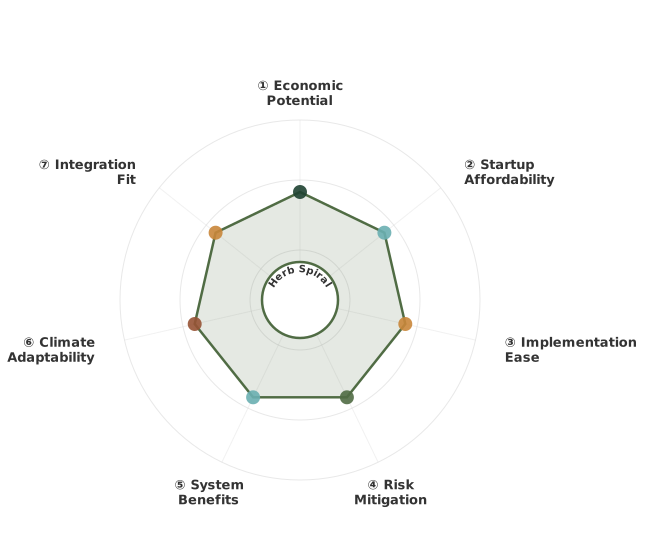
How These Traits Are Calculated
Trait dimensions are ordered clockwise starting from the top of the chart (12 o'clock position):
1. Economic Potential
Financial returns, annual value, and break-even timeline
WHAT: Evaluates financial viability by combining net annual value ($/ha from savings, income, and amortized harvests) with break-even timeline showing when practices pay for themselves.
WHY: Farmers need clear ROI understanding before committing resources. Fast payback (≤3 years) with strong returns (≥$300/ha) enables confident adoption, while long timelines (>10 years) restrict adoption to well-funded operations willing to wait for returns.
HOW: Calculated from net annual value in $/ha and break-even years. Exceptional (≥2.6): fast ROI ≤3 years + high value ≥$300/ha. Typical (1.8-2.5): moderate returns or longer timelines. Limited (<1.8): marginal economics or very long payback >10 years.
2. Startup Affordability
Initial investment costs and financial barrier to entry
WHAT: Measures financial barrier to entry through startup costs for equipment, infrastructure, consulting, and materials. Inverted scoring: lower costs = higher scores = more accessible adoption.
WHY: Affordability determines who can adopt. Low-cost practices (<$250/ha) enable widespread adoption across diverse scales, while high costs (>$2,500/ha) limit adoption to well-capitalized operations, creating barriers that slow regenerative transition.
HOW: Calculated from initial investment parsed from practice content. Inverted scoring: Exceptional (≥2.6): minimal investment <$250/ha. Typical (1.8-2.5): moderate costs $250-2,500/ha. Limited (<1.8): high barrier >$2,500/ha.
3. Implementation Ease
Learning curve and specialized knowledge required
WHAT: Measures how much learning, planning, and specialized knowledge a practice requires. Simpler practices with fewer steps score higher, while complex practices requiring extensive training or specialized resources score lower.
WHY: Complex practices create adoption barriers even when economically viable. Straightforward practices enable faster adoption and broader participation, while those requiring extensive training, timing precision, or specialized equipment limit who can succeed.
HOW: Evaluated by measuring documentation length and identifying complexity markers like location-specific requirements, seasonal timing windows, specialized skills, and dedicated equipment needs. Exceptional (≥2.6): straightforward practices with minimal prerequisites. Typical (1.8-2.5): moderate learning curve with some specialized needs. Limited (<1.8): steep learning curve requiring significant training or resources.
4. Risk Mitigation
Identified financial and ecological risk assessment
WHAT: Evaluates documented risks across financial (investment loss, market volatility) and ecological (crop failure, pest outbreaks) domains. Inverted scoring: fewer risks = higher scores.
WHY: Understanding risk exposure helps farmers make informed decisions. Low-risk practices allow confident implementation, while high-risk practices require careful planning and contingency resources. Risk transparency prevents costly failures.
HOW: Calculated from identified risks in practice content. Inverted scoring: Exceptional (≥2.6): ≤2 risks with manageable severity. Typical (1.8-2.5): 3-5 moderate risks. Limited (<1.8): 6+ risks or severe exposure.
5. System Benefits
How many ways the practice improves your land simultaneously
WHAT: Measures how many aspects of land health improve at once—carbon storage, soil quality, erosion control, water absorption, and biodiversity. Practices that improve multiple areas simultaneously create compounding benefits where each improvement reinforces the others.
WHY: The best practices solve multiple problems at once. For example, addressing erosion simultaneously builds carbon and improves water infiltration, creating a resilient system with positive feedback loops. Single-benefit approaches miss these compound transformation opportunities.
HOW: Evaluated across five key outcomes: carbon sequestration, soil organic matter increase, erosion reduction, water infiltration improvement, and biodiversity enhancement. Exceptional (≥2.6): high carbon storage (>8 t/ha/yr), improvements across 4-5 areas, transformative outcomes. Typical (1.8-2.5): moderate carbon (3-8 t/ha/yr), improvements across 2-3 areas. Limited (<1.8): modest impact (<3 t/ha/yr), single-area focus only.
6. Climate Adaptability
Geographic applicability across Köppen climate zones
WHAT: Evaluates geographic applicability by assessing how many Köppen climate zones successfully support a practice and what adaptation requirements are needed. Measures breadth of climates where farmers can implement with minimal to moderate modifications.
WHY: Universal practices working across diverse climates enable more farmers to adopt regenerative approaches. Practices limited to single climate types (only Mediterranean, only tropical) restrict adoption and slow global transition. Adaptability determines whether a practice serves niche regions or offers broad transformation.
HOW: LLM evaluation of regional success stories, Köppen zone coverage, and adaptation needs. Exceptional (≥2.6): 5+ zones or 4+ climate types, 3+ continents, minimal adaptation. Typical (1.8-2.5): 3-4 zones or 2-3 types, 2 continents, moderate adaptation. Limited (<1.8): 1-2 zones, single region, significant adaptation or highly specialized.
7. Integration Fit
How well this practice combines with others you're doing
WHAT: Measures how well a practice combines with other regenerative practices you might be doing. Some practices work as building blocks that make many other practices easier or more effective, while others work best on their own.
WHY: Practices that combine well with many others create more value on your farm. For example, cover cropping enables no-till, improves grazing, supports crop diversity, and helps water management—making all of them work better together. This helps you build a coherent system rather than juggling disconnected practices.
HOW: Evaluated by identifying which practices combine well and how strong those combinations are. 'Ideally Suited' means strong combinations where practices reinforce each other (practice A makes B easier, while B makes A more effective). 'Adequate' means complementary benefits that work well together. Exceptional (≥2.6): combines well with 6+ practices, serves as a building block. Typical (1.8-2.5): combines with 3-5 practices. Limited (<1.8): 1-2 practices or works best alone.
Going Deeper
1
WHY - The Benefits
The herb spiral is a horticultural feature that, when implemented thoughtfully, offers several advantages for diversified and regenerative farming systems. Its primary contributions lie in maximizing resource use, enhancing biodiversity, and providing convenient access...
The herb spiral is a horticultural feature that, when implemented thoughtfully, offers several advantages for diversified and regenerative farming systems. Its primary contributions lie in maximizing resource use, enhancing biodiversity, and providing convenient access...
WHY - The Benefits
The herb spiral is a horticultural feature that, when implemented thoughtfully, offers several advantages for diversified and regenerative farming systems. Its primary contributions lie in maximizing resource use, enhancing biodiversity, and providing convenient access...
The herb spiral is a horticultural feature that, when implemented thoughtfully, offers several advantages for diversified and regenerative farming systems. Its primary contributions lie in maximizing resource use, enhancing biodiversity, and providing convenient access...
Soil Health Benefits
While the construction of a herb spiral involves initial soil disturbance, its ongoing management can contribute to soil health indirectly. Once established, the densely planted spiral maintains living roots year-round for many perennial species, supporting soil biology in that specific area (Principle 4). The decaying organic matter from pruned herbs and occasional compost additions can incrementally improve soil organic matter content in the immediate vicinity, fostering a healthy microbial community. The structure's design can also aid in water management, reducing runoff and promoting infiltration in its immediate footprint, thus protecting the soil surface.
Economic Benefits
The economic advantages of a herb spiral are most pronounced in small-scale operations, market gardens, and diversified farms.
Reduced Input Costs: For farms that regularly use fresh herbs for culinary purposes, medicinal tinctures, or as ingredients in value-added products (e.g., pest deterrents, salves), a herb spiral can significantly reduce or eliminate recurring purchase costs. The annual savings can range from USD $50-200, depending on the scale and variety of herbs consumed on-farm.
Niche Market Potential: While not typically a primary revenue generator, a herb spiral can be a source of high-quality, locally grown herbs for niche markets. Specialty herbs, medicinal varieties, or unique culinary blends can fetch premium prices at farmers' markets or to local restaurants. The compact nature allows for intensive production of these high-value items.
High Yield Per Square Meter: Due to the vertical design that maximizes planting space and the creation of optimal microclimates for each plant, a herb spiral can achieve significantly higher yields of herbs per square meter than traditional flat gardens. This intensification of production in a small area is particularly valuable in high-demand urban or peri-urban farming contexts.
Value Addition: The presence of a herb spiral can enhance the aesthetic appeal of a farm or market stall, contributing to brand perception and customer engagement. It visually communicates a commitment to diversity and natural resource use.
Regenerative Systems Fit
A herb spiral's role in regenerative agriculture is context-dependent, primarily supporting Principle 2 (Maximize Crop Diversity) and indirectly contributing to Principle 4 (Maintain Living Roots) and Principle 3 (Keep Soil Covered).
Principle 2 (Maximize Crop Diversity): This is the most direct benefit. Herb spirals allow for the cultivation of dozens of species—both annual and perennial herbs, along with complementary plants like pollinator attractors and companion insect repellents—within a footprint of just a few square meters. This botanical diversity above ground creates varied root structures and organic inputs below ground, supporting a more complex and resilient soil food web. It allows for experimentation with a wide array of plant functionalities that might be difficult to integrate across larger field systems. Note: This high-density planting is ideal for culinary or medicinal harvesting but is generally unsuitable for saving seeds from cross-pollinating species (like mints or sages), which require significant isolation distances to maintain genetic purity.
Principle 4 (Maintain Living Roots): Many herbs that thrive in herb spirals are perennials (e.g., thyme, oregano, mint, lavender, sage). Their continued presence throughout the year ensures that living roots are active in the soil, contributing to soil aggregation, nutrient cycling, and feeding soil microbes consistently on that small plot.
Principle 3 (Keep Soil Covered): The densely planted nature of a herb spiral means that the soil surface is almost always covered by living plants or their mulch. This prevents soil erosion, conserves moisture, and moderates soil temperature, all of which are crucial for maintaining soil biological activity.
Limitations: The herb spiral does not directly align with Principle 1 (Minimize Soil Disturbance) due to its construction. It also does not inherently support Principle 5 (Integrate Livestock), as it is typically a separate, dedicated planting area.
Transition Pathway: For farms looking to increase plant diversity and create niche production areas, a herb spiral can be an accessible entry point. It doesn't require a radical overhaul of existing practices but adds a layer of complexity and diversity. It can also serve as a demonstration area for polyculture gardening, showcasing the benefits of plant diversity to visitors or farm apprentices. Successfully managing a herb spiral demonstrates an understanding of plant needs, microclimates, and integrated pest management strategies naturally employed in polyculture systems.
The practice is context-dependent because its true regenerative value is realized when it complements a larger regenerative system. For instance, herbs grown in a spiral can be used as companion plants in vegetable beds, as natural pest deterrents for orchards, or as forage enhancements for poultry or other small livestock if designed at the farm edge. Used in isolation, it's a specialized garden feature; used as part of an integrated farm plan, it enhances overall system resilience and productivity.
Sources behind this view
Videos & Podcasts
-
Herb spirals are valuable permaculture teaching tools that create microclimates using raised beds and recycled materials. While not essential for all permaculture gardens, they offer lessons in design
Community
-
Discusses diverse herb spiral construction methods, favoring building the stone structure first and filling it. The design aims to create microclimates for Mediterranean herbs, with higher areas for d
Read more (opens in new window) permies.com -
Details the long-term performance of a hugelkultur herb spiral, including overwintering success, plant performance in different microclimates, and effective weed management techniques like 'chop and d
Read more (opens in new window) permies.com -
Details constructing an herb spiral using hugelkultur with reclaimed wood, chips, leaves, and compost, planting various herbs like spearmint, rosemary, lavender, thyme, and basil. The project repurpos
Read more (opens in new window) permies.com -
Herb spirals are highly effective at attracting pollinators like bees and butterflies, with plants like Sedum and oregano being particularly attractive. They create biodiverse habitats and can be mult
Read more (opens in new window) permies.com
2
WHERE - Regional Considerations
Successfully implementing a herb spiral requires tailoring plant selection and construction materials to the local climate and environment. The design's effectiveness in creating microclimates and conserving water is paramount, especially in regions with extreme...
Successfully implementing a herb spiral requires tailoring plant selection and construction materials to the local climate and environment. The design's effectiveness in creating microclimates and conserving water is paramount, especially in regions with extreme...
WHERE - Regional Considerations
Successfully implementing a herb spiral requires tailoring plant selection and construction materials to the local climate and environment. The design's effectiveness in creating microclimates and conserving water is paramount, especially in regions with extreme...
Successfully implementing a herb spiral requires tailoring plant selection and construction materials to the local climate and environment. The design's effectiveness in creating microclimates and conserving water is paramount, especially in regions with extreme...
Click Here to Look up your Region if you don't already know it
Humid Temperate Regions
Representative Locations: Southeastern United States, northern Europe (UK, Germany, Poland), eastern China, Japan, New Zealand
Climate Context: Warm to hot summers and cool to cold winters with moderate to high annual precipitation (75-150 cm or 30-60 inches) distributed relatively evenly. USDA Zones 6-8, Köppen Cfb/Cfa.
Suitability: Ideal. Abundant rainfall supports a wide variety of herbs in the moister base of the spiral, while sunny upper tiers are suitable for sun-loving herbs. Seasons are long enough for perennials to establish well. Material choices can range, with stone and brick providing good thermal mass. Careful selection of plants is still needed to prevent over-moistening in the lower tiers, especially for species sensitive to root rot.
Mediterranean Regions
Representative Locations: California, Mediterranean basin (Spain, Italy, Greece), central Chile, southwestern Australia, Western Cape South Africa
Climate Context: Hot, dry summers and mild, wet winters. Annual precipitation 40-90 cm (15-35 inches), highly seasonal. USDA Zones 8-10, Köppen Csa/Csb.
Suitability: Excellent. The herb spiral design excels here by creating moisture-retaining zones at the base to support plants through dry summers, while the upper, well-drained tiers are perfect for heat-loving, drought-tolerant Mediterranean herbs like rosemary, thyme, sage, and lavender. Construction materials such as stone can help retain diurnal temperature variations, providing some relief during hot days. Mulching the soil surface is highly recommended to conserve moisture.
Arid/Semi-Arid Regions
Representative Locations: Western USA, North Africa, Central Asia, Interior Australia
Climate Context: Low annual precipitation (<40 cm or 15 inches), high temperatures, short and often unpredictable growing season. USDA Zones 7-9, Köppen BSh/BSk.
Suitability: Challenging but achievable. Success is highly dependent on water availability. The herb spiral's water-conserving design (especially the moisture-retaining base) is a significant advantage. However, supplemental irrigation will likely be necessary, particularly for establishing plants and during the hottest parts of the year. Plant selection must focus on extreme drought-tolerant species adapted to arid conditions. Construction with materials that retain moisture effectively can be beneficial. Focus on hardy perennials that can survive dormancy during extreme dry periods.
Cold Continental Regions
Representative Locations: Northern USA and Canada, Northern Europe, Northern Asia
Climate Context: Very short growing seasons, extreme summer heat, severe winter cold. USDA Zones 3-5, Köppen Dfa/Dfb.
Suitability: Moderate. The herb spiral can still be effective, but plant selection must account for short growing seasons and harsh winters. Many perennial herbs may need winter protection or may not survive as perennials depending on the specific zone. Annual herbs can be grown successfully during the short summer. The thermal mass of stone or brick can help extend the growing season slightly, but frost protection measures may be needed. Focus on cold-hardy species and those with rapid life cycles.
Subtropical Regions
Representative Locations: Southeastern USA, Southern China, Southern Brazil, Eastern Australia
Climate Context: Hot, humid summers and mild winters with generally ample rainfall. USDA Zones 9-11, Köppen Cfa/Cwa.
Suitability: High. Similar to humid temperate regions, the conditions are generally favorable. The challenge may be managing humidity, which can encourage fungal diseases in sensitive plants, particularly in the shadier, moister tiers. Selecting disease-resistant varieties and ensuring good air circulation around the plants is important. Some tropical or subtropical herbs might also be suitable.
Tropical Regions
Representative Locations: Central America, Southeast Asia, East Africa, Northern Australia, Northern South America
Climate Context: High temperatures year-round, with distinct wet and dry seasons or consistent high rainfall. Köppen Af/Am/Aw.
Suitability: Moderate to High. High year-round temperatures can stress some temperate herbs, requiring selection of heat-tolerant varieties. Fungal diseases due to high humidity and rainfall can be a significant issue, demanding careful plant selection for disease resistance and excellent drainage in all tiers. The well-drained upper tiers become critical. Some tropical herbs may thrive in the lower, moist tiers. Careful management of moisture and disease is key.
3
HOW - Implementation Process
Implementing a herb spiral involves several key phases, from site selection and material gathering to construction and planting. The process emphasizes creating distinct microclimates within a compact space.
Implementing a herb spiral involves several key phases, from site selection and material gathering to construction and planting. The process emphasizes creating distinct microclimates within a compact space.
HOW - Implementation Process
Implementing a herb spiral involves several key phases, from site selection and material gathering to construction and planting. The process emphasizes creating distinct microclimates within a compact space.
Implementing a herb spiral involves several key phases, from site selection and material gathering to construction and planting. The process emphasizes creating distinct microclimates within a compact space.
Prerequisites
- Purpose: Define the primary use of the herbs (culinary, medicinal, pollinator attraction, companion planting). This dictates plant selection.
- Sun Exposure: Identify a location with at least 6-8 hours of direct sunlight daily for the upper tiers. Note any shade patterns from buildings or trees.
- Water Access: Ensure a water source is nearby for initial establishment or supplemental watering, especially in drier climates.
- Material Availability: Source sustainable and local materials (stones, bricks, logs, soil).
- Space: A footprint of at least 2-4 square meters (4-8 sq ft) is ideal for a functional spiral.
Phase 1: Site Preparation and Design
- Layout: Mark out the desired circular or semi-circular base on the ground. A common diameter is 1.2-1.8 meters (4-6 feet). The spiral wall should rise to about 0.6-1 meter (2-3 feet) in height.
- Orientation: Consider the sun's path throughout the day and year. Orient the spiral to maximize sun exposure on the upper tiers while ensuring the base receives some shade.
- Foundation: Clear the area of turf and weeds. If using heavy materials like stone or brick, consider a shallow foundation trench for stability, especially on slopes.
Phase 2: Construction
- Wall Building: Construct the spiral wall using chosen materials. If using stones or bricks, lay them in a staggered pattern for strength. If using soil, compact it firmly as you build up the tiers. Ensure the wall is stable and can retain soil within the planting beds.
- Tier Creation: As the wall rises, create distinct planting terraces or beds. The width of these beds will vary but should be at least 30-50 cm (12-20 inches) to accommodate root growth.
- Core Filling: The central core of the spiral should be filled with a mixture of compost, organic matter, and soil. This acts as a moisture reservoir. Gravel or larger stones can be mixed in to improve drainage and aeration if desired.
- Top Layer: The uppermost tier at the spiral's center should be filled with a free-draining mix, typically soil mixed with sand, grit, or perlite, for drought-tolerant plants.
Phase 3: Soil Amendment and Planting
- Soil Mix: Amend the soil in each tier according to the needs of the plants intended for that microclimate.
- Top Tiers (Dry/Sunny): Sandy loam, high grit content for drainage.
- Mid Tiers (Moderate): Good quality garden soil mixed with compost.
- Base Tiers (Moist/Shady): Rich compost and soil mix, potentially with some added water-retaining elements like coco coir.
- Plant Selection: Choose herbs based on your purpose and local climate.
- Top (Sun/Dry): Thyme, Rosemary, Lavender, Sage, Oregano, Marjoram, Heliotrope.
- Mid (Partial Sun/Moderate): Parsley, Chives, Cilantro, Mint (in containers to control spread), Tarragon, Sorrel.
- Base (Shade/Moist): Mint, Lemon Balm, Angelica, Lovage, Watercress (if water source available).
- Planting: Plant herbs according to their mature size, ensuring adequate spacing. Place taller plants towards the back or in locations where they won't shade out smaller neighbors.
- Mulching: Apply a layer of organic mulch (straw, compost, wood chips) around plants, especially in the upper tiers, to conserve moisture and suppress weeds.
Phase 4: Ongoing Management
- Watering: Monitor moisture levels in each tier. Water less frequently in the base tiers and more often in the upper, drier tiers, especially during dry periods. A drip irrigation system can be integrated for better control.
- Pruning: Regularly prune herbs to encourage bushier growth, prevent them from becoming leggy, and harvest. Pruning also helps manage plant size and prevent overcrowding.
- Composting: Top-dress the spiral with compost annually to replenish nutrients, especially in the moister lower tiers.
- Pest & Disease Management: Observe plants for pests or diseases. Due to the diversity, integrated pest management strategies are often naturally employed. Good air circulation and proper watering reduce fungal issues.
Sources behind this view
Videos & Podcasts
-
Herb spirals are valuable permaculture teaching tools that create microclimates using raised beds and recycled materials. While not essential for all permaculture gardens, they offer lessons in design
Community
-
Discusses diverse herb spiral construction methods, favoring building the stone structure first and filling it. The design aims to create microclimates for Mediterranean herbs, with higher areas for d
Read more (opens in new window) permies.com -
Details constructing an herb spiral using hugelkultur with reclaimed wood, chips, leaves, and compost, planting various herbs like spearmint, rosemary, lavender, thyme, and basil. The project repurpos
Read more (opens in new window) permies.com -
Details the long-term performance of a hugelkultur herb spiral, including overwintering success, plant performance in different microclimates, and effective weed management techniques like 'chop and d
Read more (opens in new window) permies.com -
Construct a water-conserving herb spiral using salvaged bricks, dirt, and creek rocks. Integrate a sprinkler for efficient watering, supporting a cottage garden and pollinator habitat. Planting is don
Read more (opens in new window) permies.com
4
HOW MUCH - Costs & Investment
Note: Costs are estimates in USD for materials and a general indication of labor effort. Prices vary significantly by region and individual circumstances. These are for a typical small-to-medium sized herb spiral (2-4m² footprint, 0.6-1m height).
Note: Costs are estimates in USD for materials and a general indication of labor effort. Prices vary significantly by region and individual circumstances. These are for a typical small-to-medium sized herb spiral (2-4m² footprint, 0.6-1m height).
HOW MUCH - Costs & Investment
Note: Costs are estimates in USD for materials and a general indication of labor effort. Prices vary significantly by region and individual circumstances. These are for a typical small-to-medium sized herb spiral (2-4m² footprint, 0.6-1m height).
Note: Costs are estimates in USD for materials and a general indication of labor effort. Prices vary significantly by region and individual circumstances. These are for a typical small-to-medium sized herb spiral (2-4m² footprint, 0.6-1m height).
Note: All costs are based on recent US economic data (2024–2026) and may vary substantially by region based on local labor rates, material costs, and regulatory requirements.
Materials and Structural Supplies
The primary investment for a herb spiral is in the retaining wall material and high-quality, free-draining soil media. For a small-scale structure (approximately 5-foot (1.5 m) diameter), stone or brick costs range from $156 to $365, assuming a mix of salvaged, site-harvested, or new materials. Mid-size operations (50–500 acres (20–202 ha)) typically managing multiple 6–8 foot spiral zones require $417 to $938 in materials for structural integrity. Large-scale landscape integration—typical of diversified farms exceeding 500 acres (202 ha) aimed at farm-to-table culinary programs—utilizing professional-grade stone masonry and specialized landscape-scale stone features drives costs from $1,250 to $3,647+. These prices reflect the premium for consistent aesthetic quality and the durability required for intensive agricultural use.
Aggregate, Drainage, and Growing Media
The structural longevity of a herb spiral relies heavily on the internal drainage core. Gravel for this core typically adds $52 to $156 for small systems, $156 to $313 for mid-size installs, and $417 to $834+ for large-scale footprints. Regarding media, a healthy spiral requires high-quality, moisture-retentive, yet well-draining soil. Small spirals require 1 to 2 cubic yards of high-grade compost and topsoil blend, ranging from $83 to $208. Mid-size projects utilize 3 to 6 cubic yards, costing $261 to $625. Large-scale installations, potentially utilizing 10+ cubic yards of custom-mixed growing media with specialized aeration amendments like perlite or expanded shale to ensure long-term structure, range from $834 to $2,084+. Delivery fees for these bulk materials can add a 20–30% logistical premium depending on the distance from regional compost and aggregate suppliers.
Labor and Site Preparation
Labor remains the most significant and variable cost in farm-scale implementation. Small-scale DIY construction typically consumes 16 to 24 hours of labor, valued at $313 to $625 in "sweat equity" or standard farm hourly wages. For mid-size projects, hiring manual labor for site clearing, precise leveling, and heavy stone lifting commands $521 to $1,250. Large-scale professional installations, requiring small-scale earth-moving equipment (such as skid steers) and skilled masonry labor at typical market rates of $45 to $85 per hour, lead to labor expenditures of $1,563 to $4,689+. These rates account for standard site prep, including removing sod or turf and installing high-grade rodent-proof hardware cloth to prevent tunneling into the structure.
Planting and Establishment
Initial plantings consist of established perennial herbs and secondary annual fillers. Small-scale setups typically utilize 15 to 25 starter plants at a cost of $78 to $156. Mid-size systems integrate 50 to 100 plants at $261 to $625. Large-scale, high-density culinary herb programs with hundreds of plants require an investment of $834 to $2,605+. These figures assume a purchase mix of high-value perennial herbs like rosemary, thyme, and oregano, which provide yield stability over several years, as opposed to cheaper, shorter-lived annual options.
Most Spend: The middle 60% of operations typically spend between $782 and $2,292. This range reflects a balanced, semi-professional approach: using decent quality stone or brick, sourcing bulk compost loads locally to mitigate delivery costs, and hiring 1–2 days of skilled labor to ensure proper structural integrity and sub-surface drainage preparation.
Why the Range?: Costs fluctuate primarily based on the provenance of stone—fieldstone gathered on-farm costs nothing but labor, whereas quarried flagstone can be twice as expensive due to aesthetic and handling requirements. Additionally, distance to aggregate suppliers can swing total costs by 30% due to fuel and transport surcharges, while the scale of the operation dictates whether manual labor or mechanized site prep is employed.
5
REWARDS AND RISKS - Economics & Risk Factors
REWARDS AND RISKS - Economics & Risk Factors
Economic Scenarios The best-case scenario involves a farmer utilizing field-harvested stone and home-produced compost, with herbs propagated from existing nursery stock. With an initial cash outlay of $156 to $313, the system provides an annual savings of $261 to $521 on culinary ingredient purchases. Within 2 years, if the spiral serves as a professional, high-visibility attraction for farm-to-table guests, it can generate an additional $625 to $1,041 annually through niche herb bundle sales, facilitating a full ROI within 18 months. The typical scenario entails a $1,250 investment in mixed materials and hourly labor. Annual savings on culinary herbs average $261 to $417. If 20% of the surplus yield is sold at regional farmers' markets, revenue adds $313 to $521 per year, with a total payback achieved in 3 to 5 years. The worst-case scenario arises when construction failure occurs due to improper sub-surface drainage, necessitating a complete structural teardown and rebuild at a cost of $834 to $1,563. Additionally, if plant varieties are not properly matched to the microclimate—such as planting moisture-loving mint at the dry, sun-baked apex—plant replacement costs can reach $208 per cycle, with an additional $417 to $625 in opportunity costs due to lost potential growth during the first 18 months.
Market Factors and Risk Mitigation Profitability is aggressively driven by the density of high-value, culinary-grade herbs per square foot. To mitigate the risk of structural collapse and ensure the longevity of the herb spiral, farmers should incorporate a mandatory sub-surface layer of 4 to 6 inches of compacted crushed rock, costing $104 to $313, which prevents wall shifting and ensures drainage stability. To neutralize weed management costs, which can consume 10 to 15 hours of seasonal labor, install a high-grade weed-blocking landscape fabric at the base and mulch the interior with 2 inches of organic wood chips, costing approximately $52 to $104.
Transition Period Risks The primary "transition" risk is the establishment lag; woody perennial herbs require 12 to 24 months to reach full, robust maturity. During this initial window, net yield is typically 40% to 60% lower than the system's stabilized capacity, resulting in a potential "revenue gap" of $208 to $417 in the first year of operation. To mitigate this risk, farmers should interplant fast-growing, high-cycle annuals like cilantro, dill, or basil during the first two seasons. These annuals can generate $104 to $208 in immediate revenue, effectively bridging the cash-flow gap while the permanent woody perennial herb structure matures into its full productive output.
Sources behind this view
Community
-
Details constructing an herb spiral using hugelkultur with reclaimed wood, chips, leaves, and compost, planting various herbs like spearmint, rosemary, lavender, thyme, and basil. The project repurpos
Read more (opens in new window) permies.com -
Discusses diverse herb spiral construction methods, favoring building the stone structure first and filling it. The design aims to create microclimates for Mediterranean herbs, with higher areas for d
Read more (opens in new window) permies.com -
Construct a water-conserving herb spiral using salvaged bricks, dirt, and creek rocks. Integrate a sprinkler for efficient watering, supporting a cottage garden and pollinator habitat. Planting is don
Read more (opens in new window) permies.com -
Herb spirals create diverse microclimates for optimal plant placement (sun/shade, wet/dry), maximizing planting space. Challenges include weeding, cold climate damage, and rock stability. Popular herb
Read more (opens in new window) permies.com
6
COMPATIBLE PRACTICES - Integration Opportunities
A herb spiral can be a valuable addition to a regenerative farm system when integrated thoughtfully with other practices. Its success and benefits are amplified when it works in synergy with broader farm goals.
A herb spiral can be a valuable addition to a regenerative farm system when integrated thoughtfully with other practices. Its success and benefits are amplified when it works in synergy with broader farm goals.
COMPATIBLE PRACTICES - Integration Opportunities
A herb spiral can be a valuable addition to a regenerative farm system when integrated thoughtfully with other practices. Its success and benefits are amplified when it works in synergy with broader farm goals.
A herb spiral can be a valuable addition to a regenerative farm system when integrated thoughtfully with other practices. Its success and benefits are amplified when it works in synergy with broader farm goals.
Companion Planting
- Integration: Planting specific herbs in or around vegetable beds, orchards, or other crop areas to deter pests, attract beneficial insects, or improve soil health. For example, basil near tomatoes, mint around cabbage family plants, or rosemary in dry areas to deter carrot rust flies.
- Synergy: The herb spiral acts as a nursery or source for these companion plants, making it easier to propagate and transplant them onto larger production areas. This reduces the need to purchase seedlings and increases on-farm biodiversity.
Pollinator Habitat Enhancement
- Integration: Selecting herbs with flowers known to attract bees, butterflies, and other pollinators (e.g., Lavender, Borage, Thyme, Mint family, Oregano).
- Synergy: Provides a concentrated source of nectar and pollen, especially in early or late seasons when other flowering resources may be scarce. This supports pollinators for fruit set in surrounding crops and for overall ecosystem health.
Wildlife Habitat & Beneficial Insectary
- Integration: Including plants that provide habitat and food for beneficial insects (ladybugs, lacewings, parasitic wasps) and other small wildlife. Textural diversity and varying bloom times are key.
- Synergy: Acts as a refuge and food source for natural predators, helping to manage pest populations in adjacent agricultural areas organically. This reduces the reliance on external pest control interventions.
Small-Scale Medicinal Herb Production
- Integration: Growing specific medicinal herbs for on-farm use (e.g., for tinctures, salves, teas) or for direct sale to local apothecaries or wellness practitioners.
- Synergy: Allows for focused, high-quality cultivation of these valuable plants in a controlled, accessible environment. The diversity of microclimates supports a wider range of medicinal species than a standard garden bed.
Permaculture Design Principles
- Integration: Herb spirals naturally embody concepts like "stacking functions" (providing multiple benefits in one structure), "zones" (creating intense production near the house), providing for a "fair share" (producing own food/medicine), and "using edges and valuing the marginal" (maximizing productivity on small, often less-than-ideal, spaces).
- Synergy: Reinforces permaculture design thinking by demonstrating how to create complex, diverse, and productive systems within limited areas, mimicking natural ecosystems.
Poultry or Small Livestock Forage Enhancement
- Integration: If designed with poultry or rabbits in mind, including herbs that are safe and beneficial for them to forage on. This might mean planting hardy herbs in an accessible bottom tier or using cuttings.
- Synergy: Provides access to medicinal or nutrient-rich forage for small livestock, potentially reducing their feed costs and improving their health and the quality of their manure. Requires careful management to prevent overgrazing and ensure plant survival.
The herb spiral's integration potential transforms it from a solitary feature into a connected component of a resilient farm ecosystem. Its value increases significantly when it actively supports other production goals and ecological functions on the farm. Without integration, it remains primarily a specialized garden.
Sources behind this view
Videos & Podcasts
-
Herb spirals are valuable permaculture teaching tools that create microclimates using raised beds and recycled materials. While not essential for all permaculture gardens, they offer lessons in design
Community
-
Discusses diverse herb spiral construction methods, favoring building the stone structure first and filling it. The design aims to create microclimates for Mediterranean herbs, with higher areas for d
Read more (opens in new window) permies.com -
Details constructing an herb spiral using hugelkultur with reclaimed wood, chips, leaves, and compost, planting various herbs like spearmint, rosemary, lavender, thyme, and basil. The project repurpos
Read more (opens in new window) permies.com -
Herb spirals are highly effective at attracting pollinators like bees and butterflies, with plants like Sedum and oregano being particularly attractive. They create biodiverse habitats and can be mult
Read more (opens in new window) permies.com -
Construct a water-conserving herb spiral using salvaged bricks, dirt, and creek rocks. Integrate a sprinkler for efficient watering, supporting a cottage garden and pollinator habitat. Planting is don
Read more (opens in new window) permies.com