
Holistic Planned Grazing
Holistic Planned Grazing (HPG) is a strategic livestock management system that moves animals frequently through small paddocks, mimicking natural herd behavior. It uses detailed planning to ensure animals graze areas for short periods and then receive long rest periods for plants to recover, enhancing soil health, biodiversity, and overall ecosystem function. This adaptive approach aims to build soil carbon, improve water cycles, and increase land resilience.
Read More: Complete Description
Holistic Planned Grazing (HPG) is a science-based, adaptive grazing management framework designed to restore degraded landscapes and build soil health. It moves beyond traditional rotational grazing by emphasizing precise planning, mimicking natural herd dynamics, and integrating ecological monitoring. The core principle is "grazing differently"—moving livestock frequently to small, intensely grazed areas, followed by extended rest periods that allow plants to fully recover and regrow. This cyclical process, guided by detailed ecological monitoring and planning, regenerates the land by enhancing soil organic matter, improving water infiltration and retention, increasing biodiversity above and below ground, and sequestering carbon.
HPG is considered a Foundational Regenerative Practice. It directly supports all five regenerative agriculture principles when implemented correctly.
Principle 1 (Minimize Soil Disturbance) is supported as HPG avoids the continuous, uncontrolled grazing that leads to soil compaction and degradation. While animal hoof action is a form of disturbance, HPG manages this impact through careful planning. Animals are moved before they overgraze or excessively compact an area, and the extended rest periods allow soil structure to recover and stabilize through plant growth and biological activity. This contrasts sharply with the destructive impacts of continuous overgrazing or the physical disruption of tillage.
Principle 2 (Maximize Crop Diversity) is advanced through HPG's focus on the forage ecosystem. By allowing diverse plant species to recover fully from grazing, HPG encourages the establishment and dominance of perennial grasses, legumes, and forbs. The extended rest periods give less competitive species a chance to thrive, leading to a more biodiverse and resilient pasture. This diversity in plant species is mirrored below ground by a more diverse and active soil microbial community.
Principle 3 (Keep Soil Covered) is a direct outcome of HPG. The planned grazing and extended rest periods ensure that living plants are present throughout the year or that abundant plant residue remains on the soil surface. This living cover and mulch protect the soil from erosion by wind and water, insulate it from temperature extremes, and provide a continuous food source for soil organisms. Bare soil is minimized, a key indicator of a healthy, regenerative system.
Principle 4 (Maintain Living Roots) is fundamentally supported. By moving animals before plants are completely defoliated, HPG ensures that photosynthesis continues for as long as possible within each grazing bout. The extended rest periods then allow plants to regrow, rebuilding their root reserves and extending the period of active photosynthesis over the growing season. This continuous biological activity fuels the soil food web and drives soil carbon sequestration.
Principle 5 (Integrate Livestock) is the very essence of HPG. Livestock are used as a tool to manage vegetation, cycle nutrients, and build soil. Their grazing impact is managed to stimulate plant growth, break up surface crusts, and incorporate organic matter into the soil through trampling and manure deposition. HPG leverages the power of grazing animals in a way that mimics their natural impact on functional ecosystems, rather than their destructive effect in overgrazed or mismanaged systems.
Implementation of HPG requires careful planning, observation, and adaptation. It involves assessing the land's ecological condition, understanding its unique growing seasons, and developing a grazing plan that accounts for animal numbers, desired rest periods, and infrastructure like fencing and water. The process is iterative: farmers observe how the land responds to the grazing plan and adjust future plans accordingly. This adaptive management approach is crucial for navigating diverse ecological contexts globally, from the vast pastoral systems of East Africa to the cattle ranches of Brazil, the mixed farming systems of Australia, and the intensive dairy operations in Europe.
Common misconceptions about HPG include it being simply "rotational grazing" or "moving cows often." While frequent moves are part of it, the "holistic" aspect emphasizes planning for specific ecological outcomes and integrating social and economic goals. It is not about maximizing animal density at the expense of forage or soil health, but rather about using animal impact strategically to achieve ecological regeneration. The success of HPG lies in its ability to restore function to degraded land, improve profitability through better animal performance and reduced inputs, and enhance the long-term resilience and productivity of the entire farming system.
For farmers transitioning to regenerative agriculture, HPG offers a powerful pathway. It leverages existing livestock assets and can be implemented with minimal upfront capital investment compared to some other regenerative practices, although investment in fencing and water infrastructure may be necessary for effective paddock subdivision. The visible improvements in soil health and forage quality provide tangible evidence of regeneration, building farmer confidence and generating economic returns that can fund further transition efforts. Its adaptability to diverse climates and farm types makes it a globally applicable and highly effective regenerative practice.
Sources behind this view
Sources behind this view
 Videos & Podcasts
-
Holistic planned grazing (HPG), also called adaptive multi-paddock grazing, significantly improves soil carbon (3 tons/ha/yr more than continuous grazing), water infiltration, and ecological function
-
Holistic management and planned grazing are foundational for 100% grass-fed dairy, improving soil health, nutrient cycling, and economic viability by reducing feed costs. This regenerative approach be
-
Holistic planned grazing mimics natural herd behavior to regenerate grasslands, improve ecosystem function, and sequester carbon. It involves matching forage to livestock needs and monitoring grass re
-
Holistic grazing, with high-density short grazing (2-3 days) and long rest periods (3-4 months), dramatically increases pasture diversity, eliminates pests like grasshoppers, and boosts livestock prod
 Community
-
Allan Savory clarifies that his Holistic Planned Grazing (HPG) is a planning process, not a system, designed to manage complexity, unlike prescriptive rotational grazing derivatives. He advises focusi
Read more (opens in new window) permies.com -
Allan Savory explains holistic management prevents desertification by using livestock to mimic nature, replacing prescriptive grazing systems. Holistic Planned Grazing, with decisions guided by a holi
Read more (opens in new window) permies.com -
Adopts a holistic grazing management approach emphasizing diverse perennial pastures, higher residuals (4"), and longer rest periods (avg. 45 days) to build soil health, increase organic matter (3.4%
Read more (opens in new window) smallfarms.cornell.edu -
Manage rotational grazing by setting recovery (15-40+ days, adapting to region/season) and grazing periods (2-3 days). Aim to 'take half, leave half' for livestock and soil microbes. High stocking den
Read more (opens in new window) smallfarms.cornell.edu
 Research
-
The effect of Holistic Planned Grazing™ on African rangelands: a case study from Zimbabwe (opens in new window)
This study found: Holistic Planned Grazing™ in Zimbabwe improved rangeland health, soil, and vegetation with higher animal density. Temporary animal enclosures also boosted crop yields, suggesting HPG enhances ecosyste
-
Impacts of holistic planned grazing with bison compared to continuous grazing with cattle in South Dakota shortgrass prairie (opens in new window)
This study found: Managed grazing with bison in South Dakota's shortgrass prairie significantly improved soil health, water infiltration, forage, and plant composition compared to continuous cattle grazing over a decad
-
Managing Grazing to Restore Soil Health, Ecosystem Function, and Ecosystem Services (opens in new window)
This study found: Properly managed grazing animals can reverse environmental damage. Regenerative practices, like Adaptive Multi-Paddock (AMP) grazing, boost soil health, increase soil carbon, reduce erosion, and enhan
-
A global assessment of Holistic Planned Grazing™ compared with season-long, continuous grazing: meta-analysis findings (opens in new window)
This study found: Meta-analysis: Holistic Planned Grazing™ showed no significant difference in plant cover, biomass, or animal gain compared to continuous grazing, with higher rainfall areas showing potential benefits.
 From the Web
-
Scientific research supports Holistic Planned Grazing (HPG) for improving soil health and carbon sequestration. Studies show HPG increases soil organic carbon (up to 20-30%), biomass (over 300%), and
-
Holistic Planned Grazing (HPG) plans season-long grazing for plant recovery and productivity, strategically using High Stock Density Grazing (HSDG) as a tool while prioritizing plant health and adapti
-
In brittle environments prone to desertification, Holistic Planned Grazing (HPG) uses livestock to reverse land degradation and combat climate change. Developed from military planning, HPG mimics pred
-
Holistic Planned Grazing (HPG) at Mimms Ranch, West Texas, contrasts with continuous grazing, showing improved soil cover, plant diversity, and carrying capacity. It balances livestock condition, fora
Key Points
What It Is
- Strategic, planned livestock grazing
- Mimics natural herd behavior & rest
- Moves animals frequently through small paddocks
- Focuses on ecological outcomes, not just animal yield
Why Do It
- Builds soil organic matter, improves fertility
- Enhances pasture health and biodiversity
- Increases water infiltration and retention
- Supports all five regenerative principles
Know the Debate
- Soil improvements vary: 2-10 yrs depending on climate.
- Minimum land size is flexible: management quality matters most.
- Desertification reversal claims have mixed scientific backing.
- System adapts to diverse climates globally.
Benefits - Financial
- Net annual profit increase of $52–$313 per animal from reduced inputs.
- Hay cost reduction of 30–50% through extended annual grazing seasons.
- Increased carrying capacity providing 10–20% higher revenue per acre.
Benefits - System
- Soil carbon sequestration: 1-5 tonnes CO2e per hectare per year
- Increased forage production: 20-50%
- Erosion reduction: 60-85%
- Supports Principle 5 (Integrate Livestock)
Risks - Financial
- Initial infrastructure investment of $125–$365 per acre ($309–$902 per hectare) without cost-sharing.
- Productivity dip of 5–10% during the initial 24-month transition period.
- Potential 15–25% productivity loss if overgrazing occurs due to mismanagement.
Risks - System
- Overgrazing if planning is inadequate
- Compaction if rest periods are too short
- Requires learning and observation skills
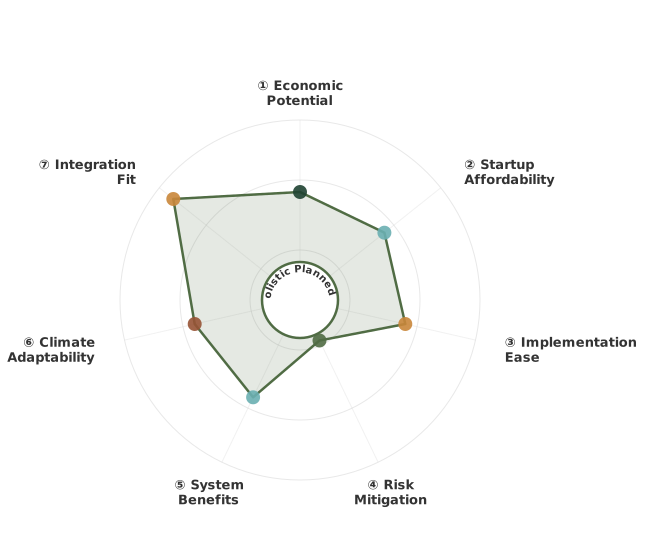
How These Traits Are Calculated
Trait dimensions are ordered clockwise starting from the top of the chart (12 o'clock position):
1. Economic Potential
Financial returns, annual value, and break-even timeline
WHAT: Evaluates financial viability by combining net annual value ($/ha from savings, income, and amortized harvests) with break-even timeline showing when practices pay for themselves.
WHY: Farmers need clear ROI understanding before committing resources. Fast payback (≤3 years) with strong returns (≥$300/ha) enables confident adoption, while long timelines (>10 years) restrict adoption to well-funded operations willing to wait for returns.
HOW: Calculated from net annual value in $/ha and break-even years. Exceptional (≥2.6): fast ROI ≤3 years + high value ≥$300/ha. Typical (1.8-2.5): moderate returns or longer timelines. Limited (<1.8): marginal economics or very long payback >10 years.
2. Startup Affordability
Initial investment costs and financial barrier to entry
WHAT: Measures financial barrier to entry through startup costs for equipment, infrastructure, consulting, and materials. Inverted scoring: lower costs = higher scores = more accessible adoption.
WHY: Affordability determines who can adopt. Low-cost practices (<$250/ha) enable widespread adoption across diverse scales, while high costs (>$2,500/ha) limit adoption to well-capitalized operations, creating barriers that slow regenerative transition.
HOW: Calculated from initial investment parsed from practice content. Inverted scoring: Exceptional (≥2.6): minimal investment <$250/ha. Typical (1.8-2.5): moderate costs $250-2,500/ha. Limited (<1.8): high barrier >$2,500/ha.
3. Implementation Ease
Learning curve and specialized knowledge required
WHAT: Measures how much learning, planning, and specialized knowledge a practice requires. Simpler practices with fewer steps score higher, while complex practices requiring extensive training or specialized resources score lower.
WHY: Complex practices create adoption barriers even when economically viable. Straightforward practices enable faster adoption and broader participation, while those requiring extensive training, timing precision, or specialized equipment limit who can succeed.
HOW: Evaluated by measuring documentation length and identifying complexity markers like location-specific requirements, seasonal timing windows, specialized skills, and dedicated equipment needs. Exceptional (≥2.6): straightforward practices with minimal prerequisites. Typical (1.8-2.5): moderate learning curve with some specialized needs. Limited (<1.8): steep learning curve requiring significant training or resources.
4. Risk Mitigation
Identified financial and ecological risk assessment
WHAT: Evaluates documented risks across financial (investment loss, market volatility) and ecological (crop failure, pest outbreaks) domains. Inverted scoring: fewer risks = higher scores.
WHY: Understanding risk exposure helps farmers make informed decisions. Low-risk practices allow confident implementation, while high-risk practices require careful planning and contingency resources. Risk transparency prevents costly failures.
HOW: Calculated from identified risks in practice content. Inverted scoring: Exceptional (≥2.6): ≤2 risks with manageable severity. Typical (1.8-2.5): 3-5 moderate risks. Limited (<1.8): 6+ risks or severe exposure.
5. System Benefits
How many ways the practice improves your land simultaneously
WHAT: Measures how many aspects of land health improve at once—carbon storage, soil quality, erosion control, water absorption, and biodiversity. Practices that improve multiple areas simultaneously create compounding benefits where each improvement reinforces the others.
WHY: The best practices solve multiple problems at once. For example, addressing erosion simultaneously builds carbon and improves water infiltration, creating a resilient system with positive feedback loops. Single-benefit approaches miss these compound transformation opportunities.
HOW: Evaluated across five key outcomes: carbon sequestration, soil organic matter increase, erosion reduction, water infiltration improvement, and biodiversity enhancement. Exceptional (≥2.6): high carbon storage (>8 t/ha/yr), improvements across 4-5 areas, transformative outcomes. Typical (1.8-2.5): moderate carbon (3-8 t/ha/yr), improvements across 2-3 areas. Limited (<1.8): modest impact (<3 t/ha/yr), single-area focus only.
6. Climate Adaptability
Geographic applicability across Köppen climate zones
WHAT: Evaluates geographic applicability by assessing how many Köppen climate zones successfully support a practice and what adaptation requirements are needed. Measures breadth of climates where farmers can implement with minimal to moderate modifications.
WHY: Universal practices working across diverse climates enable more farmers to adopt regenerative approaches. Practices limited to single climate types (only Mediterranean, only tropical) restrict adoption and slow global transition. Adaptability determines whether a practice serves niche regions or offers broad transformation.
HOW: LLM evaluation of regional success stories, Köppen zone coverage, and adaptation needs. Exceptional (≥2.6): 5+ zones or 4+ climate types, 3+ continents, minimal adaptation. Typical (1.8-2.5): 3-4 zones or 2-3 types, 2 continents, moderate adaptation. Limited (<1.8): 1-2 zones, single region, significant adaptation or highly specialized.
7. Integration Fit
How well this practice combines with others you're doing
WHAT: Measures how well a practice combines with other regenerative practices you might be doing. Some practices work as building blocks that make many other practices easier or more effective, while others work best on their own.
WHY: Practices that combine well with many others create more value on your farm. For example, cover cropping enables no-till, improves grazing, supports crop diversity, and helps water management—making all of them work better together. This helps you build a coherent system rather than juggling disconnected practices.
HOW: Evaluated by identifying which practices combine well and how strong those combinations are. 'Ideally Suited' means strong combinations where practices reinforce each other (practice A makes B easier, while B makes A more effective). 'Adequate' means complementary benefits that work well together. Exceptional (≥2.6): combines well with 6+ practices, serves as a building block. Typical (1.8-2.5): combines with 3-5 practices. Limited (<1.8): 1-2 practices or works best alone.
Going Deeper
1
WHY - The Benefits
Holistic Planned Grazing (HPG) is a cornerstone of regenerative agriculture because it strategically leverages livestock to improve the entire ecosystem, not just animal production. Its benefits cascade from the soil up, creating a resilient and productive agricultural...
Holistic Planned Grazing (HPG) is a cornerstone of regenerative agriculture because it strategically leverages livestock to improve the entire ecosystem, not just animal production. Its benefits cascade from the soil up, creating a resilient and productive agricultural...
WHY - The Benefits
Holistic Planned Grazing (HPG) is a cornerstone of regenerative agriculture because it strategically leverages livestock to improve the entire ecosystem, not just animal production. Its benefits cascade from the soil up, creating a resilient and productive agricultural...
Holistic Planned Grazing (HPG) is a cornerstone of regenerative agriculture because it strategically leverages livestock to improve the entire ecosystem, not just animal production. Its benefits cascade from the soil up, creating a resilient and productive agricultural...
Soil Health Benefits
One of the most significant benefits of HPG is its profound impact on soil health. By ensuring adequate rest periods for pastures, HPG allows plant roots to regrow and exude carbon compounds, feeding the soil food web. This leads to a consistent increase in soil organic matter (SOM), typically ranging from 0.5-2.0% over 5-10 years, depending on the starting condition and climate. Higher SOM improves soil structure, leading to better aeration and water infiltration. HPG systems often show a 40-70% improvement in water infiltration rates compared to continuous or poorly managed grazing.
The increased organic matter and improved soil structure create a more hospitable environment for soil organisms, particularly earthworms. HPG can increase earthworm populations by 200-500% or more, as they create burrows that further enhance aeration and water percolation. This revitalized soil biology also aids in nutrient cycling, making more nutrients available to plants and reducing the need for synthetic inputs. Erosion is significantly reduced because the soil is consistently covered by living plants or residue, and the improved infiltration prevents surface runoff.
Economic Benefits
The economic advantages of HPG are substantial and often realized within the first few years for livestock producers. By improving forage quality and quantity through better pasture management, HPG can increase animal performance. Studies and farmer testimonials report improvements in average daily gain, milk production, and reproductive rates, often translating to $50-150 USD per animal per year in added revenue or reduced feed costs.
The increased productivity of the land also means that more animals can often be supported per hectare, increasing overall farm profitability. Extended grazing seasons, enabled by healthier pastures that remain productive longer into the fall and often recover faster in spring, can reduce winter feed costs by 20-50%. Over the long term, the improved soil health and land productivity lead to increased land value. Furthermore, the carbon sequestration potential of HPG systems is increasingly being recognized, opening up opportunities for farmers to participate in carbon markets or earn revenue from ecosystem services.
Water Cycle Function
HPG significantly enhances water cycle function. The improved soil structure and increased organic matter create a more spongy soil profile that can absorb and hold significantly more water. This reduces surface runoff, minimizing erosion and allowing more rainfall to infiltrate the soil profile. In arid and semi-arid regions, this improved water retention is critical for extending the grazing season and maintaining forage availability during dry periods.
The extended rest periods allow plants to develop deeper root systems, which access water from deeper soil layers and create channels that further aid infiltration. This resilience to drought is a major economic and ecological benefit, allowing livestock operations to weather dry spells more effectively. Conversely, in regions with high rainfall, increased infiltration reduces the risk of flooding and groundwater contamination from nutrient runoff.
Carbon Sequestration Potential
Carbon sequestration is a primary outcome of HPG. By stimulating plant growth and root development, and by increasing soil organic matter, HPG systems actively draw down atmospheric carbon dioxide (CO2) and store it in the soil as stable organic carbon. The amount of carbon sequestered is highly variable and a subject of ongoing research. Reported rates for well-managed HPG systems often range from 1 to 5 tonnes of CO2 equivalent per hectare per year, though some studies in optimal conditions suggest potential for over 10 tCO2e/ha/yr. This contribution to climate change mitigation is a significant ecological service.
Biodiversity Enhancement
HPG fosters biodiversity both above and below ground. The increased diversity of perennial forages and the mosaic of grazed and rested areas create a more complex habitat for insects, birds, and small mammals. For example, diverse pasture mixes provide varied food sources and nesting sites for pollinators and beneficial insects. Below ground, the revitalized soil food web, driven by increased organic matter and diverse plant roots, supports a vast array of bacteria, fungi, protozoa, nematodes, and arthropods, leading to a more resilient and functional soil ecosystem.
Regenerative Systems Fit
HPG is a foundational regenerative practice, directly embodying and supporting all five core principles.
- Principle 1 (Minimize Soil Disturbance): Achieved by managed hoof action and extended rest periods, preventing continuous overgrazing and compaction.
- Principle 2 (Maximize Crop Diversity): Encourages a diverse sward of perennial forages through planned grazing and rest, which supports above and below-ground diversity.
- Principle 3 (Keep Soil Covered): Ensures living plants or residue are always present due to planned grazing and sufficient recovery periods.
- Principle 4 (Maintain Living Roots): Ensures continuous root activity through strategic grazing that allows for regrowth and extended photosynthetic periods.
- Principle 5 (Integrate Livestock): This is the core of HPG, using animals as regenerative tools.
HPG integrates seamlessly with other regenerative practices such as cover cropping (where applicable), keyline design for water management, silvopasture, and no-till farming. It is often a prerequisite for or enhancement to these practices, providing the ecological fertility and structure needed for them to thrive. For farms transitioning from conventional, HPG offers a pathway to maintain livestock income while rebuilding soil health and ecological function.
Sources behind this view
Videos & Podcasts
-
Multi-regional studies show holistic planned grazing (HPG) significantly increases soil carbon sequestration (up to 8.6 tons/year), improves soil health, water infiltration, and livestock production c
-
Holistic management and planned grazing are foundational for 100% grass-fed dairy, improving soil health, nutrient cycling, and economic viability by reducing feed costs. This regenerative approach be
-
Holistic planned grazing mimics natural herd behavior to regenerate grasslands, improve ecosystem function, and sequester carbon. It involves matching forage to livestock needs and monitoring grass re
-
Holistic grazing, with high-density short grazing (2-3 days) and long rest periods (3-4 months), dramatically increases pasture diversity, eliminates pests like grasshoppers, and boosts livestock prod
Community
-
Allan Savory clarifies that his Holistic Planned Grazing (HPG) is a planning process, not a system, designed to manage complexity, unlike prescriptive rotational grazing derivatives. He advises focusi
Read more (opens in new window) permies.com -
Allan Savory explains holistic management prevents desertification by using livestock to mimic nature, replacing prescriptive grazing systems. Holistic Planned Grazing, with decisions guided by a holi
Read more (opens in new window) permies.com -
Adopts a holistic grazing management approach emphasizing diverse perennial pastures, higher residuals (4"), and longer rest periods (avg. 45 days) to build soil health, increase organic matter (3.4%
Read more (opens in new window) smallfarms.cornell.edu -
Manage rotational grazing by setting recovery (15-40+ days, adapting to region/season) and grazing periods (2-3 days). Aim to 'take half, leave half' for livestock and soil microbes. High stocking den
Read more (opens in new window) smallfarms.cornell.edu
Research
-
The effect of Holistic Planned Grazing™ on African rangelands: a case study from Zimbabwe (opens in new window)
This study found: Holistic Planned Grazing™ in Zimbabwe improved rangeland health, soil, and vegetation with higher animal density. Temporary animal enclosures also boosted crop yields, suggesting HPG enhances ecosyste
-
Impacts of holistic planned grazing with bison compared to continuous grazing with cattle in South Dakota shortgrass prairie (opens in new window)
This study found: Managed grazing with bison in South Dakota's shortgrass prairie significantly improved soil health, water infiltration, forage, and plant composition compared to continuous cattle grazing over a decad
-
A global assessment of Holistic Planned Grazing™ compared with season-long, continuous grazing: meta-analysis findings (opens in new window)
This study found: Meta-analysis: Holistic Planned Grazing™ showed no significant difference in plant cover, biomass, or animal gain compared to continuous grazing, with higher rainfall areas showing potential benefits.
-
Managing Grazing to Restore Soil Health, Ecosystem Function, and Ecosystem Services (opens in new window)
This study found: Properly managed grazing animals can reverse environmental damage. Regenerative practices, like Adaptive Multi-Paddock (AMP) grazing, boost soil health, increase soil carbon, reduce erosion, and enhan
From the Web
-
Holistic Planned Grazing (HPG) at Mimms Ranch, West Texas, contrasts with continuous grazing, showing improved soil cover, plant diversity, and carrying capacity. It balances livestock condition, fora
-
Holistic Planned Grazing (HPG) plans season-long grazing for plant recovery and productivity, strategically using High Stock Density Grazing (HSDG) as a tool while prioritizing plant health and adapti
-
Scientific research supports Holistic Planned Grazing (HPG) for improving soil health and carbon sequestration. Studies show HPG increases soil organic carbon (up to 20-30%), biomass (over 300%), and
-
In brittle environments prone to desertification, Holistic Planned Grazing (HPG) uses livestock to reverse land degradation and combat climate change. Developed from military planning, HPG mimics pred
2
WHERE - Regional Considerations
Holistic Planned Grazing (HPG) is remarkably adaptable, with its principles applicable across diverse global climates. However, specific implementation details—especially paddock size, rest periods, and species selection—must be tailored to regional environmental...
Holistic Planned Grazing (HPG) is remarkably adaptable, with its principles applicable across diverse global climates. However, specific implementation details—especially paddock size, rest periods, and species selection—must be tailored to regional environmental...
WHERE - Regional Considerations
Holistic Planned Grazing (HPG) is remarkably adaptable, with its principles applicable across diverse global climates. However, specific implementation details—especially paddock size, rest periods, and species selection—must be tailored to regional environmental...
Holistic Planned Grazing (HPG) is remarkably adaptable, with its principles applicable across diverse global climates. However, specific implementation details—especially paddock size, rest periods, and species selection—must be tailored to regional environmental...
Click Here to Look up your Region if you don't already know it
Humid Temperate Regions
Representative Locations: Southeastern United States, northern Europe (UK, Germany, Poland), eastern China, Japan, New Zealand
Climate Context: Warm to hot summers and cool to cold winters with moderate to high annual precipitation (75-150 cm or 30-60 inches) distributed relatively evenly. USDA Zones 6-8, Köppen Cfb/Cfa.
HPG in these regions benefits significantly from long growing seasons. Paddock sizes can often be smaller, allowing for more frequent moves and shorter rest periods during peak growth. Success hinges on managing for high-quality forage, as lush growth can quickly become stemmy and less digestible. Livestock are often used to "clean up" rank growth after initial grazing bouts. Winter management requires careful planning to prevent poaching and soil damage during wet periods, potentially utilizing winter cover crops or restricted grazing areas. Diversification of forage species, including legumes, is key to maximizing productivity and soil health.
Mediterranean Regions
Representative Locations: California, Mediterranean basin (Spain, Italy, Greece), central Chile, southwestern Australia, Cape Town region of South Africa
Climate Context: Hot, dry summers and mild, wet winters. Annual precipitation 40-90 cm (15-35 inches), highly seasonal. USDA Zones 8-10, Köppen Csa/Csb.
In Mediterranean climates, HPG must be planned around pronounced dry summers and wet winters. The focus shifts to managing for drought-tolerant perennial grasses and forbs. Stocking densities may need to be lower, and rest periods during the dry season might be extended (or stock removed entirely) to allow perennial plants to survive and regrow when rains return. Rotational grazing in the wet season is critical to prevent soil compaction and erosion on potentially fragile soils. Utilizing managed winter grazing on annual pastures or cover crops can extend the grazing season.
Arid/Semi-Arid Regions
Representative Locations: Western USA, North Africa, Central Asia, interior Australia, Sahel region of Africa
Climate Context: Low annual precipitation (<40 cm or 15 inches), high temperatures, short and often unpredictable growing seasons. USDA Zones 7-9, Köppen BSh/BSk.
HPG in arid and semi-arid environments requires intensive management and large areas to provide adequate rest. Paddock sizes are often much larger, and rest periods can extend for months, sometimes a year or more, to allow drought-tolerant perennial plants to recover. The goal is to promote the establishment and health of deep-rooted perennial grasses and shrubs. Overgrazing is a constant threat, so precise monitoring and strict adherence to rest periods are paramount. Water management is crucial; HPG can improve water infiltration, making better use of infrequent rainfall. Drought-resilient livestock breeds are also an advantage.
Cold Continental Regions
Representative Locations: Northern USA and Canada, Northern Europe, Northern Asia
Climate Context: Very short growing seasons, extreme summer heat, severe winter cold. USDA Zones 3-5, Köppen Dfa/Dfb.
In cold continental climates, HPG must maximize the short growing season. Animals are typically moved through paddocks in a concentrated period. Extended rest periods are essential to allow plants to accumulate reserves for winter survival and early spring growth. Winter grazing management is critical, often requiring confinement or carefully managed access to perennial pastures to prevent detrimental impacts during periods of snow cover and frozen ground. Silvopasture or windbreaks can be beneficial for livestock protection during harsh winters. Paddock design needs to consider access to areas with better forage or shelter during extreme weather.
Subtropical Regions
Representative Locations: Southeastern USA, Southern China, Southern Brazil, Eastern Australia
Climate Context: Hot, humid summers and mild winters with generally ample rainfall, though dry spells can occur. USDA Zones 9-11, Köppen Cfa/Cwa.
Subtropical regions often have long growing seasons but can face challenges with heat stress and humidity for both livestock and forage. HPG can be used to manage for heat-tolerant forage species and to provide shade through integration with trees (silvopasture). Frequent moves during humid summers can help prevent foot rot and other heat-related ailments by reducing prolonged exposure to moist ground. Planning must account for potential dry periods when rest periods may need to be extended. Managing rank, lush growth during the wet season is also important for forage quality.
Tropical Regions
Representative Locations: Central America, Southeast Asia, East Africa, Northern Australia, Northern South America
Climate Context: High temperatures year-round, with distinct wet and dry seasons or consistent high rainfall. Köppen Af/Am/Aw.
HPG in tropical regions can be very effective due to long or year-round growing seasons. However, management must contend with intense rainfall and heat. Paddocks are often small and rest periods can be shorter during peak wet seasons, balanced by longer rests during dry spells. Forage quality can decline rapidly if not managed well, requiring strategic grazing to maintain palatability and nutrient content. Managing for heat-tolerant species and potentially integrating shade trees (silvopasture) is beneficial. Overgrazing must be strictly avoided, especially in fragile tropical soils prone to erosion.
3
HOW - Implementation Process
Implementing Holistic Planned Grazing (HPG) requires a structured, adaptive approach. It's not a one-off change but an ongoing process of observation, planning, and adjustment.
Implementing Holistic Planned Grazing (HPG) requires a structured, adaptive approach. It's not a one-off change but an ongoing process of observation, planning, and adjustment.
HOW - Implementation Process
Implementing Holistic Planned Grazing (HPG) requires a structured, adaptive approach. It's not a one-off change but an ongoing process of observation, planning, and adjustment.
Implementing Holistic Planned Grazing (HPG) requires a structured, adaptive approach. It's not a one-off change but an ongoing process of observation, planning, and adjustment.
Prerequisites
- Define Your Goals: What do you want to achieve? (e.g., improve soil health, increase animal performance, reduce feed costs, enhance biodiversity, increase resilience). Clearly defined goals guide your planning.
- Understand Your Context: Assess your land's current ecological status (soil type, topography, vegetation, water sources, climate, rainfall patterns, growing seasons), livestock type and numbers, and existing infrastructure (fences, water points).
- Commit to Observation: Train yourself to observe your land and livestock daily. Look for plant recovery, animal behavior, soil surface conditions (bare ground, compaction), and water dynamics.
- Acquire Basic Knowledge: Understand plant physiology (how plants regrow after grazing), animal behavior, and basic soil science. Resources from organizations like the Savory Institute, local extension services, or regenerative agriculture networks are invaluable.
Phase 1: Resource Assessment & Design
- Map Your Land: Create a detailed map of your property. Identify all land features: paddocks, fences, water points, roads, watercourses, wooded areas, difficult terrain, soil types, and any areas needing special management.
- Identify Potential Paddock Boundaries: Based on topography, water access, and forage types, sketch out potential paddock subdivisions. The goal is to create manageable grazing units.
- Determine Water Access: Ensure all planned paddocks have access to clean water for livestock. This might involve installing new water points, extending pipelines, or using water trucks temporarily. Water distribution is a key limitation for paddock subdivision.
- Consider Fencing Needs: Identify areas where new fencing is needed to create sufficient paddocks for planned grazing. This could range from permanent electric fencing to temporary setups.
- Understand Your Growing Season: Map your effective growing season based on frost dates, rainfall patterns, and forage growth curves. This is crucial for determining rest periods.
Phase 2: Developing the Grazing Plan
- Determine Stocking Density & Herd Size: Calculate your carrying capacity based on your land assessment and desired rest periods. Start conservatively.
- Establish the "Planned Herd": Decide on the animals that will be managed together (e.g., one herd of cows, a mob of sheep). This simplifies management.
- Set Your "Pace Maker": This is the heart of HPG. Decide on your desired grazing period per paddock and your desired rest period. A common starting point is grazing for 1-3 days and resting for 30-60 days, but this varies immensely by climate and plant growth. The key is that rest periods must be long enough for plants to regrow significantly.
- Create the Annual Plan: Using your map, growing season understanding, and pace maker, map out a rough grazing rotation for the year. This is a dynamic plan, not rigid.
- Identify "Key Areas": Critical habitats (e.g., riparian zones, sensitive vegetation) that need special management or longer rest.
- Sequence Paddock Moves: Plan the general flow of animals. Consider forage availability, plant recovery stages, and animal needs (e.g., flushing ewes, calving cows).
- Allocate Rest Periods: Ensure sufficient recovery time for each paddock based on plant growth rates.
Phase 3: Implementation & Adaptive Management
- Execute the Plan: Move the planned herd through the paddocks according to your grazing plan.
- Observe and Monitor: This is the most critical step.
- Plant Recovery: Are plants regrowing after grazing? Is mulch accumulating? Are desirable species increasing?
- Animal Performance: Are animals thriving? Is their body condition improving?
- Soil Health: Look for signs of erosion, bare ground, or compaction. Note changes in soil cover and moisture.
- Water Points: Are they functioning correctly? Is water clean?
- Adapt the Plan: Based on your observations, adjust the plan. If a paddock is recovering faster than expected, you might graze it again sooner or extend the rest for others. If plants are not recovering, you need longer rest periods or lower stocking density. This adaptive feedback loop builds your understanding and the effectiveness of the system.
- Plan for Breaks & Contingencies: Include planned breaks for critical ecological periods (e.g., nesting season, recovery before winter). Have contingency plans for drought, floods, or unexpected infrastructure failures.
Transition Timeline & Phase-Out Strategy (if applicable to precursor practices)
HPG itself is a regenerative practice. If transitioning from conventional grazing, the phasing out of non-regenerative inputs and practices occurs alongside the implementation of HPG.
- Years 1-2: Begin implementing HPG principles with existing infrastructure. Focus on observation, planning, and frequent moves. Gradually reduce synthetic inputs (fertilizers, pesticides) as pasture health improves and fertility is recycled. Increase paddock density gradually as fences and water become available.
- Years 3-5: Infrastructure (fencing, water) is more developed, allowing for finer paddock subdivision and more precise rest periods. Synthetic input use is significantly reduced or eliminated. Livestock performance improvements become consistent. Economic benefits accrue.
- Year 5+: HPG is fully integrated into farm management. Land condition is noticeably improving. The focus is on continuous refinement of the plan based on detailed ecological monitoring and long-term site-specific observations.
The "phase-out" is not of HPG itself, but of the extractive practices it replaces. The speed of transition depends on the farm's starting point, resources, and commitment.
Sources behind this view
Videos & Podcasts
-
Holistic planned grazing (HPG), also called adaptive multi-paddock grazing, significantly improves soil carbon (3 tons/ha/yr more than continuous grazing), water infiltration, and ecological function
-
True holistic planned grazing, guided by a 'holistic context,' differs from its many failed derivatives. It requires livestock in seasonal rainfall areas and proactive management, unlike hands-off app
-
Holistic management and planned grazing are foundational for 100% grass-fed dairy, improving soil health, nutrient cycling, and economic viability by reducing feed costs. This regenerative approach be
-
Holistic planned grazing uses a structured chart and team planning sessions to determine grazing movements and critical recovery periods, ensuring land regeneration and improved animal performance, un
Community
-
Allan Savory clarifies that his Holistic Planned Grazing (HPG) is a planning process, not a system, designed to manage complexity, unlike prescriptive rotational grazing derivatives. He advises focusi
Read more (opens in new window) permies.com -
Allan Savory explains holistic management prevents desertification by using livestock to mimic nature, replacing prescriptive grazing systems. Holistic Planned Grazing, with decisions guided by a holi
Read more (opens in new window) permies.com -
Adopts a holistic grazing management approach emphasizing diverse perennial pastures, higher residuals (4"), and longer rest periods (avg. 45 days) to build soil health, increase organic matter (3.4%
Read more (opens in new window) smallfarms.cornell.edu -
High-density planned grazing, part of Holistic Management, uses cattle timing and density to regenerate soil, enhance forage, and improve animal health. Key is leaving residual forage (40-70%) and mai
Read more (opens in new window) smallfarms.cornell.edu
Research
-
The effect of Holistic Planned Grazing™ on African rangelands: a case study from Zimbabwe (opens in new window)
This study found: Holistic Planned Grazing™ in Zimbabwe improved rangeland health, soil, and vegetation with higher animal density. Temporary animal enclosures also boosted crop yields, suggesting HPG enhances ecosyste
-
Impacts of holistic planned grazing with bison compared to continuous grazing with cattle in South Dakota shortgrass prairie (opens in new window)
This study found: Managed grazing with bison in South Dakota's shortgrass prairie significantly improved soil health, water infiltration, forage, and plant composition compared to continuous cattle grazing over a decad
-
A global assessment of Holistic Planned Grazing™ compared with season-long, continuous grazing: meta-analysis findings (opens in new window)
This study found: Meta-analysis: Holistic Planned Grazing™ showed no significant difference in plant cover, biomass, or animal gain compared to continuous grazing, with higher rainfall areas showing potential benefits.
-
Multi-paddock grazing on rangelands: why the perceptual dichotomy between research results and rancher experience? (opens in new window)
This study found: Ranchers often see benefits from multi-paddock grazing that scientific studies don't always confirm. This review explores the gap, highlighting rancher-led adaptive management principles and suggestin
From the Web
-
Holistic Planned Grazing (HPG) plans season-long grazing for plant recovery and productivity, strategically using High Stock Density Grazing (HSDG) as a tool while prioritizing plant health and adapti
-
In brittle environments prone to desertification, Holistic Planned Grazing (HPG) uses livestock to reverse land degradation and combat climate change. Developed from military planning, HPG mimics pred
-
Holistic Planned Grazing (HPG) at Mimms Ranch, West Texas, contrasts with continuous grazing, showing improved soil cover, plant diversity, and carrying capacity. It balances livestock condition, fora
-
Scientific research supports Holistic Planned Grazing (HPG) for improving soil health and carbon sequestration. Studies show HPG increases soil organic carbon (up to 20-30%), biomass (over 300%), and
4
Know the Debate
Holistic Planned Grazing outcomes depend significantly on where you are and how you start. In humid regions with reliable rainfall, soil biology re...
Know the Debate
Holistic Planned Grazing outcomes depend significantly on where you are and how you start. In humid regions with reliable rainfall, soil biology re...
Holistic Planned Grazing outcomes depend significantly on where you are and how you start. In humid regions with reliable rainfall, soil biology responds quickly, and visible improvements can emerge within two years. In semi-arid rangeland, slower decomposition means patience is key—plan for five to seven years of consistent management before soil tests reflect significant change. While HPG is widely promoted for ecological restoration, scientific validation for dramatic desertification reversal varies, highlighting the importance of context-specific monitoring and adaptation.
How fast are soil health improvements from HPG?
Faster improvement (2-5 years)
In humid climates with high rainfall and active decomposition, soil health indicators like water infiltration and organic matter can show significant improvement within 2-5 years. This is especially true when starting from degraded land that has high potential for biological response.
Sources behind this view
Sources behind this view
Videos & Podcasts
-
Regenerative grazing (adaptive multi-paddock) uses high-density, short-duration grazing with long recovery to stimulate soil health, increase biomass, and improve water infiltration, mimicking natural systems.
Research
-
FORAGES AND PASTURES SYMPOSIUM: Improving soil health and productivity on grasslands using managed grazing of livestock. (opens in new window)
This study found: Managing livestock grazing on grasslands can offer multiple benefits beyond just producing meat or milk. By carefully planning grazing, farmers can encourage a wider variety of plants to grow. This diversity helps plants use sunlight, water, and nutrients more effectively, making the pasture more resilient to weather changes and less prone to weeds. Managed grazing also helps build soil organic matter, which means more carbon and nutrients are stored in the soil, and the soil can hold more water. While grazing can create soil compaction, the roots from diverse pasture plants can help reduce this. More research is needed on how different grazing and rest periods affect soil compaction. Keeping enough plants on the ground is key to helping water soak into the soil, even in wet areas. Diverse plant communities can also create better habitats for wildlife and pollinators. It's important to remember that how grasslands respond to grazing depends a lot on local climate, soil, and plant types. A single grazing plan might not be best for both animal production and all the ecological benefits, so farmers need to balance their goals.
-
Key soil health indicators under humid grazing lands (opens in new window)
This study found: This review highlights important ways to assess soil health in pastures and rangelands, especially in humid areas. It explains that soil compaction, nutrient levels, and organic matter are key indicators. Compaction, often measured by how dense the soil is, can increase with more animals but is helped by healthy organic matter on the surface. Nutrients tend to be concentrated near the top of the soil, and how they spread depends on soil type and farming practices. Soil life and activity generally improve over time when land is used for growing forages, and grazing often boosts this more than cutting hay because animal manure returns nutrients and organic matter to the soil. Pastures build up more soil carbon and nitrogen compared to crop fields, indicating higher quality organic matter that supports farm production. Overall, using balanced farming methods with forages can significantly improve soil health in these areas.
From the Web
-
Planned grazing is a powerful tool for land regeneration and resilience, improving soil health and water retention. Training in Decatur, Texas, focused on using tools like the HMI grazing chart to build intentional grazing plans, emphasizing that proactive decisions lead to better outcomes for land, animals, and producers.
Slower improvement (5-10+ years)
In arid and semi-arid regions with low, unpredictable rainfall, intense management, and longer rest periods are needed. Soil carbon accumulation and significant soil health changes typically require 5-10 years or more to become reliably measurable.
Sources behind this view
Sources behind this view
Videos & Podcasts
-
Holistic planned grazing mimics natural herd behavior to regenerate grasslands, improve ecosystem function, and sequester carbon. It involves matching forage to livestock needs and monitoring grass recovery, leading to healthier land and livelihoods.
-
Utilize holistic planned grazing with livestock and cover crops to keep soil covered, mimicking nature to build organic matter, reduce erosion, and combat desertification. This approach is scalable and applicable across diverse climates and farm sizes.

Research
-
A global assessment of Holistic Planned Grazing™ compared with season-long, continuous grazing: meta-analysis findings (opens in new window)
This study found: A large-scale analysis of grazing studies from 1972 to 2016 found that a planned grazing method called Holistic Planned Grazing™ (HPG) did not lead to better results than simply letting livestock graze continuously throughout the season. The study looked at plant cover, plant growth, and how much weight animals gained. In most cases, there was no difference between the two grazing methods. However, the research did find that HPG might work better in areas with more rainfall, suggesting that the environment plays a big role in how well this grazing strategy performs. The study did not find evidence that HPG doubles stocking rates or reverses climate change on its own.
Making Sense of the Differences
The speed of soil health recovery under HPG is primarily determined by regional climate and the starting condition of the land. Humid regions with adequate rainfall and active decomposition allow for rapid biological responses, leading to observable soil improvements within 2-5 years. In contrast, drier climates require longer rest periods for plant recovery after grazing, slowing down soil organic matter accumulation and thus extending the timeline for significant changes to 5-10 years or more. Farmers in drier climates should plan for patience and focus on monitoring subtle ecological indicators early on.
What is the minimum land size for effective HPG?
Effective on small scales with intensive management
HPG principles can be applied successfully on small landholdings (1-5 acres) through meticulous planning, higher stocking densities, and strict recovery management, demonstrating that management intensity can compensate for limited area.
Sources behind this view
Sources behind this view
Videos & Podcasts
-
Utilize holistic planned grazing with livestock and cover crops to keep soil covered, mimicking nature to build organic matter, reduce erosion, and combat desertification. This approach is scalable and applicable across diverse climates and farm sizes.
-
Utilize holistic planned grazing with livestock and cover crops to keep soil covered, mimicking nature to build organic matter, reduce erosion, and combat desertification. This approach is scalable and applicable across diverse climates and farm sizes.
Requires larger areas (4+ hectares) for optimal management
Some sources suggest HPG is most effective on larger properties (e.g., 4+ hectares / 10+ acres) to allow for sufficient paddock subdivision and manageable rest periods, particularly in 'brittle' environments.
Sources behind this view
Sources behind this view
Research
-
316 Regenerative grazing: restoring ecosystem function to improve farm profits (opens in new window)
This study found: This review suggests that managing livestock with regenerative grazing practices can improve soil health, which in turn boosts farm profits. The core idea is that healthy soil, rich in carbon, benefits the entire environment. The author believes shifting from intensive, high-input farming to low-input methods that restore natural processes is key for creating sustainable and resilient farms. The review criticizes current research for being too narrow and not looking at the whole farm system. Healthy ecosystems, supported by good soil, improve water management, nutrient availability, and biodiversity, leading to better nutrition for both animals and people. The research discussed involves working with farmers who have already seen financial and environmental success to develop practical strategies.
From the Web
-
Provides guidance on transitioning to regenerative grazing, emphasizing Holistic Planned Grazing principles and planning. Covers stock density, herd management, and monitoring for improved soil health and profitability, with instruction from experienced practitioners.
Making Sense of the Differences
While larger land areas can offer more flexibility in paddock subdivision and rest periods, making management simpler, HPG principles are adaptable to smaller scales through intensified planning and management. The key is not the absolute size but the ability to strategically impact and rest the land. Smaller operations can achieve success by focusing on higher stocking densities for shorter durations and ensuring long cumulative recovery, while larger farms can utilize more extensive subdivision and variable rest periods based on land type.
Does HPG consistently reverse desertification?
Proven desertification reversal tool
Theorists and many field practitioners assert that HPG is a proven method that effectively reverses desertification, demonstrably improving degraded lands and increasing vegetation by mimicking natural herd behavior.
Sources behind this view
Sources behind this view
Videos & Podcasts
-
Holistic planned grazing mimics natural herd behavior to regenerate grasslands, improve ecosystem function, and sequester carbon. It involves matching forage to livestock needs and monitoring grass recovery, leading to healthier land and livelihoods.
-
Holistic planned grazing (HPG), also called adaptive multi-paddock grazing, significantly improves soil carbon (3 tons/ha/yr more than continuous grazing), water infiltration, and ecological function by managing for microbial activity, earthworms, and dung beetles. HPG contrasts with continuous grazing, which degrades soil, and requires short grazing periods with long recovery times.
-
Holistic planned grazing, adapted from other fields, is presented as the solution to desertification caused by livestock mismanagement. It integrates animals with land use and socio-economic factors, proving effective even with poor implementation.
From the Web
-
Holistic and planned grazing with livestock can restore degraded land and improve soil health by enhancing carbon sequestration, water cycles, and fertility, contrary to the belief that grazing causes desertification.
-
Implement Holistic Planned Grazing for cattle to sequester more carbon than continuous grazing.
Desertification reversal claims have mixed scientific validation
Some academic analyses question the broad claims of desertification reversal solely through HPG, noting that controlled scientific studies often show mixed results, with potential benefits linked to favorable rainfall or specific site conditions rather than inherent superiority.
Sources behind this view
Sources behind this view
Research
-
A global assessment of Holistic Planned Grazing™ compared with season-long, continuous grazing: meta-analysis findings (opens in new window)
This study found: A large-scale analysis of grazing studies from 1972 to 2016 found that a planned grazing method called Holistic Planned Grazing™ (HPG) did not lead to better results than simply letting livestock graze continuously throughout the season. The study looked at plant cover, plant growth, and how much weight animals gained. In most cases, there was no difference between the two grazing methods. However, the research did find that HPG might work better in areas with more rainfall, suggesting that the environment plays a big role in how well this grazing strategy performs. The study did not find evidence that HPG doubles stocking rates or reverses climate change on its own.
-
How Biodiversity-Friendly Is Regenerative Grazing? (opens in new window)
This study found: This review looked at 58 studies to see how regenerative grazing, which involves moving dense herds of livestock frequently through pastures with long rest periods, affects biodiversity. The goal is to mimic natural grazing to improve soil and wildlife. Studies show that regenerative grazing can boost soil life, including more beneficial microbes and fungi, and improve soil structure through hoof action. However, the impact on plants is mixed: while grasses might do well, shrubs and wildflowers can sometimes be reduced by trampling. Similarly, some insects like dung beetles benefit from hoof action, but others are harmed. Bird populations can also see mixed results, with some benefiting from foraging opportunities and nesting sites, while others lose food sources during winter. While regenerative grazing doesn't automatically increase all types of biodiversity, it can be managed to create more varied habitats that support a wider range of plants and animals.
Making Sense of the Differences
While many farmers and proponents cite dramatic land restoration via HPG as proof of desertification reversal, scientific counterpoints highlight inconsistent results in controlled studies. The dramatic improvements seen in some Holistic Management case studies may be strongly influenced by favorable rainfall years and specific management adaptations not universally replicable. In arid regions prone to desertification, the success of HPG likely depends on meticulous planning, extremely long rest periods to recover drought-decimated vegetation, and careful monitoring to avoid overgrazing, making it a powerful tool but not a guaranteed solution for all degraded landscapes.
5
HOW MUCH - Costs & Investment
Note: Costs are presented in USD equivalent and will vary greatly by region based on local labor, material costs, land values, and availability of government programs. Research local pricing for accurate budgeting.
Note: Costs are presented in USD equivalent and will vary greatly by region based on local labor, material costs, land values, and availability of government programs. Research local pricing for accurate budgeting.
HOW MUCH - Costs & Investment
Note: Costs are presented in USD equivalent and will vary greatly by region based on local labor, material costs, land values, and availability of government programs. Research local pricing for accurate budgeting.
Note: Costs are presented in USD equivalent and will vary greatly by region based on local labor, material costs, land values, and availability of government programs. Research local pricing for accurate budgeting.
Note: All costs are based on recent US economic data (2024–2026) and may vary substantially by region based on local labor rates, material costs, and regulatory requirements.
Fencing Infrastructure
Fencing for Holistic Planned Grazing (HPG) relies on a combination of existing perimeter security and high-density interior subdivision. Infrastructure intensity is the primary driver of capital expenditure. Small-scale operations under 50 acres (20 ha) typically spend $156–$417 per acre ($385–$1,030/ha). This higher cost density is required to achieve the rapid paddock rotations necessary for intensive grazing, utilizing roughly 1.5 miles (2.4 km) of portable electric fencing and 50–100 step-in posts costing $4.17–$8.34 per unit.
Mid-scale operations ranging from 50–500 acres (20–202 ha) see costs compress to $63–$188 per acre ($156–$465/ha). At this scale, producers typically transition to high-tensile permanent perimeter fencing combined with specialized poly-braid for modular paddock subdivision. Large-scale operations exceeding 500 acres (202 ha) benefit from significant economies of scale, with expenditures dropping to $21–$83 per acre ($52–$205/ha). These operations minimize permanent wire, favoring long-length power runs and mobile solar-powered energizers costing $625–$1,563 per unit to manage vast landscapes efficiently.
Water Development
Water access is the most critical infrastructure constraint in HPG, as rapid movement requires water to be within close proximity to livestock to avoid unnecessary calorie expenditure during travel. Small-scale producers face costs of $208–$625 per acre ($514–$1,544/ha). These budgets often cover dedicated pipeline extensions from a central wellhead and the acquisition of 2–4 portable stock tanks costing $313–$729 per unit.
Mid-scale systems, covering 50–500 acres (20–202 ha), require investments of $83–$261 per acre ($205–$645/ha). Financial planning here involves laying 1,000–3,000 feet (304.8–914.4 m) of high-density polyethylene piping and installing quick-coupler valves every 500 feet (152.4 m) to allow for modular watering points. Large-scale setups exceeding 500 acres (202 ha) achieve efficiencies by utilizing gravity-fed systems from elevated surge tanks, reducing the need for expensive high-pressure electric pumping setups. Installing a central pumping station to serve a 1,000-acre (405 ha) network typically requires a capital commitment of $10,420–$26,050 in total materials and labor.
Annual Operational Costs
Operational costs are categorized by labor for livestock movement, fence maintenance, and intensive management/record-keeping for grazing charts. Small-scale operations incur $42–$94 per acre ($104–$232/ha) annually. The higher cost per acre is driven by the time-intensive nature of manual daily moving and paddock planning, with owner-operator labor valued at $21–$31 per hour.
Mid-scale operations see operational costs decline to $16–$47 per acre ($40–$116/ha). Efficiency increases here as larger herds allow for larger, albeit fewer, paddock shifts per day, which reduces the man-hours required per head. Large-scale operations realize the lowest operational overhead, costing roughly $5–$21 per acre ($12–$52/ha). These large-scale systems frequently utilize specialized equipment, such as ATV-mounted fencing reels, to automate the labor-intensive aspects of daily grazing transitions.
Most Spend: The middle 60% of most operations fall within $85–$215 per acre ($210–$531/ha) annually when combining infrastructure depreciation and daily operational labor. This cluster represents producers utilizing mid-tier materials, such as single-strand permanent fencing with portable poly-wire internals, and moderate investments in sub-surface water piping.
Why the Range?: The range is largely dictated by existing infrastructure baseline and site topography. Operations starting with zero perimeter fencing or requiring deep-well drilling for water access sit at the extreme high end of the cost spectrum, while producers with existing cross-fenced pastures and natural pond access occupy the low end of the range.
Sources behind this view
Videos & Podcasts
-
Details the financial benefits of investing in fencing and water infrastructure for grazing, estimating costs ($175/acre) and returns (66% increase in carrying capacity). Discusses specific paddock de
-
Covers essential cattle farm infrastructure: temporary electric fencing ($800-$1000) for rotational grazing, various water sources and DIY/purchased waterers, and corrals (expensive but alternatives e

-
Discusses costs of grazing infrastructure (fences, water systems, travel lanes) and financial assistance through NRCS EQIP, including incentive payments for successful grazing management. Record-keepi
-
Essential grazing infrastructure includes high-tensile perimeter fencing and portable fencing (poly wire, reels, step-in posts). Resources like Practical Farmers of Iowa and NRCS offer grants and cost
6
REWARDS AND RISKS - Economics & Risk Factors
REWARDS AND RISKS - Economics & Risk Factors
Economic Scenarios In a Best Case Scenario, proactive grazing management allows for a 20% increase in stocking rate within three years. By extending the grazing season by 30–60 days, producers reduce winter hay feeding costs by $104–$261 per animal. Total annual net return increases by $156–$313 per animal due to reduced reliance on external inputs and improved weight gain from grazing high-quality, high-density forage.
In a Typical Case Scenario, producers realize a 10% improvement in animal performance and a 15% reduction in synthetic fertilizer or supplemental feed costs within four years. Stability in profitability gains reaches $52–$130 per head, driven by land resilience and consistent weight gain across herd cycles.
A Worst Case Scenario occurs when mismanaged rest periods lead to soil compaction and a decline in preferred forage species. If stocking rates are not adjusted for poor regrowth, productivity can dip by 15%–25% compared to the baseline. Reversing this damage requires a localized recovery cost of $52–$156 per acre ($128–$385/ha) for mechanical aerating, fertilization, and interseeding of desirable species.
Market Factors & Mitigation Profitability is historically sensitive to shifting hay prices, which fluctuate between $156–$313 per ton. HPG serves as a strategic hedge against these volatile input costs. By improving soil water-holding capacity, HPG mitigates drought risk, protecting producers against distressed herd liquidations—an event that can cause an average 15–20% loss in asset value during a dry year. Mitigation strategies include enrolling in USDA NRCS EQIP contracts, which routinely cover 50–75% of fencing and water infrastructure development costs.
Transition Period Risks The transition to Holistic Planned Grazing frequently involves a productivity "J-curve." During the first 18–24 months, management focus shifts heavily toward physical installation and observational learning, often resulting in a 5–10% temporary decline in total output. It typically takes 3–5 years for deep-rooted perennial grasses to establish the dominance required for maximum carrying capacity. To mitigate risk, producers should maintain a conservative stocking rate—80% of current capacity—during the first 24 months to ensure plants receive adequate recovery. Producers should budget for a cash flow bridge of $21–$52 per acre ($52–$128/ha) to maintain operations during this adaptive transition period.
Sources behind this view
Videos & Podcasts
-
Holistic grazing, with high-density short grazing (2-3 days) and long rest periods (3-4 months), dramatically increases pasture diversity, eliminates pests like grasshoppers, and boosts livestock prod
-
Critiques of holistic planned grazing (HPG) often stem from flawed research methodology, scale issues, and conflation with simple rotational grazing. HPG improves soil function, carbon sequestration (
-
Holistic management and planned grazing are foundational for 100% grass-fed dairy, improving soil health, nutrient cycling, and economic viability by reducing feed costs. This regenerative approach be
-
This cluster details ultra-high stock density grazing (UHSDG) and 'total grazing' for cattle, emphasizing intensive management, long pasture recovery, and increased stocking rates. The speaker advocat
Community
-
Adopts a holistic grazing management approach emphasizing diverse perennial pastures, higher residuals (4"), and longer rest periods (avg. 45 days) to build soil health, increase organic matter (3.4%
Read more (opens in new window) smallfarms.cornell.edu -
Allan Savory explains holistic management prevents desertification by using livestock to mimic nature, replacing prescriptive grazing systems. Holistic Planned Grazing, with decisions guided by a holi
Read more (opens in new window) permies.com -
Allan Savory clarifies that his Holistic Planned Grazing (HPG) is a planning process, not a system, designed to manage complexity, unlike prescriptive rotational grazing derivatives. He advises focusi
Read more (opens in new window) permies.com -
Manage rotational grazing by setting recovery (15-40+ days, adapting to region/season) and grazing periods (2-3 days). Aim to 'take half, leave half' for livestock and soil microbes. High stocking den
Read more (opens in new window) smallfarms.cornell.edu
Research
-
The effect of Holistic Planned Grazing™ on African rangelands: a case study from Zimbabwe (opens in new window)
This study found: Holistic Planned Grazing™ in Zimbabwe improved rangeland health, soil, and vegetation with higher animal density. Temporary animal enclosures also boosted crop yields, suggesting HPG enhances ecosyste
-
Impacts of holistic planned grazing with bison compared to continuous grazing with cattle in South Dakota shortgrass prairie (opens in new window)
This study found: Managed grazing with bison in South Dakota's shortgrass prairie significantly improved soil health, water infiltration, forage, and plant composition compared to continuous cattle grazing over a decad
-
A global assessment of Holistic Planned Grazing™ compared with season-long, continuous grazing: meta-analysis findings (opens in new window)
This study found: Meta-analysis: Holistic Planned Grazing™ showed no significant difference in plant cover, biomass, or animal gain compared to continuous grazing, with higher rainfall areas showing potential benefits.
-
Application of the fire–grazing interaction to restore a shifting mosaic on tallgrass prairie (opens in new window)
This study found: Combining patch burning with focal cattle grazing in tallgrass prairie creates a dynamic, varied landscape that boosts ecosystem health and biodiversity, while maintaining livestock production.
From the Web
-
In brittle environments prone to desertification, Holistic Planned Grazing (HPG) uses livestock to reverse land degradation and combat climate change. Developed from military planning, HPG mimics pred
-
Controlled grazing, including holistic planned and adaptive multi-paddock systems, significantly improves grassland ecology and soil health. Studies show enhanced soil organic carbon, water content, i
-
Holistic Planned Grazing (HPG) at Mimms Ranch, West Texas, contrasts with continuous grazing, showing improved soil cover, plant diversity, and carrying capacity. It balances livestock condition, fora
-
Scientific research supports Holistic Planned Grazing (HPG) for improving soil health and carbon sequestration. Studies show HPG increases soil organic carbon (up to 20-30%), biomass (over 300%), and
7
COMPATIBLE PRACTICES - Integration Opportunities
Holistic Planned Grazing (HPG) is a versatile practice that synergizes powerfully with a range of other regenerative and sustainable land management techniques. Its focus on ecological health and adaptive management creates a fertile ground for these integrations.
Holistic Planned Grazing (HPG) is a versatile practice that synergizes powerfully with a range of other regenerative and sustainable land management techniques. Its focus on ecological health and adaptive management creates a fertile ground for these integrations.
COMPATIBLE PRACTICES - Integration Opportunities
Holistic Planned Grazing (HPG) is a versatile practice that synergizes powerfully with a range of other regenerative and sustainable land management techniques. Its focus on ecological health and adaptive management creates a fertile ground for these integrations.
Holistic Planned Grazing (HPG) is a versatile practice that synergizes powerfully with a range of other regenerative and sustainable land management techniques. Its focus on ecological health and adaptive management creates a fertile ground for these integrations.
Rotational Grazing
- Integration: HPG is, in essence, a highly refined form of rotational grazing. It builds upon the concept by emphasizing ecological planning, precisely balanced rest periods, and continuous adaptation.
- Synergy: HPG maximizes the benefits of rotational grazing by ensuring that animal impact is strategic and that plant recovery is prioritized. This leads to greater forage production, improved soil health, and enhanced biodiversity compared to simpler rotational systems.
Holistic Management
- Integration: HPG is a component of the broader Holistic Management framework, which includes ecological planning, social/cultural considerations, and economic goals.
- Synergy: HPG provides the practical grazing management tool to achieve broader Holistic Management goals for land regeneration and enterprise sustainability. The decision-making framework within Holistic Management informs the HPG planning process.
Cover Cropping
- Integration: In systems with annual cropping or where pastures need rejuvenation, cover crops can be integrated into HPG. Livestock can be used to graze cover crops strategically, integrating them into the rotation.
- Synergy: Livestock grazing cover crops distributes manure and stimulates plant regrowth, enhancing the benefits of cover cropping for soil fertility and structure. HPG principles can guide the timing and intensity of grazing on cover crops, maximizing their ecological and economic benefits.
Silvopasture
- Integration: HPG can be applied within silvopasture systems, managing livestock grazing among trees. In this context, HPG plans ensure that both trees and forage species receive appropriate grazing and rest.
- Synergy: HPG helps manage livestock impact to protect young trees and prevent overgrazing of forage under the canopy. Strategic grazing can also help manage understory vegetation, reducing fire risk and preparing for timber harvests. Shade from trees can extend grazing effectiveness during hot periods, which can be factored into HPG plans.
Keyline Design / Water Harvesting
- Integration: Implementing keyline design or other water harvesting techniques can enhance the effectiveness of HPG by improving water distribution and soil moisture retention across the landscape.
- Synergy: Improved water availability makes pastures more resilient, allowing for more consistent forage production and shorter rest periods during dry spells. HPG can then be used to manage grazing on these rehabilitated areas, ensuring that the regenerated pastures are not overstressed, thus maximizing the benefits of water harvesting.
No-Till Farming
- Integration: If livestock are integrated with croplands (e.g., grazing cover crops or crop residue), HPG principles can guide grazing management.
- Synergy: Livestock managed under HPG can effectively graze crop residues or cover crops, adding fertility, terminating cover crops, and preparing the land for no-till planting. This reduces mechanical disturbance and nutrient input needs for subsequent crops.
The integration of these practices with HPG creates a robust, multifunctional regenerative system that enhances land health, economic viability, and ecological resilience. HPG often serves as the initial step that creates the conditions necessary for other regenerative practices to fully flourish.
Sources behind this view
Videos & Podcasts
-
Holistic planned grazing (HPG), also called adaptive multi-paddock grazing, significantly improves soil carbon (3 tons/ha/yr more than continuous grazing), water infiltration, and ecological function
-
Holistic management and planned grazing are foundational for 100% grass-fed dairy, improving soil health, nutrient cycling, and economic viability by reducing feed costs. This regenerative approach be
-
Holistic planned grazing mimics natural herd behavior to regenerate grasslands, improve ecosystem function, and sequester carbon. It involves matching forage to livestock needs and monitoring grass re
-
True holistic planned grazing, guided by a 'holistic context,' differs from its many failed derivatives. It requires livestock in seasonal rainfall areas and proactive management, unlike hands-off app
Community
-
Allan Savory clarifies that his Holistic Planned Grazing (HPG) is a planning process, not a system, designed to manage complexity, unlike prescriptive rotational grazing derivatives. He advises focusi
Read more (opens in new window) permies.com -
Allan Savory explains holistic management prevents desertification by using livestock to mimic nature, replacing prescriptive grazing systems. Holistic Planned Grazing, with decisions guided by a holi
Read more (opens in new window) permies.com -
Adopts a holistic grazing management approach emphasizing diverse perennial pastures, higher residuals (4"), and longer rest periods (avg. 45 days) to build soil health, increase organic matter (3.4%
Read more (opens in new window) smallfarms.cornell.edu -
High-density planned grazing, part of Holistic Management, uses cattle timing and density to regenerate soil, enhance forage, and improve animal health. Key is leaving residual forage (40-70%) and mai
Read more (opens in new window) smallfarms.cornell.edu
Research
-
The effect of Holistic Planned Grazing™ on African rangelands: a case study from Zimbabwe (opens in new window)
This study found: Holistic Planned Grazing™ in Zimbabwe improved rangeland health, soil, and vegetation with higher animal density. Temporary animal enclosures also boosted crop yields, suggesting HPG enhances ecosyste
-
Impacts of holistic planned grazing with bison compared to continuous grazing with cattle in South Dakota shortgrass prairie (opens in new window)
This study found: Managed grazing with bison in South Dakota's shortgrass prairie significantly improved soil health, water infiltration, forage, and plant composition compared to continuous cattle grazing over a decad
-
A global assessment of Holistic Planned Grazing™ compared with season-long, continuous grazing: meta-analysis findings (opens in new window)
This study found: Meta-analysis: Holistic Planned Grazing™ showed no significant difference in plant cover, biomass, or animal gain compared to continuous grazing, with higher rainfall areas showing potential benefits.
-
Managing Grazing to Restore Soil Health, Ecosystem Function, and Ecosystem Services (opens in new window)
This study found: Properly managed grazing animals can reverse environmental damage. Regenerative practices, like Adaptive Multi-Paddock (AMP) grazing, boost soil health, increase soil carbon, reduce erosion, and enhan
From the Web
-
Holistic Planned Grazing (HPG) at Mimms Ranch, West Texas, contrasts with continuous grazing, showing improved soil cover, plant diversity, and carrying capacity. It balances livestock condition, fora
-
Holistic Planned Grazing (HPG) plans season-long grazing for plant recovery and productivity, strategically using High Stock Density Grazing (HSDG) as a tool while prioritizing plant health and adapti
-
In brittle environments prone to desertification, Holistic Planned Grazing (HPG) uses livestock to reverse land degradation and combat climate change. Developed from military planning, HPG mimics pred
-
Scientific research supports Holistic Planned Grazing (HPG) for improving soil health and carbon sequestration. Studies show HPG increases soil organic carbon (up to 20-30%), biomass (over 300%), and