
Management Intensive Rotational Grazing
Management Intensive Rotational Grazing (MIRG) is a stringent grazing system that moves livestock frequently between small paddocks. It is a production-focused, science-driven method based on Voisin's rational grazing principles, emphasizing precise timing of moves dictated by forage growth rates, animal performance, and planned rest periods, not fixed schedules. MIG prioritizes maximizing forage utilization and animal productivity through intensive monitoring and management.
Read More: Complete Description
Management Intensive Rotational Grazing (MIRG) is a highly refined grazing practice that goes far beyond simply moving animals between paddocks. At its core, MIG is a production-focused, science-driven system deeply rooted in the principles of rational grazing, as articulated by André Voisin. The "management intensive" aspect highlights the crucial role of continuous, detailed observation and adjustment by the farmer or rancher to optimize outcomes. Animals are moved frequently between small, deliberately designed paddocks, a strategy that mimics natural herd behavior and seeks to maximize both the utilization of available forage and the performance of the livestock.
The central tenet of MIRG is that the timing of animal movements is not dictated by a calendar or a predetermined schedule, but by the actual biological state of the forage and the condition of the livestock. This requires meticulous monitoring of pasture growth rates, pasture height, residual biomass after grazing, and individual animal performance metrics like milk production, weight gain, or condition scores. Voisin's laws of rational grazing inform these decisions, emphasizing that the grazing impact should be intense but short, followed by an adequate rest period for the plants to recover and regrow. A typical MIRG system involves very short grazing periods, often measured in hours or at most a few days, in paddocks that might range from 0.1 to 2 hectares (0.25 to 5 acres) or even smaller, depending on herd size and forage availability.
This practice stands in stark contrast to generic rotational grazing, which often involves moving animals between larger paddocks on a fixed schedule (e.g., every 3, 7, or 14 days) without intensive monitoring of plant growth. While rotational grazing can offer some benefits over continuous grazing, it lacks the precision and responsiveness that define MIRG. Similarly, MIRG is distinct from Adaptive Multi-Paddock (AMP) grazing, which emphasizes adaptive ecological decision-making across landscape scales and prioritizes ecosystem function. While MIRG can contribute to ecological regeneration, its primary driver is production efficiency and animal performance, achieved through meticulous application of Voisin's principles.
MIRG directly supports several regenerative agriculture principles. By intensely grazing forage and then allowing long rest periods, it encourages the growth of deep-rooted perennial grasses and broadleaf plants, increasing biodiversity both above and below ground (Principle 2). The frequent movement and subsequent pasture recovery keep soil covered year-round with living vegetation, minimizing bare ground and erosion (Principle 3). The emphasis on perennial plants ensures living roots are maintained in the soil for as long as possible, contributing to soil organic matter buildup and continuous nutrient cycling (Principle 4). Critically, MIRG integrates livestock strategically (Principle 5), using their grazing impact, manure deposition, and trampling to build soil fertility, stimulate plant growth, and enhance soil structure, rather than relying on synthetic inputs. While the intense grazing of small paddocks could potentially lead to soil disturbance if not managed carefully with appropriate rest periods and soil health considerations, the overall goal of MIRG is to enhance ecosystem function through optimized animal impact.
The benefits of MIRG are multifaceted. Economically, it has been shown to significantly increase livestock productivity (weight gain, milk yield) and land carrying capacity, often by 30-50% or more compared to less intensive grazing systems. This increased efficiency can lead to higher profitability per acre and reduce the need for supplemental feed, particularly during the growing season. In terms of soil health, MIRG promotes the development of grassland ecosystems that are more resilient to drought and extreme weather. The increased photosynthetic activity from healthy, well-managed pastures sequesters carbon, improves water infiltration and retention, reduces soil erosion, and supports a more diverse soil microbial community.
Implementing MIRG requires a significant commitment to learning, observation, and adaptation. It necessitates investment in infrastructure such as high-tensile electric fencing, water points (troughs, pipelines), and potentially laneways. The farmer or rancher must develop a keen understanding of plant physiology, soil science, and animal behavior. Decision-making is dynamic, shifting from calendar-based to biology-based. Critically, it requires a paradigm shift from viewing livestock as passive consumers to active agents in building ecosystem health and productivity. By mastering the art and science of MIRG, farmers and ranchers can unlock significant improvements in both their economic bottom line and the ecological vitality of their land.
Sources behind this view
Sources behind this view
 Videos & Podcasts
-
Transitioned from continuous to management-intensive grazing (MIG) to improve profitability and soil health. MIG involves frequent rotation of higher-density animal groups, focusing on plant recovery

-
This cluster details ultra-high stock density grazing (UHSDG) and 'total grazing' for cattle, emphasizing intensive management, long pasture recovery, and increased stocking rates. The speaker advocat
-
Matt Goble details his transition to management-intensive grazing (MIG) for sheep, driven by efficiency and profitability. He emphasizes daily moves, reduced predator loss, and increased productivity,
-
Defines rotational grazing as intensive, short-duration grazing with long rest periods to optimize forage harvest, promote plant regrowth, and improve soil health by allowing sunlight penetration and
 Community
-
Management Intensive Rotational Grazing (MIRG) involves daily or more frequent moves to optimize forage, improve manure distribution, and enhance soil health. It requires increased stock density, shor
Read more (pp. 7-10) (opens PDF, pp. 7-10) efotg.sc.egov.usda.gov -
Details an integrated system of Managed Intensive Rotational Grazing and rotational cropping using holistic management. It emphasizes increasing forage availability, integrating livestock (cattle, chi
Read more (opens in new window) permies.com -
Details an integrated system of Managed Intensive Rotational Grazing (MIRG) with crop production using no-till and mulching, incorporating chickens for pest control and fertilization, and rotating cro
Read more (opens in new window) permies.com
 Research
-
Pasture Growth, Production, and Quality Under Rotational and Continuous Grazing Management (opens in new window)
This study found: Rotational grazing (MIRG) in Wisconsin provided nearly double the forage yield and better quality at equivalent biomass compared to continuous grazing over two years, attributed to integrated manageme
-
Management‐Intensive Rotational Grazing Enhances Forage Production and Quality of Subhumid Cool‐Season Pastures (opens in new window)
This study found: Intensive rotational grazing boosted pasture yield and quality in the upper Midwest, outperforming continuous grazing and haymaking, though root growth was lower than unmanaged areas.
-
Managing Grazing to Restore Soil Health, Ecosystem Function, and Ecosystem Services (opens in new window)
This study found: Properly managed grazing animals can reverse environmental damage. Regenerative practices, like Adaptive Multi-Paddock (AMP) grazing, boost soil health, increase soil carbon, reduce erosion, and enhan
-
Soil health changes following transition from an annual cropping to perennial management‐intensive grazing agroecosystem (opens in new window)
This study found: Intensive rotational grazing (MiG) with cattle improved soil chemistry and biology on western US pastures over two years, but increased soil compaction. Proper management can mitigate compaction, allo
 From the Web
-
Managed grazing systems, particularly Management Intensive Rotational Grazing (MIRG), are crucial for contract grazing, yielding more forage and higher quality than continuous grazing by promoting hea
-
Intensive grazing on irrigated pastures involves short grazing periods (1-4 days), high stocking densities (50k-500k lbs/acre), and long recovery (20-35 days). Benefits include doubled stocking rates,
-
Management-intensive grazing (MIG) improves pasture productivity and soil health by rotating animals and allowing plant regrowth. Integrated systems utilize crop residue, swath grazing, and annual/per
-
Compiles sociological studies on MIRG, covering graziers' motivations, farmer demographics, labor dynamics, community impacts, and the role of grazing networks. Explores how MIRG can support family fa
Key Points
What It Is
- High-density herds, short grazing periods
- Precise move timing based on forage growth
- Mimics natural herd behavior and impact
- Production-focused, science-driven system
How This Differs
- Precise timing based on forage growth rates and rest periods
- Production-focused and science-driven (Voisin's principles)
- Not a generic term for moving animals between paddocks
- Optimizes forage utilization and animal performance
Why Do It
- Maximizes forage utilization and animal gains
- Builds soil health and ecosystem function
- Increases land carrying capacity significantly
- Diversifies farm income stream
Know the Debate
- Carbon gains vary: 0.5-1.5% annual potential, slower with less rain
- Soil health improvements take 3-5+ years to manifest fully
- More profitable than confinement; yields may be lower per cow
- Works across scales, but economics favour larger operations
- Requires daily labor but increases land productivity
Benefits - Financial
- Livestock productivity yields increase by 30–50% within 3–5 years
- Supplemental winter feed costs reduced by 20–40% annually
- Net farm income growth of 25–40% following system maturity
- Potential for 10–25% appreciation in total land asset value
Benefits - System
- Soil organic matter +0.5-1.5% per decade
- Improves water infiltration 40-70%
- Intensifies soil biology and nutrient cycling
- Supports healthy grassland ecosystems (Principles 2, 3, 4, 5)
Risks - Financial
- Infrastructure startup costs range between $91 and $392 per acre ($225–$969 per hectare)
- Initial yield dips of 10–20% during the 1–2 year transition
- Failure costs to rectify mismanagement include $50–$100 per acre ($124–$247 per hectare) in supplemental feed
Risks - System
- Can cause significant soil disturbance if rest periods short
- Requires constant monitoring and intense management
- Infrastructure failure can cause major animal losses
- Inappropriate forage species can limit success
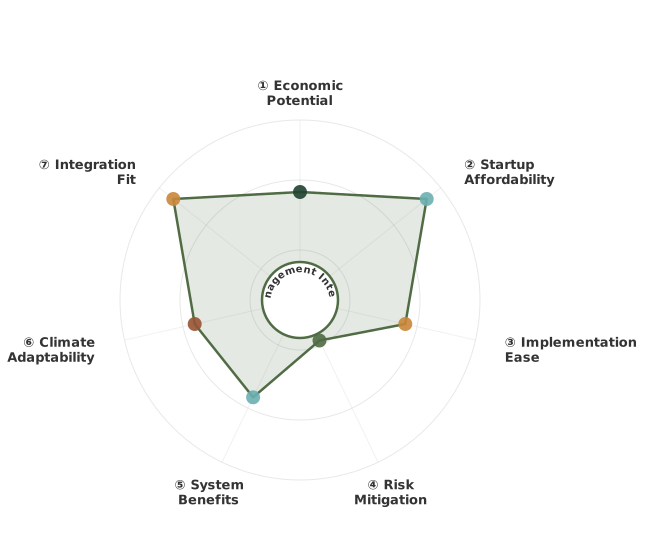
How These Traits Are Calculated
Trait dimensions are ordered clockwise starting from the top of the chart (12 o'clock position):
1. Economic Potential
Financial returns, annual value, and break-even timeline
WHAT: Evaluates financial viability by combining net annual value ($/ha from savings, income, and amortized harvests) with break-even timeline showing when practices pay for themselves.
WHY: Farmers need clear ROI understanding before committing resources. Fast payback (≤3 years) with strong returns (≥$300/ha) enables confident adoption, while long timelines (>10 years) restrict adoption to well-funded operations willing to wait for returns.
HOW: Calculated from net annual value in $/ha and break-even years. Exceptional (≥2.6): fast ROI ≤3 years + high value ≥$300/ha. Typical (1.8-2.5): moderate returns or longer timelines. Limited (<1.8): marginal economics or very long payback >10 years.
2. Startup Affordability
Initial investment costs and financial barrier to entry
WHAT: Measures financial barrier to entry through startup costs for equipment, infrastructure, consulting, and materials. Inverted scoring: lower costs = higher scores = more accessible adoption.
WHY: Affordability determines who can adopt. Low-cost practices (<$250/ha) enable widespread adoption across diverse scales, while high costs (>$2,500/ha) limit adoption to well-capitalized operations, creating barriers that slow regenerative transition.
HOW: Calculated from initial investment parsed from practice content. Inverted scoring: Exceptional (≥2.6): minimal investment <$250/ha. Typical (1.8-2.5): moderate costs $250-2,500/ha. Limited (<1.8): high barrier >$2,500/ha.
3. Implementation Ease
Learning curve and specialized knowledge required
WHAT: Measures how much learning, planning, and specialized knowledge a practice requires. Simpler practices with fewer steps score higher, while complex practices requiring extensive training or specialized resources score lower.
WHY: Complex practices create adoption barriers even when economically viable. Straightforward practices enable faster adoption and broader participation, while those requiring extensive training, timing precision, or specialized equipment limit who can succeed.
HOW: Evaluated by measuring documentation length and identifying complexity markers like location-specific requirements, seasonal timing windows, specialized skills, and dedicated equipment needs. Exceptional (≥2.6): straightforward practices with minimal prerequisites. Typical (1.8-2.5): moderate learning curve with some specialized needs. Limited (<1.8): steep learning curve requiring significant training or resources.
4. Risk Mitigation
Identified financial and ecological risk assessment
WHAT: Evaluates documented risks across financial (investment loss, market volatility) and ecological (crop failure, pest outbreaks) domains. Inverted scoring: fewer risks = higher scores.
WHY: Understanding risk exposure helps farmers make informed decisions. Low-risk practices allow confident implementation, while high-risk practices require careful planning and contingency resources. Risk transparency prevents costly failures.
HOW: Calculated from identified risks in practice content. Inverted scoring: Exceptional (≥2.6): ≤2 risks with manageable severity. Typical (1.8-2.5): 3-5 moderate risks. Limited (<1.8): 6+ risks or severe exposure.
5. System Benefits
How many ways the practice improves your land simultaneously
WHAT: Measures how many aspects of land health improve at once—carbon storage, soil quality, erosion control, water absorption, and biodiversity. Practices that improve multiple areas simultaneously create compounding benefits where each improvement reinforces the others.
WHY: The best practices solve multiple problems at once. For example, addressing erosion simultaneously builds carbon and improves water infiltration, creating a resilient system with positive feedback loops. Single-benefit approaches miss these compound transformation opportunities.
HOW: Evaluated across five key outcomes: carbon sequestration, soil organic matter increase, erosion reduction, water infiltration improvement, and biodiversity enhancement. Exceptional (≥2.6): high carbon storage (>8 t/ha/yr), improvements across 4-5 areas, transformative outcomes. Typical (1.8-2.5): moderate carbon (3-8 t/ha/yr), improvements across 2-3 areas. Limited (<1.8): modest impact (<3 t/ha/yr), single-area focus only.
6. Climate Adaptability
Geographic applicability across Köppen climate zones
WHAT: Evaluates geographic applicability by assessing how many Köppen climate zones successfully support a practice and what adaptation requirements are needed. Measures breadth of climates where farmers can implement with minimal to moderate modifications.
WHY: Universal practices working across diverse climates enable more farmers to adopt regenerative approaches. Practices limited to single climate types (only Mediterranean, only tropical) restrict adoption and slow global transition. Adaptability determines whether a practice serves niche regions or offers broad transformation.
HOW: LLM evaluation of regional success stories, Köppen zone coverage, and adaptation needs. Exceptional (≥2.6): 5+ zones or 4+ climate types, 3+ continents, minimal adaptation. Typical (1.8-2.5): 3-4 zones or 2-3 types, 2 continents, moderate adaptation. Limited (<1.8): 1-2 zones, single region, significant adaptation or highly specialized.
7. Integration Fit
How well this practice combines with others you're doing
WHAT: Measures how well a practice combines with other regenerative practices you might be doing. Some practices work as building blocks that make many other practices easier or more effective, while others work best on their own.
WHY: Practices that combine well with many others create more value on your farm. For example, cover cropping enables no-till, improves grazing, supports crop diversity, and helps water management—making all of them work better together. This helps you build a coherent system rather than juggling disconnected practices.
HOW: Evaluated by identifying which practices combine well and how strong those combinations are. 'Ideally Suited' means strong combinations where practices reinforce each other (practice A makes B easier, while B makes A more effective). 'Adequate' means complementary benefits that work well together. Exceptional (≥2.6): combines well with 6+ practices, serves as a building block. Typical (1.8-2.5): combines with 3-5 practices. Limited (<1.8): 1-2 practices or works best alone.
Going Deeper
1
WHY - The Benefits
Management Intensive Rotational Grazing (MIRG) offers a synergistic approach to livestock production and land stewardship, yielding substantial improvements across soil health, economic performance, water cycles, carbon sequestration, and biodiversity. Its effectiveness...
Management Intensive Rotational Grazing (MIRG) offers a synergistic approach to livestock production and land stewardship, yielding substantial improvements across soil health, economic performance, water cycles, carbon sequestration, and biodiversity. Its effectiveness stems from its ability to precisely manage animal impact, harnessing it as a tool for ecosystem enhancement rather than a source of degradation.
WHY - The Benefits
Management Intensive Rotational Grazing (MIRG) offers a synergistic approach to livestock production and land stewardship, yielding substantial improvements across soil health, economic performance, water cycles, carbon sequestration, and biodiversity. Its effectiveness...
Management Intensive Rotational Grazing (MIRG) offers a synergistic approach to livestock production and land stewardship, yielding substantial improvements across soil health, economic performance, water cycles, carbon sequestration, and biodiversity. Its effectiveness stems from its ability to precisely manage animal impact, harnessing it as a tool for ecosystem enhancement rather than a source of degradation.
Soil Health Benefits
MIRG is a powerful engine for soil regeneration. By intensely grazing high-growth-rate forage followed by extended rest periods (rest often being longer than grazing), MIRG promotes the dominance of deep-rooted perennial grasses and legumes. These plants build robust root systems that dramatically improve soil structure: increasing aggregate stability, enhancing water infiltration, and improving aeration. Studies have shown that well-managed MIRG can increase soil organic matter by 0.5-1.5% over a decade, sequestering substantial amounts of atmospheric carbon into the soil.
The increased biological activity beneath the pasture surface is profound. The diverse root systems feed a thriving soil microbial community, unlocking nutrients and making them available to plants. Animal manure and urine, when distributed evenly through frequent moves and deposited on healthy sod, become a primary source of fertility, reducing or eliminating the need for synthetic inputs. Improved soil structure and increased organic matter mean greater water-holding capacity, making pastures more resilient to drought and reducing runoff and erosion. For example, MIRG can improve water infiltration rates by 40-70% compared to continuous grazing or degraded pastures.
The impact on earthworm populations and other beneficial soil macrofauna is also significant. Healthier, deeper root systems and a more abundant surface layer of organic matter provide ideal habitat and food sources, leading to a dramatic increase in beneficial organisms that further enhance soil structure and nutrient cycling. This creates a self-reinforcing cycle: healthier soil supports more productive forages, which in turn support higher-performing livestock, which then provide better managed impact for the soil.
Economic Benefits
The economic advantages of MIRG are substantial and well-documented. By maximizing forage utilization and animal performance, MIRG can significantly increase stocking rates and overall land carrying capacity, often by 30-50% or more compared to continuously grazed systems. This higher efficiency translates directly into greater profitability per acre, as more animals can be supported on the same land base or the same number of animals can be finished faster.
Reduced reliance on supplemental feed is another major economic driver. With carefully managed pastures providing high-quality nutrition throughout the growing season, the need for costly hay, silage, or grain can be drastically reduced, particularly during spring and summer. This reduction in input costs directly enhances net farm income. Research indicates that MIRG can cut supplemental feed costs by 20-40% annually.
Furthermore, MIRG can lead to improved livestock health and performance. Animals grazing on diverse, high-quality pastures tend to gain weight faster, produce more milk, and have better reproductive rates. Reduced heat stress from managed shade (often provided by strategically managed rest periods allowing grass to grow taller or through integration with trees) also contributes to better animal welfare and productivity. The overall economic resilience of the farm is enhanced through diversification of income streams and reduced exposure to volatile input markets. Over the long term, farms utilizing MIRG typically see an increase in land value due to improved soil health and productivity.
Regenerative Systems Fit
MIRG is a foundational regenerative practice that strongly supports all five regenerative agriculture principles:
Principle 1 (Minimize Soil Disturbance): While the intense grazing of MIRG involves livestock impact, it is managed to avoid severe compaction or pugging ("poaching") by ensuring short grazing durations and adequate rest periods for soil and plant recovery. The primary disturbance is biological, not mechanical. The focus remains on maintaining a continuous vegetative cover, preventing bare soil and the associated risks of erosion and nutrient loss.
Principle 2 (Maximize Crop Diversity): MIRG encourages diverse pasture species, including various grasses, legumes, and forbs, which are selected for their growth rates, nutritional value, and resilience. This diversity above ground supports a complex and resilient soil microbial community below ground. The management strategy itself fosters diversity by allowing different plant species to express their growth cycles optimally.
Principle 3 (Keep Soil Covered): The system is designed to ensure that soil is rarely left bare. Livestock are moved before they graze forage down to a level that exposes the soil surface. The extended rest periods allow for vigorous regrowth, ensuring continuous photosynthetic activity and soil cover—critical for preventing erosion, conserving moisture, and maintaining soil temperature moderation.
Principle 4 (Maintain Living Roots): MIRG relies on perennial pasture species that maintain living roots throughout the year, or at least for the majority of the growing season. This continuous root activity fuels soil biology, sequesters carbon, and maintains soil structure, even when the plant material above ground is grazed or dormant.
Principle 5 (Integrate Livestock): Livestock are the central management tool in MIRG. Their grazing pressure is strategically applied to stimulate plant growth, cycle nutrients through manure and urine, and improve soil structure through carefully managed trampling. This integration is key to building soil organic matter and fertility, making the land more productive and resilient.
MIRG acts as a powerful catalyst for other regenerative practices. Farms implementing MIRG often find it naturally leads to an increased interest in cover cropping to extend the grazing season or further enhance soil health, silvopasture for added diversity and shade, and no-till cropping where applicable. The economic returns generated by MIRG can provide the capital and confidence needed to invest in other regenerative approaches. For farms transitioning from conventional systems, MIRG offers a pathway to improve profitability and ecological function simultaneously, establishing a strong foundation for broader regenerative adoption.
Sources behind this view
Videos & Podcasts
-
This cluster details ultra-high stock density grazing (UHSDG) and 'total grazing' for cattle, emphasizing intensive management, long pasture recovery, and increased stocking rates. The speaker advocat
-
Transitioned from continuous to management-intensive grazing (MIG) to improve profitability and soil health. MIG involves frequent rotation of higher-density animal groups, focusing on plant recovery
-
Regenerative grazing (adaptive multi-paddock) uses high-density, short-duration grazing with long recovery to stimulate soil health, increase biomass, and improve water infiltration, mimicking natural
-
Matt Goble details his transition to management-intensive grazing (MIG) for sheep, driven by efficiency and profitability. He emphasizes daily moves, reduced predator loss, and increased productivity,
Community
-
Management Intensive Rotational Grazing (MIRG) involves daily or more frequent moves to optimize forage, improve manure distribution, and enhance soil health. It requires increased stock density, shor
Read more (pp. 7-10) (opens PDF, pp. 7-10) efotg.sc.egov.usda.gov -
Details an integrated system of Managed Intensive Rotational Grazing and rotational cropping using holistic management. It emphasizes increasing forage availability, integrating livestock (cattle, chi
Read more (opens in new window) permies.com -
Details an integrated system of Managed Intensive Rotational Grazing (MIRG) with crop production using no-till and mulching, incorporating chickens for pest control and fertilization, and rotating cro
Read more (opens in new window) permies.com
Research
-
Pasture Growth, Production, and Quality Under Rotational and Continuous Grazing Management (opens in new window)
This study found: Rotational grazing (MIRG) in Wisconsin provided nearly double the forage yield and better quality at equivalent biomass compared to continuous grazing over two years, attributed to integrated manageme
-
Managing Grazing to Restore Soil Health, Ecosystem Function, and Ecosystem Services (opens in new window)
This study found: Properly managed grazing animals can reverse environmental damage. Regenerative practices, like Adaptive Multi-Paddock (AMP) grazing, boost soil health, increase soil carbon, reduce erosion, and enhan
-
Management‐Intensive Rotational Grazing Enhances Forage Production and Quality of Subhumid Cool‐Season Pastures (opens in new window)
This study found: Intensive rotational grazing boosted pasture yield and quality in the upper Midwest, outperforming continuous grazing and haymaking, though root growth was lower than unmanaged areas.
-
Soil health changes following transition from an annual cropping to perennial management‐intensive grazing agroecosystem (opens in new window)
This study found: Intensive rotational grazing (MiG) with cattle improved soil chemistry and biology on western US pastures over two years, but increased soil compaction. Proper management can mitigate compaction, allo
From the Web
-
Managed grazing systems, particularly Management Intensive Rotational Grazing (MIRG), are crucial for contract grazing, yielding more forage and higher quality than continuous grazing by promoting hea
-
Intensive grazing on irrigated pastures involves short grazing periods (1-4 days), high stocking densities (50k-500k lbs/acre), and long recovery (20-35 days). Benefits include doubled stocking rates,
-
Management-intensive grazing (MIG) improves pasture productivity and soil health by rotating animals and allowing plant regrowth. Integrated systems utilize crop residue, swath grazing, and annual/per
-
Compiles sociological studies on MIRG, covering graziers' motivations, farmer demographics, labor dynamics, community impacts, and the role of grazing networks. Explores how MIRG can support family fa
2
WHERE - Regional Considerations
Management Intensive Rotational Grazing (MIRG) is highly adaptable globally, but success hinges on tailoring management to specific climatic and botanical conditions. Key regional considerations include forage growth rates, drought resilience, winter conditions, and...
Management Intensive Rotational Grazing (MIRG) is highly adaptable globally, but success hinges on tailoring management to specific climatic and botanical conditions. Key regional considerations include forage growth rates, drought resilience, winter conditions, and species suitability.
WHERE - Regional Considerations
Management Intensive Rotational Grazing (MIRG) is highly adaptable globally, but success hinges on tailoring management to specific climatic and botanical conditions. Key regional considerations include forage growth rates, drought resilience, winter conditions, and...
Management Intensive Rotational Grazing (MIRG) is highly adaptable globally, but success hinges on tailoring management to specific climatic and botanical conditions. Key regional considerations include forage growth rates, drought resilience, winter conditions, and species suitability.
Click Here to Look up your Region if you don't already know it
Humid Temperate Regions
Representative Locations: Midwestern United States, Western Europe (France, Germany, Netherlands), Eastern China, New Zealand Southern Islands
Climate Context: Warm summers, cool winters, distinct growing seasons, and typically ample rainfall distributed relatively evenly throughout the year. USDA Zones 4-7, Köppen Cfb/Cfa.
Species Suitability: Cool-season perennial grasses like perennial ryegrass, fescue, orchardgrass, and bromegrass thrive. Legumes such as white clover, red clover, and birdsfoot trefoil are excellent nitrogen fixers and enhance forage quality. Dairy and beef cattle, sheep, and goats perform well.
Management Adaptations: MIRG is highly effective in these regions due to rapid pasture regrowth, allowing for short grazing periods and long rest periods, often 20-40 days or more in peak season. Winter management requires planning for dormant pastures or utilizing stockpiled forage. Water infrastructure remains critical, but freeze protection is needed for pipes and troughs.
Mediterranean Regions
Representative Locations: California (USA), Southern Spain, Italy, Greece, Central Chile, Southwestern Australia
Climate Context: Hot, dry summers and mild, wet winters. Summer growth is often limited to dormant or drought-tolerant species, with peak growth in spring and fall. USDA Zones 8-10, Köppen Csa/Csb.
Species Suitability: Drought-tolerant perennial grasses like Harding grass, tall fescue, and needlegrass. Legumes like subterranean clover and burr clover are adapted to dry conditions. Sheep are particularly well-suited due to their grazing habits and ability to thrive on sparser forage. Cattle and goats can also be managed with careful season-long planning.
Management Adaptations: MIRG must focus on utilizing peak spring and fall growth. Summer grazing may require supplementary feeding or moving animals to higher elevation pastures. Drought-resilient species and soil management to maximize water infiltration are paramount. Animal density must be carefully matched to forage availability, especially during dry periods. Water conservation measures for troughs are essential.
Arid/Semi-Arid Regions
Representative Locations: Western United States plains, North Africa, Central Asia, Interior Australia, parts of South America (e.g., Patagonia)
Climate Context: Low annual precipitation (under 40 cm or 15 inches), high evaporation rates, short and often unpredictable growing seasons, and extreme temperature fluctuations. USDA Zones 6-9, Köppen BSh/BSk.
Species Suitability: Highly drought-tolerant native grasses, saltbush, saltgrass, and other arid-adapted shrubs. Management often involves extensive grazing over larger areas or strategically moving animals to follow infrequent rainfall patterns. Goats and sheep are often more successful than cattle due to their ability to browse shrubs and utilize sparser vegetation.
Management Adaptations: MIRG in these regions focuses on maximizing utilization of dormant and semi-dormant forages, extending rest periods significantly (often months), and carefully matching stocking rate to long-term carrying capacity. Water infrastructure is critical and must be designed for reliability in extreme conditions, often involving wells, pipelines, and large tanks. Conservation of scarce forage and water resources is the absolute priority. Animal performance may be lower, but sustainability is the key metric.
Cold Continental Regions
Representative Locations: Northern United States and Canada, Northern Europe, Siberia
Climate Context: Very short growing seasons, extreme summer heat, and severe winter cold. Pastures are typically productive for only 3-5 months per year. USDA Zones 2-5, Köppen Dfa/Dfb.
Species Suitability: Vigorous cool-season grasses and legumes that can establish quickly and utilize the short growing season, such as alfalfa, Siberian pea shrub, smooth brome, and orchardgrass. Pasture rotation often needs to accommodate early spring growth and fall stockpiling.
Management Adaptations: MIRG relies heavily on utilizing peak summer growth and potentially stockpiling forages for winter grazing (if feasible and conditions allow). Supplemental feeding is usually required during the long winter months. Animals may need protection from extreme cold. Planning for rapid plant growth in spring and early summer is crucial for setting up the grazing rotation.
Subtropical Regions
Representative Locations: Southeastern United States, Southern China, Eastern India, Northern Australia, Southern Brazil
Climate Context: Hot, humid summers with ample rainfall and mild winters. Long growing seasons are possible, but heat stress and disease pressure can be significant. USDA Zones 9-11, Köppen Cfa/Cwa.
Species Suitability: Warm-season perennial grasses like Bermudagrass, bahiagrass, and switchgrass are adapted to heat and humidity. Legumes like annual lespedeza and certain clovers can be integrated. Cattle thrive in these regions, especially when managed to avoid peak summer heat stress.
Management Adaptations: MIRG must account for intense summer heat, which can limit both forage growth and animal intake. Strategies include moving animals to pasture areas with more shade (natural or artificial), grazing heavily during cooler parts of the day, and ensuring access to water. Extended rest periods are often necessary during the hottest months to allow plant recovery and prevent overgrazing of heat-stressed forages. Managing parasite loads can also be a significant consideration.
Tropical Regions
Representative Locations: Southeast Asia, East Africa, Central America, Northern South America, Northern Australia
Climate Context: High temperatures year-round, with either consistent high rainfall or distinct wet and dry seasons. Photosynthesis is year-round in many areas. Köppen Af/Am/Aw.
Species Suitability: Warm-season perennial grasses like pangola grass, signal grass, and Brachiaria species are widely used. Legumes are often integrated but can be challenging to maintain a balance with aggressive tropical grasses. Cattle, especially Bos indicus breeds, are well-suited.
Management Adaptations: MIRG in the tropics focuses on managing rapid growth during the wet season and ensuring sufficient forage availability during the dry season, often through drought-tolerant species, deferred grazing, or supplemental feed. Heat stress impacts animal performance year-round, necessitating shade and water management. Managing disease and parasite prevalence is a constant challenge. Longer rest periods may be needed during periods of low moisture or extreme heat.
3
HOW - Implementation Process
Implementing Management Intensive Rotational Grazing (MIRG) is a phased approach that builds capacity over time, transforming your land and livestock management strategy. The core is moving from intuition-based decisions to data-driven, biology-informed management.
Implementing Management Intensive Rotational Grazing (MIRG) is a phased approach that builds capacity over time, transforming your land and livestock management strategy. The core is moving from intuition-based decisions to data-driven, biology-informed management.
HOW - Implementation Process
Implementing Management Intensive Rotational Grazing (MIRG) is a phased approach that builds capacity over time, transforming your land and livestock management strategy. The core is moving from intuition-based decisions to data-driven, biology-informed management.
Implementing Management Intensive Rotational Grazing (MIRG) is a phased approach that builds capacity over time, transforming your land and livestock management strategy. The core is moving from intuition-based decisions to data-driven, biology-informed management.
Prerequisites
Before embarking on MIRG, consider these foundational elements:
- Minimum Land Area: While MIRG can be adapted to small acreages, it's most impactful on plots of at least 2 hectares (5 acres) to allow for sufficient paddock division and rest.
- Water Accessibility: Reliable, year-round water is non-negotiable. This may involve existing water sources, drilling wells, installing pipelines, or trucking water. Plan for sufficient water points to support frequent moves and high animal density.
- Perimeter Fencing: A secure perimeter fence is essential to contain livestock within the managed system. Electric fencing is often used for internal paddocks due to its flexibility and cost-effectiveness.
- Forage Base: While MIRG improves existing pastures, starting with a reasonable base of perennial forages (grasses, legumes) will accelerate success. Degraded or bare ground requires a restoration phase before intensive grazing.
- Livestock Type: MIRG is adaptable to cattle, sheep, goats, and even horses or alpacas, though management nuances differ. Ensure your chosen livestock are suited to your climate and forage types.
- Commitment to Learning: MIRG requires continuous learning about plant physiology, soil biology, animal nutrition, and weather patterns. Be prepared to invest time in observation, reading, and potentially seeking mentorship.
Phase 1: Planning and Infrastructure (Months 1-6)
This foundational phase involves designing your system and acquiring essential infrastructure.
-
Landscape Assessment:
- Map your land: Identify topography, water sources, existing fence lines, soil types, and areas prone to erosion or poor drainage.
- Analyze forage: Assess your current pasture composition. Identify desirable perennial species and any invasive or undesirable plants. Estimate current carrying capacity.
- Understand your climate: Analyze rainfall patterns, temperature extremes, and growing season length.
-
Goal Setting:
- Define your objectives: What do you want to achieve? (e.g., increased weight gain, reduced feed costs, improved soil health, higher stocking rates, environmental stewardship).
- Establish key performance indicators (KPIs): How will you measure success? (e.g., pounds of gain per acre, acres per animal unit, soil organic matter percentage, water infiltration rates).
-
Paddock Design:
- Determine paddock size: Based on herd size, desired grazing duration (hours to a few days), and forage yield. Smaller paddocks are typically used for MIRG.
- Plan paddock layout: Design paddocks to optimize animal movement, minimize walking distance to water, and facilitate grazing of different pasture areas. Consider creating lanes for animal movement.
- Estimate paddock numbers: A common MIRG system might require 30-60 paddocks for a herd of 50-100 animals to allow adequate rest periods across seasons.
-
Water System Design:
- Calculate water needs: Based on herd size and type, and daily consumption.
- Map water distribution: Plan placement of troughs in paddocks to ensure animals are never more than a few hundred meters from water.
- Choose water source: Evaluate wells, springs, ponds, or municipal sources. Consider pump types (solar, wind, electric) and storage tanks.
-
Fencing Strategy:
- Perimeter: Ensure existing perimeter fence is robust.
- Internal: Utilize high-tensile electric fencing for subdivision. This is cost-effective and flexible. Invest in quality insulators, energizers, and grounding systems. Plan for gate placement.
- Consider: Permanent fencing for high-traffic areas (laneways) and electric for temporary subdivisions.
-
Equipment Acquisition:
- Electric fencing supplies: Wire, posts, insulators, energizer, gate handles, testers.
- Water infrastructure: Troughs, pipes, fittings, potentially pumps.
- Livestock handling: Scale, handling chutes, portable panels for working animals.
- Monitoring tools: Pasture height stick/plate meter, sward stick, sward stick, grazing logbook or app.
- Vehicle/ATV: For checking fences, moving water, and general farm tasks.
Cost of Infrastructure: This varies dramatically by region and scale. Budget USD 50-200/acre ($125-500/hectare) for basic fencing and water, potentially more for complex systems or arid regions.
Phase 2: Implementation and Initial Grazing (Months 6-12)
This phase involves establishing your paddocks and beginning the MIRG rotation.
-
Install Infrastructure:
- Install water pipelines and troughs according to your plan.
- Install fencing to create your initial paddocks and laneways. Start with a manageable number of paddocks and expand as you gain experience.
-
Animal Intake and Baseline Data:
- Weigh livestock and assess their body condition score upon entering the system. Record initial weights and health status.
-
First MIRG Rotation:
- Observe Forage: Assess pasture height and growth rate. For most cool-season grasses, target grazing to ½ to ⅓ of the leaf. For warm-season grasses, this might be ½ to ⅔. Aim to leave consistent residual biomass.
- Move Animals Frequently: Based on observation, move animals to the next paddock when they have grazed the current one to your target residual. This is often every 1-3 days, sometimes even daily or multiple times per day in high-growth conditions.
- Monitor Animal Performance: Track weight gains, milk production, or feed intake. Note any changes in animal behavior or health.
- Observe Pasture Recovery: Crucially, monitor how long it takes for grazed paddocks to regrow to the target grazing height. This rest period is key to MIRG. In peak season, rest might be 20-30 days; in dormant periods, it could be months.
-
Record Keeping:
- Maintain a detailed daily/weekly log: Paddock grazed, date in/out, stocking density, initial height, residual height, animal performance, observations on plant recovery and soil condition. This data is vital for refining your management.
-
Continuous Learning:
- Consult resources: Read books, attend workshops, connect with experienced MIRG practitioners.
- Adjustments: Be prepared to experiment and adapt your grazing plan based on pasture response, animal performance, and weather.
Phase 3: Refinement and Optimization (Year 2 onwards)
MIRG is a dynamic system that requires continuous refinement.
-
Data Analysis:
- Review your grazing logs and performance data. Identify trends: What stocking rates are sustainable? What rest periods lead to optimal pasture recovery? Which paddocks respond best?
-
Infrastructure Expansion/Modification:
- Add more paddocks if needed to extend rest periods or improve flexibility.
- Relocate or add water points if animal movement is hindered.
- Upgrade fencing or water systems based on operational experience.
-
Pasture Improvement:
- Introduce diverse forage species through overseeding or renovation to increase resilience and nutritional value.
- Manage invasive species through grazing, mechanical means, or targeted biological control.
-
Animal Management Integration:
- Integrate health protocols (vaccinations, parasite control) with your grazing plan.
- Consider adaptive breeding or selection programs that favor animals suited to pasture-based systems.
-
Soil Health Monitoring:
- Conduct periodic soil tests for organic matter, nutrient levels, and a spade test to assess soil structure and biological activity.
Transition Timeline & Phase-Out Strategy (If Applicable)
If transitioning from conventional management, MIRG can be phased in.
- Year 1: Begin converting 25-50% of your acreage to MIRG. Keep conventional acres separate to compare results. Focus on infrastructure development and learning the MIRG rotation. Stocking density may need to be temporarily reduced on MIRG acres to allow for infrastructure and initial infrastructure establishment.
- Year 2: Expand MIRG to 75-100% of acreage if initial results are positive. Intensify monitoring and data analysis. You may see slight reductions in overall animal numbers initially on MIRG land as you learn precise carrying capacity, but your goal is higher performance per animal and per acre.
- Year 3 onwards: MIRG becomes your primary grazing management. Focus on optimizing rest periods, paddock design, and forage species based on accumulated data. You should see significant improvements in pasture productivity, animal performance, and soil health.
- Phase-out of Conventional Inputs: As pasture health improves, reliance on synthetic fertilizers and supplements should naturally decrease. Monitor soil test results and forage quality to guide reductions. For example, as soil organic matter increases and legumes thrive, nitrogen fertilizer needs diminish. This should be a gradual process, not an abrupt cut-off, occurring over 2-5 years as biological function takes over.
Sources behind this view
Videos & Podcasts
-
Transitioned from continuous to management-intensive grazing (MIG) to improve profitability and soil health. MIG involves frequent rotation of higher-density animal groups, focusing on plant recovery
-
This cluster details ultra-high stock density grazing (UHSDG) and 'total grazing' for cattle, emphasizing intensive management, long pasture recovery, and increased stocking rates. The speaker advocat
-
Matt Goble details his transition to management-intensive grazing (MIG) for sheep, driven by efficiency and profitability. He emphasizes daily moves, reduced predator loss, and increased productivity,
-
Hugh transitioned to intensive mob grazing with 90-day resting periods to improve soil health, contrasting it with shorter rotations for milk production. He also uses winter cover crops like rye, vetc

Community
-
Management Intensive Rotational Grazing (MIRG) involves daily or more frequent moves to optimize forage, improve manure distribution, and enhance soil health. It requires increased stock density, shor
Read more (pp. 7-10) (opens PDF, pp. 7-10) efotg.sc.egov.usda.gov -
Details an integrated system of Managed Intensive Rotational Grazing and rotational cropping using holistic management. It emphasizes increasing forage availability, integrating livestock (cattle, chi
Read more (opens in new window) permies.com -
Details an integrated system of Managed Intensive Rotational Grazing (MIRG) with crop production using no-till and mulching, incorporating chickens for pest control and fertilization, and rotating cro
Read more (opens in new window) permies.com
Research
-
Pasture Growth, Production, and Quality Under Rotational and Continuous Grazing Management (opens in new window)
This study found: Rotational grazing (MIRG) in Wisconsin provided nearly double the forage yield and better quality at equivalent biomass compared to continuous grazing over two years, attributed to integrated manageme
-
Management‐Intensive Rotational Grazing Enhances Forage Production and Quality of Subhumid Cool‐Season Pastures (opens in new window)
This study found: Intensive rotational grazing boosted pasture yield and quality in the upper Midwest, outperforming continuous grazing and haymaking, though root growth was lower than unmanaged areas.
-
Soil health changes following transition from an annual cropping to perennial management‐intensive grazing agroecosystem (opens in new window)
This study found: Intensive rotational grazing (MiG) with cattle improved soil chemistry and biology on western US pastures over two years, but increased soil compaction. Proper management can mitigate compaction, allo
-
Best Management Practices for Intensive Grazing Systems: Southeast Missouri Case Study (opens in new window)
This study found: A case study in Southeast Missouri showcases intensive grazing BMPs: smaller paddocks, rotational schedules, protected water access, shade, diverse forages, and winter feeding areas to improve soil he
From the Web
-
Managed grazing systems, particularly Management Intensive Rotational Grazing (MIRG), are crucial for contract grazing, yielding more forage and higher quality than continuous grazing by promoting hea
-
Intensive grazing on irrigated pastures involves short grazing periods (1-4 days), high stocking densities (50k-500k lbs/acre), and long recovery (20-35 days). Benefits include doubled stocking rates,
-
Compiles sociological studies on MIRG, covering graziers' motivations, farmer demographics, labor dynamics, community impacts, and the role of grazing networks. Explores how MIRG can support family fa
-
Synthesizes numerous economic studies comparing MIRG to confinement systems, consistently showing higher net farm income for MIRG due to significantly lower production costs, despite potentially lower
4
Know the Debate
Management Intensive Rotational Grazing (MIRG) shows transformative potential across diverse climates, but outcomes are shaped by regional capacity...
Know the Debate
Management Intensive Rotational Grazing (MIRG) shows transformative potential across diverse climates, but outcomes are shaped by regional capacity...
Management Intensive Rotational Grazing (MIRG) shows transformative potential across diverse climates, but outcomes are shaped by regional capacity and management intensity. In humid regions, rapid regrowth allows for quick gains within 1-2 years, while semi-arid rangelands demand patience, with soil health benefits appearing over 3-5+ years. Early infrastructure investment ranges from $100-300/acre for temporary fencing and water on smaller plots to $20,000+ for permanent systems on larger operations exceeding 100 hectares. High daily labor for moves and monitoring is consistent, but the scale of operations influences profitability leverage.
How much carbon gains from MIRG?
Significant gains (0.5-1.5% SOM/yr)
Academic and institutional sources suggest MIRG, particularly in humid regions with ample rainfall and active soil biology, can lead to substantial annual soil organic matter increases of 0.5-1.5%. This is driven by increased root exudation and residue incorporation.
Sources behind this view
Sources behind this view
Research
-
Pasture Growth, Production, and Quality Under Rotational and Continuous Grazing Management (opens in new window)
This study found: A two-year study in Wisconsin compared dairy farms using management intensive rotational grazing (MIRG) with farms using continuous grazing (CON). MIRG pastures consistently provided more grass throughout the 24-week grazing season, averaging nearly double the amount of available forage (1763 lb/acre) compared to continuously grazed pastures (850 lb/acre). While protein levels were slightly higher in MIRG (16.6% vs 15.3%), fiber levels were similar. The study found that MIRG farmers managed their pastures to maintain a sweet spot of 1300-1900 lb/acre of grass, which offered a good balance of yield and nutrition. At similar grass heights, MIRG pastures provided better quality feed. The researchers concluded that the overall benefits of MIRG likely stem from a combination of practices like moving the herd frequently, interseeding legumes, and daily monitoring, rather than any single factor, in contrast to the unmanaged nature of the CON pastures.
-
Soil health changes following transition from an annual cropping to perennial management‐intensive grazing agroecosystem (opens in new window)
This study found: A two-year study in the western US looked at how intensive rotational grazing (MiG) affected soil health on irrigated perennial pastures with about 230 cattle. They found that the grazing system improved soil chemistry and biology, partly by reducing salt buildup and increasing the activity of beneficial soil microbes. While soil carbon levels didn't change during the study, the improvements in soil life are seen as a good sign for future carbon increases. Soil nutrients also improved. However, the study noted that hoof pressure from the cattle did increase soil compaction. The researchers concluded that with proper management to avoid compaction, intensive grazing systems can be successful in both supporting livestock and improving soil health for environmental and economic benefits.
-
Tracking Soil Health Changes in a Management-Intensive Grazing Agroecosystem (opens in new window)
This study found: A study in Colorado looked at soil health on irrigated land that was converted from cropland to pasture managed with intensive rotational grazing (MiG) for five to six years. They found that while soil compaction increased due to cattle trampling, other soil health indicators improved. Specifically, beneficial soil microbes and enzymes (like beta-glucosidase) increased, along with the amount of carbon and nitrogen available in the soil. This was linked to less tilling and more organic matter from manure. While nutrient levels stayed mostly the same, the overall soil health was better than in earlier years. The research suggests that while MiG can improve soil biology, managing soil compaction from livestock is important for long-term soil health.
From the Web
-
Managed grazing systems, particularly Management Intensive Rotational Grazing (MIRG), are crucial for contract grazing, yielding more forage and higher quality than continuous grazing by promoting healthy plant communities and soil health.
Marginal or slow gains (0.5-1% SOM over 3-5+ yrs)
Many experienced farmers report that while MIRG enhances soil health and forage, significant, measurable soil carbon gains often take 3-5 years or more to appear consistently, especially in drier climates or on degraded soils.
Sources behind this view
Sources behind this view
Videos & Podcasts
-
Transitioned from continuous to management-intensive grazing (MIG) to improve profitability and soil health. MIG involves frequent rotation of higher-density animal groups, focusing on plant recovery and trampling forage to build soil, contrasting with continuous grazing's negative impacts.
-
Hugh transitioned to intensive mob grazing with 90-day resting periods to improve soil health, contrasting it with shorter rotations for milk production. He also uses winter cover crops like rye, vetch, and radish for early grazing and soil benefits.
-
Adaptive multi-paddock grazing with high stock density improves soil aggregation and carbon. Frequent moves are key, avoiding overgrazing which leads to desertification. Cover crop integration also boosts soil biology and aggregation.
Making Sense of the Differences
The observed variability in carbon sequestration rates from MIRG likely stems from differences in baseline soil organic matter, climate (rainfall, temperature), specific pasture species, and grazing management intensity and duration. More humid climates and highly degraded soils may show faster initial gains, while drier or less degraded systems will take longer to build significant carbon. Farmers should monitor multiple soil health indicators and expect a 3-5+ year timeline for substantial carbon increases.
How fast do MIRG soil health improvements appear?
Rapid improvements (1-2 seasons)
Academic and institute sources often highlight quick improvements in pasture quality, plant diversity, and biological activity within 1-2 grazing seasons, especially in high-potential environments like humid temperate regions.
Sources behind this view
Sources behind this view
Research
-
Pasture Growth, Production, and Quality Under Rotational and Continuous Grazing Management (opens in new window)
This study found: A two-year study in Wisconsin compared dairy farms using management intensive rotational grazing (MIRG) with farms using continuous grazing (CON). MIRG pastures consistently provided more grass throughout the 24-week grazing season, averaging nearly double the amount of available forage (1763 lb/acre) compared to continuously grazed pastures (850 lb/acre). While protein levels were slightly higher in MIRG (16.6% vs 15.3%), fiber levels were similar. The study found that MIRG farmers managed their pastures to maintain a sweet spot of 1300-1900 lb/acre of grass, which offered a good balance of yield and nutrition. At similar grass heights, MIRG pastures provided better quality feed. The researchers concluded that the overall benefits of MIRG likely stem from a combination of practices like moving the herd frequently, interseeding legumes, and daily monitoring, rather than any single factor, in contrast to the unmanaged nature of the CON pastures.
-
Soil health changes following transition from an annual cropping to perennial management‐intensive grazing agroecosystem (opens in new window)
This study found: A two-year study in the western US looked at how intensive rotational grazing (MiG) affected soil health on irrigated perennial pastures with about 230 cattle. They found that the grazing system improved soil chemistry and biology, partly by reducing salt buildup and increasing the activity of beneficial soil microbes. While soil carbon levels didn't change during the study, the improvements in soil life are seen as a good sign for future carbon increases. Soil nutrients also improved. However, the study noted that hoof pressure from the cattle did increase soil compaction. The researchers concluded that with proper management to avoid compaction, intensive grazing systems can be successful in both supporting livestock and improving soil health for environmental and economic benefits.
-
Management-intensive Grazing Affects Soil Health (opens in new window)
This study found: A two-year study in the western US looked at how intensive grazing, using about 230 head of cattle on a pivot-irrigated pasture, affected soil health. The research found that this grazing method boosted the activity of soil microbes and enzymes, which are good signs for future soil carbon increases, even though the total soil carbon didn't change right away. However, the study also noted a drop in available phosphorus for plants and increased soil compaction from the cattle's hooves. The results suggest that well-managed intensive grazing on irrigated pastures can be a sustainable way to raise livestock while improving soil health.
From the Web
-
Intensive grazing on irrigated pastures involves short grazing periods (1-4 days), high stocking densities (50k-500k lbs/acre), and long recovery (20-35 days). Benefits include doubled stocking rates, lower forage costs, better parasite control, and improved pasture diversity. It requires more daily management time and labor for moving livestock.
Gradual improvements (3-5+ years)
Many experienced farmers report that significant, measurable changes in soil structure, water infiltration, and organic matter take 3-5 years or longer to manifest consistently, requiring sustained management.
Sources behind this view
Sources behind this view
Videos & Podcasts
-
Transitioned from continuous to management-intensive grazing (MIG) to improve profitability and soil health. MIG involves frequent rotation of higher-density animal groups, focusing on plant recovery and trampling forage to build soil, contrasting with continuous grazing's negative impacts.
-
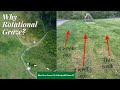
Rotational grazing divides pastures into paddocks, moving animals regularly to allow rest and recovery. This boosts forage output, maintains plant diversity, improves soil organic matter, and disperses manure effectively.
-
Adaptive multi-paddock grazing with high stock density improves soil aggregation and carbon. Frequent moves are key, avoiding overgrazing which leads to desertification. Cover crop integration also boosts soil biology and aggregation.
Making Sense of the Differences
The timeline for observable soil health gains with MIRG depends on initial soil condition, climate, and management intensity. Humid, fertile soils with active biology may show quicker improvements in pasture yield and plant diversity within 1-2 seasons. However, fundamental structural changes like increased organic matter and water infiltration, particularly in drier or degraded soils, typically require 3-5 years of consistent, high-quality MIRG management.
Is MIRG more profitable than confinement?
More profitable (lower costs, higher margin/acre)
Academic and institutional economic analyses consistently show MIRG can increase net farm income due to significantly lower production costs (feed, operations) and higher per-acre stocking rates, despite potentially lower yields per cow.
Sources behind this view
Sources behind this view
Research
-
Intensive rotational grazing (opens in new window)
This study found: This article suggests that intensive rotational grazing, where cows are moved frequently between pastures, can be a good alternative for dairy farmers. If the pastures and the cows are managed well, this method can be just as profitable as keeping cows in barns and feeding them stored feed.
-
The adoption and impact of management intensive rotational grazing (MIRG) on Connecticut dairy farms (opens in new window)
This study found: A study of dairy farms in Connecticut looked at farmers who adopted Management Intensive Rotational Grazing (MIRG), a method of moving cows frequently to fresh pasture. Farmers who adopted MIRG tended to be more educated and owned more of their land. The study found that adopting MIRG didn't significantly change farm costs or how much milk cows produced, and it didn't reduce overall profits per cow. However, farms that fully adopted MIRG were more profitable than those only partially adopting it. This suggests that carefully considering farmer characteristics is important when evaluating the benefits of rotational grazing.
From the Web
-
Synthesizes numerous economic studies comparing MIRG to confinement systems, consistently showing higher net farm income for MIRG due to significantly lower production costs, despite potentially lower milk yields per cow. Data from various states and farm types are presented.
-
Economic studies consistently show management intensive rotational grazing (MIRG) dairy farms are more profitable than confinement operations due to significant cost savings in feed, labor, and operations, despite potentially lower milk yields per cow. Data from New York, Wisconsin, and Michigan in the late 1990s and early 2000s support this trend.
Potentially less profitable per cow, highly dependent on management
Some field practitioners suggest that while MIRG reduces costs, achieving higher *total* net income requires exceptional management, favorable conditions, and large scales; lower yields per cow are a possibility.
Sources behind this view
Sources behind this view
Videos & Podcasts
-
Matt Goble details his transition to management-intensive grazing (MIG) for sheep, driven by efficiency and profitability. He emphasizes daily moves, reduced predator loss, and increased productivity, finding it more financially viable for smaller operations than traditional range grazing.
-
Transitioned from continuous to management-intensive grazing (MIG) to improve profitability and soil health. MIG involves frequent rotation of higher-density animal groups, focusing on plant recovery and trampling forage to build soil, contrasting with continuous grazing's negative impacts.
Making Sense of the Differences
MIRG generally offers higher profit margins per acre than confinement due to reduced input costs (feed, operations) and increased carrying capacity. While yields per cow may sometimes be lower, the improved land efficiency and cost savings typically lead to higher *total* farm profitability when managed well. Successful transition requires accurate cost analysis and attention to livestock performance metrics.
What size farm is MIRG best for?
Scalable across sizes (small to large)
MIRG can be adapted to various farm sizes, from small plots to large pastures. Smaller operations often use temporary fencing and higher management, while larger ones can achieve economies of scale and spread infrastructure costs.
Sources behind this view
Sources behind this view
Videos & Podcasts
-
Matt Goble details his transition to management-intensive grazing (MIG) for sheep, driven by efficiency and profitability. He emphasizes daily moves, reduced predator loss, and increased productivity, finding it more financially viable for smaller operations than traditional range grazing.
Research
-
The adoption and impact of management intensive rotational grazing (MIRG) on Connecticut dairy farms (opens in new window)
This study found: A study of dairy farms in Connecticut looked at farmers who adopted Management Intensive Rotational Grazing (MIRG), a method of moving cows frequently to fresh pasture. Farmers who adopted MIRG tended to be more educated and owned more of their land. The study found that adopting MIRG didn't significantly change farm costs or how much milk cows produced, and it didn't reduce overall profits per cow. However, farms that fully adopted MIRG were more profitable than those only partially adopting it. This suggests that carefully considering farmer characteristics is important when evaluating the benefits of rotational grazing.
From the Web
-
Compiles sociological studies on MIRG, covering graziers' motivations, farmer demographics, labor dynamics, community impacts, and the role of grazing networks. Explores how MIRG can support family farms and rural communities.
Most effective at larger scales (100+ acres/100+ cows)
Experienced farmers suggest MIRG's economic advantage and efficient infrastructure use become most pronounced on larger scales (100+ acres or 100+ cows), though smaller operations can succeed with high intensity.
Sources behind this view
Sources behind this view
Videos & Podcasts
-
This cluster details ultra-high stock density grazing (UHSDG) and 'total grazing' for cattle, emphasizing intensive management, long pasture recovery, and increased stocking rates. The speaker advocates for integrating perennials and cattle into cropping systems for improved soil health, profitability, and environmental benefits, drawing on international experiences and research.
From the Web
-
Intensive grazing on irrigated pastures involves short grazing periods (1-4 days), high stocking densities (50k-500k lbs/acre), and long recovery (20-35 days). Benefits include doubled stocking rates, lower forage costs, better parasite control, and improved pasture diversity. It requires more daily management time and labor for moving livestock.
-
Economic studies consistently show management intensive rotational grazing (MIRG) dairy farms are more profitable than confinement operations due to significant cost savings in feed, labor, and operations, despite potentially lower milk yields per cow. Data from New York, Wisconsin, and Michigan in the late 1990s and early 2000s support this trend.
Making Sense of the Differences
While MIRG can be implemented on farms of various scales, its economic optimization and infrastructure payoff are often realized on larger operations (100+ acres or 100+ cows) where per-acre investment is lower. Smaller farms (<50 acres) can achieve success through very high management intensity and integrating MIRG with other enterprises, though it demands significant daily attention. The core principles of frequent moves and adequate rest apply universally, but the scope and complexity of infrastructure differ with scale.
5
HOW MUCH - Costs & Investment
Note: Costs shown in USD; multiply by local labor and material cost indices for your region. Labor costs vary significantly internationally.
Note: Costs shown in USD; multiply by local labor and material cost indices for your region. Labor costs vary significantly internationally.
HOW MUCH - Costs & Investment
Note: Costs shown in USD; multiply by local labor and material cost indices for your region. Labor costs vary significantly internationally.
Note: Costs shown in USD; multiply by local labor and material cost indices for your region. Labor costs vary significantly internationally.
Note: All costs are based on recent US economic data (2024–2026) and may vary substantially by region based on local labor rates, material costs, and regulatory requirements.
Electric Fencing Infrastructure
The backbone of any Management Intensive Rotational Grazing (MIRG) system is the division of pastures. For small-scale operations (under 50 acres (20 ha)), high-tensile, multi-strand permanent perimeter fencing paired with portable poly-wire internal divisions typically costs between $42 and $126 per acre ($104–$311/ha). Mid-size operations (50–500 acres (20–202 ha)) benefit from economies of scale, often utilizing long-line electric fencing setups that lower costs to $33–$84 per acre ($82–$208/ha). Large-scale operations (over 500 acres (202 ha)) can optimize layout designs and bulk purchase materials, resulting in costs ranging from $29–$63 per acre ($72–$156/ha). These figures assume the use of standardized solar-powered or grid-tied energizers and high-visibility, lightweight post systems suitable for diverse terrain.
Water Infrastructure Systems
Water is the primary constraint to effective rotation; paddocks are only as productive as the water access they provide. For small operations, setting up a centralized water point with gravity-fed or portable troughs costs $64–$169 per acre ($158–$418/ha). Mid-size ranches, requiring extensive piping and multiple quick-connect valves to service various paddocks, typically see costs in the range of $50–$147 per acre ($124–$363/ha). Large-scale installations that require high-pressure pumps and miles of buried polyethylene piping range from $42–$105 per acre ($104–$259/ha). These cost variances are heavily driven by depth-to-water requirements, the need for solar-powered pump setups in remote areas, and the number of livestock drinking stations required to keep cattle walking distances within the 600-to-800-foot (243.8 m) optimal range for performance.
Energizer and Grounding Systems
A robust grounding system is non-negotiable for high-load, multi-paddock systems. For small operations, an entry-level professional-grade energizer setup costs $13–$34 per acre ($32–$84/ha). Mid-size producers investing in multi-zone monitoring capabilities see costs between $8–$25 per acre ($20–$62/ha). Large-scale enterprises, which often require multiple synchronized energizers or high-voltage fencing, budget $6–$17 per acre ($15–$42/ha). These figures account for the 2026 market premium on high-quality lightning protection and grounding rods necessary to handle the increased footage of fences typical of intensive grazing.
Minor Handling Facilities
Managing stock efficiently to facilitate frequent moves requires pens and chutes. Small operations often utilize existing low-cost corral systems or portable panels, with costs between $21–$63 per acre ($52–$156/ha). Mid-size operations, which may retro-fit existing structures for better flow, spend $17–$50 per acre ($42–$124/ha). Large-scale operators, often installing dedicated handling lanes for cattle sorting, range from $13–$42 per acre ($32–$104/ha). These costs fluctuate significantly based on whether the producer engages in self-labor versus hiring professional contractors for permanent steel installation.
Most Spend: Most small operations spend $208–$291 per acre ($514–$719/ha). Mid-size operations typically fall into the $167–$229 per acre ($413–$566/ha) range, while large-scale producers find their sweet spot at $125–$167 per acre ($309–$413/ha). These ranges represent the middle 60% of typical expenditures after adjusting for 2026 market inflation.
Why the Range?: Cost variation is dictated primarily by the existing infrastructure baseline of the property. Farms starting with perimeter fencing and accessible deep-well water sources fall at the lower end of the range, as they only need to fund internal subdivision materials. Conversely, operations requiring significant water system overhauls—such as installing new wells, solar pumps, or miles of pipeline to move water into previously underutilized corners of the property—will consistently hit the upper limits of the provided cost ranges.
Sources behind this view
Videos & Podcasts
-
Improved grazing management boosts ranch economics through higher stocking rates, better cows-per-man ratios, extended grazing seasons, and reduced feeding costs. Strategic fencing and water developme
-
Examines economic impacts of intensive rotational grazing on leased land (Utah study) and compares continuous vs. rotational grazing across contiguous and non-contiguous pastures in the Western US (Wy
Community
-
Management Intensive Rotational Grazing (MIRG) involves daily or more frequent moves to optimize forage, improve manure distribution, and enhance soil health. It requires increased stock density, shor
Read more (pp. 7-10) (opens PDF, pp. 7-10) efotg.sc.egov.usda.gov -
Details an integrated system of Managed Intensive Rotational Grazing and rotational cropping using holistic management. It emphasizes increasing forage availability, integrating livestock (cattle, chi
Read more (opens in new window) permies.com -
Details an integrated system of Managed Intensive Rotational Grazing (MIRG) with crop production using no-till and mulching, incorporating chickens for pest control and fertilization, and rotating cro
Read more (opens in new window) permies.com -
Investigates financial benefits of rotational grazing, including extended grazing season and cattle weight gains, while detailing the use of portable electric fences and HDPE water hoses due to infras
Read more (opens in new window) ucanr.edu
Research
-
Pasture Growth, Production, and Quality Under Rotational and Continuous Grazing Management (opens in new window)
This study found: Rotational grazing (MIRG) in Wisconsin provided nearly double the forage yield and better quality at equivalent biomass compared to continuous grazing over two years, attributed to integrated manageme
-
Increasing Intensity of Pasture Use with Dairy Cattle: An Economic Analysis (opens in new window)
This study found: Intensive grazing on Pennsylvania dairy farms was more profitable than hay/corn silage, returning $129/acre. High debt and poor cash flow motivated increased grazing intensity, which lowered feed cost
-
Management‐Intensive Rotational Grazing Enhances Forage Production and Quality of Subhumid Cool‐Season Pastures (opens in new window)
This study found: Intensive rotational grazing boosted pasture yield and quality in the upper Midwest, outperforming continuous grazing and haymaking, though root growth was lower than unmanaged areas.
-
A 100-Year Review: A century of change in temperate grazing dairy systems. (opens in new window)
This study found: Dairy grazing systems evolved over 100 years from random grazing to intensive, high-output systems driven by research, technology, and breeding. Managed grazing, better genetics, and supplementary fee
From the Web
-
Economic studies consistently show management intensive rotational grazing (MIRG) dairy farms are more profitable than confinement operations due to significant cost savings in feed, labor, and operat
-
Synthesizes numerous economic studies comparing MIRG to confinement systems, consistently showing higher net farm income for MIRG due to significantly lower production costs, despite potentially lower
-
Compiles sociological studies on MIRG, covering graziers' motivations, farmer demographics, labor dynamics, community impacts, and the role of grazing networks. Explores how MIRG can support family fa
6
REWARDS AND RISKS - Economics & Risk Factors
Implementing Management Intensive Rotational Grazing (MIRG) offers significant economic rewards but also presents risks that must be carefully managed. Understanding these trade-offs is crucial for successful adoption.
Implementing Management Intensive Rotational Grazing (MIRG) offers significant economic rewards but also presents risks that must be carefully managed. Understanding these trade-offs is crucial for successful adoption.
REWARDS AND RISKS - Economics & Risk Factors
Implementing Management Intensive Rotational Grazing (MIRG) offers significant economic rewards but also presents risks that must be carefully managed. Understanding these trade-offs is crucial for successful adoption.
Implementing Management Intensive Rotational Grazing (MIRG) offers significant economic rewards but also presents risks that must be carefully managed. Understanding these trade-offs is crucial for successful adoption.
Economic Scenarios
The economic performance of MIRG is strongly correlated with management discipline. In a Best Case Scenario, precision grazing optimization leads to a 30–50% increase in carrying capacity within 3 years. Supplemental feed bills drop by 30–40% as stock graze longer into the dormant season, and animal weight gain improves by 20% due to consistent forage quality. Total net farm income typically improves by 25–40% by year 5. In a Typical Scenario, the producer achieves a 20–30% increase in carrying capacity and a 10–15% boost in animal performance, with net farm income trending up by 10–20% annually after infrastructure costs are amortized over 5 years. In a Worst Case Scenario, infrastructure failure—such as a compromised water line during peak summer heat—or severe overgrazing caused by poor recovery period planning leads to a 15–20% reduction in productivity. This often results in a negative cash flow for the first 24 months, with $50–$100 per acre ($124–$247/ha) in emergency supplemental feed costs.
Market Factors and Risk Mitigation
Profitability is sensitive to input price volatility, specifically electricity and labor. Mitigating these risks requires integrated management. Producers should budget a 15–20% contingency fund specifically for infrastructure repairs. To guard against market downturns, large-scale MIRG operations often diversify revenue by incorporating multi-species grazing (e.g., sheep or goats with cattle) at an additional startup cost of $15–$30 per acre ($37–$74/ha), which leverages existing forage and reduces the need for expensive mechanical pasture clipping. Long-term profitability is also bolstered by land appreciation, as soil carbon sequestration and biodiversity improvements derived from MIRG generally add 10–25% to the long-term value of the land.
Transition Period Risks
The transition phase is the most vulnerable point in a MIRG implementation. It is common to experience a 10–20% dip in gross revenue during the first 12–18 months as the operator learns to manage grazing rest periods. This yield dip occurs because the ecosystem is undergoing a regime change; the plant community is shifting composition, and the soil microbiome is re-establishing. Recovery typically occurs in years 2–3. To mitigate, practitioners should transition the farm in phases, starting with 20–30% of the total acreage. This ensures that cash flow from the remaining conventional acreage carries the business while the infrastructure on the new paddocks is fine-tuned, and the operator gains the technical skill for daily move management. Failing to phrase the transition often leads to "grazing shock," where the herd is placed on insufficient pasture with inadequate water, resulting in weight loss and the need for immediate, high-cost supplemental feeding.
Sources behind this view
Videos & Podcasts
-
This cluster details ultra-high stock density grazing (UHSDG) and 'total grazing' for cattle, emphasizing intensive management, long pasture recovery, and increased stocking rates. The speaker advocat
-
Transitioned from continuous to management-intensive grazing (MIG) to improve profitability and soil health. MIG involves frequent rotation of higher-density animal groups, focusing on plant recovery
-
Matt Goble details his transition to management-intensive grazing (MIG) for sheep, driven by efficiency and profitability. He emphasizes daily moves, reduced predator loss, and increased productivity,
Community
-
Management Intensive Rotational Grazing (MIRG) involves daily or more frequent moves to optimize forage, improve manure distribution, and enhance soil health. It requires increased stock density, shor
Read more (pp. 7-10) (opens PDF, pp. 7-10) efotg.sc.egov.usda.gov -
Details an integrated system of Managed Intensive Rotational Grazing and rotational cropping using holistic management. It emphasizes increasing forage availability, integrating livestock (cattle, chi
Read more (opens in new window) permies.com -
Details an integrated system of Managed Intensive Rotational Grazing (MIRG) with crop production using no-till and mulching, incorporating chickens for pest control and fertilization, and rotating cro
Read more (opens in new window) permies.com
Research
-
Pasture Growth, Production, and Quality Under Rotational and Continuous Grazing Management (opens in new window)
This study found: Rotational grazing (MIRG) in Wisconsin provided nearly double the forage yield and better quality at equivalent biomass compared to continuous grazing over two years, attributed to integrated manageme
-
Management‐Intensive Rotational Grazing Enhances Forage Production and Quality of Subhumid Cool‐Season Pastures (opens in new window)
This study found: Intensive rotational grazing boosted pasture yield and quality in the upper Midwest, outperforming continuous grazing and haymaking, though root growth was lower than unmanaged areas.
-
The adoption and impact of management intensive rotational grazing (MIRG) on Connecticut dairy farms (opens in new window)
This study found: Connecticut dairy farms adopting MIRG were more profitable if fully adopted, with no significant impact on costs or productivity per cow. Adopters were more educated and owned more land.
-
Multi-paddock grazing on rangelands: why the perceptual dichotomy between research results and rancher experience? (opens in new window)
This study found: Ranchers often see benefits from multi-paddock grazing that scientific studies don't always confirm. This review explores the gap, highlighting rancher-led adaptive management principles and suggestin
From the Web
-
Managed grazing systems, particularly Management Intensive Rotational Grazing (MIRG), are crucial for contract grazing, yielding more forage and higher quality than continuous grazing by promoting hea
-
Economic studies consistently show management intensive rotational grazing (MIRG) dairy farms are more profitable than confinement operations due to significant cost savings in feed, labor, and operat
-
Intensive grazing on irrigated pastures involves short grazing periods (1-4 days), high stocking densities (50k-500k lbs/acre), and long recovery (20-35 days). Benefits include doubled stocking rates,
-
Compiles sociological studies on MIRG, covering graziers' motivations, farmer demographics, labor dynamics, community impacts, and the role of grazing networks. Explores how MIRG can support family fa
7
WHO - Labor & Expertise
Management Intensive Rotational Grazing (MIRG) is highly operator-dependent, demanding a significant commitment to learning, observation, and daily management. The "farmer as a grass farmer" mindset is crucial.
Management Intensive Rotational Grazing (MIRG) is highly operator-dependent, demanding a significant commitment to learning, observation, and daily management. The "farmer as a grass farmer" mindset is crucial.
WHO - Labor & Expertise
Management Intensive Rotational Grazing (MIRG) is highly operator-dependent, demanding a significant commitment to learning, observation, and daily management. The "farmer as a grass farmer" mindset is crucial.
Management Intensive Rotational Grazing (MIRG) is highly operator-dependent, demanding a significant commitment to learning, observation, and daily management. The "farmer as a grass farmer" mindset is crucial.
Skill Requirements
- Observational Prowess: The ability to "read" the pasture—judging plant growth rates, height, residual biomass, and stress indicators—is paramount. This requires diligent, daily observation.
- Decision-Making Agility: MIRG is not a set-and-forget system. Decisions on when to move animals are made daily, sometimes multiple times a day, based on dynamic conditions. This requires quick, informed decision-making.
- Plant & Soil Knowledge: Understanding pasture species, their growth patterns, nutritional value, and response to grazing and rest is fundamental. Basic knowledge of soil science, particularly concerning organic matter, water infiltration, and microbial activity, is also vital.
- Animal Husbandry: While MIRG focuses on pasture, understanding livestock nutrition, behavior, health, and reproductive cycles is essential for integrating animal performance goals with pasture management.
- Infrastructure Management: Farmers must be competent in maintaining electric fences, water systems, and potentially basic handling facilities. This involves basic troubleshooting and repair skills.
- Record Keeping: Diligent record-keeping of grazing dates, pasture conditions, animal performance, and infrastructure maintenance is crucial for analysis and refinement of the system.
Labor Intensity & Time Commitment
MIRG is generally considered more labor-intensive daily than continuously grazed systems, but the type of labor shifts. Instead of long periods of minimal oversight, MIRG requires consistent, focused engagement.
- Daily Tasks: Moving livestock (1-2 hours, sometimes more), checking water systems, inspecting fences, monitoring pasture condition, and recording observations.
- Weekly Tasks: Analyzing logs, planning moves for the upcoming week, minor fence/water repairs, animal health checks.
- Seasonal Tasks: Pasture renovation, overseeding, infrastructure upgrades, weaning, health treatments.
The time commitment can range from 1-4 hours per day for smaller operations to 4-8+ hours per day for larger, multi-enterprise MIRG systems. This often means prioritizing MIRG tasks and potentially reallocating or reducing time spent on other farm activities.
Expertise Development & Sourcing
- Mentorship: Finding experienced MIRG practitioners in your region or network is invaluable. They can offer practical advice, share lessons learned, and help troubleshoot specific challenges.
- Workshops & Courses: Numerous organizations offer training in grazing management, holistic management, and MIRG. Investing in education is critical.
- Reading & Research: Books by authors like André Voisin, Jim Gerrish, and Allan Savory, as well as scientific papers and extension publications, provide essential theoretical and practical knowledge.
- Peer Networks: Farmer-to-farmer learning groups and online forums can provide support and shared problem-solving.
- Extension Services & Consultants: Local agricultural extension services or private regenerative agriculture consultants can offer tailored advice, though MIRG expertise may vary.
International Considerations for Labor
- Labor Costs: In regions with lower labor costs, hiring assistance for daily moves or infrastructure maintenance might be more economically feasible than in higher-cost regions.
- DIY vs. Hired Expertise: The decision to install infrastructure (fencing, water) yourself or hire contractors will depend on local labor rates, available skills in the community, and your own time/skill capacity.
- Cultural Practices: While MIRG principles are universal, the specific methods and timing may need adaptation to align with local agricultural traditions and norms.
MIRG works best for operators who are passionate about observing natural systems, enjoy hands-on management, and are committed to continuous learning and adaptation. It's not a set-and-forget system but a dynamic partnership with your land and livestock.
Sources behind this view
Videos & Podcasts
-
This cluster details ultra-high stock density grazing (UHSDG) and 'total grazing' for cattle, emphasizing intensive management, long pasture recovery, and increased stocking rates. The speaker advocat
-
Transitioned from continuous to management-intensive grazing (MIG) to improve profitability and soil health. MIG involves frequent rotation of higher-density animal groups, focusing on plant recovery
-
Matt Goble details his transition to management-intensive grazing (MIG) for sheep, driven by efficiency and profitability. He emphasizes daily moves, reduced predator loss, and increased productivity,
Community
-
Management Intensive Rotational Grazing (MIRG) involves daily or more frequent moves to optimize forage, improve manure distribution, and enhance soil health. It requires increased stock density, shor
Read more (pp. 7-10) (opens PDF, pp. 7-10) efotg.sc.egov.usda.gov -
Details an integrated system of Managed Intensive Rotational Grazing and rotational cropping using holistic management. It emphasizes increasing forage availability, integrating livestock (cattle, chi
Read more (opens in new window) permies.com -
Details an integrated system of Managed Intensive Rotational Grazing (MIRG) with crop production using no-till and mulching, incorporating chickens for pest control and fertilization, and rotating cro
Read more (opens in new window) permies.com
Research
-
Pasture Growth, Production, and Quality Under Rotational and Continuous Grazing Management (opens in new window)
This study found: Rotational grazing (MIRG) in Wisconsin provided nearly double the forage yield and better quality at equivalent biomass compared to continuous grazing over two years, attributed to integrated manageme
-
Management‐Intensive Rotational Grazing Enhances Forage Production and Quality of Subhumid Cool‐Season Pastures (opens in new window)
This study found: Intensive rotational grazing boosted pasture yield and quality in the upper Midwest, outperforming continuous grazing and haymaking, though root growth was lower than unmanaged areas.
-
Managing Grazing to Restore Soil Health, Ecosystem Function, and Ecosystem Services (opens in new window)
This study found: Properly managed grazing animals can reverse environmental damage. Regenerative practices, like Adaptive Multi-Paddock (AMP) grazing, boost soil health, increase soil carbon, reduce erosion, and enhan
-
Multi-paddock grazing on rangelands: why the perceptual dichotomy between research results and rancher experience? (opens in new window)
This study found: Ranchers often see benefits from multi-paddock grazing that scientific studies don't always confirm. This review explores the gap, highlighting rancher-led adaptive management principles and suggestin
From the Web
-
Managed grazing systems, particularly Management Intensive Rotational Grazing (MIRG), are crucial for contract grazing, yielding more forage and higher quality than continuous grazing by promoting hea
-
Intensive grazing on irrigated pastures involves short grazing periods (1-4 days), high stocking densities (50k-500k lbs/acre), and long recovery (20-35 days). Benefits include doubled stocking rates,
-
Compiles sociological studies on MIRG, covering graziers' motivations, farmer demographics, labor dynamics, community impacts, and the role of grazing networks. Explores how MIRG can support family fa
-
Synthesizes numerous economic studies comparing MIRG to confinement systems, consistently showing higher net farm income for MIRG due to significantly lower production costs, despite potentially lower
8
COMPATIBLE PRACTICES - Integration Opportunities
Management Intensive Rotational Grazing (MIRG) synergizes exceptionally well with a range of regenerative practices, amplifying their benefits and creating a resilient, integrated farm system.
Management Intensive Rotational Grazing (MIRG) synergizes exceptionally well with a range of regenerative practices, amplifying their benefits and creating a resilient, integrated farm system.
COMPATIBLE PRACTICES - Integration Opportunities
Management Intensive Rotational Grazing (MIRG) synergizes exceptionally well with a range of regenerative practices, amplifying their benefits and creating a resilient, integrated farm system.
Management Intensive Rotational Grazing (MIRG) synergizes exceptionally well with a range of regenerative practices, amplifying their benefits and creating a resilient, integrated farm system.
Adaptive Multi-Paddock Grazing While MIRG is highly structured, AMP introduces flexibility and adaptive decision-making. MIRG provides the intensive structure, while AMP guides long-term ecological goals and seasonal adjustments.
- Integration Benefit: MIRG’s precision ensures high forage utilization and productivity, while AMP’s adaptive strategy ensures long-term ecosystem health and resilience. Together, they form a robust, regenerative grazing approach.
Cover Cropping Cover crops can be used to extend the grazing season, improve forage quality, and build soil health in MIRG systems.
- Integration Benefit: Grazing cover crops with MIRG planning allows for high-quality feed when perennial pastures are dormant or stressed, reducing reliance on supplemental feed. The grazing impact can also aid in residue breakdown and nutrient cycling.
No-Till Cropping If MIRG is integrated into a mixed crop-livestock system, it can prepare land for no-till.
- Integration Benefit: Livestock grazing on cover crops can chop and crimp them, creating a mulch layer that supports no-till planting of cash crops. The fertility built by grazing animals also reduces the need for synthetic fertilizers in subsequent crops.
Silvopasture Integrating trees into pastures managed with MIRG.
- Integration Benefit: Tree rows can be incorporated into paddock designs, offering shade and shelter for livestock, improving animal comfort and performance. Grazing management can protect young trees while utilizing the forage between them. The diversified ecosystem offers multiple benefits—timber/nut income, enhanced biodiversity, and improved grazing.
Keyline Design Contouring and earth-shaping techniques for water management.
- Integration Benefit: Keyline cultivation can help slow down and spread water across the landscape, increasing soil moisture availability for pastures. This can enhance MIRG's effectiveness, particularly in drier regions, by supporting forage growth during critical periods.
Composting & Manure Management Strategic composting or manure spreading.
- Integration Benefit: While MIRG distributes manure naturally, targeted composting can create high-value soil amendments that can further boost pasture fertility or be used for spot improvements where needed.
Holistic Management A framework for decision-making that integrates ecological, social, and financial goals.
- Integration Benefit: MIRG is a critical tool within a Holistic Management framework. Holistic Management provides the overarching goal-setting and decision-making processes that ensure MIRG is implemented in a way that supports the farm's broader ecological and social objectives.
Benefits of Integration:
MIRG is not a standalone silver bullet but a powerful connector. When integrated with other regenerative practices, it becomes a cornerstone of a truly regenerative farming system, maximizing ecological benefits and economic returns.
Sources behind this view
Community
-
Management Intensive Rotational Grazing (MIRG) involves daily or more frequent moves to optimize forage, improve manure distribution, and enhance soil health. It requires increased stock density, shor
Read more (pp. 7-10) (opens PDF, pp. 7-10) efotg.sc.egov.usda.gov -
Details an integrated system of Managed Intensive Rotational Grazing and rotational cropping using holistic management. It emphasizes increasing forage availability, integrating livestock (cattle, chi
Read more (opens in new window) permies.com -
Details an integrated system of Managed Intensive Rotational Grazing (MIRG) with crop production using no-till and mulching, incorporating chickens for pest control and fertilization, and rotating cro
Read more (opens in new window) permies.com
Research
-
Pasture Growth, Production, and Quality Under Rotational and Continuous Grazing Management (opens in new window)
This study found: Rotational grazing (MIRG) in Wisconsin provided nearly double the forage yield and better quality at equivalent biomass compared to continuous grazing over two years, attributed to integrated manageme
-
Managing Grazing to Restore Soil Health, Ecosystem Function, and Ecosystem Services (opens in new window)
This study found: Properly managed grazing animals can reverse environmental damage. Regenerative practices, like Adaptive Multi-Paddock (AMP) grazing, boost soil health, increase soil carbon, reduce erosion, and enhan
-
Management‐Intensive Rotational Grazing Enhances Forage Production and Quality of Subhumid Cool‐Season Pastures (opens in new window)
This study found: Intensive rotational grazing boosted pasture yield and quality in the upper Midwest, outperforming continuous grazing and haymaking, though root growth was lower than unmanaged areas.
-
Multi-paddock grazing on rangelands: why the perceptual dichotomy between research results and rancher experience? (opens in new window)
This study found: Ranchers often see benefits from multi-paddock grazing that scientific studies don't always confirm. This review explores the gap, highlighting rancher-led adaptive management principles and suggestin
From the Web
-
Managed grazing systems, particularly Management Intensive Rotational Grazing (MIRG), are crucial for contract grazing, yielding more forage and higher quality than continuous grazing by promoting hea
-
Compiles sociological studies on MIRG, covering graziers' motivations, farmer demographics, labor dynamics, community impacts, and the role of grazing networks. Explores how MIRG can support family fa
-
Synthesizes numerous economic studies comparing MIRG to confinement systems, consistently showing higher net farm income for MIRG due to significantly lower production costs, despite potentially lower