
Mandala Gardens
Mandala gardens are a design concept that arranges diverse plant species in concentric circles, forming a visually appealing and ecologically functional layout. Shaped like a spiritual or symbolic geometric pattern, this design prioritizes biodiversity and beneficial plant interactions above and below ground, creating a resilient ecosystem that supports soil health and attracts beneficial insects.
Read More: Complete Description
Mandala gardens, translated from Sanskrit, means "circle." This design philosophy applies a concentric, circular approach to garden layout, moving away from linear rows and blocks to create visually striking and ecologically robust living systems. The core idea is to arrange a wide variety of beneficial plants—herbs, vegetables, flowers, fruits, and even small trees or shrubs—in a series of radiating circles or semi-circles, often with a central focal point. This creates a complex, polycultural environment that mimics natural ecosystems, fostering beneficial relationships between plants, soil organisms, and beneficial insects.
The layout facilitates maximum species diversity within a given area. By grouping plants with similar needs for light, water, and nutrients into specific circles or zones, and by strategically placing plants that attract pollinators or deter pests near those that benefit from them, the mandala garden becomes a highly efficient, self-regulating ecosystem. For instance, a circle of nitrogen-fixing legumes might be placed near a circle of heavy-feeding vegetables, providing them with natural fertility. A ring of flowering plants known to attract beneficial predatory insects could surround an area dedicated to vulnerable crops. This interplanting and companion planting strategy is central to the mandala concept.
From a regenerative agriculture perspective, mandala gardens embody several core principles, though their classification can be context-dependent. When implemented with a focus on perennial species, minimal soil disturbance, and integrated pest management, they strongly support Maximizing Crop Diversity (Principle 2) and Keeping Soil Covered (Principle 3) through dense planting and living mulches. The rich tapestry of roots enhances Maintaining Living Roots (Principle 4) year-round, fostering soil biology. While not directly incorporating livestock into the garden layout itself, the overall farm system can integrate animals with the garden's output, supporting Integrating Livestock (Principle 5) conceptually. However, the principle of Minimizing Soil Disturbance (Principle 1) needs careful consideration. If the initial establishment of a mandala garden involves significant soil turning or amendment beyond necessary preparation, it might be considered a transition practice that aims to enable greater biodiversity and reduced future disturbance. Once established, however, a well-managed mandala garden requires minimal to no tillage.
The visual appeal of a mandala garden is often an entry point, but its ecological benefits are profound. The increased biodiversity above ground translates directly to a more complex and resilient soil food web below ground. Studies on diverse perennial polycultures show significantly higher soil organic matter, improved water infiltration, and greater microbial biomass compared to monocultures or simplified systems. The variety of root structures—from fine, fibrous surface roots to deep taproots—addresses soil structure at multiple depths, further enhancing aeration and water holding capacity. This natural approach to fertility and pest management reduces or eliminates the need for synthetic inputs, aligning with regenerative goals.
Mandala gardens can be adapted to various scales and climates, from small backyard edible landscapes in temperate climates like the UK or Northern Europe (USDA Zones 6-8, Köppen Cfb) to larger, more robust systems in subtropical regions like parts of Australia or South Africa (Köppen Cfa/Cwa). The principles of concentric design and plant guilds can be applied using native or well-adapted species for each locale, ensuring resilience and sustainability. For example, a mandala garden in a humid subtropical climate (USDA Zones 9-10) might feature fruit trees and perennial vegetables, while one in a Mediterranean climate (Köppen Csa/Csb) could incorporate drought-tolerant herbs and shrubs.
The practice is often initiated with a vision of beauty and abundance, but its long-term value lies in its contribution to a regenerative food system. By integrating multiple plant species in a symbiotic arrangement, mandala gardens create microclimates that support each other, leading to healthier plants, richer soil, and a more robust ecosystem. This approach fosters a deep understanding of plant relationships and ecological processes, encouraging a shift away from reductionist farming methods toward holistic, interconnected systems that build soil health and resilience.
When considering the transition pathway for mandala gardens, the primary area of focus is minimizing initial soil disturbance. If starting a new mandala garden on previously tilled land, the goal is to transition to a no-till or minimal-till approach as quickly as possible. This might involve sheet mulching with organic materials (cardboard, compost, straw) to build soil health over time, or carefully establishing plants with minimal soil disruption. For established gardens, the focus is on continuous improvement through diverse perennial plantings, strategic mulching, and zero synthetic inputs. The "transition" aspect isn't about phasing out detrimental inputs in a conventional sense, but rather about minimizing any initial soil disruption and then building complexity and resilience over time.
Sources behind this view
Sources behind this view
 Community
-
Critiques mandala garden layouts, arguing traditional row planting offers superior accessible bed space and practical management, especially in humid tropics, by providing more paths for tending and e
Read more (opens in new window) permies.com -
Details the design and creation of two mandala gardens using permaculture principles, Feng Shui, and the Hopi Medicine Wheel. Plant selection is based on cardinal directions and elements, with example
Read more (opens in new window) www.permaculture.org.uk -
Design mandala gardens with beds under 4 ft wide and paths around 2 ft wide for easy access. Keep the project size manageable (5 rings or less) and build beds with organic materials like straw, hay, l
Read more (opens in new window) permies.com -
Permaculture garden design favors curved, clumped plantings over straight rows for water retention, aesthetics, and human-scale management, with complexity increasing as gardeners gain experience.
Read more (opens in new window) permies.com
Key Points
What It Is
- Concentric circles of diverse plant species
- Visually appealing and ecologically functional design
- Maximizes biodiversity in a small space
- Mimics natural ecosystem patterns
Why Do It
- Enhances soil health and structure
- Increases plant resilience and pest resistance
- Attracts beneficial insects and pollinators
- Contributes to a beautiful, productive landscape
Know the Debate
- Setup: minimal till vs. initial soil prep needed
- Economics: 2-4yr break-even possible with DIY, market access
- Returns vary based on scale, market, and setup costs
- Biodiversity, soil health, and resilience are key regenerative benefits
Benefits - Financial
- Increases annual revenue 20–40% via high-density specialty crop arrangement
- Reduces annual synthetic input expenditures by $500–$1,200 per acre ($1,236–$2,965 per hectare)
- Boosts land value 10–15% through high-aesthetic permanent infrastructure improvements
Benefits - System
- Maximizes crop diversity (Principle 2)
- Keeps soil covered year-round (Principle 3)
- Maintains living roots continuously (Principle 4)
- Builds complex soil food web
Risks - Financial
- Setup costs range $8,000–$25,000 per acre ($19,768–$61,776 per hectare) before initial revenue
- Transition-year yield reductions drop seasonal income by 15–35%
- Dependence on local market intelligence creates $3,000–$8,000 per acre ($7,413–$19,768 per hectare) worst-case floor
Risks - System
- Can require initial soil disturbance (transition practice)
- Needs ongoing observation and adaptation
- Susceptible to drastic climate shifts without species diversity
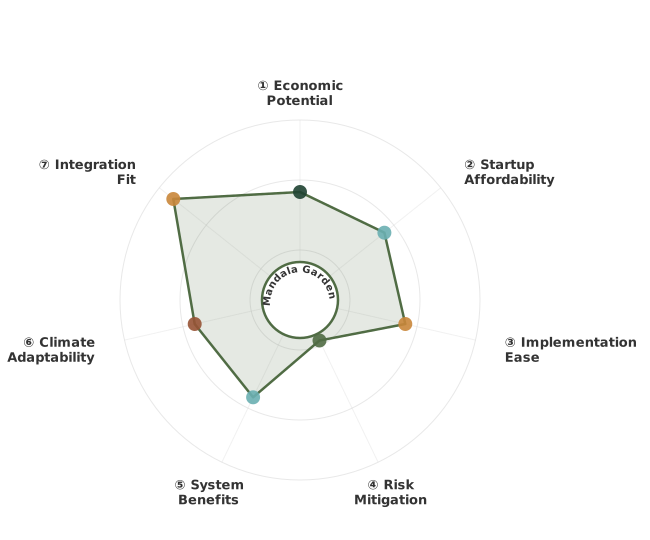
How These Traits Are Calculated
Trait dimensions are ordered clockwise starting from the top of the chart (12 o'clock position):
1. Economic Potential
Financial returns, annual value, and break-even timeline
WHAT: Evaluates financial viability by combining net annual value ($/ha from savings, income, and amortized harvests) with break-even timeline showing when practices pay for themselves.
WHY: Farmers need clear ROI understanding before committing resources. Fast payback (≤3 years) with strong returns (≥$300/ha) enables confident adoption, while long timelines (>10 years) restrict adoption to well-funded operations willing to wait for returns.
HOW: Calculated from net annual value in $/ha and break-even years. Exceptional (≥2.6): fast ROI ≤3 years + high value ≥$300/ha. Typical (1.8-2.5): moderate returns or longer timelines. Limited (<1.8): marginal economics or very long payback >10 years.
2. Startup Affordability
Initial investment costs and financial barrier to entry
WHAT: Measures financial barrier to entry through startup costs for equipment, infrastructure, consulting, and materials. Inverted scoring: lower costs = higher scores = more accessible adoption.
WHY: Affordability determines who can adopt. Low-cost practices (<$250/ha) enable widespread adoption across diverse scales, while high costs (>$2,500/ha) limit adoption to well-capitalized operations, creating barriers that slow regenerative transition.
HOW: Calculated from initial investment parsed from practice content. Inverted scoring: Exceptional (≥2.6): minimal investment <$250/ha. Typical (1.8-2.5): moderate costs $250-2,500/ha. Limited (<1.8): high barrier >$2,500/ha.
3. Implementation Ease
Learning curve and specialized knowledge required
WHAT: Measures how much learning, planning, and specialized knowledge a practice requires. Simpler practices with fewer steps score higher, while complex practices requiring extensive training or specialized resources score lower.
WHY: Complex practices create adoption barriers even when economically viable. Straightforward practices enable faster adoption and broader participation, while those requiring extensive training, timing precision, or specialized equipment limit who can succeed.
HOW: Evaluated by measuring documentation length and identifying complexity markers like location-specific requirements, seasonal timing windows, specialized skills, and dedicated equipment needs. Exceptional (≥2.6): straightforward practices with minimal prerequisites. Typical (1.8-2.5): moderate learning curve with some specialized needs. Limited (<1.8): steep learning curve requiring significant training or resources.
4. Risk Mitigation
Identified financial and ecological risk assessment
WHAT: Evaluates documented risks across financial (investment loss, market volatility) and ecological (crop failure, pest outbreaks) domains. Inverted scoring: fewer risks = higher scores.
WHY: Understanding risk exposure helps farmers make informed decisions. Low-risk practices allow confident implementation, while high-risk practices require careful planning and contingency resources. Risk transparency prevents costly failures.
HOW: Calculated from identified risks in practice content. Inverted scoring: Exceptional (≥2.6): ≤2 risks with manageable severity. Typical (1.8-2.5): 3-5 moderate risks. Limited (<1.8): 6+ risks or severe exposure.
5. System Benefits
How many ways the practice improves your land simultaneously
WHAT: Measures how many aspects of land health improve at once—carbon storage, soil quality, erosion control, water absorption, and biodiversity. Practices that improve multiple areas simultaneously create compounding benefits where each improvement reinforces the others.
WHY: The best practices solve multiple problems at once. For example, addressing erosion simultaneously builds carbon and improves water infiltration, creating a resilient system with positive feedback loops. Single-benefit approaches miss these compound transformation opportunities.
HOW: Evaluated across five key outcomes: carbon sequestration, soil organic matter increase, erosion reduction, water infiltration improvement, and biodiversity enhancement. Exceptional (≥2.6): high carbon storage (>8 t/ha/yr), improvements across 4-5 areas, transformative outcomes. Typical (1.8-2.5): moderate carbon (3-8 t/ha/yr), improvements across 2-3 areas. Limited (<1.8): modest impact (<3 t/ha/yr), single-area focus only.
6. Climate Adaptability
Geographic applicability across Köppen climate zones
WHAT: Evaluates geographic applicability by assessing how many Köppen climate zones successfully support a practice and what adaptation requirements are needed. Measures breadth of climates where farmers can implement with minimal to moderate modifications.
WHY: Universal practices working across diverse climates enable more farmers to adopt regenerative approaches. Practices limited to single climate types (only Mediterranean, only tropical) restrict adoption and slow global transition. Adaptability determines whether a practice serves niche regions or offers broad transformation.
HOW: LLM evaluation of regional success stories, Köppen zone coverage, and adaptation needs. Exceptional (≥2.6): 5+ zones or 4+ climate types, 3+ continents, minimal adaptation. Typical (1.8-2.5): 3-4 zones or 2-3 types, 2 continents, moderate adaptation. Limited (<1.8): 1-2 zones, single region, significant adaptation or highly specialized.
7. Integration Fit
How well this practice combines with others you're doing
WHAT: Measures how well a practice combines with other regenerative practices you might be doing. Some practices work as building blocks that make many other practices easier or more effective, while others work best on their own.
WHY: Practices that combine well with many others create more value on your farm. For example, cover cropping enables no-till, improves grazing, supports crop diversity, and helps water management—making all of them work better together. This helps you build a coherent system rather than juggling disconnected practices.
HOW: Evaluated by identifying which practices combine well and how strong those combinations are. 'Ideally Suited' means strong combinations where practices reinforce each other (practice A makes B easier, while B makes A more effective). 'Adequate' means complementary benefits that work well together. Exceptional (≥2.6): combines well with 6+ practices, serves as a building block. Typical (1.8-2.5): combines with 3-5 practices. Limited (<1.8): 1-2 practices or works best alone.
Going Deeper
1
WHY - The Benefits
Mandala gardens offer a unique blend of aesthetic appeal and ecological function, contributing significantly to regenerative agriculture goals. Their concentric design fosters a rich tapestry of plant life, which in turn supports a vibrant soil ecosystem and a resilient...
Mandala gardens offer a unique blend of aesthetic appeal and ecological function, contributing significantly to regenerative agriculture goals. Their concentric design fosters a rich tapestry of plant life, which in turn supports a vibrant soil ecosystem and a resilient...
WHY - The Benefits
Mandala gardens offer a unique blend of aesthetic appeal and ecological function, contributing significantly to regenerative agriculture goals. Their concentric design fosters a rich tapestry of plant life, which in turn supports a vibrant soil ecosystem and a resilient...
Mandala gardens offer a unique blend of aesthetic appeal and ecological function, contributing significantly to regenerative agriculture goals. Their concentric design fosters a rich tapestry of plant life, which in turn supports a vibrant soil ecosystem and a resilient...
Soil Health Benefits
The dense, diverse planting characteristic of mandala gardens directly translates to improved soil health. By incorporating a wide array of plant species, including deep-rooted perennials and shallow-rooted annuals, the soil experiences continuous biological activity at various depths. This maximises Maintaining Living Roots (Principle 4), feeding soil microbes year-round and promoting the formation of stable soil aggregates through root exudates and fungal networks. The constant presence of living roots also means continuous soil aeration and water infiltration, crucial for preventing compaction and fostering anaerobic conditions.
The variety of plant residues from different species decomposes at varying rates, contributing a diverse range of organic compounds to the soil. This nourishes a complex soil food web, from bacteria and fungi to earthworms and larger invertebrates. This increased biological activity enhances nutrient cycling, making essential nutrients more available to plants and reducing the reliance on external inputs. Soil organic matter content tends to increase over time as plant materials decompose and become incorporated into the soil structure, improving water-holding capacity and soil fertility.
Mandala gardens naturally align with Keeping Soil Covered (Principle 3). The close spacing and high diversity ensure that the soil surface is rarely exposed to direct sun, wind, or heavy rain. Living plant cover and abundant organic mulch (from fallen leaves, pruned branches, and crop residues) provide physical protection, preventing erosion, moderating soil temperature, and conserving moisture. This continuous cover is vital for protecting soil biology from extreme conditions and maintaining a favorable environment for beneficial organisms.
The complexity of root systems in a mandala garden can break up mild to moderate compaction layers, especially when deep-rooted species are included. While not a primary tool for severe compaction remediation, the persistent biological activity over time contributes to improved soil structure and porosity. This enhanced soil structure allows for better water infiltration and retention, making the garden more resilient to drought and heavy rainfall events.
Economic Benefits
The economic benefits of mandala gardens, while often derived from smaller-scale operations, are significant for those implementing them. By maximizing the number of productive species in a given area, mandala gardens can achieve a high density of yields from a relatively small footprint. This is particularly valuable in market gardening, community-supported agriculture (CSA) models, or for niche product markets.
The reduced need for external inputs—such as synthetic fertilizers, pesticides, and herbicides—translates directly into lower operational costs. The focus on beneficial plant guilds, natural pest deterrents, and soil fertility built through biological processes means that farmers can save substantially on purchased inputs. This aligns with regenerative principles and enhances profitability.
Income streams can be diversified. Instead of relying on a single cash crop, farmers can harvest a variety of vegetables, herbs, fruits, flowers, and even seeds from a mandala garden of appropriate scale. This diversification spreads economic risk; if one crop fails or market prices for another are low, there are other revenue streams to fall back on. This resilience is a hallmark of regenerative systems.
While not all mandala gardens generate direct market income (e.g., home gardens), they contribute to household food security and reduce food expenditures. The aesthetic appeal of a well-designed mandala garden can also increase the value of a property or attract customers to agritourism ventures. In some regions, the unique products and visual appeal can command premium prices in local markets.
The long-term economic viability is enhanced by the increasing resilience of the system. Healthier soil and more diverse plant communities are less susceptible to environmental shocks, meaning more consistent production year after year. This predictability is valuable for businesses operating on thin margins.
Regenerative Systems Fit
Mandala gardens are context-dependent in their regenerative classification, often serving as a transition practice that enables foundational regenerative goals like biodiversity and soil health, particularly when transitioning from conventional or simplified agricultural systems. Their strength lies in how they support and amplify core regenerative principles.
Principle 1 (Minimize Soil Disturbance): When established using minimal-till methods such as sheet mulching or direct seeding into existing soil with added compost, mandala gardens significantly minimize soil disturbance. Once established, the dense planting and perennial cover require little to no ongoing tillage, protecting soil structure and biology. The "transition" aspect comes into play if initial preparation involves significant soil turning to break up compaction or establish the initial layout on degraded land. This disturbance is undertaken with the explicit goal of enabling long-term, no-till, biodiverse systems.
Principle 2 (Maximize Crop Diversity): This is arguably the most strongly supported principle by mandala gardens. The design inherently calls for a wide variety of plant species—vegetables, herbs, flowers, fruits, nitrogen-fixers, dynamic accumulators, pollinator attractors, and pest deterrents. This diversity extends below ground with varied root structures, enhancing soil biological complexity and resilience. It directly counters the ecological simplicity and vulnerability of monocultures.
Principle 3 (Keep Soil Covered): The close, multi-layered planting in mandala gardens ensures that the soil surface is consistently protected. Living plants cover the majority of the area, complemented by organic mulch derived from prunings and other garden residues. This perpetual cover reduces erosion, conserves soil moisture, moderates temperature extremes, and provides habitat and food for soil organisms.
Principle 4 (Maintain Living Roots): By emphasizing perennial species and ensuring continuous planting rotations in annual sections, mandala gardens keep living roots in the soil for as much of the year as possible, often year-round in suitable climates. This constant biological activity fuels the soil food web, enhances nutrient cycling, and contributes to the formation and stabilization of soil aggregates.
Principle 5 (Integrate Livestock): While mandala gardens are typically managed as intensive crop production areas, they can be integrated into larger farm systems that include livestock. For instance, chickens or ducks might be rotated through the garden areas during specific periods to control pests and fertilize beds, or compost generated from livestock manure can be used to build fertility in the garden. The outputs of the garden—diverse crops and seeds—can also supplement livestock diets.
The transition pathway typically involves establishing a mandala garden on land that may have been previously used for conventional agriculture. The initial establishment might require breaking ground, but the focus is on building soil health from the outset with cover crops and organic matter, with the aim of quickly transitioning to a no-till, perennial-focused system. Success looks like a garden that requires progressively less intervention, generates diverse yields, and demonstrably improves soil health indicators over time.
2
WHERE - Regional Considerations
Mandala gardens are highly adaptable to various climates and regions due to their design flexibility, which allows for the selection of regionally appropriate species. The core principles of diversity, concentric layout, and plant guilds can be applied globally, with...
Mandala gardens are highly adaptable to various climates and regions due to their design flexibility, which allows for the selection of regionally appropriate species. The core principles of diversity, concentric layout, and plant guilds can be applied globally, with...
WHERE - Regional Considerations
Mandala gardens are highly adaptable to various climates and regions due to their design flexibility, which allows for the selection of regionally appropriate species. The core principles of diversity, concentric layout, and plant guilds can be applied globally, with...
Mandala gardens are highly adaptable to various climates and regions due to their design flexibility, which allows for the selection of regionally appropriate species. The core principles of diversity, concentric layout, and plant guilds can be applied globally, with...
Click Here to Look up your Region if you don't already know it
Humid Temperate Regions
Representative Locations: Northeastern United States, Canada (Ontario, Quebec), Northern Europe (UK, Germany, France, Poland), Eastern China, Japan, New Zealand.
Climate Context: Warm to hot summers and cool to cold winters with moderate to high annual precipitation (75-150 cm or 30-60 inches) distributed relatively evenly. USDA Zones 4-7, Köppen Cfb/Cfa.
Application: These regions offer a long growing season and ample rainfall, ideal for a wide variety of vegetables, fruits, herbs, and flowers. Selecting species that thrive in these conditions—including diverse perennial vegetables, nitrogen-fixing legumes for fertility, and a variety of flowering plants for pollinators and beneficial insects—will create a highly productive and resilient mandala garden. Emphasis can be placed on species that tolerate both summer humidity and winter chill.
Arid and Semi-Arid Regions
Representative Locations: Western United States (e.g., parts of Colorado, Arizona), Australia (inland regions), North Africa, Central Asia.
Climate Context: Low annual precipitation (<40 cm or 15 inches), high temperatures, short and often unpredictable growing season. USDA Zones 6-9, Köppen BSh/BSk.
Application: In these challenging environments, the mandala garden design focuses on water conservation and drought-resilient species. Companion planting is crucial for microclimate creation and mutual support. Species selection will prioritize drought-tolerant herbs (e.g., rosemary, thyme, lavender), tough perennial vegetables, native edible plants, and fruit trees adapted to arid conditions. Techniques like rainwater harvesting (swales, contour planting within the circles), hugelkultur beds for water retention, and deep mulching are essential for success, ensuring Keeping Soil Covered and Maintaining Living Roots in a water-scarce context.
Mediterranean Regions
Representative Locations: California (USA), Mediterranean Basin (Spain, Italy, Greece, North Africa), Central Chile, Southwestern Australia, Western Cape South Africa.
Climate Context: Hot, dry summers and mild, wet winters. Annual precipitation 40-90 cm (15-35 inches), highly seasonal. USDA Zones 8-10, Köppen Csa/Csb.
Application: Mandala gardens in Mediterranean climates benefit from species that tolerate dry summers but require adequate winter moisture. Drought-tolerant herbs, olives, figs, pomegranates, and specific types of legumes and grains are well-suited. The design can incorporate contour planting or terracing if on slopes to manage water. Plant guilds can be structured around species that mutualistically benefit from drought conditions, such as deep-rooted plants supporting shallower ones by bringing up moisture.
Tropical and Subtropical Regions
Representative Locations: Southeast Asia, Central America, East Africa, Northern Australia, Southern Brazil, parts of India.
Climate Context: High temperatures year-round, with distinct wet and dry seasons or consistent high rainfall. Köppen Af/Am/Aw.
Application: In tropical and subtropical areas, the focus is on managing high heat, humidity, and intense rainfall. Mandala gardens can incorporate a wide array of perennial tropical fruits, vegetables (e.g., cassava, sweet potato, yams), medicinal herbs, and nitrogen-fixing trees. The design can mimic layered forest systems, with taller fruit trees forming an outer canopy, smaller trees and shrubs in the mid-layer, and groundcovers and herbs closer to the soil. Strategic spacing within the circles is key to ensure adequate light penetration and airflow to prevent fungal diseases, supporting Keeping Soil Covered with living plants and mulch even in high rainfall zones. Indigenous and locally adapted species are paramount for resilience.
Cold Continental Regions
Representative Locations: Northern United States, Canada, Northern Europe, Siberia, Northern Asia.
Climate Context: Very short growing seasons, extreme summer heat, severe winter cold. USDA Zones 3-5, Köppen Dfa/Dfb.
Application: Mandala gardens in these regions require careful planning around the short growing season and harsh winters. Species selection must focus on cold-hardy perennials, fast-maturing annuals, and plants that can be protected or harvested before severe frost. Utilizing raised beds or hugelkultur can help warm the soil faster in spring. Techniques like season extension (e.g., using cold frames or cloches within specific garden circles) and selecting plants that can survive partial frost or can be overwintered (e.g., certain herbs, root vegetables) are crucial. Focus on diversity of root crops, brassicas, and hardy berries.
3
HOW - Implementation Process
Establishing a mandala garden involves thoughtful design and phased implementation, focusing on building soil health and maximizing plant interactions from the outset.
Establishing a mandala garden involves thoughtful design and phased implementation, focusing on building soil health and maximizing plant interactions from the outset.
HOW - Implementation Process
Establishing a mandala garden involves thoughtful design and phased implementation, focusing on building soil health and maximizing plant interactions from the outset.
Establishing a mandala garden involves thoughtful design and phased implementation, focusing on building soil health and maximizing plant interactions from the outset.
Prerequisites
- Site Assessment: Evaluate sunlight exposure, water availability, soil type, and existing vegetation. Identify any soil compaction issues that need addressing.
- Design: Sketch the mandala layout, considering desired plants, their light needs, mature size, and functional roles (e.g., fertility, pest control, pollinator attraction). Decide on the scale.
- Plant Selection: Choose species appropriate for your climate, soil, and design goals, prioritizing diversity and regenerative function. Include native plants where possible.
- Materials: Gather organic matter (compost, manure), mulch materials (straw, wood chips, leaves), and seeds/seedlings.
Phase 1: Site Preparation & Layout
Minimal Disturbance Approach (Preferred): 1. Marking: Lay out the concentric circles using string and stakes or spray paint. A central point is often defined. 2. Soil Building: On established lawn or soil, apply a thick layer (15-30 cm or 6-12 inches) of compost and organic matter over the entire area. Cover with cardboard or newspaper (sheet mulching) to suppress existing vegetation and suppress weeds. This also starts decomposing into the soil. 3. Planting: Cut through the cardboard to plant seedlings or sow seeds directly into the compost layer. The cardboard and organic matter will decompose over time, creating a rich soil bed with minimal initial disturbance. 4. Mulching: Apply a final 5-10 cm (2-4 inches) layer of mulch (straw, wood chips) around plants, leaving a small gap around stems to prevent rot.
If Soil Issues Exist (Temporary Disturbance): 1. Address Compaction: If severe compaction exists, a one-time deep ripping or broadforking may be necessary (see One-Time Tillage for Severe Compaction practice). This is a last resort, immediately followed by the minimal disturbance approach above. 2. Initial Turning (If Necessary): If soil is extremely degraded, a light turning to incorporate compost and break up initial surface crusting might be considered. Immediately follow with extensive sheet mulching and diverse cover cropping to rebuild structure.
Phase 2: Planting and Guild Establishment
- Layered Planting: Place plants according to your design. Taller plants (e.g., fruit trees, sunflowers) might be in outer circles or central focal points. Mid-height plants (vegetables, larger herbs) in intermediate circles. Lower-growing plants (groundcovers, small herbs, flowers) in innermost circles or as living mulch.
- Companion Planting Guilds: Intentionally group plants with synergistic relationships. For example:
- Corn, Beans, Squash Guild (Three Sisters): Corn provides support for beans, beans fix nitrogen for corn and squash, squash covers ground to suppress weeds and retain moisture.
- Pollinator Guild: Mix of flowering plants attracting bees, butterflies, and hoverflies (e.g., borage, calendula, comfrey, sunflowers, dill).
- Fertility Guild: Nitrogen-fixers (clover, peas, beans, alder trees) mixed with dynamic accumulators (comfrey, yarrow) that mine nutrients from deeper soil.
- Seed Sowing: Sow annual seeds directly into prepared beds or compost layers. Plant seedlings carefully, preserving root balls as much as possible. Water thoroughly after transplanting.
Phase 3: Ongoing Management & Mulching
- Watering: Water as needed, focusing on establishment. Once established, diverse perennial systems with good mulching often require less supplemental watering. Use efficient methods like drip irrigation or ollas if necessary.
- Mulching: Maintain a consistent mulch layer (5-10 cm or 2-4 inches). Add organic materials as they become available (grass clippings, shredded leaves, kitchen scraps). This suppresses weeds, conserves moisture, regulates soil temperature, and feeds soil organisms.
- Weed Management: The dense planting and mulching should suppress most weeds. Hand-pull any persistent weeds before they go to seed.
- Fertility: Rely on nitrogen-fixing plants, compost teas, and decomposition of plant residues. Avoid synthetic fertilizers.
- Pest & Disease Management: Observe plants regularly. Encourage beneficial insects by providing habitat and food sources. Use natural pest deterrents (e.g., companion planting, marigolds, garlic sprays) if minor issues arise. Healthy soil and diverse plants are the best defense.
- Pruning & Harvesting: Harvest produce regularly. Prune perennial plants to encourage growth, shape, and production. Use prunings as mulch or compost material.
Transition Timeline & Phase-Out Strategy (If applicable)
If establishing a mandala garden on previously tilled or compacted land, the transition focuses on preventing further disturbance and building soil biology:
- Year 0-1: Initial establishment using sheet mulching or minimal-till planting. Focus on building surface organic matter. Introduce diverse cover crops in any annual sections that need to be cleared between perennial plantings.
- Year 1-2: Continuously add organic matter. Observe soil health indicators (infiltration, earthworm activity). Any areas that show signs of compaction might benefit from a single phase of broadforking followed by dense root crops or cover crops, but avoid repeated tillage.
- Year 2-5: The garden should become increasingly self-sustaining. Perennial species establish, natural mulching improves, and soil life flourishes. Avoid any new significant soil disturbance. The goal is to reach a state where the soil is healthy enough to require only maintenance for its existing structure and biology.
The "phase-out" here refers to phasing out any initial single-use soil disturbance and relying entirely on biological processes and organic inputs to maintain and improve the garden system. The success indicator is a garden that is productive, resilient, requires minimal intervention, and shows tangible improvements in soil health metrics year after year.
Sources behind this view
Community
-
Design mandala gardens with beds under 4 ft wide and paths around 2 ft wide for easy access. Keep the project size manageable (5 rings or less) and build beds with organic materials like straw, hay, l
Read more (opens in new window) permies.com
4
Know the Debate
Mandala garden outcomes are shaped by climate, scale, and management choices. In humid temperate regions with reliable rainfall, high biodiversity ...
Know the Debate
Mandala garden outcomes are shaped by climate, scale, and management choices. In humid temperate regions with reliable rainfall, high biodiversity ...
Mandala garden outcomes are shaped by climate, scale, and management choices. In humid temperate regions with reliable rainfall, high biodiversity and yields are feasible within 2-3 years. Arid or cold climates require careful species selection and water management, extending establishment timelines. Entry costs range from $200-300/100 sq m for DIY setup to $700-1200+/100 sq m for professional large-scale installations. Labor varies from 'minimal' (once established) to 'intensive' during setup and for market gardening.
Initial setup disturbance for mandala gardens: Till vs. No-Till?
Minimal Disturbance (Sheet Mulch)
Mandala gardens should prioritize minimal soil disturbance from the start, using sheet mulching or direct seeding to build soil health and biology.
Sources behind this view
Sources behind this view
 Videos & Podcasts
-
Mature no-dig gardens maximize growing space by minimizing paths to capture solar energy and build soil carbon. Traditional rules like crop rotation can be adapted when soil health is prioritized, allowing for consecutive planting of crops like potatoes and broccoli.
 From the Web
-
Regenerative gardening minimizes tillage to protect soil microorganisms and structure, advocating for soil armor, plant diversity, and living roots year-round to enhance soil health and reduce labor.
Strategic Disturbance for Degraded Soils
For severely compacted or degraded soils, a single, careful intervention like broadforking may be necessary to enable immediate drainage and root penetration before transitioning to no-till.
Sources behind this view
Sources behind this view
Videos & Podcasts
-
Employs vertical soil building and zero-till methods, adding compost over years to transform challenging, wet sites. This patient approach yields better crops than conventional tilling, with diverse species thriving after initial difficulties.
From the Web
-
Common permaculture practices for sustainable land use include companion planting, mulching, rainwater harvesting, vermicomposting, hügelkultur, rotational grazing, swales, contour planting, and no-till gardening to improve soil health and water management.
Making Sense of the Differences
The crucial factor is starting point: healthy soils benefit most from immediate no-till via sheet mulching. Severely degraded soils may require a single, careful disturbance to enable biological function and drainage, followed immediately by regenerative practices. Observation dictates the best approach to avoid long-term detrimental impacts.
Economic returns from mandala gardens: Short vs. Long term?
Rapid ROI (2-4 years), High Income Potential ($700-1200+/100 sq m)
Well-managed mandala gardens on smaller scales with strong local markets and efficient DIY setup can achieve break-even quickly and generate significant income from diverse, premium produce.
Sources behind this view
Sources behind this view
Videos & Podcasts
-
Permaculture garden maintenance involves mulching, composting, and balanced pest management. Benefits include increased biodiversity, improved soil health, self-sufficiency, and overall sustainability.

From the Web
-
Forest garden installation and maintenance require intensive management, including using nurse plants for soil fertility, proper planting techniques, and resource management. Weed, pest, and disease control methods like occultation, IPM, and organic sprays are detailed. Water management via earthworks and irrigation is crucial.
Extended ROI (4-10+ years), Moderate Income ($150-450/100 sq m)
Higher initial investments, slower establishment, and limited market access can lead to longer payback periods and more modest annual incomes, especially for larger or less experienced operations.
Sources behind this view
Sources behind this view
From the Web
-
Forest garden installation and maintenance require intensive management, including using nurse plants for soil fertility, proper planting techniques, and resource management. Weed, pest, and disease control methods like occultation, IPM, and organic sprays are detailed. Water management via earthworks and irrigation is crucial.
-
Forest garden installation and maintenance require intensive management, including using nurse plants for soil fertility, proper planting techniques, and resource management. Weed, pest, and disease control methods like occultation, IPM, and organic sprays are detailed. Water management via earthworks and irrigation is crucial.
Making Sense of the Differences
The speed and scale of economic returns from mandala gardens are highly contextual. DIY enthusiasts with access to local markets can achieve rapid payback and high returns through reduced inputs and premium niche produce. Larger-scale or professionally installed gardens may incur higher initial costs and take longer to break even, emphasizing the need for careful economic planning and market research.
5
HOW MUCH - Costs & Investment
Note: Costs shown in USD; multiply by local labor and material cost indices for your region. Labor costs vary significantly internationally.
Note: Costs shown in USD; multiply by local labor and material cost indices for your region. Labor costs vary significantly internationally.
HOW MUCH - Costs & Investment
Note: Costs shown in USD; multiply by local labor and material cost indices for your region. Labor costs vary significantly internationally.
Note: Costs shown in USD; multiply by local labor and material cost indices for your region. Labor costs vary significantly internationally.
Note: All costs are based on recent US economic data (2024–2026) and may vary substantially by region based on local labor rates, material costs, and regulatory requirements.
Site Preparation & Design
For small operations (under 50 acres (20 ha)), initial design fees or self-guided planning range from $200–$800, with clearing and sheet-mulching costs of $1,500–$4,000 per acre ($3,707–$9,884/ha). For mid-size operations (50–500 acres (20–202 ha)), initial spiral earthworks and professional staking services cost $5,000–$15,000 per acre ($12,355–$37,066/ha). Large-scale installations (500+ acres) necessitate comprehensive site grading and professional landscape architecture services, ranging from $20,000–$45,000 per project to address large-scale water management and topographic geometric precision.
Soil Fertility & Irrigation Infrastructure
Mandala gardens prioritize biological density, which elevates upfront fertility and water management costs. Small-scale plots require $2,000–$5,000 per acre ($4,942–$12,355/ha) for organic amendments and compost. Irrigation for these plots, utilizing specialized circular drip-line configurations, costs $1,500–$4,000 per acre ($3,707–$9,884/ha). Mid-size operations, benefiting from bulk procurement, see fertility costs range from $4,000–$8,000 per acre ($9,884–$19,768/ha), while complex irrigation and automated filtration systems cost $5,000–$12,000 per acre ($12,355–$29,653/ha). Large-scale systems (500+ acres) require sophisticated automated fertigation systems, totaling $10,000–$25,000 per acre ($24,710–$61,776/ha) to ensure uniform nutrient delivery across expanded, diverse planting zones.
Plant Materials & Establishment
Bio-intensive planting requires significant upfront investment in nursery-grade seedlings and perennial stock. Small operations invest $1,000–$3,000 per acre ($2,471–$7,413/ha) to establish initial ground cover and structural plant populations. Mid-size operations, which often feature a wider array of specialized, high-value perennials, spend $3,000–$7,000 per acre ($7,413–$17,297/ha). Large-scale intensive mandala systems, which require extensive successional planting and structural anchor trees, reach establishment costs of $8,000–$18,000 per acre ($19,768–$44,479/ha).
Most Spend: The middle 60% of operations typically invest $8,000–$22,000 per acre ($19,768–$54,363/ha) for a fully established, professional-grade mandala system. This range accounts for the procurement of high-quality organic amendments, perennial nursery stock, and baseline irrigation infrastructure.
Why the Range?: The primary drivers of cost variance are the level of mechanized labor used for earthworks and the variety selection for permanent plantings. Operations opting for manual execution and on-site propagation fall toward the bottom of these ranges, while those importing certified perennial stock and professional design services trend toward the higher end.
6
REWARDS AND RISKS - Economics & Risk Factors
REWARDS AND RISKS - Economics & Risk Factors
Economic Scenarios
- Best Case ($20,000–$35,000 per acre ($49,421–$86,487/ha) revenue): By achieving peak synergistic biodiversity, input costs decrease by 70–80% due to reduced pest pressure and in-house propagation. High-value crop success allows for break-even within 2–3 growing seasons.
- Typical Case ($10,000–$20,000 per acre ($24,710–$49,421/ha) revenue): The garden operates as a productive polyculture with stable access to local markets. Moderate reliance on external organic inputs continues, with profit sustainability achieved within 4–5 seasons.
- Worst Case ($3,000–$8,000 per acre ($7,413–$19,768/ha) revenue): Inefficient layout leading to labor bottlenecks or poor market penetration results in significant overhead struggle. High mortality or management errors can extend the break-even horizon to 7–10 years, risking operational failure if high-value per-square-foot targets are not realized.
Market Factors & Risk Mitigation Profitability hinges on the "Diversity Premium." Growers must implement a "Crop-to-Channel" strategy, securing market interest before planting to avoid commodity price competition. To combat high labor requirements, operators should spend $400–$800 on specialized, ergonomic hand tools like broadforks, which decrease physical strain and subsequent medical or replacement labor costs by roughly 20-30% over three years.
Transition Period Risks Transitioning land to a mandala system results in a 15–35% yield dip during the first 2 years as soil chemistry corrects from synthetic reliance. Productivity typically stabilizes by the end of the third growing season. To mitigate income volatility, operators should interplant "Bridge Crops"—such as radishes or salad greens—between slow-establishing perennials, capturing short-term cash flow while the biological foundation of the mandala solidifies. Utilizing dense cover crops in off-seasons protects soil integrity and prevents potential nutrient loss estimated at $200-$500 per acre ($494–$1,236/ha) in equivalent synthetic replacement value.
7
COMPATIBLE PRACTICES - Integration Opportunities
Mandala gardens can be integrated into a variety of systems, enhancing their regenerative capacity and overall farm resilience.
Mandala gardens can be integrated into a variety of systems, enhancing their regenerative capacity and overall farm resilience.
COMPATIBLE PRACTICES - Integration Opportunities
Mandala gardens can be integrated into a variety of systems, enhancing their regenerative capacity and overall farm resilience.
Mandala gardens can be integrated into a variety of systems, enhancing their regenerative capacity and overall farm resilience.
Sheet Mulching / Lasagna Gardening
- Integration: Used for initial garden bed establishment and ongoing soil building. Layers of cardboard, compost, manure, straw, and leaves are applied to create fertile beds with minimal soil disturbance.
- Benefit: Rapidly builds soil organic matter, suppresses weeds, conserves moisture, and fosters a healthy soil food web. Works synergistically with the dense planting of mandala gardens.
No-Till Farming / Minimal Tillage
- Integration: The foundational management approach once the garden is established. Avoids disturbing the soil structure and biology built up through the diverse plantings.
- Benefit: Protects soil structure, conserves moisture, sequesters carbon, and supports the sensitive soil food web developed in the mandala garden.
Cover Cropping
- Integration: Used in annual sections between perennial plantings or in dedicated circles to build fertility, manage weeds, and protect soil during fallow periods.
- Benefit: Adds organic matter, fixes nitrogen, breaks up mild compaction, and provides food/habitat for soil organisms and beneficial insects.
Composting & Vermicomposting
- Integration: Generates high-quality soil amendments and fertility from garden waste, kitchen scraps, and potentially animal manures.
- Benefit: Closes nutrient loops, reduces waste, and provides a continuous supply of organic matter and beneficial microbes for the garden.
Pollinator & Beneficial Insect Habitat Planting
- Integration: Specific plants within the mandala garden are chosen to attract and support pollinators (bees, butterflies) and predatory insects (ladybugs, lacewings).
- Benefit: Enhances natural pest control, promotes crop pollination, and increases overall ecosystem resilience.
Water Harvesting & Conservation
- Integration: Techniques like swales, contour planting within circles, rainwater catchment, and drip irrigation can be incorporated, especially in drier climates.
- Benefit: Maximizes water use efficiency, reduces reliance on external water sources, and protects soil from erosion during heavy rains.
Hugelkultur Beds
- Integration: For raised beds or a more permanent structure, decaying wood buried in beds can provide long-term fertility and water retention, especially useful in dry climates or for creating microclimates.
- Benefit: Creates a highly fertile, water-retentive growing medium that breaks down slowly over many years, reducing need for external amendments.
The integration of these practices transforms a mandala garden from a mere decorative planting into a truly regenerative system that builds soil, supports biodiversity, and provides consistent, diverse yields with minimal external input.# Mandala Gardens