
Minimum Tillage
Minimum tillage, also known as reduced tillage or conservation tillage, encompasses a range of farming practices that significantly decrease the frequency, intensity, or depth of soil disturbance compared to conventional plowing. These methods aim to protect soil structure, retain moisture, and promote soil health by leaving more crop residue on the surface and disturbing the soil less.
Read More: Complete Description
Minimum tillage is a spectrum of practices that reduce mechanical disturbance to the soil. Instead of moldboard plowing or intensive disking, farmers employing minimum tillage techniques use implements like chisel plows, sweep plows, or strip tillers that disturb the soil less, leave more residue on the surface, and avoid inverting the soil profile. The goal is to preserve soil structure, increase organic matter, improve water infiltration and retention, and create a more hospitable environment for soil biology.
Regenerative Context: Minimum tillage fundamentally supports regenerative principle 1: Minimize Soil Disturbance. By reducing the intensity and frequency of tillage, it preserves soil aggregation, protects fungal networks, reduces carbon loss from soil organic matter exposure, and minimizes physical disruption to earthworm channels and root pathways. While a foundational practice in many regenerative systems, it can also serve as a crucial transition practice. For farmers coming from conventional tillage, moving towards minimum tillage is a significant step in reducing soil disturbance while still managing certain risks like weed pressure or residue management.
The decision to adopt minimum tillage—and the specific method chosen—is context-dependent, influenced by soil type, climate, crop rotation, weed pressure, and equipment availability. For example, farmers in drier regions (such as the semi-arid regions of Australia or the Great Plains of North America) often find strip tillage beneficial. This practice disturbs only the narrow band where the seed is to be planted, leaving crop residue between the rows to conserve moisture and reduce erosion, while still allowing for a more controlled seedbed environment. In contrast, humid temperate regions with higher rainfall might benefit more from direct no-till seeding into undisturbed soil, provided residue management is adequate.
However, the transition to minimum tillage is not without its challenges and requires careful planning. Violating regenerative principle 1, even minimally, can have consequences. The immediate benefits of reduced disturbance—like better soil structure and water infiltration—can be offset in the short term if not managed correctly. For instance, reduced tillage can sometimes lead to increased reliance on herbicides for weed control if a robust cover cropping strategy or crop rotation isn't in place to manage weed seed banks. This highlights the interconnectedness of regenerative practices; minimum tillage is most effective when combined with other principles.
While the ultimate goal in many regenerative systems is no-till (zero soil disturbance), minimum tillage represents a vital stepping stone. For farms with severe compaction issues, a one-time deep tillage might be necessary as a last resort to break up hardpans that biological methods cannot penetrate quickly enough. However, this is a transitional measure, not minimum tillage itself, and must be followed by immediate cover cropping and a commitment to permanent no-till. Minimum tillage, on the other hand, can be a sustainable practice in itself or a precursor to no-till.
A pragmatic transition pathway involves gradually reducing tillage intensity and frequency. This might look like moving from multiple pre-plant tillage operations to a single pass, then to strip-till, and eventually to direct drilling into undisturbed stubble. Each step reduces disturbance, builds soil health, and allows farmers to adapt their equipment, knowledge, and management strategies. The timeline for this transition varies significantly, often taking 3-5 years to fully implement and realize the benefits, while mitigating risks associated with weed management and residue.
The success of minimum tillage is intrinsically linked to maintaining other regenerative principles. Keeping soil covered (Principle 3) with crop residue or cover crops is paramount, as this protects the soil surface from erosion and extreme temperatures, which reduced tillage aims to preserve. Maintaining living roots (Principle 4) through diverse crop rotations and cover crops provides ongoing biological activity that counteracts any residual tillage effects and builds soil structure. Integrating livestock (Principle 5) can also enhance minimum tillage systems by adding fertility through manure and by strategically grazing cover crops, further reducing the need for mechanical weed control.
Understanding the nuances of minimum tillage is key for any farmer aiming for regenerative outcomes. It's not a one-size-fits-all solution but a flexible approach that prioritizes soil stewardship while remaining adaptable to diverse agricultural landscapes and economic realities. By carefully considering regional context, crop choices, and integrating supporting regenerative practices, minimum tillage can be a powerful tool in the journey toward resilient and productive farming systems.
Sources behind this view
Sources behind this view
 Videos & Podcasts
-
Farmers discuss no-till benefits (soil health, water retention, weed control) and challenges (labor intensity, initial cost). Strategies include tarping, mulching, cover cropping, and careful planning

-
Case studies of farmers like Duane Beck, Kofi Boa, David Brandt, and Gabe Brown demonstrate that regenerative agriculture (no-till, cover crops, diverse rotations) significantly increases soil health,

-
Conservation agriculture, based on no-till, cover crops, and diverse rotations, restores soil fertility and profitability. Farmers adopting these principles can increase yields, reduce input costs (di
-
Regenerative farming, using no-till, cover crops, and diverse rotations, rapidly rebuilds soil organic matter and soil life. Examples from Ohio and Ghana show these practices increase profitability by

 Community
-
Goranson Farm in coastal Maine reduced tillage by adopting strip tillage, using Yeomans plows to break compaction and create seedbeds, preserving soil organic matter and reducing labor by 75%.
Read more (opens in new window) smallfarms.cornell.edu -
Explains regenerative agriculture principles: no-till gardening to support soil microbiome and sequester carbon; using compost to reduce erosion and compaction; and planting diverse cover crops (grass
Read more (opens in new window) ucanr.edu -
Adopting no-till farming and non-GMO seeds improves soil health, reduces input costs (fuel, fertilizer, herbicides), and increases yields and profitability, leading to farmer adoption within 4-5 years
Read more (opens in new window) permies.com -
Adopt no-till/minimum tillage to preserve soil health and prevent carbon loss. Enhance fertility organically with cover crops, crop rotation, compost, and mulching, while avoiding synthetic fertilizer
Read more (opens in new window) ucanr.edu
 Research
-
Conventional, Minimum/Reduced, and Zero Tillage: Implications for Soil and Water Conservation and Residue Management in Global and Indian Contexts (opens in new window)
This study found: Zero tillage, especially with Happy Seeders, improves soil structure, water retention, and yields by up to 17% while cutting costs and emissions. Success depends on local adaptation and integrated wee
-
Regenerative farming and conservation tillage: economic benefits and ecological impacts in contemporary agriculture (opens in new window)
This study found: Regenerative farming with conservation tillage (no-till, strip-till) improves soil health, reduces emissions, and boosts farm profits by cutting costs and stabilizing yields. Requires farmer training
-
Co-implementation of precision nutrient management in long-term conservation agriculture-based systems: A step towards sustainable energy-water-food nexus (opens in new window)
This study found: Conservation agriculture (permanent beds, no-till) with precision nutrient management significantly boosted corn-wheat-mungbean yields, water use, soil carbon, and profits in India, while reducing env
-
No‐Till Legume Cover Crops Enhance Soil Carbon, Mitigate Greenhouse Gas Emissions, and Increase Yield in Dryland Wheat: A Global Meta‐Analysis (opens in new window)
This study found: Global meta-analysis shows no-till + legume cover crops significantly boost dryland wheat soil carbon (+28.5%), yield (+24.1%), and resource efficiency, while cutting GHG emissions. Long-term use yiel
 From the Web
-
Key regenerative agriculture methods include no-till farming, cover cropping, agroforestry, perennial crops, planned rotational grazing (Holistic Management), and compost application, all aimed at imp
-
Conservation tillage principles include reducing tillage, using crop rotations with cover crops to maintain soil surface biomass (especially cereal rye), and managing equipment. These practices enhanc
-
Conservation tillage principles include reducing tillage to minimize soil compaction, using crop rotations with cover crops to maintain soil coverage, and managing equipment for site-specific needs. M
-
Implementing Conservation Agriculture (CA) involves managing weed pressure with cover crops, diversifying markets for new crops, and integrating livestock with residue retention. Challenges like equip
Key Points
What It Is
- Reduced soil plowing and cultivation
- Leaves significant crop residue on surface
- Includes strip-till, chisel plow, sweep plow
- Precursor to or concurrent with no-till
Why Do It
- Preserves soil structure and biology
- Enhances water infiltration and retention
- Reduces erosion and nutrient loss
- Supports long-term soil health regeneration
Know the Debate
- Yields can dip 2-5 years initially on degraded soils.
- Builds soil by preserving structure and biology.
- Organic matter gains of 0.2-1.0% per decade possible.
- Combines residue management with cover crops for full benefit.
Benefits - Financial
- Recurring annual operational savings of $25–$60 per acre ($62–$148 per hectare) achieved.
- Fuel consumption reduction of 30–50% compared to conventional tillage.
- Yield stability improvements providing +$40–$70 per acre ($99–$173 per hectare) in drought years.
Benefits - System
- Minimizes soil disturbance (Principle 1)
- Soil organic matter increases 0.2-1.0%/decade
- Erosion reduction: 50-80% decrease
- Supports diverse soil microbial communities
Risks - Financial
- Equipment capital expenditure of $25,000–$110,000 for mid-size operations.
- Temporary herbicide cost spikes of $15–$50 per acre ($37–$124 per hectare) during transition.
- Potential 10% yield reduction during 1–2 year adjustment period.
Risks - System
- Increased weed pressure if not managed
- Residue management challenges in wet climates
- Can exacerbate compaction if not adapted correctly
- Potential for slower early-season soil warming
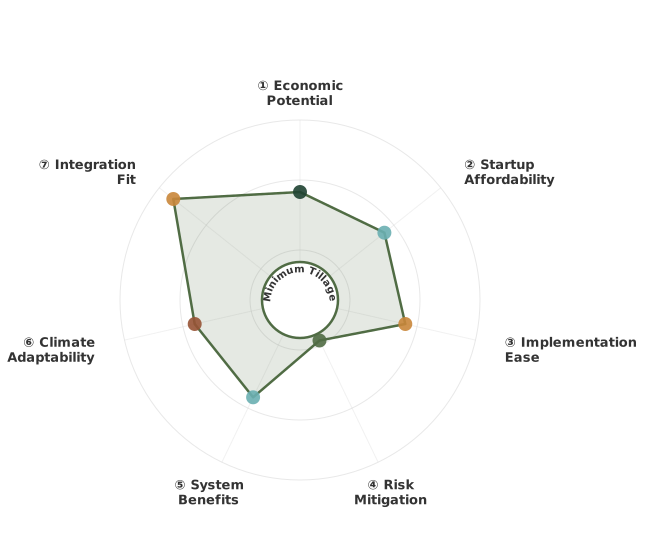
How These Traits Are Calculated
Trait dimensions are ordered clockwise starting from the top of the chart (12 o'clock position):
1. Economic Potential
Financial returns, annual value, and break-even timeline
WHAT: Evaluates financial viability by combining net annual value ($/ha from savings, income, and amortized harvests) with break-even timeline showing when practices pay for themselves.
WHY: Farmers need clear ROI understanding before committing resources. Fast payback (≤3 years) with strong returns (≥$300/ha) enables confident adoption, while long timelines (>10 years) restrict adoption to well-funded operations willing to wait for returns.
HOW: Calculated from net annual value in $/ha and break-even years. Exceptional (≥2.6): fast ROI ≤3 years + high value ≥$300/ha. Typical (1.8-2.5): moderate returns or longer timelines. Limited (<1.8): marginal economics or very long payback >10 years.
2. Startup Affordability
Initial investment costs and financial barrier to entry
WHAT: Measures financial barrier to entry through startup costs for equipment, infrastructure, consulting, and materials. Inverted scoring: lower costs = higher scores = more accessible adoption.
WHY: Affordability determines who can adopt. Low-cost practices (<$250/ha) enable widespread adoption across diverse scales, while high costs (>$2,500/ha) limit adoption to well-capitalized operations, creating barriers that slow regenerative transition.
HOW: Calculated from initial investment parsed from practice content. Inverted scoring: Exceptional (≥2.6): minimal investment <$250/ha. Typical (1.8-2.5): moderate costs $250-2,500/ha. Limited (<1.8): high barrier >$2,500/ha.
3. Implementation Ease
Learning curve and specialized knowledge required
WHAT: Measures how much learning, planning, and specialized knowledge a practice requires. Simpler practices with fewer steps score higher, while complex practices requiring extensive training or specialized resources score lower.
WHY: Complex practices create adoption barriers even when economically viable. Straightforward practices enable faster adoption and broader participation, while those requiring extensive training, timing precision, or specialized equipment limit who can succeed.
HOW: Evaluated by measuring documentation length and identifying complexity markers like location-specific requirements, seasonal timing windows, specialized skills, and dedicated equipment needs. Exceptional (≥2.6): straightforward practices with minimal prerequisites. Typical (1.8-2.5): moderate learning curve with some specialized needs. Limited (<1.8): steep learning curve requiring significant training or resources.
4. Risk Mitigation
Identified financial and ecological risk assessment
WHAT: Evaluates documented risks across financial (investment loss, market volatility) and ecological (crop failure, pest outbreaks) domains. Inverted scoring: fewer risks = higher scores.
WHY: Understanding risk exposure helps farmers make informed decisions. Low-risk practices allow confident implementation, while high-risk practices require careful planning and contingency resources. Risk transparency prevents costly failures.
HOW: Calculated from identified risks in practice content. Inverted scoring: Exceptional (≥2.6): ≤2 risks with manageable severity. Typical (1.8-2.5): 3-5 moderate risks. Limited (<1.8): 6+ risks or severe exposure.
5. System Benefits
How many ways the practice improves your land simultaneously
WHAT: Measures how many aspects of land health improve at once—carbon storage, soil quality, erosion control, water absorption, and biodiversity. Practices that improve multiple areas simultaneously create compounding benefits where each improvement reinforces the others.
WHY: The best practices solve multiple problems at once. For example, addressing erosion simultaneously builds carbon and improves water infiltration, creating a resilient system with positive feedback loops. Single-benefit approaches miss these compound transformation opportunities.
HOW: Evaluated across five key outcomes: carbon sequestration, soil organic matter increase, erosion reduction, water infiltration improvement, and biodiversity enhancement. Exceptional (≥2.6): high carbon storage (>8 t/ha/yr), improvements across 4-5 areas, transformative outcomes. Typical (1.8-2.5): moderate carbon (3-8 t/ha/yr), improvements across 2-3 areas. Limited (<1.8): modest impact (<3 t/ha/yr), single-area focus only.
6. Climate Adaptability
Geographic applicability across Köppen climate zones
WHAT: Evaluates geographic applicability by assessing how many Köppen climate zones successfully support a practice and what adaptation requirements are needed. Measures breadth of climates where farmers can implement with minimal to moderate modifications.
WHY: Universal practices working across diverse climates enable more farmers to adopt regenerative approaches. Practices limited to single climate types (only Mediterranean, only tropical) restrict adoption and slow global transition. Adaptability determines whether a practice serves niche regions or offers broad transformation.
HOW: LLM evaluation of regional success stories, Köppen zone coverage, and adaptation needs. Exceptional (≥2.6): 5+ zones or 4+ climate types, 3+ continents, minimal adaptation. Typical (1.8-2.5): 3-4 zones or 2-3 types, 2 continents, moderate adaptation. Limited (<1.8): 1-2 zones, single region, significant adaptation or highly specialized.
7. Integration Fit
How well this practice combines with others you're doing
WHAT: Measures how well a practice combines with other regenerative practices you might be doing. Some practices work as building blocks that make many other practices easier or more effective, while others work best on their own.
WHY: Practices that combine well with many others create more value on your farm. For example, cover cropping enables no-till, improves grazing, supports crop diversity, and helps water management—making all of them work better together. This helps you build a coherent system rather than juggling disconnected practices.
HOW: Evaluated by identifying which practices combine well and how strong those combinations are. 'Ideally Suited' means strong combinations where practices reinforce each other (practice A makes B easier, while B makes A more effective). 'Adequate' means complementary benefits that work well together. Exceptional (≥2.6): combines well with 6+ practices, serves as a building block. Typical (1.8-2.5): combines with 3-5 practices. Limited (<1.8): 1-2 practices or works best alone.
Going Deeper
1
WHY - The Benefits
Minimum tillage is a cornerstone practice in transitioning towards regenerative agriculture because it directly addresses the principle of minimizing soil disturbance. By reducing the intensity and frequency of soil disruption, it preserves and enhances the intricate...
Minimum tillage is a cornerstone practice in transitioning towards regenerative agriculture because it directly addresses the principle of minimizing soil disturbance. By reducing the intensity and frequency of soil disruption, it preserves and enhances the intricate...
WHY - The Benefits
Minimum tillage is a cornerstone practice in transitioning towards regenerative agriculture because it directly addresses the principle of minimizing soil disturbance. By reducing the intensity and frequency of soil disruption, it preserves and enhances the intricate...
Minimum tillage is a cornerstone practice in transitioning towards regenerative agriculture because it directly addresses the principle of minimizing soil disturbance. By reducing the intensity and frequency of soil disruption, it preserves and enhances the intricate...
Soil Health Benefits
The most significant benefit of minimum tillage is the preservation and improvement of soil structure. Conventional tillage, especially plowing, inverts the soil profile, breaks up aggregates, destroys fungal hyphae, and exposes soil organic matter to oxidation. Minimum tillage practices, by contrast, leave the majority of surface residue and disturb the soil minimally. This leads to:
- Improved Soil Aggregation: Surface residue protects soil aggregates from raindrop impact, while undisturbed soil biology (earthworms, fungi, bacteria) creates and stabilizes aggregates. This results in better pore space for air and water movement.
- Increased Water Infiltration and Retention: Better aggregation and the presence of residue on the surface slow down water runoff, allowing more water to infiltrate the soil. This is critical for drought resilience and reducing erosion. Over time, studies have shown improvements in water infiltration rates of 20-70%, with the magnitude depending on the initial soil condition, climate, and duration of the practice.
- Enhanced Soil Organic Matter: By reducing the oxidation of soil organic matter, minimum tillage allows it to accumulate. Surface residue decomposes more slowly on the surface, contributing to a healthy organic layer which is vital for soil fertility, water holding capacity, and microbial habitat. Annual increases of 0.2-0.5% in soil organic matter are achievable over a decade.
- Protection of Soil Biology: Earthworm channels, root pathways, and fungal networks are largely left intact. This preserves the infrastructure for nutrient cycling and soil aeration. Microbial communities thrive in the less disturbed environment, leading to increased biodiversity and functional resilience.
Economic Benefits
The economic advantages of minimum tillage are significant and accrue over time, making it a financially sound regenerative practice.
- Reduced Input Costs: Compared to conventional tillage, minimum tillage drastically reduces fuel consumption, labor, and machinery wear. Operations like plowing and extensive disking require multiple passes, whereas minimum tillage often involves one or two passes with specialized equipment, leading to fuel savings of 30-50% and reduced maintenance costs.
- Improved Water Use Efficiency: Enhanced infiltration and water retention mean less reliance on irrigation in water-scarce regions. For rain-fed agriculture, better stored soil moisture leads to more stable yields, especially during dry spells.
- Higher Yields (Long-Term): While sometimes there can be a short-term adjustment period, the cumulative benefits of improved soil health—better structure, fertility, and water availability—often lead to more resilient and higher yields, particularly in challenging conditions like drought.
- Reduced Erosion Losses: Conservation of topsoil through reduced erosion means retaining fertile land, preventing costly off-farm environmental impacts, and maintaining land productivity for future generations.
Regenerative Systems Fit
Minimum tillage is fundamental to achieving regenerative agriculture goals by directly aligning with key principles:
-
Principle 1 (Minimize Soil Disturbance): This is the core of minimum tillage. Tillage exists on a spectrum of disturbance, from conventional inversion plowing (most disruptive) to no-till (least disruptive). Minimum tillage practices sit in the middle, significantly reducing the intensity and frequency of soil disruption compared to conventional methods. By avoiding inversion and preserving residue, it preserves soil structure, biology, and organic matter, acting as a direct step towards upholding this principle.
-
Principle 3 (Keep Soil Covered): Minimum tillage inherently promotes keeping soil covered by leaving a significant amount of crop residue on the surface. This residue acts as a protective mulch, preventing erosion, retaining moisture, suppressing weeds, and providing a habitat for beneficial soil organisms.
-
Principle 4 (Maintain Living Roots): While minimum tillage primarily focuses on soil disturbance, it pairs extremely well with practices that maintain living roots. Diverse crop rotations that include cover crops ensure that soil is occupied by living plants for as much of the year as possible, providing continuous biological activity that further enhances soil structure and fertility, counteracting any residual effects of disturbance.
-
Principle 2 (Maximize Crop Diversity): Minimum tillage systems accommodate diverse crop rotations and cover cropping strategies. The soil conditions created by reduced disturbance are conducive to establishing a wider variety of cash crops and cover crops, leading to greater biodiversity above and below ground.
-
Principle 5 (Integrate Livestock): Livestock can be integrated into minimum tillage systems. For instance, grazing cover crops can reduce biomass that might interfere with planting, cycle nutrients through manure, and their hoof action can be managed through rotational grazing to avoid compaction if the soil is at the right moisture level.
In summary, minimum tillage is a critical practice for farmers seeking to build healthier soils, improve economic viability, and enhance the ecosystem services of their land. It represents a practical step away from destructive conventional practices, allowing the soil to heal and become more resilient under management that respects its natural processes.
Sources behind this view
Videos & Podcasts
-
Implementing the six soil health principles (living root, cover crops, diversity, minimize disturbance) over 3-5 years can dramatically improve soil function, aggregation, and water cycles, reducing t

-
Farmers discuss no-till benefits (soil health, water retention, weed control) and challenges (labor intensity, initial cost). Strategies include tarping, mulching, cover cropping, and careful planning
-
Conservation agriculture, based on no-till, cover crops, and diverse rotations, restores soil fertility and profitability. Farmers adopting these principles can increase yields, reduce input costs (di
-
Seven soil health principles for profitable farming: mindfulness, context, minimal tillage, ground cover, diversity (four plant families), living roots, and managed animal impact. These practices redu

Community
-
Explains regenerative agriculture principles: no-till gardening to support soil microbiome and sequester carbon; using compost to reduce erosion and compaction; and planting diverse cover crops (grass
Read more (opens in new window) ucanr.edu -
Enhance soil health through plant diversity, continuous soil cover (living plants/residues), and livestock integration. Manage carbon-to-nitrogen ratios of residues and adopt no-till practices to impr
Read more (opens in new window) permies.com -
Minimizing tillage is crucial for soil health, as it preserves soil structure, protects soil biota, and enhances water infiltration by fostering biological processes like glomalin production by mycorr
Read more (opens in new window) permies.com -
Goranson Farm in coastal Maine reduced tillage by adopting strip tillage, using Yeomans plows to break compaction and create seedbeds, preserving soil organic matter and reducing labor by 75%.
Read more (opens in new window) smallfarms.cornell.edu
Research
-
Conventional, Minimum/Reduced, and Zero Tillage: Implications for Soil and Water Conservation and Residue Management in Global and Indian Contexts (opens in new window)
This study found: Zero tillage, especially with Happy Seeders, improves soil structure, water retention, and yields by up to 17% while cutting costs and emissions. Success depends on local adaptation and integrated wee
-
Regenerative farming and conservation tillage: economic benefits and ecological impacts in contemporary agriculture (opens in new window)
This study found: Regenerative farming with conservation tillage (no-till, strip-till) improves soil health, reduces emissions, and boosts farm profits by cutting costs and stabilizing yields. Requires farmer training
-
Long-Term Conservation Tillage: Impacts on Soil Structure, Moisture, and Erosion: A Review (opens in new window)
This study found: Long-term reduced tillage (no-till, minimum tillage, residue retention) improves soil structure, moisture, and drastically reduces erosion, making it a climate-smart practice.
-
Conservation Tillage Practices and Their Role in Sustainable Farming Systems (opens in new window)
This study found: Review of conservation tillage (no-till, strip-till, etc.) shows benefits for soil health, water conservation, and reduced emissions, while also addressing crop yields and pest management challenges.
From the Web
-
Conservation tillage principles include reducing tillage, using crop rotations with cover crops to maintain soil surface biomass (especially cereal rye), and managing equipment. These practices enhanc
-
Key regenerative agriculture methods include no-till farming, cover cropping, agroforestry, perennial crops, planned rotational grazing (Holistic Management), and compost application, all aimed at imp
-
Conservation tillage principles include reducing tillage to minimize soil compaction, using crop rotations with cover crops to maintain soil coverage, and managing equipment for site-specific needs. M
-
Regenerative agriculture utilizes methods like no-till, agroforestry, perennial crops, planned rotational grazing (Holistic Management), compost application, and pasture cropping to improve soil healt
2
WHERE - Regional Considerations
Minimum tillage is broadly applicable across diverse regions and climate zones, but its specific implementation and benefits are nuanced by local conditions.
Minimum tillage is broadly applicable across diverse regions and climate zones, but its specific implementation and benefits are nuanced by local conditions.
WHERE - Regional Considerations
Minimum tillage is broadly applicable across diverse regions and climate zones, but its specific implementation and benefits are nuanced by local conditions.
Minimum tillage is broadly applicable across diverse regions and climate zones, but its specific implementation and benefits are nuanced by local conditions.
Click Here to Look up your Region if you don't already know it
Humid Temperate Regions
Representative Locations: Midwestern USA, Western Europe (France, Germany), Eastern China, New Zealand
Climate Context: Moderate temperatures with distinct seasons, ample precipitation usually distributed throughout the year (75-150 cm or 30-60 inches annually). USDA Zones 5-7, Köppen Cfa, Cfb.
Suitability: Highly suitable. Ample residue from cash crops often provides good surface cover. Reduced tillage moisture conservation is less critical than in arid zones but still beneficial for managing heavy rainfall and preventing wash-off erosion. The challenge is managing residue in wet springs to allow timely planting and warmer soil temperatures for germination. Equipment choice (e.g., strip-till for warmer seedbeds, or managing residue with specialized harvesters) is important. International examples include adoption on farms in Ukraine and Poland for wheat and corn production, and on mixed farms in Australia.
Arid and Semi-Arid Regions
Representative Locations: Western USA (Great Plains), Australia (Murray-Darling Basin), North Africa, Central Asia
Climate Context: Low annual precipitation (<40 cm or 15 inches), high temperatures, significant evaporation rates, and often unpredictable rainfall patterns. USDA Zones 6-9, Köppen BSk, BSh.
Suitability: Essential. Minimum tillage is critical for conserving scarce soil moisture and preventing wind and water erosion. Surface residue acts as a mulch, reducing evaporation and protecting soil from wind scour. Strip-tilling is often favored as it concentrates disturbance and residue removal in the seed zone, allowing ample residue to remain between rows for moisture conservation and erosion control. Wheat and barley production in these regions, such as in parts of Southern Australia and the Canadian Prairies, often relies heavily on minimum tillage and direct drilling.
Mediterranean Regions
Representative Locations: California (USA), Mediterranean Basin (Spain, Italy, Greece), Central Chile, Southwest Australia
Climate Context: Hot, dry summers and mild, wet winters. Precipitation is seasonal, with significant rainfall concentrated in the cooler months. USDA Zones 8-10, Köppen Csa, Csb.
Suitability: Highly suitable. Minimum tillage is excellent for managing dry summers and conserving moisture for potential overwintering cover crops. The mild winters allow for easier residue decomposition and planting. Reduced tillage helps prevent soil crusting and erosion during intense winter rains after dry, exposed summers. Grape vineyards and olive groves in Spain or California can benefit immensely from reduced soil disturbance, preserving soil structure on slopes.
Cold Continental Regions
Representative Locations: Northern USA, Canada, Northern Europe, Siberia
Climate Context: Long, cold winters and short, warm to hot summers. Precipitation can be moderate to high, but much of it may fall as snow. USDA Zones 3-5, Köppen Dfa, Dfb, Dwc.
Suitability: Suitable, with considerations for residue decomposition and soil warming. The primary challenge is ensuring residue decomposes sufficiently over the winter to avoid issues with planting in spring where soils remain cold. Delayed soil warming can impact crop emergence. However, reduced erosion and improved moisture retention during unpredictable spring thaws are significant advantages. Minimum tillage is adopted in grain farming in provinces like Saskatchewan, Canada, and in parts of Russia.
Tropical and Subtropical Regions
Representative Locations: Southeast Asia, Central America, Sub-Saharan Africa, Northern Australia, Southern Brazil
Climate Context: High temperatures year-round, often with distinct wet and dry seasons or consistent high rainfall. Köppen Af, Am, Aw, Cfa.
Suitability: Highly suitable, especially in areas with distinct dry seasons or where heavy rainfall poses erosion risks. Minimum tillage helps conserve moisture during dry periods and protects soils from intense rainfall events that can cause severe erosion. In rice paddies, reduced tillage is critical for maintaining soil structure under waterlogged conditions and potentially reducing labor. Coffee and cocoa plantations in Latin America and Africa often use reduced tillage to maintain soil health. The challenge can be managing heavy cropping residues in humid tropics and ensuring adequate residue cover in systems with less biomass production.
3
HOW - Implementation Process
Implementing minimum tillage requires a shift in mindset and management, focusing on preserving soil structure and residue rather than solely on seedbed preparation.
Implementing minimum tillage requires a shift in mindset and management, focusing on preserving soil structure and residue rather than solely on seedbed preparation.
HOW - Implementation Process
Implementing minimum tillage requires a shift in mindset and management, focusing on preserving soil structure and residue rather than solely on seedbed preparation.
Implementing minimum tillage requires a shift in mindset and management, focusing on preserving soil structure and residue rather than solely on seedbed preparation.
Prerequisites
- Farm Goal Alignment: Commitment to improving soil health, reducing erosion, and potentially lowering input costs.
- Equipment Assessment: Evaluate existing equipment for suitability for minimum tillage (e.g., disc rippers, chisel plows, sweep plows, strip-till units, or no-till drills).
- Soil Understanding: Basic knowledge of soil types, compaction susceptibility, and residue levels.
- Weed Management Plan: Developing strategies for controlling weeds without extensive tillage (e.g., crop rotation, cover crops, herbicides).
Phase 1: Transitioning Equipment and Practices
- Equipment Modification or Acquisition: If current tillage equipment is too intensive (e.g., moldboard plow), consider modifications or acquiring appropriate tools. This could mean investing in a chisel plow, a sweep plow, or a no-till drill.
- Residue Management: Learn to manage crop residue. This might involve adjusting combine settings to leave more residue, using residue managers on planters, or considering residue removal options (though leaving residue is preferred). In wet climates, residue can slow soil warming; in dry climates, it is essential for moisture.
- Initial Tillage Reduction: Start by reducing the number of tillage passes. If you conventionally plow, disk, and cultivate, try plowing and then cultivating, or just disking. Or, move from several passes to one pass with a combination implement like a disc-ripper or soil finisher.
Phase 2: Implementing Minimum Tillage Methods
- Chisel Plowing: This is a common minimum tillage tool. It uses narrow, deeply set shanks to shatter compacted layers below the plow pan, but it leaves much of the residue on the surface. It can be a good step from conventional plowing.
- Sweep Plowing: Uses broad, shallow sweeps that cut beneath weeds and residues, mixing them into the top few inches of soil without inverting or overly disturbing the soil profile. Effective for weed control and residue preservation.
- Strip Tillage: This method disturbs only a narrow band (typically 6-10 inches or 15-25 cm wide) where the seed is planted, leaving the area between rows undisturbed. This provides a warmer, drier seedbed for germination while maintaining the benefits of undisturbed soil between rows (residue cover, soil structure). It's often used in conjunction with a no-till planter.
- Reduced Tillage: Simply means reducing the depth or number of conventional passes. For instance, shallow disking instead of deep plowing, or one final pass with a finisher before planting instead of multiple passes.
Phase 3: Integrating Supporting Practices
- Cover Cropping: Crucial for maintaining soil cover year-round, feeding soil biology, and adding fertility. Diverse cover crop mixes can help manage weeds and improve soil structure, reducing reliance on tillage.
- Crop Rotation: Implementing varied crop rotations, including legumes and deep-rooted crops, helps break pest cycles, manage weeds naturally, and build soil organic matter. It also ensures that different root structures are working the soil profile.
- Rotational Grazing (if applicable): If livestock are part of the system, managed grazing of cover crops or crop aftermath can improve fertility and manage biomass, but care must be taken to avoid re-compaction.
- Herbicide Management: Develop an integrated weed management plan that balances herbicide use with other methods. Over-reliance on herbicides can negate some biological benefits, but they can be a necessary tool during transition.
Transition Timeline & Phase-Out Strategy (for moving towards No-Till)
Minimum tillage can be a permanent, context-appropriate practice or a transitional step towards a full no-till system. For some soil types, climates, or cropping systems, a certain level of minimal disturbance may be the most practical and resilient long-term strategy. If the goal is no-till:
- Year 1-2: Adopt minimum tillage (e.g., strip-till, chisel plow once). Focus on residue management and cover cropping. Monitor weed pressure and soil response. Reduce cultivation passes.
- Year 3-4: If soil conditions improve (less compaction, better aggregation), transition to direct drilling into stubble for some crops or on less challenging fields. Further reduce or eliminate secondary tillage.
- Year 3-7: Aim for fully no-till for all crops where feasible. This involves using specialized no-till planters that can cut through residue and place seed accurately in undisturbed soil.
Indicators of Readiness for No-Till: Improved aggregate stability, increased earthworm activity, adequate subsoil moisture, and effective weed control without cultivation.
Sources behind this view
Videos & Podcasts
-
Farmers discuss no-till benefits (soil health, water retention, weed control) and challenges (labor intensity, initial cost). Strategies include tarping, mulching, cover cropping, and careful planning
-
Strongly advocates for no-till combined with cover crops, detailing benefits like erosion control, water conservation, improved soil structure, and increased biological activity. Emphasizes uniform re

-
Switching to no-till requires new equipment (tractors, drills), different residue management (straw/chaff), reliance on chemical fallow for weeds, and a change in mindset, often supported by governmen
-
Conservation agriculture, based on no-till, cover crops, and diverse rotations, restores soil fertility and profitability. Farmers adopting these principles can increase yields, reduce input costs (di
Community
-
Goranson Farm in coastal Maine reduced tillage by adopting strip tillage, using Yeomans plows to break compaction and create seedbeds, preserving soil organic matter and reducing labor by 75%.
Read more (opens in new window) smallfarms.cornell.edu -
Holistic no-till farming with cover crops and rotational grazing improved productivity by 5% in three years on clay soils, with yields up 10% after 18 years.
Read more (opens in new window) permies.com -
DeJager Farms in Chowchilla, CA, uses minimum tillage (subsoiler, excelerator) on 8000 acres of corn-wheat rotation, increasing yields by up to 3 tons/acre and improving soil health. Key is managing c
Read more (opens in new window) ucanr.edu -
In the 1980s, USDA protocols promoted no-till, chopped-and-dropped cover crops, and compost teas over heavy tillage and chemical inputs. Farmers adopting these regenerative practices saw reduced soil
Read more (opens in new window) permies.com
Research
-
Conventional, Minimum/Reduced, and Zero Tillage: Implications for Soil and Water Conservation and Residue Management in Global and Indian Contexts (opens in new window)
This study found: Zero tillage, especially with Happy Seeders, improves soil structure, water retention, and yields by up to 17% while cutting costs and emissions. Success depends on local adaptation and integrated wee
-
Weed dynamics and conservation agriculture principles: A review (opens in new window)
This study found: Conservation agriculture (no-till, cover crops, rotation) changes weed dynamics. No-till can reduce weed seedbanks faster but may favor grasses. Diverse crop rotations are crucial for effective weed m
-
Short-term and long-term effects of tillage and crop rotation on soil physical properties, organic C and N in a Black Chernozem in northeastern Saskatchewan (opens in new window)
This study found: Eight-year study in Saskatchewan showed no-till farming significantly improved soil structure and increased active soil carbon compared to conventional tillage, even in soils with high organic matter.
-
No‐Till Legume Cover Crops Enhance Soil Carbon, Mitigate Greenhouse Gas Emissions, and Increase Yield in Dryland Wheat: A Global Meta‐Analysis (opens in new window)
This study found: Global meta-analysis shows no-till + legume cover crops significantly boost dryland wheat soil carbon (+28.5%), yield (+24.1%), and resource efficiency, while cutting GHG emissions. Long-term use yiel
From the Web
-
Conservation tillage principles include reducing tillage, using crop rotations with cover crops to maintain soil surface biomass (especially cereal rye), and managing equipment. These practices enhanc
-
Conservation tillage principles include reducing tillage to minimize soil compaction, using crop rotations with cover crops to maintain soil coverage, and managing equipment for site-specific needs. M
-
Key regenerative agriculture methods include no-till farming, cover cropping, agroforestry, perennial crops, planned rotational grazing (Holistic Management), and compost application, all aimed at imp
-
Transitioning to no-till vegetable farming is crucial for soil health, as tillage causes significant damage including soil structure deterioration and loss of soil life. While tillage has temporary be
4
Know the Debate
Minimum tillage's effectiveness and adoption depend heavily on your specific farm context. In humid temperate regions with ample rainfall and resid...
Know the Debate
Minimum tillage's effectiveness and adoption depend heavily on your specific farm context. In humid temperate regions with ample rainfall and resid...
Minimum tillage's effectiveness and adoption depend heavily on your specific farm context. In humid temperate regions with ample rainfall and residue, it's highly adaptable, but managing heavy residue requires planning. Arid and semi-arid areas find it essential for moisture conservation and erosion control, often favoring strip-tillage. Cold continental climates benefit from reduced erosion but can face challenges with slower soil warming and residue decomposition. Tropical regions see significant advantages in moisture management, though residue decomposition can be rapid. The investment in specialized equipment ranges from $5-50k for small farms, with potential annual savings of $60-200/ha. Transitioning typically takes 1-5 years, and success hinges on integrating cover cropping and other regenerative practices.
How long is the minimum tillage yield dip?
Yields recover in 1-3 years
Academic research and some field studies indicate that minimum tillage can offer neutral to positive yield impacts within 1-3 years, especially with robust cover cropping. Benefits like improved soil structure and moisture retention are often seen relatively quickly.
Sources behind this view
Sources behind this view
Videos & Podcasts
-
Transitioning to 100% no-till farming requires a gradual, multi-year approach (3-5 years) to allow soil healing and structure formation. Benefits include reduced erosion, improved water infiltration by alleviating compaction, and saved labor, with no yield loss observed. Retrofitting equipment is a viable option.
Research
-
Soy Culture in Minimum Tillage and the Influence on Soil Attributes, ARDS Turda, 2005-2014 (opens in new window)
This study found: A ten-year study at ARDS Turda, Romania, looked at how reduced tillage farming practices affected soil health when growing soybeans. The research suggests that by leaving crop residue on the ground and disturbing the soil as little as possible, farmers can help stop soil erosion and compaction, while also improving soil fertility. The study highlights that heavy plowing can harm soil organisms, reduce organic matter, and disrupt soil structure, making it more prone to erosion, especially on slopes. The goal of minimum tillage, as observed in this study, is to protect the soil, keep water in the ground, and improve the overall health of the land.
-
Development of reduced tillage systems in organic farming in Europe (opens in new window)
This study found: This review looks at how farmers in Europe are using less soil disturbance (reduced tillage) in organic farming, which is different from the 'no-tillage' approach often seen in the US. European farmers are experimenting with shallower plowing, different types of cultivators, or special plows that work soil in layers. These ideas often come from farmers themselves, who want to cut down on fuel use and costs while improving their soil's health. Research in this area started about 10-20 years ago in countries like Germany, Switzerland, and France. Studies show that these reduced tillage methods can improve soil carbon, boost soil life, and create better soil structure compared to traditional plowing. However, some farmers have seen lower crop yields and more weeds, though special tools like the two-layer plow seem to avoid these issues. It can be hard to tell if lower yields are from weeds or if soil nutrients aren't becoming available quickly enough in the spring. When manure is used, reduced tillage often leads to better soil fertility and higher yields. A new European network is being formed to further develop these practices, focusing on storing carbon, reducing greenhouse gas emissions, and managing weeds and nutrients.
From the Web
-
Conservation tillage principles include reducing tillage to minimize soil compaction, using crop rotations with cover crops to maintain soil coverage, and managing equipment for site-specific needs. Maximizing residue on the soil surface, especially with heavy-residue cover crops like cereal rye, is key for soil health and reducing off-site impacts.
Yields dip for 2-5+ years on degraded soils
Many farmers report a noticeable yield dip during the 2-5 year transition period on farms with heavily degraded or compacted soils. This phase requires careful management and patience as soil biology adapts and new weed control strategies are honed.
Sources behind this view
Sources behind this view
Videos & Podcasts
-
Reducing tillage preserves soil biology and can save on fuel and maintenance costs ($25/acre for no-till). Transitioning away from deep tillage requires gentler methods and may initially impact yields, with strip till or reduced till being practical alternatives for large-scale crops.
-
Farmers discuss no-till benefits (soil health, water retention, weed control) and challenges (labor intensity, initial cost). Strategies include tarping, mulching, cover cropping, and careful planning. Some use minimal tillage for specific tasks, balancing efficiency with soil health and work-life balance. Nutrient management involves organic matter cycling and supplemental fertilizers.
From the Web
-
Reduced till and no-till minimize soil disturbance, preserving microbiome and reducing CO2 release, while increasing soil organic carbon and aggregate stability, sequestering an estimated 0.45 tonnes CO2e/acre/year.
-
Reduced tillage methods for corn include strip tillage (row-only), wheel-track planting (plow-plant combo), plow-plant (one pass), mulch tillage (residue on surface), and no-till (herbicide kill). These conserve moisture and reduce erosion but have soil type and climate limitations, as noted by Dr. Harold Willis.
Making Sense of the Differences
The timing of yield recovery with minimum tillage varies significantly based on the starting soil condition and the farmer's management approach. Farms with already healthy soils and effective cover cropping may see benefits quickly, while those transitioning from intensive tillage on degraded land might experience a 2-5 year adjustment. Successful navigation involves integrating practices like robust cover cropping and adaptive weed management to mitigate yield risk and support soil biological recovery.
How does minimum tillage primarily build soil organic matter?
Preserves existing OM, stimulating new formation
Minimum tillage builds soil organic matter by both protecting existing carbon pools from oxidation and stimulating new OM formation through enhanced microbial activity. Diverse fungal networks and intact soil structures create stable organic compounds.
Sources behind this view
Sources behind this view
Videos & Podcasts
-
Minimum tillage, combined with cover crops and organic inputs, is the best approach for increasing soil biology, carbon sequestration, and organic matter by utilizing root structures and healthy microbiology to build humus.

-
Tillage degrades soil structure, causes compaction, erosion, and carbon release. Engaging soil microbes and adopting no-till practices, while adjusting other cultural methods like fertility programs, are key to preserving soil health and preventing carbon loss.
Research
-
Long-Term Conservation Tillage: Impacts on Soil Structure, Moisture, and Erosion: A Review (opens in new window)
This study found: This review looks at many studies on farming methods that disturb the soil less, like no-till and minimum tillage, and leaving crop residue on the surface. Over the long term, these practices significantly improve soil health. They help soil clump together better, reduce compaction, allow water to soak in more easily, hold more moisture, and greatly reduce soil erosion. These methods are considered smart for adapting to climate change, and more research is needed in certain areas.
-
Conservation Tillage: A Sustainable Approach for Carbon Sequestration and Soil Preservation. A Review (opens in new window)
This study found: This review explains how reducing tillage, also known as minimum tillage or conservation tillage, is a smart way to protect soil and store carbon. Unlike traditional plowing that turns the soil over and can lead to erosion, minimum tillage disturbs the soil much less. It often involves using natural fertilizers, biological pest control, and fewer pesticides. The review highlights that conventional farming practices, especially heavy tillage, have worsened soil erosion and degradation. With growing concerns about climate change and greenhouse gases, storing carbon in the soil is crucial. The research shows that conservation tillage methods, including no-till farming (zero tillage), are effective ways to capture carbon from the atmosphere and store it in the soil. This not only helps fight climate change but also supports sustainable crop production for the future.
From the Web
-
Reduced tillage methods for corn include strip tillage (row-only), wheel-track planting (plow-plant combo), plow-plant (one pass), mulch tillage (residue on surface), and no-till (herbicide kill). These conserve moisture and reduce erosion but have soil type and climate limitations, as noted by Dr. Harold Willis.
-
Conservation tillage principles include reducing tillage to minimize soil compaction, using crop rotations with cover crops to maintain soil coverage, and managing equipment for site-specific needs. Maximizing residue on the soil surface, especially with heavy-residue cover crops like cereal rye, is key for soil health and reducing off-site impacts.
Making Sense of the Differences
The primary mechanism for soil organic matter increase under minimum tillage is a synergistic combination of preserving existing carbon pools through reduced oxidation and actively stimulating new organic matter formation. Academic research highlights the protective effect of residue and minimal disturbance, while field observations emphasize the role of a more robust, diverse soil microbial community, especially fungal networks, in creating and stabilizing new organic matter.
5
HOW MUCH - Costs & Investment
Note: All costs are based on recent US economic data (2024-2025) and may vary substantially in other regions based on local labor rates, material costs, and regulatory requirements. Currency is USD equivalent.
Note: All costs are based on recent US economic data (2024-2025) and may vary substantially in other regions based on local labor rates, material costs, and regulatory requirements. Currency is USD equivalent.
HOW MUCH - Costs & Investment
Note: All costs are based on recent US economic data (2024-2025) and may vary substantially in other regions based on local labor rates, material costs, and regulatory requirements. Currency is USD equivalent.
Note: All costs are based on recent US economic data (2024-2025) and may vary substantially in other regions based on local labor rates, material costs, and regulatory requirements. Currency is USD equivalent.
Note: All costs are based on recent US economic data (2024–2026) and may vary substantially by region based on local labor rates, material costs, and regulatory requirements.
Initial Capital Equipment Investment
Transitioning to minimum tillage necessitates specialized equipment to manage increased crop residue and ensure consistent seed-to-soil contact. For small operations managing under 50 acres (20 ha), the barrier to entry is relatively low, focusing primarily on retrofitting existing planters or purchasing narrow-width, used equipment. These operators typically invest between $2,000 and $8,000 to add row cleaners, wavy coulters, or closing wheels that facilitate slicing through residue.
Mid-size operations ranging from 50 to 500 acres (20–202 ha) represent the core of the equipment market for this practice. The investment shifts from simple retrofits to procurement of dedicated no-till drills or strip-till toolbars. These operations typically allocate $25,000 to $110,000 depending on the complexity of the row units and the integration of precision guidance technology such as RTK systems for planter row alignment.
Large-scale operations exceeding 500 acres (202 ha) face significantly higher capital requirements due to the need for high-speed, multi-row residue management systems that can maintain field capacity while reducing soil disturbance. These systems, often equipped with advanced automated guidance and down-pressure control, represent a capital outlay of $150,000 to $350,000 or more. While purchasing used equipment can reduce these capital figures by 30% to 50%, it introduces a secondary financial impact; operators must budget for a 15% to 20% increase in maintenance costs during the first two years, as older hydraulic components and custom-fabricated row units require more frequent servicing.
Operational Cash Flow and Fuel Savings
The primary economic incentive for adopting minimum tillage is the significant reduction in diesel consumption and labor hours by eliminating conventional secondary tillage passes. Small operations, which often utilize older or standard-sized tractors, realize the most pronounced per-acre savings by replacing two full-tillage passes with a single minimum-till pass, generating annual savings of $25 to $60 per acre ($62–$148/ha).
Mid-size operations, while benefiting from the efficiencies of larger, more modern tractor platforms, still encounter operational savings of $20 to $50 per acre ($49–$124/ha). This variance is usually dependent on soil type and existing residue volume; heavier, wetter soils often require more deliberate (and fuel-intensive) residue management passes compared to sandier, low-residue environments. Large-scale operations, despite benefiting from the largest economy-of-scale advantages in fuel bulk purchasing, often operate on tighter per-acre margins. By optimizing field logistics and utilizing high-efficiency residue management systems, large operations typically realize annual operational savings of $15 to $40 per acre ($37–$99/ha). These figures reflect the replacement of primary and secondary tillage passes with precision planting technologies that significantly reduce wear on tractor tires and hydraulic drive systems.
Input and Management Expenses
Transitioning to minimum tillage often requires budget adjustments for non-tillage inputs to maintain system productivity. The incorporation of cover crops to aid in soil structure development and weed suppression adds $25 to $80 per acre ($62–$198/ha) to annual operating budgets. Furthermore, the removal of mechanical cultivation as a primary weed management tool can induce a "weed spike" during the first three seasons. This transition phase requires an additional $15 to $50 per acre ($37–$124/ha) in herbicide expenditures as the biological community and plant life adjust to the new ecological balance.
To manage these complexities, many producers integrate professional agronomy consulting services during the trial phase. These services add $5 to $15 per acre ($12–$37/ha) to the budget but are instrumental in identifying, correcting, or preventing nutrient stratification. These investments are categorized as "bridge investments," meaning these expenditures are expected to decline after the first three to five years as improved soil health facilitates natural weed suppression via allelopathy and increased alley shading by the crop canopy.
Most Spend: The middle 60% of operations typically invest $40,000 to $90,000 in equipment upgrades and realize recurring annual operational savings of $35 to $65 per acre ($86–$161/ha). This bracket reflects commercial-scale family operations that successfully leverage equipment longevity to offset capital depreciation against lower input and fuel costs.
Why the Range?: Cost variation is driven by three primary factors. First, the intensity of existing tillage: farms transitioning from aggressive moldboard plowing realize 50% larger savings on fuel and wear than those already utilizing reduced tillage systems. Second, the reliance on precision technology: the inclusion of automated row-guidance and automatic down-pressure headers can increase equipment investment by 40% but significantly lowers the long-term risk of yield loss. Third, regional variability: local herbicide resistance profiles and soil consistency dictate the level of chemical input required during the, often volatile, transition.
Sources behind this view
Videos & Podcasts
-
Switching to no-till requires new equipment (tractors, drills), different residue management (straw/chaff), reliance on chemical fallow for weeds, and a change in mindset, often supported by governmen
-
Farmers discuss no-till benefits (soil health, water retention, weed control) and challenges (labor intensity, initial cost). Strategies include tarping, mulching, cover cropping, and careful planning
-
Strongly advocates for no-till combined with cover crops, detailing benefits like erosion control, water conservation, improved soil structure, and increased biological activity. Emphasizes uniform re
-
Adopting no-till and cover crops reduces production costs by an estimated $31/acre over 3-5 years through lower fuel use, reduced tillage equipment needs, and decreased reliance on inputs, while impro

Community
-
DeJager Farms in Chowchilla, CA, uses minimum tillage (subsoiler, excelerator) on 8000 acres of corn-wheat rotation, increasing yields by up to 3 tons/acre and improving soil health. Key is managing c
Read more (opens in new window) ucanr.edu -
Goranson Farm in coastal Maine reduced tillage by adopting strip tillage, using Yeomans plows to break compaction and create seedbeds, preserving soil organic matter and reducing labor by 75%.
Read more (opens in new window) smallfarms.cornell.edu -
Conservation tillage, particularly no-till, impacts soil density, organic matter, and nutrient stratification. Challenges include compaction, stand establishment, and weed control, requiring careful m
Read more (pp. 6-8) (opens PDF, pp. 6-8) extension.cropsciences.illinois.edu
Research
-
Conventional, Minimum/Reduced, and Zero Tillage: Implications for Soil and Water Conservation and Residue Management in Global and Indian Contexts (opens in new window)
This study found: Zero tillage, especially with Happy Seeders, improves soil structure, water retention, and yields by up to 17% while cutting costs and emissions. Success depends on local adaptation and integrated wee
-
Tarping and mulching effects on crop yields, profitability, and soil nutrients in a continuous no-till organic vegetable production system (opens in new window)
This study found: Four-year study in NY found compost mulch boosted organic vegetable yields and soil carbon (+49%), while tarping improved no-till profitability. Rye mulch reduced yields and profits.
-
Co-implementation of precision nutrient management in long-term conservation agriculture-based systems: A step towards sustainable energy-water-food nexus (opens in new window)
This study found: Conservation agriculture (permanent beds, no-till) with precision nutrient management significantly boosted corn-wheat-mungbean yields, water use, soil carbon, and profits in India, while reducing env
-
No‐Till Legume Cover Crops Enhance Soil Carbon, Mitigate Greenhouse Gas Emissions, and Increase Yield in Dryland Wheat: A Global Meta‐Analysis (opens in new window)
This study found: Global meta-analysis shows no-till + legume cover crops significantly boost dryland wheat soil carbon (+28.5%), yield (+24.1%), and resource efficiency, while cutting GHG emissions. Long-term use yiel
From the Web
-
Conservation tillage principles include reducing tillage, using crop rotations with cover crops to avoid bare soil, and maximizing residue coverage on the soil surface. Traffic control and specialized
-
Conservation tillage principles include reducing tillage to minimize soil compaction, using crop rotations with cover crops to maintain soil coverage, and managing equipment for site-specific needs. M
-
A guide for selecting row crop tillage systems, evaluating 19 criteria including erosion control, water conservation, soil fertility, weed/pest management, and costs. It presents a decision matrix for
-
Implementing Conservation Agriculture (CA) involves managing weed pressure with cover crops, diversifying markets for new crops, and integrating livestock with residue retention. Challenges like equip
6
REWARDS AND RISKS - Economics & Risk Factors
REWARDS AND RISKS - Economics & Risk Factors
Achieving profitability through minimum tillage requires a disciplined balance between upfront capital expenditure and long-term operational efficiency gains. The economic outcome is highly dependent on the speed at which the soil biological system adapts to reduced interventions.
Economic Scenarios
In a Best Case scenario, the farm effectively eliminates two intensive tillage passes per year, securing $60 per acre ($148/ha) in combined fuel and labor savings. By year three, the adoption of cover crops and reduced mechanical disturbance significantly increases soil water-holding capacity. This resilience allows for a yield increase of 5% to 10% during drought-stressed periods, providing a net value of $40 to $70 per acre ($99–$173/ha). Combined with operational savings, the total net gain can reach $100 to $130 per acre ($247–$321/ha) by the fifth year.
In a Typical case, the producer captures operational savings of $40 per acre ($99/ha), which are partially offset by increased herbicide and seed costs of approximately $20 per acre ($49/ha). With steady yields after the initial adjustment, the operation realizes a net benefit of $20 per acre ($49/ha) annually from year two onward.
In a Worst Case scenario, a failure to optimize herbicide timing or program complexity during the first 24 months results in significant weed pressure, adding $60 per acre ($148/ha) in unexpected input costs. If poor planter setup leads to improper seed depth in cold, wet residue, the farm may suffer a 10% yield drag. Total losses in the first two years can reach $50 to $80 per acre ($124–$198/ha), which effectively doubles the break-even timeline for the equipment investment.
Transition Period Risks
The primary transition risk is a temporary yield dip of 5% to 15%, which occurs in approximately 20% to 30% of farming systems during the first three years of implementation. This decline is largely attributed to surface nutrient stratification—where phosphorus and potassium are no longer incorporated into the root zone—and the insulation effect of crop residue, which can keep soils cold and postpone crop emergence by 3 to 7 days.
To mitigate these risks: 1. Gradual Transition: Implementing narrow-strip tillage first ensures the seeding zone remains clear of cold, wet residue. This service, often provided by custom operators or equipment rental, costs $10 to $20 per acre ($25–$49/ha) and protects early-season emergence. 2. Soil Testing: Annual grid soil testing should be increased in frequency to identify zones of nutrient stratification, budgeting an extra $2 to $4 per acre ($4.9–$9.9/ha) to allow for precision top-dressing. 3. Equipment Optimization: Utilizing active row cleaners to sweep residue away from the seed row decreases the risk of uneven stands, adding $1,500 to $3,000 to the planter setup costs while significantly stabilizing expected yields against the 10% potential drop.
Market Factors and Mitigation
Profitability remains sensitive to the cost of diesel and labor. When fuel prices exceed $4.00 per gallon, the incentive to reduce intensive tillage passes increases by 15% to 20% annually, shortening the payback period for new planters. Farmers should aggressively mitigate financial risks by utilizing EQIP or local cost-share programs, which can subsidize 50% to 75% of the purchase price for planters or grain drills. Failure to secure these subsidies is the leading cause of extended, inefficient equipment repayment cycles. Additionally, integrating cover crops can serve as a biological nitrogen source, offsetting $30 to $50 per acre ($74–$124/ha) in synthetic fertilizer expenses and providing a hedge against global fertilizer price volatility.
Sources behind this view
Videos & Podcasts
-
Farmers discuss no-till benefits (soil health, water retention, weed control) and challenges (labor intensity, initial cost). Strategies include tarping, mulching, cover cropping, and careful planning
-
Switching to no-till requires new equipment (tractors, drills), different residue management (straw/chaff), reliance on chemical fallow for weeds, and a change in mindset, often supported by governmen
-
Strongly advocates for no-till combined with cover crops, detailing benefits like erosion control, water conservation, improved soil structure, and increased biological activity. Emphasizes uniform re
-
Conservation agriculture, based on no-till, cover crops, and diverse rotations, restores soil fertility and profitability. Farmers adopting these principles can increase yields, reduce input costs (di
Community
-
Holistic no-till farming with cover crops and rotational grazing improved productivity by 5% in three years on clay soils, with yields up 10% after 18 years.
Read more (opens in new window) permies.com -
Enhance soil health through plant diversity, continuous soil cover (living plants/residues), and livestock integration. Manage carbon-to-nitrogen ratios of residues and adopt no-till practices to impr
Read more (opens in new window) permies.com -
Goranson Farm in coastal Maine reduced tillage by adopting strip tillage, using Yeomans plows to break compaction and create seedbeds, preserving soil organic matter and reducing labor by 75%.
Read more (opens in new window) smallfarms.cornell.edu -
A 20-year study in California found that no-till and cover cropping significantly improved soil health, soil carbon, and water dynamics after an initial eight-year period, demonstrating the long-term
Read more (opens in new window) ucanr.edu
Research
-
Conventional, Minimum/Reduced, and Zero Tillage: Implications for Soil and Water Conservation and Residue Management in Global and Indian Contexts (opens in new window)
This study found: Zero tillage, especially with Happy Seeders, improves soil structure, water retention, and yields by up to 17% while cutting costs and emissions. Success depends on local adaptation and integrated wee
-
Технології Strip-till і Verti-till у контексті мінімізації обробітку ґрунту (opens in new window)
This study found: Strip-till and Verti-till are soil conservation technologies that save fuel, conserve moisture, reduce erosion, and boost soil life. They are effective in dry regions, increasing yields for crops like
-
Weed dynamics and conservation agriculture principles: A review (opens in new window)
This study found: Conservation agriculture (no-till, cover crops, rotation) changes weed dynamics. No-till can reduce weed seedbanks faster but may favor grasses. Diverse crop rotations are crucial for effective weed m
-
Soil Health, Crop Yield and Carbon Footprint Trade‐Offs Between Conservation and Conventional Farming: A Case Study (opens in new window)
This study found: Conservation farming in Central Europe improved soil health by 7% and cut GHG emissions by 43% over 8 years, maintaining crop yields. Key practices include reduced tillage, diverse rotations, and cove
From the Web
-
Conservation tillage principles include reducing tillage, using crop rotations with cover crops to maintain soil surface biomass (especially cereal rye), and managing equipment. These practices enhanc
-
Conservation tillage principles include reducing tillage to minimize soil compaction, using crop rotations with cover crops to maintain soil coverage, and managing equipment for site-specific needs. M
-
A guide for selecting row crop tillage systems, evaluating 19 criteria including erosion control, water conservation, soil fertility, weed/pest management, and costs. It presents a decision matrix for
-
Transitioning to no-till vegetable farming is crucial for soil health, as tillage causes significant damage including soil structure deterioration and loss of soil life. While tillage has temporary be
7
COMPATIBLE PRACTICES - Integration Opportunities
Minimum tillage is rarely implemented in isolation. Its success is amplified when integrated with other practices that build on its inherent benefits.
Minimum tillage is rarely implemented in isolation. Its success is amplified when integrated with other practices that build on its inherent benefits.
COMPATIBLE PRACTICES - Integration Opportunities
Minimum tillage is rarely implemented in isolation. Its success is amplified when integrated with other practices that build on its inherent benefits.
Minimum tillage is rarely implemented in isolation. Its success is amplified when integrated with other practices that build on its inherent benefits.
Cover Cropping
- Synergy: Cover crops keep soil covered year-round, add organic matter, improve soil structure, suppress weeds, scavenge nutrients, and provide habitat for beneficial soil organisms. This directly complements minimum tillage by further protecting soil and enhancing biological activity, reducing the need for mechanical weed control.
- Integration Benefit: A diverse cover crop mix, especially one with deep-rooted species, can help break up any minor compaction that might occur and provide a nutrient-rich "green manure" when terminated, enhancing soil fertility.
No-Till Farming
- Synergy: Minimum tillage is a direct precursor or concurrent practice to no-till. By reducing disturbance, it builds the soil health necessary for successful no-till establishment. Many tools like strip-till units can be integrated with no-till planters.
- Integration Benefit: Gradually transitioning from minimum tillage to no-till represents the ultimate minimization of soil disturbance, maximizing soil health benefits and reducing operational costs.
Crop Rotation
- Synergy: Rotating crops, especially with legumes and deep-rooted species, brings different root structures to the soil profile, varies nutrient demands, and helps break pest and disease cycles.
- Integration Benefit: Diverse rotations improve soil health and can naturally suppress weeds, reducing reliance on herbicides often associated with minimum tillage when other practices are lacking.
Integrated Weed Management
- Synergy: Combines chemical, cultural, and mechanical methods to control weeds. Minimum tillage fits well by employing strategies like cover crops to suppress weeds and varying crop rotations, while using herbicides strategically rather than as a sole solution.
- Integration Benefit: A robust IWM plan ensures weed pressure is managed effectively without resorting to excessive tillage, which would undermine the benefits of minimum disturbance.
Residue Management
- Synergy: Specific techniques to manage crop residue (e.g., leaving more on the surface with adjusted combine settings, using residue managers on planters) are critical for minimum tillage success.
- Integration Benefit: Proper residue management protects the soil surface, conserves moisture, and prevents issues like slow soil warming or planting difficulties that can arise with excessive residue.
Rotational Grazing (if applicable)
- Synergy: Controlled grazing of cover crops or crop residues can add fertility and manage biomass.
- Integration Benefit: Can reduce the need for mechanical residue management and add manure nutrients. However, careful management (timing, rest periods) is needed to prevent compaction, especially on soils still transitioning from more intensive practices.
When minimum tillage is practiced in conjunction with these other regenerative principles, its benefits in terms of soil health, economic resilience, and environmental stewardship are maximized. ```
Sources behind this view
Videos & Podcasts
-
Farmers discuss no-till benefits (soil health, water retention, weed control) and challenges (labor intensity, initial cost). Strategies include tarping, mulching, cover cropping, and careful planning
-
Implementing the six soil health principles (living root, cover crops, diversity, minimize disturbance) over 3-5 years can dramatically improve soil function, aggregation, and water cycles, reducing t
-
Conservation agriculture, based on no-till, cover crops, and diverse rotations, restores soil fertility and profitability. Farmers adopting these principles can increase yields, reduce input costs (di
-
Strongly advocates for no-till combined with cover crops, detailing benefits like erosion control, water conservation, improved soil structure, and increased biological activity. Emphasizes uniform re
Community
-
Enhance soil health through plant diversity, continuous soil cover (living plants/residues), and livestock integration. Manage carbon-to-nitrogen ratios of residues and adopt no-till practices to impr
Read more (opens in new window) permies.com -
DeJager Farms in Chowchilla, CA, uses minimum tillage (subsoiler, excelerator) on 8000 acres of corn-wheat rotation, increasing yields by up to 3 tons/acre and improving soil health. Key is managing c
Read more (opens in new window) ucanr.edu -
In the 1980s, USDA protocols promoted no-till, chopped-and-dropped cover crops, and compost teas over heavy tillage and chemical inputs. Farmers adopting these regenerative practices saw reduced soil
Read more (opens in new window) permies.com -
Goranson Farm in coastal Maine reduced tillage by adopting strip tillage, using Yeomans plows to break compaction and create seedbeds, preserving soil organic matter and reducing labor by 75%.
Read more (opens in new window) smallfarms.cornell.edu
Research
-
Conventional, Minimum/Reduced, and Zero Tillage: Implications for Soil and Water Conservation and Residue Management in Global and Indian Contexts (opens in new window)
This study found: Zero tillage, especially with Happy Seeders, improves soil structure, water retention, and yields by up to 17% while cutting costs and emissions. Success depends on local adaptation and integrated wee
-
Технології Strip-till і Verti-till у контексті мінімізації обробітку ґрунту (opens in new window)
This study found: Strip-till and Verti-till are soil conservation technologies that save fuel, conserve moisture, reduce erosion, and boost soil life. They are effective in dry regions, increasing yields for crops like
-
No‐Till Legume Cover Crops Enhance Soil Carbon, Mitigate Greenhouse Gas Emissions, and Increase Yield in Dryland Wheat: A Global Meta‐Analysis (opens in new window)
This study found: Global meta-analysis shows no-till + legume cover crops significantly boost dryland wheat soil carbon (+28.5%), yield (+24.1%), and resource efficiency, while cutting GHG emissions. Long-term use yiel
-
Soil Health, Crop Yield and Carbon Footprint Trade‐Offs Between Conservation and Conventional Farming: A Case Study (opens in new window)
This study found: Conservation farming in Central Europe improved soil health by 7% and cut GHG emissions by 43% over 8 years, maintaining crop yields. Key practices include reduced tillage, diverse rotations, and cove
From the Web
-
Conservation tillage principles include reducing tillage, using crop rotations with cover crops to maintain soil surface biomass (especially cereal rye), and managing equipment. These practices enhanc
-
Conservation tillage principles include reducing tillage to minimize soil compaction, using crop rotations with cover crops to maintain soil coverage, and managing equipment for site-specific needs. M
-
Key regenerative agriculture methods include no-till farming, cover cropping, agroforestry, perennial crops, planned rotational grazing (Holistic Management), and compost application, all aimed at imp
-
Regenerative agriculture utilizes methods like no-till, agroforestry, perennial crops, planned rotational grazing (Holistic Management), compost application, and pasture cropping to improve soil healt