
Nitrogen Management
Nitrogen management in regenerative agriculture focuses on building healthy soil biology to naturally supply nitrogen to crops, minimizing reliance on synthetic fertilizers and reducing environmental losses. This involves maximizing diverse plant life, keeping soil covered year-round, and integrating livestock to cycle nutrients efficiently, aiming for a self-sustaining nitrogen system.
Read More: Complete Description
Nitrogen is a critical nutrient for plant growth, but its management in conventional agriculture often relies heavily on synthesized fertilizers. These inputs can be costly, energy-intensive to produce, and prone to environmental losses through leaching (into groundwater), denitrification (into greenhouse gases like nitrous oxide), and volatilization (into the atmosphere). Regenerative nitrogen management offers a paradigm shift, moving from external input reliance to internal soil-driven supply. This approach aligns deeply with the core regenerative agriculture principles, aiming to create a resilient, self-sufficient nutrient cycle.
This practice is context-dependent. Nitrogen management can be regenerative or extractive depending on the methods employed. In regenerative systems, the focus is on building and leveraging the soil's natural capacity to supply nitrogen. This is achieved through a combination of practices that enhance soil biology, increase organic matter, and foster diverse plant communities. These include the use of nitrogen-fixing cover crops, incorporation of animal manures, and practices that promote a robust soil microbiome capable of mineralizing organic nitrogen into plant-available forms.
Regenerative Nitrogen Management's Relationship to Principles:
-
Minimize Soil Disturbance: Conventional nitrogen management often involves tillage, which disrupts soil structure and microbial communities, leading to faster decomposition of organic matter and nitrogen release that can be lost. Regenerative approaches emphasize reduced or no-till systems, which preserve soil structure, protect the habitat of nitrogen-cycling microbes, and slow the release of nitrogen from organic sources, matching plant demand more closely.
-
Maximize Crop Diversity: Monocultures, common in conventional farming, deplete specific nutrients and lack the biological complexity to efficiently cycle nitrogen. Diverse cropping systems, especially those incorporating legumes (like clovers, vetch, beans, peas) and other nitrogen-fixing cover crops, fix atmospheric nitrogen directly into the soil. These plants, followed by cash crops, provide a natural supply of nitrogen, reducing the need for external inputs. The variety of root depths and structures in diverse systems also improves the distribution of organic matter and nutrient cycling throughout the soil profile.
-
Keep Soil Covered: Bare soil, common between cash crop cycles in conventional systems, is a major pathway for nitrogen loss. Microbial decomposition of any organic matter present occurs rapidly, and nitrogen can be leached or denitrified. Maintaining living cover—either cash crops or cover crops—year-round ensures that nitrogen is captured and held within plant biomass, preventing losses to the environment. When these plants eventually decompose, they return nitrogen to the soil in a more controlled, plant-available form.
-
Maintain Living Roots: Living roots are the engine of nutrient cycling. They continuously feed soil microbes through root exudates, stimulating biological activity. These microbes, in turn, mineralize organic matter, releasing nitrogen that plants can then absorb. Maintaining living roots for as much of the year as possible ensures a consistent supply of soluble carbon to fuel the soil food web, which is essential for efficient nitrogen cycling and long-term soil fertility.
-
Integrate Livestock: Livestock are powerful tools for nutrient cycling. Animal manures are rich in nitrogen and other essential nutrients. Strategically applied (e.g., through managed grazing or direct application), manure can fertilize both pastures and cash crops, reducing reliance on synthetic fertilizers. Furthermore, livestock can help manage cover crops or crop residues, incorporating them into the soil and speeding up nutrient release in a controlled manner.
Transition Pathway:
For farms transitioning from conventional synthetic nitrogen use, an abrupt elimination can lead to significant yield drops and economic hardship. A gradual, planned transition is crucial. This typically involves a 3-5 year strategy:
- Years 1-2: Begin reducing synthetic nitrogen application by 20-30%. Simultaneously, significantly increase the use of diverse cover crops, especially leguminous species, and begin incorporating compost or well-composted manure. Focus on building soil organic matter and soil biology.
- Years 3-4: Further reduce synthetic nitrogen by another 30-50%. Observe how cover crops and improved soil organic matter are contributing to fertility. Soil testing becomes even more critical to monitor nutrient levels and biological activity. Livestock integration, if possible, becomes more prominent.
- Year 5+: Aim for complete elimination of synthetic nitrogen fertilizers. By this stage, well-managed soil should be supplying the majority of crop nitrogen needs through biological processes. The focus shifts to fine-tuning management for optimal nutrient cycling and plant health.
Risks of "Cold Turkey" Approaches: Attempting to eliminate synthetic nitrogen overnight on depleted soils can result in severe yield crashes (potential 20-40% reduction in the first year), leading to significant economic losses and discouragement. Soil biology may not be robust enough to mineralize sufficient nitrogen, leading to stunted crops and reduced profitability. A gradual transition, demonstrating ongoing yield stability or improvement while reducing inputs, is far more sustainable and practical for most farming operations worldwide.
International applicability is high, as nitrogen dynamics are universal. However, specific strategies for cover crop species, livestock integration, and the rate of transition will vary based on climate zone, soil type, local regulations, available resources, and market demands. For instance, in arid regions, water-efficient nitrogen-fixing species and careful grazing management are paramount, while in humid, tropical regions, rapid decomposition rates require robust soil organic matter building and precise timing of nitrogen release.
Sources behind this view
Sources behind this view
 Videos & Podcasts
-
Transitioning to regenerative agriculture involves a 3-year nitrogen management plan, reducing upfront N, timing applications for peak crop needs, and incorporating biological seed treatments. This st

-
Advocates for a gradual transition to regenerative practices, emphasizing soil health, diverse crop rotations, livestock integration, and smart nutrient management. Stresses the need for farmers to 'e

-
A North Dakota farmer achieved significant economic success through regenerative agriculture, reducing fertilizer (40-60%), eliminating seed treatments, fungicides, and crop burndown, and cutting herb

-
Provides actionable steps for regenerative agronomy: balanced N:C inputs (molasses, humates), microbial teas, yeast metabolites, calcium, and effective seed treatments. Emphasizes scalability, systems
 Community
-
Advocates for converting conventional land to permaculture, recommending a gradual transition with cover crops and farmer collaboration, aiming to reduce chemical inputs over 3 years as soil heals.
Read more (opens in new window) permies.com -
Organic pasture nitrogen can be maintained using cover crops, animal manure, and rotational grazing with multiple species (goats, sheep, horses, chickens) to manage parasites and fertility, followed b
Read more (opens in new window) permies.com
 Research
-
Regenerative Agriculture: Restoring Ecosystems¢ Resilience and Productivity: A Review (opens in new window)
This study found: Regenerative agriculture builds soil health and ecosystem services through practices like no-till, cover crops, and diverse rotations. It increases soil organic matter, improves water infiltration, bo
-
Challenges, strategies and research priorities in legume-based nitrogen management for organic small grain producers in the Northeastern US (opens in new window)
This study found: Northeastern organic grain farmers face challenges with nitrogen management costs, access, and predicting nutrient release from cover crops. Lack of livestock integration and diverse markets hinder ef
-
Traditional, Modern, and Molecular Strategies for Improving the Efficiency of Nitrogen Use in Crops for Sustainable Agriculture: a Fresh Look at an Old Issue (opens in new window)
This study found: Review of strategies to improve crop nitrogen use efficiency (NUE) for sustainability. Covers precision application, inhibitors, agroforestry, breeding, and omics. Integrated approaches are key to boo
-
Building Soil Health and Fertility through Organic Amendments and Practices: A Review (opens in new window)
This study found: Review of organic amendments (manures, compost, cover crops) and regenerative practices (no-till, crop diversity, agroecology) shows they restore soil health by increasing organic matter and beneficia
 From the Web
-
NCAT's new toolkit provides resources for farmers to reduce synthetic fertilizer use over 3-5 years using cover crops, managed grazing, and soil amendments to boost nitrogen and soil health, citing su
-
Nitrogen fertilizer is a major cost and environmental issue, with only 60% utilized by plants, polluting waterways and degrading soil. Reducing nitrogen is key to financial and ecological resilience f
Key Points
What It Is
- Build soil biology for natural nitrogen supply
- Minimize synthetic fertilizer use and losses
- Maximize diversity: cover crops & cash crops
- Keep soil covered for nutrient retention
- Integrate livestock for nutrient cycling
Why Do It
- Reduces expensive external input costs
- Enhances soil health and fertility long-term
- Mitigates environmental nitrogen pollution
- Improves crop resilience and quality
- Supports overall farm ecosystem function
Know the Debate
- Elimination timeline varies: 3-7+ years depending on soil health.
- Synthetic N impacts soil biology uniquely.
- Legumes and cover crops are key to N supply.
- Transition requires patience and soil observation.
Benefits - Financial
- Net profit increase of $104-260 per acre ($257–$642 per hectare) by year 5 from input efficiency
- Reduction in synthetic nitrogen costs by 40-80% after establishment phase
- Annual savings of $20-52 per acre ($49–$128 per hectare) from improved field soil water retention
Benefits - System
- Soil organic matter increase: 0.5-1.5% per decade (Principles 2, 3, 4)
- Increased nitrogen use efficiency (NUE)
- Reduced greenhouse gas emissions (N2O)
- Enhanced water holding capacity and infiltration
Risks - Financial
- Potential 15-25% yield penalty during 3-year transition worth $156-312 per acre ($385–$771 per hectare)
- Startup capital investment of $5,210-104,200 for specialized no-till equipment
Risks - System
- Transition yield loss risks (10-25%)
- Requires knowledge of plant-soil-microbe interactions
- Inadequate cover crop management leads to N loss
- Abrupt elimination of synthetics can fail
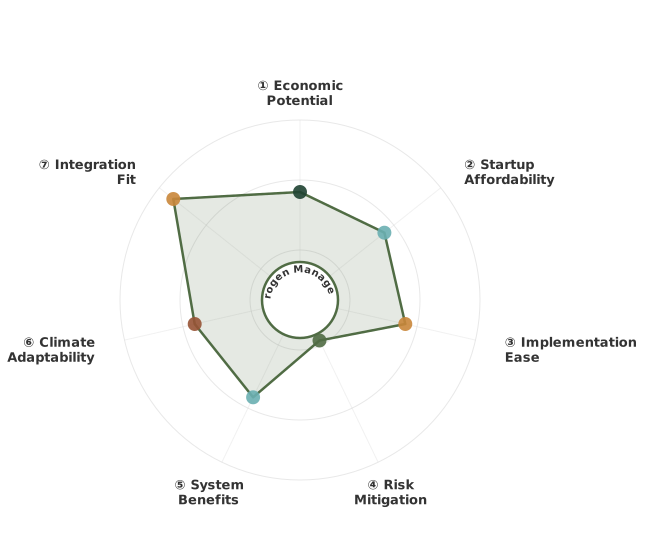
How These Traits Are Calculated
Trait dimensions are ordered clockwise starting from the top of the chart (12 o'clock position):
1. Economic Potential
Financial returns, annual value, and break-even timeline
WHAT: Evaluates financial viability by combining net annual value ($/ha from savings, income, and amortized harvests) with break-even timeline showing when practices pay for themselves.
WHY: Farmers need clear ROI understanding before committing resources. Fast payback (≤3 years) with strong returns (≥$300/ha) enables confident adoption, while long timelines (>10 years) restrict adoption to well-funded operations willing to wait for returns.
HOW: Calculated from net annual value in $/ha and break-even years. Exceptional (≥2.6): fast ROI ≤3 years + high value ≥$300/ha. Typical (1.8-2.5): moderate returns or longer timelines. Limited (<1.8): marginal economics or very long payback >10 years.
2. Startup Affordability
Initial investment costs and financial barrier to entry
WHAT: Measures financial barrier to entry through startup costs for equipment, infrastructure, consulting, and materials. Inverted scoring: lower costs = higher scores = more accessible adoption.
WHY: Affordability determines who can adopt. Low-cost practices (<$250/ha) enable widespread adoption across diverse scales, while high costs (>$2,500/ha) limit adoption to well-capitalized operations, creating barriers that slow regenerative transition.
HOW: Calculated from initial investment parsed from practice content. Inverted scoring: Exceptional (≥2.6): minimal investment <$250/ha. Typical (1.8-2.5): moderate costs $250-2,500/ha. Limited (<1.8): high barrier >$2,500/ha.
3. Implementation Ease
Learning curve and specialized knowledge required
WHAT: Measures how much learning, planning, and specialized knowledge a practice requires. Simpler practices with fewer steps score higher, while complex practices requiring extensive training or specialized resources score lower.
WHY: Complex practices create adoption barriers even when economically viable. Straightforward practices enable faster adoption and broader participation, while those requiring extensive training, timing precision, or specialized equipment limit who can succeed.
HOW: Evaluated by measuring documentation length and identifying complexity markers like location-specific requirements, seasonal timing windows, specialized skills, and dedicated equipment needs. Exceptional (≥2.6): straightforward practices with minimal prerequisites. Typical (1.8-2.5): moderate learning curve with some specialized needs. Limited (<1.8): steep learning curve requiring significant training or resources.
4. Risk Mitigation
Identified financial and ecological risk assessment
WHAT: Evaluates documented risks across financial (investment loss, market volatility) and ecological (crop failure, pest outbreaks) domains. Inverted scoring: fewer risks = higher scores.
WHY: Understanding risk exposure helps farmers make informed decisions. Low-risk practices allow confident implementation, while high-risk practices require careful planning and contingency resources. Risk transparency prevents costly failures.
HOW: Calculated from identified risks in practice content. Inverted scoring: Exceptional (≥2.6): ≤2 risks with manageable severity. Typical (1.8-2.5): 3-5 moderate risks. Limited (<1.8): 6+ risks or severe exposure.
5. System Benefits
How many ways the practice improves your land simultaneously
WHAT: Measures how many aspects of land health improve at once—carbon storage, soil quality, erosion control, water absorption, and biodiversity. Practices that improve multiple areas simultaneously create compounding benefits where each improvement reinforces the others.
WHY: The best practices solve multiple problems at once. For example, addressing erosion simultaneously builds carbon and improves water infiltration, creating a resilient system with positive feedback loops. Single-benefit approaches miss these compound transformation opportunities.
HOW: Evaluated across five key outcomes: carbon sequestration, soil organic matter increase, erosion reduction, water infiltration improvement, and biodiversity enhancement. Exceptional (≥2.6): high carbon storage (>8 t/ha/yr), improvements across 4-5 areas, transformative outcomes. Typical (1.8-2.5): moderate carbon (3-8 t/ha/yr), improvements across 2-3 areas. Limited (<1.8): modest impact (<3 t/ha/yr), single-area focus only.
6. Climate Adaptability
Geographic applicability across Köppen climate zones
WHAT: Evaluates geographic applicability by assessing how many Köppen climate zones successfully support a practice and what adaptation requirements are needed. Measures breadth of climates where farmers can implement with minimal to moderate modifications.
WHY: Universal practices working across diverse climates enable more farmers to adopt regenerative approaches. Practices limited to single climate types (only Mediterranean, only tropical) restrict adoption and slow global transition. Adaptability determines whether a practice serves niche regions or offers broad transformation.
HOW: LLM evaluation of regional success stories, Köppen zone coverage, and adaptation needs. Exceptional (≥2.6): 5+ zones or 4+ climate types, 3+ continents, minimal adaptation. Typical (1.8-2.5): 3-4 zones or 2-3 types, 2 continents, moderate adaptation. Limited (<1.8): 1-2 zones, single region, significant adaptation or highly specialized.
7. Integration Fit
How well this practice combines with others you're doing
WHAT: Measures how well a practice combines with other regenerative practices you might be doing. Some practices work as building blocks that make many other practices easier or more effective, while others work best on their own.
WHY: Practices that combine well with many others create more value on your farm. For example, cover cropping enables no-till, improves grazing, supports crop diversity, and helps water management—making all of them work better together. This helps you build a coherent system rather than juggling disconnected practices.
HOW: Evaluated by identifying which practices combine well and how strong those combinations are. 'Ideally Suited' means strong combinations where practices reinforce each other (practice A makes B easier, while B makes A more effective). 'Adequate' means complementary benefits that work well together. Exceptional (≥2.6): combines well with 6+ practices, serves as a building block. Typical (1.8-2.5): combines with 3-5 practices. Limited (<1.8): 1-2 practices or works best alone.
Going Deeper
1
WHY - The Benefits
Regenerative nitrogen management is not simply about reducing synthetic fertilizer but fundamentally about creating a self-sustaining, biologically driven nutrient cycle. This shift yields profound benefits across soil health, economic stability, and environmental...
Regenerative nitrogen management is not simply about reducing synthetic fertilizer but fundamentally about creating a self-sustaining, biologically driven nutrient cycle. This shift yields profound benefits across soil health, economic stability, and environmental stewardship, forming the bedrock of a resilient agricultural system.
WHY - The Benefits
Regenerative nitrogen management is not simply about reducing synthetic fertilizer but fundamentally about creating a self-sustaining, biologically driven nutrient cycle. This shift yields profound benefits across soil health, economic stability, and environmental...
Regenerative nitrogen management is not simply about reducing synthetic fertilizer but fundamentally about creating a self-sustaining, biologically driven nutrient cycle. This shift yields profound benefits across soil health, economic stability, and environmental stewardship, forming the bedrock of a resilient agricultural system.
Soil Health Benefits
The cornerstone of regenerative nitrogen management is the enhancement of soil biology. Cover crops, particularly legumes, and the increased organic matter from reduced tillage and diverse rotations provide ample food for beneficial soil microbes. These microbes are the primary agents responsible for mineralizing organic nitrogen (from crop residues, manure, and cover crops) into plant-available forms like ammonium and nitrate. As soil biology thrives, it also improves soil structure, increasing water infiltration and holding capacity, creating a more buffered environment for plant roots.
Maintaining living roots throughout the year, as promoted by cover cropping and perennial systems, ensures continuous feeding of the soil food web and the generation of root exudates. These exudates not only provide energy for microbes but also influence nutrient availability and uptake. The diverse root systems of cover crops create channels in the soil, improving aeration and water percolation, and adding carbon deep into the soil profile, which contributes to long-term soil organic matter accumulation.
The reduction in synthetic nitrogen inputs also benefits soil health. Conventional nitrogen fertilizers can, over time, lower soil pH, reduce earthworm populations, and disrupt fungal networks. By shifting to biologically mediated nitrogen supply, these negative impacts are avoided, allowing soil ecosystems to recover and flourish. Increased soil organic matter acts as a sponge, retaining moisture and nutrients, making crops more resilient to drought and nutrient deficiencies, and contributing to a more stable and productive soil environment.
Economic Benefits
The most immediate economic benefit of regenerative nitrogen management is the substantial reduction in costs associated with synthetic fertilizers. Depending on the farm's starting point and the effectiveness of biological nitrogen provision, reductions of 40-80% or more are achievable within 3-5 years of transition. Given that nitrogen fertilizers can represent a significant portion of a farm's operating expenses, this input cost savings directly improves the bottom line.
While there may be initial investments in diverse cover crop seeds or manure management infrastructure, these are typically offset by reduced fertilizer bills and long-term improvements in soil productivity. As soil health improves, crop yields become more stable and resilient to environmental stresses like drought or extreme heat. This reduced yield volatility translates to more predictable income and lower risk. Furthermore, farms adopting these practices can tap into growing markets for sustainably produced goods, potentially commanding premium prices.
Over the long term, the increased soil organic matter and improved nutrient cycling lead to greater land productivity and value. Farms become less reliant on volatile input markets, enhancing their economic independence and long-term viability. The integrated nature of regenerative systems, where multiple enterprises (livestock, diverse crops, cover crops) work synergistically, can also create new revenue streams and more robust economic diversification.
Other System Benefits
Regenerative nitrogen management significantly contributes to broader ecological health. By minimizing the use of synthetic nitrogen, it reduces the risk of nitrogen leaching into waterways, which can cause eutrophication and damage aquatic ecosystems. It also lowers denitrification, a process that releases nitrous oxide (N2O), a potent greenhouse gas, from fertilized soils. Therefore, regenerative approaches help mitigate agriculture's contribution to climate change.
The enhanced soil organic matter and improved soil structure from cover cropping and reduced tillage increase water infiltration and water-holding capacity. This makes agricultural systems more resilient to drought and reduces the need for irrigation, which is a critical concern in many arid and semi-arid regions globally, from the High Plains of North America to the Murray-Darling Basin in Australia.
Biodiversity is also a major beneficiary. Diverse cover crop mixes and perennial crops provide habitat and food sources for a wider array of beneficial insects, pollinators, birds, and soil organisms. This creates a more robust and balanced farm ecosystem that is less susceptible to pest outbreaks and may require fewer interventions.
Regenerative Systems Fit
This practice is context-dependent, meaning it can be regenerative or extractive. Regenerative nitrogen management is foundational to building a truly regenerative system, directly supporting and enabling several core principles:
-
Principle 1 (Minimize Soil Disturbance): Regenerative nitrogen management predominantly uses cover crops and organic amendments, avoiding the soil disturbance often associated with conventional fertilizer application methods or the tillage that might have once been associated with incorporating fertilizers. No-till systems, crucial for retaining nitrogen in organic matter, are a natural fit.
-
Principle 2 (Maximize Crop Diversity): Incorporating leguminous cover crops and, where applicable, diverse forage mixes for livestock, directly addresses this principle. These plants fix atmospheric nitrogen, reducing external dependence, while also enhancing soil biological diversity and structure. Diverse crop rotations also improve nutrient availability across seasons.
-
Principle 3 (Keep Soil Covered): Cover cropping, a central practice, ensures that soil remains covered year-round. This prevents nutrient losses from bare soil through leaching, erosion, and volatilization, and provides continuous food for soil microbes, facilitating nitrogen mineralization.
-
Principle 4 (Maintain Living Roots): Continuous living cover, whether cash crops or cover crops, means living roots are present in the soil for extended periods. These roots feed soil biology, which is essential for cycling nitrogen from organic sources. A strong soil food web, fueled by root exudates, becomes the primary engine for nitrogen supply.
-
Principle 5 (Integrate Livestock): Livestock manure is a valuable source of nitrogen and other nutrients. Strategically managed grazing or manure application can effectively cycle nutrients, reducing the need for synthetic inputs and enhancing soil fertility. Livestock also play a role in managing cover crops or crop residues that contribute to soil organic matter and nitrogen cycling.
Transition Planning: For farms heavily reliant on synthetic fertilizers, a gradual reduction is key. This involves a strategy that builds soil organic matter and microbial activity over 3-5 years. For example, a farm might start by reducing synthetic N rates by 20% in year 1 while planting 50% of acreage to leguminous cover crops. By year 3, a 50-60% reduction might be possible as soil biology improves, with the goal of complete elimination by year 5-7 depending on soil health and crop rotation. The risk of "cold turkey" elimination is significant yield collapse and economic hardship, as the soil may not yet have the capacity to meet crop demands. Patience and a stepwise approach are paramount.
Sources behind this view
Videos & Podcasts
-
Provides actionable steps for regenerative agronomy: balanced N:C inputs (molasses, humates), microbial teas, yeast metabolites, calcium, and effective seed treatments. Emphasizes scalability, systems
-
Regenerative agriculture provides solutions for climate change, human health, and soil degradation, contrasting with industrial agriculture's harmful impacts, including glyphosate use. Practices like
-
Utilize multi-species cover crops based on specific 'resource concerns' to improve soil health, nitrogen fixation, and water retention. Integrate livestock for grazing, calving, and overwintering, enh
-
A North Dakota farmer achieved significant economic success through regenerative agriculture, reducing fertilizer (40-60%), eliminating seed treatments, fungicides, and crop burndown, and cutting herb
Community
-
Multi-species cover crop success hinges on soil type, species, and goals, with regenerative practices like grazing and manure spreading building soil health. Gabe Brown's methods differ from a New Eng
Read more (opens in new window) permies.com -
Enhance soil health through plant diversity, continuous soil cover (living plants/residues), and livestock integration. Manage carbon-to-nitrogen ratios of residues and adopt no-till practices to impr
Read more (opens in new window) permies.com -
Build healthy pasture soils by minimizing tillage, maintaining living roots and species diversity, and implementing proper grazing management. Livestock are essential for nutrient cycling and stimulat
Read more (opens in new window) smallfarms.cornell.edu -
Reduce nitrates before recharge by planting cover crops (alfalfa, triticale) and applying organic amendments. Pre-flooding irrigation stimulates denitrifying microbes, fueled by soil carbon, to conver
Read more (opens in new window) ucanr.edu
Research
-
Regenerative Agriculture: Restoring Ecosystems¢ Resilience and Productivity: A Review (opens in new window)
This study found: Regenerative agriculture builds soil health and ecosystem services through practices like no-till, cover crops, and diverse rotations. It increases soil organic matter, improves water infiltration, bo
-
Building Soil Health and Fertility through Organic Amendments and Practices: A Review (opens in new window)
This study found: Review of organic amendments (manures, compost, cover crops) and regenerative practices (no-till, crop diversity, agroecology) shows they restore soil health by increasing organic matter and beneficia
-
Soil Microbial Dynamics in Regenerative Agriculture Systems: A Data-Driven Synthesis for Soil Health, Pest Suppression, and Yield Sustainability in the Western Canadian Prairies (opens in new window)
This study found: Regenerative farming in Western Canada boosts soil microbes (up to 86%), fungi (up to 60%), and carbon, improving soil health and water retention. This leads to more stable yields and reduced syntheti
-
Building Soil Health and Fertility through Organic Amendments and Practices: A Review (opens in new window)
This study found: Using organic amendments (manures, composts, cover crops) and regenerative practices (no-till, crop diversity) restores soil health by increasing organic matter and beneficial microbes, leading to mor
From the Web
-
Key regenerative agriculture methods include no-till farming, cover cropping, agroforestry, perennial crops, planned rotational grazing (Holistic Management), and compost application, all aimed at imp
-
Regenerative farming combines no-till, cover crops, and complex rotations, often with livestock grazing, to boost profitability by reducing input costs and increasing soil organic matter. Studies show
-
To build healthy soil, keep it covered, maximize plant diversity, and minimize synthetic inputs. Transition slowly by reducing fertilizers and supporting soil biology with cover crops and experimentat
-
Soil restoration hinges on year-round green cover for photosynthesis, enhancing soil carbon and nutrient density. Practices like multi-species cover crops, strategic grazing, and promoting microbial d
2
WHERE - Regional Considerations
Nitrogen management strategies must adapt to diverse regional conditions, as climate, soil type, and cropping systems dictate the potential for biological nitrogen fixation and the risks of nutrient loss.
Nitrogen management strategies must adapt to diverse regional conditions, as climate, soil type, and cropping systems dictate the potential for biological nitrogen fixation and the risks of nutrient loss.
WHERE - Regional Considerations
Nitrogen management strategies must adapt to diverse regional conditions, as climate, soil type, and cropping systems dictate the potential for biological nitrogen fixation and the risks of nutrient loss.
Nitrogen management strategies must adapt to diverse regional conditions, as climate, soil type, and cropping systems dictate the potential for biological nitrogen fixation and the risks of nutrient loss.
Click Here to Look up your Region if you don't already know it
Humid Temperate Regions (e.g., Northern Europe, Eastern China, Midwestern US)
Climate Context: Moderate temperatures, ample rainfall distributed throughout the year. Köppen Cfb, Cfa. USDA Zones 4-8. Nitrogen Management Considerations: High rainfall can increase leaching and denitrification risks if soil is bare. However, ample moisture supports vigorous cover crop growth, especially legumes like crimson clover, vetch, and field peas, and ensures good microbial activity for nitrogen mineralization. Long growing seasons can accommodate multiple cover crop sequences.
Mediterranean Regions (e.g., California, Iberian Peninsula, Western Australia)
Climate Context: Hot, dry summers; mild, wet winters. Precipitation is highly seasonal. Köppen Csa, Csb. USDA Zones 8-10. Nitrogen Management Considerations: Water scarcity during summer limits cover crop growth for extended periods. Winter cover crops (e.g., fava beans, vetches, clovers) are critical for building nitrogen reserves. Managing soil moisture to optimize nitrogen mineralization during the warmer, drier periods is key. Drought-tolerant legumes and careful grazing management are essential.
Arid and Semi-Arid Regions (e.g., US High Plains, North Africa, Central Asia)
Climate Context: Low rainfall, high evaporation, often large temperature swings. Köppen BSh, BSk. USDA Zones 4-9. Nitrogen Management Considerations: Water is the primary limiting factor. Selection of drought-tolerant legumes (e.g., sweet clover, certain vetch species, medic medic) is crucial. Reduced grazing pressure or timed grazing on cover crops to conserve moisture is important. Building stable soil organic matter to improve water infiltration becomes paramount. Nitrogen release from organic matter is slower and more tied to soil moisture availability.
Tropical Regions (e.g., Southeast Asia, Central Africa, Brazil)
Climate Context: High temperatures year-round, with distinct wet and dry seasons or consistent high rainfall. Köppen Af, Am, Aw. Nitrogen Management Considerations: Rapid decomposition rates mean nitrogen can be released quickly, posing a risk of loss if not captured by living roots. Fast-growing, nitrogen-fixing cover crops (e.g., various pigeon pea varieties, tropical kudzu, sesbania) are highly effective. Integrating livestock requires careful management to prevent overgrazing and soil compaction due to heavy rainfall. Intercropping and agroforestry systems can also enhance nitrogen cycling.
Cold Continental Regions (e.g., Canadian Prairies, Siberia, Northern Europe)
Climate Context: Very short growing seasons, cold winters. Köppen Dfa, Dfb. USDA Zones 2-5. Nitrogen Management Considerations: Limited time for cover crop growth. Focus on early-season legumes (e.g., peas, hairy vetch early in spring) or overwintering species that can be terminated in spring. Building soil organic matter to improve moisture retention and slow nutrient release is a long-term goal. Nitrogen fixation potential is lower due to shorter seasons, making careful crop residue management and manure application more important.
3
HOW - Implementation Process
Prerequisites
Prerequisites
HOW - Implementation Process
Prerequisites
Prerequisites
Before embarking on a regenerative nitrogen management strategy, consider these foundational elements:
- Commitment to Soil Health: Recognize that nitrogen supply is a consequence of a healthy soil ecosystem, not just a nutrient to be added.
- Understanding of Local Ecology: Familiarize yourself with native plant communities, local climate patterns, and soil types to select appropriate cover crops and management techniques.
- Patience and Observation: Regenerative systems build fertility gradually. Be prepared for a multi-year transition and focus on observing soil and plant responses.
- Record Keeping: Track input use, yields, cover crop performance, and soil test results to monitor progress and inform adjustments.
Phase 1: Assessment and Planning (Year 0-1)
Soil Testing: Conduct comprehensive soil tests, including organic matter, pH, cation exchange capacity (CEC), and basic nutrient levels. Crucially, consider biological assessments (e.g., soil respiration tests, earthworm counts) if available locally. Understand your soil's starting point and potential for nitrogen supply. Cover Crop Selection: Based on your region, climate, and cash crop rotation, select diverse cover crops, prioritizing legumes for nitrogen fixation. Choose species with varying root depths, growth habits, and planting windows. Examples: - Cool Season Legumes: Hairy vetch, crimson clover, field peas, Austrian winter peas. - Warm Season Legumes: Soybeans (as cover), cowpeas, sunn hemp, pigeon pea. - Nitrogen-Scavenging Grasses/Grains: Cereal rye, oats, wheat, barley (useful for capturing residual N and improving overall soil health). - Biennials/Perennials: Sweet clover, alfalfa (for longer-term soil building). Crop Rotation Integration: Plan to integrate cover crops into your existing or future crop rotations. This might involve planting them after harvest, between cash crops, or using them as part of a fallow period. Consider planting cover crops in alleys between perennial crops (e.g., fruit trees) or on marginal land. Livestock Integration Strategy (If Applicable): Determine how livestock can be used to cycle nutrients. This could involve grazing cover crops, applying manure to fields, or incorporating animal production into your farm system.
Phase 2: Building Soil Biology (Years 1-2)
Implement Diverse Cover Crops: Begin planting selected cover crops, aiming for multi-species mixes (3-5+ species) whenever possible. This maximizes the benefits derived from different root structures, nutrient cycling capabilities, and microbial associations. For instance, a mix of a deep-rooted legume (like vetch), a fibrous-rooted grass (like rye), and a brassica (like radish) can address multiple soil health goals simultaneously. Reduce Synthetic Nitrogen: Begin reducing synthetic nitrogen fertilizer application, typically by 20-30% in the first 1-2 years. Observe crop performance and soil nitrogen availability through plant tissue testing or feeler strips. The goal is to let the cover crops and improving soil biology begin to meet crop demands. Minimize Tillage: If transitioning from conventional tillage, adopt reduced tillage or no-till practices as much as possible. Tillage disrupts the soil food web and accelerates the loss of organic matter, which is the reservoir for biologically available nitrogen.
Phase 3: Optimizing Fertility (Years 3-5)
Increase Cover Crop Diversity & Duration: Expand the diversity and duration of cover cropping. Consider overwintering cover crops or planting them for longer periods to maximize nitrogen fixation and organic matter contribution. Rotate cover crop species to further enhance soil biological diversity and nutrient cycling. Further Reduce Synthetic Nitrogen: Continue reducing synthetic nitrogen inputs, aiming for 40-60% reduction from baseline by year 5. Rely more heavily on nitrogen provided by legumes, mineralized organic matter, and potentially compost or manure. Livestock Management: If livestock are integrated, refine their management for optimal nutrient cycling. This involves ensuring adequate rest periods for pastures after grazing and managing manure application to prevent nutrient runoff or volatilization.
Phase 4: Achieving Self-Sufficiency (Year 5+)
Fertilizer Independence: Aim for near-complete elimination of synthetic nitrogen fertilizer. Soil organic matter should be contributing a significant portion of crop nitrogen needs, supplemented by ongoing biological fixation and mineralization. Fine-Tuning: Monitor soil health indicators (organic matter, soil respiration, earthworm populations) and crop performance closely. Adjust cover crop mixes and rotation strategies based on observations to precisely match crop needs with biologically available nitrogen. Continuous Improvement: Regenerative nitrogen management is an ongoing process of observation, adaptation, and learning. Continuously evaluate the system for opportunities to further enhance soil biology and nutrient cycling efficiency.
Transition Timeline & Phase-Out Strategy
A successful transition away from synthetic nitrogen typically spans 3-5 years, but may take longer on highly degraded soils.
-
Year 0-1: Initial Reduction & Cover Cropping. Reduce synthetic N by 20-30%. Increase cover crop acreage and diversity, focusing on legumes. Begin soil health building practices (reduced tillage, organic amendments).
- Success Indicators: Cover crops establish well, no significant yield penalty in cash crops, soil organic matter shows slight increase.
-
Year 2-3: Significant Reduction & Biological Reliance. Reduce synthetic N by 40-60%. Observe increased N mineralization from cover crops and soil organic matter. Consider plant tissue testing to gauge crop N status. Livestock integration becomes more impactful.
- Success Indicators: Soil organic matter climbing, crop uptake from biological sources apparent, remaining synthetic N use is very targeted.
-
Year 4-5: Near Independence. Reduce synthetic N by 70-90%. Soil biology is functioning robustly. Legumes and organic matter mineralize sufficient N for most crops. Focus shifts to optimizing availability and preventing losses.
- Success Indicators: Minimal to no synthetic N applied, yields are stable or improving, soil health metrics are significantly advanced.
-
Year 5+: Full Transition. No synthetic N applied. Focus is on maintaining high soil organic matter, robust biological activity, and diverse living roots. Ongoing fine-tuning of cover crop mixes and rotation.
- Graduation means: You can eliminate synthetic N without significant yield or economic compromise because your soil ecosystem is providing sufficient fertility. You are now managing for nutrient cycling rather than nutrient addition.
Sources behind this view
Videos & Podcasts
-
Provides actionable steps for regenerative agronomy: balanced N:C inputs (molasses, humates), microbial teas, yeast metabolites, calcium, and effective seed treatments. Emphasizes scalability, systems
-
Regenerative agriculture provides solutions for climate change, human health, and soil degradation, contrasting with industrial agriculture's harmful impacts, including glyphosate use. Practices like
-
A North Dakota farmer achieved significant economic success through regenerative agriculture, reducing fertilizer (40-60%), eliminating seed treatments, fungicides, and crop burndown, and cutting herb
-
Advocates for a gradual transition to regenerative practices, emphasizing soil health, diverse crop rotations, livestock integration, and smart nutrient management. Stresses the need for farmers to 'e
Community
-
Build healthy pasture soils by minimizing tillage, maintaining living roots and species diversity, and implementing proper grazing management. Livestock are essential for nutrient cycling and stimulat
Read more (opens in new window) smallfarms.cornell.edu -
Advocates for converting conventional land to permaculture, recommending a gradual transition with cover crops and farmer collaboration, aiming to reduce chemical inputs over 3 years as soil heals.
Read more (opens in new window) permies.com -
Strategic use of one-time tillage on dense cover crops can accelerate soil regeneration to achieve 12 inches of rich soil in two years or less, enhancing microbial activity and organic matter, and can
Read more (opens in new window) permies.com
Research
-
Regenerative Agriculture: Restoring Ecosystems¢ Resilience and Productivity: A Review (opens in new window)
This study found: Regenerative agriculture builds soil health and ecosystem services through practices like no-till, cover crops, and diverse rotations. It increases soil organic matter, improves water infiltration, bo
-
Building Soil Health and Fertility through Organic Amendments and Practices: A Review (opens in new window)
This study found: Review of organic amendments (manures, compost, cover crops) and regenerative practices (no-till, crop diversity, agroecology) shows they restore soil health by increasing organic matter and beneficia
-
Soil Microbial Dynamics in Regenerative Agriculture Systems: A Data-Driven Synthesis for Soil Health, Pest Suppression, and Yield Sustainability in the Western Canadian Prairies (opens in new window)
This study found: Regenerative farming in Western Canada boosts soil microbes (up to 86%), fungi (up to 60%), and carbon, improving soil health and water retention. This leads to more stable yields and reduced syntheti
-
Regenerative agriculture improves soil functioning and the complexity of soil food webs after a short transition period (opens in new window)
This study found: Five years of regenerative farming in horticultural systems boosted soil moisture, organic matter, and beneficial soil enzymes. Soil animal life shifted from mites/worms to larger invertebrates, indic
4
Know the Debate
Regenerative nitrogen management's effectiveness depends heavily on your farm's context. In regions with ample rainfall and moderate temperatures, ...
Know the Debate
Regenerative nitrogen management's effectiveness depends heavily on your farm's context. In regions with ample rainfall and moderate temperatures, ...
Regenerative nitrogen management's effectiveness depends heavily on your farm's context. In regions with ample rainfall and moderate temperatures, building soil biology for nitrogen supply is faster, often showing benefits within three years. Conversely, arid and semi-arid climates, or farms starting with severely degraded soils, require a longer transition (five to seven years or more) and precise management to overcome water limitations and slow biological recovery. Initial investments in cover crop seeds ($40-400/ha) are necessary, and careful planning is crucial to mitigate potential yield dips during the typical 1-3 year transition period, which can range from 10-25%.
How quickly can synthetic nitrogen be eliminated?
3-5 year transition
Academic research suggests a 3-5 year transition is sufficient for soil biology to significantly reduce synthetic nitrogen needs, supported by improvements in crop rotations and cover cropping.
Sources behind this view
Sources behind this view
Research
-
Agronomic and physiological aspects of nitrogen use efficiency in conventional and organic cereal-based production systems (opens in new window)
This study found: This review looks at how well plants use nitrogen (N) in both standard farming (using synthetic fertilizers) and organic farming, especially for grain crops like wheat and corn. Standard farming has fed more people using synthetic N, but it harms the environment. Organic farming often has lower and less predictable yields, making its long-term success questionable. Improving how plants use nitrogen is key to solving environmental problems in standard farming and boosting yields in organic farming. Because these systems are so different, a one-size-fits-all approach won't work. Planting a variety of crops in sequence, especially with nitrogen-fixing plants like beans and clover, helps manage nitrogen in both systems. Standard farms can reduce nitrogen loss by using special fertilizers that release N slowly, applying fertilizer in stages, and using products that slow down nitrogen conversion in the soil. Organic farms can make the most of natural nitrogen sources by using practices like no-till farming, planting cover crops, and using catch crops. Helpful soil microbes are also vital for making nitrogen available to plants. Using models to predict when soil organic matter will release nitrogen could also help. For breeding new crop varieties, it's important to develop types that perform well with less nitrogen and are suited to specific farming conditions. By combining these strategies, we can better match nitrogen supply with plant needs, reducing waste and improving efficiency in all types of farming.
-
The role of crop rotations in optimizing nitrogen use efficiency in organic farming (opens in new window)
This study found: A review of 91 studies on organic farms in temperate regions found that crop rotations are key to using nitrogen fertilizer more efficiently. To reduce nitrogen waste and improve how well crops use nitrogen, farmers should aim to increase the amount of nitrogen leaving the field (through harvested crops) without adding more fertilizer. This can be achieved by including nitrogen-fixing plants like legumes in their rotations and by managing soil tillage effectively. The study showed that too many grain crops (cereals) reduced nitrogen efficiency, while planting more crops grown in rows (like corn or soybeans) improved it.
From the Web
-
Natural nitrogen sources include protein by-products (e.g., fish, 5x more effective than chemical N) and humus (30-40 lb N/acre/% humus). A corn example shows 200+ bu/acre is achievable with natural N from humus, residue, legumes, fish, and Azotobacter, promoting soil health.
-
Organic nitrogen management for small grains relies on legumes (green manure) and animal manure. Methods for calculating needs include soil tests, crop removal rates, and grain protein levels, with specific guidance on legume termination timing and the restricted use of sodium nitrate.
5-7+ year transition
Farmer experience indicates a 5-7+ year transition for complete synthetic nitrogen elimination, with potential yield dips in early years on severely degraded soils.
Sources behind this view
Sources behind this view
Videos & Podcasts
-
No-till and cover crops, especially legumes, allow significant reduction in nitrogen fertilizer use (e.g., from 250 to 120 units) by improving soil microbiology and organic matter. Gradual reduction is advised, starting with degraded soils.

-
Improves nitrogen management by focusing on soil biology, digestibility, and solubility over simple quantity recommendations. Encourages reducing purchased nitrogen through healthy soil and digestible cover crops, with practical advice for conventional farmers on splitting applications and adding carbon sources.

-
Various farmers share strategies for reducing nitrogen: composting, techno/mob grazing, organic transition, cover crops, crop choice shifts (e.g., less oilseed rape), foliar applications (urea, K), carbon-based fertilizers (molasses, humates), legume companions, and manure management. Nitrogen reductions range from 30% to over 66%.
-
In organic farming, nitrogen is a key limiting factor for yield. Systems focus on generating nitrogen via legumes and rotations, but careful management is needed to prevent environmental loss. Nitrogen budgeting is challenging due to its labile nature, requiring vigilance to keep it in the crop and soil.

Making Sense of the Differences
The speed of transitioning away from synthetic nitrogen hinges on the initial health of the soil and the intensity of management. Farms with well-developed soil biology and organic matter can achieve reductions faster, whereas severely degraded soils require more time for microbial communities to recover and supply sufficient nitrogen. Financial considerations, such as avoiding significant yield losses during the transition, often lead farmers to adopt a more gradual, stepwise reduction approach.
How does nitrogen fertilizer affect soil biology?
Harmful to soil biology
Synthetic nitrogen fertilizers, especially when applied at high rates, can negatively impact soil biology by reducing beneficial microbial populations like mycorrhizal fungi and free-living nitrogen fixers.
Sources behind this view
Sources behind this view
Videos & Podcasts
-
Improves nitrogen management by focusing on soil biology, digestibility, and solubility over simple quantity recommendations. Encourages reducing purchased nitrogen through healthy soil and digestible cover crops, with practical advice for conventional farmers on splitting applications and adding carbon sources.
-
No-till and cover crops, especially legumes, allow significant reduction in nitrogen fertilizer use (e.g., from 250 to 120 units) by improving soil microbiology and organic matter. Gradual reduction is advised, starting with degraded soils.
Research
-
Nitrogen in cereal systems: Opportunities for sustainable agricultural growth (opens in new window)
This study found: Managing nitrogen is vital for feeding the world and protecting the environment. The goal is to balance the nitrogen going into and out of our farms. Soil organic matter is a key sign of healthy soil and a source of nitrogen for plants. Farmers can improve yields and use nitrogen more efficiently by adopting smart farming methods. These include planting at higher densities, using soil tests to guide fertilizer amounts, applying fertilizer in stages, using irrigation for fertilizer delivery (fertigation), and tailoring nitrogen use to specific field areas. New fertilizer types, like those that release nutrients slowly or use tiny particles (nano-fertilizers), can also help. It's important to reduce the misuse of nitrogen fertilizers and promote policies that build soil health for long-term farm success.
-
Agronomic and physiological aspects of nitrogen use efficiency in conventional and organic cereal-based production systems (opens in new window)
This study found: This review looks at how well plants use nitrogen (N) in both standard farming (using synthetic fertilizers) and organic farming, especially for grain crops like wheat and corn. Standard farming has fed more people using synthetic N, but it harms the environment. Organic farming often has lower and less predictable yields, making its long-term success questionable. Improving how plants use nitrogen is key to solving environmental problems in standard farming and boosting yields in organic farming. Because these systems are so different, a one-size-fits-all approach won't work. Planting a variety of crops in sequence, especially with nitrogen-fixing plants like beans and clover, helps manage nitrogen in both systems. Standard farms can reduce nitrogen loss by using special fertilizers that release N slowly, applying fertilizer in stages, and using products that slow down nitrogen conversion in the soil. Organic farms can make the most of natural nitrogen sources by using practices like no-till farming, planting cover crops, and using catch crops. Helpful soil microbes are also vital for making nitrogen available to plants. Using models to predict when soil organic matter will release nitrogen could also help. For breeding new crop varieties, it's important to develop types that perform well with less nitrogen and are suited to specific farming conditions. By combining these strategies, we can better match nitrogen supply with plant needs, reducing waste and improving efficiency in all types of farming.
Impact is context-dependent
The effect of synthetic nitrogen on soil biology can depend on the rate, timing, and the presence of other soil amendments like organic matter and cover crops.
Sources behind this view
Sources behind this view
Videos & Podcasts
-
Optimal nitrogen management for corn and wheat involves understanding ammonium vs. nitrate forms. Ammonium is more efficient but less storable; nitrate requires more energy but is storable. Nitrification inhibitors are key to improving efficiency and reducing losses, especially in no-till. Urea management requires preventing volatility losses.

From the Web
-
Presents six methods to boost nitrogen efficiency in corn: using amino acid nitrogen, building humus, fixing the Cal:Mag ratio, increasing soil biology, spreading N applications, and modifying liquid N with carbohydrates.
-
Legume cover crops (peas, vetches, clovers) fix atmospheric nitrogen via rhizobia, supplementing crop needs. Nitrogen fertilizers, providing nitrate and ammonium, can also be used, with OMRI-approved options available for organic producers from suppliers like The Andersons.
-
Reduce U.S. agricultural emissions from fertilizer use (primarily nitrous oxide) by employing nitrification inhibitors, nitrogen-fixing microbes, renewable energy-based fertilizers, precise management, and cover crops, with policy support for efficiency standards and natural solutions.
Making Sense of the Differences
While high rates of synthetic nitrogen can suppress beneficial soil microbes, the impact is not always universally negative. Judicious application, precise timing, and concurrent use of soil-building practices like cover cropping and compost can mitigate some detrimental effects, allowing soil biology to coexist or even benefit from improved nutrient availability. The discussion centers on managing synthetic nitrogen for efficiency and minimizing harm rather than complete eradication in all scenarios.
5
HOW MUCH - Costs & Investment
Note: All costs are based on recent US economic data (2023-2025) and may vary substantially in other regions based on local labor rates, material costs, and regulatory requirements.
Note: All costs are based on recent US economic data (2023-2025) and may vary substantially in other regions based on local labor rates, material costs, and regulatory requirements.
HOW MUCH - Costs & Investment
Note: All costs are based on recent US economic data (2023-2025) and may vary substantially in other regions based on local labor rates, material costs, and regulatory requirements.
Note: All costs are based on recent US economic data (2023-2025) and may vary substantially in other regions based on local labor rates, material costs, and regulatory requirements.
Note: All costs are based on recent US economic data (2024–2026) and may vary substantially by region based on local labor rates, material costs, and regulatory requirements.
Cover Crop Seed Acquisition
Seed costs represent the primary annual variable expenditure for biological nitrogen management. This investment fluctuates based on the specific species composition, as nitrogen-fixing legumes command a premium over simpler cereal covers. Small-scale operations (under 50 acres (20 ha)) typically navigate retail channels, resulting in per-acre costs ranging from $41.68 to $104.20. Mid-size producers (50–500 acres (20–202 ha)) leverage economies of scale by securing bulk pricing or direct-to-seed-grower contracts, bringing costs down to $26.05–$62.52 per acre ($64–$154/ha). Large-scale operations (500+ acres) can manage seed procurement as a major enterprise expense, often bypassing intermediaries to hit cost ranges of $15.63–$41.68 per acre ($39–$103/ha). These variations are largely determined by the complexity of the cover crop diversity; high-performance blends, such as hairy vetch paired with winter peas, carry higher per-pound costs compared to straightforward cereal grain monocultures.
Planting and Drilling Operations
Establishing the nitrogen-fixing biomass requires precise placement of seed for optimal nodulation, which necessitates reliable planting equipment. For small farms, the reliance on custom drilling services creates a cost environment of $31.26–$62.52 per acre ($77–$154/ha), as specialized low-disturbance drills are often inaccessible for individual purchase. Mid-size operations, characterized by higher equipment ownership rates, tend to see expenditures between $20.84–$41.68 per acre ($51–$103/ha), reflecting the amortization of machinery over larger annual acreages. Large operations achieve the lowest cost profile at $12.50–$31.26 per acre ($31–$77/ha), driven by the utilization of high-speed, wide-swath planting equipment that significantly reduces labor per acre. These figures assume standard operating conditions; specialized no-till systems requiring high-pressure downward force for clay-heavy soils may lean toward the higher end of these brackets.
Infrastructure & Capital Assets
Transitioning to biological nitrogen cycling often requires a shift in capital investment toward nutrient management and soil maintenance. A high-quality used no-till drill generally commands an investment of $20,840 to $104,200+, with price variation based on precision depth control and soil-engaging hardware. For farms expanding into manure or compost application to supplement biological nitrogen sources, a dedicated spreader acts as a major capital expense, ranging from $5,210 to $31,260+. Producers establishing on-farm bio-fertilizer production may also consider the inclusion of a compost turner, which requires an additional $5,210 to $52,100 of initial capital. These assets are depreciated over 7–15 years, meaning the actual annual cost to the business is significantly lower once distributed across total acreage.
Most Spend: Most small-scale operations hover between $93.78–$125.04 per acre ($232–$309/ha) annually. Mid-sized operations average $62.52–$83.36 per acre ($154–$206/ha), and large-scale operations maintain a steady $41.68–$57.31 per acre ($103–$142/ha). These figures account for a balanced, integrated approach to seed, planting labor, and equipment depreciation.
Why the Range?: Cost variation is driven by three primary factors: regional access to bulk seed suppliers, the depreciation schedule chosen for capital machinery, and the level of management intensity required. High-intensity systems—focused on maximizing nitrogen fixation through complex, multi-species legume blends—naturally inflate variable seed line items.
Sources behind this view
Videos & Podcasts
-
Transitioning to regenerative farming costs $75k-$140k over two years but saves money compared to conventional nitrogen expenses ($195k/year). Start small (50-100 acres) with cover crops (hairy vetch,
-
Soil Capital's strategy for regenerative transition: 1) Optimize agrochemical/pesticide use for 10-40% savings. 2) Invest savings in multi-species cover crops and crop rotation diversification (oats,

-
Utilize multi-species cover crops based on specific 'resource concerns' to improve soil health, nitrogen fixation, and water retention. Integrate livestock for grazing, calving, and overwintering, enh
-
A North Dakota farmer achieved significant economic success through regenerative agriculture, reducing fertilizer (40-60%), eliminating seed treatments, fungicides, and crop burndown, and cutting herb
Community
-
Explains cover crop functions (green manure, nutrient cycling, erosion control, weed suppression) and categorizes them into six functional groups. Compares single-species vs. multispecies mixes, highl
Read more (pp. 2-5) (opens PDF, pp. 2-5) efotg.sc.egov.usda.gov
Research
-
Challenges, strategies and research priorities in legume-based nitrogen management for organic small grain producers in the Northeastern US (opens in new window)
This study found: Northeastern organic grain farmers face challenges with nitrogen management costs, access, and predicting nutrient release from cover crops. Lack of livestock integration and diverse markets hinder ef
-
Transition to Regenerative Farming (opens in new window)
This study found: A 5-year case study shows a farm successfully transitioned to regenerative practices, reducing soil erosion and increasing wildlife by using cover crops, diversified rotations, and reduced tillage. Pr
-
The Role of Cover Crops in North American Cropping Systems (opens in new window)
This study found: Cover crops offer multiple benefits in North American farming, including nitrogen fixation, erosion control, weed/pest management, and improved soil health through organic matter and reduced compactio
-
Nitrogen dynamics in grain cropping systems integrating multiple ecologically based management strategies (opens in new window)
This study found: Organic crop rotation study found managing timing of soil N availability and crop demand is crucial. Cover crops and manure timing impacted N dynamics, but simple no-till or cover crop mixtures didn't
6
REWARDS AND RISKS - Economics & Risk Factors
Economic Scenarios
Economic Scenarios
REWARDS AND RISKS - Economics & Risk Factors
Economic Scenarios
Economic Scenarios
Economic Scenarios
The transition to biological nitrogen management follows a distinct financial arc. In the best-case scenario (Years 4–6+), the farm establishes robust nutrient cycling, enabling a 60–80% reduction in synthetic nitrogen purchases. Producers see net annual margin increases of $104.20–$260.50 per acre ($257–$644/ha). Additionally, the improved water-holding capacity from soil organic matter accumulation provides cost savings of $20.84–$52.10 per acre ($51–$129/ha) in irrigation expenditures during peak dry months.
In a typical case (Years 5–7+), operations consistently reach a 40–60% reduction in synthetic reliance, resulting in annual net income improvements of $52.10–$156.30 per acre ($129–$386/ha). This stability helps insulate the farm from global natural gas and nitrogen market volatility. Conversely, the worst-case scenario (Years 1–5+) often stems from poor synchronization between cover crop termination and cash crop uptake. This can result in a 15–25% yield penalty, equating to a loss of $156.30–$312.60 per acre ($386–$772/ha). Furthermore, if synthetic fertilizer is not adjusted in response to nitrogen mineralization, the producer faces a "double cost" scenario, losing $104.20–$208.40 per acre ($257–$515/ha) relative to standard conventional protocols.
Market Factors & Risk Mitigation
Profitability is inextricably linked to the cost of natural gas, which directly drives urea and anhydrous ammonia prices. During market spikes, the "nitrogen credit" provided by vetch and clover increases in value by 20–30%, providing a competitive advantage to biological-based farms. To mitigate risk, producers should utilize split-field testing. By applying conventional nitrogen rates to half a field and a reduced-nitrogen, cover-crop-optimized rate to the other, producers can quantify the soil’s nitrogen delivery. This trial structure reduces the effective risk-adjusted cost of implementation to under $20.84 per acre ($51/ha) for the trial segment.
Transition Period Risks
The first three years are the most sensitive. During this transition, soil biology may not mineralize nitrogen fast enough to meet the demand of hungry crops like corn or wheat, causing a 10–20% yield variance. Recovery typically takes 4–5 years as the fungal-to-bacterial ratio adjusts to support sustained nitrogen cycling. To bridge this gap, producers should maintain a 20–30% "safety buffer" of synthetic nitrogen in years 1–3. This buffer should be phased out incrementally as soil tests (such as the Haney test or PFLA analysis) demonstrate consistent in-field nitrogen availability. By prioritizing biological testing over calendar-based fertilizer scheduling, the farmer can systematically lower synthetic reliance without risking total crop failure during the establishment phase.
Sources behind this view
Videos & Podcasts
-
Transitioning to regenerative agriculture involves a 3-year nitrogen management plan, reducing upfront N, timing applications for peak crop needs, and incorporating biological seed treatments. This st
-
Explores advanced nutrient management, emphasizing soil biology's role in nitrogen cycling and crop needs. Discusses alternatives to harmful nitrogen stabilizers, the importance of zinc for soybeans,
-
Regenerative practices like cover cropping and building soil organic matter (6-7% SOM) eliminate synthetic nitrogen dependency. Farmers like Gabe Brown and Rick Bieber achieve high yields (180-200 bu/
-
Advocates for a gradual transition to regenerative practices, emphasizing soil health, diverse crop rotations, livestock integration, and smart nutrient management. Stresses the need for farmers to 'e
Research
-
Challenges, strategies and research priorities in legume-based nitrogen management for organic small grain producers in the Northeastern US (opens in new window)
This study found: Northeastern organic grain farmers face challenges with nitrogen management costs, access, and predicting nutrient release from cover crops. Lack of livestock integration and diverse markets hinder ef
-
Reduction in nitrification during the early transition from conventional to organic farming practices (opens in new window)
This study found: Switching to organic farming significantly reduced soil nitrification in the first four years, likely due to fewer ammonia-eating microbes. Year-to-year weather and crop rotation had a bigger impact t
-
Traditional, Modern, and Molecular Strategies for Improving the Efficiency of Nitrogen Use in Crops for Sustainable Agriculture: a Fresh Look at an Old Issue (opens in new window)
This study found: Review of strategies to improve crop nitrogen use efficiency (NUE) for sustainability. Covers precision application, inhibitors, agroforestry, breeding, and omics. Integrated approaches are key to boo
-
Nitrogen dynamics in grain cropping systems integrating multiple ecologically based management strategies (opens in new window)
This study found: Organic crop rotation study found managing timing of soil N availability and crop demand is crucial. Cover crops and manure timing impacted N dynamics, but simple no-till or cover crop mixtures didn't
7
WHO - Labor & Expertise
Regenerative nitrogen management requires a shift in knowledge and skills, moving from a focus on chemical application to understanding biological processes. This can be a significant aspect for farm managers and labor.
Regenerative nitrogen management requires a shift in knowledge and skills, moving from a focus on chemical application to understanding biological processes. This can be a significant aspect for farm managers and labor.
WHO - Labor & Expertise
Regenerative nitrogen management requires a shift in knowledge and skills, moving from a focus on chemical application to understanding biological processes. This can be a significant aspect for farm managers and labor.
Regenerative nitrogen management requires a shift in knowledge and skills, moving from a focus on chemical application to understanding biological processes. This can be a significant aspect for farm managers and labor.
Skill Requirements
- Agronomic Knowledge: Understanding soil science, nutrient cycling, plant physiology, and the specific needs of cash crops.
- Cover Crop Expertise: Knowledge of species selection, planting techniques for different seasons and equipment, termination methods, and their roles in soil health and nitrogen supply. This includes understanding which legumes are best suited for specific climates and farming systems.
- Soil Biology Appreciation: A fundamental understanding of the soil food web—bacteria, fungi, protozoa, nematodes, earthworms—and how practices like cover cropping, reduced tillage, and organic amendments feed and foster these beneficial organisms for nutrient cycling.
- Grazing Management (If Applicable): If livestock are integrated, expertise in rotational or adaptive grazing to effectively manage nutrient distribution from manure and optimize cover crop utilization without causing soil degradation.
- Observation and Adaptability: Regenerative agriculture is highly site-specific. Farmers need to be keen observers of their soil, crops, and weather, and adaptable in their management strategies based on what they learn. This is a core skill for success.
Labor and Management Time
- Increased Planning Phase: Developing cover crop plans, rotation schedules, and livestock integration strategies requires significant upfront planning time.
- Cover Crop Establishment: This involves timely planting, which can be labor-intensive and require specific equipment depending on the method (drilling, broadcast seeding). However, many farmers adapt standard equipment to handle cover crop seeding, or use custom hiring.
- Monitoring and Scouting: Regular observation of soil health indicators (e.g., earthworm counts, soil structure), plant tissue analysis, and cash crop performance during the transition phase are crucial. This requires dedicated time from farm managers or labor.
- Cover Crop Termination: Managing cover crops for termination involves techniques like roller-crimping or mowing, which might require specific equipment or adjusted timing depending on the chosen method.
- Integration of Livestock: If livestock are part of the system, their daily management—moving paddocks, providing water, monitoring health—adds to labor requirements.
International Labor Cost Considerations
Labor costs vary dramatically across continents.
- In regions with high labor costs (e.g., Western Europe, North America, Australia), investing in efficient equipment for cover crop planting and termination becomes more economically viable. Finding skilled labor proficient in regenerative practices might be a challenge, necessitating on-farm training or hiring specialized consultants.
- In regions with lower labor costs (e.g., parts of Asia, Africa, South America), more labor-intensive approaches to cover crop establishment (e.g., manual seeding, hand-termination) or livestock management might be economically feasible if skilled labor is available and reliably employed. This can reduce reliance on expensive machinery.
Expertise Development:
- Workshops and Field Days: Attending regenerative agriculture events provides practical insights and networking opportunities.
- Consultants: Hiring experienced regenerative agriculture consultants can be invaluable, especially in the initial transition years, providing tailored advice and guiding management decisions.
- Farmer Networks: Connecting with other farmers successfully using regenerative nitrogen management in your region or similar climates offers practical, peer-tested strategies.
- Continuous Learning: Staying updated through publications, online resources, and research from international organizations (e.g., Rodale Institute, IFOAM) is essential.
Sources behind this view
Videos & Podcasts
-
Provides actionable steps for regenerative agronomy: balanced N:C inputs (molasses, humates), microbial teas, yeast metabolites, calcium, and effective seed treatments. Emphasizes scalability, systems
-
Utilize multi-species cover crops based on specific 'resource concerns' to improve soil health, nitrogen fixation, and water retention. Integrate livestock for grazing, calving, and overwintering, enh
-
Advocates for a gradual transition to regenerative practices, emphasizing soil health, diverse crop rotations, livestock integration, and smart nutrient management. Stresses the need for farmers to 'e
-
Explores advanced nutrient management, emphasizing soil biology's role in nitrogen cycling and crop needs. Discusses alternatives to harmful nitrogen stabilizers, the importance of zinc for soybeans,
Community
-
Discusses soil management, including sawdust decomposition, nitrogen sources beyond fixers, and the impact of pH, moisture, and aeration on soil microbes like mycorrhizae and bacteria. Explores tillin
Read more (opens in new window) permies.com
Research
-
Challenges, strategies and research priorities in legume-based nitrogen management for organic small grain producers in the Northeastern US (opens in new window)
This study found: Northeastern organic grain farmers face challenges with nitrogen management costs, access, and predicting nutrient release from cover crops. Lack of livestock integration and diverse markets hinder ef
-
Regenerative Agriculture: Restoring Ecosystems¢ Resilience and Productivity: A Review (opens in new window)
This study found: Regenerative agriculture builds soil health and ecosystem services through practices like no-till, cover crops, and diverse rotations. It increases soil organic matter, improves water infiltration, bo
-
Building Soil Health and Fertility through Organic Amendments and Practices: A Review (opens in new window)
This study found: Review of organic amendments (manures, compost, cover crops) and regenerative practices (no-till, crop diversity, agroecology) shows they restore soil health by increasing organic matter and beneficia
-
Systematic review of regenerative farming: Addressing agricultural sustainability challenges (opens in new window)
This study found: Systematic review of 31 studies shows regenerative farming improves soil health, biodiversity, and carbon capture, aiding sustainability. Technology is key for adoption, but policy, farmer understandi
From the Web
-
Key regenerative agriculture methods include no-till farming, cover cropping, agroforestry, perennial crops, planned rotational grazing (Holistic Management), and compost application, all aimed at imp
8
COMPATIBLE PRACTICES - Integration Opportunities
Regenerative nitrogen management is not an isolated practice but is deeply integrated with a suite of other regenerative approaches, amplifying its benefits and contributing to a robust, self-sustaining farm ecosystem.
Regenerative nitrogen management is not an isolated practice but is deeply integrated with a suite of other regenerative approaches, amplifying its benefits and contributing to a robust, self-sustaining farm ecosystem.
COMPATIBLE PRACTICES - Integration Opportunities
Regenerative nitrogen management is not an isolated practice but is deeply integrated with a suite of other regenerative approaches, amplifying its benefits and contributing to a robust, self-sustaining farm ecosystem.
Regenerative nitrogen management is not an isolated practice but is deeply integrated with a suite of other regenerative approaches, amplifying its benefits and contributing to a robust, self-sustaining farm ecosystem.
Diverse Cover Cropping
- Integration: Cover crops, especially leguminous species, are the backbone of regenerative nitrogen management. They fix atmospheric nitrogen, scavenge residual nutrients, add organic matter, and improve soil structure.
- Benefit: Directly provides plant-available nitrogen, reduces erosion, suppresses weeds, and enhances soil biology.
No-Till or Reduced Tillage
- Integration: Tillage disrupts the soil food web, rapidly releases nitrogen from organic matter, and degrades soil structure—all counterproductive to regenerative N management. No-till systems preserve soil organic matter, protect soil structure built by cover crops and roots, and keep nitrogen in the soil profile.
- Benefit: Preserves soil organic matter, enhances microbial habitat, reduces N loss pathways (leaching, denitrification), and allows roots to effectively cycle nutrients.
Crop Rotation with Legumes/Deep-Rooted Crops
- Integration: Cash crops that are legumes themselves (e.g., soybeans, peas, lentils) or have deep taproots (e.g., sunflowers, certain brassicas) contribute to nitrogen cycling and building soil structure, complementing cover crop benefits.
- Benefit: Provides additional biological nitrogen fixation, improves nutrient distribution throughout soil profiles, and breaks pest/disease cycles.
Composting and Organic Amendments
- Integration: Applying high-quality compost or other well-composted organic matter adds stable nitrogen and a wide array of micronutrients, while also feeding soil biology.
- Benefit: Provides a slow-release source of nitrogen, improves soil structure, enhances water retention, and stimulates microbial activity.
Integrated Livestock Management
- Integration: Grazing cover crops, or applying manure, strategically cycles nutrients. Livestock selectively graze plants, reducing the need for termination, and their manure adds fertility to the soil.
- Benefit: Manure is a direct source of N; grazing stimulates plant growth and nutrient cycling; animals help manage cover crop biomass; reduces need for mechanical termination.
Keyline Design / Water Management
- Integration: Using landscape planning to manage water flow effectively can ensure adequate moisture for cover crops and soil microbes, crucial for nitrogen mineralization.
- Benefit: Maximizes water availability for cover crop growth and soil biological activity, essential for nitrogen cycling, especially in drier regions.
Biodiversity Enhancement (Hedgerows, Pollinator Strips)
- Integration: Diverse habitats can support a wider range of beneficial insects, including nitrogen-fixing microbes and predators of pests, contributing to a more balanced ecosystem.
- Benefit: Invertebrate diversity can enhance soil health; potential for attracting pollinators to legumes in cover crops.
These practices work synergistically. For example, no-till farming preserves the soil structure created by cover crop roots, while diverse cover crops provide food for the soil biology that thrives in undisturbed soil. Livestock integration simplifies cover crop management and adds fertility, further reducing the need for external inputs. This holistic integration builds a farm system that is resilient, profitable, and environmentally sound.
Sources behind this view
Videos & Podcasts
-
Utilize multi-species cover crops based on specific 'resource concerns' to improve soil health, nitrogen fixation, and water retention. Integrate livestock for grazing, calving, and overwintering, enh
-
Provides actionable steps for regenerative agronomy: balanced N:C inputs (molasses, humates), microbial teas, yeast metabolites, calcium, and effective seed treatments. Emphasizes scalability, systems
-
Regenerative agriculture provides solutions for climate change, human health, and soil degradation, contrasting with industrial agriculture's harmful impacts, including glyphosate use. Practices like
-
Advocates for a gradual transition to regenerative practices, emphasizing soil health, diverse crop rotations, livestock integration, and smart nutrient management. Stresses the need for farmers to 'e
Community
-
Enhance soil health through plant diversity, continuous soil cover (living plants/residues), and livestock integration. Manage carbon-to-nitrogen ratios of residues and adopt no-till practices to impr
Read more (opens in new window) permies.com -
Multi-species cover crop success hinges on soil type, species, and goals, with regenerative practices like grazing and manure spreading building soil health. Gabe Brown's methods differ from a New Eng
Read more (opens in new window) permies.com -
Build healthy pasture soils by minimizing tillage, maintaining living roots and species diversity, and implementing proper grazing management. Livestock are essential for nutrient cycling and stimulat
Read more (opens in new window) smallfarms.cornell.edu -
Explains regenerative agriculture principles: no-till gardening to support soil microbiome and sequester carbon; using compost to reduce erosion and compaction; and planting diverse cover crops (grass
Read more (opens in new window) ucanr.edu
Research
-
Building Soil Health and Fertility through Organic Amendments and Practices: A Review (opens in new window)
This study found: Review of organic amendments (manures, compost, cover crops) and regenerative practices (no-till, crop diversity, agroecology) shows they restore soil health by increasing organic matter and beneficia
-
Regenerative Agriculture: Restoring Ecosystems¢ Resilience and Productivity: A Review (opens in new window)
This study found: Regenerative agriculture builds soil health and ecosystem services through practices like no-till, cover crops, and diverse rotations. It increases soil organic matter, improves water infiltration, bo
-
Soil Microbial Dynamics in Regenerative Agriculture Systems: A Data-Driven Synthesis for Soil Health, Pest Suppression, and Yield Sustainability in the Western Canadian Prairies (opens in new window)
This study found: Regenerative farming in Western Canada boosts soil microbes (up to 86%), fungi (up to 60%), and carbon, improving soil health and water retention. This leads to more stable yields and reduced syntheti
-
Building Soil Health and Fertility through Organic Amendments and Practices: A Review (opens in new window)
This study found: Using organic amendments (manures, composts, cover crops) and regenerative practices (no-till, crop diversity) restores soil health by increasing organic matter and beneficial microbes, leading to mor
From the Web
-
Key regenerative agriculture methods include no-till farming, cover cropping, agroforestry, perennial crops, planned rotational grazing (Holistic Management), and compost application, all aimed at imp
-
Soil restoration hinges on year-round green cover for photosynthesis, enhancing soil carbon and nutrient density. Practices like multi-species cover crops, strategic grazing, and promoting microbial d
-
Maximize photosynthesis by keeping living plants and deep roots in the soil for extended periods. Practices like strip tilling, cover cropping, and increasing diversity enhance soil organic matter, ca
-
Five steps to regenerative agriculture: Holistic Planned Grazing, no-till farming, planting diverse cover crops/interseeding, using compost/inoculants (with caution), and incorporating silvopasture/wo