
Pastured Poultry
Pastured poultry involves raising chickens, ducks, or other fowl outdoors on pasture, moving them frequently to fresh ground. This mimics natural foraging, allowing birds to consume insects and forages while contributing to soil health and nutrient cycling through their manure. It's a system of flexible management that uses portable shelters and electric fencing to keep birds healthy, protected, and distributed across the land.
Read More: Complete Description
Pastured poultry is a system that moves beyond confinement to harness the natural behaviors and ecological contributions of poultry on the landscape. Instead of raising birds in static barns or large feedlots, they are housed in mobile shelters (commonly called "chicken tractors" or chicken arcs) and moved to fresh pasture areas daily or every few days. This frequent relocation is the core of the practice, ensuring birds always have access to clean ground, fresh forages, insects, and seeds, while their impact—primarily through manure—is distributed in a controlled manner.
This practice aligns strongly with multiple regenerative agriculture principles. It inherently integrates livestock (Principle 5) as a mobile nutrient cycling unit. By moving poultry frequently, it minimizes soil disturbance (Princ 1) on any single area, preventing the over-grazing and soil compaction that can occur with static livestock. It actively keeps soil covered (Principle 3) by encouraging dense forage growth and distribution of poultry manure, which acts as a natural fertilizer. Furthermore, the presence of poultry stimulates insect populations and adds organic matter, contributing to soil biology and improving conditions for maintaining living roots (Principle 4). While not directly increasing species diversity of crops in the same way as cover cropping, pastured poultry operations often benefit from and contribute to a more biodiverse ecosystem by attracting beneficial insects and providing forage for the birds.
The economic proposition of pastured poultry extends beyond simply selling meat or eggs. The birds act as a management tool for pastureland. Their scratching and pecking can help break up thatch on pastures, while their manure, rich in nitrogen and phosphorus, fertilizes the forage. This can lead to improved pasture quality, increased forage yields, and reduced reliance on synthetic fertilizers. For livestock like cattle or sheep, pastures that have been previously grazed by poultry often have improved forage quality and reduced parasite loads, as poultry consume insect larvae and weed seeds. This symbiotic relationship creates a more resilient and self-sustaining farm ecosystem.
Globally, pastured poultry is implemented across diverse climates and scales. In the humid temperate regions of North America and Europe, it's common on mixed farms to manage pasture and provide a value-added product. In more arid regions, like parts of Australia or South Africa, it requires careful management of water and forage availability but can be highly effective at fertilizing sparse rangelands, provided appropriate breeds are chosen and mob grazing principles are applied. In tropical and subtropical areas, such as parts of Southeast Asia or Latin America, poultry can thrive on year-round forage and contribute significantly to nutrient management in diversified farming systems. The core principles of mobility, fresh forage, and manure distribution remain consistent, though specific breeds, shelter designs, and management intensity will vary.
The success of pastured poultry relies on careful planning and execution. Key factors include choosing the right breeds for the local climate and production goals (meat vs. eggs), selecting appropriate mobile shelter designs that offer protection from weather and predators while facilitating easy movement, implementing effective predator protection (electric fencing, guard animals if necessary), ensuring access to clean water, and developing a sound pasture management plan that dictates movement timing and intensity to optimize both bird health and land regeneration. Overstocking or inadequate space can lead to pasture degradation, while insufficient protection can result in significant predator losses, undermining the economic viability and regenerative benefits.
Pastured poultry is not without its challenges, particularly during transition. Farms moving from conventional confinement systems may face higher initial setup costs for mobile infrastructure and fencing. Learning to manage pasture ecology—understanding forage regrowth rates, plant community responses to poultry impact, and seasonal variations—requires an investment in knowledge and observation. Animal health also requires diligence, with a focus on preventative measures through good nutrition and clean environments rather than reliance on routine antibiotics, which are often prohibited in pastured systems. However, the potential for improved animal welfare, enhanced product quality (richer egg yolks, leaner meat), and significant contributions to soil health makes pastured poultry a compelling regenerative practice for many farmers.
This practice, while offering substantial regenerative benefits, can be considered a foundational regenerative practice when implemented with mobility and pasture integration. It directly supports core principles such as integrating livestock and keeping soil covered. The nuance lies in its application: a few chickens allowed to roam freely without management might have minimal impact, whereas a well-managed mobile flock actively contributing to pasture health and nutrient cycling embodies the principles of regenerative agriculture. For farms transitioning from conventional confinement, it represents a strategic shift, and for established regenerative operations, it's a key component for enhancing system diversity and soil fertility.
Sources behind this view
Sources behind this view
 Videos & Podcasts
-
Primal Pastures scales pasture-raised chicken production using 500-bird capacity metal coops moved daily on irrigated pastures, emphasizing a 'bugs not drugs' approach. They integrate Dorper sheep for

-
High-density grazing with multiple animal species, combined with tools like the Keyline plow, regenerates pasture and builds soil. Poultry, especially broilers, are highlighted as profitable cash flow

-
Pasture Bird chickens exhibit significantly higher nutrient density (Omega-3s, Vitamins A & E) than conventional birds, a fact they communicate through transparency and direct storytelling, not just t

-
Regenerative poultry production integrates ancestral knowledge with modern silvopasture design, using native species like hazelnuts and elderberries. The system mimics natural habitats, focuses on eco

 Community
-
Utilize mobile poultry (chickens/ducks) with electric netting and portable coops to renovate pastures by concentrating droppings and disturbance. Sow diverse seeds (grasses, clovers, grains, amaranth)
Read more (opens in new window) permies.com -
Provides workshop resources on pastured poultry, covering husbandry, pasture management, housing, marketing, alternative species, nutrition, disease prevention, and regulations, with contributions fro
Read more (opens in new window) ucanr.edu -
Pasture access for organic poultry can reduce feed consumption and provide nutrients, but breeds suited for foraging may have longer grow-out periods, potentially offsetting feed savings. Pasture poul
Read more (opens in new window) permies.com -
Raising pasture-based broiler chickens requires careful management of flock, pasture, genetics, feed, predator protection, and marketing. Consulting resources like APPPA and ATTRA is recommended, and
Read more (opens in new window) ucanr.edu
 Research
-
The grass is greener: Farmers' experiences with pastured poultry (opens in new window)
This study found: California pastured poultry farmers cited soil fertility and marketing as key benefits, with indirect profits from savings on fertilizer and pest control being significant. Predation was the main chal
-
PASTURE-BASED POULTRY FARMING: APPROACH FOR ANIMAL WELFARE, NUTRITIONAL QUALITY AND ENVIRONMENTAL SUSTAINABILITY (opens in new window)
This study found: Pasture-based poultry farming boosts animal welfare, produces more nutritious products, and benefits the environment by improving soil health and reducing emissions, despite management challenges.
-
The grass is greener: Farmers' experiences with pastured poultry (opens in new window)
This study found: California pastured poultry farmers cited soil fertility and marketing as key benefits, driven by sustainability and Joel Salatin's influence. Predation and feed costs were major challenges, though mo
-
Sustainable poultry farming practices: a critical review of current strategies and future prospects. (opens in new window)
This study found: Review of sustainable poultry farming strategies: includes better breeding, alternative feeds (insects, algae), smart tech, waste management, and organic practices to boost animal welfare and environm
 From the Web
-
Establish pastured poultry by assessing goals, choosing products/markets, budgeting, selecting breeds (e.g., Cornish Cross, Rhode Island Red), designing mobile housing and pastures, managing nutrition
-
Pastured poultry are recommended for holistic grazing systems as a keystone species for ecosystem health, a marketing gateway for red meats, and for their 'flock effect' which improves soil fertility
-
Pastured poultry offers profitability and farm health benefits, as demonstrated by the Fischbach family in Wisconsin. Forming a cooperative (Pasture Perfect, LLC) improved purchasing power and process
-
Offers a comprehensive guide on establishing a small-scale pastured poultry operation, covering housing, rotational grazing, management, and marketing for improved animal welfare and soil enrichment.
Key Points
What It Is
- Poultry raised outdoors on managed pasture
- Mobile shelters moved for fresh forage access
- Daily or multi-day pasture rotations
- Mimics natural foraging behaviors
Why Do It
- Improves pasture fertility and health
- Enhances animal welfare and product quality
- Increases income diversity for farms
- Builds soil organic matter and biology
Know the Debate
- Pasture improvements vary; visible results in 1-3 years.
- Predator protection needs specific local adaptation.
- Soil fertility benefits seen through manure distribution.
- Economic returns depend on market access and scale.
Benefits - Financial
- Net income potential reaches $313–$730 per acre ($773–$1,804 per hectare) annually for producers.
- Premium direct-to-consumer pricing captures 30–50% revenue growth over conventional poultry.
- Forage integration effectively lowers feed-to-gain expenditures by 15–25% annually.
Benefits - System
- Soil organic matter +0.2-0.8% over 5 yrs
- Improved water infiltration: 10-20% increase
- Enhanced biodiversity: attracts beneficial insects
- Supports 3 key regenerative principles
Risks - Financial
- Initial establishment requires significant capital investment of $120–$651 per acre ($297–$1,609 per hectare).
- Operational fuel and equipment energy costs add $35–$150 per acre ($86–$371 per hectare) yearly.
Risks - System
- Pasture overgrazing if rotations too slow
- Water source management critical in dry climates
- Disease risk if overstocked or unclean shelters
- Predator pressure requires robust protection
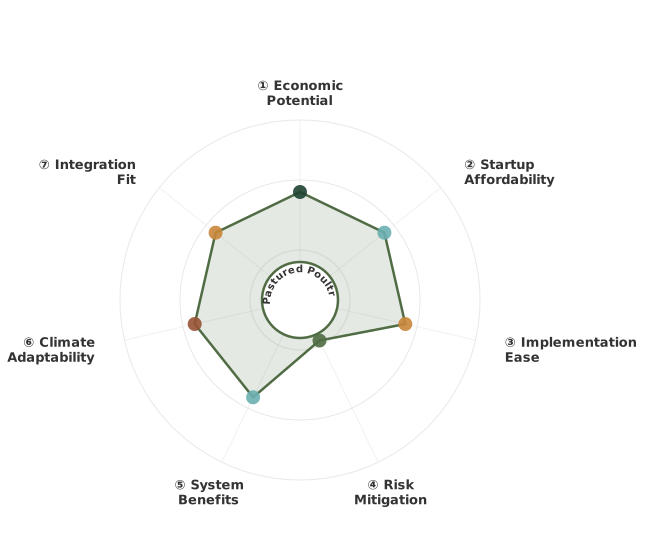
How These Traits Are Calculated
Trait dimensions are ordered clockwise starting from the top of the chart (12 o'clock position):
1. Economic Potential
Financial returns, annual value, and break-even timeline
WHAT: Evaluates financial viability by combining net annual value ($/ha from savings, income, and amortized harvests) with break-even timeline showing when practices pay for themselves.
WHY: Farmers need clear ROI understanding before committing resources. Fast payback (≤3 years) with strong returns (≥$300/ha) enables confident adoption, while long timelines (>10 years) restrict adoption to well-funded operations willing to wait for returns.
HOW: Calculated from net annual value in $/ha and break-even years. Exceptional (≥2.6): fast ROI ≤3 years + high value ≥$300/ha. Typical (1.8-2.5): moderate returns or longer timelines. Limited (<1.8): marginal economics or very long payback >10 years.
2. Startup Affordability
Initial investment costs and financial barrier to entry
WHAT: Measures financial barrier to entry through startup costs for equipment, infrastructure, consulting, and materials. Inverted scoring: lower costs = higher scores = more accessible adoption.
WHY: Affordability determines who can adopt. Low-cost practices (<$250/ha) enable widespread adoption across diverse scales, while high costs (>$2,500/ha) limit adoption to well-capitalized operations, creating barriers that slow regenerative transition.
HOW: Calculated from initial investment parsed from practice content. Inverted scoring: Exceptional (≥2.6): minimal investment <$250/ha. Typical (1.8-2.5): moderate costs $250-2,500/ha. Limited (<1.8): high barrier >$2,500/ha.
3. Implementation Ease
Learning curve and specialized knowledge required
WHAT: Measures how much learning, planning, and specialized knowledge a practice requires. Simpler practices with fewer steps score higher, while complex practices requiring extensive training or specialized resources score lower.
WHY: Complex practices create adoption barriers even when economically viable. Straightforward practices enable faster adoption and broader participation, while those requiring extensive training, timing precision, or specialized equipment limit who can succeed.
HOW: Evaluated by measuring documentation length and identifying complexity markers like location-specific requirements, seasonal timing windows, specialized skills, and dedicated equipment needs. Exceptional (≥2.6): straightforward practices with minimal prerequisites. Typical (1.8-2.5): moderate learning curve with some specialized needs. Limited (<1.8): steep learning curve requiring significant training or resources.
4. Risk Mitigation
Identified financial and ecological risk assessment
WHAT: Evaluates documented risks across financial (investment loss, market volatility) and ecological (crop failure, pest outbreaks) domains. Inverted scoring: fewer risks = higher scores.
WHY: Understanding risk exposure helps farmers make informed decisions. Low-risk practices allow confident implementation, while high-risk practices require careful planning and contingency resources. Risk transparency prevents costly failures.
HOW: Calculated from identified risks in practice content. Inverted scoring: Exceptional (≥2.6): ≤2 risks with manageable severity. Typical (1.8-2.5): 3-5 moderate risks. Limited (<1.8): 6+ risks or severe exposure.
5. System Benefits
How many ways the practice improves your land simultaneously
WHAT: Measures how many aspects of land health improve at once—carbon storage, soil quality, erosion control, water absorption, and biodiversity. Practices that improve multiple areas simultaneously create compounding benefits where each improvement reinforces the others.
WHY: The best practices solve multiple problems at once. For example, addressing erosion simultaneously builds carbon and improves water infiltration, creating a resilient system with positive feedback loops. Single-benefit approaches miss these compound transformation opportunities.
HOW: Evaluated across five key outcomes: carbon sequestration, soil organic matter increase, erosion reduction, water infiltration improvement, and biodiversity enhancement. Exceptional (≥2.6): high carbon storage (>8 t/ha/yr), improvements across 4-5 areas, transformative outcomes. Typical (1.8-2.5): moderate carbon (3-8 t/ha/yr), improvements across 2-3 areas. Limited (<1.8): modest impact (<3 t/ha/yr), single-area focus only.
6. Climate Adaptability
Geographic applicability across Köppen climate zones
WHAT: Evaluates geographic applicability by assessing how many Köppen climate zones successfully support a practice and what adaptation requirements are needed. Measures breadth of climates where farmers can implement with minimal to moderate modifications.
WHY: Universal practices working across diverse climates enable more farmers to adopt regenerative approaches. Practices limited to single climate types (only Mediterranean, only tropical) restrict adoption and slow global transition. Adaptability determines whether a practice serves niche regions or offers broad transformation.
HOW: LLM evaluation of regional success stories, Köppen zone coverage, and adaptation needs. Exceptional (≥2.6): 5+ zones or 4+ climate types, 3+ continents, minimal adaptation. Typical (1.8-2.5): 3-4 zones or 2-3 types, 2 continents, moderate adaptation. Limited (<1.8): 1-2 zones, single region, significant adaptation or highly specialized.
7. Integration Fit
How well this practice combines with others you're doing
WHAT: Measures how well a practice combines with other regenerative practices you might be doing. Some practices work as building blocks that make many other practices easier or more effective, while others work best on their own.
WHY: Practices that combine well with many others create more value on your farm. For example, cover cropping enables no-till, improves grazing, supports crop diversity, and helps water management—making all of them work better together. This helps you build a coherent system rather than juggling disconnected practices.
HOW: Evaluated by identifying which practices combine well and how strong those combinations are. 'Ideally Suited' means strong combinations where practices reinforce each other (practice A makes B easier, while B makes A more effective). 'Adequate' means complementary benefits that work well together. Exceptional (≥2.6): combines well with 6+ practices, serves as a building block. Typical (1.8-2.5): combines with 3-5 practices. Limited (<1.8): 1-2 practices or works best alone.
Going Deeper
1
WHY - The Benefits
Pastured poultry offers a multi-faceted approach to farm improvement, delivering tangible benefits across soil health, animal welfare, economic viability, and ecological regeneration. By integrating poultry into pasture systems, farmers leverage natural foraging...
Pastured poultry offers a multi-faceted approach to farm improvement, delivering tangible benefits across soil health, animal welfare, economic viability, and ecological regeneration. By integrating poultry into pasture systems, farmers leverage natural foraging behaviors and nutrient cycling capabilities to enhance overall farm resilience and productivity.
WHY - The Benefits
Pastured poultry offers a multi-faceted approach to farm improvement, delivering tangible benefits across soil health, animal welfare, economic viability, and ecological regeneration. By integrating poultry into pasture systems, farmers leverage natural foraging...
Pastured poultry offers a multi-faceted approach to farm improvement, delivering tangible benefits across soil health, animal welfare, economic viability, and ecological regeneration. By integrating poultry into pasture systems, farmers leverage natural foraging behaviors and nutrient cycling capabilities to enhance overall farm resilience and productivity.
Soil Health Benefits
Pastured poultry significantly contributes to soil health by acting as mobile nutrient applicators and biological catalysts. The manure deposited by birds, rich in nitrogen, phosphorus, and potassium, fertilizes pasture grasses and legumes, improving their vigor and nutritional content. This natural fertilization can reduce or eliminate the need for synthetic fertilizers, saving costs and preventing nutrient runoff into waterways.
Over 3-5 years, consistent application of poultry manure on pasture can lead to an increase in soil organic matter by 0.2-0.8%. This happens as droppings decompose, feeding soil microbes and increasing humic substances. Higher organic matter improves soil structure, enhancing water infiltration, aeration, and nutrient retention. Studies on similar livestock integration practices show improvements in water infiltration rates of 10-20% over time, making the land more resilient to drought and heavy rainfall.
The birds' natural foraging behavior—scratching, pecking, and consuming insects and weed seeds—also benefits the soil ecosystem. Their disturbance can help break up thatch and incorporate organic matter into the topsoil. By consuming insects, they can help regulate pest populations that might otherwise damage forage or affect other livestock. This increased biological activity fosters a more dynamic and healthy soil food web.
Economic Benefits
The economic advantages of pastured poultry are significant, stemming from premium product pricing, reduced input costs, and enhanced land value. Eggs and meat from pastured birds are often perceived as higher quality by consumers, commanding premium prices ranging from 20-50% higher than conventionally raised products, translating to $200-500 per hectare per year in net income depending on scale and efficiency.
Reduced feed costs are another major economic driver. While birds are supplemented, a significant portion of their diet—up to 15-30%—can come from forages, insects, and seeds consumed on pasture. This reduces reliance on purchased feed, a major expense in conventional poultry operations.
Furthermore, the improved pasture health resulting from poultry integration can indirectly benefit other livestock enterprises. Fertilized pastures produce more and higher-quality forage, potentially increasing carrying capacity for cattle or sheep, or reducing their feed costs. This can translate to an additional $50-100 per hectare per year in value to the overall farm system.
The upfront investment in mobile shelters, fencing, and water systems—typically $100-300 per hectare ($40-120 per acre)—is recovered relatively quickly through premium pricing and input savings. The long-term economic benefit of healthier soil and more resilient pastureland also contributes to increased farm asset value.
Regenerative Systems Fit
Pastured poultry is a foundational regenerative practice that directly embodies several core principles, particularly when managed with mobility and pasture integration. It is crucial for farms seeking to enhance ecosystem function and economic resilience.
Principle 1 (Minimize Soil Disturbance): By moving shelters frequently, pastured poultry avoid the chronic over-grazing and compaction associated with static livestock confinement or overstocking. The impact on any given area is short-lived and balanced by extended rest periods, allowing soil structure and vegetation to recover and thrive, preventing the hardpans that stifle biological activity.
Principle 3 (Keep Soil Covered): Poultry manure is a natural fertilizer that promotes dense forage growth, ensuring that soil surfaces are consistently covered by living plants or mulch. The birds' droppings are incorporated into the soil or decomposed by microbes, feeding the soil food web and building organic matter, all while protecting the soil from erosion by wind and water.
Principle 5 (Integrate Livestock): This practice is a prime example of integrating diverse livestock to enhance ecosystem function. Poultry are not just a product but also a tool for pasture management, nutrient cycling, and pest control. Their mobility ensures their impact is regenerative rather than degenerative, contributing to a balanced farm ecosystem.
While pastured poultry doesn't directly increase crop diversity in the traditional sense (like planting a mix of crops), it contributes to overall farm biodiversity by attracting beneficial insects, consuming weed seeds, and improving habitat for soil organisms. The diverse diet of poultry on pasture also inherently involves consuming a variety of forages and insects, indirectly supporting the food web.
When transitioning from conventional confinement, pastured poultry offers a pathway to improved animal welfare and a more ecological approach. For established regenerative farms, it's a valuable tool for diversifying income streams and enhancing pasture fertility, working synergistically with other practices like adaptive grazing and cover cropping.
Sources behind this view
Videos & Podcasts
-
Pasture Bird chickens exhibit significantly higher nutrient density (Omega-3s, Vitamins A & E) than conventional birds, a fact they communicate through transparency and direct storytelling, not just t
-
Primal Pastures scales pasture-raised chicken production using 500-bird capacity metal coops moved daily on irrigated pastures, emphasizing a 'bugs not drugs' approach. They integrate Dorper sheep for
-
High-density grazing with multiple animal species, combined with tools like the Keyline plow, regenerates pasture and builds soil. Poultry, especially broilers, are highlighted as profitable cash flow
-
The Regenerative Agriculture Alliance integrates poultry into silvopasture systems, using chickens to fertilize trees and improve soil health, leading to enhanced nutrient cycling, higher yields (e.g.
Community
-
Pasture access for organic poultry can reduce feed consumption and provide nutrients, but breeds suited for foraging may have longer grow-out periods, potentially offsetting feed savings. Pasture poul
Read more (opens in new window) permies.com -
Raising pasture-based broiler chickens requires careful management of flock, pasture, genetics, feed, predator protection, and marketing. Consulting resources like APPPA and ATTRA is recommended, and
Read more (opens in new window) ucanr.edu -
Archived resources on poultry nutrition and feeding, emphasizing pastured poultry and forages, from ATTRA and Extension services.
Read more (opens in new window) ucanr.edu
Research
-
The grass is greener: Farmers' experiences with pastured poultry (opens in new window)
This study found: California pastured poultry farmers cited soil fertility and marketing as key benefits, with indirect profits from savings on fertilizer and pest control being significant. Predation was the main chal
-
PASTURE-BASED POULTRY FARMING: APPROACH FOR ANIMAL WELFARE, NUTRITIONAL QUALITY AND ENVIRONMENTAL SUSTAINABILITY (opens in new window)
This study found: Pasture-based poultry farming boosts animal welfare, produces more nutritious products, and benefits the environment by improving soil health and reducing emissions, despite management challenges.
-
The grass is greener: Farmers' experiences with pastured poultry (opens in new window)
This study found: California pastured poultry farmers cited soil fertility and marketing as key benefits, driven by sustainability and Joel Salatin's influence. Predation and feed costs were major challenges, though mo
-
Soil fertility and crop growth under poultry/crop integration (opens in new window)
This study found: Integrating chickens into crop fields significantly boosted soil fertility and plant growth, with higher nutrients and organic matter observed. Effective for supplementing fertilizers, but phosphorus
From the Web
-
Pastured poultry are recommended for holistic grazing systems as a keystone species for ecosystem health, a marketing gateway for red meats, and for their 'flock effect' which improves soil fertility
-
Establish pastured poultry by assessing goals, choosing products/markets, budgeting, selecting breeds (e.g., Cornish Cross, Rhode Island Red), designing mobile housing and pastures, managing nutrition
-
Pastured poultry improve soil health by spreading manure, increasing organic matter, and fertility. Chickens following cattle consume fly larvae. Optimal planting for vegetables is 14 days after poult
-
Pastured poultry offers profitability and farm health benefits, as demonstrated by the Fischbach family in Wisconsin. Forming a cooperative (Pasture Perfect, LLC) improved purchasing power and process
2
HOW - Implementation Process
Implementing a successful pastured poultry operation requires careful planning and management. The core of the system lies in mobility, thoughtful pasture rotation, and providing for the birds' needs while maximizing their regenerative contributions.
Implementing a successful pastured poultry operation requires careful planning and management. The core of the system lies in mobility, thoughtful pasture rotation, and providing for the birds' needs while maximizing their regenerative contributions.
HOW - Implementation Process
Implementing a successful pastured poultry operation requires careful planning and management. The core of the system lies in mobility, thoughtful pasture rotation, and providing for the birds' needs while maximizing their regenerative contributions.
Implementing a successful pastured poultry operation requires careful planning and management. The core of the system lies in mobility, thoughtful pasture rotation, and providing for the birds' needs while maximizing their regenerative contributions.
Prerequisites
Before you begin, consider these factors:
- Market Access: Do you have buyers for premium pastured eggs or poultry meat? Local farmers markets, CSA programs, or direct sales often offer the best opportunities.
- Climate Appropriateness: While pastured poultry can be adapted to most climates, extreme conditions (prolonged heat, extreme cold, heavy snow) require robust shelter design and management.
- Predator Pressure: Assess the risk from local predators (foxes, coyotes, raptors, domestic dogs). Plan for robust protection measures.
- Water Availability: Reliable access to clean water is critical for bird health and productivity.
- Pasture Availability: You need sufficient healthy pasture to rotationally graze the birds without overgrazing.
Phase 1: Planning & Setup (Months 1-3)
- Define Goals: Are you raising broilers for meat, layers for eggs, or a dual-purpose flock? This influences breed selection, flock size, and management intensity.
- Breed Selection:
- Meat Birds (Broilers): Look for fast-growing breeds like Cornish Cross (especially for commercial scales), or slower-growing heritage breeds (e.g., Freedom Ranger, Delaware) for better foraging ability and meat flavor.
- Egg Layers: Dual-purpose breeds like Plymouth Rock, Wyandotte, or Australorp are good for smaller operations; specialized layers like Leghorns are efficient but less robust foragers. Heritage breeds often suit pastured systems better.
- Consider climate: Arid regions might favor breeds tolerant of heat; cold regions need breeds with good feathering and cold hardiness.
- Shelter Design:
- Mobility: Shelters must be easily moved. Options include:
- Chicken Tractors/Arks: Small, usually triangular or rectangular structures on skids or wheels, sized for 10-30 birds. Easy to move daily.
- Larger Mobile Coop Systems: Larger structures, often built on trailers, capable of housing 50-200+ birds, moved every 2-7 days using a truck or tractor.
- Protection: Must protect from sun, rain, snow, wind, and predators. Ventilation is key to prevent ammonia buildup and respiratory issues. Include roosting bars and nest boxes.
- Materials: Lighter materials for easier moving, but durable enough for weather and predator pressure. Consider local availability and cost; repurposed materials can be economical.
- Mobility: Shelters must be easily moved. Options include:
- Infrastructure:
- Water: Portable waterers (nipple drinkers are efficient and reduce spoilage) or piped systems with hydrants. Plan for moving water or having a large enough buffer. Consider solar pumps for remote pastures.
- Fencing: Electric netting is highly effective and flexible for creating temporary paddocks around shelters and defining grazing areas. Requires an energizer (solar-powered for remote sites) and grounding rods.
- Feeders: Trough feeders or hanging feeders designed for outdoor use.
Phase 2: Pasture Preparation & Rotation Planning (Months 3-6)
- Pasture Assessment: Evaluate existing pasture quality, species composition, and growth rates. Identify areas with good forage and insect life. Understand your pasture's carrying capacity.
- Rotation System: Develop a rotational grazing plan.
- Daily/Multi-Day Moves: For smaller flocks (<30 birds) in chicken tractors, daily moves are ideal for maximum soil fertilization and minimal impact. For larger flocks, moves every 2-7 days allow birds to graze a larger area.
- Paddock Design: Use electric fencing to create paddocks sized for your flock and desired impact. The goal is to allow birds to graze intensely for a short period, then move them before they damage the sward or over-consume insects.
- Recovery Period: Crucial for pasture regeneration. After poultry leave an area, it needs at least 20-40 days of rest (depending on climate and forage type) for plants to regrow and soil biology to recover. This ensures no overgrazing.
- Pasture Health: If pastures are degraded, consider overseeding with diverse legumes and grasses that benefit from poultry fertilization. Legumes add nitrogen, grasses provide better forage, and diverse species enhance soil health.
Phase 3: Flock Management & Integration (Ongoing)
- Introducing Birds: Start with a manageable flock size based on your goals and available resources. Broilers are typically raised in batches of 50-200 for 6-10 weeks. Layers are managed year-round.
- Daily Move Routine:
- Morning: Open shelter door, allow birds access to fresh pasture. Ensure water supply is clean and full. Check for predator activity.
- Late Morning/Midday: If using chicken tractors, drag the coop forward to a fresh patch of grass. For larger coops, use a truck or tractor to relocate the entire structure. Secure shelters by mid-afternoon if predator risk is high.
- Evening: Ensure birds are back inside shelters before dusk for protection. Check waterers.
- Supplementation: Provide high-quality feed appropriate for the birds' age and type (starter, grower, layer). Supplement, don't replace, pasture forage.
- Predator Protection: This is paramount. Electric fencing is highly effective for smaller flocks. For larger operations, consider guard dogs, secure coop designs with buried aprons on wire, and vigilant daily checks.
- Health Monitoring: Observe birds daily for signs of stress, disease, or injury. Preventative care (cleanliness, good nutrition, space, clean water) is key. Isolate any sick birds.
Transition Timeline & Phase-Out Strategy
Pastured poultry, as a foundational regenerative practice, doesn't typically involve "phase-out" of non-regenerative inputs in the same way a transition practice might. Instead, it's about phasing in fully regenerative management.
-
Year 0-1 (Establishment):
- Focus on learning. Start with a smaller flock size to understand the dynamics of shelter moving, pasture impact, and predator management.
- Learn to assess pasture recovery rates and adjust rotation speed accordingly.
- Begin reducing reliance on non-organic feed if possible by selecting breeds that excel at foraging.
- Establish initial infrastructure (portable shelters, electric fencing).
-
Year 1-2 (Scaling & Optimization):
- Increase flock size if market and land support it.
- Refine rotation plan based on Year 0 observations. Aim for consistent 20-40 day rest periods for pasture.
- Invest in more efficient infrastructure (e.g., larger mobile coops, automated waterers).
- If previously using synthetic fertilizers on pasture, note improvements and begin reducing synthetic inputs as poultry manure performance becomes evident.
-
Year 3+ (Mature Regenerative System):
- Pastured poultry is a fully integrated component of the farm system.
- Reliance on external inputs (feed, fertilizer) is minimized.
- Focus shifts to maximizing ecological benefits (soil health, biodiversity) and economic returns.
- Begin planning for integration with other regenerative practices (e.g., adaptive grazing of ruminants on poultry-fertilized pastures).
Graduation to Fully Regenerative Approach: This is achieved when pastured poultry is managed with regular mobility, sufficient pasture rest, effective predator protection, and when the birds contribute measurably to soil fertility and structure, reducing external input needs. The "phase-out" is of conventional poultry practices (confinement, reliance on antibiotics, synthetic fertilizers) not the practice itself.
Sources behind this view
Videos & Podcasts
-
Regenerative poultry production integrates ancestral knowledge with modern silvopasture design, using native species like hazelnuts and elderberries. The system mimics natural habitats, focuses on eco
-
Details a regenerative poultry system using chickens in agroforestry settings to enhance soil biology and energy transformation. Chickens forage on diverse plants and insects, leading to high-value ha
-
The Regenerative Agriculture Alliance integrates poultry into silvopasture systems, using chickens to fertilize trees and improve soil health, leading to enhanced nutrient cycling, higher yields (e.g.
-
Primal Pastures scales pasture-raised chicken production using 500-bird capacity metal coops moved daily on irrigated pastures, emphasizing a 'bugs not drugs' approach. They integrate Dorper sheep for
Community
-
Utilize mobile poultry (chickens/ducks) with electric netting and portable coops to renovate pastures by concentrating droppings and disturbance. Sow diverse seeds (grasses, clovers, grains, amaranth)
Read more (opens in new window) permies.com -
Provides workshop resources on pastured poultry, covering husbandry, pasture management, housing, marketing, alternative species, nutrition, disease prevention, and regulations, with contributions fro
Read more (opens in new window) ucanr.edu -
Raising pasture-based broiler chickens requires careful management of flock, pasture, genetics, feed, predator protection, and marketing. Consulting resources like APPPA and ATTRA is recommended, and
Read more (opens in new window) ucanr.edu -
Archived resources on poultry nutrition and feeding, emphasizing pastured poultry and forages, from ATTRA and Extension services.
Read more (opens in new window) ucanr.edu
Research
-
The grass is greener: Farmers' experiences with pastured poultry (opens in new window)
This study found: California pastured poultry farmers cited soil fertility and marketing as key benefits, with indirect profits from savings on fertilizer and pest control being significant. Predation was the main chal
-
PASTURE-BASED POULTRY FARMING: APPROACH FOR ANIMAL WELFARE, NUTRITIONAL QUALITY AND ENVIRONMENTAL SUSTAINABILITY (opens in new window)
This study found: Pasture-based poultry farming boosts animal welfare, produces more nutritious products, and benefits the environment by improving soil health and reducing emissions, despite management challenges.
-
Sustainable poultry farming practices: a critical review of current strategies and future prospects. (opens in new window)
This study found: Review of sustainable poultry farming strategies: includes better breeding, alternative feeds (insects, algae), smart tech, waste management, and organic practices to boost animal welfare and environm
-
The grass is greener: Farmers' experiences with pastured poultry (opens in new window)
This study found: California pastured poultry farmers cited soil fertility and marketing as key benefits, driven by sustainability and Joel Salatin's influence. Predation and feed costs were major challenges, though mo
From the Web
-
Establish pastured poultry by assessing goals, choosing products/markets, budgeting, selecting breeds (e.g., Cornish Cross, Rhode Island Red), designing mobile housing and pastures, managing nutrition
-
Pastured poultry are recommended for holistic grazing systems as a keystone species for ecosystem health, a marketing gateway for red meats, and for their 'flock effect' which improves soil fertility
-
Offers a comprehensive guide on establishing a small-scale pastured poultry operation, covering housing, rotational grazing, management, and marketing for improved animal welfare and soil enrichment.
3
Know the Debate
Pastured poultry offers significant regenerative benefits, enhancing soil fertility and farm economics. However, outcomes and implementation detail...
Know the Debate
Pastured poultry offers significant regenerative benefits, enhancing soil fertility and farm economics. However, outcomes and implementation detail...
Pastured poultry offers significant regenerative benefits, enhancing soil fertility and farm economics. However, outcomes and implementation details vary considerably based on your location, scale, and the specific management approach you adopt. While common across many climates, success hinges on tailoring infrastructure and pasture management to local conditions, particularly regarding predator pressures and the time it takes to see tangible pasture regeneration. Realistic labor commitments and investment in mobile infrastructure are also key factors for profitability.
When will my pasture quality noticeably improve?
Improvements in 1-2 years
In well-managed systems with adequate moisture and responsive soils, visible pasture and fertility improvements can be seen within one to two years, due to direct fertilization and stimulated biological activity.
Sources behind this view
Sources behind this view
Videos & Podcasts
-
Pasture Bird raises broiler chickens on pasture, moving them daily to regenerate degraded cropland. Starting as a hobby, the company successfully improved soil health from <1% to 4% organic matter on a former potato field in Southern California through sustained poultry and cattle rotation.
Research
-
PASTURE-BASED POULTRY FARMING: APPROACH FOR ANIMAL WELFARE, NUTRITIONAL QUALITY AND ENVIRONMENTAL SUSTAINABILITY (opens in new window)
This study found: Raising chickens on pasture offers a more sustainable way to produce poultry products compared to indoor confinement. This approach significantly improves the well-being of the birds by allowing them to express natural behaviors and reducing stress, leading to healthier animals. The meat and eggs from pasture-raised chickens are also more nutritious, containing higher levels of beneficial fats, vitamins, and antioxidants. Environmentally, chickens on pasture help build soil fertility, prevent soil erosion, and produce fewer greenhouse gas emissions. While challenges like protecting birds from predators and managing diseases exist, further research can help farmers adopt these beneficial practices.
From the Web
-
Pastured poultry improve soil health by spreading manure, increasing organic matter, and fertility. Chickens following cattle consume fly larvae. Optimal planting for vegetables is 14 days after poultry move across a plot.
Lasting changes take 2-3+ years
Significant, lasting pasture regeneration and noticeable soil structure changes may take 2-3 years of consistent management, especially in soil types or climates that decompose organic matter more slowly.
Sources behind this view
Sources behind this view
Videos & Podcasts
-
Pastured poultry enhances regenerative agriculture by depositing nitrogen-rich manure, improving pasture health. A minimum 60-day pasture rest period (ideally a year) is crucial between grazing cycles to allow land recovery, with seasonal considerations for winter conditions.
-
A first-generation farmer in Southern California transitioned from consumer to producer, scaling a pastured poultry operation from 50 backyard chickens to 8,000 broilers weekly, utilizing daily moves and mobile greenhouses to improve soil health and meet consumer demand.

Research
-
Use of poultry manure as an alternative to inorganic fertilizer: A review of potential human and environmental health risks (opens in new window)
This study found: Chicken manure can be a valuable alternative to synthetic fertilizers, especially for farmers with limited resources. It can improve soil health and help ensure a stable food supply. However, using large amounts of chicken manure can also lead to problems like spreading diseases, building up toxic metals in the soil, and fertilizer washing into waterways. This review discusses ways to safely use chicken manure. It suggests that governments should create policies and laws to guide its use. Farmers can also protect themselves and the environment by properly treating the manure (like composting it) and by following good farming practices. Choosing and applying manure correctly, based on sound farming advice, is key to making it a safe and effective option.
Making Sense of the Differences
The timeline for observing pasture improvements with pastured poultry varies based on existing soil health, climate, and management intensity. In well-managed systems with sufficient rainfall and responsive soils, bird impact can lead to quicker visible changes within a year. However, in less fertile or dry conditions, substantial soil rebuilding and forage improvement may indeed take 2-3 years or more, requiring persistent application of the practice.
How critical is predator protection for profitability?
Basic protection sufficient with careful management
Standard predator protection like electric netting and nightly securement in well-designed shelters is generally effective, keeping bird losses below 5% in many agricultural settings.
Sources behind this view
Sources behind this view
Research
-
The grass is greener: Farmers' experiences with pastured poultry (opens in new window)
This study found: A study of 18 chicken farmers in California who raise birds on pasture found that many were inspired by author Joel Salatin and a desire to produce meat and eggs sustainably. The biggest benefits they reported were improved soil health (61% of farmers) and better marketing opportunities (44%). The main challenges were protecting their birds from predators (44%) and the cost of feed (22%). While half of the farmers said their pastured poultry operation was directly profitable, nearly 80% saw indirect profits through savings on things like fertilizer and pest control, showing the broader benefits of integrating poultry into farm systems.
From the Web
-
Details four alternative poultry systems: Pastured Poultry Pen (daily moved floorless pens), 'Net' Range (electric netting paddocks), 'Chicken Tractor' (garden plot prep), and 'Free Range' (roaming with portable housing). Highlights soil benefits and predation risks.
-
Pastured poultry systems like the 'Pastured Poultry Pen' and 'Chicken Tractor' use daily moved, floorless pens for birds to forage and fertilize soil, while 'Net' Range and 'Free Range' offer broader pasture access with varying predation risks.
Specific, local strategies needed for minimal losses
Achieving acceptable bird loss rates (<5%) often requires highly specific, non-obvious local mitigation strategies beyond basic infrastructure, influenced by regional wildlife pressure and farm context.
Sources behind this view
Sources behind this view
Videos & Podcasts
-
Switched from Cornish Cross to Rainbow Ranger chickens for pasture poultry due to better foraging, flavor, and manageability. Utilizes mobile coops and livestock guardian dogs for efficiency and predator control, with custom feed rations being crucial.

-
Primal Pastures' Paul Grieve details their transition to pasture-raised chicken farming, highlighting the critical role of livestock guardian dogs in preventing predator losses after initial struggles. They use improved metal poultry pens, move them daily, and follow a 'bugs not drugs' philosophy, raising chickens without antibiotics or vaccines.
-
An integrated farming system uses multi-species rotational grazing (cows, lambs, chickens, turkeys, ducks) to maximize land use efficiency. Chickens help manage manure and fly larvae. Predator protection for poultry includes buried wire mesh.
Research
-
The grass is greener: Farmers' experiences with pastured poultry (opens in new window)
This study found: A study of 18 farmers in California who raise chickens on pasture for eggs and meat found that their main reasons for doing so were the influence of farmer-author Joel Salatin and a desire to produce food sustainably. The biggest benefit they reported was improved soil fertility on their land, followed by the appeal of their products to consumers. The most common challenges they faced were birds being preyed upon by wild animals and the cost of feed. While half of the farmers said their pastured poultry operation was directly profitable, nearly 80% saw indirect profits through savings on things like fertilizer and pest control.
Making Sense of the Differences
While standard predator protection like electric fencing and secure coops are essential, the effectiveness of these measures can vary greatly by region and specific predator pressures. Farmers in areas with high predation risk (e.g., high fox or coyote populations) may need to invest in additional strategies like buried wire aprons, guardian animals, or specialized coop designs that are not always highlighted in initial setup guides. What works in one area might require significant adaptation in another to meet acceptable loss thresholds.
3
HOW MUCH - Costs & Investment
Note: Costs shown in USD; multiply by local labor and material cost indices for your region. Labor costs vary significantly internationally.
Note: Costs shown in USD; multiply by local labor and material cost indices for your region. Labor costs vary significantly internationally.
HOW MUCH - Costs & Investment
Note: Costs shown in USD; multiply by local labor and material cost indices for your region. Labor costs vary significantly internationally.
Note: Costs shown in USD; multiply by local labor and material cost indices for your region. Labor costs vary significantly internationally.
Note: All costs are based on recent US economic data (2024–2026) and may vary substantially by region based on local labor rates, material costs, and regulatory requirements.
Infrastructure Establishment
Establishing a pastured poultry system requires capital allocation for mobile housing, predator protection, and water distribution. For small-scale operations (under 50 acres (20 ha)), the reliance on low-volume purchasing drives establishment costs toward the upper end of the spectrum, totaling $450 to $651 per acre ($1,112–$1,609/ha). These producers often invest heavily in manual labor-intensive setups and high-cost mobile coops. Mid-size operations (50–500 acres (20–202 ha)) utilize economies of scale by investing in modular, semi-automated trailer systems and long-run irrigation, costing between $225 to $450 per acre ($556–$1,112/ha). Large-scale operations (500+ acres) leverage wholesale procurement of specialized poultry trailers, bringing establishment investment down to the baseline of $120 to $225 per acre ($297–$556/ha).
Operational Expenditures
Annual management costs revolve primarily around feed, labor, and energy consumption. Fuel and energy, essential for towing mobile structures and operating automated water systems, account for $35 to $150 per acre ($86–$371/ha). Beyond fuel, labor represents a significant variable; while owner-labor is often uncompensated, accounting for it reveals a shadow cost of $150 to $400 per acre ($371–$988/ha) depending on the intensity of rotation. Bedding materials and biosecurity supplies—such as organic sanitizers—add further variable costs of $50 to $180 per acre ($124–$445/ha). Total annual cash expenditures for established operations, excluding feed, typically settle within the range of $250 to $550 per acre ($618–$1,359/ha).
Capital Amortization and Breakeven
Producers must manage these outflows against the capital recovery window. Across all tiers, the breakeven period for recouping initial establishment costs is 2 to 4 years. Small operations, due to higher initial buy-in, typically hit breakeven near the 4-year mark. Larger, more efficient systems often see ROI within 2 years.
Most Spend: The middle 60% of the investment range falls between $226 and $545 per acre ($558–$1,347/ha). This tier includes the vast majority of diversified pastured poultry producers who invest in mid-range modular coop systems, solar-powered electric fencing, and basic bulk-feed storage equipment.
Why the Range?: The range is driven primarily by the level of automation and the scale of infrastructure density. Producers who build DIY housing from low-cost lumber see costs at the bottom end of the range, while operations purchasing heavy-duty, high-capacity, off-the-shelf mobile poultry systems reside at the top. Additionally, regional differences in land access costs and electricity rates for well-fed water systems can cause cost disparities of up to 40% between states.
Sources behind this view
Videos & Podcasts
-
Pastured meat chickens offer high profitability (€15-€20/bird) and rapid scaling due to a 7-8 week cycle. On-farm slaughtery, built affordably, processes 5-10k birds on 3-3.5 hectares, improving soil
-
Detailed financial analysis of pastured poultry shows economies of scale are crucial for profitability, targeting $50/hour labor and 2x money factor. Specific costs, pricing ($4.99/lb whole chicken),
![Thumbnail for Earn $10000 an Acre Raising Pastured Poultry [PROFIT not GROSS]](/static/thumbnails/Ej-qyb6GrOA.jpg)
-
Primal Pastures scales pasture-raised chicken production using 500-bird capacity metal coops moved daily on irrigated pastures, emphasizing a 'bugs not drugs' approach. They integrate Dorper sheep for
-
On a Swedish farm, pastured broilers are raised for quick sale, and eggs from mobile hen houses are sold via a three-month subscription to ensure cash flow and customer loyalty, leveraging their high
Community
-
Discusses financial viability of chicken farming using Joel Salatin's methods, with estimated $5/bird profit. Key factors include land, labor, licensing, and scale. Compliance costs and selling whole
Read more (opens in new window) permies.com -
Discusses Joel Salatin's chicken tractor method, noting profitability requires large scale (20k birds for $100k income) and significant expenses like feed and labor. Land constraints and licensing are
Read more (opens in new window) permies.com -
Pastured chickens are omnivores needing grain, not grassfed. 'Free-range' doesn't always mean ample pasture; ask farmers about rotation. Production is labor-intensive and costly, leading to higher pri
Read more (opens in new window) smallfarms.cornell.edu -
New England small-scale broiler enterprises using pasture-raised methods and mobile coops can achieve higher profitability per bird than large operations due to strong local demand and premium pricing
Read more (opens in new window) smallfarms.cornell.edu
Research
-
The grass is greener: Farmers' experiences with pastured poultry (opens in new window)
This study found: California pastured poultry farmers cited soil fertility and marketing as key benefits, with indirect profits from savings on fertilizer and pest control being significant. Predation was the main chal
-
The grass is greener: Farmers' experiences with pastured poultry (opens in new window)
This study found: California pastured poultry farmers cited soil fertility and marketing as key benefits, driven by sustainability and Joel Salatin's influence. Predation and feed costs were major challenges, though mo
-
Economic Analysis of Poultry Farming in Hamirpur District of Bundelkhand Region, Uttar Pradesh, India (opens in new window)
This study found: Backyard chicken farming in India's Hamirpur district is highly profitable, generating over Rs. 20,000 income annually from Rs. 10,400 expenditure, with a 1:1.94 benefit-cost ratio. It supplements far
-
PASTURE-BASED POULTRY FARMING: APPROACH FOR ANIMAL WELFARE, NUTRITIONAL QUALITY AND ENVIRONMENTAL SUSTAINABILITY (opens in new window)
This study found: Pasture-based poultry farming boosts animal welfare, produces more nutritious products, and benefits the environment by improving soil health and reducing emissions, despite management challenges.
From the Web
-
Establish pastured poultry by assessing goals, choosing products/markets, budgeting, selecting breeds (e.g., Cornish Cross, Rhode Island Red), designing mobile housing and pastures, managing nutrition
-
Pastured poultry production requires specific housing like portable pens, colony houses, and chicken tractors. Brooders, efficient feed/water systems, and feed options (including soy-free and organic)
-
Offers detailed guidance on small-scale poultry production, covering species selection (chickens, ducks, turkeys, etc.), housing, pasture management, seasonal challenges, processing regulations, and p
-
Pastured poultry operations require careful economic planning, utilizing budget tools for profitability estimation. Starting small (around 1,000 birds) and gaining experience over five years is crucia
5
REWARDS AND RISKS - Economics & Risk Factors
Economic Scenarios
Economic Scenarios
REWARDS AND RISKS - Economics & Risk Factors
Economic Scenarios
Economic Scenarios
In the Best Case Scenario, high-performance pasture management allows the flock to supplement diet through foraging, reducing supplemental feed requirements by up to 25%. When coupled with high-demand direct-to-consumer sales, the operation achieves a strong net income of $730 per acre ($1,804/ha). In the Typical Case Scenario, operations reach a steady state of production with a net income of $313 to $500 per acre ($773–$1,236/ha), allowing for consistent debt service and equipment maintenance. The Worst Case Scenario involves significant predator pressure or market saturation, forcing the producer into thin-margin wholesale channels and causing the operation to dip toward the lower end of profitability at $313 per acre ($773/ha), often delaying the breakeven point beyond the 4-year mark.
Market factors significantly dictate the enterprise's upside. Producers who fail to differentiate their output—either through high-welfare certifications or local branding—face "commodity drift," where they are forced to compete against large-scale warehouse suppliers. To maintain the 30% to 50% price premium necessary for profitability, operators must prioritize local sales channels where consumers value the ecological restoration associated with pastured livestock. Spikes in corn and soybean prices represent the primary market risk, as feed accounts for the majority of the variable budget. Effective risk mitigation requires a dual-track strategy: investing $800 to $1,500 in livestock guardian dogs or high-tensile, multi-strand solar fencing significantly reduces the risk of catastrophic asset loss, which can wipe out 20% of annual margins in a single month of poor containment.
Transition Period Risks occur primarily during the first 18 months of operation as producers navigate the "learning curve" of daily bird movement. During this phase, operations often experience a 10% to 20% dip in per-bird yield compared to established steady-state production due to initial inefficiencies in forage conversion. Recovery typically occurs by the third year as soil health—improved by bird-derived nitrogen—begins to boost forage quality. Producers should not expect peak profitability during year 1, as the capital investment of $120 to $651 per acre ($297–$1,609/ha) necessitates a period of operational stabilization before net income reaches the target $313 to $730 range.
Sources behind this view
Videos & Podcasts
-
Pastured meat chickens offer high profitability (€15-€20/bird) and rapid scaling due to a 7-8 week cycle. On-farm slaughtery, built affordably, processes 5-10k birds on 3-3.5 hectares, improving soil
-
Primal Pastures scales pasture-raised chicken production using 500-bird capacity metal coops moved daily on irrigated pastures, emphasizing a 'bugs not drugs' approach. They integrate Dorper sheep for
-
High-density grazing with multiple animal species, combined with tools like the Keyline plow, regenerates pasture and builds soil. Poultry, especially broilers, are highlighted as profitable cash flow
-
On a Swedish farm, pastured broilers are raised for quick sale, and eggs from mobile hen houses are sold via a three-month subscription to ensure cash flow and customer loyalty, leveraging their high
Community
-
Raising slow-growing heritage chickens on pasture is explored for feed economy and climate suitability, using forage and supplemental grains/milk. While potentially more sustainable, its economic viab
Read more (opens in new window) permies.com -
Discusses financial viability of chicken farming using Joel Salatin's methods, with estimated $5/bird profit. Key factors include land, labor, licensing, and scale. Compliance costs and selling whole
Read more (opens in new window) permies.com -
Pastured chickens are omnivores needing grain, not grassfed. 'Free-range' doesn't always mean ample pasture; ask farmers about rotation. Production is labor-intensive and costly, leading to higher pri
Read more (opens in new window) smallfarms.cornell.edu -
Raising pasture-based broiler chickens requires careful management of flock, pasture, genetics, feed, predator protection, and marketing. Consulting resources like APPPA and ATTRA is recommended, and
Read more (opens in new window) ucanr.edu
Research
-
The grass is greener: Farmers' experiences with pastured poultry (opens in new window)
This study found: California pastured poultry farmers cited soil fertility and marketing as key benefits, with indirect profits from savings on fertilizer and pest control being significant. Predation was the main chal
-
The grass is greener: Farmers' experiences with pastured poultry (opens in new window)
This study found: California pastured poultry farmers cited soil fertility and marketing as key benefits, driven by sustainability and Joel Salatin's influence. Predation and feed costs were major challenges, though mo
-
PASTURE-BASED POULTRY FARMING: APPROACH FOR ANIMAL WELFARE, NUTRITIONAL QUALITY AND ENVIRONMENTAL SUSTAINABILITY (opens in new window)
This study found: Pasture-based poultry farming boosts animal welfare, produces more nutritious products, and benefits the environment by improving soil health and reducing emissions, despite management challenges.
-
Sustainable poultry farming practices: a critical review of current strategies and future prospects. (opens in new window)
This study found: Review of sustainable poultry farming strategies: includes better breeding, alternative feeds (insects, algae), smart tech, waste management, and organic practices to boost animal welfare and environm
From the Web
-
Establish pastured poultry by assessing goals, choosing products/markets, budgeting, selecting breeds (e.g., Cornish Cross, Rhode Island Red), designing mobile housing and pastures, managing nutrition
-
Offers detailed guidance on small-scale poultry production, covering species selection (chickens, ducks, turkeys, etc.), housing, pasture management, seasonal challenges, processing regulations, and p
-
Pastured poultry operations require careful economic planning, utilizing budget tools for profitability estimation. Starting small (around 1,000 birds) and gaining experience over five years is crucia
-
Pastured poultry offers profitability and farm health benefits, as demonstrated by the Fischbach family in Wisconsin. Forming a cooperative (Pasture Perfect, LLC) improved purchasing power and process
6
WHO - Labor & Expertise
Labor Requirements
Labor Requirements
WHO - Labor & Expertise
Labor Requirements
Labor Requirements
Pastured poultry, especially when managed with daily moves, is labor-intensive. The "daily grind" of moving shelters, managing water, feeding, checking fences, and observing birds is a significant commitment.
- Small Flock (10-50 birds): Can often be managed by an individual farmer or family member, requiring 30-60 minutes per day for essential tasks. This can be integrated into other farm chores.
- Mid Flock (50-200 birds): Requires more time, potentially 1-2 hours per day. May necessitate dedicated time slots. Some tasks (e.g., coop moving with a trailer) can be more efficient, but overall oversight increases.
- Large Flock (200+ birds): Usually requires dedicated labor, either a full-time farmhand or multiple part-time workers. Moving larger coops, extensive fencing, and managing multiple water/feed stations, plus processing, becomes a significant operational task. Depending on the system's automation, this can be 4-8 hours per day for dedicated staff during peak season.
International Labor Cost Context: Labor costs vary dramatically. In regions with low labor costs (e.g., parts of Southeast Asia, Africa, Latin America), hiring help is more economically feasible, making larger flocks potentially more viable for operations with limited owner labor. In regions with high labor costs (e.g., Western Europe, North America), minimizing labor needs through efficient setup and automation (e.g., solar pumps, automatic feeders) becomes critical to profitability.
Expertise Requirements
While pastured poultry is accessible to beginners, maximizing its regenerative and economic potential requires developing specific expertise:
- Animal Husbandry: Understanding poultry health, nutrition, breed characteristics, and behavioral needs. This includes knowing signs of stress, disease, and predator threats.
- Pasture Management: Learning to assess forage quality and growth rates, designing effective rotational plans, understanding plant-soil interactions, and identifying signs of overgrazing. This is crucial for both bird health and pasture regeneration.
- Fencing & Infrastructure: Skill in setting up and maintaining electric fencing, mobile coops, and water systems. Understanding basic mechanics and repairs.
- Nutrient Management: Appreciating how poultry manure impacts soil fertility and pasture growth. Learning to balance manure distribution with pasture recovery cycles.
- Predator Management: Developing strategies for effective predator deterrence and protection appropriate for the local environment.
- Marketing & Sales: For commercial operations, understanding how to market pastured products, build customer relationships, and achieve premium pricing.
- Business Management: Basic financial planning, record-keeping, and understanding cost-benefit analysis for flock size and infrastructure investments.
Skill Development: Resources like extension services (national and regional), university farm programs, established regenerative farmers (mentorship opportunities), books, and online courses provide excellent learning pathways.
Sources behind this view
Videos & Podcasts
-
Primal Pastures scales pasture-raised chicken production using 500-bird capacity metal coops moved daily on irrigated pastures, emphasizing a 'bugs not drugs' approach. They integrate Dorper sheep for
-
Pasturebird developed autonomous, solar-powered mobile chicken coops ('Arc') to scale pastured poultry production. By integrating industrial efficiencies and automation, they reduced labor costs by 10
-
High-density grazing with multiple animal species, combined with tools like the Keyline plow, regenerates pasture and builds soil. Poultry, especially broilers, are highlighted as profitable cash flow
-
Pasture Bird chickens exhibit significantly higher nutrient density (Omega-3s, Vitamins A & E) than conventional birds, a fact they communicate through transparency and direct storytelling, not just t
Community
-
Utilize mobile poultry (chickens/ducks) with electric netting and portable coops to renovate pastures by concentrating droppings and disturbance. Sow diverse seeds (grasses, clovers, grains, amaranth)
Read more (opens in new window) permies.com -
Raising slow-growing heritage chickens on pasture is explored for feed economy and climate suitability, using forage and supplemental grains/milk. While potentially more sustainable, its economic viab
Read more (opens in new window) permies.com -
Provides plans for building 'Stress Free Chicken Tractors' for pastured broilers, addressing predation, daily moves, and ease of use. Includes detailed instructions, materials lists, and cost breakdow
Read more (opens in new window) smallfarms.cornell.edu -
Pastured chickens are omnivores needing grain, not grassfed. 'Free-range' doesn't always mean ample pasture; ask farmers about rotation. Production is labor-intensive and costly, leading to higher pri
Read more (opens in new window) smallfarms.cornell.edu
Research
-
The grass is greener: Farmers' experiences with pastured poultry (opens in new window)
This study found: California pastured poultry farmers cited soil fertility and marketing as key benefits, with indirect profits from savings on fertilizer and pest control being significant. Predation was the main chal
-
The grass is greener: Farmers' experiences with pastured poultry (opens in new window)
This study found: California pastured poultry farmers cited soil fertility and marketing as key benefits, driven by sustainability and Joel Salatin's influence. Predation and feed costs were major challenges, though mo
-
PASTURE-BASED POULTRY FARMING: APPROACH FOR ANIMAL WELFARE, NUTRITIONAL QUALITY AND ENVIRONMENTAL SUSTAINABILITY (opens in new window)
This study found: Pasture-based poultry farming boosts animal welfare, produces more nutritious products, and benefits the environment by improving soil health and reducing emissions, despite management challenges.
-
Sustainable poultry farming practices: a critical review of current strategies and future prospects. (opens in new window)
This study found: Review of sustainable poultry farming strategies: includes better breeding, alternative feeds (insects, algae), smart tech, waste management, and organic practices to boost animal welfare and environm
From the Web
-
Establish pastured poultry by assessing goals, choosing products/markets, budgeting, selecting breeds (e.g., Cornish Cross, Rhode Island Red), designing mobile housing and pastures, managing nutrition
-
Offers detailed guidance on small-scale poultry production, covering species selection (chickens, ducks, turkeys, etc.), housing, pasture management, seasonal challenges, processing regulations, and p
-
Pastured poultry production requires specific housing like portable pens, colony houses, and chicken tractors. Brooders, efficient feed/water systems, and feed options (including soy-free and organic)
-
Pastured poultry are recommended for holistic grazing systems as a keystone species for ecosystem health, a marketing gateway for red meats, and for their 'flock effect' which improves soil fertility
7
EQUIPMENT - Tools & Infrastructure
Implementing pastured poultry requires specific equipment designed for mobility, protection, and efficient resource delivery. Investing in the right tools can streamline operations and improve outcomes.
Implementing pastured poultry requires specific equipment designed for mobility, protection, and efficient resource delivery. Investing in the right tools can streamline operations and improve outcomes.
EQUIPMENT - Tools & Infrastructure
Implementing pastured poultry requires specific equipment designed for mobility, protection, and efficient resource delivery. Investing in the right tools can streamline operations and improve outcomes.
Implementing pastured poultry requires specific equipment designed for mobility, protection, and efficient resource delivery. Investing in the right tools can streamline operations and improve outcomes.
Mobile Poultry Shelters (Coops)
The cornerstone of pastured poultry. Designs vary greatly, but key features include:
- Mobility: Skids, sleds, wheels, or trailers for easy relocation.
- Size: Varies from small "chicken tractors" for 10-30 birds to larger mobile coops for 50-200+ birds.
- Protection: Solid roof, adequate ventilation (ridge vents, adjustable openings), protection from wind, sun, and rain. Must be predator-proof with secure latches and solid flooring or wire skirt.
- Interior Features: Roosting bars for birds to sleep on, nest boxes for egg layers (often integrated into the coop structure or as a separate attached unit).
- Material: Lightweight yet durable construction (wood frame, metal sheeting, treated lumber). DIY options are common and cost-effective.
- Cost: $150-350/ha ($60-140/acre) for large flock scales (amortized infrastructure cost per land area), but actual unit cost can range from $300 for DIY smaller units to $5,000+ for large commercial units.
Fencing
Essential for containing poultry within their designated areas and protecting them from predators.
-
Electric Netting: Lightweight, portable, electrified mesh fencing. Highly effective for creating temporary paddocks and mob grazing areas. Requires an electric fence energizer (solar-powered is ideal for remote pastures) and grounding rods.
- Cost: $60-150/ha ($25-60/acre) depending on scale and density.
-
Electric Wire Systems: Can be used for perimeter fencing or more permanent paddock divisions, using step-in posts and polywire/tape.
- Hardware Cloth/Wire Skirt: Buried around the base of shelters or perimeter fences to prevent predators (like foxes or weasels) from digging underneath.
Water Systems
Clean, fresh water is critical for all poultry operations and must be mobile.
-
Portable Waterers: Drinker units that hold several liters to several gallons. They can be filled and carried to the birds' location. Nipple drinkers are highly efficient, reducing water wastage and keeping bedding drier, but require a pressurized water source.
- Cost: $30-80/ha ($10-30/acre) for small to mid-flock systems.
-
Pressurized Water Lines: If a water source is accessible, laying portable hoses or PEX tubing to the coop location allows for continuous pressurized water supply via nipple drinkers. This significantly reduces daily labor.
- Water Pumps: For remote pastures, solar-powered pumps can draw water from wells, tanks, or ponds.
Feeders
Containers to hold supplemental feed.
- Trough Feeders: Long, open feeders. Can be prone to spillage and contamination if not managed well.
- Tube/Hanging Feeders: Feed is dispensed from a hopper, keeping it cleaner and more protected. Can be moved with the coop.
- Cost: Often included with mobile coop packages or available as small, inexpensive units.
Feeders and Processing Equipment (Optional but Recommended)
- Brooder Setup: For starting day-old chicks (heat lamps, brooder plates, secure brooding space).
- Nesting Boxes: For egg layers. Can be integrated into coops or built as separate units.
- Processing Equipment: If raising for meat, this can range from simple kill cones and scalding pots for home processing to more advanced plucking machines and chilling tanks for larger operations. Costs vary significantly based on scale and level of automation.
Sources behind this view
Videos & Podcasts
-
Pasturebird developed autonomous, solar-powered mobile chicken coops ('Arc') to scale pastured poultry production. By integrating industrial efficiencies and automation, they reduced labor costs by 10
-
Primal Pastures scales pasture-raised chicken production using 500-bird capacity metal coops moved daily on irrigated pastures, emphasizing a 'bugs not drugs' approach. They integrate Dorper sheep for
-
Discusses various pastured poultry housing (chicken tractors, mobile coops, hoop houses) and daily management, highlighting labor intensity and benefits like soil fertility, pest control, and improved
-
High-density grazing with multiple animal species, combined with tools like the Keyline plow, regenerates pasture and builds soil. Poultry, especially broilers, are highlighted as profitable cash flow
Community
-
Utilize mobile poultry (chickens/ducks) with electric netting and portable coops to renovate pastures by concentrating droppings and disturbance. Sow diverse seeds (grasses, clovers, grains, amaranth)
Read more (opens in new window) permies.com -
Discusses advanced mobile chicken coop features: robust predator protection, easy-clean perches, effective water management, and electronet for rotational grazing and soil building.
Read more (opens in new window) permies.com -
Provides plans for building 'Stress Free Chicken Tractors' for pastured broilers, addressing predation, daily moves, and ease of use. Includes detailed instructions, materials lists, and cost breakdow
Read more (opens in new window) smallfarms.cornell.edu -
Provides resources from UC Cooperative Extension workshops on pastured poultry, covering biosecurity, management, housing, marketing, nutrition, disease prevention, alternative species, farm economics
Read more (opens in new window) ucanr.edu
Research
-
The grass is greener: Farmers' experiences with pastured poultry (opens in new window)
This study found: California pastured poultry farmers cited soil fertility and marketing as key benefits, with indirect profits from savings on fertilizer and pest control being significant. Predation was the main chal
-
PASTURE-BASED POULTRY FARMING: APPROACH FOR ANIMAL WELFARE, NUTRITIONAL QUALITY AND ENVIRONMENTAL SUSTAINABILITY (opens in new window)
This study found: Pasture-based poultry farming boosts animal welfare, produces more nutritious products, and benefits the environment by improving soil health and reducing emissions, despite management challenges.
-
The grass is greener: Farmers' experiences with pastured poultry (opens in new window)
This study found: California pastured poultry farmers cited soil fertility and marketing as key benefits, driven by sustainability and Joel Salatin's influence. Predation and feed costs were major challenges, though mo
-
Sustainable poultry farming practices: a critical review of current strategies and future prospects. (opens in new window)
This study found: Review of sustainable poultry farming strategies: includes better breeding, alternative feeds (insects, algae), smart tech, waste management, and organic practices to boost animal welfare and environm
From the Web
-
Establish pastured poultry by assessing goals, choosing products/markets, budgeting, selecting breeds (e.g., Cornish Cross, Rhode Island Red), designing mobile housing and pastures, managing nutrition
-
Pastured poultry production requires specific housing like portable pens, colony houses, and chicken tractors. Brooders, efficient feed/water systems, and feed options (including soy-free and organic)
-
Details four alternative poultry systems: Pastured Poultry Pen (daily moved floorless pens), 'Net' Range (electric netting paddocks), 'Chicken Tractor' (garden plot prep), and 'Free Range' (roaming wi
-
Offers detailed guidance on small-scale poultry production, covering species selection (chickens, ducks, turkeys, etc.), housing, pasture management, seasonal challenges, processing regulations, and p
8
COMPATIBLE PRACTICES - Integration Opportunities
Pastured poultry doesn't operate in isolation; its effectiveness and regenerative impact are amplified when integrated with other farm practices.
Pastured poultry doesn't operate in isolation; its effectiveness and regenerative impact are amplified when integrated with other farm practices.
COMPATIBLE PRACTICES - Integration Opportunities
Pastured poultry doesn't operate in isolation; its effectiveness and regenerative impact are amplified when integrated with other farm practices.
Pastured poultry doesn't operate in isolation; its effectiveness and regenerative impact are amplified when integrated with other farm practices.
Adaptive Grazing
- Combines pastured poultry with rotational grazing of ruminants (cattle, sheep, goats).
- Poultry fertilize pastures and consume fly larvae, benefiting ruminants. Ruminants follow poultry after a suitable rest period, further improving pasture and spreading manure.
- Synergy: Enhances nutrient cycling across trophic levels, improves pasture health and carrying capacity, builds soil organic matter faster, reduces pest pressure for all livestock.
Cover Cropping
- Utilizing poultry to graze or fertilize cover crops before planting cash crops or as part of pasture renovation.
- Poultry help manage cover crop biomass, break up residue, and deposit fertility. Grazing can stimulate root growth or manage vegetative growth.
- Synergy: Reduces need for tillage, builds soil organic matter, provides supplemental forage, and effectively distributes natural fertility.
Composting
- Adding poultry litter to compost piles to increase nutrient density and heat generation.
- Synergy: Enhances compost quality for use on crops or pastures, turning manure into a stable, balanced soil amendment. The birds' diet and bedding contribute diverse materials.
Silvopasture
- Integrating poultry into silvopasture systems (trees with pasture).
- Poultry forage under trees, consuming insects and weeds, and fertilizing the soil. Mobile shelters protect young trees from damage while providing shade and forage access for birds.
- Synergy: Improves insect control in tree areas, fertilizes forage understory, diversifies farm income, and enhances habitat complexity. Requires careful species selection and shelter positioning to protect trees.
Water Harvesting & Conservation
- Positioning poultry grazing areas near swales, berms, or contour structures.
- Poultry droppings increase plant growth, which enhances water infiltration and retention. Poultry management can be timed to utilize rainfall captured by landscape features.
- Synergy: Improves resilience to drought by maximizing water availability for forage and bird consumption, reducing runoff and erosion.
Pastured poultry, when managed effectively, becomes a highly regenerative component of a diversified farming system, contributing to soil health, biodiversity, and economic stability. Its integration with other regenerative practices unlocks synergistic benefits that far outweigh the sum of its parts.
Sources behind this view
Videos & Podcasts
-
The Regenerative Agriculture Alliance integrates poultry into silvopasture systems, using chickens to fertilize trees and improve soil health, leading to enhanced nutrient cycling, higher yields (e.g.
-
Regenerative poultry production integrates ancestral knowledge with modern silvopasture design, using native species like hazelnuts and elderberries. The system mimics natural habitats, focuses on eco
-
Details a regenerative poultry system using chickens in agroforestry settings to enhance soil biology and energy transformation. Chickens forage on diverse plants and insects, leading to high-value ha
-
High-density grazing with multiple animal species, combined with tools like the Keyline plow, regenerates pasture and builds soil. Poultry, especially broilers, are highlighted as profitable cash flow
Research
-
The grass is greener: Farmers' experiences with pastured poultry (opens in new window)
This study found: California pastured poultry farmers cited soil fertility and marketing as key benefits, with indirect profits from savings on fertilizer and pest control being significant. Predation was the main chal
-
Soil fertility and crop growth under poultry/crop integration (opens in new window)
This study found: Integrating chickens into crop fields significantly boosted soil fertility and plant growth, with higher nutrients and organic matter observed. Effective for supplementing fertilizers, but phosphorus
-
PASTURE-BASED POULTRY FARMING: APPROACH FOR ANIMAL WELFARE, NUTRITIONAL QUALITY AND ENVIRONMENTAL SUSTAINABILITY (opens in new window)
This study found: Pasture-based poultry farming boosts animal welfare, produces more nutritious products, and benefits the environment by improving soil health and reducing emissions, despite management challenges.
-
Sustainable poultry farming practices: a critical review of current strategies and future prospects. (opens in new window)
This study found: Review of sustainable poultry farming strategies: includes better breeding, alternative feeds (insects, algae), smart tech, waste management, and organic practices to boost animal welfare and environm
From the Web
-
Pastured poultry are recommended for holistic grazing systems as a keystone species for ecosystem health, a marketing gateway for red meats, and for their 'flock effect' which improves soil fertility
-
Establish pastured poultry by assessing goals, choosing products/markets, budgeting, selecting breeds (e.g., Cornish Cross, Rhode Island Red), designing mobile housing and pastures, managing nutrition
-
Utilizing existing or native pastures is cost-effective for poultry, requiring minimal seed investment. Poultry manure improves soil fertility, promoting plant diversity and future forage growth. Mana
-
Integrating poultry into diversified farms enhances soil fertility, reduces risk, improves pest management, and increases sustainability. Poultry droppings fertilize soil, reducing input needs, while