
Permaculture
Permaculture is a design system that observes natural patterns to create resilient, self-sustaining agricultural landscapes. It applies ethics of Earth Care, People Care, and Fair Share to design human settlements and food production, emphasizing energy efficiency, natural processes, and integrated systems. It's a holistic design framework, not a specific set of farming techniques.
Read More: Complete Description
Permaculture, a design system inspired by natural ecosystems, offers a framework for creating human-scale agricultural and living systems that are both productive and regenerative. Coined by Bill Mollison and David Holmgren in the 1970s, it's fundamentally about observing and working with nature's patterns rather than against them. The core of permaculture lies in its three enduring ethics: Care for Earth, Care for People, and Fair Share (or Return of Surplus). These ethics guide the design process, ensuring that human activities benefit the environment and community, not just the immediate individual.
Crucially, permaculture is a design methodology, a way of thinking and planning, rather than a prescriptive agricultural technique. This distinguishes it from practices like biodynamics, which have specific spiritual components and preparations, or syntropic agriculture, which is a rigorous method of managing ecological succession through intensive planting and pruning. While permaculture designs can incorporate elements of biodynamics or syntropic methods, its broader scope and foundational ethics set it apart. Permaculture is about creating a web of interconnected elements that support each other, mimicking a healthy ecosystem where every component has a function and contributes to the whole.
From a regenerative agriculture perspective, permaculture actively supports many core principles by its very nature. Its emphasis on observing natural patterns naturally leads to practices that minimize soil disturbance (Principle 1), as ecosystems demonstrate that healthy soil is built through layers of organic matter and root activity, not annual tillage. Maximizing crop diversity (Principle 2) is a cornerstone, as permaculture designs aim for polycultures, agroforestry systems, and guilds of plants that mimic the rich species assemblages found in natural environments. Keeping soil covered (Principle 3) is achieved through continuous living buffers, mulching with biomass, and perennial planting systems. Maintaining living roots (Principle 4) year-round is inherent in designs that prioritize perennial crops, trees, and forage systems. And integrating livestock (Principle 5) is a natural extension, as animals can play vital roles in nutrient cycling, vegetation management, and pest control within a well-designed system, provided they are managed regeneratively.
Permaculture's design process typically involves strategic placement of elements based on their needs and functions. For example, water-harvesting techniques (like swales and contour banks) are designed to capture rainfall and infiltrate it into the landscape, minimizing erosion and maximizing water availability for perennial plantings. Energy efficiency is paramount, with systems designed to harness natural forces like solar energy, wind, and gravity. Elements that produce waste are placed near elements that can utilize that waste as a resource (closed-loop systems). This leads to designs that are inherently efficient in their use of water, energy, and materials, and that minimize waste.
The application of permaculture spans various scales—from a small urban balcony garden designed to maximize food production and minimize waste, to a large rural farm aiming for resilience and self-sufficiency, and even to community and regional planning. Regardless of scale, the design process is iterative, involving observation, planning, implementation, and feedback loops. Designers seek to create systems that buffer against environmental and economic shocks, offering a degree of self-reliance and resilience.
Common permaculture elements include food forests (multi-layered systems mimicking forest structure with trees, shrubs, perennials, and groundcovers), integrated animal systems (poultry under fruit trees, larger livestock managed rotationally), water harvesting and management (swales, ponds, rainwater catchment), natural building techniques (using local, low-impact materials), and social structures that foster community resilience. The ultimate goal is to create systems that sequester carbon, enhance biodiversity, improve soil health, purify water, and provide for human needs sustainably and regeneratively, moving beyond mere sustainability to systems that actively heal and improve the environment.
Permaculture is not a hands-off approach; it requires active management and observation. However, the "work" is often shifted from intensive, extractive inputs to strategic design and timely interventions that leverage natural processes. It's about stepping back and observing how a system functions, identifying leverage points, and making design choices that amplify beneficial interactions and minimize detrimental ones. This philosophical underpinning, combined with practical design techniques, makes permaculture a powerful framework for transitioning towards truly regenerative agriculture and resilient living.
Sources behind this view
Sources behind this view
 Videos & Podcasts
-
Permaculture offers a regenerative design approach using tools like Needs & Yields, Zones, and Sectors to create abundant, efficient systems. This empowers individuals to control supply chains, reduce
-
Permaculture, a design philosophy based on People Care, Earth Care, and Fair Share, offers principles like Observe & Interact, Catch & Store Energy, Closed-Loop Systems, and Polycultures, which are hi

-
Permaculture is a practical design system for sustainability and regeneration, extending beyond gardening to social structures, infrastructure, and business models, guided by ethics of earth care, peo
-
Permaculture transforms lives by shifting perspectives, providing safety nets, and enabling new livelihoods through holistic design, food production, and education, as exemplified by stories from Nort
 Community
-
Permaculture is universally applicable to all terrains, including degraded and arid lands, with principles designed to regenerate land by turning problems into solutions, as evidenced by successful de
Read more (opens in new window) permies.com -
Presents a permaculture design methodology based on scales of permanence: Climate, Land Shape, Water, Access, Plant Systems, Microclimates, Buildings, Fencing, Topsoil, and Crops/Animals. Emphasizes l
Read more (opens in new window) permies.com -
Permaculture is a regenerative design system based on three ethics (care for Earth, people, fair share) and twelve principles like observing, storing energy, producing yield, and valuing diversity, ai
Read more (opens in new window) ucanr.edu -
Permaculture farming integrates diverse techniques like keyline design, biofertilizers, holistic grazing, agroforestry, minimum tillage, and cover cropping to create resilient, low-input systems that
Read more (opens in new window) www.permaculture.org.uk
 Research
-
Gaia's Garden: A Guide to Home-Scale Permaculture (opens in new window)
This study found: Permaculture designs low-maintenance, highly productive gardens by integrating compatible plants, enhancing biodiversity, and working with local conditions to create edible landscapes that support wil
-
Synergizing Agroforestry and Permaculture for Sustainable Organic Farming (opens in new window)
This study found: Agroforestry and permaculture enhance organic farming by integrating trees, crops, and livestock, improving soil health, biodiversity, and resilience. Challenges include funding, knowledge, and policy
-
Permaculture Management of Arable Soil Increases Soil Microbial Abundance, Nutrients, and Carbon Stocks Compared to Conventional Agriculture (opens in new window)
This study found: Permaculture farming, using compost and no-dig, tripled soil microbes, increased nitrogen by 50%, and quadrupled soil carbon compared to conventional agriculture.
-
Designing for resilience: permaculture as a transdisciplinary methodology in applied resilience research (opens in new window)
This study found: Permaculture can be a powerful research method to build community resilience. Its 'learning by doing' approach enhances adaptability, making communities better able to cope with challenges.
 From the Web
-
David Holmgren's 12 permaculture principles guide sustainable design by working with nature, emphasizing observation, energy capture, yield, feedback, renewables, waste reduction, pattern design, inte
-
Permaculture Design is a philosophy and science for agricultural landscape design, enhancing farm efficiency, ecosystems, and water cycles, with recommended reading including works by Bill Mollison an
Key Points
What It Is
- Observation-based ecological design system
- Three ethics: Earth Care, People Care, Fair Share
- Mimics natural patterns and ecosystems
- Focuses on resilience and self-sufficiency
How This Differs
- Observation-based design system, not a farming technique
- Rooted in ethics: Earth Care, People Care, Fair Share
- Applies natural patterns to human settlement design
- Design methodology applicable beyond agriculture
Why Do It
- Builds diverse and resilient landscapes
- Enhances ecosystem services (water, carbon, soil)
- Provides multiple income streams
- Moves beyond sustainability to regeneration
Know the Debate
- Outcomes vary by scale: small homesteads to large farms
- Regeneration depends on design choices, not just labels
- Prior farming skill may aid permaculture implementation
- Success hinges on observation and adaptive management
Benefits - Financial
- Reduced input costs by $100-300 per acre ($247–$741 per hectare) annually
- Increased long-term land asset value appreciation of 15-25%
- Multiple revenue streams improve net income volatility by 30-50%
Benefits - System
- Increases soil organic matter: 0.5-2% per year
- Enhances biodiversity: 2-3x species richness
- Improves water infiltration: 50-80% increase
- Fully supports Principles 1, 2, 3, 4, 5
Risks - Financial
- Initial startup investment requires $3,282-213,610 depending on scale
- 15-25% yield dip expected during the 3-5 year transition window
Risks - System
- Overly complex design can fail
- Relies on skilled observation and intervention
- Water management critical, especially in dryland systems
- Can be perceived as "alternative" or niche
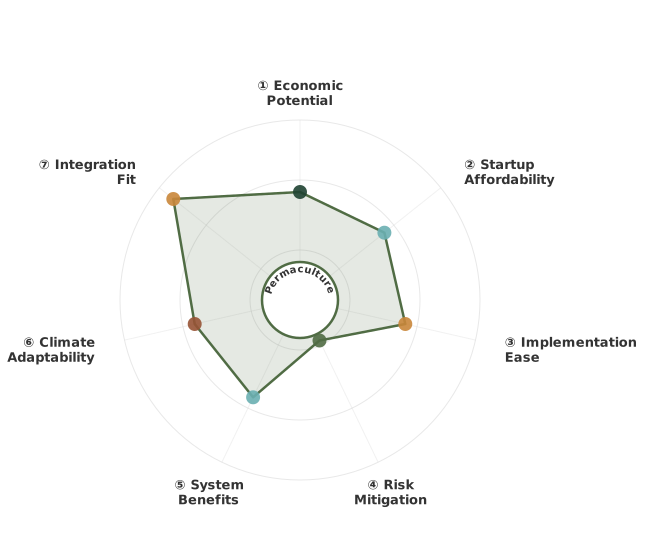
How These Traits Are Calculated
Trait dimensions are ordered clockwise starting from the top of the chart (12 o'clock position):
1. Economic Potential
Financial returns, annual value, and break-even timeline
WHAT: Evaluates financial viability by combining net annual value ($/ha from savings, income, and amortized harvests) with break-even timeline showing when practices pay for themselves.
WHY: Farmers need clear ROI understanding before committing resources. Fast payback (≤3 years) with strong returns (≥$300/ha) enables confident adoption, while long timelines (>10 years) restrict adoption to well-funded operations willing to wait for returns.
HOW: Calculated from net annual value in $/ha and break-even years. Exceptional (≥2.6): fast ROI ≤3 years + high value ≥$300/ha. Typical (1.8-2.5): moderate returns or longer timelines. Limited (<1.8): marginal economics or very long payback >10 years.
2. Startup Affordability
Initial investment costs and financial barrier to entry
WHAT: Measures financial barrier to entry through startup costs for equipment, infrastructure, consulting, and materials. Inverted scoring: lower costs = higher scores = more accessible adoption.
WHY: Affordability determines who can adopt. Low-cost practices (<$250/ha) enable widespread adoption across diverse scales, while high costs (>$2,500/ha) limit adoption to well-capitalized operations, creating barriers that slow regenerative transition.
HOW: Calculated from initial investment parsed from practice content. Inverted scoring: Exceptional (≥2.6): minimal investment <$250/ha. Typical (1.8-2.5): moderate costs $250-2,500/ha. Limited (<1.8): high barrier >$2,500/ha.
3. Implementation Ease
Learning curve and specialized knowledge required
WHAT: Measures how much learning, planning, and specialized knowledge a practice requires. Simpler practices with fewer steps score higher, while complex practices requiring extensive training or specialized resources score lower.
WHY: Complex practices create adoption barriers even when economically viable. Straightforward practices enable faster adoption and broader participation, while those requiring extensive training, timing precision, or specialized equipment limit who can succeed.
HOW: Evaluated by measuring documentation length and identifying complexity markers like location-specific requirements, seasonal timing windows, specialized skills, and dedicated equipment needs. Exceptional (≥2.6): straightforward practices with minimal prerequisites. Typical (1.8-2.5): moderate learning curve with some specialized needs. Limited (<1.8): steep learning curve requiring significant training or resources.
4. Risk Mitigation
Identified financial and ecological risk assessment
WHAT: Evaluates documented risks across financial (investment loss, market volatility) and ecological (crop failure, pest outbreaks) domains. Inverted scoring: fewer risks = higher scores.
WHY: Understanding risk exposure helps farmers make informed decisions. Low-risk practices allow confident implementation, while high-risk practices require careful planning and contingency resources. Risk transparency prevents costly failures.
HOW: Calculated from identified risks in practice content. Inverted scoring: Exceptional (≥2.6): ≤2 risks with manageable severity. Typical (1.8-2.5): 3-5 moderate risks. Limited (<1.8): 6+ risks or severe exposure.
5. System Benefits
How many ways the practice improves your land simultaneously
WHAT: Measures how many aspects of land health improve at once—carbon storage, soil quality, erosion control, water absorption, and biodiversity. Practices that improve multiple areas simultaneously create compounding benefits where each improvement reinforces the others.
WHY: The best practices solve multiple problems at once. For example, addressing erosion simultaneously builds carbon and improves water infiltration, creating a resilient system with positive feedback loops. Single-benefit approaches miss these compound transformation opportunities.
HOW: Evaluated across five key outcomes: carbon sequestration, soil organic matter increase, erosion reduction, water infiltration improvement, and biodiversity enhancement. Exceptional (≥2.6): high carbon storage (>8 t/ha/yr), improvements across 4-5 areas, transformative outcomes. Typical (1.8-2.5): moderate carbon (3-8 t/ha/yr), improvements across 2-3 areas. Limited (<1.8): modest impact (<3 t/ha/yr), single-area focus only.
6. Climate Adaptability
Geographic applicability across Köppen climate zones
WHAT: Evaluates geographic applicability by assessing how many Köppen climate zones successfully support a practice and what adaptation requirements are needed. Measures breadth of climates where farmers can implement with minimal to moderate modifications.
WHY: Universal practices working across diverse climates enable more farmers to adopt regenerative approaches. Practices limited to single climate types (only Mediterranean, only tropical) restrict adoption and slow global transition. Adaptability determines whether a practice serves niche regions or offers broad transformation.
HOW: LLM evaluation of regional success stories, Köppen zone coverage, and adaptation needs. Exceptional (≥2.6): 5+ zones or 4+ climate types, 3+ continents, minimal adaptation. Typical (1.8-2.5): 3-4 zones or 2-3 types, 2 continents, moderate adaptation. Limited (<1.8): 1-2 zones, single region, significant adaptation or highly specialized.
7. Integration Fit
How well this practice combines with others you're doing
WHAT: Measures how well a practice combines with other regenerative practices you might be doing. Some practices work as building blocks that make many other practices easier or more effective, while others work best on their own.
WHY: Practices that combine well with many others create more value on your farm. For example, cover cropping enables no-till, improves grazing, supports crop diversity, and helps water management—making all of them work better together. This helps you build a coherent system rather than juggling disconnected practices.
HOW: Evaluated by identifying which practices combine well and how strong those combinations are. 'Ideally Suited' means strong combinations where practices reinforce each other (practice A makes B easier, while B makes A more effective). 'Adequate' means complementary benefits that work well together. Exceptional (≥2.6): combines well with 6+ practices, serves as a building block. Typical (1.8-2.5): combines with 3-5 practices. Limited (<1.8): 1-2 practices or works best alone.
Going Deeper
1
WHY - The Benefits
Permaculture's benefits extend across ecological, economic, and social domains, aiming to create systems that are not just sustainable, but actively regenerative. By mirroring natural processes and adhering to core ethics, permaculture designs enhance the health of land...
Permaculture's benefits extend across ecological, economic, and social domains, aiming to create systems that are not just sustainable, but actively regenerative. By mirroring natural processes and adhering to core ethics, permaculture designs enhance the health of land and communities, leading to diversified income streams and increased resilience.
WHY - The Benefits
Permaculture's benefits extend across ecological, economic, and social domains, aiming to create systems that are not just sustainable, but actively regenerative. By mirroring natural processes and adhering to core ethics, permaculture designs enhance the health of land...
Permaculture's benefits extend across ecological, economic, and social domains, aiming to create systems that are not just sustainable, but actively regenerative. By mirroring natural processes and adhering to core ethics, permaculture designs enhance the health of land and communities, leading to diversified income streams and increased resilience.
Soil Health Benefits
Permaculture implementations inherently focus on building soil health, directly supporting Regenerative Agriculture Principle 1 (Minimize Soil Disturbance) and Principle 3 (Keep Soil Covered). The emphasis on perennial polycultures, food forests, and mulching prevents bare soil and reduces the need for tillage.
- Soil Organic Matter (SOM): Diverse planting regimes and the use of organic mulches (like wood chips, straw, or compost) facilitate a continuous input of organic matter. This leads to an increase in SOM levels, typically ranging from 0.5-2.0% per year in the initial years of establishment, and sustains higher levels (5-15%+) in mature systems. Benefits include enhanced water retention, improved soil structure, and increased nutrient availability.
- Soil Structure and Aggregation: Root systems of diverse perennial plants (trees, shrubs, herbs) and the activity of soil microbes create stable soil aggregates. This leads to improved aeration and water infiltration, with potential increases of 50-80% compared to degraded agricultural soils within 5-10 years. This reduces erosion and waterlogging.
- Nutrient Cycling: Permaculture designs mimic natural nutrient cycles. For example, nitrogen-fixing plants (legumes) contribute atmospheric nitrogen to the soil system, while deep-rooted trees ($3-9$ meters or $10-30$ feet) mine nutrients from lower soil horizons and return them to the surface via leaf litter. This fosters a closed-loop nutrient system, reducing reliance on external inputs.
- Biodiversity Belowground: The diverse planting palette leads to a more complex and resilient soil microbial community, including bacteria, fungi (especially mycorrhizae that form symbiotic relationships with plants), protozoa, and nematodes. This community is crucial for nutrient availability, disease suppression, and overall soil functioning. Studies in permaculture systems show 2-3 times higher soil biological activity compared to conventional monocultures.
Economic Benefits
Permaculture designs aim for economic resilience through diversification and reduced input costs, supporting Regenerative Agriculture Principle 5 (Integrate Livestock) where applicable.
- Reduced Input Costs: By utilizing on-site resources for fertility, pest control, and water management, permaculture significantly reduces the need for synthetic fertilizers, pesticides, and irrigation. Annual savings can range from $100-500 per hectare ($40-200 per acre) equivalent, depending on the scale and intensity of the previous system.
- Diversified Income Streams: Permaculture systems are designed for multiple harvests over different seasons and years. This can include annual vegetables, perennial fruits and nuts, timber,Medicinal herbs, animal products (eggs, meat, dairy), and even ecosystem services like carbon sequestration or water purification, providing income stability.
- Long-Term Asset Appreciation: Mature permaculture systems, especially those including timber or nut trees, significantly increase land value over time. A well-established food forest or agroforestry system can be worth considerably more than equivalent acreage in conventional pasture or row crops by year 10-20.
- Premium Markets: Products from regenerative and permaculture systems often command premium prices in niche markets due to their quality, ethical production, and environmental benefits.
Regenerative Systems Fit
Permaculture is inherently regenerative and provides a comprehensive framework for adopting and integrating regenerative principles across the farm or landscape.
- Principle 1 (Minimize Soil Disturbance): Permaculture's preference for no-till methods, perennial planting, and mulching directly embodies this principle. Designs avoid annual plowing, opting instead for processes that build soil structure through biological activity and organic matter accumulation. The establishment of food forests and perennial pastures creates a system that remains largely undisturbed year after year.
- Principle 2 (Maximize Crop Diversity): This is a hallmark of permaculture. Designs prioritize polycultures, guilds of mutually beneficial plants, and mimic natural forest ecosystems which are highly diverse. By integrating trees, shrubs, groundcovers, root crops, and culinary/medicinal herbs, permaculture creates abundant niches for beneficial insects, soil organisms, and diverse food production, enhancing ecosystem resilience against pests and diseases.
- Principle 3 (Keep Soil Covered): Permaculture systems are designed to ensure the soil is covered at all times. This is achieved through dense planting, utilizing living groundcovers, applying thick layers of organic mulch, and incorporating perennial forage and trees that provide continuous canopy cover. This maintains soil moisture, regulates temperature, prevents erosion, and feeds soil organisms.
- Principle 4 (Maintain Living Roots): The strong emphasis on perennial species—fruit trees, nut trees, berry bushes, perennial vegetables, and forage grasses—ensures that living roots are in the soil year-round or throughout the growing season. This continuous root activity fuels soil microbial communities, builds soil structure, and cycles nutrients more effectively than systems with long fallow periods or annual plant lifespans.
- Principle 5 (Integrate Livestock): Permaculture often incorporates livestock in ways that enhance the overall system. Chickens can forage for pests in orchards, pigs can help clear land and till soil naturally, and cattle or sheep can be managed rotationally to graze cover crops, manage vegetation, and distribute fertility via manure. The key is strategic integration where livestock fulfill specific functions without causing degradation.
Permaculture provides a pathway for farms to transition entirely to regenerative practices. Its design-driven approach allows for meticulous planning of the transition stages, ensuring that each element contributes to the overall goal of creating a self-sustaining, productive, and regenerative ecosystem. It offers a holistic vision that integrates ecological health, economic viability, and social well-being.
Sources behind this view
Videos & Podcasts
-
Adopts regenerative agriculture principles: minimize disturbance, keep living roots, use soil armor, integrate animals (livestock grazing, multi-species), and increase biodiversity. These practices bu

-
Permaculture creates stable food forests and ecosystems using methods like composting and water recycling. Invasive species can be valuable for rapid soil building (fast carbon pathways), challenging

-
Permaculture offers a regenerative design approach using tools like Needs & Yields, Zones, and Sectors to create abundant, efficient systems. This empowers individuals to control supply chains, reduce
-
Showcases diverse regenerative agriculture examples: keyline design, Polyface Farm's grazing, Fukuoka's natural rice farming, Fibershed, and ocean farming. Promotes farmer empowerment and accessible p

Community
-
Analyzes the scalability of permaculture versus 'Big Ag', emphasizing profitability, reduced inputs, and employment. Features practitioners like Gabe Brown and discusses adoption barriers, highlightin
Read more (opens in new window) permies.com -
Permaculture is universally applicable to all terrains, including degraded and arid lands, with principles designed to regenerate land by turning problems into solutions, as evidenced by successful de
Read more (opens in new window) permies.com -
Permaculture is a regenerative design system based on three ethics (care for Earth, people, fair share) and twelve principles like observing, storing energy, producing yield, and valuing diversity, ai
Read more (opens in new window) ucanr.edu -
Permaculture farming integrates diverse techniques like keyline design, biofertilizers, holistic grazing, agroforestry, minimum tillage, and cover cropping to create resilient, low-input systems that
Read more (opens in new window) www.permaculture.org.uk
Research
-
The Indigenous Roots of Regenerative Agriculture (opens in new window)
This study found: Modern regenerative agriculture practices are rooted in millennia of Indigenous land stewardship, offering profound knowledge and a crucial value system of respect and reciprocity for true transformat
-
Regenerative Agriculture: Restoring Ecosystems¢ Resilience and Productivity: A Review (opens in new window)
This study found: Regenerative agriculture builds soil health and ecosystem services through practices like no-till, cover crops, and diverse rotations. It increases soil organic matter, improves water infiltration, bo
-
Systematic review of regenerative farming: Addressing agricultural sustainability challenges (opens in new window)
This study found: Systematic review of 31 studies shows regenerative farming improves soil health, biodiversity, and carbon capture, aiding sustainability. Technology is key for adoption, but policy, farmer understandi
-
Regenerative Agriculture: Insights and Challenges in Farmer Adoption (opens in new window)
This study found: Review of 7 regenerative agriculture practices (no-till, crop rotation, cover crops, etc.) highlights benefits and key adoption challenges like cost, farm size, and institutional barriers for scalable
2
WHERE - Regional Considerations
Successfully implementing permaculture hinges on observing and adapting designs to specific regional climates, soils, and available resources. What works in a temperate rainforest will differ significantly from arid grasslands or tropical highlands.
Successfully implementing permaculture hinges on observing and adapting designs to specific regional climates, soils, and available resources. What works in a temperate rainforest will differ significantly from arid grasslands or tropical highlands.
WHERE - Regional Considerations
Successfully implementing permaculture hinges on observing and adapting designs to specific regional climates, soils, and available resources. What works in a temperate rainforest will differ significantly from arid grasslands or tropical highlands.
Successfully implementing permaculture hinges on observing and adapting designs to specific regional climates, soils, and available resources. What works in a temperate rainforest will differ significantly from arid grasslands or tropical highlands.
Click Here to Look up your Region if you don't already know it
Humid Temperate Regions
Representative Locations: Northeastern United States, northern Europe (e.g., United Kingdom, Germany, Poland), eastern China, Japan, New Zealand.
Climate Context: Four distinct seasons with moderate temperatures, ample rainfall $(75-150$ cm or $30-60$ inches annually) distributed relatively evenly, and a growing season long enough for diverse perennial crops. USDA Zones 4-7, Köppen Cfb/Cfa.
Permaculture Applications: Ideal for establishing diverse food forests with deciduous fruit and nut trees (apples, pears, walnuts, hazelnuts), berry bushes, and a rich understory of perennial vegetables and herbs. Excellent for water harvesting via swales and ponds due to consistent rainfall. Livestock integration (poultry, goats) is highly compatible. This climate supports a wide array of temperate-zone permaculture techniques and species.
Mediterranean Regions
Representative Locations: California (USA), Mediterranean Basin (Spain, Italy, Greece), central Chile, southwestern Australia, Western Cape (South Africa).
Climate Context: Hot, dry summers and mild, wet winters. Rainfall is seasonal ($40-90$ cm or $15-35$ inches annually), concentrated in winter months. USDA Zones 8-10, Köppen Csa/Csb.
Permaculture Applications: Water management is paramount. Designs focus on water harvesting (swales on contour, rainwater catchment), drought-tolerant species selection (olives, figs, almonds, drought-hardy herbs like rosemary and lavender), and deep-rooted perennials. Mulching is critical to conserve soil moisture. Animal integration may require supplemental feeding during dry summers, or selection of hardy breeds adapted to arid conditions. Food forests will prioritize species that thrive in summer drought or can be managed with minimal supplemental irrigation.
Arid and Semi-Arid Regions
Representative Locations: Western United States (inland), North Africa (Sahelian regions), Central Asia, parts of Australia.
Climate Context: Low and unreliable rainfall ($<40$ cm or $<15$ inches annually), high temperatures, significant diurnal temperature variation, short and unpredictable growing seasons. USDA Zones 7-9, Köppen BSh/BSk.
Permaculture Applications: Resilience is key. Designs focus on water conservation using techniques like keyline plowing, sunken beds, and maximizing surface mulching. Drought-tolerant, low-water-use native plants, cacti (if appropriate), and specialized fruit/nut trees are prioritized. Animals (goats, sheep, camels) adapted to arid environments are often integrated. Emphasis is on creating microclimates, planting windbreaks, and maximizing fertility from compost and animal inputs to support limited plant growth.
Cold Continental Regions
Representative Locations: Northern United States and Canada, Siberia, northern Europe, Scandinavia.
Climate Context: Very short growing seasons, extreme summer heat, severe winter cold. USDA Zones 3-5, Köppen Dfa/Dfb.
Permaculture Applications: Requires careful selection of cold-hardy species. Focus on fast-maturing annuals, cold-tolerant perennials (e.g., hardy apples, cherries, currants, rhubarb), and protected cultivation (greenhouses, cold frames). Utilizing passive solar design principles for housing and animal shelters is vital. Forest gardening can be adapted using multi-layered cold-hardy species. Animal integration may require heated shelters and specialized winter feeding strategies.
Subtropical Regions
Representative Locations: Southeastern United States, Southern China, Southern Brazil, Eastern Australia.
Climate Context: Hot, humid summers and mild winters with generally ample rainfall, though seasonal variations (wet/dry periods) can occur. USDA Zones 9-11, Köppen Cfa/Cwa.
Permaculture Applications: Supports lush growth and high productivity. Designs often feature tropical and subtropical fruit trees (citrus, mangoes, papayas), bamboos, and a vigorous understory. Humidity can increase disease pressure, requiring careful plant selection and spacing for air circulation. Integrated pest management is crucial. Animal systems (poultry, pigs) thrive but may require shade and water management during hot periods.
Tropical Regions
Representative Locations: Central America, Southeast Asia, East Africa, Northern Australia, Northern South America.
Climate Context: High temperatures year-round, with distinct wet and dry seasons or consistent high rainfall. Köppen Af/Am/Aw.
Permaculture Applications: Focus on perennial systems that mimic rainforest structure. Emphasis on food forests with diverse perennial fruits, nuts, spices, and medicinal plants. Animal integration is highly viable (poultry, pigs, goats). Water management is critical during dry seasons, requiring techniques like mulching, water harvesting, and maintaining soil cover. Management of pests and diseases is an ongoing consideration due to high year-round biological activity.
3
HOW - Implementation Process
Permaculture implementation is a phased approach, starting with observation and design, then moving into staged implementation. The process is iterative, allowing for adaptation based on observed outcomes.
Permaculture implementation is a phased approach, starting with observation and design, then moving into staged implementation. The process is iterative, allowing for adaptation based on observed outcomes.
HOW - Implementation Process
Permaculture implementation is a phased approach, starting with observation and design, then moving into staged implementation. The process is iterative, allowing for adaptation based on observed outcomes.
Permaculture implementation is a phased approach, starting with observation and design, then moving into staged implementation. The process is iterative, allowing for adaptation based on observed outcomes.
Prerequisites
Before starting implementation, conduct thorough site analysis and design:
- Observation: Spend significant time observing the land—water flow, sun exposure, wind patterns, existing vegetation, soil types, microclimates, and animal activity. This is the cornerstone of permaculture design.
- Goal Setting: Clearly define your objectives—what do you want to produce? What problems are you trying to solve (e.g., erosion, low fertility, water scarcity, reliance on external inputs)?
- Site Mapping: Create a detailed map of your site, including topography, water sources, existing structures, soil types, and vegetation.
- Element Placement Strategy: Based on observations and goals, plan the placement of all elements (water harvesting, gardens, animal areas, housing, etc.) to maximize beneficial interactions and energy efficiency. Consider zoning (Zone 0 for the home, Zone 1 for most frequently visited areas, up to Zone 5 for wilderness).
Phase 1: Stabilizing the Landscape and Basic Water Management
The initial focus is often on land stabilization and managing water, especially on degraded sites.
- Earthworks: Implement basic water harvesting structures like contour swales (ditches on contour) and catch berms (mounds of earth after swales) on slopes to slow, spread, and sink rainwater into the soil. This prevents erosion and recharges groundwater. On flatter land, consider ponds or infiltration basins.
- Windbreaks: Plant rows of trees or shrubs on the windward side of your property to reduce wind erosion, moderate temperature, and create favorable microclimates for other plantings.
- Access Tracks: Establish durable access routes that do not impede water flow or cause undue compaction. Use permeable materials where possible.
- Initial Cover Cropping: Plant quick-growing cover crops on bare or eroded areas to stabilize soil, suppress weeds, and begin adding organic matter. This supports Regenerative Agriculture Principle 3 (Keep Soil Covered).
Phase 2: Establishing Perennial Systems and Fertility
Once the landscape is more stable and water is managed, begin planting the core perennial systems.
- Food Forests/Agroforestry: Begin planting multi-layered food forests or agroforestry systems. Start with the canopy layer (large fruit or timber trees), followed by understory trees (dwarf fruit trees), shrubs (berries), herbaceous layers (perennial vegetables, herbs), groundcovers (creeping herbs, strawberries), and root crops. Prioritize species well-suited to your region (see "WHERE - Regional Considerations"). This supports Regenerative Agriculture Principles 2 (Maximize Crop Diversity) and 4 (Maintain Living Roots).
- Orchards/Nut Groves: For larger-scale operations, establish dedicated orchards or nut groves, spacing trees appropriately for future access and light penetration to the understory.
- Fertility Management: Begin building fertility through composting crop residues, animal manures (if integrated), and utilizing cover crops. Consider biochar production for long-term soil carbon enhancement.
Phase 3: Integrating Animals and Advanced Systems
Introduce livestock and build more complex integrated systems.
- Animal Integration: Introduce chickens for pest control in orchards or gardens, pigs for clearing land or tilling, or larger livestock (cattle, sheep, goats) managed rotationally for grazing cover crops and managing vegetation. This directly supports Regenerative Agriculture Principle 5 (Integrate Livestock).
- Aquaculture/Aquaponics: If water resources allow, integrate fish ponds or aquaponic systems for additional food production and nutrient cycling.
- Seed Saving and Nursery: Develop systems for saving seeds from open-pollinated varieties and propagating plants on-site to reduce external dependencies and adapt varieties to local conditions.
Phase 4: Refinement, Observation, and Succession
Permaculture is an ongoing process of observation and refinement.
- Continuous Observation: Regularly monitor how the implemented elements are functioning, how water is behaving, how plants and animals are performing, and how the system is evolving.
- Adaptation: Based on observations, make adjustments. Prune trees to manage light and energy flow, adjust grazing rotations, add new species, or modify water management features.
- Succession Planning: Design for the long term. Consider how the system will evolve over decades, becoming more complex, resilient, and self-regulating, mimicking natural ecosystem succession.
Transition Timeline & Phase-Out Strategy
Permaculture designs can be implemented incrementally over years, allowing for a gradual transition away from conventional practices.
- Years 1-3 (Establishment): Focus on basic water management, planting hardy perennials and cover crops, and establishing initial soil fertility. Reduce inputs like synthetic fertilizers and pesticides as cover crops and guilds of plants begin to perform these functions naturally. Begin observing and designing the site.
- Years 3-7 (System Growth): Scale up planting of perennial food crops, food forests, and diversified systems. Integrate livestock strategically. Reduce reliance on external inputs further by composting and utilizing on-farm fertility sources. Phasing out synthetic fertilizers might look like reducing application by 30-50% in year 1-2, another 30-40% in year 3-4, aiming for near elimination by year 5-7 as soil biology takes over.
- Years 7-15+ (Maturity and Resilience): Systems become more self-regulating. Income diversifies from various perennial harvests and animal products. Soil health is significantly improved. The focus shifts to ongoing observation, minor adjustments, and potentially expanding to new areas or increasing the complexity of existing ones. By this stage, reliance on external inputs is minimal, and the system is largely self-sufficient and regenerative.
Graduating to Fully Permaculture-Aligned Management: Success is achieved when the farm operates as a largely closed-loop system, producing a diverse array of outputs with minimal external inputs, high soil health, abundant biodiversity, and demonstrable resilience to environmental and economic fluctuations. This involves shifting from managing individual crops or enterprises to managing the entire ecosystem as a design.
Sources behind this view
Videos & Podcasts
-
Permaculture offers a regenerative design approach using tools like Needs & Yields, Zones, and Sectors to create abundant, efficient systems. This empowers individuals to control supply chains, reduce
-
Permaculture design involves step-by-step planning from land analysis to implementation, using base plans, mapping, and considering water/nutrient flows. Examples show group farm design in France, sub

-
Permaculture principles 7-12 are discussed: Design from Patterns to Details, Integrate Don't Segregate, Use Slow Small Solutions, Use and Value Diversity, Use Edges and Value the Marginal, and Creativ

-
For new permaculture practitioners, Angelo recommends five steps: 1. Observe and interact with the land. 2. Assess personal needs and goals. 3. Set realistic financial and time budgets. 4. Create a de

Community
-
Presents a permaculture design methodology based on scales of permanence: Climate, Land Shape, Water, Access, Plant Systems, Microclimates, Buildings, Fencing, Topsoil, and Crops/Animals. Emphasizes l
Read more (opens in new window) permies.com -
Permaculture design prioritizes water management and access, then structures, using 'edge thinking' and 'mainframe patterning.' Patience is key, especially in arid climates, allowing pioneer plants to
Read more (opens in new window) permies.com -
Permaculture is a regenerative design system based on three ethics (care for Earth, people, fair share) and twelve principles like observing, storing energy, producing yield, and valuing diversity, ai
Read more (opens in new window) ucanr.edu -
Permaculture farming integrates diverse techniques like keyline design, biofertilizers, holistic grazing, agroforestry, minimum tillage, and cover cropping to create resilient, low-input systems that
Read more (opens in new window) www.permaculture.org.uk
Research
-
Gaia's Garden: A Guide to Home-Scale Permaculture (opens in new window)
This study found: Permaculture designs low-maintenance, highly productive gardens by integrating compatible plants, enhancing biodiversity, and working with local conditions to create edible landscapes that support wil
-
Synergizing Agroforestry and Permaculture for Sustainable Organic Farming (opens in new window)
This study found: Agroforestry and permaculture enhance organic farming by integrating trees, crops, and livestock, improving soil health, biodiversity, and resilience. Challenges include funding, knowledge, and policy
-
Designing for resilience: permaculture as a transdisciplinary methodology in applied resilience research (opens in new window)
This study found: Permaculture can be a powerful research method to build community resilience. Its 'learning by doing' approach enhances adaptability, making communities better able to cope with challenges.
-
Value the Edge: Permaculture as Counterculture in Australia (opens in new window)
This study found: Permaculture in Australia evolved from a 'back to the land' movement to a global network of practices. It's viewed as a 'contrapuntal practice' that subtly reframes everyday actions, acting as 'design
From the Web
-
David Holmgren's 12 permaculture principles guide sustainable design by working with nature, emphasizing observation, energy capture, yield, feedback, renewables, waste reduction, pattern design, inte
4
Know the Debate
Permaculture's application and outcomes vary significantly based on region, scale, and management. While suited for humid temperate zones, arid reg...
Know the Debate
Permaculture's application and outcomes vary significantly based on region, scale, and management. While suited for humid temperate zones, arid reg...
Permaculture's application and outcomes vary significantly based on region, scale, and management. While suited for humid temperate zones, arid regions require specific drought-tolerant designs and intensive water harvesting. Implementing permaculture at larger scales than residential gardens introduces new challenges in labor and capital, often necessitating a pragmatic approach over strict adherence to every principle. Establishment requires patience, typically 5-15 years for mature systems, and ongoing observation is crucial for adaptation. These contextual factors significantly influence outcomes and economic viability.
How effective is permaculture for large-scale commercial farming?
Scalable with adaptive management
Academic research suggests regenerative agriculture principles can be scaled up on large operations through technology and adaptive management, essential for landscape-level impact. Field practitioners also argue core principles like water harvesting are adaptable to various farm sizes.
Sources behind this view
Sources behind this view
Videos & Podcasts
-
Permaculture offers a regenerative design approach using tools like Needs & Yields, Zones, and Sectors to create abundant, efficient systems. This empowers individuals to control supply chains, reduce reliance on fossil fuels, and improve quality of life by working with nature.
Research
-
Regenerative Agriculture: Insights and Challenges in Farmer Adoption (opens in new window)
This study found: This paper reviews seven key practices of regenerative agriculture: no-till farming, rotating crops, using cover crops, green manures (crops grown to be tilled back into the soil), planting multiple crops together (intercropping), using permanent ground cover, and integrating crops with livestock. Regenerative agriculture focuses on improving soil health, biodiversity, and fairness for people. It's designed to work on large farms, unlike some other ecological farming methods. While it emphasizes natural principles, its certification can be flexible, sometimes allowing certain manufactured inputs if regenerative practices are followed. The review highlights the benefits of these practices but also points out major hurdles for farmers, such as initial costs, farm size limitations, and systemic issues. Overcoming these challenges is crucial for more farmers to adopt regenerative approaches.
Limited scalability due to complexity
Field practitioners argue that true permaculture, which requires intensive observation and local adaptation, becomes a checklist at commodity scale. Academic reviews also note challenges in scaling complex practices like intensive rotational grazing.
Sources behind this view
Sources behind this view
Research
-
Regenerative Agriculture: Insights and Challenges in Farmer Adoption (opens in new window)
This study found: This paper reviews seven key practices of regenerative agriculture: no-till farming, rotating crops, using cover crops, green manures (crops grown to be tilled back into the soil), planting multiple crops together (intercropping), using permanent ground cover, and integrating crops with livestock. Regenerative agriculture focuses on improving soil health, biodiversity, and fairness for people. It's designed to work on large farms, unlike some other ecological farming methods. While it emphasizes natural principles, its certification can be flexible, sometimes allowing certain manufactured inputs if regenerative practices are followed. The review highlights the benefits of these practices but also points out major hurdles for farmers, such as initial costs, farm size limitations, and systemic issues. Overcoming these challenges is crucial for more farmers to adopt regenerative approaches.
From the Web
-
Provides a practical, whole-system guide for designing, installing, and managing profitable small farms, focusing on intelligent, human-scale farming and rural stewardship.
Making Sense of the Differences
Scalability for commercial permaculture hinges on adapting core design principles. While intensive, close-observation methods may be challenging on vast tracts, principles like water harvesting, cover cropping, and diversified perennial planting can be scaled. The debate reflects the tension between strict adherence to early permaculture models and pragmatic application of its ecological design thinking to large-scale agricultural economies.
Does permaculture's regeneration rely on specific techniques or holistic design?
Holistic design is the core driver
Academic sources emphasize that permaculture's regenerative outcomes stem from its overarching design philosophy, focusing on observation, mimicking natural patterns, and integrating systems for ecological resilience.
Sources behind this view
Sources behind this view
Research
-
Regenerative Agriculture: Restoring Ecosystems¢ Resilience and Productivity: A Review (opens in new window)
This study found: Regenerative agriculture is a farming approach that views farms as living ecosystems, moving away from the 'take-make-dispose' model of conventional farming. Instead of relying heavily on outside inputs, it focuses on building up the farm's natural resources and services. Key practices include disturbing the soil as little as possible (like no-till or reduced tillage), planting cover crops, rotating different crops, integrating livestock in a managed way, using compost, reducing synthetic fertilizers and pesticides, and incorporating trees. The approach is tailored to each farm's specific conditions. Farmers monitor soil health indicators like organic matter, how well soil holds water, and the amount of life in the soil. Studies show that regenerative practices can significantly increase soil organic matter (by 0.5-2% in 3-5 years), improve water infiltration (2-10 times better), boost soil microbial life (30-50% more), and increase beneficial insects (60-80% more). Farms can also capture 0.5 to 3 tons of carbon per hectare annually. Economically, these farms often have 20-40% lower input costs and can be more profitable in the long run, becoming more productive and stable over time.
Specific techniques yield the regenerative results
Field practitioners often highlight the effectiveness of specific permaculture techniques, such as swales for water management, hügelkultur for fertility, and polycultures for biodiversity, as the direct mechanisms for positive outcomes.
Sources behind this view
Sources behind this view
Videos & Podcasts
-
Permaculture uses needs analysis and design to create resource-efficient, closed-loop systems. It optimizes biological resources through composting and cover cropping, and can turn problems into solutions, like using duckweed for livestock feed.

From the Web
-
Permaculture design prioritizes water conservation by slowing, spreading, and sinking precipitation. Key strategies include increasing soil organic matter, using mulches and groundcovers, and implementing features like swales and Keyline design to manage water flow and enhance soil moisture retention.
Making Sense of the Differences
The regeneration achieved in permaculture stems from both its guiding philosophy and its practical applications. Academic discourse often focuses on the overarching design principles and systemic integration, while field experience highlights the concrete impact of specific techniques like water harvesting and polycultures. Ultimately, successful regeneration likely arises from applying sound ecological design principles through well-chosen, context-specific techniques.
Is prior farming experience a prerequisite for successful permaculture design?
Ecological observation is the primary need
Academic discussions emphasize a deep understanding of natural systems and observation as key to permaculture design, suggesting prior conventional farming is not strictly required but functional adaptation is.
Sources behind this view
Sources behind this view
Research
-
ENERGY EFFICIENCY IN URBAN AREAS BY INNOVATIVE PERMACULTURAL DESIGN (opens in new window)
This study found: This paper explores permaculture, a design system that tackles major world issues like food shortages and energy needs. It looks at how permaculture's core ideas can be used in cities, suburbs, rural areas, and even abandoned spaces to create more sustainable communities. Permaculture combines old farming and building methods with new science and technology, covering everything from growing food and building energy-saving homes to managing water and waste. The goal is to show how permaculture can help us grow food, build efficient homes, and make our communities work better for people and the environment, using examples from around the world.
Prior skills can significantly aid success
Field practitioners suggest practical farming or horticultural skills enhance permaculture implementation success, particularly for commercial viability on challenging sites, by aiding in the use of equipment and understanding crop needs.
Sources behind this view
Sources behind this view
From the Web
-
Provides a practical, whole-system guide for designing, installing, and managing profitable small farms, focusing on intelligent, human-scale farming and rural stewardship.
Making Sense of the Differences
The debate on whether prior farming experience is a prerequisite for permaculture success centers on the balance between ecological observation and practical execution. While academic design principles prioritize understanding natural cycles, field experience suggests conventional agricultural or horticultural knowledge can significantly smooth the transition for commercial implementation. A combination of strong observational skills and practical farming expertise appears to offer the most robust path to successful permaculture design and execution.
5
HOW MUCH - Costs & Investment
Permaculture's cost structure varies widely based on scale, existing infrastructure, and design complexity. The initial investment is often higher than conventional agriculture due to upfront planting and infrastructure, but long-term input costs are significantly lower.
Permaculture's cost structure varies widely based on scale, existing infrastructure, and design complexity. The initial investment is often higher than conventional agriculture due to upfront planting and infrastructure, but long-term input costs are significantly lower.
HOW MUCH - Costs & Investment
Permaculture's cost structure varies widely based on scale, existing infrastructure, and design complexity. The initial investment is often higher than conventional agriculture due to upfront planting and infrastructure, but long-term input costs are significantly lower.
Permaculture's cost structure varies widely based on scale, existing infrastructure, and design complexity. The initial investment is often higher than conventional agriculture due to upfront planting and infrastructure, but long-term input costs are significantly lower.
Note: All costs are based on recent US economic data (2024–2026) and may vary substantially by region based on local labor rates, material costs, and regulatory requirements. All figures below include a 4.2% inflationary adjustment to reflect current market conditions.
Site Analysis and Consultative Design
Investment in site design is the foundational capital outlay for permaculture systems. For small operations (under 50 acres (20 ha)), professional site mapping and design plans typically cost $521 to $2,605. Mid-size farms (50–500 acres (20–202 ha)) range from $1,042 to $5,210 for comprehensive water flow analysis and layout design. Large-scale operations (500+ acres) engage multi-disciplinary teams costing $2,084 to $10,420 or more. These costs often involve LIDAR analysis, soil testing, and hydrological modeling to ensure earthworks are positioned efficiently.
Earthworks and Hydraulic Infrastructure
Earthworks are the most mechanically intensive and expensive component, involving the construction of swales, ponds, and drainage diversions. Small farms allocate $521 to $3,126 for pond liners and minor excavation. Mid-size farms require significant machinery rentals or contractor labor, costing $2,084 to $8,336. Large-scale enterprises incur capital expenditures of $5,210 to $31,260 to move massive earth volumes and establish gravity-fed water networks. Costs fluctuate based on soil stability and the reach of local heavy machinery operators.
Biological Capital (Tree, Shrub, and Seed Stock)
Biological integration involves planting perennial polycultures. Small operations spend $782 to $4,168 for nursery-grade trees, shrubs, and perennial start blocks. Mid-size projects utilize $3,126 to $15,630 in capital, often utilizing grafted stock for higher productivity. Large-scale ecological restoration or agroforestry systems require investments between $7,294 and $52,100 to stock vast acreage, though economies of scale often lower the per-acre unit cost through bulk acquisitions or on-site nursery propagation.
Mulch, Compost, and Soil Amendments
Restoring soil biology requires significant biomass early on. Small operations typically spend $313 to $1,563 for initial inputs. Mid-size farms invest $1,042 to $6,252, and large-scale operations often face costs of $2,084 to $20,840. These costs are highly sensitive to local availability; farms that source free woodchips or establish on-site composting windrows can stay at the lower end of these ranges.
Irrigation and Protective Fencing
Reliable water delivery is vital for establishment. Small farms invest $208 to $1,042 for irrigation, while mid-size farms spend $834 to $4,168 and large farms $2,084 to $15,630. Fencing costs for animal integration or crop protection follow a similar scale—$417 to $2,084 for small plots, $2,084 to $8,336 for mid-size, and $5,210 to $31,260 for large systems, dictated largely by the quantity of high-tensile wire and solar-powered electric systems required.
Labor: Implementation and Maintenance
Labor represents the highest variance, split between DIY efforts and professional hire. Small-scale manual labor is estimated at $521 to $5,210 depending on the percentage of hired assistance. Mid-size farms range from $3,126 to $15,630. Large-scale intensive permaculture systems necessitate $10,420 to $52,100, focusing on project management, seasonal planting teams, and maintenance crews.
Most Spend: Small-scale systems generally fall between $6,252 and $10,420 per project. Mid-size operations typically invest $26,050 to $36,470 for full implementation. Large-scale systems frequently reach $83,360 to $125,040, covering the professional, mechanical, and material intensive nature of industrial-grade permaculture.
Why the Range?: The primary driver of cost variation is the "DIY-to-Hire" ratio—farms that provide their own labor and leverage on-farm resources like woodchips and compost drop to the lower end of the range. Higher costs are driven by the hiring of skilled permaculture designers, the purchase of mature plant stock for faster establishment, and the complexity of earthworks in difficult terrains requiring engineering oversight.
Sources behind this view
Community
-
Permaculture farming in Northern New Mexico and Santa Barbara incurs high costs for water and miscellaneous expenses, resulting in no monetary profit. Despite financial losses, practitioners gain valu
Read more (opens in new window) permies.com -
Starting a permaculture farm from scratch requires significant capital for land and soil amendment. A phased approach focusing on high-value crops and integrated livestock, alongside soil improvement,
Read more (opens in new window) permies.com
6
REWARDS AND RISKS - Economics & Risk Factors
Permaculture offers substantial rewards but also presents unique economic and systemic risks that require careful planning and management.
Permaculture offers substantial rewards but also presents unique economic and systemic risks that require careful planning and management.
REWARDS AND RISKS - Economics & Risk Factors
Permaculture offers substantial rewards but also presents unique economic and systemic risks that require careful planning and management.
Permaculture offers substantial rewards but also presents unique economic and systemic risks that require careful planning and management.
Economic Scenarios
- Best Case Scenario: After 5-10 years, the farm becomes a multi-tiered income generator. Diversified products (fruit, nuts, timber, livestock) lead to high profitability. Net farm income increases by 50-100% over initial baselines. Land value appreciation usually tracks 15-25% higher than neighboring conventional properties due to improved soil health and infrastructure.
- Typical Case Scenario: Recovering the $6,252-$125,040 investment (depending on scale) occurs within 8-12 years. Early years focus on annual polycultures to offset the slow growth of perennial systems. By year 7, input costs drop 30-40% as nitrogen-fixing plants and water-harvesting swales decrease the need for external fertilizer and irrigation.
- Worst Case Scenario: Sub-optimal design—such as poorly sloped swales or incorrect plant zoning—leads to high mortality rates and low yields. If system failures persist beyond year 15, capital loss can be substantial. Total redesign costs often add an additional 25-50% to the original investment, creating significant financial strain or, in extreme cases, project abandonment.
Market Factors and Risk Mitigation
Profitability is heavily contingent on developing local "direct-to-consumer" markets. Since permaculture crops often include unconventional varieties (non-commodity items), farmers must spend time building brand recognition. Risk mitigation strategies include: 1. Phased Implementation: Investing in sections of the land sequentially ($5,000-$10,000 per phase) prevents over-extending capital. 2. Crop Diversity: Avoiding reliance on a single high-value crop reduces market volatility risks. 3. Infrastructure Resilience: Investing in independent water storage ($2,000-$5,000) prevents catastrophic losses during regional drought events, which saves an estimated $3,000-$7,000 in emergency water purchasing costs.
Transition Period Risks
Transitioning from monoculture to permaculture creates a "yield gap" during the first 3-5 years. During this time, annual production may drop by 15-25% as the site is modified for perennial integration. To mitigate this:
- Maintain legacy annual crops in small "islands" while transitioning the broader landscape.
- Utilize fast-growing nitrogen fixers to boost soil quality during the first 24 months.
- Set aside a cash reserve of 10-15% of total project costs specifically for the "Year 3 doldrums," where establishment labor is high but consistent yields have not yet matured.
Sources behind this view
Videos & Podcasts
-
Permaculture transforms lives by shifting perspectives, providing safety nets, and enabling new livelihoods through holistic design, food production, and education, as exemplified by stories from Nort
-
Permaculture offers a regenerative design approach using tools like Needs & Yields, Zones, and Sectors to create abundant, efficient systems. This empowers individuals to control supply chains, reduce
-
Permaculture is presented as the foundation for regenerative culture and 'one planet living,' enabling abundant gardens, local businesses, and ethical livelihoods. The speaker encourages embracing pos

-
Permaculture principles 7-12 are discussed: Design from Patterns to Details, Integrate Don't Segregate, Use Slow Small Solutions, Use and Value Diversity, Use Edges and Value the Marginal, and Creativ
Community
-
Bill Mollison and others argue permaculture offers reliable, long-term returns on investment, citing Babassu palms and eco-villages as examples of sustainable, 'collapse-proof' ventures that outperfor
Read more (opens in new window) permies.com -
Detailed advice for starting a permaculture farm: observe and utilize existing resources (wild edibles, herbs, seeds), prioritize saving money by growing food, phase development (garden first, then an
Read more (opens in new window) permies.com -
Permaculture is a regenerative design system based on three ethics (care for Earth, people, fair share) and twelve principles like observing, storing energy, producing yield, and valuing diversity, ai
Read more (opens in new window) ucanr.edu -
Permaculture farming integrates techniques like keyline design, biofertilizers, holistic grazing, agroforestry, and cover cropping to create low-input, high-productivity systems tailored to specific c
Read more (opens in new window) www.permaculture.org.uk
Research
-
Gaia's Garden: A Guide to Home-Scale Permaculture (opens in new window)
This study found: Permaculture designs low-maintenance, highly productive gardens by integrating compatible plants, enhancing biodiversity, and working with local conditions to create edible landscapes that support wil
-
Synergizing Agroforestry and Permaculture for Sustainable Organic Farming (opens in new window)
This study found: Agroforestry and permaculture enhance organic farming by integrating trees, crops, and livestock, improving soil health, biodiversity, and resilience. Challenges include funding, knowledge, and policy
-
Permaculture Management of Arable Soil Increases Soil Microbial Abundance, Nutrients, and Carbon Stocks Compared to Conventional Agriculture (opens in new window)
This study found: Permaculture farming, using compost and no-dig, tripled soil microbes, increased nitrogen by 50%, and quadrupled soil carbon compared to conventional agriculture.
-
Permaculture: Challenges and Benefits in Improving Rural Livelihoods in South Africa and Zimbabwe (opens in new window)
This study found: Permaculture contributed over 40% to rural incomes in South Africa and Zimbabwe, improving health and resilience but facing challenges with labor, pests, and knowledge gaps.
7
COMPATIBLE PRACTICES - Integration Opportunities
Permaculture is a design framework that thrives on integration. It synergizes exceptionally well with other regenerative practices, often reinforcing their benefits and accelerating the transition to resilient, multifuctional landscapes.
Permaculture is a design framework that thrives on integration. It synergizes exceptionally well with other regenerative practices, often reinforcing their benefits and accelerating the transition to resilient, multifuctional landscapes.
COMPATIBLE PRACTICES - Integration Opportunities
Permaculture is a design framework that thrives on integration. It synergizes exceptionally well with other regenerative practices, often reinforcing their benefits and accelerating the transition to resilient, multifuctional landscapes.
Permaculture is a design framework that thrives on integration. It synergizes exceptionally well with other regenerative practices, often reinforcing their benefits and accelerating the transition to resilient, multifuctional landscapes.
Rotational Grazing / Adaptive Multi-Paddock Grazing
- Integration: Livestock are managed in small paddocks with short grazing periods and long recovery times. Permaculture designs designate grazing areas, water points, and shelter, orienting them for efficient animal movement and fertility distribution. Animal manure is a key fertility input for perennial systems.
- Benefit: Enhances soil organic matter, improves water infiltration, stimulates plant growth, and distributes fertility. Livestock management within permaculture designs aligns directly with Regenerative Agriculture Principle 5.
Agroforestry
- Integration: This is a core component of many permaculture designs, such as food forests. Specific agroforestry systems (e.g., alley cropping, silvopasture) are often direct permaculture applications.
- Benefit: Combines crop production (including livestock/forage) with trees. Enhances biodiversity, improves soil health, provides multiple products (food, timber, nuts), sequesters carbon, and creates favorable microclimates.
Water Harvesting & Management (e.g., Swales, Keyline Design)
- Integration: Permaculture design heavily emphasizes passive water harvesting. Earthworks like swales, ponds, and contour banks are fundamental to managing water flow and distribution, particularly in dry or sloped landscapes.
- Benefit: Prevents erosion, recharges groundwater, increases water availability for plants (especially perennials and trees), and improves drought resilience. Supports Regenerative Agriculture Principle 3.
Cover Cropping
- Integration: Used extensively in permaculture, especially during establishment phases or in annual crop integration. Often part of a "living mulch" strategy or a "chop-and-drop" fertility system.
- Benefit: Keeps soil covered, adds organic matter, fixes nitrogen, suppresses weeds, builds soil structure, and supports microbial life. Supports Regenerative Agriculture Principles 1, 2, 3, and 4.
No-Till Farming
- Integration: Permaculture systems aim for minimal soil disturbance. Perennial plantings, mulching, and the use of permanent pathways inherently lead to no-till practices for established zones.
- Benefit: Protects soil structure, conserves moisture, builds soil organic matter, protects soil biology, and prevents erosion. Directly supports Regenerative Agriculture Principle 1.
Biochar Application
- Integration: Biochar can be incorporated into compost piles or applied directly to soil to enhance fertility and water retention within permaculture systems.
- Benefit: Improves soil water-holding capacity, provides habitat for microbes, sequesters carbon long-term, and can act as a slow-release nutrient source.
Integrated Pest Management (IPM)
- Integration: Permaculture's focus on biodiversity naturally creates habitats for beneficial insects that prey on pests. Companion planting and habitat planting are key IPM strategies.
- Benefit: Reduces the need for synthetic pesticides by harnessing natural biological controls. Creates a more balanced and resilient ecosystem.
The integration of permaculture with these practices creates highly synergistic, regenerative systems that are more productive, resilient, and ecologically sound than any single practice alone. Permaculture provides the overarching design logic that connects and optimizes the application of these regenerative tools.
Sources behind this view
Videos & Podcasts
-
Permaculture offers a regenerative design approach using tools like Needs & Yields, Zones, and Sectors to create abundant, efficient systems. This empowers individuals to control supply chains, reduce
-
Permaculture principles 7-12 are discussed: Design from Patterns to Details, Integrate Don't Segregate, Use Slow Small Solutions, Use and Value Diversity, Use Edges and Value the Marginal, and Creativ
-
Permaculture creates stable food forests and ecosystems using methods like composting and water recycling. Invasive species can be valuable for rapid soil building (fast carbon pathways), challenging
-
Permaculture, a design philosophy based on People Care, Earth Care, and Fair Share, offers principles like Observe & Interact, Catch & Store Energy, Closed-Loop Systems, and Polycultures, which are hi
Community
-
Permaculture is universally applicable to all terrains, including degraded and arid lands, with principles designed to regenerate land by turning problems into solutions, as evidenced by successful de
Read more (opens in new window) permies.com -
Permaculture design prioritizes water management and access, then structures, using 'edge thinking' and 'mainframe patterning.' Patience is key, especially in arid climates, allowing pioneer plants to
Read more (opens in new window) permies.com -
Permaculture is a regenerative design system based on three ethics (care for Earth, people, fair share) and twelve principles like observing, storing energy, producing yield, and valuing diversity, ai
Read more (opens in new window) ucanr.edu -
Permaculture farming integrates diverse techniques like keyline design, biofertilizers, holistic grazing, agroforestry, minimum tillage, and cover cropping to create resilient, low-input systems that
Read more (opens in new window) www.permaculture.org.uk
Research
-
The Indigenous Roots of Regenerative Agriculture (opens in new window)
This study found: Modern regenerative agriculture practices are rooted in millennia of Indigenous land stewardship, offering profound knowledge and a crucial value system of respect and reciprocity for true transformat
-
Synergizing Agroforestry and Permaculture for Sustainable Organic Farming (opens in new window)
This study found: Agroforestry and permaculture enhance organic farming by integrating trees, crops, and livestock, improving soil health, biodiversity, and resilience. Challenges include funding, knowledge, and policy
-
Regenerative Agriculture: Restoring Ecosystems¢ Resilience and Productivity: A Review (opens in new window)
This study found: Regenerative agriculture builds soil health and ecosystem services through practices like no-till, cover crops, and diverse rotations. It increases soil organic matter, improves water infiltration, bo
-
Gaia's Garden: A Guide to Home-Scale Permaculture (opens in new window)
This study found: Permaculture designs low-maintenance, highly productive gardens by integrating compatible plants, enhancing biodiversity, and working with local conditions to create edible landscapes that support wil
From the Web
-
David Holmgren's 12 permaculture principles guide sustainable design by working with nature, emphasizing observation, energy capture, yield, feedback, renewables, waste reduction, pattern design, inte
-
Common permaculture practices for sustainable land use include companion planting, mulching, rainwater harvesting, vermicomposting, hügelkultur, rotational grazing, swales, contour planting, and no-ti