
Push-Pull Cropping System
The push-pull cropping system is an agroecological strategy that integrates a main crop (the "push" crop), a companion crop that repels pests (the "pull" plant), and a trap crop that lures pests away from the main crop. This intercropping method creates a diversified farming landscape that naturally manages insect pests, reduces the need for chemical inputs, and enhances soil health through increased plant diversity.
Read More: Complete Description
The push-pull cropping system, also known as sequential intercropping and pest management, is a sophisticated strategy that leverages plant interactions to manage insect pests and improve agricultural sustainability. At its core, it involves planting a main crop (e.g., maize, corn), a pest-repelling companion plant (the "push" plant, often a legume like Desmodium species), and a pest-attracting trap plant (the "pull" plant, frequently a grass like Napier grass or Brachiaria species). These components are strategically planted together to create a multifaceted pest management system.
The "push" component, often a cover crop or a component of the intercropping mix, releases volatile chemicals that repel certain insect pests, effectively pushing them away from the desired cash crop. Simultaneously, the "pull" component is planted nearby, acting as a trap for these same pests. The pests are attracted to the pull plant, where they are either consumed by natural predators attracted to the dense biomass, or they become trapped and are unable to reach the main crop. This creates a dynamic system where pests are detoured, concentrated, and managed in a way that minimizes damage to the primary economic crop.
This practice directly supports several regenerative agriculture principles. It inherently maximizes crop diversity (Principle 2) by integrating multiple plant species (main crop, push plant, pull plant) above and below ground. The diverse root systems of these plants contribute to maintaining living roots (Principle 4) for extended periods, enhancing soil biological activity and nutrient cycling. By keeping the soil covered with living plants and mulch, it supports keeping soil covered (Principle 3), reducing erosion and improving soil moisture retention. While not directly involving livestock, the system can be designed to produce biomass that can be fed to animals, contributing to nutrient cycling and thus indirectly supporting integrating livestock (Principle 5) in the broader farm ecosystem. Ideally, the system is implemented with minimal soil disturbance (Principle 1), particularly when transition pathways favor no-till or reduced tillage methods for planting.
Originating from research in East Africa, the push-pull system has demonstrated remarkable efficacy in managing stemborers (like the fall armyworm, Spodoptera frugiperda) and striga weeds (Striga spp.), which are major constraints to maize production for millions of smallholder farmers across Africa, South America, and Asia. For instance, Desmodium species have been found to release volatile chemicals that repel stemborer moths and inhibit striga seed germination, while Napier grass attracts stemborers and provides a habitat for natural enemies. This integrated approach not only boosts crop yields but also significantly reduces farmers' reliance on expensive and potentially harmful synthetic pesticides and herbicides.
Beyond pest and weed management, the push-pull system contributes to soil health. The legume "push" plants fix atmospheric nitrogen, enriching the soil and reducing the need for synthetic nitrogen fertilizers. The diverse root systems improve soil structure, water infiltration, and aeration. The biomass produced by the pull and push plants can be used as mulch, further enhancing soil moisture retention, suppressing weed growth, and adding organic matter as it decomposes. This creates a more resilient and self-sustaining agricultural system.
However, successful implementation requires careful planning and understanding of local conditions. The choice of specific push and pull plant species is critical and depends on regional pest pressures, climate, soil types, and farmer preferences. The spatial arrangement and timing of planting also play a significant role in the system's effectiveness. For example, planting density of the push crop needs to be sufficient to provide a repellent effect, while the pull crop must be strategically located to intercept pests without becoming a reservoir for them.
The push-pull system can be adapted to various scales, from smallholder subsistence farms to larger commercial operations. It can be integrated with other regenerative practices such as cover cropping, alley cropping, and agroforestry. By fostering beneficial plant-insect interactions and enhancing soil biological processes, push-pull cropping offers a pathway towards more sustainable and resilient food production systems that reduce environmental impact and improve farmer livelihoods, particularly in diverse tropical and subtropical agro-ecological zones.
Sources behind this view
Sources behind this view
 Videos & Podcasts
-
The 'push-pull' system in East Africa uses semiochemicals to manage maize pests by intercropping with legumes and trap grasses. Soil conservation and agroforestry, like the Zai system and the 'green w
 Community
-
Explains the Push-Pull pest management system for maize: Desmodium intercropping repels stem borers ('Push') and fixes nitrogen, while Napier grass borders attract moths ('Pull'), with both providing
Read more (opens in new window) permies.com
 Research
-
Push-Pull Strategy: an integrated approach to manage insect-pest and weed infestation in cereal cropping systems (opens in new window)
This study found: The Push-Pull strategy uses repellent intercrops (push) and trap plants (pull) to manage cereal stem borers and Striga weeds. It also provides fodder, improves soil fertility, and prevents erosion, bo
-
Push—pull technology: a conservation agriculture approach for integrated management of insect pests, weeds and soil health in Africa (opens in new window)
This study found: The 'push-pull' farming system uses Napier grass to lure pests away and desmodium legume to repel them, control weeds, and improve soil fertility. It boosts maize yields and supports livestock, benefi
-
Participatory evaluation of integrated pest and soil fertility management options using ordered categorical data analysis (opens in new window)
This study found: Farmers in Kenya/Uganda strongly preferred 'push-pull' systems and crop rotations over monocropped corn, citing improved yield, soil fertility, and pest control. 'Push-pull' with special corn and fert
-
The Use of Push-Pull Strategies in Integrated Pest Management (opens in new window)
This study found: Push-pull pest management uses natural cues to repel pests from crops and lure them to traps, enhancing biological control and drastically reducing pesticide use.
 From the Web
-
Push-pull cropping uses Desmodium (push) and Napier/Brachiaria grass (pull) to repel stemborers and Striga weed in maize, sorghum, and rice, boosting yields and providing fodder. Adopted by over 130,0
-
Push-pull technology uses inter-cropping with Napier grass (pull) and Desmodium (push) to control stem borers and striga weeds in maize/sorghum, while also fixing nitrogen and enriching soil.
-
The 'pull-push' technology uses inter-cropping of Desmodium (repels stem borers, suppresses Striga weed, fixes nitrogen) and Napier grass (traps stem borer larvae) with cereals like maize and sorghum
Key Points
What It Is
- Intercropping for pest management
- Integrates main, push, and pull crops
- Repels pests (push) and traps them (pull)
- Enhances biodiversity and soil health
Why Do It
- Reduces reliance on chemical pesticides
- Increases crop yield and quality
- Boosts soil fertility and structure
- Empowers farmers with natural solutions
Know the Debate
- Pest & weed control effectiveness varies by region and species selection.
- Economic returns depend on yield boost and input cost savings.
- Fast ROI possible for smallholders; larger scales may take longer.
- Requires knowledge of local plants, pests, and intercropping techniques.
Benefits - Financial
- Net annual profitability increase of $150–$250 per acre ($371–$618 per hectare).
- Annual reductions in total synthetic input expenditures of 30–50%.
- Secondary revenue from pull-plant fodder adds $50–$100 per acre ($124–$247 per hectare).
Benefits - System
- Maximizes crop diversity (Principle 2)
- Maintains living roots year-round (Principle 4)
- Keeps soil covered seasonally (Principle 3)
- Nitrogen fixation improves soil fertility
Risks - Financial
- Initial startup investment ranges from $120–$300 per acre ($297–$741 per hectare).
- Potential 5–10% yield lag during 2-year system transition.
Risks - System
- Species selection is critical for efficacy
- Can introduce new weed/pest management challenges
- Pest population shifts can occur
- Requires careful spatial planning
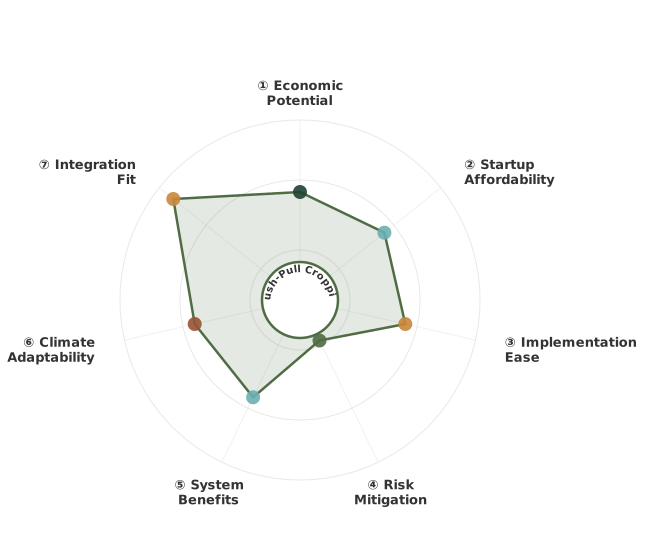
How These Traits Are Calculated
Trait dimensions are ordered clockwise starting from the top of the chart (12 o'clock position):
1. Economic Potential
Financial returns, annual value, and break-even timeline
WHAT: Evaluates financial viability by combining net annual value ($/ha from savings, income, and amortized harvests) with break-even timeline showing when practices pay for themselves.
WHY: Farmers need clear ROI understanding before committing resources. Fast payback (≤3 years) with strong returns (≥$300/ha) enables confident adoption, while long timelines (>10 years) restrict adoption to well-funded operations willing to wait for returns.
HOW: Calculated from net annual value in $/ha and break-even years. Exceptional (≥2.6): fast ROI ≤3 years + high value ≥$300/ha. Typical (1.8-2.5): moderate returns or longer timelines. Limited (<1.8): marginal economics or very long payback >10 years.
2. Startup Affordability
Initial investment costs and financial barrier to entry
WHAT: Measures financial barrier to entry through startup costs for equipment, infrastructure, consulting, and materials. Inverted scoring: lower costs = higher scores = more accessible adoption.
WHY: Affordability determines who can adopt. Low-cost practices (<$250/ha) enable widespread adoption across diverse scales, while high costs (>$2,500/ha) limit adoption to well-capitalized operations, creating barriers that slow regenerative transition.
HOW: Calculated from initial investment parsed from practice content. Inverted scoring: Exceptional (≥2.6): minimal investment <$250/ha. Typical (1.8-2.5): moderate costs $250-2,500/ha. Limited (<1.8): high barrier >$2,500/ha.
3. Implementation Ease
Learning curve and specialized knowledge required
WHAT: Measures how much learning, planning, and specialized knowledge a practice requires. Simpler practices with fewer steps score higher, while complex practices requiring extensive training or specialized resources score lower.
WHY: Complex practices create adoption barriers even when economically viable. Straightforward practices enable faster adoption and broader participation, while those requiring extensive training, timing precision, or specialized equipment limit who can succeed.
HOW: Evaluated by measuring documentation length and identifying complexity markers like location-specific requirements, seasonal timing windows, specialized skills, and dedicated equipment needs. Exceptional (≥2.6): straightforward practices with minimal prerequisites. Typical (1.8-2.5): moderate learning curve with some specialized needs. Limited (<1.8): steep learning curve requiring significant training or resources.
4. Risk Mitigation
Identified financial and ecological risk assessment
WHAT: Evaluates documented risks across financial (investment loss, market volatility) and ecological (crop failure, pest outbreaks) domains. Inverted scoring: fewer risks = higher scores.
WHY: Understanding risk exposure helps farmers make informed decisions. Low-risk practices allow confident implementation, while high-risk practices require careful planning and contingency resources. Risk transparency prevents costly failures.
HOW: Calculated from identified risks in practice content. Inverted scoring: Exceptional (≥2.6): ≤2 risks with manageable severity. Typical (1.8-2.5): 3-5 moderate risks. Limited (<1.8): 6+ risks or severe exposure.
5. System Benefits
How many ways the practice improves your land simultaneously
WHAT: Measures how many aspects of land health improve at once—carbon storage, soil quality, erosion control, water absorption, and biodiversity. Practices that improve multiple areas simultaneously create compounding benefits where each improvement reinforces the others.
WHY: The best practices solve multiple problems at once. For example, addressing erosion simultaneously builds carbon and improves water infiltration, creating a resilient system with positive feedback loops. Single-benefit approaches miss these compound transformation opportunities.
HOW: Evaluated across five key outcomes: carbon sequestration, soil organic matter increase, erosion reduction, water infiltration improvement, and biodiversity enhancement. Exceptional (≥2.6): high carbon storage (>8 t/ha/yr), improvements across 4-5 areas, transformative outcomes. Typical (1.8-2.5): moderate carbon (3-8 t/ha/yr), improvements across 2-3 areas. Limited (<1.8): modest impact (<3 t/ha/yr), single-area focus only.
6. Climate Adaptability
Geographic applicability across Köppen climate zones
WHAT: Evaluates geographic applicability by assessing how many Köppen climate zones successfully support a practice and what adaptation requirements are needed. Measures breadth of climates where farmers can implement with minimal to moderate modifications.
WHY: Universal practices working across diverse climates enable more farmers to adopt regenerative approaches. Practices limited to single climate types (only Mediterranean, only tropical) restrict adoption and slow global transition. Adaptability determines whether a practice serves niche regions or offers broad transformation.
HOW: LLM evaluation of regional success stories, Köppen zone coverage, and adaptation needs. Exceptional (≥2.6): 5+ zones or 4+ climate types, 3+ continents, minimal adaptation. Typical (1.8-2.5): 3-4 zones or 2-3 types, 2 continents, moderate adaptation. Limited (<1.8): 1-2 zones, single region, significant adaptation or highly specialized.
7. Integration Fit
How well this practice combines with others you're doing
WHAT: Measures how well a practice combines with other regenerative practices you might be doing. Some practices work as building blocks that make many other practices easier or more effective, while others work best on their own.
WHY: Practices that combine well with many others create more value on your farm. For example, cover cropping enables no-till, improves grazing, supports crop diversity, and helps water management—making all of them work better together. This helps you build a coherent system rather than juggling disconnected practices.
HOW: Evaluated by identifying which practices combine well and how strong those combinations are. 'Ideally Suited' means strong combinations where practices reinforce each other (practice A makes B easier, while B makes A more effective). 'Adequate' means complementary benefits that work well together. Exceptional (≥2.6): combines well with 6+ practices, serves as a building block. Typical (1.8-2.5): combines with 3-5 practices. Limited (<1.8): 1-2 practices or works best alone.
Going Deeper
1
WHY - The Benefits
The push-pull cropping system offers a suite of compelling benefits that align synergistically with regenerative agriculture goals, addressing critical environmental and economic challenges faced by farmers globally. By harnessing natural plant-insect ecology, it...
The push-pull cropping system offers a suite of compelling benefits that align synergistically with regenerative agriculture goals, addressing critical environmental and economic challenges faced by farmers globally. By harnessing natural plant-insect ecology, it...
WHY - The Benefits
The push-pull cropping system offers a suite of compelling benefits that align synergistically with regenerative agriculture goals, addressing critical environmental and economic challenges faced by farmers globally. By harnessing natural plant-insect ecology, it...
The push-pull cropping system offers a suite of compelling benefits that align synergistically with regenerative agriculture goals, addressing critical environmental and economic challenges faced by farmers globally. By harnessing natural plant-insect ecology, it...
Soil Health Benefits
The integration of multiple plant species in the push-pull system directly enhances soil health. Leguminous companion plants, such as varieties of Desmodium, are naturally nitrogen-fixing, converting atmospheric nitrogen into a form usable by other plants. This biological fixation enriches the soil, reducing the need for synthetic nitrogen fertilizers, which can degrade soil biology and increase greenhouse gas emissions. Over time, this improves soil fertility and structure naturally.
The diverse root systems of the main crop, push plant, and pull plant extend throughout the soil profile, creating and maintaining pore spaces. This helps to improve soil aeration and water infiltration, reducing surface runoff and erosion, especially crucial in regions prone to heavy rainfall or drought. The constant presence of living roots, a core regenerative principle, ensures continuous soil biological activity, feeding microbial communities and enhancing the formation of soil aggregates. Accumulation of organic matter from decaying plant residues contributes to increased soil organic carbon, improving water-holding capacity and nutrient availability.
Economic Benefits
The primary economic driver for adopting push-pull cropping is its significant contribution to yield enhancement and cost reduction. In regions like East Africa, studies have shown that intercropping maize with push-pull systems can increase maize yields by 50-150% compared to monocultures, primarily due to effective control of major pests like stemborers and parasitic weeds like striga. These pests can devastate maize crops, causing yield losses of 70-90% in conventional systems.
Reduced reliance on synthetic pesticides and herbicides translates directly into lower input costs. Farmers can save between $100-300 per hectare per year on pesticides and $50-150 per hectare per year on herbicides, a substantial saving for smallholder farmers. The increased yields and reduced input costs lead to higher net profitability and improved food security. The nitrogen fixation by legume push plants can further reduce fertilizer expenditure, adding to the economic advantage.
Regenerative Systems Fit
The push-pull system is a cornerstone practice for building regenerative agricultural landscapes, aligning deeply with its five core principles.
Principle 1 (Minimize Soil Disturbance): While the initial establishment of the push-pull system may involve some soil disturbance for planting, it is designed to be managed with minimal or no-till practices once established. The dense cover provided by the intercropped plants helps protect the soil surface year-round, reducing the need for tillage for weed control or soil preparation. Continuous use of cover crops within the alleyways of the system can further enhance soil structure and fertility, decreasing the likelihood of severe compaction that might necessitate deep tillage.
Principle 2 (Maximize Crop Diversity): This is perhaps the most explicit principle supported by the push-pull system. It integrates at least three distinct plant species (main crop, push, pull) with varied root structures, nutrient requirements, and pest management functions. This above- and below-ground diversity fosters a more resilient ecosystem, supports a broader range of beneficial soil organisms and natural pest predators, and outcompetes weeds more effectively than monocultures. The diversity also contributes to better nutrient cycling and soil structure.
Principle 3 (Keep Soil Covered): The system naturally ensures soil cover throughout the growing season and often beyond. The main crop, push plants, and pull plants collectively maintain a living cover. When one species finishes its growth cycle, residues from others and subsequent plantings ensure the soil surface is protected. This continuous coverage prevents erosion, conserves soil moisture, suppresses weed seedlings, and provides a stable habitat for soil organisms.
Principle 4 (Maintain Living Roots): The intercropping design ensures that living plant roots are present in the soil for extended periods, often throughout the year in tropical and subtropical climates where the system is most prevalent. The diverse root architecture from multiple species accesses different soil depths and nutrient gradients, continuously feeding soil microbes, improving soil structure, and participating in nutrient cycling. This persistent biological activity is key to soil health regeneration.
Principle 5 (Integrate Livestock): While not a direct component of the push-pull cropping system, the biomass produced can be effectively utilized as fodder for livestock. This creates a valuable synergy where crop residues and dedicated pull plants can feed animals, cycling nutrients back to the farm as manure, which can then be composted and applied to cropping fields, further closing nutrient loops and reducing the need for external inputs. This integration strengthens the overall resilience and sustainability of the farming operation.
The push-pull system serves as a powerful example of how mimicking natural ecosystem functions can lead to a more productive, resilient, and environmentally sound agriculture. It offers a pathway for farmers to break free from reliance on synthetic inputs, enhance their resource base, and improve their livelihoods while contributing to ecological restoration.
Sources behind this view
Community
-
Explains the Push-Pull pest management system for maize: Desmodium intercropping repels stem borers ('Push') and fixes nitrogen, while Napier grass borders attract moths ('Pull'), with both providing
Read more (opens in new window) permies.com
Research
-
Push—pull technology: a conservation agriculture approach for integrated management of insect pests, weeds and soil health in Africa (opens in new window)
This study found: The 'push-pull' farming system uses Napier grass to lure pests away and desmodium legume to repel them, control weeds, and improve soil fertility. It boosts maize yields and supports livestock, benefi
-
Push-Pull Strategy: an integrated approach to manage insect-pest and weed infestation in cereal cropping systems (opens in new window)
This study found: The Push-Pull strategy uses repellent intercrops (push) and trap plants (pull) to manage cereal stem borers and Striga weeds. It also provides fodder, improves soil fertility, and prevents erosion, bo
-
Participatory evaluation of integrated pest and soil fertility management options using ordered categorical data analysis (opens in new window)
This study found: Farmers in Kenya/Uganda strongly preferred 'push-pull' systems and crop rotations over monocropped corn, citing improved yield, soil fertility, and pest control. 'Push-pull' with special corn and fert
-
Long-term push-pull cropping system shifts soil and maize-root microbiome diversity paving way to resilient farming system. (opens in new window)
This study found: A 'push-pull' cropping system in sub-Saharan Africa improved soil health and boosted beneficial soil microbes compared to maize-only fields, enhancing agricultural sustainability and resilience.
From the Web
-
Push-pull cropping uses Desmodium (push) and Napier/Brachiaria grass (pull) to repel stemborers and Striga weed in maize, sorghum, and rice, boosting yields and providing fodder. Adopted by over 130,0
2
WHERE - Regional Considerations
The push-pull cropping system is a versatile agroecological strategy that can be adapted to a wide range of environments, particularly in tropical and subtropical regions where diverse pest pressures and the need for sustainable intensification are high. Its success is...
The push-pull cropping system is a versatile agroecological strategy that can be adapted to a wide range of environments, particularly in tropical and subtropical regions where diverse pest pressures and the need for sustainable intensification are high. Its success is...
WHERE - Regional Considerations
The push-pull cropping system is a versatile agroecological strategy that can be adapted to a wide range of environments, particularly in tropical and subtropical regions where diverse pest pressures and the need for sustainable intensification are high. Its success is...
The push-pull cropping system is a versatile agroecological strategy that can be adapted to a wide range of environments, particularly in tropical and subtropical regions where diverse pest pressures and the need for sustainable intensification are high. Its success is...
Click Here to Look up your Region if you don't already know it
Tropical Regions
Representative Locations: Southeast Asia (e.g., Indonesia, Philippines, Vietnam), Central Africa (e.g., Kenya, Uganda, Tanzania), West Africa (e.g., Nigeria, Ghana), South America (e.g., Brazil, Colombia), Northern Australia
Climate Context: High temperatures year-round, with distinct wet and dry seasons or consistent high rainfall. Köppen Af/Am/Aw. Many areas experience high humidity.
Suitability: This is where the push-pull system has seen its most significant adoption and documented success. The year-round growing conditions, combined with high pest and weed pressure (especially stemborers, fall armyworm, and parasitic weeds like Striga), make it an ideal solution. Native Desmodium species and fodder grasses like Napier grass or Brachiaria species thrive in these warm, humid conditions, providing effective push and pull mechanisms. The system contributes to maintaining cover and living roots year-round, crucial for soil health in these dynamic climates.
Subtropical Regions
Representative Locations: Southern United States (e.g., Florida, Texas), Southern China, Southern Europe (e.g., Mediterranean coast), parts of South Africa, Eastern Australia
Climate Context: Hot, humid summers and mild winters. Generally ample rainfall, though some areas can experience dry spells. USDA Zones 9-11, Köppen Cfa/Cwa.
Suitability: Push-pull systems are well-suited to these regions. While pest pressures may differ (e.g., fall armyworm is still a major pest), the flexibility in species selection allows adaptation. Researchers are identifying and testing local legumes and grasses that can fulfill the push and pull roles effectively in these climates. The ability to maintain living cover and diverse root systems year-round is highly beneficial for soil health and water management, especially in areas prone to summer droughts or intensive rainfall events.
Humid Temperate Regions
Representative Locations: Southeastern United States, northern Europe (UK, Germany, Poland), eastern China, Japan
Climate Context: Warm to hot summers and cool to cold winters with moderate to high annual precipitation (75-150 cm or 30-60 inches) distributed relatively evenly. USDA Zones 6-8, Köppen Cfb/Cfa.
Suitability: Application in these regions can be more challenging but is not impossible. The key lies in selecting winter-hardy or annual push and pull species that can survive or be managed within the temperate growing season. For example, annual legumes like crimson clover or hairy vetch can serve as push plants, and certain grasses or dynamic accumulator cover crops could act as pull plants, though their efficacy against temperate pest complexes needs thorough research and validation. The system might be more seasonally applied, focusing on effective cover during the main growing season, ensuring soil coverage and living roots when temperatures allow.
Arid/Semi-Arid Regions
Representative Locations: Western USA, North Africa, Central Asia, Interior Australia
Climate Context: Low annual precipitation (<40 cm or 15 inches), high temperatures, short and often unpredictable growing season. USDA Zones 7-9, Köppen BSh/BSk.
Suitability: This is the least suitable climate for traditional push-pull systems due to the reliance on relatively consistent moisture for dense growth of push and pull plants. However, adapted versions focusing on drought-tolerant species, water-efficient planting strategies (e.g., in keyline water harvesting systems), and species that can survive dry spells might be explored. The focus would shift towards soil moisture conservation through mulching and deep-rooted species. Pest pressures may also differ significantly, requiring a different suite of repellent and trap plants. Research into drought-tolerant push and pull species is crucial for application in these challenging environments.
Cold Continental Regions
Representative Locations: Northern USA and Canada, Northern Europe, Northern Asia
Climate Context: Very short growing seasons, extreme summer heat, severe winter cold. USDA Zones 3-5, Köppen Dfa/Dfb.
Suitability: The extreme winters and short growing seasons limit the applicability of the traditional push-pull system in these regions. The perennial or semi-perennial nature of many effective push and pull plants is incompatible with prolonged freezing temperatures and short growing periods. However, elements of the strategy—such as intercropping for pest management, planting diverse cover crops, and integrating legumes for nitrogen fixation—can be adapted using annual species and adapted management practices within the short growing window.
3
HOW - Implementation Process
The implementation of a push-pull cropping system requires a thoughtful approach to selecting plant species, designing spatial arrangements, and managing the system for optimal pest control and soil health benefits. While the specifics vary by region and target pests, a...
The implementation of a push-pull cropping system requires a thoughtful approach to selecting plant species, designing spatial arrangements, and managing the system for optimal pest control and soil health benefits. While the specifics vary by region and target pests, a...
HOW - Implementation Process
The implementation of a push-pull cropping system requires a thoughtful approach to selecting plant species, designing spatial arrangements, and managing the system for optimal pest control and soil health benefits. While the specifics vary by region and target pests, a...
The implementation of a push-pull cropping system requires a thoughtful approach to selecting plant species, designing spatial arrangements, and managing the system for optimal pest control and soil health benefits. While the specifics vary by region and target pests, a...
Prerequisites
- Understanding pest complexes: Identify the primary insect pests and parasitic weeds affecting your main crop. This guides the selection of appropriate push and pull plants.
- Climate and soil assessment: Determine your region's climate (rainfall, temperature, growing season length) and soil type to select compatible species. Consult local agricultural extension services or research institutions.
- Seed availability: Secure reliable sources for seeds of the main crop, chosen push plant (often a legume), and pull plant (often a grass). Some push-pull species may require specific seed treatments or propagation methods.
- Management capacity: Be prepared to adopt new planting and management techniques, which may include manual weeding or specific crop spacing strategies.
Phase 1: Species Selection and System Design
- Main Crop: This is your primary economic crop (e.g., maize, sorghum, cassava, rice). Select varieties suited to local conditions.
- Push Plant: Choose a species that scientifically demonstrates pest-repellent properties against your target pests.
- For stemborers and Striga weed: Desmodium spp. (e.g., D. incanum, D. uncinatum) are effective legumes. They release volatile chemicals that repel stemborer moths and inhibit striga seed germination.
- Other regions/pests: Research locally adapted legumes or herbaceous plants with known repellent volatile compounds. For example, certain basil varieties or marigolds have repellent properties.
- Pull Plant: Select a species that attracts target pests, acting as a trap.
- For stemborers: Napier grass (Pennisetum purpureum), Brachiaria grass (Brachiaria spp.), or Sudan grass (Sorghum vulgare var. sudanense) are common choices. They provide a dense habitat for pests and attract predatory insects.
- Other pest groups: Consider plants known to attract specific beneficial insects or trap specific pest species.
Spatial Arrangement:
- Alley Cropping: Plant rows of the main crop alternating with rows of the push plant and/or pull plant. Common arrangements include:
- Main crop in the center, push plant on one side within the row, pull plant on the other.
- Rows of push plants interspersed between rows of main crop, with pull plants at field borders or in separate blocks.
- Push plants planted as a border around the main crop field, with pull plants strategically within or around the edges.
- Spacing: Consult local research for optimal spacing. Generally, push plants are planted in rows of a similar density to the main crop, or as borders. Pull plants are often planted in dense blocks or rows, slightly farther from the main crop to encourage pest movement towards them.
Phase 2: Establishment and Planting
- Land Preparation: Prepare land as you normally would for your main crop. If moving to a regenerative system, aim for minimum tillage.
- Planting:
- Timing: Plant the push and pull crops simultaneously with or slightly before the main crop to establish their repellent or attractive effects early.
- Method: Planting can be done manually, by seed drill, or using intercropping equipment. Ensure adequate seed-to-soil contact for all species.
- Density: Maintain appropriate plant densities for each species as recommended for your region. Overcrowding can lead to competition; insufficient density reduces efficacy.
- Initial Management: This phase is critical for ensuring the system establishes effectively.
- Weeding: Hand-weed or use minimal mechanical weeding if necessary, being careful not to disturb the establishing push and pull plants.
- Pest monitoring: Scout regularly to observe pest behavior. Are pests being pushed away or drawn to the trap crop? Are natural enemies present?
Phase 3: Ongoing Management and Harvesting
- Crop Maintenance: Continue managing the main crop and companion plants. Legume push plants may require inoculation with Rhizobia bacteria if soil is deficient.
- Pest and Weed Control:
- Push Plant: Ensure the push plant is thriving, as its repellent action is crucial. Replace or interplant if it's declining.
- Pull Plant: Monitor the pull plants. If pests concentrate heavily, they may need management. This could involve removing heavily infested pull plants, allowing natural predators to feed on concentrated pests, or using biological controls. In some traditional systems, the pull plants are harvested or managed to remove pests before they migrate to the main crop.
- Striga Management: For Striga weed, the Desmodium push plant in particular inhibits striga seed germination, reducing its infestation over time.
- Harvesting: Harvest the main crop as usual. The push and pull plants can be managed as follows:
- Forage: Residues or dedicated pull plants can be harvested for livestock feed. This converts biomass into a valuable asset and facilitates nutrient cycling.
- Green Manure: If not used for fodder, push plants can be incorporated into the soil as green manure at the end of their cycle, adding organic matter and nitrogen.
- Seed Production: Collect seeds from push and pull plants for future plantings, promoting self-sufficiency.
- Residue Management: Leave crop residues on the field to maintain soil cover and organic matter, reinforcing Principle 3.
Transition Timeline & Phase-Out Strategy (Optional for this practice as it's inherently regenerative)
While push-pull itself is a regenerative practice, if transitioning from a conventional system that previously used synthetic pesticides on the main crop, the phase-out strategy would involve:
- Year 1: Introduce the push-pull system alongside conventional main crop management. Observe effectiveness and learn species interactions.
- Year 2: Reduce conventional pesticide application by 25-50% as the push-pull system proves effective. Focus on learning specific management for push/pull plants.
- Year 3-4: Aim to eliminate synthetic pesticides entirely. Focus on optimizing push-pull species density and arrangement. Incorporate cover cropping for soil health enhancement.
- Year 5+: Fully integrated regenerative system with push-pull as a core component, potentially including livestock integration for fodder and manure.
Sources behind this view
Community
-
Explains the Push-Pull pest management system for maize: Desmodium intercropping repels stem borers ('Push') and fixes nitrogen, while Napier grass borders attract moths ('Pull'), with both providing
Read more (opens in new window) permies.com
Research
-
Push-Pull Strategy: an integrated approach to manage insect-pest and weed infestation in cereal cropping systems (opens in new window)
This study found: The Push-Pull strategy uses repellent intercrops (push) and trap plants (pull) to manage cereal stem borers and Striga weeds. It also provides fodder, improves soil fertility, and prevents erosion, bo
-
Push—pull technology: a conservation agriculture approach for integrated management of insect pests, weeds and soil health in Africa (opens in new window)
This study found: The 'push-pull' farming system uses Napier grass to lure pests away and desmodium legume to repel them, control weeds, and improve soil fertility. It boosts maize yields and supports livestock, benefi
-
Participatory evaluation of integrated pest and soil fertility management options using ordered categorical data analysis (opens in new window)
This study found: Farmers in Kenya/Uganda strongly preferred 'push-pull' systems and crop rotations over monocropped corn, citing improved yield, soil fertility, and pest control. 'Push-pull' with special corn and fert
-
Performance of Push–Pull Technology in Low-Fertility Soils under Conventional and Conservation Agriculture Farming Systems in Malawi (opens in new window)
This study found: Push-Pull Technology in Malawi significantly reduced pests and weeds by up to 70%, increasing maize yields by 45-50% on poor soils. It also improved soil fertility and erosion control, with potential
From the Web
-
Push-pull cropping uses Desmodium (push) and Napier/Brachiaria grass (pull) to repel stemborers and Striga weed in maize, sorghum, and rice, boosting yields and providing fodder. Adopted by over 130,0
4
Know the Debate
The effectiveness and economic viability of the push-pull cropping system are influenced by several factors, making outcomes vary significantly by ...
Know the Debate
The effectiveness and economic viability of the push-pull cropping system are influenced by several factors, making outcomes vary significantly by ...
The effectiveness and economic viability of the push-pull cropping system are influenced by several factors, making outcomes vary significantly by context. In tropical regions with high pest pressure and reliable rainfall, the system sees rapid results and strong returns. Drier or temperate climates may require adaptation of plant species and management, potentially slowing establishment and impact. Entry costs range from minimal for smallholders using manual methods to moderate for larger operations investing in specialized planters. Ongoing labor commitment is generally higher during establishment and peak seasons, but often decreases as the system matures and soil health improves.
How effective is Push-Pull for pest control?
Highly Effective (Tropical/Subtropical)
In tropical and subtropical regions with high pest and weed pressure, the system provides significant pest and weed reduction (up to 70-90%) and notable yield increases (50-150%), particularly in staple crops like maize.
Sources behind this view
Sources behind this view
Videos & Podcasts
-
Advanced companion planting, particularly the push-pull method using diverse polycultures, confuses pests and reduces the need for pesticides. Examples include using marigolds to repel aphids and nasturtiums as trap crops.
Research
-
Performance of Push–Pull Technology in Low-Fertility Soils under Conventional and Conservation Agriculture Farming Systems in Malawi (opens in new window)
This study found: A study in Malawi tested a farming system called Push–Pull Technology (PPT) on poor soils, comparing it to traditional plowing and a conservation farming approach (minimum tillage). PPT uses a combination of crops to deter pests and weeds. Over two years, PPT significantly reduced damaging insect pests (stemborers) and parasitic weeds (Striga) by up to 70%, leading to a 45-50% increase in maize harvest for farmers. The technology also improved soil fertility and reduced erosion, according to farmer feedback. While PPT showed strong benefits for crop growth and pest control, the study noted that the effectiveness can depend on soil conditions and the specific companion plants used. Researchers suggest releasing this technology in Malawi, recommending the use of specific legumes (Desmodium) and grasses (Brachiaria) which can also be used as animal feed. Labor was identified as a potential challenge.
From the Web
-
Push-pull technology uses inter-cropping with Napier grass (pull) and Desmodium (push) to control stem borers and striga weeds in maize/sorghum, while also fixing nitrogen and enriching soil.
Variable Results (Other Climates/Pests)
Effectiveness can vary in different climates or against novel pest complexes, with some farmers experiencing less pronounced benefits or needing to adapt species, indicating the need for regional validation and careful selection.
Sources behind this view
Sources behind this view
Videos & Podcasts
-
Developing a push-pull system for aphid control in potatoes, using visual cues (colored plants) and potentially olfactory stimuli to repel pests from crops and draw them to trap areas, addressing insecticide resistance.

-
Intercropping, initially used for sugarcane aphid management, is explored for reducing input costs and enhancing system resilience. Key challenges include balancing herbicide use with weed control and allowing intercrops to thrive, with a fall cover crop suggested to improve early weed suppression.

Research
-
Climate change and ecological intensification of agriculture in sub-Saharan Africa – A systems approach to predict maize yield under push-pull technology (opens in new window)
This study found: This study used a modeling approach to predict how climate change might affect maize (corn) yields in eastern Africa when using the 'Push-Pull' farming system. Push-Pull Technology is an ecological method that uses specific plant combinations to naturally manage pests and weeds, while also improving soil fertility. The researchers reviewed how changing temperatures, rainfall, and CO2 levels could impact different parts of this farming system. They found that while climate change might lead to poorer soil, more pests, and more weeds, it could also boost beneficial insects that control pests. Overall, the models predict that climate change will likely reduce corn yields. However, the study suggests that adopting more Push-Pull Technology, maintaining diverse field edges, and growing a wider variety of crops can help sustain or even increase corn harvests despite these challenges.
Making Sense of the Differences
Pest control efficacy is strongest in tropical/subtropical zones where classic push-pull plants (*Desmodium*, Napier grass) are well-adapted and target pests (stemborers, *Striga*) are prevalent. In other regions or for different pests, results depend critically on matching locally suitable repellent and trap plants, and careful management to prevent weed competition or pest resistance.
How quickly does Push-Pull generate economic returns?
Rapid ROI (Smallholders)
For smallholders, rapid returns are possible within 1-2 years due to substantial savings on external inputs and significant yield increases, especially when using manual labor and saved seeds.
Sources behind this view
Sources behind this view
Videos & Podcasts
-
Intercropping, initially used for sugarcane aphid management, is explored for reducing input costs and enhancing system resilience. Key challenges include balancing herbicide use with weed control and allowing intercrops to thrive, with a fall cover crop suggested to improve early weed suppression.
Research
-
Performance of Push–Pull Technology in Low-Fertility Soils under Conventional and Conservation Agriculture Farming Systems in Malawi (opens in new window)
This study found: A study in Malawi tested a farming system called Push–Pull Technology (PPT) on poor soils, comparing it to traditional plowing and a conservation farming approach (minimum tillage). PPT uses a combination of crops to deter pests and weeds. Over two years, PPT significantly reduced damaging insect pests (stemborers) and parasitic weeds (Striga) by up to 70%, leading to a 45-50% increase in maize harvest for farmers. The technology also improved soil fertility and reduced erosion, according to farmer feedback. While PPT showed strong benefits for crop growth and pest control, the study noted that the effectiveness can depend on soil conditions and the specific companion plants used. Researchers suggest releasing this technology in Malawi, recommending the use of specific legumes (Desmodium) and grasses (Brachiaria) which can also be used as animal feed. Labor was identified as a potential challenge.
Variable ROI (Commercial/Challenging Contexts)
Commercial farms or operations in challenging environments may see slower returns over 2-3 years due to higher initial investments, the need for specialized equipment, or less predictable yield responses.
Sources behind this view
Sources behind this view
Videos & Podcasts
-
Intercropping, initially used for sugarcane aphid management, is explored for reducing input costs and enhancing system resilience. Key challenges include balancing herbicide use with weed control and allowing intercrops to thrive, with a fall cover crop suggested to improve early weed suppression.
Research
-
Climate change and ecological intensification of agriculture in sub-Saharan Africa – A systems approach to predict maize yield under push-pull technology (opens in new window)
This study found: This study used a modeling approach to predict how climate change might affect maize (corn) yields in eastern Africa when using the 'Push-Pull' farming system. Push-Pull Technology is an ecological method that uses specific plant combinations to naturally manage pests and weeds, while also improving soil fertility. The researchers reviewed how changing temperatures, rainfall, and CO2 levels could impact different parts of this farming system. They found that while climate change might lead to poorer soil, more pests, and more weeds, it could also boost beneficial insects that control pests. Overall, the models predict that climate change will likely reduce corn yields. However, the study suggests that adopting more Push-Pull Technology, maintaining diverse field edges, and growing a wider variety of crops can help sustain or even increase corn harvests despite these challenges.
Making Sense of the Differences
Economic viability is driven by yield improvements and input cost reductions. Smallholders benefit from immediate savings on pesticides/herbicides and potential yield boosts, enabling rapid ROI. Commercial operations may have higher initial investment in machinery, potentially lengthening the payback period, with overall returns influenced by local input prices and main crop market value.
5
HOW MUCH - Costs & Investment
Note: Costs shown in USD; multiply by local labor and material cost indices for your region. Labor costs vary significantly internationally.
Note: Costs shown in USD; multiply by local labor and material cost indices for your region. Labor costs vary significantly internationally.
HOW MUCH - Costs & Investment
Note: Costs shown in USD; multiply by local labor and material cost indices for your region. Labor costs vary significantly internationally.
Note: Costs shown in USD; multiply by local labor and material cost indices for your region. Labor costs vary significantly internationally.
Note: All costs are based on recent US economic data (2024–2026) and may vary substantially by region based on local labor rates, material costs, and regulatory requirements.
Seed Acquisition and Specialization
Establishing a push-pull system begins with the procurement of specialized biological candidates, specifically forage legumes like Desmodium and trap grasses such as Napier or Sudan grass. For small operations under 50 acres (20 ha), seed costs generally range from $25 to $60 per acre ($62–$148/ha); the higher end of this bracket typically reflects the purchase of small-lot, high-germination seed which carries significant price premiums. Mid-size operations ranging from 50 to 500 acres (20–202 ha) leverage volume purchasing to drop seed costs into the $20 to $50 per acre ($49–$124/ha) range. Large-scale commercial operations exceeding 500 acres (202 ha) face a cost curve of $40 to $100 per acre ($99–$247/ha), as they require certified, high-germination blended seeds designed for specialized drilling configurations that ensure uniform stands across expansive landscapes.
Labor and Establishment
Labor costs are the largest variable in the initial setup of push-pull architecture. Small-scale farms, which often rely on manual planting methods to ensure accurate seed placement in complex corridors, incur establishment costs between $40 and $120 per acre ($99–$297/ha). These expenses are directly tied to local hourly labor rates, which have risen by approximately 4.2% annually over the 2024–2026 period. Mid-size operations utilize light mechanical sowing equipment to reduce human intervention, bringing costs down to a $30 to $100 per acre ($74–$247/ha) range. Large-scale enterprises encounter the most significant initial setup expenditures, ranging from $70 to $200 per acre ($173–$494/ha), primarily due to the calibration of precision intercropping planters and the specialized labor required to manage complex seeding patterns across multiple zones.
Management and Maintenance
Management is the primary driver of systems sustainability. During the first-year establishment phase, competition between the main cash crop and the pull-components for nutrients and sunlight must be mitigated. Small operations rely heavily on manual weeding, leading to costs of $30 to $90 per acre ($74–$222/ha). Mid-size farms integrate mechanical inter-row cultivation or precision weeding tools, lowering per-acre maintenance expenses to between $25 and $75. Large-scale commercial systems often dedicate $50 to $150 per acre ($124–$371/ha) to integrated weed management, which includes highly trained labor teams hired specifically for pest threshold monitoring, ensuring that the trap crop dynamics effectively intercept pests without encroaching upon the primary cash crop corridors.
Infrastructure and Equipment
For large-scale operations, the "pull" component requires consistent harvesting to maintain vigor and pest-pull efficacy. This necessitates a committed budgetary allocation for specialized mowing or harvesting machinery. Annual costs for this equipment, including depreciation and maintenance, range from $50 to $150 per acre ($124–$371/ha). Because small and mid-size operations often utilize existing multi-purpose equipment—at the expense of higher labor input and "sweat equity"—they frequently avoid the higher capital equipment cost tiers, though their operational efficiency is lower when compared to high-acreage automated systems.
Most Spend: The majority of agricultural operations implementing a push-pull system incur a total first-year investment of $120–$250 per acre ($297–$618/ha). This target range assumes the use of existing machinery for standard planting and maintenance, combined with regionally sourced seed volumes acquired in moderate, non-specialized quantities.
Why the Range?: The primary drivers for cost variance are the level of mechanization versus hand-labor and the geographical region's specific requirements for soil moisture management. High-input areas requiring deep mechanical soil preparation or extra irrigation adjustments during establishment will naturally push investment toward the upper end of the $300 per acre ($741/ha) threshold.
Sources behind this view
Research
-
Push—pull technology: a conservation agriculture approach for integrated management of insect pests, weeds and soil health in Africa (opens in new window)
This study found: The 'push-pull' farming system uses Napier grass to lure pests away and desmodium legume to repel them, control weeds, and improve soil fertility. It boosts maize yields and supports livestock, benefi
-
Push-Pull Strategy: an integrated approach to manage insect-pest and weed infestation in cereal cropping systems (opens in new window)
This study found: The Push-Pull strategy uses repellent intercrops (push) and trap plants (pull) to manage cereal stem borers and Striga weeds. It also provides fodder, improves soil fertility, and prevents erosion, bo
-
Participatory evaluation of integrated pest and soil fertility management options using ordered categorical data analysis (opens in new window)
This study found: Farmers in Kenya/Uganda strongly preferred 'push-pull' systems and crop rotations over monocropped corn, citing improved yield, soil fertility, and pest control. 'Push-pull' with special corn and fert
-
Performance of Push–Pull Technology in Low-Fertility Soils under Conventional and Conservation Agriculture Farming Systems in Malawi (opens in new window)
This study found: Push-Pull Technology in Malawi significantly reduced pests and weeds by up to 70%, increasing maize yields by 45-50% on poor soils. It also improved soil fertility and erosion control, with potential
6
REWARDS AND RISKS - Economics & Risk Factors
The push-pull cropping system offers substantial economic rewards by boosting crop yields and drastically cutting input costs. However, like any agricultural innovation, it comes with inherent risks that require careful management and understanding.
The push-pull cropping system offers substantial economic rewards by boosting crop yields and drastically cutting input costs. However, like any agricultural innovation, it comes with inherent risks that require careful management and understanding.
REWARDS AND RISKS - Economics & Risk Factors
The push-pull cropping system offers substantial economic rewards by boosting crop yields and drastically cutting input costs. However, like any agricultural innovation, it comes with inherent risks that require careful management and understanding.
The push-pull cropping system offers substantial economic rewards by boosting crop yields and drastically cutting input costs. However, like any agricultural innovation, it comes with inherent risks that require careful management and understanding.
Economic Scenarios
The transition to a push-pull system involves distinct economic outcomes based on implementation accuracy and environmental conditions.
-
Best-Case Scenario: The producer effectively transitions from a high-chemical monoculture to a optimized push-pull system. Yields for the main cash crop increase by 80–120%, such as driving corn production from 80 bushels to 145 bushels per acre (~9,751 kg/ha), due to significantly lower pest pressure. By investing $180 per acre ($445/ha) into the system, the producer realizes $120 per acre ($297/ha) in pesticide savings, $60 per acre ($148/ha) in herbicide savings, and $45 per acre ($111/ha) in nitrogen optimization. When secondary revenue from the pull-grass fodder is added, the total net annual gain reaches $450–$600 per acre ($1,112–$1,483/ha).
-
Typical Scenario: The system reaches a stable equilibrium with moderate success. Yields increase by 40–60% over the previous monoculture baseline. Input savings for synthetic pesticides and herbicides hover around $120 per acre ($297/ha). Following an initial investment of $200 per acre ($494/ha), the system reaches the break-even point by the end of the second harvest, with a stable net profitability increase of $150–$250 per acre ($371–$618/ha) in subsequent seasons.
-
Worst-Case Scenario: This typically occurs due to poor species matching, such as selecting a companion crop that competes aggressively for summer moisture in arid regions. This leads to a 15% yield drag. With input costs remaining static at $200 per acre ($494/ha), the producer faces a financial loss of $300 per acre ($741/ha) relative to the original monoculture baseline.
Market Factors and Risk Mitigation
Profitability for push-pull systems is tethered to commodity market price fluctuations. In high-demand periods, yield gains are the primary value driver. Conversely, in low-commodity price years, the system acts as a financial hedge by insulating the producer from the volatile pricing of chemical inputs. To mitigate the risk of catastrophic yield loss, producers should limit their push-pull trials to 10–15% of their total land for the first two years, capping downside exposure to $30–$40 per acre ($74–$99/ha). Additionally, the installation of soil moisture sensors at $10–$15 per acre ($25–$37/ha) is a critical, low-cost capital investment that prevents the crop stress common in worst-case scenarios.
Transition Period Risks
Transitioning from a conventional, high-prophylactic-pesticide system to an agroecological model generally involves a 2–3 year "system lag." During these initial years, the soil food web and predatory insect populations are in flux as they normalize to the new polycultural environment. Risks include a transient yield lag of 5–10% while the system stabilizes. Producers are encouraged to budget for this temporary reduction in revenue, treating it as a research and development expense necessary to achieve permanent, long-term equilibrium in pest suppression.
Sources behind this view
Research
-
Push—pull technology: a conservation agriculture approach for integrated management of insect pests, weeds and soil health in Africa (opens in new window)
This study found: The 'push-pull' farming system uses Napier grass to lure pests away and desmodium legume to repel them, control weeds, and improve soil fertility. It boosts maize yields and supports livestock, benefi
-
Push-Pull Strategy: an integrated approach to manage insect-pest and weed infestation in cereal cropping systems (opens in new window)
This study found: The Push-Pull strategy uses repellent intercrops (push) and trap plants (pull) to manage cereal stem borers and Striga weeds. It also provides fodder, improves soil fertility, and prevents erosion, bo
-
Participatory evaluation of integrated pest and soil fertility management options using ordered categorical data analysis (opens in new window)
This study found: Farmers in Kenya/Uganda strongly preferred 'push-pull' systems and crop rotations over monocropped corn, citing improved yield, soil fertility, and pest control. 'Push-pull' with special corn and fert
-
Performance of Push–Pull Technology in Low-Fertility Soils under Conventional and Conservation Agriculture Farming Systems in Malawi (opens in new window)
This study found: Push-Pull Technology in Malawi significantly reduced pests and weeds by up to 70%, increasing maize yields by 45-50% on poor soils. It also improved soil fertility and erosion control, with potential
From the Web
-
Push-pull cropping uses Desmodium (push) and Napier/Brachiaria grass (pull) to repel stemborers and Striga weed in maize, sorghum, and rice, boosting yields and providing fodder. Adopted by over 130,0
7
WHO - Labor & Expertise
The labor and expertise required for implementing the push-pull cropping system vary depending on the scale of operation, chosen species, and existing farming practices. For smallholder farmers, the initial learning curve might involve a moderate increase in labor...
The labor and expertise required for implementing the push-pull cropping system vary depending on the scale of operation, chosen species, and existing farming practices. For smallholder farmers, the initial learning curve might involve a moderate increase in labor...
WHO - Labor & Expertise
The labor and expertise required for implementing the push-pull cropping system vary depending on the scale of operation, chosen species, and existing farming practices. For smallholder farmers, the initial learning curve might involve a moderate increase in labor...
The labor and expertise required for implementing the push-pull cropping system vary depending on the scale of operation, chosen species, and existing farming practices. For smallholder farmers, the initial learning curve might involve a moderate increase in labor...
Expertise Requirements
- Botanical Knowledge: Understanding the specific roles, growth habits, and compatibility of the main crop, push plant, and pull plant species. This includes knowing how to identify them, their germination requirements, and their optimal planting densities.
- Pest and Weed Ecology: Basic understanding of local pest cycles, their preferred hosts, and the natural enemies that prey on them. Knowledge of how push and pull plants influence these dynamics is crucial.
- Crop Rotation and Intercropping Principles: Awareness of how intercropping affects soil fertility, nutrient cycling, and competition between plants.
- Seed Saving and Multiplication: For cost-effectiveness, being able to save and multiply seeds of push and pull plants can be highly beneficial, especially for smallholders. This requires knowledge of seed viability and appropriate storage techniques.
- Integrated Pest Management (IPM) Principles: While push-pull is an IPM strategy itself, understanding broader IPM approaches helps farmers recognize pest trends and adapt their system.
Labor Intensity and Skill
-
Smallholder Farms (e.g., Africa, Asia):
- Planting: Can be labor-intensive if done manually, especially for multiple species. Requires careful spacing and timing.
- Weeding: More critical in the early establishment phase. Manual weeding is common, but can be reduced as the push and pull plants establish and suppress weeds.
- Harvesting: Similar to monoculture harvesting for the main crop. Push and pull plant residues may be used for fodder or incorporated, adding a labor step.
- Skill Level: Moderate. Farmers can learn through farmer-to-farmer exchanges, extension services, and demonstration plots.
-
Medium to Large-Scale Farms (e.g., South America, Australia):
- Planting: Requires adapted machinery or specialized planters for efficient, multiple-species seeding. Can be less labor-intensive per hectare with mechanization.
- Weeding: Mechanical weeding or specialized intercropping cultivators might be used. Reduced chemical herbicide use is a goal.
- Harvesting: Main crop harvested conventionally. Biomass from push/pull plants may be mechanically harvested for fodder or biomass utilization.
- Skill Level: Higher. Requires understanding of agronomic principles for intercropping at scale, potentially involving GPS-guided planting and sophisticated pest monitoring technology.
Labor Cost Considerations
- International Variation: Labor costs vary dramatically across continents. In regions with high labor costs (e.g., North America, Europe), minimizing labor through mechanization and efficient spatial design is paramount. In regions with lower labor costs (e.g., parts of Africa, Asia), manual labor is more feasible and can create employment opportunities.
- Opportunity Cost: While push-pull systems aim to reduce input costs and increase yields, the labor invested must be weighed against the economic returns. For smallholders, using family labor is common, making it less of a direct financial cost but still a time commitment.
Expertise Support and Training
- Agricultural Extension Services: Crucial for providing localized guidance, training, and field demonstrations.
- Research Institutions: Universities and research centers are vital for developing and validating new push-pull species combinations and management techniques.
- Farmer Networks: Facilitating farmer-to-farmer learning and sharing best practices is highly effective, particularly for adoption among smallholders.
- NGOs and Development Projects: Many organizations support the introduction and scaling of push-pull systems in developing regions.
The push-pull system encourages farmers to become keen observers of their fields, understanding the complex interactions between plants, pests, and soil biology. This enhanced ecological literacy is a key aspect of developing expertise in regenerative agriculture.
Sources behind this view
Research
-
Push—pull technology: a conservation agriculture approach for integrated management of insect pests, weeds and soil health in Africa (opens in new window)
This study found: The 'push-pull' farming system uses Napier grass to lure pests away and desmodium legume to repel them, control weeds, and improve soil fertility. It boosts maize yields and supports livestock, benefi
-
Push-Pull Strategy: an integrated approach to manage insect-pest and weed infestation in cereal cropping systems (opens in new window)
This study found: The Push-Pull strategy uses repellent intercrops (push) and trap plants (pull) to manage cereal stem borers and Striga weeds. It also provides fodder, improves soil fertility, and prevents erosion, bo
-
Participatory evaluation of integrated pest and soil fertility management options using ordered categorical data analysis (opens in new window)
This study found: Farmers in Kenya/Uganda strongly preferred 'push-pull' systems and crop rotations over monocropped corn, citing improved yield, soil fertility, and pest control. 'Push-pull' with special corn and fert
-
Performance of Push–Pull Technology in Low-Fertility Soils under Conventional and Conservation Agriculture Farming Systems in Malawi (opens in new window)
This study found: Push-Pull Technology in Malawi significantly reduced pests and weeds by up to 70%, increasing maize yields by 45-50% on poor soils. It also improved soil fertility and erosion control, with potential
From the Web
-
Push-pull cropping uses Desmodium (push) and Napier/Brachiaria grass (pull) to repel stemborers and Striga weed in maize, sorghum, and rice, boosting yields and providing fodder. Adopted by over 130,0
8
EQUIPMENT - Tools & Infrastructure
The equipment and infrastructure needs for implementing a push-pull cropping system are generally modest, especially for smallholder farmers, and build upon common tools used in conventional agriculture. The focus is on diversity in planting and managing multiple crop types.
The equipment and infrastructure needs for implementing a push-pull cropping system are generally modest, especially for smallholder farmers, and build upon common tools used in conventional agriculture. The focus is on diversity in planting and managing multiple crop types.
EQUIPMENT - Tools & Infrastructure
The equipment and infrastructure needs for implementing a push-pull cropping system are generally modest, especially for smallholder farmers, and build upon common tools used in conventional agriculture. The focus is on diversity in planting and managing multiple crop types.
The equipment and infrastructure needs for implementing a push-pull cropping system are generally modest, especially for smallholder farmers, and build upon common tools used in conventional agriculture. The focus is on diversity in planting and managing multiple crop types.
Planting and Seeding Equipment
- Manual Planting: For small plots, seeds can be sown manually or with simple tools like a jab planter or hand planter. This is common in many parts of Africa and Asia.
- Seed Drills/Planters: For medium to large-scale operations, specialized intercropping planters or multi-row seed drills are ideal. These can be configured to plant different seed sizes and densities accurately in parallel rows or alternating patterns.
- Requirements: May need attachments for different seed types (e.g., large grass seeds vs. small legume seeds). Row spacing and depth adjustments are crucial.
- Tractor/Power Source: A tractor or other power source (e.g., oxen, walking tractor) is needed if using mechanical planters or for primary land preparation.
- Cost: Intercropping planters can range from $1,000 - $10,000+ USD equivalent, depending on sophistication and scale. Many operations utilize adapted conventional planters or rely on manual labor.
Vegetation Management & Residue Handling
- Hoes and Hand Tools: Essential for initial weeding, especially in the early stages or for small-scale operations.
- Mowers/Brush Cutters: For trimming back excessive growth of pull plants (e.g., Napier grass) if it becomes too competitive or for managing fodder.
- Roller-Crimpers: If transitioning towards no-till systems, roller-crimpers can be useful for terminating cover crops or managing residues, though not strictly required for push-pull itself unless integrated into a broader no-till strategy.
- Forage Harvesters/Choppers: If push and pull plants are grown for livestock fodder, specialized equipment for cutting and collecting biomass can be beneficial for larger operations.
Soil Fertility and Organic Matter Management
- Composting Equipment: If manure is integrated from livestock, tools for composting (pitchforks, wheelbarrows, front-end loaders for larger scales) are useful.
- Spreaders: For distributing compost or other organic amendments. Manual spreaders are common for smallholders, while tractor-drawn or PTO-driven spreaders are used on larger farms.
Pest and Disease Monitoring Tools
- Scouting Tools: Simple field scouting involves observation, magnifying glasses for examining insects, and perhaps pest identification guides specific to the region.
- Sampling Devices: For more systematic monitoring, tools like sweep nets, pitfall traps, or pheromone traps might be used to assess pest populations.
Infrastructure
- Seed Storage: A dry, cool place to store seeds for the main crop, push plants, and pull plants to maintain viability for future plantings.
- Fencing: If livestock are integrated to graze residues or companion plants, appropriate fencing (electric, woven wire) is necessary to manage their movement and prevent overgrazing or damage to the main crop.
- Water Management: In regions with pronounced dry seasons, access to irrigation for establishing companion plants or for the main crop can be critical. This might involve simple water harvesting structures or more advanced irrigation systems.
Cost Considerations:
- For smallholders, the system can often be implemented with minimal new equipment, relying on manual labor and adapting existing tools. The primary cost is for seeds of the push and pull plants.
- For larger commercial operations, investment in specialized planters or fodder harvesting equipment may be significant. However, these costs are often offset by reduced expenditure on chemical inputs, increased yields, and potential income from fodder or other biomass products.
- Local availability and cost of equipment vary greatly. Farmers are encouraged to explore adapted technologies and used equipment where feasible.
Sources behind this view
Community
-
Explains the Push-Pull pest management system for maize: Desmodium intercropping repels stem borers ('Push') and fixes nitrogen, while Napier grass borders attract moths ('Pull'), with both providing
Read more (opens in new window) permies.com
Research
-
Push-Pull Strategy: an integrated approach to manage insect-pest and weed infestation in cereal cropping systems (opens in new window)
This study found: The Push-Pull strategy uses repellent intercrops (push) and trap plants (pull) to manage cereal stem borers and Striga weeds. It also provides fodder, improves soil fertility, and prevents erosion, bo
-
Push—pull technology: a conservation agriculture approach for integrated management of insect pests, weeds and soil health in Africa (opens in new window)
This study found: The 'push-pull' farming system uses Napier grass to lure pests away and desmodium legume to repel them, control weeds, and improve soil fertility. It boosts maize yields and supports livestock, benefi
-
Participatory evaluation of integrated pest and soil fertility management options using ordered categorical data analysis (opens in new window)
This study found: Farmers in Kenya/Uganda strongly preferred 'push-pull' systems and crop rotations over monocropped corn, citing improved yield, soil fertility, and pest control. 'Push-pull' with special corn and fert
-
Performance of Push–Pull Technology in Low-Fertility Soils under Conventional and Conservation Agriculture Farming Systems in Malawi (opens in new window)
This study found: Push-Pull Technology in Malawi significantly reduced pests and weeds by up to 70%, increasing maize yields by 45-50% on poor soils. It also improved soil fertility and erosion control, with potential
From the Web
-
Push-pull cropping uses Desmodium (push) and Napier/Brachiaria grass (pull) to repel stemborers and Striga weed in maize, sorghum, and rice, boosting yields and providing fodder. Adopted by over 130,0
9
COMPATIBLE PRACTICES - Integration Opportunities
The push-pull cropping system shines when integrated with other regenerative agricultural practices, creating synergistic benefits that enhance overall farm resilience, soil health, and profitability.
The push-pull cropping system shines when integrated with other regenerative agricultural practices, creating synergistic benefits that enhance overall farm resilience, soil health, and profitability.
COMPATIBLE PRACTICES - Integration Opportunities
The push-pull cropping system shines when integrated with other regenerative agricultural practices, creating synergistic benefits that enhance overall farm resilience, soil health, and profitability.
The push-pull cropping system shines when integrated with other regenerative agricultural practices, creating synergistic benefits that enhance overall farm resilience, soil health, and profitability.
Cover Cropping
- Integration: Push-pull inherently uses push plants as a form of cover cropping. Expanding this by planting diverse cover crop mixes in alleyways (if applicable), or during fallow periods, further enhances soil biology, nutrient cycling, and weed suppression.
- Synergy: Continuous living cover from the main crop, push/pull plants, and additional cover crops ensures soil is protected year-round (Principle 3), maintains living roots (Principle 4), and maximizes crop diversity (Principle 2).
Minimum/No-Till Farming
- Integration: Once established, the push-pull system's dense vegetation and robust root systems naturally improve soil structure, making it more conducive to no-till or minimum till methods for planting the main crop.
- Synergy: Minimizing soil disturbance (Principle 1) protects the gains made in soil health from the diverse root systems and organic matter inputs of the push-pull system. It prevents the re-compaction and disruption of beneficial soil organisms, creating a stable foundation for regenerative agriculture.
Rotational Grazing
- Integration: If livestock are part of the farm, push and pull plant biomass can serve as high-quality fodder. Rotational grazing can be used to harvest this biomass and also to manage residues of the main crop after harvest.
- Synergy: Livestock manure provides valuable organic fertilizer, closing nutrient loops and reducing reliance on external inputs (Principle 5). Carefully managed grazing can stimulate growth of certain push plants and help suppress weeds, while also incorporating residues into the soil.
Agroforestry Systems
- Integration: Push-pull can be integrated into agroforestry designs, where trees form permanent elements of the landscape. Legume push plants can provide nitrogen benefits within tree rows.
- Synergy: Adds layers of diversity and ecological function. Trees provide shade and habitat, while the push-pull intercropping components enhance pest management and soil health within the orchard or silvopasture context.
Composting and Organic Amendments
- Integration: Biomass from push and pull plants, along with crop residues and livestock manure, can be composted to create nutrient-dense organic matter.
- Synergy: Composting recycles nutrients efficiently, builds soil organic matter, and improves soil structure and water-holding capacity, amplifying the soil health benefits of the push-pull system.
Water Harvesting Techniques (e.g., Keyline) / Contour Farming
- Integration: Designing the push-pull layout to align with water harvesting contours can maximize water availability for all plants, especially crucial in semi-arid regions or during dry spells.
- Synergy: Improved water infiltration from diverse root systems, combined with strategic water management, enhances crop resilience to drought and ensures more consistent performance of push and pull plants.
The push-pull system acts as a powerful catalyst for adopting other regenerative practices. Its inherent focus on biodiversity, living roots, and soil cover lays the groundwork for a holistic and resilient farming system.
Sources behind this view
Research
-
Push-Pull Strategy: an integrated approach to manage insect-pest and weed infestation in cereal cropping systems (opens in new window)
This study found: The Push-Pull strategy uses repellent intercrops (push) and trap plants (pull) to manage cereal stem borers and Striga weeds. It also provides fodder, improves soil fertility, and prevents erosion, bo
-
Push—pull technology: a conservation agriculture approach for integrated management of insect pests, weeds and soil health in Africa (opens in new window)
This study found: The 'push-pull' farming system uses Napier grass to lure pests away and desmodium legume to repel them, control weeds, and improve soil fertility. It boosts maize yields and supports livestock, benefi
-
Long-term push-pull cropping system shifts soil and maize-root microbiome diversity paving way to resilient farming system. (opens in new window)
This study found: A 'push-pull' cropping system in sub-Saharan Africa improved soil health and boosted beneficial soil microbes compared to maize-only fields, enhancing agricultural sustainability and resilience.
-
The Use of Push-Pull Strategies in Integrated Pest Management (opens in new window)
This study found: Push-pull pest management uses natural cues to repel pests from crops and lure them to traps, enhancing biological control and drastically reducing pesticide use.