
Rainwater Harvesting
Rainwater harvesting is the practice of collecting and storing precipitation from surfaces such as roofs, land, or specialized structures for later use. This practice conserves water resources by capturing rainfall that would otherwise be lost to runoff, making it available for irrigation, livestock, or domestic purposes, thereby increasing water security and resilience.
Read More: Complete Description
Rainwater harvesting is a practice as old as civilization itself, involving the intentional capture, diversion, and storage of precipitation for human and ecological use. It encompasses a broad range of techniques, from simple household systems collecting rain from rooftops to elaborate landscape designs that manage surface runoff across entire farms. The core principle is to intercept rainfall before it becomes unproductive runoff, thereby increasing water availability, particularly in arid, semi-arid, or regions with unreliable rainfall patterns.
Globally, rainwater harvesting manifests in diverse forms adapted to local climates, topography, and cultural practices. In humid regions, the focus might be on simply channeling roof runoff to storage tanks for domestic or garden use. In semi-arid and arid zones, more elaborate systems like contour bunds, terraces, check dams, and farm ponds are employed to capture every bit of available rainfall, slowing down runoff and allowing water to infiltrate into the soil or be stored for later use. These landscape interventions are crucial for preventing soil erosion, recharging groundwater aquifers, and sustaining vegetation and crops during dry periods.
From a regenerative agriculture perspective, rainwater harvesting is a context-dependent practice that can be either extractive or foundational, depending on its application. When used to enable monocultures that are unsustainable in a given rainfall regime, or to draw from aquifers that are being depleted, it can be extractive. However, when employed to enhance water availability for building soil health, extending the growing season for cover crops, preventing bare soil, and promoting diverse plant communities — all hallmarks of regenerative systems — it becomes a powerful regenerative tool. It directly supports principles like keeping soil covered and maintaining living roots by providing the necessary moisture for perennial plants and cover crops to thrive year-round, even during dry spells.
The practice directly addresses water scarcity, a growing challenge exacerbated by climate change and increased demand. By harnessing local precipitation, farmers and ranchers can reduce their reliance on expensive and often unsustainable external water sources like pumped groundwater or municipal supplies. This not only saves money but also builds resilience into the farming system, making it less vulnerable to drought and the fluctuation of water markets. Furthermore, effectively managed rainwater harvesting systems can dramatically reduce soil erosion by slowing down runoff, allowing sediment to settle out, and promoting infiltration rather than destructive sheet and gully erosion.
The engineering and architectural diversity of rainwater harvesting systems reflects their adaptability. Rooftops of houses, barns, and sheds can channel water through gutters and pipes into cisterns, tanks, or underground reservoirs. On a larger scale, land surfaces can be shaped to create micro-catchments, swales, contour ditches, and retention basins to capture and infiltrate rainwater. Structures like sand dams, which are walls built across ephemeral streams to trap sand and water, are common in parts of Africa. The choice of technology depends on the amount of rainfall, the size of the catchment area, the intended use of the water, and the available resources.
Rainwater harvesting is not a panacea for all water issues. Its effectiveness is directly tied to rainfall patterns, catchment area size and efficiency, and storage capacity. Insufficient rainfall, unmanaged runoff losses, leaks in storage systems, or inadequate storage volume can diminish its utility. Moreover, water quality can be a concern, especially for roof-collected water which may pick up pollutants from roofing materials or atmospheric deposition. For potable use, purification methods may be necessary. Despite these considerations, when implemented thoughtfully, rainwater harvesting is an indispensable strategy for enhancing water security, improving land health, and building resilient agricultural landscapes.
Sources behind this view
Sources behind this view
 Videos & Podcasts
-
Details rainwater harvesting, storage, and filtration methods, contrasting them with unreliable municipal water. Recommends starting with a 200L barrel, planting comfrey/moringa, and leveraging plant-

-
Details rainwater harvesting methods including rain tanks, swales, curb cuts, and wicking beds. Emphasizes natural filtration by biofilms and sludge in tanks, and the importance of understanding water

-
Brad Lancaster explains how to maximize rainfall by creating basins, directing runoff from roofs and other surfaces, and capturing organic matter to build a living sponge that absorbs water, reduces e

-
A Portland, Oregon gardener explains the necessity of enhanced rainwater harvesting due to changing climate patterns. Key steps include calculating catchment potential from roofs, identifying tank loc
 Community
-
Detailed experiences in dryland farming and water harvesting, focusing on soil decompaction, swales, basins, mulch, and roof catchment, especially in California's Mediterranean climate. References Bra
Read more (opens in new window) permies.com -
Discusses practicalities of rainwater harvesting for irrigation and household use, including costs, legislative barriers, ecological considerations, and large-scale storage solutions like tanks and sw
Read more (opens in new window) permies.com -
Provides practical methods for rainwater harvesting using swales and elevated tanks (1000-liter, 55-gallon) for garden watering and water conservation, with considerations for California regulations a
Read more (opens in new window) ucanr.edu -
Capture rainwater during the rainy season using rain barrels, cisterns, or rain gardens to supplement garden water and prevent polluted runoff from entering storm drains.
Read more (opens in new window) ucanr.edu
 Research
-
Rainwater Harvesting for Sustainable Developments: Non-Potable Use, Household Irrigation and Stormwater Management (opens in new window)
This study found: Collecting rainwater (harvesting) is vital for sustainable development, addressing water scarcity by providing water for non-drinking uses, home gardens, and managing urban stormwater to reduce floodi
-
Building climate resilience in degraded agricultural landscapes through water management: A case study of Bundelkhand region, Central India (opens in new window)
This study found: Water harvesting structures in Central India boosted groundwater by 2-5m, increased cultivation by 20%, raised crop yields 10-70%, and more than doubled farmer incomes over five years, enhancing clima
-
Rainwater Harvesting for Lawn Irrigation: A Case Study in Diyarbakır Province (opens in new window)
This study found: Rainwater harvesting from large roofs (3600 m²) can save up to 55% of water for lawns in Diyarbakır, Turkey. Financial viability depends on roof size and government incentives, with NPV becoming posit
-
Revitalizing Rainfed Agriculture: The Transformative Potential of Watershed Development (opens in new window)
This study found: Watershed development is a holistic strategy for rainfed agriculture, integrating soil/water conservation, tree planting, and sustainable farming to boost resilience and rural livelihoods in water-sca
 From the Web
-
Rainwater harvesting collects rainwater from rooftops and paved surfaces to reduce stormwater runoff and conserve potable water for landscape irrigation. It's a key green infrastructure practice with
-
Details water harvesting (rainwater, flood, groundwater) and storage systems, including RWH, FWH, GWH, and in-situ techniques. Discusses soil moisture conservation practices (mulching, conservation ti
Key Points
What It Is
- Capturing and storing precipitation
- Reducing runoff and enhancing infiltration
- Diverse systems: roofs, land, ponds
- Increases water availability and security
Why Do It
- Conserves precious water resources
- Reduces reliance on external water sources
- Prevents soil erosion and land degradation
- Enhances resilience to drought and climate change
Know the Debate
- Aquifer recharge takes years in dry climates, not months.
- Soil health is key for ground catchment effectiveness.
- Cost-effectiveness varies widely with rainfall and scale.
- Water security and erosion control are primary benefits.
Benefits - Financial
- Reduces annual utility water costs by $500–$3,500 per unit.
- Boosts land property value by 5–15% following verified infrastructure completion.
- Increases crop yields by 5–12% through consistent moisture access.
Benefits - System
- Erosion control: 70-90% reduction in runoff
- Soil moisture increase: 10-30% available water
- Supports year-round living roots (Principle 4)
- Keeps soil covered during dry periods (Principle 3)
Risks - Financial
- Initial setup costs range from $800–$25,000 per acre ($1,977–$61,776 per hectare).
- Annual pump replacement and overhead costs average $200–$1,000.
- Climate-dependent volume loss of 20–50% during multi-year droughts.
Risks - System
- Insufficient rainfall limits water availability
- Poor design leads to high runoff losses
- Water quality issues for potable use
- Over-extraction can deplete groundwater sources
- Can encourage unsustainable practices if not regenerative
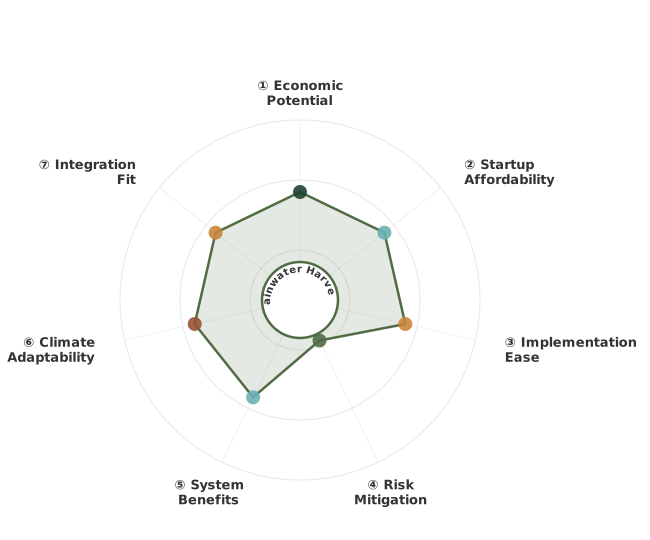
How These Traits Are Calculated
Trait dimensions are ordered clockwise starting from the top of the chart (12 o'clock position):
1. Economic Potential
Financial returns, annual value, and break-even timeline
WHAT: Evaluates financial viability by combining net annual value ($/ha from savings, income, and amortized harvests) with break-even timeline showing when practices pay for themselves.
WHY: Farmers need clear ROI understanding before committing resources. Fast payback (≤3 years) with strong returns (≥$300/ha) enables confident adoption, while long timelines (>10 years) restrict adoption to well-funded operations willing to wait for returns.
HOW: Calculated from net annual value in $/ha and break-even years. Exceptional (≥2.6): fast ROI ≤3 years + high value ≥$300/ha. Typical (1.8-2.5): moderate returns or longer timelines. Limited (<1.8): marginal economics or very long payback >10 years.
2. Startup Affordability
Initial investment costs and financial barrier to entry
WHAT: Measures financial barrier to entry through startup costs for equipment, infrastructure, consulting, and materials. Inverted scoring: lower costs = higher scores = more accessible adoption.
WHY: Affordability determines who can adopt. Low-cost practices (<$250/ha) enable widespread adoption across diverse scales, while high costs (>$2,500/ha) limit adoption to well-capitalized operations, creating barriers that slow regenerative transition.
HOW: Calculated from initial investment parsed from practice content. Inverted scoring: Exceptional (≥2.6): minimal investment <$250/ha. Typical (1.8-2.5): moderate costs $250-2,500/ha. Limited (<1.8): high barrier >$2,500/ha.
3. Implementation Ease
Learning curve and specialized knowledge required
WHAT: Measures how much learning, planning, and specialized knowledge a practice requires. Simpler practices with fewer steps score higher, while complex practices requiring extensive training or specialized resources score lower.
WHY: Complex practices create adoption barriers even when economically viable. Straightforward practices enable faster adoption and broader participation, while those requiring extensive training, timing precision, or specialized equipment limit who can succeed.
HOW: Evaluated by measuring documentation length and identifying complexity markers like location-specific requirements, seasonal timing windows, specialized skills, and dedicated equipment needs. Exceptional (≥2.6): straightforward practices with minimal prerequisites. Typical (1.8-2.5): moderate learning curve with some specialized needs. Limited (<1.8): steep learning curve requiring significant training or resources.
4. Risk Mitigation
Identified financial and ecological risk assessment
WHAT: Evaluates documented risks across financial (investment loss, market volatility) and ecological (crop failure, pest outbreaks) domains. Inverted scoring: fewer risks = higher scores.
WHY: Understanding risk exposure helps farmers make informed decisions. Low-risk practices allow confident implementation, while high-risk practices require careful planning and contingency resources. Risk transparency prevents costly failures.
HOW: Calculated from identified risks in practice content. Inverted scoring: Exceptional (≥2.6): ≤2 risks with manageable severity. Typical (1.8-2.5): 3-5 moderate risks. Limited (<1.8): 6+ risks or severe exposure.
5. System Benefits
How many ways the practice improves your land simultaneously
WHAT: Measures how many aspects of land health improve at once—carbon storage, soil quality, erosion control, water absorption, and biodiversity. Practices that improve multiple areas simultaneously create compounding benefits where each improvement reinforces the others.
WHY: The best practices solve multiple problems at once. For example, addressing erosion simultaneously builds carbon and improves water infiltration, creating a resilient system with positive feedback loops. Single-benefit approaches miss these compound transformation opportunities.
HOW: Evaluated across five key outcomes: carbon sequestration, soil organic matter increase, erosion reduction, water infiltration improvement, and biodiversity enhancement. Exceptional (≥2.6): high carbon storage (>8 t/ha/yr), improvements across 4-5 areas, transformative outcomes. Typical (1.8-2.5): moderate carbon (3-8 t/ha/yr), improvements across 2-3 areas. Limited (<1.8): modest impact (<3 t/ha/yr), single-area focus only.
6. Climate Adaptability
Geographic applicability across Köppen climate zones
WHAT: Evaluates geographic applicability by assessing how many Köppen climate zones successfully support a practice and what adaptation requirements are needed. Measures breadth of climates where farmers can implement with minimal to moderate modifications.
WHY: Universal practices working across diverse climates enable more farmers to adopt regenerative approaches. Practices limited to single climate types (only Mediterranean, only tropical) restrict adoption and slow global transition. Adaptability determines whether a practice serves niche regions or offers broad transformation.
HOW: LLM evaluation of regional success stories, Köppen zone coverage, and adaptation needs. Exceptional (≥2.6): 5+ zones or 4+ climate types, 3+ continents, minimal adaptation. Typical (1.8-2.5): 3-4 zones or 2-3 types, 2 continents, moderate adaptation. Limited (<1.8): 1-2 zones, single region, significant adaptation or highly specialized.
7. Integration Fit
How well this practice combines with others you're doing
WHAT: Measures how well a practice combines with other regenerative practices you might be doing. Some practices work as building blocks that make many other practices easier or more effective, while others work best on their own.
WHY: Practices that combine well with many others create more value on your farm. For example, cover cropping enables no-till, improves grazing, supports crop diversity, and helps water management—making all of them work better together. This helps you build a coherent system rather than juggling disconnected practices.
HOW: Evaluated by identifying which practices combine well and how strong those combinations are. 'Ideally Suited' means strong combinations where practices reinforce each other (practice A makes B easier, while B makes A more effective). 'Adequate' means complementary benefits that work well together. Exceptional (≥2.6): combines well with 6+ practices, serves as a building block. Typical (1.8-2.5): combines with 3-5 practices. Limited (<1.8): 1-2 practices or works best alone.
Going Deeper
1
WHY - The Benefits
Rainwater harvesting is more than just collecting water; it's a fundamental strategy for enhancing water security, improving land health, and building resilient agricultural and domestic systems. Its benefits span across ecological, economic, and social dimensions,...
Rainwater harvesting is more than just collecting water; it's a fundamental strategy for enhancing water security, improving land health, and building resilient agricultural and domestic systems. Its benefits span across ecological, economic, and social dimensions,...
WHY - The Benefits
Rainwater harvesting is more than just collecting water; it's a fundamental strategy for enhancing water security, improving land health, and building resilient agricultural and domestic systems. Its benefits span across ecological, economic, and social dimensions,...
Rainwater harvesting is more than just collecting water; it's a fundamental strategy for enhancing water security, improving land health, and building resilient agricultural and domestic systems. Its benefits span across ecological, economic, and social dimensions,...
Soil Health Benefits
One of the most significant benefits of rainwater harvesting for regenerative agriculture is its direct contribution to soil health. By capturing rainfall that would otherwise become erosive runoff, harvesting systems effectively slow down water movement across the landscape. This allows more water to infiltrate the soil, increasing soil moisture content and creating a more favorable environment for soil microbes, fungi, and earthworms. With increased soil moisture, plants—whether cash crops, cover crops, or perennial forages—can maintain photosynthetically active root systems for longer periods, supporting Principle 4: Maintaining Living Roots.
The reduction in runoff volume and velocity also means significantly less topsoil erosion. Sheet and gully erosion, which strip away fertile topsoil, are primary drivers of land degradation. By dissipating the energy of raindrops and slowing water channels, rainwater harvesting systems protect the soil surface, allowing organic matter and nutrients to be retained. This preservation of topsoil is foundational for long-term agricultural productivity. Furthermore, the increased infiltration of water into the soil profile helps to maintain soil cover through increased vegetation growth, supporting Principle 3: Keep Soil Covered. This is particularly vital in arid and semi-arid regions where rainfall is scarce and plant life is under constant moisture stress.
For systems integrating livestock (Principle 5), enhanced soil moisture from rainwater harvesting supports more robust pasture growth. This means livestock can graze for longer periods or benefit from higher-quality forage, contributing to better animal health and nutrient cycling through manure. In areas prone to drought, the stored water can provide a critical buffer, ensuring that living roots are maintained and soil cover is preserved even during extended dry spells, preventing the land from becoming bare and prone to wind and water erosion.
Economic Benefits
The economic advantages of rainwater harvesting are substantial and can be realized at various scales, from individual households to large agricultural operations. For homeowners, collecting rainwater from rooftops for garden irrigation or non-potable indoor uses (like flushing toilets) can significantly reduce municipal water bills, leading to annual savings of $50-500 USD equivalent, depending on water rates and consumption.
On farms and ranches, the economic benefits are amplified. Rainwater harvesting can supplement or entirely replace irrigation water sourced from wells, rivers, or municipal systems. This is particularly impactful in regions where external water is expensive, rationed, or simply unavailable. Reducing or eliminating irrigation costs, which can range from $100-500 per hectare per year USD equivalent for conventional systems, directly enhances profitability. The availability of supplemental irrigation water due to harvesting can also enable farmers to grow higher-value crops, extend their growing seasons, or adopt more drought-tolerant varieties, opening up new market opportunities.
For livestock operations, particularly in arid and semi-arid grazing areas, strategically placed water harvesting structures (ponds, tanks, troughs) can significantly extend the carrying capacity of pastures by providing reliable water sources, reducing the need for costly water hauling. This improved water access can lead to better animal weight gains and reproductive rates. Over the long term, the improvements in soil health, reduced erosion, and enhanced vegetation that result from effective water management contribute to increased land productivity and, consequently, higher land values – estimates suggest 5-15% increases. The resilience gained against drought also protects income streams from a single bad year.
Regenerative Systems Fit
Rainwater harvesting, while not exclusively a regenerative practice, plays a vital role in enabling and enhancing several core regenerative agriculture principles when applied intentionally within a regenerative framework.
Principle 3 (Keep Soil Covered): Rainwater harvesting directly supports this principle by providing the water necessary for continuous plant growth. In marginal rainfall areas, the captured water allows for the establishment and maintenance of cover crops or perennial forages that keep the soil surface protected from bareness throughout the year, even during dry spells. Without supplementary water, bare soil periods might be unavoidable, leading to erosion and nutrient loss.
Principle 4 (Maintain Living Roots): The availability of captured water extends the period during which plants can maintain active root systems. This is crucial for perennial systems (like pastures, orchards, or silvopasture) and for winter cover crops. Extending the life and activity of roots feeds soil biology, improves soil structure, and sequesters carbon continuously. This is particularly important in regions that would otherwise experience long periods of dormancy punctuated by bare soil.
Principle 5 (Integrate Livestock): For livestock operations, especially in rangelands, access to water is essential for effective grazing management. Rainwater harvesting structures strategically placed across pastures allow for more dispersed grazing, enabling rotational or adaptive grazing systems. This prevents overgrazing of localized areas and ensures that livestock are not confined to areas around a single water source, thereby promoting more even pasture utilization and nutrient distribution. Stored water can also be a lifeline during drought, preventing herd losses and maintaining the health of grazing animals.
Supporting Other Principles: While not directly supporting Principle 1 (Minimize Soil Disturbance) or Principle 2 (Maximize Crop Diversity) as primary functions, effective rainwater harvesting creates conditions that allow these principles to flourish. Improved water availability makes it easier to establish diverse cover crop mixes (Principle 2) and can reduce the need for tillage for moisture management, indirectly supporting Principle 1.
Transition Pathway: For farms transitioning from conventional practices, rainwater harvesting can be a critical "enabler." It can make the establishment of cover crops or the transition to perennial systems more successful in drier regions, reducing the risk associated with adopting these regenerative practices. It provides a safety net against drought, which is often a major barrier to regenerative adoption. By increasing water security, it allows farmers to focus on building soil biology and diverse plant communities without the constant threat of crop failure due to lack of moisture.
In essence, rainwater harvesting is a water management strategy that, when integrated with regenerative land management, amplifies the ecological benefits of practices like cover cropping, perennial cropping, and adaptive grazing. It unlocks the potential of land to sequester carbon, build soil health, and support biodiversity, particularly in water-limited environments.
Sources behind this view
Videos & Podcasts
-
Details rainwater harvesting, storage, and filtration methods, contrasting them with unreliable municipal water. Recommends starting with a 200L barrel, planting comfrey/moringa, and leveraging plant-
-
Details rainwater harvesting methods including rain tanks, swales, curb cuts, and wicking beds. Emphasizes natural filtration by biofilms and sludge in tanks, and the importance of understanding water
-
Regenerative agriculture revives the water cycle by restoring soils to act as sponges, improving infiltration and reducing runoff to combat drought. Practices like soil cover, water retention, reduced

-
Building soil carbon is key to managing water issues, increasing infiltration rates from 0.5 to 8 inches/hour. Improving soil porosity via biological activity, especially fungi, enhances resilience to

Community
-
Detailed experiences in dryland farming and water harvesting, focusing on soil decompaction, swales, basins, mulch, and roof catchment, especially in California's Mediterranean climate. References Bra
Read more (opens in new window) permies.com -
Discusses practicalities of rainwater harvesting for irrigation and household use, including costs, legislative barriers, ecological considerations, and large-scale storage solutions like tanks and sw
Read more (opens in new window) permies.com -
Harvest rainwater by observing your property, managing water flow from high to low points to make it 'stroll, not run,' and maximizing living groundcovers like mulch and vegetation to increase soil in
Read more (opens in new window) ucanr.edu -
Learn to harvest rainwater by observing your property, directing runoff to infiltrate the soil, maximizing groundcovers, and planning for overflow to reduce erosion, flooding, and pollution while cons
Read more (opens in new window) ucanr.edu
Research
-
Building climate resilience in degraded agricultural landscapes through water management: A case study of Bundelkhand region, Central India (opens in new window)
This study found: Water harvesting structures in Central India boosted groundwater by 2-5m, increased cultivation by 20%, raised crop yields 10-70%, and more than doubled farmer incomes over five years, enhancing clima
-
Rainwater Harvesting for Sustainable Developments: Non-Potable Use, Household Irrigation and Stormwater Management (opens in new window)
This study found: Collecting rainwater (harvesting) is vital for sustainable development, addressing water scarcity by providing water for non-drinking uses, home gardens, and managing urban stormwater to reduce floodi
-
Soil and Water Conservation Practices for Enhancing Productivity in Dryland Farming: A Review (opens in new window)
This study found: Dryland farming faces challenges from drought and soil degradation. Soil and water conservation practices like conservation tillage, cover crops, and rainwater harvesting improve soil moisture, health
-
Revitalizing Rainfed Agriculture: The Transformative Potential of Watershed Development (opens in new window)
This study found: Watershed development is a holistic strategy for rainfed agriculture, integrating soil/water conservation, tree planting, and sustainable farming to boost resilience and rural livelihoods in water-sca
2
WHERE - Regional Considerations
Successfully implementing rainwater harvesting depends heavily on regional climate, topography, and available water resources. The scale and type of systems best suited vary significantly from one region to another.
Successfully implementing rainwater harvesting depends heavily on regional climate, topography, and available water resources. The scale and type of systems best suited vary significantly from one region to another.
WHERE - Regional Considerations
Successfully implementing rainwater harvesting depends heavily on regional climate, topography, and available water resources. The scale and type of systems best suited vary significantly from one region to another.
Successfully implementing rainwater harvesting depends heavily on regional climate, topography, and available water resources. The scale and type of systems best suited vary significantly from one region to another.
Click Here to Look up your Region if you don't already know it
Arid and Semi-Arid Regions
Representative Locations: Western USA, North Africa, Central Asia, Interior Australia, parts of the Middle East, Sahel region of Africa
Climate Context: Low annual precipitation (<40 cm or 15 inches), high temperatures, significant evaporation rates, and often unpredictable rainfall patterns with long dry spells. USDA Zones 7-9, Köppen BSh/BSk.
Suitability: Extremely high. These regions offer the greatest returns on investment for rainwater harvesting as every drop of water is precious and can significantly enhance vegetation and extend growing seasons. Techniques like contour bunds, terraces, check dams, sand dams, swales, and farm ponds are essential for capturing scarce rainfall and maximizing infiltration. Rooftop harvesting is also valuable for domestic use, supplementing limited supplies. The practice directly combats desertification and soil degradation by increasing soil moisture and supporting plant cover.
Mediterranean Regions
Representative Locations: California, Mediterranean basin (Spain, Italy, Greece), central Chile, southwestern Australia, Western Cape South Africa
Climate Context: Hot, dry summers and mild, wet winters. Annual precipitation 40-90 cm (15-35 inches), highly seasonal. USDA Zones 8-10, Köppen Csa/Csb.
Suitability: High. Seasonal rainfall presents challenges, with dry summers demanding supplemental water for irrigation or maintaining perennial cover. Rooftop harvesting and landscape-level water harvesting (swales, contour farming) are highly effective for supplementing irrigation, maintaining orchards, vineyards, and supporting cover crops through dry periods. Large farm ponds or check dams can store winter rainfall for summer use, significantly improving water security for agriculture.
Humid Temperate Regions
Representative Locations: Southeastern United States, northern Europe (UK, Germany, Poland), eastern China, Japan, New Zealand, southern South America (Argentina, Uruguay)
Climate Context: Warm to hot summers and cool to cold winters with moderate to high annual precipitation (75-150 cm or 30-60 inches) distributed relatively evenly throughout the year. USDA Zones 6-8, Köppen Cfb/Cfa.
Suitability: Moderate to High. While overall rainfall is abundant, localized dry spells can still stress crops and pastures. Rooftop harvesting is excellent for domestic and garden use, reducing reliance on municipal water and conserving treated water for essential needs. In agricultural settings, landscape harvesting techniques like contour farming, swales, and small ponds can help manage excess runoff during wet periods, reduce erosion, and provide supplemental water during short dry spells, enhancing pasture growth and cover crop establishment. Excess water management is as important as collection in these regions.
Cold Continental Regions
Representative Locations: Northern USA and Canada, Northern Europe, Northern Asia (Siberia)
Climate Context: Very short growing seasons, extreme summer heat, severe winter cold, and snowfall. Precipitation can vary but often limited by short growing season. USDA Zones 3-5, Köppen Dfa/Dfb.
Suitability: Moderate. The primary challenge is the short growing season and frozen ground in winter. Snowmelt can be a significant source of water, and harvesting this meltwater through improved snow retention (e.g., snow fences, mulching) and contour plowing can be beneficial. Farm ponds or tanks filled during spring thaw can supplement summer irrigation for high-value crops. Rooftop harvesting is effective for domestic use, with storage systems needing to be protected from freezing. The focus is often on maximizing water availability during the brief growing period.
Subtropical Regions
Representative Locations: Southeastern USA, Southern China, Southern Brazil, Eastern Australia, parts of India
Climate Context: Hot, humid summers and mild winters with generally ample rainfall, though subject to monsoons or tropical storm patterns. USDA Zones 9-11, Köppen Cfa/Cwa.
Suitability: High. These regions often experience heavy rainfall events interspersed with periods of high evaporation and humidity. Rainwater harvesting is crucial for both managing excess water to prevent flooding and erosion, and for storing water for irrigation during dry spells or to supplement municipal supplies. Rooftop systems are ubiquitous for household use. Farm-level systems like contour planting, terraces, and small reservoirs are effective for capturing intense rainfall, recharging local groundwater, and providing water for crops and livestock through drier periods.
Tropical Regions
Representative Locations: Central America, Southeast Asia, East Africa, Northern Australia, Northern South America
Climate Context: High temperatures year-round, with distinct wet and dry seasons or consistent high rainfall. Köppen Af/Am/Aw.
Suitability: Very High. Tropical regions often receive intense rainfall during wet seasons, making water harvesting vital for both managing excess and storing water for the prolonged dry season. Rooftop harvesting is common, and larger-scale systems like ponds, check dams, and infiltration trenches are essential for agricultural productivity and domestic water security. The challenge is often managing the sheer volume of water during heavy deluges to prevent erosion and maximizing storage to last through the dry period. Agroforestry systems combined with water harvesting are particularly effective here.
3
HOW - Implementation Process
Implementing rainwater harvesting can range from simple DIY solutions to complex engineered systems. The process often involves planning, construction, and ongoing maintenance.
Implementing rainwater harvesting can range from simple DIY solutions to complex engineered systems. The process often involves planning, construction, and ongoing maintenance.
HOW - Implementation Process
Implementing rainwater harvesting can range from simple DIY solutions to complex engineered systems. The process often involves planning, construction, and ongoing maintenance.
Implementing rainwater harvesting can range from simple DIY solutions to complex engineered systems. The process often involves planning, construction, and ongoing maintenance.
Prerequisites
Before beginning installation, consider these factors:
- Rainfall Patterns: Understand your average annual and seasonal rainfall, and its variability. This determines the potential water yield and the required storage capacity.
- Catchment Area: Identify suitable surfaces for collection—rooftops, natural land contours, or engineered surfaces. The size and material of the catchment directly influence the volume of water collectible.
- Water Demand: Determine what the harvested water will be used for (irrigation, livestock, domestic, potable). This dictates the required quantity, quality, and storage volume.
- Site Suitability: Assess topography for natural water flow, potential storage locations (ponds, tanks), and proximity to points of use. Consider soil type for infiltration systems.
- Regulations: Check local or regional regulations regarding water harvesting, storage size, and usage rights, especially for larger systems or those impacting neighbors.
- Budget: Determine available financial resources for infrastructure, materials, and labor.
Phase 1: System Design and Sizing
1. Calculate Potential Yield: - Formula: Yield (liters/gallons) = Catchment Area (m²/ft²) × Rainfall (mm/inches) × Runoff Coefficient (0.1-0.9). - Runoff Coefficient: Varies by surface (e.g., metal roof 0.8-0.9; compacted soil 0.3-0.5; vegetated surface 0.1-0.3). - International Context: Use metric units primarily. 1 mm rainfall on 1 m² = 1 liter of water.
2. Estimate Water Demand: - Irrigation: Estimate needs based on crop type, area, evapo-transpiration rates for your climate zone. (Example: 1 hectare of vegetables in a hot climate may need 5-10 mm/day, or 50,000-100,000 liters/day). - Livestock: Daily needs vary by animal type and size (e.g., cattle: 30-60 liters/day; sheep: 5-10 liters/day). - Domestic: Average per person per day (e.g., 50-150 liters). - Use regional data and local extension services for precise demand calculations.
3. Size Storage: - Storage should ideally meet demand for the longest expected dry period. - Rooftop Systems: Cisterns or tanks sized from a few hundred liters for gardens to tens of thousands of liters for complete household supply. - Landscape Systems: Ponds, reservoirs, or underground tanks sized from a few cubic meters to thousands of cubic meters, depending on catchment and demand. - Consider modular systems for phased expansion.
4. Design Components: - Catchment: Roof material, slopes, integrity. - Conveyance: Gutters, downspouts, pipes (properly sized to handle peak rainfall), channels, swales. Materials: PVC, HDPE, concrete, earth. - Filtration: Leaf screens (first flush diverters are crucial for roof systems to remove initial debris and pollutants), sediment traps. - Storage: Tanks (plastic, concrete, metal), ponds (lined or unlined), underground reservoirs. Ensure integrity to prevent leaks and contamination. - Distribution: Pumps (solar, electric, manual), gravity feed, pipes, irrigation systems.
Phase 2: Construction and Installation
Rooftop Systems:
- Gutters & Downspouts: Ensure they are correctly sloped towards downspouts and free of debris. Use UV-resistant materials.
- First Flush Diverter: Essential for removing initial wash-off from the roof. Can be simple pipe with a slow-release valve.
- Piping: Connect downspouts to storage via appropriately sized pipes. Avoid sharp bends that impede flow.
- Storage Tank/Cistern: Install on a solid, level base. Ensure inlet, outlet, overflow, and access for cleaning/maintenance. Consider UV protection for above-ground plastic tanks. For underground tanks, ensure proper bedding and backfilling to prevent collapse.
- Pump/Distribution: Install pump if gravity feed is insufficient. Connect to household plumbing or irrigation system.
Landscape Systems:
- Earthworks:
- Contour Bunds/Terraces: Excavated along contours in sloped land to slow runoff and promote infiltration.
- Swales: Broad, shallow ditches dug on contour, often planted with a cover crop on the berm to infiltrate water.
- Check Dams: Small barriers built across gullies or drainage lines to slow water, trap sediment, and increase detention time. Materials: rock, gabions, concrete, earth.
- Ponds/Reservoirs: Excavated or built-up structures to store significant volumes of water. May require lining (clay, geomembrane) depending on soil permeability and desired storage.
- Sand Dams: Walls built across ephemeral streams to trap sand, which then acts as a natural reservoir holding water within its pores.
- Intake Structures: Channels to direct water from the catchment surface to storage.
- Outlet/Distribution: Controlled outlets from ponds/reservoirs for irrigation. Gravity feed from elevated storage is ideal. Pumps for moving water to higher fields.
International Context:
- Materials: Availability and cost of PVC, HDPE, concrete, metal, and geomembranes vary significantly by region. Local sourcing is often more economical. Traditional materials like clay liners for ponds are used where appropriate.
- Labor: In regions with lower labor costs, manual excavation for ponds and earthworks may be more feasible than heavy machinery. DIY approaches are more cost-effective where skilled labor is expensive.
- Equipment: For larger systems, consider rental of excavators, bulldozers, graders, and specialized planting equipment for ground catchment preparation or construction.
Phase 3: Maintenance and Management
- Regular Cleaning: Periodically clean gutters, downspouts, first flush diverters, and storage tank/pond sediment traps to remove debris and maintain system efficiency.
- Inspection: Regularly inspect all components for leaks, damage, or blockages. Sediment accumulation in ponds should be managed through dredging when necessary.
- Water Quality: For potable use, regular testing and appropriate filtration/disinfection are essential. For irrigation, monitor for salinity or contamination issues.
- System Operation: Optimize pump usage for efficiency. If using gravity feed, ensure control valves are functioning.
- Catchment Management: Maintain the catchment surface (e.g., keeping roofs clean, managing vegetation upslope, preventing soil disturbance) to maximize water yield and quality.
- Monitoring: Track water levels in storage and monitor consumption patterns to adjust usage or system capacity.
Transition Timeline & Phase-Out Strategy (if applicable to regenerative transition)
Rainwater harvesting is generally considered a regenerative practice, so a "phase-out" strategy is usually not applicable. However, if transitioning from a practice that relied on unsustainably sourced water (e.g., deep boreholes), the strategy becomes about increasing reliance on harvested water.
- Year 1-2: Assess current water sources and demand. Install rainwater harvesting systems for non-critical uses (e.g., garden irrigation, livestock). Begin monitoring yields and savings.
- Year 3-5: Expand rainwater harvesting capacity. Prioritize using harvested water for irrigation that previously relied on unsustainable sources. Gradually reduce reliance on external water.
- Year 5+: Aim for primary reliance on rainwater harvesting and other sustainable sources (e.g., managed aquifer recharge, recycled water) for as much of the farm's water demand as possible. Continue to monitor water availability and system efficiency, making adjustments as needed.
This approach builds water resilience incrementally, ensuring that the farm's water needs are met by locally sourced, sustainable precipitation.
Sources behind this view
Videos & Podcasts
-
Details rainwater harvesting, storage, and filtration methods, contrasting them with unreliable municipal water. Recommends starting with a 200L barrel, planting comfrey/moringa, and leveraging plant-
-
Details rainwater harvesting methods including rain tanks, swales, curb cuts, and wicking beds. Emphasizes natural filtration by biofilms and sludge in tanks, and the importance of understanding water
-
Brad Lancaster explains how to maximize rainfall by creating basins, directing runoff from roofs and other surfaces, and capturing organic matter to build a living sponge that absorbs water, reduces e
-
Explains practical rainwater harvesting techniques like swales, berms, and basins for flood mitigation and water table enhancement, applicable in both wet and dry climates, emphasizing landscape obser

Community
-
Detailed experiences in dryland farming and water harvesting, focusing on soil decompaction, swales, basins, mulch, and roof catchment, especially in California's Mediterranean climate. References Bra
Read more (opens in new window) permies.com -
Discusses practicalities of rainwater harvesting for irrigation and household use, including costs, legislative barriers, ecological considerations, and large-scale storage solutions like tanks and sw
Read more (opens in new window) permies.com -
Provides practical methods for rainwater harvesting using swales and elevated tanks (1000-liter, 55-gallon) for garden watering and water conservation, with considerations for California regulations a
Read more (opens in new window) ucanr.edu -
Water-saving strategies include rainwater catchment from high tunnels (up to 28,000 gal/season), soil management (compost, cover crops, conservation tillage), drought-resistant plants, low-volume irri
Read more (opens in new window) smallfarms.cornell.edu
Research
-
Rainwater Harvesting for Sustainable Developments: Non-Potable Use, Household Irrigation and Stormwater Management (opens in new window)
This study found: Collecting rainwater (harvesting) is vital for sustainable development, addressing water scarcity by providing water for non-drinking uses, home gardens, and managing urban stormwater to reduce floodi
-
Building climate resilience in degraded agricultural landscapes through water management: A case study of Bundelkhand region, Central India (opens in new window)
This study found: Water harvesting structures in Central India boosted groundwater by 2-5m, increased cultivation by 20%, raised crop yields 10-70%, and more than doubled farmer incomes over five years, enhancing clima
-
Revitalizing Rainfed Agriculture: The Transformative Potential of Watershed Development (opens in new window)
This study found: Watershed development is a holistic strategy for rainfed agriculture, integrating soil/water conservation, tree planting, and sustainable farming to boost resilience and rural livelihoods in water-sca
-
Soil and Water Conservation Practices for Enhancing Productivity in Dryland Farming: A Review (opens in new window)
This study found: Dryland farming faces challenges from drought and soil degradation. Soil and water conservation practices like conservation tillage, cover crops, and rainwater harvesting improve soil moisture, health
From the Web
-
Introduces 'Water Harvesting - Guidelines to Good Practice,' detailing technologies for capturing rainfall runoff in dryland, rainfed farming systems to enhance plant growth, alleviate poverty, and ad
-
Details the 8-step design process for micro-catchment rainwater harvesting in dry areas, including selecting techniques (contour ridges, semi-circular bunds, runoff strips), calculating crop water nee
-
Details water harvesting (rainwater, flood, groundwater) and storage systems, including RWH, FWH, GWH, and in-situ techniques. Discusses soil moisture conservation practices (mulching, conservation ti
4
Know the Debate
Rainwater harvesting outcomes vary significantly by region and implementation scale. In arid and semi-arid areas with predictable dry seasons, it i...
Know the Debate
Rainwater harvesting outcomes vary significantly by region and implementation scale. In arid and semi-arid areas with predictable dry seasons, it i...
Rainwater harvesting outcomes vary significantly by region and implementation scale. In arid and semi-arid areas with predictable dry seasons, it is crucial for basic survival and agricultural resilience, with substantial investment potentially yielding over many years. Humid regions benefit from managing excess water and reducing reliance on municipal supplies, with quicker financial returns. Farm-level systems require careful planning regarding labor, capital investment, and maintenance, as effectiveness is directly tied to local rainfall patterns and soil infiltration capacity. The time it takes to see significant aquifer recharge or financial breakeven also differs greatly by context.
How long until aquifer recharge from rainwater harvesting?
Noticeable recharge in 1-2 seasons (ideal conditions)
Academic models and studies in regions with consistent rainfall suggest that improved infiltration from harvesting techniques can lead to measurable aquifer recharge within one to two seasons.
Sources behind this view
Sources behind this view
Research
-
Building climate resilience in degraded agricultural landscapes through water management: A case study of Bundelkhand region, Central India (opens in new window)
This study found: In a dry region of Central India, a five-year study showed that implementing simple water harvesting techniques significantly improved farming and community resilience to climate change. By building structures to capture rainwater, like farm ponds and infiltration ditches, farmers reduced water runoff by about a third and raised groundwater levels by 2 to 5 meters. This extra water allowed about a fifth of previously unused land to be cultivated. As a result, crop yields increased substantially (10-70%), and average household incomes more than doubled, from around $960 to $2700 per year. These water management practices are key to building climate resilience for smallholder farmers facing water scarcity.
-
Rainwater Harvesting and Sustainable Agriculture in Arid Lands: Runoff Farming in the Area of Wadi al-Bab (opens in new window)
This study found: In dry regions where water is scarce, a traditional farming method called runoff farming has been used for thousands of years. It involves collecting rainwater that flows down hills and through dry riverbeds (Wadis). Farmers build small stone walls (check dams) and dig trenches and ditches to slow the water down, allowing it to soak into the ground or be channeled to irrigate nearby fields. Some of this collected water is also stored in underground tanks. This technique helps make farming possible and sustainable in arid areas, as seen in the Wadi al-Bab region.
Significant recharge takes 5-7 years (dry regions)
Field practitioners in semi-arid climates observe that overcoming existing water deficits and achieving substantial aquifer recharge from consistent water harvesting typically requires 5-7 years of dedicated effort.
Sources behind this view
Sources behind this view
Videos & Podcasts
-
Water harvesting structures promote groundwater percolation, raising water tables and filling ponds for dry season irrigation. This ensures stable crop production, food security, and reduces migration, addressing social issues in drought-prone regions like Maharashtra.

-
Advocates for water catchment and storage through earthworks, ponds, roof catchment, soil organic matter enhancement, and subsoiling, emphasizing slowing, spreading, and storing water on-site.

Making Sense of the Differences
Aquifer recharge timelines vary significantly based on regional climate, soil health, and system scale. Academic studies often reflect conditions with more reliable rainfall or focus on initial improvements, while field experience from drier regions emphasizes the long-term, consistent effort needed to overcome deficits. Farmers in semi-arid areas should plan for patience and persistent management to see significant groundwater level increases.
Is soil health a prerequisite for ground-based rainwater harvesting?
Soil health is essential for infiltration (field perspective)
Field practitioners stress that healthy soil with good organic matter and structure is crucial for effective infiltration from swales and berms; without it, water tends to run off.
Sources behind this view
Sources behind this view
Videos & Podcasts
-
Advocates for water catchment and storage through earthworks, ponds, roof catchment, soil organic matter enhancement, and subsoiling, emphasizing slowing, spreading, and storing water on-site.
-
Details rainwater harvesting methods including rain tanks, swales, curb cuts, and wicking beds. Emphasizes natural filtration by biofilms and sludge in tanks, and the importance of understanding water flow for drought-proofing and ecosystem health. Recommends galvalum roofs and proper tank design for clean water.
Harvesting benefits soil regardless of initial health (academic/institute view)
Academic and institute resources often focus on the water capture and erosion control benefits of earthworks like check dams and swales, implying they improve conditions regardless of initial soil infiltration rates.
Sources behind this view
Sources behind this view
Research
-
Rainwater Harvesting and Sustainable Agriculture in Arid Lands: Runoff Farming in the Area of Wadi al-Bab (opens in new window)
This study found: In dry regions where water is scarce, a traditional farming method called runoff farming has been used for thousands of years. It involves collecting rainwater that flows down hills and through dry riverbeds (Wadis). Farmers build small stone walls (check dams) and dig trenches and ditches to slow the water down, allowing it to soak into the ground or be channeled to irrigate nearby fields. Some of this collected water is also stored in underground tanks. This technique helps make farming possible and sustainable in arid areas, as seen in the Wadi al-Bab region.
From the Web
-
Details rainwater harvesting as a soil and water conservation technique, covering planning, installation of collection and storage systems, and ongoing management for drought resilience and resource efficiency.
Making Sense of the Differences
Effective ground-based rainwater harvesting relies on both capturing water and its infiltration. While academic and institute sources highlight the benefits of earthworks for slowing runoff and erosion, field practitioners emphasize that the soil's ability to absorb that water is critical, especially in degraded lands. Farmers inheriting poor soil may need to concurrently focus on building soil health to maximize the benefits of harvesting structures, rather than assuming earthworks alone will ensure infiltration.
How cost-effective is rainwater harvesting for irrigation?
Highly cost-effective with significant savings (academic/institute view)
Academic and institute sources often highlight potential for significant savings through reduced municipal water costs, improved yields, and enhanced land value, particularly in arid regions or where water is expensive.
Sources behind this view
Sources behind this view
Research
-
Optimized Water Management Strategies in Regenerative Agriculture for Resilience and Efficiency (opens in new window)
This study found: Farmers are facing increasing challenges with water scarcity and the need for more sustainable farming practices. This research looks at different ways to manage water in regenerative agriculture, moving beyond traditional methods that often use a lot of water without being very efficient. The study reviewed techniques like collecting rainwater, using drip irrigation, managing soil moisture, planting water-efficient crops, and contour farming. It found that drip irrigation significantly boosts water efficiency by 40% and crop yields by 35% compared to older methods, by delivering water straight to plant roots. While other methods like rainwater harvesting and soil moisture management are also discussed, drip irrigation is highlighted as the most effective for saving water and increasing harvests, helping to meet long-term goals for nature and food production.
From the Web
-
Rainwater harvesting collects rainwater from rooftops and paved surfaces to reduce stormwater runoff and conserve potable water for landscape irrigation. It's a key green infrastructure practice with benefits like reduced erosion, lower water demand, and improved soil moisture.
Cost-effectiveness highly variable based on capital cost and rainfall (field perspective)
Field practitioners emphasize that high initial capital investment ($1,000-7,000/ha) and dependence on rainfall variability mean ROI can be long and uncertain, with breakeven times often 5-10+ years.
Sources behind this view
Sources behind this view
Videos & Podcasts
-
Rainwater harvesting reduces pressure on municipal supplies, improves water quality, and mitigates environmental disruption from urban runoff. It's more efficient than centralized systems and offers long-term cost savings by reducing utility infrastructure expenses.
-
Prioritize contextual design over technique buzzwords for water catchment. Ensure storage vessel sizing matches local rainfall patterns and dry periods, as the earth is the best water holder, and techniques like rainwater harvesting require specific conditions to be cost-effective.

Making Sense of the Differences
The economic benefits of rainwater harvesting for irrigation show a wide range from highly positive to cautiously optimistic. Academic and institute reports often detail savings from reduced municipal water bills and potential yield increases, presenting a strong case for cost-effectiveness. However, field experience underscores the significant upfront capital investment for farm-scale systems and the critical dependence on consistent rainfall. Farmers must carefully assess local water costs, rainfall reliability, and their capacity for upfront investment to determine the realistic ROI for their specific context.
5
HOW MUCH - Costs & Investment
Note: All costs are estimates based on mid-2024 US economic data and can vary significantly by region due to material costs, labor rates, currency exchange, and local regulations. Seek local quotes for accurate budgeting.
Note: All costs are estimates based on mid-2024 US economic data and can vary significantly by region due to material costs, labor rates, currency exchange, and local regulations. Seek local quotes for accurate budgeting.
HOW MUCH - Costs & Investment
Note: All costs are estimates based on mid-2024 US economic data and can vary significantly by region due to material costs, labor rates, currency exchange, and local regulations. Seek local quotes for accurate budgeting.
Note: All costs are estimates based on mid-2024 US economic data and can vary significantly by region due to material costs, labor rates, currency exchange, and local regulations. Seek local quotes for accurate budgeting.
Note: All costs are based on recent US economic data (2024–2026) and may vary substantially by region based on local labor rates, material costs, and regulatory requirements.
Infrastructure and Materials
The foundational cost for rainwater harvesting is heavily tied to the total surface area available for catchment and the required volume capacity. For small-scale operations (under 50 acres (20 ha)), owners typically prioritize rooftop catchment or small contour basins, requiring an investment of $417 to $1,250 per acre ($1,030–$3,089/ha). In this category, the primary capital expenditure involves high-density polyethylene tanks and professional-grade guttering kits, which range from $1,563 to $8,336 per installation unit. Mid-size operations (50–500 acres (20–202 ha)) shift toward pond-based storage and subsurface piping networks, requiring an investment of $1,250 to $4,168 per acre ($3,089–$10,299/ha). These systems necessitate significant expenditure on intake filtration to prevent debris from fouling the water supply. Large-scale operations (500+ acres) engage in intensive watershed engineering, including complex earthen dam construction and large-scale land shaping, costing $4,168 to $12,504 per acre ($10,299–$30,898/ha). This tier relies on economies of scale but carries exponentially higher upfront engineering and permitting costs.
Earthworks and Site Engineering
Excavation represents the largest variable expense in mid-to-large-scale rainwater harvesting applications. For mid-size operations, earthmoving for pond construction, spillway shaping, or swale development—inclusive of fuel, specialized operator labor, and site leveling—ranges from $2,084 to $15,630 depending on soil substrate and required depth-to-storage calculations. For large-scale operators, earthmoving becomes a mission-critical modular process, with per-acre costs ranging from $5,210 to $26,050 to maximize catchment capacity. Small-scale operators typically avoid major mass-grading, focusing instead on manual or light-machinery contouring and berming, which ranges from $208 to $1,042 per site, usually performed as part of a larger landscaping or farm-improvement project.
Pumping and Distribution
The conveyance of water from the storage reservoir to the point of use dictates the ongoing mechanical costs of the system. Simple gravity-fed irrigation systems add minimal cost, often requiring only $104 to $521 for basic flexible piping and suction-side filter housing. Conversely, solar-powered pump setups, which are increasingly adopted to ensure water security during utility grid interruptions, represent a significant capital expenditure ranging from $2,084 to $6,252 for mid-size farms. Large-scale operations requiring high-head, pressure-compensated pumps and permanent high-density PVC mainlines across expansive acreage face investment costs ranging from $10,420 to $52,100+. This expenditure must include pressure-regulated valve stations, advanced multi-stage filtration to prevent clog damage to drip tape, and automated telemetry systems for real-time flow and moisture monitoring.
Specialized System Components
Lining materials are mandatory for maximizing storage integrity, particularly in soils with high permeability. High-grade geomembrane liners (EPDM or RPE) consistently cost between $0.52 and $1.56 per square foot, a cost that scales linearly with the reservoir surface area. For mid-sized farms (50–500 acres (20–202 ha)), initial lining investment usually settles between $3,126 and $12,504. While some large-scale operators perform geotechnical surveys to assess if bentonite clay or local compaction methods can negate the need for a synthetic liner, those who do utilize geotextiles often see installation costs rise by 15–20% above the per-square-foot material cost due to the requirement for professional welding and stabilization of the liner seams.
Most Spend: The majority of farms (the middle 60% of cases) allocate between $2,100 and $7,800 per acre ($5,189–$19,274/ha) for integrated pond and distribution systems, as this range covers both the necessary excavation and the high-efficiency filtration required for modern drip irrigation.
Why the Range?: Cost fluctuations originate primarily from two sources: geotechnical conditions and engineering complexity. Properties with high clay content often reduce excavation costs by allowing for natural sealing of ponds, while sites with rocky or highly porous soil require expensive synthetic liners and larger dam footings. Additionally, the height of the lift, or total dynamic head required for pumping, can swing equipment costs by over 40% based on the energy efficiency and capacity of the chosen hardware.
Sources behind this view
Videos & Podcasts
-
Details a low-cost DIY system for managing wet garden spots using a solar-powered bilge pump in a dug well (repurposed drum or metal ring) to capture and store rainwater. Overflow is managed downslope
-
Acquired a used four-barrel (455-gallon) rainwater catchment system for $200. Plans include preparing a level foundation with sand and pavers, utilizing gravity for downhill irrigation, and potentiall

-
Provides practical guidance on rainwater harvesting for gardens, covering roof collection methods, calculating yield, using rain barrels and IBC tanks for storage, and essential tips for preventing co

Community
-
Discusses practicalities of rainwater harvesting for irrigation and household use, including costs, legislative barriers, ecological considerations, and large-scale storage solutions like tanks and sw
Read more (opens in new window) permies.com -
Provides practical methods for rainwater harvesting using tanks and containers, with tips on collection, storage (up to 3,000 gallons), and transfer using submersible pumps. Discusses challenges with
Read more (opens in new window) permies.com -
Provides practical guidance on rainwater harvesting for domestic and agricultural use, detailing tank sizing, first-flush diversion, and water quality considerations, particularly from metal or terrac
Read more (opens in new window) permies.com -
Recommends swales, ponds, and rainwater collection using Totes/barrels for humid climates. Emphasizes on-contour swales for infiltration, heavy mulching to reduce evaporation and retain moisture, and
Read more (opens in new window) permies.com
Research
-
Rainwater Harvesting for Lawn Irrigation: A Case Study in Diyarbakır Province (opens in new window)
This study found: Rainwater harvesting from large roofs (3600 m²) can save up to 55% of water for lawns in Diyarbakır, Turkey. Financial viability depends on roof size and government incentives, with NPV becoming posit
-
A Novel Multifunctional Water Harvesting and Management System for Sustainable Agriculture in Humid Regions (opens in new window)
This study found: New system combines air, rain, and soil moisture harvesting, collecting 30-45% more water than RWH alone. Reduces irrigation needs by 40%, is solar-powered, and costs 30-50% less per liter than tradit
-
Building climate resilience in degraded agricultural landscapes through water management: A case study of Bundelkhand region, Central India (opens in new window)
This study found: Water harvesting structures in Central India boosted groundwater by 2-5m, increased cultivation by 20%, raised crop yields 10-70%, and more than doubled farmer incomes over five years, enhancing clima
-
Rainwater Harvesting for Sustainable Developments: Non-Potable Use, Household Irrigation and Stormwater Management (opens in new window)
This study found: Collecting rainwater (harvesting) is vital for sustainable development, addressing water scarcity by providing water for non-drinking uses, home gardens, and managing urban stormwater to reduce floodi
6
REWARDS AND RISKS - Economics & Risk Factors
REWARDS AND RISKS - Economics & Risk Factors
Economic Scenarios
- Best Case Scenario: A 200-acre (81 ha) fruit and vegetable operation invests $150,000 into a high-capacity pond and precision drip irrigation system. By capturing overflow and runoff, they eliminate reliance on municipal water, resulting in $12,000–$15,000 of annual utility savings. Improved soil moisture consistency adds $25,000–$35,000 in annual revenue by preventing heat-stress yield losses during peak harvest months. The total investment is recouped within 4–5 years.
- Typical Case Scenario: A 100-acre (40 ha) grazing operation invests $50,000 into a series of interconnected ponds to provide reliable livestock water. This reduces electrical expenses associated with deep-well pumping by $3,000–$5,000 annually. Enhanced grazing rotation enabled by superior water distribution allows for a 10% increase in carrying capacity, generating an additional $6,000–$8,500 in annual revenue. The system reaches break-even in 6–8 years.
- Worst Case Scenario: A farm implements a $100,000 system without adequate geotechnical oversight in sandy soil. High seepage rates and surface evaporation lead to near-total water loss during a prolonged dry spell. Emergency repair and structural remediation, including secondary clay sealing or retrofitted liners, increase total costs by 40%. The resulting water deficit leads to a 20% crop loss, pushing the break-even point well beyond 15 years.
Market Factors and Risk Mitigation Profitability is inextricably linked to energy price volatility; as the cost per kilowatt-hour for pumping increases, the ROI on gravity-fed storage improves by approximately 8–12% per year. To mitigate the risk of drought variability, prudent operators should allocate an additional 10–15% of the total project budget toward high-efficiency, redundant filtration and IoT-based moisture-sensing controls. Diversifying storage—using a combination of modular tanks for immediate needs and large ponds for bulk irrigation—provides a critical safety net against single-point failure, such as a localized liner breach or contamination event.
Transition Period Risks Moving to a primary reliance on harvested rainwater involves a significant operational shift from a "guaranteed" utility source to a weather-dependent supply. The primary risk during the first 24 months is a potential, albeit temporary, yield dip of 10–15% if storage calculations prove insufficient for local precipitation patterns. To mitigate this, farmers should maintain parallel access to traditional well or municipal water for the first two years. This "hybrid" period allows the operator to track rainfall capture efficacy against crop demand, effectively mapping the farm's water budget before fully decommissioning or reducing dependency on existing grid connections. Recovery of yield to above-baseline levels typically occurs in year three, once the system is fully calibrated to the microclimate.
Sources behind this view
Videos & Podcasts
-
Details rainwater harvesting, storage, and filtration methods, contrasting them with unreliable municipal water. Recommends starting with a 200L barrel, planting comfrey/moringa, and leveraging plant-
-
Farm in the Northeast implements water conservation due to drought, using drip tapes, low-impact sprinklers, pond-filled tanks for greenhouses, and rainwater harvesting from roofs. Reconfiguring lands
-
Brad Lancaster explains how to maximize rainfall by creating basins, directing runoff from roofs and other surfaces, and capturing organic matter to build a living sponge that absorbs water, reduces e
-
Details rainwater harvesting methods including rain tanks, swales, curb cuts, and wicking beds. Emphasizes natural filtration by biofilms and sludge in tanks, and the importance of understanding water
Community
-
Dry farming is presented as the optimal method for arid regions (<10 inches rain/year), focusing on maximizing infiltration and retention. Large above-ground rainwater catchments are critiqued for eva
Read more (opens in new window) permies.com -
Detailed experiences in dryland farming and water harvesting, focusing on soil decompaction, swales, basins, mulch, and roof catchment, especially in California's Mediterranean climate. References Bra
Read more (opens in new window) permies.com -
Water-saving strategies include rainwater catchment from high tunnels (up to 28,000 gal/season), soil management (compost, cover crops, conservation tillage), drought-resistant plants, low-volume irri
Read more (opens in new window) smallfarms.cornell.edu -
Provides practical methods for rainwater harvesting using swales and elevated tanks (1000-liter, 55-gallon) for garden watering and water conservation, with considerations for California regulations a
Read more (opens in new window) ucanr.edu
Research
-
Rainwater Harvesting for Sustainable Developments: Non-Potable Use, Household Irrigation and Stormwater Management (opens in new window)
This study found: Collecting rainwater (harvesting) is vital for sustainable development, addressing water scarcity by providing water for non-drinking uses, home gardens, and managing urban stormwater to reduce floodi
-
Building climate resilience in degraded agricultural landscapes through water management: A case study of Bundelkhand region, Central India (opens in new window)
This study found: Water harvesting structures in Central India boosted groundwater by 2-5m, increased cultivation by 20%, raised crop yields 10-70%, and more than doubled farmer incomes over five years, enhancing clima
-
Soil and Water Conservation Practices for Enhancing Productivity in Dryland Farming: A Review (opens in new window)
This study found: Dryland farming faces challenges from drought and soil degradation. Soil and water conservation practices like conservation tillage, cover crops, and rainwater harvesting improve soil moisture, health
-
A Novel Multifunctional Water Harvesting and Management System for Sustainable Agriculture in Humid Regions (opens in new window)
This study found: New system combines air, rain, and soil moisture harvesting, collecting 30-45% more water than RWH alone. Reduces irrigation needs by 40%, is solar-powered, and costs 30-50% less per liter than tradit
From the Web
-
Implement water monitoring with meters and efficient systems like drip irrigation, ideally combined with mulching. Schedule irrigation for early morning/night and explore rainwater harvesting, checkin
7
WHO - Labor & Expertise
Rainwater harvesting systems vary greatly in complexity, influencing the required labor and expertise.
Rainwater harvesting systems vary greatly in complexity, influencing the required labor and expertise.
WHO - Labor & Expertise
Rainwater harvesting systems vary greatly in complexity, influencing the required labor and expertise.
Rainwater harvesting systems vary greatly in complexity, influencing the required labor and expertise.
Labor Requirements
- Small-Scale Rooftop Systems:
- Installation: Can often be a DIY project for handy individuals, requiring a few days of labor for connecting gutters, pipes, and installing a barrel or small tank. Professional installation might take 1-2 days.
- Maintenance: Periodic cleaning of gutters and filters is needed, taking 1-2 hours per year. Replacement of parts might add a few hours every 5-10 years.
- Medium-Scale Farm Systems:
- Design & Planning: Requires a few days to a week of focused effort, potentially involving consultation with water management specialists.
- Construction: For earthworks (swales, small ponds), this could involve a few days to a week of heavy machinery operation (excavator, tractor) plus manual labor for shaping and pipe laying. For tank installations, professional services might be needed.
- Maintenance: More significant, involving a few days per year for pond dredging, pump checks, and pipe repairs.
- Large-Scale Farm/Community Systems:
- Design & Engineering: Requires professional engineers and potentially hydrologists, involving weeks to months of work.
- Construction: Can be large-scale civil engineering projects, requiring heavy machinery, skilled operators, and extensive labor over weeks or months.
- Operation & Maintenance: Ongoing labor is needed for system checks, repairs, pump operation, and managing water distribution. This might involve dedicated staff or significant time from farm managers.
Expertise Required
- DIY Enthusiast: For simple rooftop barrel systems, basic plumbing knowledge and standard tool usage suffice. Understanding basic slope for gravity flow is key.
- Homeowner or Smallholder Farmer: For larger household tanks or small farm ponds, understanding basic hydraulics, soil mechanics (for dam stability), and component selection (pumps, filters) is beneficial. Consultation with local extension services or experienced practitioners can guide the process.
- Professional Farmer/Rancher: For farm-scale irrigation or livestock water supply, expertise in hydrology, soil engineering, irrigation design, and potentially grant application processes is valuable. Engaging with agricultural engineers, water management consultants, or specialized rainwater harvesting companies is recommended.
- Large-Scale/Community Projects: Requires licensed civil engineers, hydrogeologists, environmental scientists, and potentially regulatory experts. Large-scale projects often involve significant planning, permitting, and specialized construction firms.
International Labor Cost Context
- Regions with High Labor Costs: DIY is often more economical for smaller systems. Professional services will be more expensive, driving up the total investment. Efficiency and robust design are prioritized to minimize ongoing labor.
- Regions with Low Labor Costs: Manual labor for earthworks and installation can be a significant advantage. Larger systems might be more feasible due to lower labor expenses, allowing for more extensive earthmoving and simpler, robust designs. The expertise needed for design and oversight remains crucial, but installation might be less capital-intensive.
8
EQUIPMENT - Tools & Infrastructure
The equipment and infrastructure for rainwater harvesting can range from simple containers to extensive civil engineering works.
The equipment and infrastructure for rainwater harvesting can range from simple containers to extensive civil engineering works.
EQUIPMENT - Tools & Infrastructure
The equipment and infrastructure for rainwater harvesting can range from simple containers to extensive civil engineering works.
The equipment and infrastructure for rainwater harvesting can range from simple containers to extensive civil engineering works.
Key Components and Equipment
1. Catchment Surface Preparation:
- Rooftops: Cleaning tools, potentially roof sealing or repair materials.
- Ground Catchments: Graders, bulldozers, excavators for shaping land (swales, terraces, ponds), shovels, pickaxes for smaller earthworks. Contour plows or specific ripping tools for creating infiltration furrows.
2. Conveyance Systems:
- Gutters and Downspouts: Pre-fabricated PVC, metal (galvanized steel, aluminum), or custom-fabricated materials. Elbows, connectors, leaf guards.
- Piping: PVC, HDPE, class II concrete pipes, or clay pipes for channels and main runs. Diameter must match flow rates.
- Channels and Swales: Earthmoving equipment for excavation.
- Check Dams: Rocks, gabions (wire mesh cages filled with rocks), concrete materials, timber.
3. Filtration and Pre-treatment:
- Leaf Screens: Mesh filters for gutters and downspouts.
- First Flush Diverters: Specialised pipes with slow-release valves or DIY setups using diverted pipe sections.
- Sediment Traps: Small settling basins or grates before storage to catch larger debris.
4. Storage Infrastructure:
- Tanks/Cisterns:
- Above-ground: Polyethylene (HDPE), fiberglass, galvanized steel, concrete (pre-cast or poured in-situ). Tanks require a stable foundation.
- Underground: Concrete structures (poured or pre-cast), specialized plastic tanks. Require careful excavation, bedding, and backfilling to prevent collapse.
- Ponds/Reservoirs:
- Excavation equipment (excavators, dozers).
- Lining materials: Compacted clay liner, geomembranes (EPDM, HDPE, PVC), concrete.
- Fencing to prevent livestock access and uncontrolled human entry.
- Sand Dams: Concrete or masonry wall construction materials, sand extraction equipment for filling.
5. Distribution Systems:
- Pumps:
- Submersible pumps: For deep wells or ponds.
- Surface pumps: For ponds or tanks.
- Hand pumps: For low-volume domestic or garden use.
- Solar pumps: Increasingly popular for remote areas, powered by photovoltaic panels.
- Wind pumps: Traditional for livestock water in windy areas.
- Piping Networks: Polyethylene (PEX, HDPE) pipes for irrigation or domestic supply. Valves, connectors, sprinklers, drip emitters.
- Gravity Feed Systems: Requires storage elevated above the point of use.
International Sourcing and Cost Considerations
- Material Availability: In many regions, locally sourced materials like clay for pond lining, local timber for structures, or readily available PVC pipes are more cost-effective than imported alternatives.
- Equipment Rental/Purchase: For earthworks, renting heavy machinery is often more economical than purchasing for one-off projects. In regions with well-developed agricultural infrastructure, specialized equipment for constructing swales or installing tanks might be available.
- DIY vs. Professional: For smaller systems, investing in tools for DIY installation can be cost-effective. For larger, engineered systems, specialized contractors and equipment are necessary.
- Cost Disclaimers: Equipment costs vary drastically worldwide. A solar pump that costs $500 USD in North America might cost $1,000+ in a region with import duties and shipping costs, or potentially less if manufactured locally. Always seek local quotes.
Sources behind this view
Videos & Podcasts
-
Details rainwater harvesting, storage, and filtration methods, contrasting them with unreliable municipal water. Recommends starting with a 200L barrel, planting comfrey/moringa, and leveraging plant-
-
Details rainwater harvesting methods including rain tanks, swales, curb cuts, and wicking beds. Emphasizes natural filtration by biofilms and sludge in tanks, and the importance of understanding water
-
Details rainwater harvesting components: smooth metal roofs (Galvalume recommended), positively draining gutters, and rain heads for pre-filtration. Tank biofilms and sludge act as bioremediation, con

-
A Portland, Oregon gardener explains the necessity of enhanced rainwater harvesting due to changing climate patterns. Key steps include calculating catchment potential from roofs, identifying tank loc
Community
-
Provides practical guidance on rainwater harvesting for domestic and agricultural use, detailing tank sizing, first-flush diversion, and water quality considerations, particularly from metal or terrac
Read more (opens in new window) permies.com -
Off-grid homesteaders utilize low-tech water systems including hand-pumped wells, shoulder yoke water carrying, bamboo piping, and extensive rainwater collection in tanks and barrels, often relying on
Read more (opens in new window) permies.com -
Provides practical methods for rainwater harvesting using swales and elevated tanks (1000-liter, 55-gallon) for garden watering and water conservation, with considerations for California regulations a
Read more (opens in new window) ucanr.edu -
Practical methods for rainwater management include minimizing bare ground with plants, using rock buffers, constructing terraces with wattles or urbanite, creating permeable surfaces, and building rai
Read more (opens in new window) ucanr.edu
Research
-
Rainwater Harvesting for Sustainable Developments: Non-Potable Use, Household Irrigation and Stormwater Management (opens in new window)
This study found: Collecting rainwater (harvesting) is vital for sustainable development, addressing water scarcity by providing water for non-drinking uses, home gardens, and managing urban stormwater to reduce floodi
From the Web
-
Details rainwater harvesting systems using permeable paving and storage devices (rain barrels, cisterns, dry wells), providing a step-by-step guide for selection, installation, and maintenance, emphas
9
COMPATIBLE PRACTICES - Integration Opportunities
Rainwater harvesting is a foundational water management practice that enhances the effectiveness and resilience of many other regenerative agriculture techniques, particularly in water-limited environments.
Rainwater harvesting is a foundational water management practice that enhances the effectiveness and resilience of many other regenerative agriculture techniques, particularly in water-limited environments.
COMPATIBLE PRACTICES - Integration Opportunities
Rainwater harvesting is a foundational water management practice that enhances the effectiveness and resilience of many other regenerative agriculture techniques, particularly in water-limited environments.
Rainwater harvesting is a foundational water management practice that enhances the effectiveness and resilience of many other regenerative agriculture techniques, particularly in water-limited environments.
Cover Cropping
- Synergy: Rainwater harvesting provides the crucial moisture needed for cover crops to establish and thrive, especially during dry periods or in arid/semi-arid climates. Without sufficient water, cover crops may fail, leaving soil bare.
- Integration Benefit: Enables year-round soil cover and living roots (Principles 3 & 4), which are central to regenerative soil health. This is particularly vital for building soil organic matter and improving infiltration.
Keyline Design & Water Management
- Synergy: Rainwater harvesting structures like swales, ponds, and contour bunds are often integral components of Keyline design or other holistic water management plans. Keyline design seeks to optimize water distribution across the landscape, and harvesting is the first step in utilizing that water effectively.
- Integration Benefit: Maximizes the utility of every drop of rainfall by guiding it to where it can infiltrate (swales) or be stored (ponds) for later use, significantly enhancing soil moisture, vegetation, and land productivity.
Permaculture Design
- Synergy: Rainwater harvesting is a cornerstone principle in permaculture, emphasizing the capture and storage of resources. Techniques like swales, infiltration trenches, and roof catchment are fundamental to creating resilient, self-watering landscapes within permaculture designs.
- Integration Benefit: Embodies the permaculture ethic of "catch and store energy" (in this case, water as a vital resource), creating closed-loop water systems that support a multitude of regenerative aims, from food production to ecosystem restoration.
Rotational/Adaptive Grazing
- Synergy: Strategically placed water harvesting points (ponds, tanks) allow for better paddock distribution for grazing livestock. This enables longer rest periods for pastures, improving forage health and soil structure.
- Integration Benefit: Supports Principle 5 (Integrate Livestock) by providing water access that facilitates the management of grazing impact, preventing overgrazing around single water sources and promoting even nutrient cycling through manure.
Agroforestry & Silvopasture
- Synergy: Trees often have deep root systems that can access moisture, but young trees and drought-tolerant forage species benefit immensely from supplemental water. Rainwater harvesting can significantly improve the establishment rate and survival of trees in agroforestry systems, especially in drier climates.
- Integration Benefit: Supports Principle 4 (Maintain Living Roots) by ensuring the perennial components of the system remain active for longer periods. It also supports Principle 3 (Keep Soil Covered) by ensuring sufficient vegetation growth amongst trees.
No-Till Farming
- Synergy: While not directly linked, improved soil moisture from rainwater harvesting can reduce the perceived need for tillage to prepare a seedbed or capture fleeting moisture. It can make the transition to no-till easier by ensuring sufficient soil moisture for cover crop establishment and cash crop germination.
- Integration Benefit: Indirectly supports Principle 1 (Minimize Soil Disturbance) by reducing irrigation-related traffic and potentially decreasing the pressure to till for moisture management.
Note: Rainwater harvesting is a foundational practice for water management in regenerative systems. Its effectiveness is amplified when integrated with other soil-building and ecological practices, creating synergistic benefits that enhance overall landscape health and resilience.
Sources behind this view
Videos & Podcasts
-
Brad Lancaster explains how to maximize rainfall by creating basins, directing runoff from roofs and other surfaces, and capturing organic matter to build a living sponge that absorbs water, reduces e
-
Explains practical rainwater harvesting techniques like swales, berms, and basins for flood mitigation and water table enhancement, applicable in both wet and dry climates, emphasizing landscape obser
-
Building soil carbon is key to managing water issues, increasing infiltration rates from 0.5 to 8 inches/hour. Improving soil porosity via biological activity, especially fungi, enhances resilience to
-
Learn practical, human-scale water management techniques like 'water bars' and 'silt traps' to slow, spread, and sink water, preventing erosion and retaining soil. Use observation to guide incremental

Community
-
Detailed experiences in dryland farming and water harvesting, focusing on soil decompaction, swales, basins, mulch, and roof catchment, especially in California's Mediterranean climate. References Bra
Read more (opens in new window) permies.com -
Advanced rainwater harvesting and greywater techniques for drylands, inspired by Brad Lancaster, involve land shaping and runoff management to create a 'sponge' effect, increasing effective precipitat
Read more (opens in new window) permies.com -
Permaculture water systems can enhance protein production. Key practices include rainwater harvesting (using water butts or underground tanks), Sustainable Urban Drainage Systems (SUDS), and natural w
Read more (opens in new window) www.permaculture.org.uk -
Learn to harvest rainwater by observing your property, directing runoff to infiltrate the soil, maximizing groundcovers, and planning for overflow to reduce erosion, flooding, and pollution while cons
Read more (opens in new window) ucanr.edu
Research
-
Soil and Water Conservation Practices for Enhancing Productivity in Dryland Farming: A Review (opens in new window)
This study found: Dryland farming faces challenges from drought and soil degradation. Soil and water conservation practices like conservation tillage, cover crops, and rainwater harvesting improve soil moisture, health
-
In-situ Soil and Water Conservation for Sustainable Agriculture (opens in new window)
This study found: On-site conservation practices like cover crops, crop rotation, and organic amendments improve soil moisture, farm resilience, and prevent land degradation, supported by mapping tools for better water
-
Revitalizing Rainfed Agriculture: The Transformative Potential of Watershed Development (opens in new window)
This study found: Watershed development is a holistic strategy for rainfed agriculture, integrating soil/water conservation, tree planting, and sustainable farming to boost resilience and rural livelihoods in water-sca
-
Combining insitu rainwater harvesting and integrated nutrient management of organic manure improves soil moisture, fertility and crop yields in marginalized areas: A review (opens in new window)
This study found: Combining rainwater harvesting (e.g., tied ridges) with integrated nutrient management (e.g., manure, biofertilisers) significantly improves soil moisture, fertility, and crop yields in low-rainfall,