
Riparian Forestry
Riparian forestry involves strategically planting and managing trees and woody shrubs along rivers, streams, wetlands, and floodplains. This practice restores and enhances the natural functions of these critical waterways, improving water quality, stabilizing banks, providing wildlife habitat, and creating valuable wood products, all while integrating with surrounding agricultural landscapes.
Read More: Complete Description
Riparian forestry is the intentional integration of trees and woody perennials into the riparian zones—the areas adjacent to water bodies. These zones are highly dynamic ecosystems, influenced by water flow, soil moisture, and seasonal flooding. The practice aims to mimic or enhance the natural conditions of these areas, typically by planting native or climate-appropriate tree and shrub species that can tolerate fluctuating water levels and moist soils. This approach contrasts sharply with conventional land management, which often involves removing riparian vegetation for farming or development, leading to degradation of these vital ecological corridors.
From a regenerative agriculture perspective, riparian forestry is best classified as a foundational practice. It directly supports multiple regenerative principles and provides essential ecosystem services that bolster the resilience and productivity of the entire farming system.
Principle 1: Minimize Soil Disturbance While establishing trees might involve some initial site preparation, the long-term goal of riparian forestry is to create a stable, perennial system. Once established, riparian forests require minimal to no soil disturbance, as tree roots bind the soil, prevent erosion, and enhance soil structure over time. Compared to annual cropping or other forms of tillage, riparian forestry represents an ultimate minimization of soil disturbance in these sensitive zones.
Principle 2: Maximize Crop Diversity Riparian forestry inherently introduces immense biodiversity. The planting of multiple tree and shrub species, often combined with native groundcovers and herbaceous plants that thrive in moist conditions, creates a complex, multi-storied ecosystem. This diversity extends above ground (tree species, understory vegetation, wildlife) and below ground (diverse root architectures and associated soil microbial communities). This contrasts with monocultural planting or the absence of vegetation that can characterize degraded riparian areas.
Principle 3: Keep Soil Covered Mature riparian forests provide year-round soil cover through dense tree canopies, leaf litter, understory vegetation, and living root systems. This constant covering protects soil from the erosive forces of rain and wind, reduces surface runoff velocity, and maintains soil moisture levels. In degraded riparian zones, periods of bare soil are common after floods or during dry spells, leading to significant erosion. Riparian forestry remedies this by ensuring continuous vegetative and organic cover.
Principle 4: Maintain Living Roots The perennial nature of trees and shrubs ensures contiguous living roots throughout the year, or at least for the entire growing season. These roots not only stabilize the soil but also continuously contribute organic matter to the soil through exudation and eventual decomposition. They facilitate nutrient cycling and improve soil structure, acting as continuous biological anchors that enhance the resilience of the riparian zone to environmental stress. Degraded riparian areas often suffer from a lack of perennial living roots, leading to soil degradation and reduced biological activity.
Principle 5: Integrate Livestock While direct livestock grazing within dense riparian forests can be challenging and may require careful management to prevent damage to young trees, riparian forestry is highly compatible with integrated livestock systems. Managed grazing in buffer zones adjacent to riparian forests can help defoliate invasive species, distribute manure, and stimulate forage growth. The shade and water provided by riparian forests are invaluable for livestock during hot periods, attracting animals to these areas. Furthermore, managed livestock, especially through silvopastoral approaches where trees are spaced for grazing access, can be part of a regenerative riparian management plan, using animal impact strategically to cycle nutrients and manage vegetation without compromising the core functions of the riparian corridor.
Globally, riparian forests are recognized for their critical role in landscape health. In the arid regions of Australia, they act as vital green corridors, supporting biodiversity and providing water during droughts. In the humid subtropics of Brazil, they are crucial for preventing soil erosion on steep slopes and maintaining the water quality of downstream agricultural lands. European farmers have a long history of managing riparian woodlands for timber, firewood, and ecological benefits. In East African pastoral systems, well-managed riparian zones are essential for livestock survival, providing critical forage and water access, though overgrazing can lead to degradation, highlighting the need for regenerative management.
Common misconceptions about riparian forestry include viewing it solely as an environmental initiative unrelated to agricultural productivity or farm economics. However, well-designed riparian forestry systems generate economic returns through timber, nuts, fruits, or biomass while providing invaluable ecosystem services that buffer agricultural lands from environmental shocks and reduce input costs. Another misconception is that it requires extensive land that could be used for crops or pasture; riparian zones are often marginal or less productive for conventional agriculture, making their conversion to productive riparian forests a strategic land-use decision.
Effective riparian forestry requires careful planning regarding species selection (prioritizing native, climate-appropriate, and flood-tolerant species), planting density, spacing, and initial protection from browsing animals. It demands a long-term perspective, as trees take years to establish and decades to reach maturity. However, the ecological and economic returns, coupled with the practice's strong alignment with regenerative principles, make it a cornerstone of resilient and sustainable land management worldwide.
Sources behind this view
Sources behind this view
 Videos & Podcasts
-
Planning harvestable riparian buffers involves considering site, landscape, product, species, management, and program factors. The goal is to balance production with conservation, leveraging programs

-
Details the use of riparian vegetation in agroforestry for erosion control, soil stabilization, and water quality improvement. Explains plant selection (drought-resistant, flowering) and a color-codin

-
Agroforestry and riparian buffers enhance water quality by retaining nutrients and reducing soil erosion year-round, unlike annual cropping. Research demonstrates these benefits to encourage wider ado
-
Details riparian forest buffers for water quality and habitat, and windbreaks for soil erosion control and microclimate enhancement. Both offer income potential but require careful design and manageme

 Research
-
The effects of riparian forest management on the freshwater environment: a literature review of best management practice (opens in new window)
This study found: Managing forests along streams (riparian buffers) is crucial for protecting water quality, preventing erosion, and supporting stream ecosystems. Recommended widths range from 10-30m, with mixed native
-
Carbon sequestration in riparian forests: A global synthesis and meta-analysis. (opens in new window)
This study found: Restoring forests along rivers and streams significantly boosts soil carbon and stores 68-158 Mg C/ha in biomass. Actively planting accelerates carbon capture, making riparian restoration a valuable c
-
Towards ecologically functional riparian zones: A meta-analysis to develop guidelines for protecting ecosystem functions and biodiversity in agricultural landscapes (opens in new window)
This study found: Meta-analysis shows 3m stream buffers filter nutrients, but 24m needed for plant diversity and 144m for bird diversity. Proposes 'Ecologically Functional Riparian Zones' (ERZ) framework for balancing
-
Carbon sequestration in riparian forests: A global synthesis and meta‐analysis (opens in new window)
This study found: Restoring riparian forests globally triples soil carbon and stores 68-158 Mg C/ha in biomass. Actively planting accelerates carbon capture over natural regeneration, offering immediate benefits and lo
 From the Web
-
Healthy riparian areas offer substantial benefits including carbon sequestration, biodiversity support, improved water infiltration, fire buffering, and bank stability. Management involves planting na
-
Riparian forest buffers, planted along waterways, prevent soil carbon loss, enhance below- and above-ground carbon storage, sequestering an estimated 6.37 tonnes CO2e/acre/year, with design based on s
-
Protecting riparian areas requires year-round vegetative cover, minimizing soil disturbance, responsible nutrient and chemical use, and preventing invasive species. Community collaboration and incenti
-
Riparian areas are vital for water quality, streambank stability, and habitat. Degradation results from land use practices like construction and unrestricted grazing, leading to increased runoff and e
Key Points
What It Is
- Trees and shrubs along waterways
- Mimics natural riparian ecosystem structure
- Enhances water quality and soil stability
- Creates biodiversity corridors
Why Do It
- Improves water cycle and flood mitigation
- Sequesters carbon and builds soil
- Supports wildlife habitat and farm resilience
- Integrates principles 1, 2, 3, 4, 5
Know the Debate
- Benefits emerge over years; full function takes decades.
- Establishment strategy depends on species, site, and management.
- Protection from browse is often critical for young trees.
- Integrates with grazing, water management, and biodiversity goals.
Benefits - Financial
- $150–$300 saved annually per acre via prevented soil erosion.
- 5–15% yield increase in crops adjacent to riparian buffers.
- $4,000–$8,000 potential long-term revenue from high-value timber harvests.
Benefits - System
- Water quality: Sediment reduction 70-90%
- Biodiversity increase: 3-5x native species
- Soil carbon sequestration: 2-8 tonnes per hectare per year
- Erosion control: bank stability >85%
Risks - Financial
- Upfront investment of $1,200–$2,200 per acre ($2,965–$5,436 per hectare) before cost-share.
- Up to 20% stand loss without $150–$500 per acre ($371–$1,236 per hectare) protection.
Risks - System
- Invasive species establishment if non-natives used
- Overgrazing damage without careful livestock management
- Flood damage can impact young plantings
- Requires long-term commitment and patience
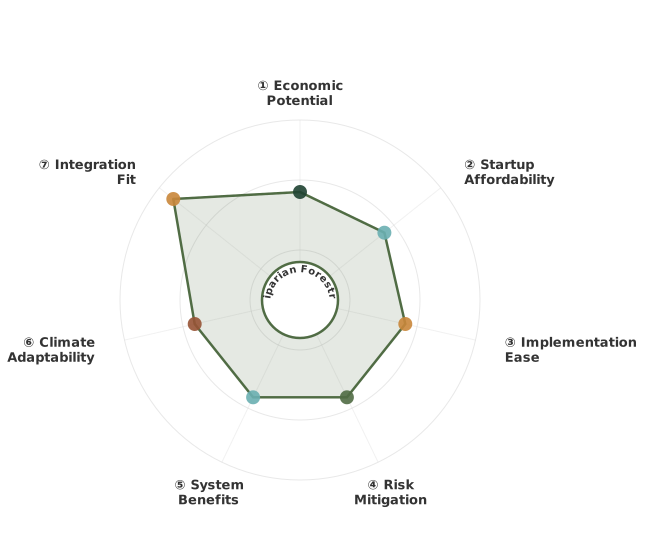
How These Traits Are Calculated
Trait dimensions are ordered clockwise starting from the top of the chart (12 o'clock position):
1. Economic Potential
Financial returns, annual value, and break-even timeline
WHAT: Evaluates financial viability by combining net annual value ($/ha from savings, income, and amortized harvests) with break-even timeline showing when practices pay for themselves.
WHY: Farmers need clear ROI understanding before committing resources. Fast payback (≤3 years) with strong returns (≥$300/ha) enables confident adoption, while long timelines (>10 years) restrict adoption to well-funded operations willing to wait for returns.
HOW: Calculated from net annual value in $/ha and break-even years. Exceptional (≥2.6): fast ROI ≤3 years + high value ≥$300/ha. Typical (1.8-2.5): moderate returns or longer timelines. Limited (<1.8): marginal economics or very long payback >10 years.
2. Startup Affordability
Initial investment costs and financial barrier to entry
WHAT: Measures financial barrier to entry through startup costs for equipment, infrastructure, consulting, and materials. Inverted scoring: lower costs = higher scores = more accessible adoption.
WHY: Affordability determines who can adopt. Low-cost practices (<$250/ha) enable widespread adoption across diverse scales, while high costs (>$2,500/ha) limit adoption to well-capitalized operations, creating barriers that slow regenerative transition.
HOW: Calculated from initial investment parsed from practice content. Inverted scoring: Exceptional (≥2.6): minimal investment <$250/ha. Typical (1.8-2.5): moderate costs $250-2,500/ha. Limited (<1.8): high barrier >$2,500/ha.
3. Implementation Ease
Learning curve and specialized knowledge required
WHAT: Measures how much learning, planning, and specialized knowledge a practice requires. Simpler practices with fewer steps score higher, while complex practices requiring extensive training or specialized resources score lower.
WHY: Complex practices create adoption barriers even when economically viable. Straightforward practices enable faster adoption and broader participation, while those requiring extensive training, timing precision, or specialized equipment limit who can succeed.
HOW: Evaluated by measuring documentation length and identifying complexity markers like location-specific requirements, seasonal timing windows, specialized skills, and dedicated equipment needs. Exceptional (≥2.6): straightforward practices with minimal prerequisites. Typical (1.8-2.5): moderate learning curve with some specialized needs. Limited (<1.8): steep learning curve requiring significant training or resources.
4. Risk Mitigation
Identified financial and ecological risk assessment
WHAT: Evaluates documented risks across financial (investment loss, market volatility) and ecological (crop failure, pest outbreaks) domains. Inverted scoring: fewer risks = higher scores.
WHY: Understanding risk exposure helps farmers make informed decisions. Low-risk practices allow confident implementation, while high-risk practices require careful planning and contingency resources. Risk transparency prevents costly failures.
HOW: Calculated from identified risks in practice content. Inverted scoring: Exceptional (≥2.6): ≤2 risks with manageable severity. Typical (1.8-2.5): 3-5 moderate risks. Limited (<1.8): 6+ risks or severe exposure.
5. System Benefits
How many ways the practice improves your land simultaneously
WHAT: Measures how many aspects of land health improve at once—carbon storage, soil quality, erosion control, water absorption, and biodiversity. Practices that improve multiple areas simultaneously create compounding benefits where each improvement reinforces the others.
WHY: The best practices solve multiple problems at once. For example, addressing erosion simultaneously builds carbon and improves water infiltration, creating a resilient system with positive feedback loops. Single-benefit approaches miss these compound transformation opportunities.
HOW: Evaluated across five key outcomes: carbon sequestration, soil organic matter increase, erosion reduction, water infiltration improvement, and biodiversity enhancement. Exceptional (≥2.6): high carbon storage (>8 t/ha/yr), improvements across 4-5 areas, transformative outcomes. Typical (1.8-2.5): moderate carbon (3-8 t/ha/yr), improvements across 2-3 areas. Limited (<1.8): modest impact (<3 t/ha/yr), single-area focus only.
6. Climate Adaptability
Geographic applicability across Köppen climate zones
WHAT: Evaluates geographic applicability by assessing how many Köppen climate zones successfully support a practice and what adaptation requirements are needed. Measures breadth of climates where farmers can implement with minimal to moderate modifications.
WHY: Universal practices working across diverse climates enable more farmers to adopt regenerative approaches. Practices limited to single climate types (only Mediterranean, only tropical) restrict adoption and slow global transition. Adaptability determines whether a practice serves niche regions or offers broad transformation.
HOW: LLM evaluation of regional success stories, Köppen zone coverage, and adaptation needs. Exceptional (≥2.6): 5+ zones or 4+ climate types, 3+ continents, minimal adaptation. Typical (1.8-2.5): 3-4 zones or 2-3 types, 2 continents, moderate adaptation. Limited (<1.8): 1-2 zones, single region, significant adaptation or highly specialized.
7. Integration Fit
How well this practice combines with others you're doing
WHAT: Measures how well a practice combines with other regenerative practices you might be doing. Some practices work as building blocks that make many other practices easier or more effective, while others work best on their own.
WHY: Practices that combine well with many others create more value on your farm. For example, cover cropping enables no-till, improves grazing, supports crop diversity, and helps water management—making all of them work better together. This helps you build a coherent system rather than juggling disconnected practices.
HOW: Evaluated by identifying which practices combine well and how strong those combinations are. 'Ideally Suited' means strong combinations where practices reinforce each other (practice A makes B easier, while B makes A more effective). 'Adequate' means complementary benefits that work well together. Exceptional (≥2.6): combines well with 6+ practices, serves as a building block. Typical (1.8-2.5): combines with 3-5 practices. Limited (<1.8): 1-2 practices or works best alone.
Going Deeper
1
WHY - The Benefits
Riparian forestry is a multi-faceted practice that delivers profound ecological and economic benefits. By restoring the natural function of land adjacent to water bodies, it creates a more resilient and productive landscape.
Riparian forestry is a multi-faceted practice that delivers profound ecological and economic benefits. By restoring the natural function of land adjacent to water bodies, it creates a more resilient and productive landscape.
WHY - The Benefits
Riparian forestry is a multi-faceted practice that delivers profound ecological and economic benefits. By restoring the natural function of land adjacent to water bodies, it creates a more resilient and productive landscape.
Riparian forestry is a multi-faceted practice that delivers profound ecological and economic benefits. By restoring the natural function of land adjacent to water bodies, it creates a more resilient and productive landscape.
Soil Health Benefits
The core benefit of riparian forestry to soil health is its unparalleled ability to combat erosion. Tree roots create a dense, interwoven network that binds soil particles together, significantly increasing soil aggregate stability. Studies have shown that riparian buffers can reduce sediment loads in runoff by 70-90%, preventing valuable topsoil from being lost downstream. This also protects water quality.
Beyond erosion control, riparian forests contribute to soil organic matter accumulation. Fallen leaves, branches, and other organic debris decompose over time, feeding soil microbes and fungi, and building a rich organic layer. This organic matter improves soil structure, enhances water-holding capacity, and provides essential nutrients for plant growth. The deep root systems of many tree species also tap into deeper soil profiles, bringing up nutrients that can then be recycled to the surface through leaf litter.
The constant presence of living roots in riparian forests supports a vibrant soil food web. Year-round root exudates provide a continuous food source for bacteria, fungi, and protozoa, which in turn support larger soil fauna like nematodes and earthworms. This biological activity improves nutrient cycling, enhances soil aeration and water infiltration, and suppresses soil-borne diseases. The diverse root architectures create complex pore networks, further improving drainage and aeration, counteracting the anaerobic conditions often found in waterlogged soils.
Economic Benefits
While often perceived as solely an environmental practice, riparian forestry offers significant economic advantages for farmers and land managers. The most direct economic return comes from the harvest of timber, pulpwood, nuts, or fruits from the planted trees. Species selection is key here; choosing fast-growing species like poplars or willows can provide pulpwood within 10-15 years, while slower-growing hardwoods like oak or walnut can yield high-value timber over 30-50 years. Nut-bearing species offer earlier returns and additional income streams.
Reduced input costs are another substantial economic benefit. By filtering runoff, riparian buffers prevent agricultural pollutants from entering waterways, potentially reducing downstream treatment costs or compliance issues. Stabilized banks prevent land loss due to erosion, preserving valuable acreage that would otherwise be lost. Improved water availability in nearby fields due to enhanced infiltration and reduced erosion can lessen the need for supplemental irrigation in some cases.
Furthermore, the indirect economic benefits of riparian forests are significant. The shade and water provided by trees can improve livestock performance, reducing heat stress and potentially increasing weight gain or milk production. The habitat created supports beneficial insects that can aid in natural pest control for adjacent crops. Increased biodiversity in riparian zones can also support ecotourism or recreational activities. For crops grown in proximity to riparian buffers, studies have shown yield increases of 5-15% due to improved microclimate, water availability, and reduced pest pressure.
Regenerative Systems Fit
Riparian forestry is a foundational regenerative practice that intrinsically supports all five regenerative agriculture principles. It is not a transition practice but rather a fundamental component of a holistic regenerative system.
Principle 1: Minimize Soil Disturbance Established riparian forests thrive on minimal soil disturbance. The woody perennial cover protects the soil from erosion and compaction. Root systems naturally improve soil structure over decades without mechanical intervention. This stands in direct contrast to practices like annual tillage or channelization of waterways, which cause significant soil disturbance and ecological damage in riparian zones.
Principle 2: Maximize Crop Diversity Riparian forestry inherently creates high levels of plant diversity. By planting a mix of adapted tree and shrub species, along with encouraging native understory vegetation, these systems mimic natural, biodiverse ecosystems. This diversity is crucial for soil health, providing varied root structures and organic inputs. It also supports a wide array of wildlife, from insects to birds and mammals, contributing to overall ecosystem resilience.
Principle 3: Keep Soil Covered The dense canopy of trees, coupled with understory vegetation and a perpetual layer of leaf litter, ensures that the soil surface in riparian zones is consistently covered. This comprehensive cover protects against erosion from rainfall and overland flow, conserves soil moisture, and moderates soil temperatures, creating a stable environment for soil organisms. Degraded riparian areas often suffer from extended periods of bare soil, leading to erosion and loss of soil organic matter.
Principle 4: Maintain Living Roots The perennial nature of trees and shrubs ensures that living roots are present in the soil year-round (or throughout the growing season). These roots actively participate in nutrient cycling, water uptake, and soil structure development. This continuous biological activity contributes to year-round soil health and resilience, a stark contrast to the seasonal root dormancy or absence experienced in annual cropping or fallow systems.
Principle 5: Integrate Livestock While direct grazing within dense forests is managed, riparian areas can be skillfully integrated with livestock management. Managed grazing in adjacent buffer zones can help control invasive species, distribute nutrients from manure, and stimulate forage growth. The shade and reliable water source provided by riparian forests are invaluable for livestock comfort and performance, especially during hot periods. Strategic placement of fencing and water access points can allow controlled livestock utilization, leveraging animal impact for management without causing damage to the riparian ecosystem.
Riparian forestry serves as a natural buffer for agricultural operations, intercepting pollutants and sediment from upslope fields, thereby protecting water quality and reducing the need for costly downstream mitigation. It contributes to a more resilient farm by enhancing water infiltration, reducing flood damage, and fostering biodiversity. This practice is highly compatible with other regenerative approaches such as silvopasture (where trees are spaced for grazing), rotational grazing of adjacent pastures, and keyline design for water management. By restoring the ecological integrity of riparian zones, farmers can enhance the overall health and productivity of their land.
Sources behind this view
Videos & Podcasts
-
Planning harvestable riparian buffers involves considering site, landscape, product, species, management, and program factors. The goal is to balance production with conservation, leveraging programs
-
Riparian buffers at field edges are crucial for water quality, acting as filters and slowing runoff. They also offer economic, recreational, and ecological benefits, and can be managed for non-timber

-
Details riparian forest buffers for water quality and habitat, and windbreaks for soil erosion control and microclimate enhancement. Both offer income potential but require careful design and manageme
-
Agroforestry and riparian buffers enhance water quality by retaining nutrients and reducing soil erosion year-round, unlike annual cropping. Research demonstrates these benefits to encourage wider ado
 Community
-
Guide for establishing riparian forest buffers in Alabama, focusing on water quality and wildlife habitat. Recommends native hardwoods (especially oaks) and pines, with specific site prep, species sel
Read more (pp. 1-2) (opens PDF, pp. 1-2) efotg.sc.egov.usda.gov -
Emphasizes riparian restoration with native vegetation along stream banks to protect soil and water resources, offering guidance on monitoring planted vegetation and ecological functions, including si
Read more (opens in new window) ucanr.edu
Research
-
The effects of riparian forest management on the freshwater environment: a literature review of best management practice (opens in new window)
This study found: Managing forests along streams (riparian buffers) is crucial for protecting water quality, preventing erosion, and supporting stream ecosystems. Recommended widths range from 10-30m, with mixed native
-
Towards ecologically functional riparian zones: A meta-analysis to develop guidelines for protecting ecosystem functions and biodiversity in agricultural landscapes (opens in new window)
This study found: Meta-analysis shows 3m stream buffers filter nutrients, but 24m needed for plant diversity and 144m for bird diversity. Proposes 'Ecologically Functional Riparian Zones' (ERZ) framework for balancing
-
Carbon sequestration in riparian forests: A global synthesis and meta-analysis. (opens in new window)
This study found: Restoring forests along rivers and streams significantly boosts soil carbon and stores 68-158 Mg C/ha in biomass. Actively planting accelerates carbon capture, making riparian restoration a valuable c
-
Carbon sequestration in riparian forests: A global synthesis and meta‐analysis (opens in new window)
This study found: Restoring riparian forests globally triples soil carbon and stores 68-158 Mg C/ha in biomass. Actively planting accelerates carbon capture over natural regeneration, offering immediate benefits and lo
From the Web
-
Healthy riparian areas offer substantial benefits including carbon sequestration, biodiversity support, improved water infiltration, fire buffering, and bank stability. Management involves planting na
-
Conservation and riparian buffers offer environmental benefits like improved water quality and streambank stabilization, and economic opportunities through programs like CCRP or specialty crop sales.
-
Riparian forest buffers, planted along waterways, prevent soil carbon loss, enhance below- and above-ground carbon storage, sequestering an estimated 6.37 tonnes CO2e/acre/year, with design based on s
-
Guidance on creating three-zone forested riparian buffers: Zone 1 (stream-adjacent, wet-adapted natives), Zone 2 (nutrient uptake, flood control), Zone 3 (grasses/forbs for filtering). Emphasizes site
2
WHERE - Regional Considerations
Riparian forestry is applicable across a vast range of climates and geographies worldwide, but success hinges on selecting appropriate species and management strategies tailored to local conditions. The fundamental principles of riparian function—water filtration, bank...
Riparian forestry is applicable across a vast range of climates and geographies worldwide, but success hinges on selecting appropriate species and management strategies tailored to local conditions. The fundamental principles of riparian function—water filtration, bank...
WHERE - Regional Considerations
Riparian forestry is applicable across a vast range of climates and geographies worldwide, but success hinges on selecting appropriate species and management strategies tailored to local conditions. The fundamental principles of riparian function—water filtration, bank...
Riparian forestry is applicable across a vast range of climates and geographies worldwide, but success hinges on selecting appropriate species and management strategies tailored to local conditions. The fundamental principles of riparian function—water filtration, bank...
Click Here to Look up your Region if you don't already know it
Humid Temperate Regions
Representative Locations: Southeastern United States, northern Europe (UK, Germany, Poland), eastern China, Japan, New Zealand
Climate Context: Warm to hot summers and cool to cold winters with moderate to high annual precipitation (75-150 cm or 30-60 inches) distributed relatively evenly. USDA Zones 6-8, Köppen Cfb/Cfa.
In these regions, riparian zones often support dense growth of deciduous hardwoods like oaks, maples, and sycamores, or conifers in cooler areas like pines and firs. Species tolerant of prolonged soil saturation, such as alders, willows, and bald cypress, are excellent choices for the immediate streamside edges. Management focuses on selecting species resistant to common diseases and pests, controlling invasive non-natives (e.g., Japanese knotweed, multiflora rose), and ensuring adequate spacing for light penetration to support understory vegetation and forage in adjacent grazing areas. Timber production can be viable with species like black walnut or oak, while fast-growing poplars and willows can be used for biomass or pulpwood. Flood cycles are a key consideration, requiring species that can withstand inundation and rapid water flow.
Mediterranean Regions
Representative Locations: California, Mediterranean basin (Spain, Italy, Greece), central Chile, southwestern Australia, Western Cape South Africa
Climate Context: Hot, dry summers and mild, wet winters. Annual precipitation 40-90 cm (15-35 inches), highly seasonal. USDA Zones 8-10, Köppen Csa/Csb.
Riparian zones in Mediterranean climates are crucial refuges during hot, dry summers. Species adapted to these conditions often exhibit drought tolerance and can survive on deep soil moisture. Native willows, cottonwoods, sycamores, and various shrub species like manzanita or ceanothus are common. For commercial purposes, species like eucalyptus or certain pines might be considered where appropriate and non-invasive. Management emphasizes drought-tolerant species, water conservation, and fire management strategies, as wildfires are common in these regions. The ecological function of riparian corridors is paramount for maintaining biodiversity and water availability during dry periods. Selecting species that can resprout after fire or drought is often beneficial.
Arid/Semi-Arid Regions
Representative Locations: Western USA, North Africa, Central Asia, Interior Australia
Climate Context: Low annual precipitation (<40 cm or 15 inches), high temperatures, short and often unpredictable growing season. USDA Zones 7-9, Köppen BSh/BSk.
In arid and semi-arid areas, riparian corridors are the lifeblood of the landscape, concentrating available water. Often dominated by phreatophytes (plants that tap into groundwater), species like cottonwoods, mesquite, tamarisk (invasive in many areas, but native elsewhere), and various salt-tolerant shrubs are characteristic. Restoration efforts must focus on native drought-tolerant and water-wise species to avoid exacerbating invasive species issues. Management requires careful consideration of water availability, often prioritizing species that can survive on groundwater alone. Protecting these fragile corridors from overgrazing by livestock is critical, as they are often the only reliable source of forage and water. Agroforestry approaches integrating drought-tolerant fruit trees or fodder shrubs might be considered.
Cold Continental Regions
Representative Locations: Northern USA and Canada, Northern Europe, Northern Asia
Climate Context: Very short growing seasons, extreme summer heat, severe winter cold. USDA Zones 3-5, Köppen Dfa/Dfb.
Riparian areas in cold continental climates are influenced by seasonal freezing and thawing. Species must tolerate extremely cold winters and short, intense growing seasons. Common native species include aspens, birches, willows, and certain conifers like spruces and firs, often adapted to waterlogged soils during spring melt. Management focuses on cold-hardy species, rapid growth rates to maximize the short growing season, and ensuring natural hydrological cycles are maintained to prevent ice damage or disruption. The value of riparian zones in these regions includes providing critical forage during spring and early summer before upland pastures become productive, and offering shelter from harsh winds.
Subtropical Regions
Representative Locations: Southeastern USA, Southern China, Southern Brazil, Eastern Australia
Climate Context: Hot, humid summers and mild winters with generally ample rainfall. USDA Zones 9-11, Köppen Cfa/Cwa.
Subtropical riparian zones are characterized by high rainfall and high temperatures, favoring rapid growth of a wide array of species. Broadleaf evergreens, fast-growing hardwoods like poplars and eucalyptus (where native or appropriate), and numerous fruit-bearing species thrive. Management challenges include controlling aggressive invasive species, managing high humidity which can promote disease, and dealing with intense rainfall events that can cause significant erosion if banks are not stabilized. Economic opportunities include pulpwood production, valuable timber species, and potentially fruit or nut crops. Agroforestry systems are well-suited here, integrating shade-tolerant crops or livestock grazing between tree rows.
Tropical Regions
Representative Locations: Central America, Southeast Asia, East Africa, Northern Australia, Northern South America
Climate Context: High temperatures year-round, with distinct wet and dry seasons or consistent high rainfall. Köppen Af/Am/Aw.
Tropical riparian zones support extremely high biodiversity and rapid growth rates. Species diversity is vast, including various bamboo species, fast-growing tropical hardwoods, fruit trees, and vines. Management must account for intense rainfall and flash flooding, and the rapid growth of vegetation which can quickly lead to a need for pruning or thinning to maintain access and prevent unwanted spread. Economic opportunities are abundant, from high-value timber and non-timber forest products (e.g., rattan, medicinal plants) to cultivation of shade-tolerant crops like cacao or coffee within agroforestry systems. Careful selection of species to avoid invasive potential is paramount.
3
HOW - Implementation Process
Implementing riparian forestry is a phased approach, beginning with planning and site assessment, progressing through establishment, and concluding with long-term management. Success depends on understanding the specific ecological context and integrating the project...
Implementing riparian forestry is a phased approach, beginning with planning and site assessment, progressing through establishment, and concluding with long-term management. Success depends on understanding the specific ecological context and integrating the project...
HOW - Implementation Process
Implementing riparian forestry is a phased approach, beginning with planning and site assessment, progressing through establishment, and concluding with long-term management. Success depends on understanding the specific ecological context and integrating the project...
Implementing riparian forestry is a phased approach, beginning with planning and site assessment, progressing through establishment, and concluding with long-term management. Success depends on understanding the specific ecological context and integrating the project...
Prerequisites
Before beginning, gather essential information and secure resources:
- Site Assessment: Understand the hydrology (water table depth, flood frequency, flow velocity), soil types (texture, drainage), existing vegetation (presence of natives vs. invasives), and slope. Use topographical maps, soil surveys, and on-site observation.
- Drainage Patterns: Map overland flow paths and consider how trees might influence water flow.
- Regulatory Understanding: Familiarize yourself with local, regional, and national regulations regarding riparian zones, water rights, and forestry. Permitting may be required.
- Goal Setting: Define clear objectives—erosion control, water quality improvement, timber production, wildlife habitat, shade for livestock, etc.
- Native Species Identification: Consult local experts, extension services, or botanical resources to identify native species best suited to your specific riparian conditions. Prioritize natives to avoid introducing invasive species.
- Resource Availability: Secure funding, labor, planting stock (seedlings, cuttings), protective measures (tree guards), and tools.
Phase 1: Planning and Design
This phase involves translating your goals and site assessments into a concrete plan.
- Species Selection: Choose species based on tolerance to water-logging, drought, seasonal flooding, soil type, and climate. Consider a mix of species to increase resilience and ecological function:
- Streamside Edges: Fast-growing, flood-tolerant species like willows, alders, cottonwoods, or bald cypress.
- Upper Buffer Zones: Species tolerant of moist but not constantly saturated soils, including various oaks, maples, sycamores, or native fruit and nut trees.
- Economic Species: Integrate commercially valuable species like black walnut, pecans, cherries, or poplars where appropriate.
- Consider natives first: They are best adapted and support local biodiversity. Avoid species known to be invasive in your region.
- Spacing and Density:
- High-density planting (e.g., 1.5-3 m or 5-10 ft spacing) is common for rapid erosion control and creating quick canopy cover.
- Lower density (e.g., 5-15 m or 15-50 ft spacing) might be used for timber production or silvopastoral systems, allowing more light for understory growth or livestock grazing. Space for future tree growth, equipment access (if needed), and light penetration.
- Layout: Design planting patterns to align with natural contours, water flow, and your management objectives. Consider creating zones with different species compositions based on moisture regimes. Plan for access roads or trails if mechanical access is needed for planting or future thinning.
- Protection Measures: Young trees are vulnerable to browsing animals (deer, rabbits, livestock) and mechanical damage. Plan for tree guards, fencing, or exclusion zones in critical areas.
Phase 2: Site Preparation and Planting
This is the physical establishment of the riparian forest.
- Site Preparation: Minimal disturbance is preferred. Remove invasive species aggressively. If planting on a slope, consider contour ripping or planting to break up overland flow and reduce erosion. If extensive invasive grass invasion occurs, some limited disturbance may be necessary, but avoid full tillage.
- Mechanical methods: Spot treatment of invasives, shallow ripping for planting slots on slopes, or shallow discing in very localized areas to prepare planting beds.
- Manual methods: Hand-clearing of invasives, use of mulch.
- Timing: Prepare the site shortly before planting to minimize regrowth of invasives and soil disturbance.
- Planting:
- Timing: Plant during the dormant season (late fall to early spring) when trees are best able to establish without immediate drought stress.
- Methods: Use bare-root seedlings, containerized seedlings, or cuttings depending on species and availability. Ensure proper planting depth, good soil-to-root contact, and firming the soil to remove air pockets. For streamside planting, anchoring with biodegradable erosion control materials might be necessary.
- Watering: Water newly planted trees thoroughly if natural rainfall is insufficient, especially in the first few weeks.
- Protection: Install tree guards or fencing around individual seedlings or entire areas as planned.
Phase 3: Establishment and Early Management (Years 1-5)
This critical phase ensures seedling survival and initial growth.
- Weed and Invasive Control: Competing vegetation can outgrow and kill young trees. Implement a strategy of targeted weed control, either manual (hand-pulling, mulching) or selective herbicide application (spot treatments only, with careful application to avoid damage to desired trees and water bodies). Prioritize removing invasive species.
- Livestock Management: If adjacent to grazing areas, ensure livestock are excluded from young plantings until trees are at least 1.5-2.5 m (5-8 ft) tall and well-rooted to prevent browsing damage. Managed grazing in buffer zones is an option once trees are established.
- Watering: Provide supplemental water during prolonged dry spells, especially in the first 1-2 years, unless trees are specifically selected for extreme drought tolerance and naturally high water tables.
- Monitoring: Regularly inspect plantings for signs of stress, disease, pest infestation, or damage to protective measures. Replace any dead seedlings.
Phase 4: Long-Term Management and Harvest
Once established, riparian forests require adaptive management.
- Thinning: For timber or biomass production, thinning may be necessary in years 5-15 to improve spacing, remove poorly formed trees, and optimize growth for remaining specimens. This can provide early income.
- Pruning: Selective pruning can improve timber value by promoting straight growth and reducing knots.
- Invasive Species Monitoring: Continue to monitor and control any emerging invasive species.
- Harvesting: Plan for sustainable harvest of timber or other products. Consider selective logging rather than clear-cutting to maintain continuous forest cover.
- Livestock Integration: If planned, carefully manage livestock grazing in buffer zones, ensuring sufficient rest periods for vegetation recovery.
- Water Quality Monitoring: Periodically assess water quality downstream to evaluate the effectiveness of the buffer.
Transition Timeline & Phase-Out Strategy
Riparian forestry is a foundational regenerative practice, not a transition one. It does not inherently involve phasing out non-regenerative inputs, but rather establishing a regenerative system where conventional practices might have previously occurred. If the alternative was complete deforestation or intensive agriculture in the riparian zone, then the establishment of riparian forestry is the entire transition—moving from an extractive or bare-soil state to a living, rooted, covered, diverse, and minimally disturbed system.
The "phase-out" is implicit in the establishment of the forest. Any conventional practices like mowing, annual clearing, or unchecked livestock grazing in the riparian zone are phased out as the forest grows and establishes its dominance. The timeline is dictated by tree growth rates:
- Years 0-2: Intense focus on seedling survival, weed control, and protection. Minimal intervention beyond that.
- Years 3-7: Trees begin to provide some ecological benefits (early erosion control, minimal shade); focus shifts to managing for growth and removing invasives. First thinning might occur if for biomass or pulpwood.
- Years 8-15: Functional riparian forest established, providing significant water quality, habitat, and microclimate benefits. Can support managed grazing in buffer zones. Timber trees approaching first thinning opportunities.
- Years 15+: Forest matures, providing full ecological services and significant economic returns from timber, nuts, or other products.
The success of riparian forestry means that the conventional, damaging practices are permanently replaced by ecological stewardship. There is no "graduation" from a less regenerative to a more regenerative riparian forestry, but rather continuous improvement in its ecological function and sustainable management.
Sources behind this view
Research
-
The effects of riparian forest management on the freshwater environment: a literature review of best management practice (opens in new window)
This study found: Managing forests along streams (riparian buffers) is crucial for protecting water quality, preventing erosion, and supporting stream ecosystems. Recommended widths range from 10-30m, with mixed native
-
Carbon sequestration in riparian forests: A global synthesis and meta-analysis. (opens in new window)
This study found: Restoring forests along rivers and streams significantly boosts soil carbon and stores 68-158 Mg C/ha in biomass. Actively planting accelerates carbon capture, making riparian restoration a valuable c
-
Carbon sequestration in riparian forests: A global synthesis and meta‐analysis (opens in new window)
This study found: Restoring riparian forests globally triples soil carbon and stores 68-158 Mg C/ha in biomass. Actively planting accelerates carbon capture over natural regeneration, offering immediate benefits and lo
4
Know the Debate
Riparian forestry is a foundational practice applicable across diverse climates, from humid temperate to arid regions. Its effectiveness and approa...
Know the Debate
Riparian forestry is a foundational practice applicable across diverse climates, from humid temperate to arid regions. Its effectiveness and approa...
Riparian forestry is a foundational practice applicable across diverse climates, from humid temperate to arid regions. Its effectiveness and approach vary significantly with local hydrology, soil types, and available species. While establishment can require substantial upfront investment and labor ($1,400-7,000/ha), the long-term benefits of improved water quality, erosion control, and biodiversity are significant. Management intensity and timelines differ substantially: rapid stream bank stabilization often occurs within 2-5 years, while substantial timber yields or full ecological maturity may take 15-50 years, influenced by species choice and regional growth rates.
How long until riparian buffers show primary benefits?
Noticeable benefits in 2-5 years
Academic and institute sources highlight early improvements in water quality, carbon sequestration, and bank stabilization within 2-5 years of establishment, with potential for immediate erosion control once roots anchor.
Sources behind this view
Sources behind this view
Research
-
Carbon sequestration in riparian forests: A global synthesis and meta-analysis. (opens in new window)
This study found: A large-scale study combining data from over 100 sources found that restoring forests along rivers and streams is a powerful way to capture carbon from the atmosphere. These 'riparian forests' can more than triple the amount of carbon stored in the soil compared to unforested land. Mature riparian forests store a significant amount of carbon in their plant material (biomass), especially in warmer, wetter areas. The study also showed that actively planting trees in these areas speeds up carbon storage much faster than letting nature take its course. This highlights riparian forest restoration as a valuable strategy for both climate change mitigation and providing other natural benefits.
From the Web
-
Riparian forest buffers, planted along waterways, prevent soil carbon loss, enhance below- and above-ground carbon storage, sequestering an estimated 6.37 tonnes CO2e/acre/year, with design based on specific goals.
-
Protecting riparian areas requires year-round vegetative cover, minimizing soil disturbance, responsible nutrient and chemical use, and preventing invasive species. Community collaboration and incentives are key to successful watershed management.
Full function/yield takes 10-20+ years
Field reports suggest that substantial soil stabilization, robust forage availability for livestock, and significant economic returns from timber or non-timber products take 10-20 years or more to realize, as trees mature.
Sources behind this view
Sources behind this view
Videos & Podcasts
-
Details the use of riparian vegetation in agroforestry for erosion control, soil stabilization, and water quality improvement. Explains plant selection (drought-resistant, flowering) and a color-coding system for planting different species along water lines and slopes.
-
Details planting 60 riparian and semi-riparian trees (cypress, false indigo, chinkapin oaks, mulberry, elderberry) around a pond, using 8-gallon drip rings for water-lovers and 5-gallon for others, with cages for animal protection and to screen highway noise.
-
Planning harvestable riparian buffers involves considering site, landscape, product, species, management, and program factors. The goal is to balance production with conservation, leveraging programs like EQIP and CREP while being mindful of state laws and potential impacts.
Making Sense of the Differences
The timeline for realizing benefits from riparian forestry varies based on species' growth rates, climate, establishment success, and the specific benefit measured. Early ecological impacts like erosion control and basic carbon sequestration can occur within 2-5 years, while significant timber harvests or robust economic returns from mature forests often require 10-20+ years.
What planting strategy best ensures tree survival?
Protect until established (lifted trees, guards)
Academic and institute sources recommend planting native species with robust protection like tree guards or fencing until trees reach a significant height (often 1.5-2.5m) to prevent browsing and allow establishment.
Sources behind this view
Sources behind this view
Research
-
The effects of riparian forest management on the freshwater environment: a literature review of best management practice (opens in new window)
This study found: This review looks at how managing forests along rivers and streams (called riparian buffers) can protect freshwater environments from forestry work. These buffer zones are important for trapping soil, preventing erosion, keeping water clean, controlling stream temperature, providing habitat, and improving the landscape. The study suggests that buffer zones between 10 and 30 meters wide are generally recommended. Wider buffers are better for maintaining the overall health and diversity of the stream's ecosystem, while narrower ones help protect the water's physical and chemical qualities. The best results come from buffers that mimic natural forests with a mix of tree species and ages, and an open canopy. It's also important to find a balance for shade, where about half the stream is in sunlight and the rest is dappled shade. The best management approach depends on the specific stream, with some needing active care like thinning and others best left alone. Consistent, long-term management is key to seeing the benefits.
-
The Ecology of Interfaces: Riparian Zones (opens in new window)
This study found: Riverbanks and streamsides (riparian zones) are incredibly rich in plant and animal life because they experience a mix of influences. These include changing flood patterns, unique river features, shifts in climate with elevation, and impacts from the surrounding land. This dynamic environment supports a wide variety of life strategies and organisms that can handle natural disruptions. New approaches to managing these areas have successfully improved ecological health, especially where land use has caused problems. Riparian zones are crucial for planning water resources, restoring rivers and streams, and encouraging people and organizations to work together on these efforts.
From the Web
-
Guidance on creating three-zone forested riparian buffers: Zone 1 (stream-adjacent, wet-adapted natives), Zone 2 (nutrient uptake, flood control), Zone 3 (grasses/forbs for filtering). Emphasizes site assessment, invasive removal, and protection of new plantings.
-
Riparian vegetation is structured in three bands crucial for water infiltration, nutrient uptake, and streambank stability. Water-loving plants are vital; aggressive exotic species can degrade these functions, leading to erosion and pollution.
Early integration (larger stock, managed grazing)
Field practitioners often integrate trees into grazed systems earlier using larger transplants and managed livestock pressure, or select hardy, unpalatable species that can withstand some browse.
Sources behind this view
Sources behind this view
Videos & Podcasts
-
Details the use of riparian vegetation in agroforestry for erosion control, soil stabilization, and water quality improvement. Explains plant selection (drought-resistant, flowering) and a color-coding system for planting different species along water lines and slopes.
-
Agroforestry integrates trees into farming for environmental, economic, and social benefits. Key practices include Riparian Forest Buffers to manage runoff and flooding, Windbreaks to control wind erosion and desiccation, and Forest Farming for under-canopy cultivation like mushrooms. Systems are context-dependent.

-
Details planting 60 riparian and semi-riparian trees (cypress, false indigo, chinkapin oaks, mulberry, elderberry) around a pond, using 8-gallon drip rings for water-lovers and 5-gallon for others, with cages for animal protection and to screen highway noise.
Making Sense of the Differences
The optimal tree establishment strategy depends on species palatability, climate, soil conditions, and management goals. While robust protection typically ensures survival, choosing hardy, native species and integrating managed grazing carefully can achieve successful establishment with less intensive protection.
5
HOW MUCH - Costs & Investment
Note: Costs shown in USD; multiply by local labor and material cost indices for your region. Labor costs vary significantly internationally. These are indicative costs for establishing a new riparian forest. Existing, degraded riparian areas might have lower initial...
Note: Costs shown in USD; multiply by local labor and material cost indices for your region. Labor costs vary significantly internationally. These are indicative costs for establishing a new riparian forest. Existing, degraded riparian areas might have lower initial...
HOW MUCH - Costs & Investment
Note: Costs shown in USD; multiply by local labor and material cost indices for your region. Labor costs vary significantly internationally. These are indicative costs for establishing a new riparian forest. Existing, degraded riparian areas might have lower initial...
Note: Costs shown in USD; multiply by local labor and material cost indices for your region. Labor costs vary significantly internationally. These are indicative costs for establishing a new riparian forest. Existing, degraded riparian areas might have lower initial...
Note: All costs are based on recent US economic data (2024–2026) and may vary substantially by region based on local labor rates, material costs, and regulatory requirements.
Site Preparation and Invasive Control
Site preparation is the single most significant factor in long-term riparian success, as unchecked invasive species can trigger total stand failure. For small operations under 50 acres (20 ha), costs range from $275–$825 per acre ($680–$2,039/ha). These projects typically rely on manual labor and small-scale mechanical removal. For mid-size operations between 50–500 acres (20–202 ha), costs fall to $200–$650 per acre ($494–$1,606/ha), as practitioners transition to forestry mowers and selective, large-scale herbicide applications. For large-scale projects exceeding 500 acres (202 ha), costs range from $150–$500 per acre ($371–$1,236/ha), benefiting from economies of scale where specialized contractors deploy high-capacity mulching equipment and professional-grade pre-emergent herbicide programs.
Planting Stock (Seedlings and Cuttings)
The price of biological materials fluctuates based on genetic quality, regional seed zone requirements, and container types. Small operations (under 50 acres (20 ha)) face higher per-unit costs, ranging from $350–$1,050 per acre ($865–$2,595/ha) due to limited volume and localized procurement. Mid-size operations (50–500 acres (20–202 ha)) typically source standard bare-root stock in bulk, resulting in costs of $275–$850 per acre ($680–$2,100/ha). For large operations (500+ acres), strategic partnerships with nurseries and contract-growing agreements reduce costs to $225–$750 per acre ($556–$1,853/ha), with per-seedling unit prices often compressing to $1.50–$3.00.
Planting Labor
Professional planting is essential to ensure root-to-soil contact and optimal survival rates. Small operations (under 50 acres (20 ha)) usually involve family labor or specialized hand-planting crews, costing $250–$650 per acre ($618–$1,606/ha). Efficiency improves at the mid-level (50–500 acres (20–202 ha)), where crews using dibble bars or gas-powered augers scale the work to $225–$525 per acre ($556–$1,297/ha). Large-scale ecological restoration firms, which employ mechanical transplanters, can reduce labor overhead to $175–$450 per acre ($432–$1,112/ha) by treating 2–5 acres (0.8–2.0 ha) per day, depending on soil compaction and site topography.
Tree Protection (Guards and Fencing)
Protection measures are required to mitigate losses from white-tailed deer, rodents, and livestock. Small-scale projects (under 50 acres (20 ha)) often prioritize individual tree shelters and tubes, leading to costs of $175–$525 per acre ($432–$1,297/ha). Mid-level operations (50–500 acres (20–202 ha)) utilize a hybrid model, mixing individual guards with boundary fencing, costing $150–$450 per acre ($371–$1,112/ha). For operations exceeding 500 acres (202 ha), regional ecosystem management frequently shifts to large-scale livestock exclusion fencing rather than individual tree care, effectively lowering density-related protection costs to $125–$400 per acre ($309–$988/ha).
Most Spend: Most operations fall within the middle 60% of the combined cost range—$900–$1,800 per acre ($2,224–$4,448/ha)—when factoring in moderate site preparation and standard bare-root establishment with basic survival protection.
Why the Range?: Costs vary primarily due to site hydrology and initial weed pressure; heavy infestations of invasive species like multiflora rose can increase preparation budgets by 40%. Additionally, soil type impacts labor efficiency, as rocky or alluvial soils increase the time required for planting by up to 30%, driving costs toward the higher end of the spectrum regardless of project scale.
Sources behind this view
Research
-
Carbon sequestration in riparian forests: A global synthesis and meta‐analysis (opens in new window)
This study found: Restoring riparian forests globally triples soil carbon and stores 68-158 Mg C/ha in biomass. Actively planting accelerates carbon capture over natural regeneration, offering immediate benefits and lo
6
REWARDS AND RISKS - Economics & Risk Factors
REWARDS AND RISKS - Economics & Risk Factors
The economics of riparian forestry are defined by the transition from upfront capital expenditure to long-term asset appreciation and risk avoidance. In a "Best Case" scenario, native species selection leads to robust timber stands; by year 20, select-cut harvests of hardwoods like oak or walnut generate $4,000–$8,000 in revenue per acre. When incorporating annual ecosystem service payments of $200–$500 per acre ($494–$1,236/ha) and a 10% increase in adjacent crop productivity, the 30-year present value can exceed $12,000 per acre ($29,653/ha).
In a "Typical Case," the project benefits from federal cost-share programs, such as the Conservation Reserve Program (CRP) or the Environmental Quality Incentives Program (EQIP), which cover 50–75% of initial establishment. By year 15, thinning operations yield $800–$1,500 per acre ($1,977–$3,707/ha) in biomass or pulpwood revenue. Throughout the operational life, landowners avoid the cost of land loss due to bank erosion, saving $150–$300 per acre ($371–$741/ha) annually.
In a "Worst Case" scenario, inadequate site assessment results in seedling washout or total failure, wiping out the initial $1,500–$2,000 per acre ($3,707–$4,942/ha) investment. Abandoning a failed project often leads to the proliferation of invasive species, requiring remedial chemical control programs costing $200+ per acre annually.
Market factors currently favor operations that integrate carbon credit aggregation, which, while maturing, can add $15–$40 per acre ($37–$99/ha) annually. Conversely, volatility in federal funding for riparian buffers remains a risk; practitioners are advised to budget for "contingency replanting" at $150–$300 per acre ($371–$741/ha) in year two to guarantee survival.
Transition period risks are significant, primarily centering on the "Opportunity Cost" of removing 5–10 acres (2.0–4.0 ha) from active row-crop production. This is often misinterpreted as a pure loss; however, the stabilization of field-edge microclimates, which boosts surrounding crop yields by 5–15%, serves as a key financial offset. Professional site planning, which costs $500–$1,500, is the best strategy to prevent total failure and ensure the transition period translates into long-term wealth stability.
Sources behind this view
Videos & Podcasts
-
Planning harvestable riparian buffers involves considering site, landscape, product, species, management, and program factors. The goal is to balance production with conservation, leveraging programs
-
Riparian buffers at field edges are crucial for water quality, acting as filters and slowing runoff. They also offer economic, recreational, and ecological benefits, and can be managed for non-timber
Research
-
The effects of riparian forest management on the freshwater environment: a literature review of best management practice (opens in new window)
This study found: Managing forests along streams (riparian buffers) is crucial for protecting water quality, preventing erosion, and supporting stream ecosystems. Recommended widths range from 10-30m, with mixed native
-
Carbon sequestration in riparian forests: A global synthesis and meta-analysis. (opens in new window)
This study found: Restoring forests along rivers and streams significantly boosts soil carbon and stores 68-158 Mg C/ha in biomass. Actively planting accelerates carbon capture, making riparian restoration a valuable c
-
Towards ecologically functional riparian zones: A meta-analysis to develop guidelines for protecting ecosystem functions and biodiversity in agricultural landscapes (opens in new window)
This study found: Meta-analysis shows 3m stream buffers filter nutrients, but 24m needed for plant diversity and 144m for bird diversity. Proposes 'Ecologically Functional Riparian Zones' (ERZ) framework for balancing
-
Carbon sequestration in riparian forests: A global synthesis and meta‐analysis (opens in new window)
This study found: Restoring riparian forests globally triples soil carbon and stores 68-158 Mg C/ha in biomass. Actively planting accelerates carbon capture over natural regeneration, offering immediate benefits and lo
7
WHO - Labor & Expertise
Successful implementation and management of riparian forestry require specific expertise and labor inputs, varying in intensity throughout the project lifecycle.
Successful implementation and management of riparian forestry require specific expertise and labor inputs, varying in intensity throughout the project lifecycle.
WHO - Labor & Expertise
Successful implementation and management of riparian forestry require specific expertise and labor inputs, varying in intensity throughout the project lifecycle.
Successful implementation and management of riparian forestry require specific expertise and labor inputs, varying in intensity throughout the project lifecycle.
Skill Requirements
- Ecological Planning: Understanding riparian ecosystems, native plant communities, hydrology, and soil science is crucial for effective design and species selection. This expertise is often found with ecological consultants, soil scientists, riparian specialists, or experienced conservation professionals.
- Silviculture/Forestry: Knowledge of tree growth, pruning, thinning, disease/pest management, and sustainable harvesting techniques is necessary, especially for timber production. Forestry professionals, consulting foresters, or specialized tree nursery managers possess this.
- Horticulture/Arboriculture: For fruit, nut, or ornamental tree integration, knowledge of fruit tree care, propagation, and pruning is essential. Arborists and horticulturalists provide this skill set.
- Soils Management: Understanding soil health, moisture dynamics, and nutrient cycling in riparian environments is vital. Soil scientists or experienced regenerative farmers can contribute.
- Invasive Species Management: Identifying and controlling invasive plants requires specialized knowledge and often specific training or certification for herbicide application.
- Machinery Operation: For site preparation, planting, and future management (e.g., operating tractors for tree planters, brush cutters, or chainsaws), skilled operators are needed.
- Labor Management: Overseeing planting crews, managing volunteers, or coordinating with contractors requires good organizational and supervisory skills.
Labor Needs & Sources
- Planning & Design: Often requires 10-50 hours of professional consultation, depending on project scale and complexity. USD equivalent: $1,000-5,000+.
- Site Preparation: Can range from 10-50 hours/ha for manual invasive removal to 2-10 hours/ha for mechanical clearing, depending on density of invasives. This can be done by farm labor, specialized contractors, or hired crews.
- Planting: Highly labor-intensive. Expect 80-200 hours/ha for manual planting of seedlings or cuttings, depending on spacing and terrain. This can be done by dedicated farm labor, conservation corps, community volunteer days, or professional planting contractors. For large-scale operations over multiple hectares, efficiency gains can be achieved with specialized tree planters attached to tractors, reducing labor to 10-40 hours/ha.
- Early Management (Years 1-5): Annual tasks include weed control, replacement planting, and protection checks. This may require 20-60 hours/ha/year, especially in the first 2-3 years. This labor can be provided by farm staff or contracted.
- Long-Term Management (Years 5+): Pruning, thinning, monitoring, and harvest preparation require periodic labor, perhaps 5-20 hours/ha/year, often by skilled farm labor or professional foresters.
International Labor Cost Considerations
Labor costs vary dramatically across continents. In regions with lower labor costs (e.g., parts of Southeast Asia, Africa, Latin America), manual planting and intensive weed control may be more economically viable than in regions with high labor costs (e.g., Western Europe, North America, Australia).
- High Labor Cost Regions: Consider investing in mechanical planters, efficient tree guards, and potentially hiring specialized contractors for planting. Focus on species requiring less intensive maintenance.
- Low Labor Cost Regions: Manual planting and intensive care are feasible and can lead to higher survival rates. Volunteer initiatives or community-based projects may be highly effective.
Expertise Sources
- Local Agricultural Extension Services: Offer advice on species, planting, and management, often with regional expertise.
- Forestry Departments/Agencies: Provide guidance on timber options, sustainable harvesting, and potentially grant programs.
- Conservation Districts/Organizations: Many NGOs focus on riparian restoration and habitat improvement, offering technical assistance and volunteer coordination.
- Consulting Ecologists/Foresters: Provide specialized design, planning, and management services for complex projects.
- Native Plant Nurseries: Offer expertise on species suitability and sourcing.
- University Research Programs: Often have extension arms or researchers who can provide tailored advice.
8
COMPATIBLE PRACTICES - Integration Opportunities
Riparian forestry is a foundational practice that synergizes powerfully with other regenerative approaches, enhancing the overall resilience and productivity of the agricultural landscape.
Riparian forestry is a foundational practice that synergizes powerfully with other regenerative approaches, enhancing the overall resilience and productivity of the agricultural landscape.
COMPATIBLE PRACTICES - Integration Opportunities
Riparian forestry is a foundational practice that synergizes powerfully with other regenerative approaches, enhancing the overall resilience and productivity of the agricultural landscape.
Riparian forestry is a foundational practice that synergizes powerfully with other regenerative approaches, enhancing the overall resilience and productivity of the agricultural landscape.
Rotational Grazing
- Integration: Rotational grazing systems, especially multi-paddock adaptive grazing, are crucial for managing livestock impact in or near riparian areas. Designated grazing zones within buffer areas can be managed to defoliate invasive species, distribute manure, and stimulate forage growth. Long rest periods are essential to allow vegetation recovery and prevent re-compaction.
- Synergy: Riparian trees provide vital shade and water for livestock, improving their performance and reducing heat stress, making rotational grazing more effective and beneficial. Reduced grazing pressure on surrounding lands due to these on-farm resources.
Native Seed Production / Pollinator Habitat
- Integration: Establishing native wildflowers and grasses alongside riparian trees significantly boosts biodiversity, providing habitat and food sources for beneficial insects, pollinators, and wildlife. Sourcing native plant materials for riparian restoration can also stimulate local native seed production efforts.
- Synergy: Creates a mosaic of habitats that support a wider range of ecosystem services, including improved pollination for nearby agricultural crops and natural pest control.
Silvopasture
- Integration: Designing riparian zones with wider spacing between trees allows for integration with livestock grazing between rows. This is particularly valuable in broader buffer zones bordering pastures. Species selection can provide both timber/nut resources and fodder.
- Synergy: Combines the benefits of riparian protection with the economic and ecological advantages of silvopasture, creating a multi-layered production system that maximizes land use efficiency and biodiversity.
Cover Cropping
- Integration: Cover crops can be used in adjacent agricultural fields to prevent erosion reaching the riparian zone and to improve soil health upslope. In established riparian forests, certain shade-tolerant cover crops might be used in transitional areas or during early establishment phases.
- Synergy: Enhances the overall nutrient cycling and water infiltration across the farm, ensuring that runoff reaching the riparian zone is cleaner, thereby amplifying the effectiveness of the riparian buffer.
Keyline Design / Water Swales
- Integration: Contour swales or keyline plowing upslope of riparian zones can capture and slow rainwater runoff, promoting infiltration and reducing peak flows that cause erosion in riparian areas.
- Synergy: Reduces the erosive force of water entering the riparian corridor, decreasing the burden on the trees and vegetation to stabilize banks and filter sediment.
Agroforestry Systems (e.g., Alley Cropping)
- Integration: Where riparian zones transition to agricultural fields, trees can be planted in wider rows (alleys) to integrate with annual crops or forage production.
- Synergy: Provides shade and windbreaks for crops, improves soil health through tree root activity and litter, and diversifies farm income, while still contributing to riparian ecosystem health at the edge of fields.
The successful integration of riparian forestry with these practices creates a synergistic system where each component reinforces the others, leading to a more resilient, productive, and ecologically sound farm or landscape.
Sources behind this view
Videos & Podcasts
-
Case studies showcase agroforestry: Iowa farm with nursery crops/nuts/fruits; Vermont goat dairy using tree hay; shiitake mushroom cultivation; New York farm integrating livestock with hedgerows/fruit

-
Planning harvestable riparian buffers involves considering site, landscape, product, species, management, and program factors. The goal is to balance production with conservation, leveraging programs
-
Agroforestry and riparian buffers enhance water quality by retaining nutrients and reducing soil erosion year-round, unlike annual cropping. Research demonstrates these benefits to encourage wider ado
-
Details riparian forest buffers for water quality and habitat, and windbreaks for soil erosion control and microclimate enhancement. Both offer income potential but require careful design and manageme
Community
-
Agroforestry integrates trees with agriculture, including Forest Farming, Silvopasture, Riparian Buffers, Windbreaks, and Alley Cropping, with Forest Gardening also recognized. Farms can combine these
Read more (opens in new window) permies.com
Research
-
Agroforestry: The North American Perspective (opens in new window)
This study found: Agroforestry integrates trees with crops/livestock, offering environmental benefits like climate adaptation and mitigation. Key North American practices include alley cropping, silvopasture, and ripar
-
Synergizing Agroforestry and Permaculture for Sustainable Organic Farming (opens in new window)
This study found: Agroforestry and permaculture enhance organic farming by integrating trees, crops, and livestock, improving soil health, biodiversity, and resilience. Challenges include funding, knowledge, and policy
-
The effects of riparian forest management on the freshwater environment: a literature review of best management practice (opens in new window)
This study found: Managing forests along streams (riparian buffers) is crucial for protecting water quality, preventing erosion, and supporting stream ecosystems. Recommended widths range from 10-30m, with mixed native
-
Evidence for the impacts of agroforestry on ecosystem services and human well-being in high-income countries: a systematic map (opens in new window)
This study found: Research in wealthy nations shows agroforestry (integrating trees with farms) improves soil, water, and carbon storage, but evidence on human well-being and policy impacts is limited. More diverse stu