
Sacrifice Paddock
A sacrifice paddock is a temporary, designated area on a farm or ranch used for intensive grazing or animal holding, often intentionally overgrazed for short durations to break up soil, redistribute nutrients, or manage livestock movement. It is considered a "transition" or "context-dependent" practice in regenerative agriculture, as its design and management determine whether it aids or hinders long-term soil health and ecosystem function.
Read More: Complete Description
A sacrifice paddock, sometimes referred to as a high-impact area, holding pen, or sacrifice lot, is a designated portion of land managed for intensive animal confinement or grazing over a limited period. The primary purpose is often to manage livestock logistics, which can include holding animals before or after transport, concentrating manure for nutrient management, or using intense grazing pressure to break down old forage or disturb soil. In a conventional context, these areas often become degraded, with compacted soil, bare patches, and little to no living vegetation.
However, within a regenerative framework, the concept of a sacrifice paddock can be re-envisioned. Instead of a permanently degraded zone, it becomes a strategic tool used temporarily to achieve specific land management goals that ultimately support broader regenerative objectives. For instance, intense mob grazing in a sacrifice paddock can be deliberately used to break up soil surface crusts, incorporate plant residue, and redistribute nutrients in patchy or difficult areas.
Regenerative Systems Fit: The classification of a sacrifice paddock as foundational, transition, or context-dependent hinges entirely on its management and purpose.
- Transition Practice: When a farm is transitioning from conventional to regenerative practices, a sacrifice paddock may be necessary. For example, on land with severe historical soil compaction that biological methods alone have struggled to rectify over 2-3 years, a sacrifice paddock could be used for a short, very high-intensity, multi-species grazing event. The goal here would be to mimic natural hoof action and intense defecation/urine to break surface crusts and add a significant organic matter "shock" of manure and urine. This would be immediately followed by seeding a diverse cover crop mix and a commitment to permanent no-till management. The "sacrifice" here is accepting a short-term period of high soil disturbance and potential degradation to enable a significant leap forward in soil biology and structure recovery, which would otherwise take much longer through purely biological means. The timeline for phasing out this practice is absolute: it is a one-time intervention, and the land is then immediately restored to regenerative management principles.
- Context-Dependent Practice: In mature regenerative systems, a sacrifice paddock can be context-dependent. If used strategically as a holding pen to concentrate manure in areas that genuinely need nutrient enrichment (e.g., helping very poor soil patches catch up), with planned rotation out and immediate sowing of living cover crops, it can be regenerative. The key is that it is not a permanent degraded zone but a temporary nutrient cycling tool. If it is used to hold animals before transport for several weeks, leading to bare, compacted soil and bare ground, without immediate follow-up seeding or proper rest, it becomes extractive and contradicts regenerative principles. Regenerative use requires careful planning of duration, species composition (integrating multiple species to exploit different resources and improve nutrient cycling), and immediate post-use restoration.
A common misconception is that any area where animals are concentrated is necessarily detrimental. While overuse or mismanagement leads to degradation, strategic, short-term, intense impact followed by adequate recovery periods and active restoration can be a powerful tool. For instance, on livestock operations aiming to build soil organic matter and improve water infiltration, implementing a rotational grazing system where animals are moved frequently through many small paddocks (the high-density, short-duration approach often associated with sacrifice paddock principles) can achieve these goals. The "sacrifice" becomes the temporary, high impact on a small area that leads to greater overall ecosystem health.
The success of a sacrifice paddock in supporting regenerative goals lies in its intentionality, temporary nature, and post-event management. It should never be a dumping ground for animals, but a carefully designed tool used judiciously. It must facilitate the integration of livestock (Principle 5) by strategically cycling nutrients and potentially managing plant communities, while minimizing soil disturbance (Principle 1) through limited duration and controlled impact, keeping soil covered (Principle 3) immediately after its use, and ultimately maximizing diversity (Principle 2) and maintaining living roots (Principle 4) through subsequent restorative phases.
Sources behind this view
Key Points
What It Is
- Temporary holding or intensive grazing area
- Used for specific management goals
- Can be regenerative or extractive depending on use
- Transition tool for severe compaction relief
Why Do It
- Concentrate nutrients and manure strategically
- Break up soil crusts and surface compaction
- Manage livestock movement and logistics
- Enable transition to regenerative no-till systems
Know the Debate
- Soil improvement timelines range from 1-2 yrs to 3-5 yrs.
- Infrastructure needs vary from temporary to permanent.
- Strategic use can build fertility and soil structure.
Benefits - Financial
- 15–25% increase in primary forage productivity post-intervention
- Reduced synthetic fertilizer expenditure by $45–$75 per acre ($111–$185 per hectare) annually
- Soil nutrient cycling acceleration worth $50–$100 per acre ($124–$247 per hectare) in mineral value
- Regenerative certification premiums increase revenue by $0.20–$0.45/lb
Benefits - System
- Soil structure improvement on degraded land (Principles 1, 3)
- Facilitates nutrient cycling (Principle 5)
- Enables diverse plant establishment (Principle 2)
- Restores function for living roots (Principle 4)
Risks - Financial
- Improper management causes $400–$650 per acre ($988–$1,606 per hectare) in mechanical erosion remediation
- Initial setup costs $200–$320 per acre ($494–$791 per hectare) with 2.0-year average payback
- 5–15% short-term yield dip during the 1-year transition phase
Risks - System
- Violates no-disturbance principle if overused (Regenerative Principle 1)
- Can lead to bare soil and erosion if not managed
- Requires immediate, proper restoration phase
- Risk of permanent degradation if misused
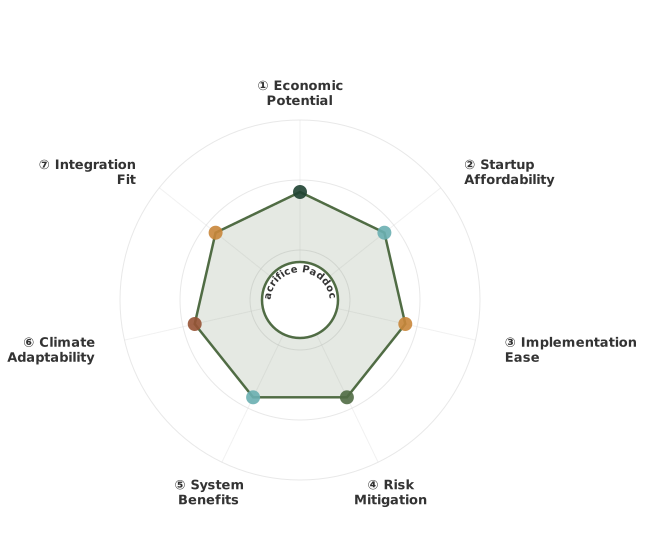
How These Traits Are Calculated
Trait dimensions are ordered clockwise starting from the top of the chart (12 o'clock position):
1. Economic Potential
Financial returns, annual value, and break-even timeline
WHAT: Evaluates financial viability by combining net annual value ($/ha from savings, income, and amortized harvests) with break-even timeline showing when practices pay for themselves.
WHY: Farmers need clear ROI understanding before committing resources. Fast payback (≤3 years) with strong returns (≥$300/ha) enables confident adoption, while long timelines (>10 years) restrict adoption to well-funded operations willing to wait for returns.
HOW: Calculated from net annual value in $/ha and break-even years. Exceptional (≥2.6): fast ROI ≤3 years + high value ≥$300/ha. Typical (1.8-2.5): moderate returns or longer timelines. Limited (<1.8): marginal economics or very long payback >10 years.
2. Startup Affordability
Initial investment costs and financial barrier to entry
WHAT: Measures financial barrier to entry through startup costs for equipment, infrastructure, consulting, and materials. Inverted scoring: lower costs = higher scores = more accessible adoption.
WHY: Affordability determines who can adopt. Low-cost practices (<$250/ha) enable widespread adoption across diverse scales, while high costs (>$2,500/ha) limit adoption to well-capitalized operations, creating barriers that slow regenerative transition.
HOW: Calculated from initial investment parsed from practice content. Inverted scoring: Exceptional (≥2.6): minimal investment <$250/ha. Typical (1.8-2.5): moderate costs $250-2,500/ha. Limited (<1.8): high barrier >$2,500/ha.
3. Implementation Ease
Learning curve and specialized knowledge required
WHAT: Measures how much learning, planning, and specialized knowledge a practice requires. Simpler practices with fewer steps score higher, while complex practices requiring extensive training or specialized resources score lower.
WHY: Complex practices create adoption barriers even when economically viable. Straightforward practices enable faster adoption and broader participation, while those requiring extensive training, timing precision, or specialized equipment limit who can succeed.
HOW: Evaluated by measuring documentation length and identifying complexity markers like location-specific requirements, seasonal timing windows, specialized skills, and dedicated equipment needs. Exceptional (≥2.6): straightforward practices with minimal prerequisites. Typical (1.8-2.5): moderate learning curve with some specialized needs. Limited (<1.8): steep learning curve requiring significant training or resources.
4. Risk Mitigation
Identified financial and ecological risk assessment
WHAT: Evaluates documented risks across financial (investment loss, market volatility) and ecological (crop failure, pest outbreaks) domains. Inverted scoring: fewer risks = higher scores.
WHY: Understanding risk exposure helps farmers make informed decisions. Low-risk practices allow confident implementation, while high-risk practices require careful planning and contingency resources. Risk transparency prevents costly failures.
HOW: Calculated from identified risks in practice content. Inverted scoring: Exceptional (≥2.6): ≤2 risks with manageable severity. Typical (1.8-2.5): 3-5 moderate risks. Limited (<1.8): 6+ risks or severe exposure.
5. System Benefits
How many ways the practice improves your land simultaneously
WHAT: Measures how many aspects of land health improve at once—carbon storage, soil quality, erosion control, water absorption, and biodiversity. Practices that improve multiple areas simultaneously create compounding benefits where each improvement reinforces the others.
WHY: The best practices solve multiple problems at once. For example, addressing erosion simultaneously builds carbon and improves water infiltration, creating a resilient system with positive feedback loops. Single-benefit approaches miss these compound transformation opportunities.
HOW: Evaluated across five key outcomes: carbon sequestration, soil organic matter increase, erosion reduction, water infiltration improvement, and biodiversity enhancement. Exceptional (≥2.6): high carbon storage (>8 t/ha/yr), improvements across 4-5 areas, transformative outcomes. Typical (1.8-2.5): moderate carbon (3-8 t/ha/yr), improvements across 2-3 areas. Limited (<1.8): modest impact (<3 t/ha/yr), single-area focus only.
6. Climate Adaptability
Geographic applicability across Köppen climate zones
WHAT: Evaluates geographic applicability by assessing how many Köppen climate zones successfully support a practice and what adaptation requirements are needed. Measures breadth of climates where farmers can implement with minimal to moderate modifications.
WHY: Universal practices working across diverse climates enable more farmers to adopt regenerative approaches. Practices limited to single climate types (only Mediterranean, only tropical) restrict adoption and slow global transition. Adaptability determines whether a practice serves niche regions or offers broad transformation.
HOW: LLM evaluation of regional success stories, Köppen zone coverage, and adaptation needs. Exceptional (≥2.6): 5+ zones or 4+ climate types, 3+ continents, minimal adaptation. Typical (1.8-2.5): 3-4 zones or 2-3 types, 2 continents, moderate adaptation. Limited (<1.8): 1-2 zones, single region, significant adaptation or highly specialized.
7. Integration Fit
How well this practice combines with others you're doing
WHAT: Measures how well a practice combines with other regenerative practices you might be doing. Some practices work as building blocks that make many other practices easier or more effective, while others work best on their own.
WHY: Practices that combine well with many others create more value on your farm. For example, cover cropping enables no-till, improves grazing, supports crop diversity, and helps water management—making all of them work better together. This helps you build a coherent system rather than juggling disconnected practices.
HOW: Evaluated by identifying which practices combine well and how strong those combinations are. 'Ideally Suited' means strong combinations where practices reinforce each other (practice A makes B easier, while B makes A more effective). 'Adequate' means complementary benefits that work well together. Exceptional (≥2.6): combines well with 6+ practices, serves as a building block. Typical (1.8-2.5): combines with 3-5 practices. Limited (<1.8): 1-2 practices or works best alone.
Going Deeper
1
WHY - The Benefits
The strategic use of a sacrifice paddock, especially as a transitional or context-dependent management tool, offers several key benefits that can accelerate progress toward regenerative goals. These benefits span soil health, nutrient cycling, livestock management...
The strategic use of a sacrifice paddock, especially as a transitional or context-dependent management tool, offers several key benefits that can accelerate progress toward regenerative goals. These benefits span soil health, nutrient cycling, livestock management efficiency, and enabling the implementation of other regenerative practices.
WHY - The Benefits
The strategic use of a sacrifice paddock, especially as a transitional or context-dependent management tool, offers several key benefits that can accelerate progress toward regenerative goals. These benefits span soil health, nutrient cycling, livestock management...
The strategic use of a sacrifice paddock, especially as a transitional or context-dependent management tool, offers several key benefits that can accelerate progress toward regenerative goals. These benefits span soil health, nutrient cycling, livestock management efficiency, and enabling the implementation of other regenerative practices.
Soil Health Benefits
When managed as a form of "shock and awe" biological intervention on severely degraded land, a sacrifice paddock can initiate significant soil improvements. Intense, multi-species grazing can break up surface crusts that inhibit water infiltration and aeration, allowing the soil surface to become more amenable to rainfall penetration. The high concentration of manure and urine deposits organic matter and nutrients directly into the soil profile, acting as a potent fertilizer boost for subsequent cover crops or perennial forages. This rapid nutrient and organic matter input can kickstart microbial populations crucial for soil aggregation and structure development.
For instance, on land suffering from decades of poor management, resulting in anaerobic conditions and low infiltration, a short, intense grazing period with a diverse mix of livestock (cattle, sheep, poultry) over 24-72 hours can effectively shatter surface capping. This initial physical disturbance, followed by immediate seeding of hardy, deep-rooted cover crops, can restore infiltration rates from less than 0.5 inches per hour to 1-2 inches per hour within 1-2 years. This improved water management is foundational for healthier plant growth and deeper root systems, which in turn support Principle 4 (Maintain Living Roots) and Principle 3 (Keep Soil Covered).
Economic Benefits
The economic case for using a sacrifice paddock strategically is often tied to efficiency and targeted improvement. If used as a short-term holding pen before or after sale, concentrating animals in one area allows for easier manure collection and application to fields most in need of nutrients, reducing the cost and effort of spreading manure across a larger area. The value of this concentrated manure can be significant. Estimating conservatively, if 50 cattle are held for 3 days, they will excrete approximately 1.5 tonnes of manure. If this is strategically applied to a specific hectare or 2.5 acres, it can provide substantial fertility, potentially replacing $250-750/ha ($100-300/acre) USD equivalent in synthetic or purchased organic fertilizers over time.
Furthermore, by strategically breaking up compacted areas or encouraging weed residue breakdown through intense grazing, the sacrifice paddock can improve the establishment success and productivity of subsequent cover crops or cash crops in that area. This can lead to an increase of 10-25% in yield for the following season in the treated area, effectively recapturing any economic losses incurred during the short "sacrifice" period. The overall break-even period is often short, 0-2 years, as the benefits of improved fertility, soil structure, and subsequent yield gains quickly offset the minimal upfront costs beyond animal management.
Regenerative Systems Fit
The strategic application of a sacrifice paddock aligns with regenerative principles when managed with specific goals and transition pathways in mind.
Principle 1 (Minimize Soil Disturbance): This principle is the most challenged by the concept of a sacrifice paddock. A conventionally managed sacrifice paddock or holding pen is inherently disruptive. However, if used as a temporary measure, for extremely short durations (24-72 hours), and followed by immediate seeding of living covers, it can be seen as a "last resort" intervention. The intensity of disturbance is high, but the duration and area are limited, and the objective is to enable better adherence to Principle 1 in the long term by breaking through severe compaction that biological methods alone cannot easily penetrate. It is not an annual practice but a one-time reset for severely degraded land.
Principle 2 (Maximize Crop Diversity): A sacrifice paddock can be used to enable Principle 2. On land where severe compaction prevents diverse plant communities from establishing, a single intensive grazing event can break down the barrier. Following this, the land is immediately sown with a highly diverse cover crop mix (10-20+ species) designed to explore the newly fractured soil profile. This allows for a much more robust and diverse plant community than would have been possible otherwise.
Principle 3 (Keep Soil Covered): The risk of creating bare soil is high and intentional in a sacrifice paddock, but it is a managed and extremely temporary state. To be regenerative, the practice requires that the intensive impact be immediately followed (within 24-48 hours) by seeding living cover crops or applying mulch. The objective is to minimize the time the soil is exposed, fundamentally distinguishing it from the prolonged bare ground that can result from continuous set stocking. If the paddock is used in rotation with other areas, then when it's not actively being used as a sacrifice area, it should be managed to keep soil covered through perennial forages or cover crops.
Principle 4 (Maintain Living Roots): Like Principle 3, sacrifice paddocks pose a risk to Principle 4 through bare soil. The key is a rapid transition from the intensive impact phase to a phase of re-establishment with a robust cover crop or perennial forage. The goal is to re-establish living roots as quickly as possible, ideally within days rather than weeks. If the goal is to break compaction, the subsequent diverse cover crop with deep taproots will significantly extend the depth and duration of living root activity.
Principle 5 (Integrate Livestock): This is the principle most directly served by a sacrifice paddock. The practice inherently involves livestock. The regenerative application focuses on using livestock strategically to achieve specific nutrient cycling and soil interaction goals over a short, controlled period, rather than just for holding or passive grazing. By integrating diverse species into the sacrifice paddock (e.g., cattle followed by sheep and poultry), the impact and nutrient distribution can be maximized, enhancing the practice's regenerative potential.
For farms transitioning from conventional methods, the sacrifice paddock can be a crucial stepping stone. If a farm has severely compacted land that has resisted biological remediation for 2-3 years, a one-time, high-intensity grazing event in a designated area, immediately followed by diverse cover cropping and a commitment to permanent no-till, can bring that land back into functional regenerative management within 2-3 years, rather than the 5-10 years it might otherwise take. The practice is phased out by achieving functional soil health, meaning the land no longer requires such drastic intervention.
Sources behind this view
 Videos & Podcasts
-
Regenerative grazing (adaptive multi-paddock) uses high-density, short-duration grazing with long recovery to stimulate soil health, increase biomass, and improve water infiltration, mimicking natural
 Research
-
Managing Grazing to Restore Soil Health, Ecosystem Function, and Ecosystem Services (opens in new window)
This study found: Properly managed grazing animals can reverse environmental damage. Regenerative practices, like Adaptive Multi-Paddock (AMP) grazing, boost soil health, increase soil carbon, reduce erosion, and enhan
-
FORAGES AND PASTURES SYMPOSIUM: COVER CROPS IN LIVESTOCK PRODUCTION: WHOLE-SYSTEM APPROACH: Managing grazing to restore soil health and farm livelihoods. (opens in new window)
This study found: Shifting to low-input, regenerative farming with smart grazing management can restore soil health, improve ecosystem services like carbon capture and water infiltration, and boost farm profitability f
-
316 Regenerative grazing: restoring ecosystem function to improve farm profits (opens in new window)
This study found: Regenerative grazing can improve soil health and farm profits by restoring ecosystem function. Healthy, carbon-rich soil supports biodiversity and better nutrition for livestock and humans.
2
WHERE - Regional Considerations
The suitability and management of sacrifice paddocks are influenced by climate, soil type, and typical farm scales, requiring adaptation across different regions.
The suitability and management of sacrifice paddocks are influenced by climate, soil type, and typical farm scales, requiring adaptation across different regions.
WHERE - Regional Considerations
The suitability and management of sacrifice paddocks are influenced by climate, soil type, and typical farm scales, requiring adaptation across different regions.
The suitability and management of sacrifice paddocks are influenced by climate, soil type, and typical farm scales, requiring adaptation across different regions.
Click Here to Look up your Region if you don't already know it
Humid Temperate Regions
Representative Locations: Midwestern United States, Northern Europe (UK, Germany, Poland), Eastern China, Japan, New Zealand
Climate Context: Warm to hot summers and cool to cold winters with moderate to high annual precipitation (75-150 cm or 30-60 inches) distributed relatively evenly. USDA Zones 6-8, Köppen Cfb/Cfa.
Considerations: These regions often have fertile soils, but intensive agriculture can lead to compaction from heavy machinery and livestock. Sacrifice paddocks can be beneficial for breaking up tough clay soils or revitalizing overgrazed pasture. The abundance of rainfall supports rapid regrowth of cover crops after the intensive grazing period. Species selection for cover crops should focus on frost-tolerant options for fall/winter and vigorous summer annuals, ensuring continuous living cover. Challenges include potential for nutrient runoff if not managed carefully during intensive impact phases, and selecting livestock species that thrive in variable conditions. Example: Utilizing a sacrifice paddock to break compaction on a rolling landscape in Ohio, USA, followed by a multi-species cover crop (rye, vetch, radish) and then rotating to adaptive grazing across the farm.
Mediterranean Regions
Representative Locations: California, Mediterranean basin (Spain, Italy, Greece), Central Chile, Southwestern Australia, Western Cape South Africa
Climate Context: Hot, dry summers and mild, wet winters. Annual precipitation 40-90 cm (15-35 inches), highly seasonal. USDA Zones 8-10, Köppen Csa/Csb.
Considerations: Water scarcity and highly seasonal rainfall are primary challenges. Sacrifice paddocks in these regions must be used judiciously to avoid exacerbating soil degradation. The focus should be on improving water infiltration before the wet season, utilizing the intensive impact to create pore spaces for winter rains. Livestock should be managed to avoid overgrazing bare soil during dry periods. Cover crop selection is critical, prioritizing drought-tolerant species or those that can survive summer dormancy and respond to early rains. Intensive grazing might be used to break down heavy residues from previous crops to facilitate a quick planting of a drought-hardy cover crop mix. Example: Using a sacrifice paddock on a vineyard floor in California during end-of-season to break up sprayer compaction, followed immediately by broadcasting a drought-tolerant cover crop mix (e.g., medic, barley, phacelia) before winter rains.
Arid/Semi-Arid Regions
Representative Locations: Western USA, North Africa, Central Asia, Interior Australia
Climate Context: Low annual precipitation (<40 cm or 15 inches), high temperatures, short and often unpredictable growing seasons. USDA Zones 7-9, Köppen BSh/BSk.
Considerations: Water is the limiting factor. Sacrifice paddocks here are primarily used for nutrient concentration and soil breaking in very targeted areas. Intensive grazing must be carefully managed to avoid removing all vegetation, which would lead to severe erosion. The goal is to use a short, intense impact to break surface crusts that prevent the rare rainfall events from infiltrating. Cover crops used after impact must be highly drought-tolerant and fast-growing, or the land must be allowed a long rest period after the impact. Manure concentration is highly valuable in these systems, potentially revitalizing small areas of very poor soil. Example: Utilizing a sacrifice paddock in a dryland wheat system in Australia to break compaction after harvest, apply livestock manure, and then seed a tough, drought-adapted cover crop mix (e.g., vetch, wheat, safflower) hoping for the first autumn rains.
Cold Continental Regions
Representative Locations: Northern USA and Canada, Northern Europe, Northern Asia
Climate Context: Very short growing seasons, extreme summer heat, severe winter cold. USDA Zones 3-5, Köppen Dfa/Dfb.
Considerations: Extremely short growing seasons and harsh winters mean planning is paramount. Sacrifice paddocks will likely be used for short summer impact periods to facilitate cover crop establishment before winter. The intense impact needs to occur when there is sufficient moisture and time for cover crops to establish robust root systems before deep freezes. The nutrient concentrating effect of manure is highly beneficial for soils that have been depleted by short growing seasons. Livestock integration during the short growing season is critical, but care must be taken to ensure adequate rest periods so soil does not become waterlogged and compacted during wet periods. Example: Using a sacrifice paddock in the Canadian Prairies to break surface crust on a severely degraded pasture patch in early summer, followed by seeding a quick-growing cover crop mix (e.g., oats, peas, daikon), then allowing it to grow and decompose before winter freeze-up for an early spring start the following year.
Subtropical Regions
Representative Locations: Southeastern USA, Southern China, Southern Brazil, Eastern Australia
Climate Context: Hot, humid summers and mild winters with generally ample rainfall. USDA Zones 9-11, Köppen Cfa/Cwa.
Considerations: High humidity, ample rainfall, and long growing seasons mean compaction can be a significant issue, especially with heavy machinery and intensive livestock operations. Sacrifice paddocks can be very effective here for breaking up tough, wet soils and concentrating nutrients. The long growing season allows for robust cover crop establishment and rapid soil recovery. However, the risk of nutrient runoff and water pollution is higher due to consistent rainfall, so manure management and rapid cover cropping are crucial. Example: Using a sacrifice paddock in a humid subtropical region of Australia to manage cattle during the wet season, breaking up compacted soil under a tree line, immediately planting a vigorous, multi-species cover crop (e.g., sorghum, cowpeas, sunflower, pearl millet) to utilize the consistent moisture and prevent erosion.
Tropical Regions
Representative Locations: Central America, Southeast Asia, East Africa, Northern Australia, Northern South America
Climate Context: High temperatures year-round, with distinct wet and dry seasons or consistent high rainfall. Köppen Af/Am/Aw.
Considerations: Long growing seasons and high temperatures can lead to rapid soil degradation if not managed. Sacrifice paddocks can be used to break surface compaction that impedes water infiltration during intense wet seasons or to concentrate nutrients in areas depleted by continuous cropping or grazing. The challenge is to manage the impact to prevent excessive erosion during heavy rains. Cover cropping after the intensive grazing is essential, focusing on species that thrive in heat and humidity. Rapid nutrient cycling from manure is highly beneficial in tropical soils, which can otherwise leach nutrients quickly. Example: Using a sacrifice paddock in Eastern Africa during the dry season to break compaction and concentrate manure, then seeding a rapid-growing, heat-tolerant cover crop mix after the arrival of the first rains to build soil health before the next cropping cycle.
3
HOW - Implementation Process
Implementing a sacrifice paddock successfully within a regenerative framework requires careful planning and execution, focusing on minimal duration of impact and immediate restorative action.
Implementing a sacrifice paddock successfully within a regenerative framework requires careful planning and execution, focusing on minimal duration of impact and immediate restorative action.
HOW - Implementation Process
Implementing a sacrifice paddock successfully within a regenerative framework requires careful planning and execution, focusing on minimal duration of impact and immediate restorative action.
Implementing a sacrifice paddock successfully within a regenerative framework requires careful planning and execution, focusing on minimal duration of impact and immediate restorative action.
Prerequisites
- Clear Goal: Define the specific purpose: breaking compaction, nutrient concentration, managing livestock before/after transport, or a "reset" for severely degraded soil.
- Site Selection: Choose an area that is either already degraded and less productive, or can be taken out of regular production for a short, defined period. Avoid sensitive ecological areas. Factor in access for livestock and equipment.
- Soil Assessment: Document current soil conditions (compaction levels, infiltration rates, organic matter, existing vegetation) to benchmark progress.
- Livestock Selection: Choose appropriate species for the goal—cattle for breaking heavy compaction, sheep for grazing down residue, poultry for nutrient cycling and pest control. Consider using a multi-species approach.
- Cover Crop Plan: Have a diverse cover crop seed mix ready, including species known to break compaction (tap-rooted), scavenge nutrients, and build organic matter. Ensure seed is readily available and can be sown immediately after impact.
- Time Commitment: Be prepared for immediate follow-up actions within 24-48 hours of removing livestock.
Phase 1: Planning and Preparation
Duration of Impact: Crucially, this phase is designed to be short. Typically, 24-72 hours for grazing impact, or a few days for holding. Longer stays lead to degradation. The "sacrifice" is the intensity and concentration of impact, not prolonged exposure.
Infrastructure:
- Fencing: Use robust, temporary electric fencing or permanent fencing to contain livestock within the designated area. Wire height and holding strength must be appropriate for the animal type.
- Water Source: Ensure an adequate and reliable water source is available within the paddock. Portable water tanks or temporary piping might be needed. Deeper troughs are preferable to prevent fouling if animals are concentrated.
- Access/Egress: Plan how animals will enter and exit the area easily and safely.
Nutrient Management: Locate the paddock on a part of the farm that would benefit from concentrated fertility, or where existing soil structure needs a biological kickstart.
Phase 2: Intensive Impact (24-72 Hours)
Animal Management:
- Stocking Density: High density is key. This is not typical grazing; it's mob grazing or confinement. The goal is hoof action and manure/urine concentration.
- Animal Mix: For breaking compaction, use large animals like cattle. For breaking residue and adding diverse manure, incorporate sheep and potentially smaller ruminants. For rapid nutrient and pest control, introduce poultry after larger animals have moved on.
- Forage Management: If grazing, ensure there is some forage present initially to encourage movement and nutrient deposition. If breaking compaction in a bare or severely depleted area, animals might be fed supplemental feed within the paddock to ensure adequate manure/urine deposition.
Monitoring: Observe animals closely to ensure their well-being. Monitor fence integrity. Note the pattern of manure and urine deposition.
Phase 3: Immediate Restoration (Within 24-48 Hours of Removal)
Livestock Removal: Move animals out to a resting pasture or holding area with adequate forage and shade.
Soil Disturbance & Seeding:
- Surface Tillage (if needed): If severe crusting exists, a very light tillage (e.g., shallow discing with offset discs set shallow, or even a rake) can be used only to break the surface crust and prepare a seedbed, but this should be minimized. The goal is fracture, not inversion or mixing of soil layers.
- Seeding: Immediately sow a diverse cover crop mix. Prioritize deep tap-rooted species if compaction is a primary issue (e.g., daikon radish, forage turnips, brassicas). Include fibrous-rooted grasses (rye, oats) for soil structure and legumes (vetch, clover, peas) for nitrogen. Aim for 10-15+ species.
- Seeding Method: Use a no-till drill or broadcaster with a cultipacker to ensure good seed-to-soil contact. Avoid heavy equipment traffic.
Residue Management: If old crop residue or significant manure is present, the cover crop should be drilled or broadcasted into it. The residue acts as mulch, protecting the soil surface.
Phase 4: Recovery and Integration (Weeks to Years)
Cover Crop Growth: Allow cover crops to establish and grow vigorously. This is where the regenerative aspect truly takes hold. The roots will exploit the fractured soil, continuing to build structure and feed soil biology.
Rest and Recovery: Keep livestock out of the formerly impacted area for a significant period (minimum 6 weeks, ideally 3-6 months) to allow cover crops to establish and soil structure to begin rebuilding.
Return to Regenerative Management: Once the cover crop has served its purpose (e.g., flowered, developed significant root mass, or been terminated via roller-crimper), the area should be integrated back into your farm's rotational grazing or permanent cover cropping system. It should no longer be a "sacrifice" area but an actively managed productive part of the ecosystem.
Transition Timeline & Phase-Out Strategy: If used as a transitional tool for severe compaction:
- Year 0: Intensive impact, immediate cover crop seeding, no further tillage.
- Year 1-2: Continuous cover cropping, allowing root systems to rebuild structure. If grazing is reintroduced, it must be managed rotationally with long rest periods. Monitor infiltration rates and soil biology.
- Year 3+: Transition to permanent no-till cash cropping or perennial forage system. The area is now functionally regenerated. The "sacrifice paddock" as an intervention is phased out by the land reaching a state where such drastic measures are no longer needed for soil health.
If used as a context-dependent fertility management tool:
- The "sacrifice" period is short (days).
- Immediate seeding of cover crops or integration into a multi-paddock rotational grazing system.
- The area reverts to its normal management following the intensive period. The practice is phased out by having a well-integrated rotational system and appropriate fertility management that doesn't require such localized, high-impact interventions.
Sources behind this view
Videos & Podcasts
-
Regenerative grazing (adaptive multi-paddock) uses high-density, short-duration grazing with long recovery to stimulate soil health, increase biomass, and improve water infiltration, mimicking natural
-
Details regenerative 'resets' (seasonal vs. conventional), multi-species cropping for diversity, and restoring nutrient cycles. Discusses mechanical tools like Kelly chains, strategic planting times,
-
Regenerative agriculture emphasizes adaptive grazing with daily moves and high stock density to improve soil health, reduce synthetic inputs, and build soil carbon. Diversity, manure management, and c
-
Regenerative farming utilizes intensive grazing for short periods followed by long recovery, employing 'Herd Effect' via hoof action and dung/urine to break up hard soil and fertilize for grass growth

 Community
-
Regenerative strategy for degraded land: 1. Install earthworks (swales, hugelkultur) for water management. 2. Plant multi-species cover crops for a year-round living root. 3. Implement mob grazing wit
Read more (opens in new window) permies.com -
Manage rotational grazing by setting recovery (15-40+ days, adapting to region/season) and grazing periods (2-3 days). Aim to 'take half, leave half' for livestock and soil microbes. High stocking den
Read more (opens in new window) smallfarms.cornell.edu -
Build healthy pasture soils by minimizing tillage, maintaining living roots and species diversity, and implementing proper grazing management. Livestock are essential for nutrient cycling and stimulat
Read more (opens in new window) smallfarms.cornell.edu -
Prioritized sequence for soil restoration: 1. Shepherded grazing, 2. Planned grazing with fencing/water, 3. Biofertilizer/compost tea, 4. Cocktail covercropping, 5. Compost application, 6. Keyline cul
Read more (opens in new window) permies.com
Research
-
Managing Grazing to Restore Soil Health, Ecosystem Function, and Ecosystem Services (opens in new window)
This study found: Properly managed grazing animals can reverse environmental damage. Regenerative practices, like Adaptive Multi-Paddock (AMP) grazing, boost soil health, increase soil carbon, reduce erosion, and enhan
-
FORAGES AND PASTURES SYMPOSIUM: COVER CROPS IN LIVESTOCK PRODUCTION: WHOLE-SYSTEM APPROACH: Managing grazing to restore soil health and farm livelihoods1 (opens in new window)
This study found: Regenerative grazing management is key to sustainable, climate-resilient farms. It restores soil health, enhances ecosystem services like carbon capture and water infiltration, and improves farm profi
-
Building Soil Health and Fertility through Organic Amendments and Practices: A Review (opens in new window)
This study found: Review of organic amendments (manures, compost, cover crops) and regenerative practices (no-till, crop diversity, agroecology) shows they restore soil health by increasing organic matter and beneficia
-
Regenerative Agriculture: Restoring Ecosystems¢ Resilience and Productivity: A Review (opens in new window)
This study found: Regenerative agriculture builds soil health and ecosystem services through practices like no-till, cover crops, and diverse rotations. It increases soil organic matter, improves water infiltration, bo
 From the Web
-
Provides practical guidance on regenerative soil management through minimizing tillage, maintaining living roots, diverse species, and strategic grazing. Emphasizes cover crops, perennial pastures, an
4
Know the Debate
The effectiveness and approach to using a sacrifice paddock vary across different regions and scales. In humid temperate climates, rapid cover crop...
Know the Debate
The effectiveness and approach to using a sacrifice paddock vary across different regions and scales. In humid temperate climates, rapid cover crop...
The effectiveness and approach to using a sacrifice paddock vary across different regions and scales. In humid temperate climates, rapid cover crop growth supports quick restoration, while arid regions demand extreme caution due to water scarcity. Entry costs range from minimal for temporary setups on small farms to significant investments in permanent infrastructure for larger operations. Daily labor for moves and restoration is crucial, regardless of scale, influencing the choice between temporary or permanent solutions.
How quickly do sacrifice paddocks improve soil health?
Accelerated improvements (1-2 yrs)
Strategic use on moderately degraded land in humid climates with immediate cover cropping can show initial infiltration and soil health gains within 1-2 years.
Sources behind this view
Sources behind this view
Videos & Podcasts
-
Regenerative grazing (adaptive multi-paddock) uses high-density, short-duration grazing with long recovery to stimulate soil health, increase biomass, and improve water infiltration, mimicking natural systems.
Research
-
Long-term in situ moisture conservation in horti-pasture system improves biological health of degraded land. (opens in new window)
This study found: A long-term study in India on degraded land found that combining trees (Indian gooseberry) with pasture grasses (buffelgrass, stylo) and on-site water conservation techniques significantly improved soil health. Specifically, using staggered or continuous contour trenches to capture rainwater led to substantial increases in soil organic matter (around 50% in the topsoil) and boosted beneficial soil microbes by up to 95%. Soil enzymes, which are crucial for breaking down organic matter and releasing nutrients, showed much higher activity in these treated areas compared to bare or less intensively managed plots. These water-saving methods, along with adding fertilizers, also improved the overall soil quality score by nearly 185% and increased crop and pasture yields. The researchers recommend these practices, particularly contour trenching within a tree-pasture system, for restoring degraded lands and enhancing soil productivity.
-
Response of Grazing Land Soil Health to Management Strategies: A Summary Review (opens in new window)
This study found: This review looks at how different ways of managing pastures affect soil health, specifically how well water soaks in, how much carbon the soil stores, and how efficiently plants use nitrogen. Generally, good grazing practices like moderate, continuous grazing or planned rotational grazing with fewer animals per acre tend to improve these soil functions. Healthy, complete plant cover helps water penetrate the soil better, as does more soil carbon. Planting diverse, fast-growing forage species can boost carbon storage. However, overgrazing or incorrect fertilizer use can lead to carbon loss. Getting the right balance of manure and fertilizer, along with the correct number of animals, is key for plants to use nitrogen effectively. The best approach involves combining these practices based on the specific farm and climate to improve both soil health and overall farm productivity.
Extended recovery (3-5+ yrs)
On severely degraded soils or in arid regions, full benefits and yield recovery may take 3-5 years or longer, requiring consistent regenerative management.
Sources behind this view
Sources behind this view
Videos & Podcasts
-
Integrates five soil health principles (no-till, residue, livestock, diversity, living plant) with rangeland management for croplands. Emphasizes plant diversity, cover crops, and strategic livestock integration to improve soil function and profitability, including the use of adaptable sacrifice areas.
Research
-
Grazing effects on soil physical properties and the consequences for pastures: a review (opens in new window)
This study found: This review explains how grazing animals can compact soil, similar to how farm machinery can. This compaction usually happens in the top few inches of soil in pastures and rangelands. While compaction can affect how well pastures grow, the impact of simply eating the grass (defoliation) is likely more significant. The main takeaway is that good grazing management, which keeps pastures healthy and growing well, is also the best way to maintain good soil structure and prevent excessive compaction.
-
The effect of Holistic Planned Grazing™ on African rangelands: a case study from Zimbabwe (opens in new window)
This study found: A study in Zimbabwe compared a farm using Holistic Planned Grazing™ (HPG) with nearby communal lands. The HPG farm showed significantly better rangeland health, including more vegetation cover, higher standing crop, and improved soil health. This was achieved with a much higher density of grazing animals (42% more than a comparison area), indicating efficient use of forage. The study suggests that HPG, which involves carefully planned grazing rotations and sometimes using temporary animal enclosures (kraals) on degraded land, leads to lasting benefits for soil and plants. Even on the communal lands, areas where kraals were used temporarily showed improved crop yields. Overall, HPG appears to make livestock and wildlife management more sustainable in this environment.
Making Sense of the Differences
The timeline for seeing benefits from sacrifice paddocks varies based on initial soil condition and subsequent management. Humid climates with active biology and immediate cover cropping show faster initial gains (1-2 years). Severely degraded soils or arid regions require longer, consistent regenerative management (3-5+ years) for full soil health and yield recovery. Farmers should prioritize immediate cover cropping and ensure long-term soil health practices to guide recovery.
What are the infrastructure needs for sacrifice paddocks?
Minimal/Temporary Infrastructure
For short-term impact or transition phases, portable electric fencing and temporary water sources offer a cost-effective solution, particularly suitable for small-scale or intermittent use.
Sources behind this view
Sources behind this view
Videos & Podcasts
-
Manages 30-40 acre sacrifice areas with windbreaks and water for concentrated winter feeding of cattle and sheep. These areas are seeded with cool-season grasses and alfalfa to cycle nutrients and provide fall grazing, recovering by spring.
-
Explores adaptive multi-paddock grazing, contrasting it with cell grazing, and emphasizes animal impact for landscape recovery. Recommends mob grazing with frequent moves (every 3 days) using temporary electric fencing, which boosts carrying capacity and profitability, potentially tripling stocking rates.
From the Web
-
Creative solutions for horse grazing include portable water tanks and varied paddock designs (inverted triangles, lanes) for back-grazing. Overused areas can be reclaimed with hay, seed mixes (rye, wheat, winter pea), and rest, leading to improved soil and plant diversity.
Robust Permanent Infrastructure
Operations aiming for comprehensive regenerative grazing, especially at larger scales or for frequent use, benefit from investment in permanent fencing, reliable water systems, and handling facilities.
Sources behind this view
Sources behind this view
Videos & Podcasts
-
Implementing a grazing plan involves calculating paddock size based on forage balance and livestock demand, designing water systems, and installing fences (high tensile electric, barbed wire, woven wire). Considerations include travel lanes, sacrifice areas, and water placement.
From the Web
-
Adaptive multi-paddock grazing requires flexible paddock design based on goals, animal species, grazing period, recovery, stock density, and animal impact. Key factors include vegetation types, biome, and precipitation, influencing management strategies and recovery times. Livestock movement should match forage regrowth rates.
-
This section details paddock setup, fencing, and water systems for rotational grazing. It provides seasonal adjustment guidelines for cool-season and warm-season grasses, emphasizing plant recovery periods, residual heights, and using tools to adapt to forage availability and animal demand.
-
Best practices for pasturing pigs focus on managing stocking density, rate, and duration to prevent soil damage, water pollution, and odor. Strategies include buffer zones, directing rooting/wallowing, and using traditional breeds. Research from NC State and NRCS guides producers.
Making Sense of the Differences
Infrastructure needs for sacrifice paddocks vary significantly with scale and intended use. While temporary fencing and water setups are cost-effective for short-term impact or transitional use, larger-scale or integrated regenerative grazing systems benefit from investment in permanent infrastructure like robust fencing and reliable water distribution for long-term efficiency and adaptability.
5
HOW MUCH - Costs & Investment
Note: Costs shown in USD; multiply by local labor and material cost indices for your region. Labor costs vary significantly internationally.
Note: Costs shown in USD; multiply by local labor and material cost indices for your region. Labor costs vary significantly internationally.
HOW MUCH - Costs & Investment
Note: Costs shown in USD; multiply by local labor and material cost indices for your region. Labor costs vary significantly internationally.
Note: Costs shown in USD; multiply by local labor and material cost indices for your region. Labor costs vary significantly internationally.
Note: All costs are based on recent US economic data (2024–2026) and may vary substantially by region based on local labor rates, material costs, and regulatory requirements.
Infrastructure and Portable Fencing
Reliable, portable infrastructure represents 35% of the initial capital deployment. Small-scale operations managing under 50 acres (20 ha) typically invest $45 to $110 per acre ($111–$272/ha) into durable electric step-in posts, high-tensile polywire, and portable troughs. Mid-size operations managing 50 to 500 acres (20–202 ha) leverage bulk procurement to bring these costs to $30 to $85 per acre ($74–$210/ha). Large-scale operations exceeding 500 acres (202 ha) often optimize costs to $20 to $65 per acre ($49–$161/ha) by integrating high-capacity, long-distance poly-pipe runs and permanent solar energizer arrays. Operations requiring off-site water hauling via mobile tankers or fuel-intensive equipment routines consistently trend toward the higher end of these per-acre brackets due to increased labor and fuel consumption.
Supplemental Feed and Nutrient Inputs
Intensive grazing in a sacrifice paddock necessitates supplemental feed to maintain animal health and soil carbon levels. Small-scale producers purchasing hay in lower volumes incur costs of $20 to $65 per acre ($49–$161/ha) to manage caloric requirements. Mid-size operations utilizing farm-produced or contract-baled forage report lower expenses of $15 to $50 per acre ($37–$124/ha). Large-scale enterprises, which prioritize high-efficiency feeding equipment and direct-to-farm bulk silage delivery, optimize these expenses to $10 to $40 per acre ($25–$99/ha). These costs fluctuate based on year-to-year commodity pricing and the specific necessity of high-carbon mulch or mineral supplementation required to kickstart soil microbial activity during the recovery phase.
Cover Crop Seed and Seeding Operation
Restoring a sacrificio area requires aggressive transition back to vegetative cover. A high-diversity seed mix of 10 to 15 species typically prices between $45 and $95 per acre ($111–$235/ha). Small-scale operations utilizing no-till drills or manual high-intensity overseeding systems spend $40 to $75 per acre ($99–$185/ha) on operations. Mid-size producers averaging the usage of owned or custom-hired equipment spend $30 to $60 per acre ($74–$148/ha). Large-scale producers, utilizing high-speed equipment to close the 30-day vulnerability window, spend $25 to $50 per acre ($62–$124/ha). Consequently, total seeding expenditure—inclusive of materials and labor—ranges from $70 per acre ($173/ha) for optimized, large-scale systems to $170 per acre ($420/ha) for boutique, high-diversity projects.
Opportunity Costs and Lost Production
Taking land out of primary production for 3 to 6 months creates an economic penalty that must be factored into the annual budget. Small-scale operations on high-value land face opportunity costs of $90 to $200 per acre ($222–$494/ha) in deferred grazing revenue. Mid-size and large operations, which can often divert livestock to secondary pastures with lower utilization rates, typically face an opportunity cost range of $60 to $150 per acre ($148–$371/ha). These figures account for the period where the paddock is non-productive and in the "resting" phase of the recovery cycle.
Most Spend: The middle 60% of total implementation costs falls between $210 and $340 per acre ($519–$840/ha). This bracket reflects standard infrastructure setups and mid-tier seeding rates utilized by the average producer who maintains a mix of owned equipment and contract labor.
Why the Range?: Costs vary significantly based on the existing water infrastructure and the soil’s baseline biological health. Properties with existing pressurized water systems and fertile, high-organic-matter soil fall toward the lower end of the spectrum, while those requiring new water extensions and intensive, multi-year soil remediation for heavily degraded ground trend toward the high end of the cost ranges.
Sources behind this view
Videos & Podcasts
-
Transitioning to regenerative farming costs $75k-$140k over two years but saves money compared to conventional nitrogen expenses ($195k/year). Start small (50-100 acres) with cover crops (hairy vetch,
-
Soil Capital's strategy for regenerative transition: 1) Optimize agrochemical/pesticide use for 10-40% savings. 2) Invest savings in multi-species cover crops and crop rotation diversification (oats,
-
Case studies of farmers like Duane Beck, Kofi Boa, David Brandt, and Gabe Brown demonstrate that regenerative agriculture (no-till, cover crops, diverse rotations) significantly increases soil health,
-
A North Dakota farmer achieved significant economic success through regenerative agriculture, reducing fertilizer (40-60%), eliminating seed treatments, fungicides, and crop burndown, and cutting herb

Community
-
Examines the economic challenges of scaling regenerative practices like mulching, arguing that the high costs and externalities make acquiring more land a more cost-effective strategy than intensive m
Read more (opens in new window) permies.com
Research
-
Regenerative Agriculture: Restoring Ecosystems¢ Resilience and Productivity: A Review (opens in new window)
This study found: Regenerative agriculture builds soil health and ecosystem services through practices like no-till, cover crops, and diverse rotations. It increases soil organic matter, improves water infiltration, bo
-
Transition to Regenerative Farming (opens in new window)
This study found: A 5-year case study shows a farm successfully transitioned to regenerative practices, reducing soil erosion and increasing wildlife by using cover crops, diversified rotations, and reduced tillage. Pr
-
Regenerative farming and conservation tillage: economic benefits and ecological impacts in contemporary agriculture (opens in new window)
This study found: Regenerative farming with conservation tillage (no-till, strip-till) improves soil health, reduces emissions, and boosts farm profits by cutting costs and stabilizing yields. Requires farmer training
-
Effects of input management and crop diversity on economic returns and riskiness of cropping systems in the semi-arid Canadian Prairie (opens in new window)
This study found: Organic farming in the Canadian Prairies was more profitable and less risky than conventional methods over 12 years, especially with a less diverse rotation, but relied on organic price premiums.
6
REWARDS AND RISKS - Economics & Risk Factors
Economic Scenarios
Economic Scenarios
REWARDS AND RISKS - Economics & Risk Factors
Economic Scenarios
Economic Scenarios
In the best-case economic scenario, the sacrifice paddock acts as a high-velocity biological catalyst. On a 20-acre (8.1 ha) plot, an initial investment of $275 per acre ($680/ha) in fencing, seed, and management is recouped within 15 months. This is achieved through a 25% increase in primary forage carrying capacity and a reduction in synthetic inputs, netting a value creation of $450 per acre ($1,112/ha) over a three-year period. In this scenario, soil organic matter increases by 0.5% due to high-density animal impact and the nitrogen pulse stimulated by the cover crop, providing long-term drought resilience.
The typical scenario reflects a 15–20% improvement in annual soil water infiltration. This optimization reduces long-term operational water expenditure by $45–$70 per acre ($111–$173/ha) annually, allowing the initial infrastructure investment to pay for itself within 2.0 years. Producers who successfully cycle $60 per acre ($148/ha) worth of nitrogen and phosphorus via animal manure avoid synthetic purchases, further cushioning the annual operating budget against fertilizer price volatility. Market factors profoundly influence the profit window; regional premiums for regenerative-certified livestock, which command $0.20–$0.45 above standard market prices, can shorten the formal payback period by 6 to 9 months for producers with rigorous tracking.
The worst-case scenario entails terminal soil degradation. Mismanaging stocking density—remaining on a site until the soil profile is structure-less—costs $400–$650 per acre ($988–$1,606/ha) in mechanical de-compaction, chisel plowing, and erosion control. If the post-impact cover crop fails due to erratic weather, the producer risks losing $250 per acre ($618/ha) on seed and labor alone. Risk mitigation is best achieved through a "Pilot Phase," restricting the sacrifice paddock to 5% of total acreage to limit total capital exposure to under $1,200 total risk. Equipment sharing, such as regional pooling for high-intensity no-till drills, can shave 25% off the seeding operation budget.
Transition Period Risks: During the first 12 months, producers may observe a yield dip of 5–15%. This occurs as soil biology reorients from extractive, high-input habits to symbiotic microbial cycles. Fields previously treated with heavy synthetic salts or deep tillage are particularly prone to this temporary decline. To mitigate this, producers should implement a "staggered impact" strategy, never sacrificing more than 20% of their land base at one time. Investing $75–$200 in periodic soil biological testing is a critical safeguard; failure to verify microbial activity can lead to a "stalled" recovery that increases holding costs through extended, unproductive land resting.
Sources behind this view
Videos & Podcasts
-
Transitioning to regenerative farming costs $75k-$140k over two years but saves money compared to conventional nitrogen expenses ($195k/year). Start small (50-100 acres) with cover crops (hairy vetch,
-
Livestock impact, cover crops, and extended grazing are key to soil health and profitability, reducing tillage and hay feeding. Metrics include soil organic matter, infiltration, Brix levels, and stoc
-
Analyzes four ranch profitability scenarios by adjusting stocking rates, cow size, and grazing intensity. Higher stocking rates with smaller cows and intensive management, including adequate pasture r
-
Transitioning to regenerative agriculture can avoid the 'J curve' by first optimizing agrochemical use and reducing tillage intensity to generate savings. These freed-up funds are then reinvested grad
Community
-
Seven strategies accelerate cover crop ROI: managing weeds, grazing, addressing compaction, transitioning to no-till, improving soil moisture, managing nutrients (using legumes like Hairy Vetch/Austri
Read more (opens in new window) sustainableagriculture.net
Research
-
Optimizing cover crop practices as a sustainable solution for global agroecosystem services. (opens in new window)
This study found: Optimized cover crop strategies (long-term, no-till, legume/non-legume mix, residue mulch) significantly boost farm ecosystem services, including crop yields, carbon capture, and erosion control, whil
-
Economic Impacts of Cover Crops for a Missouri Wheat–Corn–Soybean Rotation (opens in new window)
This study found: Missouri study: Cover crops in wheat-corn-soybean rotation initially reduced profits but became positive by year four. Improved soil health and carbon sequestration potential.
-
Implications of retaining woody regrowth for carbon sequestration for an extensive grazing beef business: a bio-economic modelling case study (opens in new window)
This study found: Keeping woody regrowth for carbon storage on Australian cattle ranches reduced grass and calf production by up to 40% and 20% respectively, causing financial losses. A carbon price of $2-4/t CO2-e is
-
Synergies and trade‐offs between ecosystem services and economics in dryland cover crop systems (opens in new window)
This study found: Fall-planted cover crops improved dryland soil health and reduced erosion in Colorado but lowered wheat yields and farm income. Selling cover crop forage could offset these costs and increase net retu
7
WHO - Labor & Expertise
The labor and expertise required for a sacrifice paddock vary depending on its scale, purpose, and whether it's used as a transition tool or a routine management practice.
The labor and expertise required for a sacrifice paddock vary depending on its scale, purpose, and whether it's used as a transition tool or a routine management practice.
WHO - Labor & Expertise
The labor and expertise required for a sacrifice paddock vary depending on its scale, purpose, and whether it's used as a transition tool or a routine management practice.
The labor and expertise required for a sacrifice paddock vary depending on its scale, purpose, and whether it's used as a transition tool or a routine management practice.
Labor Requirements:
- Short-Term Intensive Impact: Requires labor for fencing setup, monitoring animals during the impact period, and managing animal movement (entry/exit). This is generally concentrated over a few days.
- Immediate Restoration: Requires labor for seeding cover crops (drilling, broadcasting), potentially light surface tillage. This is concentrated within 24-48 hours after livestock removal.
- Long-Term Recovery/Management: If used as a transition tool, labor is needed for managing cover crops, monitoring soil health indicators, and eventually, reintroducing livestock with regenerative grazing practices. This is ongoing but less intensive than the initial impact phase.
- International Context: Labor costs vary significantly. In regions with lower labor costs, tasks like manual fencing setup or broadcasting seed might be more economical to perform manually. In high-labor-cost regions, investing in more efficient equipment (e.g., no-till drills for seeding) becomes more crucial.
Expertise Requirements:
- Livestock Management: Understanding animal behavior, nutritional needs, and appropriate stocking densities is critical for both animal welfare and achieving the desired impact on soil.
- Soil Science & Agronomy: Knowledge of soil compaction, infiltration, nutrient cycling, and cover crop selection is vital. Choosing the right cover crop mix for specific soil conditions and climate is key to successful regeneration.
- Grazing Management: If using rotational grazing principles, expertise in adaptive multi-paddock grazing, rest periods, and sward management is essential to prevent re-compaction and ensure forage recovery.
- Equipment Operation: Skill in operating temporary fencing equipment, seeding machinery (no-till drills, broadcasters), and potentially light tillage equipment safely and effectively.
Level of Expertise:
- Basic: For routine use as a holding pen with immediate seeding of a simple cover crop. Focus is on containment and basic seed establishment.
- Intermediate: For breaking surface crusts or concentrating nutrients. Requires understanding of appropriate livestock for the task, selecting a cover crop mix, and basic fencing.
- Advanced: For using as a transition tool for severe compaction relief or complex nutrient management. Requires deep understanding of soil biology, advanced cover cropping, planning for long-term recovery, and integrating with other regenerative practices like controlled traffic or intricate rotational grazing.
Hiring vs. DIY:
- DIY: Farms with existing livestock and basic fencing/seeding equipment can manage most aspects internally.
- Hiring: Custom hiring of specialized equipment (e.g., no-till drills for seeding cover crops) or consulting with local agricultural extension services or regenerative farming advisors can be beneficial, especially for advanced implementations or uncertain conditions. Cost-share programs may also cover advisory services.
8
EQUIPMENT - Tools & Infrastructure
The equipment and infrastructure needed for a sacrifice paddock range from basic to specialized, depending on the scale, purpose, and intensity of the operation.
The equipment and infrastructure needed for a sacrifice paddock range from basic to specialized, depending on the scale, purpose, and intensity of the operation.
EQUIPMENT - Tools & Infrastructure
The equipment and infrastructure needed for a sacrifice paddock range from basic to specialized, depending on the scale, purpose, and intensity of the operation.
The equipment and infrastructure needed for a sacrifice paddock range from basic to specialized, depending on the scale, purpose, and intensity of the operation.
Fencing:
- Temporary Electric Fencing: Most common for defining the sacrifice area. Includes polywire, step-in posts, energizers (solar or mains powered), and insulators. Needs to be robust enough for the livestock species.
- Permanent Fencing: If the sacrifice paddock is part of a larger rotational system, existing permanent fencing can be utilized.
- Gates: Essential for animal access and egress.
Watering Systems:
- Portable Water Troughs: Can be moved into the paddock. Need to be kept clean.
- Temporary Waterlines: Laying portable hoses or pipes from a main water source.
- Permanent Water Troughs: If the paddock is used frequently or is part of a permanent layout.
- Pumps: May be needed if drawing water from wells or requiring pressure.
Livestock Management Equipment:
- Loading/Unloading Facilities: Ramps or chutes near the paddock for easy animal handling.
- Feeder/Hay Racks: If supplemental feed is required, ensuring they are placed to encourage manure deposition where needed, and prevent excessive trampling of equipment.
Soil Preparation & Seeding Equipment:
- Light Tillage Implements (Optional): If surface cultivation is absolutely necessary for seedbed preparation on severely crusted soils. Examples include shallow disk harrows or tine harrows. Should be used minimally and shallowly.
- No-Till Seeders/Drills: Ideal for planting cover crops immediately after impact without further soil disturbance. These can be trailed or mounted on tractors.
- Broadcasters: For spreading seed, which can then be incorporated by subsequent light tillage or cultipacking.
- Caltipackers/Rollers: To ensure good seed-to-soil contact after broadcasting.
Manure Management (Post-Impact):
- Loaders and Spreaders: If the concentrated manure is intended for application on other fields. This shifts the "sacrifice" benefit to another area.
Monitoring Tools:
- Soil Probes/Penetrometers: To measure compaction levels before and after the intervention.
- Infiltration Rings: To quantitatively measure water infiltration rates.
- Species Identification Guides: For cover crops and desirable forage species.
International Sourcing:
- Fencing materials, troughs, and basic livestock handling equipment are globally available.
- No-till seeders may be more specialized; availability and cost vary by region. Local agricultural equipment dealers or cooperatives are good resources. Farmers in regions with lower labor costs might opt for more labor-intensive seeding methods like broadcasting if no-till drills are prohibitively expensive or unavailable.
Cost Considerations:
- Many infrastructure needs (fencing, water) can be temporary, reducing capital outlay.
- Investing in a good no-till drill can be a significant upfront cost but offers long-term benefits for regenerative seeding across the farm. Shared ownership or custom hiring can mitigate this.
9
COMPATIBLE PRACTICES - Integration Opportunities
A sacrifice paddock is rarely an isolated practice; its success and regenerative value are amplified when integrated with other regenerative approaches.
A sacrifice paddock is rarely an isolated practice; its success and regenerative value are amplified when integrated with other regenerative approaches.
COMPATIBLE PRACTICES - Integration Opportunities
A sacrifice paddock is rarely an isolated practice; its success and regenerative value are amplified when integrated with other regenerative approaches.
A sacrifice paddock is rarely an isolated practice; its success and regenerative value are amplified when integrated with other regenerative approaches.
Diverse Cover Cropping:
- Synergy: Immediately sowing a diverse cover crop mix (10-15+ species) after removing livestock is perhaps the most critical integration. This provides immediate soil coverage, breaks up surface disturbance with root action, captures nutrients from manure, and prevents erosion. The cover crop directly enables principles 2, 3, and 4.
- Benefit: Accelerates soil recovery, prevents degradation, builds soil organic matter, and improves soil structure from the ground up.
Reduced Tillage / Permanent No-Till:
- Synergy: If the sacrifice paddock is employed as a transitional step to break severe compaction, the commitment to permanent no-till following the intervention is paramount. The intervention's success hinges on biology taking over structure building thereafter.
- Benefit: Prevents re-compaction, preserves soil structure, builds soil organic matter, and fosters a thriving soil ecosystem, completing the regenerative cycle.
Rotational Grazing / Adaptive Multi-Paddock Grazing:
- Synergy: The sacrifice paddock can be a specific component within a larger managed grazing system. Animals are intensively grazed for a short period in the Paddock, then moved to a planned resting pasture. The key is adequate rest periods for the sacrifice paddock once its immediate purpose is fulfilled.
- Benefit: Prevents re-compaction, allows forage regeneration, distributes nutrients more evenly over the long term, and mimics natural grazing patterns that build soil health.
Nutrient Management Planning:
- Synergy: Strategically locating the sacrifice paddock to concentrate manure on areas needing fertility (e.g., areas with low organic matter, past nutrient deficiencies) optimizes its use. This is about targeted fertility, not just random deposition.
- Benefit: Reduces reliance on external fertilizers, improves soil fertility profiles holistically, and enhances the efficiency of livestock nutrient cycling.
Soil Health Monitoring:
- Synergy: Regularly monitoring soil health indicators (infiltration rate, soil structure via spade test, earthworm counts, organic matter) before, during, and after the use of a sacrifice paddock provides data to evaluate its effectiveness.
- Benefit: Objective assessment of whether the intervention achieved its goals, informs future management decisions, and helps prevent repeating the practice unnecessarily.
Holistic Management / Planning:
- Synergy: Viewing the sacrifice paddock as one tool within a larger holistic grazing or farm plan helps ensure its use aligns with overall land health and economic goals.
- Benefit: Ensures the sacrifice paddock serves a true purpose within the whole system, rather than being a reactive or detrimental practice.
If the sacrifice paddock is intended as a permanent feature (e.g., a holding pen), its integration must focus on rapid revegetation and soil improvement strategies after each intensive use period to minimize its "sacrifice" aspect. ```
Sources behind this view
Research
-
Managing Grazing to Restore Soil Health, Ecosystem Function, and Ecosystem Services (opens in new window)
This study found: Properly managed grazing animals can reverse environmental damage. Regenerative practices, like Adaptive Multi-Paddock (AMP) grazing, boost soil health, increase soil carbon, reduce erosion, and enhan