
Seed Saving
Seed saving is the practice of collecting, cleaning, drying, and storing seeds from a farm's best-performing, most resilient plants to use for future plantings. This allows farmers to adapt crops to their specific local conditions over time, reducing reliance on external seed sources and enhancing genetic diversity within their farming system.
Read More: Complete Description
Seed saving, at its core, is about nurturing the genetic heritage and adaptability of crops directly on the farm. It involves carefully selecting seeds from plants that have demonstrated superior performance in your unique environment—plants that exhibit disease resistance, drought tolerance, pest resilience, and yield potential for your specific climate, soil, and pest pressures. These chosen seeds are then harvested, cleaned to remove impurities, dried to optimal moisture levels, and stored under appropriate conditions to maintain viability until the next planting season. This process empowers farmers to cultivate varieties that are naturally suited to their land, rather than relying solely on commercially bred seeds that may be optimized for broad regional application or specific input regimes.
Regenerative agriculture views seed saving as a crucial practice for enhancing resilience and autonomy. It directly supports Principle 2: Maximize Crop Diversity by encouraging the selection and propagation of unique landraces and farmer-selected varieties that may not be commercially available. This genetic diversity is the bedrock of adaptability in the face of changing environmental conditions, such as climate variability and emerging pest or disease challenges. By saving seeds from the most robust plants, farmers are actively selecting for traits that promote ecosystem health, leading to crops that require fewer external inputs.
Furthermore, seed saving contributes to Principle 1: Minimize Soil Disturbance and Principle 4: Maintain Living Roots. Over generations, seeds saved from plants thriving in no-till or reduced tillage systems will carry those adapted traits, further entrenching these practices. Similarly, plants that perform well in systems with continuous living roots and minimal soil disturbance are more likely to produce viable seeds that carry that resilience forward. By saving seeds adapted to local no-till or cover-cropped systems, farmers reinforce the very principles that allow those systems to flourish.
While seed saving itself does not directly violate regenerative principles, its application requires careful consideration of how it interacts with other practices. For example, saving seeds from hybrid varieties can lead to genetic segregation and loss of desired traits over generations, potentially undermining the goal of genetic enhancement for resilience. Therefore, regenerative approaches often favor open-pollinated or heirloom varieties, or landraces that reliably breed true from seed, ensuring that saving seeds consistently builds upon desirable traits.
In regions with very short growing seasons or extremely diverse microclimates, seed saving might require more intensive management to ensure proper selection and isolation of varieties, preventing unwanted cross-pollination. However, the long-term benefits of developing locally adapted germplasm—reducing input costs, improving resilience, and fostering greater farm autonomy—far outweigh these management considerations. It allows farmers to become active participants in crop evolution, tailoring their seed stock to the precise conditions of their farm. Embracing this practice fosters a deeper connection to the land and its inherent biological processes, moving beyond simple crop production to a more holistic, system-based approach to agriculture.
Sources behind this view
Sources behind this view
 Videos & Podcasts
-
Experts advise on seed saving: plan isolation distances for cross-pollinators, label meticulously, start with open-pollinated varieties, and understand hybrid segregation for potential new variety cre
-
Advanced seed saving involves selecting from plants in worst conditions for resilience, from earliest plants for earliness, from disease-resistant survivors, and saving heaviest seeds for nutrient den
-
Seed saving involves selecting the largest, heaviest 'mother seeds' and maintaining genetic diversity. This process, including careful visual inspection, planting in living soil, and winnowing, contin

-
Advocates for seed saving and training to adapt plants to local conditions, emphasizing that this practice, combined with diversity and proper nitrogen/carbon balance, leads to resilient crops and imp

 Community
-
Detailed seed saving guide: Plan by selecting healthy open-pollinated plants, harvest mature seeds (dry or wet), clean via threshing/fermentation, dry thoroughly indoors, and store in airtight contain
Read more (opens in new window) ucanr.edu -
Learn to create landrace seeds for 12+ species over 3 generations by selecting traits and using seed trading for diversity, prioritizing local adaptation but accepting diverse sources.
Read more (opens in new window) permies.com -
Recommends diverse seed sources including local co-ops, specialized companies, online trading, and farmer's markets, with a strong emphasis on seed saving from one's own garden for quality and diversi
Read more (opens in new window) permies.com -
Learn to save seeds from beans, peas, tomatoes, and lettuce by harvesting mature pods/fruits, drying, fermenting (tomatoes), and storing properly in labeled jars. Prioritize heirloom varieties and ade
Read more (opens in new window) ucanr.edu
 Research
-
Perceptions of agrodiversity and seed-saving practices in the northern Andes of Ecuador. (opens in new window)
This study found: Ecuadorian farmers perceive a loss of crop diversity across generations. They distinguish modern vs. traditional seeds by yield, adaptation, and taste, and practice seed saving through soil fertility,
-
A Beginner’s Guide to Producing and Saving Open-Pollinated Seeds for North Florida Farmers and Gardeners (opens in new window)
This study found: Guide for North Florida farmers/gardeners on saving open-pollinated seeds. Benefits include crop adaptation, preserving heirlooms, better flavor/nutrition, cost savings, and community seed sharing. Co
-
Organic Seed Production and Saving (opens in new window)
This study found: Organic seed production avoids synthetic chemicals and GMOs, focusing on seed health and local adaptation. Practices like organic fertilization and seed saving build soil health and farmer control, su
-
Designing a Seed Health Strategy for Organic Cropping Systems, Based on a Dynamic Perspective on Seed and Plant Health (opens in new window)
This study found: Organic farmers can improve crop success by focusing on a 'seed and plant health continuum,' leveraging seed vigour and beneficial seed microbes for resilient seedlings and better crop performance.
 From the Web
-
Saving seeds offers significant cost savings and promotes local adaptation and genetic diversity. Historically common, it's crucial for independent farmers seeking open-pollinated, organic, non-GMO va
-
Seed saving is crucial for food security and regional adaptation, allowing control over one's food supply as heirloom varieties disappear due to corporate consolidation. Saving seeds locally develops
-
Provides detailed, step-by-step guidance for farmers on participatory seed saving and breeding, focusing on selecting seeds for desired traits like yield and drought resistance, with examples from Gua
Key Points
What It Is
- Collect, clean, dry, store seeds
- From best performing local plants
- Adapt crops to specific farm conditions
- Builds seed security and autonomy
Why Do It
- Enhances crop resilience and adaptability
- Reduces reliance on external seed sources
- Fosters local landraces and genetic diversity
- Supports regenerative principles through selection
Know the Debate
- Hybrids not for saving; focus on open-pollinated.
- Adaptation driven by selection and genetic drift.
- Yield benefits vary; focus on resilience.
- Cost savings $100-500/ha annually from reduced seed purchases.
Benefits - Financial
- Saves $156–$625 per acre ($385–$1,544 per hectare) annually on recurring seed purchase expenses
- Increases crop yields by 15–20% through local climate adaptation
- Enables premium pricing for unique, localized seed in niche markets
Benefits - System
- Increases genetic diversity (Principle 2) adaptability
- Promotes traits for no-till and soil health
- Enhances resilience to climate variability
- Reduces farm dependence and fosters autonomy
Risks - Financial
- Capital expenditure of $3,647–$234,450 depending on facility scale
- Potential 30–50% yield loss without adequate crop isolation
- Annual testing and storage energy overheads of $469–$1,563+ per unit
Risks - System
- Poor seed quality if selection is not rigorous
- Genetic drift/segregation in non-open-pollinated varieties
- Cross-pollination with undesirable types
- Storage diseases or insect infestation
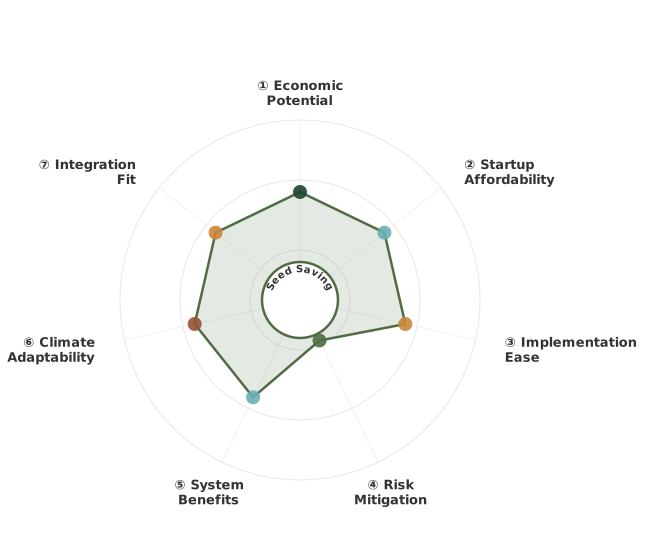
How These Traits Are Calculated
Trait dimensions are ordered clockwise starting from the top of the chart (12 o'clock position):
1. Economic Potential
Financial returns, annual value, and break-even timeline
WHAT: Evaluates financial viability by combining net annual value ($/ha from savings, income, and amortized harvests) with break-even timeline showing when practices pay for themselves.
WHY: Farmers need clear ROI understanding before committing resources. Fast payback (≤3 years) with strong returns (≥$300/ha) enables confident adoption, while long timelines (>10 years) restrict adoption to well-funded operations willing to wait for returns.
HOW: Calculated from net annual value in $/ha and break-even years. Exceptional (≥2.6): fast ROI ≤3 years + high value ≥$300/ha. Typical (1.8-2.5): moderate returns or longer timelines. Limited (<1.8): marginal economics or very long payback >10 years.
2. Startup Affordability
Initial investment costs and financial barrier to entry
WHAT: Measures financial barrier to entry through startup costs for equipment, infrastructure, consulting, and materials. Inverted scoring: lower costs = higher scores = more accessible adoption.
WHY: Affordability determines who can adopt. Low-cost practices (<$250/ha) enable widespread adoption across diverse scales, while high costs (>$2,500/ha) limit adoption to well-capitalized operations, creating barriers that slow regenerative transition.
HOW: Calculated from initial investment parsed from practice content. Inverted scoring: Exceptional (≥2.6): minimal investment <$250/ha. Typical (1.8-2.5): moderate costs $250-2,500/ha. Limited (<1.8): high barrier >$2,500/ha.
3. Implementation Ease
Learning curve and specialized knowledge required
WHAT: Measures how much learning, planning, and specialized knowledge a practice requires. Simpler practices with fewer steps score higher, while complex practices requiring extensive training or specialized resources score lower.
WHY: Complex practices create adoption barriers even when economically viable. Straightforward practices enable faster adoption and broader participation, while those requiring extensive training, timing precision, or specialized equipment limit who can succeed.
HOW: Evaluated by measuring documentation length and identifying complexity markers like location-specific requirements, seasonal timing windows, specialized skills, and dedicated equipment needs. Exceptional (≥2.6): straightforward practices with minimal prerequisites. Typical (1.8-2.5): moderate learning curve with some specialized needs. Limited (<1.8): steep learning curve requiring significant training or resources.
4. Risk Mitigation
Identified financial and ecological risk assessment
WHAT: Evaluates documented risks across financial (investment loss, market volatility) and ecological (crop failure, pest outbreaks) domains. Inverted scoring: fewer risks = higher scores.
WHY: Understanding risk exposure helps farmers make informed decisions. Low-risk practices allow confident implementation, while high-risk practices require careful planning and contingency resources. Risk transparency prevents costly failures.
HOW: Calculated from identified risks in practice content. Inverted scoring: Exceptional (≥2.6): ≤2 risks with manageable severity. Typical (1.8-2.5): 3-5 moderate risks. Limited (<1.8): 6+ risks or severe exposure.
5. System Benefits
How many ways the practice improves your land simultaneously
WHAT: Measures how many aspects of land health improve at once—carbon storage, soil quality, erosion control, water absorption, and biodiversity. Practices that improve multiple areas simultaneously create compounding benefits where each improvement reinforces the others.
WHY: The best practices solve multiple problems at once. For example, addressing erosion simultaneously builds carbon and improves water infiltration, creating a resilient system with positive feedback loops. Single-benefit approaches miss these compound transformation opportunities.
HOW: Evaluated across five key outcomes: carbon sequestration, soil organic matter increase, erosion reduction, water infiltration improvement, and biodiversity enhancement. Exceptional (≥2.6): high carbon storage (>8 t/ha/yr), improvements across 4-5 areas, transformative outcomes. Typical (1.8-2.5): moderate carbon (3-8 t/ha/yr), improvements across 2-3 areas. Limited (<1.8): modest impact (<3 t/ha/yr), single-area focus only.
6. Climate Adaptability
Geographic applicability across Köppen climate zones
WHAT: Evaluates geographic applicability by assessing how many Köppen climate zones successfully support a practice and what adaptation requirements are needed. Measures breadth of climates where farmers can implement with minimal to moderate modifications.
WHY: Universal practices working across diverse climates enable more farmers to adopt regenerative approaches. Practices limited to single climate types (only Mediterranean, only tropical) restrict adoption and slow global transition. Adaptability determines whether a practice serves niche regions or offers broad transformation.
HOW: LLM evaluation of regional success stories, Köppen zone coverage, and adaptation needs. Exceptional (≥2.6): 5+ zones or 4+ climate types, 3+ continents, minimal adaptation. Typical (1.8-2.5): 3-4 zones or 2-3 types, 2 continents, moderate adaptation. Limited (<1.8): 1-2 zones, single region, significant adaptation or highly specialized.
7. Integration Fit
How well this practice combines with others you're doing
WHAT: Measures how well a practice combines with other regenerative practices you might be doing. Some practices work as building blocks that make many other practices easier or more effective, while others work best on their own.
WHY: Practices that combine well with many others create more value on your farm. For example, cover cropping enables no-till, improves grazing, supports crop diversity, and helps water management—making all of them work better together. This helps you build a coherent system rather than juggling disconnected practices.
HOW: Evaluated by identifying which practices combine well and how strong those combinations are. 'Ideally Suited' means strong combinations where practices reinforce each other (practice A makes B easier, while B makes A more effective). 'Adequate' means complementary benefits that work well together. Exceptional (≥2.6): combines well with 6+ practices, serves as a building block. Typical (1.8-2.5): combines with 3-5 practices. Limited (<1.8): 1-2 practices or works best alone.
Going Deeper
1
WHY - The Benefits
Seed saving is a fundamental practice for building resilient, autonomous, and regenerative agricultural systems. It allows farmers to become stewards of their own germplasm, selecting for traits that enhance sustainability and outperform generic commercial varieties in...
Seed saving is a fundamental practice for building resilient, autonomous, and regenerative agricultural systems. It allows farmers to become stewards of their own germplasm, selecting for traits that enhance sustainability and outperform generic commercial varieties in...
WHY - The Benefits
Seed saving is a fundamental practice for building resilient, autonomous, and regenerative agricultural systems. It allows farmers to become stewards of their own germplasm, selecting for traits that enhance sustainability and outperform generic commercial varieties in...
Seed saving is a fundamental practice for building resilient, autonomous, and regenerative agricultural systems. It allows farmers to become stewards of their own germplasm, selecting for traits that enhance sustainability and outperform generic commercial varieties in...
Soil Health Benefits
While seed saving doesn't directly impact soil health in the same way cover cropping or reduced tillage does, it provides the foundational genetic material for practices that do. By selecting seeds from plants that thrive in healthy soil—plants with robust root systems, good nutrient cycling capabilities, and resistance to diseases often exacerbated by poor soil—farmers are promoting the propagation of these beneficial traits. Over time, saving seeds from plants grown in no-till or organically managed systems can indirectly lead to a selection for germplasm that is better suited to these low-input environments.
For example, if a farmer consistently saves seeds from drought-tolerant varieties that perform well during dry spells in their region, these plants will have deeper, more extensive root systems. These roots contribute to soil structure, improve water infiltration, and increase soil organic matter when they die. Similarly, if seeds are saved from plants that are highly resistant to soil-borne diseases, it implies those plants can thrive in the prevailing soil microbial communities without requiring chemical interventions that might harm soil biology. This "selection for resilience" effectively breeds crops that are more compatible with regenerative soil management.
Conversely, saving seeds from high-input hybrids grown solely with synthetic fertilizers and pesticides may inadvertently select for varieties that are dependent on these inputs and less resilient in their absence. Regenerative seed saving actively works against this by prioritizing performance in a low-input, biology-focused system, thus reinforcing the very practices that build healthy soil.
Economic Benefits
The most immediate economic benefit of seed saving is the reduction or elimination of seed costs. Commercial seed can represent a significant annual expense for farmers, sometimes ranging from $100 to $500 per hectare ($40 to $200 per acre) or even more for specialized varieties. By saving their own seeds, farmers can reduce this cost to the price of labor and minimal storage materials, potentially saving $100-500/ha annually or more. This direct saving can be reinvested in other regenerative practices or increase overall farm profitability.
Beyond direct savings, seed saving builds valuable, locally-adapted germplasm. Over several generations, farmer-selected seed lines can become uniquely suited to a farm's microclimate, soil type, and pest pressures. These "landraces" or "heirloom" varieties that perform exceptionally well can be more resilient than commercially bred varieties, leading to more stable yields and reduced losses from pests, diseases, or adverse weather. This saved seed stock represents a unique farm asset.
In some cases, successful seed saving and development of novel, locally adapted varieties can create new income streams. Farmers might develop unique markets for "heritage" or "farm-specific" seeds, selling them to other local farmers, gardeners, or niche food businesses seeking distinct flavors and resilient crops. This diversification of income can enhance the farm's economic stability and promote broader adoption of locally adapted germplasm in the region.
Furthermore, by reducing reliance on external seed suppliers, farmers increase their operational autonomy. They are not subject to the availability, price fluctuations, or intellectual property restrictions associated with commercial seed markets. This independence contributes to a more secure and sustainable farm business model, especially in regions where access to commercial seed can be unreliable.
Regenerative Systems Fit
Seed saving is a powerful supporting practice for regenerative agriculture, directly reinforcing and enabling several core principles:
Principle 2: Maximize Crop Diversity Seed saving is inherently about diversity. It allows farmers to select and maintain a broader range of varieties and traits than might be available through commercial channels. This includes preserving heirloom and landrace varieties that may be of local historical or cultural importance, as well as developing new variations adapted to specific farm challenges. By saving seeds from diverse plant types (cereals, legumes, vegetables, cover crops) and different individuals within those types exhibiting unique traits (e.g., exceptional frost tolerance, disease resistance, specific flavor), farmers are actively increasing the genetic diversity within their cropping systems. This diversity is crucial for resilience, as a wider gene pool provides the raw material for adaptation to environmental changes and pest pressures.
Principle 3: Keep Soil Covered While not a direct mechanism for covering soil, seed saving for robust perennial crops or cover crops plays a key role. By saving seeds of species that naturally form dense ground cover, resist grazing pressure, or thrive in diverse conditions, farmers are selecting for plants that can effectively keep soil covered year-round. For example, saving seeds from cover crop varieties that volunteer well from year to year, or from perennial forage species that are highly productive and resilient, directly supports maintaining living roots and physical cover on the soil surface for longer periods.
Principle 4: Maintain Living Roots Similar to keeping soil covered, seed saving supports maintaining living roots by selecting for well-adapted perennial crops, cover crops, and forage species. By focusing on varieties that have strong root systems and are productive over extended seasons or multiple years, farmers are ensuring that living roots remain in the soil for longer durations throughout the year. This continuous biological activity is vital for soil structure, nutrient cycling, and providing sustenance for soil microbes and fungi. Saving seeds from plants that have demonstrated success in systems with extended growing seasons or that naturally extend photosynthetic activity outside traditional cash crop windows directly promotes this principle.
Principle 5: Integrate Livestock Seed saving can be particularly effective when integrated with livestock management. For example, saving seeds from forage species that are highly palatable and nutritious for livestock, or from plants that can withstand grazing pressure while still producing viable seeds, enhances the efficiency of grazing systems. In systems where livestock access crop residues or cover crops, saving seeds from those plants that perform well in such environments can create a more sustainable fodder system. Furthermore, selected plants resistant to common livestock diseases or parasites, if identified and propagated via seed saving, can reduce the need for veterinary interventions.
Transition Pathway: For farmers transitioning from conventional systems, seed saving offers a pathway to increased autonomy and reduced reliance on expensive, input-dependent commercial seeds. It encourages a gradual shift towards varieties better suited to lower-input, biological agriculture. The process of selecting and saving seeds from the best plants naturally aligns with the regenerative goal of breeding for resilience and local adaptation, rather than uniformity and high input responsiveness. Initially, farmers might save seeds from their best-performing existing open-pollinated varieties, gradually breeding towards desired regenerative traits. The timeline for seeing significant adaptation can range from 3-5 years of consistent selection and saving. Success is measured by increased yields or reduced input needs from locally adapted varieties compared to commercial alternatives in the same field.
Sources behind this view
Videos & Podcasts
-
Advocates for seed saving and training to adapt plants to local conditions, emphasizing that this practice, combined with diversity and proper nitrogen/carbon balance, leads to resilient crops and imp
-
Farmers in difficult climates must become seed savers and stewards, adapting varieties to their local biome by saving seed annually. This creates regionally strong heirlooms, as commercial seed compan

-
Advanced seed saving involves selecting from plants in worst conditions for resilience, from earliest plants for earliness, from disease-resistant survivors, and saving heaviest seeds for nutrient den
-
Conventional seed production often results in low-quality, compromised seed due to practices like desiccation and prioritizing size over nutrition. Regenerative seed saving leverages epigenetics and m
Community
-
Survival seed banks require both a large seed hoard and an active, fertile garden for local adaptation and immediate food availability during emergencies. Key strategies include diverse storage, skill
Read more (opens in new window) permies.com -
Recommends diverse seed sources including local co-ops, specialized companies, online trading, and farmer's markets, with a strong emphasis on seed saving from one's own garden for quality and diversi
Read more (opens in new window) permies.com -
Learn to save seeds from beans, peas, tomatoes, and lettuce by harvesting mature pods/fruits, drying, fermenting (tomatoes), and storing properly in labeled jars. Prioritize heirloom varieties and ade
Read more (opens in new window) ucanr.edu -
Seeds are stories in rest, crucial to our food system. Historically, farmers saved seeds, a practice now centralized. Understanding seeds as 'citizens' of nature, like plants providing nourishment, is
Read more (opens in new window) smallfarms.cornell.edu
Research
-
Organic Seed Production and Saving (opens in new window)
This study found: Organic seed production avoids synthetic chemicals and GMOs, focusing on seed health and local adaptation. Practices like organic fertilization and seed saving build soil health and farmer control, su
-
Perceptions of agrodiversity and seed-saving practices in the northern Andes of Ecuador. (opens in new window)
This study found: Ecuadorian farmers perceive a loss of crop diversity across generations. They distinguish modern vs. traditional seeds by yield, adaptation, and taste, and practice seed saving through soil fertility,
-
A Beginner’s Guide to Producing and Saving Open-Pollinated Seeds for North Florida Farmers and Gardeners (opens in new window)
This study found: Guide for North Florida farmers/gardeners on saving open-pollinated seeds. Benefits include crop adaptation, preserving heirlooms, better flavor/nutrition, cost savings, and community seed sharing. Co
-
Promising strategies to enhance the sustainability of community seed banks (opens in new window)
This study found: Five strategies can boost the sustainability of community seed banks: adding value to seeds, adopting nature-positive farming, partnering with national systems, using digital tools, and employing mode
From the Web
-
Saving seeds offers significant cost savings and promotes local adaptation and genetic diversity. Historically common, it's crucial for independent farmers seeking open-pollinated, organic, non-GMO va
-
Seed saving is crucial for food security and regional adaptation, allowing control over one's food supply as heirloom varieties disappear due to corporate consolidation. Saving seeds locally develops
2
WHERE - Regional Considerations
The success and approach to seed saving are influenced by regional climate, growing season length, pest pressures, and local biodiversity. The core principles remain constant, but specific practices must be adapted.
The success and approach to seed saving are influenced by regional climate, growing season length, pest pressures, and local biodiversity. The core principles remain constant, but specific practices must be adapted.
WHERE - Regional Considerations
The success and approach to seed saving are influenced by regional climate, growing season length, pest pressures, and local biodiversity. The core principles remain constant, but specific practices must be adapted.
The success and approach to seed saving are influenced by regional climate, growing season length, pest pressures, and local biodiversity. The core principles remain constant, but specific practices must be adapted.
Click Here to Look up your Region if you don't already know it
Humid Temperate Regions
Representative Locations: Southeastern United States, northern Europe (UK, Germany, Poland), eastern China, Japan, New Zealand
Climate Context: Warm to hot summers and cool to cold winters with moderate to high annual precipitation (75-150 cm or 30-60 inches) distributed relatively evenly. USDA Zones 6-8, Köppen Cfb/Cfa.
In these regions, the challenge often lies in managing fungal diseases and pests due to high humidity and moderate temperatures. Seed saving efforts should prioritize varieties that exhibit strong resistance to common pathogens like blights, mildews, and rusts. For vegetables, selecting for shorter-season varieties can be advantageous if humidity leads to disease problems later in the traditional growing season. In forage crops and grains, focusing on varieties that maintain good yield and quality even with moderate rainfall and variable summer temperatures is key. Seed storage might require extra attention to prevent mold and mildew due to ambient humidity, potentially necessitating more aggressive drying or cool, dry storage environments.
Mediterranean Regions
Representative Locations: California, Mediterranean basin (Spain, Italy, Greece), central Chile, southwestern Australia, Western Cape South Africa
Climate Context: Hot, dry summers and mild, wet winters. Annual precipitation 40-90 cm (15-35 inches), highly seasonal. USDA Zones 8-10, Köppen Csa/Csb.
Regions with dry summers present a different set of selection criteria. Drought tolerance is paramount. Seed saving should focus on plants that maintain productivity, seed set, and quality under water stress. This may involve selecting for deep root systems, efficient water use, or earlier maturity to escape the worst of the summer drought. For self-pollinating crops, ensuring plants have adequate water during the critical seed development phase is important. For wind-pollinated crops like grains, selecting for varieties that produce seed well even during dry windy periods is beneficial. Storage needs are generally less about moisture and more about pest exclusion, as dry climates can promote certain stored product insect populations.
Arid/Semi-Arid Regions
Representative Locations: Western USA, North Africa, Central Asia, Interior Australia, parts of the Middle East
Climate Context: Low annual precipitation (<40 cm or 15 inches), high temperatures, short and often unpredictable growing season. USDA Zones 7-9, Köppen BSh/BSk.
In arid and semi-arid zones, extreme drought tolerance, heat resistance, and rapid maturation are critical traits. Seed saving should prioritize plants that can complete their life cycle with minimal water, tolerate high diurnal temperature fluctuations, and produce viable seeds even under marginal conditions. Selecting for varieties that utilize dew or infrequent rainfall effectively is important. For livestock pastures, drought-resistant grasses and legumes are essential. Crop varieties with short life cycles are preferred to ensure seed set before extreme heat or drought sets in. Efficient seed storage methods are needed to protect against desiccation and stored product pests, which can thrive in dry conditions.
Cold Continental Regions
Representative Locations: Northern USA and Canada, Northern Europe, Northern Asia
Climate Context: Very short growing seasons, extreme summer heat, severe winter cold. USDA Zones 3-5, Köppen Dfa/Dfb.
Regions with short, intense growing seasons and severe winters require seed saving focused on early maturity and cold hardiness. Varieties must be able to complete their life cycle from planting to seed maturity within a narrow window, often 60-90 days for annual crops. Selecting for rapid germination and seedling vigor is also important to take advantage of early spring conditions. Cold tolerance in fall cover crops is critical for extending the season of living roots and soil cover. Seed storage must be robust to protect against freezing temperatures and to maintain viability over potentially long winters. For fruit and nut crops, selecting varieties that reliably survive extreme winter lows is paramount.
Subtropical Regions
Representative Locations: Southeastern USA, Southern China, Southern Brazil, Eastern Australia
Climate Context: Hot, humid summers and mild winters with generally ample rainfall. USDA Zones 9-11, Köppen Cfa/Cwa.
Subtropical climates, with their combination of heat and humidity, present challenges similar to humid temperate regions, but often with longer periods of high stress. Seed saving should emphasize resistance to heat, humidity-induced diseases (fungal and bacterial), and shorter maturation times to escape peak summer stress. Varieties that perform well in challenging soil conditions, such as heavy clay or potentially waterlogged areas, are also valuable. Forage and cover crops that are heat-tolerant and can persist through the hot season are essential for maintaining living roots and soil cover. Seed storage requires careful management to prevent fungal growth and insect infestation due to warm, humid ambient conditions.
Tropical Regions
Representative Locations: Central America, Southeast Asia, East Africa, Northern Australia, Northern South America
Climate Context: High temperatures year-round, with distinct wet and dry seasons or consistent high rainfall. Köppen Af/Am/Aw.
Tropical regions present diverse challenges depending on whether they are wet or dry tropics. In consistently wet tropical areas, heat and humidity-tolerant varieties resistant to fungal and bacterial diseases are crucial. Short maturation times can prevent crops from succumbing to prolonged wet periods which can lead to rot or disease. In regions with distinct wet and dry seasons, drought tolerance during the dry period is essential. Seed saving should focus on germplasm that can perform reliably under these fluctuating conditions. For perennial crops, selecting for varieties that are hardy, disease-resistant, and productive in high-heat environments is key. Seed storage in the tropics requires exceptional care to manage high temperatures and humidity, often necessitating climate-controlled environments or very strict drying protocols.
3
HOW - Implementation Process
Implementing seed saving requires understanding plant biology, proper harvesting techniques, and effective storage methods. The process can be adapted for annual crops, vegetables, grains, and forages.
Implementing seed saving requires understanding plant biology, proper harvesting techniques, and effective storage methods. The process can be adapted for annual crops, vegetables, grains, and forages.
HOW - Implementation Process
Implementing seed saving requires understanding plant biology, proper harvesting techniques, and effective storage methods. The process can be adapted for annual crops, vegetables, grains, and forages.
Implementing seed saving requires understanding plant biology, proper harvesting techniques, and effective storage methods. The process can be adapted for annual crops, vegetables, grains, and forages.
Prerequisites
- Target Plant Selection: Identify which crops or varieties you want to save seed from. Prioritize open-pollinated, heirloom, or landrace varieties that reliably breed true from seed. Avoid hybrids (F1) as their seeds may not produce similar offspring.
- Health and Performance: Choose plants that are exceptionally healthy, vigorous, and exhibit desired traits (disease resistance, yield, flavor, size, maturity time, drought tolerance).
- Isolation Distances: Understand the pollination habits of your chosen plants. Insect-pollinated or cross-pollinating plants require isolation to prevent unwanted crosses. Wind-pollinated plants need greater isolation distances. Isolation can be achieved through distance, time (planting at different times), or physical barriers (e.g., bagging flowers, using cages). Be aware that high-density polyculture systems like herb spirals make seed saving for cross-pollinating species nearly impossible without physical barriers, so careful species selection (e.g., focusing on self-pollinators) is critical in such designs.
- Basic Knowledge: Familiarize yourself with the ideal harvest stages, drying methods, and storage conditions for the specific seed types you'll be saving.
Phase 1: Propagation and Isolation
Planning for Isolation:
- Distance: For cross-pollinating plants (e.g., corn, squash, brassicas), you need significant distance. For example, 400 meters (1/4 mile) is often recommended for basic isolation of corn varieties, though more is better for purity. Small plots or even single plants might need to be contained within cages or row covers.
- Time: If planting multiple varieties of the same crop that cross-pollinate, plant them weeks apart. Early plantings may produce seeds that mature before later plantings flower, and vice versa. This is feasible for some crops with long growing seasons.
- Physical Barriers: For smaller plots or valuable varieties, enclose plants in fine mesh cages or bags to allow pollination by specific pollinators (e.g., bees) while preventing unwanted pollen from accessing flowers. This is labor-intensive but effective for small quantities.
Growing Seed Crops:
- Plant a larger population than you intend to save seeds from. For example, if you need 100 plants to maintain genetic diversity, plant 200-300. This allows for rigorous selection.
- Employ regenerative growing practices: healthy soil, cover cropping, minimal disturbance, and integrated pest management to promote plant health naturally. Plants grown in healthy conditions will produce better quality seeds.
Phase 2: Harvesting and Cleaning
Harvesting:
- Timing is Crucial: Harvest seeds when they are mature on the plant. For most crops, this means the plant has begun to dry down, and the seed head or pod is brown and brittle. Seeds should be dry enough to not mold but not so dry they shatter easily during handling.
- Method: Harvest by hand for small quantities. For larger harvests, use appropriate tools like sickles, scythes, or mechanical harvesters. Collect seeds from the best plants you identified earlier. For some crops, you might harvest the entire plant; for others, you collect specific parts (pods, heads, fruits).
- Labeling: Meticulously label each harvest batch with crop name, variety, date of harvest, and source plant description (e.g., "Red Flint Corn - Plant 3, most drought tolerant"). This is critical for keeping varieties distinct.
Cleaning:
- Remove Impurities: Seeds must be separated from plant material, chaff, dirt, and other seeds.
- Methods:
- Rubbing/Threshing: For dry seeds in pods or husks (peas, beans, grains), rub seeds between hands, beat pods against a surface, or use a threshing drum.
- Winnowing: For dry seeds with chaff, pour the threshed mixture from a height in a gentle breeze. Lighter chaff blows away, heavier seeds fall. A fan can also be used indoors.
- Sieving: Use screens of varying mesh sizes to separate seeds by size.
- Fanning Mills/Seed Cleaners: For larger operations, these machines use air and screens to efficiently separate seeds.
- Washing: For fleshy fruits, extract seeds by mashing the fruit in water. Desirable seeds sink, pulp floats or remains suspended. For crops like tomatoes, fermenting seeds in their own pulp for 2-3 days helps remove germination inhibitors and kills some pathogens.
Phase 3: Drying
Importance of Drying: Seeds must be dried to a specific moisture content to inhibit mold growth and insect activity during storage, thereby preserving viability. Over-drying can damage seeds, while insufficient drying leads to spoilage.
Methods:
- Air Drying: Spread seeds in a single layer on screens, trays, or clean cloths in a warm, dry, well-ventilated area away from direct sunlight. This is the simplest method for many seeds.
- Dehumidifier/Fan: Using a fan and/or a dehumidifier in a closed room greatly speeds up drying and reduces ambient humidity, which is crucial in humid climates.
- Low Heat Drying: For some crops, gentle heat can be used—never above 40°C (104°F), and ideally much lower (25-30°C / 77-86°F). Electric seed dryers or ovens set to their lowest setting can be used for small batches.
- Moisture Content Testing: For critical crops, monitor moisture content. General targets: 5-8% for small seeds (e.g., lettuce, tomato), 10-12% for medium seeds (e.g., beans, peas), and 15-18% for very large seeds or oily seeds.
Phase 4: Storage
Ideal Conditions: Cool, dark, and dry. Temperature and humidity are the primary enemies of seed viability.
- Temperature: Lower temperatures significantly extend seed life. Aim for 0-10°C (32-50°F) or lower. Refrigerators are excellent for many seeds, but ensure they are properly sealed to prevent moisture exchange.
- Humidity: Low relative humidity (30-50%) is critical.
- Containers:
- Glass Jars: Excellent for small quantities, create airtight seals.
- Laminated Foil Packets: Good for long-term storage, block light and moisture.
- Plastic Containers: Use thick, airtight plastic containers. Can be combined with desiccants.
- Paper Envelopes: Suitable for short-term storage or for seeds that need to "breathe" slightly, but not ideal for long-term or humid conditions.
- Desiccants: Silica gel packets or calcium chloride can be used inside containers to absorb moisture, especially in humid climates or when using less-than-perfectly airtight containers.
- Labeling: Reiterate importance: Clearly label every container with species, variety, date saved, and any relevant notes about its performance.
- Testing Viability: Periodically test seed viability (e.g., germination test on damp paper towel). For crops with known short viability (e.g., corn, beans), use them within 1-3 years. Others (e.g., tomatoes, lettuce) can last 5-10 years if stored properly.
Transition Timeline & Phase-Out Strategy
Seed saving is not typically a "transition" practice in the sense of phasing out a conventional input. Instead, it's a practice that might be phased into a system.
- Initial Phase (Years 1-2): Start with a few easy-to-save, open-pollinated varieties of crops you grow regularly (e.g., beans, peas, tomatoes, open-pollinated corn). Focus on learning best practices for harvesting, cleaning, drying, and storing these specific crops. Save enough for your own planting needs plus a small reserve.
- Expansion Phase (Years 3-5): Begin saving seeds from a wider range of crops, including vegetables, grains, and cover crops. Experiment with selecting for specific traits (e.g., earlier maturity, increased disease resistance) by marking the best plants. Begin considering isolation techniques for cross-pollinating crops. Start a seed bank or inventory system.
- Advanced Phase (Years 5+): Develop distinct lines adapted to your farm. Experiment with cross-pollination to combine traits. Potentially start sharing or selling seeds to other local farmers. Become a source of locally adapted germplasm. Research and apply advanced selection techniques.
The "phase-out" aspect comes from reducing reliance on commercial seed as your saved seed stock becomes more reliable and better adapted. Success is measured by reduced seed purchases without a corresponding drop in yields or increase in input needs, and by the improved performance of locally adapted varieties.
Sources behind this view
Videos & Podcasts
-
Experts advise on seed saving: plan isolation distances for cross-pollinators, label meticulously, start with open-pollinated varieties, and understand hybrid segregation for potential new variety cre
-
Advanced seed saving involves selecting from plants in worst conditions for resilience, from earliest plants for earliness, from disease-resistant survivors, and saving heaviest seeds for nutrient den
-
Seed saving involves selecting the largest, heaviest 'mother seeds' and maintaining genetic diversity. This process, including careful visual inspection, planting in living soil, and winnowing, contin
-
Advocates for seed saving and training to adapt plants to local conditions, emphasizing that this practice, combined with diversity and proper nitrogen/carbon balance, leads to resilient crops and imp
Community
-
Detailed seed saving guide: Plan by selecting healthy open-pollinated plants, harvest mature seeds (dry or wet), clean via threshing/fermentation, dry thoroughly indoors, and store in airtight contain
Read more (opens in new window) ucanr.edu -
Learn to save seeds from beans, peas, tomatoes, and lettuce by harvesting mature pods/fruits, drying, fermenting (tomatoes), and storing properly in labeled jars. Prioritize heirloom varieties and ade
Read more (opens in new window) ucanr.edu -
Learn to create landrace seeds for 12+ species over 3 generations by selecting traits and using seed trading for diversity, prioritizing local adaptation but accepting diverse sources.
Read more (opens in new window) permies.com -
Seed saving, heirloom strains, and cross-pollination are discussed with practical advice from experienced growers like Joseph Lofthouse. Landrace gardening and tasting produce before saving seed are r
Read more (opens in new window) permies.com
Research
-
A Beginner’s Guide to Producing and Saving Open-Pollinated Seeds for North Florida Farmers and Gardeners (opens in new window)
This study found: Guide for North Florida farmers/gardeners on saving open-pollinated seeds. Benefits include crop adaptation, preserving heirlooms, better flavor/nutrition, cost savings, and community seed sharing. Co
-
Perceptions of agrodiversity and seed-saving practices in the northern Andes of Ecuador. (opens in new window)
This study found: Ecuadorian farmers perceive a loss of crop diversity across generations. They distinguish modern vs. traditional seeds by yield, adaptation, and taste, and practice seed saving through soil fertility,
-
Organic Seed Production and Saving (opens in new window)
This study found: Organic seed production avoids synthetic chemicals and GMOs, focusing on seed health and local adaptation. Practices like organic fertilization and seed saving build soil health and farmer control, su
From the Web
-
Saving seeds offers significant cost savings and promotes local adaptation and genetic diversity. Historically common, it's crucial for independent farmers seeking open-pollinated, organic, non-GMO va
-
Seed saving is crucial for food security and regional adaptation, allowing control over one's food supply as heirloom varieties disappear due to corporate consolidation. Saving seeds locally develops
4
Know the Debate
Seed saving creates locally adapted crops, enhancing farm resilience and autonomy, with outcomes differing by region and method. Humid temperate re...
Know the Debate
Seed saving creates locally adapted crops, enhancing farm resilience and autonomy, with outcomes differing by region and method. Humid temperate re...
Seed saving creates locally adapted crops, enhancing farm resilience and autonomy, with outcomes differing by region and method. Humid temperate regions benefit from disease resistance and shorter maturity; Mediterranean climates need drought tolerance. Arid zones require extreme heat/drought hardiness, while cold climates demand early maturity. Subtropical and tropical areas need heat/humidity or seasonal adaptation. Initial investment ($400-$800 DIY to $10,000-$25,000+ large scale) and ongoing labor (10-20% of harvest time) are key factors.
Can all seeds be saved equally?
Focus on open-pollinated/heirlooms
Open-pollinated and heirloom varieties reliably breed true from seed, allowing for significant local adaptation and cost savings. Farmers should meticulously label and select best plants from these types.
Sources behind this view
Sources behind this view
Videos & Podcasts
-
Seed saving is demonstrated for lettuce, peas, French beans, and broad beans, which generally produce good seed from one plant. Crucially, only open-pollinated tomatoes should have their seed saved; F1 hybrids will not breed true. Proper drying before storage is essential.
-
Provides a comprehensive guide to saving seeds from home garden crops, detailing benefits, easy-to-save species (beans, peas, tomatoes), challenging crops (biennials, F1 hybrids), and a step-by-step method for tomato seed extraction, fermentation, drying, and storage.
Research
-
Challenges and prospects for the conservation of crop genetic resources in field genebanks, in In Vitro collections and/or in liquid nitrogen (opens in new window)
This study found: Protecting the diversity of our crops and their wild relatives is crucial for the future. While many crops can be stored as seeds in genebanks, some plants have seeds that can't be dried (like cacao, coffee, and avocado), or they don't produce seeds at all (like bananas). Others are propagated vegetatively or clonally, meaning their seeds don't reliably produce the same plant (like potatoes and cassava). For these, alternative methods are essential: planting them in field genebanks, storing them in lab-based 'in vitro' collections (like tissue cultures), or preserving them long-term by freezing them in liquid nitrogen (cryopreservation). This review covers how to set up and manage these different types of collections, discussing the practical, financial, and safety challenges involved in keeping them safe for the long haul. It also touches on how to avoid storing duplicates and the importance of having backup plans, especially highlighted by recent global events.
Hybrids segregate; not for beginners
Saving seeds from F1 hybrids leads to genetic segregation and unpredictable offspring, making them unsuitable for repeated saving if true-to-type plants are desired. This requires a basic understanding of plant genetics.
Sources behind this view
Sources behind this view
Videos & Podcasts
-
Seed saving is demonstrated for lettuce, peas, French beans, and broad beans, which generally produce good seed from one plant. Crucially, only open-pollinated tomatoes should have their seed saved; F1 hybrids will not breed true. Proper drying before storage is essential.
-
Seed saving requires open-pollinated varieties, not hybrids. Easy crops include beans, peas, squash, peppers, and tomatoes. Crucially, seeds must be thoroughly dried for successful storage; moist seeds will not last.
Making Sense of the Differences
The success of seed saving depends on understanding the reproductive biology of the plant. While open-pollinated, heirloom, and landrace varieties are excellent for developing locally adapted lines, saving seeds from F1 hybrids will not produce plants true to the parent type. Accurate labeling and variety selection are crucial for achieving desired outcomes.
How does seed saving adapt plants to local conditions?
Active selection drives adaptation
Farmers directly select plants exhibiting superior traits like drought tolerance or disease resistance in their specific environment, thus reinforcing these characteristics over generations.
Sources behind this view
Sources behind this view
Videos & Podcasts
-
Advanced seed saving involves selecting from plants in worst conditions for resilience, from earliest plants for earliness, from disease-resistant survivors, and saving heaviest seeds for nutrient density.
Research
-
Perceptions of agrodiversity and seed-saving practices in the northern Andes of Ecuador. (opens in new window)
This study found: In the northern Andes of Ecuador, a study involving 65 farmers revealed that many perceive a loss of crop diversity across generations. Farmers noted that the types of crops grown vary significantly by location, influenced by factors like altitude, climate, market demand, and how the crops are managed. They distinguish between modern (conventional) seeds and traditional (non-conventional) seeds based on factors like how much they yield, how well they grow in local conditions, their resistance to pests, taste, and ease of cultivation. Important practices for saving seeds included managing soil fertility, selecting good seeds, storing them safely, and specific planting and weeding techniques. The study emphasizes that what crops and practices are important depends heavily on the local environment and culture. Farmers make clear choices about seeds based on their benefits, drawbacks, cultural reasons, and where the produce will go. The research method, which involved farmers directly, encouraged them to commit to protecting their diverse crops.
-
Designing a Seed Health Strategy for Organic Cropping Systems, Based on a Dynamic Perspective on Seed and Plant Health (opens in new window)
This study found: For organic farmers, starting a crop off right with healthy seeds is key to good yields and strong plants. This paper looks at how seed strength (vigour) and the tiny microbes living on and in the seeds (microbiota) work together to make seedlings resilient. It suggests that instead of seeing seed health as a one-time event, we should view it as a continuous process from seed production to plant growth. The authors recommend better practices for producing, processing, and storing organic seeds, as well as for breeding stronger varieties. Adopting this 'seed and plant health continuum' approach could significantly improve crop performance in organic systems and may require some changes in how we manage our crops and seeds.
Passive genetic drift also contributes
Beyond conscious selection, genetic drift and natural mutation within isolated plant populations also play a role in the unique adaptation of locally saved seeds over time.
Sources behind this view
Sources behind this view
Videos & Podcasts
-
Advanced seed saving involves selecting from plants in worst conditions for resilience, from earliest plants for earliness, from disease-resistant survivors, and saving heaviest seeds for nutrient density.
Research
-
Perceptions of agrodiversity and seed-saving practices in the northern Andes of Ecuador. (opens in new window)
This study found: In the northern Andes of Ecuador, a study involving 65 farmers revealed that many perceive a loss of crop diversity across generations. Farmers noted that the types of crops grown vary significantly by location, influenced by factors like altitude, climate, market demand, and how the crops are managed. They distinguish between modern (conventional) seeds and traditional (non-conventional) seeds based on factors like how much they yield, how well they grow in local conditions, their resistance to pests, taste, and ease of cultivation. Important practices for saving seeds included managing soil fertility, selecting good seeds, storing them safely, and specific planting and weeding techniques. The study emphasizes that what crops and practices are important depends heavily on the local environment and culture. Farmers make clear choices about seeds based on their benefits, drawbacks, cultural reasons, and where the produce will go. The research method, which involved farmers directly, encouraged them to commit to protecting their diverse crops.
Making Sense of the Differences
Crop adaptation through seed saving is a dynamic process driven by both active farmer selection for desirable traits and the inherent genetic variability within isolated plant populations. Farmers' conscious choices to save seeds from plants that perform best in their local conditions—whether for drought, disease, or yield—directly shape the genetic makeup of future generations. Simultaneously, natural genetic drift and mutation contribute to this ongoing adaptation over time, creating unique landraces well-suited to specific environments.
How much do locally adapted seeds increase yield?
Significant economic benefits and food security
Using diverse, locally improved seeds leads to substantial increases in farmer income and food availability, enhancing food security and resilience, as seen in studies in Kenya and Uganda.
Sources behind this view
Sources behind this view
Research
-
Climate change and seed system interventions impact on food security and incomes in East Africa (opens in new window)
This study found: A study in Kenya and Uganda looked at how using a wider variety of improved seeds helps farmers deal with climate change and improve their lives. By comparing farmers who used better seeds with those who didn't, researchers found that using these seeds led to more money from selling bean seeds, better access to sorghum and millet for eating, more feed for livestock from beans, and more maize and millet seeds being stored. The findings suggest that planting a diverse range of seeds helps farmers cope with changing weather, produce more food, earn more income, and be more food secure. The study emphasizes the need for better collaboration among seed companies and organizations to ensure farmers have access to the right seeds.
Quantification in research is inconsistent
While field reports highlight resilience and taste benefits, academic studies quantifying direct yield increases (e.g., >10-15%) compared to commercial varieties are less common.
Sources behind this view
Sources behind this view
Videos & Podcasts
-
Key seed saving mistakes include harvesting immature seeds, not drying/cleaning on dry days, and fearing cross-pollination. Winnowing with a box fan is effective. Immature seeds are often non-viable, but seeds from partially matured fruits or plants harvested before frost can still be viable if allowed to finish drying.
From the Web
-
Seed saving is crucial for food security and regional adaptation, allowing control over one's food supply as heirloom varieties disappear due to corporate consolidation. Saving seeds locally develops varieties better suited to specific environments.
-
Save heirloom seeds (corn, wheat, rye, sorghum, potatoes, tomatoes, peppers, beans, peas) to acclimate crops to your farm, increasing yield and quality while reducing costs and preserving varieties.
Making Sense of the Differences
The economic benefits of locally adapted seeds are well-recognized by farmers through improved field performance and reduced costs. While academic research confirms significant positive impacts on food security and income in some regions, precisely quantifying yield increases for all locally saved seeds compared to commercial varieties remains challenging. The advantage often lies in greater resilience, stability across varying conditions, and reduced input needs, rather than just absolute yield figures.
5
HOW MUCH - Costs & Investment
Note: Costs shown in USD; multiply by local labor and material cost indices for your region. Labor costs vary significantly internationally.
Note: Costs shown in USD; multiply by local labor and material cost indices for your region. Labor costs vary significantly internationally.
HOW MUCH - Costs & Investment
Note: Costs shown in USD; multiply by local labor and material cost indices for your region. Labor costs vary significantly internationally.
Note: Costs shown in USD; multiply by local labor and material cost indices for your region. Labor costs vary significantly internationally.
Note: All costs are based on recent US economic data (2024–2026) and may vary substantially by region based on local labor rates, material costs, and regulatory requirements.
Harvesting and Field Tools
Small-scale operations (under 50 acres (20 ha)) typically utilize manual harvest tools such as hand-pruners, harvest knives, and heavy-duty canvas collection tarps, requiring an initial investment of $83–$365 per farm. Mid-size operations (50–500 acres (20–202 ha)) shift toward mechanical efficiency, utilizing walk-behind harvesters or customized combine headers at a capital investment of $2,605–$12,504. Large-scale producers (500+ acres) invest in high-capacity seed-crop headers and specialized cleaning attachments for combine platforms, with costs ranging from $15,630–$88,570 per unit to ensure material integrity during the harvest phase.
Processing and Cleaning Equipment
This category represents the most significant investment for scalability and crop purity. Small-scale growers often start with manual setups comprised of refurbished household screens and handheld air blowers, spending $156–$625. Mid-size farms require professional-grade equipment, including stationary fanning mills and commercial-grade air-column cleaners, costing $3,647–$18,756. Large-scale producers utilize advanced gravity tables and automated optical sorters to meet industry-standard purity benchmarks, requiring capital expenditures of $46,890–$234,450. These machines are critical for removing chaff, weed seeds, and underdeveloped grains that otherwise reduce saleable volume.
Drying, Storage, and Climate Control
Maintaining genetic viability requires precise environmental control. Small-scale operators typically rely on high-capacity household dehumidifiers and durable moisture-proof storage containers for $208–$938. Mid-size operations often renovate dedicated shipping containers or purpose-built sheds, installing specialized HVAC and climate-monitoring sensors for $6,252–$26,050. Large-scale entities frequently construct or retrofit commercial-grade seed vaults equipped with redundant climate control systems, fire suppression, and automated inventory software, costing $41,680–$312,600 or more. Beyond infrastructure, periodic in-house moisture content testing kits represent a recurring annual operating expense of $417–$1,250 for medium to large enterprises.
Labor and Opportunity Costs
Seed saving is inherently labor-intensive, often demanding 10% to 20% of peak harvest-season labor capacity. At a current federal minimum baseline of $15/hour, with experienced oversight often commanding $25+/hour, small farms face estimated annual labor costs of $1,563–$5,210. Mid-size farms typically allocate $12,504–$46,890 annually to cover essential staffing for selection, sorting, and germination testing. Large-scale operations may incur $62,520–$208,400 annually to support dedicated seed-technicians and crop inspection personnel. Furthermore, opportunity costs—the revenue foregone by prioritizing seed-saving labor over immediate high-value fresh-market sales—add an estimated $1,042–$4,168 per season for smaller producers.
Most Spend: $15,630–$36,470 total infrastructure investment. This represents the sweet spot for medium-scale operations that require professional-grade fanning mills and climate-controlled storage to maintain commercial viability without overleveraging on large-scale automated sorting technology.
Why the Range?: Cost variation is driven primarily by the crop type and total acreage; for example, saving seeds for fine-seeded vegetables requires much higher investment in cleaning precision (e.g., gravity tables) than saving cereal grains. Additionally, local construction costs for climate-controlled vaults and existing labor market conditions significantly influence the "entry price" for professional-grade processing facilities.
Sources behind this view
Videos & Podcasts
-
Provides a comprehensive guide to retail seed business operations, detailing costs (packets, labor, overhead, marketing), the importance of germination tests, and the strategic value of seed stewardsh

-
Dan Brisebois details his experience in seed production, emphasizing the business aspects, importance of quality and customer service, and the growing market for regional seeds. He advises starting sm
-
Offers detailed guidance on running a seed business, covering genetic isolation techniques, efficient packaging/shipping, germination testing, market strategy, legalities, and seasonal operations in C

-
Starting a seed business requires understanding state laws (e.g., California's labeling requirements) and pricing seeds based on cost of production, never below. Add value through branding and service
Community
-
Producing and selling seeds can generate farm income, but requires state licensing, adherence to purity and germination testing regulations, and careful management of cross-pollination. Heirloom and o
Read more (opens in new window) permies.com -
Guidance on selling seeds covers legalities, germination testing, and managing cross-pollination for herbs, brassicas, and tomatoes. Recommends a one-plant-at-a-time approach, favoring heirloom variet
Read more (opens in new window) permies.com
From the Web
-
Learn seed saving fundamentals from resources like 'Seed to Seed'. Avoid over-capitalization by starting simple with equipment for extraction, cleaning, and drying, tailored to specific crops. Upgrade
6
REWARDS AND RISKS - Economics & Risk Factors
REWARDS AND RISKS - Economics & Risk Factors
Economic Scenarios The Best Case scenario results in an $8,336–$15,630 annual boost. After 5 years of steady selection, the farmer identifies a landrace variety that thrives in local sub-soil moisture levels, reducing external seed purchase costs by $313–$625 per acre ($773–$1,544/ha). Through superior climate adaptation, they observe a 15–20% yield increase and a 10% reduction in irrigation expenditure, totaling over $12,504 in annual net benefit for a 100-acre (40 ha) farm, plus $3,126–$5,210 in supplemental revenue from selling localized seed. The Typical Case generates $521–$2,605 in annual savings, representing $156–$365 per acre ($385–$902/ha) reduction in input costs for mid-sized operations; there is no yield penalty, and the farm maintains autonomy from volatile commercial supply chains. The Worst Case involves a $5,210–$20,840 net loss, typically caused by poor isolation distances leading to cross-pollination, resulting in a 30–50% yield drop, the loss of labor-intensive harvests, and a total failure to recoup infrastructure investments.
Market Factors and Risk Mitigation Profitability is highly sensitive to the "variety value" of the saved crop; seeds for rare or heirloom specialty vegetables command higher secondary premiums than commodity grain seed. Market demand for certified organic or regionally produced, non-GMO seed is currently at a high, providing a robust revenue hedge. Risk mitigation is the primary driver of infrastructure costs. Investing in professional-grade germination testing—ranging from $52–$208 per sample—is the most cost-effective way to avoid the "Worst Case" scenario, preventing the planting of low-viability seed stock that would lead to catastrophic crop failure.
Transition Period Risks Seed saving requires a "stabilization phase" rather than a formal transition. During the first 3 years, farmers face a "selection lag" where varieties are not yet fully acclimated to local conditions, leading to yield volatility of 5–10%. To mitigate this, successful farms often employ a "dual-planting" strategy: planting 80% commercial seed and 20% saved seed. This allows the farmer to gradually tilt the ratio as the saved variety demonstrates performance stability. The total cost for this trial period is generally $521–$2,084 in additional space, tracking databases, and record-keeping labor.
Sources behind this view
Videos & Podcasts
-
Experts advise on seed saving: plan isolation distances for cross-pollinators, label meticulously, start with open-pollinated varieties, and understand hybrid segregation for potential new variety cre
-
Advanced seed saving involves selecting from plants in worst conditions for resilience, from earliest plants for earliness, from disease-resistant survivors, and saving heaviest seeds for nutrient den
-
Farmers in difficult climates must become seed savers and stewards, adapting varieties to their local biome by saving seed annually. This creates regionally strong heirlooms, as commercial seed compan
-
Guides farmers on breeding custom seed varieties by selecting for desired traits (e.g., cold tolerance) through on-farm growing and saving seeds, emphasizing genetic diversity, cross-pollination, and
Community
-
Recommends seed companies (Baker Creek, Southern Exposure, Pinetree, Fedco) and emphasizes using reviews to select varieties adapted to local climate, soil, and pest/disease pressures. Discusses seed
Read more (opens in new window) permies.com -
Learn to create landrace seeds for 12+ species over 3 generations by selecting traits and using seed trading for diversity, prioritizing local adaptation but accepting diverse sources.
Read more (opens in new window) permies.com -
Detailed seed saving guide: Plan by selecting healthy open-pollinated plants, harvest mature seeds (dry or wet), clean via threshing/fermentation, dry thoroughly indoors, and store in airtight contain
Read more (opens in new window) ucanr.edu -
Learn to save seeds from beans, peas, tomatoes, and lettuce by harvesting mature pods/fruits, drying, fermenting (tomatoes), and storing properly in labeled jars. Prioritize heirloom varieties and ade
Read more (opens in new window) ucanr.edu
Research
-
Perceptions of agrodiversity and seed-saving practices in the northern Andes of Ecuador. (opens in new window)
This study found: Ecuadorian farmers perceive a loss of crop diversity across generations. They distinguish modern vs. traditional seeds by yield, adaptation, and taste, and practice seed saving through soil fertility,
-
Organic Seed Production and Saving (opens in new window)
This study found: Organic seed production avoids synthetic chemicals and GMOs, focusing on seed health and local adaptation. Practices like organic fertilization and seed saving build soil health and farmer control, su
-
A Beginner’s Guide to Producing and Saving Open-Pollinated Seeds for North Florida Farmers and Gardeners (opens in new window)
This study found: Guide for North Florida farmers/gardeners on saving open-pollinated seeds. Benefits include crop adaptation, preserving heirlooms, better flavor/nutrition, cost savings, and community seed sharing. Co
-
Promising strategies to enhance the sustainability of community seed banks (opens in new window)
This study found: Five strategies can boost the sustainability of community seed banks: adding value to seeds, adopting nature-positive farming, partnering with national systems, using digital tools, and employing mode
From the Web
-
Saving seeds offers significant cost savings and promotes local adaptation and genetic diversity. Historically common, it's crucial for independent farmers seeking open-pollinated, organic, non-GMO va
-
Seed saving is crucial for food security and regional adaptation, allowing control over one's food supply as heirloom varieties disappear due to corporate consolidation. Saving seeds locally develops
-
Provides detailed, step-by-step guidance for farmers on participatory seed saving and breeding, focusing on selecting seeds for desired traits like yield and drought resistance, with examples from Gua
7
COMPATIBLE PRACTICES - Integration Opportunities
Seed saving synergizes well with many regenerative practices, enhancing their effectiveness and fostering farm autonomy.
Seed saving synergizes well with many regenerative practices, enhancing their effectiveness and fostering farm autonomy.
COMPATIBLE PRACTICES - Integration Opportunities
Seed saving synergizes well with many regenerative practices, enhancing their effectiveness and fostering farm autonomy.
Seed saving synergizes well with many regenerative practices, enhancing their effectiveness and fostering farm autonomy.
Crop Diversity & Cover Cropping
- Saving seeds from a wide range of open-pollinated crops, vegetables, and cover crops increases on-farm genetic diversity.
- Integration benefit: Supports Principle 2 by providing a broad gene pool. Enables selection for cover crop varieties that thrive in local conditions, ensuring better soil cover and living roots (Principles 3 & 4).
Open-Pollinated & Heirloom Varieties
- Prioritizing seed saving from these types of varieties. Hybrids (F1) generally do not breed true from seed.
- Integration benefit: Directly supports the goal of fostering diverse, locally adapted germplasm that is accessible and repeatable for farmers over generations, without intellectual property restrictions.
No-Till Farming
- Selecting crop varieties that perform exceptionally well in low-till systems (e.g., good emergence in undisturbed soil, disease resistance without fumigation).
- Integration benefit: Reinforces Principle 1 by ensuring that crop genetics are adapted to minimal soil disturbance, reducing the need for tillage for seedbed preparation.
Integrated Pest Management (IPM)
- Selecting plants for natural resistance to local pests and diseases.
- Integration benefit: Reduces reliance on external pest controls, aligning with minimizing chemical inputs and fostering a more balanced farm ecosystem. Plants with natural resilience are better suited for regenerative systems.
Livestock Integration
- Saving seeds from forage species that are nutritious, palatable, and resilient under grazing pressure.
- Integration benefit: Supports Principle 5 by improving the quality and reliability of forage for livestock, ensuring better animal health and performance, and potentially benefiting from manure fertility for seed production fields.
Seed Banks and Local Seed Networks
- Participating in or establishing local seed banks for sharing and preserving diverse germplasm.
- Integration benefit: Enhances overall regional resilience by preserving a wider genetic pool and encourages collaborative learning and adaptation among farmers. Strengthens farm community networks.
Seed saving, when integrated with these practices, transforms a farm from a consumer of external inputs into a generator of its own resilient, adapted agricultural resources. It fosters a deeper understanding of plant biology and local ecology, empowering farmers to be active participants in shaping their farm's future.
Sources behind this view
Videos & Podcasts
-
Experts advise on seed saving: plan isolation distances for cross-pollinators, label meticulously, start with open-pollinated varieties, and understand hybrid segregation for potential new variety cre
-
Advocates for seed saving and training to adapt plants to local conditions, emphasizing that this practice, combined with diversity and proper nitrogen/carbon balance, leads to resilient crops and imp
-
Advanced seed saving involves selecting from plants in worst conditions for resilience, from earliest plants for earliness, from disease-resistant survivors, and saving heaviest seeds for nutrient den
-
Farmers in difficult climates must become seed savers and stewards, adapting varieties to their local biome by saving seed annually. This creates regionally strong heirlooms, as commercial seed compan
Community
-
Survival seed banks require both a large seed hoard and an active, fertile garden for local adaptation and immediate food availability during emergencies. Key strategies include diverse storage, skill
Read more (opens in new window) permies.com -
Recommends diverse seed sources including local co-ops, specialized companies, online trading, and farmer's markets, with a strong emphasis on seed saving from one's own garden for quality and diversi
Read more (opens in new window) permies.com -
Detailed seed saving guide: Plan by selecting healthy open-pollinated plants, harvest mature seeds (dry or wet), clean via threshing/fermentation, dry thoroughly indoors, and store in airtight contain
Read more (opens in new window) ucanr.edu -
Learn to save seeds from beans, peas, tomatoes, and lettuce by harvesting mature pods/fruits, drying, fermenting (tomatoes), and storing properly in labeled jars. Prioritize heirloom varieties and ade
Read more (opens in new window) ucanr.edu
Research
-
A Beginner’s Guide to Producing and Saving Open-Pollinated Seeds for North Florida Farmers and Gardeners (opens in new window)
This study found: Guide for North Florida farmers/gardeners on saving open-pollinated seeds. Benefits include crop adaptation, preserving heirlooms, better flavor/nutrition, cost savings, and community seed sharing. Co
-
Perceptions of agrodiversity and seed-saving practices in the northern Andes of Ecuador. (opens in new window)
This study found: Ecuadorian farmers perceive a loss of crop diversity across generations. They distinguish modern vs. traditional seeds by yield, adaptation, and taste, and practice seed saving through soil fertility,
-
Organic Seed Production and Saving (opens in new window)
This study found: Organic seed production avoids synthetic chemicals and GMOs, focusing on seed health and local adaptation. Practices like organic fertilization and seed saving build soil health and farmer control, su
-
Promising strategies to enhance the sustainability of community seed banks (opens in new window)
This study found: Five strategies can boost the sustainability of community seed banks: adding value to seeds, adopting nature-positive farming, partnering with national systems, using digital tools, and employing mode
From the Web
-
Seed saving is crucial for food security and regional adaptation, allowing control over one's food supply as heirloom varieties disappear due to corporate consolidation. Saving seeds locally develops