
Skill Sharing Networks
Skill sharing networks connect individuals with valuable farming and ranching knowledge and practical skills with those who want to learn them. Facilitated through workshops, field days, tool libraries, or informal mentorships, these networks foster on-farm learning, peer-to-peer education, and collaborative problem-solving, accelerating the adoption of regenerative practices globally.
Read More: Complete Description
Skill sharing networks are community-driven initiatives designed to bridge knowledge gaps and facilitate the hands-on transfer of agricultural expertise. They operate on the principle that the most effective learning often happens through direct experience, observation, and guidance from those who have successfully implemented specific practices. These networks can take many forms, from formal organizations hosting structured workshops and field days to informal groups sharing knowledge through online forums, local meetups, or tool-lending cooperatives. The core function is to connect individuals with practical, often tacit knowledge (skills learned through doing) with learners eager to adopt new techniques, particularly those aligned with regenerative agriculture.
In the context of regenerative agriculture, skill sharing networks are invaluable for accelerating the transition away from conventional, extractive practices. The principles of regenerative agriculture—minimizing soil disturbance, maximizing crop diversity, keeping soil covered, maintaining living roots, and integrating livestock—often require a significant shift in management philosophy and practical execution. For instance, learning adaptive grazing requires not just understanding the theory of rest periods but observing how different stocking densities and durations affect pasture recovery in real-time. Similarly, mastering no-till seeding or understanding the nuances of building diverse cover crop mixes benefits immensely from seeing it done on a working farm, experimenting, and then discussing challenges and successes with peers.
Skill sharing networks directly support these regenerative principles by disseminating knowledge and fostering innovation. When experienced regenerative farmers share their practical strategies for implementing cover crops, they help others adopt Principle 3 (Keep Soil Covered) and Principle 4 (Maintain Living Roots). When ranchers demonstrate how to integrate livestock strategically for nutrient cycling and pasture health, they promote Principle 5 (Integrate Livestock). These networks often emphasize practices that inherently minimize soil disturbance (Principle 1) and maximize diversity (Principle 2), as these are foundational to regenerative outcomes. By providing accessible, context-specific learning opportunities, these networks reduce the perceived risk and technical barriers associated with adopting new, regenerative methods.
The diversity of participants is a key strength of these networks. They bring together farmers of all scales, from smallholder subsistence farmers in East Africa to large-scale grain producers in Australia, and from cattle ranchers in Brazil to vineyard managers in France. This cross-continental exchange of ideas and adaptation of practices to different climates (e.g., humid subtropical in South America, Mediterranean in Europe, arid in Central Asia) and socio-economic conditions is crucial. For example, a farmer in the US might learn a pest management technique from a farmer in India that relies on beneficial insects, a practice adaptable to many climates and compatible with Principle 2.
Furthermore, skill sharing networks can democratize access to specialized knowledge that might otherwise be proprietary or difficult to obtain. They can facilitate access to local seed varieties adapted to specific conditions, thereby supporting Principle 2 by promoting genetic diversity. They can also de-mystify complex topics like soil biology, cover cropping nutrient cycling, or holistic grazing, making them accessible and actionable for everyday farm management. This peer-to-peer learning model often complements or substitutes for expensive technical consulting or extension services, making regenerative transitions more economically feasible for a wider range of land managers.
These networks can also be particularly effective in addressing the "transition" phase of regenerative agriculture. When a farmer needs to temporarily violate a principle (e.g., using a one-time deep tillage to break severe compaction) to enable long-term regeneration, sharing this experience and the lessons learned with others is invaluable. It normalizes the idea that transitions aren't always linear and that learning from mistakes is part of the process. Sharing successful strategies for phase-out of synthetic inputs, for example, can provide crucial support and build confidence among those making the shift.
The economic impact of robust skill sharing networks is significant. By reducing the cost and risk of adopting new practices, they can lead to improved yields, reduced input costs (fertilizers, pesticides, energy), and enhanced resilience to climate change. Farmers learn from each other how to manage water more efficiently, build fertility organically, and improve livestock health, all contributing to a more profitable and sustainable operation. Ultimately, skill sharing networks empower farmers and ranchers to innovate, adapt, and collectively build more resilient and productive agricultural landscapes.
Sources behind this view
Key Points
What It Is
- Peer-to-peer knowledge and skill transfer
- Facilitates learning specific regenerative practices
- Connects farmers across regions and scales
- Informal and formal learning opportunities
Why Do It
- Accelerates adoption of regenerative practices
- Reduces learning curves and risks
- Fosters innovation and local adaptation
- Builds community and mutual support
Know the Debate
- Knowledge sharing enables rapid adoption of regenerative practices.
- Peer support reduces transition risk and costs.
- Networks foster adaptation to local conditions.
- Diverse inputs enhance system resilience and profitability.
Benefits - Financial
- Reduced input costs averaging 15-30% yearly via technical peer learning
- Yield increases of 10-25% from improved soil fertility management practices
- Potential 5-10% revenue premium through network-linked local branding
Benefits - System
- Increases adoption of Principles 2, 3, 4, 5
- Promotes site-specific knowledge application
- Supports local seed varieties and genetic diversity
- Builds community capacity for climate adaptation
Risks - Financial
- Improper implementation of complex systems can result in $7,000–$18,000 per acre ($17,297–$44,479 per hectare) losses
- Transition output dips can reduce cash flow by $100-$200 per acre ($247–$494 per hectare) annually
- Shared equipment requires $521–$5,210 per year for repair and long-term maintenance
Risks - System
- Knowledge may be context-specific (needs adaptation)
- Ineffective networks can waste participant time
- Potential for misinformation if not curated
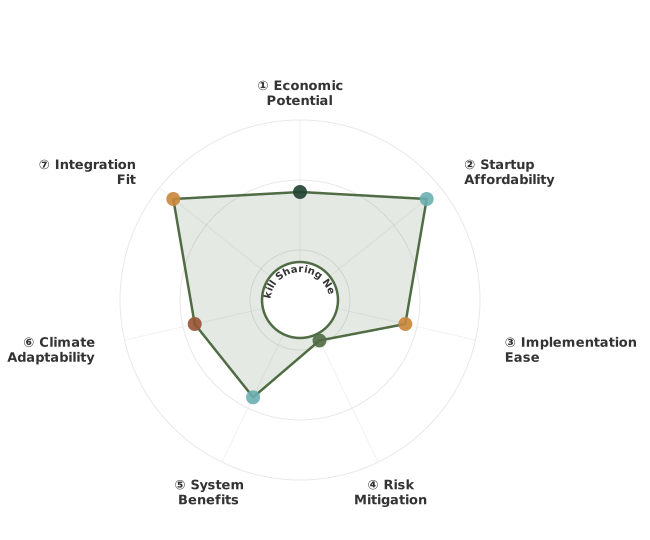
How These Traits Are Calculated
Trait dimensions are ordered clockwise starting from the top of the chart (12 o'clock position):
1. Economic Potential
Financial returns, annual value, and break-even timeline
WHAT: Evaluates financial viability by combining net annual value ($/ha from savings, income, and amortized harvests) with break-even timeline showing when practices pay for themselves.
WHY: Farmers need clear ROI understanding before committing resources. Fast payback (≤3 years) with strong returns (≥$300/ha) enables confident adoption, while long timelines (>10 years) restrict adoption to well-funded operations willing to wait for returns.
HOW: Calculated from net annual value in $/ha and break-even years. Exceptional (≥2.6): fast ROI ≤3 years + high value ≥$300/ha. Typical (1.8-2.5): moderate returns or longer timelines. Limited (<1.8): marginal economics or very long payback >10 years.
2. Startup Affordability
Initial investment costs and financial barrier to entry
WHAT: Measures financial barrier to entry through startup costs for equipment, infrastructure, consulting, and materials. Inverted scoring: lower costs = higher scores = more accessible adoption.
WHY: Affordability determines who can adopt. Low-cost practices (<$250/ha) enable widespread adoption across diverse scales, while high costs (>$2,500/ha) limit adoption to well-capitalized operations, creating barriers that slow regenerative transition.
HOW: Calculated from initial investment parsed from practice content. Inverted scoring: Exceptional (≥2.6): minimal investment <$250/ha. Typical (1.8-2.5): moderate costs $250-2,500/ha. Limited (<1.8): high barrier >$2,500/ha.
3. Implementation Ease
Learning curve and specialized knowledge required
WHAT: Measures how much learning, planning, and specialized knowledge a practice requires. Simpler practices with fewer steps score higher, while complex practices requiring extensive training or specialized resources score lower.
WHY: Complex practices create adoption barriers even when economically viable. Straightforward practices enable faster adoption and broader participation, while those requiring extensive training, timing precision, or specialized equipment limit who can succeed.
HOW: Evaluated by measuring documentation length and identifying complexity markers like location-specific requirements, seasonal timing windows, specialized skills, and dedicated equipment needs. Exceptional (≥2.6): straightforward practices with minimal prerequisites. Typical (1.8-2.5): moderate learning curve with some specialized needs. Limited (<1.8): steep learning curve requiring significant training or resources.
4. Risk Mitigation
Identified financial and ecological risk assessment
WHAT: Evaluates documented risks across financial (investment loss, market volatility) and ecological (crop failure, pest outbreaks) domains. Inverted scoring: fewer risks = higher scores.
WHY: Understanding risk exposure helps farmers make informed decisions. Low-risk practices allow confident implementation, while high-risk practices require careful planning and contingency resources. Risk transparency prevents costly failures.
HOW: Calculated from identified risks in practice content. Inverted scoring: Exceptional (≥2.6): ≤2 risks with manageable severity. Typical (1.8-2.5): 3-5 moderate risks. Limited (<1.8): 6+ risks or severe exposure.
5. System Benefits
How many ways the practice improves your land simultaneously
WHAT: Measures how many aspects of land health improve at once—carbon storage, soil quality, erosion control, water absorption, and biodiversity. Practices that improve multiple areas simultaneously create compounding benefits where each improvement reinforces the others.
WHY: The best practices solve multiple problems at once. For example, addressing erosion simultaneously builds carbon and improves water infiltration, creating a resilient system with positive feedback loops. Single-benefit approaches miss these compound transformation opportunities.
HOW: Evaluated across five key outcomes: carbon sequestration, soil organic matter increase, erosion reduction, water infiltration improvement, and biodiversity enhancement. Exceptional (≥2.6): high carbon storage (>8 t/ha/yr), improvements across 4-5 areas, transformative outcomes. Typical (1.8-2.5): moderate carbon (3-8 t/ha/yr), improvements across 2-3 areas. Limited (<1.8): modest impact (<3 t/ha/yr), single-area focus only.
6. Climate Adaptability
Geographic applicability across Köppen climate zones
WHAT: Evaluates geographic applicability by assessing how many Köppen climate zones successfully support a practice and what adaptation requirements are needed. Measures breadth of climates where farmers can implement with minimal to moderate modifications.
WHY: Universal practices working across diverse climates enable more farmers to adopt regenerative approaches. Practices limited to single climate types (only Mediterranean, only tropical) restrict adoption and slow global transition. Adaptability determines whether a practice serves niche regions or offers broad transformation.
HOW: LLM evaluation of regional success stories, Köppen zone coverage, and adaptation needs. Exceptional (≥2.6): 5+ zones or 4+ climate types, 3+ continents, minimal adaptation. Typical (1.8-2.5): 3-4 zones or 2-3 types, 2 continents, moderate adaptation. Limited (<1.8): 1-2 zones, single region, significant adaptation or highly specialized.
7. Integration Fit
How well this practice combines with others you're doing
WHAT: Measures how well a practice combines with other regenerative practices you might be doing. Some practices work as building blocks that make many other practices easier or more effective, while others work best on their own.
WHY: Practices that combine well with many others create more value on your farm. For example, cover cropping enables no-till, improves grazing, supports crop diversity, and helps water management—making all of them work better together. This helps you build a coherent system rather than juggling disconnected practices.
HOW: Evaluated by identifying which practices combine well and how strong those combinations are. 'Ideally Suited' means strong combinations where practices reinforce each other (practice A makes B easier, while B makes A more effective). 'Adequate' means complementary benefits that work well together. Exceptional (≥2.6): combines well with 6+ practices, serves as a building block. Typical (1.8-2.5): combines with 3-5 practices. Limited (<1.8): 1-2 practices or works best alone.
Going Deeper
1
WHY - The Benefits
Skill sharing networks are fundamental to the successful and widespread adoption of regenerative agriculture because they address the primary barriers to transition: knowledge gaps, perceived risk, and isolation. By connecting practitioners, they create a fertile ground...
Skill sharing networks are fundamental to the successful and widespread adoption of regenerative agriculture because they address the primary barriers to transition: knowledge gaps, perceived risk, and isolation. By connecting practitioners, they create a fertile ground for learning, adaptation, and collective problem-solving, leading to tangible improvements in soil health, economic viability, and ecological resilience.
WHY - The Benefits
Skill sharing networks are fundamental to the successful and widespread adoption of regenerative agriculture because they address the primary barriers to transition: knowledge gaps, perceived risk, and isolation. By connecting practitioners, they create a fertile ground...
Skill sharing networks are fundamental to the successful and widespread adoption of regenerative agriculture because they address the primary barriers to transition: knowledge gaps, perceived risk, and isolation. By connecting practitioners, they create a fertile ground for learning, adaptation, and collective problem-solving, leading to tangible improvements in soil health, economic viability, and ecological resilience.
Soil Health Benefits
The most direct impact of skill sharing networks on soil health comes from the accelerated adoption of regenerative practices. When farmers learn and implement techniques like cover cropping, no-till farming, mulching, and diverse rotational grazing, they directly contribute to improving soil structure, organic matter content, water infiltration, and nutrient cycling. For example, networks focused on cover cropping share knowledge on optimal species mixes for different climates (e.g., cool-season mixes for North America and Europe, warm-season mixes for South America and Asia), nutrient management using legumes and compost, and termination methods that minimize disturbance. This transfer of practical knowledge allows farmers to move away from bare soil and synthetic inputs, directly supporting Principles 1, 2, 3, and 4.
Peer-to-peer learning also fosters a deeper understanding of soil biology. Farmers share observations about earthworm activity, fungal networks, and the impact of different management strategies on soil life. This practical, on-farm understanding of soil health is often more impactful than theoretical knowledge. For instance, a farmer in Australia might share how integrating livestock with a specific crop rotation improved soil aggregation, which then inspires a farmer in Kenya to try a similar approach adapted to their local context. This fosters a culture of continuous learning and refinement of regenerative techniques, leading to ongoing improvements in soil function.
Furthermore, skill sharing networks can promote the use of locally adapted crop varieties and livestock breeds (Principle 2). By pooling knowledge about heritage seeds or resilient livestock lines, farmers can increase the genetic diversity of their operations, making them more resilient to pests, diseases, and environmental stresses. This directly supports Principle 2, as greater diversity above and below ground leads to more robust and functional agroecosystems. Sharing knowledge about seed saving, local nurseries, or breeding programs strengthens these vital components of agricultural biodiversity.
Economic Benefits
Skill sharing networks offer substantial economic advantages by reducing the cost and risk associated with transitioning to regenerative agriculture. Knowledge transfer means farmers can learn effective, low-input strategies without expensive trial-and-error. For example, a successful cover crop mix developed by a farmer in the UK might be shared, saving another farmer in France the expense of experimenting with less effective species. This leads to reduced reliance on costly synthetic fertilizers, pesticides, and herbicides, with average input cost reductions of 15-30% often reported after a few years of adopting regenerative practices learned through such networks.
Improved soil health, a direct outcome of adopted regenerative practices, translates to enhanced productivity and resilience. Increased water infiltration and retention (Principle 3) mean crops and pastures are more drought-tolerant, reducing losses during dry spells and potentially decreasing irrigation needs. Better soil structure and fertility lead to improved crop yields and animal performance over time, often in the range of 10-25% increases after 5-7 years of consistent regenerative management. This improved productivity, coupled with lower input costs, significantly boosts farm profitability.
Networks also facilitate the sharing of information about market access for regenerative products, which often command premium prices. Farmers learn about direct marketing opportunities, value-added processing, and consumer demand for sustainably produced goods. This can open new revenue streams and improve the economic sustainability of farm operations. Tool libraries or equipment cooperatives, often facilitated by these networks, can provide access to expensive machinery (like no-till drills or specialized mowers) at a fraction of the cost of ownership, further reducing capital investment barriers.
Beyond direct financial gains, skill sharing networks build farm resilience. By diversifying income streams (e.g., integrating livestock, cover crops for biomass, or specialty crops) and reducing reliance on volatile input markets, farmers become less vulnerable to economic shocks and extreme weather events. This enhanced resilience translates into greater long-term financial stability.
Regenerative Systems Fit
Skill sharing networks are a foundational element for building widespread regenerative agricultural systems. They directly foster the adoption of the five regenerative principles by providing the practical know-how and peer support necessary for implementation.
Principle 1 (Minimize Soil Disturbance): Networks share knowledge on no-till and reduced-till equipment, effective cover crop termination methods that leave residue, and the benefits of biological soil building that reduces the need for mechanical intervention. Farmers learn how to transition gradually or, if necessary, how to use one-time tillage strategically as a last resort.
Principle 2 (Maximize Crop Diversity): Participants share expertise on creating diverse cover crop mixes, incorporating companion plantings, selecting heritage seeds adapted to local climates, implementing crop rotations that enhance soil health, and integrating trees or hedgerows into landscapes. This exchange promotes learning about the functional roles of different species.
Principle 3 (Keep Soil Covered): Skill sharing networks are crucial for disseminating techniques like cover cropping, mulching, and direct-seeded pastures. Farmers learn not only what to plant but how to manage these systems effectively year-round, ensuring continuous soil protection against erosion and moisture loss.
Principle 4 (Maintain Living Roots): Networks share best practices for perennializing landscapes, including integrating trees (silvopasture, agroforestry), using perennial forages, and selecting cover crop species that overwinter or provide continuous growth. They highlight the importance of year-round biological activity and its benefits for soil structure and fertility.
Principle 5 (Integrate Livestock): Knowledge transfer on managed grazing systems—such as adaptive grazing, high-density mob grazing, and silvopasture—helps farmers strategically use animals for nutrient cycling, weed control, pasture management, and building soil organic matter. This principle is often learned through direct observation and mentorship within networks.
For Transition Practices: Skill sharing networks play a vital role in demystifying and supporting practices that might temporarily deviate from rigid regenerative rules. For instance, a farmer preparing to use one-time deep tillage can find others who have successfully navigated this process, sharing lessons learned about soil moisture management, cover crop selection, and the critical importance of resisting future tillage. This creates a supportive environment for necessary compromises during transition, ensuring that temporary setbacks don't derail the long-term regenerative goal. The emphasis is always on understanding why a compromise is needed and how to quickly return to fully regenerative practices.
Networks can also help farmers graduate from transition practices to fully regenerative ones. For example, a farmer learning to use reduced tillage might be inspired by peers to try progressively longer periods without tillage, eventually achieving full no-till. Similarly, learning to manage livestock more adaptively within a network can lead to phasing out supplementary feed and relying more on pasture-based fertility. The collective wisdom shared within these groups accelerates the learning curve for adopting and refining these practices, making them more widely accessible and effective.
Sources behind this view
 Videos & Podcasts
-
Adopts regenerative agriculture principles: minimize disturbance, keep living roots, use soil armor, integrate animals (livestock grazing, multi-species), and increase biodiversity. These practices bu

-
Adopting regenerative practices should start small and incrementally, focusing on soil health over short-term yields. Collaboration, strategic nutrient sourcing, and leveraging resources like Continuu
-
Regenerative farming, using no-till, cover crops, and diverse rotations, rapidly rebuilds soil organic matter and soil life. Examples from Ohio and Ghana show these practices increase profitability by

-
Advocates for a gradual transition to regenerative practices, emphasizing soil health, diverse crop rotations, livestock integration, and smart nutrient management. Stresses the need for farmers to 'e

 Research
-
Systematic review of regenerative farming: Addressing agricultural sustainability challenges (opens in new window)
This study found: Systematic review of 31 studies shows regenerative farming improves soil health, biodiversity, and carbon capture, aiding sustainability. Technology is key for adoption, but policy, farmer understandi
-
The Indigenous Roots of Regenerative Agriculture (opens in new window)
This study found: Modern regenerative agriculture practices are rooted in millennia of Indigenous land stewardship, offering profound knowledge and a crucial value system of respect and reciprocity for true transformat
-
Regenerative Agriculture: Insights and Challenges in Farmer Adoption (opens in new window)
This study found: Review of 7 regenerative agriculture practices (no-till, crop rotation, cover crops, etc.) highlights benefits and key adoption challenges like cost, farm size, and institutional barriers for scalable
-
Regenerative Agriculture: Restoring Ecosystems¢ Resilience and Productivity: A Review (opens in new window)
This study found: Regenerative agriculture builds soil health and ecosystem services through practices like no-till, cover crops, and diverse rotations. It increases soil organic matter, improves water infiltration, bo
2
WHERE - Regional Considerations
Skill sharing networks are universally applicable but their most effective implementation and focus areas can vary due to regional agricultural systems, dominant climate challenges, and existing knowledge exchange structures.
Skill sharing networks are universally applicable but their most effective implementation and focus areas can vary due to regional agricultural systems, dominant climate challenges, and existing knowledge exchange structures.
WHERE - Regional Considerations
Skill sharing networks are universally applicable but their most effective implementation and focus areas can vary due to regional agricultural systems, dominant climate challenges, and existing knowledge exchange structures.
Skill sharing networks are universally applicable but their most effective implementation and focus areas can vary due to regional agricultural systems, dominant climate challenges, and existing knowledge exchange structures.
Click Here to Look up your Region if you don't already know it
Humid Temperate Regions
Representative Locations: Midwestern United States, Northern Europe (e.g., Germany, UK), Eastern China, Japan, New Zealand
Climate Context: Warm to hot summers and cool to cold winters with moderate to high annual precipitation (75-150 cm or 30-60 inches) distributed relatively evenly. USDA Zones 6-8, Köppen Cfb/Cfa.
Regional Focus: In these regions, skill sharing often centers on improving soil health and managing excess moisture. Topics include diverse cover cropping strategies for winter protection and spring integration, advanced no-till techniques for diverse rotations (grains, forages, vegetables), managing nutrient runoff, and integrating livestock into crop rotations for fertility and weed control. Networks might also focus on adapting organic pest management for higher humidity environments and addressing soil compaction from past intensive practices.
Mediterranean Regions
Representative Locations: California (USA), Mediterranean basin (Spain, Italy, Greece), Central Chile, Southwestern Australia, Western Cape South Africa
Climate Context: Hot, dry summers and mild, wet winters. Annual precipitation 40-90 cm (15-35 inches), highly seasonal. USDA Zones 8-10, Köppen Csa/Csb.
Regional Focus: Water conservation is a primary theme. Networks share knowledge on drought-resilient cover crops, water-harvesting techniques (e.g., swales, contour farming), reduced irrigation needs through improved soil organic matter, and integrating drought-tolerant perennial crops and livestock. Knowledge exchange on managing summer fallows sustainably and adapting perennial cropping systems (like vineyards and orchards) to regenerative principles is common. Pest and disease management strategies adapted to hot, dry summers are also key topics.
Arid/Semi-Arid Regions
Representative Locations: Western USA, North Africa, Central Asia, Interior Australia, parts of the Sahel
Climate Context: Low annual precipitation (<40 cm or 15 inches), high temperatures, short and often unpredictable growing season. USDA Zones 6-8, Köppen BSh/BSk.
Regional Focus: Water efficiency and resilience are paramount. Networks share techniques for maximizing water infiltration, utilizing marginal rainfall, employing very drought-tolerant cover crops, managing livestock grazing to improve rangeland health and soil cover, and integrating water storage solutions. Knowledge on adapting resilient perennial grains, drought-tolerant legumes, and native species for forage or restoration is critical. Networks often promote holistic management practices tailored to extreme climate variability and limited water resources.
Cold Continental Regions
Representative Locations: Northern USA and Canada, Northern Europe, Northern Asia (e.g., Siberia, parts of China)
Climate Context: Very short growing seasons, extreme summer heat, severe winter cold. USDA Zones 3-5, Köppen Dfa/Dfb.
Regional Focus: Maximizing short growing seasons and surviving extreme cold is key. Networks share knowledge on early-season, rapid-growth cover crops, frost-tolerant species, winter hardiness of perennials, strategies for building soil organic matter quickly, and managing soil health under freeze-thaw cycles. Discussions often include adapting livestock management for winter feed and protection, and ensuring soil cover throughout snow-covered periods to prevent erosion.
Subtropical Regions
Representative Locations: Southeastern USA, Southern China, Southern Brazil, Eastern Australia, parts of India
Climate Context: Hot, humid summers and mild winters with generally ample rainfall, though sometimes seasonal. USDA Zones 9-11, Köppen Cfa/Cwa.
Regional Focus: Managing high humidity, intense heat, and sometimes heavy rainfall is central. Networks focus on disease-resistant crop varieties, cover crops that thrive in warm, moist conditions, managing soil acidity and fertility for tropical/subtropical soils, and integrating livestock in ways that manage heat stress and manure effectively. Erosion control on slopes and managing intense rainfall events are common topics.
Tropical Regions
Representative Locations: Central Africa, Southeast Asia, Northern South America, Philippines, Northern Australia
Climate Context: High temperatures year-round, with distinct wet and dry seasons or consistent high rainfall. Köppen Af/Am/Aw.
Regional Focus: Managing intense rainfall, high temperatures, and rapid nutrient cycling or depletion is crucial. Networks share knowledge on erosion control (e.g., terracing, contour planting, alley cropping), selecting fast-growing cover crops and perennial systems, integrating trees for shade and fertility (agroforestry, silvopasture), and managing soil health in humid, tropical environments which can leach nutrients quickly. Networks often focus on smallholder systems, sharing techniques for low-input fertility building and integrated pest management adapted to warm, humid conditions.
3
HOW - Implementation Process
Implementing effective skill sharing networks requires a structured yet flexible approach, adapting to local needs and resources.
Implementing effective skill sharing networks requires a structured yet flexible approach, adapting to local needs and resources.
HOW - Implementation Process
Implementing effective skill sharing networks requires a structured yet flexible approach, adapting to local needs and resources.
Implementing effective skill sharing networks requires a structured yet flexible approach, adapting to local needs and resources.
Prerequisites
- Identify a Need: What specific regenerative practices are farmers in your region struggling to adopt or refine? This could be cover cropping for specific soil types, adaptive grazing in arid conditions, or transitioning to no-till on heavy clay soils.
- Identify Potential Facilitators/Experts: Who are the local farmers, ranchers, extension agents, or researchers who have demonstrated success with these practices?
- Assess Resources: What existing venues (community centers, farms, online platforms), communication channels (email lists, social media groups, local radio), and funding (grants, participant fees) are available?
- Define Scope: Will this be a localized effort, regional, or focused on a specific commodity (e.g., a network for grain farmers, or for livestock producers)?
Phase 1: Network Foundation and Outreach (Months 1-3)
- Formalize Structure (Optional but Recommended): Decide on a basic organizational structure—is it an informal group, a project run by an NGO, or a farmer-led association? This impacts how you secure resources and manage activities.
- Establish Communication Channels: Create a platform for members to connect. This could be a dedicated website, a private social media group (Facebook, WhatsApp), or an email listserv. Ensure it's accessible and easy for participants to use.
- Initial Outreach: Announce the formation of the network through relevant channels: local agricultural extension offices, farmer associations, rural community centers, agricultural supply stores, and respected local farms. Clearly articulate the network's purpose and the benefits of participation.
- Recruit Founding Members: Invite a core group of enthusiastic individuals—both knowledge holders and learners—to help shape the network's direction.
Phase 2: Knowledge Exchange Activities (Ongoing)
-
Field Days and Farm Tours: Organize visits to farms where regenerative practices are successfully implemented. This is invaluable for observing techniques in real-world conditions.
- International Context: For large farms, ensure tours are logistically feasible; for smallholders, consider cluster visits to neighboring farms.
-
Workshops and Training Sessions: Host sessions led by local experts or invited specialists on specific topics (e.g., cover crop selection, soil testing interpretation, rotational grazing planning).
- International Context: Use local languages where possible. For regions with limited internet access, printed materials and in-person demonstrations are vital.
-
Mentorship Programs: Pair experienced regenerative farmers with learners. This provides personalized guidance and ongoing support.
- International Context: Match mentors and mentees within similar agroecological zones or farming systems where possible.
-
Tool Libraries/Sharing Cooperatives: Establish a system for sharing specialized equipment (e.g., no-till drills, roller-crimpers, soil probes). This reduces capital investment for participants.
- International Context: Adapt to local availability of equipment and access to repair services. Consider bulk purchasing if a specific tool is needed by many.
-
Online Forums/Discussion Groups: Facilitate ongoing discussions, Q&A, and knowledge sharing via digital platforms. This is particularly useful for sharing timely information on weather, pest outbreaks, or market news.
- International Context: Consider platforms accessible on mobile phones with lower data requirements.
Phase 3: Evaluation and Adaptation (Periodic)
- Gather Feedback: Regularly solicit input from participants on the effectiveness of activities, topics of interest, and areas for improvement. Surveys, informal discussions, and feedback forms are useful.
- Measure Impact: Track adoption rates of specific practices, reported changes in farm economics, and improvements in soil health indicators (anecdotal or measured).
- Adapt Program: Based on feedback and impact assessment, refine the network's focus, activities, and communication methods. Introduce new topics, pilot different learning formats, or expand to new regions.
Transition Timeline & Phase-Out Strategy (If Applicable)
While skill sharing networks are generally inherently regenerative, they can indirectly support transition. For example, a network might focus on sharing how to gradually reduce synthetic inputs or how to phase out one-time tillage for compaction by building soil biology instead.
- Focus on Gradual Reduction: Networks can share strategies for incremental phase-outs. For instance, when discussing fertilizer management, members might share experiences reducing synthetic nitrogen by 10-20% annually while monitoring soil biology and crop response.
- Share "Last Resort" Learning: If a practice is a necessary transition step (like one-time deep tillage), the network can host discussions where farmers share their experiences, the conditions under which it was used, the success metrics achieved, and the plan for permanent no-till thereafter. This normalizes such steps as part of a broader regenerative journey.
- Highlight Success Metrics: Focus discussions on observable indicators of progress: increased earthworm activity, improved water infiltration, better crop resilience, reduced pest pressure. These metrics signal readiness to phase out non-regenerative inputs or practices.
- Timeline for Phase-Out: Sharing realistic timelines is crucial. For synthetic nitrogen, a 3-5 year gradual reduction plan is common. For pesticides, learning integrated pest management (IPM) can phase out broad-spectrum sprays within 2-3 years. The network provides support and accountability to stick to these timelines.
Sources behind this view
Videos & Podcasts
-
Adopting regenerative practices should start small and incrementally, focusing on soil health over short-term yields. Collaboration, strategic nutrient sourcing, and leveraging resources like Continuu
4
Know the Debate
Skill sharing networks are vital for regenerative agriculture, offering peer-to-peer learning that accelerates practice adoption and adaptation. Wh...
Know the Debate
Skill sharing networks are vital for regenerative agriculture, offering peer-to-peer learning that accelerates practice adoption and adaptation. Wh...
Skill sharing networks are vital for regenerative agriculture, offering peer-to-peer learning that accelerates practice adoption and adaptation. While universally beneficial, outcomes vary by region: humid temperate zones focus on soil health and moisture management, Mediterranean climates prioritize water conservation, arid regions emphasize drought resilience, and cold zones focus on short seasons and soil protection. Network implementation varies from volunteer-led local groups to funded regional associations, with costs driven by platform, events, and participant time, while rewards include reduced inputs, higher yields, and enhanced resilience, though risks of misapplication or context mismatch exist.
How quickly will I see regenerative agriculture outcomes?
Rapid improvement in humid temperate zones
In regions with ample rainfall and moderate temperatures, soil biology responds quickly to regenerative practices, leading to observable improvements in soil structure and early yield gains within 2-3 years.
Sources behind this view
Sources behind this view
Videos & Podcasts
-
Optimal regenerative practices are context-specific; farmer-to-farmer knowledge exchange is vital. Scientists can explain 'why,' but peer experience is key. Soil health (porosity, carbon) is quickly lost after disturbance and takes time to recover.
Research
-
Regenerative Agriculture: Restoring Ecosystems¢ Resilience and Productivity: A Review (opens in new window)
This study found: Regenerative agriculture is a farming approach that views farms as living ecosystems, moving away from the 'take-make-dispose' model of conventional farming. Instead of relying heavily on outside inputs, it focuses on building up the farm's natural resources and services. Key practices include disturbing the soil as little as possible (like no-till or reduced tillage), planting cover crops, rotating different crops, integrating livestock in a managed way, using compost, reducing synthetic fertilizers and pesticides, and incorporating trees. The approach is tailored to each farm's specific conditions. Farmers monitor soil health indicators like organic matter, how well soil holds water, and the amount of life in the soil. Studies show that regenerative practices can significantly increase soil organic matter (by 0.5-2% in 3-5 years), improve water infiltration (2-10 times better), boost soil microbial life (30-50% more), and increase beneficial insects (60-80% more). Farms can also capture 0.5 to 3 tons of carbon per hectare annually. Economically, these farms often have 20-40% lower input costs and can be more profitable in the long run, becoming more productive and stable over time.
 From the Web
-
Effective learning networks in agriculture require three key components: framing good, open-ended questions; skilled facilitator-coordinators; and a platform for reporting evidence and sharing. These networks foster internal motivation and participatory learning, addressing challenges of scale and facilitation.
Longer timelines in arid or challenging regions
In arid, semi-arid, or severely degraded soils, biological processes are slower, requiring 5-7 years or more of consistent management to see significant soil test changes and yield improvements.
Sources behind this view
Sources behind this view
Videos & Podcasts
-
Optimal regenerative practices are context-specific; farmer-to-farmer knowledge exchange is vital. Scientists can explain 'why,' but peer experience is key. Soil health (porosity, carbon) is quickly lost after disturbance and takes time to recover.
-
Adopting regenerative practices should start small and incrementally, focusing on soil health over short-term yields. Collaboration, strategic nutrient sourcing, and leveraging resources like Continuum Ag are key to successful implementation.
From the Web
-
Regenerative agriculture is a long-term, intentional journey involving complex biological processes. The Noble Institute supports producers through research and collaboration, aiming to transform millions of acres for benefits like drought resilience, reduced pollution, and carbon capture.
Phased benefits: yield first, then soil carbon
Farmers often see improvements in pasture productivity or crop resilience within 1-2 years, while significant soil carbon sequestration and deep soil health changes may take 3-5+ years.
Sources behind this view
Sources behind this view
Videos & Podcasts
-
Getting started in regenerative agriculture involves education through online resources, courses, in-person academies for hands-on learning and networking, and visiting other farms to observe practices.
From the Web
-
Regenerative grazing adoption is driven by a mindset shift, with social/psychological barriers being key. Peer-to-peer learning and farmer support are crucial for success. Benefits include improved soil health, forage production, drought resilience, and profitability.
Making Sense of the Differences
The speed of regenerative outcomes depends greatly on climate, soil health history, and management intensity. Humid regions with adequate rainfall and active soil biology show faster improvements. Arid or degraded lands require more time for soil organic matter to build and biological systems to re-establish. Farmers also experience phased benefits: pasture health or resilience may improve sooner than measurable soil carbon gains. Understanding these timelines helps set realistic expectations and plan for the financial transition.
What are the true costs and capital investment for regenerative practices?
Low entry cost for knowledge-based practices
Many regenerative practices begin with knowledge acquisition and minimal capital: joining networks, understanding soil biology principles, and adapting existing equipment can be sufficient.
Sources behind this view
Sources behind this view
Videos & Podcasts
-
Optimal regenerative practices are context-specific; farmer-to-farmer knowledge exchange is vital. Scientists can explain 'why,' but peer experience is key. Soil health (porosity, carbon) is quickly lost after disturbance and takes time to recover.
From the Web
-
Community and mentorship, both local and online, are crucial for adopting regenerative practices. Networks like Practical Farmers of Iowa and resources like YouTube and podcasts facilitate knowledge sharing and collaboration, leading to business partnerships and the adoption of techniques like Johnson Su composting bioreactors.
-
Regenerative farms act as training grounds, hosting workshops for knowledge sharing and skill development in soil management, animal care, and crop production for the next generation of farmers.
Moderate to high investment for infrastructure and equipment
Practices like no-till seeding, advanced rotational grazing (permanent fencing/water), or silvopasture require significant upfront investment in specialized machinery or infrastructure ($5,000-$25,000+ per farm).
Sources behind this view
Sources behind this view
Videos & Podcasts
-
Adopting regenerative practices should start small and incrementally, focusing on soil health over short-term yields. Collaboration, strategic nutrient sourcing, and leveraging resources like Continuum Ag are key to successful implementation.
-
Newcomers should find like-minded individuals and build a network to share ideas and gain diverse viewpoints, especially for regenerative practices, and consult experts for specific projects like building corrals.

From the Web
-
Provides resources for scaling regenerative agriculture, including guides on grazing leases, policy analysis, investment strategies, and peer-to-peer learning networks like Holistic Management International and OpenTEAM.
Cost-sharing and collaborative models reduce individual burden
Tool libraries, equipment cooperatives, group purchasing, and accessing government cost-share programs can significantly lower the financial barrier for adopting capital-intensive regenerative practices.
Sources behind this view
Sources behind this view
From the Web
-
Regenerative grazing adoption is driven by a mindset shift, with social/psychological barriers being key. Peer-to-peer learning and farmer support are crucial for success. Benefits include improved soil health, forage production, drought resilience, and profitability.
-
Key obstacles to regenerative agriculture for small farmers include lack of multi-year technical assistance and funding. Global expansion requires shifting funding from monoculture to regenerative systems for local food production.
Making Sense of the Differences
The financial investment in regenerative practices ranges widely, from low upfront costs for knowledge-intensive methods like adaptive management and cover crop selection through networks, to substantial capital ($5k-$25k+) for specialized equipment or infrastructure like no-till drills or permanent grazing systems. Collaborative models, tool sharing, and cost-share programs significantly mitigate these financial risks, making adoption more accessible. The most critical investment is often participant time in learning and experimentation, particularly when transitioning away from synthetic inputs.
How much labor and expertise are required for regenerative systems?
High labor for early transition and adaptive management
Initial adoption requires significant time for learning, observation, and experimentation, with daily attention often needed for practices like adaptive grazing or complex cover cropping.
Sources behind this view
Sources behind this view
Videos & Podcasts
-
Cedric Shannon advises aspiring regenerative farmers to prioritize internships for hands-on learning and a mindset shift from static 'nouns' to dynamic 'verbs' (interactions). He stresses that understanding complex ecological systems and developing intuition is crucial and best learned through experience.

-
Optimal regenerative practices are context-specific; farmer-to-farmer knowledge exchange is vital. Scientists can explain 'why,' but peer experience is key. Soil health (porosity, carbon) is quickly lost after disturbance and takes time to recover.
-
Sharing farming knowledge, especially through podcasts and online content, is crucial for collective learning and sustainability. Learning by teaching deepens understanding, and the business side of farming is as vital as growing skills.

Ongoing expertise needed for complex systems
Managing diverse systems requires continuous learning, adaptability, and a deep understanding of local ecology, often developed through mentorship and peer networks.
Sources behind this view
Sources behind this view
Videos & Podcasts
-
Regenerative agriculture thrives on community, continuous learning, and mindset shifts, drawing from indigenous wisdom and fostering empathy. Practical advice includes joining networks, asking 'why' and 'wondering' questions, and embracing a holistic, nature-mimicking approach to land management and personal growth.

From the Web
-
Effective learning networks in agriculture require three key components: framing good, open-ended questions; skilled facilitator-coordinators; and a platform for reporting evidence and sharing. These networks foster internal motivation and participatory learning, addressing challenges of scale and facilitation.
-
A Nuffield study emphasizes that skilled farm facilitators and well-run farmer groups are key to adopting soil health practices, driven by farmer motivation and ongoing peer support rather than just knowledge download.
Labor can be optimized with experience and system maturity
Once systems mature and routines are established, labor requirements may stabilize or even decrease compared to conventional farming due to reduced external inputs and greater on-farm resource cycling.
Sources behind this view
Sources behind this view
Videos & Podcasts
-
The willingness of individuals in regenerative agriculture to openly share knowledge and experiences is a defining characteristic. This collaborative network and support system are crucial for navigating challenges and fostering progress.
![Thumbnail for [S4E7] Gabe Brown: From Dirt to Soil](/static/thumbnails/t-doli5yse0.jpg)
-
A strong producer network is vital for sharing knowledge, collaborative experimentation, and value-added marketing of grass-fed products, allowing farmers to focus on their strengths.

Making Sense of the Differences
Regenerative agriculture, particularly in its early stages, demands significant time and observational expertise from farmers. This includes learning new practices, adapting them to local conditions, and consistent monitoring. While initial adoption requires hands-on effort and continuous learning through mentorship and peer networks, experienced practitioners often find that mature regenerative systems can become more labor-efficient due to reduced reliance on external inputs and enhanced natural processes. The 'art' of reading the land and understanding ecological interactions is as crucial as technical knowledge.
5
HOW MUCH - Costs & Investment
Note: Costs are presented in USD equivalent. Local currency, labor rates, material availability, and the scale of the farm operation will significantly impact actual expenses. Costs for participant time are often the largest investment.
Note: Costs are presented in USD equivalent. Local currency, labor rates, material availability, and the scale of the farm operation will significantly impact actual expenses. Costs for participant time are often the largest investment.
HOW MUCH - Costs & Investment
Note: Costs are presented in USD equivalent. Local currency, labor rates, material availability, and the scale of the farm operation will significantly impact actual expenses. Costs for participant time are often the largest investment.
Note: Costs are presented in USD equivalent. Local currency, labor rates, material availability, and the scale of the farm operation will significantly impact actual expenses. Costs for participant time are often the largest investment.
Note: All costs are based on recent US economic data (2024–2026) and may vary substantially by region based on local labor rates, material costs, and regulatory requirements.
Platform and Administrative Infrastructure
The digital foundation of a skill-sharing network provides the backbone for communication and resource distribution. Small networks (under 50 acres (20 ha)) typically operate on a lean budget, utilizing free open-source platforms and social media integration to facilitate connection. Annual expenditures for these groups range from $0 to $521. This covers basic domain registration and foundational communication tools where primary coordination is volunteer-driven.
Mid-size networks (50–500 acres (20–202 ha)) require higher reliability and data management capabilities to serve a larger base of producers. These groups often invest in project management software, dedicated event registration platforms, and professional website maintenance. Annual costs for this tier occupy a range of $208 to $1,563. Expenditure at the higher end of this range reflects the adoption of premium CRM software, which allows for robust segmenting of member demographics, critical for regional knowledge transfer.
Large-scale networks (500+ acres) operate as regional hubs and require enterprise-level digital architecture. These platforms must manage thousands of data points, including complex dues structures, multi-tiered event registrations, and high-security file sharing. Annual funding requirements span $1,042 to $5,210. These costs include high-uptime cloud hosting, cybersecurity compliance protocols, and specialized accounting software designed to manage large-scale tax and liability reporting.
Event and Workshop Logistics
Field days, workshops, and peer-to-peer demonstration sites represent the highest variable expense in skill-sharing networks. Small networks keep costs low by utilizing free on-farm event sites and relying on volunteer labor. Annual budgets for this scale remain between $521 and $3,126, primarily allocated to modest speaker travel reimbursement, basic signage, and educational handouts.
Mid-size networks frequently professionalize their events, which drives the budget to $2,084 to $10,420 annually. This jump in expenditure supports on-site catering for multi-hour training events, site rental fees, insurance riders for third-party hosting, and the professional printing of high-quality technical guides. These expenditures are often offset by nominal membership or event registration fees, though net cash outlay remains in this band.
Large networks are the primary organizers for regional summits and multi-day intensive schools. Operating at this scale necessitates annual budgets between $8,336 and $31,260. Costs here are driven by professional AV equipment rentals, extensive venue liability insurance, speaker fees for national-level agricultural consultants, and the integrated logistics of site-hopping field days covering large geographical areas. The scaling of these costs is directly tied to total participant volume and the complexity of the demonstration materials required to ensure valid learning outcomes.
Tool Library and Equipment Assets
For networks that incorporate shared equipment pools, capital investment and long-term maintenance constitute a major budgetary pillar. Small networks utilize "barter-sharing" or informal borrowing arrangements, keeping initial shared costs between $0 and $5,210. These arrangements are often informal and require no capital overhead.
Mid-size clusters move beyond bartering, pooling their resources to acquire high-value assets such as no-till drills, solar-powered fence chargers, or advanced soil diagnostic kits. Initial capital outlay for this pool averages $3,126 to $15,630. Large-scale networks often establish centralized equipment depots, requiring significant investments that range from $10,420 to $52,100. Furthermore, all networks must account for ongoing maintenance. Annual maintenance allocations ranging from $521 to $5,210 are non-negotiable to cover replacement of hydraulic hoses, sensor recalibrations, and general hardware repairs necessary to ensure tool lifespan.
Most Spend: Most operational networks fall within the $5,200–$14,500 annual range. This middle 60% covers the cost of professional software coordination for mid-size networks and consistent, moderate logistical support for event-based knowledge transfer across active local member bases.
Why the Range?: Costs fluctuate primarily due to the "volunteer-to-professional" ratio within the organization. Networks that operate entirely on member volunteer hours face the lower end of the cost spectrum, whereas networks that hire professional coordinators to manage event logistics and equipment fleets inevitably climb toward the upper tier of the range.
6
REWARDS AND RISKS - Economics & Risk Factors
Economic Scenarios
Economic Scenarios
REWARDS AND RISKS - Economics & Risk Factors
Economic Scenarios
Economic Scenarios
Successful integration into a skill-sharing network reduces the technical learning curve, converting "tribal knowledge" into actionable on-farm profitability.
Best Case Scenario: A producer uses the network to gain peer-verified technical support for specialized cover cropping and no-till adoption. By implementing a regionalized, high-functioning 5-species mix, they reduce dependence on synthetic nitrogen and herbicides by 30% within 3 years. This generates a direct operational saving of $60 to $100 per acre ($148–$247/ha) annually. Complementary yield improvements from enhanced soil water-holding capacity and structure add a net benefit of $30 to $60 per acre ($74–$148/ha). Over 5 years, the cumulative net financial benefit reaches $450 to $950 per acre ($1,112–$2,347/ha). Marketing via network-verified branding allows for a 5% to 10% price premium on final product, increasing top-line annual revenue by $100 to $250 per acre ($247–$618/ha).
Typical Case Scenario: A livestock producer implements high-density adaptive grazing after attending network workshops. By mastering proper rest intervals and stock density for local forage, the producer increases stocking capacity by 20%, resulting in an additional $80 to $160 per acre ($198–$395/ha) per year. Drought-resilient forage management techniques learned through the network reduce the need for high-cost supplemental hay and mineral feed by 15% during lean years, saving $40 to $80 per acre ($99–$198/ha) per event. The resulting total annual economic improvement is $100 to $200 per acre ($247–$494/ha).
Worst Case Scenario: A producer attempts to implement complex infrastructure, such as silvopasture or intensive orchard systems, without adequate micro-climate tailoring. A mismatch in species selection or soil suitability leads to establishment failures, resulting in initial losses between $2,000 and $8,000 per acre ($4,942–$19,768/ha) in plant stock and infrastructure. If an irreparable biological failure occurs, the producer faces secondary losses of $100 to $200 per acre ($247–$494/ha) due to reduced output during the 5-year recovery window. Total negative impact can reach $7,000 to $18,000 per acre ($17,297–$44,479/ha) over 5 years.
Transition Period Risks: Producers often face a "technical cliff" during the first 36 months as they modify management strategies. Yield dips are common as the soil biological system resets. Mitigation requires consistent participation in network peer reviews to avoid aggressive management mistakes, such as overgrazing in sensitive arid climates. Participants should budget $200 to $500 annually for persistent soil moisture and nutrient testing, which acts as an essential insurance policy against "blind" management failures. Timeline to recovery generally stabilizes by year 3, though producers should plan for a cash-flow buffer during the 3-to-5-year transition cycle.
Sources behind this view
Videos & Podcasts
-
Transitioning to regenerative agriculture is a human/psychological process requiring trials to reduce risk and build trust. Increased consumer awareness of ecology and health would drive demand for re

-
Adopting regenerative agriculture requires convincing farmers through risk mitigation, mindset change, and demonstrating results via trials and monitoring. Benefits include reduced costs, improved soi
-
Regenerative agriculture provides solutions for climate change, human health, and soil degradation, contrasting with industrial agriculture's harmful impacts, including glyphosate use. Practices like
-
Case studies of farmers like Duane Beck, Kofi Boa, David Brandt, and Gabe Brown demonstrate that regenerative agriculture (no-till, cover crops, diverse rotations) significantly increases soil health,
 Community
-
Key takeaways for scaling regenerative agriculture include consistent certification standards, secure data sharing, long-term investment and financing, supply chain transparency, and collaborative eff
Read more (opens in new window) ucanr.edu
Research
-
Motivations behind regenerative agriculture: A systematic literature review (opens in new window)
This study found: Studies show environmental reasons are key for regenerative agriculture adoption, supported by economic/social factors. Challenges include transition, incentives, and policy gaps, requiring better far
-
Systematic review of regenerative farming: Addressing agricultural sustainability challenges (opens in new window)
This study found: Systematic review of 31 studies shows regenerative farming improves soil health, biodiversity, and carbon capture, aiding sustainability. Technology is key for adoption, but policy, farmer understandi
-
Regenerative Agriculture in the 21st Century: A Systematic Review of Environmental, Agronomic, and Socio-Economic Outcomes (opens in new window)
This study found: Systematic review finds Regenerative Agriculture boosts environment but faces yield gaps (16-21%) and socio-economic barriers. Advocates for resilience over maximum yields, needing financial support a
-
Regenerative Livestock Farming as a Socioeconomic Model for Sustainable Agribusiness in Latin America (opens in new window)
This study found: Regenerative livestock farming in Latin America improved soil carbon, biodiversity, and water quality, while boosting farmer income and quality of life. Government support is key for wider adoption.
From the Web
-
Regenerative agriculture improves soil health, forage, and resilience, but adoption faces practical, political, and personal barriers, requiring education, adaptation, and a mindset shift.
-
Profitability in regenerative agriculture is also driven by growing consumer demand for sustainably produced goods and willingness to pay premiums. However, adoption is hindered by cultural shifts, la
7
WHO - Labor & Expertise
Skill sharing networks are fundamentally about human capital, leveraging the expertise of farmers and ranchers themselves.
Skill sharing networks are fundamentally about human capital, leveraging the expertise of farmers and ranchers themselves.
WHO - Labor & Expertise
Skill sharing networks are fundamentally about human capital, leveraging the expertise of farmers and ranchers themselves.
Skill sharing networks are fundamentally about human capital, leveraging the expertise of farmers and ranchers themselves.
Expertise Requirements
-
Knowledge Holders (Mentors/Facilitators):
- Practical Regenerative Experience: Demonstrated success in implementing specific regenerative practices over several years (e.g., 3-5+ years).
- Communication Skills: Ability to clearly explain complex concepts, share lessons learned (including mistakes), and engage diverse audiences.
- Observation & Adaptation Skills: Capacity to observe outcomes on their farm, understand underlying principles, and adapt practices to different conditions.
- Willingness to Share: A genuine desire to help others learn and improve, understanding that collective success benefits everyone.
-
Knowledge Seekers (Learners/Participants):
- Openness to New Ideas: Willingness to consider and experiment with different management approaches.
- Observation & Critical Thinking: Ability to observe changes on their own farm, ask insightful questions, and critically evaluate information.
- Adaptability: Willingness to modify shared knowledge to fit their specific farm context, climate, and resources.
- Commitment to Learning: Dedication of time and effort to attend events, engage in discussions, and implement new practices.
-
Network Organizers/Facilitators:
- Organizational & Logistical Skills: Ability to plan events, manage communication platforms, and coordinate participants.
- Facilitation Skills: Ability to guide discussions, ensure inclusive participation, and mediate differing views effectively.
- Understanding of Regenerative Principles: A solid grasp of the core concepts to guide the network's focus.
- Networking Ability: Skilled at connecting people and mobilizing resources.
Labor Considerations
- Volunteer Labor: Most skill sharing networks significantly rely on volunteer time from knowledgeable farmers, ranchers, and community members for organizing, leading sessions, and hosting farm tours. This is often the primary labor source for smaller or grassroots networks.
- Paid Coordinators (Part-time/Full-time): For larger or more formalized networks, employing a coordinator can professionalize operations, secure grants, manage communication more effectively, and ensure continuity. This is common for farmer associations or NGOs facilitating networks.
- Participant Time Investment: As noted in costs, participants invest considerable time attending events, engaging online, and experimenting on-farm. This commitment is crucial for the network's success. Time is often the highest "cost" for participants.
- Guest Experts/Facilitators: Occasionally, networks may hire external speakers or specialists for specific workshops, bringing in specialized knowledge not readily available locally.
International Labor Cost Variability
- High-Cost Regions (e.g., Western Europe, North America, Australia): Volunteer labor is essential. If paid staff are utilized, their wages will be higher, necessitating more robust funding models (grants, membership fees). Farm owners' time is highly valued economically, so their participation often comes with a significant opportunity cost.
- Medium-Cost Regions (e.g., some parts of Eastern Europe, Latin America): A mix of volunteer effort and some paid coordination is feasible, often supported by agricultural development programs or grants.
- Low-Cost Regions (e.g., many parts of Africa, Asia): Volunteer effort is dominant. Formal paid roles are rare, often filled by motivated individuals passionate about regenerative agriculture. Travel time and cost for participants can be a major labor barrier, hence the importance of hyper-local networks or online platforms where accessible. When events are held, participants may travel long distances, requiring significant dedication of time.
The success of a skill sharing network hinges on activating the expertise within the farming community and facilitating its effective transfer. It values practical, on-farm wisdom and encourages a culture of continuous learning and adaptation.
8
COMPATIBLE PRACTICES - Integration Opportunities
Skill sharing networks are not isolated entities but rather a meta-practice that enhances the adoption and effectiveness of other regenerative practices.
Skill sharing networks are not isolated entities but rather a meta-practice that enhances the adoption and effectiveness of other regenerative practices.
COMPATIBLE PRACTICES - Integration Opportunities
Skill sharing networks are not isolated entities but rather a meta-practice that enhances the adoption and effectiveness of other regenerative practices.
Skill sharing networks are not isolated entities but rather a meta-practice that enhances the adoption and effectiveness of other regenerative practices.
No-Till & Reduced Tillage
- Integration: Farmers share experiences with different no-till equipment, planting techniques, residue management, and overcoming challenges like soil compaction or inadequate seeding.
- Synergy: Networks provide social support and practical problem-solving, making the transition to no-till less daunting. They help farmers understand why minimizing disturbance (Principle 1) is key and how other practices enable it.
Rotational Grazing / Adaptive Grazing
- Integration: Networks facilitate sharing of grazing charts, rest period management, stocking density calculations, and observed impacts on pasture health and livestock performance. Mentors can demonstrate techniques on their farms.
- Synergy: Crucial for implementing Principle 5 effectively. Networks help farmers understand the nuanced art of grazing management beyond simple paddock divisions, leading to better soil coverage (Principle 3) and living roots (Principle 4).
Agroforestry & Silvopasture
- Integration: Farmers share knowledge on tree species selection for specific climates and purposes (timber, nuts, shade), integration with livestock, protection of young trees, and management of multi-layered landscapes.
- Synergy: These complex integrate multiple regenerative principles. Networks help demystify them, promoting diversity (Principle 2) and multi-functional landscapes.
Soil Health Testing & Interpretation
- Integration: Networks can provide workshops on soil organic matter testing, infiltration tests, aggregate stability assessments, and interpretation of biological soil tests.
- Synergy: Helps farmers monitor progress in regenerative efforts, understand the impact of their management, and make informed decisions based on observable soil health improvements.
Integrated Pest Management (IPM) & Biological Control
- Integration: Sharing knowledge about beneficial insects, pheromone traps, botanical pesticides, and cultural practices that suppress pests naturally.
- Synergy: Supports reduced reliance on synthetic inputs and promotes biodiversity (Principle 2) crucial for a healthy ecosystem that can self-regulate pest populations.
Local Seed Saving & Adaptation
- Integration: Networks can organize seed exchanges, workshops on seed saving techniques, and discussions about locally adapted varieties.
- Synergy: Directly promotes Principle 2 by fostering genetic diversity and resilience, reducing reliance on generic, often hybridized commercial seeds.
Skill sharing networks act as a catalyst, accelerating the understanding, adoption, and refinement of all other regenerative agriculture practices by leveraging collective intelligence and shared experience. The more interconnected and knowledgeable farmers become through these networks, the faster and more effectively regenerative agriculture can scale.
Sources behind this view
Research
-
Regenerative Agriculture: Insights and Challenges in Farmer Adoption (opens in new window)
This study found: Review of 7 regenerative agriculture practices (no-till, crop rotation, cover crops, etc.) highlights benefits and key adoption challenges like cost, farm size, and institutional barriers for scalable
-
Smart and regenerative agriculture in the function of agricultural entrepreneurship (opens in new window)
This study found: Combining smart farming tech with regenerative practices enhances farm businesses by improving soil health, resilience, and meeting consumer demand for sustainable food.
-
Regenerative Agriculture: farmer motivation, environment and climate improvement (opens in new window)
This study found: Regenerative agriculture is an ecological farming movement emphasizing soil life and practices like no-till and intensive grazing. Farmer motivation is key, and supporting Regen ag offers a faster, le