
Subsoiling
Subsoiling is a deep tillage practice that uses specialized equipment to fracture compacted soil layers, typically to depths of 30-60 cm (12-24 inches) or more. It is generally considered a transition practice, used as a last resort when severe compaction prevents biological regeneration, immediately followed by cover cropping and a commitment to permanent no-till to rebuild soil structure.
Read More: Complete Description
Subsoiling, also known as deep ripping or deep loosening, is a mechanical soil disturbance practice designed to alleviate severe soil compaction. Compaction, characterized by dense soil layers that restrict root penetration, water infiltration, and aeration, can arise from decades of heavy machinery use, overgrazing, or poorly managed cropping systems. When compaction becomes so severe that water infiltration drops below 1.3 cm (0.5 inches) per hour and biological remediation over 2-3 years has failed to yield significant improvements, subsoiling may be employed as a one-time intervention.
This practice involves drawing a subsoiler or ripper implement, equipped with narrow, strong shanks, through the soil at depths often exceeding 30 cm (12 inches). These shanks fracture the compacted layer, creating fissures and cracks that improve drainage and allow roots to penetrate deeper into the soil profile. The immediate goal is to create a more hospitable environment for plants and soil organisms that were previously unable to access deeper soil resources.
From a regenerative agriculture perspective, subsoiling is classified as a transition practice. It directly violates the principle of minimizing soil disturbance (Principle 1) by mechanically breaking apart soil structure. However, it can be a necessary step to enable other regenerative principles on land that has reached a critical state of degradation. By restoring basic soil function like water infiltration and root penetration, subsoiling can create the conditions necessary for diverse cover crops (Principle 2) to thrive, preventing bare soil (Principle 3), allowing roots to grow deep (Principle 4), and ultimately supporting more resilient pasture and crop systems where livestock integration (Principle 5) becomes viable without causing further damage.
The regenerative philosophy mandates that subsoiling be a singular, one-time event. It is not a tool for routine soil management but a "reset button" for severely degraded soils. Immediately following subsoiling, it is imperative to plant a diverse mix of cover crops. These cover crops, with their extensive root systems, will exploit the newly created fractures, depositing organic matter and feeding soil biology. This biological activity then begins the process of rebuilding stable soil structure, providing the long-term solution that mechanical disturbance alone cannot offer. Without this immediate and sustained follow-up with biological methods, the benefits of subsoiling are temporary, and soil compaction will likely return.
The decision to subsoil must be based on robust evidence of severe compaction and previous failures of biological remediation. Simply observing surface issues or having some soil crusting is insufficient justification. Data from soil penetrometers showing high resistance or infiltration tests revealing very low rates are critical. Furthermore, a commitment to addressing the root causes of the original compaction—such as changing equipment management, modifying livestock grazing rotations, or ensuring continuous living cover—is essential to prevent recurrence. If these root causes are not addressed, subsoiling becomes a costly and ultimately ineffective intervention.
Subsoiling is thus framed as a "stepping stone" practice. It is a temporary measure taken when biological methods are insufficient to break a cycle of degradation. The timeline for graduating from subsoiling to fully regenerative systems is typically 2-3 years, during which time cover crops establish, biology rebuilds structure, and management practices are adjusted to prevent future compaction. Success is measured not by the tillage event itself, but by the subsequent, sustained improvement in soil function through biological means, allowing for permanent transition to no-till and other regenerative practices.
Global examples abound where this practice has been a necessary catalyst. Wheat farmers in Ukraine and the North American plains have used deep ripping to break plow pans before establishing no-till systems with cover crops. Pastoralists in severely degraded rangelands in Australia and parts of Africa have employed subsoiling on a landscape scale followed by seeded perennial pastures to restore water infiltration and forage production. These interventions, when coupled with changes in grazing and cropping management, have allowed these degraded lands to begin regenerating.
Sources behind this view
Sources behind this view
 Videos & Podcasts
-
Details the development and use of a modified subsoiler ('ripper') that incrementally loosens compacted soils, combined with liquid biostimulants and tailored seed mixes, to rapidly increase rooting d

-
Achieving regenerative agriculture requires addressing soil compaction, which hinders gas exchange and biology. Deep compaction needs mechanical removal, followed by cover crops and biologicals to pre
-
Subsoilers/keyline plows are mechanical disturbances; living roots and diverse cover crops are more effective for hardpan than tubers. Avoid excessive brassicas/legumes in mixes to prevent compaction.
 Community
-
Advanced no-till methods for decompacting soil include subsoilers/keyline plows for deep slits, encouraging root colonization and organic matter. Integrating animals (pigs, cattle) and features like s
Read more (opens in new window) permies.com -
Farmer seeks advice on improving subsoiled pasture with compaction and drainage issues. Subsoiling was done late winter/early spring, 6-7 inches deep, 3-4 ft apart. While it improved drainage, soil gr
Read more (opens in new window) permies.com
 Research
-
Reclamation of an Ultisol Damaged by Mechanical Land Clearing (opens in new window)
This study found: Deep tillage (chisel plow, subsoiling) effectively reclaimed compacted Amazonian soil, dramatically increasing water infiltration and crop yields for rice, soybeans, and corn compared to no-till metho
-
In‐row subsoiling benefits maize yield on soil with a shallow fragipan (opens in new window)
This study found: In-row subsoiling increased corn yields by 11% on Pennsylvania soils with shallow hardpans over three years, by reducing compaction while maintaining surface residue.
-
Subsoiling Impact on Soil Physical Structure, Root Activity, Photosynthetic Characteristics, and Water Use Efficiency in Maize (opens in new window)
This study found: Deep tillage (subsoiling) in semi-arid areas improved corn soil structure, root health, photosynthesis, and water use efficiency, leading to higher yields over a five-year study.
-
Subsoiling Tillage Promoted Organic Carbon Accumulation by Modifying Soil Structure and Bacterial Community Diversity (opens in new window)
This study found: Subsoiling tillage in summer fallow increased soil organic matter by up to 12.3%, improved soil structure and bacterial diversity, and boosted soil enzyme activity, enhancing carbon sequestration in d
 From the Web
-
Deep tillage methods like subsoiling, ripping, or paraplowing are recommended for severe soil compaction below 8-10 inches, with effectiveness dependent on soil moisture and proper tool selection. Dee
Key Points
What It Is
- One-time deep soil ripping only
- Breaks hardpan at 30-45 cm depth
- Critical follow-up: diverse cover crops
- Temporary stepping stone to permanent no-till
Why Do It
- Reverses severe soil compaction rapidly
- Enables root penetration for biological recovery
- Allows transition to regenerative no-till systems
- Used only when biology cannot restore function alone
Know the Debate
- Subsoiling offers temporary relief from severe compaction.
- Effectiveness highly context-dependent: soil type, moisture, climate.
- Biological remediation essential for lasting structural improvement.
- One-time use only; followed by cover crops and no-till.
Benefits - Financial
- Yield increases of 20-30% by year 2 with deep root penetration
- Irrigation cost savings of $20-52 per acre ($49–$128 per hectare) through improved water infiltration
- Break-even status typically achieved within 24-36 months of initial investment
Benefits - System
- Enables long-term soil building (Principles 2,3,4,5)
- Earthworm populations recover within 2-3 years
- Root penetration: <15 cm to 60+ cm
- Sets stage for permanent regenerative management
Risks - Financial
- Initial capital expenses range from $68-161 per acre ($168–$398 per hectare) for investment
- 10-20% yield reduction risk during the year 1 biological transition
- Failed establishment costs $156+ per acre due to necessary repeat intervention
Risks - System
- Violates no-disturbance principle; one-time use only
- Destroys existing soil structure temporarily
- Risk of erosion if cover crop fails
- Temptation to till again (must be resisted)
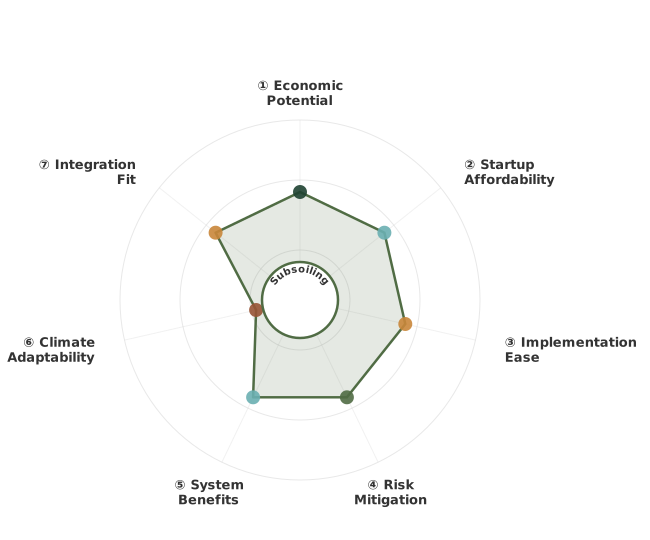
How These Traits Are Calculated
Trait dimensions are ordered clockwise starting from the top of the chart (12 o'clock position):
1. Economic Potential
Financial returns, annual value, and break-even timeline
WHAT: Evaluates financial viability by combining net annual value ($/ha from savings, income, and amortized harvests) with break-even timeline showing when practices pay for themselves.
WHY: Farmers need clear ROI understanding before committing resources. Fast payback (≤3 years) with strong returns (≥$300/ha) enables confident adoption, while long timelines (>10 years) restrict adoption to well-funded operations willing to wait for returns.
HOW: Calculated from net annual value in $/ha and break-even years. Exceptional (≥2.6): fast ROI ≤3 years + high value ≥$300/ha. Typical (1.8-2.5): moderate returns or longer timelines. Limited (<1.8): marginal economics or very long payback >10 years.
2. Startup Affordability
Initial investment costs and financial barrier to entry
WHAT: Measures financial barrier to entry through startup costs for equipment, infrastructure, consulting, and materials. Inverted scoring: lower costs = higher scores = more accessible adoption.
WHY: Affordability determines who can adopt. Low-cost practices (<$250/ha) enable widespread adoption across diverse scales, while high costs (>$2,500/ha) limit adoption to well-capitalized operations, creating barriers that slow regenerative transition.
HOW: Calculated from initial investment parsed from practice content. Inverted scoring: Exceptional (≥2.6): minimal investment <$250/ha. Typical (1.8-2.5): moderate costs $250-2,500/ha. Limited (<1.8): high barrier >$2,500/ha.
3. Implementation Ease
Learning curve and specialized knowledge required
WHAT: Measures how much learning, planning, and specialized knowledge a practice requires. Simpler practices with fewer steps score higher, while complex practices requiring extensive training or specialized resources score lower.
WHY: Complex practices create adoption barriers even when economically viable. Straightforward practices enable faster adoption and broader participation, while those requiring extensive training, timing precision, or specialized equipment limit who can succeed.
HOW: Evaluated by measuring documentation length and identifying complexity markers like location-specific requirements, seasonal timing windows, specialized skills, and dedicated equipment needs. Exceptional (≥2.6): straightforward practices with minimal prerequisites. Typical (1.8-2.5): moderate learning curve with some specialized needs. Limited (<1.8): steep learning curve requiring significant training or resources.
4. Risk Mitigation
Identified financial and ecological risk assessment
WHAT: Evaluates documented risks across financial (investment loss, market volatility) and ecological (crop failure, pest outbreaks) domains. Inverted scoring: fewer risks = higher scores.
WHY: Understanding risk exposure helps farmers make informed decisions. Low-risk practices allow confident implementation, while high-risk practices require careful planning and contingency resources. Risk transparency prevents costly failures.
HOW: Calculated from identified risks in practice content. Inverted scoring: Exceptional (≥2.6): ≤2 risks with manageable severity. Typical (1.8-2.5): 3-5 moderate risks. Limited (<1.8): 6+ risks or severe exposure.
5. System Benefits
How many ways the practice improves your land simultaneously
WHAT: Measures how many aspects of land health improve at once—carbon storage, soil quality, erosion control, water absorption, and biodiversity. Practices that improve multiple areas simultaneously create compounding benefits where each improvement reinforces the others.
WHY: The best practices solve multiple problems at once. For example, addressing erosion simultaneously builds carbon and improves water infiltration, creating a resilient system with positive feedback loops. Single-benefit approaches miss these compound transformation opportunities.
HOW: Evaluated across five key outcomes: carbon sequestration, soil organic matter increase, erosion reduction, water infiltration improvement, and biodiversity enhancement. Exceptional (≥2.6): high carbon storage (>8 t/ha/yr), improvements across 4-5 areas, transformative outcomes. Typical (1.8-2.5): moderate carbon (3-8 t/ha/yr), improvements across 2-3 areas. Limited (<1.8): modest impact (<3 t/ha/yr), single-area focus only.
6. Climate Adaptability
Geographic applicability across Köppen climate zones
WHAT: Evaluates geographic applicability by assessing how many Köppen climate zones successfully support a practice and what adaptation requirements are needed. Measures breadth of climates where farmers can implement with minimal to moderate modifications.
WHY: Universal practices working across diverse climates enable more farmers to adopt regenerative approaches. Practices limited to single climate types (only Mediterranean, only tropical) restrict adoption and slow global transition. Adaptability determines whether a practice serves niche regions or offers broad transformation.
HOW: LLM evaluation of regional success stories, Köppen zone coverage, and adaptation needs. Exceptional (≥2.6): 5+ zones or 4+ climate types, 3+ continents, minimal adaptation. Typical (1.8-2.5): 3-4 zones or 2-3 types, 2 continents, moderate adaptation. Limited (<1.8): 1-2 zones, single region, significant adaptation or highly specialized.
7. Integration Fit
How well this practice combines with others you're doing
WHAT: Measures how well a practice combines with other regenerative practices you might be doing. Some practices work as building blocks that make many other practices easier or more effective, while others work best on their own.
WHY: Practices that combine well with many others create more value on your farm. For example, cover cropping enables no-till, improves grazing, supports crop diversity, and helps water management—making all of them work better together. This helps you build a coherent system rather than juggling disconnected practices.
HOW: Evaluated by identifying which practices combine well and how strong those combinations are. 'Ideally Suited' means strong combinations where practices reinforce each other (practice A makes B easier, while B makes A more effective). 'Adequate' means complementary benefits that work well together. Exceptional (≥2.6): combines well with 6+ practices, serves as a building block. Typical (1.8-2.5): combines with 3-5 practices. Limited (<1.8): 1-2 practices or works best alone.
Going Deeper
1
WHY - The Benefits
One-time deep tillage is a pragmatic exception to regenerative agriculture's no-till principle, used only when severe compaction prevents biological processes from functioning. Understanding when and why this intervention is justified requires distinguishing between...
One-time deep tillage is a pragmatic exception to regenerative agriculture's no-till principle, used only when severe compaction prevents biological processes from functioning. Understanding when and why this intervention is justified requires distinguishing between preventable compaction (fixable through better management without tillage) and legacy compaction (so severe that biology cannot recover without assistance).
WHY - The Benefits
One-time deep tillage is a pragmatic exception to regenerative agriculture's no-till principle, used only when severe compaction prevents biological processes from functioning. Understanding when and why this intervention is justified requires distinguishing between...
One-time deep tillage is a pragmatic exception to regenerative agriculture's no-till principle, used only when severe compaction prevents biological processes from functioning. Understanding when and why this intervention is justified requires distinguishing between preventable compaction (fixable through better management without tillage) and legacy compaction (so severe that biology cannot recover without assistance).
When Biological Methods Fail
Ideally, soil biology prevents and reverses compaction. Earthworm burrows create continuous vertical channels. Plant roots—especially deep tap-rooted species in diverse mixes—penetrate and hold open pore spaces. Fungal hyphae secrete glomalin that binds soil particles into stable aggregates. Increased organic matter acts as "glue" holding structure together. When these biological processes are active, soil maintains or improves structure without mechanical intervention.
However, on severely degraded land, biology may be unable to initiate this recovery. Compaction from decades of heavy equipment (combines, tractors on wet soil), continuous grazing that doesn't allow pasture recovery, or intensive row-cropping that leaves soil bare and unprotected creates dense, anaerobic hardpans 15-30 cm (6-12 inches) deep. Water infiltration drops below 0.5 inches per hour (1.3 cm/hour)—meaning most rainfall runs off as erosion rather than entering soil. Root penetration stops at the hardpan. Without roots penetrating deep or water carrying oxygen down, anaerobic conditions dominate, making the compacted zone inhospitable to earthworms and most beneficial soil life.
Attempts to establish cover crops on such land often fail or produce weak growth because roots cannot penetrate to access water and nutrients below the hardpan. The few hardy species that establish can't produce enough root biomass to significantly improve structure. Earthworms, if present at all, remain in the surface few inches and cannot create deep channels through the compacted layer. This creates a vicious cycle: biology can't improve the soil because compaction is too severe, but compaction won't improve without biological activity.
Research on severely degraded grazing land in Australia, abandoned row-crop fields in the US Midwest, and compacted sub-Saharan African agricultural land shows similar patterns: after 3-5 years of attempted biological remediation (cover cropping, reduced livestock pressure, adding compost), severely compacted sites showed minimal infiltration improvement (from 0.3 to 0.5 inches/hour), while one-time tillage followed by intensive cover cropping achieved infiltration of 1.5-2.5 inches/hour within 2 years. The difference: mechanical intervention created initial conditions allowing biology to work.
Temporary Disturbance for Long-Term Function
Deep tillage creates instant but temporary improvements. Immediately after subsoiling, infiltration increases dramatically—water can flow into the fractures created by the ripper shanks. Roots can follow these cracks downward, accessing water and nutrients previously unavailable. However, without follow-up biological activity, these improvements disappear. Soil slakes back together within 1-2 years, often returning to conditions as bad as before tillage if living roots don't maintain the cracks and organic matter doesn't stabilize new structure.
This is why immediate cover crop establishment is non-negotiable. Within 48 hours of tillage, diverse cover crops (10+ species including deep tap-rooted plants like daikon radish or forage turnips, fibrous-rooted grasses, and nitrogen-fixing legumes) must be seeded. These plants exploit the improved conditions: roots penetrate deep through the opened channels, depositing exudates and organic matter throughout the disturbed profile. As cover crop roots grow and die, they create permanent channels lined with carbon and colonized by beneficial microbes. Over 1-2 growing seasons, this biological activity begins rebuilding the structure that tillage destroyed, but now with living roots maintaining pathways and organic matter stabilizing aggregates.
Earthworm populations, decimated by tillage (studies show 50-80% mortality from mechanical disturbance), begin recovering within 3-6 months if cover crops provide food and habitat. By year 2-3, earthworm numbers often exceed pre-tillage levels because improved soil conditions (better infiltration, more organic matter, less compaction) create favorable habitat. Mycorrhizal networks, similarly disrupted by tillage, recolonize over 1-2 growing seasons, assisted by the diverse plant community that includes mycorrhizal-dependent species.
The goal is measurable recovery within 2-3 years. Infiltration should reach 2+ inches/hour (5+ cm/hour), indicating functional pore space and biological activity. Soil organic matter should increase 0.3-0.5% from baseline, reflecting ongoing root deposition and microbial activity. Earthworm populations should reach 5-10 per shovelful (approximately 55-110 per square meter), showing restored habitat. Visual soil structure (using spade tests) should show defined aggregates with visible root channels and earthworm burrows. These indicators confirm that biology has taken over structure-building, allowing permanent transition to no-till management.
Regenerative Systems Fit
This type of deep, one-time tillage occupies an uncomfortable but pragmatic position in regenerative systems. It explicitly violates Principle 1 (minimize soil disturbance) and is therefore unacceptable as an ongoing practice. Its use is reserved as a last-resort intervention to break severe, deep compaction that biological methods alone cannot remedy, distinguishing it from shallower, secondary tillage used for seedbed preparation. However, it can enable Principles 2-5 on severely degraded land where they otherwise couldn't function:
Enabling Principle 2 (Maximize Diversity): On severely compacted soil, only a handful of hardy plant species can establish. After tillage allows diverse cover crops to succeed, plant diversity increases from 3-5 species struggling to survive to 10-20+ species thriving. This botanical diversity translates to increased soil biological diversity.
Enabling Principle 3 (Keep Soil Covered): Compacted bare ground that resists plant establishment becomes productive enough to maintain year-round living cover or mulch after one-time tillage breaks the compaction barrier.
Enabling Principle 4 (Maintain Living Roots): Hardpan preventing root penetration below 15 cm (6 inches) limits the season and depth of living root activity. Breaking the hardpan allows roots to penetrate 60+ cm (24+ inches), maintaining biological activity throughout the profile.
Enabling Principle 5 (Integrate Livestock): On compacted land, livestock often cause further degradation because plant recovery is too slow between grazing events. After restoring function, rotational grazing can be implemented without causing recompaction (if managed properly with adequate rest periods).
The key is viewing this as a one-time transition tool, not an ongoing practice. It creates conditions where regenerative management becomes possible, then steps aside. Farms successfully using this approach report transitioning from dysfunctional compacted land to fully regenerative no-till systems within 3-5 years, with the tillage event becoming a historical footnote rather than an ongoing management requirement.
Integration with other practices is critical for success. One-time tillage must be paired with: (1) Diverse cover cropping (absolutely essential for biological recovery), (2) Elimination or dramatic reduction of the compaction-causing practice (lighter equipment, reduced livestock pressure, adequate rest periods), (3) If applicable, transition to controlled traffic farming to prevent future compaction, (4) Commitment to permanent no-till following recovery. Without these complementary practices, tillage provides only temporary relief followed by return to degraded conditions.
For regenerative farmers, the decision to use one-time tillage should trigger serious self-examination: Why did the land reach this state? What management failures led to such severe compaction? How will those be prevented going forward? The practice works only if it's paired with honest assessment and correction of the root causes. Otherwise, it's merely postponing inevitable re-degradation.
Sources behind this view
Videos & Podcasts
-
Achieving regenerative agriculture requires addressing soil compaction, which hinders gas exchange and biology. Deep compaction needs mechanical removal, followed by cover crops and biologicals to pre
-
Preventing bare soil and addressing compaction are critical for healthy soil biology, gas exchange, and water infiltration. Deep ripping followed by biological applications and cover crops is recommen

-
Provides actionable steps for regenerative agronomy: balanced N:C inputs (molasses, humates), microbial teas, yeast metabolites, calcium, and effective seed treatments. Emphasizes scalability, systems
-
Farmers discuss no-till benefits (soil health, water retention, weed control) and challenges (labor intensity, initial cost). Strategies include tarping, mulching, cover cropping, and careful planning

Community
-
Advanced no-till methods for decompacting soil include subsoilers/keyline plows for deep slits, encouraging root colonization and organic matter. Integrating animals (pigs, cattle) and features like s
Read more (opens in new window) permies.com -
Minimizing tillage is crucial for soil health, as it preserves soil structure, protects soil biota, and enhances water infiltration by fostering biological processes like glomalin production by mycorr
Read more (opens in new window) permies.com -
Build healthy pasture soils by minimizing tillage, maintaining living roots and species diversity, and implementing proper grazing management. Livestock are essential for nutrient cycling and stimulat
Read more (opens in new window) smallfarms.cornell.edu -
Explains regenerative agriculture principles: no-till gardening to support soil microbiome and sequester carbon; using compost to reduce erosion and compaction; and planting diverse cover crops (grass
Read more (opens in new window) ucanr.edu
Research
-
Building Soil Health and Fertility through Organic Amendments and Practices: A Review (opens in new window)
This study found: Review of organic amendments (manures, compost, cover crops) and regenerative practices (no-till, crop diversity, agroecology) shows they restore soil health by increasing organic matter and beneficia
-
Regenerative Agriculture: Restoring Ecosystems¢ Resilience and Productivity: A Review (opens in new window)
This study found: Regenerative agriculture builds soil health and ecosystem services through practices like no-till, cover crops, and diverse rotations. It increases soil organic matter, improves water infiltration, bo
-
Building Soil Health and Fertility through Organic Amendments and Practices: A Review (opens in new window)
This study found: Using organic amendments (manures, composts, cover crops) and regenerative practices (no-till, crop diversity) restores soil health by increasing organic matter and beneficial microbes, leading to mor
-
Reclamation of an Ultisol Damaged by Mechanical Land Clearing (opens in new window)
This study found: Deep tillage (chisel plow, subsoiling) effectively reclaimed compacted Amazonian soil, dramatically increasing water infiltration and crop yields for rice, soybeans, and corn compared to no-till metho
From the Web
-
Key regenerative agriculture methods include no-till farming, cover cropping, agroforestry, perennial crops, planned rotational grazing (Holistic Management), and compost application, all aimed at imp
2
WHERE - Regional Considerations
Successfully using one-time tillage for compaction relief depends on understanding your soil type and climate, as these factors influence both the efficacy of tillage and the subsequent success of cover crop establishment. The practice is generally applicable globally...
Successfully using one-time tillage for compaction relief depends on understanding your soil type and climate, as these factors influence both the efficacy of tillage and the subsequent success of cover crop establishment. The practice is generally applicable globally where compaction exists, but specific cover crop choices and timing will vary.
WHERE - Regional Considerations
Successfully using one-time tillage for compaction relief depends on understanding your soil type and climate, as these factors influence both the efficacy of tillage and the subsequent success of cover crop establishment. The practice is generally applicable globally...
Successfully using one-time tillage for compaction relief depends on understanding your soil type and climate, as these factors influence both the efficacy of tillage and the subsequent success of cover crop establishment. The practice is generally applicable globally where compaction exists, but specific cover crop choices and timing will vary.
Click Here to Look up your Region if you don't already know it
Arid and Semi-Arid Regions
Representative Locations: Western USA, North Africa, Central Asia, Interior Australia, parts of the Sahel
Climate Context: Low annual precipitation (<40 cm or 15 inches), high temperatures, short and often unpredictable growing season. USDA Zones 7-9, Köppen BSh/BSk.
Considerations: Soil moisture is the most critical factor. Tilling when soil is too dry leads to poor fracture and recompaction. Tilling when too wet creates new compaction. Timing is crucial, often requiring a narrow window after rare rainfall events before planting cover crops. Species selection for cover crops must prioritize drought tolerance, deep-rooted varieties adapted to local conditions, and rapid establishment. Resilience of the cover crop phase is paramount; failure here means the entire intervention fails.
Mediterranean Regions
Representative Locations: California, Mediterranean basin (Spain, Italy, Greece), central Chile, southwestern Australia, Western Cape South Africa
Climate Context: Hot, dry summers and mild, wet winters. Annual precipitation 40-90 cm (15-35 inches), highly seasonal. USDA Zones 8-10, Köppen Csa/Csb.
Considerations: The distinct wet winter and dry summer seasons offer a clear target for tillage and cover cropping. Autumn tillage after summer dryness, followed by seeding cool-season cover crops on developing winter rains, is ideal. Ensure the subsoiler shanks fracture compacted soil effectively, as dry soils can "smear" rather than shatter if too hard. Deep-rooted cover crop species are vital to maintain the opened channels through the dry summer period if perennials are used, or to provide significant root biomass before seasonal termination.
Humid Temperate Regions
Representative Locations: Southeastern United States, northern Europe (UK, Germany, Poland), eastern China, Japan, New Zealand
Climate Context: Warm to hot summers and cool to cold winters with moderate to high annual precipitation (75-150 cm or 30-60 inches) distributed relatively evenly. USDA Zones 6-8, Köppen Cfb/Cfa.
Considerations: Soil moisture is generally more forgiving, but significant variations can still occur. Compaction is often linked to wet-season traffic. Tillage might be best performed in late summer or early fall when soils are drier but before significant autumn rainfall. The longer, more reliable growing season allows for a wider selection of cover crops, including deep-rooted annuals and more robust perennial mixes that can quickly re-establish soil structure. Multiple cover crop generations within a year are possible, accelerating recovery.
Cold Continental Regions
Representative Locations: Northern USA and Canada, Northern Europe, Northern Asia
Climate Context: Very short growing seasons, extreme summer heat, severe winter cold. USDA Zones 3-5, Köppen Dfa/Dfb.
Considerations: The narrow window for soil moisture manipulation and cover crop growth is the primary challenge. Tillage must be timed precisely to coincide with unfrozen, adequately moist soil, usually in late spring or early summer. Cover crop selection must focus on species that can establish quickly and provide sufficient root mass before winter dormancy or frost. Winter-hardy varieties are essential if aiming for year-round root activity. The success of the cover crop phase is highly dependent on maximizing its growth within the short season.
Subtropical Regions
Representative Locations: Southeastern USA, Southern China, Southern Brazil, Eastern Australia
Climate Context: Hot, humid summers and mild winters with generally ample rainfall. USDA Zones 9-11, Köppen Cfa/Cwa.
Considerations: High rainfall and humidity mean soil is often wet, increasing the risk of recompaction during tillage operations. Careful timing is needed to select drier periods. The long growing season supports a vast array of cover crop species, allowing for very diverse and robust mixes. These can include deep tap-rooted plants, highly productive grasses, and legumes. Extended periods of root activity before cash crop planting or between main crop cycles can accelerate structural rebuilding significantly.
Tropical Regions
Representative Locations: Central America, Southeast Asia, East Africa, Northern Australia, Northern South America
Climate Context: High temperatures year-round, with distinct wet and dry seasons or consistent high rainfall. Köppen Af/Am/Aw.
Considerations: Compaction is often exacerbated by heavy rainfall and intense farming systems. The challenge lies in managing wet soils during tillage. If dry seasons are pronounced, they provide a natural window for tillage and cover cropping with drought-tolerant species. In regions with consistent high rainfall, timing tillage for brief dry spells is critical. The long growing season allows for rapid cover crop establishment and biomass production, which are key to rebuilding structure quickly after the mechanical disturbance. Careful management is required to ensure the cover crop biomass is sufficient to protect and rebuild the soil.
3
HOW - Implementation Process
Prerequisites
Prerequisites
HOW - Implementation Process
Prerequisites
Prerequisites
Before considering one-time tillage, verify these conditions exist:
- Documented severe compaction: soil penetrometer readings >300 psi (2 MPa) at 15-30 cm (6-12 inch) depth, or water infiltration <0.5 inches/hour (<1.3 cm/hour)
- Evidence of biological remediation attempts: minimum 2 years of cover cropping, reduced livestock pressure, or other biological approaches with documented failure to improve infiltration
- Resources for immediate follow-up: cover crop seed ready, equipment for planting within 48 hours, plan for ongoing management
- Commitment documented: written statement (even if only for yourself) that this is one-time only with no future tillage
If these conditions aren't met, tillage is not appropriate. Continue with biological approaches—they will eventually work if given enough time and proper management.
Phase 1: Timing and Equipment Selection
Timing: Soil moisture is critical for success. Too wet: smearing and re-compaction as equipment creates new compaction. Too dry: shattering may not occur, or soil may fracture but not separate. Optimal moisture: field capacity (soil holds water but isn't saturated). Test by squeezing soil: should form a ball that breaks apart with light pressure.
Season: Late summer or early fall is ideal in most temperate climates. This allows immediate cover crop establishment with fall rains, giving plants 2-3 months growth before winter. Spring timing is possible but sacrifices significant growing season opportunity for cover crops. In tropical regions, late dry season or early wet season timing is critical based on local conditions.
Equipment: A subsoiler or ripper with parabolic shanks spaced 30-45 cm (12-18 inches) apart, designed to operate 30-45 cm (12-18 inch) deep. A chisel plow can be acceptable but is generally less effective than a subsoiler at fracturing deep compaction. Avoid moldboard plows or disks, as they invert/mix soil causing more biological disruption than necessary for this specific goal. The objective is to fracture the compacted layer with minimal overall surface disturbance.
Cost: $100-200/ha ($40-80/acre) USD equivalent for custom hire, or $50-100/ha ($20-40/acre) if you own the equipment and tractor. International variation in costs is substantial, driven by local equipment availability and labor rates.
Phase 2: Execution (Days 1-2)
Day 1: Operate the subsoiler across the field. On slopes, work on contour. On flat land, operate perpendicular to prevailing winds if possible to enhance fracture. The shanks should fracture the compacted layer at depth without causing excessive surface disturbance. You will feel increased resistance as shanks penetrate hardpan, followed by a breakthrough as it fractures.
Immediately after each pass (within hours): Dig an inspection hole to check fracturing effectiveness. Soil should show obvious fracture patterns extending from the shank lines. If solid blocks of compacted soil remain between shank lines, adjust shank spacing or depth or wait for better soil moisture conditions.
Day 2: Seed diverse cover crops immediately (within 48 hours maximum of tillage). Species selection is critical for success:
- Deep tap-rooted: Daikon radish, forage turnips, chicory, deep-rooted brassicas (to penetrate fractured soil and maintain channels).
- Fibrous-rooted grasses/cereals: Annual ryegrass, oats, cereal rye, triticale (to create a dense surface root mat).
- Nitrogen-fixing legumes: Hairy vetch, crimson clover, field peas, fava beans (to add fertility while building biology).
- Other beneficials: Phacelia, buckwheat, sunflowers (for beneficial insect habitat and varied root structure). Target 10-15 species minimum, ideally 20+ for maximum biological diversity and resilience. Use a high seeding rate: 1.5-2 times the normal rate to ensure robust establishment despite the disturbance. Seed using a no-till drill directly into the fractured surface, or broadcast seed followed by a light incorporation with a cultipacker or a very light harrow.
Phase 3: Cover Crop Management (Months 1-12)
Allow cover crops to establish and grow without disturbance. Avoid grazing, mowing, or additional traffic for at least the first 3-4 months. Roots need time to penetrate deeply and begin their biological work of improving soil structure.
Monitor establishment weekly during the first month. If germination is poor (<50%), identify the cause (e.g., insufficient moisture, incorrect seeding depth, seed predation by birds or rodents) and be prepared to interseed. Weak cover crop establishment is the most common cause of failure for this practice.
Observe root development by digging at the edge of the field after 2-3 months. Deep-rooted species should be penetrating 30-45 cm (12-18 inches) or more. Grass roots should form a dense mat in the top 15 cm (6 inches). Legumes should show nodulation, indicating nitrogen fixation.
Over the following months, allow cover crops to grow. In winter-killing climates, they will naturally terminate with frost. In regions with milder winters, a winter-hardy mix might persist. Do not remove the residue; allow it to decompose in place, contributing organic matter to the soil surface. If using winter-hardy species, terminate them in spring before they set seed or become overly competitive with the subsequent cash crop.
Transition Timeline & Phase-Out Strategy
This is a one-time intervention, not an ongoing practice. The goal is to restore soil function so biological processes can take over and maintain it.
-
Year 0 (Tillage Year):
- Conduct soil assessments (penetrometer, infiltration test) to document severe compaction.
- Only till if infiltration rate is critically low (<0.5 inches/hour or <1.3 cm/hour) AND biological methods have demonstrably failed over 2+ years.
- Immediately seed a diverse cover crop mix (10+ species).
- Make a firm commitment that this is the final tillage event.
-
Year 1-2 (Recovery Period):
- Maintain continuous living cover on the soil surface.
- Focus on the established cover crops, ensuring their root systems are active.
- Monitor infiltration improvement quarterly (target: 1-2 inches/hour or 2.5-5 cm/hour by year 2).
- Monitor earthworm populations (target: 5+ per shovelful by year 2).
-
Year 3+ (Fully Regenerative):
- Soil structure should be rebuilt through biological processes.
- Transition to permanent no-till management for cash crops or subsequent cover crops.
- Success indicators: Infiltration rate >2 inches/hour (5 cm/hour), earthworm populations >10 per shovelful, visible root channels and aggregate development in soil profile.
Addressing Recompaction: If compaction returns after this process, it indicates the underlying cause was not addressed. Common causes include: continued use of heavy equipment on wet soil, overly intensive livestock grazing that doesn't allow adequate pasture rest, or insufficient living root cover. Correct these management issues rather than resorting to further tillage. Success means preventing recurrence and trusting biological processes to maintain healthy soil structure.
Graduating from this practice means no longer relying on tillage as a solution, actively preventing compaction through smarter management, and trusting biological processes to keep the soil healthy and functional. The one-time tillage event becomes a historical transition step, not a recurring management strategy.
Sources behind this view
Videos & Podcasts
-
Provides actionable steps for regenerative agronomy: balanced N:C inputs (molasses, humates), microbial teas, yeast metabolites, calcium, and effective seed treatments. Emphasizes scalability, systems
-
Farmers discuss no-till benefits (soil health, water retention, weed control) and challenges (labor intensity, initial cost). Strategies include tarping, mulching, cover cropping, and careful planning
-
Preventing bare soil and addressing compaction are critical for healthy soil biology, gas exchange, and water infiltration. Deep ripping followed by biological applications and cover crops is recommen
-
Implementing the six soil health principles (living root, cover crops, diversity, minimize disturbance) over 3-5 years can dramatically improve soil function, aggregation, and water cycles, reducing t

Community
-
Enhance soil health through plant diversity, continuous soil cover (living plants/residues), and livestock integration. Manage carbon-to-nitrogen ratios of residues and adopt no-till practices to impr
Read more (opens in new window) permies.com -
Advanced no-till methods for decompacting soil include subsoilers/keyline plows for deep slits, encouraging root colonization and organic matter. Integrating animals (pigs, cattle) and features like s
Read more (opens in new window) permies.com -
Build healthy pasture soils by minimizing tillage, maintaining living roots and species diversity, and implementing proper grazing management. Livestock are essential for nutrient cycling and stimulat
Read more (opens in new window) smallfarms.cornell.edu -
Goranson Farm in coastal Maine reduced tillage by adopting strip tillage, using Yeomans plows to break compaction and create seedbeds, preserving soil organic matter and reducing labor by 75%.
Read more (opens in new window) smallfarms.cornell.edu
Research
-
Building Soil Health and Fertility through Organic Amendments and Practices: A Review (opens in new window)
This study found: Review of organic amendments (manures, compost, cover crops) and regenerative practices (no-till, crop diversity, agroecology) shows they restore soil health by increasing organic matter and beneficia
-
Long-term impacts of no-till and organic material applications on soil biological indicators in organic vineyards. (opens in new window)
This study found: Ten-year study in organic vineyards shows no-till and organic amendments (broccoli, Antep radish, olive mill wastewater) significantly improve soil respiration, organic carbon, microbial biomass, and
-
Short-term and long-term effects of tillage and crop rotation on soil physical properties, organic C and N in a Black Chernozem in northeastern Saskatchewan (opens in new window)
This study found: Eight-year study in Saskatchewan showed no-till farming significantly improved soil structure and increased active soil carbon compared to conventional tillage, even in soils with high organic matter.
-
Building Soil Health and Fertility through Organic Amendments and Practices: A Review (opens in new window)
This study found: Using organic amendments (manures, composts, cover crops) and regenerative practices (no-till, crop diversity) restores soil health by increasing organic matter and beneficial microbes, leading to mor
From the Web
-
Key regenerative agriculture methods include no-till farming, cover cropping, agroforestry, perennial crops, planned rotational grazing (Holistic Management), and compost application, all aimed at imp
4
Know the Debate
Subsoiling outcomes vary widely based on where you farm and the specific soil conditions. In humid regions with ample rainfall, the window for succ...
Know the Debate
Subsoiling outcomes vary widely based on where you farm and the specific soil conditions. In humid regions with ample rainfall, the window for succ...
Subsoiling outcomes vary widely based on where you farm and the specific soil conditions. In humid regions with ample rainfall, the window for successful tillage and cover crop establishment is more flexible, allowing for robust biological recovery. However, in semi-arid climates, precise timing during rare moist periods is critical, and drought-tolerant cover crops are essential for success. The initial investment for custom subsoiling and cover crop seed typically ranges from $100-350/ha, with potential for break-even in 1-4 years if properly managed. However, failure to follow up with biological methods can negate benefits and incur significant costs.
How effective is subsoiling for soil health and crop yields?
Yield gains in specific conditions (2-5 years)
Academic research indicates subsoiling can provide short-term yield boosts (10-40%) in certain compacted soils by improving root penetration and water infiltration, but these benefits are inconsistent and often fade if long-term biological strategies aren't implemented.
Sources behind this view
Sources behind this view
Research
-
In‐row subsoiling benefits maize yield on soil with a shallow fragipan (opens in new window)
This study found: A three-year study in central Pennsylvania found that targeted deep tillage, called in-row subsoiling, significantly improved corn yields on soils with a hard, compacted layer (fragipan) starting just below the typical root zone. This method involved loosening the soil to a depth of 17 inches every spring, while leaving about 80% of the soil surface undisturbed. This reduced soil compaction, making it easier for corn roots to grow and access water. On average, corn yields increased by 11% compared to fields managed with no-till. This shows that carefully applied deep tillage can boost harvests on challenging soils while still preserving benefits for soil health and reducing erosion.
-
The Economic Feasibility of Subsoiling Solonetzic Soils in Saskatchewan (opens in new window)
This study found: A 1995 study in Saskatchewan looked at whether deep ripping (subsoiling) was financially worthwhile for certain types of soils, called Solonetzic soils, which often have a hard layer that limits water and root penetration. The research found that deep ripping was generally a good investment, especially in irrigated areas. Even in drier areas, it paid off unless crop prices were extremely low. The costs of ripping were typically recovered through higher crop harvests within two to three years. Using higher interest rates made the returns smaller but didn't change whether it was a good idea. The study suggests that growing higher-value crops for a few years after ripping helps farmers get their investment back faster.
-
Reclamation of an Ultisol Damaged by Mechanical Land Clearing (opens in new window)
This study found: This study looked at how to fix heavily compacted soil in the Amazon region of Peru that was damaged by heavy machinery and then abandoned. After clearing the land in 1972 and abandoning it for crops in 1974, the soil became very hard. Researchers tested eight different methods to bring the land back into production, including different types of plowing, tilling, and mulching. They found that deep tillage methods, specifically chisel plowing and a simulated subsoiling technique that broke up the soil 25 cm deep, were the most effective. These methods significantly reduced soil compaction, allowing water to soak in much faster (from 9 mm/hour to 148 mm/hour in one comparison) and improving overall soil structure. Crucially, these deep tillage treatments led to much higher crop yields for rice, soybeans, and corn compared to leaving the soil un-tilled, demonstrating that these practices can successfully reclaim damaged land for farming.
One-time intervention for biological recovery
Field practitioners view subsoiling as a necessary emergency tool for severely degraded soils, enabling immediate root access and water infiltration, but stress it's only effective when followed by intense cover cropping and a commitment to permanent no-till.
Sources behind this view
Sources behind this view
Videos & Podcasts
-
Subsoiling should be a last resort, performed 4 inches below the compaction layer at the correct humidity, ideally after planting cover crops. Soil profiling is crucial to identify the compaction depth and avoid overuse.

-
Details the development and use of a modified subsoiler ('ripper') that incrementally loosens compacted soils, combined with liquid biostimulants and tailored seed mixes, to rapidly increase rooting depth, water infiltration, and soil health, especially in clay soils.
-
Remediate compaction by keeping soil covered with diverse living plants (fibrous and taprooted species) for 3-10+ years. Avoid tillage and freeze-thaw as primary solutions. Manage wet spots with cover crops and address ruts with shallow tillage only when dry. Cover crops are superior to deep ripping for long-term improvement.
-
Recommends mechanically addressing deep soil compaction (plow layer) once before transitioning to no-till, emphasizing its importance for water infiltration, soil structure, and earlier field access, especially in dryland conditions.
Context-dependent benefits, potential for damage
Institute and academic sources highlight that subsoiling's benefits are highly dependent on soil moisture and type; overuse or improper timing can re-compact soil or even reduce yields, underscoring the need for careful management and understanding specific soil conditions.
Sources behind this view
Sources behind this view
Research
-
Effect of subsoiling on soil physical properties and dry matter production on a Brown Soil in Southland, New Zealand (opens in new window)
This study found: A 2.5-year study in Southland, New Zealand, investigated the impact of shallow deep tillage (subsoiling) on a specific soil type (Waikiwi silt loam). The process significantly improved soil structure by increasing large pore spaces by up to 39% and dramatically boosting water and air movement through the soil (up to 100 times faster). These benefits lasted for about two years, although some soil compaction returned in the top layer. Interestingly, while winged tines showed no negative impact on pasture (ryegrass and white clover) yield, the conventional deep tillage method actually reduced forage production by 9% in the second year of the study.
-
Effect of subsoiling on soil physical properties and pasture production on a Pallic Soil in Southland, New Zealand (opens in new window)
This study found: A three-year study in New Zealand looked at how deep tillage (subsoiling) affected soil structure and pasture growth on a specific soil type. Subsoiling significantly improved soil's ability to hold air and water, with these benefits lasting for over two years in deeper soil layers. However, for most of the study, the pasture (a mix of ryegrass and white clover) didn't grow any better. In fact, during a dry summer, pastures that were deep-tilled with winged implements actually produced 39% less forage, likely because the loosened soil dried out too quickly.
From the Web
-
Deep tillage, such as subsoiling, may be necessary for severe soil compaction that restricts root growth and reduces yields. Perform deep tillage when soil is dry for best results, using appropriate tools based on compaction depth.
-
Manage soil compaction by varying tillage depth to avoid pans, controlling wheel traffic with designated lanes, and using deep tillage tools like subsoilers when necessary, always tilling when the soil is dry.
Making Sense of the Differences
Subsoiling outcomes vary significantly by region and soil type. In humid climates with reliable rainfall, recovery is generally quicker and benefits more immediate. In drier regions, precise timing for tillage and cover crop establishment is critical, and benefits may be less pronounced over a longer timeframe. Field experience also emphasizes that the 'success' of subsoiling is measured not by the tillage event itself, but by the subsequent biological recovery driven by continuous cover cropping and permanent no-till management, making the follow-up strategy paramount, regardless of location.
5
HOW MUCH - Costs & Investment
Note: Costs shown in USD; multiply by local labor and material cost indices for your region. Labor costs vary significantly internationally.
Note: Costs shown in USD; multiply by local labor and material cost indices for your region. Labor costs vary significantly internationally.
HOW MUCH - Costs & Investment
Note: Costs shown in USD; multiply by local labor and material cost indices for your region. Labor costs vary significantly internationally.
Note: Costs shown in USD; multiply by local labor and material cost indices for your region. Labor costs vary significantly internationally.
Note: All costs are based on recent US economic data (2024–2026) and may vary substantially by region based on local labor rates, material costs, and regulatory requirements.
Custom Tillage and Equipment Operations
Subsoiling represent a high-intensity intervention that demands specialized equipment capable of reaching depths of 12 to 24 inches. For small-scale operations (under 50 acres (20 ha)), farmers often contend with a "mobilization penalty." Custom operators must factor in the cost of transporting heavy-duty equipment to small fields, leading to custom rates between $57 and $99 per acre ($141–$245/ha). As scale increases to mid-size operations (50 to 500 acres (20–202 ha)), these mobilization costs are amortized over larger acreages, allowing for rates of $42 to $73 per acre ($104–$180/ha). Large-scale operations (500+ acres) leverage economies of scale and multi-day contract stability to achieve competitive rates, typically ranging from $31 to $57 per acre ($77–$141/ha).
For those choosing to own their equipment, the capital requirement is significant. A heavy-duty subsoiler requires a tractor with 200+ horsepower. Based on a standard 500-acre (202 ha) annual workload, ownership costs—inclusive of depreciation, periodic point replacement, and general maintenance—add an implicit cost burden of $16 to $26 per acre ($40–$64/ha). This ownership model offers the advantage of timeliness, as the operator can hit the "friability window" without waiting for a contractor’s schedule, which is critical for avoiding the smearing effect that happens in wet soil.
Cover Crop Seed and Establishment
Remediating compaction is only half the battle; without biological structure, the soil will settle back into a compacted state within one to two seasons. Therefore, the seed and planting costs are non-negotiable components of the subsoiling investment. For small-scale farms, individual seed variety selection, often involving more complex, multi-species cocktails (tillage radishes, cereal rye, and legumes), drives costs to $62 to $94 per acre ($153–$232/ha), inclusive of labor. Mid-sized operations that capitalize on 5,000+ lb bulk purchases can drive their expenditures down to $47 to $73 per acre ($116–$180/ha). Large-scale operations utilize high-speed precision drills to manage planting efficiency, typically spending $36 to $62 per acre ($89–$153/ha).
Cost variance within these categories is largely driven by species selection. A simple cereal rye monoculture costs significantly less, sitting at the bottom of these ranges ($31 to $42 per acre ($77–$104/ha)), while a diverse, high-performance biomass mix aimed at aggressive root development pushes the total toward the upper bound ($73 to $94 per acre ($180–$232/ha)).
Most Spend: The middle 60% of most agricultural operations, when combining custom tillage with robust cover cropping, fall into the following ranges: Small Scale: $104–$151 per acre ($257–$373/ha); Mid-Scale: $83–$120 per acre ($205–$297/ha); Large-Scale: $68–$99 per acre ($168–$245/ha).
Why the Range?: The primary driver of cost variance is the "bottleneck penalty" faced by smaller farms, where labor and mobilization represent a higher percentage of the total operational cost. Additionally, soil moisture at the time of the rip dictate the number of necessary passes; a single-pass straight-rip costs 20% less than a cross-rip, but heavy compaction may necessitate the latter to ensure root pathways are fully opened. Equipment age and efficiency also play a role, as newer, GPS-guided high-clearance rigs can minimize overlap—a major factor in controlling total fuel consumption.
Sources behind this view
Videos & Podcasts
-
Utilize multi-species cover crops based on specific 'resource concerns' to improve soil health, nitrogen fixation, and water retention. Integrate livestock for grazing, calving, and overwintering, enh
-
Case studies of farmers like Duane Beck, Kofi Boa, David Brandt, and Gabe Brown demonstrate that regenerative agriculture (no-till, cover crops, diverse rotations) significantly increases soil health,
-
Cover cropping is the gateway to regenerative agriculture, improving soil health, nitrogen management, and drainage while reducing tillage and input costs. It offers a significant return on investment

-
Cover crops are an 'investment crop,' not an expense, offering low-cost fertility and soil health benefits. They are managed with a flail mower, minimal tillage, bed shaping, and tarping for two weeks

Community
-
A commercial farm trial on 250 acres of soybeans and wheat showed regenerative methods (cover crops, compost tea, no-till) increased yields by 5-25 bu/acre and saved $9,000 in the first year compared
Read more (opens in new window) permies.com -
Seven strategies accelerate cover crop ROI: managing weeds, grazing, addressing compaction, transitioning to no-till, improving soil moisture, managing nutrients (using legumes like Hairy Vetch/Austri
Read more (opens in new window) sustainableagriculture.net -
Oregon State University research over six years, funded by SARE, developed a calculator for cover crop N contribution and cost savings, showing vetch can replace feather meal for broccoli, saving $500
Read more (opens in new window) smallfarms.cornell.edu -
A 2019-2020 SARE survey of 1,172 US farmers shows cover crops increase yields (soybeans 5%, corn 2%), reduce herbicide costs (up to 71%), and fertilizer costs (up to 49%). Cereal rye improved weed con
Read more (opens in new window) sustainableagriculture.net
Research
-
Economic Impacts of Cover Crops for a Missouri Wheat–Corn–Soybean Rotation (opens in new window)
This study found: Missouri study: Cover crops in wheat-corn-soybean rotation initially reduced profits but became positive by year four. Improved soil health and carbon sequestration potential.
-
No‐Till Legume Cover Crops Enhance Soil Carbon, Mitigate Greenhouse Gas Emissions, and Increase Yield in Dryland Wheat: A Global Meta‐Analysis (opens in new window)
This study found: Global meta-analysis shows no-till + legume cover crops significantly boost dryland wheat soil carbon (+28.5%), yield (+24.1%), and resource efficiency, while cutting GHG emissions. Long-term use yiel
-
Economic Impacts of Cover Crops for a Missouri Wheat–Corn–Soybean Rotation (opens in new window)
This study found: Missouri study: Cover crops in wheat-corn-soybean rotation initially reduced profit but became positive by year 4. Break-even achieved with 35% higher cash crop revenue or 26% lower cover crop costs i
-
Optimizing cover crop practices as a sustainable solution for global agroecosystem services. (opens in new window)
This study found: Optimized cover crop strategies (long-term, no-till, legume/non-legume mix, residue mulch) significantly boost farm ecosystem services, including crop yields, carbon capture, and erosion control, whil
From the Web
-
Farmers can reduce cover crop costs ($37/acre initial estimate, down to $14/acre with self-grown seed) and find other system efficiencies in fertility and weed control, with long-term soil health bene
-
Cover crop economics vary, with potential for profitability through reduced input costs (fertilizer, herbicides) and improved soil health. However, initial costs and management nuances, including till
-
Adopting soil health practices like cover cropping, no-till, and planned grazing can increase net profit by up to $100/acre through reduced fertilizer and erosion costs, and increased yields, supporte
-
Details economic benefits of cover crops, including reduced input costs, erosion control, improved soil fertility, and enhanced water storage. Addresses concerns like seed cost and potential for unwan
6
REWARDS AND RISKS - Economics & Risk Factors
Economic Scenarios
Economic Scenarios
REWARDS AND RISKS - Economics & Risk Factors
Economic Scenarios
Economic Scenarios
The economics of subsoiling are governed by the efficacy of the "biological bridge." When performed correctly, the practice functions as a reset button, but the financial outcome depends heavily on the transition management during the first 36 months.
Economic Scenarios
- Best-Case Scenario ($521–$938 profit per acre): In this scenario, subsoiling is performed at the optimal moisture level, followed by aggressive cover crop growth. Within the first two years, water infiltration increases dramatically, enabling earlier spring planting and deeper root reach during summer moisture droughts. By year two, producers often capture yield gains of 20% to 30% alongside a reduction in nitrogen requirements due to improved biological cycling. The initial $83–$156 per acre ($205–$385/ha) investment is typically recouped within 18 to 24 months.
- Typical-Case Scenario ($156–$417 profit per acre): Yields recover to baseline levels by the second year, with a moderate 10% to 15% increase established by year three. The financial return is derived not just from yield, but from reduced energy costs related to irrigation pumping and increased moisture storage, which stabilizes income in volatile seasons. Break-even typically occurs at the 36-month mark.
- Worst-Case Scenario ($469–$938 net loss per acre): This occurs when subsoiling is followed by poor cover crop establishment or if the soil is worked while too wet, leading to smearing. If the soil reseals, the operator loses the benefit of the rip while still bearing the costs. A 10% to 20% yield drag during the transition phase, combined with the lost capital, results in significant financial stress over a three-year window.
Market Factors and Risk Mitigation Profitability is acutely sensitive to fuel indices and grain prices. A 20% spike in fuel prices can reduce the ROI of deep tillage significantly. To mitigate this, landowners must conduct the "hand-shake test" to ensure the soil is in the friability window. If a soil ball creates a ribbon rather than crumbling under pressure, the depth of the rip is causing damage rather than remediation, which can increase the cost of future subsoiling passes by up to 50% due to the formation of deeper "smear layers."
Transition Period Risks Subsoiling is a high-risk transition tool. Yield dips—"biological shock"—often occur in the first year as soil life takes time to populate the newly opened fissures. If the follow-up cover crop fails (a 25% probability in arid climates), the loosened soil becomes highly susceptible to erosion. To mitigate this risk, producers should allocate an additional 25% of their seed budget to a "patch-in" contingency fund, ensuring they have the specialized equipment or funds on hand to intervene if germination is uneven.
Sources behind this view
Videos & Podcasts
-
Case studies of farmers like Duane Beck, Kofi Boa, David Brandt, and Gabe Brown demonstrate that regenerative agriculture (no-till, cover crops, diverse rotations) significantly increases soil health,
-
Provides actionable steps for regenerative agronomy: balanced N:C inputs (molasses, humates), microbial teas, yeast metabolites, calcium, and effective seed treatments. Emphasizes scalability, systems
-
Soil Capital's strategy for regenerative transition: 1) Optimize agrochemical/pesticide use for 10-40% savings. 2) Invest savings in multi-species cover crops and crop rotation diversification (oats,

-
Regenerative farming, using no-till, cover crops, and diverse rotations, rapidly rebuilds soil organic matter and soil life. Examples from Ohio and Ghana show these practices increase profitability by

Research
-
Transition to Regenerative Farming (opens in new window)
This study found: A 5-year case study shows a farm successfully transitioned to regenerative practices, reducing soil erosion and increasing wildlife by using cover crops, diversified rotations, and reduced tillage. Pr
-
Regenerative Agriculture: Restoring Ecosystems¢ Resilience and Productivity: A Review (opens in new window)
This study found: Regenerative agriculture builds soil health and ecosystem services through practices like no-till, cover crops, and diverse rotations. It increases soil organic matter, improves water infiltration, bo
-
Regenerative farming and conservation tillage: economic benefits and ecological impacts in contemporary agriculture (opens in new window)
This study found: Regenerative farming with conservation tillage (no-till, strip-till) improves soil health, reduces emissions, and boosts farm profits by cutting costs and stabilizing yields. Requires farmer training
-
Systematic review of regenerative farming: Addressing agricultural sustainability challenges (opens in new window)
This study found: Systematic review of 31 studies shows regenerative farming improves soil health, biodiversity, and carbon capture, aiding sustainability. Technology is key for adoption, but policy, farmer understandi
7
WHO - Labor & Expertise
Implementing one-time tillage and subsequent cover cropping requires specific knowledge and careful execution. While the operation itself is mechanical, the success hinges on informed decision-making and management.
Implementing one-time tillage and subsequent cover cropping requires specific knowledge and careful execution. While the operation itself is mechanical, the success hinges on informed decision-making and management.
WHO - Labor & Expertise
Implementing one-time tillage and subsequent cover cropping requires specific knowledge and careful execution. While the operation itself is mechanical, the success hinges on informed decision-making and management.
Implementing one-time tillage and subsequent cover cropping requires specific knowledge and careful execution. While the operation itself is mechanical, the success hinges on informed decision-making and management.
Skill Requirements:
- Soil Science Understanding: A fundamental grasp of soil structure, compaction, soil moisture dynamics, and biological processes is crucial for timing tillage and selecting cover crops. Understanding how roots interact with soil, the role of organic matter, and the impact of anaerobic conditions is vital.
- Cover Crop Management Expertise: Knowledge of diverse cover crop species, their growth habits, nutrient needs, termination methods, and compatibility with local climate and subsequent cash crops is essential. Selecting a mix of 10+ species requires more than basic cover cropping knowledge.
- Equipment Operation: Proficiency in operating tractors and subsoilers, ensuring they are set to the correct depth and spacing, and maintaining soil moisture optimal for fracture without smearing.
- Observation Skills: Ability to meticulously observe soil conditions (moisture, structure, root development, earthworm activity) and react appropriately.
Labor Needs:
- Tillage Phase: Requires a skilled tractor operator for 1-2 days per field.
- Seeding Phase: Involves loading seed, calibrating drills, and operating seeding equipment, often completed within 1-2 days.
- Cover Crop Management: Ongoing monitoring, potential reseeding, and eventual termination require dedicated time throughout the cropping cycle. This is often the most labor-intensive phase for observation and decision-making.
Expertise and Support:
- Local Agronomists/Extension Services: Seek advice on soil testing, compaction assessment, and cover crop species recommendations tailored to your region.
- Regenerative Farming Peers: Connect with farmers who have successfully implemented this practice or similar transitions. Their practical experience is invaluable.
- Specialized Consultants: For complex situations or large-scale operations, consider consultants with expertise in soil remediation and regenerative cropping systems.
- International Context on Labor: In regions with lower labor costs, the economic equation for custom hiring versus owning equipment might shift. However, the need for skilled operators and knowledgeable managers remains globally consistent. DIY approaches might be more feasible but require more time and specific training.
Cost of Expertise: Consultation fees vary widely. A general rule of thumb is to budget $500-2,000 USD equivalent for initial consultations or detailed farm planning assistance, depending on the complexity and duration. Investment in knowledge sharing through workshops or courses is often more cost-effective.
8
EQUIPMENT - Tools & Infrastructure
Successful implementation of one-time tillage and the subsequent regenerative transition relies on specific equipment and a strategic approach to farm infrastructure.
Successful implementation of one-time tillage and the subsequent regenerative transition relies on specific equipment and a strategic approach to farm infrastructure.
EQUIPMENT - Tools & Infrastructure
Successful implementation of one-time tillage and the subsequent regenerative transition relies on specific equipment and a strategic approach to farm infrastructure.
Successful implementation of one-time tillage and the subsequent regenerative transition relies on specific equipment and a strategic approach to farm infrastructure.
Tillage Equipment
-
Subsoiler/Deep Ripper: The primary tool. Requires a tractor with significant horsepower (typically 100-250+ hp depending on soil resistance, depth, and shank spacing) capable of pulling the implement through compacted layers. Shanks are designed to fracture soil with minimum surface disturbance.
- Cost: Custom hire rates as noted in the 'Costs' section ($50-200/ha). Purchase price for a new 3-shank subsoiler can range from $6,000-20,000+ USD equivalent, significantly more for larger or more advanced models. Used equipment can be found at lower prices, but condition is critical.
-
Chisel Plow: A less effective but sometimes more accessible option for deep loosening. It has wider shanks and disturbs more surface soil. May be used if a subsoiler is unavailable, but effectiveness on severe compaction is reduced.
- Cost: Similar range to subsoilers, often slightly less.
-
Tractor: High horsepower required. Investment is significant ($50,000 - 300,000+ USD equivalent for new, reliable models), making custom hire an attractive option, especially for farms not historically reliant on heavy tillage.
Seeding Equipment
-
No-Till Drill/Planter: Ideal for seeding cover crops into disturbed soil without further tillage. Ensures good seed-to-soil contact while leaving residue intact.
- Cost: New no-till drills can range from $40,000-100,000+ USD equivalent. Used models may be available for $15,000-50,000+. Custom rental or colocation with neighbors is an alternative.
-
Broadcast Seeder & Cultipacker/Light Harrow: If a no-till drill isn't available, broadcasting seed followed by a cultipacker or a light pass with a tine harrow can suffice. This method may offer slightly poorer seed-to-soil contact but is more accessible.
- Cost: Broadcast seeders vary from $1,000-5,000+ USD equivalent. Cultipackers/light harrows: $1,000-7,000+ USD equivalent.
Other Infrastructure Needs
-
Soil Testing Equipment: Essential for monitoring progress.
- Penetrometer: To measure soil resistance to penetration ($100-500 USD equivalent).
- Infiltration Rings: To test water infiltration rates ($50-150 USD equivalent for basic rings).
- Spade/Auger: For visual soil assessment.
-
Record Keeping System: To track tillage dates, cover crop species, seeding rates, soil test results, and observations over time. Essential for learning and demonstrating progress. Digital farm management software or simple spreadsheets can be effective.
International Sourcing: Equipment availability and cost vary greatly by region. Many farmers in developing nations may rely on sharing equipment, custom hire services, or adapting existing tools. Focus should be on the function of the equipment (fracturing, seeding) rather than a specific model name. When considering new purchases, explore local manufacturers and reputable used equipment dealers outside of major agricultural hubs.
9
COMPATIBLE PRACTICES - Integration Opportunities
One-time tillage is not a standalone solution but a catalyst requiring integration with other practices to achieve lasting regenerative outcomes.
One-time tillage is not a standalone solution but a catalyst requiring integration with other practices to achieve lasting regenerative outcomes.
COMPATIBLE PRACTICES - Integration Opportunities
One-time tillage is not a standalone solution but a catalyst requiring integration with other practices to achieve lasting regenerative outcomes.
One-time tillage is not a standalone solution but a catalyst requiring integration with other practices to achieve lasting regenerative outcomes.
Diverse Cover Cropping
- Integration: This is the absolute cornerstone of post-tillage recovery. Within 48 hours of subsoiling, plant a diverse mix of 10-15+ species, including deep tap-rooted plants (radishes, turnips), fibrous-rooted grasses (ryegrass, oats), nitrogen-fixing legumes (vetch, clover), and pollinator-attracting forbs.
- Synergy: The cover crop roots exploit the fractured soil, maintain channels, deposit organic matter throughout the profile, and feed a rapidly recovering soil biology. This biological activity is what rebuilds stable soil structure that tillage alone cannot provide.
Permanent No-Till Management
- Integration: This is the culmination of the transition. After the cover crop phase (year 1-3), all subsequent crop establishment must occur using no-till methods (drilling or planting directly into residue or cover crop mulch).
- Synergy: No-till prevents the destruction of soil structure built by biological activity. It conserves soil moisture, protects soil organisms, and allows for the continuous build-up of organic matter and soil health, fulfilling Principle 1 in its ideal form.
Rotational Grazing
- Integration: Once cover crops have established significant root mass (typically 12-18 months post-tillage), introduce controlled livestock grazing. Employ adaptive multi-paddock grazing with high animal density and long rest periods.
- Synergy: Livestock manure and urine add fertility and organic matter. Their grazing stimulates plant growth and nutrient cycling. Crucially, managed grazing prevents sustained pressure on any one area, which is vital for avoiding recompaction. This practice supports Principles 3, 4, and 5.
Controlled Traffic Farming (CTF)
- Integration: Implement CTF as soon as practical after the initial cover crop recovery phase (years 1-3). Designate permanent wheel tracks for all farm operations (tillage, planting, harvesting, spraying) and ensure these tracks do not overlap production zones.
- Synergy: CTF directly addresses a primary cause of compaction by confining heavy machinery to predictable paths. This prevents the formation of new hardpans in production areas and allows the soil structure improvements from tillage and cover cropping to persist and deepen over time.
Reduced Synthetic Input Use
- Integration: As soil biology recovers and nutrient cycling improves through cover crops and livestock integration, gradually reduce reliance on synthetic fertilizers and pesticides.
- Synergy: Synthetic inputs can negatively impact beneficial soil microbes and fungi essential for structure. Reducing them allows the recovering soil ecosystem to function more optimally, enhancing the long-term benefits of the initial intervention and supporting Principles 2 and 5.
The success of one-time tillage hinges on immediate and sustained integration with these complementary practices. It is the initial break in the cycle of degradation, enabling these regenerative strategies to take root and flourish.
Sources behind this view
Videos & Podcasts
-
Provides actionable steps for regenerative agronomy: balanced N:C inputs (molasses, humates), microbial teas, yeast metabolites, calcium, and effective seed treatments. Emphasizes scalability, systems
-
Case studies of farmers like Duane Beck, Kofi Boa, David Brandt, and Gabe Brown demonstrate that regenerative agriculture (no-till, cover crops, diverse rotations) significantly increases soil health,
-
Utilize multi-species cover crops based on specific 'resource concerns' to improve soil health, nitrogen fixation, and water retention. Integrate livestock for grazing, calving, and overwintering, enh
-
Farmers discuss no-till benefits (soil health, water retention, weed control) and challenges (labor intensity, initial cost). Strategies include tarping, mulching, cover cropping, and careful planning
Community
-
Enhance soil health through plant diversity, continuous soil cover (living plants/residues), and livestock integration. Manage carbon-to-nitrogen ratios of residues and adopt no-till practices to impr
Read more (opens in new window) permies.com -
Build healthy pasture soils by minimizing tillage, maintaining living roots and species diversity, and implementing proper grazing management. Livestock are essential for nutrient cycling and stimulat
Read more (opens in new window) smallfarms.cornell.edu -
Gabe Brown's regenerative practices emphasize no-till, polyculture (ideally 7-20 species), and minimizing bare soil to build soil health and organic matter. These methods reduce water needs, increase
Read more (opens in new window) permies.com -
Explains regenerative agriculture principles: no-till gardening to support soil microbiome and sequester carbon; using compost to reduce erosion and compaction; and planting diverse cover crops (grass
Read more (opens in new window) ucanr.edu
Research
-
Building Soil Health and Fertility through Organic Amendments and Practices: A Review (opens in new window)
This study found: Review of organic amendments (manures, compost, cover crops) and regenerative practices (no-till, crop diversity, agroecology) shows they restore soil health by increasing organic matter and beneficia
-
Regenerative Agriculture: Restoring Ecosystems¢ Resilience and Productivity: A Review (opens in new window)
This study found: Regenerative agriculture builds soil health and ecosystem services through practices like no-till, cover crops, and diverse rotations. It increases soil organic matter, improves water infiltration, bo
-
The Indigenous Roots of Regenerative Agriculture (opens in new window)
This study found: Modern regenerative agriculture practices are rooted in millennia of Indigenous land stewardship, offering profound knowledge and a crucial value system of respect and reciprocity for true transformat
-
Soil Microbial Dynamics in Regenerative Agriculture Systems: A Data-Driven Synthesis for Soil Health, Pest Suppression, and Yield Sustainability in the Western Canadian Prairies (opens in new window)
This study found: Regenerative farming in Western Canada boosts soil microbes (up to 86%), fungi (up to 60%), and carbon, improving soil health and water retention. This leads to more stable yields and reduced syntheti
From the Web
-
Key regenerative agriculture methods include no-till farming, cover cropping, agroforestry, perennial crops, planned rotational grazing (Holistic Management), and compost application, all aimed at imp
-
Maximize photosynthesis by keeping living plants and deep roots in the soil for extended periods. Practices like strip tilling, cover cropping, and increasing diversity enhance soil organic matter, ca
-
Five steps to regenerative agriculture: Holistic Planned Grazing, no-till farming, planting diverse cover crops/interseeding, using compost/inoculants (with caution), and incorporating silvopasture/wo
-
Conservation tillage principles include reducing tillage, using crop rotations with cover crops to maintain soil surface biomass (especially cereal rye), and managing equipment. These practices enhanc