
Succession Planting
Succession planting is a method of sowing seeds or transplanting seedlings of the same or different crops at staggered intervals throughout the growing season. This strategy ensures a continuous supply of produce over an extended period, rather than a single large harvest, by carefully planning planting dates to align with maturity times.
Read More: Complete Description
Succession planting is a fundamental technique in diversified cropping systems that aims to maximize continuous harvest and utilization of land. At its core, it involves sowing seeds or setting out transplants of a single crop multiple times, or planting different crops with staggered maturity dates, at regular intervals. For instance, instead of planting all your lettuce at once, you might sow seeds every two weeks, ensuring a steady supply from early spring through to autumn. Similarly, planting fast-maturing radishes, followed by bush beans, then by quick-growing spinach as the season progresses, creates a continuous loop of harvestable crops.
From a regenerative perspective, succession planting directly supports the principle of Maximizing Crop Diversity (Principle 2) above ground. By planting a variety of crops, and by planting the same crop multiple times, you increase the genetic and species diversity within the farm ecosystem over time. This diversity is crucial for building soil biology; different root structures and exudates feed a wider array of beneficial microorganisms. Continuous planting also contributes to Keeping Soil Covered (Principle 3) and Maintaining Living Roots (Principle 4) for a longer portion of the year. Bare soil is vulnerable to erosion and nutrient loss, but by keeping something growing, soil health is protected and carbon is sequestered through photosynthesis. In systems where a cash crop is harvested and the land is left fallow, succession planting can be used to immediately follow with a cover crop or a fast-maturing cash crop, extending the period of living roots and soil cover.
This practice inherently aligns with efficient land use, encouraging farmers to think about the entire growing season and maximizing the productivity of every square meter. It can be adapted to various climates and farming scales, from small market gardens in temperate regions to larger diversified operations in subtropical areas. For example, in a Mediterranean climate (Köppen Csa/Csb, e.g., California or Italy), succession planting can extend harvests significantly by utilizing cooler spring and autumn periods for certain crops, with careful variety selection managing heat stress during summer for more resilient species. In humid subtropical zones (Köppen Cfa, e.g., southeastern US, southern China), it allows for early spring planting, a heat-tolerant summer crop, and a long, productive autumn harvest.
The economic benefits of succession planting are significant. It stabilizes income by providing a consistent flow of produce to market, avoiding gluts and shortages that can depress prices. Farmers can build stronger relationships with buyers (consumers, restaurants, retailers) by reliably meeting their demand. This consistent supply chain reduces market risk and builds customer loyalty. For farmers selling directly to consumers through Community Supported Agriculture (CSA) programs or farmers' markets, succession planting is essential for providing a diverse and consistent harvest basket throughout the season.
While succession planting is a foundational practice for many market gardens and diversified farms, it can also be adapted in transition settings. For instance, a farm transitioning away from monoculture might use succession planting to introduce more diversity gradually. Instead of a large field of one crop, they might divide it and plant successive crops in smaller blocks, easing the transition in labor, harvest logistics, and market timing. However, succession planting does not inherently require or violate regenerative principles. Its regenerative value comes from how it's implemented – what crops are chosen, how soil is managed between successions, and whether it contributes to overall system diversity and resilience.
Common misconceptions about succession planting include thinking it's only for small-scale or specialty crops. In reality, principles of staggering planting dates and maturities can be applied to larger acreage for staple crops like potatoes, onions, or even grains, by selecting varieties with different maturity lengths or planting in distinct microclimates across the farm. Another misconception is that it requires only fast-maturing crops; it's about managing the timing of maturity, which can range from quick radishes to slower-maturing crops like tomatoes or pumpkins. The key is understanding crop life cycles and regional growing seasons. The practice's strength lies in its adaptability, allowing farmers to create a consistent harvest timeline tailored to their specific environment and market needs.
Sources behind this view
Sources behind this view
 Videos & Podcasts
-
Recommends 'planting by crop development' instead of a timeline, waiting for crops to show true leaves before planting the next succession, especially in shoulder seasons to manage unpredictable growt

-
Use succession planting by staggering planting times (e.g., small batches of radishes every 2 weeks) to ensure a continuous harvest and keep the garden productive all season long.

-
Succession planting in shoulder seasons requires planting based on crop development (waiting for true leaves) rather than a fixed weekly schedule, due to variable day lengths in the northern hemispher

-
Maximize harvests through succession planting (e.g., lettuce followed by squash, then garlic) and season extension using row covers, cold frames, or hoop houses to extend planting and harvesting windo

 Community
-
Succession planting involves four methods for continuous garden harvests: staggered planting of the same crop, replacing spring crops with summer ones, interplanting fast and slow growers, and using v
Read more (opens in new window) ucanr.edu -
Succession planting maximizes continuous crop output by sowing seeds of the same crop at 1-2 week intervals, suitable for crops like corn, beans, turnips, and lettuce.
Read more (opens in new window) ucanr.edu -
Succession gardening in Sonoma County involves planning seasonal transitions, using strategies like interval planting, companion planting, and intercropping to ensure continuous harvests from spring t
Read more (opens in new window) ucanr.edu
 From the Web
-
Succession planting ensures continuous harvest of specialty crops by scheduling plantings based on frost dates, soil temperature, days to maturity, and market demand, with recordkeeping crucial for re
-
Maximize garden production through temporal planning: establish winter gardens with cold-hardy varieties, use fast-growing 'space holders' for spring, practice successional planting, and interplant cr
Key Points
What It Is
- Staggered sowing/transplanting of crops
- Ensures continuous harvest over time
- Maximizes season-long productivity
- Adaptable to diverse climates and scales
Why Do It
- Consistent produce supply for market
- Stabilizes farm income across season
- Enhances crop and soil biological diversity
- Maximizes land utilization efficiently
Know the Debate
- Harvest timing ranges from 2-8 months depending on region.
- Labor needs vary significantly with scale and frequency.
- Economic returns depend on market timing and crop choices.
- Soil health boost via continuous cover and roots.
Benefits - Financial
- Increases annual revenue by $5,210–$20,840 per acre ($12,874–$51,497 per hectare) via premiums.
- Reduces produce waste/spoilage by 15–25% through aligned harvest schedules.
- Enhances profit margins by 15–25% through direct-to-consumer price control.
Benefits - System
- Supports Principle 2: Maximizes Crop Diversity
- Supports Principle 3: Keeps Soil Covered
- Supports Principle 4: Maintains Living Roots
- Increases soil biology over longer periods
Risks - Financial
- Increases annual labor costs by 30–50% versus single-cycle plantings.
- Potential 15–30% revenue loss during the 1–2 year transition period.
- High-tunnel infrastructure adds $1,563–$5,210 per acre ($3,862–$12,874 per hectare) to startup investment.
Risks - System
- Requires detailed planning and record-keeping
- Vulnerable to pest/disease outbreaks across plantings
- Inconsistent weather can disrupt timing
- Can lead to soil degradation if bare soil windows managed poorly
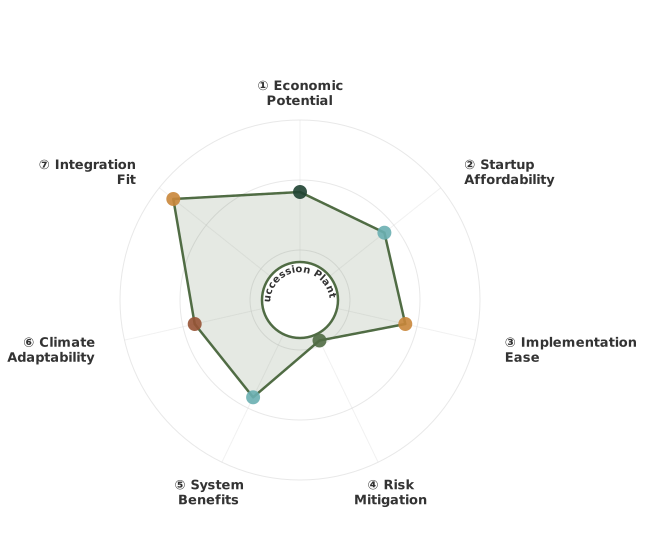
How These Traits Are Calculated
Trait dimensions are ordered clockwise starting from the top of the chart (12 o'clock position):
1. Economic Potential
Financial returns, annual value, and break-even timeline
WHAT: Evaluates financial viability by combining net annual value ($/ha from savings, income, and amortized harvests) with break-even timeline showing when practices pay for themselves.
WHY: Farmers need clear ROI understanding before committing resources. Fast payback (≤3 years) with strong returns (≥$300/ha) enables confident adoption, while long timelines (>10 years) restrict adoption to well-funded operations willing to wait for returns.
HOW: Calculated from net annual value in $/ha and break-even years. Exceptional (≥2.6): fast ROI ≤3 years + high value ≥$300/ha. Typical (1.8-2.5): moderate returns or longer timelines. Limited (<1.8): marginal economics or very long payback >10 years.
2. Startup Affordability
Initial investment costs and financial barrier to entry
WHAT: Measures financial barrier to entry through startup costs for equipment, infrastructure, consulting, and materials. Inverted scoring: lower costs = higher scores = more accessible adoption.
WHY: Affordability determines who can adopt. Low-cost practices (<$250/ha) enable widespread adoption across diverse scales, while high costs (>$2,500/ha) limit adoption to well-capitalized operations, creating barriers that slow regenerative transition.
HOW: Calculated from initial investment parsed from practice content. Inverted scoring: Exceptional (≥2.6): minimal investment <$250/ha. Typical (1.8-2.5): moderate costs $250-2,500/ha. Limited (<1.8): high barrier >$2,500/ha.
3. Implementation Ease
Learning curve and specialized knowledge required
WHAT: Measures how much learning, planning, and specialized knowledge a practice requires. Simpler practices with fewer steps score higher, while complex practices requiring extensive training or specialized resources score lower.
WHY: Complex practices create adoption barriers even when economically viable. Straightforward practices enable faster adoption and broader participation, while those requiring extensive training, timing precision, or specialized equipment limit who can succeed.
HOW: Evaluated by measuring documentation length and identifying complexity markers like location-specific requirements, seasonal timing windows, specialized skills, and dedicated equipment needs. Exceptional (≥2.6): straightforward practices with minimal prerequisites. Typical (1.8-2.5): moderate learning curve with some specialized needs. Limited (<1.8): steep learning curve requiring significant training or resources.
4. Risk Mitigation
Identified financial and ecological risk assessment
WHAT: Evaluates documented risks across financial (investment loss, market volatility) and ecological (crop failure, pest outbreaks) domains. Inverted scoring: fewer risks = higher scores.
WHY: Understanding risk exposure helps farmers make informed decisions. Low-risk practices allow confident implementation, while high-risk practices require careful planning and contingency resources. Risk transparency prevents costly failures.
HOW: Calculated from identified risks in practice content. Inverted scoring: Exceptional (≥2.6): ≤2 risks with manageable severity. Typical (1.8-2.5): 3-5 moderate risks. Limited (<1.8): 6+ risks or severe exposure.
5. System Benefits
How many ways the practice improves your land simultaneously
WHAT: Measures how many aspects of land health improve at once—carbon storage, soil quality, erosion control, water absorption, and biodiversity. Practices that improve multiple areas simultaneously create compounding benefits where each improvement reinforces the others.
WHY: The best practices solve multiple problems at once. For example, addressing erosion simultaneously builds carbon and improves water infiltration, creating a resilient system with positive feedback loops. Single-benefit approaches miss these compound transformation opportunities.
HOW: Evaluated across five key outcomes: carbon sequestration, soil organic matter increase, erosion reduction, water infiltration improvement, and biodiversity enhancement. Exceptional (≥2.6): high carbon storage (>8 t/ha/yr), improvements across 4-5 areas, transformative outcomes. Typical (1.8-2.5): moderate carbon (3-8 t/ha/yr), improvements across 2-3 areas. Limited (<1.8): modest impact (<3 t/ha/yr), single-area focus only.
6. Climate Adaptability
Geographic applicability across Köppen climate zones
WHAT: Evaluates geographic applicability by assessing how many Köppen climate zones successfully support a practice and what adaptation requirements are needed. Measures breadth of climates where farmers can implement with minimal to moderate modifications.
WHY: Universal practices working across diverse climates enable more farmers to adopt regenerative approaches. Practices limited to single climate types (only Mediterranean, only tropical) restrict adoption and slow global transition. Adaptability determines whether a practice serves niche regions or offers broad transformation.
HOW: LLM evaluation of regional success stories, Köppen zone coverage, and adaptation needs. Exceptional (≥2.6): 5+ zones or 4+ climate types, 3+ continents, minimal adaptation. Typical (1.8-2.5): 3-4 zones or 2-3 types, 2 continents, moderate adaptation. Limited (<1.8): 1-2 zones, single region, significant adaptation or highly specialized.
7. Integration Fit
How well this practice combines with others you're doing
WHAT: Measures how well a practice combines with other regenerative practices you might be doing. Some practices work as building blocks that make many other practices easier or more effective, while others work best on their own.
WHY: Practices that combine well with many others create more value on your farm. For example, cover cropping enables no-till, improves grazing, supports crop diversity, and helps water management—making all of them work better together. This helps you build a coherent system rather than juggling disconnected practices.
HOW: Evaluated by identifying which practices combine well and how strong those combinations are. 'Ideally Suited' means strong combinations where practices reinforce each other (practice A makes B easier, while B makes A more effective). 'Adequate' means complementary benefits that work well together. Exceptional (≥2.6): combines well with 6+ practices, serves as a building block. Typical (1.8-2.5): combines with 3-5 practices. Limited (<1.8): 1-2 practices or works best alone.
Going Deeper
1
WHY - The Benefits
Succession planting is a cornerstone practice for maximizing productivity and economic stability in diverse agricultural systems. It transforms a single planting event into a continuous cycle of growth and harvest, providing consistent market opportunities and enhancing...
Succession planting is a cornerstone practice for maximizing productivity and economic stability in diverse agricultural systems. It transforms a single planting event into a continuous cycle of growth and harvest, providing consistent market opportunities and enhancing...
WHY - The Benefits
Succession planting is a cornerstone practice for maximizing productivity and economic stability in diverse agricultural systems. It transforms a single planting event into a continuous cycle of growth and harvest, providing consistent market opportunities and enhancing...
Succession planting is a cornerstone practice for maximizing productivity and economic stability in diverse agricultural systems. It transforms a single planting event into a continuous cycle of growth and harvest, providing consistent market opportunities and enhancing...
Soil Health Benefits
While not directly a soil remediation practice, succession planting significantly contributes to positive soil health outcomes by promoting Keeping Soil Covered (Principle 3) and Maintaining Living Roots (Principle 4) for extended durations. By planning successive plantings, farmers minimize bare soil periods, which are detrimental. Bare soil is susceptible to wind and water erosion, leading to loss of topsoil and precious organic matter. When a cash crop is harvested, immediate follow-up with a short-season cover crop or another cash crop ensures the soil surface is protected.
The continuous presence of living roots across a greater proportion of the year fuels soil microbial communities. Root exudates—sugars, amino acids, and complex organic compounds released by roots—are a primary food source for bacteria, fungi, and protozoa in the soil. This sustained feeding supports a more robust and diverse soil food web, enhancing nutrient cycling, organic matter formation, and the beneficial activities of mycorrhizal fungi and other symbiotic organisms. Over time, this persistent biological activity contributes to improved soil aggregation, water infiltration, and aeration.
Succession planting also indirectly supports Maximizing Crop Diversity (Principle 2) above ground by encouraging farmers to grow a wider array of crops. This variety in plant species leads to a greater diversity of root architectures and exudates, which in turn supports a more diverse and resilient soil ecosystem. A diverse soil biology is better equipped to perform essential functions like nutrient availability, disease suppression, and carbon sequestration. The practice encourages thinking about species that mature at different rates and have varying nutrient needs, fostering a more holistic approach to soil management.
Economic Benefits
The primary economic driver for succession planting is the creation of a consistent, reliable income stream. Instead of a single, intense harvest period followed by market gluts and price drops, succession planting smooths out production. This allows farmers to meet the ongoing demands of markets that require steady supply, such as restaurants, grocery stores, or CSA programs.
For a market gardener in temperate regions like Northern Europe (Köppen Cfb/Cfc, e.g., UK, Scandinavia), succession planting can extend the harvest season from 4-5 months to 7-9 months. By using season extension techniques like cold frames, low tunnels, or frost blankets for early and late season crops, and choosing heat-tolerant varieties for mid-summer, a continuous harvest of salad greens, root vegetables, beans, and other crops can be achieved. This can translate to predictable weekly revenues, often ranging from $100-500 per hectare per week (USD equivalent), depending on the crop mix, yield, and market prices.
This predictable income reduces financial risk for small to medium-sized farms. It allows for better cash flow management, making it easier to meet operational expenses, reinvest in the farm, and plan for the future. Furthermore, by minimizing periods of oversupply, it reduces crop spoilage and waste, which can account for 10-25% of potential revenue in less managed systems. Consistent availability also builds trust and loyalty with customers, leading to repeat business and stronger market demand.
Succession planting can also lead to more efficient land utilization. Instead of having land sit idle between seasons, quick-maturing crops or cover crops can be planted, ensuring that the soil is always in production. This intensifies the use of available land, potentially allowing farmers to achieve higher overall yields and farm revenue from a smaller land base. For farms seeking to maximize their output from limited acreage, this intensification is a critical economic advantage.
Regenerative Systems Fit
Succession planting's contribution to regenerative agriculture lies primarily in its ability to enable and enhance other regenerative principles through astute timing and crop selection.
Principle 2 (Maximize Crop Diversity): Succession planting directly fosters diversity by encouraging the planting of multiple crops with varied life cycles and needs. This isn't just about planting different species side-by-side, but across time. A farm might plant radishes followed by bush beans, then spinach, each occupying the land sequentially. This temporal diversity in above-ground biomass creates corresponding temporal diversity in below-ground root systems and the biological communities they support, leading to a more complex and resilient soil ecosystem. It encourages farmers to think beyond monocultural blocks and integrate a variety of crops that can follow one another harmoniously.
Principle 3 (Keep Soil Covered): The intentional sequence of plantings inherently minimizes bare soil. As one crop matures and is harvested, a new crop is planted shortly thereafter. This reduces the time soil is exposed to the elements, protecting it from erosion by wind and rain, preventing nutrient leaching, and maintaining a favorable environment for soil organisms. This continuous living cover is crucial for soil health and water management, especially in regions with intense rainfall or dry periods.
Principle 4 (Maintain Living Roots): By extending the period of active growth throughout the year, succession planting ensures living roots are present for longer durations. This sustained root activity provides a continuous food source for soil microbes, supports ongoing nutrient cycling, and helps maintain soil structure through root channel formation and organic matter exudation. In climates with longer growing seasons, meticulous succession planning can keep living roots in the soil for 9-10 months of the year, vastly improving soil life compared to systems with significant fallow periods.
Principle 1 (Minimize Soil Disturbance): While succession planting itself doesn't dictate tillage practices, it pairs well with reduced tillage or no-till systems. The need for frequent planting can be managed with minimal disturbance techniques like no-till drills, especially when following a harvest. If soil disturbance is required for planting, it's typically very shallow and localized to the seedbed, far less disruptive than annual plowing or disking.
Principle 5 (Integrate Livestock): In mixed farming systems, succession planting can be integrated with livestock management. For example, a harvested crop area might be grazed by poultry or sheep before being replanted. Or, cover crops planted in a succession sequence could be grazed. This integration requires careful timing to ensure livestock impact doesn't re-compact soil or damage vulnerable new seedlings, but when managed well, it enhances nutrient cycling and farm efficiency.
For farms transitioning away from conventional systems, succession planting offers a practical way to introduce more diversity and continuous soil cover incrementally. A farmer might start by succession planting a small portion of their land, gradually expanding as they gain experience. This approach allows for adaptation to local market demands and learning curves in managing multiple crops. It doesn't violate established regenerative principles but rather leverages them to build a more productive, resilient, and economically stable farming operation.
Sources behind this view
Videos & Podcasts
-
Details regenerative 'resets' (seasonal vs. conventional), multi-species cropping for diversity, and restoring nutrient cycles. Discusses mechanical tools like Kelly chains, strategic planting times,

-
Utilize multi-species cover crops based on specific 'resource concerns' to improve soil health, nitrogen fixation, and water retention. Integrate livestock for grazing, calving, and overwintering, enh

-
Emphasizes diversity in crop rotations and cover crops, and maintaining a living root year-round. A young producer reduced inputs significantly by focusing on these principles. Practical advice on pla

-
Regenerative farming, using no-till, cover crops, and diverse rotations, rapidly rebuilds soil organic matter and soil life. Examples from Ohio and Ghana show these practices increase profitability by

Community
-
Enhance soil health through plant diversity, continuous soil cover (living plants/residues), and livestock integration. Manage carbon-to-nitrogen ratios of residues and adopt no-till practices to impr
Read more (opens in new window) permies.com -
Explains regenerative agriculture principles: no-till gardening to support soil microbiome and sequester carbon; using compost to reduce erosion and compaction; and planting diverse cover crops (grass
Read more (opens in new window) ucanr.edu -
Regenerative gardening principles include minimizing soil disruption (avoiding excessive tilling), keeping soil covered with plants or organic matter, promoting plant diversity through crop rotation a
Read more (opens in new window) ucanr.edu -
Regenerative vegetable production focuses on minimal soil disturbance, continuous living roots via cover crops (buckwheat, vetch) and companion planting (white clover), polyculture, and integrating tr
Read more (opens in new window) permies.com
 Research
-
Transition to Regenerative Farming (opens in new window)
This study found: A 5-year case study shows a farm successfully transitioned to regenerative practices, reducing soil erosion and increasing wildlife by using cover crops, diversified rotations, and reduced tillage. Pr
-
Regenerative Agriculture: Restoring Ecosystems¢ Resilience and Productivity: A Review (opens in new window)
This study found: Regenerative agriculture builds soil health and ecosystem services through practices like no-till, cover crops, and diverse rotations. It increases soil organic matter, improves water infiltration, bo
-
Building Soil Health and Fertility through Organic Amendments and Practices: A Review (opens in new window)
This study found: Review of organic amendments (manures, compost, cover crops) and regenerative practices (no-till, crop diversity, agroecology) shows they restore soil health by increasing organic matter and beneficia
-
Long-term regenerative practices enhance in-field biodiversity and soil health for sustainable crop yields (opens in new window)
This study found: Long-term regenerative farming in Scotland improved farm biodiversity and soil health, maintaining crop yields while reducing reliance on chemicals and tillage.
2
WHERE - Regional Considerations
Succession planting is a highly adaptable practice, its success and methods dictated by regional climate, growing season length, and typical weather patterns. The core principle remains constant: sequence plantings for continuous harvest, but the execution varies widely.
Succession planting is a highly adaptable practice, its success and methods dictated by regional climate, growing season length, and typical weather patterns. The core principle remains constant: sequence plantings for continuous harvest, but the execution varies widely.
WHERE - Regional Considerations
Succession planting is a highly adaptable practice, its success and methods dictated by regional climate, growing season length, and typical weather patterns. The core principle remains constant: sequence plantings for continuous harvest, but the execution varies widely.
Succession planting is a highly adaptable practice, its success and methods dictated by regional climate, growing season length, and typical weather patterns. The core principle remains constant: sequence plantings for continuous harvest, but the execution varies widely.
Click Here to Look up your Region if you don't already know it
Temperate Humid Climates
Representative Locations: Eastern United States (e.g., New York, Pennsylvania), Northern Europe (e.g., UK, Germany), Eastern China, Japan, New Zealand. Climate Context: Moderate temperatures with distinct seasons; warm to hot summers, cool to cold winters; moderate to high annual precipitation (75-150 cm or 30-60 inches). USDA Zones 4-7, Köppen Cfb/Cfa. Adaptations: The primary challenge is extending the season at both ends. Early spring planting benefits from season extension (low tunnels, cold frames, row covers) for cool-weather crops like spinach, radishes, and peas. Using varieties tolerant of summer heat for mid-season crops like beans, cucumbers, and peppers is crucial. Late season crops can be extended with row covers or plastic mulch to protect against early frosts. Planning involves selecting varieties with different maturity lengths and potentially utilizing microclimates on the farm.
Mediterranean Climates
Representative Locations: California Coast, Mediterranean Basin (Spain, Italy, Greece), Central Chile, Southwestern Australia, Cape Province South Africa. Climate Context: Hot, dry summers and mild, wet winters; highly seasonal rainfall (40-90 cm or 15-35 inches annually). USDA Zones 8-10, Köppen Csa/Csb. Adaptations: Succession planting is vital here to utilize the milder, wetter periods. Spring plantings begin early and are followed by heat-tolerant crops or those harvested before peak summer heat. Autumn planting is key, utilizing residual soil moisture and cooler temperatures for crops that may struggle in intense summer heat. Drought-tolerant varieties and efficient irrigation management (drip systems) are essential for sustained success during dry summer months and for establishing fall crops.
Subtropical Humid Climates
Representative Locations: Southeastern United States, Southern China, Southern Brazil, Eastern Australia, India. Climate Context: Hot, humid summers with ample rainfall; mild winters, frost-free or light freezes. USDA Zones 9-11, Köppen Cfa/Cwa. Adaptations: Long growing seasons allow for extensive succession planting. Focus is on managing summer heat and humidity, which can stress many temperate crops. Early spring and late autumn harvests are often the most productive for cool-season crops. Summer planting may focus on heat-loving varieties or crops that tolerate humidity well, like okra, certain bean varieties, southern peas, and heat-tolerant greens. Pest and disease pressure can be high due to warm, moist conditions, requiring diligent monitoring and integrated pest management.
Arid and Semi-Arid Climates
Representative Locations: Western United States, North Africa, Central Asia, Interior Australia. Climate Context: Low annual precipitation (<40 cm or 15 inches), high temperatures, significant diurnal temperature variation, and short growing seasons in some areas. USDA Zones 7-9, Köppen BSh/BSk. Adaptations: Water management is the absolute priority. Successive plantings rely heavily on efficient irrigation, often drip systems, to utilize every drop of water. Crop selection focuses on drought-tolerant species and varieties. Planting schedules are dictated by water availability and soil moisture recharging, often concentrated in spring and autumn when temperatures are moderate. Protecting soil from wind erosion is also crucial in these regions, making continuous cover from succession planting particularly beneficial.
Cold Continental Climates
Representative Locations: Northern United States and Canada, Northern Europe, Northern Asia. Climate Context: Very short growing seasons, extreme summer heat, severe winter cold; significant diurnal temperature variation. USDA Zones 2-5, Köppen Dfa/Dfb. Adaptations: Succession planting here is about maximizing use of the brief growing season. Focus is on quick-maturing crops. Early spring planting benefits from protection (greenhouses, tunnels). Multiple crops of the same variety planted in succession (e.g., three plantings of spinach 2-3 weeks apart) can increase overall yield. Varieties with short days-to-maturity are essential. Fall planting can extend harvest into early winter with protective coverings.
Tropical Climates
Representative Locations: Central America, Southeast Asia, East Africa, Northern Australia, Northern South America. Climate Context: High temperatures year-round, with either consistent high rainfall or distinct wet and dry seasons. Köppen Af/Am/Aw. Adaptations: Temperature is less of a limiting factor than rainfall patterns and humidity. Succession planting can occur year-round in consistently wet regions, with emphasis on managing disease pressure from humidity. In areas with distinct wet and dry seasons, planting is timed to coincide with sufficient soil moisture, either from rainfall or irrigation, and crops are selected for their tolerance to the specific conditions of each season. Continuous cropping is the norm, with an emphasis on rapid turnover of crops.
3
HOW - Implementation Process
Succession planting requires careful planning, observation, and execution to ensure a continuous harvest. It's a dynamic process that adapts to crop performance and changing environmental conditions.
Succession planting requires careful planning, observation, and execution to ensure a continuous harvest. It's a dynamic process that adapts to crop performance and changing environmental conditions.
HOW - Implementation Process
Succession planting requires careful planning, observation, and execution to ensure a continuous harvest. It's a dynamic process that adapts to crop performance and changing environmental conditions.
Succession planting requires careful planning, observation, and execution to ensure a continuous harvest. It's a dynamic process that adapts to crop performance and changing environmental conditions.
Prerequisites
- Market Assessment: Understand what crops are in demand and when, and for how long. Identify both quick-maturing crops for short windows and longer-season crops.
- Crop Knowledge: Know the growth cycle, heat/cold tolerance, water needs, and days-to-maturity for each crop you plan to grow.
- Climate Familiarity: Understand your region's typical frost dates, seasonal temperature shifts, rainfall patterns, and prevailing wind/sun exposures.
- Seed Availability: Ensure consistent access to seed varieties suitable for your climate and desired maturity profiles.
- Soil Preparation Plan: Have methods ready for quick turnaround between harvests, whether it's minimal tillage, cover cropping, or direct sowing into undisturbed soil.
Phase 1: Seasonal Planning & Crop Selection
Define Growing Periods: Break your region's growing season into logical segments (e.g., early spring, late spring, summer, early autumn, late autumn). Note typical temperature ranges and frost risks for each.
Select Crops by Season:
- Early Spring: Fast-maturing, cold-tolerant crops (radishes, spinach, peas, lettuce, early carrots, kale). Consider using season extension methods like low tunnels or cold frames.
- Late Spring/Early Summer: Transition to slightly less cold-tolerant but still quick crops (bush beans, beets, early onions).
- Mid-Summer: Heat-tolerant crops (tomatoes, peppers, cucumbers, zucchini, sweet corn, okra, heat-tolerant beans and greens).
- Late Summer/Early Autumn: Plant crops that mature before first hard frost; can include quick crops like spinach, quick-maturing carrots, and fast-growing brassicas. Consider crops that benefit from cooler fall weather.
- Late Autumn/Winter: Use cold-hardy crops and season extension for extended harvest (kale, Brussels sprouts, leeks, some hardy brassicas).
Consider Crop Rotation: Even within succession planting, rotating crop families helps manage soilborne diseases and pests, and to balance nutrient demands. Ensure a legume follows a heavy feeder, or a root crop follows a leafy green.
Phase 2: Spacing and Timing Calculations
Calculate Days to Maturity (DTM): Use DTM as a guide, but adjust based on your local conditions. Seed packets often provide DTM under ideal conditions.
Determine Planting Intervals:
- For Quick Crops (e.g., radishes, spinach, lettuce): Plant every 1-2 weeks for continuous harvest.
- For Longer Crops (e.g., beans, carrots, beets): Plant a block every 2-3 weeks, or plant a mix of early, mid, and late-season varieties of the same crop.
- For Harvestable Whole Plants: Consider how long a single harvest will last. If a head of lettuce lasts 1 week on the plate, you'll need to plant enough for 1 week's potential sales/consumption every 7-14 days.
Calculate Planting Windows: Work backward from your expected last frost date for spring planting, and forward from your first expected frost date for autumn planting.
Consider Space and Succession Plans:
- Block Planting: Plant a block of crop A, then a block of crop B, then a block of crop C. As crop A finishes, it's immediately replaced by crop D.
- Intercropping/Interplanting: Plant quick-maturing crops between slower-maturing ones (e.g., radishes between broccoli rows). Harvest the fast crop before it interferes with the slow one.
- Follow-on Crops: Plan what will replace a crop as soon as it's harvested. This requires a system for rapid bed preparation and planting.
Phase 3: Implementation & Management
Bed Preparation: Minimize disturbance. If using no-till, manage crop residue appropriately. If soil needs minor loosening, use broadforks or shallow cultivation. Aim for a fine seedbed for small seeds.
Planting:
- Direct Seeding: Sow seeds at recommended depth and spacing. Use a seed sower for accuracy.
- Transplanting: Use healthy seedlings started indoors or in a nursery. Handle roots gently. Water thoroughly.
Watering: Consistent moisture is critical, especially for germination and establishment. Drip irrigation is ideal for efficiency and minimal soil disturbance. Water more frequently for newly sown seeds or transplants.
Weed Management: With frequent plantings, weeds compete for resources. Use mulching (straw, compost, plastic mulch), timely cultivation (hand-weeding, shallow hoeing), or flame weeding where appropriate. Continuous growth reduces windows for weed establishment.
Pest & Disease Management: Monitor closely. Diverse plantings can sometimes attract beneficial insects, but high density and continuous crops in close proximity can also facilitate pest/disease spread. Use integrated pest management (IPM) strategies.
Harvesting: Harvest at peak maturity to maintain quality and encourage continuous production in some crops (e.g., cut-and-come-again lettuce). Plan harvest logistics to manage the flow of produce.
Transition Timeline & Phase-Out Strategy
Succession planting itself is rarely a candidate for "phasing out" as it's a foundational technique for continuous production. However, the inputs and methods used within succession planting can be transitioned:
- Synthetic Fertilizers: If currently using synthetic fertilizers for successive plantings, transition to compost, aged manure, or targeted organic fertilizers applied at planting or during growth. Gradually reduce rates while monitoring crop health and yield. Expect a 1-3 year transition period with potential minor yield dips.
- Synthetic Pesticides: Phase out broad-spectrum pesticides. Introduce IPM techniques: beneficial insects, biopesticides, crop rotation, resistant varieties, and physical barriers. This transition typically takes 1-2 years as beneficial insect populations establish.
- Intensive Soil Disturbance: If planting involves frequent light tillage, transition to no-till or reduced-till methods using seeders that minimize soil disturbance. This allows soil biology to improve structure over time.
Graduation: "Graduating" from a conventional approach to a regenerative one using succession planting means relying less on synthetic inputs and intensive tillage, and more on biological diversity, soil health, and planned cover cropping sequences to maintain productivity and soil function. Success looks like healthy, continuous harvests with minimal external inputs and improving soil health indicators.
Sources behind this view
Videos & Podcasts
-
Maximize harvests through succession planting (e.g., lettuce followed by squash, then garlic) and season extension using row covers, cold frames, or hoop houses to extend planting and harvesting windo
-
Maximize garden yields through planning, selecting prolific crops (e.g., climbing beans, zucchini), and succession planting. Use greenhouses/cold frames and soil covers (tunnels, fleece) to extend the
-
Master crop planning, including succession planting and crop rotation, to maximize yield and sustainability on small acreage. Use tools like Heirloom software for scheduling.

-
Master succession planting by understanding 'days to maturity' and using local guides. Harvest entire beds of quick crops like carrots and radishes at once, then immediately replant to maximize bed us

Community
-
Succession planting involves four methods for continuous garden harvests: staggered planting of the same crop, replacing spring crops with summer ones, interplanting fast and slow growers, and using v
Read more (opens in new window) ucanr.edu -
Provides practical season extension techniques: using floating row cover and hoops for frost protection, succession sowing greens every two weeks from mid-August to mid-September, planting younger pla
Read more (opens in new window) smallfarms.cornell.edu -
Provides strategies for spring-to-summer succession gardening in Sonoma County, including planning, transplanting summer crops in May/June, and combining techniques like succession planting, companion
Read more (opens in new window) ucanr.edu -
Market garden strategy emphasizes weekly staggered planting of small quantities (e.g., 2-3 cabbage, 6-8 sweet corn) for continuous harvest. Utilizes nursery areas as buffers and chicken tractors to pr
Read more (opens in new window) permies.com
From the Web
-
Succession planting ensures continuous harvest of specialty crops by scheduling plantings based on frost dates, soil temperature, days to maturity, and market demand, with recordkeeping crucial for re
-
Market gardeners can achieve continuous vegetable harvest by planning planting dates around frost dates and soil temperatures, utilizing varieties with different maturity times, and employing successi
-
Maximize garden production through temporal planning: establish winter gardens with cold-hardy varieties, use fast-growing 'space holders' for spring, practice successional planting, and interplant cr
4
Know the Debate
Succession planting is a versatile technique that dramatically impacts farm productivity and economic stability. Its effectiveness and implementati...
Know the Debate
Succession planting is a versatile technique that dramatically impacts farm productivity and economic stability. Its effectiveness and implementati...
Succession planting is a versatile technique that dramatically impacts farm productivity and economic stability. Its effectiveness and implementation vary considerably by climate. In humid temperate regions, careful planning can yield harvests for 7-9 months, while arid climates demand strict water management for shorter, intense seasons. Labor requirements can range from 1-2 hours daily for small-scale intensive gardens to more manageable weekly tasks on larger operations, with startup costs varying from $1,000-$10,000 per hectare depending on scale and season extension needs. The time to see significant yield benefits is typically within the first season, but optimizing the system takes 2-5 years.
How long can I harvest with succession planting?
Extended Harvest (7-9 months)
In temperate humid climates with season extension, planting at 1-2 week intervals ensures continuous harvest from early spring to late autumn. Requires careful planning and dedicated labor.
Sources behind this view
Sources behind this view
From the Web
-
Succession planting ensures continuous harvest of specialty crops by scheduling plantings based on frost dates, soil temperature, days to maturity, and market demand, with recordkeeping crucial for refining plans annually.
-
Market gardeners can achieve continuous harvest by scheduling successive plantings based on planting dates, days to maturity, and harvest length. Factors like weather, soil temperature, and pests influence timing. Sweet corn can be staggered by planting intervals, and specific soil temperature ranges are provided for various vegetables.
-
The ATTRA Succession Planting Spreadsheet (Excel) is a user-friendly tool for planning continuous harvests by organizing planting dates, days to maturity, and intervals, with customizable features and zone-specific guidance.
-
Market gardeners can create succession planting plans using a template chart that details planting intervals, days to harvest, and crop suitability for various vegetables like beans, lettuce, and sweet corn, with resources available from ATTRA publications.
Optimized Harvest (4-6 months)
In arid or shorter-season climates, succession planting maximizes use of the available window with quick crops and heat/cold tolerant varieties. Focus is on intensive use of the primary growing season.
Sources behind this view
Sources behind this view
Videos & Podcasts
-
Maximize harvests through succession planting (e.g., lettuce followed by squash, then garlic) and season extension using row covers, cold frames, or hoop houses to extend planting and harvesting windows by several weeks.
From the Web
-
Succession planting ensures continuous harvest of specialty crops by scheduling plantings based on frost dates, soil temperature, days to maturity, and market demand, with recordkeeping crucial for refining plans annually.
-
Maximize garden space using vertical cropping for vining plants, succession planting to rotate crops seasonally, and intercropping fast-growing vegetables among slow-growing ones.
-
Offers practical crop rotation principles for vegetable gardens, including beneficial sequences, the role of cover crops for soil health and yield enhancement, and the importance of understanding horticulture terms for effective planning.
Making Sense of the Differences
Harvest duration with succession planting depends heavily on climate and season extension. Regions with longer frost-free periods can achieve harvests for 7-9 months with careful planning and infrastructure like tunnels. Shorter seasons offer 4-6 months of continuous harvest by maximizing the use of mild weather and fast-maturing crops.
How much labor and planning does succession planting require?
High labor & planning (intensive small-scale)
Small-scale operations or market gardens require significant daily/weekly labor for frequent planting, weeding, and harvesting. Detailed planning and precise execution are key.
Sources behind this view
Sources behind this view
Videos & Podcasts
-
Succession planting maximizes garden productivity by staggering plantings every 10-14 days for continuous harvest, utilizing all space, and increasing yields from spring through fall.

-
Implement succession planting by staggering plantings every 10-14 days, immediately replanting harvested areas, combining fast and slow crops, and strategically switching crops with seasons for year-round garden productivity.
-
Master succession planting ('flipping the bed') for multiple crop cycles per year, maximizing space and time. Essential crop planning, aided by tools like Heirloom software, dictates planting schedules and successions.

-
Market gardeners need precise succession planting schedules. Crops vary in planting frequency: once a year (winter squash, artichokes), bi-weekly (beets, carrots, beans), or weekly (greens, salad mixes, arugula, radishes). Tomatoes, cabbage, and broccoli have intermediate frequencies or variety-based extensions.

Moderate labor & planning (scalable operations)
Larger operations can manage labor through efficient tools and batching tasks, focusing on strategic intervals and crop selection. Planning is still crucial but less day-to-day intensive.
Sources behind this view
Sources behind this view
Videos & Podcasts
-
Market farmers should prioritize crops with long harvest periods (4+ months) for stable income and efficient land use. This includes continuous replanting (radishes, kale) or extended single harvests (indeterminate tomatoes). While offering benefits like consistent cash flow and reduced costs, challenges include pest pressure and potential overproduction.

-
Recap of succession planting: use fast-growing crops, stagger sowings, interplant, rotate crop families, use a planting calendar, and maintain soil health with compost for continuous harvest.

From the Web
-
Market gardeners can achieve continuous harvest by scheduling successive plantings based on planting dates, days to maturity, and harvest length. Factors like weather, soil temperature, and pests influence timing. Sweet corn can be staggered by planting intervals, and specific soil temperature ranges are provided for various vegetables.
-
The ATTRA Succession Planting Spreadsheet (Excel) is a user-friendly tool for planning continuous harvests by organizing planting dates, days to maturity, and intervals, with customizable features and zone-specific guidance.
Making Sense of the Differences
Labor and planning demands vary with scale and intensity. Small-scale, intensive gardens require daily attention and meticulous planning for frequent plantings and harvests. Larger operations can manage with more organized batching of tasks and strategic use of planning tools, but still require robust record-keeping for optimal efficiency.
5
HOW MUCH - Costs & Investment
Note: Costs shown in USD; multiply by local labor and material cost indices for your region. Labor costs vary significantly internationally.
Note: Costs shown in USD; multiply by local labor and material cost indices for your region. Labor costs vary significantly internationally.
HOW MUCH - Costs & Investment
Note: Costs shown in USD; multiply by local labor and material cost indices for your region. Labor costs vary significantly internationally.
Note: Costs shown in USD; multiply by local labor and material cost indices for your region. Labor costs vary significantly internationally.
Note: All costs are based on recent US economic data (2024–2026) and may vary substantially by region based on local labor rates, material costs, and regulatory requirements.
Seed and Transplant Procurement
Succession planting requires a high turnover of plant material, increasing annual seed and transplant volume by 200–400% compared to traditional single-harvest models. For small-scale operations (under 50 acres (20 ha)), farmers typically invest $417–$1,876 per acre ($1,030–$4,636/ha) due to the reliance on greenhouse-started transplants and premium, disease-resistant varieties. Mid-sized operations (50–500 acres (20–202 ha)) leverage bulk procurement to lower costs to $261–$1,250 per acre ($645–$3,089/ha). For large-scale farms (over 500 acres (202 ha)), costs are optimized through wholesale seed contracts and specialized nursery partnerships, resulting in expenditures of $156–$834 per acre ($385–$2,061/ha). These costs are highly sensitive to variety selection, as hybrid seeds required for fast-growing succession crops often carry a 20–30% price premium over open-pollinated varieties.
Soil Preparation and Fertility
Maintaining high productivity across multiple cycles requires a robust investment in soil health to prevent nutrient depletion. Small-scale operations often rely on high-cost organic amendments, including OMRI-certified compost and liquid fertility, requiring $313–$938 per acre ($773–$2,318/ha). Mid-sized farms adopt integrated fertility plans, often incorporating cover crop rotation and pelletized organic fertilizers at $208–$625 per acre ($514–$1,544/ha). Large-scale operations focus on precision nutrient application and mechanical incorporation, scaling down costs to $104–$417 per acre ($257–$1,030/ha) through bulk purchasing and specialized equipment. Because these cycles occur consecutively, small farms must often spend an additional $100–$250 per acre ($247–$618/ha) on bio-stimulants to jump-start microbial activity between rapid successions.
Irrigation and Infrastructure Investment
Consistent supply depends entirely on the uptime of irrigation systems, even during peak heat. Small operations spend $834–$4,168 per acre ($2,061–$10,299/ha) on high-efficiency drip tapes, automated valves, and localized filtration systems. Mid-sized farms, utilizing integrated mainline systems and centralized pumping units, incur costs of $521–$2,605 per acre ($1,287–$6,437/ha). Large-scale producers, often deploying center-pivot or high-flow automated distribution, optimize these expenses to $313–$1,876 per acre ($773–$4,636/ha). Season extension technology further impacts this category; small-scale growers should budget $1,563–$5,210 per acre ($3,862–$12,874/ha) for high-tunnel structures to secure "shoulder season" harvests. Large-scale producers utilize row covers and low tunnels for moisture and frost mitigation at a much lower cost of $417–$1,250 per acre ($1,030–$3,089/ha).
Labor Management
Labor is the largest variable, representing 50–70% of total operating expenses. Small-scale farms frequently rely on intensive, repetitive hand-labor, costing $4,168–$12,504 per acre ($10,299–$30,898/ha) annually due to the need for multiple transplanting and harvest sessions. Mid-sized operations leverage semi-mechanized transplanters and tiered harvest crews to reach costs of $2,084–$8,336 per acre ($5,150–$20,599/ha). Large-scale farms minimize per-acre labor requirements through high-speed automation and logistical planning, keeping expenses between $1,250–$5,731 per acre ($3,089–$14,162/ha). Failure to synchronize crew schedules with crop maturity dates is the primary driver of labor cost overruns, often inflating expected budgets by 15–20% if not managed via digital tracking.
Most Spend: Most small-scale operations consistently spend $5,731–$9,378 per acre ($14,162–$23,174/ha) annually, while mid-sized operations typically maintain an annual investment of $4,168–$7,294 per acre ($10,299–$18,024/ha) to balance labor, inputs, and overhead.
Why the Range?: The primary drivers of cost variation are the intensity of the succession schedule—planting every 7 days versus every 21 days—and the degree of mechanization. Operations investing in precision transplanters and digital farm management software effectively shift labor costs to the lower end of the range, while manual-heavy operations at high succession frequencies face expenses at the top end.
6
REWARDS AND RISKS - Economics & Risk Factors
REWARDS AND RISKS - Economics & Risk Factors
In an ideal best-case scenario, succession planting allows a farm to capture "shoulder season" premiums, where supply is limited and unit prices for produce can rise by 30–50%. A well-managed small acre can gross $31,260–$62,520 through 9–10 months of intensive, direct-to-consumer production. The typical grower, utilizing 7–8 months of productive ground, nets $15,630–$36,522 per acre ($38,623–$90,248/ha). Conversely, the worst-case scenario involves poor coordination, resulting in harvest bottlenecks or localized market saturation. In these instances, revenue may drop to $5,210–$10,420 per acre ($12,874–$25,748/ha), which is often insufficient to offset the high labor overhead required for the intensive planting schedule.
Market factors are the primary engine of profitability. Succession models are highly effective for farmers’ markets and CSA programs, where diversified, steady yields allow for a 15–25% increase in profit margins compared to wholesale channels. However, if a farm relies heavily on wholesale, the smaller batch volumes typical of succession systems can create supply inconsistencies that jeopardize buyer relationships. Producers must strictly manage the "cost of waste"—leftover produce from uncoordinated harvests that were not sold or donation-eligible. Unharvested inventory can diminish net profit by $2,084–$5,210 per acre ($5,150–$12,874/ha) if not mitigated by secondary market outlets like processing or local wholesale aggregators.
Risk mitigation is essential to sustaining these margins. Growers should invest in digital management tools ($521–$1,563 annually) to map harvest intervals, which prevents the logistical fatigue that leads to mid-season crop failure. To minimize physical risk, producers should reserve 20–40% of their annual row cover budget ($0.16–$0.31 per linear foot) to protect vulnerable succession crops from unexpected shifts in weather patterns. Maintaining a 60/40 retail-to-wholesale balance is the most effective economic safeguard, providing a foundation of revenue while allowing for high-margin direct sales.
Regarding transition period risks, farmers typically face a 1–2 year "adjustment trough." In the first 12 months, yield dips of 15–30% are expected as crews adapt to the high-frequency workload. Full recovery to projected profitability generally takes 24 months as the farm refines variety performance and maximizes planting density. Early-stage producers are cautioned against attempting a full-farm succession model immediately; starting with a 3-crop rotation is the recommended strategy to avoid an accumulation of "hidden costs"—such as wasted transplants and degraded soil—that can inflate budgets by 20% during the first two years of operation.
Sources behind this view
Videos & Podcasts
-
Details a four-step crop planning process: setting financial objectives, determining production needs, creating a calendar using measured revenue per bed and crop occupancy time, and mapping crops to
-
Master crop planning, including succession planting and crop rotation, to maximize yield and sustainability on small acreage. Use tools like Heirloom software for scheduling.
-
Curtis Stone details his 'high rotation planting' method, emphasizing crop selection based on popularity, fast maturity (<60 days), high yield, high price (>$4/lb), and long seasonality. Intensive bed

-
Provides a three-step crop planning strategy for new farmers: reverse-engineer sales goals, consider land constraints, and plant slightly more than needed for reliable sellers, while being conservativ

Community
-
Succession planting involves four methods for continuous garden harvests: staggered planting of the same crop, replacing spring crops with summer ones, interplanting fast and slow growers, and using v
Read more (opens in new window) ucanr.edu -
Succession gardening in Sonoma County involves planning seasonal transitions, using strategies like interval planting, companion planting, and intercropping to ensure continuous harvests from spring t
Read more (opens in new window) ucanr.edu -
Market garden strategy emphasizes weekly staggered planting of small quantities (e.g., 2-3 cabbage, 6-8 sweet corn) for continuous harvest. Utilizes nursery areas as buffers and chicken tractors to pr
Read more (opens in new window) permies.com -
Provides strategies for spring-to-summer succession gardening in Sonoma County, including planning, transplanting summer crops in May/June, and combining techniques like succession planting, companion
Read more (opens in new window) ucanr.edu
From the Web
-
Market gardeners can achieve continuous vegetable harvest by planning planting dates around frost dates and soil temperatures, utilizing varieties with different maturity times, and employing successi
-
Succession planting ensures continuous harvest of specialty crops by scheduling plantings based on frost dates, soil temperature, days to maturity, and market demand, with recordkeeping crucial for re
-
Market gardeners can create succession planting plans using a template chart that details planting intervals, days to harvest, and crop suitability for various vegetables like beans, lettuce, and swee
7
COMPATIBLE PRACTICES - Integration Opportunities
Succession planting is a highly adaptable practice that synergizes well with many other regenerative and conventional farming techniques. Its strength lies in its ability to maximize land use and continuous production, which can complement and enhance other practices.
Succession planting is a highly adaptable practice that synergizes well with many other regenerative and conventional farming techniques. Its strength lies in its ability to maximize land use and continuous production, which can complement and enhance other practices.
COMPATIBLE PRACTICES - Integration Opportunities
Succession planting is a highly adaptable practice that synergizes well with many other regenerative and conventional farming techniques. Its strength lies in its ability to maximize land use and continuous production, which can complement and enhance other practices.
Succession planting is a highly adaptable practice that synergizes well with many other regenerative and conventional farming techniques. Its strength lies in its ability to maximize land use and continuous production, which can complement and enhance other practices.
Cover Cropping
- Integration: As soon as a cash crop is harvested, a fast-growing cover crop can be planted to keep soil covered and living roots active, especially if the next cash crop is weeks away. This minimizes bare soil periods between successions.
- Benefit: Improves soil health, suppresses weeds, adds organic matter, and can fix nitrogen, thereby reducing the need for synthetic inputs in the subsequent cash crop.
No-Till or Reduced Tillage
- Integration: Succession planting benefits greatly from systems that minimize disturbance between plantings or harvests. Using no-till seeders allows for rapid replanting with minimal soil disruption, preserving soil structure and biology.
- Benefit: Reduces labor and fuel costs, conserves soil moisture, builds soil organic matter, and supports a healthy soil food web over time.
Crop Rotation
- Integration: While succession planting focuses on timing, crop rotation focuses on species diversity over time in a given area. They work hand-in-hand to plan which crops follow which, not only for market continuity but also for soil health and pest management.
- Benefit: Prevents build-up of soilborne diseases and pests, balances nutrient demands on the soil, and improves soil structure through diverse root systems.
Drip Irrigation
- Integration: Continuous cropping requires consistent watering. Drip irrigation delivers water directly to the root zone, maximizing efficiency and minimizing water waste, which is crucial for succession planting that demands timely watering for establishment.
- Benefit: Saves water, reduces energy costs for pumping, minimizes weed growth between rows by keeping the surface dry, and delivers water precisely when needed for new plantings.
Season Extension Techniques
- Integration: Tunnels, row covers, cold frames, and high tunnels allow early spring and late autumn plantings to be successful, extending the succession planting window significantly.
- Benefit: Increases the number of crop cycles possible per year, expands the range of crops that can be grown, and provides a buffer against unpredictable weather.
Integrated Pest Management (IPM)
- Integration: With multiple crops being grown and a continuous cycle, pest and disease management requires careful planning. IPM encourages monitoring, beneficial insect habitat, and targeted interventions rather than broad-spectrum applications.
- Benefit: Reduces reliance on synthetic pesticides, supports beneficial ecosystems, lowers input costs, and promotes healthier crops.
Integrated Livestock Systems (e.g., Poultry, Sheep)
- Integration: Harvested fields can sometimes be grazed by livestock before the next planting, cycling nutrients from crop residues and providing forage.
- Benefit: Enhances nutrient cycling, helps manage crop residues, and can provide a secondary income stream. Requires careful management to avoid re-compaction and damage to new plantings.
Succession planting creates the framework for productive land use. Integrating these regenerative practices ensures that this intensified production occurs in a way that builds, rather than depletes, soil health and farm resilience. The ideal scenario is a farm using succession planting as the backbone of its cropping plan, supported by these complementary practices.
Sources behind this view
Videos & Podcasts
-
Details regenerative 'resets' (seasonal vs. conventional), multi-species cropping for diversity, and restoring nutrient cycles. Discusses mechanical tools like Kelly chains, strategic planting times,
-
Advocates for a gradual transition to regenerative practices, emphasizing soil health, diverse crop rotations, livestock integration, and smart nutrient management. Stresses the need for farmers to 'e

-
Presents regenerative organic principles: diversity, soil health, and minimizing disturbance. Advocates for combining organic and regenerative approaches. Details a 9-year crop rotation in Montana foc
-
Adopting regenerative practices should start small and incrementally, focusing on soil health over short-term yields. Collaboration, strategic nutrient sourcing, and leveraging resources like Continuu
Research
-
Regenerative Agriculture: Restoring Ecosystems¢ Resilience and Productivity: A Review (opens in new window)
This study found: Regenerative agriculture builds soil health and ecosystem services through practices like no-till, cover crops, and diverse rotations. It increases soil organic matter, improves water infiltration, bo
-
Systematic review of regenerative farming: Addressing agricultural sustainability challenges (opens in new window)
This study found: Systematic review of 31 studies shows regenerative farming improves soil health, biodiversity, and carbon capture, aiding sustainability. Technology is key for adoption, but policy, farmer understandi
-
Building Soil Health and Fertility through Organic Amendments and Practices: A Review (opens in new window)
This study found: Review of organic amendments (manures, compost, cover crops) and regenerative practices (no-till, crop diversity, agroecology) shows they restore soil health by increasing organic matter and beneficia
-
Review: Redesigning Canadian prairie cropping systems for profitability, sustainability, and resilience (opens in new window)
This study found: Review of ecologically based practices for Canadian prairies to boost profitability, sustainability, and resilience, emphasizing mimicking natural systems and needing policy/research shifts.