
Three Sisters
Three Sisters is an ancient agricultural method where corn, beans, and squash are planted together in a synergistic polyculture. Corn provides a trellis for beans, beans fix atmospheric nitrogen for all three plants, and squash suppresses weeds and conserves soil moisture with its large leaves and ground cover. This creates a resilient, highly productive system that mimics natural ecological communities.
Read More: Complete Description
The Three Sisters is an indigenous agricultural practice that exemplifies polyculture, weaving together three staple crops—corn (maize), beans (legumes), and squash—into a mutually beneficial arrangement. This system, originating with Native American peoples across North America, has sustained communities for millennia by maximizing resource utilization and minimizing external inputs. It represents a profound understanding of ecological relationships, integrating diverse plant forms and functions into a cohesive and productive farming system.
At its heart, the Three Sisters relies on complementary growth habits and nutrient cycles. Corn, planted first, grows tall and provides a sturdy stalk for the vining beans to climb. As beans grow, their root systems host nitrogen-fixing bacteria (Rhizobia) that convert atmospheric nitrogen into a plant-available form, enriching the soil for all three species. This natural nitrogen fixation significantly reduces or eliminates the need for external nitrogen fertilizers, a critical regenerative benefit. Meanwhile, squash plants, with their broad leaves and sprawling vines, are planted around the base of the corn and beans. Their dense ground cover suppresses weeds by outcompeting them for sunlight and space, and their large leaves help retain soil moisture by reducing evaporation and providing shade. This combination creates a low-disturbance, highly diverse system that builds soil health over time.
From a regenerative agriculture perspective, the Three Sisters directly supports multiple core principles:
- Maximize Crop Diversity (Principle 2): This is the defining characteristic of the practice. By growing three distinct species with different root depths, nutrient needs, and growth habits, the system enhances above- and below-ground biodiversity. Corn draws nutrients from various soil depths, beans fix nitrogen, and squash utilizes the surface resource. This diverse root system architecture not only improves soil structure but also supports a broader spectrum of soil microbes and fungi.
- Keep Soil Covered (Principle 3): The sprawling growth of squash plants and the dense canopy of corn and bean foliage provide significant ground cover, especially during the growing season. This living mulch protects the soil from erosion due to wind and rain, moderates soil temperature, and conserves moisture. This continuous cover is vital for maintaining soil organic matter and supporting soil life.
- Maintain Living Roots (Principle 4): Throughout the growing season, all three plants maintain active root systems, continuously exchanging carbon with the soil and feeding soil biology. This sustained biological activity in the soil profile supports nutrient cycling and soil structure development, a stark contrast to bare soil periods common in conventional agriculture.
- Minimize Soil Disturbance (Principle 1): While traditional Three Sisters cultivation may have involved some early ground preparation, the system itself, once established, requires minimal annual soil disturbance. Planting can be done with minimal disruption, and the living cover and root systems contribute to soil aggregation, reducing the need for disruptive tillage over time. Modern adaptations can further enhance this principle through no-till methods.
- Integrate Livestock (Principle 5): While not inherent to the original Three Sisters cropping system, the produce of the Three Sisters crops (corn, beans, squash) are excellent components of livestock feed. These crops can be integrated into fodder for animals, creating a closed-loop nutrient cycle where animal manure (when properly managed and composted) can fertilize future Three Sisters plantings. In some contexts, the fallow land after harvest could be used for grazing, further integrating livestock and further building soil fertility through manure deposition.
Common misconceptions about the Three Sisters include that it is inefficient or yields less than monocultures. However, when managed holistically, the polyculture often yields more food energy per unit area than monocultures because it uses resources more efficiently and intercrops beneficially. Another misconception is that it's only suitable for specific, warm climates. While it thrives in temperate and subtropical regions, adaptations can be made for cooler climates using earlier-maturing varieties and specific planting techniques.
The ingenuity of the Three Sisters lies in its inherent sustainability and resilience. It builds soil fertility, conserves water, suppresses weeds, and provides a balanced nutritional output. It is a powerful example of how mimicking natural systems can lead to more productive and environmentally sound agriculture, a foundational practice for transitioning toward fully regenerative systems globally.
Sources behind this view
Sources behind this view
 Videos & Podcasts
-
Mohawk 'three sisters' gardening (corn, beans, squash) is a sustainable companion planting system providing a nutritious, storable meal and benefiting soil health through nitrogen fixation and weed su

-
Alfred Melbourne details Three Sisters Gardens' practical farming methods: year-round cover cropping, mulching with straw/wood chips, compost application, bio-intensive no-till with broadforks, and in

-
The 'three sisters' method pairs corn (trellis), beans (nitrogen fixation), and squash (living mulch) to maximize space, support plants, and improve garden efficiency.

-
The 'three sisters' (corn, beans, squash) exemplify symbiotic intercropping, with each plant providing unique benefits like nitrogen fixation, structural support, and weed suppression. Mixture seeding

 Community
-
Detailed guidance on the 'Three Sisters' polyculture (corn, beans, squash) for storable produce, emphasizing dense planting for weed suppression and using robust heirloom corn varieties. Recommends pl
Read more (opens in new window) permies.com -
The Three Sisters Garden (corn, beans, squash) is a historical Native American companion planting system where corn provides support, beans fix nitrogen, and squash suppresses weeds, creating a self-s
Read more (opens in new window) ucanr.edu -
Emphasizes traditional varieties (dent corn, drying beans, winter squash) for storage in Three Sisters gardens. Recommends mounds, organic amendments, and managing competition, with debate on planting
Read more (opens in new window) permies.com -
The "Three Sisters" planting method uses corn, beans, and squash together. Corn supports beans, beans fix nitrogen, and squash suppresses weeds and retains moisture. Planting involves preparing soil w
Read more (opens in new window) ucanr.edu
 Research
-
Reuniting the Three Sisters: collaborative science with Native growers to improve soil and community health (opens in new window)
This study found: Three Sisters intercropping (corn, beans, squash) boosted soil activity by 24% and reduced soil nitrate by 54% in a one-year Midwestern study with Native growers.
-
Yield, growth, and labor demands of growing maize, beans, and squash in monoculture versus the Three Sisters (opens in new window)
This study found: Three Sisters intercropping (corn, beans, squash) improved corn growth and yield per acre compared to monoculture, but monoculture was more labor-efficient overall. Choice depends on farmer priorities
-
Sustainable Agriculture: Nutrition of Indigenous American 3 Sisters Garden Compared to Monoculture Corn Production and a Cool Old Squash (opens in new window)
This study found: The Three Sisters garden (corn, squash, beans) offers superior nutrition and environmental benefits over monoculture corn. Squash is rich in disease-fighting carotenoids, while the polyculture repleni
 From the Web
-
This cluster details the Native American 'Three Sisters' companion planting system (corn, beans, squash), explaining their symbiotic benefits (nitrogen fixation, weed control, water conservation). It
-
Details the Native American 'Three Sisters' system (corn, beans, squash) and its symbiotic benefits. Explains Wampanoag, Hidatsa, and Zuni garden designs with specific planting instructions and heirlo
-
Explores the 'Three Sisters' companion planting system (corn, beans, squash), detailing their symbiotic relationship and nitrogen-fixing benefits.
-
Explains the Three Sisters planting method: corn for support, beans for nitrogen fixation, and squash for ground cover. Includes planting instructions for corn, beans, squash, and optional sunflower/b
Key Points
What It Is
- Polyculture of corn, beans, and squash
- Interdependent growth and nutrient cycling
- Ancient indigenous agricultural practice
- Mimics natural ecological systems
Why Do It
- Enhances soil fertility naturally (nitrogen fixation)
- Suppresses weeds and conserves soil moisture
- Maximizes land productivity and resource efficiency
- Builds resilience and biodiversity
Know the Debate
- Nitrogen contribution varies with soil biology and climate.
- Planting density and timing impacts symbiosis.
- Scalability debated for commercial vs. small-scale farms.
Benefits - Financial
- Net revenue increases by 15–25% annually vs. monoculture operations.
- Fertilizer input costs reduced by 30–50% after initial season establishment.
- Heritage branding adds 20–40% premium to total gross revenue potential.
Benefits - System
- Maximizes crop diversity (Principle 2)
- Keeps soil covered year-round (Principle 3)
- Maintains living roots (Principle 4)
- Minimizes soil disturbance (Principle 1)
- Excellent precursor for integrated livestock systems (Principle 5)
Risks - Financial
- Yield variability causes 10–20% revenue fluctuations during the transition phase.
- Specialized spacing requires $105–$260 per acre ($259–$642 per hectare) investment in modified planting equipment.
- Pest management interventions increase total labor costs by $55–$105 per acre ($136–$259 per hectare).
Risks - System
- Poor stand establishment if planted incorrectly
- Competition for light, nutrients, water if unbalanced
- Susceptible to specific pests and diseases affecting components
- Requires understanding of inter-species dynamics
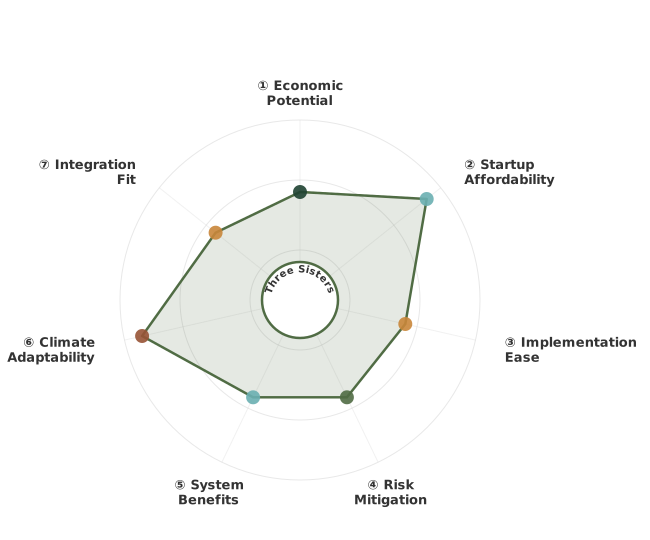
How These Traits Are Calculated
Trait dimensions are ordered clockwise starting from the top of the chart (12 o'clock position):
1. Economic Potential
Financial returns, annual value, and break-even timeline
WHAT: Evaluates financial viability by combining net annual value ($/ha from savings, income, and amortized harvests) with break-even timeline showing when practices pay for themselves.
WHY: Farmers need clear ROI understanding before committing resources. Fast payback (≤3 years) with strong returns (≥$300/ha) enables confident adoption, while long timelines (>10 years) restrict adoption to well-funded operations willing to wait for returns.
HOW: Calculated from net annual value in $/ha and break-even years. Exceptional (≥2.6): fast ROI ≤3 years + high value ≥$300/ha. Typical (1.8-2.5): moderate returns or longer timelines. Limited (<1.8): marginal economics or very long payback >10 years.
2. Startup Affordability
Initial investment costs and financial barrier to entry
WHAT: Measures financial barrier to entry through startup costs for equipment, infrastructure, consulting, and materials. Inverted scoring: lower costs = higher scores = more accessible adoption.
WHY: Affordability determines who can adopt. Low-cost practices (<$250/ha) enable widespread adoption across diverse scales, while high costs (>$2,500/ha) limit adoption to well-capitalized operations, creating barriers that slow regenerative transition.
HOW: Calculated from initial investment parsed from practice content. Inverted scoring: Exceptional (≥2.6): minimal investment <$250/ha. Typical (1.8-2.5): moderate costs $250-2,500/ha. Limited (<1.8): high barrier >$2,500/ha.
3. Implementation Ease
Learning curve and specialized knowledge required
WHAT: Measures how much learning, planning, and specialized knowledge a practice requires. Simpler practices with fewer steps score higher, while complex practices requiring extensive training or specialized resources score lower.
WHY: Complex practices create adoption barriers even when economically viable. Straightforward practices enable faster adoption and broader participation, while those requiring extensive training, timing precision, or specialized equipment limit who can succeed.
HOW: Evaluated by measuring documentation length and identifying complexity markers like location-specific requirements, seasonal timing windows, specialized skills, and dedicated equipment needs. Exceptional (≥2.6): straightforward practices with minimal prerequisites. Typical (1.8-2.5): moderate learning curve with some specialized needs. Limited (<1.8): steep learning curve requiring significant training or resources.
4. Risk Mitigation
Identified financial and ecological risk assessment
WHAT: Evaluates documented risks across financial (investment loss, market volatility) and ecological (crop failure, pest outbreaks) domains. Inverted scoring: fewer risks = higher scores.
WHY: Understanding risk exposure helps farmers make informed decisions. Low-risk practices allow confident implementation, while high-risk practices require careful planning and contingency resources. Risk transparency prevents costly failures.
HOW: Calculated from identified risks in practice content. Inverted scoring: Exceptional (≥2.6): ≤2 risks with manageable severity. Typical (1.8-2.5): 3-5 moderate risks. Limited (<1.8): 6+ risks or severe exposure.
5. System Benefits
How many ways the practice improves your land simultaneously
WHAT: Measures how many aspects of land health improve at once—carbon storage, soil quality, erosion control, water absorption, and biodiversity. Practices that improve multiple areas simultaneously create compounding benefits where each improvement reinforces the others.
WHY: The best practices solve multiple problems at once. For example, addressing erosion simultaneously builds carbon and improves water infiltration, creating a resilient system with positive feedback loops. Single-benefit approaches miss these compound transformation opportunities.
HOW: Evaluated across five key outcomes: carbon sequestration, soil organic matter increase, erosion reduction, water infiltration improvement, and biodiversity enhancement. Exceptional (≥2.6): high carbon storage (>8 t/ha/yr), improvements across 4-5 areas, transformative outcomes. Typical (1.8-2.5): moderate carbon (3-8 t/ha/yr), improvements across 2-3 areas. Limited (<1.8): modest impact (<3 t/ha/yr), single-area focus only.
6. Climate Adaptability
Geographic applicability across Köppen climate zones
WHAT: Evaluates geographic applicability by assessing how many Köppen climate zones successfully support a practice and what adaptation requirements are needed. Measures breadth of climates where farmers can implement with minimal to moderate modifications.
WHY: Universal practices working across diverse climates enable more farmers to adopt regenerative approaches. Practices limited to single climate types (only Mediterranean, only tropical) restrict adoption and slow global transition. Adaptability determines whether a practice serves niche regions or offers broad transformation.
HOW: LLM evaluation of regional success stories, Köppen zone coverage, and adaptation needs. Exceptional (≥2.6): 5+ zones or 4+ climate types, 3+ continents, minimal adaptation. Typical (1.8-2.5): 3-4 zones or 2-3 types, 2 continents, moderate adaptation. Limited (<1.8): 1-2 zones, single region, significant adaptation or highly specialized.
7. Integration Fit
How well this practice combines with others you're doing
WHAT: Measures how well a practice combines with other regenerative practices you might be doing. Some practices work as building blocks that make many other practices easier or more effective, while others work best on their own.
WHY: Practices that combine well with many others create more value on your farm. For example, cover cropping enables no-till, improves grazing, supports crop diversity, and helps water management—making all of them work better together. This helps you build a coherent system rather than juggling disconnected practices.
HOW: Evaluated by identifying which practices combine well and how strong those combinations are. 'Ideally Suited' means strong combinations where practices reinforce each other (practice A makes B easier, while B makes A more effective). 'Adequate' means complementary benefits that work well together. Exceptional (≥2.6): combines well with 6+ practices, serves as a building block. Typical (1.8-2.5): combines with 3-5 practices. Limited (<1.8): 1-2 practices or works best alone.
Going Deeper
1
WHY - The Benefits
The Three Sisters agricultural practice offers a suite of interconnected benefits that bolster soil health, enhance economic viability, improve water cycles, sequester carbon, and foster biodiversity. Its ancient wisdom provides a practical blueprint for regenerative...
The Three Sisters agricultural practice offers a suite of interconnected benefits that bolster soil health, enhance economic viability, improve water cycles, sequester carbon, and foster biodiversity. Its ancient wisdom provides a practical blueprint for regenerative agriculture, demonstrating how a well-designed polyculture can outperform monocultures in both resilience and productivity.
WHY - The Benefits
The Three Sisters agricultural practice offers a suite of interconnected benefits that bolster soil health, enhance economic viability, improve water cycles, sequester carbon, and foster biodiversity. Its ancient wisdom provides a practical blueprint for regenerative...
The Three Sisters agricultural practice offers a suite of interconnected benefits that bolster soil health, enhance economic viability, improve water cycles, sequester carbon, and foster biodiversity. Its ancient wisdom provides a practical blueprint for regenerative agriculture, demonstrating how a well-designed polyculture can outperform monocultures in both resilience and productivity.
Soil Health Benefits
The most profound soil health benefit of the Three Sisters is its contribution to natural fertility. The nitrogen-fixing capabilities of beans are central; as their nodules release nitrogen into the soil, they provide a crucial nutrient for the heavy-feeding corn and squash. This biological process, occurring in situ, bypasses the need for synthetic nitrogen fertilizers, which can disrupt soil microbial communities and increase greenhouse gas emissions. Over rotations, this symbiotic relationship builds soil organic matter and improves nutrient cycling.
The diverse root structures of corn, beans, and squash create varied pore spaces within the soil profile. Corn's deeper roots, bean's intermediate roots, and squash's broader, shallower roots work together to aerate the soil, improve water infiltration, and resist compaction. This complex root network provides a continuous food source for soil microorganisms, stimulating beneficial fungal and bacterial populations.
The significant ground cover provided by squash leaves and the dense foliage of corn and beans effectively shields the soil surface from the erosive forces of rain and wind. This protection prevents the loss of topsoil, a critical component of land health, and helps retain essential nutrients and organic matter. The mulch-like effect of living and decomposing plant material also moderates soil temperature and conserves soil moisture, creating a more stable environment for soil organisms, especially in drier or hotter climates.
Studies comparing polycultures to monocultures often show increased soil microbial biomass and diversity in polycultures like the Three Sisters. This enhanced microbial activity is crucial for nutrient cycling, disease suppression, and overall soil structure maintenance.
Economic Benefits
The economic advantages of the Three Sisters stem from its efficiency and resilience. By integrating three crops that support each other, farmers effectively increase the yield of food energy and biomass per unit of land and input. The reduced reliance on external inputs, particularly nitrogen fertilizer, directly lowers production costs.
The system provides a diversified income stream from a single planting operation. Instead of betting on one crop, farmers harvest corn, beans, and squash, reducing market risk. This diversification is particularly valuable in regions with unpredictable climates or volatile commodity prices.
While yields for individual crops might be slightly lower than in optimized monocultures designed for specific markets, the combined yield (in terms of total edible biomass or calories) can be superior. The produce also offers a range of nutritional profiles—carbohydrates from corn, protein and fiber from beans, and vitamins and minerals from squash—creating a food security asset.
Furthermore, the inherent soil-building nature of the practice can lead to long-term economic benefits. Improved soil health translates to higher resilience against drought and disease, potentially reducing crop losses and stabilizing yields over time. This practice is also increasingly sought after in niche markets focused on heritage, sustainable, or ancestrally-rooted foods, potentially commanding premium prices.
Water Cycle Benefits
The Three Sisters positively influences water dynamics through multiple mechanisms. The dense foliage of squash acts as a living mulch, significantly reducing soil evaporation. This conserves precious soil moisture, making the system more resilient to drought conditions common in many of the regions where it was traditionally cultivated and increasingly relevant in a changing climate.
Improved soil structure, facilitated by the diverse root systems and organic matter input, enhances water infiltration. Water penetrates the soil more readily rather than running off, recharging groundwater aquifers and reducing surface erosion. This means less water is lost to unproductive surface flow and more is available for plant uptake throughout the growing season.
The ability of the plants to access different soil depths further optimizes water use. While squash and beans might utilize upper soil layers, corn's deeper roots can access moisture from lower horizons, ensuring continued growth even during dry spells.
Carbon Sequestration
The Three Sisters practice contributes to carbon sequestration through consistent biomass production and soil organic matter enrichment. Throughout the growing season, the three plants photosynthesize, drawing down atmospheric carbon dioxide (CO2) and converting it into plant tissue. The abundant organic matter produced by these crops, including roots and decomposing foliage, is incorporated into the soil.
Soil organic matter is the primary terrestrial carbon sink. The continuous living cover and root activity in the Three Sisters system constantly replenish the soil's carbon pool. This process not only sequesters carbon but also improves soil structure, water-holding capacity, and nutrient availability, creating a virtuous cycle of soil regeneration. The low-disturbance nature of ongoing cultivation further aids carbon retention by minimizing the oxidation of soil organic matter.
Biodiversity Benefits
The Three Sisters is a powerful engine for biodiversity, both above and below ground. Different species attract different beneficial insects and pollinators, creating a more complex food web. For example, the flowers of beans and squash can attract a variety of bees and other pollinators, which are vital for crop reproduction and ecosystem health.
The diverse plant structure also provides habitat for beneficial insects that prey on pests, contributing to natural pest control. This ecological balance reduces the need for synthetic pesticides, which can harm non-target organisms and disrupt beneficial insect populations.
Below ground, the varied root exudates and the diverse litter layer created by the three plants support a wide array of soil microorganisms, fungi, and macrofauna like earthworms. This complex soil food web is essential for nutrient cycling, disease suppression, and overall ecosystem function. A biodiverse soil is a resilient soil, better able to withstand stresses like drought, disease, and nutrient imbalances.
Regenerative Systems Fit
The Three Sisters aligns perfectly with all five regenerative agriculture principles, making it a foundational practice for transitioning to more resilient and sustainable food systems:
- Principle 1: Minimize Soil Disturbance: Once established, the system's dense cover and robust root networks reduce the need for annual tilling. Planting can be done with minimal soil disturbance, and subsequent seasons benefit from the improved soil structure, further reducing tillage requirements.
- Principle 2: Maximize Crop Diversity: This is its defining feature. The combination of corn, beans, and squash offers significant above- and below-ground diversity, supporting a healthier soil microbiome and a more resilient farm ecosystem.
- Principle 3: Keep Soil Covered: The active canopy of all three plants, and particularly the broad leaves of squash, provide continuous soil cover throughout the growing season, protecting it from erosion and maintaining moisture.
- Principle 4: Maintain Living Roots: All three crops maintain active root systems throughout the growing season, ensuring continuous biological activity in the soil, carbon exchange, and nutrient cycling.
- Principle 5: Integrate Livestock: While not always original to the practice, the produce of the Three Sisters is excellent livestock feed. Integrating livestock via manure cycling (composted and applied) closes the nutrient loop, further enhancing soil fertility and reducing external reliance. Harvested crops can also be stored and fed to animals during non-growing seasons.
For farms transitioning away from conventional practices, adopting the Three Sisters offers a holistic approach. It simultaneously addresses soil health, nutrient management, pest control, water conservation, and economic diversification, laying a robust foundation for further regenerative integration. It provides a tangible example of how ecological principles can be applied to agriculture for increased productivity and sustainability.
Sources behind this view
Videos & Podcasts
-
Mohawk 'three sisters' gardening (corn, beans, squash) is a sustainable companion planting system providing a nutritious, storable meal and benefiting soil health through nitrogen fixation and weed su
-
Alfred Melbourne details Three Sisters Gardens' practical farming methods: year-round cover cropping, mulching with straw/wood chips, compost application, bio-intensive no-till with broadforks, and in
-
The 'three sisters' (corn, beans, squash) exemplify symbiotic intercropping, with each plant providing unique benefits like nitrogen fixation, structural support, and weed suppression. Mixture seeding
-
The 'three sisters' method pairs corn (trellis), beans (nitrogen fixation), and squash (living mulch) to maximize space, support plants, and improve garden efficiency.
Community
-
Detailed guidance on the 'Three Sisters' polyculture (corn, beans, squash) for storable produce, emphasizing dense planting for weed suppression and using robust heirloom corn varieties. Recommends pl
Read more (opens in new window) permies.com -
Emphasizes traditional varieties (dent corn, drying beans, winter squash) for storage in Three Sisters gardens. Recommends mounds, organic amendments, and managing competition, with debate on planting
Read more (opens in new window) permies.com -
The Three Sisters Garden (corn, beans, squash) is a historical Native American companion planting system where corn provides support, beans fix nitrogen, and squash suppresses weeds, creating a self-s
Read more (opens in new window) ucanr.edu -
The "Three Sisters" planting method uses corn, beans, and squash together. Corn supports beans, beans fix nitrogen, and squash suppresses weeds and retains moisture. Planting involves preparing soil w
Read more (opens in new window) ucanr.edu
Research
-
Reuniting the Three Sisters: collaborative science with Native growers to improve soil and community health (opens in new window)
This study found: Three Sisters intercropping (corn, beans, squash) boosted soil activity by 24% and reduced soil nitrate by 54% in a one-year Midwestern study with Native growers.
-
Sustainable Agriculture: Nutrition of Indigenous American 3 Sisters Garden Compared to Monoculture Corn Production and a Cool Old Squash (opens in new window)
This study found: The Three Sisters garden (corn, squash, beans) offers superior nutrition and environmental benefits over monoculture corn. Squash is rich in disease-fighting carotenoids, while the polyculture repleni
-
Yield, growth, and labor demands of growing maize, beans, and squash in monoculture versus the Three Sisters (opens in new window)
This study found: Three Sisters intercropping (corn, beans, squash) improved corn growth and yield per acre compared to monoculture, but monoculture was more labor-efficient overall. Choice depends on farmer priorities
From the Web
-
This cluster details the Native American 'Three Sisters' companion planting system (corn, beans, squash), explaining their symbiotic benefits (nitrogen fixation, weed control, water conservation). It
-
Details the Native American 'Three Sisters' system (corn, beans, squash) and its symbiotic benefits. Explains Wampanoag, Hidatsa, and Zuni garden designs with specific planting instructions and heirlo
-
Explains the Three Sisters planting method: corn for support, beans for nitrogen fixation, and squash for ground cover. Includes planting instructions for corn, beans, squash, and optional sunflower/b
-
Explores the 'Three Sisters' companion planting system (corn, beans, squash), detailing their symbiotic relationship and nitrogen-fixing benefits.
2
HOW - Implementation Process
Implementing the Three Sisters effectively involves understanding the timing, spacing, and synergistic needs of each crop. While variations exist based on specific varieties and regional adaptations, the core principles remain consistent.
Implementing the Three Sisters effectively involves understanding the timing, spacing, and synergistic needs of each crop. While variations exist based on specific varieties and regional adaptations, the core principles remain consistent.
HOW - Implementation Process
Implementing the Three Sisters effectively involves understanding the timing, spacing, and synergistic needs of each crop. While variations exist based on specific varieties and regional adaptations, the core principles remain consistent.
Implementing the Three Sisters effectively involves understanding the timing, spacing, and synergistic needs of each crop. While variations exist based on specific varieties and regional adaptations, the core principles remain consistent.
Prerequisites
- Climate Suitability: Thrives in temperate to subtropical climates with adequate growing season length (typically 100-150 frost-free days). Can be adapted for cooler climates with faster-maturing varieties.
- Soil Fertility: While beans fix nitrogen, fertile soil improves overall yield. Well-drained loam or sandy loam soils are ideal. Existing soil organic matter of 3-5% is beneficial.
- Sunlight: All three plants require full sun for optimal growth. Ensure the planting location receives at least 6-8 hours of direct sunlight daily.
- Water Availability: While squash conserves moisture, consistent access to water is important during establishment and dry periods. Irrigation can supplement rainfall if necessary.
Phase 1: Site Preparation and Corn Planting (Early Spring)
Timing: Plant corn seeds about 2-4 weeks after the last expected frost, when soil temperatures consistently reach 15°C (60°F). This is typically late spring in temperate regions.
Site Preparation:
- Clear debris from the planting area.
- Incorporate compost or well-rotted manure if soil fertility is low (aim for 2-5 cm or 1-2 inches spread and lightly worked in, or applied as surface mulch). Avoid excessive tillage to maintain soil structure; a single pass with a tiller or broadfork is usually sufficient if needed.
- If transitioning from a conventional system, consider a light cover crop (e.g., oats, vetch) that can be terminated before planting corn.
Corn Planting:
- Plant corn seeds in hills or rows, spaced according to your chosen variety's recommendations. A typical spacing might be 60-90 cm (2-3 feet) apart.
- Plant 2-3 seeds per hill, thinning to the strongest seedling later.
- Consider using a biodegradable starter fertilizer or organic soil amendments at planting to give the corn a strong start, though this is often unnecessary in fertile soils.
Regenerative Note: This phase may involve light soil disturbance. The goal is to create a good seedbed while minimizing unnecessary tillage. If transitioning from a severely compacted, bare-soil system, one-time subsoiling (as a last resort) followed by cover cropping and then planting corn into that residue can significantly improve the system's foundation.
Phase 2: Bean and Squash Planting (Mid-Spring to Early Summer)
Timing: Plant bean and squash seeds approximately 2-4 weeks after corn has emerged and established itself, typically when soil temperatures are consistently above 18-21°C (65-70°F). This is often late spring or early summer, after the initial danger of frost has passed.
Bean Planting:
- Use a pole bean variety; bush beans are generally not suitable as they don't vine effectively.
- Plant bean seeds in hills or at the base of the corn stalks. Aim for 3-5 seeds per corn stalk hill, spaced about 10-15 cm (4-6 inches) around the base. The corn acts as the natural trellis.
- Ensure seeds are planted at the recommended depth (typically 2-3 cm or 1 inch).
Squash Planting:
- Select squash varieties known for their vigorous growth and disease resistance. Winter squash (e.g., acorn, butternut, pumpkin) are often preferred for their ground cover and storage potential. Summer squash can also be used.
- Plant squash seeds in hills around the base of the corn-bean clusters, typically 3-5 seeds per hill, thinning to 1-2 strong plants later. Space these hills 90-150 cm (3-5 feet) apart from the corn stalks, allowing room for the squash vines to spread.
- Ensure squash seeds are planted at the recommended depth (typically 2-3 cm or 1 inch).
Regenerative Note: This phase is about integration. Spacing is crucial—too close, and plants compete intensely; too far, and the synergistic benefits are reduced. The nitrogen-fixing beans in this phase support the nutrient demands of corn and squash without synthetic inputs.
Phase 3: Cultivation and Management (Summer)
Watering: Monitor soil moisture. Water deeply and less frequently to encourage deep root growth. Squash requires consistent moisture, especially during fruit development. Beans and corn benefit from adequate water, but overwatering can lead to root rot.
Weeding: The squash's spreading habit will initially suppress weeds. Hand-pulling or light hoeing may be necessary in the early stages before the canopy fully develops. Once established, the dense cover of the Three Sisters system significantly reduces weed pressure, aligning with Principle 3.
Pest and Disease Management:
- Monitor for common pests like squash vine borers, cucumber beetles, and corn earworms. Companion planting of basil, marigolds, or rosemary can help deter some pests.
- Encourage beneficial insects by planting pollinator-attracting flowers nearby.
- Rotate crop locations annually if possible to break pest and disease cycles, though the diversity within the Three Sisters itself provides some resilience.
Thinning and Weeding: Once corn seedlings are a few inches tall, thin to the strongest 1-2 plants per hill. Thin bean and squash seedlings to 1-2 healthy plants per hill once established.
Regenerative Note: This phase is characterized by minimal interference. The system is designed to be largely self-sustaining once plants are established. Management focuses on observation and gentle intervention rather than intensive cultivation.
Phase 4: Harvest and Post-Harvest Management (Late Summer through Fall)
Harvesting:
- Corn: Harvest when kernels are firm and milky. For drying, leave ears on the stalks as long as possible, or dry them after picking.
- Beans: Harvest young for snap beans, or allow pods to dry and mature for dry beans. Ensure you harvest before the first hard frost for best quality.
- Squash: Harvest winter squash when the rind is hard and the stem is dry. Summer squash can be harvested frequently once fruits develop.
Post-Harvest:
- Residue Management: After harvesting mature crops, leave stalks, vines, and leaves in the field to decompose. This residue serves as mulch, protects the soil, and adds organic matter. This aligns with Principle 3 (Keep Soil Covered) and Principle 2 (Maximize Crop Diversity) via returning plant matter.
- Cover Cropping: If the growing season allows for a second crop, consider planting a winter cover crop mix (e.g., rye, vetch, clover) in the cleared areas or between the plant residues. This provides continuous living cover and root activity (Principle 4), further enhancing soil health. This is a crucial step for farms that need to address bare soil periods between cash crops.
- Composting: Any harvested crop residues not returned to the field can be composted and used to enrich the soil for future plantings. This integrates with livestock feeding, creating a closed-loop nutrient system.
Regenerative Note: Post-harvest management is critical for maintaining the regenerative benefits. Leaving residue and planting cover crops ensures the soil remains covered and living roots remain active, continuing to build soil health even after the main harvest is complete.
Sources behind this view
Videos & Podcasts
-
Alfred Melbourne details Three Sisters Gardens' practical farming methods: year-round cover cropping, mulching with straw/wood chips, compost application, bio-intensive no-till with broadforks, and in
-
Mohawk 'three sisters' gardening (corn, beans, squash) is a sustainable companion planting system providing a nutritious, storable meal and benefiting soil health through nitrogen fixation and weed su
-
The 'three sisters' (corn, beans, squash) exemplify symbiotic intercropping, with each plant providing unique benefits like nitrogen fixation, structural support, and weed suppression. Mixture seeding
-
Intercropping with overstory and understory plants (e.g., corn with beans/squash, okra with cowpeas) maximizes per-area yield and biological activity. While individual crop yields might decrease, comb

Community
-
Detailed guidance on the 'Three Sisters' polyculture (corn, beans, squash) for storable produce, emphasizing dense planting for weed suppression and using robust heirloom corn varieties. Recommends pl
Read more (opens in new window) permies.com -
Emphasizes traditional varieties (dent corn, drying beans, winter squash) for storage in Three Sisters gardens. Recommends mounds, organic amendments, and managing competition, with debate on planting
Read more (opens in new window) permies.com -
The Three Sisters Garden (corn, beans, squash) is a historical Native American companion planting system where corn provides support, beans fix nitrogen, and squash suppresses weeds, creating a self-s
Read more (opens in new window) ucanr.edu -
Explains the symbiotic 'Three Sisters' (corn, beans, squash) agriculture and provides ethical harvesting guidelines: ask permission, take only what's needed (never first/last/more than half), minimize
Read more (opens in new window) ucanr.edu
Research
-
Reuniting the Three Sisters: collaborative science with Native growers to improve soil and community health (opens in new window)
This study found: Three Sisters intercropping (corn, beans, squash) boosted soil activity by 24% and reduced soil nitrate by 54% in a one-year Midwestern study with Native growers.
-
Yield, growth, and labor demands of growing maize, beans, and squash in monoculture versus the Three Sisters (opens in new window)
This study found: Three Sisters intercropping (corn, beans, squash) improved corn growth and yield per acre compared to monoculture, but monoculture was more labor-efficient overall. Choice depends on farmer priorities
-
Sustainable Agriculture: Nutrition of Indigenous American 3 Sisters Garden Compared to Monoculture Corn Production and a Cool Old Squash (opens in new window)
This study found: The Three Sisters garden (corn, squash, beans) offers superior nutrition and environmental benefits over monoculture corn. Squash is rich in disease-fighting carotenoids, while the polyculture repleni
From the Web
-
This cluster details the Native American 'Three Sisters' companion planting system (corn, beans, squash), explaining their symbiotic benefits (nitrogen fixation, weed control, water conservation). It
-
Details the Native American 'Three Sisters' system (corn, beans, squash) and its symbiotic benefits. Explains Wampanoag, Hidatsa, and Zuni garden designs with specific planting instructions and heirlo
-
Explores the 'Three Sisters' companion planting system (corn, beans, squash), detailing their symbiotic relationship and nitrogen-fixing benefits.
-
Explains the Three Sisters planting method: corn for support, beans for nitrogen fixation, and squash for ground cover. Includes planting instructions for corn, beans, squash, and optional sunflower/b
3
Know the Debate
The Three Sisters system's effectiveness and adaptation depend heavily on regional climate and farmer expertise. In humid temperate zones with rich...
Know the Debate
The Three Sisters system's effectiveness and adaptation depend heavily on regional climate and farmer expertise. In humid temperate zones with rich...
The Three Sisters system's effectiveness and adaptation depend heavily on regional climate and farmer expertise. In humid temperate zones with rich soil, nitrogen benefits are quickly apparent and management is streamlined. However, in drier or cooler climates, or on less fertile land, supplemental inputs and adjusted timings may be necessary. Its suitability for large commercial operations is also debated, with smaller, diversified farms often finding it more manageable and economically viable than large-scale monoculture-focused enterprises.
How much nitrogen do beans contribute to corn and squash?
Significant benefits observed, rapid nutrient transfer
Field practitioners and Indigenous knowledge holders report pronounced nitrogen benefits observed directly in corn growth and yield. This suggests rapid nutrient transfer when beans are grown in close proximity with healthy soil biology.
Sources behind this view
Sources behind this view
Videos & Podcasts
-
The 'three sisters' method pairs corn (trellis), beans (nitrogen fixation), and squash (living mulch) to maximize space, support plants, and improve garden efficiency.
-
Mohawk 'three sisters' gardening (corn, beans, squash) is a sustainable companion planting system providing a nutritious, storable meal and benefiting soil health through nitrogen fixation and weed suppression.
-
The 'three sisters' (corn, beans, squash) exemplify symbiotic intercropping, with each plant providing unique benefits like nitrogen fixation, structural support, and weed suppression. Mixture seeding rates depend on seed size, and a formula is provided. No-till systems show higher microbial activity for organic matter buildup.
Limited availability, potential need for supplemental nitrogen
Academic studies suggest that nitrogen availability from beans can be limited by slow decomposition rates and may require supplemental nitrogen, especially in the first year or for high-yield goals.
Sources behind this view
Sources behind this view
Research
-
Legume-Maize Intercropping System: An Alternative Pathway for Sustainable Agriculture (opens in new window)
This study found: Growing different crops together on the same land, known as intercropping, can boost farm productivity and sustainability. A common example is planting corn (maize) alongside legumes (like beans or peas). This combination offers several benefits: it can lead to higher overall yields, make better use of water and nutrients, help control weeds naturally, and reduce pest and disease problems. The legumes also fix nitrogen from the air, enriching the soil and providing this vital nutrient to the corn, reducing the need for synthetic fertilizers. Intercropping can also act as a safety net against crop failure and help prevent soil erosion. While it might require more manual labor and make using large machinery harder, it's a very advantageous system for small farmers, especially in regions where labor is readily available.
-
Advancing Intercropping Research and Practices in Industrialized Agricultural Landscapes (opens in new window)
This study found: Growing multiple crops together, known as intercropping, is a key agroecological practice that can make farming more sustainable. By planting crops in strips, mixing them, or staggering them (relay intercropping), farmers can use resources like water and nutrients more efficiently, leading to higher and more consistent crop yields. This practice also helps reduce pests and improve overall soil health. While intercropping is more established with long-lived plants like grasses and legumes, its use with annual crops is growing, especially with cover crop mixtures. The researchers emphasize the need for consistent research methods to better understand and promote intercropping.
From the Web
-
Explores the 'Three Sisters' companion planting system (corn, beans, squash), detailing their symbiotic relationship and nitrogen-fixing benefits.
-
Explains the Three Sisters planting method: corn for support, beans for nitrogen fixation, and squash for ground cover. Includes planting instructions for corn, beans, squash, and optional sunflower/bee balm.
Making Sense of the Differences
The observed nitrogen contribution varies primarily with soil biology and decomposition speed. In well-established systems with active soil life and adequate moisture, nitrogen transfer is rapid. In newer plantings or less biologically active soils, it may be slower, with potential for greater reliance on supplemental nitrogen. Farmers can monitor plant color and conduct soil tests to assess nitrogen status and adjust fertilizer use.
Should corn, beans, and squash be planted at specific densities and timings?
Precise, adaptive, and sequential planting is critical
Indigenous practitioners and experienced gardeners emphasize precise, locally adapted densities and sequential planting. They note that deviations can significantly impact symbiotic benefits and overall yield.
Sources behind this view
Sources behind this view
Videos & Podcasts
-
The 'three sisters' method pairs corn (trellis), beans (nitrogen fixation), and squash (living mulch) to maximize space, support plants, and improve garden efficiency.
-
Mohawk 'three sisters' gardening (corn, beans, squash) is a sustainable companion planting system providing a nutritious, storable meal and benefiting soil health through nitrogen fixation and weed suppression.
-
The 'three sisters' (corn, beans, squash) exemplify symbiotic intercropping, with each plant providing unique benefits like nitrogen fixation, structural support, and weed suppression. Mixture seeding rates depend on seed size, and a formula is provided. No-till systems show higher microbial activity for organic matter buildup.
-
Details on planting a 'Milpa' garden with corn, beans, squash, and sunflowers, including preparation, planting strategy, and lessons learned regarding fertility, spacing, and variety selection for improved yields and pest resistance.

General guidelines sufficient for robust symbiosis
Academic sources provide general planting guidelines based on standard row cropping and typical spacings, aiming for overall polyculture benefits.
Sources behind this view
Sources behind this view
Research
-
Yield, growth, and labor demands of growing maize, beans, and squash in monoculture versus the Three Sisters (opens in new window)
This study found: A three-year study, conducted in partnership with the Catawba Indian Nation in North Carolina, compared growing corn, beans, and squash together as the 'Three Sisters' versus planting them separately (monoculture). The research found that while the total amount of corn harvested was similar in both methods, corn plants grew bigger, survived better, and produced more per plant and per acre when grown in the Three Sisters system. Squash produced the most when grown alone. However, the Three Sisters system required more labor overall, especially for trellising beans, meaning farmers got more harvest for each hour worked in monoculture. The study suggests that the best planting method depends on what a farmer prioritizes – whether it's getting the most of one crop, or growing a mix of crops while conserving land and labor.
-
Reuniting the Three Sisters: collaborative science with Native growers to improve soil and community health (opens in new window)
This study found: A one-year study in the Midwest, conducted with Native American farmers, looked at the "Three Sisters" planting method (corn, beans, and squash grown together) compared to growing each crop alone. After just one year, this traditional intercropping system significantly boosted soil activity by 24% and reduced levels of a key nutrient (nitrate) by more than half. It also improved the balance of carbon and nitrogen in the soil's living organisms. This research highlights the cultural value of the Three Sisters and its potential to make farming more sustainable.
-
Intercropping Squash with Maize under Varying Planting System (opens in new window)
This study found: A two-year study in Bangladesh compared different ways of planting corn and squash together. Researchers tested various spacing and row arrangements for intercropping these two crops. While planting only corn or only squash resulted in the highest yields for each individual crop, a specific combination of planting corn in paired rows with two rows of squash planted 80 cm apart yielded the most overall (measured as 'maize equivalent yield'). This particular intercropping arrangement also provided the highest financial returns, including gross profit and a favorable benefit-cost ratio. The study suggests this paired-row corn with double-row squash setup is a promising strategy for maximizing both crop output and farm income.
From the Web
-
This cluster details the Native American 'Three Sisters' companion planting system (corn, beans, squash), explaining their symbiotic benefits (nitrogen fixation, weed control, water conservation). It outlines three cultivation styles: Wampanoag, Hidatsa, and Zuni waffle gardens, with specific planting designs and heirloom variety recommendations for different climates.
Making Sense of the Differences
Optimal spacing and timing are crucial to prevent competition and maximize synergy. While general recommendations exist, traditional and adaptive methods emphasize precise, locally-informed techniques. Farmers should experiment with recommended densities and timings, adjusting based on observation of plant vigor, climate conditions, and specific variety performance.
Is the Three Sisters system practical for large-scale commercial farms?
Best suited for small-scale, diversified operations
Field perspectives often question the scalability of the Three Sisters for commercial markets due to labor intensity, harvesting complexity, and mechanization challenges, suggesting it's most viable for smaller, diversified farms.
Sources behind this view
Sources behind this view
Videos & Podcasts
-
Details on planting a 'Milpa' garden with corn, beans, squash, and sunflowers, including preparation, planting strategy, and lessons learned regarding fertility, spacing, and variety selection for improved yields and pest resistance.
-
The 'Three Sisters' (corn, beans, squash) intercropping system is complex and requires significant regional adaptation, making it challenging for market gardeners. While efficient in caloric yield, low crop profitability and the need for nuanced understanding of climate and varieties limit its adoption.

Yields and efficiency benefit from polyculture but may not scale
Academic research highlights yield improvements and resource efficiency in polycultures like the Three Sisters but acknowledges lower labor efficiency compared to monocultures, suggesting scale-specific adaptations may be needed.
Sources behind this view
Sources behind this view
Research
-
Yield, growth, and labor demands of growing maize, beans, and squash in monoculture versus the Three Sisters (opens in new window)
This study found: A three-year study, conducted in partnership with the Catawba Indian Nation in North Carolina, compared growing corn, beans, and squash together as the 'Three Sisters' versus planting them separately (monoculture). The research found that while the total amount of corn harvested was similar in both methods, corn plants grew bigger, survived better, and produced more per plant and per acre when grown in the Three Sisters system. Squash produced the most when grown alone. However, the Three Sisters system required more labor overall, especially for trellising beans, meaning farmers got more harvest for each hour worked in monoculture. The study suggests that the best planting method depends on what a farmer prioritizes – whether it's getting the most of one crop, or growing a mix of crops while conserving land and labor.
-
Advancing Intercropping Research and Practices in Industrialized Agricultural Landscapes (opens in new window)
This study found: Growing multiple crops together, known as intercropping, is a key agroecological practice that can make farming more sustainable. By planting crops in strips, mixing them, or staggering them (relay intercropping), farmers can use resources like water and nutrients more efficiently, leading to higher and more consistent crop yields. This practice also helps reduce pests and improve overall soil health. While intercropping is more established with long-lived plants like grasses and legumes, its use with annual crops is growing, especially with cover crop mixtures. The researchers emphasize the need for consistent research methods to better understand and promote intercropping.
-
Intercropping Squash with Maize under Varying Planting System (opens in new window)
This study found: A two-year study in Bangladesh compared different ways of planting corn and squash together. Researchers tested various spacing and row arrangements for intercropping these two crops. While planting only corn or only squash resulted in the highest yields for each individual crop, a specific combination of planting corn in paired rows with two rows of squash planted 80 cm apart yielded the most overall (measured as 'maize equivalent yield'). This particular intercropping arrangement also provided the highest financial returns, including gross profit and a favorable benefit-cost ratio. The study suggests this paired-row corn with double-row squash setup is a promising strategy for maximizing both crop output and farm income.
From the Web
-
This cluster details the Native American 'Three Sisters' companion planting system (corn, beans, squash), explaining their symbiotic benefits (nitrogen fixation, weed control, water conservation). It outlines three cultivation styles: Wampanoag, Hidatsa, and Zuni waffle gardens, with specific planting designs and heirloom variety recommendations for different climates.
Making Sense of the Differences
The suitability of the Three Sisters for large-scale commercial farming is debated. While ecological benefits are clear, mechanization of planting, managing competition, and harvesting three distinct crops present challenges. It's generally more adaptable to smaller, diversified farms or operations focusing on niche markets. Large-scale adaptations may involve strip-cropping or simplified rotations rather than the traditional companion planting model.
3
HOW MUCH - Costs & Investment
Note: Costs shown in USD; multiply by local labor and material cost indices for your region. Labor costs vary significantly internationally. Calculations are typically per hectare or per acre.
Note: Costs shown in USD; multiply by local labor and material cost indices for your region. Labor costs vary significantly internationally. Calculations are typically per hectare or per acre.
HOW MUCH - Costs & Investment
Note: Costs shown in USD; multiply by local labor and material cost indices for your region. Labor costs vary significantly internationally. Calculations are typically per hectare or per acre.
Note: Costs shown in USD; multiply by local labor and material cost indices for your region. Labor costs vary significantly internationally. Calculations are typically per hectare or per acre.
Note: All costs are based on recent US economic data (2024–2026) and may vary substantially by region based on local labor rates, material costs, and regulatory requirements.
Seed and Planting Materials
Seed costs form the foundational variable for the Three Sisters, as the system mandates selecting complementary cultivars that mature at different rates. For small-scale operations (under 50 acres (20 ha)), farmers typically pay $20–$65 per acre ($49–$161/ha) when prioritizing heirloom or non-GMO varieties that offer natural symbiotic disease resistance. Mid-size operations (50–500 acres (20–202 ha)) benefit from bulk procurement, bringing costs down to $15–$55 per acre ($37–$136/ha). On large-scale operations (500+ acres), economies of scale and direct contract sourcing reduce seed investment to $12–$45 per acre ($30–$111/ha). Because the system relies on the biological synergy of corn providing a trellis and beans fixing nitrogen, the selection of specific tall, stalk-strong corn cultivars is a critical cost driver.
Soil Amendments and Fertility Management
The Three Sisters system is traditionally nutrient-efficient, but supplemental fertility is often required to maximize commercial yields. Small-scale farmers typically spend $40–$130 per acre ($99–$321/ha) on premium organic compost or seed inoculants to bolster initial establishment. Mid-size operations balance costs between $35–$110 per acre ($86–$272/ha), often focusing on localized liquid biological amendments. Large-scale producers, optimizing for efficiency, generally allocate $25–$85 per acre ($62–$210/ha) toward precise soil nutrient injections. The long-term return on this investment is found in the reduced need for synthetic nitrogen fertilizers in subsequent seasons, as the bean component inherently helps restore soil productivity.
Irrigation and Water Infrastructure
Water management represents the highest potential variable in the Three Sisters budget, largely dictated by local rainfall and evapotranspiration rates. For small operations, manual or low-tech drip irrigation setups range from $85–$250 per acre ($210–$618/ha). Mid-size operations utilize larger-scale automated irrigation systems, costing $65–$210 per acre ($161–$519/ha) per cycle. Large-scale farming entities with dedicated, optimized irrigation headers report costs in the range of $45–$170 per acre ($111–$420/ha). In arid regions, these figures may spike by an additional 20% to account for moisture-retention technologies like biochar or specialized mulching, which also suppress weed competition.
Specialized Equipment and Minor Tools
Unlike monocrop systems, the Three Sisters requires nuanced planting configurations that allow for the trellised growth of beans on corn. Small-scale farmers often rely on hand tools and modified push-seeders, requiring an investment of $20–$65 per acre ($49–$161/ha). Mid-size farms utilizing tractor-mounted precision planters experience costs ranging from $15–$50 per acre ($37–$124/ha) to calibrate for staggered seed spacing. Large-scale operations integrating GPS-guided, multi-commodity precision planters report costs of $12–$40 per acre ($30–$99/ha). These capital outlays are offset by the dramatic reduction in the need for herbicides and mechanical tillage during the growing season.
Most Spend: Most operations fall within the middle 60% range of the projected investment structure. For small-scale farms, this typically lands between $250–$350 per acre ($618–$865/ha). Mid-size farmers generally report spending between $230–$315 per acre ($568–$778/ha), while large-scale producers find their efficiency sweet spot at $190–$270 per acre ($469–$667/ha), factoring in bulk savings and mechanized planting efficiencies.
Why the Range?: The range is driven primarily by the farmer’s choice of seed quality, local soil baseline, and existing irrigation infrastructure. Costs trend toward the higher end when producers implement intensive, organic-certified drip systems and premium, locally-adapted heirloom seeds to secure a "heritage bundle" market premium. Conversely, the lower end of the cost spectrum is reached by farms that utilize saved seed, minimal-tillage techniques, and rely on established rainfall patterns, which reduces the necessity for high-capital irrigation and soil amendments.
Sources behind this view
Videos & Podcasts
-
Alfred Melbourne details Three Sisters Gardens' practical farming methods: year-round cover cropping, mulching with straw/wood chips, compost application, bio-intensive no-till with broadforks, and in
-
Mohawk 'three sisters' gardening (corn, beans, squash) is a sustainable companion planting system providing a nutritious, storable meal and benefiting soil health through nitrogen fixation and weed su
-
The 'three sisters' (corn, beans, squash) exemplify symbiotic intercropping, with each plant providing unique benefits like nitrogen fixation, structural support, and weed suppression. Mixture seeding
-
The 'three sisters' method pairs corn (trellis), beans (nitrogen fixation), and squash (living mulch) to maximize space, support plants, and improve garden efficiency.
Community
-
Detailed guidance on the 'Three Sisters' polyculture (corn, beans, squash) for storable produce, emphasizing dense planting for weed suppression and using robust heirloom corn varieties. Recommends pl
Read more (opens in new window) permies.com -
Emphasizes traditional varieties (dent corn, drying beans, winter squash) for storage in Three Sisters gardens. Recommends mounds, organic amendments, and managing competition, with debate on planting
Read more (opens in new window) permies.com -
The Three Sisters Garden (corn, beans, squash) is a historical Native American companion planting system where corn provides support, beans fix nitrogen, and squash suppresses weeds, creating a self-s
Read more (opens in new window) ucanr.edu -
The "Three Sisters" planting method uses corn, beans, and squash together. Corn supports beans, beans fix nitrogen, and squash suppresses weeds and retains moisture. Planting involves preparing soil w
Read more (opens in new window) ucanr.edu
Research
-
Yield, growth, and labor demands of growing maize, beans, and squash in monoculture versus the Three Sisters (opens in new window)
This study found: Three Sisters intercropping (corn, beans, squash) improved corn growth and yield per acre compared to monoculture, but monoculture was more labor-efficient overall. Choice depends on farmer priorities
-
Reuniting the Three Sisters: collaborative science with Native growers to improve soil and community health (opens in new window)
This study found: Three Sisters intercropping (corn, beans, squash) boosted soil activity by 24% and reduced soil nitrate by 54% in a one-year Midwestern study with Native growers.
-
Sustainable Agriculture: Nutrition of Indigenous American 3 Sisters Garden Compared to Monoculture Corn Production and a Cool Old Squash (opens in new window)
This study found: The Three Sisters garden (corn, squash, beans) offers superior nutrition and environmental benefits over monoculture corn. Squash is rich in disease-fighting carotenoids, while the polyculture repleni
From the Web
-
This cluster details the Native American 'Three Sisters' companion planting system (corn, beans, squash), explaining their symbiotic benefits (nitrogen fixation, weed control, water conservation). It
-
Details the Native American 'Three Sisters' system (corn, beans, squash) and its symbiotic benefits. Explains Wampanoag, Hidatsa, and Zuni garden designs with specific planting instructions and heirlo
-
Explains the Three Sisters planting method: corn for support, beans for nitrogen fixation, and squash for ground cover. Includes planting instructions for corn, beans, squash, and optional sunflower/b
-
Explores the 'Three Sisters' companion planting system (corn, beans, squash), detailing their symbiotic relationship and nitrogen-fixing benefits.
5
WHY - The Benefits
The Three Sisters is an ancient agricultural practice that exemplifies ecological synergy, offering substantial benefits for soil health, economic diversification, water conservation, carbon sequestration, and biodiversity. Its integrated approach makes it a cornerstone...
The Three Sisters is an ancient agricultural practice that exemplifies ecological synergy, offering substantial benefits for soil health, economic diversification, water conservation, carbon sequestration, and biodiversity. Its integrated approach makes it a cornerstone for regenerative farming systems worldwide.
WHY - The Benefits
The Three Sisters is an ancient agricultural practice that exemplifies ecological synergy, offering substantial benefits for soil health, economic diversification, water conservation, carbon sequestration, and biodiversity. Its integrated approach makes it a cornerstone...
The Three Sisters is an ancient agricultural practice that exemplifies ecological synergy, offering substantial benefits for soil health, economic diversification, water conservation, carbon sequestration, and biodiversity. Its integrated approach makes it a cornerstone for regenerative farming systems worldwide.
Soil Health Benefits
The core strength of the Three Sisters lies in its ability to enhance soil fertility naturally. The nitrogen-fixing capabilities of beans are paramount; through symbiosis with Rhizobia bacteria, they convert atmospheric nitrogen into a usable form for plants, critically supporting the heavy nitrogen requirements of corn without synthetic fertilizers. This biological nitrogen cycling is a regenerating process that builds soil nutrient reserves and supports a vibrant soil food web.
Beyond nitrogen, the diverse root systems of corn (deeper access), beans (intermediate), and squash (broader, shallower) improve soil structure. These varied root architectures create pore spaces, enhance water infiltration and aeration, and resist compaction. This continuous biological activity from living roots throughout the growing season feeds soil microorganisms, stimulating a diverse microbiome that is crucial for nutrient cycling, decomposition, and disease suppression.
The significant ground cover provided by the broad leaves of squash and the dense foliage of corn and beans acts as a living mulch. This coverage protects the soil surface from wind and rain erosion, prevents the loss of topsoil, and conserves moisture by reducing evaporation. This living mulch also moderates soil temperature, creating a more stable environment for soil organisms and fostering the development of soil organic matter.
Economic Benefits
The economic advantages of the Three Sisters are rooted in its efficiency and resilience. By integrating three crops, farmers maximize the yield of biomass and edible food per unit of land and input. The significant reduction in external input costs, particularly synthetic fertilizers and potentially pesticides, directly improves profitability.
This polyculture offers economic diversification by harvesting three distinct crops from a single planting. This reduces the risk associated with market price fluctuations or crop-specific failures that can impact monoculture systems. The combination of carbohydrates (corn), protein (beans), and vitamins/minerals (squash) provides a nutritionally balanced output, valuable for both food security and potential niche markets focused on heritage or sustainable agriculture.
The long-term economic benefit is the improved sustainability of the land. Enhanced soil health leads to greater resilience against environmental stressors like drought and disease, contributing to more stable yields over time and reducing susceptibility to crop failure.
Water Cycle Benefits
The Three Sisters positively impacts water management. The broad leaves of the squash plant act as a natural mulch, significantly reducing soil evaporation. This conserves vital soil moisture, making the system more resilient to drought—a critical advantage in many agricultural regions experiencing increased water scarcity.
Improved soil structure from diverse root systems and increased organic matter enhances water infiltration. Rainwater penetrates the soil more readily, recharging groundwater and reducing unproductive surface runoff and erosion. This efficient water use means more moisture is available for plant uptake throughout the growing season.
Furthermore, the different root depths of corn, beans, and squash allow for more comprehensive water uptake from various soil horizons, optimizing water utilization and further contributing to drought resilience.
Carbon Sequestration
The Three Sisters contributes to carbon sequestration through sustained plant growth and the enrichment of soil organic matter. Throughout the growing season, the combined photosynthetic activity of the three crops draws down atmospheric CO2. This captured carbon is converted into plant biomass.
When the plant residues decompose in the soil, they add organic matter, effectively sequestering carbon below ground. The continuous living cover and the active root systems throughout the growing season ensure ongoing carbon input into the soil, building soil organic carbon levels over time. This practice helps to mitigate climate change by storing atmospheric carbon in the soil.
Biodiversity Benefits
This polyculture significantly boosts biodiversity both above and below ground. The varied plant structures provide diverse habitats for insects, pollinators, and beneficial predators. The flowers of beans and squash attract pollinators like bees, crucial for ensuring full fruit and seed set. The lush canopy and diverse plant life support a broad spectrum of beneficial insects that prey on pests, contributing to natural pest control and reducing reliance on external interventions.
Beneath the surface, the varied root exudates and plant litter create a rich environment for a diverse soil food web, comprising bacteria, fungi, protozoa, nematodes, and earthworms. This complex and diverse soil ecosystem is essential for nutrient cycling, disease suppression, and maintaining healthy soil structure. A biodiverse soil is inherently more resilient and productive.
Regenerative Systems Fit
The Three Sisters practice embodies all five regenerative agriculture principles:
- Principle 1: Minimize Soil Disturbance: The dense ground cover and root systems reduce the need for annual tillage. Planting can be achieved with minimal soil disruption, and improved soil structure inherently resists compaction over time.
- Principle 2: Maximize Crop Diversity: This is fundamental. The integration of corn, beans, and squash creates significant above- and below-ground biodiversity, supporting a richer soil ecosystem and a more resilient farm.
- Principle 3: Keep Soil Covered: The substantial foliage of all three crops, particularly the squash, provides continuous living cover to the soil surface, protecting it from erosion, moderating temperature, and conserving moisture.
- Principle 4: Maintain Living Roots: The active root systems of corn, beans, and squash maintain biological activity in the soil throughout the growing season, continuously contributing to nutrient cycling and soil structure.
- Principle 5: Integrate Livestock: The harvested components of the Three Sisters are valuable livestock feed. Integrating managed manure cycles can close the nutrient loop, enhancing soil fertility sustainably.
For farms transitioning towards regenerative models, adopting the Three Sisters offers a comprehensive approach that simultaneously improves soil health, reduces input costs, conserves water, and enhances biodiversity. It serves as a powerful example of how ecological principles can be applied to create agricultural systems that are both productive and restorative.
Sources behind this view
Videos & Podcasts
-
Mohawk 'three sisters' gardening (corn, beans, squash) is a sustainable companion planting system providing a nutritious, storable meal and benefiting soil health through nitrogen fixation and weed su
-
Alfred Melbourne details Three Sisters Gardens' practical farming methods: year-round cover cropping, mulching with straw/wood chips, compost application, bio-intensive no-till with broadforks, and in
-
The 'three sisters' (corn, beans, squash) exemplify symbiotic intercropping, with each plant providing unique benefits like nitrogen fixation, structural support, and weed suppression. Mixture seeding
-
The 'three sisters' method pairs corn (trellis), beans (nitrogen fixation), and squash (living mulch) to maximize space, support plants, and improve garden efficiency.
Community
-
Detailed guidance on the 'Three Sisters' polyculture (corn, beans, squash) for storable produce, emphasizing dense planting for weed suppression and using robust heirloom corn varieties. Recommends pl
Read more (opens in new window) permies.com -
Emphasizes traditional varieties (dent corn, drying beans, winter squash) for storage in Three Sisters gardens. Recommends mounds, organic amendments, and managing competition, with debate on planting
Read more (opens in new window) permies.com -
The Three Sisters Garden (corn, beans, squash) is a historical Native American companion planting system where corn provides support, beans fix nitrogen, and squash suppresses weeds, creating a self-s
Read more (opens in new window) ucanr.edu -
The "Three Sisters" planting method uses corn, beans, and squash together. Corn supports beans, beans fix nitrogen, and squash suppresses weeds and retains moisture. Planting involves preparing soil w
Read more (opens in new window) ucanr.edu
Research
-
Reuniting the Three Sisters: collaborative science with Native growers to improve soil and community health (opens in new window)
This study found: Three Sisters intercropping (corn, beans, squash) boosted soil activity by 24% and reduced soil nitrate by 54% in a one-year Midwestern study with Native growers.
-
Sustainable Agriculture: Nutrition of Indigenous American 3 Sisters Garden Compared to Monoculture Corn Production and a Cool Old Squash (opens in new window)
This study found: The Three Sisters garden (corn, squash, beans) offers superior nutrition and environmental benefits over monoculture corn. Squash is rich in disease-fighting carotenoids, while the polyculture repleni
-
Yield, growth, and labor demands of growing maize, beans, and squash in monoculture versus the Three Sisters (opens in new window)
This study found: Three Sisters intercropping (corn, beans, squash) improved corn growth and yield per acre compared to monoculture, but monoculture was more labor-efficient overall. Choice depends on farmer priorities
From the Web
-
This cluster details the Native American 'Three Sisters' companion planting system (corn, beans, squash), explaining their symbiotic benefits (nitrogen fixation, weed control, water conservation). It
-
Details the Native American 'Three Sisters' system (corn, beans, squash) and its symbiotic benefits. Explains Wampanoag, Hidatsa, and Zuni garden designs with specific planting instructions and heirlo
-
Explains the Three Sisters planting method: corn for support, beans for nitrogen fixation, and squash for ground cover. Includes planting instructions for corn, beans, squash, and optional sunflower/b
-
Explores the 'Three Sisters' companion planting system (corn, beans, squash), detailing their symbiotic relationship and nitrogen-fixing benefits.
5
HOW - Implementation Process
Implementing the Three Sisters effectively involves understanding the timing, spacing, and synergistic needs of each crop. While variations exist based on specific varieties and regional adaptations, the core principles remain consistent.
Implementing the Three Sisters effectively involves understanding the timing, spacing, and synergistic needs of each crop. While variations exist based on specific varieties and regional adaptations, the core principles remain consistent.
HOW - Implementation Process
Implementing the Three Sisters effectively involves understanding the timing, spacing, and synergistic needs of each crop. While variations exist based on specific varieties and regional adaptations, the core principles remain consistent.
Implementing the Three Sisters effectively involves understanding the timing, spacing, and synergistic needs of each crop. While variations exist based on specific varieties and regional adaptations, the core principles remain consistent.
Prerequisites
- Climate Suitability: Thrives in temperate to subtropical climates with adequate growing season length (typically 100-150 frost-free days). Can be adapted for cooler climates with faster-maturing varieties.
- Soil Fertility: While beans fix nitrogen, fertile soil improves overall yield. Well-drained loam or sandy loam soils are ideal. Existing soil organic matter of 3-5% is beneficial.
- Sunlight: All three plants require full sun for optimal growth. Ensure the planting location receives at least 6-8 hours of direct sunlight daily.
- Water Availability: While squash conserves moisture, consistent access to water is important during establishment and dry periods. Irrigation can supplement rainfall if necessary.
Phase 1: Site Preparation and Corn Planting (Early Spring)
Timing: Plant corn seeds about 2-4 weeks after the last expected frost, when soil temperatures consistently reach 15°C (60°F). This is typically late spring in temperate regions.
Site Preparation:
- Clear debris from the planting area.
- Incorporate compost or well-rotted manure if soil fertility is low (aim for 2-5 cm or 1-2 inches spread and lightly worked in, or applied as surface mulch). Avoid excessive tillage to maintain soil structure; a single pass with a tiller or broadfork is usually sufficient if needed.
- If transitioning from a conventional system, consider a light cover crop (e.g., oats, vetch) that can be terminated before planting corn.
Corn Planting:
- Plant corn seeds in hills or rows, spaced according to your chosen variety's recommendations. A typical spacing might be 60-90 cm (2-3 feet) apart.
- Plant 2-3 seeds per hill, thinning to the strongest seedling later.
- Consider using a biodegradable starter fertilizer or organic soil amendments at planting to give the corn a strong start, though this is often unnecessary in fertile soils.
Regenerative Note: This phase may involve light soil disturbance. The goal is to create a good seedbed while minimizing unnecessary tillage. If transitioning from a severely compacted, bare-soil system, one-time subsoiling (as a last resort) followed by cover cropping and then planting corn into that residue can significantly improve the system's foundation.
Phase 2: Bean and Squash Planting (Mid-Spring to Early Summer)
Timing: Plant bean and squash seeds approximately 2-4 weeks after corn has emerged and established itself, typically when soil temperatures are consistently above 18-21°C (65-70°F). This is often late spring or early summer, after the initial danger of frost has passed.
Bean Planting:
- Use a pole bean variety; bush beans are generally not suitable as they don't vine effectively.
- Plant bean seeds in hills or at the base of the corn stalks. Aim for 3-5 seeds per corn stalk hill, spaced about 10-15 cm (4-6 inches) around the base. The corn acts as the natural trellis.
- Ensure seeds are planted at the recommended depth (typically 2-3 cm or 1 inch).
Squash Planting:
- Select squash varieties known for their vigorous growth and disease resistance. Winter squash (e.g., acorn, butternut, pumpkin) are often preferred for their ground cover and storage potential. Summer squash can also be used.
- Plant squash seeds in hills around the base of the corn-bean clusters, typically 3-5 seeds per hill, thinning to 1-2 strong plants later. Space these hills 90-150 cm (3-5 feet) apart from the corn stalks, allowing room for the squash vines to spread.
- Ensure squash seeds are planted at the recommended depth (typically 2-3 cm or 1 inch).
Regenerative Note: This phase is about integration. Spacing is crucial—too close, and plants compete intensely; too far, and the synergistic benefits are reduced. The nitrogen-fixing beans in this phase support the nutrient demands of corn and squash without synthetic inputs.
Phase 3: Cultivation and Management (Summer)
Watering: Monitor soil moisture. Water deeply and less frequently to encourage deep root growth. Squash requires consistent moisture, especially during fruit development. Beans and corn benefit from adequate water, but overwatering can lead to root rot.
Weeding: The squash's spreading habit will initially suppress weeds. Hand-pulling or light hoeing may be necessary in the early stages before the canopy fully develops. Once established, the dense cover of the Three Sisters system significantly reduces weed pressure, aligning with Principle 3.
Pest and Disease Management:
- Monitor for common pests like squash vine borers, cucumber beetles, and corn earworms. Companion planting of basil, marigolds, or rosemary can help deter some pests.
- Encourage beneficial insects by planting pollinator-attracting flowers nearby.
- Rotate crop locations annually if possible to break pest and disease cycles, though the diversity within the Three Sisters itself provides some resilience.
Thinning and Weeding: Once corn seedlings are a few inches tall, thin to the strongest 1-2 plants per hill. Thin bean and squash seedlings to 1-2 healthy plants per hill once established.
Regenerative Note: This phase is characterized by minimal interference. The system is designed to be largely self-sustaining once plants are established. Management focuses on observation and gentle intervention rather than intensive cultivation.
Phase 4: Harvest and Post-Harvest Management (Late Summer through Fall)
Harvesting:
- Corn: Harvest when kernels are firm and milky. For drying, leave ears on the stalks as long as possible, or dry them after picking.
- Beans: Harvest young for snap beans, or allow pods to dry and mature for dry beans. Ensure you harvest before the first hard frost for best quality.
- Squash: Harvest winter squash when the rind is hard and the stem is dry. Summer squash can be harvested frequently once fruits develop.
Post-Harvest:
- Residue Management: After harvesting mature crops, leave stalks, vines, and leaves in the field to decompose. This residue serves as mulch, protects the soil, and adds organic matter. This aligns with Principle 3 (Keep Soil Covered) and Principle 2 (Maximize Crop Diversity) via returning plant matter.
- Cover Cropping: If the growing season allows for a second crop, consider planting a winter cover crop mix (e.g., rye, vetch, clover) in the cleared areas or between the plant residues. This provides continuous living cover and root activity (Principle 4), further enhancing soil health. This is a crucial step for farms that need to address bare soil periods between cash crops.
- Composting: Any harvested crop residues not returned to the field can be composted and used to enrich the soil for future plantings. This integrates with livestock feeding, creating a closed-loop nutrient system.
Regenerative Note: Post-harvest management is critical for maintaining the regenerative benefits. Leaving residue and planting cover crops ensures the soil remains covered and living roots remain active, continuing to build soil health even after the main harvest is complete.
Sources behind this view
Videos & Podcasts
-
Alfred Melbourne details Three Sisters Gardens' practical farming methods: year-round cover cropping, mulching with straw/wood chips, compost application, bio-intensive no-till with broadforks, and in
-
Mohawk 'three sisters' gardening (corn, beans, squash) is a sustainable companion planting system providing a nutritious, storable meal and benefiting soil health through nitrogen fixation and weed su
-
The 'three sisters' (corn, beans, squash) exemplify symbiotic intercropping, with each plant providing unique benefits like nitrogen fixation, structural support, and weed suppression. Mixture seeding
-
Intercropping with overstory and understory plants (e.g., corn with beans/squash, okra with cowpeas) maximizes per-area yield and biological activity. While individual crop yields might decrease, comb
Community
-
Detailed guidance on the 'Three Sisters' polyculture (corn, beans, squash) for storable produce, emphasizing dense planting for weed suppression and using robust heirloom corn varieties. Recommends pl
Read more (opens in new window) permies.com -
Emphasizes traditional varieties (dent corn, drying beans, winter squash) for storage in Three Sisters gardens. Recommends mounds, organic amendments, and managing competition, with debate on planting
Read more (opens in new window) permies.com -
The Three Sisters Garden (corn, beans, squash) is a historical Native American companion planting system where corn provides support, beans fix nitrogen, and squash suppresses weeds, creating a self-s
Read more (opens in new window) ucanr.edu -
Explains the symbiotic 'Three Sisters' (corn, beans, squash) agriculture and provides ethical harvesting guidelines: ask permission, take only what's needed (never first/last/more than half), minimize
Read more (opens in new window) ucanr.edu
Research
-
Reuniting the Three Sisters: collaborative science with Native growers to improve soil and community health (opens in new window)
This study found: Three Sisters intercropping (corn, beans, squash) boosted soil activity by 24% and reduced soil nitrate by 54% in a one-year Midwestern study with Native growers.
-
Yield, growth, and labor demands of growing maize, beans, and squash in monoculture versus the Three Sisters (opens in new window)
This study found: Three Sisters intercropping (corn, beans, squash) improved corn growth and yield per acre compared to monoculture, but monoculture was more labor-efficient overall. Choice depends on farmer priorities
-
Sustainable Agriculture: Nutrition of Indigenous American 3 Sisters Garden Compared to Monoculture Corn Production and a Cool Old Squash (opens in new window)
This study found: The Three Sisters garden (corn, squash, beans) offers superior nutrition and environmental benefits over monoculture corn. Squash is rich in disease-fighting carotenoids, while the polyculture repleni
From the Web
-
This cluster details the Native American 'Three Sisters' companion planting system (corn, beans, squash), explaining their symbiotic benefits (nitrogen fixation, weed control, water conservation). It
-
Details the Native American 'Three Sisters' system (corn, beans, squash) and its symbiotic benefits. Explains Wampanoag, Hidatsa, and Zuni garden designs with specific planting instructions and heirlo
-
Explores the 'Three Sisters' companion planting system (corn, beans, squash), detailing their symbiotic relationship and nitrogen-fixing benefits.
-
Explains the Three Sisters planting method: corn for support, beans for nitrogen fixation, and squash for ground cover. Includes planting instructions for corn, beans, squash, and optional sunflower/b
6
Know the Debate
The Three Sisters system's effectiveness and adaptation depend heavily on regional climate and farmer expertise. In humid temperate zones with rich...
Know the Debate
The Three Sisters system's effectiveness and adaptation depend heavily on regional climate and farmer expertise. In humid temperate zones with rich...
The Three Sisters system's effectiveness and adaptation depend heavily on regional climate and farmer expertise. In humid temperate zones with rich soil, nitrogen benefits are quickly apparent and management is streamlined. However, in drier or cooler climates, or on less fertile land, supplemental inputs and adjusted timings may be necessary. Its suitability for large commercial operations is also debated, with smaller, diversified farms often finding it more manageable and economically viable than large-scale monoculture-focused enterprises.
How much nitrogen do beans contribute to corn and squash?
Significant benefits observed, rapid nutrient transfer
Field practitioners and Indigenous knowledge holders report pronounced nitrogen benefits observed directly in corn growth and yield. This suggests rapid nutrient transfer when beans are grown in close proximity with healthy soil biology.
Sources behind this view
Sources behind this view
Videos & Podcasts
-
The 'three sisters' method pairs corn (trellis), beans (nitrogen fixation), and squash (living mulch) to maximize space, support plants, and improve garden efficiency.
-
Mohawk 'three sisters' gardening (corn, beans, squash) is a sustainable companion planting system providing a nutritious, storable meal and benefiting soil health through nitrogen fixation and weed suppression.
-
The 'three sisters' (corn, beans, squash) exemplify symbiotic intercropping, with each plant providing unique benefits like nitrogen fixation, structural support, and weed suppression. Mixture seeding rates depend on seed size, and a formula is provided. No-till systems show higher microbial activity for organic matter buildup.
Limited availability, potential need for supplemental nitrogen
Academic studies suggest that nitrogen availability from beans can be limited by slow decomposition rates and may require supplemental nitrogen, especially in the first year or for high-yield goals.
Sources behind this view
Sources behind this view
Research
-
Legume-Maize Intercropping System: An Alternative Pathway for Sustainable Agriculture (opens in new window)
This study found: Growing different crops together on the same land, known as intercropping, can boost farm productivity and sustainability. A common example is planting corn (maize) alongside legumes (like beans or peas). This combination offers several benefits: it can lead to higher overall yields, make better use of water and nutrients, help control weeds naturally, and reduce pest and disease problems. The legumes also fix nitrogen from the air, enriching the soil and providing this vital nutrient to the corn, reducing the need for synthetic fertilizers. Intercropping can also act as a safety net against crop failure and help prevent soil erosion. While it might require more manual labor and make using large machinery harder, it's a very advantageous system for small farmers, especially in regions where labor is readily available.
-
Advancing Intercropping Research and Practices in Industrialized Agricultural Landscapes (opens in new window)
This study found: Growing multiple crops together, known as intercropping, is a key agroecological practice that can make farming more sustainable. By planting crops in strips, mixing them, or staggering them (relay intercropping), farmers can use resources like water and nutrients more efficiently, leading to higher and more consistent crop yields. This practice also helps reduce pests and improve overall soil health. While intercropping is more established with long-lived plants like grasses and legumes, its use with annual crops is growing, especially with cover crop mixtures. The researchers emphasize the need for consistent research methods to better understand and promote intercropping.
From the Web
-
Explores the 'Three Sisters' companion planting system (corn, beans, squash), detailing their symbiotic relationship and nitrogen-fixing benefits.
-
Explains the Three Sisters planting method: corn for support, beans for nitrogen fixation, and squash for ground cover. Includes planting instructions for corn, beans, squash, and optional sunflower/bee balm.
Making Sense of the Differences
The observed nitrogen contribution varies primarily with soil biology and decomposition speed. In well-established systems with active soil life and adequate moisture, nitrogen transfer is rapid. In newer plantings or less biologically active soils, it may be slower, with potential for greater reliance on supplemental nitrogen. Farmers can monitor plant color and conduct soil tests to assess nitrogen status and adjust fertilizer use.
Should corn, beans, and squash be planted at specific densities and timings?
Precise, adaptive, and sequential planting is critical
Indigenous practitioners and experienced gardeners emphasize precise, locally adapted densities and sequential planting. They note that deviations can significantly impact symbiotic benefits and overall yield.
Sources behind this view
Sources behind this view
Videos & Podcasts
-
The 'three sisters' method pairs corn (trellis), beans (nitrogen fixation), and squash (living mulch) to maximize space, support plants, and improve garden efficiency.
-
Mohawk 'three sisters' gardening (corn, beans, squash) is a sustainable companion planting system providing a nutritious, storable meal and benefiting soil health through nitrogen fixation and weed suppression.
-
The 'three sisters' (corn, beans, squash) exemplify symbiotic intercropping, with each plant providing unique benefits like nitrogen fixation, structural support, and weed suppression. Mixture seeding rates depend on seed size, and a formula is provided. No-till systems show higher microbial activity for organic matter buildup.
-
Details on planting a 'Milpa' garden with corn, beans, squash, and sunflowers, including preparation, planting strategy, and lessons learned regarding fertility, spacing, and variety selection for improved yields and pest resistance.
General guidelines sufficient for robust symbiosis
Academic sources provide general planting guidelines based on standard row cropping and typical spacings, aiming for overall polyculture benefits.
Sources behind this view
Sources behind this view
Research
-
Yield, growth, and labor demands of growing maize, beans, and squash in monoculture versus the Three Sisters (opens in new window)
This study found: A three-year study, conducted in partnership with the Catawba Indian Nation in North Carolina, compared growing corn, beans, and squash together as the 'Three Sisters' versus planting them separately (monoculture). The research found that while the total amount of corn harvested was similar in both methods, corn plants grew bigger, survived better, and produced more per plant and per acre when grown in the Three Sisters system. Squash produced the most when grown alone. However, the Three Sisters system required more labor overall, especially for trellising beans, meaning farmers got more harvest for each hour worked in monoculture. The study suggests that the best planting method depends on what a farmer prioritizes – whether it's getting the most of one crop, or growing a mix of crops while conserving land and labor.
-
Reuniting the Three Sisters: collaborative science with Native growers to improve soil and community health (opens in new window)
This study found: A one-year study in the Midwest, conducted with Native American farmers, looked at the "Three Sisters" planting method (corn, beans, and squash grown together) compared to growing each crop alone. After just one year, this traditional intercropping system significantly boosted soil activity by 24% and reduced levels of a key nutrient (nitrate) by more than half. It also improved the balance of carbon and nitrogen in the soil's living organisms. This research highlights the cultural value of the Three Sisters and its potential to make farming more sustainable.
-
Intercropping Squash with Maize under Varying Planting System (opens in new window)
This study found: A two-year study in Bangladesh compared different ways of planting corn and squash together. Researchers tested various spacing and row arrangements for intercropping these two crops. While planting only corn or only squash resulted in the highest yields for each individual crop, a specific combination of planting corn in paired rows with two rows of squash planted 80 cm apart yielded the most overall (measured as 'maize equivalent yield'). This particular intercropping arrangement also provided the highest financial returns, including gross profit and a favorable benefit-cost ratio. The study suggests this paired-row corn with double-row squash setup is a promising strategy for maximizing both crop output and farm income.
From the Web
-
This cluster details the Native American 'Three Sisters' companion planting system (corn, beans, squash), explaining their symbiotic benefits (nitrogen fixation, weed control, water conservation). It outlines three cultivation styles: Wampanoag, Hidatsa, and Zuni waffle gardens, with specific planting designs and heirloom variety recommendations for different climates.
Making Sense of the Differences
Optimal spacing and timing are crucial to prevent competition and maximize synergy. While general recommendations exist, traditional and adaptive methods emphasize precise, locally-informed techniques. Farmers should experiment with recommended densities and timings, adjusting based on observation of plant vigor, climate conditions, and specific variety performance.
Is the Three Sisters system practical for large-scale commercial farms?
Best suited for small-scale, diversified operations
Field perspectives often question the scalability of the Three Sisters for commercial markets due to labor intensity, harvesting complexity, and mechanization challenges, suggesting it's most viable for smaller, diversified farms.
Sources behind this view
Sources behind this view
Videos & Podcasts
-
Details on planting a 'Milpa' garden with corn, beans, squash, and sunflowers, including preparation, planting strategy, and lessons learned regarding fertility, spacing, and variety selection for improved yields and pest resistance.
-
The 'Three Sisters' (corn, beans, squash) intercropping system is complex and requires significant regional adaptation, making it challenging for market gardeners. While efficient in caloric yield, low crop profitability and the need for nuanced understanding of climate and varieties limit its adoption.
Yields and efficiency benefit from polyculture but may not scale
Academic research highlights yield improvements and resource efficiency in polycultures like the Three Sisters but acknowledges lower labor efficiency compared to monocultures, suggesting scale-specific adaptations may be needed.
Sources behind this view
Sources behind this view
Research
-
Yield, growth, and labor demands of growing maize, beans, and squash in monoculture versus the Three Sisters (opens in new window)
This study found: A three-year study, conducted in partnership with the Catawba Indian Nation in North Carolina, compared growing corn, beans, and squash together as the 'Three Sisters' versus planting them separately (monoculture). The research found that while the total amount of corn harvested was similar in both methods, corn plants grew bigger, survived better, and produced more per plant and per acre when grown in the Three Sisters system. Squash produced the most when grown alone. However, the Three Sisters system required more labor overall, especially for trellising beans, meaning farmers got more harvest for each hour worked in monoculture. The study suggests that the best planting method depends on what a farmer prioritizes – whether it's getting the most of one crop, or growing a mix of crops while conserving land and labor.
-
Advancing Intercropping Research and Practices in Industrialized Agricultural Landscapes (opens in new window)
This study found: Growing multiple crops together, known as intercropping, is a key agroecological practice that can make farming more sustainable. By planting crops in strips, mixing them, or staggering them (relay intercropping), farmers can use resources like water and nutrients more efficiently, leading to higher and more consistent crop yields. This practice also helps reduce pests and improve overall soil health. While intercropping is more established with long-lived plants like grasses and legumes, its use with annual crops is growing, especially with cover crop mixtures. The researchers emphasize the need for consistent research methods to better understand and promote intercropping.
-
Intercropping Squash with Maize under Varying Planting System (opens in new window)
This study found: A two-year study in Bangladesh compared different ways of planting corn and squash together. Researchers tested various spacing and row arrangements for intercropping these two crops. While planting only corn or only squash resulted in the highest yields for each individual crop, a specific combination of planting corn in paired rows with two rows of squash planted 80 cm apart yielded the most overall (measured as 'maize equivalent yield'). This particular intercropping arrangement also provided the highest financial returns, including gross profit and a favorable benefit-cost ratio. The study suggests this paired-row corn with double-row squash setup is a promising strategy for maximizing both crop output and farm income.
From the Web
-
This cluster details the Native American 'Three Sisters' companion planting system (corn, beans, squash), explaining their symbiotic benefits (nitrogen fixation, weed control, water conservation). It outlines three cultivation styles: Wampanoag, Hidatsa, and Zuni waffle gardens, with specific planting designs and heirloom variety recommendations for different climates.
Making Sense of the Differences
The suitability of the Three Sisters for large-scale commercial farming is debated. While ecological benefits are clear, mechanization of planting, managing competition, and harvesting three distinct crops present challenges. It's generally more adaptable to smaller, diversified farms or operations focusing on niche markets. Large-scale adaptations may involve strip-cropping or simplified rotations rather than the traditional companion planting model.
7
HOW MUCH - Costs & Investment
Note: Costs shown in USD; multiply by local labor and material cost indices for your region. Labor costs vary significantly internationally. Calculations are typically per hectare or per acre.
Note: Costs shown in USD; multiply by local labor and material cost indices for your region. Labor costs vary significantly internationally. Calculations are typically per hectare or per acre.
HOW MUCH - Costs & Investment
Note: Costs shown in USD; multiply by local labor and material cost indices for your region. Labor costs vary significantly internationally. Calculations are typically per hectare or per acre.
Note: Costs shown in USD; multiply by local labor and material cost indices for your region. Labor costs vary significantly internationally. Calculations are typically per hectare or per acre.
Setup and Annual Costs
| Cost per Hectare or 2.5 Acres (1.0 ha) | Small | Mid | Large |
|---|---|---|---|
| Seed (Corn, Beans, Squash) | $50-150/ha | $40-120/ha | $30-100/ha |
| Soil Amendments (Compost) | $100-300/ha | $80-250/ha | $60-200/ha |
| Irrigation (if needed) | $200-600/ha | $150-500/ha | $100-400/ha |
| Tools & Minor Equipment | $50-150/ha | $40-120/ha | $30-100/ha |
| Total Annual Investment | $400-1200/ha | $310-990/ha | $220-800/ha |
| Most Spend* | $600-800/ha | $550-750/ha | $450-650/ha |
*Most spend = middle 60% of range based on typical conditions
Scale Key:
- Small: <2 ha / <5 ac
- Mid: 2-20 ha / 5-50 ac
- Large: >20 ha / >50 ac
Why These Ranges?
Small Scale ($400-1200/ha or $160-480/acre ($395–$1,186/ha))
- Lower end ($400-600/ha): Using saved seed, basic soil amendments, no irrigation, DIY tools.
- Mid range ($600-800/ha): Purchasing hybrid/heirloom seeds, moderate compost application, minimal supplementary watering, basic hand tools.
- Upper end ($800-1200/ha): High-quality specialty seeds, significant compost input, reliance on drip irrigation, purchasing small mechanical planter.
Most small operations spend $600-800/ha ($240-320/acre ($593–$791/ha)).
Mid Scale ($310-990/ha or $125-400/acre ($309–$988/ha))
- Lower end: Bulk seed purchase, standard compost, supplemented by rainfall.
- Mid range: Good quality seeds, organic compost, efficient irrigation system.
- Upper end: High-performance seeds, intensive site prep, high water demand crops.
Most mid operations spend $550-750/ha ($220-300/acre ($544–$741/ha)).
Large Scale ($220-800/ha or $90-320/acre ($222–$791/ha))
- Lower end: Economies of scale for seed, basic soil prep, optimizing rainwater utilization.
- Mid range: Mechanized planting, dedicated compost production/sourcing, efficient irrigation infrastructure.
- Upper end: Precision planting, specialized varieties, advanced water management.
Most large operations spend $450-650/ha ($180-260/acre ($445–$642/ha)).
Potential Yield and Revenue (USD Equivalent)
-
Yields vary greatly by climate, soil, and variety. Example figures for temperate regions:
- Corn: 3-7 tonnes/ha (100-200 bushels/acre (~13,450 kg/ha)) dry weight
- Beans (dry): 1-2.5 tonnes/ha (15-40 bushels/acre (~2,690 kg/ha))
- Squash: 10-30 tonnes/ha (5-15 tons/acre (11–34 tonnes/ha)) whole fruit weight
-
Revenue Potential:
- Corn ($200-400/tonne): $600-2,800/ha
- Beans ($1,000-2,000/tonne dry): $1,000-5,000/ha
- Squash ($100-300/tonne): $1,000-9,000/ha
- Total Potential Gross Revenue: $2,600 - $16,800/ha annually. This is highly variable.
Break-Even Analysis
Break-even analysis depends heavily on local market prices for each crop and production costs. However, the lower input costs associated with the Three Sisters (especially reduced fertilizer needs) often make it more profitable per unit of investment than monocultures, even with potentially lower individual crop yields.
Regenerative Benefit: The primary "break-even" is on soil health. Investing in the Three Sisters is also investing in long-term productivity, reduced erosion, and enhanced water infiltration, which have compounding economic benefits over time.
Sources behind this view
Videos & Podcasts
-
Alfred Melbourne details Three Sisters Gardens' practical farming methods: year-round cover cropping, mulching with straw/wood chips, compost application, bio-intensive no-till with broadforks, and in
-
Mohawk 'three sisters' gardening (corn, beans, squash) is a sustainable companion planting system providing a nutritious, storable meal and benefiting soil health through nitrogen fixation and weed su
-
The 'three sisters' (corn, beans, squash) exemplify symbiotic intercropping, with each plant providing unique benefits like nitrogen fixation, structural support, and weed suppression. Mixture seeding
-
The 'three sisters' method pairs corn (trellis), beans (nitrogen fixation), and squash (living mulch) to maximize space, support plants, and improve garden efficiency.
Community
-
Detailed guidance on the 'Three Sisters' polyculture (corn, beans, squash) for storable produce, emphasizing dense planting for weed suppression and using robust heirloom corn varieties. Recommends pl
Read more (opens in new window) permies.com -
Emphasizes traditional varieties (dent corn, drying beans, winter squash) for storage in Three Sisters gardens. Recommends mounds, organic amendments, and managing competition, with debate on planting
Read more (opens in new window) permies.com -
The Three Sisters Garden (corn, beans, squash) is a historical Native American companion planting system where corn provides support, beans fix nitrogen, and squash suppresses weeds, creating a self-s
Read more (opens in new window) ucanr.edu -
The "Three Sisters" planting method uses corn, beans, and squash together. Corn supports beans, beans fix nitrogen, and squash suppresses weeds and retains moisture. Planting involves preparing soil w
Read more (opens in new window) ucanr.edu
Research
-
Yield, growth, and labor demands of growing maize, beans, and squash in monoculture versus the Three Sisters (opens in new window)
This study found: Three Sisters intercropping (corn, beans, squash) improved corn growth and yield per acre compared to monoculture, but monoculture was more labor-efficient overall. Choice depends on farmer priorities
-
Reuniting the Three Sisters: collaborative science with Native growers to improve soil and community health (opens in new window)
This study found: Three Sisters intercropping (corn, beans, squash) boosted soil activity by 24% and reduced soil nitrate by 54% in a one-year Midwestern study with Native growers.
-
Sustainable Agriculture: Nutrition of Indigenous American 3 Sisters Garden Compared to Monoculture Corn Production and a Cool Old Squash (opens in new window)
This study found: The Three Sisters garden (corn, squash, beans) offers superior nutrition and environmental benefits over monoculture corn. Squash is rich in disease-fighting carotenoids, while the polyculture repleni
From the Web
-
This cluster details the Native American 'Three Sisters' companion planting system (corn, beans, squash), explaining their symbiotic benefits (nitrogen fixation, weed control, water conservation). It
-
Details the Native American 'Three Sisters' system (corn, beans, squash) and its symbiotic benefits. Explains Wampanoag, Hidatsa, and Zuni garden designs with specific planting instructions and heirlo
-
Explains the Three Sisters planting method: corn for support, beans for nitrogen fixation, and squash for ground cover. Includes planting instructions for corn, beans, squash, and optional sunflower/b
-
Explores the 'Three Sisters' companion planting system (corn, beans, squash), detailing their symbiotic relationship and nitrogen-fixing benefits.
8
REWARDS AND RISKS - Economics & Risk Factors
Economic Scenarios
Economic Scenarios
REWARDS AND RISKS - Economics & Risk Factors
Economic Scenarios
Economic Scenarios
Three Sisters agriculture functions as a biological insurance policy, providing a higher total margin than monoculture beans or squash could yield on the same acreage due to the reduced requirements for purchased synthetic inputs.
Economic Scenarios In a Best Case Scenario, high-yield heirloom cultivars benefit from ideal rainfall and precise planting timing, leading to yields of 185 bushels of corn ($935), 37 bushels of beans ($1,460), and 12.5 tons (11 tonnes) of squash ($3,750). This results in a gross revenue of $6,145 per acre ($15,185/ha). After subtracting $675 per acre ($1,668/ha) for variable inputs and specialized labor, the net operating income reaches $5,470 per acre ($13,517/ha). In a Typical Scenario, yields plateau at roughly 145 bushels of corn ($730), 26 bushels of beans ($1,040), and 8.5 tons (7.7 tonnes) of squash ($2,500), totaling $4,270 per acre ($10,551/ha). With $625 in total costs, farmers achieve a net income of $3,645 per acre ($9,007/ha). In a Worst Case Scenario, due to prolonged localized drought or aggressive squash vine borer pressure, yields fall to 85 bushels of corn ($425), 11 bushels of beans ($420), and 3.5 tons (3.2 tonnes) of squash ($950) for a gross return of $1,795 per acre ($4,436/ha). If variable costs remain near $575 per acre ($1,421/ha) despite low yields, the net margin remains $1,220 per acre ($3,015/ha), providing a modest buffer compared to complete crop failure in high-input monocultures.
Market Factors and Premiumization Profitability is bolstered by the “heritage triad” branding strategy. Producers moving away from commodity channels and toward direct-to-consumer outlets typically see a 20–40% premium on their total gross revenue. Direct marketing via farm-to-table partnerships allows producers to bundle the corn, beans, and squash, lowering customer acquisition costs and increasing overall enterprise margins compared to selling these crops into local grain elevators.
Risk Mitigation Strategies The primary risks involve pest management and labor bottlenecks at harvest. Mitigating squash pests requires the use of floating row covers, which adds $50–$105 per acre ($124–$259/ha) but protects up to 50% of the potential squash harvest from physical destruction. Diversifying corn variety maturation dates costs an additional $5–$16 per acre ($12–$40/ha) in seed sourcing, but it effectively spreads the risk of adverse weather conditions causing total crop loss and stretches the harvest labor requirements, reducing the need for expensive seasonal overtime.
Transition Period Risks Moving from conventional monoculture to Three Sisters polyculture requires a 1–2 year "biological alignment" phase as the soil microbiome adjusts. During this period, farmers often experience a 10–20% decrease in net income as they navigate new labor efficiencies and soil nutrient shifts. To mitigate this risk, it is recommended to transition acreage in blocks rather than simultaneously, allowing for the retention of 80–90% income levels from existing successful practices while scaling the Three Sisters methodology.
Sources behind this view
Videos & Podcasts
-
Mohawk 'three sisters' gardening (corn, beans, squash) is a sustainable companion planting system providing a nutritious, storable meal and benefiting soil health through nitrogen fixation and weed su
-
Alfred Melbourne details Three Sisters Gardens' practical farming methods: year-round cover cropping, mulching with straw/wood chips, compost application, bio-intensive no-till with broadforks, and in
-
The 'three sisters' (corn, beans, squash) exemplify symbiotic intercropping, with each plant providing unique benefits like nitrogen fixation, structural support, and weed suppression. Mixture seeding
-
Intercropping with overstory and understory plants (e.g., corn with beans/squash, okra with cowpeas) maximizes per-area yield and biological activity. While individual crop yields might decrease, comb
Community
-
Detailed guidance on the 'Three Sisters' polyculture (corn, beans, squash) for storable produce, emphasizing dense planting for weed suppression and using robust heirloom corn varieties. Recommends pl
Read more (opens in new window) permies.com -
Emphasizes traditional varieties (dent corn, drying beans, winter squash) for storage in Three Sisters gardens. Recommends mounds, organic amendments, and managing competition, with debate on planting
Read more (opens in new window) permies.com -
The Three Sisters Garden (corn, beans, squash) is a historical Native American companion planting system where corn provides support, beans fix nitrogen, and squash suppresses weeds, creating a self-s
Read more (opens in new window) ucanr.edu -
The "Three Sisters" planting method uses corn, beans, and squash together. Corn supports beans, beans fix nitrogen, and squash suppresses weeds and retains moisture. Planting involves preparing soil w
Read more (opens in new window) ucanr.edu
Research
-
Yield, growth, and labor demands of growing maize, beans, and squash in monoculture versus the Three Sisters (opens in new window)
This study found: Three Sisters intercropping (corn, beans, squash) improved corn growth and yield per acre compared to monoculture, but monoculture was more labor-efficient overall. Choice depends on farmer priorities
-
Reuniting the Three Sisters: collaborative science with Native growers to improve soil and community health (opens in new window)
This study found: Three Sisters intercropping (corn, beans, squash) boosted soil activity by 24% and reduced soil nitrate by 54% in a one-year Midwestern study with Native growers.
-
Sustainable Agriculture: Nutrition of Indigenous American 3 Sisters Garden Compared to Monoculture Corn Production and a Cool Old Squash (opens in new window)
This study found: The Three Sisters garden (corn, squash, beans) offers superior nutrition and environmental benefits over monoculture corn. Squash is rich in disease-fighting carotenoids, while the polyculture repleni
-
Production and Economic Returns of Three Vegetable Double-cropping Systems (opens in new window)
This study found: Double-cropping vegetables (two crops per year) can increase profits and land efficiency compared to single crops, while also reducing market risk. Squash/broccoli and squash monocrops showed highest
From the Web
-
This cluster details the Native American 'Three Sisters' companion planting system (corn, beans, squash), explaining their symbiotic benefits (nitrogen fixation, weed control, water conservation). It
-
Details the Native American 'Three Sisters' system (corn, beans, squash) and its symbiotic benefits. Explains Wampanoag, Hidatsa, and Zuni garden designs with specific planting instructions and heirlo
-
Explores the 'Three Sisters' companion planting system (corn, beans, squash), detailing their symbiotic relationship and nitrogen-fixing benefits.
-
Explains the Three Sisters planting method: corn for support, beans for nitrogen fixation, and squash for ground cover. Includes planting instructions for corn, beans, squash, and optional sunflower/b
9
COMPATIBLE PRACTICES - Integration Opportunities
The Three Sisters practice is highly synergistic with other regenerative agriculture techniques, amplifying its benefits and contributing to a robust, resilient farming system.
The Three Sisters practice is highly synergistic with other regenerative agriculture techniques, amplifying its benefits and contributing to a robust, resilient farming system.
COMPATIBLE PRACTICES - Integration Opportunities
The Three Sisters practice is highly synergistic with other regenerative agriculture techniques, amplifying its benefits and contributing to a robust, resilient farming system.
The Three Sisters practice is highly synergistic with other regenerative agriculture techniques, amplifying its benefits and contributing to a robust, resilient farming system.
Cover Cropping
- Integration: After harvesting the Three Sisters, planting a winter cover crop (rye, vetch, clover, oats) ensures continuous living cover and root activity (Principle 3 & 4). This builds soil organic matter, prevents erosion, and suppresses weeds for the next growing season.
- Synergy: The organic matter and improved soil structure from the cover crops provide an excellent foundation for the next Three Sisters planting, reinforcing soil health benefits.
Composting and Manure Management
- Integration: Harvest residues not returned directly to the field can be composted. If livestock are integrated (Principle 5), their manure, when composted effectively, provides nutrient-rich amendments for the Three Sisters.
- Synergy: Properly composted manure and plant residues provide balanced fertility, reducing reliance on external fertilizers and enhancing soil biology. This closes the nutrient loop and builds soil organic matter.
No-Till or Minimum Tillage Farming
- Integration: While initial planting might involve some disturbance, the goal is to minimize tillage. Planting into existing residue or using specialized no-till planters for seeds helps protect soil structure.
- Synergy: By maintaining soil cover and living roots, the Three Sisters actively contributes to soil aggregation, making it more amenable to no-till practices in the long run. This reduces soil disturbance and erosion.
Crop Rotation
- Integration: Rotating the Three Sisters plot with other crops (e.g., leafy greens, root vegetables) or different polyculture systems annually helps break pest and disease cycles specific to corn, beans, or squash.
- Synergy: This rotational diversity enhances soil biological diversity and prevents the buildup of specific soil-borne pathogens or nutrient depletion patterns that could arise from growing the same combination repeatedly in the same spot.
Integrated Pest Management (IPM)
- Integration: Encouraging beneficial insects through diversity and companion planting (marigolds, basil) helps manage pests naturally. Monitoring for pests and intervening with organic or biologically-based treatments (e.g., Bt for corn borer, neem oil for squash pests) only when necessary.
- Synergy: The inherent diversity of the Three Sisters system provides habitat for beneficial insects, reducing the overall pest pressure and making IPM strategies more effective and less intrusive.
Water Harvesting Techniques
- Integration: Practices like Keyline design, swales, or contour plowing can be implemented if the land is sloped to capture and infiltrate rainfall more effectively, especially benefiting the water-conserving squash.
- Synergy: By enhancing soil infiltration and moisture retention, these techniques amplify the water-saving benefits of the Three Sisters, making the system even more resilient in arid or semi-arid conditions.
The Three Sisters serves as an excellent entry point into regenerative agriculture. Its focus on intercropping and ecological synergy naturally leads practitioners to explore complementary practices that further build soil health, enhance biodiversity, and create a more resilient and profitable farming system.
Sources behind this view
Videos & Podcasts
-
Mohawk 'three sisters' gardening (corn, beans, squash) is a sustainable companion planting system providing a nutritious, storable meal and benefiting soil health through nitrogen fixation and weed su
-
Alfred Melbourne details Three Sisters Gardens' practical farming methods: year-round cover cropping, mulching with straw/wood chips, compost application, bio-intensive no-till with broadforks, and in
-
The 'three sisters' method pairs corn (trellis), beans (nitrogen fixation), and squash (living mulch) to maximize space, support plants, and improve garden efficiency.
-
The 'three sisters' (corn, beans, squash) exemplify symbiotic intercropping, with each plant providing unique benefits like nitrogen fixation, structural support, and weed suppression. Mixture seeding
Community
-
Detailed guidance on the 'Three Sisters' polyculture (corn, beans, squash) for storable produce, emphasizing dense planting for weed suppression and using robust heirloom corn varieties. Recommends pl
Read more (opens in new window) permies.com -
The Three Sisters Garden (corn, beans, squash) is a historical Native American companion planting system where corn provides support, beans fix nitrogen, and squash suppresses weeds, creating a self-s
Read more (opens in new window) ucanr.edu -
Emphasizes traditional varieties (dent corn, drying beans, winter squash) for storage in Three Sisters gardens. Recommends mounds, organic amendments, and managing competition, with debate on planting
Read more (opens in new window) permies.com -
The "Three Sisters" planting method uses corn, beans, and squash together. Corn supports beans, beans fix nitrogen, and squash suppresses weeds and retains moisture. Planting involves preparing soil w
Read more (opens in new window) ucanr.edu
Research
-
Reuniting the Three Sisters: collaborative science with Native growers to improve soil and community health (opens in new window)
This study found: Three Sisters intercropping (corn, beans, squash) boosted soil activity by 24% and reduced soil nitrate by 54% in a one-year Midwestern study with Native growers.
-
Yield, growth, and labor demands of growing maize, beans, and squash in monoculture versus the Three Sisters (opens in new window)
This study found: Three Sisters intercropping (corn, beans, squash) improved corn growth and yield per acre compared to monoculture, but monoculture was more labor-efficient overall. Choice depends on farmer priorities
-
Sustainable Agriculture: Nutrition of Indigenous American 3 Sisters Garden Compared to Monoculture Corn Production and a Cool Old Squash (opens in new window)
This study found: The Three Sisters garden (corn, squash, beans) offers superior nutrition and environmental benefits over monoculture corn. Squash is rich in disease-fighting carotenoids, while the polyculture repleni
From the Web
-
This cluster details the Native American 'Three Sisters' companion planting system (corn, beans, squash), explaining their symbiotic benefits (nitrogen fixation, weed control, water conservation). It
-
Details the Native American 'Three Sisters' system (corn, beans, squash) and its symbiotic benefits. Explains Wampanoag, Hidatsa, and Zuni garden designs with specific planting instructions and heirlo
-
Explains the Three Sisters planting method: corn for support, beans for nitrogen fixation, and squash for ground cover. Includes planting instructions for corn, beans, squash, and optional sunflower/b
-
Explores the 'Three Sisters' companion planting system (corn, beans, squash), detailing their symbiotic relationship and nitrogen-fixing benefits.