
How do I reduce tillage gradually?
Gradually reducing tillage involves a phased approach, starting with less disruptive methods and progressively minimizing soil disturbance. This transition builds soil health over time, enhancing water infiltration, nutrient cycling, and soil structure. Begin by replacing full-width primary tillage like moldboard plowing with secondary tillage operations such as disking or shallow cultivation. Subsequent steps include moving towards minimum tillage systems, strip tillage, or vertical tillage, before ultimately aiming for no-till farming. This gradual shift allows soil biology to adapt, reducing reliance on synthetic inputs over a 3-7 year period and improving farm resilience.
Read More: Complete Description
Sources behind this view
Sources behind this view
 Videos & Podcasts
-
Farmers are adopting strip-tillage for efficiency and to address challenges in both conventional and no-till systems, including nutrient stratification and inconsistent crop emergence, aiming to impro

-
Developed strip-till technology that creates a 10-inch tilled zone for planting, injecting starter fertilizer and liquid nitrogen. This improves soil warming, drying, and germination, enabling earlier

-
A Minnesota farmer details their successful transition to strip-tilling and no-till, highlighting significant improvements in soil health (organic matter, infiltration, earthworms), yield increases, p

-
Strip-tillage disturbs ~1/3 of the field, leaving 75% residue intact. The 8-inch wide strip warms the seedbed, conserves moisture during drought, prevents erosion, and improves soil structure, bridgin

 Community
-
Goranson Farm in coastal Maine reduced tillage by adopting strip tillage, using Yeomans plows to break compaction and create seedbeds, preserving soil organic matter and reducing labor by 75%.
Read more (opens in new window) smallfarms.cornell.edu -
Strip tillage is a reduced tillage method that disturbs only the planting zone, balancing no-till benefits with tillage advantages for seedbed preparation. It alleviates compaction, warms soil, and re
Read more (opens in new window) smallfarms.cornell.edu -
A new handbook from Cornell Cooperative Extension provides tools and guidance for reduced tillage, particularly zone tillage, which minimizes soil disturbance by targeting only planting rows. It addre
Read more (opens in new window) smallfarms.cornell.edu -
Reduced tillage minimizes soil disturbance through targeted methods, aiming for less intensity and depth, and can lead to no-till adoption. Implementation varies by farm size, soil type, equipment, an
Read more (opens in new window) smallfarms.cornell.edu
 Research
-
Технології Strip-till і Verti-till у контексті мінімізації обробітку ґрунту (opens in new window)
This study found: Strip-till and Verti-till are soil conservation technologies that save fuel, conserve moisture, reduce erosion, and boost soil life. They are effective in dry regions, increasing yields for crops like
-
Conservation Tillage Practices and Their Role in Sustainable Farming Systems (opens in new window)
This study found: Review of conservation tillage (no-till, strip-till, etc.) shows benefits for soil health, water conservation, and reduced emissions, while also addressing crop yields and pest management challenges.
-
Effect of conservation tillage on soil and water conservation, yield and yield components of Maize (Zea mays L.) in South Ari District, Southern Ethiopia (opens in new window)
This study found: Conservation tillage in Ethiopia improved soil moisture and reduced erosion for corn. Reduced and zero tillage offered better long-term economic benefits and soil savings than conventional methods.
-
Development of reduced tillage systems in organic farming in Europe (opens in new window)
This study found: European organic farmers are developing reduced tillage methods to cut fuel use and build soil health. These practices can improve soil carbon, microbial activity, and structure, but may face challeng
 From the Web
-
Reduced tillage methods for corn include strip tillage (row-only), wheel-track planting (plow-plant combo), plow-plant (one pass), mulch tillage (residue on surface), and no-till (herbicide kill). The
-
Strip tillage is a reduced tillage system that disturbs only the planting zone, balancing no-till benefits with tillage advantages for seedbed preparation. It alleviates compaction, warms soil, and re
Key Points
First Steps
- Identify current tillage intensity and equipment.
- Begin with less disruptive secondary tillage.
- Incorporate cover crops for residue and soil cover.
- Observe soil biological activity and structure changes.
Key Methods
- Substitute moldboard plows with cultivators.
- Transition to strip tillage or zone tillage.
- Utilize vertical tillage for residue management.
- Gradually move towards no-till systems.
Timing & Sequence
- Phase reduction over 3-7 years.
- Implement cover crops by early fall/late spring.
- Adjust planting windows based on soil moisture.
- Rotate crops to manage weeds and nutrients.
System Integration
- Integrate livestock for manure and grazing.
- Build soil organic matter with diverse rotations.
- Reduce synthetic inputs as soil biology matures.
- Monitor soil health for adaptive management.
Know the Debate
- Soil health improvements take 2-7 years, varying by climate and management
- Weed control shifts: can require herbicides or diverse biological strategies
- Equipment costs vary widely ($15k-$100k+), with incentives available
- Gradual transition mitigates risks and builds soil capacity
Going Deeper
1
Getting Started: Planning Your Transition
Embarking on a journey to reduce tillage requires deliberate planning and an understanding of your farm’s unique context. Before making any equipment changes, assess your current system: analyze your soil types, drainage patterns, typical weather fluctuations, and...
Getting Started: Planning Your Transition
Embarking on a journey to reduce tillage requires deliberate planning and an understanding of your farm’s unique context. Before making any equipment changes, assess your current system: analyze your soil types, drainage patterns, typical weather fluctuations, and...
Embarking on a journey to reduce tillage requires deliberate planning and an understanding of your farm’s unique context. Before making any equipment changes, assess your current system: analyze your soil types, drainage patterns, typical weather fluctuations, and existing weed and pest pressures. For example, a farm in the humid tropics of Brazil with heavy clay soils might need to focus on improving drainage and aeration with reduced tillage more aggressively than a farm in the drier prairie regions of Canada, which may prioritize moisture conservation.
Develop a phased plan, setting realistic targets for each year. This might involve reducing tillage passes by 25% in year one, further reducing them in year two, and introducing strip tillage for a portion of the farm in year three. Consider which fields are best suited for initial trials—perhaps those with less compaction or fewer weed issues. For farms currently using herbicides, a 3-7 year phase-out plan should be integrated, allowing soil biology to mature and suppress weeds naturally as fertility is built through cover crops and compost. The initial investment in new equipment, such as strip-till units ($15,000-50,000$ USD or $30,000-100,000$ AUD), should be budgeted for, and farmers should investigate local government incentive programs (e.g., state-level soil health grants in the US, or EU agri-environment schemes) that can cover 40-70% of these costs.
2
Step-by-Step Process: Implementing Reduced Tillage
The gradual reduction of tillage is a stepwise process that allows biological systems to adapt. Start by replacing your most disruptive tillage operation, such as moldboard plowing, with a less intensive method. This could mean switching to a chisel plow or a heavy-duty...
Step-by-Step Process: Implementing Reduced Tillage
The gradual reduction of tillage is a stepwise process that allows biological systems to adapt. Start by replacing your most disruptive tillage operation, such as moldboard plowing, with a less intensive method. This could mean switching to a chisel plow or a heavy-duty...
The gradual reduction of tillage is a stepwise process that allows biological systems to adapt. Start by replacing your most disruptive tillage operation, such as moldboard plowing, with a less intensive method. This could mean switching to a chisel plow or a heavy-duty disc that stirs the soil but does not invert it, and crucially, leaves more crop residue on the surface. For many, this means moving from primary tillage (plowing) to secondary tillage (cultivating, disking). This initial step can take 1-3 years.
The next phase involves further minimizing the intensity and frequency of secondary tillage. Operations like disking or rototilling might be reduced by 50% or eliminated entirely. Introduce practices like vertical tillage, which lightly works the soil surface and creates a leveler seedbed without deep disturbance, or strip tillage, where only the zone for planting is tilled. This transition to minimum or strip tillage can be implemented across the farm over 2-4 years. During this period, increasing the use of cover crops becomes essential for weed suppression and soil building. If herbicides are currently used, start experimenting with reduced application rates or targeted applications as cover crops become more effective at suppressing weeds.
The final stage aims for no-till farming. This requires specialized planting equipment capable of cutting through heavy surface residue and placing seeds precisely into the untilled soil. This is a significant shift and often requires 1-2 years of dedicated transition, potentially on a smaller portion of the farm first. Success in no-till is heavily reliant on effective cover cropping strategies, diverse crop rotations, and precise nutrient management based on soil testing and biological indicators. For farms historically reliant on synthetic fertilizers (e.g., nitrogen), the transition period is often 3-7 years as soil organic matter builds and biological nitrogen cycling improves.
3
Seasonal Timing and Hemisphere-Neutral Approaches
Effective implementation of reduced tillage hinges on understanding seasonal windows for various operations, adapted for global climates and hemispheres. In early spring (March-April Northern Hemisphere, September-October Southern Hemisphere), the focus shifts to...
Seasonal Timing and Hemisphere-Neutral Approaches
Effective implementation of reduced tillage hinges on understanding seasonal windows for various operations, adapted for global climates and hemispheres. In early spring (March-April Northern Hemisphere, September-October Southern Hemisphere), the focus shifts to...
Effective implementation of reduced tillage hinges on understanding seasonal windows for various operations, adapted for global climates and hemispheres. In early spring (March-April Northern Hemisphere, September-October Southern Hemisphere), the focus shifts to preparing a suitable seedbed with minimal disturbance. If any tillage is still performed, it should be shallow and timed when soil moisture is optimal to avoid compaction. Vertical tillage or light cultivation might be used in early spring or fall to manage surface residue and lightly prepare the seed zone.
Following harvest, typically late summer to early fall (August-October Northern Hemisphere, February-April Southern Hemisphere), immediate cover crop seeding is critical. This helps stabilize soil, scavenge nutrients, and build organic matter throughout the non-crop period. If strip-tillage is employed, preparations for fall seeding or building the strip for the following spring might occur later in this period. Hemisphere-neutral strategies emphasize using cover crops with varying planting windows: cool-season mixes for cooler periods and warm-season mixes for warmer periods, ensuring continuous soil coverage.
Winter months (December-February Northern Hemisphere, June-August Southern Hemisphere) are typically a dormant period for many crops, but represent a crucial time for soil recovery under reduced tillage. Farmers might use this time for planning, machinery maintenance, and assessing soil conditions. If livestock are integrated, controlled grazing on cover crops can occur during this period, adding nutrient cycling benefits. Spring planting in reduced-till systems often requires adjusting planter depth and settings to account for residue and soil moisture, which can be earlier or later depending on specific regional weather patterns.
4
Equipment and Infrastructure Considerations
The transition to reduced tillage often necessitates investment in new or modified equipment. The most significant change for many farms is adopting planters and drills designed for no-till or strip-till operations. These machines feature coulters or other cutting...
Equipment and Infrastructure Considerations
The transition to reduced tillage often necessitates investment in new or modified equipment. The most significant change for many farms is adopting planters and drills designed for no-till or strip-till operations. These machines feature coulters or other cutting...
The transition to reduced tillage often necessitates investment in new or modified equipment. The most significant change for many farms is adopting planters and drills designed for no-till or strip-till operations. These machines feature coulters or other cutting devices to penetrate surface residue and place seed accurately into the undisturbed soil. Costs for new no-till planters can range from $30,000$ to $100,000+$ USD ($40,000$ to $140,000+$ CAD / $60,000$ to $200,000+$ AUD). Used equipment is often available and can reduce initial outlay by 30-50%.
Strip-till equipment, which tills only a narrow band where seeds are planted, is another option that bridges conventional tillage and no-till. These units typically cost between $15,000$ and $50,000$ USD ($20,000$ to $70,000$ CAD / $30,000$ to $100,000$ AUD). Vertical tillage tools, used for managing surface residue and creating a level seedbed, can range from $10,000$ to $60,000$ USD ($13,000$ to $80,000$ CAD / $20,000$ to $120,000$ AUD). Many conservation programs, such as EQIP in the US, CSP in the US, or national sustainable agriculture grants in EU member states, offer cost-sharing to offset a significant portion (40-75%) of these equipment investments.
Beyond planting equipment, consider residue management tools like flail choppers or specialized rollers if residue build-up becomes an issue. Storage and handling for cover crop seeds also become more important. For farms integrating livestock, managing grazing infrastructure, such as portable electric fencing ($500–2,000$ USD per operation) and water systems, is essential for effective grazing rotations that complement reduced tillage.
5
Common Mistakes and Troubleshooting
One of the most common challenges in reducing tillage is inadequate weed management. Without the burying effect of plowing, weed seeds remain on or near the surface, leading to increased germination. This requires a proactive strategy: robust cover cropping sequences...
Common Mistakes and Troubleshooting
One of the most common challenges in reducing tillage is inadequate weed management. Without the burying effect of plowing, weed seeds remain on or near the surface, leading to increased germination. This requires a proactive strategy: robust cover cropping sequences...
One of the most common challenges in reducing tillage is inadequate weed management. Without the burying effect of plowing, weed seeds remain on or near the surface, leading to increased germination. This requires a proactive strategy: robust cover cropping sequences (e.g., cereal rye, vetch, buckwheat), diverse crop rotations that include competitive crops, and potentially using a roller-crimper to terminate cover crops at the optimal time to suppress weeds. For farms transitioning from herbicides, expect a 3-7 year period where biological methods are being established, and carefully monitor and adapt strategies as soil biology improves.
Soil compaction can also persist or worsen if traffic is not managed, or if heavy machinery operates in wet soil conditions. Monitor soil structure by digging profiles and observing root penetration. Improving soil biology through cover crops and organic matter addition is the primary long-term solution. Short-term fixes might include using controlled traffic farming systems or employing deep-rooted cover crops. If planting into heavy residue, ensure planter openers are sharp and properly configured to achieve adequate seed-to-soil contact without "hair-pinning" residue into the seed furrow, which can impede germination.
Ensuring adequate seed-to-soil contact in no-till and strip-till systems is paramount. The planter must be able to cut through residue effectively. If a planter is struggling, consider a pre-season vertical tillage pass on the toughest residue, or a secondary pass with the planter itself to ensure good seed placement. Poor germination or uneven stands are often indicators of inadequate seed-to-soil contact or planting into residue that is too thick or wet. Adjusting planter downforce, opener depth, and ensuring blades are sharp are critical troubleshooting steps, costing minimal in time and maximizing your planting success.
6
Monitoring and Adjustment: Assessing Progress
To guide your gradual reduction of tillage, regular monitoring of key soil health indicators is essential. Regularly (e.g., annually) measure soil organic matter content, aiming for a steady increase of 0.2-1.0% per year. This indicates improved soil structure and...
Monitoring and Adjustment: Assessing Progress
To guide your gradual reduction of tillage, regular monitoring of key soil health indicators is essential. Regularly (e.g., annually) measure soil organic matter content, aiming for a steady increase of 0.2-1.0% per year. This indicates improved soil structure and...
To guide your gradual reduction of tillage, regular monitoring of key soil health indicators is essential. Regularly (e.g., annually) measure soil organic matter content, aiming for a steady increase of 0.2-1.0% per year. This indicates improved soil structure and fertility capacity. Field observations of earthworm populations (aiming for 5-15 earthworms per $0.09$ m² or 50-150 per m²) are a strong indicator of a healthy soil biological community. Water infiltration tests, using a simple ring infiltrometer, can reveal improvements: a successful transition might see infiltration rates increase from less than $1$ cm/hr to $3-8$ cm/hr or higher, depending on soil type.
Monitor crop performance closely: look for improved stands, better root development, increased water-use efficiency during dry spells, and greater resilience to disease. Changes in nutrient availability are also crucial. As soil biology matures, you should observe a gradual reduction in the need for synthetic nitrogen and phosphorus inputs, with crop uptake increasingly met by biological mineralization. Many farmers track their savings not only on synthetic inputs but also on fuel and labor, which should decrease by 30-60% for fuel and 20-40% for labor over the transition period.
Adjustments are always necessary. If weed pressure is consistently high after 3-5 years, consider a more diverse cover crop mix, a longer cover crop window, or integrating a tillage pass primarily for weed control once per season, perhaps with a shallow sweep plow or cultivation, minimizing disturbance. If soil remains compacted, focus on deep-rooted cover crops or targeted remediation. Documenting observations, harvest yields, input costs, and soil test results annually provides the data needed to make informed decisions and fine-tune your tillage reduction strategy for your specific farm.
7
Regional Adaptations for Global Farmers
The approach to reducing tillage must be adapted to diverse agro-ecological zones. In the humid tropics of Brazil, heavy rainfall and high temperatures can accelerate organic matter decomposition and increase erosion risks. Here, maintaining continuous soil cover...
Regional Adaptations for Global Farmers
The approach to reducing tillage must be adapted to diverse agro-ecological zones. In the humid tropics of Brazil, heavy rainfall and high temperatures can accelerate organic matter decomposition and increase erosion risks. Here, maintaining continuous soil cover...
The approach to reducing tillage must be adapted to diverse agro-ecological zones. In the humid tropics of Brazil, heavy rainfall and high temperatures can accelerate organic matter decomposition and increase erosion risks. Here, maintaining continuous soil cover year-round with diverse cover crops and intercropping systems is paramount. Transitioning to no-till or strip-till rapidly is often necessary, with a strong emphasis on high-biomass cover crops to protect the soil surface and build organic matter. Investment in precision planters that can handle dense residue is crucial, costing between $40,000$ to $150,000$ AUD.
In Australia's dryland farming regions like Western Australia, moisture conservation is the primary driver for reduced tillage. Protecting the fragile topsoil from wind and water erosion is critical. Farmers often adopt stubble retention and direct drilling (no-till) to maximize the capture and storage of scarce rainfall. The focus is on efficient water use, with cover crops chosen for their drought tolerance and ability to scavenge nutrients. Monitoring soil moisture levels becomes a key indicator of success. Initial investment in no-till drills can range from $30,000$ to $100,000$ AUD.
In temperate regions of Europe, such as parts of France or Germany, farms might be smaller and more fragmented, often with mixed crop and livestock systems. Reduced tillage aligns well with integrated farming approaches. Strip-tillage can be particularly effective for managing different crop types and providing some fertility from livestock manure. Farmers may also integrate minimal tillage into organic systems to manage soil structure and control weeds. Support through the EU's Common Agricultural Policy (CAP) often provides financial incentives for adopting conservation tillage practices, potentially covering $50-100$ EUR/ha annually.
8
Integration with Other Regenerative Practices
Gradually reducing tillage is rarely a standalone practice; its true potential is unlocked when integrated with other regenerative principles and practices. Cover cropping is perhaps the most critical partner. As tillage decreases, cover crops become essential for...
Integration with Other Regenerative Practices
Gradually reducing tillage is rarely a standalone practice; its true potential is unlocked when integrated with other regenerative principles and practices. Cover cropping is perhaps the most critical partner. As tillage decreases, cover crops become essential for...
Gradually reducing tillage is rarely a standalone practice; its true potential is unlocked when integrated with other regenerative principles and practices. Cover cropping is perhaps the most critical partner. As tillage decreases, cover crops become essential for suppressing weeds, building soil organic matter, improving soil structure, and providing other ecosystem services like nitrogen fixation or phosphorus scavenging. A diverse cover crop mix—perhaps cereal rye in fall followed by a summer mix of sorghum-sudangrass, legumes, and brassicas—can provide continuous soil cover and feed a broad spectrum of soil microbes.
Crop rotation is another fundamental component. Implementing diverse rotations with varying crop types (e.g., cereals, legumes, root crops) helps break pest and disease cycles that can become more prevalent with reduced tillage, and it diversifies the food source for soil organisms. For instance, following a heavy residue-producing corn crop with a lighter-residue soybean or legume crop can help manage residue build-up and improve nutrient cycling.
Finally, livestock integration, where applicable, significantly accelerates the regenerative process. Managed grazing of cover crops or crop residues can help incorporate organic matter deeper into the soil profile, cycle nutrients efficiently, and stimulate microbial activity through trampling and manure deposition. Controlled rotational grazing, moving animals frequently between small paddocks, ensures optimal pasture utilization and livestock health. This integration creates a closed-loop system, reducing reliance on external inputs and building a more resilient farming operation, where reduced tillage provides the stable foundation for these other practices to thrive.
9
Know the Debate
Transitioning to reduced tillage adapts farming to local conditions, but outcomes and timelines vary considerably. In humid temperate climates with...
Know the Debate
Transitioning to reduced tillage adapts farming to local conditions, but outcomes and timelines vary considerably. In humid temperate climates with...
Transitioning to reduced tillage adapts farming to local conditions, but outcomes and timelines vary considerably. In humid temperate climates with active soil biology, improvements in soil health, such as better water infiltration and organic matter, may be observed within 2-5 years with consistent cover cropping. However, in drier or more challenging semi-arid regions, or on soils historically subjected to intensive tillage, seeing substantial biological changes can take 5-7 years or longer. The initial investment in specialized equipment like strip-till units or no-till planters can range from $15,000 to over $100,000, though cost-share programs often offset a significant portion. Weed management strategies also differ, with some systems relying on increased herbicide use initially, while others successfully employ a 'no-till, cover-crop-first' approach, highlighting context-dependent outcomes.
How long does it take for soil health to significantly improve with reduced tillage?
Moderate improvement (2-5 years)
Academic reviews and studies suggest that conservation tillage methods like strip-till and no-till lead to observable soil health improvements, including better soil structure, increased microbial activity, and reduced erosion within 2-5 years.
Sources behind this view
Sources behind this view
Research
-
Conservation Tillage Practices and Their Role in Sustainable Farming Systems (opens in new window)
This study found: This article reviews different ways to farm that disturb the soil less, like no-till (not plowing at all), strip-till, mulch-till, and ridge-till. These methods are key to making farming more sustainable. By disturbing the soil less, these practices help improve soil structure, build up organic matter, and support more beneficial soil life. The review looks at how these methods affect how much crops grow, including potential yield increases and challenges with pests and weeds. It also explains how reduced tillage helps prevent soil erosion, conserves water, and lowers greenhouse gas emissions. The article offers advice for farmers, policymakers, and researchers on how to best use these soil-friendly farming techniques.
-
ANALYSIS OF FOREIGN SCIENTIFIC STUDIES OF THE INFLUENCE OF RESOURCE-SAVING TILLAGE TECHNOLOGIES ON THE PRODUCTIVITY OF AGRICULTURE CROPS AND INDICATORS OF SOIL FERTILITY (opens in new window)
This study found: A review of international studies suggests that conservation tillage methods, especially 'strip-till' (where only narrow bands of soil are tilled), can significantly improve farm productivity and soil health. These methods help plants absorb nutrients better, leading to higher crop yields, particularly when weather is challenging. By improving how soils store and release nitrogen, these practices can also reduce greenhouse gas emissions. Conservation tillage acts as a natural pest control, enhances plant growth, and improves the quality of harvested crops. Furthermore, it helps protect soil from erosion and maintains valuable soil organic matter. Strip-till is becoming more popular because it saves resources, improves how soil holds water, and allows for more efficient timing of farm tasks, ultimately boosting plant nutrition and soil structure.
-
A Strip-Till One-Pass System as a Component of Conservation Agriculture (opens in new window)
This study found: A study in Poland compared a new 'strip-till one-pass' farming method to traditional ploughing and other reduced tillage methods. This new system leaves a lot of crop residue (60-80%) on the soil surface, which helps protect the soil. Compared to traditional ploughing, the strip-till system significantly improved soil structure, increased beneficial soil life like earthworms (five times more), and boosted populations of bacteria and fungi. It also led to higher soil moisture and reduced soil erosion by up to 6 tons per acre per year. Farmers using this method could save considerable time and fuel, and reduce greenhouse gas emissions. The strip-till system also showed benefits over other reduced tillage methods for soil structure and soil life.
-
No-till Farming in the Agroecological Management Approach (opens in new window)
This study found: This article suggests that adopting no-till farming, which means planting directly into the soil without plowing and leaving crop residue on the surface, is a key part of ecological farming. Compared to traditional methods, no-till farming helps reduce soil erosion, prevents nutrient loss from the soil, and can improve soil health over time. It also aims to decrease farming costs and address pest issues.
Variable timelines (1-7+ years)
Farmers report varied timelines for seeing soil health improvements with reduced tillage. Some note measurable changes within 1-3 years, while others indicate it takes 5-7 years or longer for substantial benefits, depending heavily on regional conditions and management.
Sources behind this view
Sources behind this view
Videos & Podcasts
-
Reducing tillage with no-till and strip-till practices improves erosion control, soil health, and allows farmers to participate in carbon and sustainability programs for additional income.
-
A Minnesota farmer details their successful transition to strip-tilling and no-till, highlighting significant improvements in soil health (organic matter, infiltration, earthworms), yield increases, profitability, and reduced input costs, while acknowledging challenges and emphasizing a mindset shift and starting small.
-
Strip-till conserved moisture in dry years, out-yielding conventional tillage. Rapid adoption is driven by fertilizer savings and better placement, with exponential soil health benefits like improved infiltration and biology.

From the Web
-
Reduced till and no-till minimize soil disturbance, preserving microbiome and reducing CO2 release, while increasing soil organic carbon and aggregate stability, sequestering an estimated 0.45 tonnes CO2e/acre/year.
Making Sense of the Differences
The speed of soil health improvement with reduced tillage is highly context-dependent. Farms in humid regions with active soil biology may see faster changes, while those in drier climates or with historically degraded soils might require more time for biological systems to regenerate. Factors like the intensity of prior tillage, cover crop diversity, climate, and crop rotation all influence the rate at which soil structure, organic matter, and microbial communities improve.
Does reducing tillage require increased reliance on herbicides for weed control?
Can require more herbicides initially
Conservation tillage, particularly no-till, can lead to increased reliance on surface-applied herbicides for weed management as tillage is removed as a control method. This is often a strategy during aggressive transitions to manage weed seed banks.
Sources behind this view
Sources behind this view
Videos & Podcasts
-
Switching to no-till requires new equipment (tractors, drills), different residue management (straw/chaff), reliance on chemical fallow for weeds, and a change in mindset, often supported by government programs like USDA EQIP.
From the Web
-
No-till farming eliminates tillage, planting seed in narrow strips to improve erosion control and reduce labor. Effective weed management requires surface-applied herbicides, with early spring residual applications recommended. Specific planter attachments or fall strip-till can address challenges in wet, residue-heavy soils.
-
Conservation tillage principles include reducing tillage (preferring no-till), using crop rotations with cover crops to avoid bare soil, and maximizing residue coverage on the soil surface for erosion control and economic benefits.
Alternative strategies can reduce herbicide needs
Many farmers practicing reduced tillage successfully manage weeds using diverse strategies beyond herbicides, including robust cover cropping, diverse rotations, roller crimping, and targeted mechanical cultivation, reducing overall herbicide dependence over time.
Sources behind this view
Sources behind this view
Videos & Podcasts
-
Introduces rotationally reduced tillage in organic systems, emphasizing cover crops like cereal rye for weed suppression, labor reduction, and improved soil health and erosion control, particularly in corn and soybean phases.

-
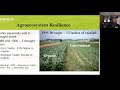
Reducing tillage in organic systems is key for weed control and soil health. Methods include crop rotation, less aggressive tillage, blind cultivation with tine weeders, and using roller crimpers, aiming for rotational no-till.
-
Details a farm's transition to reduced tillage (mostly no-till) with diverse crop rotations and multi-species cover crops. Discusses specific planter setups for heavy clay soils and techniques for interceding crops like soybeans into cereal rye and cover crops into corn.
Research
-
Organic farmer perceptions of reduced tillage: A Michigan farmer survey (opens in new window)
This study found: A survey of organic farmers in Michigan revealed that while many acknowledge that intensive tillage can harm soil, their interest in reducing it is mixed. Farmers use a variety of methods for preparing fields and controlling weeds, with vegetable growers often using smaller-scale tools like rototillers. Overall, farmers showed only moderate interest in adopting reduced tillage practices. The main reasons they saw for reducing tillage were better soil health and saving fuel. However, significant challenges include managing weeds, potential impacts on crop yields, dealing with crop residue, and getting crops established. Vegetable growers also noted a lack of equipment suited for their operations. The study suggests that focusing on practical solutions for weed control and developing affordable, adaptable equipment could help encourage farmers to gradually reduce how often and how intensely they till their soil.
Making Sense of the Differences
The transition to reduced tillage can initially lead to an increased reliance on herbicides for weed control, especially in conventional systems aiming for quick transitions. However, as soil biology improves and cover cropping strategies become more established, the overall need for herbicides often diminishes. Farms that prioritize diverse cover crop mixes, competitive cash crops, and integrated weed management approaches (including mechanical options like roller crimping) can significantly reduce their herbicide inputs over a 3-7 year period.