
Where do I start with regenerative practices?
To begin with regenerative agriculture, focus on observing your land's unique context and choosing one or two practices that address your most pressing needs, such as improving soil health or reducing erosion. Start with low-risk, high-impact approaches like introducing cover crops on a small acreage or adjusting livestock grazing patterns. Success is measured not by immediate transformation, but by gradual improvements in soil structure, water infiltration, and visible biodiversity within 1-3 years. While there are many valid entry points, many experts consider minimizing soil disturbance to be the most fundamental long-term principle.
Read More: Complete Description
Sources behind this view
Sources behind this view
 Videos & Podcasts
-
Adopting regenerative practices should start small and incrementally, focusing on soil health over short-term yields. Collaboration, strategic nutrient sourcing, and leveraging resources like Continuu
-
Adopts regenerative agriculture principles: minimize disturbance, keep living roots, use soil armor, integrate animals (livestock grazing, multi-species), and increase biodiversity. These practices bu

-
Transitioning to regenerative agriculture requires a whole-systems mindset, focusing on soil health principles: reduce tillage/compaction, increase diversity (plants, animals), eliminate bio-cides/fer

-
Regenerative agriculture emphasizes adaptive grazing with daily moves and high stock density to improve soil health, reduce synthetic inputs, and build soil carbon. Diversity, manure management, and c
 Community
-
Regenerative agriculture rebuilds soil organic matter and biodiversity through practices like cover cropping, reduced tillage, minimal artificial fertilizers, and regenerative grazing, ultimately impr
Read more (pp. 8-9) (opens PDF, pp. 8-9) permies.com -
Regenerative agriculture reverses soil harm by sequestering carbon through cover crops, no-till, compost, and crop rotation, improving soil health and resilience for both farms and home gardens.
Read more (opens in new window) ucanr.edu
 Research
-
Regenerative Agriculture: Restoring Ecosystems¢ Resilience and Productivity: A Review (opens in new window)
This study found: Regenerative agriculture builds soil health and ecosystem services through practices like no-till, cover crops, and diverse rotations. It increases soil organic matter, improves water infiltration, bo
-
Regenerative Agriculture: Insights and Challenges in Farmer Adoption (opens in new window)
This study found: Review of 7 regenerative agriculture practices (no-till, crop rotation, cover crops, etc.) highlights benefits and key adoption challenges like cost, farm size, and institutional barriers for scalable
-
Systematic review of regenerative farming: Addressing agricultural sustainability challenges (opens in new window)
This study found: Systematic review of 31 studies shows regenerative farming improves soil health, biodiversity, and carbon capture, aiding sustainability. Technology is key for adoption, but policy, farmer understandi
-
Regenerative agriculture for sustainable crop productivity: A comprehensive review (opens in new window)
This study found: Regenerative Agriculture revitalizes soil by minimizing disturbance, maximizing living roots, fostering diversity, and reducing synthetic inputs. It improves soil health, carbon sequestration, and cro
 From the Web
-
Regenerative farming rebuilds soil health through practices like cover cropping, no-till, rotational grazing, and composting, focusing on long-term life and resilience over short-term yields.
-
Regenerative agriculture requires intentional management and understanding of complex, non-linear biological systems, as traditional research and simple BMPs are insufficient. Progress is an ongoing j
Implementation Quick Profile
First Steps
- Observe your land: soil, climate, existing ecosystems.
- Identify your most pressing challenge (erosion, fertility).
- Choose 1-2 low-risk, high-impact practices.
- Start small on a dedicated trial area.
- Educate yourself and connect with peers.
Key Methods to Start
- Implement diverse cover crops on fallow land.
- Shift to rotational grazing with frequent paddock moves.
- Reduce tillage intensity (e.g., to strip-till).
- Begin composting organic waste materials.
- Increase plant diversity in crop rotations.
Timing & Sequence
- Plant cover crops after cash crop harvest.
- Adjust grazing moves based on forage regrowth.
- Incorporate compost before primary planting season.
- Sequence tillage reduction steps over 1-3 years.
- Monitor soil tests annually to guide adjustments.
System Integration
- Cover crops feed soil biology and livestock.
- Livestock manure enriches soil, drives fertility.
- Reduced tillage protects soil structure and life.
- Compost builds organic matter across the farm.
- Increased diversity enhances resilience and function.
Going Deeper
1
Getting Started: Observation and Planning
Before implementing any practice, dedicating time to observe your farm is paramount. This involves understanding your soil's current state through visual assessment (color, structure, presence of earthworms) and basic soil tests, which can range from $15-50 per sample....
Getting Started: Observation and Planning
Before implementing any practice, dedicating time to observe your farm is paramount. This involves understanding your soil's current state through visual assessment (color, structure, presence of earthworms) and basic soil tests, which can range from $15-50 per sample....
Before implementing any practice, dedicating time to observe your farm is paramount. This involves understanding your soil's current state through visual assessment (color, structure, presence of earthworms) and basic soil tests, which can range from $15-50 per sample. Note your microclimates, water flow patterns, and existing biodiversity. For instance, a farmer in the arid Western Cape of South Africa might observe wind erosion patterns and water scarcity, prioritizing soil cover and water-holding capacity. Conversely, a smallholder in the humid tropics of Malaysia might focus on preventing nutrient runoff and improving soil aeration. Planning should then outline realistic goals, a phased approach, and a small trial area (e.g., 0.5-2 ha or 1-5 acres) to test new methods before full-scale adoption. This initial planning phase is crucial for long-term success and should involve assessing available resources, including labor, capital, and equipment.
Sources behind this view
Sources behind this view
Community
-
To start farming, begin small with basic tools and a fenced plot for experimentation with permaculture techniques like hugel-mounds and composting. Prioritize observation and planting what you eat, ad
Read more (opens in new window) permies.com
2
Step-by-Step Process: Introducing Cover Crops
A practical approach to cover crops begins with selecting species appropriate for your climate and the desired outcomes. For example, if building soil fertility and suppressing weeds are key goals in a temperate climate, a mix of cereal rye (for fall growth and ground...
Step-by-Step Process: Introducing Cover Crops
A practical approach to cover crops begins with selecting species appropriate for your climate and the desired outcomes. For example, if building soil fertility and suppressing weeds are key goals in a temperate climate, a mix of cereal rye (for fall growth and ground...
A practical approach to cover crops begins with selecting species appropriate for your climate and the desired outcomes. For example, if building soil fertility and suppressing weeds are key goals in a temperate climate, a mix of cereal rye (for fall growth and ground cover) and crimson clover (for nitrogen fixation) planted in early autumn (September-October Northern Hemisphere, March-April Southern Hemisphere) is effective. Seed costs can range from $30-80/acre ($75-200/ha). Termination can be achieved through non-inversion tillage (like crimping or disking) or by allowing livestock to graze them, ideally 2-4 weeks before planting the subsequent cash crop. Observing increased earthworm activity and improved soil moisture retention after the cover crop decomposes are early indicators of success, often noticeable within 6-12 months.
Sources behind this view
Sources behind this view
Videos & Podcasts
-
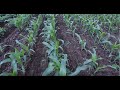
Cover crops are an 'investment crop,' not an expense, offering low-cost fertility and soil health benefits. They are managed with a flail mower, minimal tillage, bed shaping, and tarping for two weeks

-
Key factors for cover crop interceding include seed selection (species, mix, size), seeding rate, purpose, application method (homemade, aerial, drone, high clearance), and critical timing. Seed size

-
Keith Burns details the 'why' behind post-harvest cover crops: boosting biology, preventing erosion, weed control, nitrogen fixation, nutrient cycling, beneficial insect habitat, and forage. He stress

-
Implementing cover crops involves identifying resource concerns, fitting them into the cropping plan (considering herbicide restrictions and termination methods), checking insurance/government program
Community
-
Details cover crop termination methods, nutrient cycling (N scavenging/fixing, P availability), bio-controls, weed/pest/disease management, and specific mix recommendations. Emphasizes soil testing, r
Read more (pp. 10-20) (opens PDF, pp. 10-20) efotg.sc.egov.usda.gov -
Offers practical guidance on cover crop implementation, covering equipment, residue management, climate/weather considerations, establishment techniques, seeding methods (broadcast vs. drill), water m
Read more (pp. 8-10) (opens PDF, pp. 8-10) efotg.sc.egov.usda.gov -
Seven strategies accelerate cover crop ROI: managing weeds, grazing, addressing compaction, transitioning to no-till, improving soil moisture, managing nutrients (using legumes like Hairy Vetch/Austri
Read more (opens in new window) sustainableagriculture.net -
Utilize cover cropping (green manure) with species like clover, legumes, wheat, or rye to protect soil from erosion, fix nitrogen via *Rhizobium spp.*, improve soil structure, and support beneficial o
Read more (opens in new window) ucanr.edu
Research
-
Evaluating Cover Crops for Benefits, Costs and Performance within Cropping System Niches (opens in new window)
This study found: Review of cover crops highlights benefits (pest control, soil health, yield) and costs. Best species identified for different seasons/regions. Rye excels in winter, C4 grasses in summer. Legumes fix N
-
Optimizing cover crop practices as a sustainable solution for global agroecosystem services. (opens in new window)
This study found: Optimized cover crop strategies (long-term, no-till, legume/non-legume mix, residue mulch) significantly boost farm ecosystem services, including crop yields, carbon capture, and erosion control, whil
-
The agroforestry myth of sustainable cacao production: evidence from Madre de Dios, Peru (opens in new window)
This study found: Four-species cover crop mix increased Iowa soil carbon and beneficial root fungi by 35% over three years, with legumes contributing 45 lbs nitrogen/acre annually.
-
The Role of Cover Crops in North American Cropping Systems (opens in new window)
This study found: Cover crops offer multiple benefits in North American farming, including nitrogen fixation, erosion control, weed/pest management, and improved soil health through organic matter and reduced compactio
From the Web
-
Cover crops like cereal rye, turnips, and radishes are increasingly adopted, with selection based on climate and farm needs. They improve soil health, increase water retention, reduce fertilizer use b
-
Plan cover crop planting by assessing soil conditions and choosing species for specific windows: early fall (Sept) for overwintering grasses/Brassicas, or late winter/early spring for diverse species.
-
A guide by Marianne Sarrantonio details how to conduct on-farm cover crop trials, recommending starting with 2-5 species, using small plots, ordering small seed amounts with inoculants for legumes, an
-
Iowa farmer Mike Jackson details cover crop practices: ordering seed by July for discounts, using cereal rye (sometimes with oats) for soil health and weed control, drilling post-harvest, and adjustin
3
Step-by-Step Process: Implementing Rotational Grazing
Implementing rotational grazing can start with simple means. For a cattle rancher in the Argentine Pampas, this might mean using temporary electric fencing to divide a large pasture into 10-20 smaller paddocks, with movement occurring every 1-3 days. The investment in...
Step-by-Step Process: Implementing Rotational Grazing
Implementing rotational grazing can start with simple means. For a cattle rancher in the Argentine Pampas, this might mean using temporary electric fencing to divide a large pasture into 10-20 smaller paddocks, with movement occurring every 1-3 days. The investment in...
Implementing rotational grazing can start with simple means. For a cattle rancher in the Argentine Pampas, this might mean using temporary electric fencing to divide a large pasture into 10-20 smaller paddocks, with movement occurring every 1-3 days. The investment in portable fencing components might be $5-20 per acre ($12-50/ha) for a trial area. The key is to ensure adequate rest periods for pasture recovery, which can range from 20-60 days depending on season and growth rates. Monitoring pasture height regrowth to at least 15-20 cm (6-8 in) before re-grazing is a critical sign of photosynthetic recovery. Farmers often report improved forage quality and reduced parasite load in livestock within the first grazing season.
Sources behind this view
Sources behind this view
Videos & Podcasts
-
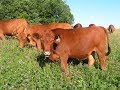
Learn rotational grazing through resources from experts like Greg Judy. Move cattle daily, assessing grass height to avoid overgrazing (leave ~10% standing). A rule of thumb is graze 60%, trample 30%.

-
Implementing rotational grazing began with converting a hayfield, using polywire, step-in posts, and a solar charger for paddocks. The initial two-day moves transitioned to daily moves, with flexibili

-
Greg Judy details rotational grazing on small acreage using temporary fencing and movable water. Key principles include grazing no more than the top third of grass, limiting paddock time to four days,

-
Explains rotational grazing principles, emphasizing that short grazing durations (one bite per plant) prevent overgrazing and promote healthy forage and soil, contrasting this with longer grazing peri
Community
-
Advocates for rotational/mob grazing by dividing 12.5 acres into 30 sub-pastures for daily moves, promoting a 40% legume, 40% grass, 10% medicinal, 10% weed pasture mix for soil health and parasite co
Read more (opens in new window) permies.com -
Manage rotational grazing by setting recovery (15-40+ days, adapting to region/season) and grazing periods (2-3 days). Aim to 'take half, leave half' for livestock and soil microbes. High stocking den
Read more (opens in new window) smallfarms.cornell.edu -
Effective pasture rotation uses smaller paddocks, frequent moves, and electric fencing, with water source availability being critical. Recommendations include learning from Joel Salatin and starting c
Read more (opens in new window) permies.com -
Increasing pasture numbers in rotational grazing boosts feed quantity (up to 75% harvest efficiency) and quality by utilizing vegetative growth stages and implementing rest periods. Maintaining 4 inch
Read more (opens in new window) smallfarms.cornell.edu
Research
-
Transitioning from conventional continuous grazing to planned rest-rotation grazing: A beef cattle case study from central Texas (opens in new window)
This study found: A 5-year Texas case study found planned rest-rotation grazing showed potential for more forage and better soil health on cultivated paddocks compared to continuous grazing, with similar overall profit
From the Web
-
This section details paddock setup, fencing, and water systems for rotational grazing. It provides seasonal adjustment guidelines for cool-season and warm-season grasses, emphasizing plant recovery pe
4
Step-by-Step Process: Reducing Tillage
Transitioning to reduced tillage requires careful consideration of equipment and cropping systems. A farmer in the Australian wheat belt, accustomed to intensive plowing, might first transition to secondary tillage tools like a chisel plow or a heavy tine harrow in year...
Step-by-Step Process: Reducing Tillage
Transitioning to reduced tillage requires careful consideration of equipment and cropping systems. A farmer in the Australian wheat belt, accustomed to intensive plowing, might first transition to secondary tillage tools like a chisel plow or a heavy tine harrow in year...
Transitioning to reduced tillage requires careful consideration of equipment and cropping systems. A farmer in the Australian wheat belt, accustomed to intensive plowing, might first transition to secondary tillage tools like a chisel plow or a heavy tine harrow in year one, costing $2,000-10,000 for used equipment. In year two, they might experiment with strip-tillage equipment that only disturbs the seedbed zone, costing $5,000-25,000. The goal is to minimize the disruption of soil aggregates and the soil food web. Success metrics include observing increased soil organic matter (aiming for an annual increase of 0.1-0.5%, as rates of SOM accumulation are variable and depend on climate and management), better water infiltration rates (doubling in some cases over 3-5 years), and reduced soil erosion.
Sources behind this view
Sources behind this view
Videos & Podcasts
-
Switching to no-till requires new equipment (tractors, drills), different residue management (straw/chaff), reliance on chemical fallow for weeds, and a change in mindset, often supported by governmen
-
Transitioning to 100% no-till farming requires a gradual, multi-year approach (3-5 years) to allow soil healing and structure formation. Benefits include reduced erosion, improved water infiltration b
-
Adopting no-till and cover crops reduces production costs by an estimated $31/acre over 3-5 years through lower fuel use, reduced tillage equipment needs, and decreased reliance on inputs, while impro

-
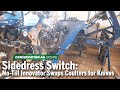
Transitioning from full tillage to no-till or strip-till in North Central Iowa reduces erosion and rebuilds soil organic matter, leading to spongier soil, better nutrient release, and increased land v
Community
-
Goranson Farm in coastal Maine reduced tillage by adopting strip tillage, using Yeomans plows to break compaction and create seedbeds, preserving soil organic matter and reducing labor by 75%.
Read more (opens in new window) smallfarms.cornell.edu -
DeJager Farms in Chowchilla, CA, uses minimum tillage (subsoiler, excelerator) on 8000 acres of corn-wheat rotation, increasing yields by up to 3 tons/acre and improving soil health. Key is managing c
Read more (opens in new window) ucanr.edu -
Farmers in California are cutting production costs by $50-$140/acre through reduced tillage, strip-tillage, and no-till practices, leading to higher yields and reduced water use.
Read more (opens in new window) ucanr.edu -
Reduced tillage minimizes soil disturbance through targeted methods, aiming for less intensity and depth, and can lead to no-till adoption. Implementation varies by farm size, soil type, equipment, an
Read more (opens in new window) smallfarms.cornell.edu
Research
-
Conventional, Minimum/Reduced, and Zero Tillage: Implications for Soil and Water Conservation and Residue Management in Global and Indian Contexts (opens in new window)
This study found: Zero tillage, especially with Happy Seeders, improves soil structure, water retention, and yields by up to 17% while cutting costs and emissions. Success depends on local adaptation and integrated wee
-
A Strip-Till One-Pass System as a Component of Conservation Agriculture (opens in new window)
This study found: A strip-till one-pass system improved soil structure, boosted soil life (earthworms, microbes) five-fold, and reduced erosion, labor, fuel, and CO2 emissions compared to traditional ploughing.
-
Impact of reduced tillage and crop residue management on soil properties and crop yields in a long-term trial in western Kenya (opens in new window)
This study found: An 8-year trial in Kenya found conventional tillage with incorporated residue yielded more corn and higher soil organic matter than reduced tillage with surface residue, though reduced tillage improve
-
Development of reduced tillage systems in organic farming in Europe (opens in new window)
This study found: European organic farmers are developing reduced tillage methods to cut fuel use and build soil health. These practices can improve soil carbon, microbial activity, and structure, but may face challeng
From the Web
-
Reducing tillage saves farmers money on fuel, labor, and maintenance (up to $30/acre) and improves farmer health by minimizing Whole-Body Vibration exposure. Overcoming initial equipment costs and ado
5
Step-by-Step Process: Making and Applying Compost
Composting is a process of controlled decomposition. For a smallholding in Europe, creating a compost pile using crop residues, animal manure, and kitchen scraps can begin with a simple wooden or pallet enclosure, costing under $200. The key is maintaining the right...
Step-by-Step Process: Making and Applying Compost
Composting is a process of controlled decomposition. For a smallholding in Europe, creating a compost pile using crop residues, animal manure, and kitchen scraps can begin with a simple wooden or pallet enclosure, costing under $200. The key is maintaining the right...
Composting is a process of controlled decomposition. For a smallholding in Europe, creating a compost pile using crop residues, animal manure, and kitchen scraps can begin with a simple wooden or pallet enclosure, costing under $200. The key is maintaining the right carbon-to-nitrogen ratio (around 25-30:1), moisture levels (damp sponge consistency), and aeration (turning the pile every 2-4 weeks). The composting process typically takes 3-6 months. Applying finished compost at rates of 10-20 tonnes/ha (4-8 tons/acre) can immediately improve soil aeration and water-holding capacity. Visible improvements in crop vigor and soil texture can be observed in the first growing season after application.
Sources behind this view
Sources behind this view
Videos & Podcasts
-
Compost making requires a 30:1 C:N ratio, 50% moisture, oxygen, and temperature control (130-160°F initially). Turning piles weekly as temps drop aids sterilization and microbial activity. Longer comp
-
Compost application rates are context-dependent, with 1 inch annually recommended for subsoil. Incorporating compost into the topsoil using tools like a tilther is preferred for nutrient availability
-
Compost is manufactured using high-carbon materials, layered with nitrogen sources and rock minerals in a slurry, with minimal turning to favor fungal decomposition. This 'no-till compost' is surface-

Community
-
Guide to home composting kitchen and yard waste, emphasizing a 30:1 C:N ratio using 'browns' (carbon) and 'greens' (nitrogen). Details fast-acting pile construction, moisture (50%), temperature (120-1
Read more (opens in new window) ucanr.edu -
Successful composting requires managing aeration, moisture (45-60%), volume (min 3x3x3 ft), particle size (1-3 in), and a 30:1 C:N ratio of browns and greens. Compost is ready in 3-6 months when dark,
Read more (opens in new window) ucanr.edu -
Provides practical steps for creating biologically active compost and applying compost extracts/teas, emphasizing ingredient diversity, temperature control, and using a microscope to assess soil life
Read more (opens in new window) permies.com -
Recommends a three-tiered composting system for efficiency, emphasizing aerobic conditions, moisture, and temperature management. Suggests 90% completion is sufficient for soil amendments, with potent
Read more (opens in new window) permies.com
Research
-
A Case Study on Role of Microbial Consortia Assisted Decomposition of Agro-waste for Improvement of Soil Organic Carbon – A Step Towards Sustainable Development (opens in new window)
This study found: A microbial mix and cow manure sped up farm waste composting to 30-45 days, boosting soil organic matter by 13-25% in two seasons on 15 farms. Developed for sustainable farming.
-
Evolution of Maize Compost in a Mediterranean Agricultural Soil: Implications for Carbon Sequestration (opens in new window)
This study found: Corn compost can increase soil carbon in Mediterranean soils, but its maturity affects how much carbon is stored versus decomposed. Newer compost appears better for long-term carbon storage.
-
Recycling of Organic Wastes through Composting: Process Performance and Compost Application in Agriculture (opens in new window)
This study found: Composting organic waste creates a valuable soil amendment that improves fertility and can suppress diseases. The review covers compost quality, application methods, and potential downsides of over-ap
-
Recycling of Organic Wastes through Composting: Process Performance and Compost Application in Agriculture (opens in new window)
This study found: Composting organic wastes creates a valuable soil amendment that improves fertility and can suppress diseases. The review covers compost quality, application, and potential negative effects of overuse
From the Web
-
Explains composting as a biological process for soil and water conservation, detailing its benefits for soil fertility and structure, and providing steps for planning, the composting process, and appl
6
Seasonal Timing: Year-Round Management
Regenerative practices require a shift in seasonal thinking. In early spring (March-April Northern Hemisphere, September-October Southern Hemisphere), the focus shifts to seedbed preparation for cash crops, ideally preceded by a cover crop or managed residue. This is...
Seasonal Timing: Year-Round Management
Regenerative practices require a shift in seasonal thinking. In early spring (March-April Northern Hemisphere, September-October Southern Hemisphere), the focus shifts to seedbed preparation for cash crops, ideally preceded by a cover crop or managed residue. This is...
Regenerative practices require a shift in seasonal thinking. In early spring (March-April Northern Hemisphere, September-October Southern Hemisphere), the focus shifts to seedbed preparation for cash crops, ideally preceded by a cover crop or managed residue. This is also an ideal time to plan for livestock movement through pastures, anticipating peak forage growth. Late spring and early summer (May-July Northern Hemisphere, November-January Southern Hemisphere) are critical for actively growing cash crops and pastures, requiring careful grazing management and monitoring for pests and diseases, which often become less problematic as the ecosystem matures. In late summer and autumn (August-October Northern Hemisphere, February-April Southern Hemisphere), harvest allows for the sowing of winter cover crops or preparation for perennial plantings. Winter months (December-February Northern Hemisphere, June-August Southern Hemisphere) are for soil rest, continued livestock grazing on dormant forages or provided feed, and planning for the coming year, with minimal soil disturbance.
Sources behind this view
Sources behind this view
Videos & Podcasts
-
Timeliness is critical for planting mixed-species cash crops, leveraging seasonal resets (summer/winter) and distinct weed cycles. Missing the planting window means a year's wait.

From the Web
-
Contrasts spring grazing management in northern (dry, hot) and southern (growing season) regions. Emphasizes keeping pastures vegetative in the south to maximize feed quality, extend the green season,
7
Equipment and Infrastructure Considerations
Starting regenerative practices often requires less specialized, and sometimes less expensive, equipment than conventional methods. For cover cropping, existing planters or drills can often be adapted, or low-cost roller-crimpers can be utilized for termination. Basic...
Equipment and Infrastructure Considerations
Starting regenerative practices often requires less specialized, and sometimes less expensive, equipment than conventional methods. For cover cropping, existing planters or drills can often be adapted, or low-cost roller-crimpers can be utilized for termination. Basic...
Starting regenerative practices often requires less specialized, and sometimes less expensive, equipment than conventional methods. For cover cropping, existing planters or drills can often be adapted, or low-cost roller-crimpers can be utilized for termination. Basic electric fencing, costing $0.50-2.00 per meter ($0.15-0.60 per foot) for wire and insulators, is essential for rotational grazing. For tillage reduction, investments might range from modifying existing equipment ($500-2,000) to acquiring specialized tools like strip-till units or no-till drills ($5,000-30,000+). Composting infrastructure can be as simple as a few pallets or as complex as a windrow turner machine ($10,000-50,000+), depending on the scale. Support for equipment acquisition is sometimes available through regional agricultural programs.
Sources behind this view
Sources behind this view
Videos & Podcasts
-
Transitioning to regenerative agriculture can be cost-effective by starting with basic rotational grazing principles and viewing infrastructure upgrades as asset investments. Tools like Myograzing aid

-
Century is integrating soil disturbance reduction (saving £30-£100+/hectare), cover crops, and input reduction (improving nitrogen use efficiency to 92%) across its farms, utilizing grants and explori

8
Common Mistakes and Troubleshooting
A common mistake is trying to implement too many practices too quickly, leading to overwhelm and potential failure. Troubleshooting involves returning to the core principles: soil health, biodiversity, and water cycles. If cover crops fail to establish, check seed...
Common Mistakes and Troubleshooting
A common mistake is trying to implement too many practices too quickly, leading to overwhelm and potential failure. Troubleshooting involves returning to the core principles: soil health, biodiversity, and water cycles. If cover crops fail to establish, check seed...
A common mistake is trying to implement too many practices too quickly, leading to overwhelm and potential failure. Troubleshooting involves returning to the core principles: soil health, biodiversity, and water cycles. If cover crops fail to establish, check seed quality, planting depth, and soil moisture; consider adjusting termination timing or method like crimping instead of disking. In rotational grazing, if pastures aren't recovering, the rest period may be too short or stocking density too high; lengthen rest or reduce herd size temporarily. If soil structure isn't improving with reduced tillage, ensure biological activity is being fostered—this may involve incorporating livestock or compost. Patience is key; visible, measurable improvements often take 2-5 years to manifest consistently.
Sources behind this view
Sources behind this view
Videos & Podcasts
-
Regenerative agriculture transitions fail due to incomplete principle implementation, wrong cover crop choices, improper stocking rates, and trying too much too soon. View setbacks as learning opportu
-
Overgrazing and understocking create weed issues and reduce forage biomass. Adaptive grazing, by contrast, can double forage production in two years by addressing root causes instead of treating sympt
-
Soil health is improved through managed grazing and 100% no-till, with cover crops (like turnips, radishes, sorghum-sudan) serving as tillage tools, compaction breakers, and nutrient harvesters.
-
Avoid 'whole hog' regenerative changes; start with test plots for practices like cover crops (ryegrass) and observe impacts on carbon/nitrogen. Gradual learning, supported by peers, is key to successf
9
Monitoring and Adjustment
Effective monitoring for regenerative agriculture focuses on ecological indicators more than just yield. Regularly observe soil structure (e.g., tendency to form clods, ease of root penetration), water infiltration rates (e.g., how quickly water soaks into the soil after...
Monitoring and Adjustment
Effective monitoring for regenerative agriculture focuses on ecological indicators more than just yield. Regularly observe soil structure (e.g., tendency to form clods, ease of root penetration), water infiltration rates (e.g., how quickly water soaks into the soil after...
Effective monitoring for regenerative agriculture focuses on ecological indicators more than just yield. Regularly observe soil structure (e.g., tendency to form clods, ease of root penetration), water infiltration rates (e.g., how quickly water soaks into the soil after rain), and the presence of beneficial insects and soil organisms (like earthworms). Soil organic matter levels should be tracked with regular soil tests, aiming for an increase of 0.1-0.5% annually. For livestock operations, pasture biomass and forage quality assessments are crucial. These observations inform necessary adjustments to grazing rotations, cover crop mixes, or tillage strategies. For instance, if earthworm populations decline after a tillage operation, it signals a need to further reduce soil disturbance.
Sources behind this view
Sources behind this view
Videos & Podcasts
-
Planning, monitoring, and adapting are crucial for soil health. Regenerative practices (no-till, cover crops, grazing) significantly improve soil infiltration and water-holding capacity compared to co

-
Monitoring is the best practice, proven effective even during drought in California, showing significant soil carbon buildup (7% in top 10cm, 11% in 11-25cm). Paddock assessments are critical first st

-
Key regenerative tools include finding diverse mentors, consistent observation with photography, landrace seed breeding, using a microscope to view microbes, and conducting soil tests. Management deci
Research
-
Regenerative Agriculture: Restoring Ecosystems¢ Resilience and Productivity: A Review (opens in new window)
This study found: Regenerative agriculture builds soil health and ecosystem services through practices like no-till, cover crops, and diverse rotations. It increases soil organic matter, improves water infiltration, bo
10
Scaling Up and Integration
Once initial practices show promise on a trial area, scaling up involves a gradual transition across the entire operation. This might mean expanding cover cropping to all fields, investing in larger or more efficient equipment for reduced tillage, or redesigning an...
Scaling Up and Integration
Once initial practices show promise on a trial area, scaling up involves a gradual transition across the entire operation. This might mean expanding cover cropping to all fields, investing in larger or more efficient equipment for reduced tillage, or redesigning an...
Once initial practices show promise on a trial area, scaling up involves a gradual transition across the entire operation. This might mean expanding cover cropping to all fields, investing in larger or more efficient equipment for reduced tillage, or redesigning an entire pasture system for intensive rotational grazing. Integration is where regenerative agriculture truly shines. Cover crops can be grazed by livestock, providing their own feed while building soil. Livestock manure, composted or directly applied, replenishes soil nutrients and organic matter. Reduced tillage protects the soil ecosystem built by these practices, leading to a synergistic effect where each practice enhances the benefits of others. This systemic approach builds resilience against climate variability and market fluctuations.
Sources behind this view
Sources behind this view
Videos & Podcasts
-
Regenerative agriculture emphasizes adaptive grazing with daily moves and high stock density to improve soil health, reduce synthetic inputs, and build soil carbon. Diversity, manure management, and c
-
Adopting regenerative practices should start small and incrementally, focusing on soil health over short-term yields. Collaboration, strategic nutrient sourcing, and leveraging resources like Continuu
-
Livestock integration is key to soil health, requiring short exposure and long rest grazing to avoid compaction. Creative solutions like 'stacking fiefdoms' allow integration without ownership, creati
-
Integrating livestock into no-till cover crops accelerates soil health improvements by feeding biology, increasing resilience, and generating revenue, though it requires patience and infrastructure.
Research
-
Regenerative Agriculture: Restoring Ecosystems¢ Resilience and Productivity: A Review (opens in new window)
This study found: Regenerative agriculture builds soil health and ecosystem services through practices like no-till, cover crops, and diverse rotations. It increases soil organic matter, improves water infiltration, bo
-
Managing Grazing to Restore Soil Health, Ecosystem Function, and Ecosystem Services (opens in new window)
This study found: Properly managed grazing animals can reverse environmental damage. Regenerative practices, like Adaptive Multi-Paddock (AMP) grazing, boost soil health, increase soil carbon, reduce erosion, and enhan
-
FORAGES AND PASTURES SYMPOSIUM: COVER CROPS IN LIVESTOCK PRODUCTION: WHOLE-SYSTEM APPROACH: Managing grazing to restore soil health and farm livelihoods1 (opens in new window)
This study found: Regenerative grazing management is key to sustainable, climate-resilient farms. It restores soil health, enhances ecosystem services like carbon capture and water infiltration, and improves farm profi
-
Regenerative Agriculture: Insights and Challenges in Farmer Adoption (opens in new window)
This study found: Review of 7 regenerative agriculture practices (no-till, crop rotation, cover crops, etc.) highlights benefits and key adoption challenges like cost, farm size, and institutional barriers for scalable
From the Web
-
Five steps to regenerative agriculture: Holistic Planned Grazing, no-till farming, planting diverse cover crops/interseeding, using compost/inoculants (with caution), and incorporating silvopasture/wo
11
Regional Adaptations
Regenerative practices require adaptation to local conditions. In the semi-arid prairies of North America, focus is on drought-tolerant cover crops like sorghum-sudangrass or hairy vetch, and very conservative grazing to maintain soil cover and moisture. In the humid...
Regional Adaptations
Regenerative practices require adaptation to local conditions. In the semi-arid prairies of North America, focus is on drought-tolerant cover crops like sorghum-sudangrass or hairy vetch, and very conservative grazing to maintain soil cover and moisture. In the humid...
Regenerative practices require adaptation to local conditions. In the semi-arid prairies of North America, focus is on drought-tolerant cover crops like sorghum-sudangrass or hairy vetch, and very conservative grazing to maintain soil cover and moisture. In the humid tropics of Brazil, managing rapid biomass growth and preventing nutrient leaching is key, often involving fast-growing cover crops and intensive grazing rotations to accelerate nutrient cycling. For smallholders in East Africa, integrating livestock with grain production, using locally adapted cover crops, and building fertility through composting with limited resources are vital. Even within a large country, differences matter: a wheat farmer in Western Australia will have different needs and solutions than one in the fertile Murray-Darling Basin. Prioritizing local knowledge and experimenting with climate-appropriate species and methods is essential.