Big Bluestem
Big bluestem is primarily used as a resilient forage in regenerative grazing systems, particularly in native warm-season grass mixes. Its integration is key to systems that emphasize adaptive grazing, with farmers like Greg Judy noting its return due to adequate rest periods, allowing for plant-driven recovery rather than calendar-based management. This aligns with practices like rotational grazing, where extended rest periods are crucial for plant health and soil building. Rich Grimm's experience demonstrates how prescribed burning can promote the regrowth of big bluestem, showcasing its role in restoring prairie ecosystems. Farmers are re-establishing it on former cropland, as Ken Miller plans, for diverse pasture mixes, highlighting its value in building soil health and potentially sequestering carbon. While not explicitly mentioned as a nitrogen fixer, its presence in diverse, non-fertilized systems suggests a role in nutrient cycling. Farmer experiences indicate success when ample recovery time is provided, especially in semi-arid conditions or during dry periods, preventing overgrazing and ensuring long-term productivity.
For a full botanical description see: Plants For A Future(opens in new window) (external link)
Regenerative Quick Profile
All recommendations assume integrated, regenerative practices—not conventional inputs.
Climate & Soil Fit
Climate: Tropical Rainforest, Tropical Monsoon, Tropical Savanna, Hot Semi-Arid (Steppe), Cold Semi-Arid (Steppe), Hot Desert, Cold Desert, Humid Subtropical, Oceanic (Maritime Temperate), Hot-Summer Mediterranean, Warm-Summer Mediterranean, Monsoon-Influenced Humid Subtropical, Subtropical Highland, Hot-Summer Continental, Warm-Summer Continental, Subarctic, Monsoon-Influenced Hot-Summer Continental, Tundra
Zones: USDA 4-9, Australian Zones 1-14
Optimal Soil: Loam Soil
System Role & Functions
Primary: Forage Integration
Secondary: Cover Crop System, Soil Remediation
Key Benefits: Multi-benefit value, Climate adaptable, Drought tolerant
Management Level
Experience: Beginner-Friendly
Maintenance: Very low maintenance - As a native prairie grass adapted to naturally occurring fertility levels, its robust growth requires minimal intervention after establishment, integrating seamlessly into low-input systems.
Value Streams
- Forage production
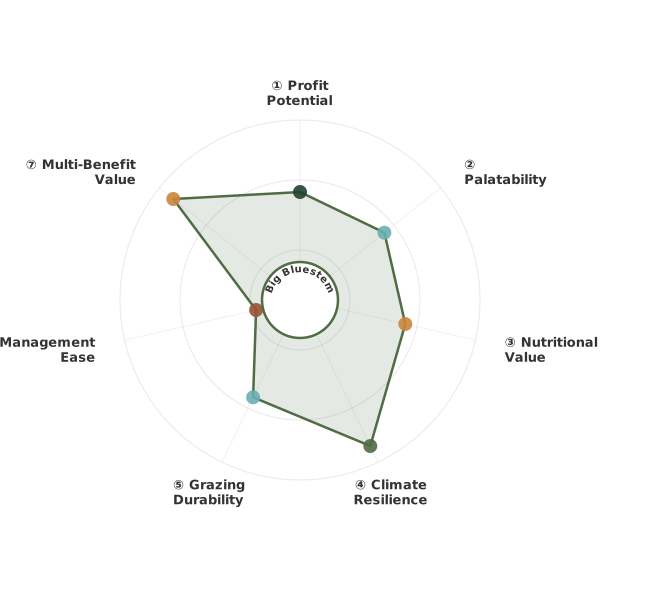
How These Traits Are Calculated
Trait dimensions are ordered clockwise starting from the top of the chart (12 o'clock position):
1. Profit Potential
Economic returns from hay sales, grazing value, and system contributions
WHAT: Synthesizes direct revenue potential (hay sales or grazing service value) with system contributions (nitrogen fixation, reduced supplement needs) into net economic value. Captures both cash income and cost savings.
WHY: Forage profitability comes from two sources—direct sales (hay, haylage) or indirect value (grazing services supporting livestock production). High-value forages provide $300-600/acre in combined revenue and savings versus $100-200/acre for lower-value options. This determines whether forage enterprises are viable versus purchasing feed.
HOW: Scored via LLM synthesis of economics data (hay yields, prices, grazing value), timeline considerations (establishment costs, productive lifespan), and system value (nitrogen contributions, supplement replacement). Exceptional (3.0): High yields with premium pricing or exceptional grazing value plus nitrogen fixation. Typical (2.0): Moderate returns. Limited (1.0): Low yields, commodity pricing, or minimal system contributions.
2. Palatability
Livestock preference and voluntary consumption rates
WHAT: Measures how eagerly livestock consume the forage—preference ranking when choices are available. Highly palatable forages are grazed first and completely; limited palatability means animals avoid unless no alternatives exist.
WHY: Palatability directly determines voluntary intake, which drives animal performance. High-palatability forages support faster weight gain and higher milk production because animals eat more. Low-palatability forages reduce performance and waste productive potential—animals selectively graze preferred species and leave unpalatable plants ungrazed.
HOW: Ratings based on the palatability trait documenting livestock selection preference. Exceptional (3.0): Preferentially selected, high sugar content, tender growth eagerly consumed (orchardgrass, white clover, ryegrass). Typical (2.0): Readily consumed when available. Limited (1.0): Avoided unless no other options (coarse stems, bitter compounds, low digestibility).
3. Nutritional Value
Protein content and forage quality for livestock growth and production
WHAT: Measures protein content as the primary indicator of forage nutritional quality. High-protein forages (>18%) support rapid growth and high milk production; low-protein forages (<12%) require supplementation for production animals.
WHY: Protein is the most expensive supplement in livestock diets ($0.40-0.60/lb). Forages with exceptional protein content eliminate or reduce supplement costs while supporting maximum animal performance. High-quality forage can save $200-400/cow/year in purchased feed versus low-protein options.
HOW: Ratings based on the protein_content trait. Exceptional (3.0): High protein (>18%) supporting rapid weight gain or high milk production (alfalfa, clovers, young grasses). Typical (2.0): Moderate protein (12-18%) for maintenance and moderate production (mature grasses). Limited (1.0): Low protein (<12%) requiring supplementation for production animals (mature warm-season grasses, low-fertility forages).
4. Climate Resilience
Weighted: drought tolerance (60%) + climate adaptability (40%)
WHAT: Combines drought tolerance (primary climate stressor for forages) with overall climate adaptability (temperature range, geographic flexibility). Resilient forages survive extended dry periods and diverse weather patterns.
WHY: Drought is the most common forage crisis—dry years can cut production 50-80% and force costly hay purchases or herd reductions. Drought-tolerant forages maintain productivity through dry spells, reducing feed costs and providing grazing when less-resilient options fail. Geographic adaptability allows forage systems to work across farm regions.
HOW: Weighted formula prioritizes drought tolerance (60% weight) as primary stressor, with climate adaptability (40% weight) for temperature and general flexibility. Exceptional (3.0): Survives extended drought (6+ weeks) with minimal production loss and works across diverse climates. Typical (2.0): Moderate drought and climate tolerance. Limited (1.0): Drought-sensitive or narrow climate requirements.
5. Grazing Durability
Weighted: trampling tolerance (70%) + seasonal availability (30%)
WHAT: Combines grazing tolerance (resistance to trampling and frequent defoliation) with seasonal availability (timing and duration of productive growth). Durable forages handle intensive rotational grazing and provide consistent seasonal production.
WHY: Grazing tolerance determines management system viability. Tolerant forages allow intensive rotational grazing or mob grazing for maximum animal performance and pasture health. Intolerant forages are hay-only or require long rest periods. Seasonal availability indicates production timing—year-round, seasonal gaps, or narrow windows.
HOW: Weighted formula prioritizes grazing tolerance (70% weight) for management system determination, with seasonal availability (30% weight) for production timing. Exceptional (3.0): Handles intensive rotational grazing with consistent seasonal production. Typical (2.0): Moderate tolerance and availability. Limited (1.0): Hay-only species or narrow seasonal production windows.
6. Management Ease
Weighted: establishment ease (50%) + low maintenance needs (50%)
WHAT: Combines establishment difficulty (germination, stand establishment) with ongoing maintenance requirements (fertility, weed control, renovation needs). Easy forages establish reliably and persist without intensive management.
WHY: Pasture establishment is expensive ($150-400/acre) and risky. Easy-to-establish forages reduce stand failure risk and provide quicker returns. Low-maintenance forages reduce annual input costs and labor, improving long-term profitability of grazing systems.
HOW: Weighted formula balances establishment ease (50% weight) for startup success and inverted maintenance intensity (50% weight) for ongoing care. Exceptional (3.0): Fast germination, reliable stand establishment, minimal fertility/weed management needs (white clover, orchardgrass). Typical (2.0): Moderate establishment and care requirements. Limited (1.0): Difficult establishment or intensive maintenance (heavy fertility, frequent renovation, weed competition).
7. Multi-Benefit Value
Ecosystem services beyond forage—nitrogen fixation, pollinator support, wildlife habitat
WHAT: Measures ecosystem services provided beyond livestock nutrition. Multi-benefit forages contribute nitrogen fixation (legumes), pollinator support (flowering species), wildlife habitat, soil building, erosion control, and biodiversity support.
WHY: Forage systems can either extract from farm ecosystems or contribute to them. Nitrogen-fixing legumes (clovers, alfalfa) provide $80-150/acre/year worth of fertility for companion grasses and following crops. Flowering forages support pollinators critical for fruit/vegetable crops. These service-stacking forages deliver total system value beyond livestock production.
HOW: Ratings based on the multi_benefit_value trait documenting service diversity. Exceptional (3.0): Multiple significant benefits (legumes fixing 80-150 lbs N/acre/year + pollinator support + wildlife forage). Typical (2.0): Some ecosystem contributions. Limited (1.0): Single-purpose forage with minimal ecosystem services beyond grazing value.
Ratings are based on documented performance in regenerative systems, not conventional high-input scenarios. All traits assume integrated management practices focused on soil health and ecosystem services.
5
Management & Care Requirements
Integration guidance, maintenance needs, and care practices
Management & Care Requirements
Integration guidance, maintenance needs, and care practices
How to Integrate This Plant
Big bluestem, a native warm-season grass, is highly valuable for forage integration in regenerative systems, primarily serving as a high-quality forage source. Its integration is compatible with practices like mob grazing and diverse pasture mixes. This plant thrives in systems that provide adequate rest periods between grazing events, allowing for robust regrowth. In the first 1-2 years, it establishes and begins to provide ground cover, contributing to erosion control. By years 3-5, it becomes a significant component of the forage base, supporting livestock during hot summer months when cool-season grasses may slow down. Its deep root system enhances soil health and water infiltration over time. The total system value extends beyond direct forage, as big bluestem contributes to soil carbon sequestration, provides habitat for wildlife, and can improve water cycles through its extensive root structure, enhancing overall farm resilience.
Integration Practices & Management
Regenerative farmers integrate big bluestem (*Andropogon gerardii*) primarily as a component of diverse, native warm-season pastures, enhancing resilience and forage quality. Establishment often involves seeding into minimal tillage systems, though specific rates and timings are not detailed in the provided sources. However, its return is noted in systems allowing adequate rest periods between grazing events. Big bluestem is well-suited to rotational and adaptive grazing systems. Farmers adjust grazing frequency based on plant growth, moving cattle faster during rapid spring growth and slower during hot, dry periods when growth decelerates. This adaptive management ensures sufficient rest for plant recovery, preventing overgrazing. In some cases, the return of big bluestem has been observed after implementing such grazing strategies on previously degraded land, with high-quality forages reappearing over time. While specific termination strategies for big bluestem are not detailed, the focus on allowing plant recovery implies natural regeneration is preferred over aggressive termination methods. Management considerations include fertility needs, though the sources do not elaborate. Competition management is implicitly addressed through grazing strategies that promote the recovery of native species. Integration with cash crops is not mentioned in the provided text. Farmer experiences highlight its resurgence under appropriate grazing management, contributing to productive perennial pastures.
Management Profile
Maintenance Intensity: Ideally Suited - As a native prairie grass adapted to naturally occurring fertility levels, its robust growth requires minimal intervention after establishment, integrating seamlessly into low-input systems.
Sources behind this view
 Videos & Podcasts
-
Improving soil health through practices like longer grazing rest periods and taller grazing encourages the natural emergence of diverse plant species, such as big bluestem, and increases mycorrhizal f

-
Greg Judy of Green Patches Farm details grazing management with diverse forages like big bluestem, emphasizing keeping land covered with no-till practices to maximize rainwater capture and soil health
8
Learn More
Why farmers use this plant and additional resources
Learn More
Why farmers use this plant and additional resources
Why Regenerative Farmers Use This Plant
Big bluestem is a highly resilient and productive grass that offers substantial benefits for livestock, soil health, and overall farm resilience.
Forage and Grazing: As a warm-season grass, big bluestem provides high-quality forage during the summer months when cool-season grasses may decline in productivity due to heat and drought. It begins active growth later in spring than cool-season grasses and continues to provide nutritious forage well into the summer and early fall.
- Carrying Capacity: Under adaptive multi-paddock or rotational grazing, it can support substantial livestock carrying capacities, typically ranging from 1.5 to 3 Animal Units per acre (3.7 to 7.4 AU/ha) during its peak growing season, depending on rainfall and management intensity.
- Forage Quality: When grazed at the vegetative stage, it offers excellent nutritional value, typically providing 10-18% crude protein and high Total Digestible Nutrients (TDN) around 60-65%. This supports robust livestock weight gain and milk production. For example, cattle grazing on well-managed big bluestem pastures in its native range have been observed to gain 1.5-2.5 lbs/day (0.7-1.1 kg/day) during the summer months.
- Grazing Season Extension: Big bluestem has excellent potential for stockpiling, where fall growth is allowed to accumulate. This "stockpiled forage" can maintain crude protein levels above 8-12% well into winter in suitable climates, potentially providing 60-90 additional grazing days and reducing the need for costly hay feeding.
Soil Health and Ecosystem Services: The most significant benefit of big bluestem is its extensive root system, which can reach depths of 6-15 feet (1.8-4.5 meters) or more. This deep rooting profoundly impacts soil health:
- Soil Structure and Water Infiltration: The dense root network improves soil aggregation, enhances water infiltration, and increases soil water-holding capacity, making pastures more drought-tolerant.
- Carbon Sequestration: Big bluestem is a prolific biomass producer, often yielding 4,000 to 8,000 lbs/acre (4,480 to 8,960 kg/ha) of dry matter annually. This substantial above-ground and below-ground biomass decomposition enriches the soil with organic matter, sequestering significant amounts of atmospheric carbon deep within the soil profile.
- Erosion Control: Its dense stands are highly effective at preventing soil erosion by wind and water, protecting valuable topsoil, particularly on sloped terrain.
- Nutrient Cycling: The improved soil structure and increased organic matter enhance nutrient cycling and reduce the reliance on synthetic fertilizers.
Biodiversity and Resilience: As a native perennial, big bluestem requires minimal external inputs once established, reducing reliance on synthetic fertilizers and pesticides. Its dense stands provide crucial habitat and food sources for a variety of native grassland birds and beneficial insects, including pollinators. When integrated into crop rotations or pasture mixes, it can help break pest and disease cycles and improve overall biodiversity within the agricultural landscape.
Regional Success: Big bluestem has demonstrated success across various regenerative farming landscapes:
- North America: In the Great Plains and Midwest United States, it forms the backbone of highly productive cattle ranches and is often planted in pasture mixes, buffer strips, or used in pasture renovations to revitalize degraded land. Canadian prairie provinces utilize its cold tolerance for successful establishment and grazing.
- Australia: Its drought tolerance makes it a valuable component in dryland grazing systems, particularly in southern states with cooler winters, to provide summer grazing in mixed pastures.
- Europe: Farmers are increasingly reintroducing native grasses like big bluestem into ley pastures and conservation areas to enhance soil health and biodiversity.
- South America: Its potential is being explored in pasture renovation projects and silvopasture systems in temperate regions, offering a robust, deep-rooted alternative to annual forages.
Sources behind this view
Videos & Podcasts
-
Greg Judy of Green Patches Farm details grazing management with diverse forages like big bluestem, emphasizing keeping land covered with no-till practices to maximize rainwater capture and soil health
-
Recommends incorporating 25-35% warm-season grasses like big bluestem for summer grazing, which provides palatable forage and allows cool-season grasses like fescue to rest, while cautioning against o