Big Sagebrush
Available excerpts suggest its role in native ecosystem dynamics relevant to regenerative agriculture. Studies indicate that large herbivores, such as those managed in rotational grazing systems, influence fire behavior in its habitat, potentially creating fire refugia. This interaction is crucial for maintaining prairie health. Furthermore, research has explored how *Artemisia tridentata* vegetation impacts soil carbon mineralization, a key indicator of soil health and carbon sequestration potential. Though direct applications as a cover crop, nitrogen fixer, or primary forage are not detailed in these excerpts, its presence in mixed-grass prairie systems suggests a role in supporting biodiversity and soil carbon cycling within grazing landscapes. Further research would be needed to explore its direct integration into more conventional regenerative cropping or polyculture systems. The provided data highlights its ecological significance in natural systems managed with grazing animals. While coverage in our knowledge base is limited, the above represents documented uses in regenerative systems.
For a full botanical description see: Plants For A Future↗(opens in new window) (external link)
Regenerative Quick Profile
All recommendations assume integrated, regenerative practices—not conventional inputs.
Climate & Soil Fit
Climate: Tropical Rainforest, Tropical Monsoon, Tropical Savanna, Hot Semi-Arid (Steppe), Cold Semi-Arid (Steppe), Hot Desert, Cold Desert, Humid Subtropical, Oceanic (Maritime Temperate), Hot-Summer Mediterranean, Warm-Summer Mediterranean, Monsoon-Influenced Humid Subtropical, Subtropical Highland, Hot-Summer Continental, Warm-Summer Continental, Subarctic, Monsoon-Influenced Hot-Summer Continental, Tundra
Zones: USDA 4-9, Australian Zones 3-6
Optimal Soil: Sandy Soil
System Role & Functions
Primary: Forage Integration
Secondary: Cash Crop With Services, Pollinator Support
Key Benefits: Climate adaptable, Drought tolerant, Low maintenance
Management Level
Experience: Beginner-Friendly
Maintenance: Very low maintenance - Adapted to nutrient-poor soils and arid conditions, Artemisia tridentata requires minimal intervention for fertility management or water management once established, relying on its inherent resilience and ecosystem integration.
Value Streams
- Forage production
- Pollinator habitat and support
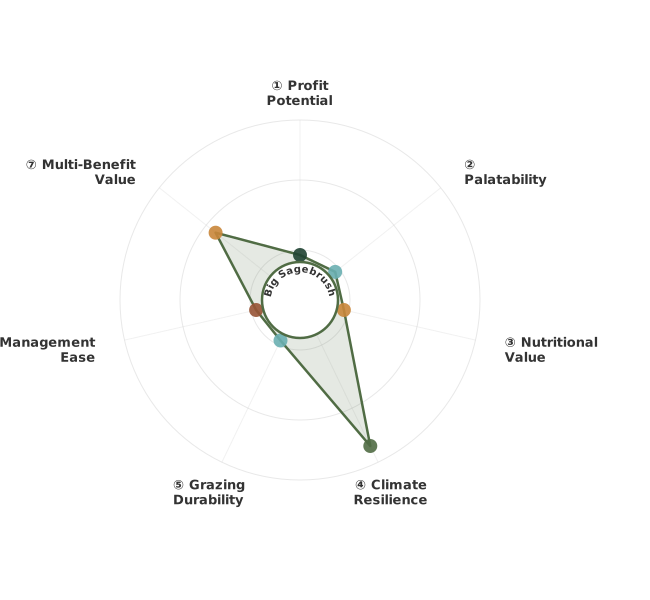
Regenerative Trait Ratings
How These Traits Are Calculated
Trait dimensions are ordered clockwise starting from the top of the chart (12 o'clock position):
1. Profit Potential
Economic returns from hay sales, grazing value, and system contributions
WHAT: Synthesizes direct revenue potential (hay sales or grazing service value) with system contributions (nitrogen fixation, reduced supplement needs) into net economic value. Captures both cash income and cost savings.
WHY: Forage profitability comes from two sources—direct sales (hay, haylage) or indirect value (grazing services supporting livestock production). High-value forages provide $300-600/acre in combined revenue and savings versus $100-200/acre for lower-value options. This determines whether forage enterprises are viable versus purchasing feed.
HOW: Scored via LLM synthesis of economics data (hay yields, prices, grazing value), timeline considerations (establishment costs, productive lifespan), and system value (nitrogen contributions, supplement replacement). Exceptional (3.0): High yields with premium pricing or exceptional grazing value plus nitrogen fixation. Typical (2.0): Moderate returns. Limited (1.0): Low yields, commodity pricing, or minimal system contributions.
2. Palatability
Livestock preference and voluntary consumption rates
WHAT: Measures how eagerly livestock consume the forage—preference ranking when choices are available. Highly palatable forages are grazed first and completely; limited palatability means animals avoid unless no alternatives exist.
WHY: Palatability directly determines voluntary intake, which drives animal performance. High-palatability forages support faster weight gain and higher milk production because animals eat more. Low-palatability forages reduce performance and waste productive potential—animals selectively graze preferred species and leave unpalatable plants ungrazed.
HOW: Ratings based on the palatability trait documenting livestock selection preference. Exceptional (3.0): Preferentially selected, high sugar content, tender growth eagerly consumed (orchardgrass, white clover, ryegrass). Typical (2.0): Readily consumed when available. Limited (1.0): Avoided unless no other options (coarse stems, bitter compounds, low digestibility).
3. Nutritional Value
Protein content and forage quality for livestock growth and production
WHAT: Measures protein content as the primary indicator of forage nutritional quality. High-protein forages (>18%) support rapid growth and high milk production; low-protein forages (<12%) require supplementation for production animals.
WHY: Protein is the most expensive supplement in livestock diets ($0.40-0.60/lb). Forages with exceptional protein content eliminate or reduce supplement costs while supporting maximum animal performance. High-quality forage can save $200-400/cow/year in purchased feed versus low-protein options.
HOW: Ratings based on the protein_content trait. Exceptional (3.0): High protein (>18%) supporting rapid weight gain or high milk production (alfalfa, clovers, young grasses). Typical (2.0): Moderate protein (12-18%) for maintenance and moderate production (mature grasses). Limited (1.0): Low protein (<12%) requiring supplementation for production animals (mature warm-season grasses, low-fertility forages).
4. Climate Resilience
Weighted: drought tolerance (60%) + climate adaptability (40%)
WHAT: Combines drought tolerance (primary climate stressor for forages) with overall climate adaptability (temperature range, geographic flexibility). Resilient forages survive extended dry periods and diverse weather patterns.
WHY: Drought is the most common forage crisis—dry years can cut production 50-80% and force costly hay purchases or herd reductions. Drought-tolerant forages maintain productivity through dry spells, reducing feed costs and providing grazing when less-resilient options fail. Geographic adaptability allows forage systems to work across farm regions.
HOW: Weighted formula prioritizes drought tolerance (60% weight) as primary stressor, with climate adaptability (40% weight) for temperature and general flexibility. Exceptional (3.0): Survives extended drought (6+ weeks) with minimal production loss and works across diverse climates. Typical (2.0): Moderate drought and climate tolerance. Limited (1.0): Drought-sensitive or narrow climate requirements.
5. Grazing Durability
Weighted: trampling tolerance (70%) + seasonal availability (30%)
WHAT: Combines grazing tolerance (resistance to trampling and frequent defoliation) with seasonal availability (timing and duration of productive growth). Durable forages handle intensive rotational grazing and provide consistent seasonal production.
WHY: Grazing tolerance determines management system viability. Tolerant forages allow intensive rotational grazing or mob grazing for maximum animal performance and pasture health. Intolerant forages are hay-only or require long rest periods. Seasonal availability indicates production timing—year-round, seasonal gaps, or narrow windows.
HOW: Weighted formula prioritizes grazing tolerance (70% weight) for management system determination, with seasonal availability (30% weight) for production timing. Exceptional (3.0): Handles intensive rotational grazing with consistent seasonal production. Typical (2.0): Moderate tolerance and availability. Limited (1.0): Hay-only species or narrow seasonal production windows.
6. Management Ease
Weighted: establishment ease (50%) + low maintenance needs (50%)
WHAT: Combines establishment difficulty (germination, stand establishment) with ongoing maintenance requirements (fertility, weed control, renovation needs). Easy forages establish reliably and persist without intensive management.
WHY: Pasture establishment is expensive ($150-400/acre) and risky. Easy-to-establish forages reduce stand failure risk and provide quicker returns. Low-maintenance forages reduce annual input costs and labor, improving long-term profitability of grazing systems.
HOW: Weighted formula balances establishment ease (50% weight) for startup success and inverted maintenance intensity (50% weight) for ongoing care. Exceptional (3.0): Fast germination, reliable stand establishment, minimal fertility/weed management needs (white clover, orchardgrass). Typical (2.0): Moderate establishment and care requirements. Limited (1.0): Difficult establishment or intensive maintenance (heavy fertility, frequent renovation, weed competition).
7. Multi-Benefit Value
Ecosystem services beyond forage—nitrogen fixation, pollinator support, wildlife habitat
WHAT: Measures ecosystem services provided beyond livestock nutrition. Multi-benefit forages contribute nitrogen fixation (legumes), pollinator support (flowering species), wildlife habitat, soil building, erosion control, and biodiversity support.
WHY: Forage systems can either extract from farm ecosystems or contribute to them. Nitrogen-fixing legumes (clovers, alfalfa) provide $80-150/acre/year worth of fertility for companion grasses and following crops. Flowering forages support pollinators critical for fruit/vegetable crops. These service-stacking forages deliver total system value beyond livestock production.
HOW: Ratings based on the multi_benefit_value trait documenting service diversity. Exceptional (3.0): Multiple significant benefits (legumes fixing 80-150 lbs N/acre/year + pollinator support + wildlife forage). Typical (2.0): Some ecosystem contributions. Limited (1.0): Single-purpose forage with minimal ecosystem services beyond grazing value.
Ratings are based on documented performance in regenerative systems, not conventional high-input scenarios. All traits assume integrated management practices focused on soil health and ecosystem services.
1
Climate Suitability Assessment
Will this plant thrive in your climate?
Climate Suitability Assessment
Will this plant thrive in your climate?
Köppen Zone: BSk (Cold Semi-Arid (Steppe)), BWk (Cold Desert), Dfb (Warm-Summer Continental)
USDA Zone: 5a, 5b, 6a, 7a
Big Sagebrush performs optimally in climates with distinct dry summers and cold to mild winters, characterized by 100-150 frost-free days and average summer temperatures between 70-80°F (21-27°C). These conditions are met in Köppen zones like Bsk and Dsb, and regional zones such as USDA 6a through 8b, and Australian temperate zones with appropriate microclimates. Establishment is highly successful when soil moisture is adequate in spring, and the plant exhibits excellent drought tolerance during summer. Its deep root system allows it to access moisture effectively, leading to reliable forage production and high stand persistence. Minimal management is required, primarily focused on grazing rotation to maintain plant health and vigor. This level of suitability ensures high productivity and economic viability for forage integration, supporting livestock with nutritious browse.
Köppen Zone: BSh (Hot Semi-Arid (Steppe)), Csb (Warm-Summer Mediterranean), Dfa (Hot-Summer Continental)
USDA Zone: 4a, 8a
Australian Zone: temperate
Big Sagebrush is adequately suited to climates with moderate precipitation and temperature ranges that are slightly outside its optimal arid/semi-arid preference, but still manageable. This includes Köppen zones like Bsk and Dsb, and regional zones such as USDA 5b, 9a, 9b, and Australian temperate zones. These areas typically have 90-130 frost-free days and summer temperatures ranging from 75-85°F (24-29°C). While establishment is generally good, prolonged dry spells or excessive summer heat may reduce forage yield and stand longevity. Supplemental irrigation might be necessary in drier periods or warmer summers to maintain consistent productivity, increasing management costs. However, with careful grazing management and potentially some water augmentation, Big Sagebrush can still provide valuable forage and ecosystem services in these regions.
Köppen Zone: Af (Tropical Rainforest), Am (Tropical Monsoon), Aw (Tropical Savanna), ET (Tundra), BWh (Hot Desert), Cfa (Humid Subtropical), Cfb (Oceanic (Maritime Temperate)), Csa (Hot-Summer Mediterranean), Cwa (Monsoon-Influenced Humid Subtropical), Cwb (Subtropical Highland), Dfc (Subarctic), Dwa (Monsoon-Influenced Hot-Summer Continental)
USDA Zone: 2a, 3a, 3b, 9a, 10a, 11a, 12a
EU Climate Region: atlantic, continental
Big Sagebrush is not recommended for climates that are either too hot and dry, or too cool and moist, making cultivation economically and practically questionable. This includes Köppen zones Bwh, Csa, Dsa, Dfa, and Dfb, as well as USDA zones 3a-5a, 10a-10b, and EU Atlantic and Continental regions. In hot, arid zones (Bwh, Csa), extreme heat and severe drought stress limit growth and survival, requiring extensive irrigation. In humid continental and Atlantic zones (Dfa, Dfb, Atlantic, Continental), excessive moisture and humidity promote fungal diseases and hinder establishment, making it an unreliable choice. The plant's natural adaptation to arid and semi-arid conditions with cold winters and dry summers is not met, leading to low establishment success (<70%), high management costs, and poor multi-year productivity. Alternative, more climate-appropriate species are strongly advised.
Note: Zones listed above represent climates where this plant can produce reliably with reasonable management. Climate zones not mentioned would require intensive climate modification (greenhouses, extensive infrastructure) and are not economically viable for regenerative agriculture purposes.
2
Soil Suitability Assessment
Which soil types work best for this plant?
Soil Suitability Assessment
Which soil types work best for this plant?
Sandy Soil
This plant thrives in these soil types without requiring amendments or remediation. Natural soil conditions support optimal growth and productivity.
Alkaline Soil, Desert Soil, Loam Soil, Rocky Soil
This plant performs acceptably in these soil types with moderate, manageable remediation such as pH adjustment, compost addition, or drainage improvement. The required amendments are practical and cost-effective for regenerative agriculture.
Acidic Soil, Clay Soil, Rich Soil, Saline Soil, Wet Soil
Growing this plant in these soil types would require impractical remediation such as complete soil replacement, extensive amendments, or cost-prohibitive infrastructure. These conditions are not economically viable for regenerative agriculture.
Note: Soil suitability assessments focus on remediation requirements. "Ideally Suited" means the plant generally thrives without the need for substantial amendments, "Adequate" means manageable remediation (lime, compost, mulch), and "Not Recommended" means impractical soil changes would be required. Climate factors like rainfall and temperature also influence success.
3
Seasonal Considerations
Planting timing, growth duration, and harvest windows
Seasonal Considerations
Planting timing, growth duration, and harvest windows
Establish big sagebrush in the fall for optimal establishment, allowing roots to develop through winter and reach maturity in approximately two to three growing seasons. Alternatively, spring planting after the last expected frost can be successful, though it may require more initial irrigation. Expect initial establishment to take several weeks.
For grazing, wait until plants are well-established, typically in their second or third year. Begin grazing in early spring as new growth emerges. Allow for a minimum of 30-45 days of rest between grazing events to promote vigorous regrowth. Depending on the climate and management, you might achieve one to two grazing cycles per season, with a final grazing in late fall before winter dormancy. Big sagebrush exhibits peak productivity during the summer months. It enters dormancy during the hottest, driest periods of summer and will tolerate light grazing into fall and even after light frosts, providing valuable winter browse. Regrowth is typically initiated by spring rains and warming temperatures.
4
System Role & Multi-Benefit Value
Functional roles, integration strategies, and stacked benefits
System Role & Multi-Benefit Value
Functional roles, integration strategies, and stacked benefits
Functional Role
Total System Value
Big sagebrush offers significant multi-benefit stacking potential within regenerative agricultural systems, especially in rangeland contexts. Its primary direct harvest value is as a nutritious browse for livestock, particularly during winter months. Beyond forage, it plays a critical role in ecosystem enhancement by influencing fire regimes and, as research suggests, affecting soil carbon dynamics. Studies have shown how its presence can alter fire patterns, with herbivores impacting burned areas. This interaction contributes to habitat heterogeneity. Ecosystem services include providing crucial habitat for wildlife, particularly in arid environments, and potentially aiding in soil carbon sequestration through its influence on soil microbial communities and carbon mineralization. Its deep root system also contributes to soil stability and water infiltration. By providing a resilient forage base and supporting ecosystem functions, big sagebrush diversifies farm resources, reducing reliance on external inputs and enhancing overall farm resilience against drought and other environmental stresses.
Integration Characteristics
Multi-Benefit Value: Adequate - Artemisia tridentata provides crucial habitat and forage for wildlife, contributes to soil stabilization through its root structure, and offers browse, enhancing the ecological complexity and resilience of arid systems.
5
Management & Care Requirements
Integration guidance, maintenance needs, and care practices
Management & Care Requirements
Integration guidance, maintenance needs, and care practices
How to Integrate This Plant
Big sagebrush (Artemisia tridentata) can be integrated into regenerative systems primarily as a forage source and for ecosystem enhancement, particularly in arid and semi-arid rangelands. Its role as a forage integration plant means it can be a crucial component of grazing management, providing browse for livestock. Compatible practices include mob grazing and silvopasture, where its presence can influence fire behavior and create refugia for other desirable species, as indicated by studies on its interaction with herbivores and fire. While not a nitrogen fixer or a direct shade provider in the way trees are, it contributes to soil health by influencing carbon mineralization, as shown in Great Basin studies. It begins providing forage value from Year 1, with its influence on grassland dynamics and soil health becoming more pronounced by Year 5. Its long-term value lies in its resilience and ability to support complex grassland ecosystems. The total system value extends beyond forage to include habitat for wildlife and potential contributions to soil carbon sequestration, enhancing overall farm resilience.
Integration Practices & Management
The provided knowledge base offers limited direct insights into the practical integration of Artemisia tridentata (sagebrush) within regenerative agriculture systems, particularly concerning farmer-led establishment, grazing integration, termination strategies, or cash crop intercropping. The sources focus on ecological research rather than farmer experience. Source investigates Artemisia tridentata's role in fire refugia and the influence of large herbivores on fire behavior in mixed-grass prairie, noting that herbivores reduced burned area. Source examines the impact of Wyoming big sagebrush on soil carbon mineralization in a laboratory setting, comparing it with other vegetation types. While these studies highlight Artemisia tridentata's ecological functions, such as influencing fire dynamics and soil processes, they do not detail specific regenerative farming techniques for its establishment (e.g., seeding rates, timing, tillage methods), its integration into grazing systems (e.g., mob grazing, rotational timing, rest periods), or termination strategies. Consequently, the knowledge base does not provide information on fertility needs, competition management, succession planning, or its use in relay or intercropping with cash crops from a farmer's perspective.
Management Profile
Maintenance Intensity: Ideally Suited - Adapted to nutrient-poor soils and arid conditions, Artemisia tridentata requires minimal intervention for fertility management or water management once established, relying on its inherent resilience and ecosystem integration.
6
Economics & Value Streams
Direct harvest, system benefits, ecosystem services, and risk diversification
Economics & Value Streams
Direct harvest, system benefits, ecosystem services, and risk diversification
Comprehensive economic analysis including direct harvest value, system enhancement contributions, ecosystem services, value timeline, and risk diversification strategies.
Economics in Regenerative Systems
| Metric | Value |
|---|---|
| Seed Cost | $30-60/acre $74-148/ha |
| Establishment Cost | $250-500/acre $617-1235/ha |
| Forage Yield | 1-3 tons/acre/year 1-3 tons/ha/year |
| Annual Management Cost | $40-80/acre $98-197/ha |
| Value/Sale Price | $60-120/ton $60-120/tonne |
| Net Annual Return* | $-520 to $70/acre/year |
Values represent typical ranges for regenerative agriculture contexts. Actual results vary by region, management, and market conditions. Costs exclude land and labor.
* Net Annual Return = (Yield × Market Price) − (Amortized Establishment Cost + Annual Maintenance). This return is realized only at/after first harvest; early years have costs but no revenue. Range shows worst case to best case scenarios.
System Enhancement Value
Beyond harvest: livestock nutrition, soil building, and pasture improvement
Livestock Nutrition & Soil Building
Big sagebrush offers significant system benefits beyond forage. Its role in plant communication, as evidenced by Richard Karban's research (excerpts,,), highlights its contribution to ecosystem resilience. Sagebrush plants can warn kin of herbivore damage through volatile chemical cues, leading to enhanced defenses, reduced leaf damage, and improved survival rates for neighboring plants. This 'kinship-based defense' is a form of cooperative behavior that bolsters the health and stability of the plant community. Furthermore, sagebrush ecosystems support pollinators, as indicated by its secondary function. While specific quantitative data on pollinator support from sagebrush is not detailed in the provided excerpts, its presence within integrated systems can contribute to biodiversity and provide habitat and nectar sources for a range of beneficial insects, thus supporting broader ecosystem health and potentially crop pollination services. Its presence also influences soil moisture dynamics, as noted in research comparing sagebrush with other vegetation types (abstract), which can have cascading effects on soil health and water availability within the farm system.
Erosion Control
Variable, dependent on stand density and landscape context. Generally not a primary windbreak species.
While not directly a windbreak species in the traditional sense of dense trees, large sagebrush stands can contribute to landscape heterogeneity that influences wind patterns and reduces erosion. Research in the northern Great Plains (abstract) indicates that the presence of large herbivores, which interact with sagebrush ecosystems, can influence fire behavior by altering fuel beds. This suggests that sagebrush communities, in conjunction with other landscape elements, can contribute to fire refugia and patchiness. In a broader integrated farming system context, establishing or maintaining sagebrush in strategic locations could offer some degree of wind protection to adjacent areas, particularly by stabilizing soil and reducing wind-driven erosion. The density and structure of sagebrush stands, influenced by grazing management and fire regimes, will determine the extent of this benefit. Its role is more about contributing to a mosaic of vegetation that collectively moderates environmental conditions rather than acting as a singular, dense windbreak.
Ecosystem Service Contributions
Environmental contributions: carbon, pollinators, wildlife, and water
- Carbon Sequestration: Big sagebrush is a perennial shrub with a woody structure, contributing to soil carbon storage through its root systems and above-ground biomass. Its contribution to soil carbon mineralization is influenced by its interaction with soil moisture and labile carbon, with some studies suggesting lower mineralization rates compared to cheatgrass (abstract), potentially indicating greater carbon stability under sagebrush canopies. Its long-lived nature allows for sustained carbon sequestration.
- Pollinator Support: High. Sagebrush is listed as having pollinator support as a secondary function, and its presence in diverse rangeland and agricultural landscapes provides habitat and floral resources for various pollinator species.
- Wildlife Habitat: Big sagebrush is a keystone species in many western ecosystems, providing critical habitat, browse, and cover for a wide array of wildlife, including pronghorn, mule deer, and numerous bird species. Its role as forage integration directly supports herbivore populations.
- Water Quality: Not applicable
Value Timeline: Forage Establishment & Production
When you'll see results: annuals year 1, perennial establishment 1-2, peak 3-10
Years 1-2
Initial establishment of forage value for livestock and wildlife. Beginning of soil stabilization and potential for early-stage plant communication benefits if established from kin.
Years 3-5
Established forage production. Increased contribution to landscape heterogeneity, potentially influencing microclimates and supporting pollinator activity. Plant communication network becomes more robust.
Years 10-20
Mature sagebrush stands provide significant forage and habitat. Enhanced ecosystem services, including robust soil carbon sequestration and established pollinator support. Potential for secondary cash crop services (e.g., medicinal compounds, biomass).
20+ Years
Long-term, stable ecosystem services. Continued carbon sequestration. Potential for benefits related to fire refugia and landscape resilience.
Farm Risk Reduction
How this reduces farm risk: feed cost reduction and livestock performance
- Multiple Revenue Streams: Forage integration (livestock/wildlife), potential cash crop (secondary functions), ecosystem services (pollinator support, carbon sequestration).
- Temporal Income Spread: Provides ongoing forage and ecosystem services throughout the year, with potential for periodic harvest of secondary products. Its perennial nature ensures long-term value.
- Market Risk Hedge: Reduces reliance on single commodities by providing multiple value streams. Its drought tolerance in arid regions can offer resilience against climate variability. Supports biodiversity, which can buffer against pest outbreaks or disease.
7
Regenerative Suitability Details
Comprehensive trait ratings for system integration assessment
Regenerative Suitability Details
Comprehensive trait ratings for system integration assessment
Comparative ratings for this plant across key regenerative agriculture traits.
| Trait | Suitability | Explanation |
|---|---|---|
| Palatability | Not Recommended | Sagebrush's natural defense mechanisms, including essential oils, suggest its role as a resilient species that is less preferred by livestock, encouraging diverse foraging patterns and reducing pressure on more palatable species. |
| Protein Content | Not Recommended | This species offers a low but consistent protein source, best utilized within a diverse forage system to meet maintenance needs and avoid over-reliance on single nutrient sources. |
| Drought Tolerance | Ideally Suited | With exceptionally deep root systems, Artemisia tridentata excels at accessing available soil moisture, demonstrating remarkable water use efficiency and resilience in arid landscapes through natural moisture retention. |
| Grazing Tolerance | Not Recommended | As a woody shrub with high meristems, Artemisia tridentata is best integrated into grazing systems where it is browsed intermittently, allowing for recovery and preventing damage from continuous defoliation. |
| Establishment Ease | Adequate | Once established, this species demonstrates resilience in challenging environments, developing robust growth with minimal external support by leveraging native soil resources and natural moisture retention. |
| Multi Benefit Value | Adequate | Artemisia tridentata provides crucial habitat and forage for wildlife, contributes to soil stabilization through its root structure, and offers browse, enhancing the ecological complexity and resilience of arid systems. |
| Climate Adaptability | Ideally Suited | Highly hardy across a broad range of climates, Artemisia tridentata thrives in arid and diverse conditions, showcasing its ability to adapt to extreme temperatures and moisture limitations. |
| Maintenance Intensity | Ideally Suited | Adapted to nutrient-poor soils and arid conditions, Artemisia tridentata requires minimal intervention for fertility management or water management once established, relying on its inherent resilience and ecosystem integration. |
| Seasonal Availability | Not Recommended | Available year-round as a browse component, Artemisia tridentata contributes to landscape diversity and provides a consistent, though less nutrient-dense, food source for wildlife and livestock. |
Comparative System: Ratings compare plants within their economic category (e.g., cover crop nitrogen fixation compared to other cover crops, not to all plants). Individual farm conditions and management practices significantly influence actual performance.
8
Learn More
Why farmers use this plant and additional resources
Learn More
Why farmers use this plant and additional resources
Why Regenerative Farmers Use This Plant
Artemisia tridentata, commonly known as Big Sagebrush, is a foundational perennial shrub in many arid and semi-arid rangelands, offering significant ecological and agricultural benefits when integrated into regenerative systems. Its deep root system, often reaching 10-20 feet (3-6 meters) or more, is exceptional at accessing deep soil moisture and nutrients, contributing to soil structure improvement, water infiltration, and erosion control, especially on slopes. This extensive root network also contributes to carbon sequestration by drawing atmospheric carbon into the soil profile over extended periods. While not a nitrogen fixer, its presence supports a complex soil microbial community and can improve nutrient cycling indirectly through the decomposition of its woody biomass.
In regenerative grazing systems, Artemisia tridentata plays a vital role in extending the grazing season and providing essential winter forage. Its evergreen nature allows for year-round forage availability, though palatability and nutritional content vary seasonally. During late fall and winter, it can provide essential roughage and browse, supporting livestock when annual grasses and herbaceous forages are dormant or depleted. For cattle and sheep, it offers browse that can contribute crude protein levels of 6-12% during winter months, helping to maintain body condition and reduce the need for supplemental feed. Its resilience to drought and ability to thrive in nutrient-poor soils make it an ideal candidate for reclaiming degraded lands or enhancing the productivity of marginal pastures.
Beyond direct forage provision, Artemisia tridentata contributes significantly to biodiversity and ecosystem health. It provides critical habitat and food sources for numerous insects, birds, and mammals, including sage-grouse, pronghorn, and mule deer. Its dense shrub structure offers shelter from extreme weather and predators, fostering a more stable and diverse ecological community. It acts as a nurse plant, creating microclimates that allow less hardy species to establish, thereby increasing overall plant diversity. Its canopy intercepts precipitation, reducing evaporation and directing moisture to the soil. The decomposition of its woody material and leaves slowly releases nutrients, contributing to soil fertility in nutrient-poor environments. By improving soil health through its extensive root system and providing consistent forage, it supports a more robust and productive grazing ecosystem, reducing reliance on external inputs and enhancing the overall sustainability of agricultural operations in arid and semi-arid environments.
Regional success stories highlight the value of Artemisia tridentata in diverse systems. In the Intermountain West of the United States, ranchers have long relied on sagebrush-dominated rangelands to support substantial cattle herds through extensive grazing management. In Australia's arid and semi-arid sheep and cattle stations, native shrubs like those in the Artemisia genus are recognized for their drought tolerance and ability to provide browse during dry spells, forming the backbone of drought resilience. In arid regions of the Mediterranean and parts of Argentina, native shrublands containing Artemisia species or similar ecological analogues are being explored for their potential in silvopasture systems, integrating grazing with tree crops or managing for cattle grazing in shrub-steppe environments for enhanced land productivity and ecological function.
9
How to Integrate This Plant
Practical guidance for regenerative systems
How to Integrate This Plant
Practical guidance for regenerative systems
Establishing Artemisia tridentata typically involves direct seeding, as it can be challenging to transplant due to its deep taproot. Seed is often broadcast or drilled at rates of 1-3 lbs/acre (1.1-3.4 kg/ha) for broadcast seeding, with drilled rates potentially lower at 0.5-1.5 lbs/acre (0.56-1.7 kg/ha), depending on seed viability and desired stand density. The planting depth is critical, with seeds requiring light to germinate, so they should be placed no deeper than 0.125-0.25 inches (0.3-0.6 cm) and ideally pressed into firm soil contact. Optimal planting times are in the fall, from September to November in the Northern Hemisphere (or April to June in the Southern Hemisphere), allowing seeds to stratify over winter and germinate with spring moisture. In areas with reliable spring moisture, late winter or early spring planting can also be successful. For restoration efforts, recommended spacing for natural stands is often 5-15 feet (1.5-4.5 m) apart, translating to a lower planting density for seedlings, perhaps 100-400 per acre (250-1000/ha).
Management of established Artemisia tridentata in a regenerative system focuses on promoting its long-term health and productivity as a forage source and ecosystem engineer. Water requirements are minimal once established, relying on natural precipitation. Fertility management should prioritize building soil health through practices like rotational grazing, which distributes manure and urine, and by allowing adequate rest periods for the plant to recover. Initial establishment may benefit from minimal fertilization if soil tests indicate severe deficiencies, but the goal is to foster a self-sustaining system. Growth is slow, with plants reaching a mature height of 3-10 feet (0.9-3 meters) and widths of 3-8 feet (0.9-2.4 meters) over several years, potentially taking 3-5 years to reach reproductive maturity and 10-20 years for full canopy cover in restoration projects. Pest and disease management relies heavily on maintaining a healthy, diverse ecosystem, as robust plants are less susceptible to problems. Companion planting with native grasses and forbs can enhance soil health and biodiversity.
For livestock integration, Artemisia tridentata is best managed within a rotational or adaptive multi-paddock grazing system. It supports a carrying capacity of approximately 0.2-0.5 Animal Units per acre (0.5-1.2 AU/ha) in its native, less productive states, with potential for higher productivity when managed to encourage associated grasses and forbs. In arid environments, this can translate to supporting 0.5-1.5 Animal Units per acre (1.2-3.7 AU/ha) during critical winter months when other forage is scarce, with stocking rates adjusted based on precipitation and forage availability. Grazing should be managed to avoid overconsumption, particularly of young plants, to ensure stand persistence. Animals can be introduced when the shrub has reached a reasonable size, typically after 2-3 years of establishment, and grazed when other forage is scarce. Rest periods of at least 6-12 months, and often 1-3 years, are crucial for mature plants to recover from grazing and maintain vigor, especially in drier climates. Palatability is moderate to low for cattle and sheep but high for browsers like goats and deer; they will utilize it, especially when other forage is limited. Crude protein content ranges from 6-12% in winter, providing essential nutrients for livestock during periods of feed scarcity. Its regrowth rate is slow, emphasizing the need for conservative grazing to ensure stand longevity.