BMR Silage/Forage Corn
Regenerative Quick Profile
All recommendations assume integrated, regenerative practices—not conventional inputs.
Climate & Soil Fit
Climate: Tropical Rainforest, Tropical Monsoon, Tropical Savanna, Hot Semi-Arid (Steppe), Cold Semi-Arid (Steppe), Hot Desert, Cold Desert, Humid Subtropical, Oceanic (Maritime Temperate), Hot-Summer Mediterranean, Warm-Summer Mediterranean, Monsoon-Influenced Humid Subtropical, Subtropical Highland, Hot-Summer Continental, Warm-Summer Continental, Subarctic, Monsoon-Influenced Hot-Summer Continental, Tundra
Zones: USDA 6-11, Australian Zones 10-14
Optimal Soil: Loam Soil
System Role & Functions
Primary: Cash Crop With Services
Secondary: Forage Integration, Cover Crop System
Key Benefits: Multi-benefit value, Yield Potential, Market Accessibility
Management Level
Experience: Intermediate
Maintenance: High maintenance - Integrated livestock, especially mob grazing, significantly reduces maintenance intensity. Animals provide natural fertility management and weed control, supporting a healthy soil ecosystem with minimal human intervention.
Value Streams
- Grain harvest
- Livestock forage value
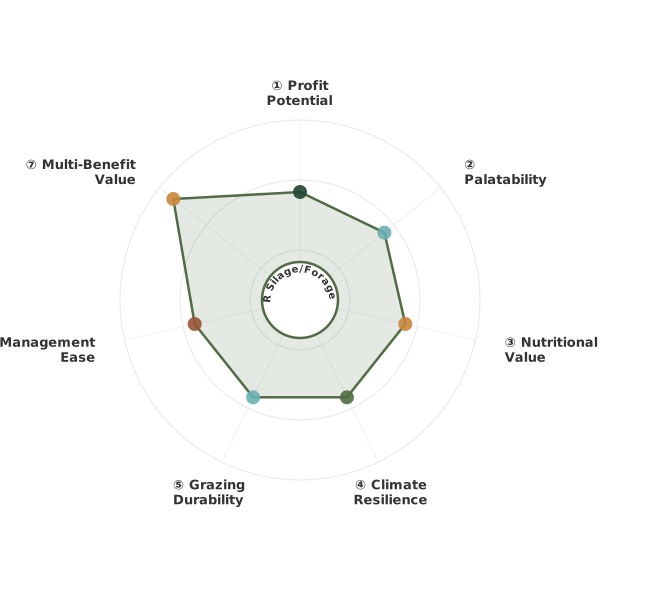
Regenerative Trait Ratings
How These Traits Are Calculated
Trait dimensions are ordered clockwise starting from the top of the chart (12 o'clock position):
1. Profit Potential
Economic returns from hay sales, grazing value, and system contributions
WHAT: Synthesizes direct revenue potential (hay sales or grazing service value) with system contributions (nitrogen fixation, reduced supplement needs) into net economic value. Captures both cash income and cost savings.
WHY: Forage profitability comes from two sources—direct sales (hay, haylage) or indirect value (grazing services supporting livestock production). High-value forages provide $300-600/acre in combined revenue and savings versus $100-200/acre for lower-value options. This determines whether forage enterprises are viable versus purchasing feed.
HOW: Scored via LLM synthesis of economics data (hay yields, prices, grazing value), timeline considerations (establishment costs, productive lifespan), and system value (nitrogen contributions, supplement replacement). Exceptional (3.0): High yields with premium pricing or exceptional grazing value plus nitrogen fixation. Typical (2.0): Moderate returns. Limited (1.0): Low yields, commodity pricing, or minimal system contributions.
2. Palatability
Livestock preference and voluntary consumption rates
WHAT: Measures how eagerly livestock consume the forage—preference ranking when choices are available. Highly palatable forages are grazed first and completely; limited palatability means animals avoid unless no alternatives exist.
WHY: Palatability directly determines voluntary intake, which drives animal performance. High-palatability forages support faster weight gain and higher milk production because animals eat more. Low-palatability forages reduce performance and waste productive potential—animals selectively graze preferred species and leave unpalatable plants ungrazed.
HOW: Ratings based on the palatability trait documenting livestock selection preference. Exceptional (3.0): Preferentially selected, high sugar content, tender growth eagerly consumed (orchardgrass, white clover, ryegrass). Typical (2.0): Readily consumed when available. Limited (1.0): Avoided unless no other options (coarse stems, bitter compounds, low digestibility).
3. Nutritional Value
Protein content and forage quality for livestock growth and production
WHAT: Measures protein content as the primary indicator of forage nutritional quality. High-protein forages (>18%) support rapid growth and high milk production; low-protein forages (<12%) require supplementation for production animals.
WHY: Protein is the most expensive supplement in livestock diets ($0.40-0.60/lb). Forages with exceptional protein content eliminate or reduce supplement costs while supporting maximum animal performance. High-quality forage can save $200-400/cow/year in purchased feed versus low-protein options.
HOW: Ratings based on the protein_content trait. Exceptional (3.0): High protein (>18%) supporting rapid weight gain or high milk production (alfalfa, clovers, young grasses). Typical (2.0): Moderate protein (12-18%) for maintenance and moderate production (mature grasses). Limited (1.0): Low protein (<12%) requiring supplementation for production animals (mature warm-season grasses, low-fertility forages).
4. Climate Resilience
Weighted: drought tolerance (60%) + climate adaptability (40%)
WHAT: Combines drought tolerance (primary climate stressor for forages) with overall climate adaptability (temperature range, geographic flexibility). Resilient forages survive extended dry periods and diverse weather patterns.
WHY: Drought is the most common forage crisis—dry years can cut production 50-80% and force costly hay purchases or herd reductions. Drought-tolerant forages maintain productivity through dry spells, reducing feed costs and providing grazing when less-resilient options fail. Geographic adaptability allows forage systems to work across farm regions.
HOW: Weighted formula prioritizes drought tolerance (60% weight) as primary stressor, with climate adaptability (40% weight) for temperature and general flexibility. Exceptional (3.0): Survives extended drought (6+ weeks) with minimal production loss and works across diverse climates. Typical (2.0): Moderate drought and climate tolerance. Limited (1.0): Drought-sensitive or narrow climate requirements.
5. Grazing Durability
Weighted: trampling tolerance (70%) + seasonal availability (30%)
WHAT: Combines grazing tolerance (resistance to trampling and frequent defoliation) with seasonal availability (timing and duration of productive growth). Durable forages handle intensive rotational grazing and provide consistent seasonal production.
WHY: Grazing tolerance determines management system viability. Tolerant forages allow intensive rotational grazing or mob grazing for maximum animal performance and pasture health. Intolerant forages are hay-only or require long rest periods. Seasonal availability indicates production timing—year-round, seasonal gaps, or narrow windows.
HOW: Weighted formula prioritizes grazing tolerance (70% weight) for management system determination, with seasonal availability (30% weight) for production timing. Exceptional (3.0): Handles intensive rotational grazing with consistent seasonal production. Typical (2.0): Moderate tolerance and availability. Limited (1.0): Hay-only species or narrow seasonal production windows.
6. Management Ease
Weighted: establishment ease (50%) + low maintenance needs (50%)
WHAT: Combines establishment difficulty (germination, stand establishment) with ongoing maintenance requirements (fertility, weed control, renovation needs). Easy forages establish reliably and persist without intensive management.
WHY: Pasture establishment is expensive ($150-400/acre) and risky. Easy-to-establish forages reduce stand failure risk and provide quicker returns. Low-maintenance forages reduce annual input costs and labor, improving long-term profitability of grazing systems.
HOW: Weighted formula balances establishment ease (50% weight) for startup success and inverted maintenance intensity (50% weight) for ongoing care. Exceptional (3.0): Fast germination, reliable stand establishment, minimal fertility/weed management needs (white clover, orchardgrass). Typical (2.0): Moderate establishment and care requirements. Limited (1.0): Difficult establishment or intensive maintenance (heavy fertility, frequent renovation, weed competition).
7. Multi-Benefit Value
Ecosystem services beyond forage—nitrogen fixation, pollinator support, wildlife habitat
WHAT: Measures ecosystem services provided beyond livestock nutrition. Multi-benefit forages contribute nitrogen fixation (legumes), pollinator support (flowering species), wildlife habitat, soil building, erosion control, and biodiversity support.
WHY: Forage systems can either extract from farm ecosystems or contribute to them. Nitrogen-fixing legumes (clovers, alfalfa) provide $80-150/acre/year worth of fertility for companion grasses and following crops. Flowering forages support pollinators critical for fruit/vegetable crops. These service-stacking forages deliver total system value beyond livestock production.
HOW: Ratings based on the multi_benefit_value trait documenting service diversity. Exceptional (3.0): Multiple significant benefits (legumes fixing 80-150 lbs N/acre/year + pollinator support + wildlife forage). Typical (2.0): Some ecosystem contributions. Limited (1.0): Single-purpose forage with minimal ecosystem services beyond grazing value.
Ratings are based on documented performance in regenerative systems, not conventional high-input scenarios. All traits assume integrated management practices focused on soil health and ecosystem services.
1
Climate Suitability Assessment
Will this plant thrive in your climate?
Climate Suitability Assessment
Will this plant thrive in your climate?
Köppen Zone: Cfa (Humid Subtropical), Cwa (Monsoon-Influenced Humid Subtropical), Dfa (Hot-Summer Continental), Dfb (Warm-Summer Continental)
USDA Zone: 6a, 7a, 8a
Australian Zone: temperate
EU Climate Region: continental
BMR silage/forage corn performs optimally in regions with long, warm growing seasons (150-200+ frost-free days) and ample rainfall (30-50 inches annually), conditions met in Köppen Cfa and Cwa zones, USDA zones 5b through 8b, Australian temperate zones, and EU continental regions. These climates provide sufficient heat units (accumulated Growing Degree Days) for full maturity and high yields of quality silage, with optimal growth temperatures between 70-85°F (21-29°C). While natural rainfall is often adequate, supplemental irrigation can buffer against dry spells and ensure consistent high productivity, contributing to yields of 15-25 tons/acre (34-56 tonnes/ha). Establishment is reliable with soil temperatures above 50°F (10°C), and minimal pest or disease pressure is expected under optimal conditions. Management is straightforward, focusing on planting timing, nutrient management, and timely harvest for optimal silage quality, with minimal need for specialized protection.
Köppen Zone: BSk (Cold Semi-Arid (Steppe)), Cfb (Oceanic (Maritime Temperate)), Csa (Hot-Summer Mediterranean), Csb (Warm-Summer Mediterranean), Cwb (Subtropical Highland), Dwa (Monsoon-Influenced Hot-Summer Continental)
USDA Zone: 5a, 5b, 9a
Australian Zone: subtropical
EU Climate Region: atlantic
BMR silage/forage corn can be grown successfully in regions with adequate growing seasons (100-150 frost-free days) and moderate temperatures, though with some limitations. This includes Köppen Cfb and Dwa zones, USDA zones 4b through 5a and 9a through 9b, Australian subtropical zones, and EU Atlantic regions. Challenges may include cooler summers limiting heat units for full maturity (requiring early-maturing varieties), or intense summer heat and drought stress (necessitating irrigation and heat-tolerant hybrids). Yields may be reduced by 10-20% compared to ideal zones, and stand establishment can be more sensitive to timing. Management requires careful variety selection, potentially supplemental irrigation, and attention to harvest timing to ensure optimal silage quality. While not as consistently productive as in ideal zones, it remains a viable option with appropriate adjustments.
Köppen Zone: Af (Tropical Rainforest), Am (Tropical Monsoon), Aw (Tropical Savanna), ET (Tundra), BSh (Hot Semi-Arid (Steppe)), BWh (Hot Desert), BWk (Cold Desert), Dfc (Subarctic)
USDA Zone: 2a, 3a, 3b, 4a, 10a, 11a, 12a
BMR silage/forage corn is not recommended in regions with extremely short growing seasons (under 90-100 frost-free days) or severe temperature extremes that prevent maturity and cause significant stress. This includes Köppen Dwb zones, USDA zones 3a through 4a and 10a through 10b, and Australian subtropical zones experiencing extreme heat. In cold regions, insufficient heat units and high frost risk lead to immaturity and low yields, making it economically unviable. In hot regions, extreme summer temperatures (consistently above 95°F/35°C) cause pollination failure, reduced grain fill, and severe water stress, drastically lowering yields and silage quality. Alternative crops better adapted to these challenging conditions, such as annual ryegrass, oats, sorghum-sudangrass, or millet, are strongly advised for reliable forage production.
Note: Zones listed above represent climates where this plant can produce reliably with reasonable management. Climate zones not mentioned would require intensive climate modification (greenhouses, extensive infrastructure) and are not economically viable for regenerative agriculture purposes.
2
Soil Suitability Assessment
Which soil types work best for this plant?
Soil Suitability Assessment
Which soil types work best for this plant?
Loam Soil
This plant thrives in these soil types without requiring amendments or remediation. Natural soil conditions support optimal growth and productivity.
Acidic Soil, Alkaline Soil, Clay Soil, Desert Soil, Rich Soil, Rocky Soil, Sandy Soil
This plant performs acceptably in these soil types with moderate, manageable remediation such as pH adjustment, compost addition, or drainage improvement. The required amendments are practical and cost-effective for regenerative agriculture.
Saline Soil, Wet Soil
Growing this plant in these soil types would require impractical remediation such as complete soil replacement, extensive amendments, or cost-prohibitive infrastructure. These conditions are not economically viable for regenerative agriculture.
Note: Soil suitability assessments focus on remediation requirements. "Ideally Suited" means the plant generally thrives without the need for substantial amendments, "Adequate" means manageable remediation (lime, compost, mulch), and "Not Recommended" means impractical soil changes would be required. Climate factors like rainfall and temperature also influence success.
3
Seasonal Considerations
Planting timing, growth duration, and harvest windows
Seasonal Considerations
Planting timing, growth duration, and harvest windows
For Zea mays, successful establishment hinges on warm soils, ideally reaching 60°F (15°C) consistently after the danger of the last expected spring frost has passed. Planting too early risks poor germination and seedling stress. This annual grain boasts a growth duration typically ranging from 80 to 120 days to maturity from seeding, depending on the chosen hybrid and environmental conditions. The primary growth phases include a robust vegetative stage, followed by critical flowering and pollination, culminating in the essential grain fill period. Harvest typically occurs in late summer or early fall, once grain moisture levels are optimal, usually between 15-25%. Allowing a buffer of several weeks between physiological maturity and harvest is often beneficial, especially if dry, windy weather prevails, helping to reduce field drying time and energy costs. However, be mindful of approaching fall frosts, as these can severely impact grain quality and yield if harvest is delayed too long before the first expected fall frost.
4
System Role & Multi-Benefit Value
Functional roles, integration strategies, and stacked benefits
System Role & Multi-Benefit Value
Functional roles, integration strategies, and stacked benefits
Functional Role
Integration Characteristics
Multi-Benefit Value: Ideally Suited - BMR Silage/Forage Corn's dual role in livestock integration and mob grazing compatibility offers exceptional multi-benefit value by directly fertilizing fields, enhancing soil health and reducing external input needs.
5
Economics & Value Streams
Direct harvest, system benefits, ecosystem services, and risk diversification
Economics & Value Streams
Direct harvest, system benefits, ecosystem services, and risk diversification
Comprehensive economic analysis including direct harvest value, system enhancement contributions, ecosystem services, value timeline, and risk diversification strategies.
Economics in Regenerative Systems
| Metric | Value |
|---|---|
| Seed Cost | $40-60/acre $98-148/ha |
| Establishment Cost | $150-300/acre $370-741/ha |
| Forage Yield | — |
| Annual Management Cost | $200-400/acre $494-988/ha |
| Value/Sale Price | — |
| Net Annual Return* | $-380 to $700/acre/year |
Values represent typical ranges for regenerative agriculture contexts. Actual results vary by region, management, and market conditions. Costs exclude land and labor.
* Net Annual Return = (Yield × Market Price) − (Amortized Establishment Cost + Annual Maintenance). This return is realized only at/after first harvest; early years have costs but no revenue. Range shows worst case to best case scenarios.
System Enhancement Value
Beyond harvest: ecosystem services from regenerative cash crop practices
Ecological Service Contributions
Corn's integration into regenerative systems unlocks a multitude of benefits beyond direct harvest. As a cash crop, it can support the economic viability of diversified farming operations, enabling the implementation of other beneficial practices. Its stalk residue, when managed through reduced tillage and integrated with cover crops, contributes to soil organic matter accumulation and provides habitat for beneficial soil microbes. In systems with livestock integration, corn stover can serve as valuable forage or bedding. Furthermore, the diverse cover crop mixes preceding or following corn, as emphasized in and, can significantly enhance soil biology, improve water infiltration, and suppress weeds. The focus on healthy soil biology, including earthworms and mycorrhizal fungi, supports robust nutrient cycling and plant health, reducing reliance on external inputs. The potential for corn to attract beneficial microbes through root exudates further contributes to a resilient agroecosystem.
Nitrogen Fixation (if legume)
Variable; reduction of up to 25% in nitrogen needs for specialized hybrids. Potential for significant N contribution from preceding legume cover crops, estimated at 80-150 lbs N/acre/year, translating to $48-135/acre fertilizer replacement (assuming $0.60/lb N).
While corn (Zea mays) itself is a nitrogen-demanding crop, its integration into regenerative systems can significantly reduce the need for synthetic nitrogen inputs. As highlighted in, specialized corn hybrids can perform well with reduced nitrogen (up to 25% less). Furthermore, corn's role within a diverse cover crop system, as seen in and, is crucial. Following a legume cover crop, corn can benefit from the fixed nitrogen, reducing the need for external applications. The 'Smart Mix Calculator' allows for the inclusion of nitrogen-fixing legumes within cover crop blends that precede corn, effectively building soil fertility. This symbiotic relationship, where cover crops enhance soil biology and nutrient availability, directly translates to lower fertilizer costs and reduced environmental impact associated with nitrogen production and application. The focus on healthy soil with high fungal-to-bacteria ratios also aids in efficient nutrient cycling, further minimizing nitrogen losses and maximizing uptake by the corn crop.
Erosion Control (if applicable)
Variable; improved soil structure and ground cover through integrated practices can lead to a reduction in wind erosion, with potential for 5-15% crop yield improvement in protected areas due to reduced stress and better soil moisture retention.
While corn itself is not typically planted as a windbreak, its use in integrated systems can contribute to erosion control and soil health, indirectly mitigating wind erosion. Practices like reduced tillage and diverse cover cropping, often integrated with corn production as discussed in and, are fundamental to building soil structure and organic matter. Healthy soil with increased organic matter and improved aggregation is more resistant to wind erosion. The emphasis on 'having a living root in the soil as long as possible' through cover crops, which can be planted before, after, or even interceded with corn, helps to stabilize the soil surface. This continuous ground cover and improved soil structure reduces the soil's susceptibility to wind displacement, thereby protecting adjacent areas and maintaining soil fertility within the field. The integration of livestock can further enhance soil health through manure deposition and by promoting the growth of cover crops that bind soil particles.
Ecosystem Service Contributions
Environmental contributions: carbon, pollinators, wildlife, and water
- Carbon Sequestration: Corn, as a high-biomass annual crop, contributes to carbon sequestration primarily through the annual addition of organic matter to the soil via its residues. When integrated into systems with cover crops and reduced tillage, the rate of soil organic carbon accumulation can be significantly enhanced over time, as evidenced by increased soil organic matter from 1.7-1.9% to 5.3-7.9% in Gabe Brown's operation.
- Pollinator Support: Low. While corn itself is wind-pollinated and does not provide significant nectar or pollen resources for bees and other pollinators, the integration of flowering cover crops and insectary strips within corn systems, as practiced by Bob Muth, can indirectly support pollinator populations by providing habitat and food sources.
- Wildlife Habitat: Medium. Corn fields can provide some habitat and food sources for wildlife, particularly after harvest when gleaning birds and small mammals may utilize leftover grain. However, the dense monoculture planting of corn offers limited structural diversity. The true wildlife value is amplified when corn is part of a diversified system with cover crops, hedgerows, or adjacent natural areas, offering nesting sites, browse, and varied food sources.
- Water Quality: Not applicable
Value Timeline: Production & Services
When you'll see results: varies by crop (annual harvest vs. perennial establishment)
Years 1-2
Erosion control through improved soil structure and cover crop integration; initial improvements in soil biology and water infiltration; reduced nitrogen input requirements due to preceding cover crops.
Years 3-5
First harvest of corn as a cash crop; established benefits of nitrogen fixation from legume cover crops; continued improvements in soil organic matter and water holding capacity; increased resilience to extreme weather events.
Years 10-20
Significant increase in soil organic matter and corresponding improvements in soil health and fertility; consistent yield improvements exceeding conventional averages; reduced need for external inputs (fertilizers, pesticides); potential for access to carbon markets.
20+ Years
Mature, highly resilient agroecosystem with robust soil biology and nutrient cycling; sustained high yields with minimal external inputs; enhanced farm profitability and reduced environmental footprint; potential for long-term carbon sequestration benefits.
Farm Risk Reduction
How this reduces farm risk: backup income, weather protection, market hedges
- Multiple Revenue Streams: Direct cash crop revenue from corn; potential revenue from livestock forage integration; potential carbon credit revenue; reduced input costs (fertilizers, pesticides); enhanced resilience leading to more stable yields and profitability.
- Temporal Income Spread: Annual harvest of corn, complemented by ongoing, cumulative benefits of soil health improvements, carbon sequestration, and enhanced ecosystem services that accrue over time. Cover crops provide continuous soil cover and biological activity between cash crop cycles.
- Market Risk Hedge: Reduced reliance on volatile synthetic input markets; increased drought tolerance and disease resistance due to improved soil health reduces yield loss risk; diversified farm system (if integrated with livestock or other crops) buffers against market fluctuations for any single commodity.
6
Regenerative Suitability Details
Comprehensive trait ratings for system integration assessment
Regenerative Suitability Details
Comprehensive trait ratings for system integration assessment
Comparative ratings for this plant across key regenerative agriculture traits.
| Trait | Suitability | Explanation |
|---|---|---|
| Rotation Value | Adequate | Corn, as a diverse component in a regenerative rotation, offers a different growth architecture and resource utilization pattern that complements other crops, enhancing overall soil health and resilience. |
| Yield Potential | Ideally Suited | Corn exhibits robust yield potential, consistently producing abundant harvests across varied soil conditions and contributing significantly to farm-scale economic viability through efficient resource conversion. |
| Establishment Ease | Adequate | Successful corn establishment relies on optimal soil temperatures and moisture for rapid germination, with good early vigor supported by sound seedbed preparation and integrated weed management to minimize competition. |
| Input Requirements | Not Recommended | Corn's growth is supported by building soil fertility through compost, mulch, and cover cropping, alongside mindful water management and integrated pest and disease strategies to foster a healthy soil ecosystem. |
| Multi Benefit Value | Ideally Suited | BMR Silage/Forage Corn's dual role in livestock integration and mob grazing compatibility offers exceptional multi-benefit value by directly fertilizing fields, enhancing soil health and reducing external input needs. |
| Climate Adaptability | Adequate | Corn thrives in regions with consistent warmth and adequate moisture, with regenerative practices like mulching and cover cropping enhancing its resilience to fluctuating weather patterns by improving soil moisture retention. |
| Market Accessibility | Ideally Suited | Corn benefits from established market channels, reflecting its role in supporting diverse food and feed systems and its adaptability to various processing and storage infrastructures. |
| Maintenance Intensity | Not Recommended | Integrated livestock, especially mob grazing, significantly reduces maintenance intensity. Animals provide natural fertilization and weed control, supporting a healthy soil ecosystem with minimal human intervention. |
| Harvest Processing Ease | Ideally Suited | Corn is efficiently harvested with standard equipment, and its processing and storage are well-supported by established infrastructure, facilitating seamless integration into the broader agricultural system. |
Comparative System: Ratings compare plants within their economic category (e.g., cover crop nitrogen fixation compared to other cover crops, not to all plants). Individual farm conditions and management practices significantly influence actual performance.
7
Learn More
Why farmers use this plant and additional resources
Learn More
Why farmers use this plant and additional resources
Why Regenerative Farmers Use This Plant
Brown Mid-Rib (BMR) forage varieties are specifically bred for livestock feed, offering enhanced digestibility and nutritional value critical for integrated crop-livestock regenerative systems. These BMR traits, characterized by a distinct brown coloration in the mid-rib of the leaf, indicate lower lignin content. This reduction in lignin significantly improves the breakdown of plant fiber in the rumen, making it more accessible to ruminant digestive systems and leading to higher energy availability. This translates directly to improved nutrient uptake and animal performance, potentially leading to greater weight gain in beef cattle or higher milk production in dairy cows. For instance, cattle grazing on well-managed BMR pastures can achieve daily gains of 2.0-2.8 lbs/day (0.9-1.3 kg/day) during the vegetative stages. In rotational grazing systems, BMR varieties can support carrying capacities of 2-3 Animal Units per acre (5-7 AU/ha) during peak growing seasons, a significant increase over less digestible forages. The improved digestibility means livestock can consume more forage to meet their nutritional needs, reducing the reliance on expensive supplemental feeds like grains and hay.
The integration of BMR forages into a regenerative farming system offers multifaceted benefits beyond direct animal nutrition. Their vigorous growth and deep root systems contribute to soil health by increasing organic matter, improving soil structure, enhancing water infiltration, and scavenging nutrients from deeper soil profiles. As a forage crop, they can be incorporated into diverse rotations to break disease cycles, scavenge residual nutrients from previous cash crops, and build soil organic matter, setting the stage for subsequent cash crops. For example, planting a BMR forage after a grain harvest in Iowa can provide valuable grazing in the fall and spring, while simultaneously improving soil fertility for the subsequent corn crop. This dual function as a feed source and soil builder is a cornerstone of resilient and profitable regenerative agriculture, reducing the need for external inputs and enhancing the farm's ecological footprint.
Quantitatively, BMR forages contribute significantly to ecosystem services. Their dense growth can suppress weeds, reducing the need for herbicides, and their extensive root systems offer excellent erosion control, particularly on sloped fields. Their rapid growth and high biomass production contribute significantly to carbon sequestration in the soil, helping to mitigate climate change. Studies on similar forage grasses indicate potential for soil organic carbon increases of 0.2-0.5% per year when managed under intensive grazing. The increased root exudates also foster a more robust soil microbial community, enhancing nutrient cycling and overall soil fertility. While not nitrogen fixers themselves, they efficiently utilize available nutrients and can be strategically planted in rotation with legumes to optimize nutrient cycling within the pasture or cropping system. The biomass produced can also provide habitat and food sources for beneficial insects and pollinators during their vegetative stages. The improved palatability and digestibility of BMR varieties mean animals graze more efficiently, leading to more uniform pasture utilization and reduced selective grazing pressure, which benefits overall pasture health and resilience.
Regional successes with BMR forages are widespread, highlighting their adaptability and value. In the Midwestern United States, farmers utilize BMR sorghum-sudangrass and corn varieties in corn-soybean rotations to provide summer grazing and improve soil organic matter. In Australia's mixed farming systems, BMR millets and sorghums are valued for their drought tolerance and ability to provide critical feed during dry spells, often integrated into wheat-sheep rotations. European farmers are increasingly adopting BMR maize and ryegrass varieties for dairy and beef operations, leveraging their high digestibility to boost milk yields and daily weight gains, while also benefiting from their role in soil improvement. In the Brazilian Cerrado, they are used in silvopasture systems to provide high-quality forage for cattle grazing under tree canopies, improving animal performance and land utilization. In North America, BMR corn silage and sorghum sudangrass are staples in dairy and beef operations, valued for their high energy content and digestibility, contributing to improved herd health and productivity. In the UK, BMR perennial ryegrass varieties are a cornerstone of dairy and beef systems, providing highly digestible forage for extended grazing seasons, often supplemented with rotational grazing to maintain pasture health.
8
How to Integrate This Plant
Practical guidance for regenerative systems
How to Integrate This Plant
Practical guidance for regenerative systems
Establishing BMR forages requires careful attention to seeding rates, depth, and timing to ensure optimal stand establishment and performance. For drilled seedings, rates typically range from 30-50 lbs/acre (34-56 kg/ha), while broadcast seeding may require higher rates of 50-100 lbs/acre (56-112 kg/ha) to compensate for seed loss. The optimal planting depth is shallow, generally 0.25-0.5 inches (0.6-1.3 cm) for smaller seeds, and up to 1 inch (2.5 cm) for larger seeds like sorghum, ensuring good seed-to-soil contact and access to moisture without being buried too deeply. Ensuring good seed-to-soil contact is paramount, often achieved by lightly harrowing or rolling after broadcasting.
Planting timing is crucial and varies by hemisphere and specific species. For warm-season BMR crops like sorghum-sudangrass, plant after the last frost when soil temperatures have consistently reached 60-65°F (15-18°C). In the Northern Hemisphere, this often means late April through July, while in the Southern Hemisphere, it would be October through January. For annual species, planting can be from late spring (April-May) through mid-summer (June-July) in the Northern Hemisphere, and September to November or February to March in the Southern Hemisphere. Cool-season BMR grasses like ryegrass can be planted in early spring or fall. Adequate soil moisture is essential for germination and establishment, with young seedlings requiring consistent moisture for the first 3-4 weeks.
Management practices for BMR forages focus on maximizing forage quality and quantity while promoting plant health and soil regeneration. Adequate moisture is essential, especially during establishment, with approximately 1 inch (2.5 cm) of water per week recommended, either from rainfall or irrigation, during active growth. Fertility management should prioritize biological approaches; incorporate compost, well-composted manure, or rely on the residue from previous cover crops. While BMR varieties are efficient nutrient scavengers, they can benefit from supplemental fertility derived from biological sources or, as a transitional input, modest applications of balanced NPK to accelerate establishment. As these are grasses, they do not fix nitrogen; however, their integration into crop rotations following legumes can capitalize on residual nitrogen.
Growth timelines vary by species. Many warm-season annuals establish within 30-45 days and reach grazing or harvestable height of 8-12 inches (20-30 cm) within 30-45 days, maturing to 3-5 feet (0.9-1.5 m) or taller within 60-90 days. Pest and disease management should lean heavily on biological controls, crop rotation, and maintaining plant vigor through proper fertility and grazing management, reserving chemical interventions as a last resort during transitional phases. Prioritizing beneficial insect habitat, crop rotation, and resistant varieties before considering any chemical interventions is key.
For livestock integration, BMR forages excel as high-quality grazing pastures, offering significant carrying capacity and improving animal performance. Under adaptive multi-paddock grazing, BMR species can support 2-3 AU/acre (5-7 AU/ha) with 3-5 day grazing periods and 45-60 day rest intervals during the active growing season. Cattle moved onto the stand at 8-12 inches (20-30 cm) and pulled at a 3-4 inch (8-10 cm) residual height can achieve daily weight gains of 2.0-2.8 lbs/day (0.9-1.3 kg/day) during peak growth. While continuous grazing is less ideal, rotational or mob grazing systems are highly effective. BMR forages also possess excellent stockpiling potential; fall growth can be conserved to provide high-quality grazing well into winter, significantly extending the grazing season and reducing winter feeding costs and labor. For example, BMR sorghum-sudangrass can stockpile fall growth to provide 60-90 grazing days, maintaining crude protein levels above 10% through late autumn in USDA Zones 5-7, and potentially maintaining crude protein levels above 10-12% through early winter in suitable climates. These grasses are highly palatable to cattle and sheep, contributing to high intake and performance metrics. Crude protein levels at the vegetative stage typically range from 14-18%, declining as the plant matures.
Regional adaptations highlight the versatility of BMR forages. In the United States' Corn Belt, BMR sorghum-sudangrass is often planted in August following wheat or barley harvest, providing significant fall grazing and winter cover before termination by natural winterkill or roller-crimping in spring. In the UK, BMR perennial ryegrass varieties are a cornerstone of dairy and beef systems, providing highly digestible forage for extended grazing seasons, often supplemented with rotational grazing to maintain pasture health. Australian farmers in drier regions utilize BMR millets and sorghums as summer forages, planted with the onset of summer rains, to fill feed gaps and improve soil structure in wheat-sheep rotations. In Brazilian coffee plantations, BMR species can be integrated as cover crops or intercrops, providing forage for livestock while contributing to soil fertility and erosion control. In South America, BMR varieties are integrated into pasture systems to improve carrying capacity and animal performance, often in rotation with other forage species or cash crops.