Where it influences soil carbon stocks and litter decomposition. When included in livestock diets, Calluna vulgaris, alongside other ericaceous species, has been observed to reduce methane emissions per unit of digestible organic matter intake, a potential benefit for integrated grazing systems. Research also indicates Calluna vulgaris's interaction with soil nutrients, showing altered phosphorus nutrition and reduced reliance on mycorrhizal fungi under nitrogen addition, suggesting complex nutrient cycling roles. While not explicitly detailed as a cover crop or nitrogen fixer in these excerpts, its influence on soil health and potential as a forage component in specific environments warrants further investigation within regenerative frameworks. Its integration with practices like rotational grazing and agroforestry remains an area for exploration based on this limited knowledge base. While coverage in our knowledge base is limited, the above represents documented uses in regenerative systems.

Regenerative Quick Profile

All recommendations assume integrated, regenerative practices—not conventional inputs.

Climate & Soil Fit

Climate: Tropical Rainforest, Tropical Monsoon, Tropical Savanna, Hot Semi-Arid (Steppe), Cold Semi-Arid (Steppe), Hot Desert, Cold Desert, Humid Subtropical, Oceanic (Maritime Temperate), Hot-Summer Mediterranean, Warm-Summer Mediterranean, Monsoon-Influenced Humid Subtropical, Subtropical Highland, Hot-Summer Continental, Warm-Summer Continental, Subarctic, Monsoon-Influenced Hot-Summer Continental, Tundra

Zones: USDA 4-7, Australian Zones 3-4

Optimal Soil: Acidic Soil, Sandy Soil

System Role & Functions

Primary: Forage Integration

Secondary: Cover Crop System, Specialty

Management Level

Experience: Advanced

Maintenance: Moderate maintenance - Maintaining heather's vigor involves ensuring acidic, well-drained soil and occasional pruning, integrating it into the landscape's natural cycles to prevent issues like root rot.

Value Streams

  • Forage production
1

Climate Suitability Assessment

Will this plant thrive in your climate?

IDEALLY SUITED

Köppen Zone: Cfa (Humid Subtropical), Cfb (Oceanic (Maritime Temperate)), Csb (Warm-Summer Mediterranean), Dfa (Hot-Summer Continental), Dfb (Warm-Summer Continental)
USDA Zone: 5a, 5b, 6a, 7a, 8a
EU Climate Region: atlantic

Heather performs exceptionally well in regions with mild winters and adequate growing seasons, characterized by consistent rainfall and moderate temperatures. These conditions are met in Köppen Cfb zones and EU Atlantic regions, as well as USDA zones 6b through 7b. In these areas, heather establishes reliably, exhibits vigorous growth, and maintains excellent perennial stand persistence, making it highly suitable for forage integration. The climate supports its lifecycle without significant stress, allowing for consistent and productive forage yields. Minimal management is required beyond standard agricultural practices, and the plant contributes effectively to regenerative systems by providing ground cover and supporting biodiversity. The combination of sufficient moisture and moderate temperatures throughout the growing season ensures optimal nutrient cycling and biomass production, leading to high-quality forage.

ADEQUATE

Köppen Zone: BSk (Cold Semi-Arid (Steppe)), Csa (Hot-Summer Mediterranean), Cwa (Monsoon-Influenced Humid Subtropical), Cwb (Subtropical Highland), Dfc (Subarctic), Dwa (Monsoon-Influenced Hot-Summer Continental)
USDA Zone: 4a, 9a
Australian Zone: temperate

Heather is adequately suited to climates that offer a reasonable growing season and moderate winter temperatures, though some management considerations are necessary. This includes Köppen Cfc and Dfb zones, USDA zones 4b through 6a and 8a through 9b, and Australian temperate zones. While establishment is generally good, these regions may experience periods of extreme cold, heat stress, or drought that can impact productivity and stand longevity. Supplemental irrigation may be required in drier periods, and winter hardiness can be a concern in colder zones, especially without adequate snow cover. Yields may be moderate rather than optimal, and stand persistence might be reduced compared to ideal conditions. Despite these challenges, heather can still provide valuable forage and contribute to regenerative agriculture with careful planning and management.

NOT RECOMMENDED

Köppen Zone: Af (Tropical Rainforest), Am (Tropical Monsoon), Aw (Tropical Savanna), ET (Tundra), BSh (Hot Semi-Arid (Steppe)), BWh (Hot Desert), BWk (Cold Desert)
USDA Zone: 2a, 3a, 3b, 10a, 11a, 12a

Heather is not recommended for cultivation in climates characterized by extreme cold or extreme heat, making it unsuitable for forage integration in Köppen Dfd zones, USDA zones 1a through 4a, and potentially parts of the EU Boreal region. In extremely cold zones (USDA 1a-3b, Köppen Dfd), the pervasive winter temperatures (-40°F and below) cause near-certain winter kill, rendering perennial survival impossible and establishment highly unreliable due to short, unpredictable growing seasons. In contrast, in hot, arid regions (Köppen BSh, some USDA zones), prolonged summer heat and severe drought stress would significantly reduce nitrogen fixation, stunt growth, and lead to rapid stand decline, requiring intensive and often uneconomical irrigation. Establishment success rates are consistently below 70% in these marginal environments, and the high risk of crop failure or low productivity makes it an impractical choice for regenerative agriculture. Alternative species better adapted to these specific harsh conditions are strongly advised.

Note: Zones listed above represent climates where this plant can produce reliably with reasonable management. Climate zones not mentioned would require intensive climate modification (greenhouses, extensive infrastructure) and are not economically viable for regenerative agriculture purposes.

2

Soil Suitability Assessment

Which soil types work best for this plant?

IDEALLY SUITED

Acidic Soil, Sandy Soil

This plant thrives in these soil types without requiring amendments or remediation. Natural soil conditions support optimal growth and productivity.

ADEQUATE

Clay Soil, Loam Soil, Rocky Soil

This plant performs acceptably in these soil types with moderate, manageable remediation such as pH adjustment, compost addition, or drainage improvement. The required amendments are practical and cost-effective for regenerative agriculture.

NOT RECOMMENDED

Alkaline Soil, Desert Soil, Rich Soil, Saline Soil, Wet Soil

Growing this plant in these soil types would require impractical remediation such as complete soil replacement, extensive amendments, or cost-prohibitive infrastructure. These conditions are not economically viable for regenerative agriculture.

Note: Soil suitability assessments focus on remediation requirements. "Ideally Suited" means the plant generally thrives without the need for substantial amendments, "Adequate" means manageable remediation (lime, compost, mulch), and "Not Recommended" means impractical soil changes would be required. Climate factors like rainfall and temperature also influence success.

3

Seasonal Considerations

Planting timing, growth duration, and harvest windows

Establish Calluna vulgaris in early spring, after the last expected frost, when soils are warming to around 50°F (10°C). Full establishment typically takes 8-12 weeks, depending on soil conditions and moisture. Once established, grazing can commence. Allow plants to mature sufficiently before the first grazing, usually around 4-6 months after seeding. Implement rotational grazing, providing 3-4 weeks of rest between grazing periods to allow for robust regrowth. In ideal conditions, you may achieve 2-3 light cuttings for hay per season, focusing on periods of peak growth.

Peak productivity for Calluna is during the warmer summer months. As days shorten and temperatures cool in late fall, growth will slow considerably. However, Calluna exhibits excellent frost tolerance, making it valuable for late-season grazing. Even after frost, the woody stems and surviving foliage can provide valuable forage. While it enters a period of dormancy during the coldest winter months, its resilience means it can withstand harsh conditions, setting the stage for renewed growth in the following spring.

4

System Role & Multi-Benefit Value

Functional roles, integration strategies, and stacked benefits

Functional Role

Total System Value

Heather's integration into regenerative agriculture offers a multi-faceted approach to farm resilience. Its direct harvest value lies in its use as forage for livestock, notably sheep and red deer, with studies indicating that incorporating heather into diets can decrease methane emissions per unit of digestible organic matter intake (Excerpt 3). Beyond direct forage, heather contributes to system enhancement by improving soil health and carbon sequestration. Research on moorland afforestation suggests that heather-dominated systems can maintain significant soil organic carbon (SOC) in organic horizons (Excerpt 2), contributing to climate change mitigation. Ecosystem services are further bolstered by its role in stabilizing peatlands and heathland ecosystems, supporting unique biodiversity, and its potential to enhance phosphorus uptake in nutrient-poor soils (Excerpt 1). Risk diversification is achieved by diversifying the farm's ecological base, offering a resilient forage option in marginal or challenging environments, and contributing to the overall ecological health and carbon balance of the landscape.

Integration Characteristics

Multi-Benefit Value: Adequate - Heather excels in supporting pollinator populations and providing habitat for small wildlife, while also contributing to soil stabilization and landscape aesthetics.

5

Management & Care Requirements

Integration guidance, maintenance needs, and care practices

How to Integrate This Plant

Heather (Calluna vulgaris) can be integrated into regenerative farm systems primarily as a forage component and for its role in soil health and carbon sequestration, particularly in heathland or moorland restoration contexts. Its primary function within a regenerative system is forage integration, offering a unique dietary component for livestock. Compatible practices include silvopasture, where it can be managed alongside trees, and potentially in less intensively managed areas within food forests or hedgerows. Heather begins contributing forage value relatively quickly, with established plants offering browse within Year 1-2. By Year 5, it can form a significant part of the understory forage. Its multi-benefit stacking includes providing a food source that can reduce methane emissions from ruminants (Excerpt 3), enhancing soil organic carbon stocks, and supporting specific wildlife habitats. It contributes to ecosystem services by stabilizing soil and potentially aiding in nutrient cycling, especially phosphorus (Excerpt 1), and can be part of strategies to maintain or increase carbon in organic horizons (Excerpt 2).

Integration Practices & Management

The provided knowledge base offers limited direct information on how regenerative farmers integrate *Calluna vulgaris* (heather). The sources focus more on its ecological role in natural or managed ecosystems rather than specific agricultural integration techniques. For instance, studies highlight its presence in moorland ecosystems and its response to nitrogen addition and climate change. What can be inferred is that *Calluna vulgaris* is a dominant species in certain environments and can influence soil processes like carbon storage and decomposition. Its interaction with mycorrhizal fungi is also noted, suggesting a role in nutrient cycling. However, the knowledge base does not detail establishment methods such as seeding rates or timing, nor does it describe integration with grazing systems, termination strategies, or specific management considerations like fertility needs or competition control within a regenerative farming context. Consequently, practical farmer insights or experiences regarding its use in crop rotations, intercropping, or as a cover crop are absent from these sources.

Management Profile

Maintenance Intensity: Adequate - Maintaining heather's vigor involves ensuring acidic, well-drained soil and occasional pruning, integrating it into the landscape's natural cycles to prevent issues like root rot.

6

Economics & Value Streams

Direct harvest, system benefits, ecosystem services, and risk diversification

Comprehensive economic analysis including direct harvest value, system enhancement contributions, ecosystem services, value timeline, and risk diversification strategies.

Economics in Regenerative Systems

Metric Value
Seed Cost $50-100/acre $123-247/ha
Establishment Cost $400-700/acre $988-1729/ha
Forage Yield 0.5-1.5 tons/acre/year 0.5-1.5 tons/ha/year
Annual Management Cost $80-150/acre $197-370/ha
Value/Sale Price $100-180/ton $100-180/tonne
Net Annual Return* $-800 to $-210/acre/year (negative)

Values represent typical ranges for regenerative agriculture contexts. Actual results vary by region, management, and market conditions. Costs exclude land and labor.

* Net Annual Return = (Yield × Market Price) − (Amortized Establishment Cost + Annual Maintenance). This return is realized only at/after first harvest; early years have costs but no revenue. Range shows worst case to best case scenarios.

System Enhancement Value

Beyond harvest: livestock nutrition, soil building, and pasture improvement

Nitrogen Fixation (if legume)

Variable, dependent on ERM fungal community health and soil conditions. Indirectly contributes to nutrient cycling, not direct N fixation.

While heather (Calluna vulgaris) is not a legume, its association with ericoid mycorrhizal (ERM) fungi plays a crucial role in nutrient cycling within its ecosystem. Excerpt highlights how these ERM fungi enhance phosphorus (P) nutrition, indicated by reduced foliar N:P ratios and increased root acid phosphatase activity. Although high nitrogen (N) fertilization can suppress ERM activity and reduce reliance on fungal N supply, in a less intensively managed integrated system, these fungi contribute to the overall nutrient availability. The suppression of ERM activity under fertilization also suggests a potential for nutrient loss, implying that in the absence of such inputs, the native ERM network actively assists in nutrient acquisition, indirectly supporting the soil's nitrogen economy by optimizing the uptake of other essential nutrients like phosphorus, which in turn can influence plant growth and biomass production.

Livestock Nutrition & Soil Building

Heather integration offers significant benefits beyond direct forage. Excerpt demonstrates a notable reduction in methane (CH4) emissions from livestock (red deer and sheep) when their diet includes ericaceous species like Calluna vulgaris. This suggests a potential for carbon credit generation by incorporating heather into grazing systems, offering a direct economic incentive for its cultivation. Furthermore, heathlands dominated by heather are recognized for their biodiversity promotion. While not explicitly detailed in the provided excerpts, ericaceous species typically support a unique suite of invertebrates and provide habitat and food sources for various wildlife. In a cover crop system, heather could contribute to soil health by adding organic matter and supporting beneficial soil microbial communities, though excerpt notes that afforestation on heather moorland did not increase net ecosystem carbon stocks due to increased soil respiration and loss of soil organic carbon, implying a complex interaction with soil carbon dynamics.

Ecosystem Service Contributions

Environmental contributions: carbon, pollinators, wildlife, and water

  • Carbon Sequestration: Heather moorlands, as indicated by excerpt, can store significant soil organic carbon in their organic horizons. However, afforestation studies on these systems suggest that increased soil respiration can offset gains in tree biomass carbon, leading to complex and potentially negative net ecosystem carbon changes. The long-term carbon sequestration potential of heather itself, without tree cover, is likely substantial but requires careful management to avoid increased soil respiration.
  • Pollinator Support: Medium. Heather is known to be a valuable nectar source for bees, supporting pollinator populations during its flowering period.
  • Wildlife Habitat: Heather provides valuable habitat and browse for various herbivores like red deer and sheep, as noted in excerpt. It also offers shelter and nesting opportunities for ground-nesting birds and supports invertebrate communities characteristic of heathland ecosystems.
  • Water Quality: Not applicable

Value Timeline: Forage Establishment & Production

When you'll see results: annuals year 1, perennial establishment 1-2, peak 3-10

Years 1-2

Initial establishment of cover crop benefits, potential for early forage if managed carefully, and the beginning of soil health improvements through organic matter input. Early support for specific invertebrate and microbial communities.

Years 3-5

Established forage integration, contributing to a more stable and diverse diet for livestock, leading to potential methane reduction benefits as per excerpt. Increased contribution to soil organic matter and improved soil structure. Potential for specialized harvesting of heather for niche markets.

Years 10-20

Mature heather stands can provide consistent forage and habitat. Long-term benefits to soil organic carbon storage (though management is key, as per excerpt) and robust support for biodiversity. The methane reduction benefits from livestock grazing become more pronounced with established heather proportions.

20+ Years

Sustained ecosystem services including habitat provision and potential for continued soil carbon benefits. Long-term resilience of the integrated system, with heather contributing to a more stable agricultural landscape.

Farm Risk Reduction

How this reduces farm risk: feed cost reduction and livestock performance

  • Multiple Revenue Streams: Forage for livestock, potential for methane emission reduction credits, niche product markets (e.g., heather for crafts, traditional uses), and enhanced biodiversity value.
  • Temporal Income Spread: Ongoing forage provision, consistent habitat and biodiversity benefits, and potential for periodic niche product harvesting. Methane reduction benefits are tied to livestock presence and heather diet proportion.
  • Market Risk Hedge: Diversifies farm revenue beyond traditional crops or livestock by offering forage integration and ecosystem service monetization. Its resilience in nutrient-poor conditions can hedge against variable input costs. The methane reduction aspect offers a hedge against potential carbon regulations and market volatility.
7

Regenerative Suitability Details

Comprehensive trait ratings for system integration assessment

Comparative ratings for this plant across key regenerative agriculture traits.

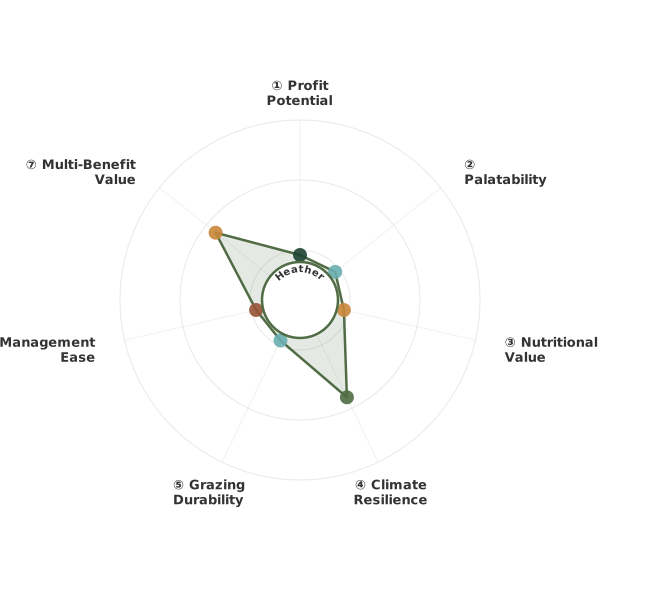
Trait Suitability Explanation
Palatability Not Recommended Heather offers limited palatability and nutritional value, acting as a survival forage for livestock and contributing to biodiversity when not heavily grazed.
Protein Content Not Recommended With naturally low protein, heather supports maintenance diets in challenging landscapes, highlighting the importance of diverse forage systems for livestock production.
Drought Tolerance Adequate Heather exhibits moderate resilience to dry periods, thriving in well-drained soils and contributing to functional landscapes where water management is a priority.
Grazing Tolerance Not Recommended As a woody shrub, heather is best suited for targeted browse or conservation, as its meristems are vulnerable to continuous grazing, emphasizing its role in a diverse ecosystem rather than intensive livestock systems.
Establishment Ease Not Recommended Establishing heather from seed requires patience and careful attention to acidic, well-drained soil conditions, underscoring the value of understanding plant-soil relationships for successful integration.
Multi Benefit Value Adequate Heather excels in supporting pollinator populations and providing habitat for small wildlife, while also contributing to soil stabilization and landscape aesthetics.
Climate Adaptability Adequate Heather thrives in temperate zones, preferring acidic, well-drained soils and demonstrating resilience across a range of conditions.
Maintenance Intensity Adequate Maintaining heather's vigor involves ensuring acidic, well-drained soil and occasional pruning, integrating it into the landscape's natural cycles to prevent issues like root rot.
Seasonal Availability Not Recommended This woody shrub offers year-round presence, providing a consistent element in the landscape for wildlife and contributing to soil cover, though its forage value for livestock is minimal.

Comparative System: Ratings compare plants within their economic category (e.g., cover crop nitrogen fixation compared to other cover crops, not to all plants). Individual farm conditions and management practices significantly influence actual performance.

8

Learn More

Why farmers use this plant and additional resources

Why Regenerative Farmers Use This Plant

Calluna vulgaris, commonly known as Heather or Ling, offers significant regenerative value in livestock systems, particularly in marginal or acidic land where other forages struggle. Its resilience and ability to thrive in poor, infertile, acidic soils (pH 4.0-6.0) make it a valuable component for extending carrying capacity and improving animal health. Its deep, fibrous root system, reaching depths of 12-24 inches (30-60 cm) (and up to 2-4 feet (0.6-1.2 meters) in some descriptions), aids in soil stabilization, preventing erosion on slopes and improving water infiltration, contributing to carbon sequestration in the topsoil and enhancing soil structure and water retention.

This hardy shrub is particularly effective in extending the grazing season, offering a palatable and nutritious forage source during late autumn and winter when many other plants have senesced. Its evergreen nature provides a consistent, albeit lower, quality forage throughout the year. Calluna is highly palatable to sheep and goats, which are adept at browsing its woody stems and leaves, while cattle will graze it when other options are limited. The forage quality, while variable, typically offers 6-10% crude protein and 45-60% Total Digestible Nutrients (TDN) during its peak growth, with a slight decline in winter, still providing essential roughage and trace minerals. During its active growth phase, crude protein can range from 8-12%.

The integration of Calluna vulgaris into pasture systems can lead to improved livestock weight gain and milk production by providing a consistent, low-stress forage option during challenging seasonal periods. In rotational grazing systems on suitable terrain, Calluna can support an estimated 0.5-2.5 Animal Units (AU) per acre (1.2-6.2 AU/ha), especially when integrated with other forage species or during periods when higher-quality pastures are dormant. Its dense growth habit can outcompete certain weeds and provide protective ground cover, contributing to overall pasture resilience. Calluna also provides valuable nectar and pollen for pollinators throughout its blooming period (late summer to early autumn) and offers habitat and shelter for beneficial insects and small wildlife.

Regional success stories highlight Calluna's adaptability. In the UK, it forms the backbone of sheep grazing systems on moorlands, allowing for high stocking rates during the summer and fall. In parts of Scandinavia, it is a crucial component of reindeer grazing, showcasing its ability to sustain large herbivores in cold climates. Australian farmers in cooler, acidic regions have explored its use in mixed-species pastures for sheep and cattle, particularly on sandy or heathland soils where it can provide valuable late-season forage. In New Zealand's South Island, it has been introduced into mixed pastures on acidic soils to improve grazing diversity and extend the season for sheep. In Tasmania, Australia, farmers are exploring its use on heathland pastures to supplement feed for fine-wool sheep, leveraging its tolerance to poor, acidic conditions. In Canada's Atlantic provinces, its resilience to cooler climates makes it a candidate for silvopasture systems, providing understory forage for livestock browsing. Regenerative farmers in North America, such as in the Pacific Northwest of the USA and parts of eastern Canada, are exploring its integration into silvopasture systems and on marginal lands to enhance biodiversity and provide late-season forage for goats and sheep. In the sandy heaths of the Netherlands, it is managed through grazing and mowing to maintain open habitat for ground-nesting birds and provide forage for sheep. Regenerative farmers in the coastal regions of Oregon, USA, are integrating Calluna into silvopasture systems with Douglas fir, using goats to manage its growth and provide late-season forage for their herds. In Australia, on acidic, sandy soils in Western Australia, it can be used in pasture mixes on marginal lands to improve soil health and provide browse for sheep.

9

How to Integrate This Plant

Practical guidance for regenerative systems

Establishing Calluna vulgaris requires careful consideration of its specific needs, particularly its preference for acidic, well-drained soils and its slow initial growth. Seed can be sown at rates of 0.5-2 lbs/acre (0.56-2.2 kg/ha) for broadcast seeding, or 0.25-1 lb/acre (0.28-1.1 kg/ha) when drilled. The planting depth is critical, typically ranging from 0.125-0.25 inches (3-6 mm), as seeds need light to germinate. For denser stands, closer spacing of 6-12 inches (15-30 cm) between plants is recommended, though it can also be established through cuttings or divisions. In the Northern Hemisphere, the ideal sowing times are late spring (April-May) or early autumn (August-September), to allow for establishment before extreme temperatures. In the Southern Hemisphere, this translates to late spring (September-October) and early autumn (March-April). Establishment can take 60-90 days to show significant ground cover, with plants reaching maturity and full flowering in their second to third year.

Once established, Calluna is a low-maintenance species, but management practices are key to its longevity and productivity as a forage. It requires minimal fertility input, thriving on low nutrient levels and benefiting from acidic conditions. Over-fertilization, especially with nitrogen, can be detrimental, leading to weak growth and increased susceptibility to disease. Water needs are moderate; while it tolerates some drought, consistent moisture is beneficial during establishment and dry periods. Initial watering of approximately 0.5-1 inch (1.3-2.5 cm) per week may be necessary during dry spells for young plants. Calluna typically reaches a mature height of 1-3 feet (0.3-0.9 m) over several years, forming dense, shrubby mounds. Pest and disease management primarily involves ensuring good air circulation, avoiding waterlogging, and maintaining a healthy ecosystem that supports beneficial insects.

In terms of grazing management and livestock integration, Calluna excels as a browse species for sheep and goats, which are well-suited to its woody structure. Rotational grazing is highly recommended to manage plant vigor and prevent overgrazing. Animals should be introduced when Calluna is around 6-10 inches (15-25 cm) tall and removed when grazed down to 3-4 inches (8-10 cm). This allows for adequate regrowth and prevents damage to the plant's crown. Rest periods of 45-75 days are crucial for optimal recovery, especially during the active growing season. Calluna has good stockpiling potential, with fall growth providing valuable winter forage, potentially extending the grazing season by 60-90 days in suitable climates. Palatability is highest for sheep and goats, though cattle may be more selective. Forage quality at the vegetative stage can reach 8-12% crude protein, declining to 5-8% in winter, but still providing essential fiber and micronutrients. Older, woody growth is less preferred. It can be stockpiled for winter grazing, providing valuable forage when other pasture species are dormant, potentially extending the grazing season by 4-8 weeks. Crude protein content typically ranges from 6-10% in mature plants, increasing in younger growth.