
Bermuda Grass
Cynodon dactylon, commonly known as Bermudagrass, exhibits potential in regenerative agriculture primarily as a resilient forage and for soil improvement. Studies indicate its capacity to significantly enhance soil quality, notably increasing soil organic matter, total nitrogen, available phosphorus, and microbial activity when established on degraded land such as mine tailings. When managed with amendments like biochar and manure, it can help mitigate soil contaminants and foster beneficial microbial communities in pasture settings. Field trials show significant dry matter yields, particularly when fertilized with organic sources like pelleted poultry litter, suggesting its utility as a forage crop in systems aiming to utilize nutrient cycling. While recognized for its invasive potential and requiring careful management, including strategies like fall plowing to expose rhizomes and targeted tillage during drought, its deep root system and vegetative reproduction through rhizomes contribute to soil stabilization. Research also explores its interaction with arbuscular mycorrhizal fungi, which are crucial for nutrient uptake and plant health in various land-use scenarios.
For a full botanical description see: Plants For A Future(opens in new window) (external link)
Regenerative Quick Profile
All recommendations assume integrated, regenerative practices—not conventional inputs.
Climate & Soil Fit
Climate: Tropical Rainforest, Tropical Monsoon, Tropical Savanna, Hot Semi-Arid (Steppe), Cold Semi-Arid (Steppe), Hot Desert, Cold Desert, Humid Subtropical, Oceanic (Maritime Temperate), Hot-Summer Mediterranean, Warm-Summer Mediterranean, Monsoon-Influenced Humid Subtropical, Subtropical Highland, Hot-Summer Continental, Warm-Summer Continental, Subarctic, Monsoon-Influenced Hot-Summer Continental, Tundra
Zones: USDA 7-11, Australian Zones 3-14
System Role & Functions
Primary: Forage Integration
Secondary: Cover Crop System, Soil Remediation
Key Benefits: Climate adaptable, Drought tolerant, Grazing Tolerance
Management Level
Experience: Beginner-Friendly
Maintenance: Moderate maintenance - As a vigorous species within an integrated system, its dense growth is supported by healthy soil fertility and effective water management, minimizing the need for external interventions.
Value Streams
- Forage production
Know the Debate
- Prolific forage, valuable for dry climates and soil health.
- Gains vary with establishment success and climate.
- High production potential balances invasive risks.
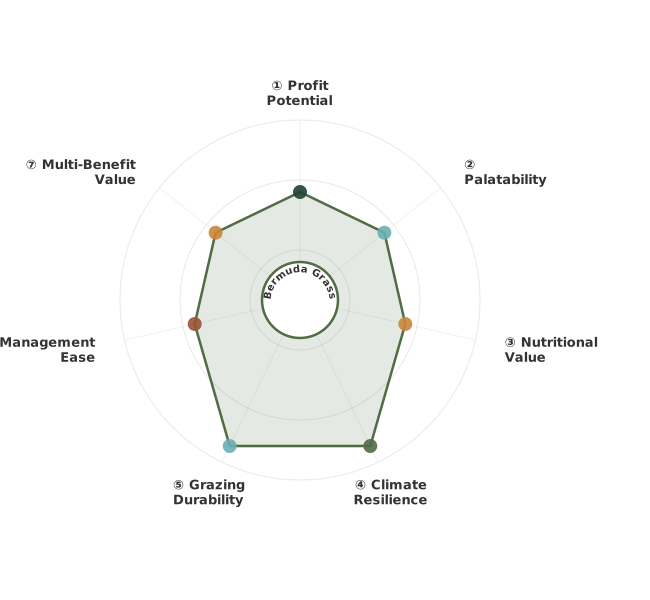
How These Traits Are Calculated
Trait dimensions are ordered clockwise starting from the top of the chart (12 o'clock position):
1. Profit Potential
Economic returns from hay sales, grazing value, and system contributions
WHAT: Synthesizes direct revenue potential (hay sales or grazing service value) with system contributions (nitrogen fixation, reduced supplement needs) into net economic value. Captures both cash income and cost savings.
WHY: Forage profitability comes from two sources—direct sales (hay, haylage) or indirect value (grazing services supporting livestock production). High-value forages provide $300-600/acre in combined revenue and savings versus $100-200/acre for lower-value options. This determines whether forage enterprises are viable versus purchasing feed.
HOW: Scored via LLM synthesis of economics data (hay yields, prices, grazing value), timeline considerations (establishment costs, productive lifespan), and system value (nitrogen contributions, supplement replacement). Exceptional (3.0): High yields with premium pricing or exceptional grazing value plus nitrogen fixation. Typical (2.0): Moderate returns. Limited (1.0): Low yields, commodity pricing, or minimal system contributions.
2. Palatability
Livestock preference and voluntary consumption rates
WHAT: Measures how eagerly livestock consume the forage—preference ranking when choices are available. Highly palatable forages are grazed first and completely; limited palatability means animals avoid unless no alternatives exist.
WHY: Palatability directly determines voluntary intake, which drives animal performance. High-palatability forages support faster weight gain and higher milk production because animals eat more. Low-palatability forages reduce performance and waste productive potential—animals selectively graze preferred species and leave unpalatable plants ungrazed.
HOW: Ratings based on the palatability trait documenting livestock selection preference. Exceptional (3.0): Preferentially selected, high sugar content, tender growth eagerly consumed (orchardgrass, white clover, ryegrass). Typical (2.0): Readily consumed when available. Limited (1.0): Avoided unless no other options (coarse stems, bitter compounds, low digestibility).
3. Nutritional Value
Protein content and forage quality for livestock growth and production
WHAT: Measures protein content as the primary indicator of forage nutritional quality. High-protein forages (>18%) support rapid growth and high milk production; low-protein forages (<12%) require supplementation for production animals.
WHY: Protein is the most expensive supplement in livestock diets ($0.40-0.60/lb). Forages with exceptional protein content eliminate or reduce supplement costs while supporting maximum animal performance. High-quality forage can save $200-400/cow/year in purchased feed versus low-protein options.
HOW: Ratings based on the protein_content trait. Exceptional (3.0): High protein (>18%) supporting rapid weight gain or high milk production (alfalfa, clovers, young grasses). Typical (2.0): Moderate protein (12-18%) for maintenance and moderate production (mature grasses). Limited (1.0): Low protein (<12%) requiring supplementation for production animals (mature warm-season grasses, low-fertility forages).
4. Climate Resilience
Weighted: drought tolerance (60%) + climate adaptability (40%)
WHAT: Combines drought tolerance (primary climate stressor for forages) with overall climate adaptability (temperature range, geographic flexibility). Resilient forages survive extended dry periods and diverse weather patterns.
WHY: Drought is the most common forage crisis—dry years can cut production 50-80% and force costly hay purchases or herd reductions. Drought-tolerant forages maintain productivity through dry spells, reducing feed costs and providing grazing when less-resilient options fail. Geographic adaptability allows forage systems to work across farm regions.
HOW: Weighted formula prioritizes drought tolerance (60% weight) as primary stressor, with climate adaptability (40% weight) for temperature and general flexibility. Exceptional (3.0): Survives extended drought (6+ weeks) with minimal production loss and works across diverse climates. Typical (2.0): Moderate drought and climate tolerance. Limited (1.0): Drought-sensitive or narrow climate requirements.
5. Grazing Durability
Weighted: trampling tolerance (70%) + seasonal availability (30%)
WHAT: Combines grazing tolerance (resistance to trampling and frequent defoliation) with seasonal availability (timing and duration of productive growth). Durable forages handle intensive rotational grazing and provide consistent seasonal production.
WHY: Grazing tolerance determines management system viability. Tolerant forages allow intensive rotational grazing or mob grazing for maximum animal performance and pasture health. Intolerant forages are hay-only or require long rest periods. Seasonal availability indicates production timing—year-round, seasonal gaps, or narrow windows.
HOW: Weighted formula prioritizes grazing tolerance (70% weight) for management system determination, with seasonal availability (30% weight) for production timing. Exceptional (3.0): Handles intensive rotational grazing with consistent seasonal production. Typical (2.0): Moderate tolerance and availability. Limited (1.0): Hay-only species or narrow seasonal production windows.
6. Management Ease
Weighted: establishment ease (50%) + low maintenance needs (50%)
WHAT: Combines establishment difficulty (germination, stand establishment) with ongoing maintenance requirements (fertility, weed control, renovation needs). Easy forages establish reliably and persist without intensive management.
WHY: Pasture establishment is expensive ($150-400/acre) and risky. Easy-to-establish forages reduce stand failure risk and provide quicker returns. Low-maintenance forages reduce annual input costs and labor, improving long-term profitability of grazing systems.
HOW: Weighted formula balances establishment ease (50% weight) for startup success and inverted maintenance intensity (50% weight) for ongoing care. Exceptional (3.0): Fast germination, reliable stand establishment, minimal fertility/weed management needs (white clover, orchardgrass). Typical (2.0): Moderate establishment and care requirements. Limited (1.0): Difficult establishment or intensive maintenance (heavy fertility, frequent renovation, weed competition).
7. Multi-Benefit Value
Ecosystem services beyond forage—nitrogen fixation, pollinator support, wildlife habitat
WHAT: Measures ecosystem services provided beyond livestock nutrition. Multi-benefit forages contribute nitrogen fixation (legumes), pollinator support (flowering species), wildlife habitat, soil building, erosion control, and biodiversity support.
WHY: Forage systems can either extract from farm ecosystems or contribute to them. Nitrogen-fixing legumes (clovers, alfalfa) provide $80-150/acre/year worth of fertility for companion grasses and following crops. Flowering forages support pollinators critical for fruit/vegetable crops. These service-stacking forages deliver total system value beyond livestock production.
HOW: Ratings based on the multi_benefit_value trait documenting service diversity. Exceptional (3.0): Multiple significant benefits (legumes fixing 80-150 lbs N/acre/year + pollinator support + wildlife forage). Typical (2.0): Some ecosystem contributions. Limited (1.0): Single-purpose forage with minimal ecosystem services beyond grazing value.
Ratings are based on documented performance in regenerative systems, not conventional high-input scenarios. All traits assume integrated management practices focused on soil health and ecosystem services.
5
Management & Care Requirements
Integration guidance, maintenance needs, and care practices
Management & Care Requirements
Integration guidance, maintenance needs, and care practices
How to Integrate This Plant
Bermudagrass (Cynodon dactylon), a highly adaptable warm-season perennial grass, can be integrated into regenerative systems primarily as a forage for livestock and for soil health improvement. Its primary function is forage integration, offering a productive pasture component, especially in warmer climates. It can be incorporated into mob grazing systems, where its vigorous growth and rhizomatous spread contribute to ground cover and nutrient cycling. Bermudagrass's dense root system also offers significant erosion control benefits, stabilizing soils on slopes or in areas prone to disturbance. While not a nitrogen fixer or a tree, its value lies in its ability to produce substantial biomass for grazing and its potential to improve soil organic matter and soil quality, as demonstrated in mine tailings remediation studies. Its contribution to soil health and biomass production begins in Year 1, with significant soil stabilization and forage yield developing by Year 3-5.
Integration Practices & Management
Regenerative agriculture integration of *Cynodon dactylon* (bermudagrass) is primarily explored in the provided sources through its role in soil improvement and its management as a persistent plant. Source highlights its significant potential for phytostabilization on mine tailings, where it increased soil organic matter by over 100% and boosted available phosphorus by 170%, alongside substantial improvements in nitrogen and enzyme activities. This suggests a role in rehabilitating degraded soils. While direct integration into cash crop rotations is not detailed, its resilience and vegetative reproduction via rhizomes and runners imply it could be a component in long-term cover cropping systems or pasture renovation. Management strategies focus on control of its invasive tendencies, particularly in colder climates where fall plowing to expose rhizomes to freezing can reduce infestations. In drought-prone areas, repeated tillage when the soil is dry is recommended. For pastures, studies examine its response to nitrogen sources, noting yield increases with pelleted poultry litter and urea. The sources do not provide specific details on establishment methods, companion planting, mob grazing, or crimping as termination strategies. Termination is largely discussed in terms of preventing its spread or managing it as a weed, with natural winterkill being a potential factor in colder regions.
Management Profile
Maintenance Intensity: Adequate - As a vigorous species within an integrated system, its dense growth is supported by healthy soil fertility and effective water management, minimizing the need for external interventions.
Sources behind this view
 Community
-
Integrates Bermuda grass into permaculture by using it as a living mulch and 'chop and drop' fertilizer, managed by mowing or livestock grazing, with strategies like sheet mulching and animal tractors
Read more (opens in new window) permies.com
 Research
-
Agronomic Practices and Breeding Progress of Forage Bermudagrass Under Abiotic Stress Conditions (opens in new window)
This study found: ABSTRACTAs a globally important C4 forage grass, bermudagrass (Cynodon dactylon) is widely used in forage production under challenging environments, including drought, saline, and nutrient‐poor soils,
-
Phytostabilization potential and microbial response to the reclamation of native Cynodon dactylon in spoil heaps from a multiple-metal mining site in Southwest China. (opens in new window)
This study found: Bermudagrass (Cynodon dactylon) significantly improved soil quality and microbial health on lead-zinc mine tailings in Southwest China, showing resilience to cadmium and benefiting from beneficial roo
8
Know the Debate
Bermudagrass (Cynodon dactylon) offers significant benefits as a resilient forage and soil builder, particularly in warmer climates. Its high bioma...
Know the Debate
Bermudagrass (Cynodon dactylon) offers significant benefits as a resilient forage and soil builder, particularly in warmer climates. Its high bioma...
Bermudagrass (Cynodon dactylon) offers significant benefits as a resilient forage and soil builder, particularly in warmer climates. Its high biomass production, drought tolerance, and deep root system contribute to livestock carrying capacity and carbon sequestration. However, its establishment requires specific conditions, and its aggressive growth habit necessitates careful management to prevent it from becoming an invasive weed. Outcomes can vary significantly based on regional climate, soil fertility, and management intensity, impacting both its regenerative utility and its potential ecological footprint.
Is Bermudagrass a regenerative tool or an invasive risk?
Valuable forage and soil builder
Research highlights bermudagrass's heat and drought tolerance, high yields, and soil stabilization potential, making it a productive forage that improves soil health and carbon sequestration in suitable environments.
Sources behind this view
Sources behind this view
 Videos & Podcasts
-
Warm-season C4 grasses are highly water-efficient and thrive in heat, maximizing biomass production and enhancing soil health and fungal growth. They offer a significant advantage over cool-season plants, especially in summer or short growing seasons, by capturing more energy and reducing reliance on purchased feed.
![Thumbnail for [S3E2] Farmer Panel: Evolution of Swath Grazing](/static/thumbnails/agdrYmnBolY.jpg)
Research
-
Agronomic Practices and Breeding Progress of Forage Bermudagrass Under Abiotic Stress Conditions (opens in new window)
This study found: ABSTRACTAs a globally important C4 forage grass, bermudagrass (Cynodon dactylon) is widely used in forage production under challenging environments, including drought, saline, and nutrient‐poor soils, due to its high stress tolerance and nutritional value. This article reviews the performance of bermudagrass under stress conditions and summarises its production potential under various management strategies, such as optimised N fertilisation, controlled mowing height, and the use of plant growth‐promoting rhizobacteria. Research demonstrates that these strategies can significantly improve water use efficiency and forage quality while maintaining high yield. Additionally, molecular breeding and multi‐omics technologies—such as CRISPR/Cas9 gene editing, miRNA regulation, transcriptomics, and proteomics—show substantial potential in enhancing the stress tolerance and production quality of bermudagrass. Future research should focus on the development of molecular markers and the genetic improvement of bermudagrass under multiple stress conditions. These advances can be applied to promote its efficient and sustainable use, thereby providing scientific support to address environmental challenges in global agricultural production. However, the regulatory mechanisms of key functional genes under salt and drought stress remain insufficiently characterised, and the synergistic response mechanisms to multiple abiotic stresses have not been fully elucidated.
 From the Web
-
Details bermudagrass ecology: native to Africa/Asia, widespread, reproduces via rhizomes/runners. Seed germination requires fluctuating temps, light, nitrates. C4 photosynthesis, heat-loving, frost-sensitive, moderately drought-tolerant, responds to fertility, and intolerant of shade.
Aggressive invasive weed potential
Field reports and ecological studies detail bermudagrass's invasive nature, spreading aggressively via rhizomes and runners, outcompeting native vegetation and requiring intensive management to control.
Sources behind this view
Sources behind this view
Videos & Podcasts
-
Integrating warm-season perennials into C3 pastures improves drought tolerance, water efficiency, and winter grazing potential. Alternating grazing and long rest periods builds robust stands. High-fiber C4 grasses are vital for winter survival in cold climates.

Research
-
Root Functional Traits and Water Erosion-Reducing Potential of Two Indigenous C4 Grass Species for Erosion Control of Mudstone Badlands in Taiwan (opens in new window)
This study found: In southern Taiwan, a study looked at two native grasses, Bermuda grass (Cynodon dactylon) and Centipedegrass (Eremochloa ophiuroides), to see how well they could stop soil erosion on steep, clay hillsides. These areas are prone to washing away during heavy rains, causing problems like sediment buildup in reservoirs. The researchers found that Bermuda grass has much stronger roots that hold the soil better and are harder to break than Centipedegrass roots. In tests simulating heavy rain, Bermuda grass also kept significantly less soil from washing away. This means Bermuda grass is a better choice for controlling erosion on these challenging slopes. More research is needed on how to best plant these grasses over large areas.
From the Web
-
Manages bermudagrass by preventing spread, using fall plowing in cold climates, intensive tillage during drought, and competitive cover crops like rye, winter oats, cowpeas, and velvetbeans for suppression via shade and disturbance.
Making Sense of the Differences
Bermudagrass offers high regenerative potential for forage and soil health in warmer climates, but its aggressive growth habit necessitates careful management to prevent it from becoming an invasive weed and disrupting native ecosystems. Farmers must weigh its production benefits against the risk of uncontrolled spread and the labor required for containment, especially in ecologically sensitive areas or where native flora is prioritized.
How quickly can bermudagrass be established and productive?
High yield with optimal conditions
With proper soil temperatures (>65°F), adequate moisture, and precise seeding/sprigging rates, bermudagrass can establish quickly, offering significant dry matter yields and nutritional value within its first growing season.
Sources behind this view
Sources behind this view
Videos & Podcasts
-
Warm-season C4 grasses are highly water-efficient and thrive in heat, maximizing biomass production and enhancing soil health and fungal growth. They offer a significant advantage over cool-season plants, especially in summer or short growing seasons, by capturing more energy and reducing reliance on purchased feed.
Research
-
Agronomic Practices and Breeding Progress of Forage Bermudagrass Under Abiotic Stress Conditions (opens in new window)
This study found: ABSTRACTAs a globally important C4 forage grass, bermudagrass (Cynodon dactylon) is widely used in forage production under challenging environments, including drought, saline, and nutrient‐poor soils, due to its high stress tolerance and nutritional value. This article reviews the performance of bermudagrass under stress conditions and summarises its production potential under various management strategies, such as optimised N fertilisation, controlled mowing height, and the use of plant growth‐promoting rhizobacteria. Research demonstrates that these strategies can significantly improve water use efficiency and forage quality while maintaining high yield. Additionally, molecular breeding and multi‐omics technologies—such as CRISPR/Cas9 gene editing, miRNA regulation, transcriptomics, and proteomics—show substantial potential in enhancing the stress tolerance and production quality of bermudagrass. Future research should focus on the development of molecular markers and the genetic improvement of bermudagrass under multiple stress conditions. These advances can be applied to promote its efficient and sustainable use, thereby providing scientific support to address environmental challenges in global agricultural production. However, the regulatory mechanisms of key functional genes under salt and drought stress remain insufficiently characterised, and the synergistic response mechanisms to multiple abiotic stresses have not been fully elucidated.
From the Web
-
Details bermudagrass ecology: native to Africa/Asia, widespread, reproduces via rhizomes/runners. Seed germination requires fluctuating temps, light, nitrates. C4 photosynthesis, heat-loving, frost-sensitive, moderately drought-tolerant, responds to fertility, and intolerant of shade.
Challenging establishment requires patience
Smooth bermudagrass establishment can be challenging, with seeds needing shallow incorporation and warm, anaerobic/flooded conditions for germination, often taking one to two growing seasons for full sod formation.
Sources behind this view
Sources behind this view
Videos & Podcasts
-
Discusses cool-season grasses: Oats (quick germination, forage, nurse crop), Cereal Rye (late planting, biomass, spring growth), Triticale (TR) (forage, ahead of corn), Barley (high pH, lower biomass), Wheat (later maturity), and Annual Ryegrass (shade tolerant, corn interseeding).

-
Discusses cool-season grasses: Oats (quick germination, forage, nurse crop), Cereal Rye (late planting, biomass, spring growth), Triticale (TR) (forage, ahead of corn), Barley (high pH, lower biomass), Wheat (later maturity), and Annual Ryegrass (shade tolerant, corn interseeding).
From the Web
-
Details barnyardgrass ecology: native to South Asia/Europe, globally distributed. Seeds are dormant, break with after-ripening, germinate in warm, anaerobic, flooded conditions (77-100°F). Seeds persist 3+ years. Emerges mid-spring to early summer from 0.5-2 inches. C4 plant, frost sensitive, drought tolerant, highly responsive to fertility, tolerates shade and waterlogging. Produces many seeds, dispersed by equipment, water, animals.
Making Sense of the Differences
Bermudagrass's productivity is directly tied to successful establishment, which requires specific warm soil temperatures, adequate moisture, and careful seeding or sprigging techniques. While established stands are highly resilient and productive, farmers must plan for potential challenges during the initial planting phase, understanding that full sod cover can take one to two growing seasons. Choosing appropriate planting methods and timing is critical for maximizing early growth and long-term stand success.
9
Learn More
Why farmers use this plant and additional resources
Learn More
Why farmers use this plant and additional resources
Why Regenerative Farmers Use This Plant
Bermudagrass (Cynodon dactylon) is a highly resilient and productive warm-season perennial grass that offers substantial regenerative benefits when integrated into livestock systems. Its aggressive rhizomatous and stoloniferous growth habit allows it to produce significant biomass, typically ranging from 4,000 to 8,000 lbs of dry matter per acre (4,500-9,000 kg/ha) annually in optimal conditions. This high yield translates directly into increased carrying capacity, capable of supporting 2-4 Animal Units per acre (5-10 AU/ha) during its peak growing season under well-managed rotational grazing.
The robust root system, which can extend 2-6 feet (0.6-1.8 m) deep, contributes to significant carbon sequestration potential in the soil profile. Estimates suggest it can contribute to building soil organic matter by 0.2-0.5% per year in suitable environments, with some systems estimating 1-3 tons of CO2 equivalent per acre annually. Its exceptional palatability and nutritional profile, with crude protein levels often between 14-18% at the vegetative stage and Total Digestible Nutrients (TDN) of 60-70%, promote excellent livestock weight gain and milk production. Daily gains of 1.5-3.0 lbs (0.7-1.4 kg) per head are achievable in well-managed, fertilized stands.
Beyond its direct forage production, Bermudagrass excels in system integration by providing excellent ground cover that effectively suppresses weeds and prevents soil erosion, particularly on slopes and in areas prone to wind and water runoff. Its dense sod protects the soil surface from harsh weather and reduces the need for mechanical weed control. In crop rotations, it can serve as a valuable component of a pasture phase, breaking disease cycles and improving soil structure after intensive cropping. Its ability to scavenge nutrients from deeper soil profiles also contributes to overall farm nutrient cycling. While not a nitrogen fixer, its efficient nutrient uptake reduces the reliance on synthetic fertilizers, especially when managed with integrated nutrient strategies like rotational grazing and manure application.
The ecological services provided by Bermudagrass extend to supporting beneficial insect populations and improving soil health. The dense canopy creates habitat for various ground-dwelling insects and arthropods, contributing to a more robust farm ecosystem. Its extensive root system enhances soil aggregation and porosity, leading to improved water infiltration rates, which is crucial for drought resilience and reducing surface runoff. This improved water management can lead to fewer downstream sedimentation issues and better aquifer recharge.
Bermudagrass has a long history of successful integration in diverse agricultural landscapes. In the United States, it is a cornerstone of cattle ranching in the Southeast and Southwest, supporting high stocking rates on ranches from Texas to Florida. Australian farmers utilize it extensively in mixed farming systems, particularly in the warmer, drier inland regions and the wheat-sheep belt, to provide summer grazing for sheep and cattle. In Brazil, it is a common pasture species in cattle-producing regions, contributing significantly to the nation's beef industry. Its adaptability also sees it used in regions like South Africa for livestock grazing and erosion control, and in subtropical regions of South America as a dominant pasture species. In India, it is used in more intensive systems for dairy cattle.
Sources behind this view
Research
-
Phytostabilization potential and microbial response to the reclamation of native Cynodon dactylon in spoil heaps from a multiple-metal mining site in Southwest China. (opens in new window)
This study found: Bermudagrass (Cynodon dactylon) significantly improved soil quality and microbial health on lead-zinc mine tailings in Southwest China, showing resilience to cadmium and benefiting from beneficial roo
-
Root Functional Traits and Water Erosion-Reducing Potential of Two Indigenous C4 Grass Species for Erosion Control of Mudstone Badlands in Taiwan (opens in new window)
This study found: Bermuda grass has stronger roots and significantly reduces soil erosion more effectively than Centipedegrass on Taiwan's mudstone hillsides, making it a better choice for erosion control.
-
Agronomic Practices and Breeding Progress of Forage Bermudagrass Under Abiotic Stress Conditions (opens in new window)
This study found: ABSTRACTAs a globally important C4 forage grass, bermudagrass (Cynodon dactylon) is widely used in forage production under challenging environments, including drought, saline, and nutrient‐poor soils,