
Birdsfoot Trefoil
Birdsfoot trefoil (*Lotus corniculatus*) serves as a valuable forage legume in regenerative agriculture, particularly noted for its role in mitigating bloat risk when grazed alongside alfalfa by cattle. It is integrated into diverse pasture mixes, contributing to improved soil structure and water infiltration, acting like a sponge instead of generating runoff. Its inclusion in pasture systems, often alongside other clovers and grasses, is a feature of adaptive grazing with extended rest periods, allowing for the emergence of more resilient plant communities. While not explicitly detailed as a cover crop in these excerpts, its presence in diverse pastures implies contributions to soil health, potentially including nitrogen fixation. Farmer experience highlights its preference over alfalfa in certain grazing scenarios and its inclusion in long-term bale grazing plans aimed at improving soil health and pasture yields. Practical insights suggest a minimum cutting height of 3 inches for optimal stand longevity when harvested for stored feed. Establishing birdsfoot trefoil requires careful attention to seeding depth (preferably 0.6 cm, no deeper than 1.3 cm) and seed-to-soil contact through cultipacking for successful emergence.
For a full botanical description see: Plants For A Future(opens in new window) (external link)
Regenerative Quick Profile
All recommendations assume integrated, regenerative practices—not conventional inputs.
Climate & Soil Fit
Climate: Tropical Rainforest, Tropical Monsoon, Tropical Savanna, Hot Semi-Arid (Steppe), Cold Semi-Arid (Steppe), Hot Desert, Cold Desert, Humid Subtropical, Oceanic (Maritime Temperate), Hot-Summer Mediterranean, Warm-Summer Mediterranean, Monsoon-Influenced Humid Subtropical, Subtropical Highland, Hot-Summer Continental, Warm-Summer Continental, Subarctic, Monsoon-Influenced Hot-Summer Continental, Tundra
Zones: USDA 4-8, Australian Zones 3-5
Optimal Soil: Loam Soil
System Role & Functions
Primary: Forage Integration
Secondary: Nitrogen Fixer, Cover Crop System
Key Benefits: Multi-benefit value, Drought tolerant, Protein Content
Management Level
Experience: Beginner-Friendly
Maintenance: Moderate maintenance - As a self-sufficient nitrogen fixer with moderate drought tolerance, birdsfoot trefoil requires minimal intervention, with stand density maintained through natural regeneration and strategic grazing.
Value Streams
- Forage production
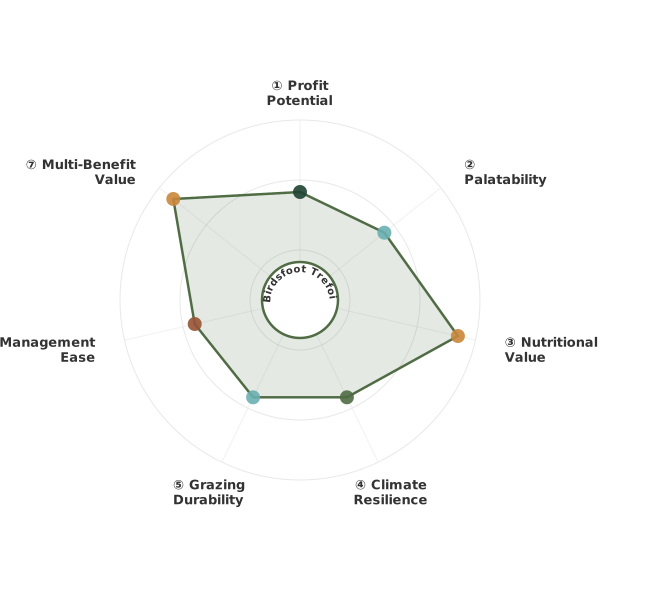
How These Traits Are Calculated
Trait dimensions are ordered clockwise starting from the top of the chart (12 o'clock position):
1. Profit Potential
Economic returns from hay sales, grazing value, and system contributions
WHAT: Synthesizes direct revenue potential (hay sales or grazing service value) with system contributions (nitrogen fixation, reduced supplement needs) into net economic value. Captures both cash income and cost savings.
WHY: Forage profitability comes from two sources—direct sales (hay, haylage) or indirect value (grazing services supporting livestock production). High-value forages provide $300-600/acre in combined revenue and savings versus $100-200/acre for lower-value options. This determines whether forage enterprises are viable versus purchasing feed.
HOW: Scored via LLM synthesis of economics data (hay yields, prices, grazing value), timeline considerations (establishment costs, productive lifespan), and system value (nitrogen contributions, supplement replacement). Exceptional (3.0): High yields with premium pricing or exceptional grazing value plus nitrogen fixation. Typical (2.0): Moderate returns. Limited (1.0): Low yields, commodity pricing, or minimal system contributions.
2. Palatability
Livestock preference and voluntary consumption rates
WHAT: Measures how eagerly livestock consume the forage—preference ranking when choices are available. Highly palatable forages are grazed first and completely; limited palatability means animals avoid unless no alternatives exist.
WHY: Palatability directly determines voluntary intake, which drives animal performance. High-palatability forages support faster weight gain and higher milk production because animals eat more. Low-palatability forages reduce performance and waste productive potential—animals selectively graze preferred species and leave unpalatable plants ungrazed.
HOW: Ratings based on the palatability trait documenting livestock selection preference. Exceptional (3.0): Preferentially selected, high sugar content, tender growth eagerly consumed (orchardgrass, white clover, ryegrass). Typical (2.0): Readily consumed when available. Limited (1.0): Avoided unless no other options (coarse stems, bitter compounds, low digestibility).
3. Nutritional Value
Protein content and forage quality for livestock growth and production
WHAT: Measures protein content as the primary indicator of forage nutritional quality. High-protein forages (>18%) support rapid growth and high milk production; low-protein forages (<12%) require supplementation for production animals.
WHY: Protein is the most expensive supplement in livestock diets ($0.40-0.60/lb). Forages with exceptional protein content eliminate or reduce supplement costs while supporting maximum animal performance. High-quality forage can save $200-400/cow/year in purchased feed versus low-protein options.
HOW: Ratings based on the protein_content trait. Exceptional (3.0): High protein (>18%) supporting rapid weight gain or high milk production (alfalfa, clovers, young grasses). Typical (2.0): Moderate protein (12-18%) for maintenance and moderate production (mature grasses). Limited (1.0): Low protein (<12%) requiring supplementation for production animals (mature warm-season grasses, low-fertility forages).
4. Climate Resilience
Weighted: drought tolerance (60%) + climate adaptability (40%)
WHAT: Combines drought tolerance (primary climate stressor for forages) with overall climate adaptability (temperature range, geographic flexibility). Resilient forages survive extended dry periods and diverse weather patterns.
WHY: Drought is the most common forage crisis—dry years can cut production 50-80% and force costly hay purchases or herd reductions. Drought-tolerant forages maintain productivity through dry spells, reducing feed costs and providing grazing when less-resilient options fail. Geographic adaptability allows forage systems to work across farm regions.
HOW: Weighted formula prioritizes drought tolerance (60% weight) as primary stressor, with climate adaptability (40% weight) for temperature and general flexibility. Exceptional (3.0): Survives extended drought (6+ weeks) with minimal production loss and works across diverse climates. Typical (2.0): Moderate drought and climate tolerance. Limited (1.0): Drought-sensitive or narrow climate requirements.
5. Grazing Durability
Weighted: trampling tolerance (70%) + seasonal availability (30%)
WHAT: Combines grazing tolerance (resistance to trampling and frequent defoliation) with seasonal availability (timing and duration of productive growth). Durable forages handle intensive rotational grazing and provide consistent seasonal production.
WHY: Grazing tolerance determines management system viability. Tolerant forages allow intensive rotational grazing or mob grazing for maximum animal performance and pasture health. Intolerant forages are hay-only or require long rest periods. Seasonal availability indicates production timing—year-round, seasonal gaps, or narrow windows.
HOW: Weighted formula prioritizes grazing tolerance (70% weight) for management system determination, with seasonal availability (30% weight) for production timing. Exceptional (3.0): Handles intensive rotational grazing with consistent seasonal production. Typical (2.0): Moderate tolerance and availability. Limited (1.0): Hay-only species or narrow seasonal production windows.
6. Management Ease
Weighted: establishment ease (50%) + low maintenance needs (50%)
WHAT: Combines establishment difficulty (germination, stand establishment) with ongoing maintenance requirements (fertility, weed control, renovation needs). Easy forages establish reliably and persist without intensive management.
WHY: Pasture establishment is expensive ($150-400/acre) and risky. Easy-to-establish forages reduce stand failure risk and provide quicker returns. Low-maintenance forages reduce annual input costs and labor, improving long-term profitability of grazing systems.
HOW: Weighted formula balances establishment ease (50% weight) for startup success and inverted maintenance intensity (50% weight) for ongoing care. Exceptional (3.0): Fast germination, reliable stand establishment, minimal fertility/weed management needs (white clover, orchardgrass). Typical (2.0): Moderate establishment and care requirements. Limited (1.0): Difficult establishment or intensive maintenance (heavy fertility, frequent renovation, weed competition).
7. Multi-Benefit Value
Ecosystem services beyond forage—nitrogen fixation, pollinator support, wildlife habitat
WHAT: Measures ecosystem services provided beyond livestock nutrition. Multi-benefit forages contribute nitrogen fixation (legumes), pollinator support (flowering species), wildlife habitat, soil building, erosion control, and biodiversity support.
WHY: Forage systems can either extract from farm ecosystems or contribute to them. Nitrogen-fixing legumes (clovers, alfalfa) provide $80-150/acre/year worth of fertility for companion grasses and following crops. Flowering forages support pollinators critical for fruit/vegetable crops. These service-stacking forages deliver total system value beyond livestock production.
HOW: Ratings based on the multi_benefit_value trait documenting service diversity. Exceptional (3.0): Multiple significant benefits (legumes fixing 80-150 lbs N/acre/year + pollinator support + wildlife forage). Typical (2.0): Some ecosystem contributions. Limited (1.0): Single-purpose forage with minimal ecosystem services beyond grazing value.
Ratings are based on documented performance in regenerative systems, not conventional high-input scenarios. All traits assume integrated management practices focused on soil health and ecosystem services.
4
System Role & Multi-Benefit Value
Functional roles, integration strategies, and stacked benefits
System Role & Multi-Benefit Value
Functional roles, integration strategies, and stacked benefits
Functional Role
Total System Value
Birdsfoot trefoil offers significant whole-farm resilience by enhancing pasture systems. Its direct harvest value lies in providing high-quality, non-bloating forage for livestock, particularly cattle. System enhancement includes nitrogen fixation, enriching the soil and reducing the need for synthetic fertilizers, and improving soil structure, leading to better water infiltration and reduced erosion, as observed in diverse pasture mixes (Excerpt 5). Ecosystem services include supporting soil microbial communities through legume activity and potentially providing habitat for beneficial insects. While not explicitly detailed in the excerpts, its presence in diverse pastures contributes to biodiversity. Risk diversification is achieved by incorporating a legume that mitigates bloat risk in cattle (Excerpt 1), adding a layer of safety to grazing management. Its contribution to higher forage Brix levels (Excerpt 4) also indicates improved nutritional quality, enhancing animal health and productivity.
Integration Characteristics
Multi-Benefit Value: Ideally Suited - This resilient nitrogen fixer enhances soil fertility, supports vital pollinator populations, and improves soil structure, offering synergistic benefits to the entire farming ecosystem.
Sources behind this view
 Research
-
Functional traits in cover crop mixtures: Biological nitrogen fixation and multifunctionality (opens in new window)
Mixed cover crops with diverse plant types (legumes, brassicas, grasses) offer multiple farm benefits (ecosystem services) better than single-species stands. Complementary traits enhance sustainabilit
-
Diversification and ecosystem services for conservation agriculture: Outcomes from pastures and integrated crop–livestock systems (opens in new window)
Conservation farming with diverse plants and integrated crop-livestock systems enhances environmental benefits like soil carbon storage and nutrient cycling, while minimizing soil disturbance and maxi
5
Management & Care Requirements
Integration guidance, maintenance needs, and care practices
Management & Care Requirements
Integration guidance, maintenance needs, and care practices
How to Integrate This Plant
Birdsfoot trefoil (Lotus corniculatus) is a valuable non-tree legume for regenerative systems, primarily serving as excellent forage and aiding in forage integration. Its key role is as a non-bloating legume, making it a safer grazing option for cattle, especially when interceded into alfalfa stands (Excerpt 1). It can also be integrated into diverse pasture mixes to improve soil health and forage quality, as seen in systems with fescue, clovers, and native grasses (Excerpt 5). Compatible practices include diverse pasture rotations and potentially bale grazing (Excerpt 4). Birdsfoot trefoil can begin providing forage value from Year 1, with stand longevity and soil benefits increasing over time. Its multi-benefit stacking includes nitrogen fixation, improved soil structure, and higher forage quality (e.g., Brix content, Excerpt 4), contributing to reduced reliance on external inputs and enhanced farm resilience. It can be seeded in spring or autumn with specific depth and seedbed requirements for successful establishment (Excerpt 8).
Integration Practices & Management
Birdsfoot trefoil (Lotus corniculatus) is integrated into regenerative agriculture systems primarily as a component of pasture mixes or as a cover crop, leveraging its nitrogen-fixing capabilities and bloat-mitigating properties. Farmers may intercede birdsfoot trefoil into existing alfalfa stands to achieve a target of 30% or more, helping to reduce bloat risk for grazing cattle. It can also emerge in pastures under adaptive grazing systems with extended rest periods, suggesting natural establishment from a latent seed bank. Research includes trials with birdsfoot trefoil monocultures and in combinations with other legumes like sainfoin and alfalfa for grazing experiments. While specific seeding rates, timing, and tillage methods for establishment are not detailed across the provided sources, its inclusion in pasture mixes is a key strategy. For grazing management, birdsfoot trefoil is part of diverse forage systems, and its tolerance to grazing is an important consideration. One source mentions a minimum cutting height of 3 inches for birdsfoot trefoil during mechanical harvesting for stored feed, indicating a need to manage cutting height to ensure stand longevity. Bale grazing practices have shown birdsfoot trefoil to have a Brix content of 15, contributing to improved forage quality and soil health. Termination strategies are not explicitly detailed, but natural winterkill or grazing management could play a role in its persistence or removal. Its integration into cash crop rotations is not a primary focus in these sources, but its presence in diverse pasture systems contributes to overall farm resilience and fertility.
Management Profile
Maintenance Intensity: Adequate - As a self-sufficient nitrogen fixer with moderate drought tolerance, birdsfoot trefoil requires minimal intervention, with stand density maintained through natural regeneration and strategic grazing.
Sources behind this view
 Videos & Podcasts
-
Birdsfoot trefoil reduces bloat and controls parasites in cattle due to condensed tannins. It thrives in poor, acidic, dry soils, fixes nitrogen, and offers long-term palatability and pasture resilien
6
Economics & Value Streams
Direct harvest, system benefits, ecosystem services, and risk diversification
Economics & Value Streams
Direct harvest, system benefits, ecosystem services, and risk diversification
Comprehensive economic analysis including direct harvest value, system enhancement contributions, ecosystem services, value timeline, and risk diversification strategies.
Economics in Regenerative Systems
| Metric | Value |
|---|---|
| Seed Cost | $30-60/acre $74-148/ha |
| Establishment Cost | $200-350/acre $494-864/ha |
| Forage Yield | 2-4 tons/acre/year 2-4 tons/ha/year |
| Annual Management Cost | $50-100/acre $123-247/ha |
| Value/Sale Price | $90-160/ton $90-160/tonne |
| Net Annual Return* | $-270 to $390/acre/year |
Values represent typical ranges for regenerative agriculture contexts. Actual results vary by region, management, and market conditions. Costs exclude land and labor.
* Net Annual Return = (Yield × Market Price) − (Amortized Establishment Cost + Annual Maintenance). This return is realized only at/after first harvest; early years have costs but no revenue. Range shows worst case to best case scenarios.
System Enhancement Value
Beyond harvest: livestock nutrition, soil building, and pasture improvement
Nitrogen Fixation (if legume)
30-100 lbs N/acre/year = $18-60/acre fertilizer replacement (based on $0.60/lb N)
Birdsfoot trefoil (Lotus corniculatus) is a legume, and as such, it engages in a symbiotic relationship with Rhizobia bacteria in its root nodules. This process allows it to fix atmospheric nitrogen (N2) into a usable form for plant uptake. This nitrogen fixation significantly reduces or eliminates the need for synthetic nitrogen fertilizers, which are energy-intensive to produce and can have detrimental environmental impacts. By incorporating birdsfoot trefoil into pasture systems, as mentioned in the knowledge base excerpts, farmers can benefit from a natural and sustainable source of nitrogen. This not only lowers input costs but also contributes to improved soil fertility and a more resilient ecosystem. The nitrogen released from decomposing birdsfoot trefoil residue enriches the soil, benefiting subsequent or companion crops and forages. This natural fertilization is particularly valuable in integrated farm systems where maintaining soil health is paramount for long-term productivity and sustainability.
Livestock Nutrition & Soil Building
Birdsfoot trefoil offers several significant system benefits beyond direct forage. Its tannin content, as noted in transcript, is crucial for mitigating bloat risk in ruminant livestock grazing on high-legume pastures, particularly when interseeded with alfalfa. This reduces veterinary costs and animal losses. Furthermore, birdsfoot trefoil can contribute to improved soil health through its nitrogen-fixing capabilities, enhancing soil structure and organic matter over time. Its persistent root system can help stabilize soil and reduce erosion. In grazing systems, its inclusion can increase pasture biodiversity, leading to greater resilience against pests and diseases, and a more consistent forage supply. The plant's palatability and nutritional value contribute to improved animal performance and health, as highlighted in the general benefits of legumes in pasture systems.
Ecosystem Service Contributions
Environmental contributions: carbon, pollinators, wildlife, and water
- Carbon Sequestration: Birdsfoot trefoil, as a perennial legume, contributes to soil organic carbon sequestration through the decomposition of its biomass and root exudates. Its perennial nature and nitrogen-fixing ability support a healthy soil microbiome, further enhancing carbon storage potential over time, especially when incorporated into well-managed grazing systems.
- Pollinator Support: Medium - Birdsfoot trefoil produces flowers that are attractive to a variety of pollinators, including bees. While not as dominant a pollinator attractant as some other flowering plants, it provides a valuable nectar and pollen source, contributing to local pollinator populations.
- Wildlife Habitat: Birdsfoot trefoil can provide browse for certain wildlife species and contribute to the overall diversity of forage available in mixed pastures. Its root structure can also offer some habitat for soil organisms.
- Water Quality: Not applicable
Value Timeline: Forage Establishment & Production
When you'll see results: annuals year 1, perennial establishment 1-2, peak 3-10
Years 1-2
Nitrogen fixation begins, providing a natural fertility boost to the soil. Initial forage contribution for livestock, though stand establishment may still be developing. Erosion control benefits from root development.
Years 3-5
Established nitrogen fixation significantly reduces or eliminates the need for external nitrogen inputs. Birdsfoot trefoil becomes a more consistent and valuable component of the forage mix, contributing to improved animal performance and health. Bloat mitigation benefits become more pronounced with a well-established stand. Increased pasture biodiversity.
Years 10-20
Full realization of nitrogen contribution, leading to sustained soil fertility and reduced input costs. Long-term improvement in soil structure and organic matter. Consistent forage provision contributing to robust livestock production. Mature ecosystem services including enhanced soil health and biodiversity.
20+ Years
Continued long-term contribution to soil health and fertility. Potentially increased resilience of the farming system due to established ecological benefits. Sustained provision of ecosystem services.
Farm Risk Reduction
How this reduces farm risk: feed cost reduction and livestock performance
- Multiple Revenue Streams: ['Forage for livestock', 'Reduced fertilizer costs', 'Reduced bloat-related animal losses', 'Improved soil health and fertility (indirect economic benefit)']
- Temporal Income Spread: Value is spread through ongoing ecosystem services (nitrogen fixation, soil health) and consistent forage provision throughout the grazing season. The plant contributes to a more resilient and less input-dependent system, buffering against market volatility for inputs like fertilizer.
- Market Risk Hedge: By reducing reliance on external inputs like synthetic nitrogen fertilizers, birdsfoot trefoil acts as a hedge against fluctuating fertilizer prices. Its contribution to animal health and performance also reduces risks associated with livestock production. The increased resilience and sustainability of the pasture system provide a buffer against environmental and economic shocks.
Sources behind this view
Videos & Podcasts
-
Birdsfoot trefoil reduces bloat and controls parasites in cattle due to condensed tannins. It thrives in poor, acidic, dry soils, fixes nitrogen, and offers long-term palatability and pasture resilien
7
Regenerative Suitability Details
Comprehensive trait ratings for system integration assessment
Regenerative Suitability Details
Comprehensive trait ratings for system integration assessment
Comparative ratings for this plant across key regenerative agriculture traits.
| Trait | Suitability | Explanation |
|---|---|---|
| Palatability | Adequate | Birdsfoot trefoil is moderately palatable and bloat-free, making it readily grazed by livestock and contributing to good forage utilization within the integrated system. |
| Protein Content | Ideally Suited | As a high-protein legume, birdsfoot trefoil (18-22%) supports robust animal growth and production, minimizing the need for external fertility supplements. |
| Drought Tolerance | Ideally Suited | Its deep taproot allows birdsfoot trefoil to access moisture effectively, ensuring excellent drought tolerance and maintaining forage quality with good recovery after periods of stress. |
| Grazing Tolerance | Adequate | Birdsfoot trefoil thrives under rotational grazing, tolerating multiple cycles with adequate rest periods to promote vigorous regrowth and maintaining stand health. |
| Establishment Ease | Adequate | Achieving good establishment requires adequate seed-to-soil contact and moisture management, with birdsfoot trefoil providing excellent ground cover across diverse soil conditions. |
| Multi Benefit Value | Ideally Suited | This resilient nitrogen fixer enhances soil fertility, supports vital pollinator populations, and improves soil structure, offering synergistic benefits to the entire farming ecosystem. |
| Climate Adaptability | Adequate | Birdsfoot trefoil flourishes in temperate climates (zones 4-8) and prefers well-drained soils, contributing to system resilience even in variable moisture conditions. |
| Maintenance Intensity | Adequate | As a self-sufficient nitrogen fixer with moderate drought tolerance, birdsfoot trefoil requires minimal intervention, with stand density maintained through natural regeneration and strategic grazing. |
| Seasonal Availability | Adequate | Birdsfoot trefoil provides consistent forage and nitrogen fixation for 5-7 months, contributing to seasonal feed availability and soil health benefits. |
Comparative System: Ratings compare plants within their economic category (e.g., cover crop nitrogen fixation compared to other cover crops, not to all plants). Individual farm conditions and management practices significantly influence actual performance.
Sources behind this view
Videos & Podcasts
-
Birdsfoot trefoil reduces bloat and controls parasites in cattle due to condensed tannins. It thrives in poor, acidic, dry soils, fixes nitrogen, and offers long-term palatability and pasture resilien
8
Learn More
Why farmers use this plant and additional resources
Learn More
Why farmers use this plant and additional resources
Why Regenerative Farmers Use This Plant
Birdsfoot trefoil is a valuable perennial legume for regenerative agriculture and grazing systems, offering significant benefits for livestock health, pasture productivity, and soil health.
Forage Quality and Livestock Performance: Its forage quality is excellent, boasting a crude protein content of 14-18% during the vegetative stage, which can decline to 8-10% at maturity. This protein content, combined with high dry matter digestibility and palatability, supports robust animal performance, contributing to significant weight gain in beef cattle and increased milk production in dairy cows. Under well-managed rotational grazing, birdsfoot trefoil can support carrying capacities of 2-3 Animal Units per acre (5-7 AU/ha), providing a consistent and nutritious feed source throughout the growing season. Its non-bloating properties also make it a safer forage option for livestock, particularly cattle and sheep, compared to some other legumes.
Extended Grazing Season and Reduced Inputs: Birdsfoot trefoil excels at extending the grazing season. Its ability to maintain palatability and nutritional value later into the fall than many grasses allows for extended periods of grazing, reducing reliance on stored feeds like hay. Fall growth can be stockpiled for winter grazing, potentially providing 60-90 additional grazing days in suitable climates, with crude protein levels often remaining above 10% through late autumn. As a legume, it fixes atmospheric nitrogen, typically contributing 50-100 lbs of nitrogen per acre (56-112 kg/ha) annually, and sometimes up to 80-130 lbs/acre (90-146 kg/ha). This significantly reduces the need for synthetic nitrogen inputs, enriches the soil for subsequent crops or forages, and directly benefits companion grasses.
Soil Health and Ecosystem Services: Its deep taproot system, reaching 6-12 feet (1.8-3.6 meters) in well-drained soils, or 1-3 feet (30-90 cm) into the soil, effectively scavenges nutrients from deeper soil profiles and improves soil structure, enhancing water infiltration and aeration. This deep rooting also contributes to drought tolerance once established, allowing it to maintain productivity during drier periods. By fixing nitrogen and improving soil structure, it contributes to overall soil organic matter accumulation and enhances water infiltration, creating a more resilient and productive agroecosystem. The plant's fibrous root system also plays a critical role in erosion control, binding soil particles and preventing nutrient and sediment runoff into waterways. By improving soil organic matter through its root exudates and decomposing plant material, it enhances soil microbial activity and overall soil health.
Biodiversity Support: Beyond direct forage benefits, birdsfoot trefoil plays a vital role in biodiversity. Its flowers provide a valuable nectar and pollen source for a wide array of pollinators, including bees and butterflies, contributing to biodiversity within the agricultural landscape and supporting broader ecosystem health. Its presence in a pasture mix can lead to a more diverse and resilient sward, better equipped to withstand environmental stresses.
Regional Adaptations and Successes: Birdsfoot trefoil has demonstrated success across various agricultural systems globally:
- United States: A staple in the Northeast and Midwest for dairy and beef operations, often integrated into pasture mixes to boost protein levels and extend the grazing season. In the corn-belt regions, it is used in pasture mixes for beef cattle, improving forage quality and nitrogen availability for subsequent crops.
- United Kingdom: Incorporated into ley pastures for sheep and cattle, improving lamb growth rates and reducing parasitic loads. It is a common component of ley pastures, providing high-quality forage for livestock and improving soil fertility for subsequent arable cropping.
- Australia: Utilized in mixed pastures for cattle and sheep in temperate regions, benefiting from its drought tolerance and soil-building properties. In the dryland farming regions, it can be integrated into wheat-sheep systems, providing valuable summer forage and improving soil nitrogen levels. Farmers in Victoria and Tasmania integrate it into perennial pastures for sheep and cattle, benefiting from its persistence in mixed-species swards and its ability to improve soil fertility in dryland farming systems.
- Canada: Its cold hardiness makes it a reliable component of perennial forage systems in provinces like Quebec and Ontario.
- New Zealand: A key component of dairy pastures, enhancing milk production and reducing reliance on nitrogen fertilizers. It is a common component of sheep and cattle pastures, particularly in hill country where its deep roots provide erosion control and its forage quality boosts animal production.
- Brazil: In coffee plantations, it can be used as a shade-tolerant cover crop and nitrogen fixer in the understory, contributing to soil health and reducing the need for synthetic inputs.
Sources behind this view
Videos & Podcasts
-
Birdsfoot trefoil reduces bloat and controls parasites in cattle due to condensed tannins. It thrives in poor, acidic, dry soils, fixes nitrogen, and offers long-term palatability and pasture resilien