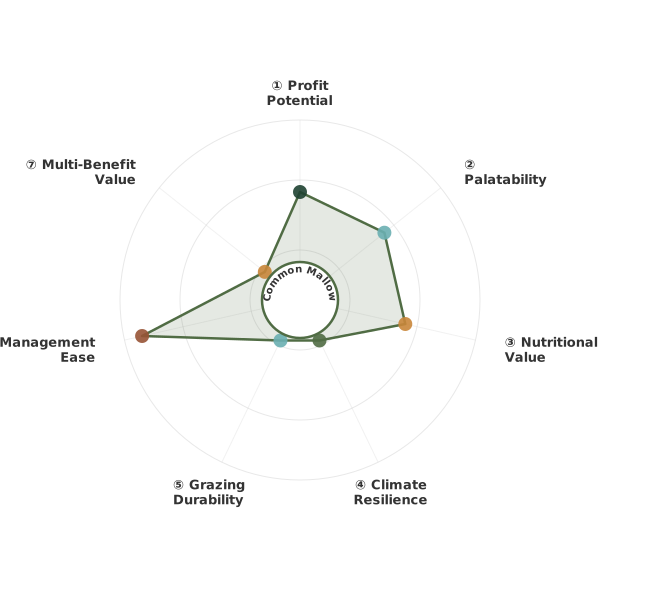
Malva neglecta, or common mallow, shows promise for regenerative agriculture, though our knowledge base coverage is limited. Primarily, it functions as a valuable forage crop, particularly for livestock, offering a palatable and nutritious food source. Its dense growth habit also suggests potential as a groundcover or a layer in polyculture systems, helping to suppress weeds and build soil organic matter. While not a nitrogen fixer, its contribution to soil building through biomass accumulation is a key regenerative benefit. Malva neglecta also supports pollinators, contributing to biodiversity within agricultural landscapes. Integration into systems like rotational grazing could be beneficial, providing on-demand forage. Farmer experiences in the knowledge base are sparse, but its resilience and adaptability are noted. Further research and on-farm trials are needed to fully understand its role in no-till, agroforestry, and other regenerative practices to maximize its soil-building and ecosystem support potential.

Regenerative Quick Profile

All recommendations assume integrated, regenerative practices—not conventional inputs.

Climate & Soil Fit

Climate: Tropical Rainforest, Tropical Monsoon, Tropical Savanna, Hot Semi-Arid (Steppe), Cold Semi-Arid (Steppe), Hot Desert, Cold Desert, Humid Subtropical, Oceanic (Maritime Temperate), Hot-Summer Mediterranean, Warm-Summer Mediterranean, Monsoon-Influenced Humid Subtropical, Subtropical Highland, Hot-Summer Continental, Warm-Summer Continental, Subarctic, Monsoon-Influenced Hot-Summer Continental

Zones: USDA 4-9, Australian Zones 3-8

Optimal Soil: Loam Soil

System Role & Functions

Primary: Forage Integration

Secondary: Cover Crop System, Pollinator Support

Key Benefits: Easy establishment

Management Level

Experience: Beginner-Friendly

Maintenance: High maintenance - As a prolific reseeder, Malva neglecta's presence is managed through integrated system design that encourages desirable species and utilizes its rapid establishment for soil coverage.

Value Streams

  • Forage production
  • Pollinator habitat and support
1

Climate Suitability Assessment

Will this plant thrive in your climate?

IDEALLY SUITED

Köppen Zone: Cfa (Humid Subtropical), Cfb (Oceanic (Maritime Temperate)), Csb (Warm-Summer Mediterranean), Dfa (Hot-Summer Continental), Dfb (Warm-Summer Continental)
USDA Zone: 5b, 6a, 7a, 8a
Australian Zone: temperate
EU Climate Region: atlantic

Common Mallow excels in regions with mild winters and moderate summers, characterized by consistent rainfall and a growing season of 180-240 frost-free days. These conditions are met in Köppen zones Cfb, Dfb, and regional zones like USDA 7a-8b, Australian temperate, and EU Atlantic. Optimal temperatures for growth range from 60-75°F (15-24°C), with tolerance for cooler spring/fall and moderate summer heat up to 85°F (29°C) provided adequate moisture is available. Establishment is reliable in spring when soil temperatures reach 50°F (10°C). Perennial survival is excellent, leading to multi-year productivity for forage integration. Nitrogen fixation is efficient, and it provides substantial pollinator support. Minimal management is required, with yields of 3-5 tons/acre (7-12 tons/ha) of high-quality forage being common. Stand persistence averages 3-5 years, making it a highly reliable and cost-effective option.

ADEQUATE

Köppen Zone: Aw (Tropical Savanna), BSh (Hot Semi-Arid (Steppe)), BSk (Cold Semi-Arid (Steppe)), Csa (Hot-Summer Mediterranean), Cwa (Monsoon-Influenced Humid Subtropical), Cwb (Subtropical Highland)
USDA Zone: 5a, 9a, 10a
Australian Zone: subtropical
EU Climate Region: continental

Common Mallow performs adequately in climates with distinct seasons, including humid subtropical (Köppen Cfa), continental (Köppen Dfa, Dwa), and regions with moderate winters and warm summers (USDA 5b-6b, 9a-10b, Australian subtropical, EU continental). These zones typically offer 120-180 frost-free days. While it can establish and grow well, challenges arise from summer heat exceeding 85°F (29°C), which can reduce forage quality and nitrogen fixation by 10-20%, and from dry periods requiring supplemental irrigation. Winter survival is variable, with it often functioning as a short-lived perennial or annual in colder or drier adequate zones. Yields may be 10-20% lower than in ideal zones, and stand persistence can be reduced to 1-3 years. Management may include irrigation and careful timing of planting for optimal establishment and productivity.

NOT RECOMMENDED

Köppen Zone: Af (Tropical Rainforest), Am (Tropical Monsoon), ET (Tundra), BWh (Hot Desert), BWk (Cold Desert), Dfc (Subarctic), Dwa (Monsoon-Influenced Hot-Summer Continental)
USDA Zone: 2a, 3a, 3b, 4a, 11a, 12a

Common Mallow is not recommended for climates with extreme temperature fluctuations or very short growing seasons, specifically Köppen zones Csa, Dwb, and regional zones USDA 3a-5a, Australian arid/semi-arid, and EU Mediterranean/Boreal. These zones present significant challenges that make cultivation economically impractical. In hot, dry climates (Csa), summer heat and drought stress severely limit growth, nitrogen fixation, and stand persistence, requiring intensive irrigation. In cold climates (Dwb, USDA 3a-5a), extreme winter temperatures cause near-certain winter kill, and the short growing season prevents reliable annual production. Establishment success is often below 70%, and yields are minimal. The high input costs for irrigation or annual reseeding, coupled with low productivity, make it an unsuitable choice for forage integration, cover cropping, or pollinator support in these regions.

Better alternatives for these "not recommended" zones: Alfalfa (deep-rooted legume with better drought tolerance and heat adaptation for hot/dry zones), Sainfoin (drought-tolerant legume that performs well in calcareous soils), Hairy Vetch (cold-hardy annual legume for nitrogen fixation in cold zones), Winter Rye (extremely cold-hardy cover crop for biomass and soil protection)

Note: Zones listed above represent climates where this plant can produce reliably with reasonable management. Climate zones not mentioned would require intensive climate modification (greenhouses, extensive infrastructure) and are not economically viable for regenerative agriculture purposes.

2

Soil Suitability Assessment

Which soil types work best for this plant?

IDEALLY SUITED

Loam Soil

This plant thrives in these soil types without requiring amendments or remediation. Natural soil conditions support optimal growth and productivity.

ADEQUATE

Clay Soil, Rich Soil, Rocky Soil, Sandy Soil

This plant performs acceptably in these soil types with moderate, manageable remediation such as pH adjustment, compost addition, or drainage improvement. The required amendments are practical and cost-effective for regenerative agriculture.

NOT RECOMMENDED

Acidic Soil, Alkaline Soil, Desert Soil, Saline Soil, Wet Soil

Growing this plant in these soil types would require impractical remediation such as complete soil replacement, extensive amendments, or cost-prohibitive infrastructure. These conditions are not economically viable for regenerative agriculture.

Note: Soil suitability assessments focus on remediation requirements. "Ideally Suited" means the plant generally thrives without the need for substantial amendments, "Adequate" means manageable remediation (lime, compost, mulch), and "Not Recommended" means impractical soil changes would be required. Climate factors like rainfall and temperature also influence success.

3

Seasonal Considerations

Planting timing, growth duration, and harvest windows

Forage Malva (Malva neglecta) offers a versatile option for regenerative systems across a range of climates. Establishment is typically successful in early spring, after the threat of hard frost has passed, with plants reaching grazing readiness in approximately 6-8 weeks. Alternatively, a fall planting in cooler regions can also establish well before winter dormancy, provided there's sufficient time for root development.

For rotational grazing, anticipate the first grazing opportunity around 8-10 weeks after seeding. Allow ample rest periods of 3-4 weeks between grazings to promote vigorous regrowth. With adequate moisture and fertility, Malva can yield 2-3 cuttings for hay annually, with peak production occurring during the warmer, longer days of summer. While it exhibits good frost tolerance, allowing grazing into late fall before the first hard freeze can extend the grazing season. Expect a period of dormancy during the coldest months, with regrowth commencing vigorously in early spring as temperatures rise and soil moisture becomes available.

4

System Role & Multi-Benefit Value

Functional roles, integration strategies, and stacked benefits

Functional Role

Total System Value

Common mallow offers significant system value beyond its direct forage potential. Its primary role in regenerative agriculture is enhancing the forage base, providing nutritious leafy material for livestock, particularly when integrated into pastures or as a cover crop. This direct harvest value is complemented by its soil-building capabilities. As a fast-growing annual or biennial, it rapidly covers soil, reducing erosion and suppressing weeds, thereby enhancing the overall health and stability of the agricultural system. Its flowers provide an important early-season nectar and pollen source for pollinators, supporting broader ecosystem services. The accumulation of biomass and subsequent decomposition contribute to soil organic matter, improving soil structure, water infiltration, and nutrient cycling. This multi-faceted contribution, from forage to soil health and pollinator support, diversifies farm resilience by reducing reliance on external inputs and enhancing the natural functioning of the ecosystem.

Integration Characteristics

Multi-Benefit Value: Not Recommended - Malva neglecta contributes to the ecosystem by providing edible greens and attracting beneficial insects, enhancing biodiversity within the agricultural landscape.

5

Management & Care Requirements

Integration guidance, maintenance needs, and care practices

How to Integrate This Plant

Common mallow (Malva neglecta) is a valuable non-tree plant for regenerative systems, primarily serving as a forage integration component. Its rapid growth and palatable foliage make it an excellent cover crop or intercropping species. In silvopasture, it can provide a nutritious understory for grazing animals, especially during early establishment phases. It can also be incorporated into alley cropping systems, grown between rows of trees or shrubs, to suppress weeds, improve soil health, and offer supplemental forage. While not a nitrogen fixer, its biomass contributes organic matter, enhancing soil structure and water retention. As an early successional plant, it supports pollinators with its flowers. Its contribution begins in Year 1 with rapid ground cover and forage availability. By Year 3-5, it can significantly improve soil organic matter and provide consistent forage, while its competitive ability may influence its role in later years.

Integration Practices & Management

Information regarding the specific integration practices of Malva neglecta (common mallow) within regenerative agriculture systems is limited in the provided knowledge base. While Malva neglecta is mentioned, detailed insights into its establishment methods, such as seeding rates, optimal timing, or its role in no-till versus minimal tillage systems, are not elaborated upon. Similarly, the knowledge base does not offer specific guidance on how regenerative farmers integrate this plant with grazing practices like mob grazing or rotational systems, including optimal timing for grazing or necessary rest periods. Termination strategies, whether through natural winterkill, grazing down, crimping, mowing, or herbicide use, are also not detailed. Management considerations like fertility needs, competition with other species, or succession planning as it relates to Malva neglecta are absent. Finally, its integration with cash crops through relay cropping, intercropping, or specific rotation sequences is not discussed. Consequently, practical farmer experiences and insights directly related to the 'how' of integrating Malva neglecta in regenerative agriculture are not available from this knowledge base.

Management Profile

Maintenance Intensity: Not Recommended - As a prolific reseeder, Malva neglecta's presence is managed through integrated system design that encourages desirable species and utilizes its rapid establishment for soil coverage.

6

Economics & Value Streams

Direct harvest, system benefits, ecosystem services, and risk diversification

Comprehensive economic analysis including direct harvest value, system enhancement contributions, ecosystem services, value timeline, and risk diversification strategies.

Economics in Regenerative Systems

Metric Value
Seed Cost $5-15/acre $12-37/ha
Establishment Cost $50-100/acre $123-247/ha
Forage Yield 1-2 tons/acre/year 1-2 tons/ha/year
Annual Management Cost $30-60/acre $74-148/ha
Value/Sale Price $40-80/ton $40-80/tonne
Net Annual Return* $-120 to $80/acre/year

Values represent typical ranges for regenerative agriculture contexts. Actual results vary by region, management, and market conditions. Costs exclude land and labor.

* Net Annual Return = (Yield × Market Price) − (Amortized Establishment Cost + Annual Maintenance). This return is realized only at/after first harvest; early years have costs but no revenue. Range shows worst case to best case scenarios.

System Enhancement Value

Beyond harvest: livestock nutrition, soil building, and pasture improvement

Livestock Nutrition & Soil Building

Common mallow (Malva neglecta) plays a multifaceted role in integrated farming systems beyond direct harvest. As a cover crop, it contributes to soil stabilization and acts as a buffer against pests like slugs, as noted in. Its ability to be 'chop and dropped' before seeding makes it a valuable source of organic matter and mulch, enhancing soil health and fertility. Furthermore, Malva neglecta is recognized for its support of beneficial insects. It also serves as a valuable food source for pollinators, attracting bumblebees which are vital for the pollination of various crops, including tomatoes and squash. In arid regions, its drought tolerance can be an asset, contributing to the resilience of food guilds. The plant's edible young seedpods, leaves, and flowers offer additional foraging opportunities for both humans and potentially livestock, further integrating it into the farm's resource utilization cycle. Its presence can also contribute to the aesthetic appeal of the farm through its flowers.

Ecosystem Service Contributions

Environmental contributions: carbon, pollinators, wildlife, and water

  • Carbon Sequestration: As a relatively fast-growing herbaceous plant, Malva neglecta contributes to soil carbon through its biomass and root systems. Its role as a cover crop and its 'chop and drop' potential facilitate the incorporation of organic matter, thereby enhancing soil carbon sequestration.
  • Pollinator Support: High. Malva neglecta is explicitly mentioned as attracting bumblebees, which are crucial for pollinating many agricultural crops. Its flowers provide a nectar and pollen source for a variety of pollinators.
  • Wildlife Habitat: Provides habitat and food for beneficial insects, including pollinators like bumblebees. Its presence can also offer a food source for small mammals and birds, especially through its edible parts and seed production.
  • Water Quality: Not applicable

Value Timeline: Forage Establishment & Production

When you'll see results: annuals year 1, perennial establishment 1-2, peak 3-10

Years 1-2

Soil stabilization, weed suppression, slug buffering, early pollinator support, initial organic matter contribution through chop-and-drop, and early edible harvests (leaves, young seedpods).

Years 3-5

Established cover cropping benefits, increased soil organic matter, more robust pollinator attraction, consistent edible yields, and enhanced habitat for beneficial insects.

Years 10-20

Mature benefits of improved soil structure and fertility, significant contribution to farm biodiversity, and sustained ecosystem services like pollinator support and pest buffering.

20+ Years

Long-term enhancement of soil health and farm resilience, contributing to a stable and productive agroecosystem with continuous provision of ecosystem services.

Farm Risk Reduction

How this reduces farm risk: feed cost reduction and livestock performance

  • Multiple Revenue Streams: Edible greens, edible flowers, edible seedpods, cover cropping services (soil health, pest control), pollinator support services, potential fodder for livestock.
  • Temporal Income Spread: Provides ongoing ecosystem services throughout the growing season, with edible harvests available in spring and autumn. Its role as a cover crop offers benefits that accrue over multiple seasons.
  • Market Risk Hedge: Offers multiple, often low-input, value streams that are not solely dependent on a single commodity market. Its drought tolerance provides resilience in drier climates, and its pest-buffering capabilities reduce reliance on external pest control inputs.
7

Regenerative Suitability Details

Comprehensive trait ratings for system integration assessment

Comparative ratings for this plant across key regenerative agriculture traits.

Trait Suitability Explanation
Palatability Adequate Young Malva neglecta offers palatable forage, readily consumed by livestock as part of a diverse grazing mix.
Protein Content Adequate Young Malva neglecta provides moderate protein, contributing to a varied pasture ecosystem rather than serving as a sole protein source.
Drought Tolerance Not Recommended Malva neglecta benefits from enhanced moisture retention through mulching and improved soil structure from cover cropping, as its shallow root system limits drought resilience.
Grazing Tolerance Not Recommended To foster resilience, manage grazing pressure to allow for regrowth, integrating Malva neglecta into a system that supports diverse plant life and minimizes disturbance to meristems.
Establishment Ease Ideally Suited Its rapid germination in disturbed soils and vigorous growth are leveraged within a regenerative system to quickly build soil cover and outcompete unwanted vegetation with minimal external intervention.
Multi Benefit Value Not Recommended Malva neglecta contributes to the ecosystem by providing edible greens and attracting beneficial insects, enhancing biodiversity within the agricultural landscape.
Climate Adaptability Adequate Malva neglecta thrives across a range of climates (zones 3-9) and is particularly suited to areas where soil disturbance is managed through practices that promote moisture retention.
Maintenance Intensity Not Recommended As a prolific reseeder, Malva neglecta's presence is managed through integrated system design that encourages desirable species and utilizes its rapid establishment for soil coverage.
Seasonal Availability Not Recommended Malva neglecta offers opportunistic forage during warmer months, contributing to the seasonal diversity of available plant resources within a regenerative grazing plan.

Comparative System: Ratings compare plants within their economic category (e.g., cover crop nitrogen fixation compared to other cover crops, not to all plants). Individual farm conditions and management practices significantly influence actual performance.

8

Learn More

Why farmers use this plant and additional resources

Why Regenerative Farmers Use This Plant

Malva neglecta, commonly known as Common Mallow, offers significant regenerative value as a forage species, particularly for its ability to provide nutritious grazing during shoulder seasons and its resilience in diverse soil conditions. While not a nitrogen fixer, its extensive root system, typically reaching depths of 12-36 inches (30-90 cm), contributes to soil structure improvement, enhances water infiltration, and reduces erosion, especially on sloped terrain. These deep roots also scavenge nutrients from deeper soil profiles, bringing them to the surface for subsequent crops or forages, making them available to other plants or livestock. Its biomass production can be substantial under favorable conditions, contributing organic matter to the soil and supporting soil microbial communities.

Integrating Malva neglecta into livestock operations can enhance carrying capacity and extend the grazing season. It is highly palatable to cattle, sheep, and horses, and can be browsed more selectively by goats. Under well-managed rotational grazing systems, it can support an estimated 1.5-3 Animal Units per acre (3.7-7 AU/ha) during its peak growth periods, depending on soil fertility and rainfall. Its forage quality is generally good, with crude protein levels typically ranging from 14-18% in the vegetative stage, declining to 8-12% as it matures. This makes it a valuable source of digestible fiber and protein, potentially reducing the need for supplemental feed during early spring and late fall, thereby lowering winter feeding costs and extending the grazing season by 45-90 days.

Beyond direct forage provision, Malva neglecta plays a crucial role in building a more resilient ecosystem. Its dense growth habit can contribute to weed suppression by outcompeting undesirable species for resources and light, reducing the need for mechanical or chemical interventions. Its nutrient scavenging capacity can improve the efficiency of nutrient cycling within the farm ecosystem. While not a primary pollinator attractant, its flowers do provide a valuable nectar and pollen source for a variety of pollinators, including bees and butterflies, supporting biodiversity within agricultural landscapes. Its ability to thrive in disturbed areas also makes it a useful plant for reclaiming degraded pastures or filling gaps in existing forage stands.

Across different agricultural landscapes, Malva neglecta has demonstrated its utility. In the mixed-crop livestock operations of the Midwestern United States, it's often incorporated into pasture mixes for summer grazing or sown in late summer in corn-soybean rotations to provide fall and early spring grazing. European farmers, particularly in the UK and France, utilize it in temporary leys and permanent pastures to enhance forage diversity and quality, and in multi-species swards for dairy and beef cattle. In the Canadian Prairies, it can be sown in early spring for summer grazing, benefiting from the longer daylight hours. Farmers in New Zealand might use it in mixed swards for dairy cows, appreciating its contribution to milk production and its ability to fill summer feed gaps. In the drier regions of South Africa and Australia, its drought resilience makes it a valuable component of dryland pasture mixes, providing crucial forage during dry spells and periods of low rainfall, offering a reliable forage source when other grasses struggle. Its adaptability means it can be found and utilized in diverse systems, from pasture renovation to integrated crop-livestock operations.

9

How to Integrate This Plant

Practical guidance for regenerative systems

Establishing Malva neglecta can be achieved through direct seeding, typically broadcast or drilled into a prepared seedbed. Recommended seeding rates range from 5-20 lbs/acre (5.6-22 kg/ha) when planted alone, or at a lower rate of 2-5 lbs/acre (2.2-5.6 kg/ha) when included in a pasture mix. For drilled seed, a row spacing of 6-12 inches (15-30 cm) is common. The optimal planting depth is shallow, between 0.25-0.5 inches (0.6-1.3 cm), to ensure good seed-to-soil contact and emergence.

Planting times vary by hemisphere and desired outcome. For the Northern Hemisphere, late summer (August-September) or early spring (March-April) are ideal planting times, depending on the region's climate and the desired growth period. Planting in March-April for spring growth or August-September for fall grazing is recommended. In the Southern Hemisphere, similar timing applies, with late summer (February-March) and early spring (September-October) being suitable. This translates to planting from September to November for spring sowing and February to April for fall sowing.

Once established, Malva neglecta requires moderate moisture, with approximately 1 inch (2.5 cm) of water per week during its active growth phase, though it exhibits good drought tolerance once mature. Its fertility needs are generally low; it thrives in a wide range of soil types and can tolerate a range of pH levels. While it can survive with minimal supplemental fertility, incorporating compost, managing grazing residue, or utilizing manure from livestock that have grazed on nutrient-rich pastures are excellent starting points and can significantly boost its productivity.

Growth is typically rapid, with significant vegetative cover developing within 30-45 days of emergence. Plants can reach a height of 1-5 feet (0.3-1.5 m) at maturity, depending on growing conditions. Pest and disease management primarily relies on maintaining healthy soil biology and diverse pasture swards, which naturally deter most common issues. Focus on maintaining good air circulation and avoiding overly wet conditions to prevent fungal issues, as Malva neglecta is generally resilient.

For livestock integration, Malva neglecta is best managed through rotational or mob grazing to optimize its regrowth and nutritional value. Animals should be introduced when the plants reach 8-12 inches (20-30 cm) in height and removed when the residual height is 3-4 inches (8-10 cm) to allow for optimal regrowth. Rest periods of 45-60 days between grazing events are crucial for the plant's recovery and to maintain stand vigor, ensuring plant vigor and sustained productivity. Adaptive multi-paddock grazing systems can effectively utilize its palatability and rapid regrowth. Fall growth can be stockpiled for winter grazing, potentially providing an additional 45-90 grazing days, depending on the climate and fall conditions, maintaining crude protein levels above 10% for extended periods.

View Full Document (Printable single-page version)