
White Mulberry
Morus alba, or white mulberry, offers significant value in regenerative agriculture, primarily as a high-quality forage and a component of agroforestry systems. Its leaves boast a protein content of 15-28%, comparable to alfalfa but with higher minerality and digestibility, making it an excellent feed source, especially during drought conditions when conventional hay fails. Studies highlight its integration into agroforestry systems alongside trees like Bhimal and crops such as cowpea and toria, contributing to soil organic carbon pools and deep carbon sequestration. Organic fertilization methods, including cow dung and vermicompost, have been shown to significantly boost leaf yield and enhance soil health indicators like total soil carbon, nitrogen, and microbial biomass. While not a nitrogen fixer, its role in soil building and carbon sequestration is evident. The smoother leaf texture of Morus alba, compared to Morus rubra, may also improve palatability for livestock. Hybridization with native mulberries has also led to 'ever-bearing' varieties beneficial for both human and animal consumption.
For a full botanical description see: Plants For A Future(opens in new window) (external link)
Regenerative Quick Profile
All recommendations assume integrated, regenerative practices—not conventional inputs.
Climate & Soil Fit
Climate: Tropical Rainforest, Tropical Monsoon, Tropical Savanna, Hot Semi-Arid (Steppe), Cold Semi-Arid (Steppe), Hot Desert, Cold Desert, Humid Subtropical, Oceanic (Maritime Temperate), Hot-Summer Mediterranean, Warm-Summer Mediterranean, Monsoon-Influenced Humid Subtropical, Subtropical Highland, Hot-Summer Continental, Warm-Summer Continental, Subarctic, Monsoon-Influenced Hot-Summer Continental, Tundra
Zones: USDA 4-9, Australian Zones 3-9
Optimal Soil: Loam Soil
System Role & Functions
Primary: Silvopasture
Secondary: Forage Integration, Food Forest
Key Benefits: Multi-benefit value, Climate adaptable
Management Level
Experience: Advanced
Maintenance: Moderate maintenance - This fast-growing tree integrates well into diverse soil conditions, benefiting from thoughtful pruning to support fruit production or shade, enhancing its role within the agroecosystem.
Value Streams
- Forage production
- Livestock forage value
Know the Debate
- Nutritional value: good protein, high palatability
- Carbon sequestration potential: 1.5-3.0 tons CO2e/acre/yr
- Establishment: 3-5 years to maturity; manage moisture & soil pH
- Livestock integration: supports 2-4 AU/acre in peak season
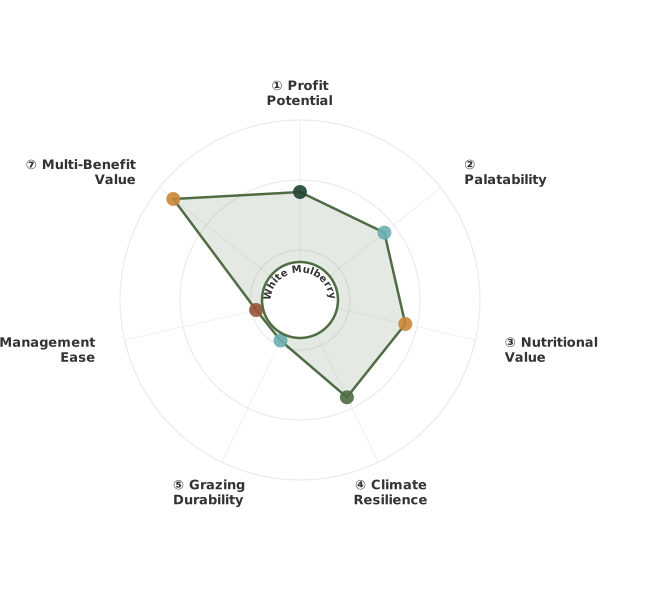
How These Traits Are Calculated
Trait dimensions are ordered clockwise starting from the top of the chart (12 o'clock position):
1. Profit Potential
Economic returns from hay sales, grazing value, and system contributions
WHAT: Synthesizes direct revenue potential (hay sales or grazing service value) with system contributions (nitrogen fixation, reduced supplement needs) into net economic value. Captures both cash income and cost savings.
WHY: Forage profitability comes from two sources—direct sales (hay, haylage) or indirect value (grazing services supporting livestock production). High-value forages provide $300-600/acre in combined revenue and savings versus $100-200/acre for lower-value options. This determines whether forage enterprises are viable versus purchasing feed.
HOW: Scored via LLM synthesis of economics data (hay yields, prices, grazing value), timeline considerations (establishment costs, productive lifespan), and system value (nitrogen contributions, supplement replacement). Exceptional (3.0): High yields with premium pricing or exceptional grazing value plus nitrogen fixation. Typical (2.0): Moderate returns. Limited (1.0): Low yields, commodity pricing, or minimal system contributions.
2. Palatability
Livestock preference and voluntary consumption rates
WHAT: Measures how eagerly livestock consume the forage—preference ranking when choices are available. Highly palatable forages are grazed first and completely; limited palatability means animals avoid unless no alternatives exist.
WHY: Palatability directly determines voluntary intake, which drives animal performance. High-palatability forages support faster weight gain and higher milk production because animals eat more. Low-palatability forages reduce performance and waste productive potential—animals selectively graze preferred species and leave unpalatable plants ungrazed.
HOW: Ratings based on the palatability trait documenting livestock selection preference. Exceptional (3.0): Preferentially selected, high sugar content, tender growth eagerly consumed (orchardgrass, white clover, ryegrass). Typical (2.0): Readily consumed when available. Limited (1.0): Avoided unless no other options (coarse stems, bitter compounds, low digestibility).
3. Nutritional Value
Protein content and forage quality for livestock growth and production
WHAT: Measures protein content as the primary indicator of forage nutritional quality. High-protein forages (>18%) support rapid growth and high milk production; low-protein forages (<12%) require supplementation for production animals.
WHY: Protein is the most expensive supplement in livestock diets ($0.40-0.60/lb). Forages with exceptional protein content eliminate or reduce supplement costs while supporting maximum animal performance. High-quality forage can save $200-400/cow/year in purchased feed versus low-protein options.
HOW: Ratings based on the protein_content trait. Exceptional (3.0): High protein (>18%) supporting rapid weight gain or high milk production (alfalfa, clovers, young grasses). Typical (2.0): Moderate protein (12-18%) for maintenance and moderate production (mature grasses). Limited (1.0): Low protein (<12%) requiring supplementation for production animals (mature warm-season grasses, low-fertility forages).
4. Climate Resilience
Weighted: drought tolerance (60%) + climate adaptability (40%)
WHAT: Combines drought tolerance (primary climate stressor for forages) with overall climate adaptability (temperature range, geographic flexibility). Resilient forages survive extended dry periods and diverse weather patterns.
WHY: Drought is the most common forage crisis—dry years can cut production 50-80% and force costly hay purchases or herd reductions. Drought-tolerant forages maintain productivity through dry spells, reducing feed costs and providing grazing when less-resilient options fail. Geographic adaptability allows forage systems to work across farm regions.
HOW: Weighted formula prioritizes drought tolerance (60% weight) as primary stressor, with climate adaptability (40% weight) for temperature and general flexibility. Exceptional (3.0): Survives extended drought (6+ weeks) with minimal production loss and works across diverse climates. Typical (2.0): Moderate drought and climate tolerance. Limited (1.0): Drought-sensitive or narrow climate requirements.
5. Grazing Durability
Weighted: trampling tolerance (70%) + seasonal availability (30%)
WHAT: Combines grazing tolerance (resistance to trampling and frequent defoliation) with seasonal availability (timing and duration of productive growth). Durable forages handle intensive rotational grazing and provide consistent seasonal production.
WHY: Grazing tolerance determines management system viability. Tolerant forages allow intensive rotational grazing or mob grazing for maximum animal performance and pasture health. Intolerant forages are hay-only or require long rest periods. Seasonal availability indicates production timing—year-round, seasonal gaps, or narrow windows.
HOW: Weighted formula prioritizes grazing tolerance (70% weight) for management system determination, with seasonal availability (30% weight) for production timing. Exceptional (3.0): Handles intensive rotational grazing with consistent seasonal production. Typical (2.0): Moderate tolerance and availability. Limited (1.0): Hay-only species or narrow seasonal production windows.
6. Management Ease
Weighted: establishment ease (50%) + low maintenance needs (50%)
WHAT: Combines establishment difficulty (germination, stand establishment) with ongoing maintenance requirements (fertility, weed control, renovation needs). Easy forages establish reliably and persist without intensive management.
WHY: Pasture establishment is expensive ($150-400/acre) and risky. Easy-to-establish forages reduce stand failure risk and provide quicker returns. Low-maintenance forages reduce annual input costs and labor, improving long-term profitability of grazing systems.
HOW: Weighted formula balances establishment ease (50% weight) for startup success and inverted maintenance intensity (50% weight) for ongoing care. Exceptional (3.0): Fast germination, reliable stand establishment, minimal fertility/weed management needs (white clover, orchardgrass). Typical (2.0): Moderate establishment and care requirements. Limited (1.0): Difficult establishment or intensive maintenance (heavy fertility, frequent renovation, weed competition).
7. Multi-Benefit Value
Ecosystem services beyond forage—nitrogen fixation, pollinator support, wildlife habitat
WHAT: Measures ecosystem services provided beyond livestock nutrition. Multi-benefit forages contribute nitrogen fixation (legumes), pollinator support (flowering species), wildlife habitat, soil building, erosion control, and biodiversity support.
WHY: Forage systems can either extract from farm ecosystems or contribute to them. Nitrogen-fixing legumes (clovers, alfalfa) provide $80-150/acre/year worth of fertility for companion grasses and following crops. Flowering forages support pollinators critical for fruit/vegetable crops. These service-stacking forages deliver total system value beyond livestock production.
HOW: Ratings based on the multi_benefit_value trait documenting service diversity. Exceptional (3.0): Multiple significant benefits (legumes fixing 80-150 lbs N/acre/year + pollinator support + wildlife forage). Typical (2.0): Some ecosystem contributions. Limited (1.0): Single-purpose forage with minimal ecosystem services beyond grazing value.
Ratings are based on documented performance in regenerative systems, not conventional high-input scenarios. All traits assume integrated management practices focused on soil health and ecosystem services.
5
Management & Care Requirements
Integration guidance, maintenance needs, and care practices
Management & Care Requirements
Integration guidance, maintenance needs, and care practices
How to Integrate This Plant
White mulberry (Morus alba) is a highly versatile tree for regenerative systems, primarily functioning as a fodder crop within silvopasture settings due to its high protein content (15-28%) and excellent digestibility, comparable to alfalfa. It can be integrated into alley cropping systems or food forests. Its value as leaf fodder is particularly pronounced during drought, providing a critical nutritional reserve when grasses fail. Beyond fodder, its deep root system contributes to soil organic carbon sequestration, as evidenced in agroforestry studies. In Year 1-2, it offers rapid biomass for fodder and shade. By Year 3-5, it provides significant leaf yield for animals and potential fruit for human or animal consumption. By Year 10-20, its mature canopy offers substantial shade and continued fodder production, with ongoing soil health benefits. The primary system role is fodder provision, but its contribution to soil organic carbon and drought resilience significantly enhances overall farm system stability.
Integration Practices & Management
While the provided sources discuss Morus alba primarily in the context of its nutritional value as fodder and its role in agroforestry systems, direct details on regenerative integration practices like specific establishment methods, grazing strategies, or termination sequences are limited. However, the knowledge base suggests potential integration points. Morus alba's hardiness and drought resistance make it a candidate for inclusion in forage systems, especially in warmer climates. Its high protein content (15-28%) and digestibility, comparable to alfalfa, highlight its value as a nutrient-rich fodder. Experiments with organic fertilizers (cow dung, vermicompost) have shown significant increases in leaf yield and improvements in soil health indicators like soil carbon and microbial biomass, indicating compatibility with regenerative soil management. Morus alba is also integrated into agroforestry systems with other trees and crops. The sources imply that its resilience and nutritional benefits are key drivers for its use, though specific regenerative management techniques are not detailed.
Management Profile
Maintenance Intensity: Adequate - This fast-growing tree integrates well into diverse soil conditions, benefiting from thoughtful pruning to support fruit production or shade, enhancing its role within the agroecosystem.
Sources behind this view
 Community
-
Mulberry trees (Morus Alba, Morus Rubra) are vigorous, drought-tolerant food forest pioneers. Seedlings offer genetic diversity and are cost-effective, though require good care to establish. They thri
Read more (opens in new window) permies.com
 Research
-
Role of Sericulture in Agroforestry Systems for Improving Soil Health, Biodiversity and Resource Efficiency (opens in new window)
This study found: Integrating silk farming with trees and crops (agroforestry) improves soil health, biodiversity, and resource efficiency by utilizing mulberry biomass and farm by-products for nutrient cycling and car
6
Economics & Value Streams
Direct harvest, system benefits, ecosystem services, and risk diversification
Economics & Value Streams
Direct harvest, system benefits, ecosystem services, and risk diversification
Comprehensive economic analysis including direct harvest value, system enhancement contributions, ecosystem services, value timeline, and risk diversification strategies.
Economics in Regenerative Systems
| Metric | Value |
|---|---|
| Seed Cost | N/A (seedling/cutting) N/A (seedling/cutting) |
| Establishment Cost | $300-500/acre $741-1235/ha |
| Forage Yield | 2-4 (leaves) 2-4 (leaves) |
| Annual Management Cost | $50-100/acre $123-247/ha |
| Value/Sale Price | $80-150/ton $80-150/tonne |
| Net Annual Return* | $-440 to $250/acre/year |
Values represent typical ranges for regenerative agriculture contexts. Actual results vary by region, management, and market conditions. Costs exclude land and labor.
* Net Annual Return = (Yield × Market Price) − (Amortized Establishment Cost + Annual Maintenance). This return is realized only at/after first harvest; early years have costs but no revenue. Range shows worst case to best case scenarios.
System Enhancement Value
Beyond harvest: shade for livestock, soil building, and system benefits
Shade Value for Livestock
Cattle $50-150/head/year, Pigs $30-80/head/year (variable by climate, density, canopy)
White mulberry trees, particularly when managed through pollarding as described in the knowledge base, can offer significant shade benefits in silvopasture systems. This shade is crucial for livestock, especially ruminants like sheep and cattle, during hot or dry periods, reducing heat stress and improving animal welfare. Reduced heat stress can lead to better feed intake, growth rates, and milk production. The shade also contributes to a more favorable microclimate for pasture growth beneath the trees, potentially extending the grazing season. The extent of shade value is variable, depending on the density and age of the mulberry stands, as well as the specific climate and stocking rates. Its drought tolerance (,) further enhances its reliability as a shade provider during periods of water scarcity.
Nitrogen Fixation (if legume)
White mulberry (Morus alba) is not a nitrogen-fixing legume. Therefore, it does not contribute to nitrogen fixation in the soil through symbiotic bacterial action. Its value lies in its high protein content as a forage source (,), effectively replacing legume forage. Additionally, organic amendments like cow dung and vermicompost have been shown to increase soil nitrogen availability and microbial biomass in mulberry systems (). While the plant itself doesn't fix nitrogen, its integration with organic nutrient management can enhance the overall nitrogen cycling and availability within the farm system.
Windbreak & Erosion Control
Variable, depends on planting density and arrangement.
While not explicitly detailed as a primary windbreak species in the provided excerpts, the vigorous growth and resilience of white mulberry () suggest potential for windbreak establishment. Its ability to reach a shrub-like form () and its hardy nature (,) would allow for dense plantings that could intercept wind. As a multi-purpose tree in silvopasture or food forest systems, it can contribute to reducing wind velocity across fields, thereby mitigating soil erosion and protecting vulnerable crops or livestock. The extent of this benefit would depend on the density, height, and arrangement of the mulberry plantings within the farm landscape.
Other System Contributions
White mulberry offers substantial value beyond direct harvest and shade. Its leaves are a highly nutritious forage for ruminants, with high protein (16-28%) and minerality, effectively substituting for legumes during dry seasons (,). Pollarded branches can be utilized for bioenergy (rocket mass heaters) and paper-making (), demonstrating a closed-loop resource utilization. The plant's rapid regrowth () and resilience to damage () make it a dependable forage source. Furthermore, its integration with organic fertilizers enhances soil health, increasing chlorophyll content, soluble proteins, soil carbon, nitrogen, and microbial diversity (), contributing to a more robust and resilient agroecosystem. Young leaves are also edible for human consumption ().
Ecosystem Service Contributions
Environmental contributions: carbon, pollinators, wildlife, and water
- Carbon Sequestration: White mulberry is a tree species with a vigorous growth habit and potential for long-term establishment, suggesting moderate to high carbon sequestration potential as it grows and develops a substantial woody biomass. Its use in pollarding systems also implies regular biomass production, contributing to ongoing carbon storage in wood products.
- Pollinator Support: Medium. Mulberry flowers, while not showy, can provide nectar and pollen for a range of insects, contributing to local pollinator populations. Specific studies on its pollinator support are not detailed in the excerpts.
- Wildlife Habitat: Moderate. While the primary focus is on forage and human food, mulberry trees can provide browse for wildlife, and their fruits (though not the focus for fruitless varieties) would support birds and small mammals. The dense canopy of pollarded trees can also offer shelter.
- Water Quality: Not applicable
Value Timeline: When Benefits Begin
When you'll see results: shade in years 1-5, fruit/nut harvest 3-10, timber 20+
Years 1-2
Establishment of forage base with high protein content, potential for initial leaf fodder. Establishment of shade, though limited. Erosion control benefits from early growth.
Years 3-5
Established forage production, significant shade provision. Pollarding management can begin, yielding usable biomass for fuel or paper. Increased soil health benefits from organic amendments and established roots.
Years 10-20
Mature tree structure providing substantial shade and consistent high-quality forage. Significant biomass production from pollarding. Established soil health improvements. Potential for fruit production if non-fruitless varieties are integrated.
20+ Years
Long-term, consistent provision of forage and shade. Mature woody biomass for potential timber uses (though not explicitly mentioned). Enhanced ecosystem services including soil carbon sequestration and biodiversity support.
Farm Risk Reduction
How this reduces farm risk: backup income, weather protection, market hedges
- Multiple Revenue Streams: Forage for livestock (direct consumption), biomass for bioenergy/paper, potential for human food (fruit, young leaves), soil health enhancement (reduced input costs).
- Temporal Income Spread: Ongoing provision of forage and ecosystem services throughout the year, with periodic harvest of pollarded branches for biomass. Drought tolerance ensures a consistent forage resource when other pastures fail.
- Market Risk Hedge: Reduces reliance on external feed inputs due to high nutritional value of leaves, especially during dry seasons. Drought tolerance provides resilience against climate variability impacting traditional forage crops. Diversifies farm output beyond traditional livestock or crop sales.
Sources behind this view
Community
-
Detailed case study on using fruitless Morus alba mulberry for high-protein sheep forage in Mediterranean Zone 9, highlighting pollarding, drought tolerance, and rapid regrowth. Contrasts with Morus n
Read more (opens in new window) permies.com
8
Know the Debate
White Mulberry (Morus alba) is a versatile component in regenerative agriculture, particularly valued for its highly nutritious leaf fodder and its...
Know the Debate
White Mulberry (Morus alba) is a versatile component in regenerative agriculture, particularly valued for its highly nutritious leaf fodder and its...
White Mulberry (Morus alba) is a versatile component in regenerative agriculture, particularly valued for its highly nutritious leaf fodder and its role in agroforestry systems. Its success and integration strategies depend on several factors. While adaptable to various temperate climates, specific variety selection matters for cold hardiness and fruit production. Establishing the trees requires a few years' patience and proper planting techniques, with costs ranging from minimal for seed to moderate for saplings with potential infrastructure. Ongoing management focuses on promoting leafy growth and appropriate grazing, often requiring 1-2 hours daily for rotational moves at typical silvopasture scales.
How reliable are White Mulberry's nutritional claims?
High forage value confirmed
Academic and field sources consistently confirm White Mulberry leaves are highly nutritious, rich in protein (14-28%) and digestible. This makes them an excellent, palatable fodder, particularly valuable during dry spells, potentially reducing supplemental feed needs significantly.
Sources behind this view
Sources behind this view
 Videos & Podcasts
-
Recommended mulberry cultivars for consumption include 'Illinois Everbearing' and 'Morris' types for warmer climates. White mulberry is valuable leaf fodder (15-28% protein, comparable to alfalfa) and drought-tolerant, offering shade and diversity.

-
Mulberry is preferred over black locust for fodder and firewood due to its high-protein, palatable leaves and good BTU wood, plus fruit. Annual cutting (pollarding at 6ft) is vital for regrowth and preventing rot, unlike slower-maturing black locust.

Research
-
Seasonal dynamics of the nutritive value of temperate forage trees differ among species (opens in new window)
This study found: Researchers studied 16 types of trees commonly found in Western Europe to see how their nutritional value for livestock changes throughout the year, especially to help during summer droughts. Over three years, they collected leaves from spring to fall in France and measured key nutritional aspects like protein content and how digestible the leaves were. They found that as the seasons progressed from spring to autumn, the protein and digestibility generally decreased, while dry matter and ash content increased. Some trees, like hazel, white mulberry, and black locust, consistently offered higher protein. The study highlights that choosing the right tree species and knowing when to harvest their leaves is crucial for effectively supplementing animal feed, particularly when grass is scarce in the summer.
Value validated by field experience
Experienced farmers and ranchers consistently report White Mulberry's exceptional palatability and drought resilience, leading to practical benefits like increased carrying capacity and reduced reliance on hay.
Sources behind this view
Sources behind this view
Videos & Podcasts
-
Discusses four key tree fodder species: Willow (high biomass, tannins, easy propagation), Black Locust (tree alfalfa, nitrogen-fixing, rot-resistant wood), Poplar (high biomass, balanced nutrition, adaptable), and Mulberry (high digestibility for non-ruminants). Focuses on nutritional benefits, propagation, and suitability for temperate climates.
-
Mulberries provide excellent leaf fodder, with pollarding enabling 2-3 cuttings annually (e.g., July 1st and mid-August in Zone 7). Proper pruning and allowing trees to rest are crucial for regrowth and yield.

-
Categorizes silvopasture trees: fast shade (poplar, willow, black locust), ruminant feed (thornless honey locust, persimmon), and hog/poultry feed (mulberry, acorns, chestnuts). Honey locust pods and persimmons offer significant feed potential with low input.
Making Sense of the Differences
Nutritional claims for White Mulberry are generally supported, with variations attributed to clone, harvest timing, and soil fertility. Field experience often emphasizes its exceptional palatability and drought resilience, leading to practical benefits like increased carrying capacity. Farmers should focus on balanced management and realistic expectations for protein content throughout the season.
What is the true carbon sequestration potential of White Mulberry?
Significant role in carbon sequestration
In established silvopasture and agroforestry systems, White Mulberry contributes to significant carbon sequestration through leaf litter decomposition and deep root systems, estimated at 1.5-3.0 metric tons CO2e/acre/year.
Sources behind this view
Sources behind this view
Videos & Podcasts
-
Mulberries hold future potential in agroforestry as drought-resistant pasture savers and alley cropping components. Mechanized harvesting could create 'perennial salad bar' systems, complementing fruit orchards.
Research
-
Evaluation of Carbon Sequestration and Oxygen-Release Potential of Six Mulberry Tree Varieties During Summer (opens in new window)
This study found: Researchers in China studied six types of mulberry trees to see how well they capture carbon dioxide and release oxygen during the summer. They found that the 'Zhongsang 1302' variety was the best at this, capturing about 1532 grams of carbon per square meter of land. Other varieties like 'Suhu 16' and 'Husang 32' also showed good potential. The study suggests that how fast the trees photosynthesize and how much leaf cover they have are the main factors influencing their ability to help regulate the climate. This information can help choose the right mulberry varieties for improving air quality and meeting climate goals.
-
Characteristic of species Morus alba L. and Morus nigra L. by some basic vegetative traits (opens in new window)
This study found: Abstract. Establishing the leaf productivity of the species Morus alba L. and Morus nigra L. and the influence of the mulberry species on some basic vegetative traits was the aim of this paper. The study was conducted during 2018-2020 at the Training Experimental Station of the Sericulture section of the Faculty of Agriculture at Trakia University – Stara Zagora. Object of the study were representatives of the genus Morus – M. alba L. (variety "Vratsa 1") and M. nigra L. The studied mulberry trees were from a low-stemmed plantation of an intensive type. The analysis of variances shows that the type of mulberry has a highly significant influence (p>0.001) in all analyzed cases characterizing leaf productivity. The established differences between the species in terms of the studied vegetative traits are in favor of M. alba. However, for M. nigra the average values of some morphological indicators are within the limits of those generally established in practice. This gives reason to consider that the data obtained in the present study are a useful addition to the general characterization of the species and are relevant for the purposes of selection and production of mulberry cultivars and hybrids.
Contributes to soil health and carbon pools
While not a nitrogen fixer, the prolific leaf production and deep root systems of White Mulberry contribute substantial organic matter, enhance soil microbial communities, and can improve water infiltration rates.
Sources behind this view
Sources behind this view
Videos & Podcasts
-
Selected tree species for silvopasture include nitrogen-fixing black locust (for fodder and parasite control), fast-growing hybrid poplars/willows (for shade/fodder), and native species for wet areas. Emphasizes diversity for resilience, including nut-bearing trees and elderberries.

-
Temperate syntropic systems need fast-growing perennial biomass. Comfrey is preferred over grass for mulching due to its natural collapse and minimal intervention, unlike fuel-intensive mowing. The focus is on adapting methods to specific farm needs.

-
Select broadly adapted perennials like mulberry and false indigo for climate resilience. Increase crop diversity and build soil organic matter with rainwater harvesting to create a robust system against changing weather patterns.
Making Sense of the Differences
White Mulberry contributes positively to carbon sequestration and soil health through biomass production and deep root systems, with estimated rates around 1.5-3.0 tons CO2e/acre/year in established systems. Actual sequestration rates are context-dependent, influenced by climate, soil type, tree age, integration with grazing, and management practices. Its role in enhancing soil organic matter and water infiltration is consistently noted across academic and field observations.
What are the optimal planting and establishment strategies for White Mulberry?
Establishment requires patience (3-5 years)
White Mulberry needs 3-5 years to mature for regular harvesting. Planting is best during dormancy (fall/spring), with saplings offering more predictable growth than direct seeding. Proper soil pH (near neutral) and moisture (1-2 inches/week) are crucial during the 1-3 year establishment phase.
Sources behind this view
Sources behind this view
Videos & Podcasts
-
Introduces four promising Midwest agroforestry crops: Elderberry (adaptable, dual harvest, 2-3 years to production), Black Currant (disease-resistant varieties, shade tolerant, 3-5 years to production), Hazelnut (drought-tolerant hybrid, 3-8 years to production), and Chinese Chestnut (climate-adapted, specific soil needs, 12-15 years to full production).
-
Recommended mulberry cultivars for consumption include 'Illinois Everbearing' and 'Morris' types for warmer climates. White mulberry is valuable leaf fodder (15-28% protein, comparable to alfalfa) and drought-tolerant, offering shade and diversity.
-
Alley cropping and silvopasture require specific tree cover percentages (15-40% in temperate zones) and spacing based on tree height and latitude. A New York installation used 40-foot spacing for hazelnuts and other fruit trees, managing height for sunlight. Row orientation and slope are also considered.
Spacing and planting methods vary by use
Spacing ranges from 5-8 ft for dense hedges to 10-30 ft for individual shade trees. Direct seeding rates are 0.5-3 lbs/acre. Protection from frost is needed for less hardy varieties, especially during establishment.
Sources behind this view
Sources behind this view
Videos & Podcasts
-
Mulberries support diverse wildlife and thrive in well-drained soils with near-neutral pH (around 7), yielding higher protein leaves. They tolerate lower pH but grow best with good drainage.
-
Hicks everbearing mulberry tolerates down to -5°F, thriving in Zones 6b-7a and maritime climates. It may die back in Zone 6a without root protection. Scion wood is available.
Research
-
Characteristic of species Morus alba L. and Morus nigra L. by some basic vegetative traits (opens in new window)
This study found: Abstract. Establishing the leaf productivity of the species Morus alba L. and Morus nigra L. and the influence of the mulberry species on some basic vegetative traits was the aim of this paper. The study was conducted during 2018-2020 at the Training Experimental Station of the Sericulture section of the Faculty of Agriculture at Trakia University – Stara Zagora. Object of the study were representatives of the genus Morus – M. alba L. (variety "Vratsa 1") and M. nigra L. The studied mulberry trees were from a low-stemmed plantation of an intensive type. The analysis of variances shows that the type of mulberry has a highly significant influence (p>0.001) in all analyzed cases characterizing leaf productivity. The established differences between the species in terms of the studied vegetative traits are in favor of M. alba. However, for M. nigra the average values of some morphological indicators are within the limits of those generally established in practice. This gives reason to consider that the data obtained in the present study are a useful addition to the general characterization of the species and are relevant for the purposes of selection and production of mulberry cultivars and hybrids.
Making Sense of the Differences
Establishing White Mulberry requires a commitment of 3-5 years for mature production, with planting best performed during dormancy. Spacing strategies (5-30 ft) depend on whether it's for hedges or individual trees. Success depends on adequate moisture (1-2 inches/week) and soil pH (near neutral), with frost protection crucial for young trees and less hardy cultivars.
9
Learn More
Why farmers use this plant and additional resources
Learn More
Why farmers use this plant and additional resources
Why Regenerative Farmers Use This Plant
Morus alba, commonly known as White Mulberry, offers significant regenerative potential within livestock systems, primarily as a highly palatable and nutritious forage source that can dramatically increase carrying capacity. Under optimal conditions and with proper management, mature trees can support an estimated 2-4 Animal Units (AU) per acre (5-10 AU/ha) during the growing season, depending on stocking density and management intensity. The leaves are exceptionally palatable and rich in protein, typically ranging from 14-22% crude protein during the active growing season, with good levels of digestible energy. This high nutritional profile allows farmers to reduce reliance on supplemental feed, lowering input costs and enhancing the economic viability of their operations.
Integrating White Mulberry into regenerative farm plans offers multifaceted benefits beyond direct fodder. Its deep root system, often reaching 6-25 feet (1.8-7.5 meters) or more in mature trees, contributes to soil structure improvement, enhanced water infiltration, and carbon sequestration. In well-established silvopasture systems, carbon sequestration is estimated at 1.5-3.0 metric tons of CO2e per acre per year. While not a nitrogen fixer, its prolific leaf production can contribute substantial organic matter to the soil when managed appropriately. The fallen leaves act as a natural mulch, suppressing weeds and conserving soil moisture.
The shade provided by the dense canopy creates a more favorable microclimate for understory forages and livestock during hot periods, reducing heat stress and improving animal comfort, which can lead to improved weight gain and milk production, potentially by 10-20% during hot spells. This presence as a tree crop in pastures (silvopasture) also benefits other forage species and livestock. The leaf litter contributes to soil organic matter, feeding soil microbial communities and improving soil health over time. Furthermore, White Mulberry can act as a component in multi-species forage stands, enhancing biodiversity and resilience. Its ability to withstand moderate browsing pressure makes it suitable for integration with various livestock types, including cattle, sheep, and goats.
The ecosystem services provided by White Mulberry are substantial. Its flowers attract a variety of pollinators, supporting biodiversity and the health of surrounding ecosystems. The dense canopy can provide habitat and food sources for beneficial insects and birds, contributing to natural pest control and a more balanced farm ecosystem. By offering a high-quality forage source that is available during key growth periods, it can extend the grazing season, reducing the need for stored feeds like hay and silage. The deep root structure helps to stabilize soil and prevent erosion, particularly on slopes, and can increase water infiltration rates by up to 50% in degraded soils, reducing surface runoff.
White Mulberry has demonstrated success across various global agricultural contexts. In Brazilian silvopasture systems, it is often interplanted with cattle pastures, providing shade and supplementary forage, thereby increasing stocking rates by up to 30%. In Mediterranean regions, it is utilized in agroforestry systems for both fruit and leaf production, contributing to diversified farm income and improved soil health in arid conditions. Australian farmers are increasingly incorporating it into dryland grazing systems to provide drought-tolerant forage and improve soil organic matter in marginal lands. European farmers in temperate and Mediterranean climates integrate it into mixed farming systems, offering a dual purpose for fruit and fodder. In North America, it is increasingly recognized for its value in silvopasture designs, particularly in the Eastern and Midwestern United States, where it can be integrated with cattle and sheep operations. Its adaptability allows it to be a valuable component in diverse regenerative farming approaches worldwide.
Sources behind this view
Videos & Podcasts
-
Recommended mulberry cultivars for consumption include 'Illinois Everbearing' and 'Morris' types for warmer climates. White mulberry is valuable leaf fodder (15-28% protein, comparable to alfalfa) and
-
Coppiced mulberry trees provide 18-28% crude protein leaves, regrowing within 3-5 weeks for multiple summer harvests. Can be made into leafy hay, offering reliable protein to cover late summer gaps.
-
Mulberry leaves are edible when cooked, usable as wraps, or steeped for tea. They are also high-protein fodder for livestock. The plant is easily propagated from cuttings and can provide stakes, mulch

Community
-
Detailed case study on using fruitless Morus alba mulberry for high-protein sheep forage in Mediterranean Zone 9, highlighting pollarding, drought tolerance, and rapid regrowth. Contrasts with Morus n
Read more (opens in new window) permies.com -
Mulberry fruit offers phytochemicals and some protein, but leaves are a superior protein source (15-25% dry weight) for chickens, comparable to grain or hay, according to permaculture sources.
Read more (opens in new window) permies.com