Bluestem Wheatgrass
Its integration into regenerative systems is primarily as a forage component in diverse pasture mixes. It emerges as a valuable cool-season grass, notably reappearing in grasslands after the implementation of rotational grazing practices. Farmers like Ken Miller plan to seed it in areas converted back to perennial pasture, alongside other grasses and legumes, highlighting its role in rebuilding soil health and increasing grassland diversity. The regenerative benefits observed with similar cool-season grasses include improved pasture health and a reduction in the need for supplemental feed. Excerpts suggest that allowing pastures containing species like western wheatgrass to rest is crucial for their recovery and the overall increase in biodiversity. This aligns with holistic management principles focusing on planned grazing to enhance land productivity and ecological function. Further research would be beneficial to fully understand its specific contributions to soil building and carbon sequestration within these dynamic agricultural landscapes. While coverage in our knowledge base is limited, the above represents documented uses in regenerative systems.
For a full botanical description see: Wikipedia↗(opens in new window) (external link)
Regenerative Quick Profile
All recommendations assume integrated, regenerative practices—not conventional inputs.
Climate & Soil Fit
Climate: Tropical Rainforest, Tropical Monsoon, Tropical Savanna, Hot Semi-Arid (Steppe), Cold Semi-Arid (Steppe), Hot Desert, Cold Desert, Humid Subtropical, Oceanic (Maritime Temperate), Hot-Summer Mediterranean, Warm-Summer Mediterranean, Monsoon-Influenced Humid Subtropical, Subtropical Highland, Hot-Summer Continental, Warm-Summer Continental, Subarctic, Extreme Subarctic, Dsd, Monsoon-Influenced Hot-Summer Continental, Monsoon-Influenced Warm-Summer Continental, Monsoon-Influenced Extreme Subarctic, Ice Cap, Tundra
Zones: USDA 3-9, Australian Zones 1-5
Optimal Soil: Loam Soil
System Role & Functions
Primary: Forage Integration
Secondary: Cover Crop System, Soil Remediation
Key Benefits: Climate adaptable, Drought tolerant, Low maintenance
Management Level
Experience: Beginner-Friendly
Maintenance: Very low maintenance - Its exceptional drought tolerance and adaptation to arid conditions mean minimal soil fertility management or water management is needed once established, integrating seamlessly into low-input systems.
Value Streams
- Forage production
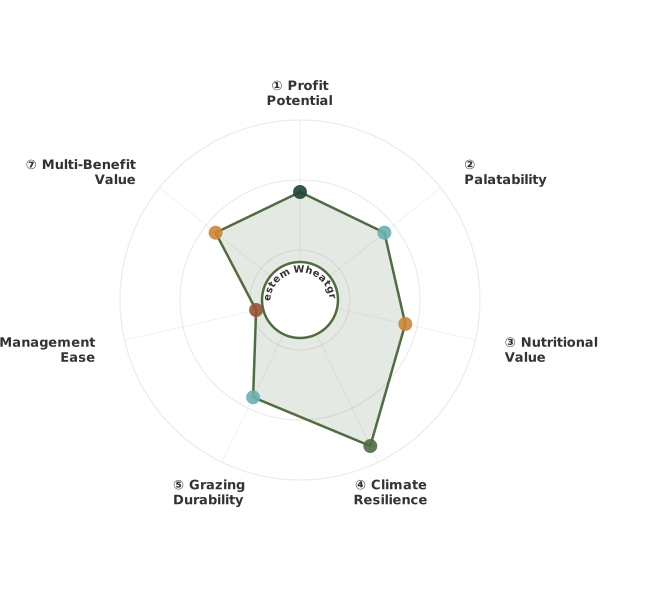
Regenerative Trait Ratings
How These Traits Are Calculated
Trait dimensions are ordered clockwise starting from the top of the chart (12 o'clock position):
1. Profit Potential
Economic returns from hay sales, grazing value, and system contributions
WHAT: Synthesizes direct revenue potential (hay sales or grazing service value) with system contributions (nitrogen fixation, reduced supplement needs) into net economic value. Captures both cash income and cost savings.
WHY: Forage profitability comes from two sources—direct sales (hay, haylage) or indirect value (grazing services supporting livestock production). High-value forages provide $300-600/acre in combined revenue and savings versus $100-200/acre for lower-value options. This determines whether forage enterprises are viable versus purchasing feed.
HOW: Scored via LLM synthesis of economics data (hay yields, prices, grazing value), timeline considerations (establishment costs, productive lifespan), and system value (nitrogen contributions, supplement replacement). Exceptional (3.0): High yields with premium pricing or exceptional grazing value plus nitrogen fixation. Typical (2.0): Moderate returns. Limited (1.0): Low yields, commodity pricing, or minimal system contributions.
2. Palatability
Livestock preference and voluntary consumption rates
WHAT: Measures how eagerly livestock consume the forage—preference ranking when choices are available. Highly palatable forages are grazed first and completely; limited palatability means animals avoid unless no alternatives exist.
WHY: Palatability directly determines voluntary intake, which drives animal performance. High-palatability forages support faster weight gain and higher milk production because animals eat more. Low-palatability forages reduce performance and waste productive potential—animals selectively graze preferred species and leave unpalatable plants ungrazed.
HOW: Ratings based on the palatability trait documenting livestock selection preference. Exceptional (3.0): Preferentially selected, high sugar content, tender growth eagerly consumed (orchardgrass, white clover, ryegrass). Typical (2.0): Readily consumed when available. Limited (1.0): Avoided unless no other options (coarse stems, bitter compounds, low digestibility).
3. Nutritional Value
Protein content and forage quality for livestock growth and production
WHAT: Measures protein content as the primary indicator of forage nutritional quality. High-protein forages (>18%) support rapid growth and high milk production; low-protein forages (<12%) require supplementation for production animals.
WHY: Protein is the most expensive supplement in livestock diets ($0.40-0.60/lb). Forages with exceptional protein content eliminate or reduce supplement costs while supporting maximum animal performance. High-quality forage can save $200-400/cow/year in purchased feed versus low-protein options.
HOW: Ratings based on the protein_content trait. Exceptional (3.0): High protein (>18%) supporting rapid weight gain or high milk production (alfalfa, clovers, young grasses). Typical (2.0): Moderate protein (12-18%) for maintenance and moderate production (mature grasses). Limited (1.0): Low protein (<12%) requiring supplementation for production animals (mature warm-season grasses, low-fertility forages).
4. Climate Resilience
Weighted: drought tolerance (60%) + climate adaptability (40%)
WHAT: Combines drought tolerance (primary climate stressor for forages) with overall climate adaptability (temperature range, geographic flexibility). Resilient forages survive extended dry periods and diverse weather patterns.
WHY: Drought is the most common forage crisis—dry years can cut production 50-80% and force costly hay purchases or herd reductions. Drought-tolerant forages maintain productivity through dry spells, reducing feed costs and providing grazing when less-resilient options fail. Geographic adaptability allows forage systems to work across farm regions.
HOW: Weighted formula prioritizes drought tolerance (60% weight) as primary stressor, with climate adaptability (40% weight) for temperature and general flexibility. Exceptional (3.0): Survives extended drought (6+ weeks) with minimal production loss and works across diverse climates. Typical (2.0): Moderate drought and climate tolerance. Limited (1.0): Drought-sensitive or narrow climate requirements.
5. Grazing Durability
Weighted: trampling tolerance (70%) + seasonal availability (30%)
WHAT: Combines grazing tolerance (resistance to trampling and frequent defoliation) with seasonal availability (timing and duration of productive growth). Durable forages handle intensive rotational grazing and provide consistent seasonal production.
WHY: Grazing tolerance determines management system viability. Tolerant forages allow intensive rotational grazing or mob grazing for maximum animal performance and pasture health. Intolerant forages are hay-only or require long rest periods. Seasonal availability indicates production timing—year-round, seasonal gaps, or narrow windows.
HOW: Weighted formula prioritizes grazing tolerance (70% weight) for management system determination, with seasonal availability (30% weight) for production timing. Exceptional (3.0): Handles intensive rotational grazing with consistent seasonal production. Typical (2.0): Moderate tolerance and availability. Limited (1.0): Hay-only species or narrow seasonal production windows.
6. Management Ease
Weighted: establishment ease (50%) + low maintenance needs (50%)
WHAT: Combines establishment difficulty (germination, stand establishment) with ongoing maintenance requirements (fertility, weed control, renovation needs). Easy forages establish reliably and persist without intensive management.
WHY: Pasture establishment is expensive ($150-400/acre) and risky. Easy-to-establish forages reduce stand failure risk and provide quicker returns. Low-maintenance forages reduce annual input costs and labor, improving long-term profitability of grazing systems.
HOW: Weighted formula balances establishment ease (50% weight) for startup success and inverted maintenance intensity (50% weight) for ongoing care. Exceptional (3.0): Fast germination, reliable stand establishment, minimal fertility/weed management needs (white clover, orchardgrass). Typical (2.0): Moderate establishment and care requirements. Limited (1.0): Difficult establishment or intensive maintenance (heavy fertility, frequent renovation, weed competition).
7. Multi-Benefit Value
Ecosystem services beyond forage—nitrogen fixation, pollinator support, wildlife habitat
WHAT: Measures ecosystem services provided beyond livestock nutrition. Multi-benefit forages contribute nitrogen fixation (legumes), pollinator support (flowering species), wildlife habitat, soil building, erosion control, and biodiversity support.
WHY: Forage systems can either extract from farm ecosystems or contribute to them. Nitrogen-fixing legumes (clovers, alfalfa) provide $80-150/acre/year worth of fertility for companion grasses and following crops. Flowering forages support pollinators critical for fruit/vegetable crops. These service-stacking forages deliver total system value beyond livestock production.
HOW: Ratings based on the multi_benefit_value trait documenting service diversity. Exceptional (3.0): Multiple significant benefits (legumes fixing 80-150 lbs N/acre/year + pollinator support + wildlife forage). Typical (2.0): Some ecosystem contributions. Limited (1.0): Single-purpose forage with minimal ecosystem services beyond grazing value.
Ratings are based on documented performance in regenerative systems, not conventional high-input scenarios. All traits assume integrated management practices focused on soil health and ecosystem services.
1
Climate Suitability Assessment
Will this plant thrive in your climate?
Climate Suitability Assessment
Will this plant thrive in your climate?
Köppen Zone: BSk (Cold Semi-Arid (Steppe)), Dfa (Hot-Summer Continental), Dfb (Warm-Summer Continental), Dfc (Subarctic)
USDA Zone: 3a, 3b, 4a, 4b, 5a, 5b, 6a, 6b
Australian Zone: temperate
EU Climate Region: atlantic
Bluestem Wheatgrass excels in climates with distinct seasons, particularly those with cold winters and warm, moist summers, characterized by 120-180 frost-free days and annual precipitation of 20-40 inches (500-1000 mm). These conditions are met in Köppen zones like Dfb, and regional zones such as USDA Zones 5b through 7b, Australian Temperate zones, and EU Atlantic climates. In these environments, the plant establishes readily, exhibits excellent perennial survival due to its cold hardiness (tolerating -20°F/-29°C), and thrives with moderate summer temperatures (60-75°F/15-24°C) that promote consistent forage production. Soil remediation benefits are significant due to its robust root system, and it reliably integrates into forage systems, providing high-quality biomass. Minimal management is required beyond standard agricultural practices, making it a highly productive and sustainable choice for regenerative agriculture in these regions.
Köppen Zone: BSh (Hot Semi-Arid (Steppe)), BWk (Cold Desert), Cfa (Humid Subtropical), Cfb (Oceanic (Maritime Temperate)), Csa (Hot-Summer Mediterranean), Csb (Warm-Summer Mediterranean), Cwa (Monsoon-Influenced Humid Subtropical), Cwb (Subtropical Highland), Dfd (Extreme Subarctic), Dsd (Dsd), Dwa (Monsoon-Influenced Hot-Summer Continental), Dwb (Monsoon-Influenced Warm-Summer Continental), Dwd (Monsoon-Influenced Extreme Subarctic)
USDA Zone: 2a, 7a, 7b, 8a
Australian Zone: grassland
EU Climate Region: continental
Bluestem Wheatgrass can perform adequately in a range of climates that offer a balance of seasonal conditions, though with some limitations. This includes Köppen zones like BSk, Csa, Csb, Dsb, Dfa, and Dwb, as well as USDA Zones 3b through 4b, 8a through 9b, Australian Grassland zones, and EU Continental regions. These areas typically have 90-150 frost-free days and annual precipitation between 10-25 inches (250-650 mm). Challenges may include summer dormancy due to heat and drought stress (requiring supplemental irrigation in drier areas), variable winter survival in colder zones (especially 3b-4b), and potential competition from other species. While it can provide forage and soil cover, yields may be reduced by 10-30% compared to ideal zones, and stand persistence might be shorter (2-4 years) without careful management. Establishment success is generally good (70-85%) with appropriate timing and moisture.
Köppen Zone: Af (Tropical Rainforest), Am (Tropical Monsoon), Aw (Tropical Savanna), EF (Ice Cap), ET (Tundra), BWh (Hot Desert)
USDA Zone: 8b, 9a, 9b, 10a, 10b, 11a, 11b, 12a, 12b, 13a, 13b
Australian Zone: arid
Bluestem Wheatgrass is not recommended for cultivation in climates that present extreme challenges to its survival and productivity, making it economically and practically unviable for regenerative agriculture. This includes Köppen zones BWk, Dsa, and Dwa, USDA Zones 3a, 10a, and 10b, and Australian Arid zones. These regions are characterized by either extreme aridity with less than 10 inches (250 mm) of annual rainfall and high evaporation, or by severe temperature extremes (prolonged heat above 90°F/32°C or winter lows below -30°F/-34°C) that far exceed its tolerance. In arid zones, establishment success is below 40%, and sustained growth requires intensive, costly irrigation. In hot, dry summer zones (Dsa, BWk, 10a/b), the plant will go dormant for extended periods, offering little forage and minimal soil cover. In extremely cold zones (3a), winter kill is almost certain, rendering perennial stands unreliable. Alternative species better adapted to these specific harsh conditions are essential for successful regenerative practices.
Note: Zones listed above represent climates where this plant can produce reliably with reasonable management. Climate zones not mentioned would require intensive climate modification (greenhouses, extensive infrastructure) and are not economically viable for regenerative agriculture purposes.
2
Soil Suitability Assessment
Which soil types work best for this plant?
Soil Suitability Assessment
Which soil types work best for this plant?
Loam Soil
This plant thrives in these soil types without requiring amendments or remediation. Natural soil conditions support optimal growth and productivity.
Clay Soil, Rich Soil, Sandy Soil
This plant performs acceptably in these soil types with moderate, manageable remediation such as pH adjustment, compost addition, or drainage improvement. The required amendments are practical and cost-effective for regenerative agriculture.
Acidic Soil, Alkaline Soil, Desert Soil, Rocky Soil, Saline Soil, Wet Soil
Growing this plant in these soil types would require impractical remediation such as complete soil replacement, extensive amendments, or cost-prohibitive infrastructure. These conditions are not economically viable for regenerative agriculture.
Note: Soil suitability assessments focus on remediation requirements. "Ideally Suited" means the plant generally thrives without the need for substantial amendments, "Adequate" means manageable remediation (lime, compost, mulch), and "Not Recommended" means impractical soil changes would be required. Climate factors like rainfall and temperature also influence success.
3
Seasonal Considerations
Planting timing, growth duration, and harvest windows
Seasonal Considerations
Planting timing, growth duration, and harvest windows
Pascopyrum smithii, or bluestem wheatgrass, offers excellent forage potential across a wide range of climates. For establishment, aim for seeding in early spring after the soil has warmed to at least 45°F (7°C), or in late summer before the first hard frosts. Expect establishment within 3-4 weeks, with full production typically achieved in the second year.
Begin grazing Pascopyrum smithii once it reaches 6-8 inches (15-20 cm) in height, usually 6-8 weeks after seeding in spring, or later if fall-seeded. Implement rotational grazing with rest periods of 3-4 weeks to allow for robust regrowth. In productive years, two to three hay cuttings can be anticipated. Peak productivity occurs during the warm, moist periods of late spring and early summer. While it can tolerate moderate grazing pressure into the fall, allow the plants to accumulate reserves before the first expected frost for winter hardiness. Its excellent frost tolerance allows for late-season grazing, but ensure adequate leaf area remains for winter survival and spring regrowth. Dormancy will set in as temperatures cool and moisture decreases.
4
System Role & Multi-Benefit Value
Functional roles, integration strategies, and stacked benefits
System Role & Multi-Benefit Value
Functional roles, integration strategies, and stacked benefits
Functional Role
Total System Value
Bluestem wheatgrass offers significant system value beyond its direct use as forage. As a perennial, it contributes to long-term soil health improvements, including increased organic matter and better soil structure, which enhances water infiltration and reduces erosion. Its role in increasing grassland diversity, as observed in restored pastures, supports a more resilient ecosystem capable of withstanding environmental stresses. By providing reliable forage, it reduces reliance on external feed inputs, thereby lowering costs and improving livestock health. Its inclusion in diverse pasture mixes diversifies the farm's biological assets, reducing risk associated with monocultures or extreme weather events. While not directly providing shade, windbreaks, or nitrogen fixation (like legumes), its robust root system contributes to carbon sequestration and improved water cycles, key ecosystem services. The overall system value lies in its contribution to a stable, productive, and ecologically sound grazing system.
Integration Characteristics
Multi-Benefit Value: Adequate - A drought-resilient grass that actively enhances soil health through erosion control and ground cover, contributing significantly to soil stabilization.
5
Management & Care Requirements
Integration guidance, maintenance needs, and care practices
Management & Care Requirements
Integration guidance, maintenance needs, and care practices
How to Integrate This Plant
Bluestem wheatgrass (Pascopyrum smithii), a cool-season perennial grass, is highly valuable for forage integration in regenerative systems. Its primary roles include providing high-quality forage, contributing to grassland diversity, and enhancing soil health through its perennial root system. It is well-suited for managed grazing practices like rotational grazing and mob grazing, where allowing adequate rest periods is key to its recovery and persistence, as highlighted in excerpts and. This plant can begin providing grazing value within its first year, with its soil-building and diversity-enhancing benefits becoming more pronounced by years 3-5. Its integration supports a multi-benefit stacking approach by improving pasture resilience, increasing forage availability, and contributing to a more robust grassland ecosystem, which in turn supports livestock health and productivity. It can be incorporated into pasture mixes alongside other perennial grasses and legumes.
Integration Practices & Management
The provided knowledge base offers limited direct information on the specific integration methods for bluestem wheatgrass (Pascopyrum smithii) within regenerative agriculture systems. While bluestem wheatgrass is mentioned as a desirable native grass to re-emerge with improved pasture health after rotational grazing, and is included in plans for perennial pasture conversion, details on its establishment, termination, or precise management are not elaborated upon. The sources focus more broadly on the outcomes of regenerative practices, such as increased grassland diversity and the re-emergence of cool-season grasses like Western wheatgrass following managed grazing. These practices involve longer rest periods for pastures, allowing grasses to recover and preventing overgrazing. One source lists bluestem wheatgrass as part of a diverse pasture species mix intended for conversion from cropland, but does not specify seeding rates, timing, or companion planting strategies. Termination methods and fertility needs are also absent from the provided text. Therefore, while the presence and re-emergence of this species are noted as positive indicators of pasture recovery under regenerative grazing, the practical 'how-to' of its integration remains largely undocumented within this specific collection of sources.
Management Profile
Maintenance Intensity: Ideally Suited - Its exceptional drought tolerance and adaptation to arid conditions mean minimal soil fertility management or water management is needed once established, integrating seamlessly into low-input systems.
6
Economics & Value Streams
Direct harvest, system benefits, ecosystem services, and risk diversification
Economics & Value Streams
Direct harvest, system benefits, ecosystem services, and risk diversification
Comprehensive economic analysis including direct harvest value, system enhancement contributions, ecosystem services, value timeline, and risk diversification strategies.
Economics in Regenerative Systems
| Metric | Value |
|---|---|
| Seed Cost | $20-40/acre $49-98/ha |
| Establishment Cost | $150-300/acre $370-741/ha |
| Forage Yield | 2-4 tons/acre/year 2-4 tons/ha/year |
| Annual Management Cost | $50-100/acre $123-247/ha |
| Value/Sale Price | $70-130/ton $70-130/tonne |
| Net Annual Return* | $-260 to $320/acre/year |
Values represent typical ranges for regenerative agriculture contexts. Actual results vary by region, management, and market conditions. Costs exclude land and labor.
* Net Annual Return = (Yield × Market Price) − (Amortized Establishment Cost + Annual Maintenance). This return is realized only at/after first harvest; early years have costs but no revenue. Range shows worst case to best case scenarios.
System Enhancement Value
Beyond harvest: livestock nutrition, soil building, and pasture improvement
Livestock Nutrition & Soil Building
Bluestem wheatgrass plays a crucial role in integrated farm systems through its soil remediation and cover cropping functions. As highlighted in the knowledge base, it is recommended for use when annual crop options are exhausted due to high soil salinity (EC > 10-12), indicating its salt-tolerant nature and ability to establish in challenging conditions. This characteristic makes it invaluable for reclaiming degraded land. Its dense root system improves soil structure, increasing water infiltration and reducing runoff, which can help leach salts from the root zone over time. Furthermore, its role as a cover crop, as suggested by its inclusion in perennial pasture mixes after cover cropping, helps to break up plow layers and build soil organic matter. This improves overall soil health, fertility, and water-holding capacity, creating a more resilient and productive farming system.
Erosion Control
Variable, dependent on stand density and landscape context. Typically contributes to reduced soil erosion rates.
Bluestem wheatgrass, as a perennial grass, contributes to soil structure and ground cover, which are foundational for windbreak and erosion control benefits. While not a tree, dense stands of bluestem wheatgrass can effectively reduce wind velocity at ground level, mitigating soil erosion caused by wind. This is particularly important in agricultural landscapes where bare soil can be exposed during certain periods. The root system of bluestem wheatgrass binds soil particles, further enhancing its resistance to wind and water erosion. This protective function is critical for maintaining topsoil fertility and preventing the loss of valuable organic matter, especially in exposed areas or during periods of drought when other vegetation may be sparse. The presence of bluestem wheatgrass can help protect adjacent crops or pastures from wind damage, leading to improved plant health and potentially higher yields in the protected areas.
Ecosystem Service Contributions
Environmental contributions: carbon, pollinators, wildlife, and water
- Carbon Sequestration: As a perennial grass with a robust root system, bluestem wheatgrass has significant potential for carbon sequestration in the soil. Its deep and extensive root structure stores carbon belowground, contributing to long-term soil organic matter accumulation and enhancing soil health.
- Pollinator Support: Low. While providing some habitat, bluestem wheatgrass is not a primary nectar or pollen source for most commercially important pollinators.
- Wildlife Habitat: Medium. Provides forage for grazing animals and ground cover for small wildlife. Its persistence as a perennial offers consistent habitat and food resources.
- Water Quality: Not applicable
Value Timeline: Forage Establishment & Production
When you'll see results: annuals year 1, perennial establishment 1-2, peak 3-10
Years 1-2
Establishment of ground cover, initial erosion control, and potential for early grazing in well-managed systems. Begins to contribute to soil structure improvement and water infiltration.
Years 3-5
Established perennial forage production, significant contribution to soil health improvement (organic matter, structure), and continued erosion control. Increased resilience to drought conditions compared to annuals.
Years 10-20
Mature perennial stand providing consistent and high-quality forage. Significant soil remediation benefits, particularly in saline areas. Enhanced ecosystem services including stable wildlife habitat.
20+ Years
Long-term soil health and resilience, sustained forage production, and robust contribution to a diverse and stable grassland ecosystem. Potential for continued soil carbon sequestration.
Farm Risk Reduction
How this reduces farm risk: feed cost reduction and livestock performance
- Multiple Revenue Streams: Forage for livestock, potential for land reclamation and improvement, reduced reliance on supplemental feed due to improved pasture health, soil remediation services.
- Temporal Income Spread: Provides ongoing forage and ecosystem services year after year, unlike annual crops. Value is generated through consistent grazing and long-term soil health improvements.
- Market Risk Hedge: Drought tolerance and ability to grow in marginal or saline soils offer a hedge against unpredictable weather and soil conditions. Reduced dependence on purchased feed (as per) insulates against feed price volatility. Its inclusion in diverse pasture mixes diversifies the overall farm's biological and ecological resilience.
Sources behind this view
-
Potential of Forages to Diversify Cropping Systems in the Northern Great Plains (opens in new window)
Forage crops in the Northern Great Plains can boost grain yields, improve soil health, and add nitrogen. They also offer environmental benefits like carbon storage but can impact soil moisture. Innova
7
Regenerative Suitability Details
Comprehensive trait ratings for system integration assessment
Regenerative Suitability Details
Comprehensive trait ratings for system integration assessment
Comparative ratings for this plant across key regenerative agriculture traits.
| Trait | Suitability | Explanation |
|---|---|---|
| Palatability | Adequate | Bluestem wheatgrass's drought resilience supports consistent forage, with moderate palatability that improves with animal adaptation to its presence in the grazing system. |
| Protein Content | Adequate | This grass offers moderate protein, supporting animal maintenance and production, with levels naturally fluctuating based on its growth stage and the plant's nutrient cycling. |
| Drought Tolerance | Ideally Suited | With deep root systems, bluestem wheatgrass excels in moisture retention, maintaining productivity and rapid recovery after precipitation events in arid environments. |
| Grazing Tolerance | Adequate | Bluestem wheatgrass tolerates rotational grazing with adequate rest periods, its protected meristems ensuring persistence and resilience within an integrated livestock management plan. |
| Establishment Ease | Adequate | This drought-resilient grass establishes reliably in well-prepared soil, demonstrating moderate early vigor that contributes to long-term system stability. |
| Multi Benefit Value | Adequate | A drought-resilient grass that actively enhances soil health through erosion control and ground cover, contributing significantly to soil stabilization. |
| Climate Adaptability | Ideally Suited | Highly resilient to drought and cold across diverse climates (zones 3-9), this grass thrives in arid and semi-arid regions with minimal need for climate-specific intervention. |
| Maintenance Intensity | Ideally Suited | Its exceptional drought tolerance and adaptation to arid conditions mean minimal soil fertility management or water management is needed once established, integrating seamlessly into low-input systems. |
| Seasonal Availability | Adequate | As a cool-season grass adapted to dry conditions, bluestem wheatgrass provides reliable forage for 5-7 months, contributing to seasonal grazing diversity. |
Comparative System: Ratings compare plants within their economic category (e.g., cover crop nitrogen fixation compared to other cover crops, not to all plants). Individual farm conditions and management practices significantly influence actual performance.
8
Learn More
Why farmers use this plant and additional resources
Learn More
Why farmers use this plant and additional resources
Why Regenerative Farmers Use This Plant
Bluestem wheatgrass (Agropyron smithii), also known as Western wheatgrass, is a valuable perennial forage and grazing species for regenerative agricultural systems due to its exceptional resilience, deep root system, and ability to thrive in a variety of soil types and climatic conditions.
Soil Health and Carbon Sequestration: Its deep root structure, often reaching 3-6 feet (0.9-1.8 meters) or more, is instrumental in improving soil aggregation, enhancing water infiltration, and sequestering significant amounts of carbon deep within the soil profile. This makes it an excellent choice for building soil health and resilience, particularly in arid and semi-arid rangelands and pastures. The robust root architecture contributes to long-term soil health and organic matter accumulation, estimated to add 0.2-0.5% to soil organic matter over a decade with proper management. Its dense sod also helps to suppress weeds effectively, reducing the reliance on mechanical or chemical weed control methods and preventing soil erosion.
Forage Production and Livestock Integration: Bluestem wheatgrass produces substantial biomass, typically 2-4 tons of dry matter per acre (4,500-9,000 kg/ha) annually under optimal conditions, contributing to increased carrying capacity for livestock. In integrated livestock systems, it offers excellent forage quality, especially during its vegetative stages. Crude protein levels can range from 12-16%, with Total Digestible Nutrients (TDN) often exceeding 60%, supporting robust animal health and productivity. When managed appropriately through rotational grazing, it can support carrying capacities of 1.5-2.5 Animal Units per acre (3.7-6.2 AU/ha) during the peak growing season, depending on rainfall and soil fertility, leading to improved livestock weight gain and milk production. Its late-season growth and drought tolerance allow it to extend the grazing season, reducing reliance on stored feeds and lowering overall feed costs. For example, in the Northern Great Plains of the USA, stockpiled bluestem wheatgrass can provide valuable forage well into the fall and early winter.
Ecosystem Services: Beyond its direct forage benefits, bluestem wheatgrass plays a crucial role in ecosystem services. Its dense sod provides excellent erosion control, protecting valuable topsoil from wind and water damage, a critical benefit in regions prone to drought and heavy rainfall events. The extensive root system improves soil structure, leading to enhanced water holding capacity and reduced runoff, thus contributing to watershed health. While not a nitrogen fixer, its decomposition contributes organic matter to the soil, supporting a healthy soil microbiome and nutrient cycling. It also provides habitat and forage for various native wildlife species, contributing to biodiversity within the agricultural landscape. Its vigorous growth can scavenge residual nutrients from deeper soil profiles, making them available to shallower-rooted plants or livestock, and it can thrive in less-than-ideal soil conditions where other crops might struggle, turning marginal lands into productive forage areas.
Regional Adaptations: Bluestem wheatgrass has demonstrated success across diverse regenerative farming systems globally.
- North America: In the mixed-grass prairies of Canada and the United States, it forms a cornerstone of sustainable cattle ranching operations, improving pasture productivity and resilience. In the dryland farming regions of the North American Great Plains and Montana, USA, it is a staple for pasture and rangeland, often seeded in mixtures with other native grasses to enhance drought resilience and forage diversity, providing reliable summer grazing for beef cattle.
- Australia: In Australia's semi-arid sheep and cattle country and drier regions, its drought resilience is highly valued in extensive grazing operations. It can be incorporated into pasture mixes to provide summer grazing and improve soil structure in areas with moderate rainfall, often integrated with native grasses to enhance drought resilience and extend the grazing season.
- Europe: European farmers utilize it in ley pastures and mixed swards to improve soil fertility and provide high-quality feed for dairy and beef cattle, often integrating it into crop rotations to break pest cycles and enhance soil health. Its adaptability allows for its use in pasture renovation projects in parts of Europe, contributing to improved forage quality and soil health in established agricultural areas.
- South America: In the Pampas region of Argentina and its drier regions, it can be used in pasture renovation to improve carrying capacity and soil health for beef cattle production, especially in areas with similar temperate climatic conditions, and is valued for its drought tolerance and ability to withstand heavy grazing pressure.
- Other Regions: It has also found use in parts of South America and can be a valuable component for rebuilding degraded pastures and enhancing the sustainability of livestock operations globally.
9
How to Integrate This Plant
Practical guidance for regenerative systems
How to Integrate This Plant
Practical guidance for regenerative systems
Establishing bluestem wheatgrass typically involves direct seeding, as it does not transplant well.
Seeding:
- Rates: For pure stands, seeding rates range from 8-15 lbs/acre (9-17 kg/ha). When mixed with other grasses or legumes, rates are typically 3-6 lbs/acre (3-7 kg/ha). Variant 2 suggests 15-25 lbs/acre (17-28 kg/ha) when drilled and 20-30 lbs/acre (22-34 kg/ha) when broadcast for pure stands.
- Depth: The planting depth is critical, with seeds needing to be placed no deeper than 0.25-0.5 inches (0.6-1.3 cm) to ensure successful germination.
- Method: This can be achieved with a drill seeder or by broadcasting the seed and then lightly disking or cultipacking to ensure good seed-to-soil contact. Drilling is preferred over broadcasting, with row spacing typically set at 6-12 inches (15-30 cm).
- Timing:
- Northern Hemisphere: Early spring (March-April) or late spring (April-May), and late summer/early fall (August-September).
- Southern Hemisphere: Early spring (September-October) or early fall (February-March/March-April).
- Establishment: Adequate moisture is critical during the germination and establishment phase, which can take 30-45 days. Approximately 1 inch (2.5 cm) of water per week, either from rainfall or irrigation, supports rapid root and shoot growth.
Management:
- Maintenance: Once established, bluestem wheatgrass is relatively low-maintenance, but proper management is key to maximizing its regenerative benefits.
- Water Needs: It requires approximately 15-25 inches (380-635 mm) of annual precipitation to thrive, though established stands can tolerate extended dry periods. Established plants require approximately 1 inch (2.5 cm) of rainfall or irrigation per week during peak growth.
- Fertility: Fertility should be managed biologically; incorporating compost, utilizing rotational grazing residue, and allowing for decomposition of its own plant matter are primary strategies. The goal is to build soil biology to reduce reliance on external inputs. While it can respond to synthetic fertilizers, the aim in regenerative systems is to minimize or eliminate their need.
- Height: The plant typically reaches a height of 2-4 feet (0.6-1.2 meters) at maturity, with a mature height of 3-5 feet (0.9-1.5 m) cited for some variants.
- Pest and Disease Management: Best handled through crop rotation, maintaining healthy soil, encouraging beneficial insect populations, and maintaining plant vigor, rather than relying on chemical interventions.
Grazing Management and Livestock Integration:
- Systems: Bluestem wheatgrass excels in rotational or adaptive multi-paddock grazing systems.
- Carrying Capacity: Under well-managed rotations, it can support carrying capacities of 1.5-2.5 Animal Units per acre (3.7-6.2 AU/ha) during the peak growing season, with some variants suggesting up to 2-3 AU/acre (5-7 AU/ha).
- Grazing Height: Grazing should commence when the grass reaches 8-10 inches (20-25 cm) in height, and animals should be removed when the residual height is around 3-4 inches (8-10 cm) to allow for adequate regrowth. This management strategy ensures sufficient leaf area remains for photosynthesis and promotes robust recovery.
- Rest Periods: This grazing management provides a rest/recovery period of 45-60 days between grazing events during the active growing season, crucial for the plant's perennial health and productivity. Variant 2 suggests 30-45 days.
- Palatability: Bluestem wheatgrass is generally palatable to cattle and sheep, though its palatability can decrease as it matures and becomes more fibrous. Goats may selectively browse less of it compared to other forages.
- Regrowth Rate: Its regrowth rate is moderate to good during the spring and early summer, slowing in extreme heat or drought.
- Stockpiling: Fall growth can be stockpiled, providing valuable winter grazing that maintains moderate nutritional quality, potentially extending the grazing season by 60-90 days. Stockpiled bluestem wheatgrass can maintain crude protein levels of 8-10% or above 10% in milder climates, providing 45-75 grazing days per acre and significantly reducing winter feed costs.