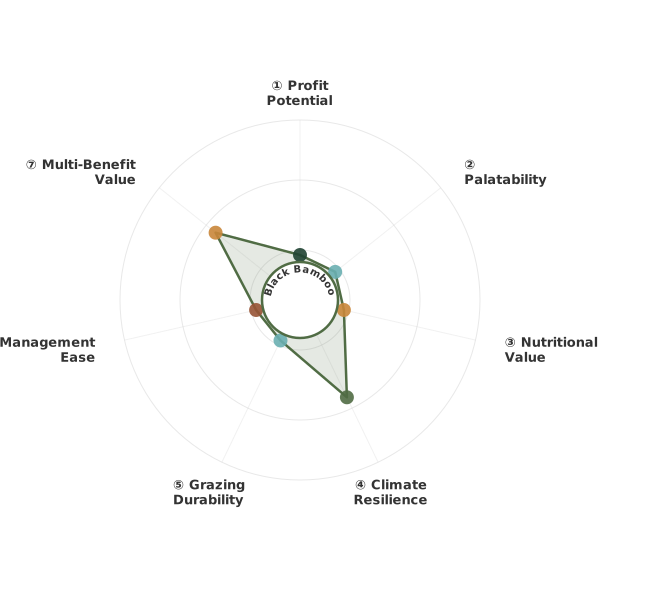
Black Bamboo (*Phyllostachys nigra*) shows potential in regenerative agriculture, though our knowledge base coverage is limited. Primarily, it can serve as a valuable component in polyculture systems, offering structural diversity and potential habitat for beneficial insects. While not a nitrogen fixer, its dense growth can contribute to soil building by accumulating organic matter and preventing erosion, thus aiding in carbon sequestration. Its use as forage for livestock is noted, suggesting integration into rotational grazing systems where managed grazing can maintain stand health and provide valuable feed. Farmer experiences highlight its vigorous growth as both a benefit for biomass production and a challenge for containment, underscoring the need for careful planning in integration with practices like agroforestry or no-till systems. Further research and on-farm trials are needed to fully understand its role and optimize its application within regenerative frameworks.

Regenerative Quick Profile

All recommendations assume integrated, regenerative practices—not conventional inputs.

Climate & Soil Fit

Climate: Tropical Rainforest, Tropical Monsoon, Tropical Savanna, Hot Semi-Arid (Steppe), Cold Semi-Arid (Steppe), Cold Desert, Humid Subtropical, Oceanic (Maritime Temperate), Hot-Summer Mediterranean, Warm-Summer Mediterranean, Monsoon-Influenced Humid Subtropical, Subtropical Highland, Hot-Summer Continental, Warm-Summer Continental, Subarctic, Monsoon-Influenced Hot-Summer Continental

Zones: USDA 7-10, Australian Zones 3-7

Optimal Soil: Loam Soil

System Role & Functions

Primary: Cover Crop System

Secondary: Forage Integration, Cash Crop With Services

Management Level

Experience: Advanced

Maintenance: Moderate maintenance - To ensure optimal growth and density, black bamboo benefits from consistent soil moisture and ongoing fertility management, often achieved through mulching and compost application, with containment strategies integrated into the overall system.

Value Streams

  • Forage production
  • Soil building and erosion control
  • Livestock forage value
1

Climate Suitability Assessment

Will this plant thrive in your climate?

IDEALLY SUITED

Köppen Zone: Af (Tropical Rainforest), Am (Tropical Monsoon), Aw (Tropical Savanna), Cfa (Humid Subtropical), Cfb (Oceanic (Maritime Temperate)), Cwa (Monsoon-Influenced Humid Subtropical)
USDA Zone: 5b, 6a, 6b, 7a, 7b, 8a, 8b, 9a, 9b, 10a, 10b, 11a, 11b, 12a, 12b, 13a, 13b
Australian Zone: subtropical
EU Climate Region: atlantic

Black bamboo excels in climates with long, warm growing seasons and ample moisture, such as humid subtropical (Köppen Cfa), subtropical Australian, and USDA zones 7a-10b, as well as the EU Atlantic region. These zones provide consistent temperatures between 65-85°F (18-29°C) and sufficient rainfall (40-60 inches/100-150 cm annually), allowing for rapid establishment and vigorous growth. Minimal winter protection is required due to mild winters (above 15°F/-9°C). Its dense growth habit makes it an excellent cover crop for erosion control and weed suppression, while its rapid biomass production supports forage integration and potential cash crop applications. Establishment success rates are high (>90%), and multi-year productivity is reliable, yielding significant biomass for soil health improvement and carbon sequestration. Management primarily involves controlling its spread, which can be achieved through rhizome barriers or strategic planting. Overall, these conditions allow black bamboo to fully realize its potential in regenerative agriculture systems, contributing significantly to soil fertility and ecosystem services.

ADEQUATE

Köppen Zone: BSh (Hot Semi-Arid (Steppe)), BSk (Cold Semi-Arid (Steppe)), Csa (Hot-Summer Mediterranean), Csb (Warm-Summer Mediterranean), Cwb (Subtropical Highland), Dfa (Hot-Summer Continental), Dfb (Warm-Summer Continental)
USDA Zone: 4b, 5a
Australian Zone: temperate

Black bamboo can perform adequately in temperate oceanic (Köppen Cfb), Mediterranean (Köppen Csa, Csb), temperate Australian, and USDA zones 5b-6b. These regions offer moderate temperatures and sufficient rainfall, but may have shorter growing seasons or cooler summers compared to ideal zones, leading to slower growth and reduced biomass production. Winter temperatures can reach as low as 0°F (-18°C), potentially causing some dieback, but survival is generally good with adequate snow cover or mulching. Establishment success is good (70-85%) with proper timing, typically in spring. Supplemental irrigation may be necessary during dry summer periods in Mediterranean climates to maintain vigor. While not as prolific as in warmer regions, black bamboo still provides valuable cover cropping benefits, erosion control, and can be integrated into forage systems. Management is standard, focusing on controlling spread and ensuring adequate moisture. These zones represent a viable, though not optimal, environment for utilizing black bamboo in regenerative agriculture.

NOT RECOMMENDED

Köppen Zone: ET (Tundra), BWh (Hot Desert), BWk (Cold Desert), Dfc (Subarctic), Dwa (Monsoon-Influenced Hot-Summer Continental)
USDA Zone: 2a, 3a, 3b, 4a
EU Climate Region: continental

Black bamboo is not recommended for climates with extreme winter cold or very short growing seasons, including humid continental (Köppen Dfa, Dfb), boreal/subarctic, and USDA zones 3a-5a, as well as the EU continental region. These zones experience winter temperatures that regularly drop below 0°F (-18°C), often reaching -40°F (-40°C), causing severe dieback or complete winter kill of established culms. The short growing seasons further limit its ability to establish and produce sufficient biomass for effective cover cropping or forage integration. Establishment success rates are low (<60%) due to harsh conditions and high mortality. While technically possible to grow with intensive protection (e.g., greenhouses, extensive mulching), it is economically and practically unviable for regenerative agriculture purposes. Alternative plants better suited to these challenging climates, such as cold-hardy shrubs and grasses, are recommended for biomass production, soil stabilization, and nitrogen fixation.

Better alternatives for these "not recommended" zones: Siberian Pea Shrub (Caragana arborescens) (Extremely cold-hardy shrub, fixes nitrogen, provides biomass and tolerates harsh winters.), Willow (Salix spp.) (Fast-growing, adaptable to various conditions, provides biomass and erosion control, some varieties are cold-hardy.), Hairy Vetch (Cold-hardy annual legume for nitrogen fixation, can survive mild winters.), Winter Rye (Extremely cold-hardy cover crop for biomass and soil protection.)

Note: Zones listed above represent climates where this plant can produce reliably with reasonable management. Climate zones not mentioned would require intensive climate modification (greenhouses, extensive infrastructure) and are not economically viable for regenerative agriculture purposes.

2

Soil Suitability Assessment

Which soil types work best for this plant?

IDEALLY SUITED

Loam Soil

This plant thrives in these soil types without requiring amendments or remediation. Natural soil conditions support optimal growth and productivity.

ADEQUATE

Clay Soil, Rich Soil, Sandy Soil

This plant performs acceptably in these soil types with moderate, manageable remediation such as pH adjustment, compost addition, or drainage improvement. The required amendments are practical and cost-effective for regenerative agriculture.

NOT RECOMMENDED

Acidic Soil, Alkaline Soil, Desert Soil, Rocky Soil, Saline Soil, Wet Soil

Growing this plant in these soil types would require impractical remediation such as complete soil replacement, extensive amendments, or cost-prohibitive infrastructure. These conditions are not economically viable for regenerative agriculture.

Note: Soil suitability assessments focus on remediation requirements. "Ideally Suited" means the plant generally thrives without the need for substantial amendments, "Adequate" means manageable remediation (lime, compost, mulch), and "Not Recommended" means impractical soil changes would be required. Climate factors like rainfall and temperature also influence success.

3

Seasonal Considerations

Planting timing, growth duration, and harvest windows

Establish Phyllostachys nigra in the early spring, after the ground has warmed sufficiently and the risk of hard frost has passed. Expect establishment to take several weeks, with significant tillering and rhizome development occurring in the first year. Wait until the second year for full production.

For grazing, the first harvest or grazing can typically occur 6-8 weeks after the start of active spring growth, once shoots reach approximately 18-24 inches in height. Implement a rotational grazing system, allowing 4-6 weeks of rest between grazing events to ensure robust regrowth. In regions with a long growing season, you can expect 2-3 grazing cycles or hay cuttings per year.

Peak productivity for black bamboo is during the warm, moist conditions of summer. While it exhibits good frost tolerance, allowing it to remain standing for late fall grazing can be beneficial, as the nutritional quality may persist for a period. Dormancy will occur with the onset of winter cold. Regrowth patterns are vigorous, with new shoots emerging annually from the established rhizome system.

4

System Role & Multi-Benefit Value

Functional roles, integration strategies, and stacked benefits

Functional Role

Total System Value

Black bamboo contributes to whole-farm resilience by offering a diverse range of benefits beyond direct harvest. Its rapid biomass production can be utilized for animal bedding, composting, or even biochar production, adding value and closing nutrient loops. As a dense planting, it functions as an effective windbreak, reducing wind erosion and protecting crops and livestock. Its vigorous growth also makes it an excellent choice for erosion control on slopes, stabilizing soil and preventing runoff. While not a direct food source for most livestock, it can provide shade and shelter in silvopasture settings. The plant's dense structure can offer habitat for beneficial insects and small wildlife, enhancing biodiversity. Risk diversification is achieved through its perennial nature, providing consistent biomass and erosion control year after year, reducing reliance on annual inputs and mitigating the impact of extreme weather events. Its potential to sequester carbon in its extensive root system and biomass further adds to its ecological value.

Integration Characteristics

Multi-Benefit Value: Adequate - This species contributes to ecosystem structure by providing habitat and can be utilized for crafts, while also offering some erosion control and aesthetic benefits, though careful management is needed to integrate its potential for aggressive spread.

5

Management & Care Requirements

Integration guidance, maintenance needs, and care practices

How to Integrate This Plant

Black bamboo, as a non-tree perennial, offers significant potential in regenerative systems primarily as a biomass producer and for erosion control. Its rapid growth can quickly establish dense stands, making it effective for windbreaks, providing shade for livestock or sensitive crops, and acting as a living fence. It can be integrated into silvopasture systems as a border or internal hedge to manage animal movement and provide habitat. In alley cropping, it could serve as a living mulch or a temporary windbreak between crop rows, though its spreading nature requires careful management. Its dense root system makes it excellent for stabilizing slopes and preventing soil erosion, particularly on vulnerable land. While not a nitrogen fixer, its substantial biomass contributes organic matter when incorporated into the soil or used as mulch. It starts providing significant benefits within 1-3 years, establishing a robust presence by year 5. Stacking benefits includes biomass for biochar or animal bedding, habitat for beneficial insects, and visual screening, alongside its primary roles.

Integration Practices & Management

While the provided knowledge base offers limited specific details on how regenerative farmers integrate Phyllostachys nigra, it's clear that its application within these systems is not extensively documented. Consequently, a comprehensive explanation of its establishment methods, such as seeding rates, timing, companion planting, or tillage practices, cannot be drawn from the available sources. Similarly, information regarding its integration with grazing systems, including mob or rotational grazing, timing, and rest periods, is absent. Termination strategies, like natural winterkill, grazing down, crimping, mowing, or herbicide use, are also not detailed. Management considerations, including fertility needs, competition management, and succession planning, are not discussed. Furthermore, its integration with cash crops through relay cropping, intercropping, or rotation sequences is not covered. The knowledge base lacks practical farmer experiences and insights concerning Phyllostachys nigra within regenerative agriculture frameworks. Therefore, based on the current coverage, specific guidance on integrating this plant into regenerative practices cannot be provided.

Management Profile

Maintenance Intensity: Adequate - To ensure optimal growth and density, black bamboo benefits from consistent soil moisture and ongoing fertility management, often achieved through mulching and compost application, with containment strategies integrated into the overall system.

6

Economics & Value Streams

Direct harvest, system benefits, ecosystem services, and risk diversification

Comprehensive economic analysis including direct harvest value, system enhancement contributions, ecosystem services, value timeline, and risk diversification strategies.

Economics in Regenerative Systems

Metric Value
Seed Cost N/A (rhizome) N/A (rhizome)
Establishment Cost $300-600/acre $741-1482/ha
Forage Yield 5-10 tons/acre/year 5-10 tons/ha/year
Annual Management Cost $80-160/acre $197-395/ha
Value/Sale Price $50-100/ton $50-100/tonne
Net Annual Return* $-510 to $620/acre/year

Values represent typical ranges for regenerative agriculture contexts. Actual results vary by region, management, and market conditions. Costs exclude land and labor.

* Net Annual Return = (Yield × Market Price) − (Amortized Establishment Cost + Annual Maintenance). This return is realized only at/after first harvest; early years have costs but no revenue. Range shows worst case to best case scenarios.

System Enhancement Value

Beyond cost recovery: soil building, nitrogen, biomass, and weed suppression

Nitrogen Fixation & Cycling

Soil Building & Weed Suppression

Beyond direct harvest, black bamboo offers several other system benefits. Its vigorous rhizomatous growth, while requiring management, contributes positively to soil health by improving soil structure and preventing erosion. The dense canopy provides habitat and potential nesting sites for various bird species and insects, enhancing biodiversity within the farm landscape. While not a primary pollinator attractant, its flowering cycle, though infrequent and synchronized globally, could potentially support opportunistic insect activity. Furthermore, the woody culms, once harvested and treated, can be utilized for a variety of on-farm construction purposes, from fencing to trellises, reducing the need for external material inputs. The potential for biomass production also offers opportunities for bioenergy or compost feedstock, further closing nutrient loops within the farm system. Its ornamental value can also contribute to aesthetic appeal and potentially agritourism opportunities.

Erosion Control

Variable, dependent on planting density and width of the windbreak. A well-established bamboo windbreak can protect 3-5 acres per row. Potential crop yield improvement can range from 5-15% in protected areas.

Black bamboo, with its dense and upright growth habit, can function effectively as a windbreak and erosion control element within an integrated farm system. Its deep and extensive rhizome system, as noted in the knowledge base, helps to stabilize soil, particularly on slopes or in areas prone to wind erosion. When planted as a dense barrier, it can significantly reduce wind speed, protecting crops, buildings, and livestock from wind damage. This reduction in wind velocity can lead to improved soil moisture retention by reducing evaporation and can also prevent wind-borne soil erosion. The physical barrier created by bamboo can also help to deflect driving rain, further protecting soil surfaces. For agricultural fields, a well-established bamboo windbreak can create a more stable microclimate, potentially leading to enhanced crop yields by reducing stress and improving growing conditions. The effectiveness of the windbreak will be influenced by the width and density of the planting, as well as the prevailing wind direction.

Ecosystem Service Contributions

Environmental contributions: carbon, pollinators, wildlife, and water

  • Carbon Sequestration: Black bamboo is a fast-growing perennial grass with a substantial above-ground biomass and a robust underground rhizome system, indicating significant potential for carbon sequestration. Its rapid growth rate allows for considerable carbon uptake during its vegetative phases. The woody culms and extensive root network store carbon over the plant's lifespan, and can continue to store carbon in harvested products if they are durable (e.g., treated timber).
  • Pollinator Support: Low. While bamboo does flower, its infrequent and synchronized global flowering cycles mean it is not a consistent or primary source of pollen or nectar for most local pollinator populations. Its contribution is likely opportunistic rather than foundational.
  • Wildlife Habitat: Medium. Mature stands of black bamboo can provide shelter and nesting sites for various bird species and small mammals. The dense culms offer protection from predators and elements. While not a primary food source, some wildlife may utilize young shoots or fallen leaves.
  • Water Quality: Not applicable

Value Timeline: Soil Building Process

When you'll see results: immediate soil benefits, compounding over seasons

Years 1-2

Initial erosion control and soil stabilization due to rhizome establishment. Development of a dense canopy begins, offering some minor windbreak effect and early shade. Potential for early harvest of ornamental culms for niche markets.

Years 3-5

Established windbreak and erosion control benefits become more pronounced. Significant shade provision for livestock and microclimate moderation begins. First substantial harvests for construction materials or crafts become feasible. Edible shoots may become available, requiring careful management.

Years 10-20

Mature stands provide robust shade and windbreak services. Significant carbon sequestration capacity is realized. Potential for regular harvests of high-quality culms for timber and construction. The dense rhizome system continues to enhance soil health and water retention.

20+ Years

Long-term, stable provision of ecosystem services. High-value timber harvests may be possible. The plant's perennial nature ensures ongoing benefits. Potential for managing synchronized flowering events if seed collection is desired for diversification or replanting.

Farm Risk Reduction

How this reduces farm risk: lower input costs and better soil resilience

  • Multiple Revenue Streams: Ornamental sales (culms, plants), construction material sales (culms), edible shoot production, potential bioenergy feedstock, agritourism (aesthetic value, farm tours).
  • Temporal Income Spread: Ongoing provision of ecosystem services (shade, windbreak, soil stabilization) throughout the year, supplemented by periodic harvests of culms and shoots. Value is spread across continuous service provision and discrete product harvests.
  • Market Risk Hedge: Reduces reliance on single crops by providing multiple, diverse income streams. Its resilience to certain pests and diseases (compared to annual crops) offers a buffer. The long-term nature of bamboo growth provides a stable, perennial asset. Its utility in construction and crafts can offer alternative markets to more volatile commodity markets.
7

Regenerative Suitability Details

Comprehensive trait ratings for system integration assessment

Comparative ratings for this plant across key regenerative agriculture traits.

Trait Suitability Explanation
Palatability Not Recommended Black bamboo serves as a structural element rather than a forage crop, with its fibrous nature making it unpalatable and avoided by livestock.
Protein Content Not Recommended As a non-forage species, black bamboo offers negligible nutritional value and extremely low protein content, necessitating complete dietary supplementation for any livestock.
Drought Tolerance Adequate Once established, black bamboo exhibits moderate resilience to dry periods, though consistent soil moisture, supported by healthy soil cover and water management practices, promotes its densest growth.
Grazing Tolerance Not Recommended Black bamboo is poorly suited to grazing, as its exposed meristems are vulnerable to damage from continuous browsing, and repeated defoliation weakens the plant within an integrated grazing system.
Establishment Ease Not Recommended Primarily spreading through rhizomes, black bamboo's establishment is most successful when soil health is nurtured and conditions are favorable, rather than relying on less predictable seed propagation.
Multi Benefit Value Adequate This species contributes to ecosystem structure by providing habitat and can be utilized for crafts, while also offering some erosion control and aesthetic benefits, though careful management is needed to integrate its potential for aggressive spread.
Climate Adaptability Adequate Black bamboo thrives in temperate climates (zones 7-10) and benefits from consistent soil moisture; maintaining healthy soil organic matter helps buffer against temperature extremes.
Maintenance Intensity Adequate To ensure optimal growth and density, black bamboo benefits from consistent soil moisture and ongoing fertility management, often achieved through mulching and compost application, with containment strategies integrated into the overall system.
Seasonal Availability Not Recommended As a woody perennial, black bamboo is present year-round but offers minimal forage value due to its limited palatability and nutritional content for livestock.

Comparative System: Ratings compare plants within their economic category (e.g., cover crop nitrogen fixation compared to other cover crops, not to all plants). Individual farm conditions and management practices significantly influence actual performance.

8

Learn More

Why farmers use this plant and additional resources

Why Regenerative Farmers Use This Plant

Black bamboo, while not traditionally a primary forage crop, offers unique regenerative benefits when integrated thoughtfully into livestock systems, particularly in silvopasture or as a windbreak/boundary planting. Its dense growth habit and deep root system contribute significantly to soil health and farm resilience.

Forage and Livestock Support: In silvopasture settings, a well-established stand can support an estimated carrying capacity of 1.5-2.5 Animal Units per acre (3.7-6.2 AU/ha) during its peak growing season. The palatability for livestock varies; while cattle and sheep may browse on younger shoots and leaves, goats are more inclined to browse on the culms and leaves. Young shoots and leaves are palatable and nutritious, with crude protein levels typically ranging from 12-16% when grazed at a height of 12-24 inches (30-60 cm). Its contribution to forage quality is indirect, primarily through shade moderation and creating microclimates that can benefit understory forage species, indirectly supporting livestock weight gain and milk production by improving overall pasture health and extending grazing windows. In regions with mild winters, its evergreen nature can provide supplemental forage well into the fall and early winter, particularly if managed for stockpiling. This can reduce reliance on stored feed, such as hay, by an estimated 30-50 days in USDA Zones 6-8.

Soil Health and Erosion Control: Black bamboo excels in soil stabilization and carbon sequestration. Its extensive rhizomatous root system, which can penetrate 12-36 inches (30-90 cm) deep and spread laterally, effectively binds soil, preventing erosion on slopes and along waterways. This robust root structure also contributes to building soil organic matter through the decomposition of fallen leaves and culms, estimated to add 1-3 tons of organic matter per acre (2.5-7.5 metric tons/ha) annually in established stands. Furthermore, as a perennial woody plant, it sequesters carbon from the atmosphere, with mature stands potentially storing significant amounts of carbon in their biomass and soil over time. Its vigorous growth can outcompete many weeds, reducing the need for mechanical or chemical weed control.

Ecosystem Services and Biodiversity: The integration of black bamboo can also foster beneficial insect populations and provide habitat for wildlife. Its dense structure offers shelter for birds and beneficial insects, contributing to natural pest control within the farm ecosystem. While not a primary pollinator attractant, its presence can support a more diverse insect community that aids in pollination and predation of pests affecting other crops or forages. In regions with distinct dry seasons, the shade and moisture retention provided by bamboo groves can create microclimates that support more resilient understory vegetation, extending the grazing period for livestock and reducing reliance on supplemental feed.

Biomass Production and Resource Utilization: Phyllostachys nigra offers significant biomass production, typically ranging from 5-15 tons of dry matter per acre annually (12-37 metric tons/ha) depending on climate and management. This biomass is crucial for building soil organic matter. The rapid turnover and high yield can offer a consistent income stream for farmers while simultaneously improving the ecological health of their land. The biomass produced can also be harvested and processed for various farm uses, such as fencing materials or biochar feedstock, further diversifying farm income and resource utilization. Its dense stands can also act as natural filters, helping to remediate soils and water sources by scavenging excess nutrients and heavy metals.

9

How to Integrate This Plant

Practical guidance for regenerative systems

Establishment Methods: Establishing Phyllostachys nigra for regenerative agricultural purposes typically involves planting rhizomes or culm cuttings, as seed propagation is less common for this species and can result in variable traits. Rhizome divisions are the most common and effective method for rapid establishment. For dense stands or living fences, plant rhizome divisions spaced 3-6 feet (0.9-1.8 meters) apart. Each division should ideally have at least two buds and a portion of healthy rhizome. Planting depth for rhizomes is generally 4-8 inches (10-20 cm), ensuring the buds are oriented upwards. For quicker establishment and containment, planting in prepared beds or using root barriers is recommended, as bamboo can spread aggressively. In areas where containment is a concern, a root barrier system is highly advisable.

The optimal planting time is typically in early spring as the soil begins to warm, from March to May in the Northern Hemisphere and September to November in the Southern Hemisphere, allowing plants to establish before extreme temperatures. Initial watering is crucial, providing 1-2 inches (2.5-5 cm) of water per week during the establishment phase until the plants are well-rooted.

Management Practices: Once established, Phyllostachys nigra is relatively low-maintenance, drought-tolerant, and requires minimal irrigation, though consistent watering during the first growing season is beneficial for robust establishment. Its growth rate is vigorous, with culms reaching their mature height of 15-30 feet (4.5-9 meters) within their first year, though full stand density takes 3-5 years. While it thrives on fertile soils, it is adaptable and can tolerate a range of conditions, including poorer soils, once established. Fertility management should prioritize biological approaches; incorporate compost, aged manure, or allow for the natural decomposition of fallen leaves and culms. In silvopasture, rotational grazing residue will also contribute to soil fertility. As a perennial grass, it does not fix nitrogen but benefits greatly from nutrient cycling. Pest and disease management is generally minimal; healthy, well-established stands are resistant. If issues arise, focus on improving soil health and plant vigor through biological amendments and ensuring adequate air circulation. Mowing or cutting can be done at any time of year to manage height or harvest material.

Category-Specific Integration (Livestock Systems): For livestock integration, Phyllostachys nigra is best managed within a rotational grazing system. Introduce livestock when the culms have reached a height of 6-10 feet (1.8-3 m) and graze for short periods, allowing animals to browse on leaves and younger shoots. It's crucial to manage grazing intensity to prevent overconsumption of new shoots, which can stunt growth. Animals should be introduced to graze when the culms reach a height of 12-24 inches (30-60 cm) and removed when the residual height is around 4-6 inches (10-15 cm) to allow for rapid regrowth. Rest periods of 45-60 days are essential for regrowth, especially during the active growing season. This management strategy can support 1.5-2.5 AU/acre (3.7-6.2 AU/ha) for periods of 3-7 days, followed by a rest period of 45-60 days during the active growing season to ensure stand recovery and optimal forage quality. Black bamboo can be stockpiled for winter grazing in milder climates (USDA Zones 7-9), providing supplemental forage and browse for 30-60 days. While not ideal for continuous grazing, it can be a valuable component in adaptive multi-paddock systems, offering shade and a hardy browse source. Strategic planting of bamboo can serve as a natural barrier, guiding livestock movement and creating rest areas. Planting bamboo as a buffer strip along waterways or on steep slopes can protect these sensitive areas while providing shade and shelter for grazing animals.

Regional Adaptations:

  • Humid Subtropical Regions (USA - USDA Zones 7-8): Used in silvopasture systems to provide shade and browse for cattle. In cattle operations, its shade and browse are appreciated during hot summers.
  • Temperate Oceanic Climates (UK, Western Europe - RHS Zones H4-H7): Incorporated into hedgerows or as windbreaks in sheep and cattle pastures, offering protection and supplementary forage. Integrated into mixed hedgerows on sheep farms, providing windbreaks and supplemental forage during winter months. Integrated into silvopasture systems with cattle, where its dense structure offers shade and wind protection, and its lower foliage provides browse.
  • Temperate Zones (Australia - Zones 2-4): Planted on contour lines to prevent soil erosion and provide shade in grazing paddocks, particularly beneficial for dairy cattle. Used for erosion control on sloping agricultural lands, particularly in vineyards and orchards, and is being explored for its potential in silvopasture systems to stabilize soil and provide shade for livestock in drier periods. In the Australian wheat-belt (Zones 2-3), it can be planted on contour lines or as part of shelterbelts to reduce wind erosion and provide shade for sheep, with managed grazing of young shoots during drier periods.
  • Mediterranean Climates (Southern Europe - Köppen Csa): Serves as an excellent erosion control plant on slopes and provides shade in olive or vineyard systems, with livestock grazing the understory.
  • Humid Continental Climates (North America's Midwest - USDA Zones 5-6): Used as a windbreak for livestock pens and feedlots, with careful management to prevent overgrazing of any accessible culms or shoots. Established in riparian buffer zones to stabilize banks and filter runoff, with careful management to prevent overgrazing of young shoots by cattle, ensuring its primary role in soil health is maintained.
  • South America (Andean regions - Köppen Cfb): Integrated into terraced farming systems to stabilize soil and provide a sustainable source of biomass, with managed grazing in adjacent pastures.
  • Colder Winters (Canada - Zones 3a-7b): Careful selection of hardier bamboo species or varieties is crucial, and Phyllostachys nigra may be more suited to sheltered microclimates or as a less cold-hardy component of a diverse planting.