Kentucky bluegrass (*Poa pratensis*) is primarily recognized in regenerative agriculture for its role in forage systems and as a component of turfgrass, though its use as a cover crop is less emphasized in these excerpts. While not a nitrogen fixer, it contributes to soil building through its dense root system, as suggested by its presence in continuous sod systems that show lower water loss. It can also be a significant component of managed pastures. However, its aggressive, non-native nature can be a concern; it has been observed to dominate degraded riparian areas and outcompete native species under continuous season-long grazing. In some contexts, like native prairie restoration, Kentucky bluegrass is considered an invasive species that may require management through practices like prescribed burning to allow native grasses to thrive. Regenerative approaches to manage it include intensive grazing strategies such as mob grazing and multi-species grazing, contrasting with season-long grazing. Returning grass clippings can also reduce the need for external fertilizer inputs.

Regenerative Quick Profile

All recommendations assume integrated, regenerative practices—not conventional inputs.

Climate & Soil Fit

Climate: Tropical Rainforest, Tropical Monsoon, Tropical Savanna, Hot Semi-Arid (Steppe), Cold Semi-Arid (Steppe), Hot Desert, Cold Desert, Humid Subtropical, Oceanic (Maritime Temperate), Hot-Summer Mediterranean, Warm-Summer Mediterranean, Monsoon-Influenced Humid Subtropical, Subtropical Highland, Hot-Summer Continental, Warm-Summer Continental, Subarctic, Extreme Subarctic, Monsoon-Influenced Hot-Summer Continental, Monsoon-Influenced Warm-Summer Continental, Monsoon-Influenced Subarctic, Monsoon-Influenced Extreme Subarctic, Ice Cap, Tundra

Zones: USDA 3-7, Australian Zones 3-5

Optimal Soil: Loam Soil

System Role & Functions

Primary: Forage Integration

Secondary: Cover Crop System, Soil Remediation

Key Benefits: Grazing Tolerance

Management Level

Experience: Beginner-Friendly

Maintenance: Moderate maintenance - Optimizes performance through proactive fertility management and moisture retention, with a focus on building soil resilience to mitigate challenges in varied conditions.

Value Streams

  • Forage production
1

Climate Suitability Assessment

Will this plant thrive in your climate?

IDEALLY SUITED

Köppen Zone: Cfb (Oceanic (Maritime Temperate)), Dfa (Hot-Summer Continental), Dfb (Warm-Summer Continental)
USDA Zone: 5a, 5b, 6a, 6b
Australian Zone: temperate
EU Climate Region: atlantic, continental

Kentucky Bluegrass performs optimally in climates with distinct seasons, moderate summer temperatures (ideally below 80°F/27°C), and adequate moisture, conditions met in Köppen Cfb, Dfb, and Dfa zones, USDA zones 4b through 7b, Australian temperate zones, and EU Atlantic and Continental regions. These environments provide a sufficient growing season for robust establishment and perennial performance, with cold winters (down to -20°F/-29°C with snow cover) contributing to dormancy and resilience. Rainfall of 25-40 inches (63-100 cm) annually is generally sufficient, though supplemental irrigation can enhance productivity during dry spells. Its dense sod formation is excellent for soil remediation and preventing erosion. Multi-year productivity is reliable, yielding high-quality forage for integration into livestock systems. Minimal management is typically required, making it a cost-effective and sustainable choice for regenerative agriculture.

ADEQUATE

Köppen Zone: BSk (Cold Semi-Arid (Steppe)), Cfa (Humid Subtropical), Csb (Warm-Summer Mediterranean)
USDA Zone: 4a, 7a, 7b

Kentucky Bluegrass is adequately suited in climates with longer growing seasons but potentially hotter summers or less consistent rainfall, encompassing Köppen Cfa zones, USDA zones 8a and 8b, and parts of EU Continental regions. In these areas, while establishment is good, prolonged summer heat (above 80°F/27°C) can lead to dormancy or reduced vigor, impacting forage quality and stand persistence. Supplemental irrigation is often beneficial during dry summer periods to maintain productivity and prevent stress. Winter hardiness is generally sufficient, but extreme cold snaps without adequate snow cover can pose a risk in the cooler end of this range. Its dense sod still provides soil remediation benefits, but yields may be lower and stand longevity slightly reduced compared to ideal zones, requiring more attentive management for optimal results.

NOT RECOMMENDED

Köppen Zone: Af (Tropical Rainforest), Am (Tropical Monsoon), Aw (Tropical Savanna), EF (Ice Cap), ET (Tundra), BSh (Hot Semi-Arid (Steppe)), BWh (Hot Desert), BWk (Cold Desert), Csa (Hot-Summer Mediterranean), Cwa (Monsoon-Influenced Humid Subtropical), Cwb (Subtropical Highland), Dfc (Subarctic), Dfd (Extreme Subarctic), Dwa (Monsoon-Influenced Hot-Summer Continental), Dwb (Monsoon-Influenced Warm-Summer Continental), Dwc (Monsoon-Influenced Subarctic), Dwd (Monsoon-Influenced Extreme Subarctic)
USDA Zone: 2a, 3a, 3b, 8a, 8b, 9a, 9b, 10a, 10b, 11a, 11b, 12a, 12b, 13a, 13b
Australian Zone: subtropical

Kentucky Bluegrass is not recommended in climates that are either too cold or too hot for its optimal performance, including Köppen BSh, USDA zones 3a-3b, 9a-10b, Australian subtropical zones, and potentially some very cold continental areas not explicitly listed. In extremely cold zones (USDA 3a-3b), winter kill is highly probable due to severe sub-zero temperatures (-40°F/-40°C) and short growing seasons, making perennial survival unreliable and rendering it impractical for long-term forage or soil benefits. In hot climates (USDA 9a-10b, Australian subtropical), prolonged summer heat (consistently above 85°F/29°C) causes significant stress, leading to severe dormancy, reduced nitrogen fixation, and poor stand persistence, often requiring 40-50 inches (100-125 cm) of water to maintain minimal growth. These conditions make it economically questionable and practically difficult to manage effectively for regenerative agriculture purposes, necessitating the use of more heat- or cold-tolerant alternative species.

Better alternatives for these "not recommended" zones: Kikuyu Grass (vigorous, heat-tolerant grass for forage and ground cover), Bahiagrass (drought-tolerant and heat-tolerant grass for grazing), Rhodes Grass (well-adapted to warm climates and grazing)

Note: Zones listed above represent climates where this plant can produce reliably with reasonable management. Climate zones not mentioned would require intensive climate modification (greenhouses, extensive infrastructure) and are not economically viable for regenerative agriculture purposes.

2

Soil Suitability Assessment

Which soil types work best for this plant?

IDEALLY SUITED

Loam Soil

This plant thrives in these soil types without requiring amendments or remediation. Natural soil conditions support optimal growth and productivity.

ADEQUATE

Clay Soil, Rich Soil, Rocky Soil, Sandy Soil

This plant performs acceptably in these soil types with moderate, manageable remediation such as pH adjustment, compost addition, or drainage improvement. The required amendments are practical and cost-effective for regenerative agriculture.

NOT RECOMMENDED

Acidic Soil, Alkaline Soil, Desert Soil, Saline Soil, Wet Soil

Growing this plant in these soil types would require impractical remediation such as complete soil replacement, extensive amendments, or cost-prohibitive infrastructure. These conditions are not economically viable for regenerative agriculture.

Note: Soil suitability assessments focus on remediation requirements. "Ideally Suited" means the plant generally thrives without the need for substantial amendments, "Adequate" means manageable remediation (lime, compost, mulch), and "Not Recommended" means impractical soil changes would be required. Climate factors like rainfall and temperature also influence success.

3

Seasonal Considerations

Planting timing, growth duration, and harvest windows

Kentucky bluegrass offers excellent seasonal productivity for regenerative grazing systems in moderate climates. For establishment, aim for planting in early spring, after the danger of hard frost has passed, or in late summer/early fall, at least 6-8 weeks before the first expected hard freeze. Full establishment for grazing typically takes 8-12 weeks, allowing the sod to develop.

Your first grazing can commence once the stand is well-rooted, usually 4-6 weeks after reaching full establishment. Implement rotational grazing with rest periods of 3-5 weeks during the active growing season, allowing ample leaf surface for photosynthesis and root recovery. In warmer regions, expect peak production in spring and early summer, with a potential dip during mid-summer heat, followed by a resurgence in fall. Frost tolerance is a key advantage, allowing for extended grazing into late fall, before winter dormancy sets in. In cooler climates, spring and fall are the primary production windows, with summer growth often moderating. Expect 1-2 hay cuttings per season, ideally taken before the plant reaches full maturity to maintain forage quality.

4

System Role & Multi-Benefit Value

Functional roles, integration strategies, and stacked benefits

Functional Role

Total System Value

Kentucky bluegrass offers several benefits within a regenerative system, primarily through its role in forage production and soil health. As a component of pasture, it contributes to livestock nutrition and can be managed with grazing practices like mob grazing to enhance soil structure and fertility. Its dense root system aids in erosion control and can improve water infiltration, contributing to hydrological ecosystem services. By returning clippings, its nitrogen needs can be reduced, lessening external input requirements and enhancing nutrient cycling. While direct harvest value is mainly as forage, its contribution to a resilient pasture system, reducing soil degradation, and potentially outcompeting less desirable species, adds significant indirect value. It diversifies the plant community in managed landscapes, contributing to overall farm resilience by supporting a functional soil ecosystem.

Integration Characteristics

Multi-Benefit Value: Adequate - A versatile species contributing to soil stability through erosion control and providing essential ground cover, effectively integrating into diverse pasture ecosystems.

5

Management & Care Requirements

Integration guidance, maintenance needs, and care practices

How to Integrate This Plant

Kentucky bluegrass, primarily a forage and turf grass, can be integrated into regenerative systems as a component of pasture mixes for livestock, particularly in regions where it is well-adapted. Its role in 'forage integration' suggests it can be part of a diverse pasture sward, contributing to grazing land productivity. While not a tree, its dense root system offers erosion control benefits on slopes. It can be managed through practices like mob grazing, as indicated by its mention in experiments involving tactical grazing for invasive species management (Excerpt 9). It can also be part of a broader strategy to improve soil health and reduce reliance on synthetic inputs, as suggested by its role in reducing fertilizer needs when clippings are returned (Excerpt 1). Its establishment can be rapid, providing ground cover and forage benefits within the first year, particularly in disturbed or managed areas.

Integration Practices & Management

Sources indicate that *Poa pratensis* (Kentucky bluegrass) can be integrated into regenerative systems, though its role varies. In some cases, it is viewed as a target for management, particularly when it has become a dominant, non-native species due to past grazing practices. Regenerative approaches, such as tactical fire and mob grazing, are being investigated to manage invasive Kentucky bluegrass in certain ecosystems. In other contexts, Kentucky bluegrass is considered a desirable component of turfgrass mixes, often recommended for lawns in full sun or shade, sometimes mixed with fine fescues or perennial ryegrass. Its fertility needs are noted, with annual nitrogen requirements estimated at 2-4 lbs N/1000 sq ft, a need that can be reduced by returning grass clippings. While the knowledge base details its presence and management, it does not extensively cover establishment methods, specific termination strategies beyond grazing or potential winterkill, integration with cash crops, or detailed succession planning specifically for *Poa pratensis* within a regenerative framework.

Management Profile

Maintenance Intensity: Adequate - Optimizes performance through proactive fertility management and moisture retention, with a focus on building soil resilience to mitigate challenges in varied conditions.

6

Economics & Value Streams

Direct harvest, system benefits, ecosystem services, and risk diversification

Comprehensive economic analysis including direct harvest value, system enhancement contributions, ecosystem services, value timeline, and risk diversification strategies.

Economics in Regenerative Systems

Metric Value
Seed Cost $30-60/acre $74-148/ha
Establishment Cost $200-350/acre $494-864/ha
Forage Yield 2-5 tons/acre/year 2-5 tons/ha/year
Annual Management Cost $50-100/acre $123-247/ha
Value/Sale Price $80-150/ton $80-150/tonne
Net Annual Return* $-290 to $500/acre/year

Values represent typical ranges for regenerative agriculture contexts. Actual results vary by region, management, and market conditions. Costs exclude land and labor.

* Net Annual Return = (Yield × Market Price) − (Amortized Establishment Cost + Annual Maintenance). This return is realized only at/after first harvest; early years have costs but no revenue. Range shows worst case to best case scenarios.

System Enhancement Value

Beyond harvest: livestock nutrition, soil building, and pasture improvement

Nitrogen Fixation (if legume)

Not applicable

Kentucky bluegrass, as a cool-season grass, does not fix atmospheric nitrogen. Its nitrogen needs are met through external application, as detailed in Knowledge Base Excerpt. Fertilizer programs for Kentucky bluegrass typically range from 2-4 lbs N/1000 sq ft annually. Returning grass clippings can reduce these needs by up to one-third, indicating an internal nutrient cycling benefit by retaining nitrogen within the system. However, this does not represent nitrogen fixation. The plant's role in soil remediation, as noted in its secondary functions, can indirectly improve nutrient availability by enhancing soil health and microbial activity, but this is distinct from direct nitrogen contribution through biological fixation.

Livestock Nutrition & Soil Building

Soil remediation, improved soil structure, enhanced water infiltration, nutrient cycling (via clipping return), weed suppression.

Kentucky bluegrass plays a significant role in soil remediation and improving soil health, as highlighted in its secondary functions and observed in regenerative systems. For instance, in degraded riparian areas, its dominance was a sign of past degradation, but its presence can be managed to improve soil structure and water retention. Knowledge Base Excerpt notes that in a well-managed, multispecies system, Kentucky bluegrass can coexist with other desirable species, contributing to a diverse and resilient ground cover that leads to improved soil organic matter and water-holding capacity. Its ability to establish and persist can help prevent soil erosion and improve water infiltration. Furthermore, in managed systems, returning clippings contributes to nutrient cycling, reducing external fertilizer inputs. Its dense root system, when managed appropriately, can help break up compacted soils and improve aeration. In some cases, its vigorous growth can help outcompete invasive weeds, contributing to a healthier plant community.

Erosion Control

Variable depending on management, primarily soil stabilization rather than wind deflection.

Kentucky bluegrass, typically maintained as a low-growing turf or pasture grass, does not provide significant windbreak or erosion control benefits in the manner of trees or dense shrubbery. While it contributes to ground cover and can help stabilize soil surfaces, particularly in its role as a cover crop, its low stature limits its effectiveness as a primary windbreak. In integrated farm systems where it's used for forage or as a cover crop, its root system does contribute to soil structure, which in turn aids in reducing wind and water erosion. However, this benefit is more about soil health maintenance than active wind deflection. The primary function of forage integration means it is often grazed or harvested, reducing its potential for long-term, dense ground cover that would be effective as a windbreak. Its use as a cover crop, as per Knowledge Base Excerpt, does contribute to soil remediation and can indirectly reduce erosion.

Ecosystem Service Contributions

Environmental contributions: carbon, pollinators, wildlife, and water

  • Carbon Sequestration: Kentucky bluegrass, as a perennial grass with a dense root system, contributes to soil carbon sequestration. The extent of sequestration is dependent on management practices, soil type, and climate, but its persistent vegetative cover and root biomass help build soil organic matter over time, particularly when managed for soil health.
  • Pollinator Support: Low. While it may offer some nectar and pollen during its flowering period, Kentucky bluegrass is not a primary or significant source of support for most pollinators compared to flowering plants or more diverse grassland species.
  • Wildlife Habitat: Medium. Provides ground cover and forage for some herbivores, and its seeds can be a food source for certain birds. Its role in mixed vegetation systems, as seen in regenerative pastures, can enhance overall wildlife habitat diversity.
  • Water Quality: Not applicable

Value Timeline: Forage Establishment & Production

When you'll see results: annuals year 1, perennial establishment 1-2, peak 3-10

Years 1-2

Initial soil stabilization and ground cover, contributing to erosion control. Potential for early forage production if managed for grazing. Establishment of root systems for soil remediation.

Years 3-5

Established forage production. Continued soil remediation and improvement of soil structure. Enhanced water infiltration and retention. Potential for increased biodiversity in mixed stands.

Years 10-20

Mature soil health benefits, including significant organic matter accumulation and improved water-holding capacity. Sustained forage production. Established role in a resilient integrated farm system.

20+ Years

Long-term maintenance of soil health and ecosystem services. Continued contribution to farm resilience and reduced reliance on external inputs.

Farm Risk Reduction

How this reduces farm risk: feed cost reduction and livestock performance

  • Multiple Revenue Streams: Forage for livestock (direct harvest/grazing), potential for seed production (though not its primary function), ecosystem services (soil health, water retention) contributing to overall farm resilience and reduced input costs.
  • Temporal Income Spread: Ongoing forage production throughout the growing season, with value spread across multiple years. Ecosystem services are continuous and long-term.
  • Market Risk Hedge: Reduces reliance on external inputs (fertilizers, pesticides) by contributing to soil health and nutrient cycling. Provides a consistent forage base, hedging against market volatility for purchased feed. Its resilience in various conditions can hedge against climate-related risks.
7

Regenerative Suitability Details

Comprehensive trait ratings for system integration assessment

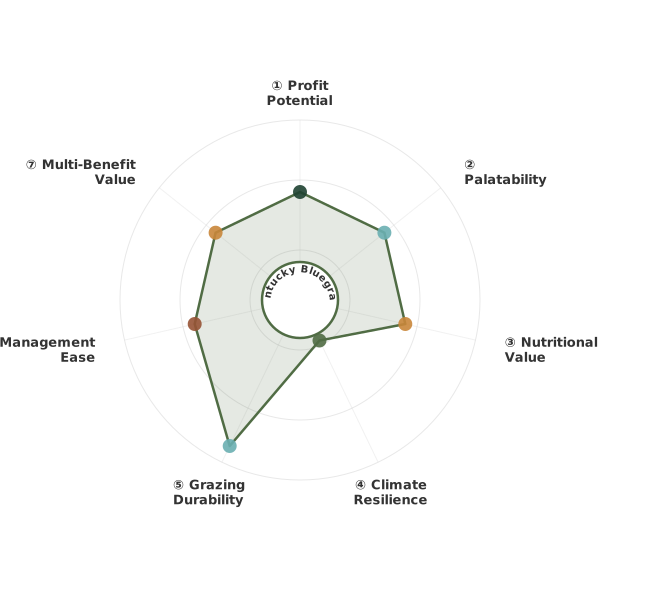
Comparative ratings for this plant across key regenerative agriculture traits.

Trait Suitability Explanation
Palatability Adequate Kentucky bluegrass is a valuable pasture component, readily consumed by livestock as part of a diverse forage system.
Protein Content Adequate This grass contributes moderate protein to the diet, supporting animal maintenance and grazing needs within a balanced regenerative system.
Drought Tolerance Not Recommended Kentucky bluegrass benefits from soil health practices that enhance moisture retention; in drier periods, it naturally enters dormancy, conserving resources until moisture returns.
Grazing Tolerance Ideally Suited Its robust, rhizomatous growth habit enables excellent recovery and stand persistence under well-managed grazing, contributing to soil health and forage resilience.
Establishment Ease Adequate Achieves reliable establishment with good seed-to-soil contact and mindful water management, rapidly providing ground cover and outcompeting unwanted vegetation.
Multi Benefit Value Adequate A versatile species contributing to soil stability through erosion control and providing essential ground cover, effectively integrating into diverse pasture ecosystems.
Climate Adaptability Adequate Thrives in temperate regions, best supported by healthy soil and mindful water management to navigate periods of temperature fluctuation.
Maintenance Intensity Adequate Optimizes performance through proactive fertility management and moisture retention, with a focus on building soil resilience to mitigate challenges in varied conditions.
Seasonal Availability Adequate As a cool-season grass, it offers significant forage availability for a substantial portion of the year, aligning with natural growth cycles.

Comparative System: Ratings compare plants within their economic category (e.g., cover crop nitrogen fixation compared to other cover crops, not to all plants). Individual farm conditions and management practices significantly influence actual performance.

8

Learn More

Why farmers use this plant and additional resources

Why Regenerative Farmers Use This Plant

Poa pratensis, commonly known as Kentucky bluegrass, is a foundational species in regenerative forage systems due to its excellent palatability, nutritional value, and ability to form a dense, resilient sod. Its aggressive rhizomatous growth habit creates a dense, sod-like cover that effectively suppresses weeds and prevents soil erosion from wind and water, contributing significantly to soil structure improvement and carbon sequestration. Under optimal rotational grazing management, this species can support significant livestock carrying capacity. Well-managed pastures dominated by Kentucky bluegrass can sustain 1.5-4 Animal Units (AU) per acre (approximately 3.7-10 AU/hectare) during the peak growing season, depending on soil fertility, rainfall, and grazing intensity.

The forage quality is excellent when grazed at the vegetative stage, with crude protein levels typically ranging from 12-18% and digestible energy (TDN) often exceeding 70%. This nutritional density directly impacts animal performance, with studies indicating that livestock grazing on high-quality bluegrass pastures can achieve weight gains of 2.0-2.8 lbs/day (0.9-1.3 kg/day) during the spring and early summer growth periods. Its deep root system, often reaching 12-36 inches (30-90 cm), contributes to soil structure improvement and carbon sequestration, with estimates suggesting significant contributions to soil organic matter over time, particularly in systems with reduced tillage and integrated grazing.

Beyond its direct impact on livestock, Kentucky bluegrass offers substantial ecological benefits. Its dense sod provides exceptional erosion control, protecting valuable topsoil from wind and water displacement. By outcompeting many annual weeds and forming a competitive sward, it reduces the need for invasive weed management practices. In mixed pastures, it can synergistically improve nutrient cycling by scavenging residual nutrients from previous crops or animal inputs. While not a nitrogen fixer, its robust growth contributes significantly to biomass production, which, upon decomposition, fuels soil microbial activity and enhances nutrient availability. Its presence also supports a healthy soil food web, creating a more resilient and biodiverse agricultural landscape. Furthermore, its dense canopy and root structure enhance soil water holding capacity, reducing runoff and improving the efficiency of rainfall utilization, which is particularly important in regions experiencing drought stress or intense rainfall events.

Kentucky bluegrass plays a key role in extending the grazing season, a vital strategy for reducing reliance on stored feeds and improving farm economics. Its ability to remain green and palatable into the cooler months, especially when managed for fall stockpiling, can provide 60-90 additional grazing days annually in suitable climates. This stockpiled forage often maintains crude protein levels above 10%, ensuring continued animal nutrition and reducing the need for costly hay feeding. For example, in USDA Zones 5-7, fall-grown Kentucky bluegrass can provide crucial forage through December, significantly lowering winter feed expenses. This extension of the grazing period not only benefits the farmer's bottom line but also allows livestock to harvest forage directly, minimizing the energy and labor costs associated with hay production and feeding.

Farmers across diverse regions have successfully integrated Kentucky bluegrass into their regenerative operations. In the UK's temperate climate, it forms the backbone of many dairy and beef pastures, supporting high stocking densities and contributing to the renowned quality of British beef and milk. In the Midwestern United States, it is a staple in rotational grazing systems for beef cattle, often mixed with other cool-season grasses and legumes to optimize forage quality and resilience. Australian farmers in cooler, higher rainfall areas utilize it in sheep and cattle operations, valuing its persistence and ability to withstand grazing pressure. In Iowa's corn-soy rotations, it is often included in perennial pasture mixes established after grain harvest or in spring, providing grazing for beef cattle and improving soil health between cash crops. In the Australian Tablelands, it is typically established in late winter or early spring (February-March) to take advantage of increasing soil moisture and cooler temperatures. In Canada, its cold hardiness allows it to be a reliable forage in provinces with extended winters, providing essential grazing in the shorter, productive summer months.

9

How to Integrate This Plant

Practical guidance for regenerative systems

Establishing Kentucky bluegrass requires careful attention to seeding rates, depth, and timing to ensure a robust and competitive stand. For broadcast seeding, rates typically range from 50-100 lbs/acre (56-112 kg/ha), while drilled seed rates can be reduced to 30-50 lbs/acre (34-56 kg/ha). The optimal planting depth is shallow, between 0.25-0.5 inches (0.6-1.3 cm), as the seed requires light for germination and good seed-to-soil contact. Row spacing is usually not a primary concern as it forms a dense sod, but if planted in rows, 6-12 inches (15-30 cm) is common.

In the Northern Hemisphere, late summer (August-September) is the ideal time for establishment, allowing the plants to establish before winter dormancy. In the Southern Hemisphere, late winter to early spring (February-March) provides similar benefits. In the US Midwest, it is often overseeded into existing pastures in late August or early September, or planted in the spring after the risk of hard frost has passed. Adequate moisture is critical during the establishment phase, with approximately 1 inch (2.5 cm) of water per week needed for optimal germination and root development. The grass typically establishes within 30-45 days under favorable conditions, with full sod formation occurring within the first growing season.

Once established, Kentucky bluegrass thrives with proper grazing management that encourages tillering and prevents overgrazing. While it has moderate drought tolerance once mature, it performs best with consistent moisture, often requiring 1-2 inches (2.5-5 cm) of water per week during active growth, especially during establishment. Fertility should be prioritized through biological means; incorporating compost, utilizing rotational grazing residue, and integrating manure are key strategies to build soil health and provide nutrients. As a cool-season grass, its peak growth occurs in spring and fall, with a significant slowdown during hot, dry summer periods. Mature plants typically reach a height of 1-3 feet (0.3-0.9 m). Pest and disease management should focus on cultural practices such as maintaining a healthy sod, proper grazing rotation to prevent overgrazing and maintain plant vigor, companion planting to enhance biodiversity, and selecting disease-resistant varieties.

For livestock integration, Kentucky bluegrass is a highly palatable and nutritious forage. Under adaptive multi-paddock grazing, this species supports 1.5-4 AU/acre (3.7-10 AU/ha) with 3-5 day grazing periods and 45-60 day rest intervals during the active growing season. Cattle moved onto the stand at 8-12 inches (20-30 cm) and pulled at 3-4 inches (8-10 cm) residual height can achieve significant gains. The regrowth rate is moderate, with seasonal productivity peaking in spring and fall. Fall-stockpiled growth is an excellent strategy, providing 60-90 grazing days into winter with crude protein levels often remaining above 10%, significantly reducing hay feeding costs. While highly palatable to cattle and sheep, goats may browse more selectively.

Kentucky bluegrass demonstrates excellent regional adaptability. In the UK, it is sown in early autumn (September) for establishment with autumn rains, often in mixtures with perennial ryegrass and white clover for mixed livestock systems. In the Australian Tablelands, it is typically established in late winter or early spring (February-March) to take advantage of increasing soil moisture and cooler temperatures. In the Midwestern United States, it is often overseeded into existing pastures in late August or early September, or planted in the spring after the risk of hard frost has passed. Its ability to form a dense sod makes it suitable for use in areas prone to erosion, where it can also be integrated into silvopasture systems to provide ground cover and forage beneath trees. In Australia's cooler, higher rainfall zones, such as Tasmania or parts of Victoria, it is used in sheep and cattle pastures, contributing to year-round grazing potential when managed with appropriate rest periods. In the UK, its persistence and palatability make it ideal for traditional sheep farming systems on rolling hills.