Black-Eyed Susan
Rudbeckia hirta, or Black-eyed Susan, is identified as a valuable component in regenerative agriculture, particularly within native pasture and meadow designs east of the Rockies. While knowledge base coverage is limited, its primary role appears to be as a component in diverse forb blends. These blends are interseeded into native grass pastures, including switchgrass and bluestems, to enhance biodiversity and forage characteristics. Rudbeckia hirta has shown early establishment success in such systems, contributing to the overall resilience of the plant community. A key regenerative benefit is its support for pollinators, which is crucial for ecosystem health and agricultural productivity. Furthermore, Rudbeckia hirta is involved in plant-soil feedback studies, investigating the influence of fire and soil biota on its growth, suggesting a role in soil health dynamics. Its integration with grazing practices, specifically within different within-season rest treatments, indicates its potential persistence and utility in managed grazing systems. Farmer experience highlights its role as a 'workhorse' plant in meadow designs.
For a full botanical description see: Plants For A Future↗(opens in new window) (external link)
Regenerative Quick Profile
All recommendations assume integrated, regenerative practices—not conventional inputs.
Climate & Soil Fit
Climate: Tropical Rainforest, Tropical Monsoon, Tropical Savanna, Hot Semi-Arid (Steppe), Cold Semi-Arid (Steppe), Hot Desert, Cold Desert, Humid Subtropical, Oceanic (Maritime Temperate), Hot-Summer Mediterranean, Warm-Summer Mediterranean, Monsoon-Influenced Humid Subtropical, Subtropical Highland, Hot-Summer Continental, Warm-Summer Continental, Subarctic, Monsoon-Influenced Hot-Summer Continental, Tundra
Zones: USDA 4-9, Australian Zones 3-11
Optimal Soil: Loam Soil
System Role & Functions
Primary: Pollinator Support
Secondary: Forage Integration, Cover Crop System
Management Level
Experience: Beginner-Friendly
Maintenance: Moderate maintenance - As a self-sufficient native perennial, Black-eyed Susan flourishes with the natural fertility provided by compost and mulch, readily reseeding to maintain its presence and ecological contributions.
Value Streams
- Forage production
- Livestock forage value
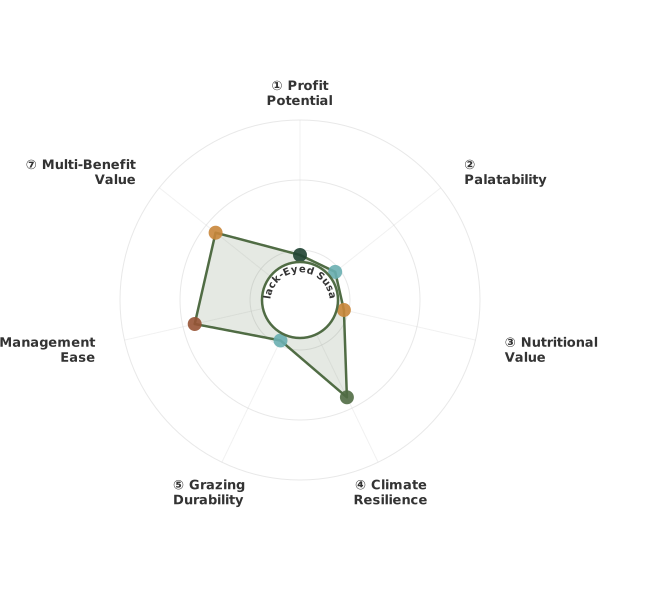
Regenerative Trait Ratings
How These Traits Are Calculated
Trait dimensions are ordered clockwise starting from the top of the chart (12 o'clock position):
1. Profit Potential
Economic returns from hay sales, grazing value, and system contributions
WHAT: Synthesizes direct revenue potential (hay sales or grazing service value) with system contributions (nitrogen fixation, reduced supplement needs) into net economic value. Captures both cash income and cost savings.
WHY: Forage profitability comes from two sources—direct sales (hay, haylage) or indirect value (grazing services supporting livestock production). High-value forages provide $300-600/acre in combined revenue and savings versus $100-200/acre for lower-value options. This determines whether forage enterprises are viable versus purchasing feed.
HOW: Scored via LLM synthesis of economics data (hay yields, prices, grazing value), timeline considerations (establishment costs, productive lifespan), and system value (nitrogen contributions, supplement replacement). Exceptional (3.0): High yields with premium pricing or exceptional grazing value plus nitrogen fixation. Typical (2.0): Moderate returns. Limited (1.0): Low yields, commodity pricing, or minimal system contributions.
2. Palatability
Livestock preference and voluntary consumption rates
WHAT: Measures how eagerly livestock consume the forage—preference ranking when choices are available. Highly palatable forages are grazed first and completely; limited palatability means animals avoid unless no alternatives exist.
WHY: Palatability directly determines voluntary intake, which drives animal performance. High-palatability forages support faster weight gain and higher milk production because animals eat more. Low-palatability forages reduce performance and waste productive potential—animals selectively graze preferred species and leave unpalatable plants ungrazed.
HOW: Ratings based on the palatability trait documenting livestock selection preference. Exceptional (3.0): Preferentially selected, high sugar content, tender growth eagerly consumed (orchardgrass, white clover, ryegrass). Typical (2.0): Readily consumed when available. Limited (1.0): Avoided unless no other options (coarse stems, bitter compounds, low digestibility).
3. Nutritional Value
Protein content and forage quality for livestock growth and production
WHAT: Measures protein content as the primary indicator of forage nutritional quality. High-protein forages (>18%) support rapid growth and high milk production; low-protein forages (<12%) require supplementation for production animals.
WHY: Protein is the most expensive supplement in livestock diets ($0.40-0.60/lb). Forages with exceptional protein content eliminate or reduce supplement costs while supporting maximum animal performance. High-quality forage can save $200-400/cow/year in purchased feed versus low-protein options.
HOW: Ratings based on the protein_content trait. Exceptional (3.0): High protein (>18%) supporting rapid weight gain or high milk production (alfalfa, clovers, young grasses). Typical (2.0): Moderate protein (12-18%) for maintenance and moderate production (mature grasses). Limited (1.0): Low protein (<12%) requiring supplementation for production animals (mature warm-season grasses, low-fertility forages).
4. Climate Resilience
Weighted: drought tolerance (60%) + climate adaptability (40%)
WHAT: Combines drought tolerance (primary climate stressor for forages) with overall climate adaptability (temperature range, geographic flexibility). Resilient forages survive extended dry periods and diverse weather patterns.
WHY: Drought is the most common forage crisis—dry years can cut production 50-80% and force costly hay purchases or herd reductions. Drought-tolerant forages maintain productivity through dry spells, reducing feed costs and providing grazing when less-resilient options fail. Geographic adaptability allows forage systems to work across farm regions.
HOW: Weighted formula prioritizes drought tolerance (60% weight) as primary stressor, with climate adaptability (40% weight) for temperature and general flexibility. Exceptional (3.0): Survives extended drought (6+ weeks) with minimal production loss and works across diverse climates. Typical (2.0): Moderate drought and climate tolerance. Limited (1.0): Drought-sensitive or narrow climate requirements.
5. Grazing Durability
Weighted: trampling tolerance (70%) + seasonal availability (30%)
WHAT: Combines grazing tolerance (resistance to trampling and frequent defoliation) with seasonal availability (timing and duration of productive growth). Durable forages handle intensive rotational grazing and provide consistent seasonal production.
WHY: Grazing tolerance determines management system viability. Tolerant forages allow intensive rotational grazing or mob grazing for maximum animal performance and pasture health. Intolerant forages are hay-only or require long rest periods. Seasonal availability indicates production timing—year-round, seasonal gaps, or narrow windows.
HOW: Weighted formula prioritizes grazing tolerance (70% weight) for management system determination, with seasonal availability (30% weight) for production timing. Exceptional (3.0): Handles intensive rotational grazing with consistent seasonal production. Typical (2.0): Moderate tolerance and availability. Limited (1.0): Hay-only species or narrow seasonal production windows.
6. Management Ease
Weighted: establishment ease (50%) + low maintenance needs (50%)
WHAT: Combines establishment difficulty (germination, stand establishment) with ongoing maintenance requirements (fertility, weed control, renovation needs). Easy forages establish reliably and persist without intensive management.
WHY: Pasture establishment is expensive ($150-400/acre) and risky. Easy-to-establish forages reduce stand failure risk and provide quicker returns. Low-maintenance forages reduce annual input costs and labor, improving long-term profitability of grazing systems.
HOW: Weighted formula balances establishment ease (50% weight) for startup success and inverted maintenance intensity (50% weight) for ongoing care. Exceptional (3.0): Fast germination, reliable stand establishment, minimal fertility/weed management needs (white clover, orchardgrass). Typical (2.0): Moderate establishment and care requirements. Limited (1.0): Difficult establishment or intensive maintenance (heavy fertility, frequent renovation, weed competition).
7. Multi-Benefit Value
Ecosystem services beyond forage—nitrogen fixation, pollinator support, wildlife habitat
WHAT: Measures ecosystem services provided beyond livestock nutrition. Multi-benefit forages contribute nitrogen fixation (legumes), pollinator support (flowering species), wildlife habitat, soil building, erosion control, and biodiversity support.
WHY: Forage systems can either extract from farm ecosystems or contribute to them. Nitrogen-fixing legumes (clovers, alfalfa) provide $80-150/acre/year worth of fertility for companion grasses and following crops. Flowering forages support pollinators critical for fruit/vegetable crops. These service-stacking forages deliver total system value beyond livestock production.
HOW: Ratings based on the multi_benefit_value trait documenting service diversity. Exceptional (3.0): Multiple significant benefits (legumes fixing 80-150 lbs N/acre/year + pollinator support + wildlife forage). Typical (2.0): Some ecosystem contributions. Limited (1.0): Single-purpose forage with minimal ecosystem services beyond grazing value.
Ratings are based on documented performance in regenerative systems, not conventional high-input scenarios. All traits assume integrated management practices focused on soil health and ecosystem services.
1
Climate Suitability Assessment
Will this plant thrive in your climate?
Climate Suitability Assessment
Will this plant thrive in your climate?
Köppen Zone: Cfa (Humid Subtropical), Cfb (Oceanic (Maritime Temperate)), Cwa (Monsoon-Influenced Humid Subtropical), Dfa (Hot-Summer Continental), Dfb (Warm-Summer Continental)
USDA Zone: 6a, 7a, 8a, 9a
Australian Zone: temperate, subtropical
EU Climate Region: atlantic, continental
Black-Eyed Susan excels in regions with long growing seasons, ample rainfall (30-50 inches annually), and moderate temperatures, ideally 60-80°F (15-27°C) during its primary bloom period. These conditions are met in Köppen Cfa, Dfa, Dwa zones, USDA zones 5b-8b, Australian subtropical and temperate zones, and EU Atlantic and Continental regions. In these areas, it establishes readily, flowers profusely, and reliably supports pollinators throughout its blooming cycle, often from summer into fall. Perennial survival is high, with minimal management required beyond basic site preparation. Its adaptability to various soil types, provided they are well-drained, further contributes to its success. The plant's resilience to moderate heat and its ability to reseed ensure a consistent presence, making it a valuable component for regenerative agriculture focused on pollinator health and ecosystem services.
Köppen Zone: Aw (Tropical Savanna), BSh (Hot Semi-Arid (Steppe)), Csa (Hot-Summer Mediterranean), Csb (Warm-Summer Mediterranean), Cwb (Subtropical Highland)
USDA Zone: 5a, 5b, 10a, 11a
Black-Eyed Susan performs adequately in climates with moderate growing seasons and temperatures, though some management may be needed to optimize its performance. This includes Köppen Cfb, Csa, Csb, Dfb, Dwb zones, USDA zones 4b-5a and 9a-10b, and Australian temperate zones. In cooler regions (Cfb, Dfb), bloom intensity might be slightly reduced. In warmer, drier regions (Csa, Csb, USDA 9a-10b), supplemental irrigation during summer heat and drought is beneficial to maintain flowering vigor and ensure consistent pollinator support. In subarctic conditions (Dwb), it may behave as a short-lived perennial or annual due to winter severity. While not as consistently prolific as in 'ideally suited' zones, it still provides valuable pollinator resources and can be integrated into regenerative systems with careful site selection and potentially some supplemental care.
Köppen Zone: Af (Tropical Rainforest), Am (Tropical Monsoon), ET (Tundra), BSk (Cold Semi-Arid (Steppe)), BWh (Hot Desert), BWk (Cold Desert), Dfc (Subarctic), Dwa (Monsoon-Influenced Hot-Summer Continental)
USDA Zone: 2a, 3a, 3b, 4a, 12a
Black-Eyed Susan is not recommended for cultivation in zones with extreme winter cold and very short growing seasons, specifically USDA zones 3a, 3b, and 4a. These regions experience winter temperatures below -25°F (-32°C), leading to high winter kill rates and unreliable perennial survival, rendering its primary function of consistent pollinator support improbable. While it might establish and flower as an annual, this is economically and practically questionable for long-term regenerative goals. The short growing season also limits its bloom period. Alternative native plants that are more cold-hardy and adapted to these harsh conditions are significantly better suited for providing reliable pollinator resources and contributing to ecosystem resilience in these challenging climates. These alternatives offer comparable or superior benefits with a much higher probability of success and sustainability.
Note: Zones listed above represent climates where this plant can produce reliably with reasonable management. Climate zones not mentioned would require intensive climate modification (greenhouses, extensive infrastructure) and are not economically viable for regenerative agriculture purposes.
2
Soil Suitability Assessment
Which soil types work best for this plant?
Soil Suitability Assessment
Which soil types work best for this plant?
Loam Soil
This plant thrives in these soil types without requiring amendments or remediation. Natural soil conditions support optimal growth and productivity.
Clay Soil, Desert Soil, Rich Soil, Rocky Soil, Sandy Soil
This plant performs acceptably in these soil types with moderate, manageable remediation such as pH adjustment, compost addition, or drainage improvement. The required amendments are practical and cost-effective for regenerative agriculture.
Acidic Soil, Alkaline Soil, Saline Soil, Wet Soil
Growing this plant in these soil types would require impractical remediation such as complete soil replacement, extensive amendments, or cost-prohibitive infrastructure. These conditions are not economically viable for regenerative agriculture.
Note: Soil suitability assessments focus on remediation requirements. "Ideally Suited" means the plant generally thrives without the need for substantial amendments, "Adequate" means manageable remediation (lime, compost, mulch), and "Not Recommended" means impractical soil changes would be required. Climate factors like rainfall and temperature also influence success.
3
Seasonal Considerations
Planting timing, growth duration, and harvest windows
Seasonal Considerations
Planting timing, growth duration, and harvest windows
For black-eyed susan, establishment is best achieved by planting in early spring after the last expected frost, or in late summer. Expect the crop to be ready for its first grazing or cutting approximately 8 to 10 weeks after seeding, once it reaches a height of 6-8 inches (15-20 cm). Rotational grazing is key; allow 3-4 weeks of rest between grazing events to promote vigorous regrowth. With adequate moisture and fertility, you can anticipate 2 to 3 cuttings for hay per season.
Black-eyed susan exhibits peak productivity through the heat of summer, providing consistent forage. As days shorten and temperatures cool in late fall, its growth will slow considerably, entering a period of reduced productivity. While it possesses good frost tolerance, allowing for potential late-season grazing before the first hard freeze, its nutritional value may decline. The plant will typically overwinter and resume growth the following spring, though its perennial nature can vary.
4
System Role & Multi-Benefit Value
Functional roles, integration strategies, and stacked benefits
System Role & Multi-Benefit Value
Functional roles, integration strategies, and stacked benefits
Functional Role
Total System Value
Black-eyed Susan offers significant system value beyond direct harvest, primarily through its exceptional pollinator support. As a 'workhorse' plant for meadow designs (Excerpt), it attracts a wide array of bees and other beneficial insects, crucial for ecosystem services like natural pest control and pollination of nearby crops. Its integration into pasture systems (Excerpts,) alongside grasses like switchgrass and bluestems enhances the overall biodiversity and resilience of the forage base. While not typically harvested directly, its contribution to a healthy, functioning ecosystem is substantial. It aids in soil stabilization with its root system and improves habitat for wildlife. By diversifying the plant community, it increases the farm's resilience to environmental changes and pest outbreaks, embodying the principles of regenerative agriculture through ecosystem enhancement and risk diversification.
Integration Characteristics
Multi-Benefit Value: Adequate - This species is a key resource for pollinators and beneficial insects, while its biomass contributes significantly to soil cover and organic matter accumulation.
5
Management & Care Requirements
Integration guidance, maintenance needs, and care practices
Management & Care Requirements
Integration guidance, maintenance needs, and care practices
How to Integrate This Plant
Black-eyed Susan (Rudbeckia hirta) is a valuable non-tree plant for regenerative systems, primarily supporting pollinators. Its integration is straightforward, often as a component in native plant mixes for meadows or pastures. Compatible practices include interceding into existing pastures (as seen in Excerpt and) or establishing dedicated pollinator strips. It can also be part of diverse forb blends. Its primary role is enhancing biodiversity and supporting beneficial insects, which indirectly aids pest control and crop pollination. It begins providing value in Year 1 through flowering and pollinator support, with its persistence and ecological contributions growing over time. Its value is stacked by providing habitat for beneficial insects, contributing to soil health through root systems, and enhancing the aesthetic and ecological diversity of the farm landscape.
Integration Practices & Management
Rudbeckia hirta, commonly known as Black-eyed Susan, is mentioned in the provided regenerative agriculture sources primarily as a component of native forb blends and pollinator-friendly mixes, rather than detailing specific integration methods by farmers. Sources indicate its inclusion in meadow designs and pollinator gardens, and its establishment in native pastures alongside grasses like switchgrass and big bluestem. Rudbeckia hirta is noted to establish early in these interseeded mixtures. One study explored the influence of fire on plant-soil feedbacks involving Rudbeckia hirta and little bluestem. While the sources suggest Rudbeckia hirta is a valuable native plant for ecological restoration and pollinator support within agricultural landscapes, they offer limited information on practical farmer integration strategies concerning seeding rates, precise timing, no-till vs. minimal tillage establishment, specific grazing management (like mob grazing or timing), termination techniques, fertility needs, or its role in cash crop systems. The knowledge base focuses more on its presence and ecological function in established or experimental native plant communities.
Management Profile
Maintenance Intensity: Adequate - As a self-sufficient native perennial, Black-eyed Susan flourishes with the natural fertility provided by compost and mulch, readily reseeding to maintain its presence and ecological contributions.
6
Economics & Value Streams
Direct harvest, system benefits, ecosystem services, and risk diversification
Economics & Value Streams
Direct harvest, system benefits, ecosystem services, and risk diversification
Comprehensive economic analysis including direct harvest value, system enhancement contributions, ecosystem services, value timeline, and risk diversification strategies.
Economics in Regenerative Systems
| Metric | Value |
|---|---|
| Seed Cost | $15-30/acre $37-74/ha |
| Establishment Cost | $100-200/acre $247-494/ha |
| Forage Yield | 1-3 tons/acre/year 1-3 tons/ha/year |
| Annual Management Cost | $40-80/acre $98-197/ha |
| Value/Sale Price | $50-100/ton $50-100/tonne |
| Net Annual Return* | $-230 to $160/acre/year |
Values represent typical ranges for regenerative agriculture contexts. Actual results vary by region, management, and market conditions. Costs exclude land and labor.
* Net Annual Return = (Yield × Market Price) − (Amortized Establishment Cost + Annual Maintenance). This return is realized only at/after first harvest; early years have costs but no revenue. Range shows worst case to best case scenarios.
System Enhancement Value
Beyond harvest: pollination services for your crops and ecosystem
Pollination Service Provision
Black-eyed Susan (Rudbeckia hirta) significantly enhances system value through its primary function of pollinator support. As cited in multiple excerpts, it is a highly attractive plant for a wide array of pollinators, including bees, butterflies, flies, wasps, beetles, and moths. This attraction is crucial for the pollination of other crops and forage plants within an integrated farm system, leading to improved yields and reproductive success for many species. Beyond direct pollination, Rudbeckia hirta also offers value as a forage integration component. While not a primary livestock feed, its presence in pastures or meadows can provide supplemental forage and habitat diversity. Furthermore, its inclusion in cover crop systems contributes to soil health and biodiversity. The plant's ability to reseed quickly and establish easily makes it a low-maintenance addition, promoting ecological resilience. Its attractiveness to beneficial insects also contributes to natural pest control within the farm ecosystem.
Ecosystem Service Contributions
Environmental contributions: carbon, pollinators, wildlife, and water
- Carbon Sequestration: Rudbeckia hirta, as a herbaceous perennial, contributes to soil organic matter through root exudates and decomposition, thus sequestering carbon. Its potential for reseeding and establishment in various systems suggests ongoing biomass production and subsequent carbon storage in the soil.
- Pollinator Support: High. Rudbeckia hirta is consistently highlighted as a key plant for supporting a diverse range of pollinators, including bees, butterflies, flies, wasps, beetles, and moths, due to its long bloom times and nectar/pollen availability.
- Wildlife Habitat: Provides habitat and forage for various pollinators and beneficial insects. While not a primary source of mast or substantial browse for larger wildlife, its dense growth can offer shelter. Deer may browse flower tops.
- Water Quality: Not applicable
Value Timeline: Bloom & Establishment
When you'll see results: annuals bloom year 1, perennials mature 2-3 years
Years 1-2
Initial establishment of pollinator support and potential for cover crop benefits (soil stabilization, early biomass). Easy to grow and reseeds quickly, providing early benefits.
Years 3-5
Established pollinator support, integration into forage systems, and continued contribution to soil health through cover cropping. Increased biodiversity within the farm system.
Years 10-20
Mature ecosystem services from established stands, including robust pollinator support, soil improvement, and contribution to overall farm biodiversity and resilience.
20+ Years
Long-term maintenance of ecosystem services, acting as a foundational element for a biodiverse and resilient integrated farm system.
Farm Risk Reduction
How pollinator support reduces crop failure risk
- Multiple Revenue Streams: Pollinator support impacting yield of other crops, potential for floral sales (though not highlighted in KB), enhanced biodiversity leading to pest regulation, cover crop benefits improving soil health and reducing input needs.
- Temporal Income Spread: Ongoing ecosystem services (pollinator support, soil health) throughout the growing season and year after year, rather than a single harvest-based income. Value is derived from continuous system enhancement.
- Market Risk Hedge: Reduces reliance on single income streams by enhancing the productivity and resilience of other farm enterprises through pollination and soil health. Drought tolerance in some varieties offers resilience against climatic variability. Its ease of establishment and reseeding capability minimizes risk associated with crop failure.
7
Regenerative Suitability Details
Comprehensive trait ratings for system integration assessment
Regenerative Suitability Details
Comprehensive trait ratings for system integration assessment
Comparative ratings for this plant across key regenerative agriculture traits.
| Trait | Suitability | Explanation |
|---|---|---|
| Palatability | Not Recommended | Black-eyed Susan's bitter taste and fibrous nature naturally deter livestock, contributing to a balanced grazing ecosystem by avoiding overconsumption. |
| Protein Content | Not Recommended | Black-eyed Susan offers minimal protein and is not a primary forage source, indicating its role is best suited for ecological functions rather than direct livestock nutrition. |
| Drought Tolerance | Adequate | Leveraging its taproot, Black-eyed Susan exhibits resilience in drier periods, demonstrating its capacity to maintain plant cover and contribute to soil health with effective water management. |
| Grazing Tolerance | Not Recommended | As a plant with exposed growth points, Black-eyed Susan is sensitive to disturbance; its integration into the system is optimized by allowing it to contribute biomass and support biodiversity without direct grazing pressure. |
| Establishment Ease | Adequate | Black-eyed Susan germinates and establishes readily, quickly contributing to ground cover and outcompeting weeds, thereby enhancing soil health and structure. |
| Multi Benefit Value | Adequate | This species is a key resource for pollinators and beneficial insects, while its biomass contributes significantly to soil cover and organic matter accumulation. |
| Climate Adaptability | Adequate | Black-eyed Susan thrives across diverse climates, demonstrating its adaptability and resilience within a healthy soil ecosystem that prioritizes good drainage. |
| Maintenance Intensity | Adequate | As a self-sufficient native perennial, Black-eyed Susan flourishes with the natural fertility provided by compost and mulch, readily reseeding to maintain its presence and ecological contributions. |
| Seasonal Availability | Not Recommended | Black-eyed Susan's seasonal presence as a short-lived perennial offers intermittent ecological benefits, rather than serving as a consistent forage source. |
Comparative System: Ratings compare plants within their economic category (e.g., cover crop nitrogen fixation compared to other cover crops, not to all plants). Individual farm conditions and management practices significantly influence actual performance.
8
Learn More
Why farmers use this plant and additional resources
Learn More
Why farmers use this plant and additional resources
Why Regenerative Farmers Use This Plant
Rudbeckia hirta, commonly known as Black-eyed Susan or Gloriosa Daisy, is a versatile native wildflower that offers significant regenerative benefits when integrated into agricultural systems, particularly as a forage and pollinator attractant. While not a nitrogen fixer, its robust biomass production contributes substantially to soil health and organic matter.
Forage and Livestock Integration: Under optimal grazing management, stands of Rudbeckia hirta can support carrying capacities of 1.5-2.5 Animal Units per acre (3.7-6.2 AU/ha) during its peak growth period, especially when integrated into rotational or mob grazing systems. Its forage quality is moderate, typically offering a crude protein content of 12-16% in its vegetative stages, which declines to 8-10% as it matures and flowers. It is highly palatable to cattle and sheep, making it a preferred component of pasture mixes, and its fall growth can be stockpiled, providing valuable forage for an additional 30-90 grazing days, depending on the climate, thereby extending the grazing season and reducing reliance on stored feed. Livestock should be introduced when plants reach 8-12 inches (20-30 cm) tall and removed when grazed down to 3-4 inches (8-10 cm) to maintain plant vigor.
Ecosystem Services and Soil Health: Its deep root system, reaching 1-3 feet (0.3-1 m) or more in established plants, enhances soil structure, improves water infiltration, and scavenges nutrients from deeper soil profiles, making them available to subsequent crops or pastures. This deep rooting also helps to break up soil compaction and contributes to carbon sequestration. The substantial root biomass contributes to soil organic matter accumulation, with established perennial stands potentially increasing soil organic carbon by 0.1-0.3% annually over several years. Improved soil structure from its root activity can lead to a 15-25% increase in water infiltration rates, reducing runoff and enhancing drought resilience. Its dense growth habit offers excellent erosion control, protecting valuable topsoil from wind and water.
Biodiversity and Pollinator Support: This species is a prolific producer of pollen and nectar, attracting a diverse array of beneficial insects and pollinators, which are crucial for ecosystem health and pest control in surrounding crops. Its bright flowers serve as a vital nectar and pollen source for bees, butterflies, and other beneficial insects from late spring through fall, supporting biodiversity. Studies indicate a significant increase in visits from native bees and honeybees, often exceeding 50 visits per square meter per hour during peak bloom. The increased presence of beneficial insects, such as predatory beetles and parasitic wasps, can lead to a reduction in pest populations in adjacent fields by an estimated 20-30%.
Resilience and Adaptability: Rudbeckia hirta thrives in a variety of soil types, including those that are less fertile, making it a resilient component of a regenerative landscape. Its drought tolerance and ability to thrive in marginal soils make it a valuable component of pasture renovation and erosion control efforts. In crop rotations, it can be used as a cover crop to break disease cycles, improve soil tilth, and provide habitat for beneficial arthropods, contributing to a more resilient and self-sustaining agricultural ecosystem.
9
How to Integrate This Plant
Practical guidance for regenerative systems
How to Integrate This Plant
Practical guidance for regenerative systems
Establishment: Rudbeckia hirta can be established through direct seeding. For broadcast seeding, a rate of 4-12 lbs/acre (4.5-13.5 kg/ha) is recommended for optimal coverage, ensuring good seed-to-soil contact. When drilled, a slightly lower rate of 2-6 lbs/acre (2.2-6.7 kg/ha) can be used, with row spacing typically 6-12 inches (15-30 cm). The planting depth is critical for successful germination, ideally between 0.125-0.25 inches (0.3-0.6 cm). Ensure the seedbed is firm and free of excessive debris.
Planting Windows: In the Northern Hemisphere, the ideal planting window is typically late spring (April-May) after the last frost, early fall (August-September), or late fall (October-November) for overwintering and natural stratification. In the Southern Hemisphere, this translates to planting in early spring (September-October), late summer (February-March), or late fall (April-May).
Growth Timeline: The plant typically establishes within 30-45 days and reaches its mature height of 1-3 feet (0.3-0.9 meters) within its first growing season. It is generally a short-lived perennial or biennial, flowering prolifically in its second and subsequent years.
Management: Once established, Rudbeckia hirta is relatively low-maintenance, though its management depends on the intended use. It has moderate water requirements, typically needing around 1 inch (2.5 cm) of rainfall or irrigation per week during establishment and prolonged dry periods, though established plants exhibit good drought tolerance.
Fertility: Fertility management should prioritize biological approaches; incorporating compost, utilizing manure from rotational grazing, or relying on the residue from preceding cover crops will provide sufficient nutrients. While it can scavenge nutrients effectively, a light application of compost or well-rotted manure can boost vigor.
Pest and Disease Management: Pest and disease management should focus on cultural practices and encouraging beneficial insect populations, as chemical interventions are rarely necessary and can harm the very organisms that support a healthy ecosystem. Resistant varieties are generally robust, and beneficial insects often keep common pests in check.
Grazing Management: For livestock integration, Rudbeckia hirta is a valuable component of grazing systems, particularly in mixed pastures. It is best grazed when plants reach 8-12 inches (20-30 cm) in height, and the grazing period should be limited to a residual height of 3-4 inches (8-10 cm) to promote rapid regrowth. Following grazing, a rest period of 45-60 days is crucial for optimal recovery and sustained productivity. Rudbeckia hirta has good potential for stockpiling, with fall growth providing valuable forage into winter, potentially extending the grazing season by 30-60 days in milder climates.
Regional Adaptations: Regional success stories highlight the adaptability of Rudbeckia hirta.
- Midwestern United States: Incorporated into pasture mixes for beef cattle operations, improving forage availability and extending the grazing season. Also used in prairie restorations and conservation plantings, benefiting from its tolerance to temperature fluctuations and its ability to establish in less-than-ideal seedbeds. In Iowa's corn-soybean rotations, it can be sown as a component of a diverse cover crop mix in late summer to improve soil health and provide late-season forage.
- United Kingdom: Utilized in wildflower meadows and pollinator strips adjacent to arable fields, enhancing biodiversity and pest management. Also integrated into perennial ryegrass and clover pastures to enhance biodiversity and provide drought-tolerant forage during summer months. Incorporated into wildflower meadows and pasture mixes for sheep and cattle, benefiting from the temperate oceanic climate and often sown in early spring.
- Australia: In dryland farming systems, its drought tolerance and ability to thrive in marginal soils make it a valuable component of pasture renovation and erosion control efforts. Australian sheep and cattle producers utilize it in dryland pasture systems for its drought tolerance and ability to provide late-season grazing. Farmers in temperate regions are using it in pasture blends to improve forage diversity and extend grazing into drier periods, typically sowing with the onset of autumn rains.
- North America (Great Plains): Used in pasture renovation and conservation plantings, benefiting from its tolerance to temperature fluctuations and its ability to establish in less-than-ideal seedbeds.
- Brazilian Agroforestry Systems: Can be used in understory plantings to support biodiversity and soil health, benefiting from the dappled shade and consistent moisture.
- European Temperate Zones: Valued for its ornamental appeal and its role in supporting biodiversity in mixed farming systems, contributing to a more holistic approach to land management.
- American West: A foundational species in revitalized pastures, supporting cattle operations.