
White Clover
White clover (Trifolium repens) is a valuable multi-functional plant in regenerative agriculture, primarily used as a cover crop, forage, and component of living mulches and diverse polycultures. Its key regenerative benefit is nitrogen fixation through symbiotic relationships with Rhizobium bacteria, reducing the need for synthetic nitrogen fertilizers and enhancing soil fertility. White clover also contributes to soil building by increasing biomass and organic matter, as seen in studies where grazing and clover reseeding significantly boosted above- and below-ground biomass. It supports pollinator populations by providing supplemental floral sources. White clover integrates well with practices like rotational grazing, where it can increase protein content in pasture, and is used in living mulches within orchards and cropping systems to support beneficial insects and improve soil health. Farmer experiences show success in diverse mixes for season-long bloom and in undersowing for grazing, though the choice of variety is important to avoid overly aggressive growth. It is also included in cover crop mixes for vegetable production.
For a full botanical description see: Plants For A Future(opens in new window) (external link)
Regenerative Quick Profile
All recommendations assume integrated, regenerative practices—not conventional inputs.
Climate & Soil Fit
Climate: Tropical Rainforest, Tropical Monsoon, Tropical Savanna, Hot Semi-Arid (Steppe), Cold Semi-Arid (Steppe), Hot Desert, Cold Desert, Humid Subtropical, Oceanic (Maritime Temperate), Hot-Summer Mediterranean, Warm-Summer Mediterranean, Monsoon-Influenced Humid Subtropical, Subtropical Highland, Hot-Summer Continental, Warm-Summer Continental, Subarctic, Monsoon-Influenced Hot-Summer Continental, Tundra
Zones: USDA 4-9, Australian Zones 3-9
Optimal Soil: Loam Soil
System Role & Functions
Primary: Cover Crop System
Secondary: Nitrogen Fixer, Forage Integration, Pollinator Support
Key Benefits: Multi-benefit value, Low maintenance, Palatability
Management Level
Experience: Beginner-Friendly
Maintenance: Very low maintenance - White clover thrives with minimal inputs, fixing nitrogen and rarely needing supplemental water management once established, its resilience requiring very low labor for system integration.
Value Streams
- Forage production
- Soil building and erosion control
- Livestock forage value
- Pollinator habitat and support
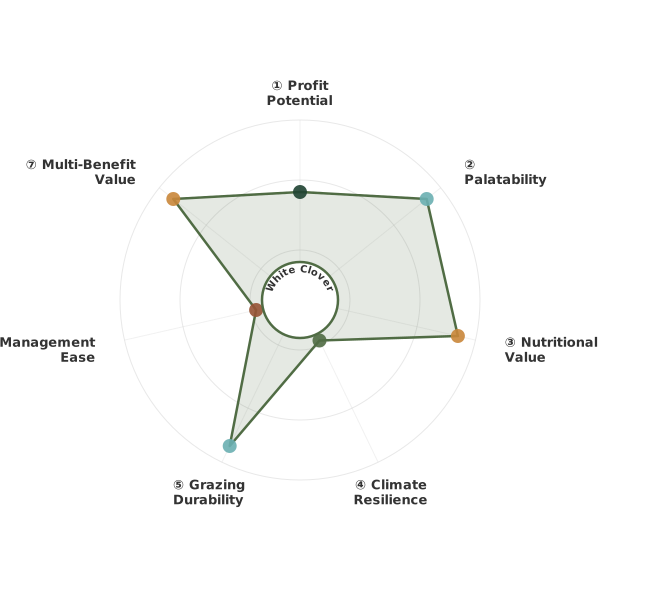
How These Traits Are Calculated
Trait dimensions are ordered clockwise starting from the top of the chart (12 o'clock position):
1. Profit Potential
Economic returns from hay sales, grazing value, and system contributions
WHAT: Synthesizes direct revenue potential (hay sales or grazing service value) with system contributions (nitrogen fixation, reduced supplement needs) into net economic value. Captures both cash income and cost savings.
WHY: Forage profitability comes from two sources—direct sales (hay, haylage) or indirect value (grazing services supporting livestock production). High-value forages provide $300-600/acre in combined revenue and savings versus $100-200/acre for lower-value options. This determines whether forage enterprises are viable versus purchasing feed.
HOW: Scored via LLM synthesis of economics data (hay yields, prices, grazing value), timeline considerations (establishment costs, productive lifespan), and system value (nitrogen contributions, supplement replacement). Exceptional (3.0): High yields with premium pricing or exceptional grazing value plus nitrogen fixation. Typical (2.0): Moderate returns. Limited (1.0): Low yields, commodity pricing, or minimal system contributions.
2. Palatability
Livestock preference and voluntary consumption rates
WHAT: Measures how eagerly livestock consume the forage—preference ranking when choices are available. Highly palatable forages are grazed first and completely; limited palatability means animals avoid unless no alternatives exist.
WHY: Palatability directly determines voluntary intake, which drives animal performance. High-palatability forages support faster weight gain and higher milk production because animals eat more. Low-palatability forages reduce performance and waste productive potential—animals selectively graze preferred species and leave unpalatable plants ungrazed.
HOW: Ratings based on the palatability trait documenting livestock selection preference. Exceptional (3.0): Preferentially selected, high sugar content, tender growth eagerly consumed (orchardgrass, white clover, ryegrass). Typical (2.0): Readily consumed when available. Limited (1.0): Avoided unless no other options (coarse stems, bitter compounds, low digestibility).
3. Nutritional Value
Protein content and forage quality for livestock growth and production
WHAT: Measures protein content as the primary indicator of forage nutritional quality. High-protein forages (>18%) support rapid growth and high milk production; low-protein forages (<12%) require supplementation for production animals.
WHY: Protein is the most expensive supplement in livestock diets ($0.40-0.60/lb). Forages with exceptional protein content eliminate or reduce supplement costs while supporting maximum animal performance. High-quality forage can save $200-400/cow/year in purchased feed versus low-protein options.
HOW: Ratings based on the protein_content trait. Exceptional (3.0): High protein (>18%) supporting rapid weight gain or high milk production (alfalfa, clovers, young grasses). Typical (2.0): Moderate protein (12-18%) for maintenance and moderate production (mature grasses). Limited (1.0): Low protein (<12%) requiring supplementation for production animals (mature warm-season grasses, low-fertility forages).
4. Climate Resilience
Weighted: drought tolerance (60%) + climate adaptability (40%)
WHAT: Combines drought tolerance (primary climate stressor for forages) with overall climate adaptability (temperature range, geographic flexibility). Resilient forages survive extended dry periods and diverse weather patterns.
WHY: Drought is the most common forage crisis—dry years can cut production 50-80% and force costly hay purchases or herd reductions. Drought-tolerant forages maintain productivity through dry spells, reducing feed costs and providing grazing when less-resilient options fail. Geographic adaptability allows forage systems to work across farm regions.
HOW: Weighted formula prioritizes drought tolerance (60% weight) as primary stressor, with climate adaptability (40% weight) for temperature and general flexibility. Exceptional (3.0): Survives extended drought (6+ weeks) with minimal production loss and works across diverse climates. Typical (2.0): Moderate drought and climate tolerance. Limited (1.0): Drought-sensitive or narrow climate requirements.
5. Grazing Durability
Weighted: trampling tolerance (70%) + seasonal availability (30%)
WHAT: Combines grazing tolerance (resistance to trampling and frequent defoliation) with seasonal availability (timing and duration of productive growth). Durable forages handle intensive rotational grazing and provide consistent seasonal production.
WHY: Grazing tolerance determines management system viability. Tolerant forages allow intensive rotational grazing or mob grazing for maximum animal performance and pasture health. Intolerant forages are hay-only or require long rest periods. Seasonal availability indicates production timing—year-round, seasonal gaps, or narrow windows.
HOW: Weighted formula prioritizes grazing tolerance (70% weight) for management system determination, with seasonal availability (30% weight) for production timing. Exceptional (3.0): Handles intensive rotational grazing with consistent seasonal production. Typical (2.0): Moderate tolerance and availability. Limited (1.0): Hay-only species or narrow seasonal production windows.
6. Management Ease
Weighted: establishment ease (50%) + low maintenance needs (50%)
WHAT: Combines establishment difficulty (germination, stand establishment) with ongoing maintenance requirements (fertility, weed control, renovation needs). Easy forages establish reliably and persist without intensive management.
WHY: Pasture establishment is expensive ($150-400/acre) and risky. Easy-to-establish forages reduce stand failure risk and provide quicker returns. Low-maintenance forages reduce annual input costs and labor, improving long-term profitability of grazing systems.
HOW: Weighted formula balances establishment ease (50% weight) for startup success and inverted maintenance intensity (50% weight) for ongoing care. Exceptional (3.0): Fast germination, reliable stand establishment, minimal fertility/weed management needs (white clover, orchardgrass). Typical (2.0): Moderate establishment and care requirements. Limited (1.0): Difficult establishment or intensive maintenance (heavy fertility, frequent renovation, weed competition).
7. Multi-Benefit Value
Ecosystem services beyond forage—nitrogen fixation, pollinator support, wildlife habitat
WHAT: Measures ecosystem services provided beyond livestock nutrition. Multi-benefit forages contribute nitrogen fixation (legumes), pollinator support (flowering species), wildlife habitat, soil building, erosion control, and biodiversity support.
WHY: Forage systems can either extract from farm ecosystems or contribute to them. Nitrogen-fixing legumes (clovers, alfalfa) provide $80-150/acre/year worth of fertility for companion grasses and following crops. Flowering forages support pollinators critical for fruit/vegetable crops. These service-stacking forages deliver total system value beyond livestock production.
HOW: Ratings based on the multi_benefit_value trait documenting service diversity. Exceptional (3.0): Multiple significant benefits (legumes fixing 80-150 lbs N/acre/year + pollinator support + wildlife forage). Typical (2.0): Some ecosystem contributions. Limited (1.0): Single-purpose forage with minimal ecosystem services beyond grazing value.
Ratings are based on documented performance in regenerative systems, not conventional high-input scenarios. All traits assume integrated management practices focused on soil health and ecosystem services.
5
Management & Care Requirements
Integration guidance, maintenance needs, and care practices
Management & Care Requirements
Integration guidance, maintenance needs, and care practices
How to Integrate This Plant
White clover, a versatile legume, serves multiple roles in regenerative systems, primarily as a nitrogen-fixer, ground cover, and pollinator attractant. It functions as a living mulch in orchards and perennial beds, suppressing weeds and retaining soil moisture, thereby reducing erosion. Its nitrogen-fixing capability directly enhances soil fertility, reducing the need for synthetic fertilizers, and supports the growth of companion plants. White clover is compatible with practices like alley cropping, silvopasture, and rotational grazing, where it can be integrated into pasture mixes. It also serves as a valuable forage for livestock. In Year 1, it begins providing ground cover and nitrogen fixation. By Year 3-5, its nitrogen contribution becomes more significant, and it actively supports pollinator populations. Its multi-benefit stacking includes improving soil structure, enhancing nutrient cycling, providing forage, supporting beneficial insects, and contributing to overall farm biodiversity, thus increasing resilience.
Integration Practices & Management
Regenerative farmers integrate white clover (Trifolium repens) primarily as a living mulch, cover crop, or pasture legume. Establishment often involves seeding into existing perennial grasses or as part of a diverse cover crop mix, sometimes with companion planting, to support beneficial insects and improve soil health. In grazing systems, white clover is a valuable component for increasing protein content in pastures. It is integrated into rotational and mob grazing systems, where its biomass contributes to soil organic matter through trampling. Adequate rest periods after grazing are crucial for its regrowth and persistence. Termination strategies are varied and depend on the system's goals. Options include natural winterkill, termination through grazing down, crimping, or mowing. In some instances, herbicide termination might be used, though regenerative approaches often favor mechanical or biological methods. Management considerations include its moderate fertility needs and competition with other plants; strategies may involve managing its spread or allowing it to coexist with other 'weeds'. White clover can be integrated with cash crops through relay cropping or intercropping, offering benefits such as nitrogen fixation and improved soil structure.
Management Profile
Maintenance Intensity: Ideally Suited - White clover thrives with minimal inputs, fixing nitrogen and rarely needing supplemental water management once established, its resilience requiring very low labor for system integration.
Sources behind this view
 Videos & Podcasts
-
Discusses various cover crop mixes (clover, rye, vetch, brassicas) and grazing strategies, emphasizing the deep roots of sweet clover for compaction and vetch for nitrogen fixation, alongside nitrogen

-
Living mulches (clover) could revolutionize organic rotations, reducing cultivation and potentially enabling continuous cropping. Integrating livestock grazing offers complementary income and soil ben

-
Shifted from planting annual cover crops to managing existing perennials, focusing on rye grass and clover. Observed abundant white and red clover growth, but had poor success with crimson clover.
-
Discusses white clover varieties (ladino, intermediate, Dutch, 'Renovation') for pasture and ground cover, highlighting 'Renovation' for dry tolerance. Emphasizes white clover's high forage quality (p
 Community
-
Advocates for legumes, especially New Zealand grazing white clover varieties like Alice and Kopu II, in sheep pastures for nitrogen fixation, nutrition, and persistence. Recommends frost seeding at 2-
Read more (opens in new window) smallfarms.cornell.edu -
Two methods for managing white clover living mulch in hugel beds: trimming and transplanting, or peeling clover for direct seeding. References Helen Atthowe's work and seeks advice on poly-culturing p
Read more (opens in new window) permies.com
 Research
-
Grazing combined with white clover reseeding enhances grassland productivity by improving soil nitrogen and phosphorus availability and regulating microbial diversity. (opens in new window)
Combining grazing with white clover reseeding (40-60 kg/ha) significantly boosted grassland yield and soil nutrients (N, P) in Southwest China over two years, enhancing forage productivity and soil he
-
White clover living mulch enhances soil health vs. annual cover crops (opens in new window)
White clover living mulch improved soil organic matter, structure, and water infiltration more effectively than annual cover crops over three years in Georgia, speeding up soil health regeneration.
-
Nitrogen Dynamics in Living Mulch and Annual Cover Crop Corn Production Systems (opens in new window)
White clover living mulch for corn reduced fertilizer N needs by providing significant legume N, despite some water competition and slightly lower yields compared to annual cover crops.
-
Perennial forage legume cultivation and their above-ground mass management methods for weed suppression in arable organic cropping systems (opens in new window)
Long-term cover crops (perennial forage legumes) and managing their plant material effectively suppressed weeds in organic farms. Red clover mixtures and leaving residue improved cereal yields and wee
 From the Web
-
White clover (*Trifolium repens*) is a nutritious forage, cover crop, and soil stabilizer, fixing nitrogen and improving soil health. It's often grown in grass mixes but can be susceptible to pests an
6
Economics & Value Streams
Direct harvest, system benefits, ecosystem services, and risk diversification
Economics & Value Streams
Direct harvest, system benefits, ecosystem services, and risk diversification
Comprehensive economic analysis including direct harvest value, system enhancement contributions, ecosystem services, value timeline, and risk diversification strategies.
Economics in Regenerative Systems
| Metric | Value |
|---|---|
| Seed Cost | $30-60/acre $74-148/ha |
| Establishment Cost | $150-300/acre $370-741/ha |
| Forage Yield | 3-6 tons/acre/year 3-6 tons/ha/year |
| Annual Management Cost | $50-100/acre $123-247/ha |
| Value/Sale Price | $100-180/ton $100-180/tonne |
| Net Annual Return* | $-100 to $880/acre/year |
Values represent typical ranges for regenerative agriculture contexts. Actual results vary by region, management, and market conditions. Costs exclude land and labor.
* Net Annual Return = (Yield × Market Price) − (Amortized Establishment Cost + Annual Maintenance). This return is realized only at/after first harvest; early years have costs but no revenue. Range shows worst case to best case scenarios.
System Enhancement Value
Beyond cost recovery: soil building, nitrogen, biomass, and weed suppression
Nitrogen Fixation & Cycling
70-130 lbs N/acre/year = $42-130/acre fertilizer replacement (assuming $1/lb N)
White clover (Trifolium repens) is a highly effective nitrogen-fixing legume, significantly contributing to soil fertility in integrated farm systems. As a living mulch or cover crop, it can fix between 70-130 lbs of nitrogen per acre per year. This biological nitrogen fixation directly reduces the need for synthetic nitrogen fertilizers, leading to substantial cost savings for farmers. The fixed nitrogen becomes available to subsequent cash crops through decomposition of clover biomass or root exudates, improving soil structure and nutrient cycling. This is particularly valuable in no-till systems where soil disturbance is minimized, allowing the clover to establish and contribute to long-term soil health. The nitrogen contribution also supports the growth of companion plants, such as grasses in silvopastures, enhancing overall forage quality and productivity.
Soil Building & Weed Suppression
White clover offers multifaceted system benefits beyond nitrogen fixation. As a living mulch, it provides excellent weed suppression, with some sources indicating up to 90% control, reducing the need for herbicides and labor. Its dense growth creates biomass that can act as a mulch, improving soil moisture retention and suppressing weed germination. Furthermore, white clover is a valuable forage component, integrating well into pasture systems and providing nutrition for livestock, especially when mixed with grasses like Bermuda grass or perennial rye grass. It also serves as a crucial pollinator support plant, offering nectar and pollen for bees, as highlighted by its inclusion in pollinator conservation efforts. The plant's ability to stay green through spring and bloom until early summer adds to its value in supporting beneficial insect populations throughout critical periods.
Ecosystem Service Contributions
Environmental contributions: carbon, pollinators, wildlife, and water
- Carbon Sequestration: White clover, as a perennial legume, contributes to carbon sequestration through biomass production and root system development. Its dense ground cover helps protect soil from erosion, preventing carbon loss. Continuous growth and decomposition add organic matter to the soil, enhancing its carbon storage capacity over time.
- Pollinator Support: High. White clover is a recognized and valuable nectar and pollen source for a wide range of pollinators, including native bees. Its extended blooming period in spring and early summer makes it a consistent food source.
- Wildlife Habitat: Provides forage for pollinators and can offer some browse for small wildlife. Its dense growth can offer limited ground cover for small ground-dwelling creatures.
- Water Quality: Not applicable
Value Timeline: Soil Building Process
When you'll see results: immediate soil benefits, compounding over seasons
Years 1-2
Initial nitrogen fixation, weed suppression begins, establishment of ground cover for erosion control, early pollinator support.
Years 3-5
Established nitrogen contribution, significant weed suppression, reliable forage integration, consistent pollinator support, soil health improvements.
Years 10-20
Mature perennial system with sustained nitrogen contribution, robust soil structure, continued ecosystem services (pollinator support, soil health), potential for reduced reliance on other inputs.
20+ Years
Long-term soil fertility enhancement, established biodiversity support, resilience to environmental stressors, ongoing ecosystem services.
Farm Risk Reduction
How this reduces farm risk: lower input costs and better soil resilience
- Multiple Revenue Streams: Reduced input costs (fertilizer, herbicides), improved forage quality for livestock, enhanced pollinator services (potential for beekeeping income), improved soil health leading to more resilient cash crops.
- Temporal Income Spread: Ongoing nitrogen fixation and soil improvement services provide continuous value. Forage and pollinator support are seasonal but consistent. Weed suppression is a year-round benefit.
- Market Risk Hedge: Reduces reliance on volatile fertilizer and herbicide markets. Enhances crop resilience through improved soil health, buffering against drought or pest pressures. Provides a consistent low-input forage source, hedging against feed price fluctuations.
Sources behind this view
Research
-
White clover living mulch enhances soil health vs. annual cover crops (opens in new window)
White clover living mulch improved soil organic matter, structure, and water infiltration more effectively than annual cover crops over three years in Georgia, speeding up soil health regeneration.
8
Learn More
Why farmers use this plant and additional resources
Learn More
Why farmers use this plant and additional resources
Why Regenerative Farmers Use This Plant
White clover (Trifolium repens) is a cornerstone perennial legume in regenerative agriculture, offering profound benefits for livestock integration and soil health. Its exceptional nitrogen-fixing capabilities, forming a symbiotic relationship with Rhizobium bacteria, typically range from 50-150 lbs of nitrogen per acre (56-168 kg/ha) annually, significantly reducing the need for synthetic nitrogen inputs and enriching the soil for companion grasses. This process contributes to lower input costs and a more sustainable nutrient cycle.
This species is highly palatable and nutritious, boasting a crude protein content of 14-24% at the vegetative stage. This nutritional density directly translates to improved animal performance, including higher weight gains (potentially 10-20% increase in lambs) and increased milk production. Under well-managed rotational grazing systems, white clover-inclusive pastures can support carrying capacities of 2-4 Animal Units per acre (5-10 AU/ha), a substantial increase over grass-only systems. Total Digestible Nutrients (TDN) can range from 65-75%.
Beyond its direct forage value, white clover excels in system integration. Its dense, low-growing habit produces substantial biomass, contributing to soil organic matter accumulation and providing a consistent forage base that can extend the grazing season. It acts as a living mulch, suppressing weeds, reducing soil erosion, and protecting valuable topsoil. Its fibrous root system, reaching depths of 12-36 inches (30-90 cm), helps to break up compaction and improve water infiltration, making it an excellent companion in diverse cropping systems. For instance, in Iowa's corn-soy rotations, it can be undersown with small grains to provide a nitrogen boost for the following cash crop and improve soil structure. In silvopasture systems, it thrives under tree canopies, providing a nutritious understory forage.
The ecological contributions of white clover extend to supporting beneficial insect populations and enhancing biodiversity. Its abundant flowers provide a crucial nectar and pollen source for a wide array of pollinators, including bees, butterflies, and other beneficial insects that play vital roles in pest control and crop pollination. Studies have shown significant increases in pollinator activity in fields interseeded with white clover. Furthermore, the improved soil structure and water infiltration fostered by its root system contribute to healthier soil microbial communities and increased resilience to drought or heavy rainfall events, ultimately enhancing the overall ecosystem services provided by the agricultural landscape.
White clover has demonstrated remarkable success across various global agricultural systems. In the UK, it is a standard component of high-performing pasture mixes for sheep and cattle, supporting intensive grazing rotations and improving animal performance, often reducing nitrogen fertilizer needs by up to 50%. Australian farmers utilize it in mixed-farming systems, particularly in higher rainfall zones and dryland systems, to boost pasture productivity and reduce reliance on nitrogen fertilizers in sheep and cattle operations, improving wool quality and lamb growth rates. In Brazil, it is often incorporated into silvopasture systems beneath coffee or eucalyptus, providing nitrogen fixation, forage, and soil cover, improving soil fertility and reducing erosion. In the United States, it is widely used in pastures from the Midwest to the Northeast, enhancing carrying capacity and reducing fertilizer inputs in beef and dairy systems. In the Canadian Prairies, it can be incorporated into pasture mixes, tolerating colder winters once established and providing valuable summer forage.
Sources behind this view
Videos & Podcasts
-
Reduced nitrogen use by introducing high clover swards (white and red clover) for silage starting around 2009. Experimented with chicory for soil improvement and drought tolerance on dry land, aiming

-
Discusses white clover varieties (ladino, intermediate, Dutch, 'Renovation') for pasture and ground cover, highlighting 'Renovation' for dry tolerance. Emphasizes white clover's high forage quality (p
-
Observed return of white clover, increased dry matter production (3 to 6+ tons/ha), and improved animal health (cell counts ~70,000) after two years on a biological program, indicating significant pas

-
Clovers (especially micro white/Dutch white) provide nitrogen fixation and improve soil health, acting as a living mulch. Avoid tilling cover crops; keep clovers in place for continuous benefits and w
Community
-
White Clover (*Trifolium repens*) is a beneficial legume that fixes nitrogen, nourishes plants, reduces fertilizer needs, and attracts beneficial insects, contributing to soil health and lawn maintena
Read more (opens in new window) ucanr.edu -
Advocates for legumes, especially New Zealand grazing white clover varieties like Alice and Kopu II, in sheep pastures for nitrogen fixation, nutrition, and persistence. Recommends frost seeding at 2-
Read more (opens in new window) smallfarms.cornell.edu -
Dutch white clover is a valuable low-growing nitrogen fixer and living mulch that improves soil friability and suppresses weeds. It requires patience for establishment (up to 2 years) and can be droug
Read more (opens in new window) permies.com -
Red clover is a highly effective, persistent nitrogen fixer (approx. 100 lbs N/acre) and soil builder, confirmed by USDA grant-funded soil tests showing high organic matter. It regenerates well from m
Read more (opens in new window) permies.com
Research
-
Nitrogen Dynamics in Living Mulch and Annual Cover Crop Corn Production Systems (opens in new window)
White clover living mulch for corn reduced fertilizer N needs by providing significant legume N, despite some water competition and slightly lower yields compared to annual cover crops.
-
Clover green manure productivity and weed suppression in an organic grain rotation (opens in new window)
Red clover grown as a green manure in organic rotations in Nebraska produced high biomass and effectively suppressed weeds, outperforming white clover without impacting winter wheat yields.
-
White clover living mulch enhances soil health vs. annual cover crops (opens in new window)
White clover living mulch improved soil organic matter, structure, and water infiltration more effectively than annual cover crops over three years in Georgia, speeding up soil health regeneration.
-
Grazing combined with white clover reseeding enhances grassland productivity by improving soil nitrogen and phosphorus availability and regulating microbial diversity. (opens in new window)
Combining grazing with white clover reseeding (40-60 kg/ha) significantly boosted grassland yield and soil nutrients (N, P) in Southwest China over two years, enhancing forage productivity and soil he
From the Web
-
White clover (*Trifolium repens*) is a nutritious forage, cover crop, and soil stabilizer, fixing nitrogen and improving soil health. It's often grown in grass mixes but can be susceptible to pests an