Chickpeas/Garbanzo
Regenerative Quick Profile
All recommendations assume integrated, regenerative practices—not conventional inputs.
Climate & Soil Fit
Climate: Tropical Rainforest, Tropical Monsoon, Tropical Savanna, Hot Semi-Arid (Steppe), Cold Semi-Arid (Steppe), Hot Desert, Cold Desert, Humid Subtropical, Oceanic (Maritime Temperate), Hot-Summer Mediterranean, Warm-Summer Mediterranean, Monsoon-Influenced Humid Subtropical, Subtropical Highland, Hot-Summer Continental, Warm-Summer Continental, Subarctic, Monsoon-Influenced Hot-Summer Continental, Tundra
Zones: USDA 7-11, Australian Zones 3-14
Optimal Soil: Loam Soil
System Role & Functions
Primary: Nitrogen Fixer
Secondary: Cash Crop With Services, Cover Crop System
Key Benefits: Climate adaptable, Rotation Value, Input Requirements
Management Level
Experience: Beginner-Friendly
Maintenance: Moderate maintenance - Chickpeas, as nitrogen-fixing legumes, naturally reduce fertility needs and require moderate pest management, fitting well into typical regenerative maintenance with attention to moisture retention.
Value Streams
- Grain harvest
- Nitrogen fixation
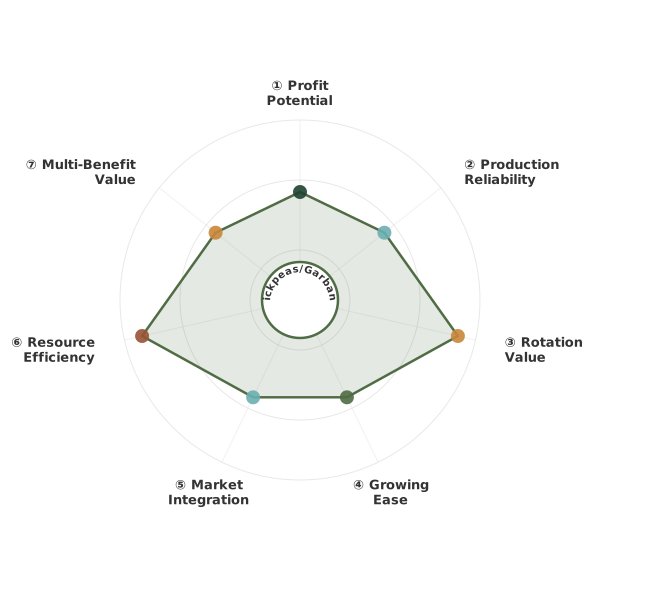
Regenerative Trait Ratings
How These Traits Are Calculated
Trait dimensions are ordered clockwise starting from the top of the chart (12 o'clock position):
1. Profit Potential
Net returns from yield, pricing, input costs, and system value contributions
WHAT: Synthesizes gross revenue (yield × price), input costs, labor efficiency, rotation value contributions, and timeline considerations (annual versus perennial) into net profitability. Captures complete economic picture from planting to sale.
WHY: Grain profitability varies dramatically—$200-800/acre depending on yields, commodity versus specialty pricing, input requirements, and rotation benefits. Profit potential guides crop selection for maximum return on land and determines viable scale for grain enterprises.
HOW: Scored via LLM synthesis of economics data (yields, prices, costs), system value (nitrogen contributions, rotation premiums), and risk considerations (yield stability, market access). Exceptional (3.0): High yields with premium pricing or strong system contributions offsetting commodity prices. Typical (2.0): Moderate returns from commodity production. Limited (1.0): Low yields, high input costs, or poor market access creating marginal profitability.
2. Production Reliability
Weighted: yield potential (60%) + climate adaptability (40%)
WHAT: Combines yield potential (productivity under good conditions) with climate adaptability (reliability across variable weather) to measure consistent harvestable production. Reliable grains deliver predictable yields year-to-year.
WHY: Grain crop failures create severe cash flow problems—significant input costs (seed, fertility, equipment) are sunk before harvest. Reliable producers reduce financial risk and allow confident market commitments. Climate-adaptable grains maintain yields through heat, drought, or excess moisture that devastate less-resilient crops.
HOW: Weighted formula prioritizes yield potential (60% weight) for productivity under favorable conditions, with climate adaptability (40% weight) for weather variability tolerance. Exceptional (3.0): High yields (3,000-5,000+ lbs/acre) maintained across variable seasons. Typical (2.0): Moderate yields with some weather sensitivity. Limited (1.0): Low yields or severe climate sensitivity causing frequent failures.
3. Rotation Value
Soil building and disease break benefits for crop rotation systems
WHAT: Measures the value provided to following crops through nitrogen fixation (legumes), disease cycle disruption, soil structure improvement, or allelopathic weed suppression. High rotation value grains leave soil better than they found it.
WHY: Continuous commodity grain monocultures deplete soil and amplify pest/disease pressure. Grains with exceptional rotation value (legumes, diverse root systems, perennials) break disease cycles, build fertility, and improve yields of following crops. Nitrogen-fixing grain legumes can eliminate $60-120/acre in fertilizer costs for subsequent corn or wheat.
HOW: Ratings based on the rotation_value trait. Exceptional (3.0): Nitrogen-fixing legumes (chickpeas, lentils, dry beans) or soil-building perennials providing significant fertility or pest management value. Typical (2.0): Some rotation benefits. Limited (1.0): Continuous-crop grains (corn-on-corn, wheat-on-wheat) with minimal rotation value or potential disease/pest amplification.
4. Growing Ease
Weighted: establishment ease (50%) + low maintenance requirements (50%)
WHAT: Combines establishment reliability (germination, early vigor) with ongoing maintenance needs (irrigation, fertility, pest management) into total management workload. Easy grains grow reliably with minimal intervention.
WHY: Labor and management time limit farm scale. Easy-care grains allow farmers to manage more acres with the same labor input, improving profitability. Difficult grains requiring precise planting timing, irrigation management, or intensive pest control reduce effective farm capacity and increase risk.
HOW: Weighted formula balances establishment ease (50% weight) for reliable stand establishment and inverted maintenance intensity (50% weight) for ongoing care. Exceptional (3.0): Reliable germination, drought-tolerant, low fertility needs, naturally pest-resistant. Typical (2.0): Moderate care requirements. Limited (1.0): Difficult establishment, irrigation-dependent, heavy fertility needs, or intensive pest management requirements.
5. Market Integration
Weighted: harvest/processing ease (60%) + market accessibility (40%)
WHAT: Combines harvest and processing infrastructure compatibility (equipment availability, processing facilities) with market accessibility (buyer channels, price transparency, storage options). Well-integrated grains fit existing farm equipment and have clear market outlets.
WHY: Grain production requires specialized equipment and market infrastructure. Crops compatible with standard combines and local elevators minimize capital investment and provide reliable market access. Specialty grains with limited buyers or requiring custom equipment create marketing risk and capital barriers for new producers.
HOW: Weighted formula prioritizes harvest/processing ease (60% weight) for infrastructure compatibility, with market accessibility (40% weight) for buyer channel availability. Exceptional (3.0): Standard combine-compatible with established buyer networks (wheat, corn, soybeans). Typical (2.0): Some specialty processing but accessible markets. Limited (1.0): Custom processing required or very limited buyer channels (rare heritage grains, experimental crops).
6. Resource Efficiency
Input requirements—lower needs score higher
WHAT: Measures total input requirements including fertility, irrigation, pesticides, and fuel. Resource-efficient grains produce well with minimal external inputs, reducing costs and environmental impact.
WHY: Input costs are rising—nitrogen fertilizer ($0.60-1.00/lb), irrigation energy, and pesticides. Grains requiring low inputs improve profit margins ($200-400/acre savings) and reduce environmental footprint. Input-efficient crops also provide resilience during supply disruptions or price spikes.
HOW: Ratings based on the input_requirements trait (NO INVERSION—trait already farmer-friendly). Exceptional (3.0): Low inputs needed—drought-tolerant, nitrogen-fixing, naturally pest-resistant, fertility-scavenging roots. Typical (2.0): Moderate input requirements. Limited (1.0): High inputs needed—irrigation-dependent, heavy nitrogen feeders, intensive pest management, poor nutrient efficiency.
7. Multi-Benefit Value
Ecosystem services beyond grain harvest—cover, wildlife, carbon, pollinator support
WHAT: Measures ecosystem services provided beyond grain yield. Multi-benefit grains contribute soil carbon sequestration, wildlife habitat (grain-eating birds, small mammals), pollinator support (flowering grains), cover value (grazing, mulch), or nitrogen fixation.
WHY: Most grains are single-purpose extractive crops. Grains with strong multi-benefit value contribute to farm ecology—nitrogen-fixing grain legumes, deep-rooted perennials building soil carbon, or flowering species supporting pollinators. These service contributions improve total system value beyond commodity grain sales.
HOW: Ratings based on the multi_benefit_value trait. Exceptional (3.0): Significant ecosystem services (nitrogen-fixing grain legumes, perennial grains with deep carbon sequestration, pollinator support). Typical (2.0): Some ecosystem contributions (grain stubble as cover, moderate wildlife value). Limited (1.0): Single-purpose commodity grains with minimal farm ecology benefits (continuous corn, intensive wheat).
Ratings are based on documented performance in regenerative systems, not conventional high-input scenarios. All traits assume integrated management practices focused on soil health and ecosystem services.
1
Climate Suitability Assessment
Will this plant thrive in your climate?
Climate Suitability Assessment
Will this plant thrive in your climate?
Köppen Zone: Cfa (Humid Subtropical), Csa (Hot-Summer Mediterranean), Csb (Warm-Summer Mediterranean)
USDA Zone: 6a, 7a, 8a, 9a
Australian Zone: temperate
EU Climate Region: mediterranean
Chickpeas thrive in climates with mild winters and warm, dry summers, providing 120-180 frost-free days and optimal temperatures of 60-75°F (15-24°C) during the growing season. These conditions are met in Köppen Csb, Australian temperate zones, and EU Mediterranean regions, as well as USDA Zones 7a-8b. Autumn planting is often ideal, utilizing winter rainfall for establishment and allowing the crop to mature before extreme summer heat. Minimal irrigation is typically required, and the risk of frost damage during critical flowering and pod-setting stages is low. Nitrogen fixation is highly efficient, contributing significantly to soil fertility. Yields are consistently high, and the crop is well-suited for both cash cropping and as a cover crop in these regions, with minimal management inputs needed beyond standard agricultural practices.
Köppen Zone: Aw (Tropical Savanna), BSh (Hot Semi-Arid (Steppe)), BSk (Cold Semi-Arid (Steppe)), BWk (Cold Desert), Cfb (Oceanic (Maritime Temperate)), Cwa (Monsoon-Influenced Humid Subtropical), Cwb (Subtropical Highland), Dfa (Hot-Summer Continental), Dfb (Warm-Summer Continental)
USDA Zone: 5a, 5b, 10a, 11a
Australian Zone: Zone 3, Zone 4, Zone 5, subtropical
EU Climate Region: atlantic
Chickpeas can be successfully cultivated in regions with adequate growing seasons (90-140 days) and manageable temperature ranges, though some limitations exist. This includes Köppen Csa and Cfa, Australian Zone 5 and subtropical, EU Atlantic and Cwa, and USDA Zones 6a-6b, 9a-10b. Mediterranean climates (Csa) offer good potential with autumn planting, but supplemental irrigation may be needed during dry spells. Humid subtropical (Cfa, Cwa) and subtropical regions require careful planting to avoid peak summer heat and humidity, which can increase disease pressure and reduce yields. In USDA Zones 9-10, while the growing season is long, intense summer heat can stress the plants, necessitating autumn planting and irrigation. Yields may be moderate to good, but require attention to water management and disease prevention. Nitrogen fixation is generally good but can be reduced by heat or water stress.
Köppen Zone: Af (Tropical Rainforest), Am (Tropical Monsoon), ET (Tundra), BWh (Hot Desert), Dfc (Subarctic), Dwa (Monsoon-Influenced Hot-Summer Continental)
USDA Zone: 2a, 3a, 3b, 4a, 12a
Australian Zone: grassland
EU Climate Region: continental
Chickpeas are not recommended in climates with extreme temperature fluctuations, insufficient growing seasons, or high humidity during critical growth stages. This includes Köppen BSh, BSk, Cfb, and Cwb zones, Australian grassland zones, and EU continental regions, as well as USDA Zones 3-5. BSh and BSk zones suffer from extreme heat, drought, and short growing seasons, making establishment and yield highly unreliable without intensive irrigation and specialized management. Cfb zones have cool, wet summers that hinder flowering and increase disease risk. Cwb zones may have inconsistent temperatures and short seasons. Continental climates (EU) face risks from late frosts and potentially hot, dry summers. USDA Zones 3-5 have very short growing seasons and extreme winter cold, making overwintering impossible and annual cultivation unreliable. In these zones, alternative nitrogen-fixing plants better adapted to the specific climatic challenges are strongly advised.
Note: Zones listed above represent climates where this plant can produce reliably with reasonable management. Climate zones not mentioned would require intensive climate modification (greenhouses, extensive infrastructure) and are not economically viable for regenerative agriculture purposes.
2
Soil Suitability Assessment
Which soil types work best for this plant?
Soil Suitability Assessment
Which soil types work best for this plant?
Loam Soil
This plant thrives in these soil types without requiring amendments or remediation. Natural soil conditions support optimal growth and productivity.
Acidic Soil, Alkaline Soil, Clay Soil, Desert Soil, Rich Soil, Rocky Soil, Sandy Soil
This plant performs acceptably in these soil types with moderate, manageable remediation such as pH adjustment, compost addition, or drainage improvement. The required amendments are practical and cost-effective for regenerative agriculture.
Saline Soil, Wet Soil
Growing this plant in these soil types would require impractical remediation such as complete soil replacement, extensive amendments, or cost-prohibitive infrastructure. These conditions are not economically viable for regenerative agriculture.
Note: Soil suitability assessments focus on remediation requirements. "Ideally Suited" means the plant generally thrives without the need for substantial amendments, "Adequate" means manageable remediation (lime, compost, mulch), and "Not Recommended" means impractical soil changes would be required. Climate factors like rainfall and temperature also influence success.
3
Seasonal Considerations
Planting timing, growth duration, and harvest windows
Seasonal Considerations
Planting timing, growth duration, and harvest windows
For optimal chickpea establishment, aim for planting in early spring, once soil temperatures consistently reach at least 60°F (15°C) and the risk of hard frost has passed. Chickpeas are sensitive to extreme cold during their early growth stages. Following seeding, expect approximately 80 to 120 days to maturity, depending on the variety and growing conditions. The critical growth phases include a vegetative establishment period, followed by flowering, and then the essential grain fill stage.
Harvest timing is paramount for maximizing grain quality and yield. Chickpeas are typically ready for harvest in late summer or early autumn, once the plants have senesced and pods have dried. Aim for grain moisture levels below 12% to prevent spoilage and ensure good storage. There can be a window of several weeks between physiological maturity and the ideal harvest moisture. Monitor weather patterns closely during this period; avoid harvesting during or immediately after significant rainfall, as excessive moisture can degrade grain quality and complicate drying. Timely harvest before the onset of persistent autumn rains is key to a successful crop.
4
System Role & Multi-Benefit Value
Functional roles, integration strategies, and stacked benefits
System Role & Multi-Benefit Value
Functional roles, integration strategies, and stacked benefits
Functional Role
Integration Characteristics
Multi-Benefit Value: Adequate - Chickpeas enhance soil fertility by fixing nitrogen and offer moderate weed suppression, serving as a valuable food source, while their direct impact on pollinators and wildlife is less pronounced.
5
Economics & Value Streams
Direct harvest, system benefits, ecosystem services, and risk diversification
Economics & Value Streams
Direct harvest, system benefits, ecosystem services, and risk diversification
Comprehensive economic analysis including direct harvest value, system enhancement contributions, ecosystem services, value timeline, and risk diversification strategies.
Grain Production Economics
| Metric | Value |
|---|---|
| Seed Cost | $25-40/acre $61-98/ha |
| Expected Yield | 15-30 15-30 |
| Market Price | 0.40-0.60 0.40-0.60 |
| Harvest/Processing Cost | 90-130 222-321 |
| Insurance Cost | 10-20 24-49 |
| Net Annual Return* | $70-$1220/acre/year |
Values represent regenerative practices (diverse rotations, cover crops, reduced inputs). Conventional systems may see different yields and costs.
* Net Annual Return = (Yield × Market Price) − (Amortized Establishment Cost + Annual Maintenance). This return is realized only at/after first harvest; early years have costs but no revenue. Range shows worst case to best case scenarios.
System Enhancement Value
Beyond harvest: nitrogen fixation replacing fertilizer costs
Nitrogen Fixation Value
80-150 lbs N/acre/year = $48-135/acre fertilizer replacement (variable based on actual fixation and N price)
As a legume, chickpeas (*Cicer arietinum*) are primary nitrogen fixers, significantly contributing to soil fertility. This biological process, facilitated by symbiotic bacteria in their root nodules, enriches the soil with atmospheric nitrogen, reducing the need for synthetic nitrogen fertilizers. The quantitative reference data indicates that legumes can fix between 30-100 lbs of nitrogen per acre per year (34-112 kg N/ha/year). This nitrogen becomes available to subsequent crops in the rotation, improving their growth and yield. In the context of integrated farm systems, this nitrogen contribution acts as a natural fertilizer, lowering input costs and enhancing the sustainability of the entire system. Furthermore, experiments have shown that cropping systems involving chickpeas can influence soil aggregate stability and carbon content, suggesting broader soil health benefits beyond just nitrogen fixation. The availability of fixed nitrogen can lead to substantial savings on fertilizer expenditures, estimated to be in the range of $48-135 per acre, depending on the actual nitrogen fixed and current fertilizer prices.
Additional Soil Building Benefits
Chickpeas offer several additional system benefits beyond direct harvest and nitrogen fixation. Their role as a cover crop, particularly when mulched, helps in suppressing weeds and conserving soil moisture, as noted in the knowledge base. This moisture retention is crucial in drier climates or during dry spells, enhancing the resilience of the farming system. Furthermore, research has identified beneficial microbes associated with chickpea rhizospheres that exhibit plant growth-promoting (PGP) activities. For instance, strains like *Agrobacterium pusense* JAS1 have demonstrated nitrogen fixation, siderophore production, and solubilization of soil inorganic phosphates and zinc, while also producing exopolysaccharides (EPS) that can improve soil structure and water retention. Such microbial associations can enhance nutrient availability and plant health, contributing to a more robust and self-sustaining agricultural ecosystem. The presence of chickpeas can also support beneficial insect populations, although specific data on pollinator support is not detailed in the provided excerpts.
Ecosystem Service Contributions
Environmental contributions: carbon, pollinators, wildlife, and water
- Carbon Sequestration: Chickpeas, as annual crops with efficient root systems and biomass production, contribute to soil organic carbon through the decomposition of plant residues. While not a long-lived perennial, their inclusion in crop rotations enhances soil health and carbon storage potential, especially when managed with practices like reduced tillage and residue retention.
- Pollinator Support: Low - While legumes can attract some pollinators, chickpeas are not typically considered a primary or high-value pollinator crop based on the provided knowledge base. Their primary value lies in nitrogen fixation and as a food source.
- Wildlife Habitat: Low - As an annual crop, chickpeas offer limited long-term habitat for wildlife. Their primary contribution would be as a food source during their growth cycle and for scavenging birds post-harvest.
- Water Quality: Not applicable
Value Timeline: N Fixation & Production
When you'll see results: nitrogen fixation begins immediately, harvest at maturity
Years 1-2
Nitrogen fixation begins, contributing to soil fertility for subsequent crops. Weed suppression and soil moisture conservation through mulching become active. Early establishment of beneficial microbial communities associated with chickpea roots.
Years 3-5
First harvest revenue from chickpeas. Continued nitrogen contribution to the soil. Established soil health benefits from cover cropping and residue management. Potential for increased yield in subsequent crops due to improved soil fertility.
Years 10-20
Sustained soil fertility enhancement from regular chickpea inclusion in rotations. Long-term improvements in soil structure and organic matter content. Increased resilience of the entire farm system due to diversified income streams and reduced input reliance.
20+ Years
Mature and resilient integrated farm system with significantly improved soil health, water retention, and nutrient cycling. Reduced reliance on external inputs, leading to greater economic stability and environmental sustainability. The legacy of improved soil structure and biodiversity from consistent chickpea cultivation.
Farm Risk Reduction
How this reduces farm risk: fertilizer cost hedge and rotation benefits
- Multiple Revenue Streams: Direct harvest revenue from chickpeas (cash crop). Reduced input costs (fertilizers). Potential for seed sales. Enhanced yields in other crops due to nitrogen contribution.
- Temporal Income Spread: Annual harvest revenue from chickpeas. Ongoing soil fertility improvements and ecosystem services that benefit the farm system year-round and across multiple crop cycles. Reduced reliance on a single commodity.
- Market Risk Hedge: Provides an alternative cash crop, diversifying farm revenue away from more volatile commodity markets. Its nitrogen-fixing ability reduces dependence on fluctuating synthetic fertilizer prices. Its resilience in drier conditions (as suggested by its Mediterranean climate preference) can offer a buffer against drought-related crop failures in other components of the system.
6
Regenerative Suitability Details
Comprehensive trait ratings for system integration assessment
Regenerative Suitability Details
Comprehensive trait ratings for system integration assessment
Comparative ratings for this plant across key regenerative agriculture traits.
| Trait | Suitability | Explanation |
|---|---|---|
| Rotation Value | Ideally Suited | Excellent nitrogen fixer, enhancing soil fertility and breaking cereal disease cycles through its unique legume root system, making it a top-tier regenerative rotation crop. |
| Yield Potential | Adequate | Chickpeas offer moderate yields and good protein value, performing consistently within a well-managed regenerative system, though typically lower in volume than some cereals. |
| Establishment Ease | Adequate | Chickpeas establish reliably with standard soil preparation and adequate moisture, showing adequate early vigor, but may require careful weed management in the early stages. |
| Input Requirements | Ideally Suited | As a natural N-fixer with excellent drought tolerance, this variety thrives in low-input systems, further reducing the need for external fertility and water management compared to the species baseline. |
| Multi Benefit Value | Adequate | Chickpeas enhance soil fertility by fixing nitrogen and offer moderate weed suppression, serving as a valuable food source, while their direct impact on pollinators and wildlife is less pronounced. |
| Climate Adaptability | Ideally Suited | This variety's documented drought tolerance, a key advantage, significantly enhances its ability to perform reliably in arid and semi-arid regions, exceeding typical climate adaptability. |
| Market Accessibility | Adequate | Chickpeas have a strong niche in food markets with growing demand, though market access can be regional and may benefit from direct marketing efforts within a regenerative supply chain. |
| Maintenance Intensity | Adequate | Chickpeas, as nitrogen-fixing legumes, naturally reduce fertility needs and require moderate pest management, fitting well into typical regenerative maintenance with attention to moisture retention. |
| Harvest Processing Ease | Adequate | Chickpeas are combine harvested with minor adjustments, and their threshing and cleaning are moderate, generally accessible with regionally available infrastructure. |
Comparative System: Ratings compare plants within their economic category (e.g., cover crop nitrogen fixation compared to other cover crops, not to all plants). Individual farm conditions and management practices significantly influence actual performance.
7
Learn More
Why farmers use this plant and additional resources
Learn More
Why farmers use this plant and additional resources
Why Regenerative Farmers Use This Plant
Chickpeas are a cornerstone legume in regenerative agriculture, offering significant benefits as a cash crop and in rotation, contributing to soil health and farm resilience.
Yield and Nutritional Value: Chickpeas are capable of yielding between 1,000-4,000 lbs/acre (1.1-4.5 metric tons/ha), with protein content typically ranging from 17-23% and a test weight of 45-55 lbs/bushel (58-70 kg/hl). This provides a valuable and nutritious commodity.
Soil Health and Fertility: As a legume, chickpeas fix atmospheric nitrogen, contributing 40-150 lbs N/acre (45-168 kg/ha) to the soil profile, significantly reducing the need for synthetic nitrogen inputs in subsequent crops. Their fibrous root systems, reaching depths of 2-4 feet (0.6-1.2 m), improve soil structure, enhance water infiltration, break up soil compaction, and scavenge nutrients from deeper soil layers. This makes them an excellent choice for building soil health and resilience. Their relatively low water requirement also makes them an excellent choice for dryland farming systems, contributing to drought resilience.
Crop Rotation and Disease Management: Integrating chickpeas into a rotation breaks disease cycles for many common grain crops, such as wheat and barley, by offering a different host range and disrupting pathogen cycles that can build up in monocultures. They serve as an effective disease break, helping to manage soil-borne pathogens and reduce the buildup of pests.
Residue and Organic Matter: Their residue, when managed appropriately, contributes valuable organic matter to the soil, supporting microbial activity and improving soil tilth. The fibrous root system also contributes organic matter to the soil, enhancing soil structure and microbial activity.
Weed Suppression and Biodiversity: Chickpeas can offer a competitive advantage against certain weeds due to their rapid early growth and dense canopy formation, contributing to natural weed suppression. They can also exhibit allelopathic properties, potentially suppressing certain weed species. While not a primary pollinator attractant, their flowers do provide a nectar source for various beneficial insects, contributing to overall farm biodiversity and supporting beneficial insect populations.
Economic and Market Benefits: Their market demand, driven by global culinary uses and increasing consumer interest in plant-based proteins, offers a stable and profitable revenue stream for farmers.
Ecological Services: By fixing nitrogen and improving soil structure, chickpeas enhance water holding capacity and reduce erosion, particularly on sloping land. This leads to improved water use efficiency and reduced runoff of nutrients and sediment. The overall impact is a more resilient and productive farming system that relies less on external inputs and fosters a healthier environment. By fixing atmospheric nitrogen, they reduce the reliance on energy-intensive synthetic fertilizers, thereby lowering the farm's carbon footprint. Improved soil structure can lead to enhanced water infiltration rates, reducing runoff and soil erosion, especially in semi-arid environments. The improved soil structure and nutrient cycling fostered by chickpeas can lead to a long-term increase in soil organic matter, contributing to carbon sequestration over several years of consistent cultivation.
Regional Adaptations: Farmers across diverse regions have successfully integrated chickpeas into their regenerative systems. In the Australian wheat-belt, they are a vital component of dryland cropping rotations, improving soil moisture and nitrogen levels for subsequent cereal crops. In the Mediterranean basin, they are used in traditional rotations to revitalize soils depleted by intensive grain farming and are often intercropped or rotated with olive trees or vineyards. In parts of North America, farmers are increasingly adopting chickpeas in corn-soybean or corn and wheat rotations to break pest cycles, build soil fertility, and diversify farming operations, often seeing a reduction in nitrogen fertilizer requirements for the following crop. In India, they are a staple crop, typically grown during the rabi season (winter) following the monsoon rains and integrated into diverse cropping patterns to improve soil fertility and provide a critical protein source. In South America, particularly in Argentina, they are integrated into dryland farming systems alongside wheat and soybeans to enhance soil fertility and diversify crop portfolios. In the Canadian Prairies, they are grown as a spring-planted crop in rotation with wheat, canola, or cereals, benefiting from the extended daylight hours of summer and contributing to soil health in a demanding climate.
8
How to Integrate This Plant
Practical guidance for regenerative systems
How to Integrate This Plant
Practical guidance for regenerative systems
Establishing and managing chickpeas requires careful attention to seeding rates, depth, timing, and post-harvest practices to ensure optimal germination, stand establishment, and maximum regenerative contributions.
Seeding and Establishment:
- Seeding Rates:
- Drilled: 60-120 lbs/acre (67-134 kg/ha)
- Broadcast: 75-150 lbs/acre (84-168 kg/ha)
- Note: Rates can vary based on seed size and desired plant population.
- Planting Depth: 1-3 inches (2.5-7.5 cm), ensuring good seed-to-soil contact and placement in moisture.
- Row Spacing: 6-18 inches (15-45 cm). Narrower rows (6-12 inches) often promote better ground cover, weed suppression, and higher yields.
- Planting Time:
- Northern Hemisphere: March to May, after the risk of hard frost has passed and soil temperatures are between 50-75°F (10-24°C).
- Southern Hemisphere: September to November.
- Timing is crucial to avoid extreme frost during flowering and to benefit from adequate soil moisture.
Growth and Management:
- Water Requirements: Chickpeas are relatively drought-tolerant once established but require adequate moisture during flowering and pod development. Aim for approximately 1 inch (2.5 cm) of water per week during critical growth stages. Water needs can be met through natural rainfall or supplemental irrigation. They are sensitive to waterlogging, so well-drained soils are essential.
- Fertility Management:
- Prioritize biological approaches. The nitrogen fixed by the chickpea crop itself is often sufficient.
- Ensure adequate phosphorus and potassium levels in the soil are crucial for optimal nodulation and yield.
- Supplementation can be achieved through compost application, manure integration, or targeted mineral amendments as a transitional strategy while building biological fertility.
- If supplemental nutrients are needed during the transitional phase of building soil biology, a balanced starter fertilizer with phosphorus and potassium can be applied at planting.
- Synthetic nitrogen should be minimized or avoided entirely to encourage nodulation.
- Growth Timeline:
- Days to Maturity: 70-120 days, depending on variety and environmental conditions.
- Plant Height at Maturity: 1-3 feet (0.3-0.9 m).
- Pest and Disease Management: Focus on crop rotation, selecting resistant varieties, ensuring good air circulation through appropriate spacing, biological controls, and cultural practices like proper spacing and sanitation. Chemical interventions should be considered only as a last resort during transition phases.
Harvest and Post-Harvest:
- Planting-to-Harvest Calendar:
- Northern Hemisphere: Planted March-May, harvested July-September.
- Southern Hemisphere: Planted September-November, harvested February-May.
- Harvest Indicators: Yellowing of the leaves and pods, and the drying and hardening of the pods.
- Grain Moisture Content: Harvest at 13-15% moisture content for safe storage.
- Residue Management:
- Leave standing stubble at 4-10 inches (10-25 cm) to protect the soil surface from erosion, provide habitat for beneficial insects, and conserve moisture, especially in dryland systems.
- Alternatively, the residue can be lightly incorporated to accelerate decomposition and add organic matter.
- Cover Crop Integration:
- Relay Cropping: Intercede a winter-hardy cover crop (e.g., cereal rye, hairy vetch) into the standing chickpea crop at the hard-dough stage.
- Post-Harvest Cover Cropping: Establish a cover crop immediately after combine harvest. This can include winter cereals like rye or wheat, which can be interseeded into the chickpea stubble.
Rotation Partners: Chickpeas fit well into rotations following winter cereals like wheat or barley, as they break disease cycles and add nitrogen. They are often rotated with cereals like wheat or barley, or with oilseeds, to break disease cycles and improve soil nitrogen. They are often followed by a summer crop or a cover crop to continue building soil health. In mixed farming systems, the residue left after harvest, if managed appropriately, can provide valuable organic matter and nutrient cycling.