Foxtail Millet
Regenerative Quick Profile
All recommendations assume integrated, regenerative practices—not conventional inputs.
Climate & Soil Fit
Climate: Tropical Rainforest, Tropical Monsoon, Tropical Savanna, Hot Semi-Arid (Steppe), Cold Semi-Arid (Steppe), Hot Desert, Cold Desert, Humid Subtropical, Oceanic (Maritime Temperate), Hot-Summer Mediterranean, Warm-Summer Mediterranean, Monsoon-Influenced Humid Subtropical, Subtropical Highland, Hot-Summer Continental, Warm-Summer Continental, Subarctic, Monsoon-Influenced Hot-Summer Continental, Tundra
Zones: USDA 6-11, Australian Zones 3-14
Optimal Soil: Loam Soil
System Role & Functions
Primary: Cover Crop System
Secondary: Forage Integration, Cash Crop With Services
Key Benefits: Climate adaptable, Easy establishment, Weed Suppression
Management Level
Experience: Beginner-Friendly
Maintenance: Moderate maintenance - Foxtail millet benefits from good soil fertility management and moisture retention; its system integration relies on practices that support its rapid growth cycle and biomass accumulation.
Value Streams
- Cover crop (soil investment)
- Soil building and erosion control
- Livestock forage value
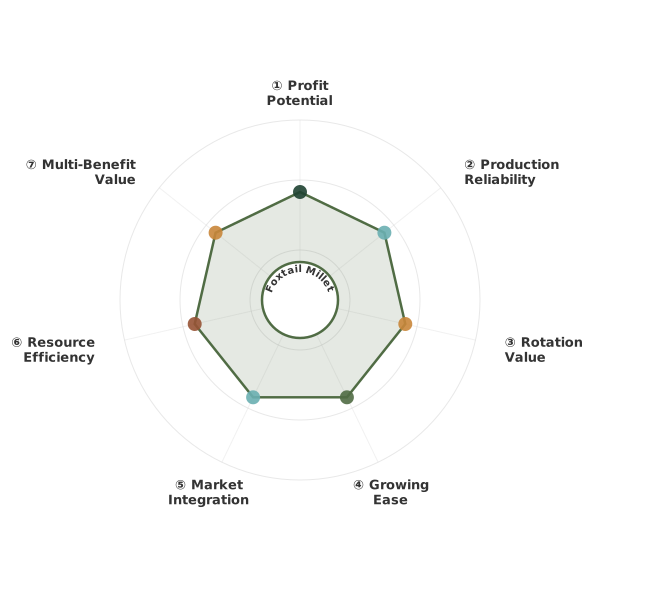
Regenerative Trait Ratings
How These Traits Are Calculated
Trait dimensions are ordered clockwise starting from the top of the chart (12 o'clock position):
1. Profit Potential
Net returns from yield, pricing, input costs, and system value contributions
WHAT: Synthesizes gross revenue (yield × price), input costs, labor efficiency, rotation value contributions, and timeline considerations (annual versus perennial) into net profitability. Captures complete economic picture from planting to sale.
WHY: Grain profitability varies dramatically—$200-800/acre depending on yields, commodity versus specialty pricing, input requirements, and rotation benefits. Profit potential guides crop selection for maximum return on land and determines viable scale for grain enterprises.
HOW: Scored via LLM synthesis of economics data (yields, prices, costs), system value (nitrogen contributions, rotation premiums), and risk considerations (yield stability, market access). Exceptional (3.0): High yields with premium pricing or strong system contributions offsetting commodity prices. Typical (2.0): Moderate returns from commodity production. Limited (1.0): Low yields, high input costs, or poor market access creating marginal profitability.
2. Production Reliability
Weighted: yield potential (60%) + climate adaptability (40%)
WHAT: Combines yield potential (productivity under good conditions) with climate adaptability (reliability across variable weather) to measure consistent harvestable production. Reliable grains deliver predictable yields year-to-year.
WHY: Grain crop failures create severe cash flow problems—significant input costs (seed, fertility, equipment) are sunk before harvest. Reliable producers reduce financial risk and allow confident market commitments. Climate-adaptable grains maintain yields through heat, drought, or excess moisture that devastate less-resilient crops.
HOW: Weighted formula prioritizes yield potential (60% weight) for productivity under favorable conditions, with climate adaptability (40% weight) for weather variability tolerance. Exceptional (3.0): High yields (3,000-5,000+ lbs/acre) maintained across variable seasons. Typical (2.0): Moderate yields with some weather sensitivity. Limited (1.0): Low yields or severe climate sensitivity causing frequent failures.
3. Rotation Value
Soil building and disease break benefits for crop rotation systems
WHAT: Measures the value provided to following crops through nitrogen fixation (legumes), disease cycle disruption, soil structure improvement, or allelopathic weed suppression. High rotation value grains leave soil better than they found it.
WHY: Continuous commodity grain monocultures deplete soil and amplify pest/disease pressure. Grains with exceptional rotation value (legumes, diverse root systems, perennials) break disease cycles, build fertility, and improve yields of following crops. Nitrogen-fixing grain legumes can eliminate $60-120/acre in fertilizer costs for subsequent corn or wheat.
HOW: Ratings based on the rotation_value trait. Exceptional (3.0): Nitrogen-fixing legumes (chickpeas, lentils, dry beans) or soil-building perennials providing significant fertility or pest management value. Typical (2.0): Some rotation benefits. Limited (1.0): Continuous-crop grains (corn-on-corn, wheat-on-wheat) with minimal rotation value or potential disease/pest amplification.
4. Growing Ease
Weighted: establishment ease (50%) + low maintenance requirements (50%)
WHAT: Combines establishment reliability (germination, early vigor) with ongoing maintenance needs (irrigation, fertility, pest management) into total management workload. Easy grains grow reliably with minimal intervention.
WHY: Labor and management time limit farm scale. Easy-care grains allow farmers to manage more acres with the same labor input, improving profitability. Difficult grains requiring precise planting timing, irrigation management, or intensive pest control reduce effective farm capacity and increase risk.
HOW: Weighted formula balances establishment ease (50% weight) for reliable stand establishment and inverted maintenance intensity (50% weight) for ongoing care. Exceptional (3.0): Reliable germination, drought-tolerant, low fertility needs, naturally pest-resistant. Typical (2.0): Moderate care requirements. Limited (1.0): Difficult establishment, irrigation-dependent, heavy fertility needs, or intensive pest management requirements.
5. Market Integration
Weighted: harvest/processing ease (60%) + market accessibility (40%)
WHAT: Combines harvest and processing infrastructure compatibility (equipment availability, processing facilities) with market accessibility (buyer channels, price transparency, storage options). Well-integrated grains fit existing farm equipment and have clear market outlets.
WHY: Grain production requires specialized equipment and market infrastructure. Crops compatible with standard combines and local elevators minimize capital investment and provide reliable market access. Specialty grains with limited buyers or requiring custom equipment create marketing risk and capital barriers for new producers.
HOW: Weighted formula prioritizes harvest/processing ease (60% weight) for infrastructure compatibility, with market accessibility (40% weight) for buyer channel availability. Exceptional (3.0): Standard combine-compatible with established buyer networks (wheat, corn, soybeans). Typical (2.0): Some specialty processing but accessible markets. Limited (1.0): Custom processing required or very limited buyer channels (rare heritage grains, experimental crops).
6. Resource Efficiency
Input requirements—lower needs score higher
WHAT: Measures total input requirements including fertility, irrigation, pesticides, and fuel. Resource-efficient grains produce well with minimal external inputs, reducing costs and environmental impact.
WHY: Input costs are rising—nitrogen fertilizer ($0.60-1.00/lb), irrigation energy, and pesticides. Grains requiring low inputs improve profit margins ($200-400/acre savings) and reduce environmental footprint. Input-efficient crops also provide resilience during supply disruptions or price spikes.
HOW: Ratings based on the input_requirements trait (NO INVERSION—trait already farmer-friendly). Exceptional (3.0): Low inputs needed—drought-tolerant, nitrogen-fixing, naturally pest-resistant, fertility-scavenging roots. Typical (2.0): Moderate input requirements. Limited (1.0): High inputs needed—irrigation-dependent, heavy nitrogen feeders, intensive pest management, poor nutrient efficiency.
7. Multi-Benefit Value
Ecosystem services beyond grain harvest—cover, wildlife, carbon, pollinator support
WHAT: Measures ecosystem services provided beyond grain yield. Multi-benefit grains contribute soil carbon sequestration, wildlife habitat (grain-eating birds, small mammals), pollinator support (flowering grains), cover value (grazing, mulch), or nitrogen fixation.
WHY: Most grains are single-purpose extractive crops. Grains with strong multi-benefit value contribute to farm ecology—nitrogen-fixing grain legumes, deep-rooted perennials building soil carbon, or flowering species supporting pollinators. These service contributions improve total system value beyond commodity grain sales.
HOW: Ratings based on the multi_benefit_value trait. Exceptional (3.0): Significant ecosystem services (nitrogen-fixing grain legumes, perennial grains with deep carbon sequestration, pollinator support). Typical (2.0): Some ecosystem contributions (grain stubble as cover, moderate wildlife value). Limited (1.0): Single-purpose commodity grains with minimal farm ecology benefits (continuous corn, intensive wheat).
Ratings are based on documented performance in regenerative systems, not conventional high-input scenarios. All traits assume integrated management practices focused on soil health and ecosystem services.
1
Climate Suitability Assessment
Will this plant thrive in your climate?
Climate Suitability Assessment
Will this plant thrive in your climate?
Köppen Zone: Cfa (Humid Subtropical), Cwa (Monsoon-Influenced Humid Subtropical), Dfa (Hot-Summer Continental), Dfb (Warm-Summer Continental)
USDA Zone: 5a, 5b, 6a, 7a
Australian Zone: tropical, subtropical
Foxtail millet performs optimally in climates with 120-180+ frost-free days and warm to hot summer temperatures (70-90°F/21-32°C), conditions met in Köppen Cfa, Cwa, Aw zones and regional zones like USDA 6b-13a, Australian subtropical and tropical, and EU Mediterranean (with irrigation). These zones provide adequate rainfall (30-50 inches/75-125 cm) or feasible irrigation for its rapid growth cycle. Establishment is highly reliable when soil temperatures reach 60°F (15°C), typically after the last frost. The long, warm growing seasons allow for maximum grain or forage yield with minimal management inputs, often exceeding 3-5 tons/acre (7-12 tons/ha) for forage and 1000-2000 lbs/acre (1100-2200 kg/ha) for grain. Its quick maturation (60-100 days) makes it an excellent cover crop for multiple rotations or a reliable cash crop, contributing significantly to soil health and farm productivity with low input costs ($20-40/acre/year or $50-100/ha/year).
Köppen Zone: Aw (Tropical Savanna), BSh (Hot Semi-Arid (Steppe)), BSk (Cold Semi-Arid (Steppe)), Cfb (Oceanic (Maritime Temperate)), Csa (Hot-Summer Mediterranean), Csb (Warm-Summer Mediterranean), Cwb (Subtropical Highland), Dwa (Monsoon-Influenced Hot-Summer Continental)
USDA Zone: 4a, 8a, 9a
Australian Zone: grassland, temperate
EU Climate Region: atlantic, continental
Foxtail millet is adequately suited to climates with 90-140 frost-free days and warm summers (65-85°F/18-29°C), found in Köppen Dfa, Dwa zones and regional zones like USDA 5b-6a, Australian grassland and temperate, and EU Atlantic and continental. These regions offer a sufficient growing season, but timing is critical to avoid early frosts or capitalize on the warmest periods. Rainfall may be adequate, but supplemental irrigation might be beneficial during dry spells to ensure optimal yields. Establishment is generally good (70-85%) with proper spring planting. Yields for forage typically range from 2-4 tons/acre (4.5-9 tons/ha) and grain from 600-1000 lbs/acre (670-1100 kg/ha). Management involves careful planting dates and potentially some water management, with costs around $30-60/acre/year ($75-150/ha/year). It serves as a reliable cover crop, contributing to soil organic matter and weed suppression.
Köppen Zone: Af (Tropical Rainforest), Am (Tropical Monsoon), ET (Tundra), BWh (Hot Desert), BWk (Cold Desert), Dfc (Subarctic)
USDA Zone: 2a, 3a, 3b, 10a, 11a, 12a
Australian Zone: arid
EU Climate Region: mediterranean
Foxtail millet is not recommended in climates with very short growing seasons (<70 frost-free days), extreme heat coupled with severe drought, or prolonged periods of cool temperatures, as seen in Köppen BSh, BWh, Csa, Csb zones and regional zones like USDA 3a-5a, Australian arid, and EU Mediterranean. In hot, dry regions (BSh, BWh, Csa), extreme heat (above 95°F/35°C) and low rainfall (<20 inches/50 cm) cause severe stress, drastically reducing yields (often below 50% of potential) and requiring intensive, uneconomical irrigation. Establishment success drops below 70%. In cool or short-season regions (USDA 3a-5a, Csb), marginal temperatures and risk of frost limit growth and maturation, leading to low yields and unreliable crop performance. Management costs increase significantly ($100-250+/acre/year or $250-620+/ha/year) due to irrigation, replanting, or intensive pest/disease control, making it economically unviable. Alternative plants like Sorghum, Pearl Millet, Cowpea, Hairy Vetch, or Winter Rye are better suited for these challenging environments.
Note: Zones listed above represent climates where this plant can produce reliably with reasonable management. Climate zones not mentioned would require intensive climate modification (greenhouses, extensive infrastructure) and are not economically viable for regenerative agriculture purposes.
2
Soil Suitability Assessment
Which soil types work best for this plant?
Soil Suitability Assessment
Which soil types work best for this plant?
Loam Soil
This plant thrives in these soil types without requiring amendments or remediation. Natural soil conditions support optimal growth and productivity.
Clay Soil, Desert Soil, Rich Soil, Rocky Soil, Sandy Soil
This plant performs acceptably in these soil types with moderate, manageable remediation such as pH adjustment, compost addition, or drainage improvement. The required amendments are practical and cost-effective for regenerative agriculture.
Acidic Soil, Alkaline Soil, Saline Soil, Wet Soil
Growing this plant in these soil types would require impractical remediation such as complete soil replacement, extensive amendments, or cost-prohibitive infrastructure. These conditions are not economically viable for regenerative agriculture.
Note: Soil suitability assessments focus on remediation requirements. "Ideally Suited" means the plant generally thrives without the need for substantial amendments, "Adequate" means manageable remediation (lime, compost, mulch), and "Not Recommended" means impractical soil changes would be required. Climate factors like rainfall and temperature also influence success.
3
Seasonal Considerations
Planting timing, growth duration, and harvest windows
Seasonal Considerations
Planting timing, growth duration, and harvest windows
Setaria italica, or foxtail millet, offers versatile cover cropping options across your climate zones. For spring planting, sow after the last expected frost when soil temperatures consistently reach 50°F (10°C) and are rising. It establishes rapidly, often within 7-10 days, and can provide significant biomass through the summer months. This makes it an excellent choice for a summer cover crop, especially when terminated before it goes to seed, typically 6-8 weeks after planting, to avoid volunteer issues in subsequent cash crops.
In warmer regions, a late summer planting is possible, at least 6-8 weeks before the first expected frost, to allow for good establishment before cooler weather sets in. However, foxtail millet is not reliably winter-hardy in colder climates within your specified zones (like Cfa and Cwa with significant winter freezes). It will likely winter-kill, leaving the soil surface exposed to winter elements. If aiming for a winter cover, consider a different species. Frost seeding in early spring is also an option, allowing it to germinate as soil temperatures warm. Peak biomass is typically achieved 6-8 weeks after establishment, making timely termination crucial to manage its growth cycle relative to your cash crop planting.
4
System Role & Multi-Benefit Value
Functional roles, integration strategies, and stacked benefits
System Role & Multi-Benefit Value
Functional roles, integration strategies, and stacked benefits
Functional Role
Integration Characteristics
Multi-Benefit Value: Adequate - This fast-growing grain and forage crop enhances soil structure via its roots and provides substantial biomass, contributing to the soil's organic matter bank.
5
Economics & Value Streams
Direct harvest, system benefits, ecosystem services, and risk diversification
Economics & Value Streams
Direct harvest, system benefits, ecosystem services, and risk diversification
Comprehensive economic analysis including direct harvest value, system enhancement contributions, ecosystem services, value timeline, and risk diversification strategies.
Grain Production Economics
| Metric | Value |
|---|---|
| Seed Cost | $15-30/acre $37-74/ha |
| Expected Yield | — |
| Market Price | — |
| Harvest/Processing Cost | — |
| Insurance Cost | — |
Values represent regenerative practices (diverse rotations, cover crops, reduced inputs). Conventional systems may see different yields and costs.
System Enhancement Value
Beyond cost recovery: soil building, nitrogen, biomass, and weed suppression
Soil Building & Weed Suppression
Foxtail millet, when integrated into a cropping system, offers several ancillary benefits. As highlighted in, it can be part of a summer cover crop mix (along with cowpea and buckwheat) planted between perennial grains to attract predators of pests like chinch bugs, thereby contributing to natural pest management. Its rapid germination, noted in as occurring within 48 hours, makes it an excellent choice for quickly covering bare soil, preventing erosion and suppressing weeds. The substantial biomass it can produce, as implied by its use in cover crop mixes for soil health and strategies requiring high biomass for no-till systems, contributes to improved soil structure, water infiltration, and organic matter content. This enhanced soil health can lead to better nutrient cycling and water holding capacity, benefiting subsequent cash crops. Furthermore, its role in providing forage for livestock, as seen in swath grazing scenarios with other millets, demonstrates its utility in integrated livestock-crop systems, turning crop residues into valuable feed.
Erosion Control
Variable, dependent on planting density and duration of cover. Primarily offers short-term erosion control rather than significant windbreak yield improvements.
While foxtail millet is an annual and not typically planted for long-term windbreak structures, its dense growth habit and rapid establishment can offer temporary erosion control and wind protection, particularly when used as a cover crop. As mentioned in, it's recommended for seeding bare spots during the hottest part of summer to prevent soil erosion in North Carolina. This rapid establishment can help stabilize soil and reduce wind-driven erosion on vulnerable land, especially in the short term before more permanent vegetation is established. In certain integrated systems, such as those described in for converting low-production fields, a diverse cover crop mix including German millet can contribute to overall soil health and structure, indirectly supporting resilience against wind and water erosion. The residue left after termination also contributes to soil organic matter, which improves soil structure and its ability to withstand wind and water forces.
Ecosystem Service Contributions
Environmental contributions: carbon, pollinators, wildlife, and water
- Carbon Sequestration: Foxtail millet is an annual grass with a relatively fast growth cycle, contributing to above-ground biomass which sequesters carbon during its growing season. The extent of carbon sequestration depends on the biomass produced and how residues are managed. Incorporation into no-till systems or leaving residue for soil health can lead to longer-term carbon storage in the soil.
- Pollinator Support: Medium. While not primarily grown for its floral resources, foxtail millet can provide some pollen and nectar, particularly when it flowers. Its use in diverse cover crop mixes can contribute to habitat for beneficial insects and predators.
- Wildlife Habitat: Foxtail millet can provide habitat and food for various wildlife, particularly birds due to its seed production. Its dense growth can offer nesting sites and cover. In integrated grazing systems, it serves as valuable forage for livestock.
- Water Quality: Not applicable
Value Timeline: Soil Building Process
When you'll see results: immediate soil benefits, compounding over seasons
Years 1-2
Erosion control, weed suppression, rapid soil stabilization, initial forage production (if grazed), contribution to soil organic matter, and potential pest predator attraction.
Years 3-5
Continued soil health improvements, increased soil organic matter leading to better water infiltration and nutrient cycling, establishment of more resilient soil structure, and potential for improved subsequent cash crop yields.
Years 10-20
Long-term soil health benefits become more pronounced, potentially leading to reduced reliance on external inputs. If integrated into perennial systems or used for progressive land conversion, it contributes to a more robust and resilient farm ecosystem.
20+ Years
Sustained improvements in soil fertility, water management, and overall farm resilience. The legacy of improved soil health can support diverse cropping and livestock enterprises.
Farm Risk Reduction
How this reduces farm risk: lower input costs and better soil resilience
- Multiple Revenue Streams: Forage for livestock (swath grazing), cash crop revenue (if harvested for grain), cover crop seed sales, and ecological services (soil health improvement).
- Temporal Income Spread: Annual harvest of grain or biomass for forage, with ongoing ecological services (soil health, erosion control) provided throughout its growth cycle and post-termination residue. Its rapid growth allows for multiple uses within a single growing season or as an opportunistic planting.
- Market Risk Hedge: Drought tolerance makes it a reliable option in dry conditions. Its use as a cover crop diversifies farm operations, reducing reliance on single cash crops. Integration into livestock systems provides an alternative market for crop production and can reduce feed costs.
6
Regenerative Suitability Details
Comprehensive trait ratings for system integration assessment
Regenerative Suitability Details
Comprehensive trait ratings for system integration assessment
Comparative ratings for this plant across key regenerative agriculture traits.
| Trait | Suitability | Explanation |
|---|---|---|
| Cold Hardiness | Not Recommended | As a warm-season annual, foxtail millet thrives in warmer periods and naturally decomposes, contributing to soil organic matter cycles without providing winter ground cover. |
| Weed Suppression | Ideally Suited | Foxtail millet's rapid, dense growth effectively outcompetes weeds, and its substantial residue acts as a valuable mulch, enhancing soil moisture retention and fertility. |
| Nitrogen Fixation | Not Recommended | Foxtail millet, a grass, does not fix nitrogen but efficiently scavenges available nutrients and significantly contributes to soil organic matter through its rapid growth and residue. |
| Root System Depth | Adequate | Its fibrous roots, extending 2-3 feet, effectively aggregate the topsoil, improve moisture infiltration, and enhance nutrient cycling for the benefit of the soil ecosystem. |
| Biomass Production | Ideally Suited | Foxtail millet's rapid growth and tillering yield significant biomass, creating excellent organic matter addition and contributing to robust mulch layers that improve soil health. |
| Establishment Ease | Ideally Suited | Foxtail millet establishes rapidly in warm, drier conditions with minimal soil disturbance, quickly suppressing weeds and demonstrating strong seedling resilience. |
| Multi Benefit Value | Adequate | This fast-growing grain and forage crop enhances soil structure via its roots and provides substantial biomass, contributing to the soil's organic matter bank. |
| Climate Adaptability | Ideally Suited | This variety's 'ultra-short' 60-75 day season and noted drought tolerance allow it to thrive in warmer, drier conditions and during shorter summer windows where other crops may fail. |
| Maintenance Intensity | Adequate | Foxtail millet benefits from good soil fertility management and moisture retention; its system integration relies on practices that support its rapid growth cycle and biomass accumulation. |
Comparative System: Ratings compare plants within their economic category (e.g., cover crop nitrogen fixation compared to other cover crops, not to all plants). Individual farm conditions and management practices significantly influence actual performance.
7
Learn More
Why farmers use this plant and additional resources
Learn More
Why farmers use this plant and additional resources
Why Regenerative Farmers Use This Plant
As the world's oldest cultivated millet and a vital food security crop, this grain offers a remarkable combination of rapid growth, exceptional drought tolerance, and nutritional density, making it a cornerstone for resilient agricultural systems. It typically yields between 40-100 bushels per acre (2.5-5.0 metric tons/ha), with grain quality often featuring a protein content of 9-14% and good test weights, providing a valuable food source and market opportunity. Its extremely short 60-75 day growing season allows for double-cropping or fitting into tight rotation windows, particularly in regions with short, intense rainy seasons or where early-season moisture can be captured. This rapid turnaround also means it can be used as a quick cover crop to build soil organic matter and suppress weeds before a subsequent cash crop.
Integrating this millet into regenerative systems offers significant ecological benefits beyond its grain production. As a non-legume cover crop, it excels at scavenging residual nutrients from the soil, particularly nitrogen, preventing leaching and making those nutrients available for subsequent crops. Its fibrous root system, typically reaching depths of 2-6 feet (0.6-1.8 meters), helps to improve soil structure, enhance water infiltration, and prevent erosion, especially on lighter soils. The dense biomass produced, often yielding 2-4 tons of dry matter per acre (4.5-9 metric tons/ha), can contribute significantly to soil organic matter when managed appropriately, feeding soil microbial communities and improving soil health over time. As a C4 grass, it efficiently captures solar energy and sequesters carbon.
The ecological contributions of this millet extend to supporting beneficial insect populations and biodiversity. While not a primary nectar source, its flowering heads can provide pollen for some pollinators and habitat for beneficial insects that prey on common crop pests. Its ability to establish quickly and outcompete weeds reduces the need for external inputs. In rotations, it acts as an excellent disease break for many common cereal crops, disrupting pest and disease cycles and allowing for a more diverse and resilient farm ecosystem. Its flowering heads also offer a valuable food source for a variety of birds. Improved soil structure and water infiltration resulting from its cultivation lead to enhanced ecosystem services, including reduced runoff and erosion, and increased resilience to extreme weather events.
This grain has demonstrated success across diverse agricultural landscapes. In the semi-arid regions of the Sahel in Africa, it is a staple food crop and a vital tool for food security due to its resilience. In parts of India and Southeast Asia, it's integrated into rice-fallow systems, utilizing residual moisture to produce a valuable second crop. Australian farmers in dryland cropping systems utilize its rapid growth to capture early season moisture and provide a quick harvest before winter rains, often following a legume phase to capitalize on fixed nitrogen. In the United States, it's gaining traction as a short-season cover crop in the Midwest and as a specialty grain crop in warmer, drier regions. In Western Australia, it's sown with autumn rains as a break crop in wheat rotations. In Brazil, it can be used as an intercrop in coffee or sugarcane plantations, or as a cover crop to improve soil health and prevent erosion on sloped land. In silvopasture or intercropping systems, it can provide forage for livestock or act as a nurse crop for other plants.
8
How to Integrate This Plant
Practical guidance for regenerative systems
How to Integrate This Plant
Practical guidance for regenerative systems
Establishing this millet is straightforward, with seeding rates typically ranging from 5-20 lbs/acre (5.6-22.4 kg/ha) for grain production when drilled, and up to 15-30 lbs/acre (17-34 kg/ha) if broadcast as a cover crop, depending on the specific variety and soil conditions. Planting depth is critical for successful germination, with seeds best placed at 0.5-1.5 inches (1.3-3.8 cm) deep to ensure consistent moisture contact. Row spacing can vary from 6-30 inches (15-76 cm) for grain, allowing for cultivation if needed, or broadcast for dense cover crop establishment. Planting windows are highly flexible due to its short season; in the Northern Hemisphere, it can be sown from late spring through mid-summer (April to July), and in the Southern Hemisphere, from late spring through mid-summer (September to November), capitalizing on warm temperatures. Planting should occur after the danger of frost has passed and soil temperatures have consistently reached at least 60°F (15.5°C).
Once established, this millet exhibits remarkable resilience. It requires approximately 1-1.5 inches (2.5-3.8 cm) of water per week during its active growth phase, but its drought tolerance allows it to produce a yield with significantly less rainfall, often surviving on as little as 10-15 inches (250-380 mm) during its growing season. Fertility management should prioritize biological approaches. Incorporating compost or well-rotted manure before planting, or relying on the residue of a preceding legume cover crop, will provide sufficient nutrients for optimal growth. Its rapid growth cycle means it can reach maturity in 60-120 days, depending on variety and conditions, with plants typically growing 3-8 feet (0.9-2.4 meters) tall. Pest and disease management is best achieved through crop rotation, maintaining healthy soil biology, and selecting resistant varieties, with biological controls being the preferred method over synthetic interventions.
For grain production, harvest typically occurs when the grain is hard and moisture content is between 13-15%. This is often indicated by the drying of the seed heads, which turn golden brown or reddish-brown, and the kernels becoming difficult to dent with a fingernail. After harvest, standing stubble can be left at 8-12 inches (20-30 cm) to protect the soil from erosion and provide habitat for beneficial insects over winter. If used as a cover crop, termination can be achieved through natural winterkill in colder climates, followed by grazing or mowing, or roller-crimping just before flowering to maximize biomass and soil health benefits. Herbicide termination is a last resort when regenerative methods are exhausted or during a transition phase.
This millet integrates well into diverse regional farming systems. In the US Midwest, farmers often plant it after an early-season cover crop termination or between soybean and corn rotations, harvesting the grain in late summer or early fall. In Australian dryland systems, it's sown with autumn rains following a period of fallow or a winter cereal, providing a quick harvest before the onset of winter. In parts of Brazil, it can be used as an intercrop in coffee or sugarcane plantations, or as a cover crop to improve soil health and prevent erosion on sloped land. In India, it's often intercropped with pulses or planted in rotation with rice to improve soil fertility and provide a diversified income stream. In the United States Great Plains, farmers plant sorghum in July after winter wheat harvest, allowing it to mature in the warmer late summer and fall, and then follow with a winter cover crop. In India, it's a vital dryland crop, often planted with the onset of the monsoon rains and harvested in October-November, frequently followed by a short-season pulse. Australian farmers in drier regions may plant sorghum in late spring to utilize early summer rains, with harvest in late summer or early autumn, often followed by a grazing pasture or a drought-tolerant cover crop. In parts of Brazil, sorghum is being integrated into rotations with soybeans and corn to improve soil structure and water retention. For cover crop relay, a fast-growing legume like crimson clover can be interseeded at the boot stage of the millet, establishing before the grain harvest. Grain drying and storage require attention to moisture levels to prevent spoilage and mold; aeration is often used on-farm for large quantities.