
Sesame
Sesame (Sesamum indicum) shows potential in regenerative agriculture, though knowledge base coverage is limited. Primarily, it is integrated into cropping systems as an oilseed crop, often in rotation or polyculture with staples like maize. Its cultivation is frequently studied in conjunction with organic nutrient management strategies, including farmyard manure (FYM), vermicompost, and biofertilizers like Phosphate Solubilizing Bacteria (PSB) and Mycorrhiza. These amendments enhance soil health and nutrient availability, reducing reliance on synthetic fertilizers. Notably, organic matter amendments, such as vermicompost and mustard cake, have demonstrated a significant capacity to reduce arsenic accumulation in sesame seeds when grown in contaminated soils, highlighting a soil remediation benefit. While not explicitly mentioned as a cover crop or nitrogen fixer in these excerpts, its integration with organic inputs points to its role in soil building and nutrient cycling within regenerative frameworks. Farmers can benefit from exploring combinations of organic manures and microbial inoculants for optimized yields and soil improvement.
For a full botanical description see: Plants For A Future(opens in new window) (external link)
Regenerative Quick Profile
All recommendations assume integrated, regenerative practices—not conventional inputs.
Climate & Soil Fit
Climate: Tropical Rainforest, Tropical Monsoon, Tropical Savanna, Hot Semi-Arid (Steppe), Cold Semi-Arid (Steppe), Hot Desert, Cold Desert, Humid Subtropical, Oceanic (Maritime Temperate), Hot-Summer Mediterranean, Warm-Summer Mediterranean, Monsoon-Influenced Humid Subtropical, Subtropical Highland, Hot-Summer Continental, Warm-Summer Continental, Subarctic, Monsoon-Influenced Hot-Summer Continental, Tundra
Zones: USDA 7-11, Australian Zones 3-14, EU Mediterranean, Subtropical
Optimal Soil: Loam Soil
System Role & Functions
Primary: Cash Crop With Services
Secondary: Soil Remediation, Cover Crop System
Management Level
Experience: Beginner-Friendly
Maintenance: Moderate maintenance - Sesame's drought tolerance is enhanced by effective moisture retention and fertility management practices, alongside integrated pest and weed control strategies that align with regenerative system maintenance.
Value Streams
- Grain harvest
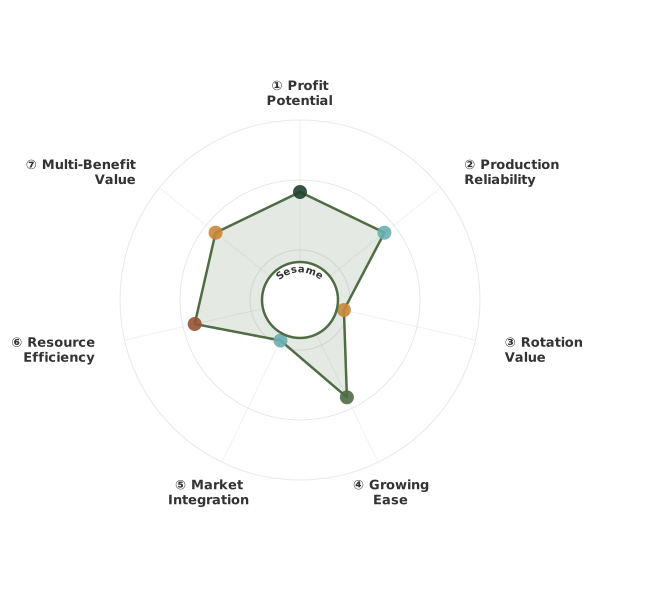
How These Traits Are Calculated
Trait dimensions are ordered clockwise starting from the top of the chart (12 o'clock position):
1. Profit Potential
Net returns from yield, pricing, input costs, and system value contributions
WHAT: Synthesizes gross revenue (yield × price), input costs, labor efficiency, rotation value contributions, and timeline considerations (annual versus perennial) into net profitability. Captures complete economic picture from planting to sale.
WHY: Grain profitability varies dramatically—$200-800/acre depending on yields, commodity versus specialty pricing, input requirements, and rotation benefits. Profit potential guides crop selection for maximum return on land and determines viable scale for grain enterprises.
HOW: Scored via LLM synthesis of economics data (yields, prices, costs), system value (nitrogen contributions, rotation premiums), and risk considerations (yield stability, market access). Exceptional (3.0): High yields with premium pricing or strong system contributions offsetting commodity prices. Typical (2.0): Moderate returns from commodity production. Limited (1.0): Low yields, high input costs, or poor market access creating marginal profitability.
2. Production Reliability
Weighted: yield potential (60%) + climate adaptability (40%)
WHAT: Combines yield potential (productivity under good conditions) with climate adaptability (reliability across variable weather) to measure consistent harvestable production. Reliable grains deliver predictable yields year-to-year.
WHY: Grain crop failures create severe cash flow problems—significant input costs (seed, fertility, equipment) are sunk before harvest. Reliable producers reduce financial risk and allow confident market commitments. Climate-adaptable grains maintain yields through heat, drought, or excess moisture that devastate less-resilient crops.
HOW: Weighted formula prioritizes yield potential (60% weight) for productivity under favorable conditions, with climate adaptability (40% weight) for weather variability tolerance. Exceptional (3.0): High yields (3,000-5,000+ lbs/acre) maintained across variable seasons. Typical (2.0): Moderate yields with some weather sensitivity. Limited (1.0): Low yields or severe climate sensitivity causing frequent failures.
3. Rotation Value
Soil building and disease break benefits for crop rotation systems
WHAT: Measures the value provided to following crops through nitrogen fixation (legumes), disease cycle disruption, soil structure improvement, or allelopathic weed suppression. High rotation value grains leave soil better than they found it.
WHY: Continuous commodity grain monocultures deplete soil and amplify pest/disease pressure. Grains with exceptional rotation value (legumes, diverse root systems, perennials) break disease cycles, build fertility, and improve yields of following crops. Nitrogen-fixing grain legumes can eliminate $60-120/acre in fertilizer costs for subsequent corn or wheat.
HOW: Ratings based on the rotation_value trait. Exceptional (3.0): Nitrogen-fixing legumes (chickpeas, lentils, dry beans) or soil-building perennials providing significant fertility or pest management value. Typical (2.0): Some rotation benefits. Limited (1.0): Continuous-crop grains (corn-on-corn, wheat-on-wheat) with minimal rotation value or potential disease/pest amplification.
4. Growing Ease
Weighted: establishment ease (50%) + low maintenance requirements (50%)
WHAT: Combines establishment reliability (germination, early vigor) with ongoing maintenance needs (irrigation, fertility, pest management) into total management workload. Easy grains grow reliably with minimal intervention.
WHY: Labor and management time limit farm scale. Easy-care grains allow farmers to manage more acres with the same labor input, improving profitability. Difficult grains requiring precise planting timing, irrigation management, or intensive pest control reduce effective farm capacity and increase risk.
HOW: Weighted formula balances establishment ease (50% weight) for reliable stand establishment and inverted maintenance intensity (50% weight) for ongoing care. Exceptional (3.0): Reliable germination, drought-tolerant, low fertility needs, naturally pest-resistant. Typical (2.0): Moderate care requirements. Limited (1.0): Difficult establishment, irrigation-dependent, heavy fertility needs, or intensive pest management requirements.
5. Market Integration
Weighted: harvest/processing ease (60%) + market accessibility (40%)
WHAT: Combines harvest and processing infrastructure compatibility (equipment availability, processing facilities) with market accessibility (buyer channels, price transparency, storage options). Well-integrated grains fit existing farm equipment and have clear market outlets.
WHY: Grain production requires specialized equipment and market infrastructure. Crops compatible with standard combines and local elevators minimize capital investment and provide reliable market access. Specialty grains with limited buyers or requiring custom equipment create marketing risk and capital barriers for new producers.
HOW: Weighted formula prioritizes harvest/processing ease (60% weight) for infrastructure compatibility, with market accessibility (40% weight) for buyer channel availability. Exceptional (3.0): Standard combine-compatible with established buyer networks (wheat, corn, soybeans). Typical (2.0): Some specialty processing but accessible markets. Limited (1.0): Custom processing required or very limited buyer channels (rare heritage grains, experimental crops).
6. Resource Efficiency
Input requirements—lower needs score higher
WHAT: Measures total input requirements including fertility, irrigation, pesticides, and fuel. Resource-efficient grains produce well with minimal external inputs, reducing costs and environmental impact.
WHY: Input costs are rising—nitrogen fertilizer ($0.60-1.00/lb), irrigation energy, and pesticides. Grains requiring low inputs improve profit margins ($200-400/acre savings) and reduce environmental footprint. Input-efficient crops also provide resilience during supply disruptions or price spikes.
HOW: Ratings based on the input_requirements trait (NO INVERSION—trait already farmer-friendly). Exceptional (3.0): Low inputs needed—drought-tolerant, nitrogen-fixing, naturally pest-resistant, fertility-scavenging roots. Typical (2.0): Moderate input requirements. Limited (1.0): High inputs needed—irrigation-dependent, heavy nitrogen feeders, intensive pest management, poor nutrient efficiency.
7. Multi-Benefit Value
Ecosystem services beyond grain harvest—cover, wildlife, carbon, pollinator support
WHAT: Measures ecosystem services provided beyond grain yield. Multi-benefit grains contribute soil carbon sequestration, wildlife habitat (grain-eating birds, small mammals), pollinator support (flowering grains), cover value (grazing, mulch), or nitrogen fixation.
WHY: Most grains are single-purpose extractive crops. Grains with strong multi-benefit value contribute to farm ecology—nitrogen-fixing grain legumes, deep-rooted perennials building soil carbon, or flowering species supporting pollinators. These service contributions improve total system value beyond commodity grain sales.
HOW: Ratings based on the multi_benefit_value trait. Exceptional (3.0): Significant ecosystem services (nitrogen-fixing grain legumes, perennial grains with deep carbon sequestration, pollinator support). Typical (2.0): Some ecosystem contributions (grain stubble as cover, moderate wildlife value). Limited (1.0): Single-purpose commodity grains with minimal farm ecology benefits (continuous corn, intensive wheat).
Ratings are based on documented performance in regenerative systems, not conventional high-input scenarios. All traits assume integrated management practices focused on soil health and ecosystem services.
4
System Role & Multi-Benefit Value
Functional roles, integration strategies, and stacked benefits
System Role & Multi-Benefit Value
Functional roles, integration strategies, and stacked benefits
Functional Role
Total System Value
Sesame offers a multi-faceted contribution to farm system resilience, extending beyond its direct harvest value as an oilseed cash crop. Its cultivation, when managed with organic amendments and microbial treatments, significantly enhances soil health. Practices like applying farmyard manure, vermicompost, and beneficial bacteria (PSB, Mycorrhiza, SSB) improve soil structure, nutrient availability, and microbial activity (Excerpts 1, 2, 3). This 'system enhancement' improves the soil's capacity to retain water and nutrients, benefiting subsequent crops and the overall soil food web. Furthermore, organic matter amendments have been shown to reduce the uptake of heavy metals like arsenic in sesame seeds grown on contaminated land (Excerpt 4), demonstrating a valuable ecosystem service of phytoremediation or risk mitigation. By diversifying cropping systems with a valuable annual like sesame, farmers can diversify income streams and reduce reliance on monocultures, thereby increasing overall farm risk diversification.
Integration Characteristics
Multi-Benefit Value: Adequate - Sesame provides valuable oil and food products, contributes moderate biomass for soil health, and offers some weed suppression and minor pollinator attraction, enhancing the overall farm ecosystem.
Sources behind this view
 Research
-
Yield And Economics of Sesame Based Cropping System In North Coastal Zone of Andhra Prades (opens in new window)
Sesame-maize cropping system in India yielded highest profit and BC ratio. Adding sunhemp green manure improved soil fertility and profitability.
5
Management & Care Requirements
Integration guidance, maintenance needs, and care practices
Management & Care Requirements
Integration guidance, maintenance needs, and care practices
How to Integrate This Plant
Sesame (Sesamum indicum) can be integrated into regenerative systems primarily as a cash crop that also offers ecosystem services. Its role as a cash crop is evident in its yield potential (Excerpt 1). As a cash crop with services, it can be incorporated into alley cropping systems, where it occupies the alleys between rows of trees or shrubs, providing an annual income while the perennial woody crops mature. Its cultivation can also benefit from and contribute to improved soil health, particularly when integrated with organic nutrient management practices like farmyard manure, vermicompost, and microbial inoculants (Excerpts 1, 2, 3). These practices enhance soil structure, nutrient cycling, and microbial activity, indirectly supporting the overall farm ecosystem. While not providing direct services like nitrogen fixation or shade, its integration focuses on optimizing soil health and biodiversity beneath and around it through organic inputs, which in turn can support beneficial insects and improve water infiltration. It does not directly serve as a windbreak or for erosion control on its own but contributes to a more resilient soil biome.
Integration Practices & Management
The experiments focus primarily on optimizing sesame yield and soil health through organic nutrient inputs and various soil amendments rather than detailing establishment, termination, or grazing integration. For instance, studies explore the impact of farmyard manure, vermicompost, phosphate-solubilizing bacteria, and sulfur sources on sesame cultivation. One study mentions sesame within a maize-sesame cropping sequence, investigating integrated nutrient management for both crops. However, information on seeding rates, timing, companion planting, tillage methods, integration with livestock grazing, or specific termination strategies for regenerative systems is not present in this knowledge base. Consequently, a comprehensive understanding of how regenerative farmers practically establish, manage, and terminate sesame within diverse regenerative systems, including its role in rotations or intercropping beyond the mentioned maize sequence, cannot be derived from these specific mentions. While coverage in our knowledge base is limited, the above represents documented uses in regenerative systems.
Management Profile
Maintenance Intensity: Adequate - Sesame's drought tolerance is enhanced by effective moisture retention and fertility management practices, alongside integrated pest and weed control strategies that align with regenerative system maintenance.
Sources behind this view
Research
-
Yield And Economics of Sesame Based Cropping System In North Coastal Zone of Andhra Prades (opens in new window)
Sesame-maize cropping system in India yielded highest profit and BC ratio. Adding sunhemp green manure improved soil fertility and profitability.
6
Economics & Value Streams
Direct harvest, system benefits, ecosystem services, and risk diversification
Economics & Value Streams
Direct harvest, system benefits, ecosystem services, and risk diversification
Comprehensive economic analysis including direct harvest value, system enhancement contributions, ecosystem services, value timeline, and risk diversification strategies.
Grain Production Economics
| Metric | Value |
|---|---|
| Seed Cost | $20-35/acre $49-86/ha |
| Expected Yield | 10-20 10-20 |
| Market Price | 1.00-1.50 1.00-1.50 |
| Harvest/Processing Cost | 110-160 271-395 |
| Insurance Cost | 15-25 37-61 |
| Net Annual Return* | $-280 to $580/acre/year |
Values represent regenerative practices (diverse rotations, cover crops, reduced inputs). Conventional systems may see different yields and costs.
* Net Annual Return = (Yield × Market Price) − (Amortized Establishment Cost + Annual Maintenance). This return is realized only at/after first harvest; early years have costs but no revenue. Range shows worst case to best case scenarios.
System Enhancement Value
Beyond harvest: ecosystem services from regenerative cash crop practices
Ecological Service Contributions
Sesame (Sesamum indicum) demonstrates significant potential for soil remediation and improvement within integrated farm systems. Research indicates that integrating sesame cultivation with organic nutrient management practices, such as farmyard manure (FYM), vermicompost, and beneficial microbial inoculants like Phosphate Solubilizing Bacteria (PSB), Sulfur Solubilizing Bacteria (SSB), and Mycorrhiza, can substantially enhance soil health. These practices lead to increased soil organic carbon levels, improved nitrogen availability, and a marked increase in beneficial soil microbial populations. Furthermore, the application of sulphur sources like gypsum, alongside organic manures, has been shown to improve available sulphur and calcium, and enhance critical soil enzyme activity, such as alkaline phosphatase and arylsulphatase. These actions collectively contribute to mitigating soil quality degradation, improving nutrient cycling, and creating a more robust soil structure, which indirectly benefits subsequent crops in a rotation or cover crop system.
Ecosystem Service Contributions
Environmental contributions: carbon, pollinators, wildlife, and water
- Carbon Sequestration: Sesame is an annual plant with moderate biomass production. Its contribution to carbon sequestration is primarily through the incorporation of plant residues into the soil, enhancing soil organic matter, especially when managed with integrated nutrient management practices that promote microbial activity and carbon storage.
- Pollinator Support: Medium. Sesame produces tubular flowers that attract pollinators. While not a primary forage crop for most managed pollinators, it can offer supplementary nectar and pollen resources during its flowering period, contributing to local pollinator diversity.
- Wildlife Habitat: Limited direct habitat value. As a relatively short-statured annual crop, sesame does not provide significant nesting or substantial browse material for most wildlife. However, the seeds themselves could be a minor food source for some birds and small mammals if left unharvested.
- Water Quality: Not applicable
Value Timeline: Production & Services
When you'll see results: varies by crop (annual harvest vs. perennial establishment)
Years 1-2
Initial soil health improvements through organic matter incorporation and microbial stimulation when used in integrated nutrient management. Early establishment of soil remediation benefits if planted for this purpose.
Years 3-5
Potential for first cash crop harvest revenue. Continued and enhanced soil health benefits, including improved nutrient cycling and microbial activity, benefiting subsequent crops in rotation. Contribution to cover crop systems by improving soil structure for future plantings.
Years 10-20
Established benefits from consistent soil health improvements, leading to more resilient cropping systems. Potential for increased yield of subsequent crops due to improved soil fertility and structure. Consistent contribution to farm-level nutrient cycling.
20+ Years
Long-term legacy of improved soil structure and fertility, potentially reducing reliance on external inputs for subsequent generations of crops. Sustained resilience of the farming system against soil degradation.
Farm Risk Reduction
How this reduces farm risk: backup income, weather protection, market hedges
- Multiple Revenue Streams: Direct cash crop revenue from sesame seed sales. Potential for value-added products (e.g., tahini). Indirect income through improved yields and reduced input costs for subsequent crops due to enhanced soil health.
- Temporal Income Spread: Annual harvest revenue. Ongoing ecosystem services (soil remediation, microbial support) provide continuous, albeit indirect, value. Diversification of crop rotation provides resilience against single-crop market fluctuations.
- Market Risk Hedge: Drought tolerance (mentioned as a characteristic) can reduce risk in arid climates. Diversification of income streams through a cash crop with secondary soil benefits reduces reliance on a single commodity. Improved soil health enhances overall farm resilience to environmental stresses and market volatility.
Sources behind this view
Research
-
Yield And Economics of Sesame Based Cropping System In North Coastal Zone of Andhra Prades (opens in new window)
Sesame-maize cropping system in India yielded highest profit and BC ratio. Adding sunhemp green manure improved soil fertility and profitability.
-
Changes in Some Soil Chemical and Biological Properties on the Growing Season of Sesame in Çukurova Region (opens in new window)
Growing sesame in Adana, Turkey, influenced soil nutrient levels and microbial activity, with higher carbon release and increased fungi in sesame fields compared to bare fields, though some nutrients
7
Regenerative Suitability Details
Comprehensive trait ratings for system integration assessment
Regenerative Suitability Details
Comprehensive trait ratings for system integration assessment
Comparative ratings for this plant across key regenerative agriculture traits.
| Trait | Suitability | Explanation |
|---|---|---|
| Rotation Value | Not Recommended | Sesame contributes to economic diversification and can break disease cycles when integrated with diverse crop rotations, though it shares some pest susceptibilities with other broadleaf plants. |
| Yield Potential | Adequate | Sesame offers moderate yields of a valuable oilseed, contributing to farm resilience and economic stability when managed within a regenerative system and accessed through direct or specialty markets. |
| Establishment Ease | Adequate | Sesame germinates reliably in warm soils with standard preparation, and adequate early vigor supports its integration into diverse cropping systems with vigilant weed management. |
| Input Requirements | Adequate | Sesame has moderate fertility needs, effectively met through compost and mulch, and demonstrates good moisture retention capabilities, but requires proactive pest and disease management through integrated strategies. |
| Multi Benefit Value | Adequate | Sesame provides valuable oil and food products, contributes moderate biomass for soil health, and offers some weed suppression and minor pollinator attraction, enhancing the overall farm ecosystem. |
| Climate Adaptability | Adequate | Sesame thrives in warmer climates with heat and drought tolerance, preferring well-drained soils and fitting well into systems managed for water efficiency. |
| Market Accessibility | Adequate | Sesame's growing demand for food and oil creates regional opportunities, supported by developing specialty markets and requiring strategic marketing within a diversified farm enterprise. |
| Maintenance Intensity | Adequate | Sesame's drought tolerance is enhanced by effective moisture retention and fertility management practices, alongside integrated pest and weed control strategies that align with regenerative system maintenance. |
| Harvest Processing Ease | Not Recommended | Sesame harvest can be challenging due to shattering pods, often necessitating specialized equipment or adapted harvesting techniques, with processing requiring fine screens and opportunities for local value addition. |
Comparative System: Ratings compare plants within their economic category (e.g., cover crop nitrogen fixation compared to other cover crops, not to all plants). Individual farm conditions and management practices significantly influence actual performance.
Sources behind this view
Research
-
Yield And Economics of Sesame Based Cropping System In North Coastal Zone of Andhra Prades (opens in new window)
Sesame-maize cropping system in India yielded highest profit and BC ratio. Adding sunhemp green manure improved soil fertility and profitability.
8
Learn More
Why farmers use this plant and additional resources
Learn More
Why farmers use this plant and additional resources
Why Regenerative Farmers Use This Plant
Integrating Sesamum indicum into regenerative agriculture systems offers a compelling pathway to enhance both farm profitability and ecological health, particularly in regions prone to water scarcity or seeking to diversify cropping systems. This ancient oilseed crop is renowned for its remarkable drought tolerance, thriving in arid and semi-arid environments where many other crops struggle.
Economic Resilience: As a highly nutritious oilseed, sesame provides a valuable dual-purpose potential, yielding seeds rich in oil (40-50%) and protein (18-25%) that are in demand globally for culinary and industrial applications. Well-managed farms can achieve yields ranging from 300 to 1,000 lbs per acre (336 to 1,120 kg/ha). Beyond direct financial returns, the potential for premium pricing in specialty markets or through value-added processing, such as tahini or oil, makes it an attractive economic consideration. Specialty markets can potentially command 20-50% above commodity rates for producers meeting stringent quality standards. Typical input costs, including seed ($10-$30/acre), fertilizer, and pest control ($50-$150/acre), require careful management to ensure profitability, especially in competitive commodity environments.
Agronomic and Ecological Benefits: Sesame's agronomic traits contribute significantly to regenerative agriculture goals. Its exceptional drought tolerance minimizes water stress and reduces reliance on irrigation, a critical advantage for climate adaptation. The crop's robust taproot system, which can reach depths of 3-6 feet (0.9-1.8 meters), enhances soil aggregation, binds soil particles to reduce erosion, improves water infiltration, and contributes to increased soil organic matter content, acting as a valuable soil-building component.
As a non-legume with different disease profiles than many common row crops, sesame can help break disease cycles when integrated into crop rotations, reducing the prevalence of certain soil-borne pathogens and promoting a more resilient farm ecosystem. Its residue decomposes relatively quickly, returning nutrients to the soil and contributing to overall nutrient cycling within the farm ecosystem. The dense growth habit can also offer some natural weed suppression, potentially reducing the need for mechanical or chemical weed control measures, especially after canopy closure. While primarily self-pollinating, its attractive flowers can attract pollinators, contributing to local biodiversity. By reducing reliance on irrigation and improving soil health, sesame directly contributes to climate adaptation and mitigation goals.
Regional Adaptations and Success Stories: Regional success stories highlight sesame's adaptability across diverse warm, dry agricultural landscapes:
- Australia: Integrated into dryland farming systems, often in rotation with cereals like wheat and barley, to break disease cycles, improve soil structure, and offer a profitable alternative crop utilizing residual moisture in wheat-sheep rotations.
- United States: Farmers in the southern United States integrate sesame into rotations with cotton and corn, capitalizing on its drought tolerance during hot summer months. In the Southern High Plains, it is often planted after winter wheat harvest, utilizing stored soil moisture. In Iowa, it can be planted as a summer crop in corn-soy rotations.
- India and Africa: A staple crop for centuries, often grown with minimal inputs in rain-fed conditions, contributing significantly to local economies and food security, and adapted to monsoon climates.
- Brazil: Sometimes intercropped with coffee or corn, providing a valuable oilseed cash crop while contributing to soil cover and nutrient cycling, or used as a cover crop in soybean systems.
- United Kingdom: While less common due to cooler summers, specific heat-tolerant cultivars might be used in rotation with cereals.
Sources behind this view
 Community
-
Cultivating Black Sesame (*Sesamum indicum*) is easy and cost-effective. Harvest by letting dehiscent pods dry and burst, or use frost cover/sun-drying. Seeds are rich in Omega 6, vitamins, minerals,
Read more (opens in new window) ucanr.edu
Research
-
Yield And Economics of Sesame Based Cropping System In North Coastal Zone of Andhra Prades (opens in new window)
Sesame-maize cropping system in India yielded highest profit and BC ratio. Adding sunhemp green manure improved soil fertility and profitability.
-
Impact of biofertilizer combinations on yield and economics of sesame (Sesamum indicum L.) under organic rainy-season management (opens in new window)
Combining farmyard manure with phosphorus, sulfur bacteria, and mycorrhizal fungi significantly boosted sesame yield and profitability in India, achieving a 2:1 benefit-cost ratio.