Silphium integrifolium (rosinweed) is emerging as a promising perennial crop within regenerative agriculture, primarily for its potential as an oilseed producer. While knowledge base coverage is limited, research highlights its role in de novo domestication efforts by institutions like The Land Institute, aiming to develop resilient, long-rooted perennial food crops as alternatives to annuals. This perenniality is key for regenerative benefits such as enhanced soil building and carbon sequestration. Experiments indicate Silphium integrifolium can significantly benefit from arbuscular mycorrhizal (AM) fungi, particularly under dry conditions, suggesting its integration into diverse cropping systems could improve soil health and water use efficiency. Civic science projects have involved farmers and enthusiasts in its domestication, indicating a growing interest in developing native perennial crops for transformative agricultural change. Its development is part of a broader movement towards perennial grains and legumes, contributing to a more resilient agricultural future.

Regenerative Quick Profile

All recommendations assume integrated, regenerative practices—not conventional inputs.

Climate & Soil Fit

Climate: Tropical Rainforest, Tropical Monsoon, Tropical Savanna, Hot Semi-Arid (Steppe), Cold Semi-Arid (Steppe), Cold Desert, Humid Subtropical, Oceanic (Maritime Temperate), Hot-Summer Mediterranean, Warm-Summer Mediterranean, Monsoon-Influenced Humid Subtropical, Subtropical Highland, Hot-Summer Continental, Warm-Summer Continental, Subarctic, Monsoon-Influenced Hot-Summer Continental

Zones: USDA 4-9, Australian Zones 3-7

Optimal Soil: Loam Soil

System Role & Functions

Primary: Cash Crop With Services

Secondary: Cover Crop System, Pollinator Support

Key Benefits: Multi-benefit value, Climate adaptable, Low maintenance

Management Level

Experience: Advanced

Maintenance: Very low maintenance - This resilient native perennial integrates seamlessly into regenerative systems, requiring minimal intervention due to its inherent soil-building capabilities and resistance to common challenges.

Value Streams

  • Grain harvest
  • Pollinator habitat and support

Know the Debate

  • Grain yield varies from 20-60 bushels/acre depending on maturity.
  • Establishment time ranges from 1-2 years for foraging, longer for grain.
  • Drought tolerance is good post-establishment; requires moisture during germination.
  • Nutrient needs met by soil biology and diverse rotations, minimal external inputs.
  • Pollinator support is significant during mid to late summer bloom.
1

Climate Suitability Assessment

Will this plant thrive in your climate?

IDEALLY SUITED

Köppen Zone: Cfa (Humid Subtropical), Cwa (Monsoon-Influenced Humid Subtropical), Dfa (Hot-Summer Continental), Dfb (Warm-Summer Continental)
USDA Zone: 6a, 7a, 8a, 9a

Rosinweed thrives in USDA zones 8a through 10b, offering long growing seasons with mild winters and warm summers that promote robust perennial growth and cash crop production. These zones typically receive adequate rainfall (30-50 inches/75-125 cm annually) or can support supplemental irrigation, ensuring consistent yields and excellent pollinator support. Establishment is highly reliable, with minimal risk of winter kill and optimal conditions for flowering and seed set. The plant's primary functions as a cash crop with services, cover crop system, and pollinator support are fully realized, requiring standard agricultural management practices. Yields are expected to be high, with good stand persistence for multiple years, making it an economically viable and ecologically beneficial choice in these regions. Minimal additional inputs are needed beyond standard cultivation and potential irrigation during extended dry periods, contributing to its suitability.

ADEQUATE

Köppen Zone: Af (Tropical Rainforest), Am (Tropical Monsoon), Aw (Tropical Savanna), Cfb (Oceanic (Maritime Temperate)), Csa (Hot-Summer Mediterranean), Csb (Warm-Summer Mediterranean), Cwb (Subtropical Highland)
USDA Zone: 5a, 5b, 10a, 11a, 12a
Australian Zone: temperate, subtropical
EU Climate Region: atlantic

Rosinweed performs adequately in USDA zones 5b through 7b, and in Köppen Cfa, Cfb, and Australian subtropical and temperate regions, as well as EU Atlantic climates. These areas generally provide sufficient growing season length and moderate temperatures, allowing for establishment and some perennialization. However, performance can be variable due to potential for winter damage in colder USDA zones (5b-7b) and summer heat stress or drought in warmer Köppen/Australian/EU regions. While it can function as a cash crop and provide pollinator support, yields may be reduced by 10-20% compared to ideal zones, and stand persistence might be shorter (2-3 years). Management will be crucial to mitigate risks, including careful site selection for drainage, timely planting, and potentially supplemental irrigation during dry spells. Competition from other vegetation can also be a factor, requiring proactive weed control.

NOT RECOMMENDED

Köppen Zone: ET (Tundra), BSh (Hot Semi-Arid (Steppe)), BSk (Cold Semi-Arid (Steppe)), BWh (Hot Desert), BWk (Cold Desert), Dfc (Subarctic), Dwa (Monsoon-Influenced Hot-Summer Continental)
USDA Zone: 2a, 3a, 3b, 4a
EU Climate Region: continental

Rosinweed is not recommended for Köppen Dfa, Dfb, Bsk zones, USDA zones 3a through 5a, and EU continental climate regions due to significant climatic limitations that make it economically and practically unviable as a cash crop or for its other functions. In cold zones (USDA 3a-5a, Köppen Dfb, EU continental), short growing seasons and extreme winter cold (-40 to -15°F) lead to high winter kill rates and unreliable perennialization, often requiring annual replanting. In hot, dry zones (Köppen Bsk), insufficient rainfall (10-25 inches/25-65 cm) and high summer temperatures cause severe stress, reducing growth and reproductive success, necessitating intensive irrigation. In humid continental zones (Köppen Dfa), while the growing season is longer, summer heat and potential for drought can stress the plant, making establishment and consistent production challenging. Overall establishment success is often below 70%, and yields are significantly reduced, making it a poor investment compared to more adapted species. Alternative plants like Sunflower, Sorghum, Hairy Vetch, Winter Rye, and native grasses are better suited to these challenging environments.

Better alternatives for these "not recommended" zones: Sunflower (Drought tolerant, heat tolerant, and established cash crop with pollinator support), Sorghum (Drought tolerant, heat tolerant, and provides biomass and grain), Hairy Vetch (Cold-hardy annual legume for nitrogen fixation), Winter Rye (Extremely cold-hardy cover crop for biomass and soil protection), Native Grasses (e.g., Blue Grama, Switchgrass) (Adapted to arid conditions, provide habitat and soil stabilization), Alsike Clover (Tolerates cooler, wetter conditions and is a good pollinator plant)

Note: Zones listed above represent climates where this plant can produce reliably with reasonable management. Climate zones not mentioned would require intensive climate modification (greenhouses, extensive infrastructure) and are not economically viable for regenerative agriculture purposes.

2

Soil Suitability Assessment

Which soil types work best for this plant?

IDEALLY SUITED

Loam Soil

This plant thrives in these soil types without requiring amendments or remediation. Natural soil conditions support optimal growth and productivity.

ADEQUATE

Clay Soil, Rich Soil, Sandy Soil

This plant performs acceptably in these soil types with moderate, manageable remediation such as pH adjustment, compost addition, or drainage improvement. The required amendments are practical and cost-effective for regenerative agriculture.

NOT RECOMMENDED

Acidic Soil, Alkaline Soil, Desert Soil, Rocky Soil, Saline Soil, Wet Soil

Growing this plant in these soil types would require impractical remediation such as complete soil replacement, extensive amendments, or cost-prohibitive infrastructure. These conditions are not economically viable for regenerative agriculture.

Note: Soil suitability assessments focus on remediation requirements. "Ideally Suited" means the plant generally thrives without the need for substantial amendments, "Adequate" means manageable remediation (lime, compost, mulch), and "Not Recommended" means impractical soil changes would be required. Climate factors like rainfall and temperature also influence success.

3

Seasonal Considerations

Planting timing, growth duration, and harvest windows

For Silphium Integrifolium, successful grain production hinges on timely planting and harvest. Aim for spring planting once soil temperatures consistently reach 60°F (15°C) and the risk of hard frost has passed. This early planting allows for robust establishment during the warmer months. Silphium is a long-season crop, typically requiring 120-150 days to maturity from seeding. Expect a significant vegetative growth phase through the summer, followed by flowering and then the crucial grain-filling period as days shorten.

Harvest should commence when grain moisture levels are optimal, generally between 15-20%, to prevent spoilage and ensure good storage quality. The window between physiological maturity and harvest can be variable and is highly dependent on fall weather. Waiting too long after maturity, especially with wet conditions, can lead to shattering and grain loss. Therefore, monitor crops closely as maturity approaches and be prepared to harvest promptly after the first few weeks of dry weather following the onset of grain ripeness, ideally before the first significant fall frosts. This careful timing maximizes yield and grain quality for storage.

4

System Role & Multi-Benefit Value

Functional roles, integration strategies, and stacked benefits

Functional Role

Total System Value

The total system value of rosinweed extends beyond its direct harvest as an oilseed crop. Its perennial nature is a cornerstone of its value, significantly reducing tillage needs and enhancing soil organic matter and structure, thereby improving water infiltration and reducing erosion. This deep-rooted perennial also contributes to carbon sequestration in the soil. While specific pollinator benefits are not detailed in the excerpts, native prairie plants often support diverse insect populations, including pollinators. As a resilient, drought-tolerant species, it adds a layer of risk diversification to the farming system, particularly valuable in the face of climate change. By developing perennial oilseed crops like rosinweed, agriculture moves towards greater stability and reduced environmental impact, embodying a shift from annual monocultures to more integrated, ecosystem-supporting production systems.

Integration Characteristics

Multi-Benefit Value: Ideally Suited - This perennial native supports soil fertility through its deep roots and beneficial associations, provides vital habitat for pollinators and wildlife, and contributes to erosion control.

5

Management & Care Requirements

Integration guidance, maintenance needs, and care practices

How to Integrate This Plant

Rosinweed (Silphium integrifolium) offers significant potential for integration into regenerative systems, primarily as a perennial oilseed cash crop with substantial ecosystem service benefits. Its deep root system makes it highly resilient, contributing to soil health and erosion control. It can be integrated into cropping systems where its perennial nature aligns with practices like alley cropping or intercropping with other perennials. While not explicitly mentioned as a windbreak or nitrogen fixer, its dense growth and deep roots contribute to soil structure and potentially carbon sequestration. Rosinweed begins providing value through reduced soil disturbance and establishment in Year 1-2. By Year 3-5, it can start to yield harvestable oilseed, with full production potential realized in later years. The multi-benefit stacking includes direct economic return from oilseed, enhanced soil structure, potential for pollinator support, and contribution to a diversified, resilient agricultural landscape by reducing reliance on annuals.

Integration Practices & Management

While the provided knowledge base highlights Silphium integrifolium's potential as a perennial oilseed crop and its inclusion in regenerative agriculture research, it offers limited direct insights into practical farmer integration strategies. The sources focus primarily on the research and development of Silphium, including phenotyping under drought conditions, its domestication for oilseed production via a civic science project, and its response to arbuscular mycorrhizal fungi in field experiments. Information regarding establishment methods such as seeding rates, timing, or tillage practices is not detailed. Similarly, the knowledge base does not elaborate on how farmers might integrate Silphium integrifolium into grazing systems, including mob or rotational grazing, nor does it describe termination strategies. Management considerations like fertility needs, competition management, succession planning, and its integration with cash crops through relay cropping, intercropping, or rotation sequences are also absent from these mentions. Further research and farmer-led documentation would be needed to understand the on-farm integration of this plant.

Management Profile

Maintenance Intensity: Ideally Suited - This resilient native perennial integrates seamlessly into regenerative systems, requiring minimal intervention due to its inherent soil-building capabilities and resistance to common challenges.

Sources behind this view

Videos & Podcasts
6

Economics & Value Streams

Direct harvest, system benefits, ecosystem services, and risk diversification

Comprehensive economic analysis including direct harvest value, system enhancement contributions, ecosystem services, value timeline, and risk diversification strategies.

Grain Production Economics

Metric Value
Seed Cost $40-60/acre $98-148/ha
Expected Yield 5-15 5-15
Market Price 1.50-2.50 1.50-2.50
Harvest/Processing Cost 150-220 370-543
Insurance Cost 20-35 49-86
Net Annual Return* $-505 to $150/acre/year

Values represent regenerative practices (diverse rotations, cover crops, reduced inputs). Conventional systems may see different yields and costs.

* Net Annual Return = (Yield × Market Price) − (Amortized Establishment Cost + Annual Maintenance). This return is realized only at/after first harvest; early years have costs but no revenue. Range shows worst case to best case scenarios.

System Enhancement Value

Beyond harvest: ecosystem services from regenerative cash crop practices

Ecological Service Contributions

Rosinweed (Silphium integrifolium) offers significant system benefits beyond its primary function as a cash crop. Its deep, perennial root system, as highlighted by The Land Institute, contributes to improved soil structure and water infiltration, reducing erosion and enhancing soil health. This perennial nature means reduced tillage compared to annual crops, further preserving soil organic matter and carbon. The plant's role as a cover crop system is also crucial, providing ground cover and suppressing weeds, which can reduce the need for herbicides. Furthermore, rosinweed is recognized for its significant pollinator support. As a native prairie plant, it provides valuable nectar and pollen resources for a diverse range of insects throughout its growing season, contributing to the overall biodiversity and ecological stability of the farm landscape. This pollinator support can have cascading positive effects on other crops within the integrated system that rely on insect pollination.

Ecosystem Service Contributions

Environmental contributions: carbon, pollinators, wildlife, and water

  • Carbon Sequestration: Rosinweed, as a long-rooted perennial, has the potential to sequester significantly more carbon in the soil compared to annual crops due to its extensive root biomass and reduced tillage requirements.
  • Pollinator Support: High. Rosinweed is a native prairie plant that is actively being studied for its role in providing resources for pollinators. Its flowering period and nectar/pollen production are valuable for supporting diverse insect populations.
  • Wildlife Habitat: As a native prairie species, rosinweed can provide habitat and food resources for various wildlife, including insects and potentially small mammals and birds, particularly through its seeds and the habitat it creates.
  • Water Quality: Not applicable

Value Timeline: Production & Services

When you'll see results: varies by crop (annual harvest vs. perennial establishment)

Years 1-2

Establishment of ground cover, initial erosion control, and early pollinator support. Reduced tillage benefits begin to accrue.

Years 3-5

Development of robust perennial root systems leading to enhanced soil health, increased carbon sequestration potential, and established pollinator support. Potential for initial oilseed harvest as a cash crop begins.

Years 10-20

Full realization of soil health benefits, significant carbon sequestration, and consistent pollinator support. Mature perennial stands contribute to farm resilience and potentially become a more substantial economic contributor.

20+ Years

Long-term establishment of a resilient perennial system with sustained soil health improvements, ongoing carbon sequestration, and continuous ecological service provision, including robust pollinator support.

Farm Risk Reduction

How this reduces farm risk: backup income, weather protection, market hedges

  • Multiple Revenue Streams: Oilseed production (cash crop), ecological services (carbon sequestration, pollinator support), potential for forage use (though not explicitly stated in excerpts, common for perennial legumes), and reduced input costs (fertilizer, tillage).
  • Temporal Income Spread: Value is spread across multiple dimensions: immediate ecological services (ground cover, erosion control), medium-term harvest revenue, and long-term soil health and carbon sequestration benefits. The perennial nature ensures ongoing ecosystem services even in years of low harvest yield.
  • Market Risk Hedge: Drought tolerance inherent in deep-rooted perennials provides a hedge against water scarcity. Diversification away from annual crops reduces exposure to volatile annual commodity markets. The multiple ecosystem services provide intrinsic farm resilience and reduce reliance on external inputs.
7

Regenerative Suitability Details

Comprehensive trait ratings for system integration assessment

Comparative ratings for this plant across key regenerative agriculture traits.

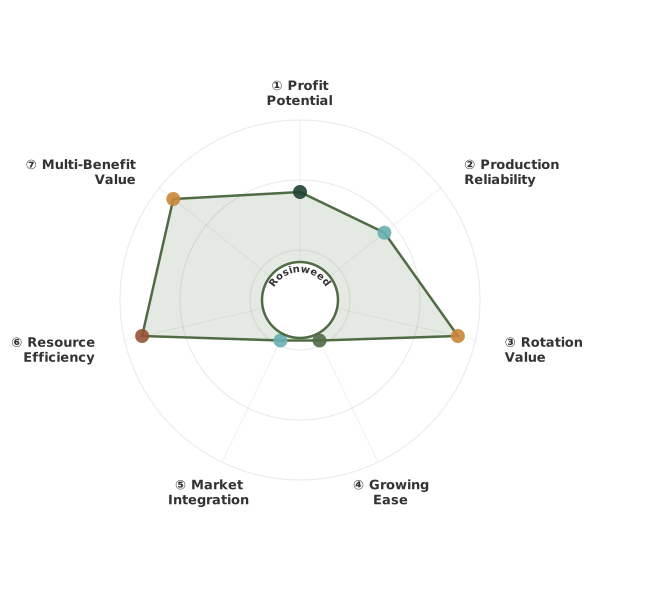
Trait Suitability Explanation
Rotation Value Ideally Suited Its deep root system significantly enhances soil structure and organic matter through natural processes, making it exceptional for long-term soil regeneration.
Yield Potential Not Recommended Silphium integrifolium is primarily valued for its forage and medicinal properties, with very limited grain yields that restrict its economic viability for cash grain production.
Establishment Ease Not Recommended This species exhibits slow germination and establishment, often benefiting from natural soil preparation and weed suppression through companion planting or mulching to overcome early weed competition.
Input Requirements Ideally Suited As a highly adapted perennial native, it thrives in healthy prairie soils, naturally contributing to soil fertility and exhibiting excellent moisture retention and pest resilience.
Multi Benefit Value Ideally Suited This perennial native supports soil fertility through its deep roots and beneficial associations, provides vital habitat for pollinators and wildlife, and contributes to erosion control.
Climate Adaptability Ideally Suited Prairie dock demonstrates broad resilience across diverse conditions, tolerating heat, drought, and wet periods with few disease issues, making it a robust component of resilient agricultural systems.
Market Accessibility Not Recommended Silphium represents a novel crop with emerging opportunities for direct marketing and value-added development, requiring creative approaches to build market demand and distribution channels.
Maintenance Intensity Ideally Suited This resilient native perennial integrates seamlessly into regenerative systems, requiring minimal intervention due to its inherent soil-building capabilities and resistance to common challenges.
Harvest Processing Ease Not Recommended Harvesting and processing Silphium seed heads require specialized techniques and can be labor-intensive, necessitating the development of localized infrastructure and direct market channels.

Comparative System: Ratings compare plants within their economic category (e.g., cover crop nitrogen fixation compared to other cover crops, not to all plants). Individual farm conditions and management practices significantly influence actual performance.

8

Learn More

Why farmers use this plant and additional resources

Why Regenerative Farmers Use This Plant

Silphium integrifolium, commonly known as Rosinweed, wholeleaf rosinweed, or prairie rosinweed, offers significant regenerative value as a perennial grain crop and a valuable component in diverse agricultural systems. Its robust root system, capable of reaching depths of 6-10 feet (1.8-3 meters), excels at breaking up soil compaction, improving water infiltration, and sequestering atmospheric carbon deep within the soil profile. Unlike annual grains, Rosinweed's perennial nature means it does not require annual tillage, preserving soil structure and minimizing erosion.

As a grain crop, established stands can produce grain yields comparable to some annual cereals, with estimates suggesting potential for 20-60 bushels per acre (1.4-4.0 metric tons/ha) once mature. The grain quality is characterized by a good protein content of 12-16% and a nutty flavor profile, making it suitable for various food and feed applications. Test weight can range from 55-60 lbs/bushel (71-77 kg/hl). This consistent biomass production and deep rooting contribute to substantial soil organic matter build-up over time, enhancing soil health and fertility.

Integrating Rosinweed into farming operations provides numerous system benefits beyond its direct grain production. As a perennial, it acts as a living mulch, suppressing weeds and reducing the need for chemical herbicides. Its deep root structure scavenges nutrients from lower soil horizons, making them available to shallower-rooted cash crops in subsequent rotations. Furthermore, Rosinweed's abundant flowering period from mid-summer to early fall provides a critical late-season nectar and pollen source for a wide array of pollinators, including native bees and beneficial insects, thereby supporting biodiversity and natural pest control within the agroecosystem. Its tough, fibrous stalks provide excellent residue cover, protecting the soil surface from wind and water erosion throughout the year. As a perennial, it offers a disease break for annual grains, disrupting pest and pathogen cycles that can build up in monocultures.

The quantitative ecosystem benefits of established Rosinweed stands are considerable. Deep-rooted systems can significantly improve soil aggregation and water holding capacity, leading to enhanced drought resilience. The continuous presence of living roots fosters a thriving soil microbial community, essential for nutrient cycling and disease suppression. Perennial grasslands are recognized as significant carbon sinks, and Rosinweed contributes to this through substantial carbon sequestration potential. The plant's contribution to pollinator health is also noteworthy, with its extended bloom period supporting insect populations that are vital for both wild ecosystems and agricultural productivity.

Rosinweed has demonstrated success in various regional agricultural contexts. In the North American Midwest, farmers are exploring its integration into no-till corn and soybean rotations, leveraging its soil-building capabilities and potential as a diversified grain source. In European agricultural landscapes, its perennial nature makes it an attractive option for reducing soil erosion and enhancing biodiversity in regions with intensive annual cropping. Australian farmers in drier regions are investigating its drought tolerance and potential for grazing alongside grain production, contributing to more resilient mixed farming systems. In the Canadian Prairies, its cold tolerance makes it suitable for integration into grain rotations, offering a diversified income stream and improved soil resilience. Brazilian farmers are exploring perennial grain options like Silphium for agroforestry systems, where it can be integrated with coffee or fruit trees to provide ground cover, improve soil fertility, and offer an additional income stream. Its adaptability to diverse climates and soil types positions it as a versatile tool for regenerative farmers globally.

9

How to Integrate This Plant

Practical guidance for regenerative systems

Establishing Silphium integrifolium typically involves direct seeding. Seed at a rate of 5-10 lbs/acre (5.6-11.2 kg/ha) for optimal stand establishment when drilled, and slightly higher, 8-15 lbs/acre (9-17 kg/ha), for broadcast seeding. Aim for a final plant population of 15,000-30,000 plants per acre. Planting depth is critical for successful germination, typically ranging from 0.25 to 0.5 inches (0.6 to 1.3 cm) in well-prepared soil. Spacing can vary; for grain production, rows are often planted at 12-24 inches (30-60 cm) apart, or 15-30 inches (38-76 cm) to allow for inter-row cultivation or cover cropping in early years. For pure stands in cover cropping, rates can range from 2-5 lbs/acre (2.2-5.6 kg/ha), with spacing for mature plants in monoculture ranging from 18-36 inches (45-90 cm) apart.

In the Northern Hemisphere, the ideal planting window is typically early spring, from March to May, once the risk of hard frost has passed, allowing seedlings to establish before the heat of summer. In the Southern Hemisphere, this translates to September to November. Germination can be slow and erratic, sometimes taking several weeks.

Management practices for Rosinweed focus on supporting its perennial growth and maximizing its regenerative benefits. Adequate moisture is crucial during establishment, requiring approximately 1 inch (2.5 cm) of water per week, either from rainfall or irrigation, until the root system is well-developed. Once established, it exhibits good drought tolerance. Fertility is best managed through biological approaches, such as incorporating compost, utilizing rotational grazing residue, or relying on the nitrogen-fixing contributions of companion legumes in mixed stands. As a perennial, it does not require annual fertilization like annual grains. Its growth timeline is that of a perennial; it establishes in its first year, with significant biomass and grain production typically occurring from the second year onwards. Mature plants can reach heights of 3-7 feet (0.9-2.1 meters), depending on variety and growing conditions. Pest and disease management should prioritize cultural practices and biological controls, such as maintaining diverse plant communities to attract beneficial insects, crop rotation, and selecting disease-resistant seed sources. Chemical interventions are rarely necessary.

Harvest and rotation management are key for integrating Rosinweed as a grain crop. Planting-to-harvest calendars for grain production are less defined than annuals, as the plant is perennial. The primary harvest is for grain, typically occurring in late summer to early fall (August to October in the Northern Hemisphere, February to April in the Southern Hemisphere) when the seed heads have dried and the seeds are mature and hard. Days to maturity can range from 120-180 days. Harvest indicators include the drying and browning of the seed heads and a moisture content of 13-15% for safe storage. Post-harvest residue management involves leaving standing stubble at 8-12 inches (20-30 cm) to protect the soil from wind and water erosion over winter and to provide habitat for beneficial organisms. Cover crop relay can be achieved by interceding a cool-season cover crop, such as cereal rye or hairy vetch, into the standing Rosinweed stubble immediately after harvest, or by allowing the Rosinweed to naturally re-establish in the spring. Grain drying and storage considerations are similar to other small grains, requiring adequate aeration and monitoring for moisture and temperature to prevent spoilage. Rosinweed is best positioned in a rotation after crops that benefit from its soil-improving legacy, such as corn or soybeans, and can precede these crops by several years, acting as a long-term soil health builder. It can precede nitrogen-demanding cereals like corn or wheat, benefiting from its soil-building properties and nutrient scavenging.