Regenerative Quick Profile

All recommendations assume integrated, regenerative practices—not conventional inputs.

Climate & Soil Fit

Climate: Tropical Rainforest, Tropical Monsoon, Tropical Savanna, Hot Semi-Arid (Steppe), Cold Semi-Arid (Steppe), Hot Desert, Cold Desert, Humid Subtropical, Oceanic (Maritime Temperate), Hot-Summer Mediterranean, Warm-Summer Mediterranean, Monsoon-Influenced Humid Subtropical, Subtropical Highland, Hot-Summer Continental, Warm-Summer Continental, Subarctic, Monsoon-Influenced Hot-Summer Continental, Tundra

Zones: USDA 7-11, Australian Zones 1-14

Optimal Soil: Loam Soil

System Role & Functions

Primary: Cash Crop With Services

Secondary: Cover Crop System, Soil Remediation

Key Benefits: Yield Potential, Market Accessibility

Management Level

Experience: Intermediate

Maintenance: High maintenance - With reduced seed and water inputs, coupled with enhanced root development and soil biology, SRI-Adapted Rice requires less intensive management for optimal performance.

Value Streams

  • Grain harvest
1

Climate Suitability Assessment

Will this plant thrive in your climate?

IDEALLY SUITED

Köppen Zone: Af (Tropical Rainforest), Am (Tropical Monsoon), Aw (Tropical Savanna), Cfa (Humid Subtropical)
USDA Zone: 7a, 8a, 9a, 10a, 11a, 12a
Australian Zone: tropical, subtropical

SRI-adapted rice thrives in consistently warm to hot climates with abundant moisture, conditions met in Köppen zones Af, Am, and Aw, and regional zones USDA 9a-13a, Australian subtropical and tropical, and EU tropical/subtropical equivalents. These zones offer long, frost-free growing seasons (200+ days) with average temperatures between 75-85°F (24-29°C), ideal for rapid growth and multiple cropping cycles. High annual rainfall (over 60 inches/1500 mm) or readily available irrigation supports the water-intensive nature of rice cultivation. Establishment is reliable with warm soil temperatures (above 60°F/15°C) and consistent moisture. Minimal management is required beyond standard water and nutrient practices, leading to high yields and reliable productivity. These regions are the primary centers for rice cultivation globally, where the plant's specific needs are naturally met, making it a highly productive and economically viable cash crop with significant potential for regenerative agriculture practices.

ADEQUATE

Köppen Zone: Cfb (Oceanic (Maritime Temperate)), Cwa (Monsoon-Influenced Humid Subtropical), Dfa (Hot-Summer Continental)
USDA Zone: 6a

SRI-adapted rice can be adequately grown in Köppen zones Cfa and Cwa, and regional zones USDA 8a-8b, Australian temperate (with caveats), and EU Mediterranean (with significant irrigation). These areas provide warm summers and a growing season of 120-180 frost-free days, with temperatures often reaching 70-85°F (21-29°C). However, the presence of cooler winters or distinct dry seasons necessitates careful management. In temperate zones, season extension or variety selection might be needed to mitigate frost risk and ensure sufficient heat units. Mediterranean and subtropical regions with dry summers require substantial irrigation infrastructure to meet the plant's high water demands, increasing operational costs. While yields may be lower or more variable than in ideal tropical zones, and stand persistence might be reduced without optimal conditions, it remains a technically feasible option for a cash crop, particularly if water resources are managed efficiently.

NOT RECOMMENDED

Köppen Zone: ET (Tundra), BSh (Hot Semi-Arid (Steppe)), BSk (Cold Semi-Arid (Steppe)), BWh (Hot Desert), BWk (Cold Desert), Csa (Hot-Summer Mediterranean), Csb (Warm-Summer Mediterranean), Cwb (Subtropical Highland), Dfb (Warm-Summer Continental), Dfc (Subarctic), Dwa (Monsoon-Influenced Hot-Summer Continental)
USDA Zone: 2a, 3a, 3b, 4a, 5a, 5b
Australian Zone: temperate
EU Climate Region: atlantic, continental, mediterranean

SRI-adapted rice is not recommended for Köppen zones Cfa, Cwa, Dfa, Dwa, and regional zones USDA 3b-7b, Australian temperate, and EU Atlantic, Continental, and Mediterranean (without extensive irrigation). These zones present significant challenges due to insufficient heat, short growing seasons, and/or extreme winter cold. Köppen Dfa/Dwa and USDA 3b-5b zones experience freezing temperatures and very short frost-free periods (under 100 days), making rice cultivation impossible without artificial environments. Köppen Cfa/Cwa and USDA 6a-7b, along with EU Atlantic/Continental, have marginal growing seasons and cooler temperatures that stress the plant, reduce yields by 30-50%, and increase the risk of crop failure. Mediterranean zones, while warm, are too dry during the critical growing season, requiring extensive and costly irrigation. Establishment success drops below 60%, and the economic viability is questionable due to high input costs for protection, irrigation, and potential crop loss. Alternative plants better suited to these cooler or drier climates are strongly advised.

Better alternatives for these "not recommended" zones: Upland Rice Varieties (adapted to non-paddy conditions and cooler climates), Sorghum (drought-tolerant grain crop suitable for warmer temperate regions), Maize (Corn) (can be grown as a cash crop with services in warmer parts of these zones), Winter Rye (extremely cold-hardy cover crop for biomass and soil protection), Hairy Vetch (cold-hardy nitrogen-fixing cover crop)

Note: Zones listed above represent climates where this plant can produce reliably with reasonable management. Climate zones not mentioned would require intensive climate modification (greenhouses, extensive infrastructure) and are not economically viable for regenerative agriculture purposes.

2

Soil Suitability Assessment

Which soil types work best for this plant?

IDEALLY SUITED

Loam Soil

This plant thrives in these soil types without requiring amendments or remediation. Natural soil conditions support optimal growth and productivity.

ADEQUATE

Clay Soil, Rich Soil, Sandy Soil, Wet Soil

This plant performs acceptably in these soil types with moderate, manageable remediation such as pH adjustment, compost addition, or drainage improvement. The required amendments are practical and cost-effective for regenerative agriculture.

NOT RECOMMENDED

Acidic Soil, Alkaline Soil, Desert Soil, Rocky Soil, Saline Soil

Growing this plant in these soil types would require impractical remediation such as complete soil replacement, extensive amendments, or cost-prohibitive infrastructure. These conditions are not economically viable for regenerative agriculture.

Note: Soil suitability assessments focus on remediation requirements. "Ideally Suited" means the plant generally thrives without the need for substantial amendments, "Adequate" means manageable remediation (lime, compost, mulch), and "Not Recommended" means impractical soil changes would be required. Climate factors like rainfall and temperature also influence success.

3

Seasonal Considerations

Planting timing, growth duration, and harvest windows

For optimal rice establishment, aim for planting after the last expected frost, once soil temperatures consistently reach at least 60°F (15°C). This spring window allows for robust vegetative growth through the warmer summer months. Rice typically requires 90 to 150 days to maturity from seeding, depending on the cultivar. The critical stages of vegetative development, flowering, and grain fill will occur throughout the summer. As the grain approaches maturity in late summer or early fall, monitor moisture content closely. Harvesting when grain moisture is between 18-25% is ideal for quality, minimizing shattering and ensuring good milling characteristics. A window of one to two weeks between reaching physiological maturity and harvest is often beneficial, allowing for natural drying in the field. However, be prepared to adjust harvest timing based on weather forecasts, as prolonged wet conditions can lead to spoilage and reduced yield. In some suitable climates, early fall planting of specific winter varieties may be considered for a later harvest, but this is less common for typical rice production.

4

System Role & Multi-Benefit Value

Functional roles, integration strategies, and stacked benefits

Functional Role

Integration Characteristics

Multi-Benefit Value: Adequate - Beyond being a staple food, its reduced methane emissions, enhanced soil biology, and improved root development offer significant ecological benefits beyond typical rice cultivation.

5

Economics & Value Streams

Direct harvest, system benefits, ecosystem services, and risk diversification

Comprehensive economic analysis including direct harvest value, system enhancement contributions, ecosystem services, value timeline, and risk diversification strategies.

Grain Production Economics

Metric Value
Seed Cost $25-40/acre $61-98/ha
Expected Yield 40-60 40-60
Market Price 0.30-0.50 0.30-0.50
Harvest/Processing Cost 130-190 321-469
Insurance Cost 18-30 44-74
Net Annual Return* $24200-$89550/acre/year

Values represent regenerative practices (diverse rotations, cover crops, reduced inputs). Conventional systems may see different yields and costs.

* Net Annual Return = (Yield × Market Price) − (Amortized Establishment Cost + Annual Maintenance). This return is realized only at/after first harvest; early years have costs but no revenue. Range shows worst case to best case scenarios.

System Enhancement Value

Beyond harvest: ecosystem services from regenerative cash crop practices

Ecological Service Contributions

Rice (Oryza sativa) offers significant system value beyond its primary function as a cash crop, particularly in integrated farm systems. As a cover crop system, rice can contribute to soil health by adding organic matter, improving soil structure, and potentially suppressing weeds when managed appropriately. Knowledge base excerpts and highlight the challenge of 'weedy rice' (*Oryza sativa* L.), which, despite being a pest, underscores the plant's vigorous growth habit and ability to occupy and potentially improve soil. Furthermore, excerpt demonstrates rice's role in soil remediation, showing that co-application with wood biochar and pig manure can improve soil organic matter, total nitrogen, and available phosphate in acid paddy soils, while also enhancing resistance to soil acidification. This indicates rice cultivation, especially when integrated with organic amendments, can actively contribute to restoring and improving degraded soil conditions, creating a more resilient and productive agricultural landscape.

Ecosystem Service Contributions

Environmental contributions: carbon, pollinators, wildlife, and water

  • Carbon Sequestration: Rice cultivation, particularly in flooded paddies, can lead to significant carbon sequestration in soils due to anaerobic decomposition and the accumulation of organic matter. The rate is influenced by management practices, soil type, and duration of flooding.
  • Pollinator Support: Low. While rice plants do flower, they are primarily wind-pollinated and do not offer significant nectar or pollen resources for most commercially important pollinators.
  • Wildlife Habitat: Moderate. Rice paddies, especially during flooded periods, can provide habitat and foraging grounds for various waterfowl, wading birds, and other wetland-dependent species. The stubble and residues after harvest can also offer some food and shelter.
  • Water Quality: Not applicable

Value Timeline: Production & Services

When you'll see results: varies by crop (annual harvest vs. perennial establishment)

Years 1-2

Initial soil surface cover and potential weed suppression. Early stages of organic matter addition to the soil. If integrated into a remediation strategy (excerpt), some improvement in soil properties like organic matter and nitrogen may begin.

Years 3-5

Established cover crop benefits, contributing more significantly to soil organic matter accumulation and structure improvement. Potential for early signs of soil remediation effects if combined with amendments as per excerpt. First harvest revenue as a cash crop.

Years 10-20

Mature cover crop benefits, with substantial improvement in soil health, water retention, and nutrient cycling. Significant contributions to soil remediation efforts, potentially reducing reliance on external inputs. Consistent cash crop revenue.

20+ Years

Long-term soil health and resilience enhancement. Continued soil remediation benefits, creating a more robust and less input-dependent agricultural system. Sustained cash crop revenue.

Farm Risk Reduction

How this reduces farm risk: backup income, weather protection, market hedges

  • Multiple Revenue Streams: Primary income from rice grain harvest. Secondary value from soil health improvement, soil remediation, and potential reduction in fertilizer and pesticide costs over time due to improved soil conditions.
  • Temporal Income Spread: Annual harvest revenue from the cash crop. Ongoing, cumulative benefits to soil health and remediation that accrue over multiple years and contribute to long-term farm resilience.
  • Market Risk Hedge: Provides a staple food crop with consistent demand, offering a degree of market stability. By improving soil health and potentially reducing input needs, it hedges against volatile fertilizer and pesticide prices. The integration into a cover crop and remediation system can also buffer against environmental stressors like drought or poor soil quality.
6

Regenerative Suitability Details

Comprehensive trait ratings for system integration assessment

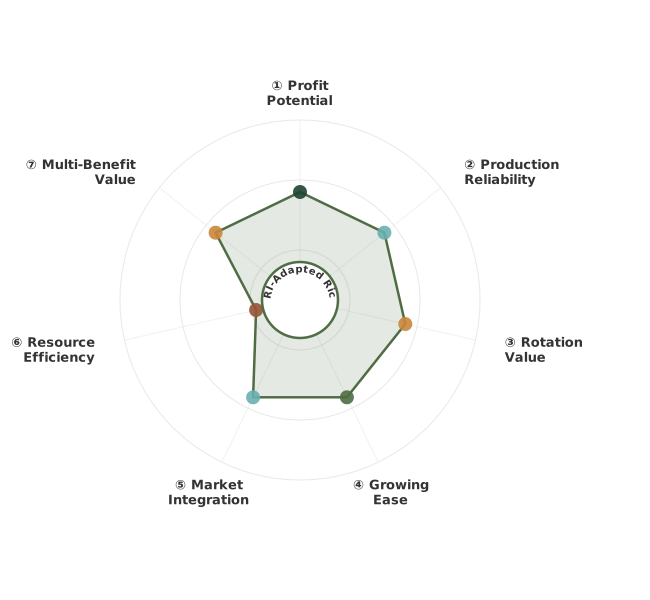
Comparative ratings for this plant across key regenerative agriculture traits.

Trait Suitability Explanation
Rotation Value Adequate Integrates well into diverse crop rotations, contributing to soil health and breaking pest cycles through its unique water management needs.
Yield Potential Ideally Suited SRI-Adapted Rice significantly boosts yields by 20-50% through optimized water and nutrient management, surpassing typical Asian rice expectations within a regenerative system.
Establishment Ease Adequate Requires tailored water management and soil preparation for successful establishment, with adequate early vigor in its preferred moisture-rich environments.
Input Requirements Not Recommended This variety drastically reduces seed use by 80-90% and its water efficiency lowers overall input needs, aligning with a low-input regenerative farming model.
Multi Benefit Value Adequate Beyond being a staple food, its reduced methane emissions, enhanced soil biology, and improved root development offer significant ecological benefits beyond typical rice cultivation.
Climate Adaptability Adequate Lowland rice thrives in zones with consistent water availability, while upland varieties offer broader adaptation, fitting into varied regenerative landscapes.
Market Accessibility Ideally Suited Rice benefits from established markets, providing reliable economic returns that support continued regenerative practices.
Maintenance Intensity Not Recommended With reduced seed and water inputs, coupled with enhanced root development and soil biology, SRI-Adapted Rice requires less intensive management for optimal performance.
Harvest Processing Ease Not Recommended Paddy rice cultivation and harvest are specialized, requiring dedicated infrastructure and practices that align with the farm's overall system design.

Comparative System: Ratings compare plants within their economic category (e.g., cover crop nitrogen fixation compared to other cover crops, not to all plants). Individual farm conditions and management practices significantly influence actual performance.

7

Learn More

Why farmers use this plant and additional resources

Why Regenerative Farmers Use This Plant

This grain crop is a cornerstone of regenerative agriculture, offering significant yield potential alongside crucial ecological benefits. Under optimal conditions, farmers can expect yields ranging from 40 to 90 bushels per acre (2.7 to 6.0 metric tons/ha). Grain quality is often characterized by good test weights, typically 45-62 lbs/bushel (58-80 kg/hl), and moderate protein content, ranging from 10-14%, making it a valuable commodity for food and feed.

Its deep root system, typically reaching 3-6 feet (0.9-1.8 m) in mature plants, excels at scavenging nutrients from deeper soil profiles, improving soil structure through aeration, and enhancing water infiltration. The decomposition of its substantial above-ground biomass, often exceeding 2,000-4,000 lbs/acre (2,240-4,480 kg/ha) of dry matter post-harvest, contributes significantly to soil organic matter, enhancing soil health and carbon sequestration potential.

Integrating this grain into a regenerative rotation provides a vital disease break and helps manage weed pressure. Its dense growth habit offers excellent weed suppression, outcompeting many common agricultural weeds. The extensive root network helps prevent soil erosion, particularly on sloped fields, and its residue can create a protective mulch layer, further aiding soil moisture retention and moderating soil temperatures. Following nitrogen-fixing legumes like clover or vetch, it benefits from residual fertility, reducing the need for external inputs. Conversely, after this grain, planting deep-rooted crops or legumes can further enhance soil health and nutrient cycling.

The standing stubble left after harvest, typically 8-12 inches (20-30 cm), provides excellent ground cover, protecting the soil from wind and water erosion, especially during vulnerable periods like winter or dry spells. This residue also serves as habitat for beneficial insects and provides a substrate for soil microbial activity. The ecological contributions extend to supporting beneficial insect populations by offering habitat and pollen sources during its flowering stage. The diverse root structure creates channels in the soil, enhancing water penetration and reducing runoff, which is critical for drought resilience. By diversifying cropping systems, this grain contributes to a more robust and resilient agricultural landscape, supporting a wider array of soil organisms and above-ground biodiversity. Its role in a well-designed rotation can lead to a measurable reduction in synthetic fertilizer requirements, often by 30-50%, and a decrease in the need for synthetic pesticides due to improved crop vigor and natural pest deterrence.

Regional success stories abound, showcasing its versatility. In the vast wheat-sheep systems of Australia, it forms the backbone of dryland farming. In the US Midwest, it's often part of corn-soybean rotations, serving as a critical diversification crop or a winter cover crop. In Europe, it's a staple in mixed farming systems, often integrated with livestock grazing and cover cropping strategies. Brazilian farmers utilize it in diverse rotations, sometimes intercropping it with other cash crops or using its residue to build soil health. Canadian farmers on the Prairies select shorter-season varieties and manage for early spring planting. Mediterranean regions use varieties adapted to drier conditions. India features it as a significant Rabi crop.

8

How to Integrate This Plant

Practical guidance for regenerative systems

Establishment typically involves seeding rates ranging from 75 to 150 lbs/acre (84 to 168 kg/ha) when broadcast, or 60 to 120 lbs/acre (67 to 134 kg/ha) when drilled into firm soil, depending on seed size and desired plant population. The optimal planting depth is between 0.5 to 1.5 inches (1.3 to 3.8 cm), ensuring good seed-to-soil contact for consistent germination. Row spacing can vary significantly, with 6 to 12 inches (15 to 30 cm) being common for drilled crops, promoting tillering and competition against weeds. For optimal yield and stand establishment, rows are often planted at 6-8 inches (15-20 cm) apart.

Planting timing is crucial and depends on the climate and variety. Winter types are typically sown in early autumn (September-October in the Northern Hemisphere, March-April in the Southern Hemisphere) to establish before winter dormancy. Spring types are planted in early spring (March-April in the Northern Hemisphere, September-October in the Southern Hemisphere) as soon as the soil is workable, or in early spring from March to May in the Northern Hemisphere and September to November in the Southern Hemisphere.

Water requirements are moderate, with adequate soil moisture essential during germination and early growth. While established plants exhibit some drought tolerance due to their deep root systems, consistent yields are best achieved with 1-2 inches (2.5-5 cm) of moisture per week during critical growth stages, either from rainfall or irrigation. Fertility management should prioritize biological sources. Incorporating compost, utilizing the residue from preceding cover crops (especially legumes), or integrating manure are primary strategies. For transitional phases, synthetic nitrogen can be applied at rates of 30-60 lbs/acre (34-67 kg/ha) to supplement biological fertility building, but the goal is to progressively reduce this reliance. Plants typically reach a height of 2-5 feet (0.6-1.5 m) at maturity, with a growth timeline of 90-150 days from planting to harvest, depending on the variety and environmental conditions. Pest and disease management should focus on crop rotation, maintaining healthy soil biology, and selecting resistant varieties.

For this grain crop, harvest and rotation management are critical for maximizing its regenerative impact. Planting-to-harvest calendars vary: winter types sown in October are typically harvested in July, while spring types sown in March-April mature by late August or September. Days to maturity can range from 90 days for early varieties to 150 days for later ones. Harvest occurs when grain moisture content is between 13-15% for safe storage, or when the heads have turned golden-brown and the grain kernels are hard to the touch. Post-harvest, standing stubble should be left at 8-12 inches (20-30 cm) to protect the soil surface from erosion and provide habitat. Cover crops can be interseeded into the standing grain at the boot or flag leaf stage for a relay crop, or established immediately after combine harvest. For farm-scale operations, grain drying may be necessary using aeration or heated air, and storage should be in clean, dry, and pest-free facilities, often in silos or grain bins. This grain crop is an excellent rotation component, typically following legumes that have fixed nitrogen, or preceding crops like corn, soybeans, or root vegetables that benefit from the residual soil structure and organic matter.

Regional adaptations showcase its versatility. In the UK's temperate climate, winter wheat is sown in October or November and harvested in late July or August, often followed by a cover crop of vetch and rye. Australian dryland farmers sow wheat with autumn rains, relying on its drought tolerance and leaving stubble to conserve moisture for the next season. In the US Midwest, it's often part of a corn-soybean-wheat rotation, with wheat planted after soybean harvest and followed by a summer cover crop or a spring-sown soybean. In Iowa, spring-sown varieties are planted in March or April, harvested in July or August, and often followed by a short-season cover crop like radishes or vetch. Canadian Prairies farmers select shorter-season varieties and manage for early spring planting and harvest to avoid fall frosts. In the Mediterranean climate of southern Europe, varieties adapted to drier conditions are chosen, and planting may occur in autumn to utilize winter rainfall. In South America, particularly in Argentina and Brazil, it's integrated into diverse cropping systems, sometimes following soybeans or preceding corn, with careful attention to moisture management. In Brazil, particularly in the southern states, this grain can be grown as a winter crop following soybeans, planted in May and harvested in September. In India, it's a significant Rabi crop, planted after the monsoon season and harvested before the intense summer heat.