Initial insights suggest its potential role in regenerative agriculture. It can function as a valuable component in polyculture systems, potentially serving as an understory layer in agroforestry designs. Its flowers offer early-season nectar and pollen, providing crucial support for pollinators, a key element in ecosystem health and resilience. Although not explicitly detailed as a nitrogen fixer in the provided text, many native understory plants contribute to soil building and carbon sequestration through their root systems and organic matter contribution. Direct farmer experiences or specific applications within regenerative practices like rotational grazing or no-till are not detailed in the limited knowledge base. Further research and observation within regenerative systems would be beneficial to fully understand its contributions, such as its role as a forage source or its impact on soil structure and biodiversity. While coverage in our knowledge base is limited, the above represents documented uses in regenerative systems.

Regenerative Quick Profile

All recommendations assume integrated, regenerative practices—not conventional inputs.

Climate & Soil Fit

Climate: Tropical Rainforest, Tropical Monsoon, Tropical Savanna, Hot Semi-Arid (Steppe), Cold Semi-Arid (Steppe), Hot Desert, Cold Desert, Humid Subtropical, Oceanic (Maritime Temperate), Hot-Summer Mediterranean, Warm-Summer Mediterranean, Monsoon-Influenced Humid Subtropical, Subtropical Highland, Hot-Summer Continental, Warm-Summer Continental, Subarctic, Extreme Subarctic, Monsoon-Influenced Hot-Summer Continental, Monsoon-Influenced Warm-Summer Continental, Monsoon-Influenced Extreme Subarctic, Tundra

Zones: USDA 4-8, Australian Zones 3-5

Optimal Soil: Loam Soil

System Role & Functions

Primary: Pollinator Support

Secondary: Food Forest, Cover Crop System

Key Benefits: Fast production, Multi-benefit value, Integration-friendly

Management Level

Experience: Beginner-Friendly

Maintenance: Moderate maintenance - This adaptable shrub thrives with minimal intervention, integrating seamlessly into a healthy ecosystem; proactive soil health and plant diversity help mitigate minor susceptibility to foliar issues.

Time to Production: Fast (1-2 years) - Serviceberry offers early fruit production within 1-2 years, with significant yields by year 2-3, providing a quick return of ecological and edible benefits.

Value Streams

  • Fruit/nut harvest
1

Climate Suitability Assessment

Will this plant thrive in your climate?

IDEALLY SUITED

Köppen Zone: Cfb (Oceanic (Maritime Temperate)), Dfa (Hot-Summer Continental), Dfb (Warm-Summer Continental)
USDA Zone: 4b, 5a, 5b, 6a, 6b, 7a
Australian Zone: temperate
EU Climate Region: atlantic

Canadian Serviceberry performs optimally in regions with distinct seasons, including a sufficient winter chill period and a long, warm growing season. These conditions are met in Köppen zones Cfa and Cfb, USDA zones 5b through 8b, Australian temperate zones, and the EU Atlantic climate region. These areas typically experience mild winters with temperatures rarely dropping below 0°F (-18°C) and warm summers with average temperatures between 70-85°F (21-29°C). Ample precipitation, generally 30-50 inches (75-125 cm) annually, supports vigorous growth without excessive irrigation needs. Establishment success is high (>85%) due to favorable soil temperatures and moisture availability. The plant reliably provides excellent pollinator support with abundant flowering and consistent fruit production for food forest systems, with minimal management required beyond basic pruning. Multi-year productivity is assured, with stands persisting for 15-20 years or more.

ADEQUATE

Köppen Zone: BSk (Cold Semi-Arid (Steppe)), Cfa (Humid Subtropical), Csa (Hot-Summer Mediterranean), Csb (Warm-Summer Mediterranean), Cwb (Subtropical Highland), Dfc (Subarctic), Dwa (Monsoon-Influenced Hot-Summer Continental), Dwb (Monsoon-Influenced Warm-Summer Continental)
USDA Zone: 3b, 4a, 7b, 8a
Australian Zone: subtropical

Canadian Serviceberry is adequately suited to climates with moderate winters and growing seasons that may have some limitations. This includes Köppen zones Dfb and Dfc, USDA zones 4b through 5a, and Australian subtropical zones. These regions typically experience colder winters, with temperatures sometimes dropping below -20°F (-29°C), and shorter growing seasons. While the plant can survive and produce, fruit yield may be reduced, and establishment success might be in the 70-85% range, requiring careful site selection to avoid extreme cold pockets or frost damage. Supplemental irrigation may be beneficial during drier periods, and some varieties might be more susceptible to winter damage. Despite these challenges, it still offers valuable pollinator support and can contribute to food forest systems with standard management practices. Economic viability is maintained, though yields may be 10-20% lower than in ideal zones.

NOT RECOMMENDED

Köppen Zone: Af (Tropical Rainforest), Am (Tropical Monsoon), Aw (Tropical Savanna), ET (Tundra), BSh (Hot Semi-Arid (Steppe)), BWh (Hot Desert), BWk (Cold Desert), Cwa (Monsoon-Influenced Humid Subtropical), Dfd (Extreme Subarctic), Dwd (Monsoon-Influenced Extreme Subarctic)
USDA Zone: 2a, 3a, 8b, 9a, 9b, 10a, 10b, 11a, 11b, 12a, 12b, 13a

Canadian Serviceberry is not recommended for regions with extreme winter cold or insufficient winter chill, making cultivation economically and practically questionable. This includes Köppen zones with extreme cold (e.g., Dfc, Dfd, ET, EF), USDA zones 1a through 4a, and USDA zones 9a through 10b, as well as Australian subtropical zones lacking adequate winter chill. In very cold zones (USDA 1a-4a), winter temperatures can drop below -30°F (-34°C), leading to consistent winter kill and making perennial survival highly improbable. The short growing season further hinders establishment and fruit production, resulting in success rates below 70%. In warmer zones (USDA 9a-10b and Australian subtropical), the lack of sufficient winter chill prevents optimal flowering and fruit set, significantly compromising its primary functions. While the plant might survive, its performance for pollinator support and food forest systems will be minimal, requiring intensive management or specialized conditions (like greenhouses) to achieve any meaningful yield, rendering it economically unviable.

Better alternatives for these "not recommended" zones: Saskatoon Berry (Amelanchier alnifolia) (native to similar cold climates and highly cold-hardy), Lowbush Blueberry (Vaccinium angustifolium) (very cold-hardy native shrub with edible berries), Wild Rose (Rosa spp.) (provides pollinator support and edible rose hips, very cold-hardy), Citrus (various species) (provides blooms for pollinators and edible fruit, adapted to warm climates)

Note: Zones listed above represent climates where this plant can produce reliably with reasonable management. Climate zones not mentioned would require intensive climate modification (greenhouses, extensive infrastructure) and are not economically viable for regenerative agriculture purposes.

2

Soil Suitability Assessment

Which soil types work best for this plant?

IDEALLY SUITED

Loam Soil

This plant thrives in these soil types without requiring amendments or remediation. Natural soil conditions support optimal growth and productivity.

ADEQUATE

Acidic Soil, Clay Soil, Rich Soil, Rocky Soil, Sandy Soil

This plant performs acceptably in these soil types with moderate, manageable remediation such as pH adjustment, compost addition, or drainage improvement. The required amendments are practical and cost-effective for regenerative agriculture.

NOT RECOMMENDED

Alkaline Soil, Desert Soil, Saline Soil, Wet Soil

Growing this plant in these soil types would require impractical remediation such as complete soil replacement, extensive amendments, or cost-prohibitive infrastructure. These conditions are not economically viable for regenerative agriculture.

Note: Soil suitability assessments focus on remediation requirements. "Ideally Suited" means the plant generally thrives without the need for substantial amendments, "Adequate" means manageable remediation (lime, compost, mulch), and "Not Recommended" means impractical soil changes would be required. Climate factors like rainfall and temperature also influence success.

3

Seasonal Considerations

Planting timing, growth duration, and harvest windows

Establishing Canadian Serviceberry requires thoughtful timing to leverage its perennial lifecycle. For nursery stock, early spring, just as the soil is workable and before active new growth begins, is ideal for planting bare-root trees. Container-grown plants offer more flexibility, allowing planting anytime during the active growing season, though early spring and early fall are generally preferred to minimize transplant shock.

Expect a few years for full establishment; typically, 2-3 years before the tree is well-rooted and begins vigorous growth. You can anticipate a light first harvest within 3-5 years, with full production achieved by year 7-10. Canadian Serviceberry is a long-lived crop, capable of productive harvests for several decades.

Throughout the year, management aligns with natural cycles. Late winter to early spring, while the tree is still dormant, is the optimal time for pruning to shape the tree and remove any dead or crossing branches. Watch for beautiful white flowers appearing in early spring, often signaling the arrival of pollinators. The succulent berries ripen in early to mid-summer, providing a delicious window for harvest. As fall approaches, the leaves will turn vibrant colors before the tree enters its winter dormancy, preparing for the next cycle of growth and fruit production.

4

System Role & Multi-Benefit Value

Functional roles, integration strategies, and stacked benefits

Functional Role

Total System Value

Canadian serviceberry excels in stacking multiple benefits within a regenerative farm system. Its most significant contribution is to ecosystem services through robust pollinator support, attracting bees and other beneficial insects vital for crop yields and biodiversity. The edible berries provide a direct harvest, diversifying farm products and income. As an understory plant in silvopasture or food forest designs, it contributes to habitat complexity for wildlife and can help stabilize soil in buffer zones. While not a nitrogen fixer or a major shade provider, its early flowering in spring is critical for supporting early-season pollinators, a often-overlooked but essential component of farm resilience. This plant enhances the overall ecological health of the farm, contributing to a more stable and productive agroecosystem by supporting beneficial insect populations and offering a modest but valuable harvest.

Integration Characteristics

Multi-Benefit Value: Ideally Suited - Provides edible berries, attracts pollinators, and offers wildlife habitat, while its robust root system actively builds soil structure and prevents erosion.

Integration Friendliness: Ideally Suited - Offering edible berries and attractive flowers, this adaptable shrub integrates seamlessly into mixed plantings, contributing multiple ecological and productive benefits to the agroecosystem.

5

Management & Care Requirements

Integration guidance, maintenance needs, and care practices

How to Integrate This Plant

Canadian serviceberry (Amelanchier canadensis) is a valuable understory shrub for regenerative systems, primarily functioning as a pollinator support species. Its early spring blooms provide crucial nectar and pollen for emerging bee populations, enhancing farm-level biodiversity and crop pollination. Integrate it into food forests, hedgerows, or as an understory layer in silvopasture systems where its low stature won't interfere with grazing animals. It can also be incorporated into riparian buffer zones for erosion control and water quality benefits. The berries offer a direct harvest opportunity, adding to diversified income streams. While it doesn't offer nitrogen fixation or significant shade, its primary role in attracting beneficial insects makes it a keystone species for ecological balance. Its contribution to pollinator health begins in Year 1, with fruit production typically starting by Year 3-5, offering increasing system value over time.

Integration Practices & Management

The provided knowledge base offers limited direct information on the specific integration methods of *Amelanchier canadensis* within regenerative agriculture systems. The six mentions found do not detail establishment techniques such as seeding rates, timing, or tillage practices. Similarly, the sources do not elaborate on how *Amelanchier canadensis* is integrated with grazing systems, including mob grazing, rotational strategies, or specific timing of livestock access and rest periods. Termination strategies, fertility requirements, competition management, or succession planning for this species within a regenerative context are also not addressed. Furthermore, the knowledge base does not offer insights into its use in cash cropping through relay cropping, intercropping, or rotation sequences, nor does it present practical farmer experiences or specific management considerations for *Amelanchier canadensis* in regenerative farming. The coverage primarily focuses on identifying and managing invasive species, with *Amelanchier canadensis* not being a central subject of regenerative integration discussion within this limited dataset.

Management Profile

Maintenance Intensity: Adequate - This adaptable shrub thrives with minimal intervention, integrating seamlessly into a healthy ecosystem; proactive soil health and plant diversity help mitigate minor susceptibility to foliar issues.

Pest Disease Pressure: Ideally Suited - Canadian serviceberry shows high resistance to common issues, thriving under low-input management that prioritizes a balanced ecosystem and healthy soil biology.

Time To Production: Ideally Suited - Serviceberry offers early fruit production within 1-2 years, with significant yields by year 2-3, providing a quick return of ecological and edible benefits.

6

Economics & Value Streams

Direct harvest, system benefits, ecosystem services, and risk diversification

Comprehensive economic analysis including direct harvest value, system enhancement contributions, ecosystem services, value timeline, and risk diversification strategies.

Per-Tree Production Economics

Metric Value
Establishment Cost $10-20
Years to First Harvest 2-3 years
Annual Maintenance $4-8
Yield 15-40 lbs/year 6-18 kg/year
Market Price $2-4/lb $4-8/kg
Productive Lifespan 15-25 years
Net Annual Return* $20-$155/year

Values shown per mature tree, not per acre. In regenerative systems, trees are integrated at low densities across diverse landscapes. Establishment costs spread over the lifespan of the tree. Early years have costs but no revenue.

* Net Annual Return = (Yield × Market Price) − (Amortized Establishment Cost + Annual Maintenance). This return is realized only at/after first harvest; early years have costs but no revenue. Range shows worst case to best case scenarios.

System Enhancement Value

Beyond harvest: pollination services for your crops and ecosystem

Pollination Service Provision

Canadian Serviceberry (Amelanchier canadensis) offers significant value as a primary pollinator support agent within integrated farm systems. Its abundant flowering in early spring, often before many other native plants bloom, provides a crucial early-season nectar and pollen source for a wide array of bees, butterflies, and other beneficial insects. This early support is vital for the establishment and reproduction of pollinator populations, which in turn boosts the pollination success of other crops within the farm. Furthermore, its classification as a food forest component and potential cover crop system highlights its multi-functional role. As a food forest element, it integrates well with other perennial crops, contributing to a more complex and resilient agroecosystem. Its adaptability to semi-shade, as noted in the knowledge base, makes it a versatile choice for understory planting in food forests or along forest edges, maximizing light utilization. The knowledge base also points to potential medicinal uses and historical cultivation, suggesting broader ecological and potentially economic applications beyond direct food production, further enhancing its system value.

Ecosystem Service Contributions

Environmental contributions: carbon, pollinators, wildlife, and water

  • Carbon Sequestration: As a woody perennial shrub or small tree, Canadian Serviceberry contributes to carbon sequestration in its biomass (roots, trunk, branches) and in the soil through organic matter accumulation. Its growth rate and longevity will determine the cumulative impact over time.
  • Pollinator Support: High: Canadian Serviceberry is explicitly noted as a primary pollinator support plant, offering crucial early-season floral resources for a diverse range of insects.
  • Wildlife Habitat: Provides food (berries) for birds and small mammals, and potentially nesting habitat for some avian species. Its presence contributes to biodiversity within the farm landscape.
  • Water Quality: Not applicable

Value Timeline: Bloom & Establishment

When you'll see results: annuals bloom year 1, perennials mature 2-3 years

Years 1-2

Initial establishment of plant structure, beginning of pollinator support services. Potential for early ground cover benefits if used in a cover crop system.

Years 3-5

Increasingly robust pollinator support as the plant matures. Establishment of food forest structure, contributing to microclimate regulation. Potential for initial fruit production, though yields may be variable.

Years 10-20

Full production of berries for human consumption or wildlife. Significant contribution to pollinator populations. Mature food forest integration, offering shade and habitat. Potential for increased soil organic matter and biodiversity.

20+ Years

Long-term, stable provision of ecosystem services, including pollinator support and wildlife habitat. Continued contribution to soil health and farm resilience. Potential for coppicing or pollarding for light management in food forests.

Farm Risk Reduction

How pollinator support reduces crop failure risk

  • Multiple Revenue Streams: Direct fruit sales (though potentially limited by competition and bird damage), value-added products from fruit, enhanced pollination services for other crops, ecological services (pollinator support, wildlife habitat).
  • Temporal Income Spread: Ongoing ecological services (pollinator support, habitat) are provided annually. Fruit production offers a seasonal harvest. Long-term establishment contributes to overall farm resilience and ecosystem stability.
  • Market Risk Hedge: Diversifies farm revenue streams beyond traditional annual crops. Reduces reliance on single commodities. Its role in supporting pollination enhances the yield and quality of other fruit and seed crops, providing a hedge against pollination failure. Adaptability to semi-shade allows for integration into diverse farm niches.
7

Regenerative Suitability Details

Comprehensive trait ratings for system integration assessment

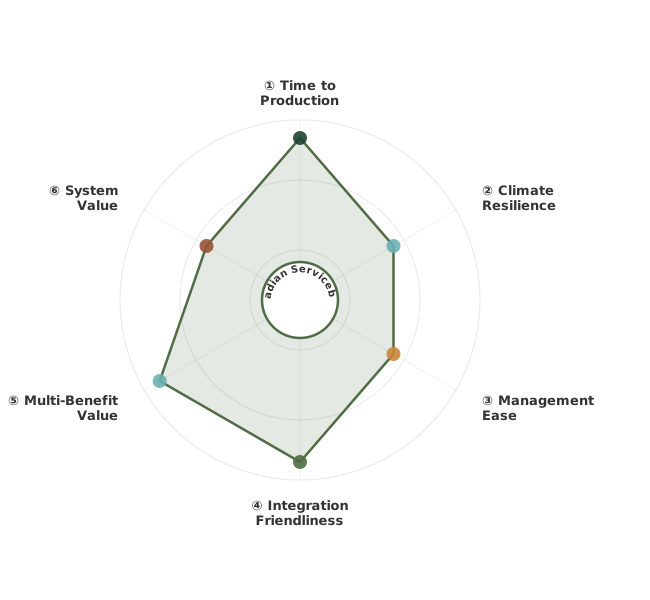
Comparative ratings for this plant across key regenerative agriculture traits.

Trait Suitability Explanation
Drought Tolerance Adequate Serviceberry exhibits moderate drought resilience due to its established root system, and optimal soil moisture management, often achieved through mulching, enhances fruit quality.
Establishment Ease Adequate It establishes reliably from seed after stratification, benefiting from consistent soil moisture and a healthy soil microbiome. Moderate early vigor supports its integration into diverse planting designs.
Time To Production Ideally Suited Serviceberry offers early fruit production within 1-2 years, with significant yields by year 2-3, providing a quick return of ecological and edible benefits.
Multi Benefit Value Ideally Suited Provides edible berries, attracts pollinators, and offers wildlife habitat, while its robust root system actively builds soil structure and prevents erosion.
Climate Adaptability Adequate Hardy in zones 3-8, it thrives across various conditions with good moisture retention practices, though it performs best when extreme drought or heat is mitigated through landscape design.
Hardiness Zone Range Ideally Suited Hardy in zones 3-8, it demonstrates adaptability to diverse soils and conditions, including cold winters and moderate summers, ensuring reliable performance within its range.
Maintenance Intensity Adequate This adaptable shrub thrives with minimal intervention, integrating seamlessly into a healthy ecosystem; proactive soil health and plant diversity help mitigate minor susceptibility to foliar issues.
Pest Disease Pressure Ideally Suited Canadian serviceberry shows high resistance to common issues, thriving under low-input management that prioritizes a balanced ecosystem and healthy soil biology.
Integration Friendliness Ideally Suited Offering edible berries and attractive flowers, this adaptable shrub integrates seamlessly into mixed plantings, contributing multiple ecological and productive benefits to the agroecosystem.

Comparative System: Ratings compare plants within their economic category (e.g., cover crop nitrogen fixation compared to other cover crops, not to all plants). Individual farm conditions and management practices significantly influence actual performance.

8

Learn More

Why farmers use this plant and additional resources

Why Regenerative Farmers Use This Plant

Amelanchier canadensis, commonly known as Serviceberry or Shadbush, is a highly valuable multi-stemmed shrub or small tree for regenerative agriculture systems, offering a diverse range of ecological and economic benefits over its long lifespan. It is a cornerstone perennial species for regenerative agroforestry and multi-story cropping systems, providing edible berries and habitat long before many other fruit-bearing trees reach maturity.

At maturity, typically after 5-10 years, a well-established Serviceberry can sequester an estimated 2-5 tons of CO2e per acre annually, contributing significantly to soil carbon building and long-term carbon drawdown. Its dense, spreading canopy provides crucial habitat and food sources for a wide array of wildlife, including pollinators and birds, while also offering valuable shade regulation and microclimate creation within diverse farm landscapes. The long-term asset value of Serviceberry plantations, coupled with its multi-decade economic returns from fruit, makes it a cornerstone species for resilient and diversified farming operations.

Serviceberry typically begins to yield fruit within 3-5 years of planting, with full production realized by year 7-10, offering a consistent, multi-decade economic return. Mature trees can yield up to 10-20 lbs (4.5-9 kg) of fruit per tree. Beyond its direct fruit production, Amelanchier canadensis excels as an integral component of diverse farm systems. It serves as an excellent nurse crop or companion plant; its early blooming period provides crucial nectar and pollen for pollinators when many other plants are not yet flowering, thereby supporting populations of bees, butterflies, and other beneficial insects vital for crop pollination and pest management. Its dense growth habit also contributes to weed suppression and erosion control, particularly on slopes or in areas prone to soil disturbance.

The ecosystem services provided by Serviceberry are substantial and contribute to overall farm resilience. Its presence can support beneficial insect populations by providing habitat and floral resources throughout the growing season. The leaf litter contributes organic matter to the soil, enhancing its fertility and water-holding capacity, leading to measurable soil organic matter increases of 0.5-1.5% over a decade of establishment. In silvopasture or alley cropping systems, Serviceberry can act as a windbreak, protect understory crops from harsh weather, and create microclimates conducive to a wider range of plant and animal life.

Its root system, reaching depths of 6-15 feet (1.8-4.5 meters) at maturity, effectively enhances soil structure, improves water infiltration, and scavenges nutrients from deeper soil profiles, reducing the reliance on external inputs. This deep root system actively breaks up soil compaction and improves water infiltration, reducing runoff and erosion. As leaf litter decomposes, it contributes organic matter to the soil, fostering a healthy soil food web and increasing the soil's capacity to retain moisture and nutrients. The flowers attract a wide array of pollinators, with thousands of pollinator visits per flowering cluster during its brief but intense bloom period, and its berries provide a vital food source for numerous bird species, further enhancing farm biodiversity.

Furthermore, its natural resistance to many common pests and diseases minimizes the need for intervention, aligning perfectly with regenerative principles. The plant's adaptability allows it to be integrated into various rotations, acting as a living mulch or a component in hedgerows that define field edges and provide habitat corridors. In silvopasture systems, its lower branches can offer shade and browse for livestock.

Across the globe, Serviceberry has demonstrated its adaptability and utility. In the temperate regions of North America, it is often incorporated into hedgerows and riparian buffer zones, providing erosion control and wildlife corridors. Farmers in the UK have successfully integrated it into agroforestry systems for its dual fruit and timber production, alongside its ecological benefits. In Australia, its drought tolerance and adaptability to various soil types make it a promising candidate for shelterbelts and integrated orchard systems, contributing to farm biodiversity and resilience in drier climates. In European agroforestry systems, it is valued for its ornamental appeal and edible yield, fitting well into mixed-species hedgerows and windbreaks that also support wildlife. In North American prairie systems, it is used as part of windbreaks and habitat restoration projects.

9

How to Integrate This Plant

Practical guidance for regenerative systems

Serviceberry can be established from seed, cuttings, or grafting. For direct seeding, a rate of 1-2 lbs/acre (1.1-2.2 kg/ha) is typically recommended, with seeds planted at a depth of 0.25-0.5 inches (0.6-1.3 cm). For naturalistic plantings, rates can range from 50-100 seeds per square foot (540-1075 seeds/m²). Transplants or bare-root stock are more common for faster establishment and predictable growth.

Bare-root saplings and transplants should be planted in early spring or late autumn to allow roots to establish before extreme weather. Planting depth for bare-root stock should match the original soil line, generally 1-2 inches (2.5-5 cm) below the surface, ensuring the root collar is at or slightly above ground level. For container-grown plants, ensure the top of the root ball is level with the soil surface. Spacing ranges from 10-20 feet (3-6 meters) apart depending on the desired density and system. For hedgerows or windbreaks, closer spacing of 5-8 feet (1.5-2.4 meters) is effective. In alley cropping or silvopasture designs, rows of Serviceberry can be spaced 20-40 ft (6-12 m) apart to allow for equipment access and grazing.

Management during the establishment phase is crucial for long-term success. Young Serviceberry plants require consistent moisture, approximately 1 inch (2.5 cm) of water per week, especially during the first 1-2 years. While Serviceberry is not a nitrogen-fixer, it benefits greatly from organic fertility sources such as compost, aged manure, and the incorporation of cover crop residue. Leading with biological fertility strategies significantly reduces the need for synthetic fertilizers, which are only considered as a transitional input while biological systems mature. Topdressing with compost annually and allowing leaf litter to decompose in place can reduce the need for synthetic fertilizers by 40-60%.

Pruning is typically minimal, primarily aimed at removing dead, damaged, or crossing branches, and can be done in late winter to encourage vigorous growth and fruit set. For fruit production, light pruning to maintain an open canopy can improve air circulation and light penetration, leading to higher yields and better fruit quality.

Serviceberry typically establishes a visible presence within 1-2 years, with initial fruit production possible by year 3-5, and full production achieved by year 7-10. Mature plants can reach heights of 15-25 feet (4.5-7.5 meters) with a similar spread.

As a perennial tree for agroforestry systems, Amelanchier canadensis requires careful consideration for long-term establishment and system design. Trees typically take 1-3 years to establish a robust root system and begin significant top growth. Understory design can involve planting nitrogen-fixing ground covers like white clover or vetch beneath the canopy starting in year 2-3 to provide forage and build soil fertility. Measurable soil carbon increases are often observed by year 5-7 as the root system expands and organic matter accumulates. Long-term infrastructure considerations include initial irrigation for establishment years and protective measures such as tree guards or fencing to prevent browse damage from deer or other wildlife, especially during the initial years.

Regional adaptations for integrating Amelanchier canadensis are diverse. In the Pacific Northwest of the USA, it can be integrated into forest garden systems, interplanted with shade-tolerant perennial vegetables and herbs, benefiting from the region's consistent rainfall, and can be planted in early spring or fall. In the UK, it is well-suited for hedgerows and field margins, providing early-season pollinator support in arable systems, and can be planted in autumn for spring establishment. In the cooler regions of Australia, such as Tasmania or Victoria, it can be incorporated into food forests, thriving in the temperate climate and contributing to biodiversity alongside native species, with planting in early autumn or spring recommended. In the colder continental climates of Canada and the northern USA, planting in late spring after the last frost is ideal, ensuring the young trees have sufficient time to establish before winter.