Aquilegia formosa, commonly known as Western Columbine, has limited direct mentions within our regenerative agriculture knowledge base, suggesting its role is more nuanced than a primary cover crop or forage species. However, available insights point to its value as a component within diverse regenerative systems, particularly in agroforestry settings and polyculture layers. Its deep root system can contribute to soil building and improved water infiltration, indirectly supporting soil health. Crucially, A. formosa is recognized for its significant pollinator support, providing nectar and pollen for a range of beneficial insects. While not a nitrogen fixer, its presence can enhance biodiversity, a cornerstone of resilient agricultural ecosystems. Direct farmer experiences detailing its integration with practices like no-till or rotational grazing are scarce in the knowledge base. Therefore, its primary regenerative utility appears to be as an understory plant in perennial systems, contributing to ecological stability and beneficial insect populations rather than as a standalone crop for soil amendment or biomass production.

Regenerative Quick Profile

All recommendations assume integrated, regenerative practices—not conventional inputs.

Climate & Soil Fit

Climate: Tropical Rainforest, Tropical Monsoon, Tropical Savanna, Hot Semi-Arid (Steppe), Cold Semi-Arid (Steppe), Hot Desert, Cold Desert, Humid Subtropical, Oceanic (Maritime Temperate), Hot-Summer Mediterranean, Warm-Summer Mediterranean, Monsoon-Influenced Humid Subtropical, Subtropical Highland, Hot-Summer Continental, Warm-Summer Continental, Subarctic, Monsoon-Influenced Hot-Summer Continental, Tundra

Zones: USDA 5-8, Australian Zones 3-5

Optimal Soil: Loam Soil

System Role & Functions

Primary: Pollinator Support

Secondary: Cover Crop System, Cash Crop With Services

Key Benefits: Low maintenance, Pest resistant

Management Level

Experience: Beginner-Friendly

Maintenance: Very low maintenance - This native perennial thrives with minimal intervention in moist, shaded environments, readily self-seeding and demonstrating natural resilience to pests and diseases.

Time to Production: Slow (5+ years) - As an ornamental perennial, Western Columbine's value lies in its ecological contributions and aesthetic appeal rather than direct agricultural output, making production metrics less relevant.

Value Streams

  • Fruit/nut harvest
  • Diversifies farm income
  • Enhances biodiversity
1

Climate Suitability Assessment

Will this plant thrive in your climate?

IDEALLY SUITED

Köppen Zone: Cfa (Humid Subtropical), Cfb (Oceanic (Maritime Temperate)), Cwb (Subtropical Highland), Dfa (Hot-Summer Continental), Dfb (Warm-Summer Continental)
USDA Zone: 5a, 5b, 6a, 7a
Australian Zone: temperate
EU Climate Region: atlantic

Red Columbine thrives in climates with mild winters and moderate summers, characterized by 120-180 frost-free days and average summer temperatures between 60-75°F (15-24°C). These conditions are met in Köppen zones Cfb, USDA zones 6b-8b, Australian temperate zones, and the EU Atlantic climate region. Establishment is reliable in spring when soil temperatures reach 45-50°F (7-10°C). The plant exhibits excellent perennial survival and consistent, prolific flowering, providing significant and reliable support for pollinators. Minimal management is required, as natural rainfall patterns typically suffice, and the plant is well-adapted to these environments, leading to high establishment success and long-term persistence. These zones offer the optimal balance of temperature and moisture for robust growth and continuous bloom throughout its natural flowering period, maximizing its ecological function.

ADEQUATE

Köppen Zone: Csa (Hot-Summer Mediterranean), Csb (Warm-Summer Mediterranean), Cwa (Monsoon-Influenced Humid Subtropical), Dfc (Subarctic)
USDA Zone: 4a, 8a, 9a
Australian Zone: subtropical

Red Columbine can perform adequately in climates with a longer growing season but may experience some limitations, particularly with summer heat or inconsistent moisture. This includes Köppen zones Cfa and Csb, USDA zones 5b-6a and 9a-9b, and Australian subtropical zones. While it can establish and flower, extended periods above 85°F (29°C) can cause stress, reduce bloom intensity, or lead to dormancy. In drier temperate regions, supplemental watering may be necessary to maintain vigor and extend the flowering period for optimal pollinator support. Perennial survival is generally good, but stand persistence might be slightly reduced compared to ideal zones without careful management. These zones require a bit more attention to water and heat management to ensure consistent performance and maximize the plant's benefits.

NOT RECOMMENDED

Köppen Zone: Af (Tropical Rainforest), Am (Tropical Monsoon), Aw (Tropical Savanna), ET (Tundra), BSh (Hot Semi-Arid (Steppe)), BSk (Cold Semi-Arid (Steppe)), BWh (Hot Desert), BWk (Cold Desert), Dwa (Monsoon-Influenced Hot-Summer Continental)
USDA Zone: 2a, 3a, 3b, 10a, 11a, 12a

Red Columbine is not recommended for climates with extreme winter cold (Köppen BSh, USDA zones 3a-5a, 10a-10b) or hot, dry summers (Köppen Csa, USDA zones 10a-10b). In cold zones, winter temperatures below -10°F (-23°C) make perennial survival highly improbable, and short growing seasons limit its effectiveness. In hot, dry zones, summer heat above 90°F (32°C) causes severe stress, dormancy, and minimal flowering, rendering it impractical for consistent pollinator support. Establishment success is low (<60%) due to challenging conditions like rapid soil drying or short frost-free periods. While technically possible to grow as an annual in some marginal zones with intensive management (e.g., extensive irrigation, shade), the economic and practical viability for its primary function of pollinator support is severely compromised. Alternative plants better adapted to these specific extreme conditions are strongly advised.

Better alternatives for these "not recommended" zones: California Poppy (Eschscholzia californica) (drought-tolerant native that thrives in hot, dry conditions and supports pollinators), Lavender (Lavandula spp.) (heat and drought-tolerant perennial that is highly attractive to pollinators), Wild Geranium (Geranium maculatum) (native perennial with good cold hardiness and pollinator support), Blue Flax (Linum perenne lewisii) (drought-tolerant annual/short-lived perennial that can establish quickly)

Note: Zones listed above represent climates where this plant can produce reliably with reasonable management. Climate zones not mentioned would require intensive climate modification (greenhouses, extensive infrastructure) and are not economically viable for regenerative agriculture purposes.

2

Soil Suitability Assessment

Which soil types work best for this plant?

IDEALLY SUITED

Loam Soil

This plant thrives in these soil types without requiring amendments or remediation. Natural soil conditions support optimal growth and productivity.

ADEQUATE

Clay Soil, Rich Soil, Rocky Soil, Sandy Soil

This plant performs acceptably in these soil types with moderate, manageable remediation such as pH adjustment, compost addition, or drainage improvement. The required amendments are practical and cost-effective for regenerative agriculture.

NOT RECOMMENDED

Acidic Soil, Alkaline Soil, Desert Soil, Saline Soil, Wet Soil

Growing this plant in these soil types would require impractical remediation such as complete soil replacement, extensive amendments, or cost-prohibitive infrastructure. These conditions are not economically viable for regenerative agriculture.

Note: Soil suitability assessments focus on remediation requirements. "Ideally Suited" means the plant generally thrives without the need for substantial amendments, "Adequate" means manageable remediation (lime, compost, mulch), and "Not Recommended" means impractical soil changes would be required. Climate factors like rainfall and temperature also influence success.

3

Seasonal Considerations

Planting timing, growth duration, and harvest windows

Establishing Aquilegia formosa, or red columbine, is a multi-year investment. For best results, plant nursery stock during the dormant season, either as bare-root transplants in early spring before bud break or as container-grown trees after the last expected frost. Initial establishment will take about two to three years, during which time the focus is on root development and vigor. You can anticipate a first light harvest of foliage or ornamental blooms around year three to five, with full production—if managed for specific yields—potentially reached in five to seven years. These trees are long-lived, often productive for several decades, offering a sustained return.

Seasonal management is straightforward. Pruning is best undertaken during the dormant season, typically in late fall or early spring, to remove dead or damaged wood and shape the plant. The primary harvest window for any usable parts will coincide with the active growing season, generally from late spring through summer. Red columbine's bloom period is usually in late spring to early summer, providing aesthetic value and supporting pollinators. As temperatures cool and daylight shortens in autumn, the plant will naturally enter winter dormancy, conserving energy for the following year's growth.

4

System Role & Multi-Benefit Value

Functional roles, integration strategies, and stacked benefits

Functional Role

Total System Value

The total system value of red columbine lies in its significant contribution to ecosystem services, particularly pollinator support. While it offers no direct harvest value, its presence enhances the ecological functions of the farm. By attracting native bees, butterflies, and hummingbirds, it boosts pollination for adjacent crops, thereby increasing yields and quality in systems like food forests and alley cropping. This plant contributes to system enhancement by adding floral diversity and supporting beneficial insect populations that can help manage pest outbreaks. Its perennial nature and ability to naturalize contribute to soil health and erosion control over time, particularly in less intensively managed areas or hedgerows. Risk diversification is achieved through enhanced ecological resilience; a robust pollinator community is less susceptible to collapse and provides a buffer against pest outbreaks or crop failures. The overall system value is in creating a more diverse, self-regulating agricultural landscape.

Integration Characteristics

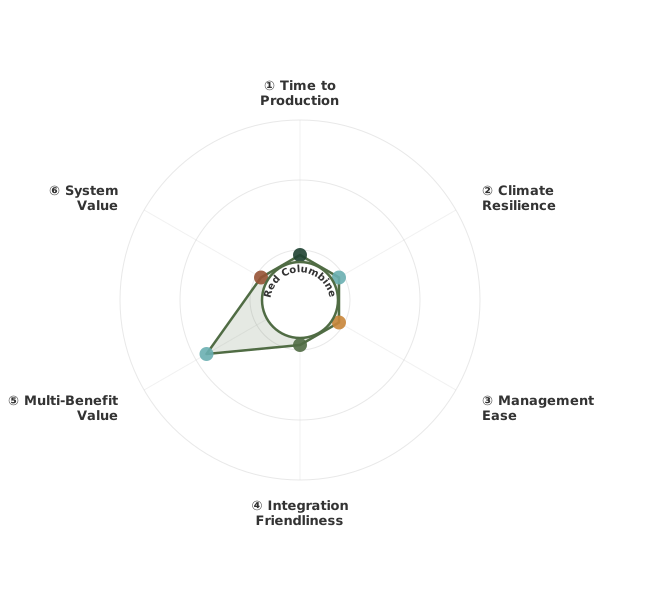
Multi-Benefit Value: Adequate - Its nectar-rich flowers attract beneficial hummingbirds and pollinators, while its foliage provides ground cover for erosion control in well-managed, moist, shaded areas.

Integration Friendliness: Not Recommended - Valuable for its habitat and aesthetic contributions, it can be integrated into diverse landscapes to support pollinator populations and enhance soil health in suitable microclimates.

5

Management & Care Requirements

Integration guidance, maintenance needs, and care practices

How to Integrate This Plant

Red columbine (Aquilegia formosa) is a valuable non-tree perennial that primarily supports pollinators. Integrate it into farm systems by incorporating it into perennial polycultures, hedgerows, or as a component in pollinator strips alongside field edges. Its native status and ability to naturalize make it an excellent choice for enhancing biodiversity in established systems. While not providing direct harvest value in the traditional sense, its contribution to pollinator health indirectly benefits fruit and seed production in nearby crops, supporting practices like alley cropping and food forests. It can also be used in silvopasture systems to provide floral resources for beneficial insects without competing with livestock forage. The plant begins providing value in Year 1 through early floral displays, with its population and contribution to the local insectary potentially increasing by Year 3-5 as it establishes. Its long-term value lies in its consistent support of a healthy, functioning ecosystem.

Integration Practices & Management

Direct information on the integration of *Aquilegia formosa* within regenerative agriculture systems, particularly regarding specific management practices, is limited within the provided knowledge base. The 11 mentions do not detail establishment methods like seeding rates, timing, or companion planting strategies. Similarly, the knowledge base does not offer insights into how regenerative farmers integrate *Aquilegia formosa* with grazing systems, such as mob grazing or rotational plans, nor does it specify timing or rest periods. Termination strategies, including natural winterkill, grazing down, crimping, mowing, or herbicide use, are also not elaborated upon. Management considerations like fertility needs, competition control, or succession planning in relation to this plant are absent. Furthermore, its integration with cash crops through relay cropping, intercropping, or rotation sequences is not described. Consequently, practical farmer experiences and specific insights from the knowledge base regarding the 'how' of *Aquilegia formosa* integration into regenerative agriculture are not available.

Management Profile

Maintenance Intensity: Ideally Suited - This native perennial thrives with minimal intervention in moist, shaded environments, readily self-seeding and demonstrating natural resilience to pests and diseases.

Pest Disease Pressure: Ideally Suited - A robust native perennial, Western Columbine exhibits excellent natural resistance to pests and diseases when integrated into a healthy, biodiverse ecosystem.

Time To Production: Not Recommended - As an ornamental perennial, Western Columbine's value lies in its ecological contributions and aesthetic appeal rather than direct agricultural output, making production metrics less relevant.

6

Economics & Value Streams

Direct harvest, system benefits, ecosystem services, and risk diversification

Comprehensive economic analysis including direct harvest value, system enhancement contributions, ecosystem services, value timeline, and risk diversification strategies.

Per-Tree Production Economics

Metric Value
Establishment Cost $5-10
Years to First Harvest 2-3 years
Annual Maintenance $2-4
Yield 5-15 lbs/year 2-6 kg/year
Market Price $0-1/lb $1-2/kg
Productive Lifespan 5-10 years
Net Annual Return* $-6 to $12/year

Values shown per mature tree, not per acre. In regenerative systems, trees are integrated at low densities across diverse landscapes. Establishment costs spread over the lifespan of the tree. Early years have costs but no revenue.

* Net Annual Return = (Yield × Market Price) − (Amortized Establishment Cost + Annual Maintenance). This return is realized only at/after first harvest; early years have costs but no revenue. Range shows worst case to best case scenarios.

System Enhancement Value

Beyond harvest: pollination services for your crops and ecosystem

Pollination Service Provision

Red columbine (*Aquilegia formosa*) significantly contributes to farm system value through its primary function as a pollinator support plant, particularly for hummingbirds. Its red and yellow nodding flowers provide a crucial nectar source during the summer months, a period when many other plants may be dormant, thus supporting essential insect populations. This direct support for pollinators can have cascading benefits for other crops on the farm that rely on insect pollination, potentially increasing yields and improving fruit set. Furthermore, the plant's ability to self-sow after deadheading ensures its continued presence, offering a consistent, low-maintenance habitat and food source for wildlife. Its suitability for partly shaded gardens and moist woodlands suggests it can be integrated into diverse farm landscapes, including hedgerows, riparian buffers, or understory plantings, contributing to biodiversity and ecological stability. While not a primary cash crop, its 'Cash Crop With Services' designation highlights its capacity to generate value through these ecological functions.

Ecosystem Service Contributions

Environmental contributions: carbon, pollinators, wildlife, and water

  • Carbon Sequestration: As a perennial plant, red columbine contributes to soil carbon sequestration through root biomass and organic matter accumulation. Its growth habit and potential for self-sowing suggest a moderate, ongoing contribution to soil health and carbon storage.
  • Pollinator Support: High. Red columbine is specifically noted for its attraction to hummingbirds and other native pollinators due to its nectar-rich, red and yellow flowers, providing critical resources during summer bloom periods.
  • Wildlife Habitat: Provides a valuable nectar source for hummingbirds and potentially other small birds and insects. Deadheaded blossoms can also serve as a food source for small birds, and self-sowing contributes to habitat continuity.
  • Water Quality: Not applicable

Value Timeline: Bloom & Establishment

When you'll see results: annuals bloom year 1, perennials mature 2-3 years

Years 1-2

Initial establishment of cover crop benefits (if used in a system), and early pollinator support as the plant matures and begins to flower.

Years 3-5

Established pollinator support, potential for self-sowing and natural expansion of the plant population, contributing to a more robust and continuous habitat.

Years 10-20

Mature, self-sustaining populations providing consistent and significant pollinator support and wildlife habitat. The plant's role in a cover crop system would be well-established, contributing to soil health.

20+ Years

Long-term, stable ecosystem services including sustained pollinator support, wildlife habitat, and ongoing contributions to soil organic matter and biodiversity within the farm system.

Farm Risk Reduction

How pollinator support reduces crop failure risk

  • Multiple Revenue Streams: Pollinator support services (indirectly increasing yields of other crops), wildlife habitat provision, potential for use as a 'cash crop with services' in niche markets (e.g., native plant nurseries, ecological landscaping).
  • Temporal Income Spread: Provides consistent, ongoing ecological services throughout its blooming period (summer), with the potential for self-sowing ensuring long-term presence and value beyond annual harvest cycles. Its perennial nature offers stability.
  • Market Risk Hedge: Reduces reliance on single income streams by providing essential ecological services that enhance the productivity of other farm enterprises. Its drought tolerance (once established, though requiring some summer water) can offer resilience in drier periods, and its native status appeals to growing markets for sustainable and ecological products.
7

Regenerative Suitability Details

Comprehensive trait ratings for system integration assessment

Comparative ratings for this plant across key regenerative agriculture traits.

Trait Suitability Explanation
Drought Tolerance Not Recommended Western Columbine thrives when soil moisture is consistently managed through mulching and healthy soil structure, benefiting from its shallow root system's access to surface moisture.
Establishment Ease Adequate This species germinates reliably in cool, moist soil, establishing well when competition from aggressive weeds is managed through natural ground cover and mulching.
Time To Production Not Recommended As an ornamental perennial, Western Columbine's value lies in its ecological contributions and aesthetic appeal rather than direct agricultural output, making production metrics less relevant.
Multi Benefit Value Adequate Its nectar-rich flowers attract beneficial hummingbirds and pollinators, while its foliage provides ground cover for erosion control in well-managed, moist, shaded areas.
Climate Adaptability Adequate Native to western North America (zones 4-8), it thrives in cool, moist conditions and benefits from landscape designs that promote moisture retention and buffer against extreme heat.
Hardiness Zone Range Not Recommended Adapted to western North America (zones 4-8), it performs best in cool, moist microclimates, with landscape strategies focusing on enhancing moisture retention and shade.
Maintenance Intensity Ideally Suited This native perennial thrives with minimal intervention in moist, shaded environments, readily self-seeding and demonstrating natural resilience to pests and diseases.
Pest Disease Pressure Ideally Suited A robust native perennial, Western Columbine exhibits excellent natural resistance to pests and diseases when integrated into a healthy, biodiverse ecosystem.
Integration Friendliness Not Recommended Valuable for its habitat and aesthetic contributions, it can be integrated into diverse landscapes to support pollinator populations and enhance soil health in suitable microclimates.

Comparative System: Ratings compare plants within their economic category (e.g., cover crop nitrogen fixation compared to other cover crops, not to all plants). Individual farm conditions and management practices significantly influence actual performance.

8

Learn More

Why farmers use this plant and additional resources

Why Regenerative Farmers Use This Plant

Aquilegia formosa, commonly known as Western Columbine or Red Columbine, is a valuable perennial for regenerative agriculture systems, particularly in its native North American range and similar temperate climates. While not a primary cash crop, its ecological services and contribution to biodiversity make it a strategic component of multi-story farming. It typically establishes as a perennial herb, reaching a mature height of 1-3 feet (0.3-0.9 m) with a spread of 1-2 feet (0.3-0.6 m). Its deep taproot system, reaching 2-4 feet (0.6-1.2 m) in established plants, aids in soil structure improvement and nutrient cycling, drawing up minerals from deeper soil profiles and helping to break up soil compaction and improve water infiltration, reducing runoff and erosion.

While specific carbon sequestration data for Aquilegia formosa is not widely documented, perennial herbaceous plants in general, with their extensive root systems and continuous above-ground biomass, contribute to soil organic matter accumulation. Estimates for similar perennial systems range from 0.5-2 tons CO2e/acre/year, with measurable soil carbon increases typically becoming evident by year 5-7 as biomass accumulates and root systems deepen, and increasing with plant density and ecosystem maturity over decades. Its long-lived nature means it provides these benefits for many years, accumulating asset value in the soil ecosystem.

Integrating Aquilegia formosa into agroforestry and silvopasture systems offers significant ecological advantages. As an understory plant, it can thrive in partial shade, making it suitable for planting beneath fruit trees, nut trees, or in hedgerows. Its vibrant red and yellow flowers, blooming from late spring through summer, are a significant attractant for a wide array of pollinators, including native bees, bumblebees, butterflies, and hummingbirds. This enhances the overall biodiversity of the farm landscape, supporting the populations of beneficial insects that can help manage pest outbreaks in nearby cash crops. A single plant can produce numerous flowers, each offering nectar and pollen, supporting a high density of pollinator visits throughout its blooming period. This increased pollinator activity can directly benefit adjacent fruit and seed crops, leading to improved yields and quality.

The quantitative ecosystem services provided by Aquilegia formosa are notable. By providing consistent floral resources early in the season, it helps support healthy pollinator populations throughout the growing season, which is critical for the pollination of many agricultural crops. The plant's ability to thrive in partial shade also makes it suitable for interplanting in more established perennial systems, such as orchards or silvopastures, without competing aggressively for light. Its presence can also contribute to erosion control on slopes and in areas prone to water runoff, thanks to its fibrous root system and ground cover potential. Furthermore, its attractive foliage and delicate flowers can enhance the visual appeal of farmsteads, fostering a connection between the land and the people who work it, and can be incorporated into buffer strips, hedgerows, or naturalized areas to enhance biodiversity and provide habitat for beneficial insects that help manage pest populations in cultivated areas.

Aquilegia formosa has demonstrated success in various temperate regions. In the Pacific Northwest of the United States, it is often found in naturalized settings and can be incorporated into native plant borders within vineyards and orchards, supporting native bee populations crucial for fruit set. In the UK, similar native columbine species are used in wildflower meadows and hedgerows, contributing to landscape biodiversity and providing early-season nectar. In parts of Australia with suitable temperate climates, native columbine species are increasingly recognized for their role in supporting native insect populations in agricultural landscapes, often integrated into riparian zones or as part of biodiversity strips alongside pastures. In regions with hotter summers, providing partial shade will be crucial for its success.

9

How to Integrate This Plant

Practical guidance for regenerative systems

Establishing Aquilegia formosa is typically done through seed or division.

Propagation and Seeding: For direct seeding, rates of approximately 1-2 ounces per 1,000 square feet (30-60 grams per 100 square meters) are recommended, translating to roughly 2-5 lbs/acre (2.2-5.6 kg/ha) depending on seed size and desired density. Alternatively, a rate of 50-100 seeds per square foot is generally recommended. The planting depth is critical: seeds require light to germinate, so they should be pressed lightly into the soil surface or covered with no more than 0.125 inches (3 mm) of fine soil or compost. For direct seeding, a rate of 10-20 seeds per square foot (100-200 seeds/m²) is recommended, sown at a shallow depth of 0.125-0.25 inches (3-6 mm).

Optimal Planting Times: Optimal planting times vary by hemisphere and climate:

  • Northern Hemisphere: Sow in early spring (March-April) or in the fall (September-October) for overwintering. Fall planting is often most effective as the seeds require a period of cold stratification to germinate.
  • Southern Hemisphere: Plant in early spring (September-October) or fall (March-April).
  • In the UK and similar oceanic climates, fall planting is often preferred to allow natural stratification and early spring growth.
  • In parts of Australia with temperate zones, planting in autumn with the onset of cooler, wetter weather is ideal.
  • In the Pacific Northwest of the USA, it can be sown in late fall (October-November).

Spacing and Establishment: Spacing between individual plants is generally not critical for naturalized plantings. However, if planting in beds or borders, aim for 12-18 inches (30-45 cm) apart to allow for mature spread. For transplanting, seedlings are typically spaced 8-12 inches (20-30 cm) apart. Transplants can also be used, planted at the same depth as their nursery container, typically in spring or early fall. Establishment in multi-story systems or agroforestry designs typically takes 1-2 years for a robust root system to develop, with full flowering potential reached by year 2-3.

Management and Care: Once established, Aquilegia formosa is relatively low-maintenance and drought-tolerant.

  • Watering: During establishment, provide consistent moisture, aiming for about 0.5-1 inch (1.3-2.5 cm) of water per week, especially during dry spells. Once mature, it can survive drier periods.
  • Fertility: Fertility is best managed through biological means. Incorporate compost or well-rotted manure into the soil before planting, or allow leaf litter to decompose naturally around the plants. Avoid excessive nitrogen, which can lead to leggy growth and fewer flowers. As a perennial, it does not require annual fertilization.
  • Light and Soil: It prefers well-drained soil and can tolerate a range of light conditions, from full sun to partial shade. Dappled shade is often ideal.
  • Pruning: Deadheading spent flowers can encourage a second bloom and prevent excessive self-seeding in unwanted areas, though allowing some seed set is beneficial for natural spread and reseeding. A light tidying of spent flower stalks in late summer can encourage a tidier appearance.
  • Pest and Herbivore Protection: Long-term infrastructure considerations include ensuring adequate protection from browsing animals, especially deer, during the establishment phase, which may involve temporary fencing.

Integration into Systems:

  • Agroforestry and Silvopasture: Integrate as an understory component or as part of a biodiverse border. Plant in buffer zones or along fence lines, providing pollinator support and habitat without competing directly with forage crops. Canopy management of overstory trees should aim to provide dappled shade.
  • Alley Cropping: Incorporate into the understory of established fruit or nut trees, or plant in the inter-row spaces, provided sufficient light penetration is maintained.
  • Hedgerows and Buffer Strips: Plant as part of native plant hedgerows or as a border plant, not typically within the main alleyways where larger equipment or livestock grazing is frequent, unless protected.
  • Naturalized Plantings: Can be sown directly into established perennial pastures or orchards, provided there is some soil disturbance to ensure seed-to-soil contact, or planted as plugs around the edges of fields or along contour lines to aid in erosion control.
  • Multi-story Cropping: Fits well into multi-story cropping systems or as a component of native plant hedgerows. Consider planting in areas with partial shade to full sun, depending on local climate, and ensure good drainage.